
Ngũgĩ wa Thiong'o
Ngũgĩ wa Thiong'o was a Kenyan author and academic, who was described as East Africa's leading novelist. He began writing in English before later switching to write primarily in Gikuyu, becoming a strong advocate for literature written in native African languages. His works include the celebrated novel The River Between, plays, short stories, and essays, ranging from literary and social criticism to children's literature. He was the founder and editor of the Gikuyu-language journal Mũtĩiri. His short story The Upright Revolution: Or Why Humans Walk Upright was translated into more than 100 languages. In 1977, Ngũgĩ embarked upon a novel form of theatre in Kenya that sought to liberate the theatrical process from what he held to be "the general bourgeois education system", by encouraging spontaneity and audience participation in the performances. His project sought to "demystify" the theatrical process, and to avoid the "process of alienation [that] produces a gallery of active stars and an undifferentiated mass of grateful admirers" which, according to Ngũgĩ, encourages passivity in "ordinary people". Although his landmark play Ngaahika Ndeenda, co-written with Ngũgĩ wa Mirii, was a commercial success, it was shut down by the authoritarian Kenyan regime six weeks after its opening. Ngũgĩ was subsequently imprisoned for more than a year. Adopted as an Amnesty International prisoner of conscience, he was released from prison and fled Kenya. He was appointed Distinguished Professor of Comparative Literature and English at the University of California, Irvine. He previously taught at Northwestern University, Yale University, and New York University. Ngũgĩ was frequently regarded as a likely candidate for the Nobel Prize in Literature. He won the 2001 International Nonino Prize in Italy, and the 2016 Park Kyong-ni Prize. Among his children are authors Mũkoma wa Ngũgĩ and Wanjiku wa Ngũgĩ.
30 Books Written

Set in the wake of the Mau Mau rebellion and on the cusp of Kenya's independence from Britain, A Grain of Wheat follows a group of villagers whose lives have been transformed by the 1952–1960 Emergency. At the center of it all is the reticent Mugo, the village's chosen hero and a man haunted by a terrible secret. As we learn of the villagers' tangled histories in a narrative interwoven with myth and peppered with allusions to real-life leaders, including Jomo Kenyatta, a masterly story unfolds in which compromises are forced, friendships are betrayed, and loves are tested.

The River Between explores life on the Makuyu and Kameno ridges of Kenya in the early days of white settlement. Faced with an alluring, new religion and 'magical' customs, the Gikuyu people are torn between those who fear the unknown and those who see beyond it. Some follow Joshua and his fiery brand of Christianity while others proudly pursue tribal independence. In the midst of this disunity stands Waiyaki, a dedicated visionary born to a line of prophets. He struggles to educate the tribe - a task he sees as the only unifying link between the two factions - but his plans for the future raise issues which will determine both his own and the Gikuyu's survival.

Weep Not, Child is a moving novel about the effects of the Mau Mau uprising on the lives of ordinary men and women, and on one family in particular. Two brothers, Njoroge and Kamau, stand on a garbage heap and look into their futures: Njoroge is to attend school, while Kamau will train to be a carpenter. But this is Kenya, and the times are against them: In the forests, the Mau Mau is waging war against the white government, and the two brothers and their family need to decide where their loyalties lie. For the practical Kamau, the choice is simple, but for Njoroge the scholar, the dream of progress through learning is a hard one to give up.Weep Not, Child is Ngũgĩ’s first novel, published in 1964.

From the exiled Kenyan novelist, playwright, poet, and literary critic--a magisterial comic novel that is certain to take its place as a landmark of postcolonial African literature.In exile now for more than twenty years, Ngũgĩ wa Thiong'o has become one of the most widely read African writers of our time, the power and scope of his work garnering him international attention and praise. His aim in Wizard of the Crow is, in his own words,nothing less than “to sum up Africa of the twentieth century in the context of two thousand years of world history.”Commencing in “our times” and set in the “Free Republic of Aburĩria,” the novel dramatizes with corrosive humor and keenness of observation a battle for control of the souls of the Aburĩrian people. Among the contenders: His High Mighty Excellency; the eponymous Wizard, an avatar of folklore and wisdom; the corrupt Christian Ministry; and the nefarious Global Bank. Fashioning the stories of the powerful and the ordinary into a dazzling mosaic, Wizard of the Crow reveals humanity in all its endlessly surprising complexity.Informed by richly enigmatic traditional African storytelling, Wizard of the Crow is a masterpiece, the crowning achievement in Ngugl wa Thiong’o’s career thus far.

Decolonising the Mind: The Politics of Language in African Literature
by Ngũgĩ wa Thiong'o
Rating: 4.4 ⭐
Ngugi describes this book as "a summary of some of the issues in which I have been passionately involved for the last twenty years of my practice in fiction, theatre, criticism and in the teaching of literature.In the eighteenth and nineteenth centuries Europe stole art treasures from Africa to decorate their houses and museums; in the twentieth century Europe is stealing the treasures of the mind to enrich their languages and cultures...."ContentsAcknowledgementsPrefaceA StatementIntroduction : Towards the Universal Language of Struggle 1. The Language of African Literature2. The Language of African Theatre3. The Language of African Fiction4. The Quest for RelevanceIndex

“The definitive African book of the twentieth century ” (Moses Isegawa, from the Introduction) by the Nobel Prize–nominated Kenyan writerThe puzzling murder of three African directors of a foreign-owned brewery sets the scene for this fervent, hard-hitting novel about disillusionment in independent Kenya. A deceptively simple tale, Petals of Blood is on the surface a suspenseful investigation of a spectacular triple murder in upcountry Kenya. Yet as the intertwined stories of the four suspects unfold, a devastating picture emerges of a modern third-world nation whose frustrated people feel their leaders have failed them time after time.First published in 1977, this novel was so explosive that its author was imprisoned without charges by the Kenyan government. His incarceration was so shocking that newspapers around the world called attention to the case, and protests were raised by human-rights groups, scholars, and writers, including James Baldwin, Toni Morrison, Donald Barthelme, Harold Pinter, and Margaret Drabble.

This remarkable and symbolic novel centers on Wariinga's tragedy and uses it to tell a story of contemporary Kenya.

By the world-renowned novelist, playwright, critic, and author of Wizard of the Crow, an evocative and affecting memoir of childhood. Ngugi wa Thiong’o was born in 1938 in rural Kenya to a father whose four wives bore him more than a score of children. The man who would become one of Africa’s leading writers was the fifth child of the third wife. Even as World War II affected the lives of Africans under British colonial rule in particularly unexpected ways, Ngugi spent his childhood as very much the apple of his mother’s eye before attending school to slake what was then considered a bizarre thirst for learning. In Dreams in a Time of War , Ngugi deftly etches a bygone era, capturing the landscape, the people, and their culture; the social and political vicissitudes of life under colonialism and war; and the troubled relationship between an emerging Christianized middle class and the rural poor. And he shows how the Mau Mau armed struggle for Kenya’s independence against the British informed not only his own life but also the lives of those closest to him. Dreams in a Time of War speaks to the human right to dream even in the worst of times. It abounds in delicate and powerful subtleties and complexities that are movingly told.

A dazzling, genre-defying novel in verse, from the author Delia Owens says “tackles the absurdities, injustices, and corruption of a continent”Ngũgĩ wa Thiong’o’s novels and memoirs have received glowing praise from the likes of President Barack Obama, the New Yorker, the New York Times Book Review, The Guardian, and NPR; he has been a finalist for the Man International Booker Prize and is annually tipped to win the Nobel Prize for Literature; and his books have sold tens of thousands of copies around the world.In his first attempt at the epic form, Ngũgĩ tells the story of the founding of the Gĩkũyũ people of Kenya, from a strongly feminist perspective. A verse narrative, blending folklore, mythology, adventure, and allegory, The Perfect Nine chronicles the efforts the Gĩkũyũ founders make to find partners for their ten beautiful daughters—called “The Perfect Nine” —and the challenges they set for the 99 suitors who seek their hands in marriage. The epic has all the elements of adventure, with suspense, danger, humor, and sacrifice.Ngũgĩ’s epic is a quest for the beautiful as an ideal of living, as the motive force behind migrations of African peoples. He notes, “The epic came to me one night as a revelation of ideals of quest, courage, perseverance, unity, family; and the sense of the divine, in human struggles with nature and nurture.”

Who is Matigari? Is he young or old; a man or fate; dead or living...or even a resurrection of Jesus Christ? These are the questions asked by the people of this unnamed country, when a man who has survived the war for independence emerges from the mountains and starts making strange claims and demands. Matigari is in search of his family to rebuild his home and start a new and peaceful future. But his search becomes a quest for truth and justice as he finds the people still dispossessed and the land he loves ruled by corruption, fear, and misery. Rumors spring up that a man with superhuman qualities has risen to renew the freedom struggle. The novel races toward its climax as Matigari realizes that words alone cannot defeat the enemy. He vows to use the force of arms to achieve his true liberation. Matigari is a satire on the betrayal of human ideals and on the bitter experience of post-independence African society.
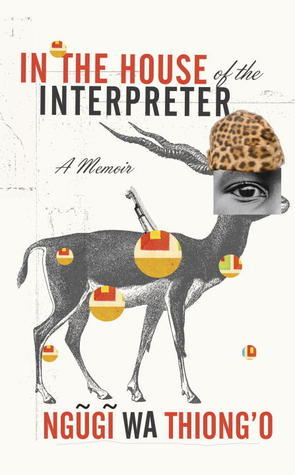
With black-and-white illustrations throughoutWorld-renowned Kenyan novelist, poet, playwright, and literary critic Ng˜ug˜ý wa Thiong’o gives us the second volume of his memoirs in the wake of his critically acclaimed Dreams in a Time of War. In the House of the Interpreter richly and poignantly evokes the author’s life and times at boarding school—the first secondary educational institution in British-ruled Kenya—in the 1950s, against the backdrop of the tumultuous Mau Mau Uprising for independence and Kenyan sovereignty. While Ng˜ug˜ý has been enjoying scouting trips, chess tournaments, and reading about the fictional RAF pilot adventurer Biggles at the prestigious Alliance High School near Nairobi, things have been changing rapidly at home. Poised as he is between two worlds, Ng˜ug˜ý returns home for his first visit since starting school to find his house razed and the entire village moved up the road, closer to a guard checkpoint. Later, his brother Good Wallace, a member of the insurgency, is captured by the British and taken to a concentration camp. As for Ng˜ug˜ý himself, he falls victim to the forces of colonialism in the person of a police officer encountered on a bus journey, and he is thrown into jail for six days. In his second year at Alliance High School, the boarding school that was his haven in a heartless world is shattered by investigations, charges of disloyalty, and the politics of civil unrest. In the House of the Interpreter hauntingly describes the formative experiences of a young man who would become a world-class writer and, as a political dissident, a moral compass to us all. It is a winning celebration of the implacable determination of youth and the power of hope.

This is the renowned play which was developed with Kikuyu actors at the Kamiriithu Cultural Centre at Limuru. It proved so powerful, especially in its use of song, that it was banned and was probably one of the factors leading to Ngugi's detention without trial. The original Gikuyu edition went to three printings in the first three months of publication.

Ngugi and Micere Mugo have built a powerful and challenging play out of the circumstances surrounding the trial of one of the celebrated leaders of the Mau Mau revolution.

Ngugi wa Thiong’o’s powerful prison memoir begins half an hour before his release on 12 December 1978. A year earlier, he recalls, armed police arrived at his home and took him to Kenya’s Kamiti Maximum Security Prison. There, Ngugi lives in a block alongside other political prisoners, but he refuses to give in to the humiliation. He decides to write a novel in secret, on toilet paper – it is a book that will become his classic, Devil on the Cross.Wrestling with the Devil is Ngugi’s unforgettable account of the drama and challenges of living under twenty-four-hour surveillance. He captures not only the pain caused by his isolation from his family, but also the spirit of defiance and the imaginative endeavours that allowed him to survive.

Birth of a Dream Weaver charts the very beginnings of a writer’s creative output. In this wonderful memoir, Kenyan writer Ngugi wa Thiong’o recounts the four years he spent in Makerere University in Kampala, Uganda—threshold years where he found his voice as a playwright, journalist, and novelist, just as Uganda, Kenya, Congo, and other countries were in the final throes of their independence struggles.James Ngugi, as he was known then, is haunted by the emergency period of the previous decade in Kenya, when his friends and relatives were killed during the Mau Mau Rebellion. He is also haunted by the experience of his childhood in a polygamous family and the brave break his mother made from his father’s home. Accompanied by these ghosts, Ngugi begins to weave stories from the fibers of memory, history, and a shockingly vibrant and turbulent present.What unfolds in this moving and thought-provoking memoir is both the birth of one of the most important living writers—lauded for his “epic imagination” (Los Angeles Times)—and the death of one of the most violent episodes in global history.

In this play, Remi, the first of his tribe to go to university, ponders whether or not he should return to his people. Or should he continue to be a black hermit in the town?

A dazzling short story collection from the person Chimamanda Ngozi Adichie calls “one of the greatest writers of our time”Ngũgĩ wa Thiong ’o, although renowned for his novels, memoirs, and plays, honed his craft as a short story writer. From “The Fig Tree” written in 1960, his first year as an undergraduate at Makere University College in Uganda, to the playful “The Ghost of Michael Jackson,” written while a Distinguished Professor of English and Comparative Literature at the University of California Irvine, these collected stories reveal a master of the short form.Covering the period of British colonial rule and resistance in Kenya to the bittersweet experience of independence—and including two stories that have never before been published in the United States—Ngũgĩ’s characters include women fighting for their space in a patriarchal society, big men in their Bentleys and Mercedes who have inherited power from the British; and rebels who still embody the fighting spirit of the downtrodden. One of Ngũgĩ’s most beloved stories, “Minutes of Glory,” tells of Beatrice, a sad, but ambitious waitress who fantasizes about being feted and lauded over by the middle class clientele in the city’s beer halls. Her dream leads her on a witty and heartbreaking adventure.Published for the first time in America, Minutes of Glory and Other Stories celebrates the storytelling might of one of Africa’s best-loved writers.

Novelist Ngugi wa Thiong'o has been a force in African literature for decades: Since the 1970s, when he gave up the English language to commit himself to writing in African languages, his foremost concern has been the critical importance of language to culture. In Something Torn and New , Ngugi explores Africa's historical, economic, and cultural fragmentation by slavery, colonialism, and globalization. Throughout this tragic history, a constant and irrepressible force was Europhonism: the replacement of native names, languages, and identities with European ones. The result was the dismemberment of African memory.Seeking to remember language in order to revitalize it, Ngugi's quest is for wholeness. Wide-ranging, erudite, and hopeful, Something Torn and New is a cri de coeur to save Africa's cultural future.

Ngugi advocates a cultural shift to redress the last 400 years of domination by a handful of western nations.In this collection Ngugi is concerned with moving the centre in two senses - between nations and within nations - in order to contribute to the freeing of world cultures from the restrictive walls of nationalism, class, race and genderBetween nations the need is to move the centre from its assumed location in the West to a multiplicity of spheres in all the cultures of the world. Within nations the move should be away from all minority class establishments to the real creative centre among working people in conditions of racial, religious and gender equality.Kenya: EAEP

Science has given us several explanations for how humans evolved from walking on four limbs to two feet. None, however, is as riveting as what master storyteller Ngũgĩ wa Thiong'o offers in The Upright Revolution. Blending myth and folklore with an acute insight into the human psyche and politics, Wa Thiong'o conjures up a fantastic fable about how and why humans began to walk upright. It is a story that will appeal to children and adults alike, containing a clear and important message: "Life is connected." Originally written in Gikuyu, this short story has been translated into sixty-three languages--forty-seven of them African--making it the most translated story in the history of African literature. This new collector's edition of The Upright Revolution is richly illustrated in full color with Sunandini Banerjee's marvellous digital collages, which open up new vistas of imagination and add unique dimensions to the story.

A masterful writer working in many genres, Ngugi wa Thiong'o entered the East African literary scene in 1962 with the performance of his first major play, "The Black Hermit," at the National Theatre in Uganda. In 1977 he was imprisoned after his most controversial work, "Ngaahika Ndeenda" ( "I Will Marry When I Want"), produced in Nairobi, sharply criticized the injustices of Kenyan society and unequivocally championed the causes of ordinary citizens. Following his release, Ngugi decided to write only in his native Gikuyu, communicating with Kenyans in one of the many languages of their daily lives, and today he is known as one of the most outspoken intellectuals working in postcolonial theory and the global postcolonial movement.In this volume, Ngugi wa Thiong'o summarizes and develops a cross-section of the issues he has grappled with in his work, which deploys a strategy of imagery, language, folklore, and character to "decolonize the mind." Ngugi confronts the politics of language in African writing; the problem of linguistic imperialism and literature's ability to resist it; the difficult balance between orality, or "orature," and writing, or "literature"; the tension between national and world literature; and the role of the literary curriculum in both reaffirming and undermining the dominance of the Western canon. Throughout, he engages a range of philosophers and theorists writing on power and postcolonial creativity, including Hegel, Marx, L?vi-Strauss, and Aim? C?saire. Yet his explorations remain grounded in his own experiences with literature (and orature) and reworks the difficult dialectics of theory into richly evocative prose.

Ngugi wa Thiong'o is world-famous for his novels from Weep Not, Child to Matigari and for the political impact of his plays, which led to his detention in Kenya. He is presently Professor of Comparative Literature and Performance Studies at New York University. This collection of early stories displays Ngugi's immense skill as a storyteller. He vividly portrays a world of magic and superstition which has not yet been erased by the "white strangers" and their new religion. In "The Village Priest" the rainmaker still exerts deep-rooted power, while the priest cannot deal in certainties, nor work miracles to end the drought; and "A Meeting in the Dark" sees the central character caught in moral dilemma. Christian ideals and ancient tribal customs are shown in conflict, causing tragedy. His later stories reveal an increased political disillusionment and foreshadow the novels which have made him one of Africa's leading commentators.

For more than sixty years, Ngugi wa Thiong’o has been writing fearlessly the questions, challenges, histories, and futures of Africans, particularly those of his homeland, Kenya. In his work, which has included plays, novels, and essays, Ngugi narrates the injustice of colonial violence and the dictatorial betrayal of decolonization, the fight for freedom and subsequent incarceration, and the aspiration toward economic equality in the face of gross inequality. With both hope and disappointment, he questions the role of language in both the organization of power structures and the pursuit of autonomy and self-expression.Ngugi’s fiction has reached wide acclaim, but his nonfictional work, while equally brilliant, is difficult to find. Secure the Base changes this by bringing together for the first time essays spanning nearly three decades. Originating as disparate lectures and texts, this complete volume will remind readers anew of Ngugi’s power and importance. Written in a personal and accessible style, the book covers a range of issues, including the role of the intellectual, the place of Asia in Africa, labor and political struggles in an era of rampant capitalism, and the legacies of slavery and prospects for peace. At a time when Africa looms large in our discussions of globalization, Secure the Base is mandatory reading.

Brilliant thoughts on modern African literature and postcolonial literary criticism from one of the giants of contemporary lettersNgũgĩ wa Thiong’o is a towering figure in African literature, and his novels A Grain of Wheat, Weep Not, Child, and Petals of Blood are modern classics. Emerging from a literary scene that flourished in the 1950s and ’60s during the last years of colonialism in Africa, he is now known not just as a novelist—one who, in the late ’70s, famously stopped writing novels in English and turned to the language he grew up speaking, Gĩkũyũ—but as a major postcolonial theorist. In Decolonizing Language and Other Revolutionary Ideas, Ngũgĩ gives us a series of essays that build on the revolutionary ideas about language and its constructive role in national culture, history, and identity that he set out in his earlier work. In a book that is intricate, nuanced, and accessible, he reaffirms the power of African languages to fight back against both the psychic and material impacts of colonialism, past and present. Decolonizing Language and Other Revolutionary Ideas also explores these themes through chapters on some of Ngũgĩ’s contemporaries, including Chinua Achebe and Wole Soyinka. A book with immense relevance to our present moment, Decolonizing Language and Other Revolutionary Ideas works both as a wonderful introduction to the enduring themes of Ngũgĩ’s work as well as a vital addition to the library of the world’s greatest and most provocative living writers.

A collection of essays by Ngugi wa Thiong'o.

Homecoming: Essays on African and Caribbean Literature, Culture and Politics
by Ngũgĩ wa Thiong'o
Rating: 4.3 ⭐
Book by