
Piero Gleijeses
14 Books Written

Conflicting Missions: Havana, Washington, Pretoria
by Piero Gleijeses
Rating: 5.0 ⭐
• 2 recommendations ❤️
Conflicting Missions This title is a compelling and dramatic account of Cuban policy in Africa and of its escalating clash with US policy and later its direct military clashes with the South African defence force in Angola. Full description

This is a compelling and dramatic account of Cuban policy in Africa from 1959 to 1976 and of its escalating clash with U.S. policy toward the continent. Piero Gleijeses's fast-paced narrative takes the reader from Cuba's first steps to assist Algerian rebels fighting France in 1961, to the secret war between Havana and Washington in Zaire in 1964-65--where 100 Cubans led by Che Guevara clashed with 1,000 mercenaries controlled by the CIA--and, finally, to the dramatic dispatch of 30,000 Cubans to Angola in 1975-76, which stopped the South African advance on Luanda and doomed Henry Kissinger's major covert operation there. Based on unprecedented archival research and firsthand interviews in virtually all of the countries involved--Gleijeses was even able to gain extensive access to closed Cuban archives--this comprehensive and balanced work sheds new light on U.S. foreign policy and CIA covert operations. It revolutionizes our view of Cuba's international role, challenges conventional U.S. beliefs about the influence of the Soviet Union in directing Cuba's actions in Africa, and provides, for the first time ever, a look from the inside at Cuba's foreign policy during the Cold War."Fascinating . . . and often downright entertaining. . . . Gleijeses recounts the Cuban story with considerable flair, taking good advantage of rich material.--"Washington Post Book World""Gleijeses's research . . . bluntly contradicts the Congressional testimony of the era and the memoirs of Henry A. Kissinger. . . . After reviewing Dr. Gleijeses's work, several former senior United States diplomats who were involved in making policy toward Angola broadly endorsed its conclusions.--"New York Times""With the publication of "Conflicting Missions," Piero Gleijeses establishes his reputation as the most impressive historian of the Cold War in the Third World. Drawing on previously unavailable Cuban and African as well as American sources, he tells a story that's full of fresh and surprising information. And best of all, he does this with a remarkable sensitivity to the perspectives of the protagonists. This book will become an instant classic.--John Lewis Gaddis, author of "We Now Know: Rethinking Cold War History"Based on unprecedented research in Cuban, American, and European archives, this is the compelling story of Cuban policy in Africa from 1959 to 1976 and of its escalating clash with U.S. policy toward the continent. Piero Gleijeses sheds new light on U.S. foreign policy and CIA covert operations, revolutionizes our view of Cuba's international role, and provides the first look from the inside at Cuba's foreign policy during the Cold War.

Shattered Hope: The Guatemalan Revolution and the United States, 1944-1954
by Piero Gleijeses
Rating: 4.4 ⭐
The most thorough account yet available of a revolution that saw the first true agrarian reform in Central America, this book is also a penetrating analysis of the tragic destruction of that revolution. In no other Central American country was U.S. intervention so decisive and so ruinous, charges Piero Gleijeses. Yet he shows that the intervention can be blamed on no single "convenient villain." "Extensively researched and written with conviction and passion, this study analyzes the history and downfall of what seems in retrospect to have been Guatemala's best government, the short-lived regime of Jacobo Arbenz, overthrown in 1954, by a CIA-orchestrated coup."--Foreign Affairs "Piero Gleijeses offers a historical road map that may serve as a guide for future generations. . . . [Readers] will come away with an understanding of the foundation of a great historical tragedy."--Saul Landau, The Progressive "[Gleijeses's] academic rigor does not prevent him from creating an accessible, lucid, almost journalistic account of an episode whose tragic consequences still reverberate."--Paul Kantz, Commonweal
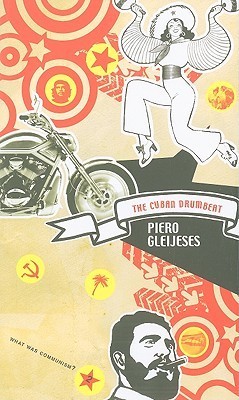
Reflecting on Cuba’s unique foreign policy—both its meaning and its legacy—and how Cuba has adjusted to a world dominated by the United States, Piero Gleijeses asserts in The Cuban Drumbeat that it has been a policy without equal in modern times. During the cold war, extra-continental military interventions were the preserve of the two superpowers, a few West European countries, and Cuba. Gleijeses documents how the rest of the world was regularly stunned by Cuba’s massive uses of force, including the 1975–76 dispatch of 36,000 Cuban soldiers to Angola to repel a South African invasion, the 12,000 Cuban soldiers sent to Ethiopia in 1978 to help defeat a Somali invasion, and the 55,000 Cuban soldiers present in Angola by 1988. Even the Soviet Union sent far fewer troops beyond its immediate borders in those years than did Cuba. The Cuban Drumbeat describes how the cold war framed three decades of Castro’s revolutionary zeal; but, Gleijeses argues, Castro’s vision was always larger than the cold war. For Castro, the battle against imperialism—his raison d ’ être —is more than the struggle against the United it is the war against despair and oppression in the Third World—a war that continues even though the future of Castro’s policies is uncertain.

The Dominican Crisis: The 1965 Constitutional Revolt and American Intervention
by Piero Gleijeses
Rating: 4.5 ⭐
Book by Gleijeses, Professor Piero

Piero Gleijeses' International History of the Cold War in Southern Africa, Omnibus E-Book: Includes Conflicting Missions and Visions of Freedom
by Piero Gleijeses
Rating: 5.0 ⭐
This Omnibus E-Book brings together Piero Gleijeses's two landmark books for the first of Havana, Washington, Pretoria, and the Struggle for Southern Africa, 1976-1991During the final fifteen years of the Cold War, southern Africa underwent a period of upheaval, with dramatic twists and turns in relations between the superpowers. Americans, Cubans, Soviets, and Africans fought over the future of Angola, where tens of thousands of Cuban soldiers were stationed, and over the decolonization of Namibia, Africa's last colony. Beyond lay the great South Africa. Piero Gleijeses uses archival sources, particularly from the United States, South Africa, and the closed Cuban archives, to provide an unprecedented international history of this important theater of the late Cold War.Conflicting Havana, Washington, and Africa, 1959-1976This sweeping history of Cuban policy in Africa from 1959 to 1976 is based on unprecedented research in African, Cuban, and American archives. (Among Gleijeses's many sources are Cuban archival materials to which he is the only non-Cuban to ever have access.) Setting his story within the context of U.S. policy toward both Africa and Cuba during the Cold War, Gleijeses challenges the notion that Cuban policy in Africa was directed by the Soviet Union.

America's Road to Empire: Foreign Policy from Independence to World War One
by Piero Gleijeses
Rating: 4.5 ⭐
America's Road to Empire surveys and analyses United States' foreign relations from the country's independence in 1776 until its entry into World War One in 1917, using primary source materials and case studies. The book covers key themes including:- the role that notions of "white superiority" played in US foreign policy - the search for absolute security that repeatedly led the United States to trample on the liberties of other countries; - and the idea of American 'exceptionalism' – the clash between the idealism of US rhetoric and its actions – which has led to a persistent failure to understand how “European” U.S. policy actually was. Whilst providing analytical overview, Piero Gleijeses also uses case studies which examine overlooked aspects of U.S. foreign policy, particularly concerning marginalized populations. He draws on archival U.S. and European primary sources and incorporates the latest research from the US, British, French and Spanish archives, as well as newspapers from the United States, Britain, France, Germany, Spain, and Mexico. A highly original account of the United States' rise to power drawing on multilingual scholarship, this is an important book for all students and scholars of United States foreign relations up to the First World War.

La esperanza rota : La revolucion guatemalteca y los Estados Unidos, 1944-1954 - La Esperanza Rota
by Piero Gleijeses
Rating: 4.0 ⭐
La espereranza rota : La revolucion guatemalteca y los Estados Unidos, 1944-1954

Tilting at Windmills: Reagan in Central America
by Piero Gleijeses

Visions de la liberté: La Havane, Washington, Pretoria et la lutte pour l’Afrique australe 1976-1991
by Piero Gleijeses
Durant les quinze dernières années de la guerre froide, Américains, Cubains, Soviétiques et Africains se disputent l’avenir de l’Angola, où sont stationnés des dizaines de milliers de soldats cubains, et de la Namibie, dernière colonie africaine.Les Sud-Africains, les Américains, et les Cubains avaient des visions diffé;rentes de la liberté pour l’Afrique australe. Les Sud-Africains affirmaient qu’ils se battaient pour endiguer l’assaut communiste. Ils le croyaient probablement. Mais ils partaient également se battre pour une autre raison, plus prosaïque, qui l’emportait sur tout le reste : défendre l’apartheid et l’injustice raciale.Le rôle de Cuba en Angola est sans précédent. Aucun autre pays du tiers monde n’a jamais projeté sa puissance militaire au-delà; de son voisinage immédiat.Les troupes cubaines sont restées pour défendre l’Angola face à l’Afrique du Sud, pour aider l’ANC et la SWAPO et parce que les dirigeants cubains étaient convaincus que leur départ serait l’occasion pour l’Afrique du Sud d’imposer Savimbi à l’Angola et un régime fantoche en Namibie. L’idéalisme était un élément clé de la politique étrangère cubaine.Comme pour son premier ouvrage, Missions en conflit. La Havane, Washington et l’Afrique, portant sur la période 1959-1976, Piero Gleijeses utilise des sources d’archives, notamment des États-Unis, de l’Afrique du Sud et des archives cubaines jusqu’alors fermées aux chercheurs, pour proposer une histoire internationale sans précédent de cet important théâtre de la fin de la guerre froide. Ces sources aboutissent toutes à une conclusion : en humiliant les États-Unis, Fidel Castro a changé le cours de l’histoire en Afrique australe. C’est la victoire de Cuba en Angola en 1988 qui a contraint Pretoria à libérer la Namibie et a contribué à briser les reins de l’Afrique du Sud de l’apartheid.

Visiones de libertad.la habana,waschington,pretoria y la lucha por el sur de africa,1976-1991.spanish edition,2 vols.
by Piero Gleijeses
Visiones de libertad.la Habana,waschington,pretoria y la lucha por el sur de Africa.1976-1991,por piero gleijeses,2 vols.la Habana editorial de ciencias sociales,2015,caratulas originales,990 paginas de intense historia Africana.y las epopeyas historicas de 36.000 soldados internacionalistas cubanos en angola para ayudar a expulsar a las tropas sudafricanas de ese territorio,libro ilustrado.su autor Piero Gleijeses (Venecia, Italia, 4 de agosto de 1944) es profesor de política exterior de los Estados Unidos en la Escuela Paul H. Nitze de Estudios Internacionales Avanzados (SAIS) de la Universidad Johns Hopkins.Es mejor conocido por sus estudios académicos de la política exterior cubana bajo Fidel Castro, que le valieron una beca Guggenheim en 2005, y también ha publicado varios trabajos sobre la intervención de Estados Unidos en América Latina. Se cree que es el único académico extranjero al que se le ha permitido acceder a los archivos del gobierno de la era de Fidel Castro sobre misiones militares de Cuba en África
Guatemala: The struggle for democracy
by Piero Gleijeses
Politics and culture in Guatemala
by Piero Gleijeses
SHATTERED HOPE
by Piero Gleijeses