
Nelson Mandela
Nelson Rolihlahla Mandela was a former President of South Africa, the first to be elected in a fully representative democratic election, who held office from 1994–99. Before his presidency, Mandela was an anti-apartheid activist, and the leader of the African National Congress's armed wing Umkhonto we Sizwe. The South African courts convicted him on charges of sabotage, as well as other crimes committed while he led the movement against apartheid. In accordance with his conviction, Mandela served 27 years in prison, spending many of these years on Robben Island. In South Africa he is often known as Madiba, an honorary title adopted by elders of Mandela's clan. The title has come to be synonymous with Nelson Mandela. Following his release from prison on 11 February 1990, Mandela supported reconciliation and negotiation, and helped lead the transition towards multi-racial democracy in South Africa. Since the end of apartheid, many have frequently praised Mandela, including former opponents. Mandela has received more than one hundred awards over four decades, most notably the Nobel Peace Prize in 1993. http://us.macmillan.com/author/nelson...
25 Books Written

Long Walk to Freedom: The Autobiography of Nelson Mandela
by Nelson Mandela
Rating: 4.4 ⭐
• 4 recommendations ❤️
Nelson Mandela is one of the great moral and political leaders of our time: an international hero whose lifelong dedication to the fight against racial oppression in South Africa won him the Nobel Peace Prize and the presidency of his country. Since his triumphant release in 1990 from more than a quarter-century of imprisonment, Mandela has been at the center of the most compelling and inspiring political drama in the world. As president of the African National Congress and head of South Africa's anti-apartheid movement, he was instrumental in moving the nation toward multiracial government and majority rule. He is revered everywhere as a vital force in the fight for human rights and racial equality. The foster son of a Thembu chief, Mandela was raised in the traditional, tribal culture of his ancestors, but at an early age learned the modern, inescapable reality of what came to be called apartheid, one of the most powerful and effective systems of oppression ever conceived. In classically elegant and engrossing prose, he tells of his early years as an impoverished student and law clerk in a Jewish firm in Johannesburg, of his slow political awakening, and of his pivotal role in the rebirth of a stagnant ANC and the formation of its Youth League in the 1950s. He describes the struggle to reconcile his political activity with his devotion to his family, the anguished breakup of his first marriage, and the painful separations from his children. He brings vividly to life the escalating political warfare in the fifties between the ANC and the government, culminating in his dramatic escapades as an underground leader and the notorious Rivonia Trial of 1964, at which he was sentenced to life imprisonment. Herecounts the surprisingly eventful twenty-seven years in prison and the complex, delicate negotiations that led both to his freedom and to the beginning of the end of apartheid. Finally he provides the ultimate inside account.

Arrested in 1962 as South Africa’s apartheid regime intensified its brutal campaign against political opponents, forty-four-year-old lawyer and African National Congress activist Nelson Mandela had no idea that he would spend the next twenty-seven years in jail. During his 10,052 days of incarceration, the future leader of South Africa wrote a multitude of letters to unyielding prison authorities, fellow activists, government officials, and, most memorably, to his courageous wife, Winnie, and his five children. Now, 255 of these letters, many of which have never been published, provide exceptional insight into how Mandela maintained his inner spirits while living in almost complete isolation, and how he engaged with an outside world that became increasingly outraged by his plight.Organized chronologically and divided by the four venues in which he was held as a sentenced prisoner, The Prison Letters of Nelson Mandela begins in Pretoria Local Prison, where Mandela was held following his 1962 trial. In 1964, Mandela was taken to Robben Island Prison, where a stark existence was lightened only by visits and letters from family. After eighteen years, Mandela was transferred to Pollsmoor Prison, a large complex outside of Cape Town with beds and better food, but where he and four of his comrades were confined to a rooftop cell, apart from the rest of the prison population. Finally, Mandela was taken to Victor Verster Prison in 1988, where he was held until his release on February 11, 1990.With accompanying facsimiles of some of his actual letters, this landmark volume reveals how Mandela, a lawyer by training, advocated for prisoners’ human rights. It reveals him to be a loving father, who wrote to his daughter, “I sometimes wish science could invent miracles and make my daughter get her missing birthday cards and have the pleasure of knowing that her Pa loves her,” aware that photos and letters he sent had simply disappeared.More painful still are the letters written in 1969, when Mandela—forbidden from attending the funerals of his mother and his son Thembi—was reduced to consoling family members through correspondence. Yet, what emerges most powerfully is Mandela’s unfaltering optimism: “Honour belongs to those who never forsake the truth even when things seem dark grim, who try over and over again, who are never discouraged by insults, humiliation even defeat.”Whether providing unwavering support to his also-imprisoned wife or outlining a human-rights philosophy that resonates today, The Prison Letters of Nelson Mandela reveals the heroism of a man who refused to compromise his moral values in the face of extraordinary punishment. Ultimately, these letters position Mandela as one of the most inspiring figures of the twentieth century. From The Prison Letters of Nelson Mandela “A new world will be won not by those who stand at a distance with their arms folded, but by those who are in the arena, whose garments are torn by storms whose bodies are maimed in the course of contest.”“I am convinced that floods of personal disaster can never drown a determined revolutionary nor can the cumulus of misery that accompanies tragedy suffocate him.”“My respect for human beings is based, not on the colour of a man’s skin nor authority he may wield, but purely on merit.”“A good pen can also remind us of the happiest moments in our lives, bring noble ideas into our dens, our blood our souls. It can turn tragedy into hope victory.”
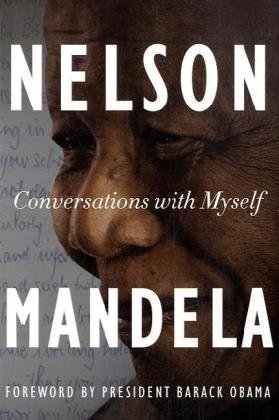
Nelson Mandela is widely considered to be one of the most inspiring and iconic figures of our age. Now, after a lifetime of taking pen to paper to record thoughts and events, hardships and victories, he has bestowed his entire extant personal papers, which offer an unprecedented insight into his remarkable life.A singular international publishing event, Conversations with Myself draws on Mandela's personal archive of never-before-seen materials to offer unique access to the private world of an incomparable world leader. Journals kept on the run during the anti-apartheid struggle of the early 1960s; diaries and draft letters written in Robben Island and other South African prisons during his twenty-seven years of incarceration; notebooks from the postapartheid transition; private recorded conversations; speeches and correspondence written during his presidency--a historic collection of documents archived at the Nelson Mandela Foundation is brought together into a sweeping narrative of great immediacy and stunning power. An intimate journey from Mandela's first stirrings of political consciousness to his galvanizing role on the world stage, Conversations with Myself illuminates a heroic life forged on the front lines of the struggle for freedom and justice.While other books have recounted Mandela's life from the vantage of the present, Conversations with Myself allows, for the first time, unhindered insight into the human side of the icon.

From his birth in a village on the banks of the Mbashe River in the Transkei to his politicisation and development as a freedom fighter, this first volume of Nelson Mandela's classic autobiography charts the early years of his life, which culminated in his prison sentence in 1962. Emotive, compelling and uplifting, Long Walk to Freedom: Volume 1 tells the beginnings of the story of an epic life, a story of hardship, resilience and ultimate triumph conveyed with the clarity and eloquence of the outstanding moral and political leader of the twentieth century.

In these beloved stories we meet a Kenyan lion named Simba, a snake with seven heads, and tricksters from Zulu folklore; we hear the voices of the scheming hyena, and we learn from a Khoi fable how animals acquired their tails and horns. Creation myths tell us how the land, its animals, and its people all came into existence under a punishing sun or against the backdrop of a spectacularly beautiful mountain landscape. Whether warning children about the dangers of disobedience or demonstrating that the underdog can, and often does, win, these stories, through their depiction of wise animals as well as evil monsters, are universal in their portrayal of humanity, beasts, and the mystical. Translated from their original languages—Karanga, Nguni, Xhosa, and many others—these folktales are a testament to the craft of storytelling and the power of myth.
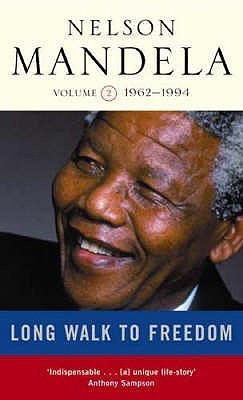
From his imprisonment in Pretoria in 1962 to the long years on Robben Island and his eventual release, this second and final volume of Nelson Mandela's memoirs tells the extraordinary story of his quest for freedom and justice that saw him inaugurated as South African President. Long Walk to Freedom: Volume 2 brilliantly recreates the drama of the experiences that helped shaped Mandela's destiny and conveys the blossoming of a life that changed the face of South African politics forever. This volume concludes an awe-inspiring story that makes for compulsive - and essential - reading.

The long-awaited second volume of Nelson Mandela’s memoirs, left unfinished at his death and never before available, are here completed and expanded with notes and speeches written by Mandela during his historic presidency, making for a moving sequel to his worldwide bestseller Long Walk to Freedom.“I have discovered the secret that after climbing a great hill, one only finds that there are many more hills to climb. I have taken a moment here to rest, to steal a view of the glorious vista that surrounds me, to look back on the distance I have come. But I can only rest for a moment, for with freedom comes responsibilities, and I dare not linger, for my long walk is not ended.”In 1994, Nelson Mandela became the first president of democratic South Africa. Five years later, he stood down. In that time, he and his government wrought the most extraordinary transformation, turning a nation riven by centuries of colonialism and apartheid into a fully functioning democracy in which all South Africa’s citizens, black and white, were equal before the law. Dare Not Linger is the story of Mandela’s presidency, drawing heavily on the memoir he began to write as he prepared to finish his term as president, but was unable to finish. Now the acclaimed South African author Mandla Langa has completed the task using Mandela’s unfinished draft, detailed notes that Mandela made as events were unfolding, and a wealth of previously unseen archival material. The result is a vivid and inspirational account of Mandela’s presidency: years during which he overcame the challenges of transition and made a reality of his cherished vision for a liberated South Africa.

‘There is no easy walk to freedom anywhere and many of us will have to pass through the valley of the shadow of death again and again before we reach the mountain tops of our desires.’After twenty-seven years in prison, Nelson Mandela finally walked free in February 1990. This collection of his articles, speeches, letters from underground, and the transcripts from his trials, vividly demonstrate the charisma and determination of a towering figure in the struggle for racial equality in South Africa. Now in a new edition, No Easy Walk to Freedom is both a vital historical document, and a chronicle of the life and thoughts of one of the greatest campaigners for freedom the world has known.

In spreading the message of freedom, equality, and human dignity, Nelson Mandela helped transform not only his own nation, but the entire world. Now his most important speeches are collected in a single volume. From the eve of his imprisonment to his release twenty-seven years later, from his acceptance of the Nobel Peace Prize to his election as South Africa's first black president, these speeches span some of the most pivotal moments of Mandela's life and his country's history.Arranged thematically and accompanied by tributes from leading world figures, Mandela's addresses memorably illustrate his lasting commitment to freedom and reconciliation, democracy and development, culture and diversity, and international peace and well-being. The extraordinary power of this volume is in the moving words and intimate tone of Mandela himself, one of the most courageous and articulate men of our time."There is no easy way to walk to freedom anywhere, and many of us will have to pass through the valley of the shadow of death again and again before we reach the mountain tops of our desires." -- Nelson Mandela, September 1953
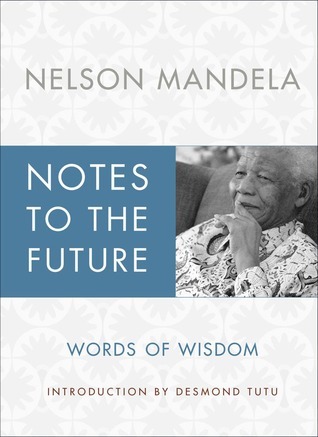
From the heart and soul of visionary Nobel Peace Prize winner Nelson Mandela, a collection of his most uplifting, time-honored quotes that have inspired our world and offer a path for peace.“The book that you hold in your hands is nothing short of a miracle.” —Desmond Tutu, from the IntroductionNotes to the Future is the definitive book of quotations from one of the great leaders of our time. This collection—gathered from privileged access to Mandela’s vast personal archive of private papers, speeches, correspondence, and audio recordings—features more than three hundred quotations spanning more than sixty years and includes his Nobel Peace Prize acceptance speech.These inspirational quotations, organized into four sections—Struggle, Victory, Wisdom, and Future—are both universal and deeply personal. We see Mandela’s sense of humor, his loneliness and despair, his thoughts on fatherhood, and the reluctant leader who had no choice but to become the man history demanded.“A good pen can also remind us of the happiest moments in our lives, bring noble ideas into our dens, our blood and our souls. It can turn tragedy into hope and victory” (from a letter to Zindzi Mandela, written on Robben Island, February 10, 1980).

Nelson Mandela is one of the great moral and political leaders of our time: an international hero whose lifelong dedication to the fight against racial oppression in South Africa won him the Nobel Peace Prize and the presidency of his country. Since his triumphant release in 1990 from more than a quarter century of imprisonment, Mandela has been at the center of the most inspiring political drama in the world. Mandela: An Illustrated Autobiography tells the extraordinary story of Nelson Mandela's life, an epic of struggle, setback, renewed hope, and ultimate triumph. With nearly 200 stunning photographs - many of them published here for the first time - and with text adapted from his remarkable memoir Long Walk to Freedom, this moving book captures the indomitable spirit of a moral giant and dramatically portrays his struggle toward freedom. Mandela's journey is vividly and eloquently recounted: the development of his political consciousness, his pivotal role in the formation of the African National Congress Youth League, his years underground - which led to a sentence of life imprisonment in 1964 - and his twenty-seven years behind bars. He also movingly recounts the momentous events leading up to his victory in South Africa's first-ever multiracial elections in 1994.

Nelson Mandela's speeches and political writings from his days as a leader of the African National Congress Youth League in 1944 until his release from prison in 1990.

Speaking together in Cuba in 1991, Mandela and Castro discuss the unique relationship and example of the struggles of the South African and Cuban peoples.

Contains previously unpublished letters, journal entries, and documents written by the first democratically elected leader of South Africa during his twenty-seven-year political imprisonment on Robben Island, in a volume complemented by image photography and original notes from his best-selling autobiography, A Long Walk to Freedom. 25,000 first printing.

Nelson Mandela: By Himself is the definitive book of quotations from one of the great leaders of our time. This collection - gathered from privileged authorised access to Mandela's vast personal archive of private papers, speeches, correspondence and audio recordings - features nearly 2,000 quotations spanning over 60 years, many previously unpublished. Mandela's inspirational quotations are organised into over 300 categories for easy reference, including such aspects as what defines greatness in 'Character', 'Courage' and 'Optimism', while we learn from the great man the essence of democracy, freedom and struggle in the categories 'Democracy', 'History', 'Racism', 'Reconciliation' and 'Unity'. Nelson Mandela: By Himself is the first, and only, authorised and authenticated collection of quotations by one of the world's most admired individuals.
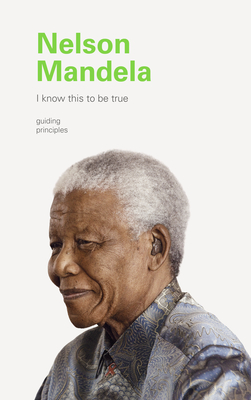
The I Know This to Be True series is a collection of extraordinary figures from diverse backgrounds answering the same questions, as well as sharing their compelling stories, guiding ideals, and insightful wisdom. Incarcerated for more than twenty-seven years, Nelson Mandela's enduring faith and rise to leadership remains an inspiration to all.With stories from his closest colleagues paired with his own words, this book explores the many challenges Mandela faced and the guiding principles that enabled him to lead a country away from violence to peace and democracy.• Anti-apartheid revolutionary Nelson Mandela devoted his life to ensuring liberation, equality, and justice for the people of South Africa• A moving and prescient reminder of the power of persistence, conviction, and forgiveness• The landmark book series brims with messages of leadership, courage, compassion, and hopeInspired by Nelson Mandela's legacy and created in collaboration with the Nelson Mandela Foundation, I Know This to Be True is a global series of books created to spark a new generation of leaders.This series offers encouragement and guidance to graduates, future leaders, and anyone hoping to make a positive impact on the world.• Mandela's legacy encourages every reader to find and nurture the leader within• Royalties from sales of the series support the free distribution of material from the series to the world's developing economy countries• A highly giftable and lovely hardcover with vivid photographic portraits throughout • Great for those who loved Letters of Note: An Eclectic Collection of Correspondence Deserving of a Wider Audience by Shaun Usher, Long Walk to Freedom: The Autobiography of Nelson Mandela by Nelson Mandela, and Conversations with Myself by Nelson Mandela and Barack Obama

Un ideale per cui sono pronto a morire - Il discorso più bello di Nelson Mandela
by Nelson Mandela
Rating: 4.0 ⭐
Nell'ottobre del 1963, Nelson Mandela viene accusato di alto tradimento e terrorismo dalla corte di giustizia sudafricana. La sua unica colpa è quella di essersi battuto contro il disumano e terribile regime dell'apartheid che schiavizza la popolazione nera del paese. Ma nel corso del durissimo processo di Rivonia, Mandela sfida i suoi accusatori e la pena di morte con lo straordinario discorso che dà il titolo a questo libro, dichiarandosi pronto a morire pur di continuare la sua battaglia per la pace e l'uguaglianza. L'anno successivo viene condannato all'ergastolo ma la sua lotta non si interrompe: dopo ventisei anni di carcere durissimo, nel giorno della sua liberazione, davanti a una folla festante, Mandela ripeterà le stesse identiche frasi pronunciate nell'aula di tribunale. Sarà l'inizio di un nuovo viaggio che lo porterà a divenire il primo presidente democraticamente eletto della Repubblica Sudafricana. Un ideale per cui sono pronto a morire ci consente di rivivere la storia di quei momenti in presa diretta attraverso le parole alte e coraggiose di uno dei grandi eroi civili del nostro tempo.

Una biografía visual completamente autorizada, esta novela gráfica con un prólogo del mismo Nelson Mandela es una adaptación de sus memorias, El largo camino hacia la libertad. La historia de un hombre solitario quien, a pesar de dificultades inimaginables, derribó uno de los regímenes más repugnantes del mundo está presentada a todo color por un equipo de artistas sudafricanos. El libro representa la niñez de Mandela en un pequeño pueblo sudafricano, su creciente activismo político con el Congreso Nacional Africano, sus 27 años en la cárcel, su dramática liberación y sus años como presidente de Sudáfrica. Con entrevistas nuevas, reportes de primera mano y materiales de archivo recién descubiertos, esta biografía visualmente dramática le presenta la cautivadora historia de Mandela a toda una nueva generación de lectores.A fully authorized visual biography, this graphic novel with a foreword from Nelson Mandela himself is an adaptation of his memoir, Long Walk to Freedom. The story of a solitary man who, despite unbelievable hardships, brought down one of the most repugnant regimes of the world is presented in vivid color by a team of South African artists. The book depicts Mandela’s boyhood in a small South African village, his growing political activism with the African National Conference, his 27-year incarceration, his dramatic release, and his years as president of South Africa. With new interviews, firsthand accounts, and recently uncovered archival material, this visually dramatic biography introduces Mandela's gripping story to a whole new generation of readers.

Nell'ottobre del 1963, Nelson Mandela viene accusato di alto tradimento e terrorismo dalla corte di giustizia sudafricana. La sua unica colpa è quella di essersi battuto contro il disumano e terribile regime dell'apartheid che schiavizza la popolazione nera del paese. Ma nel corso del durissimo processo di Rivonia, Mandela sfida i suoi accusatori e la pena di morte con lo straordinario discorso che dà il titolo a questo libro, dichiarandosi pronto a morire pur di continuare la sua battaglia per la pace e l'uguaglianza. L'anno successivo viene condannato all'ergastolo ma la sua lotta non si dopo ventisei anni di carcere durissimo, nel giorno della sua liberazione, davanti a una folla festante, Mandela ripeterà le stesse identiche frasi pronunciate nell'aula di tribunale. Sarà l'inizio di un nuovo viaggio che lo porterà a divenire il primo presidente democraticamente eletto della Repubblica Sudafricana. "Un ideale per cui sono pronto a morire" ci consente di rivivere la storia di quei momenti in presa diretta attraverso le parole alte e coraggiose di uno dei grandi eroi civili del nostro tempo.

"Le temps est venu" : discours de Nelson Mandela lors de son investiture à la présidence de la République démocratique d'Afrique du Sud, 10 mai 1994 ; suivi de "Éveillez-vous à la liberté" : discours radiodiffusé du Premier ministre indien, Jawaharlal Pandit Nehru, à l'occasion de l'accès à l'indépendance de l'Inde, 14 août 1947.


Nelson Mandela Speeches, 1990: Intensify the Struggle to Abolish Apartheid
by Nelson Mandela
Rating: 3.8 ⭐
A sevent yfour page book with important speeches by Nelson Mandela, including "Now Is The Time To Intensify the Struggle" and "We Must End the Old Social Order and Bring in the New One". Eight speeches, with an Appendix and Introduction.

Speeches from 1990-93 recounting the struggle that put an end to apartheid and opened the fight for a deep-going political and social transformation in South Africa. Preface by Steve Clark, two 16-page photo sections, chronology, list of initials, glossary, notes, index.

This is a compilation of inspirational and thought-provoking quotes by one of the worldâ€s most renowned leaders dr nelson mandela, who became south africaâ€s first president and also won the nobel peace price in 1993 for his contribution to end apartheid no one is born hating another because of the colour of his skin or his background, or his religion people learn to hate, and if they can learn to hate, they can be taught to love, for love comes more naturally to the human heart than the opposite we do not want freedom without bread, nor do we want bread without freedom we must never lose sight of the fact that the gandhian philosophy may be a key to human survival in the twenty-first century belief in the possibility of change and renewal is perhaps one of the defining characteristics of politics and of religions

*Duration: 2 hours and 6 minutes*'HISTORY'S GREATEST SPEECHES: BLACK VOICES' is volume nine in the History Greatest Speeches series.The struggle for human rights, emancipation, civil rights, social justice, voting rights, and freedom from discrimination and tyranny is captured here in this volume of speeches by some of the most influential and brilliant Black orators in history.From Sojourner Truth questioning society's role in subjugating Black women to Nelson Mandela facing a life sentence in prison with dignity and unequaled poise, this collection of speeches highlights the contributions of these unique speakers who stood up to prejudice, violence, prison, and even death itself to assert their rights as human beings.This volume also features Booker T. Washington's "Atlanta Compromise" speech, Mary E. Church Terrell's opining on what it means to be a Black woman in the nation's capitol, Ida B. Wells' condemnation of the scourge of lynching in America, W.E.B. Du Bois's famous "A Negro Nation Within a Nation" speech to the N.A.A.C.P., and Thurgood Marshall's historic argument for fairness in education before the United States Supreme Court in the landmark case Brown vs. Board of Education.The contributions of these great speakers to the fight for basic human rights cannot be overstated. We are proud to be able to present these breathtaking and stirring orations highlighting the voices of Black speakers throughout history.©2021 Fort Raphael Publishing Company (P)2021 SoundCraft Audiobooks