
Morten Jerven
5 Books Written
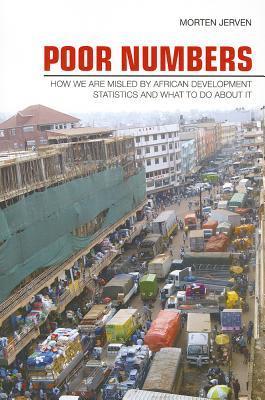
Poor Numbers: How We Are Misled by African Development Statistics and What to Do about It
by Morten Jerven
Rating: 3.9 ⭐
• 2 recommendations ❤️
One of the most urgent challenges in African economic development is to devise a strategy for improving statistical capacity. Reliable statistics, including estimates of economic growth rates and per-capita income, are basic to the operation of governments in developing countries and vital to nongovernmental organizations and other entities that provide financial aid to them. Rich countries and international financial institutions such as the World Bank allocate their development resources on the basis of such data. The paucity of accurate statistics is not merely a technical problem; it has a massive impact on the welfare of citizens in developing countries.Where do these statistics originate? How accurate are they? Poor Numbers is the first analysis of the production and use of African economic development statistics. Morten Jerven's research shows how the statistical capacities of sub-Saharan African economies have fallen into disarray. The numbers substantially misstate the actual state of affairs. As a result, scarce resources are misapplied. Development policy does not deliver the benefits expected. Policymakers' attempts to improve the lot of the citizenry are frustrated. Donors have no accurate sense of the impact of the aid they supply. Jerven's findings from sub-Saharan Africa have far-reaching implications for aid and development policy. As Jerven notes, the current catchphrase in the development community is "evidence-based policy," and scholars are applying increasingly sophisticated econometric methods-but no statistical techniques can substitute for partial and unreliable data.

‘A valuable corrective to the fraying narrative of [African] failure.’Foreign AffairsNot so long ago, Africa was being described as the hopeless continent. Recently, though, talk has turned to Africa rising, with enthusiastic voices exclaiming the potential for economic growth across many of its countries. What, then, is the truth behind Africa’s growth, or lack of it?In this provocative book, Morten Jerven fundamentally reframes the debate, challenging mainstream accounts of African economic history. Whilst for the past two decades experts have focused on explaining why there has been a ‘chronic failure of growth’ in Africa, Jerven shows that most African economies have been growing at a rapid pace since the mid nineties. In addition, African economies grew rapidly in the fifties, the sixties, and even into the seventies. Thus, African states were dismissed as incapable of development based largely on observations made during the 1980s and early 1990s. The result has been misguided analysis, and few practical lessons learned.This is an essential account of the real impact economic growth has had on Africa, and what it means for the continent’s future.

The Wealth and Poverty of African States: Economic Growth, Living Standards and Taxation since the Late Nineteenth Century
by Morten Jerven
Rating: 3.7 ⭐
A wealth of new data have been unearthed in recent years on African economic growth, wages, living standards, and taxes. In The Wealth and Poverty of African States, Morten Jerven shows how these findings transform our understanding of African economic development. He focuses on the central themes and questions that these state records can answer, tracing how African states evolved over time and the historical footprint they have left behind. By connecting the history of the colonial and postcolonial periods, he reveals an aggregate pattern of long-run growth from the late nineteenth century into the 1970s, giving way to widespread failure and decline in the 1980s, and then followed by two decades of expansion since the late 1990s. The result is a new framework for understanding the causes of poverty and wealth and the trajectories of economic growth and state development in Africa across the twentieth century.

Economic Growth and Measurement Reconsidered in Botswana, Kenya, Tanzania, and Zambia, 1965-1995
by Morten Jerven
Rating: 5.0 ⭐
How do we measure African economic performance? This volume studies how growth is measured in Botswana, Kenya, Tanzania and Zambia and challenges commonly held beliefs of African economic performance.The volume offers a reconsideration of economic growth in Africa in three respects. First, it shows that the focus has been on average economic growth and that there has been no failure of economic growth. In particular the gains made in the 1960s and 1970s have been neglected. Second, it emphasizes that for many countries the decline in economic growth in the 1980s was overstated, as was the improvement in economic growth in the 1990s. The coverage of economic activities in GDP measures is incomplete. In the 1980s many economic activities were increasingly missed in the official records thus the decline in the 1980s was overestimated (resulting from declining coverage) and the increase in the 1990s was overestimated (resulting from increasing coverage). The third important reconsideration is that there is no clear association between economic growth and orthodox economic policies. This is counter to the mainstream interpretation, and suggests that the importance of sound economicpolicies has been overstated, and that the importance of the external economic conditions have been understated in the prevailing explanation of African economic performance.
![Africa : Why Economists Get It Wrong (Paperback)--by Morten Jerven [2015 Edition]](/placeholder.svg?height=400&width=300)