
Joseph Conrad
Joseph Conrad was a Polish-British novelist and story writer. He is regarded as one of the greatest writers in the English language and, although he did not speak English fluently until his twenties, he became a master prose stylist who brought a non-English sensibility into English literature. He wrote novels and stories, many in nautical settings, that depict crises of human individuality in the midst of what he saw as an indifferent, inscrutable, and amoral world. Conrad is considered a literary impressionist by some and an early modernist by others, though his works also contain elements of 19th-century realism. His narrative style and anti-heroic characters, as in Lord Jim, for example, have influenced numerous authors. Many dramatic films have been adapted from and inspired by his works. Numerous writers and critics have commented that his fictional works, written largely in the first two decades of the 20th century, seem to have anticipated later world events. Writing near the peak of the British Empire, Conrad drew on the national experiences of his native Poland—during nearly all his life, parceled out among three occupying empires—and on his own experiences in the French and British merchant navies, to create short stories and novels that reflect aspects of a European-dominated world—including imperialism and colonialism—and that profoundly explore the human psyche.
31 Books Written

'The mind of man is capable of anything - because everything is in it, all the past as well as all the future. What was there after all? Joy, fear, sorrow, devotion, rage - who can tell? - but truth - truth stripped of its cloak of time. Let the fool gape and shudder - the man knows, and can look on without a wink'Marlow, a seaman, tells of a journey up the Congo. His goal is the troubled European and ivory trader Kurtz. Worshipped and feared by invaders as well as natives, Kurtz has become a godlike figure, his presence pervading the jungle like a thick, obscuring mist. As his boat labours further upstream, closer and closer to Kurtz's extraordinary and terrible domain, so Marlow finds his faith in himself and civilization crumbling. Conrad's Heart of Darkness has been considered the most important indictment of the evils of imperialism written to date.

In 1890, at the age of 33, Joseph Conrad fulfilled his childhood dream of visiting Central Africa when he became captain of a paddle-steamer on the Congo River, under the employ of the Société Anonyme Belge. However, as he would later write, in place of the dream came the realisation that the colonial enterprise was ‘the vilest scramble for loot that ever disfigured the history of human conscience and geographical exploration’. The journey was to profoundly affect him, both mentally and physically, for the rest of his life, proving formative in his development as a writer and the creation of Heart of Darkness.It is a journey explored in this new exclusive collection from The Folio Society. Conrad’s ‘Up-river Book’, the ship’s log in which he recorded his six-week journey aboard the Roi des Belges, is central to this story, and is framed by his ‘Congo Diary’, recording the eight months he spent in the Congo Free State. Interspersed with these texts are his letters to family and friends. The short story, ‘An Outpost of Progress’, which foreshadows Conrad’s most ambitious and acclaimed work, and is the only other to draw directly on his experiences in the Congo, is also included. Two European men take charge of a trading station, puffed up with a sense of superiority, but regarded as ‘imbeciles’ by their superiors and oblivious to the simmering hatred of their conduit slave from Sierra Leone.Two appendices provide additional context. One consists of testimonies on how the journey affected the course of Conrad's life, from writers including Bertrand Russell and Ford Madox Ford. The second is an extract from then British Consul Roger Casement's 1903 Congo Report, which documented the human rights abuses committed by the colonial administration. Conrad expert J. H. Stape, who advised on the compilation of this illuminating collection and provided linking passages, has written a new introduction, which sits alongside a preface by Adam Hochschild adapted from his bestselling history King Leopold's Ghost. Conrad's hand-drawn diagrams from his diary and the original 'Up-river Book' accompany a series of photographs from the archives at the Royal Museum for Central Africa in Tervuren, Belgium, which has an extensive collection of photographs of the Congo from the period that Conrad was there. One is an unusually clear image of the Roi des Belges; others provide disturbing insights into the brutality of the slave trade. The source material that forms this unique collection weaves together a remarkable story about the genius that would produce one of the 20th century's greatest works of fiction.

Jim, a young British seaman, becomes first mate on the Patna, a ship full of pilgrims travelling to Mecca for the hajj. When the ship starts rapidly taking on water and disaster seems imminent, Jim joins his captain and other crew members in abandoning the ship and its passengers. A few days later, they are picked up by a British ship. However, the Patna and its passengers are later also saved, and the reprehensible actions of the crew are exposed. The other participants evade the judicial court of inquiry, leaving Jim to the court alone. He is publicly censured for this action and the novel follows his later attempts at coming to terms with his past. The novel is counted as one of 100 best books of the 20th century.Joseph Conrad (1857-1924), was a Polish author who wrote in English after settling in England. Conrad is regarded as one of the greatest novelists in English, though he did not speak the language fluently until he was in his twenties. He wrote stories and novels, often with a nautical setting, that depict trials of the human spirit in the midst of an indifferent world. He was a master prose stylist who brought a distinctly non-English tragic sensibility into English literature.Contents: Lord JimMemoirs & Letters:A Personal Record; or Some ReminiscencesThe Mirror of the SeaNotes on Life & LettersBiography & Critical Essays:Joseph Conrad (A Biography) by Hugh WalpoleJoseph Conrad by John Albert MacyA Conrad Miscellany by John Albert MacyJoseph Conrad by Virginia Woolf

One of the most haunting stories ever written, Joseph Conrad ’s Heart of Darkness follows Marlow, a riverboat captain, on a voyage into the African Congo at the height of European colonialism. Astounded by the brutal depravity he witnesses, Marlow becomes obsessed with meeting Kurtz, a famously idealistic and able man stationed farther along the river. What he finally discovers, however, is a horror beyond imagining. Heart of Darkness is widely regarded as a masterpiece for its vivid study of human nature and the greed and ruthlessness of imperialism.This collection also includes three of Conrad’s finest short: Youth, the author’s largely autobiographical tale of a young man’s ill-fated sea voyage, in which Marlow makes his first appearance; also, The Secret Sharer and Amy Forster.The book features a map of the Congo Free State.Heart of Darkness and Selected Short Fiction, by Joseph Conrad, is part of the Barnes & Noble Classics series, which offers quality editions at affordable prices to the student and the general reader, including new scholarship, thoughtful design, and pages of carefully crafted extras. Here are some of the remarkable features of Barnes & Noble Classics:* New introductions commissioned from today's top writers and scholars* Biographies of the authors* Chronologies of contemporary historical, biographical, and cultural events* Footnotes and endnotes* Selective discussions of imitations, parodies, poems, books, plays, paintings, operas, statuary, and films inspired by the work* Comments by other famous authors* Study questions to challenge the reader's viewpoints and expectations* Bibliographies for further reading* Indices & Glossaries, when appropriate.
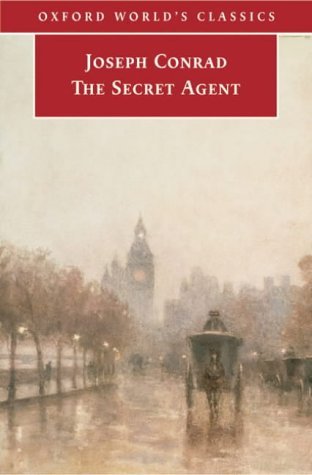
Mr Verloc, the secret agent, keeps a shop in London's Soho where he lives with his wife Winnie, her infirm mother, and her idiot brother, Stevie. When Verloc is reluctantly involved in an anarchist plot to blow up the Greenwich Observatory things go disastrously wrong, and what appears to be "a simple tale" proves to involve politicians, policemen, foreign diplomats, and London's fashionable society in the darkest and most surprising interrelations.Based on the text which Conrad's first English readers enjoyed, this new edition includes a full and up-to-date bibliography, a comprehensive chronology and a critical introduction which describes Conrad's great London novel as the realization of a "monstrous town," a place of idiocy, madness, criminality, and savage butchery. It also discusses contemporary anarchist activity in the UK, imperialism, and Conrad's narrative techniques.

A gripping tale of capitalist exploitation and rebellion, set amid the mist-shrouded mountains of a fictional South American republic, employs flashbacks and glimpses of the future to depict the lure of silver and its effects on men. Conrad's deeply moral consciousness and masterful narrative technique are at their best in this, one of his finest works.

Heart Of Darkness. The story of the civilized, enlightened Mr. Kurtz who embarks on a harrowing "night journey" into the savage heart of Africa, only to find his dark and evil soul. The Secret Sharer. The saga of a young, inexperienced skipper forced to decide the fate of a fugitive sailor who killed a man in self-defense. As he faces his first moral test the skipper discovers a terrifying truth -- and comes face to face with the secret itself. Heart Of Darkness and The Secret Sharer draw on actual events and people that Conrad met or heard about during his many far-flung travels. In portraying men whose incredible journeys on land and at sea are also symbolic voyages into their own mysterious depths, these two masterful works give credence to Conrad's acclaim as a major psychological writer.

Written in 1915, The Shadow-Line is based upon events and experiences from twenty-seven years earlier to which Conrad returned obsessively in his fiction. A young sea captain's first command brings with it a succession of crises: his sea is becalmed, the crew laid low by fever, and his deranged first mate is convinced that the ship is haunted by the malignant spirit of a previous captain. This is indeed a work full of "sudden passions," in which Conrad is able to show how the full intensity of existence can be experienced by the man who, in the words of the older Captain Giles, is prepared to "stand up to his bad luck, to his mistakes, to his conscience." A subtle and penetrating analysis of the nature of manhood, The Shadow-Line investigates varieties of masculinity and desire in a subtext that counters the tale's seemingly conventional surface.

The finest of all Conrad's tales, Heart of Darkness is set in an atmosphere of mystery and menace, and tells of Marlow's perilous journey up the Congo River to relieve his employer's agent, the renowned and formidable Mr. Kurtz. What he sees on his journey, and his eventual encounter with Kurtz, horrify and perplex him, and call into question the very bases of civilization and human nature. Endlessly reinterpreted by critics and adapted for film, radio, and television, the story shows Conrad at his most intense and sophisticated. The other three tales in this volume depict corruption and obsession, and question racial assumptions. Set in the exotic surroundings of Africa, Malaysia, and the east, they variously appraise the glamour, folly, and rapacity of imperial adventure. This revised edition uses the English first edition texts and has a new chronology and bibliography.

A young man sets out on his first voyage as captain, aboard a vessel and among a crew that are equally unfamiliar to him. A mysterious night-swimmer climbs aboard, and, in keeping the presence of this fugitive a secret, the skipper risks both his captaincy and the safety of his ship. A test of nerve in the Gulf of Siam ensues.

Axel Heyst, a dreamer and a restless drifter, believes he can avoid suffering by cutting himself off from others. Then he becomes involved in the operation of a coal company on a remote island in the Malay Archipelago, and when it fails he turns his back on humanity once more. But his life alters when he rescues a young English girl, Lena, from Zangiacomo's Ladies' Orchestra and the evil innkeeper Schomberg, taking her to his island retreat. The affair between Heyst and Lena begins with her release, but the relationship shifts as Lena struggles to save Heyst from the detachment and isolation that have inhibited and influenced his life. Marked by a violent and tragic conclusion, Victory is both a tale of rescue and adventure and a perceptive study of a complex relationship and of the power of love.

"This could have occurred nowhere but in England, where men and sea interpenetrate, so to speak—the sea entering into the life of most men, and the men knowing something or everything about the sea, in the way of amusement, of travel, or of bread-winning."By all that’s wonderful, it is the sea, I believe, the sea itself—or is it youth alone? Who can tell? But you here—you all had something out of life: money, love—whatever one gets on shore—and, tell me, wasn’t that the best time, that time when we were young at sea; young and had nothing, on the sea that gives nothing, except hard knocks—and sometimes a chance to feel your strength—that only—what you all regret?"

Captain MacWhirr cannot fathom anything outside the facts of his own life. His first mate, Mr. Jukes, is the perfect contrast as an imaginative man prone to speaking in figurative language. Though they are opposites, MacWhirr and Jukes respect each other and run a tight ship, until the crew notices the barometer predicting a severe storm. Jukes and the crew suggest alternate paths to MacWhirr, but he is unconvinced. Since MacWhirr has not experienced the storm yet, he doesn't believe that it really can be much of a problem, and if they sailed around it, they would waste time. Jukes is shocked at the decision, but respects MacWhirr's conviction. They keep their course, setting sail to go directly through the storm. Though the crew objects, Jukes and MacWhirr are convinced they each made the right call, but disastrous outcomes are inevitable when facts are ignored. Now in the heart of a great typhoon, MacWhirr and Jukes must work together to save their crew. Facing tuberous winds, powerful waves and the sea's worst moods, the combination of MacWhirr's rationalism and Jukes' imagination prove to be vital.Based off of events in Joseph Conrad's sea life, Typhoon is an allegorical work that explores consequences of making decisions without considering facts or other perspectives, while hailing the importance of tolerance and collaboration. With satirical characters and a thrilling setting, Typhoon is both thought-provoking and adventurous. First published in 1902, Joseph Conrad's has been reprinted in many publications, including literary magazines and literary collections. Typhoon depicts a story of high stakes and adventure with a uniquely observant narrative style, shouldering Conrad's stylistic legacy of masterful prose.Previously published among other literary works, this edition allows Joseph Conrad's Typhoon stand on its own. Now with a new, eye-catching cover design and printed in a modern, easy-to-read font, Typhoon is accessible for a contemporary audience. Even nearly one-hundred and twenty years later, Conrad's adventurous, allegorical work is still relevant and intriguing as it acknowledges the various personalities required for human success and survival.

Under Western Eyes traces the experiences of Razumov, a young Russian student caught up in the aftermath of a terrorist bombing. It deals with topical moral issues such as the defensibility of terrorist resistance to tyranny and the loss of individual privacy in a surveillance society. This new edition uses the English first edition text and has a new bibliography and chronology.About the For over 100 years Oxford World's Classics has made available the broadest spectrum of literature from around the globe. Each affordable volume reflects Oxford's commitment to scholarship, providing the most accurate text plus a wealth of other valuable features, including expert introductions by leading authorities, voluminous notes to clarify the text, up-to-date bibliographies for further study, and much more.

This scarce antiquarian book is a facsimile reprint of the original. Due to its age, it may contain imperfections such as marks, notations, marginalia and flawed pages. Because we believe this work is culturally important, we have made it available as part of our commitment for protecting, preserving, and promoting the world's literature in affordable, high quality, modern editions that are true to the original work.

El duelo es una de las más fascinantes novelas cortas de Joseph Conrad. Con las guerras napoleónicas como fondo romántico de esta historia, se narra en ella la contienda entablada por dos oficiales de distintos regimientos de húsares a lo largo de sus respectivas carreras militares, cuyos destinos discurren, de modo misterioso, paralelamente. La historia de este duelo, que llegaría a convertirse en leyenda dentro del ajército, tiene su origen en una oscura e imperdonable ofensa causada por el teniente D'Hubert, hombre de gran cordura y celoso de su deber, al también oficial de campo Feraud, de temperamento más belicoso e intrigante que militar. Este antagonismo hará que ambos se vean unidos en un íntimo y absurdo compromiso

Almayer’s Folly , Joseph Conrad’s first novel, is a tale of personal tragedy as well as a broader meditation on the evils of colonialism. Set in the lush jungle of Borneo in the late 1800s, it tells of the Dutch merchant Kaspar Almayer, whose dreams of riches for his beloved daughter, Nina, collapse under the weight of his own greed and prejudice. Nadine Gordimer writes in her Introduction, “Conrad’s writing is lifelong questioning . . . What was ‘ Almayer’s Folly ’? The pretentious house never lived in? His obsession with gold? His obsessive love for his daughter, whose progenitors, the Malay race, he despised? All three?” Conrad established in Almayer’s Folly the themes of betrayal, isolation, and colonialism that he would explore throughout the rest of his life and work.
The story deals with two European men, named Kayerts and Carlier, who are assigned to a trading post in a remote part of the African Jungle. There they take part in ivory trading, hoping to financially benefit the company as well as themselves. With no specific tasks or important things to be done, they both become increasingly isolated and demoralized as the time goes by. At one point in the story, the native Makola, serving as Kayerts's and Carlier's bookkeeper, initiates an exchange of slaves for ivory. Initially Kayerts and Carlier are stunned and scandalized by the idea, yet eventually they accept the deal and aid Makola for his huge profit. Both men are continuously plagued by diseases and grow very weak physically towards the end of the story. Finally, a seemingly trivial matter - sugar - sparks an irrational, uncontrolled and violent conflict between them, and ends tragically as Kayerts accidentally shoots and kills Carlier. At the end of the story, just when the company steamboat approaches the station two months later than it should have, Kayerts hangs himself out of desperation.

This volume contains Typhoon, The Secret Sharer, Falk, and Amy Foster. Typhoon, a story of a steamship and her crew beset by a tempest, is a masterpiece of descriptive virtuosity and moral irony, while The Secret Sharer excels in symbolic ambiguity. Both stories vividly present Conrad's abiding preoccupation with the theme of solidarity, challenged from without by the elements and from within by human doubts and fears. Conrad's experiences as a captain of the ship Otago in 1888 provided material for both The Secret Sharer and Falk. Amy Foster, written in 1901, is bleak and stark in its depiction of human isolation and incomprehension. In a range of tones extending from the sombre to the radiant, Conrad's central preoccupations are displayed at their best, strangest, and most plangent in this selection of stories.

‘It was as if the sea, breaking down the wall protecting all the homes of the town, had sent a wave over her head’ . . .Set in a desolate English port, Conrad’s spare, savage turn-of-the-century story of lives haunted by the sea. One of Conrad’s most powerful, gripping stories.[ Joseph Conrad (1857–1924) ]Little Black Classics celebrates Penguin’s 80th birthday, introducing 80 works from the classics.

This is a reproduction of the original artefact. Generally these books are created from careful scans of the original. This allows us to preserve the book accurately and present it in the way the author intended. Since the original versions are generally quite old, there may occasionally be certain imperfections within these reproductions. We're happy to make these classics available again for future generations to enjoy!

I have been called a writer of the sea, of the tropics, a descriptive writer - and also a realist. But as a matter of fact all my concern has been with the 'ideal' value of things, events and people. That and nothing else - Joseph ConradWhen Willems stepped off the straight and narrow path of his own peculiar honesty he thought it would be a short episode - a sentence in brackets, so to speak - in the flowing tale of his life. But Willems was wrong, for he was about to embark on a voyage of discovery and self-discovery that would change, if not destroy, the reset of his life. Marooned by his own people on the shore of a Malayan island, Willems is caught in the grip of his own vulnerability and corruption.An Outcast of the Islands was only Conrad's second novel, but in its theme, in its impressionistic use of scenery, and, and over all, in the enormous richness and power of the writing, it predicts Conrad's position as a literary figure of the highest rank.The cover shows a detail from Old Boathouse and Riverside Vegetation, Sarawak by Marianne North.

This is a collection of gripping tales of crime, crisis or disaster, in which ordinary people find themselves tested in extraordinary circumstances.

This is a reproduction of the original artefact. Generally these books are created from careful scans of the original. This allows us to preserve the book accurately and present it in the way the author intended. Since the original versions are generally quite old, there may occasionally be certain imperfections within these reproductions. We're happy to make these classics available again for future generations to enjoy!

'(Conrad) thought of civilised and morally tolerable human life as a dangerous walk on a thin crust of barely cooled lava which at any moment might break and let the unwary sink into fiery depths'- Bertrand RussellThis selection of four tales by Conrad is about radical lone human beings involuntarily forced into confrontation with a terrifying universe in which they can never be wholly at home. It leads with 'The End of the Tether' and includes also ' The Duel', ' The Return', and 'Amy Foster' - Sailor, Soldier, Rich Man, Immigrant. These powerful shorter works remind readers that Conrad is not just the teller of sea stories and tales of imperialist action, and not only the author of theubiquitous 'Heart of Darkness'. This is the Conrad who is master of the terror element - global crisis, individual test, and personal trauma - in modern literature.For over 100 years Oxford World's Classics has made available the widest range of literature from around the globe. Each affordable volume reflects Oxford's commitment to scholarship, providing the most accurate text plus a wealth of other valuable features, including expert introductions by leading authorities, helpful notes to clarify the text, up-to-date bibliographies for further study, and much more.

First published in 1906, The Mirror of the Sea was the first of Joseph Conrad's two autobiographical memoirs. Discussing it, he called the book "a very intimate revelation. . . . I have attempted here to lay bare with the unreserve of a last hour's confession the terms of my relation with the sea, which beginning mysteriously, like any great passion the inscrutable Gods send to mortals, went on unreasoning and invincible, surviving the test of disillusion, defying the disenchantment that lurks in every day of a strenuous life; went on full of love's delight and love's anguish, facing them in open-eyed exultation without bitterness and without repining, from the first hour to the last."

A Conradian romance: a sweeping saga set in the Indian Ocean basin, against a turbulent background of barely suppressed hostilities between Dutch and British merchant navies, told by one of Conrad's classic detached narrators. In the end, the unique perspective of the sharply etched character of Freya is one of Conrad's most piercing studies of how the lust for power can drive men to greatness—or its opposite.

This 1st volume contains the following 50 works, arranged alphabetically by authors’ last names:Alcott, Louisa May: Little WomenAusten, Jane: Pride and PrejudiceAusten, Jane: EmmaBalzac, Honoré de: Father GoriotBarbusse, Henri: The InfernoBrontë, Anne: The Tenant of Wildfell HallBrontë, Charlotte: Jane EyreBrontë, Emily: Wuthering HeightsBurroughs, Edgar Rice: Tarzan of the ApesButler, Samuel: The Way of All FleshCarroll, Lewis: Alice’s Adventures in WonderlandCather, Willa: My ÁntoniaCervantes, Miguel de: Don QuixoteChopin, Kate: The AwakeningCleland, John: Fanny HillCollins, Wilkie: The MoonstoneConrad, Joseph: Heart of DarknessConrad, Joseph: NostromoCooper, James Fenimore: The Last of the MohicansCrane, Stephen: The Red Badge of CourageCummings, E. E.: The Enormous RoomDefoe, Daniel: Robinson CrusoeDefoe, Daniel: Moll FlandersDickens, Charles: Bleak HouseDickens, Charles: Great ExpectationsDostoyevsky, Fyodor: Crime and PunishmentDostoyevsky, Fyodor: The IdiotDoyle, Arthur Conan: The Hound of the BaskervillesDreiser, Theodore: Sister CarrieDumas, Alexandre: The Three MusketeersDumas, Alexandre: The Count of Monte CristoEliot, George: MiddlemarchFielding, Henry: Tom JonesFlaubert, Gustave: Madame BovaryFlaubert, Gustave: Sentimental EducationFord, Ford Madox: The Good SoldierForster, E. M.: A Room With a ViewForster, E. M.: Howards EndGaskell, Elizabeth: North and SouthGoethe, Johann Wolfgang von: The Sorrows of Young WertherGogol, Nikolai: Dead SoulsGorky, Maxim: The MotherHaggard, H. Rider: King Solomon’s MinesHardy, Thomas: Tess of the D’UrbervillesHawthorne, Nathaniel: The Scarlet LetterHomer: The OdysseyHugo, Victor: The Hunchback of Notre DameHugo, Victor: Les MisérablesHuxley, Aldous: Crome YellowJames, Henry: The Portrait of a Lady

JOSEPH CONRAD (1857-1924) was one of the most remarkable figures in English literature. Born in Poland, and originally named Josef Teodor Konrad Walecz Korzeniowski, he went to sea at the age of seventeen and eventually joined the crew of an English vessel, becoming a British citizen in the process. He retired from the sea in 1894 and took up the pen, writing all his works in English, a language he had only learned as an adult. Despite this, he was a master stylist, both lush and precise. His outsider's eye gave him special insights into the moral dangers of the great age of European empires. In his prefactory note to this volume, Conrad wrote, "Of the five stories in this volume, 'The Lagoon,' the last in order, is the earliest in date. It is the first short story I ever wrote and marks, in a manner of speaking, the end of my first phase, the Malayan phase with its special subject and its verbal suggestions. Conceived in the same mood which produced 'Almayer's Folly' and 'An Outcast of the Islands,' it is told in the same breath (with what was left of it, that is, after the end of 'An Outcast'), seen with the same vision, rendered in the same method -- if such a thing as method did exist then in my conscious relation to this new adventure of writing for print. I doubt it very much. One does one's work first and theorizes about it afterwards. It is a very amusing and egotistical occupation of no use whatever to any<->one and just as likely as not to lead to false conclusions."The IdiotsThe LagoonAn Outpost of ProgressThe ReturnKarain: A Memory

By a stagnant lagoon, as his love lies dying, Arsat tells the story of their meeting and the price he had to pay to be with her.

A novel of naval life in Napoleonic France. After forty years of piracy on Eastern seas, Citizen Peyrol returns to his native France, a country now ravaged and scarred by revolution and war. Looking for peace in which to end his days, he withdraws to a safe harbor in a remote farmhouse on Escampobar Peninsula, which looks out to the distant Mediterranean, where the lovely Arlette lives with her aunt and the revolutionary Scevola. But the arrival of young Lieutenant Real calls Peyrol once again to action in a mission of danger, patriotism and heroism. This was the last novel of Joseph Conrad, a Polish-born English novelist best known in his own time as a writer of sea stories. He is now more admired as a novelist of moral exploration and a master of narrative technique - a major 20th century novelist.