
Lawrence Durrell
Lawrence George Durrell was a critically hailed and beloved novelist, poet, humorist, and travel writer best known for The Alexandria Quartet novels, which were ranked by the Modern Library as among the greatest works of English literature in the twentieth century. A passionate and dedicated writer from an early age, Durrell’s prolific career also included the groundbreaking Avignon Quintet, whose first novel, Monsieur (1974), won the James Tait Black Memorial Prize, and whose third novel, Constance (1982), was nominated for the Booker Prize. He also penned the celebrated travel memoir Bitter Lemons of Cyprus (1957), which won the Duff Cooper Prize. Durrell corresponded with author Henry Miller for forty-five years, and Miller influenced much of his early work, including a provocative and controversial novel, The Black Book (1938). Durrell died in France in 1990. The time Lawrence spent with his family, mother Louisa, siblings Leslie, Margaret Durrell, and Gerald Durrell, on the island of Corfu were the subject of Gerald's memoirs and have been filmed numerous times for TV.
30 Books Written

In Bitter Lemons, Durrell tells the perceptive, often humorous, story of his experiences on Cyprus between 1953 and 1956-first as a visitor, then as a householder and teacher, and finally as Press Advisor to a government coping with armed rebellion. Here are unforgettable pictures of the sunlit villages and people, the ancient buildings, mountains and sea-and the somber political tragedy that finally engulfed the island.
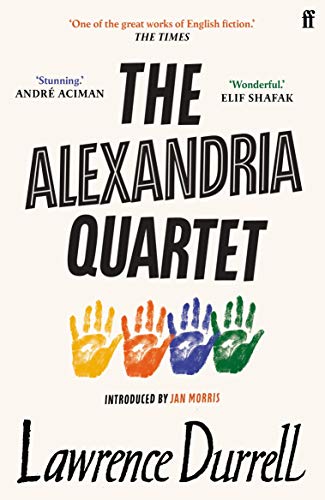
Lawrence Durrell's series of four novels set in Alexandria, Egypt during the 1940s. The lush and sensuous series consists of Justine(1957) Balthazar(1958) Mountolive(1958) Clea(1960).Justine, Balthazar and Mountolive use varied viewpoints to relate a series of events in Alexandria before World War II. In Clea, the story continues into the years during the war. One L.G. Darley is the primary observer of the events, which include events in the lives of those he loves and those he knows. In Justine, Darley attempts to recover from and put into perspective his recently ended affair with a woman. Balthazar reinterprets the romantic perspective he placed on the affair and its aftermath in Justine, in more philosophical and intellectual terms. Mountolive tells a story minus interpretation, and Clea reveals Darley's healing, and coming to love another woman.

The time is the eve of the World War II. The place is Alexandria, an Egyptian city that once housed the world's greatest library and whose inhabitants are dedicated to knowledge. But for the obsessed characters in this mesmerizing novel, their pursuits lead only to bedrooms in which each seeks to know—and possess—the other. Since its publication in 1957, Justine has inspired an almost religious devotion among readers and critics alike.

Balthazar, is the second volume of Durrell's The Alexandria Quartet, set in Alexandria, Egypt, during the 1940s. The events of each lush and sensuous novel are seen through the eyes of the central character L.G. Darley, who observes the interactions of his lovers, friends, and acquaintances. Balthazar, named for Darley's friend, a doctor and mystic, interprets Darley's views from a philosophical and intellectual viewpoint.

Mountolive is a novel of vertiginous disclosures, in which the betrayer and the betrayed share secret alliances and an adulterous marriage turns out to be a vehicle for the explosive passions of the modern Middle East.

The magnificent final volume of one of the most widely acclaimed fictional masterpieces of the postwar era.Few books have been awaited as eagerly as Clea, the sensuous and electrically suspenseful novel that resolves the enigmas of the Alexandria Quartet. Some years and one world war was after his bizarre liaisons with Melissa and Justine, the Irish émigré Darley becomes enmeshed with the bisexual artist Clea. That affair not only changes the lovers, it transforms the dead as well, revealing new layers of duplicity and desire, perversity and pathos in Lawrence Durrell's masterly construction.

In his youth, before he became a celebrated writer and poet, Lawrence Durrell spent four transformative years on the island jewel of Corfu, fascinated by the idyllic natural beauty and blood-stained ancient history within its rocky shores.While his brother Gerald collected animals as a budding naturalist - later fictionalised in My Family and Other Animals and filmed as The Durrells in Corfu - Lawrence fished, drank and befriended the local villagers.After World War II catapulted him back into a turmoiled world, Durrell never forgot the wonders of Corfu. Prospero's Cell is his magical evocation of the blazing Aegean landscape, brimming with memories of the places and people that changed him forever.

This captivating Mediterranean novel was written by Lawrence Durrell immediately after finishing his exquisite vignette about Corfu, Prospero's Cell, and a decade before Justine. The story is set on Crete just after the War, as an odd assortment of English travellers come ashore from a cruise ship to explore the island and in particular to examine a dangerous local labyrinth. They include an extrovert painter, a spiritualist, a Protestant spinster with a fox terrier, an antiquarian peer and minor poet, a soldier with guilty memories of the Cretan resistance, a pretty convalescent and an eccentric married couple. To some extent the book is a roman à clef and Durrell's characters talk with great reality about their experiences, themselves and a certain psychological unease that has led most of them to embark on their journey. The climax is a disastrous visit to the labyrinth, with its reported minotaur. The novel is a gripping piece of story-telling, full of atmosphere and the vivid first-hand writing about Mediterranean landscape and people of which Durrell was a master.[ Cefalu (1947; republished as The Dark Labyrinth in 1958) ]

Durrell's third work, the original angry young novel, was first published by his good friend and long-time correspondent Henry Miller as the first title in the short-lived Villa Seurat imprint of the Paris-based Obelisk Press. Unpublishable by the more staid (and censored) presses across the Channel, no work better captures the anguish and death-consciousness of a Europe about to plunge, once again, into cataclysmic war and destruction. The Black Book first saw print in 1938.

Writing in the style of John Buchan and John le Carre+a7, the author of Alexandria Quartet follows a British secret service agent as he investigates the brutal murder of a fellow agent in the Balkans.

Shimmering with sensuous ecstasy, dark with terror and mystery, this is the extraordinary novel of a "happy trinity of lovers." The diplomat Piers, his sister Sylvie, and the English doctor Bruce are at the heart of Durrell's new creation, as is the medieval walled city of Avignon. And haunting them all is Monsieur, Prince of Darkness, whose ancient satanic rites still flourish in the modern world.

The Avignon Quintet: Monsieur, Livia, Constance, Sebastian and Quinx
by Lawrence Durrell
Rating: 4.0 ⭐
The Avignon Quintet gathers Lawrence Durrell's five kaleidoscopic, Booker Prize-nominated novels - orbiting around the South of France in World War II - into one epic modern classic, one of ' the greatest novels of our time' (Sunday Times).'Durrell is a magician. He juggles with glittering words, he conjures up "cloud capped towers, gorgeous palaces and solemn temples," he entrances, intrigues and impresses.' The Times the kingdom of kings and Popes, capital of the historic South of France, heart of legendary Provence. The entwined lives of a group of friends - and lovers - are transformed forever by the outbreak of World War II. But their dramatic present only plunges them further into the darkness of an ancient past, as they become entangled in buried plots, gnostic cults, religious rituals, and a mysterious hunt for hidden Knight's Templar treasure.From Hitler's Europe to the medieval world, French chateaus to Egyptian deserts, The Avignon Quintet is an epic symphony of ecstasy and terror, madness and memory, passion and death. Consisting of five majestic novels - Monsieur , Livia , Constance , Sebastian and Quinx - it is a wild, wise masterpiece that could only be written by the literary master of his century, Lawrence Durrell.'Entrancing ... Swooning ... Charged with Durrell's strange magic. ' Guardian'An enigmatic and secretive work, a cluster of dark passages and gaudy treasure-filled caves ... Inventive gusto and fictive extravagance ... Sensational.' London Review of Books'Splendid ... Reckless all-or-nothing writing.' Sunday Telegraph'A virtuoso, capable of extraordinary feats.' New York Times'Pungent and teasing ... There is some insidious power in him that keeps one reading.' ObserverWhat readers are ' As if Proust had written Raiders of the Lost Ark ...Templars, gnostics, handsome princes, asylums, madness, Freudians, southern France, Egypt, ancient tombs, castles, exotica, erotica, incest, ghosts, gypsies, ascetics, spies, Nazis, secret societies, bordellos, feasts, Nubian lesbians, assassins disguised as nuns, literary doppelgangers, convents, hidden treasure, suicide, and art.''Mystery, love, incest, war, espionage, gypsies, mysticism, secret a masterful writer.''Magnificent ... An incredible level of writing that should be experienced by everyone who loves modern literature.''A masterpiece ... Unlike anything I've ever read.''The master at his peak.''The writing is spectacular, unlike anything today.''Deeply complex, very clever use of language and gripping. Highly recommended.''Hairs suddenly rise on the back of the neck ... Read with a glass of wine.'

Reflections on a Marine Venus: A Companion to the Landscape of Rhodes
by Lawrence Durrell
Rating: 3.9 ⭐
In his hugely popular Prospero's Cell, Lawrence Durrell brought Corfu to life, attracting tens of thousands of visitors to the island. With Reflections on a Marine Venus, he turns to Rhodes: ranging over its past and present, touching with wit and insights on the history and myth which the landscape embodies, and presenting some real and some imagined. With the same wit, tenderness and poetic insight that characterized Prospero's Cell, Reflections on a Marine Venus is an excellent introduction the Eastern Mediterranean.'How pleasant . . . to meet Mr Durrell, gloating over his enjoyment of a Greek island! . . . He excites a longing to leave for Rhodes at once.' Raymond Mortimer

As every reader of Durrell knows, his writing is steeped in the living experience of the Mediterranean and especially the islands of Greece. This text weaves together evocative descriptions, history and myth (including flowers and festivals) with his personal reminiscences.

" Dépassé par l'ampleur de ma tâche, je demandai désespérément un assistant. La presse sur place comptait une cinquantaine d'âmes, si on estime que les journalistes ont une âme. Je ne parvenais pas à leur donner à tous l'impression d'être aimés et indispensables. Le problème de Trieste pesait sur nous, avec la redoutable éventualité de voir un conflit éclater là-bas. Seule la propagande, m'avait-on dit, pouvait maintenir l'équilibre et permettre de ne voir éclater que des pétards. Je réclamai de l'aide au Foreign Office. Elle arriva avec la rapidité et l'efficacité qui sont traditionnelles dans le service diplomatique. Au bout de deux mois, mon onzième télégramme éveilla quelque part un écho compatissant et on m'annonça qu'Edgar Albert Ponting était en route. Ce fut un immense soulagement ; mes efforts de fraternisation avec la presse avaient à cette époque fait monter le niveau de ma consommation d'alcool à trente slivovitza par jour. Bientôt, Ponting serait à mes côtés, à lever le coude suivant ce rythme régulier qu'acquièrent si facilement les chargés de presse de par le monde. Je portai un toast d'Alka Seltzer à Ponting et je me fis apporter le dossier " Affaires urgentes ". " Esprit de corps est le premier d'une série de récits inédits consacrés aux mésaventures de la communauté diplomatique de Sa Très Gracieuse Majesté, la reine d'Angleterre, en Yougoslavie. Lawrence Durrell y fut Attaché d'Ambassade. Il nous en restitue l'atmosphère et les extravagances avec une irrésistible drôlerie.

Although Durrell spent much of his life beside the Mediterranean, he wrote relatively little about Italy; it was always somewhere that he was passing through on the way to somewhere else. Sicilian Carousel is his only piece of extended writing on the country and, naturally enough for the islomaniac Durrell, it focuses on one of Italy's islands. Sicilian Carousel came relatively late in Durrell's career, and is based around a slightly fictionalized bus tour of the island.

At the dawn of World War II, Livia and her sister Constance commit themselves to separate sides of a historic struggle in the second volume of the Avignon Quintet The second book of Durrell’s inventive and inspiring Avignon Quintet, Livia follows the currents of longing and regret, and the shifting illusions of memory, that began in Monsieur. Two sisters, Livia and Constance, have already led remarkable lives as scholars, lovers of artists, and seekers of the forbidden wisdom of Gnostic sages. As Europe is shaken by the rise of fascism, the two sisters find themselves driven apart by shifting alliances. Livia is rich with Durrell’s unmistakable, gorgeous prose and breathtaking insights into love and the idiosyncrasies of the human heart.

Think-tanks and political review committees have confirmed that the Foreign Office is indeed a timeless institution. Antrobus, narrator of these tales of diplomatic misadventure, is the embodiment of everything that makes it what it is. The author's previous works include "The Avignon Quartet".

L'histoire est contée par un inventeur habité par un grand rêve : créer une machine capable de prédire le destin des individus. Il finit par entrer dans la puissante société Merlin, épouse la fille du fondateur et goûte quelque temps à la puissance que donne la fortune. Mais il tentera bientôt d'échapper à l'emprise de la société et de ses machiavéliques directeurs.Au-delà de l'anecdote et de la critique féroce de toute notre culture, c'est un jeu plus vertigineux que Durrell propose à son lecteur. Convié à son insu à participer à la composition du roman au fil de sa lecture, le lecteur devient en retour un personnage du roman en train de se faire.

The party is over, and the world is in the throes of the 1939-45 war, but the story continues as patterns set in Monsieur and Livia are developed against a background which shifts between Cairo, Geneva and Avignon. The idyllic last summer of Livia seems now forever in the past, but figures from other times and other places loom up in the twilight zone between the real and imagined worlds: Constance herself, professionally expert in Freudian analysis, but discovering passion for the first time; her tragic, doomed sister Livia; the mercurial Prince Hassad; shaggy, lumbering Rob Sutcliffe, who here at last comes face to face with his creator, Aubrey Blanford, in a significant encounter.
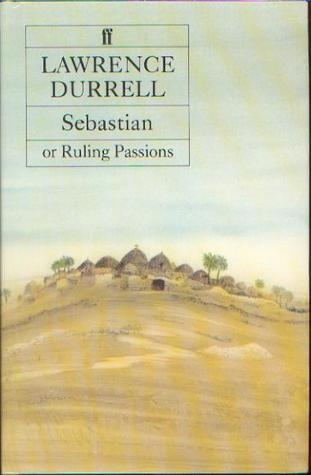
With Europe reduced to rubble after the Second World War, Constance must seek knowledge beyond the modern in order to heal her patients—and herself. In Durrell’s fourth installment of the Avignon Quintet, Constance returns to Europe after the end of World War II. A Freudian analyst, she treats the shell-shocked, the battle-fatigued, and other despairing survivors in Geneva. She also treats the traumatized, autistic son of her former lover, Sebastian—a situation that draws her back into the mysterious cult that the sensitive and charismatic Sebastian led in the deserts of Egypt. In Sebastian, Constance’s pursuit of wisdom in the midst of Europe’s blackest night is rendered as a gorgeous and heartbreaking quest for truth in a world full of illusion.

Before Peter Mayle there was Lawrence Durrell, who for more than 30 years made Provence his home. In this, his last book, he distills the affection and understanding of half a lifetime, describing the rich culture and giving breath to the history that still invests the land. 39 color photos.


From one of the century's greatest storytellers comes a collection of essays that capture the "spirit of place." Lawrence Durrell's articles about Mediterranean and Aegean islands along with passages from his letters were first published in 1969. This edition, edited by Durrell's friend and bibliographer Alan C. Thomas, comprises letters spanning thirty years, excerpts from his first two novels (neither available in the U.S.), short fiction, and travel essays. "My books are always about living in places, not just rushing through them.... the important determinant of any culture is after all -- the spirit of place".

Will a desperate scientist’s mastery of technology save him—or be his undoing? The ominous and compelling sequel to Durrell’s Tunc finds gifted inventor Felix Charlock called upon by the sinister international firm, Merlin, to apply his scientific prowess to a seemingly impossible project. He must literally reinvent his lost lover, Iolanthe, in the form of a living, breathing replica. Merlin’s dark project leads Felix on a fantastic undertaking. In recreating his former love, Felix knows that he will either find what he had thought lost, or the technology—his very life’s blood—will be the end of him.

Ten humorous stories deal with confirmed bachelors, a cavalry officer's tragedy, a crazy inventor, a soccer match, embassy dinners, and foreign embassadors

Après tant d’années, il était important de présenter enfin l’intégralité de la correspondance échangée entre Henry Miller et Lawrence Durrell, amis pendant près d’un demi-siècle. Une première partie, couvrant les années 1935 à 1959, avait fait l’objet d’une publication partielle aux Éditions Buchet/Chastel en 1963. Elle se voit aujourd’hui augmentée par les lettres écrites entre 1959 et 1980, inédites en français, et enrichie de passages qui avaient été supprimés lors de la première édition. La publication de cette correspondance passionnante et vivante, qui ne s’achève qu’avec la mort de Miller en 1980 et nous touche autant sur le plan humain qu’artistique, est donc un véritable « événement littéraire », qui permettra aux lecteurs français d’aller beaucoup plus loin dans la découverte de ces deux grands hommes de lettres.

Lawrence Durrell (1912?1990), author of "The Alexandra Quartet," was a writer with a foot in two worlds. His childhood in India and life in France and Greece provided him with an ability to absorb many traditions, all of which are evident in his work. Proficient in several forms of the written word ? novels, poetry, travel writing, essays, drama ? Durrell's best-known work fused Western notions of time and space with Eastern metaphysics. Very little has been written about Durrell's work before the Second World War. With "A Smile in His Mind's Eye," Ray Morrison seeks to redress this neglect. While French symbolism and the writings of Remy de Gourmont and Arthur Schopenhauer were important to the development of Durrell's writing, it was his embrace of Taoism that truly illustrated a shift from a Western, patriarchal consciousness to that of an Eastern, feminine-centred one and marked Durrell's coming into his own as a writer. In the years before Durrell's death, Morrison became a close acquaintance of the writer, giving "A Smile in His Mind's Eye" a personal element unseen in most other scholarly analyses. The work is essential to understanding one of the twentieth century's most original and eclectic minds.

Here, in the delightful tradition of Esprit de Corps and Stiff Upper Lip, are new stories of life in the diplomatic corps. Career officer Antrobus, experienced man-behind-the-scenes in the Iron Curtain post of Vulgaria, does the telling, and a wild assortment of tales the British gentleman has. His nine reminiscences give excellent illustration of the fact that the major problems of a diplomat are seldom diplomatic. And the various crises show that the title of the book could well be the motto of any member of an embassy. For all too often the only solution is literally "save himself who can," or, as it has evolved, "everyone for himself." This, the first collection of Antrobus stories since 1959, confirms Lawrence Durrell as a master of humor as well as of storytelling.

A breathtaking novel of passion and politics, set in the hotbed of Palestine in the 1940s, by a master of twentieth-century fictionIt is the eve of Britain’s withdrawal from Palestine in 1948, a moment that will mark the beginning of a new Israel. But the course of history is uncertain, and Israel’s territorial enemies plan to smother the new country at its birth. Judith Roth has escaped the concentration camps in Germany only to be plunged into the new conflict, one with stakes just as high for her as they are for her people.Initially conceived as a screenplay for the 1966 film starring Sophia Loren, Lawrence Durrell’s previously unpublished novel offers a thrilling portrayal of a place and time when ancient history crashed against the fragile bulwarks of the modernizing world.This ebook features an introduction by editor Richard Pine, which puts Judith in context with Durrell’s body of work and traces the fascinating development of the novel. Also included is an illustrated biography of Lawrence Durrell containing rare images and never-before-seen documents from the author’s estate and the British Library’s modern manuscripts collection.