
Jason K. Stearns
Jason K. Stearns is an American writer who worked for ten years in the Congo, including three years during the Second Congo War. He first traveled to the Congo in 2001 to work for a local human rights organization, Héritiers de la Justice, in Bukavu. He went on to work for the United Nations peacekeeping mission (MONUC). In 2008 Stearns was named by the UN Secretary General to lead a special UN investigation into the violence in the country. Stearns is the author of the book, Dancing in the Glory of Monsters: The Collapse of the Congo and the Great War of Africa, and the blog, Congo Siasa
10 Books Written

Dancing in the Glory of Monsters: The Collapse of the Congo and the Great War of Africa
by Jason K. Stearns
Rating: 4.2 ⭐
• 3 recommendations ❤️
“The best account [of the conflict in the Congo] so far….The task facing anyone who tries to tell this whole story is formidable, but Stearns by and large rises to it.” —Adam Hochschild, New York Times Book Review “[A] tour de force, though not for the squeamish.” — Washington Post “This is a serious book about the social and political forces behind one of the most violent clashes of modern times—as well as a damn good read.” — Economist “[P]erhaps the best account of the most recent conflict in the Congo.” — Foreign Policy “A serious, admirably balanced account of the crisis and the political and social forces behind it… perhaps the most accessible, meticulously researched, and comprehensive overview of the Congo crisis yet.” — Financial Times

The War That Doesn't Say Its Name: The Unending Conflict in the Congo
by Jason K. Stearns
Rating: 4.1 ⭐
Why violence in the Congo has continued despite decades of international intervention Well into its third decade, the military conflict in the Democratic Republic of the Congo has been dubbed a "forever war"--a perpetual cycle of war, civil unrest, and local feuds over power and identity. Millions have died in one of the worst humanitarian calamities of our time. The War That Doesn't Say Its Name investigates the most recent phase of this conflict, asking why the peace deal of 2003--accompanied by the largest United Nations peacekeeping mission in the world and tens of billions in international aid--has failed to stop the violence. Jason Stearns argues that the fighting has become an end in itself, carried forward in substantial part through the apathy and complicity of local and international actors.Stearns shows that regardless of the suffering, there has emerged a narrow military bourgeoisie of commanders and politicians for whom the conflict is a source of survival, dignity, and profit. Foreign donors provide food and urgent health care for millions, preventing the Congolese state from collapsing, but this involvement has not yielded transformational change. Stearns gives a detailed historical account of this period, focusing on the main players--Congolese and Rwandan states and the main armed groups. He extrapolates from these dynamics to other conflicts across Africa and presents a theory of conflict that highlights the interests of the belligerents and the social structures from which they arise.Exploring how violence in the Congo has become preoccupied with its own reproduction, The War That Doesn't Say Its Name sheds light on why certain military feuds persist without resolution.

Banyamulenge: Insurgency and exclusion in the mountains of South Kivu
by Jason K. Stearns
Rating: 4.6 ⭐
The Banyamulenge, a Tutsi community in the Eastern DRC, have despite their small size, been at the centre of many of the disparate conflicts in the eastern DRC for most of the past two decades. The initial 1996 invasion by a Rwandan-backed insurgent coalition that aimed to topple Mobutu Sese Seko became known as ‘the Banyamulenge rebellion’, and the Second Congo War of 1998–2003 saw Banyamulenge take on top positions as rebel commanders and political leaders.During this period of nearly 20 years, the community has been stuck in a cycle of persecution and insurgency. Banyamulenge have been labelled by their neighbours as foreigners and fifth columnists operating on behalf of Rwanda. In response, many young Banyamulenge men have joined rebellions backed by Rwanda, creating a culture of soldiering and politics, and involving them in brutal counterinsurgency operations against local militias that have fuelled prejudice and conspiracies against the community as a whole.The Banyamulenge have also succumbed to several bouts of internecine fighting, beginning in 2002, as part of a gradual but tumultuous realignment toward the government in Kinshasa. The recent M23 rebellion in North Kivu has highlighted this senior Banyamulenge officers in the Congolese army were deployed on the frontlines, while repeated efforts by Rwanda and the M23 to mobilize the Banyamulenge community have mostly failed.In 2011, the last major Banyamulenge insurgency came to an end, allowing for the restoration of a modicum of unity within the community. It seems unlikely that there will be another broad-based Banyamulenge rebellion soon. The community is too small, politically weak and vulnerable to keep fighting between themselves—and many Banyamulenge officers have attained influential positions in the national army. For similar reasons, the ties between Banyamulenge and Rwanda have frayed, with many in the community feeling that this alliance had only damaged relations with their neighbours.Nonetheless, several small Banyamulenge armed groups documented in this report remain in the Hauts Plateaux (High Plateaus) mountain range, highlighting the opportunism that still animates some Banyamulenge commanders, as well as the continued, albeit diminished, involvement of Rwanda. It also demonstrates the extent to which the rhetoric of community self-protection can still be used to justify insurgencies. For these reasons, recent gains could be quickly eroded if more is not done to hold political and military leaders to account and address long-standing communal tensions.

From CNDP to M23: The evolution of an armed movement in eastern Congo
by Jason K. Stearns
Rating: 4.8 ⭐
Ce rapport, le premier d’une série consacrée aux factions belligérantes dans l’est de la RDC, a pour objectif de contribuer à l’élaboration de ces solutions en faisant la lumière sur les principaux acteurs du conflit et leurs intérêts. Comprendre le M23 et son prédécesseur direct, le Congrès national pour la défense du peuple (CNDP), permettra d’expliquer pourquoi la violence persiste dans la région des Kivus malgré l’accord de paix conclu en 2002 qui a uni le pays et mis fin à une guerre aux effets ravageurs.Le principal vecteur de la rébellion est le sentiment, éprouvé à Kigali ainsi que parmi des hommes d’affaires Tutsi et des commandants militaires du Nord-Kivu, que le gouvernement congolais, du fait de ses dysfonctionnements, est incapable de protéger leurs différents intérêts—sécurité, investissements et pouvoir politique. C’est donc pour sauvegarder ces biens qu’ils ont apporté leur soutien à des groupes armé au CNDP de 2004 à 2009 et, depuis avril 2012, au M23.Des clivages ethniques virulents ont exacerbé cette méfiance. La communauté Tutsi, dont sont originaires ces groupes armés, occupe une place précaire au Nord-Kivu, oscillant entre privilèges et discriminations. Ses dirigeants font partie des propriétaires terriens et des entrepreneurs les plus riches de la région, mais la prévalence et l’intensité exceptionnelle du sentiment anti-Tutsi au Congo sont également indéniables.Une dernière source d’insécurité est l’État congolais lui-même. Son inaptitude à exercer son autorité, associée à une puissance militaire qui est insuffisante pour pouvoir réprimer les rivaux armés, pousse à croire que le seul moyen de garantir un minimum de sécurité—à savoir la protection à la fois des biens et des libertés individuelles—passe par la force armée. La faiblesse des institutions étatiques est sans doute l’élément le plus insoluble du problème actuel.Parmi les solutions durables pouvant être apportées à ce cycle de violence, citons une révision profonde des institutions, une réforme foncière et des changements fondamentaux au niveau des relations dans la région, en particulier entre le Rwanda et la RDC. De telles solutions ne sauraient être imposées de l’extérieur; un groupe de travail de haut niveau instauré par l’Union africaine et les Nations Unies pourrait proposer de nouvelles politiques à l’intention des gouvernements, des hauts responsables militaires et des leaders communautaires de la région. Une telle démarche pourrait ainsi favoriser l’ouverture d’un débat et enrichir un nouveau processus politique.

North Kivu: The background to conflict in North Kivu province of eastern Congo
by Jason K. Stearns
Rating: 3.8 ⭐
The continuing violence in the eastern Democratic Republic of the Congo (DRC) can be bewildering in its in the profusion of armed factions, the plethora of acronyms, and the multitude of grievances that trigger outbreaks of conflict—be they political, financial, or ethnic; local, national, or cross-border.The province of North Kivu has been the epicentre of war in the DRC. It has generated a multitude of armed groups, with over two dozen emerging over the past two decades. It was here that the precursors to the Congo wars began with ethnic violence in 1993, and it is here that the most formidable challenges to stability in the country persist today. The present report sketches the historical backdrop to these conflicts, describing their social, political, and economic dynamics. It focuses on the southern part of North Kivu—in particular the territories of Masisi, Rutshuru, and Walikale—where the Congolese government currently faces the most substantial challenge to its authority.The armed groups that have emerged in North Kivu have features in common, but there is no comprehensive theory that explains them all. They draw on three sources of local, regional, and national. The Congolese state is decrepit and partial to private interests. It has neither the rule of law to guarantee property rights nor the force of law to suppress armed rivals. This weakness reinforces the belief that the only way of protecting property and individual freedoms is through armed force.Such violence has exacerbated tensions between local communities, in particular a rift between so-called indigenous groups—those communities whose presence is most entrenched—and the Hutu and Tutsi populations, many of whom arrived as immigrants during the colonial and post-colonial periods. Most of the fighting today draws directly on this cleavage, hardened by two decades of killings on both sides.Finally, local elites, especially in Kigali and Goma, have developed a stake in armed groups, which they believe maintain their interests—either directly, by providing protection to businesses and their personal security, or indirectly, by bolstering their influence and giving them political leverage.This potent blend of ethnic discrimination, state weakness and elite interest has rendered the conflict, in the eyes of many outside observers, intractable. But the armed groups also differ significantly. While some emerged organically from the realities of rural life, others were deliberately created by local politicians, and still others were exploited to serve the interests of urban businessmen. Some have lost touch with their initial motivations, while others stick to the pursuit of their founding principles. Most intriguing, from the point of view of policy and advocacy, some have disappeared while others resist and persist. Disentangling these differences can help explain the major obstacles to peace in the region.

Raia Mutomboki: The flawed peace process in the DRC and the birth of an armed franchise
by Jason K. Stearns
Rating: 4.7 ⭐
In 2011, a new kind of mobilization emerged in rural areas of the eastern Democratic Republic of Congo. The Raia Mutomboki (‘Outraged Citizens’) was a grassroots response to rampant insecurity, in particular to the abuses perpetrated by the Forces démocratiques de liberation du Rwanda (FDLR, Democratic Forces for the Liberation of Rwanda), a largely Rwandan Hutu rebel group. Supported by customary chiefs, former militia members, and army deserters, young people rallied around the idea of dawa, magical medicines and amulets that they believe makes them invincible, and quickly drove the FDLR out of many of their former strongholds.Their appearance was testimony to the flaws of various peace deals in eastern Congo, which, while solving some security problems, have created others. In 2009, a secretive deal between the Congolese and Rwandan governments succeeded in integrating some armed groups into the army, but was made conditional on a series of offensives against the FDLR, which in turn triggered massive displacement and revenge attacks by all sides against civilians. The restructuring of the army—the so-called ‘regimentation process’—was launched in 2011 as a corrective to the favouring of certain former armed groups in the army, but ended up entrenching that favouritism, leading to a series of defections and additional tension.The unintended consequences of these deals played a crucial role in transforming the Raia Mutomboki from a parochial militia to a series of groups deployed across an area the size of Belgium. Today, the name applies to a series of different armed groups, bound by the same name and broad ideology of self-defence. It is more a franchise than a unitary force, with each of its branches rooted in a particular set of dynamics driven by local politics, its leadership, and the interests of its allies.The absence of the Congolese state has played an important role in this mobilization by neglecting and at times even exacerbating local conflicts. However, while the Raia Mutomboki began as self-defence forces, they have in many places evolved into a brutal and abusive militia, killing hundreds of civilians and setting up illegal tax schemes. Demobilizing the groups will require addressing the security challenges posed by the FDLR, and crafting a militia demobilization programme that applies lessons learned from past mistakes. Perhaps the stiffest challenge—one common to dealing with all armed groups in the Kivus—will be improving local state capacity to prevent conflicts over customary power and land from seeping into armed mobilization, and to provide necessary protection and security for local populations.

Pareco: Land, local strongmen, and the roots of militia politics in North Kivu
by Jason K. Stearns
Rating: 4.5 ⭐
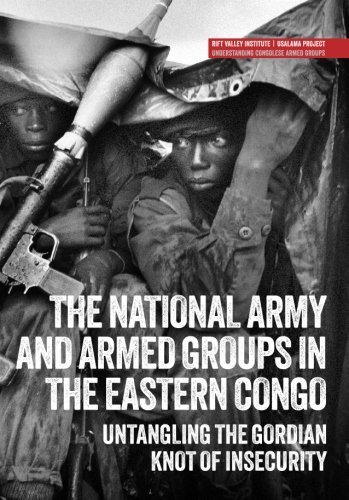
The National Army and Armed Groups in the Eastern Congo: Untangling the Gordian Knot of Insecurity
by Jason K. Stearns
Rating: 4.5 ⭐
The eastern Congo has been a theatre of violent conflict for over two decades. The main source of violence is fighting among the Congolese army and an array of armed groups. Several dozen factions—ranging from disorganized village militias to professional rebel organizations—clash with each other and the Forces armées de la République démocratique du Congo (FARDC, Armed Forces of the Democratic Republic of the Congo).Over the past eighteen months, the Rift Valley Institute’s Usalama Project has carried out investigations into seven of the most important armed groups, and the Congolese army, in order to understand what drives them and whether policy responses have been adequate. This report presents the conclusions of that research in three an analysis of armed mobilization, focusing on the region of North and South Kivu; an examination of the FARDC; and a critical review of past and current efforts in the field of demobilization and army reform.While the social underpinnings of each armed group vary considerably, since the beginning of the First Congo War (1996–7), armed actors have moved away from their roots in local communities to become more dependent on political and business elites in the region. However, even groups that form part of elite networks continue to be anchored in their local environment. While they may emerge as a result of competition over power between and among elites, they are at the same time informed by local conflicts and grievances.In the DRC’s current political order, violence is an effective strategy to obtain power and control resources. The resulting militarized nature of power politics is an outcome of the 2003–6 transition, which followed the end of the Second Congo War (1998–2003). The peace process was based on a power-sharing former belligerents joined Congolese state structures and their armed wings were integrated into a new national army. The implied logic of this process—granting insurgents political power in order to quell their insurgencies—persists until today, creating incentives for elites to mobilize armed groups.Troubled army policies constitute another source of armed mobilization. By repeatedly integrating armed groups into the FARDC, the government has not only provided incentives for further insurrection, it has effectively sanctioned impunity. In turn, abuses committed by the army have driven numerous groups to take up arms and legitimized rebels’ claims of self-defence. Furthermore, the army is sometimes complicit in armed group mobilization, with officers providing support to armed groups or being involved in the arms trade.Untangling this Gordian knot will require a comprehensive political and military strategy, aligning local, national, and international initiatives. This strategy will have to address both the incentives that drive elites to take up arms, and local conflicts over land and local governance that are liable to feature an ethnic dimension. An informed approach to such a complex problem thus needs to take a range of factors into account.

For years, the international community has focused on war in the eastern part of the Democratic Republic of Congo. But in the capital of Kinshasa, the real crisis concerns who will succeed President Joseph Kabila, who appears to be trying to illegally extend his presidential mandate.

Mai-Mai Yakutumba: Resistance and racketeering in Fizi, South Kivu
by Jason K. Stearns
L’un des meilleurs moyens de prédire où éclatera une nouvelle insurrection en RDC consiste à étudier les mouvements précé des groupes armés naissent de nouveaux groupes armés, les commandants profitant des réseaux d’anciens combattants et renouant des relations avec les contrebandiers, les trafiquants d’armes et les mineurs.Depuis le début de la période postcoloniale, le territoire de Fizi, situé dans le sud de la Province du Sud-Kivu, a connu une succession de mouvements rebelles. En 2007 est apparu un groupe armé de les Maï-Maï de William Amuri Yakutumba (ou Yakotumba) qui, à l’heure actuelle, résistent à toute démobilisation.Les insurrections au Fizi ont exploité l’emplacement stratégique de ce territoire, sur les rives du lac Tanganyika, et l’image que les Bembé, principal groupe ethnique du Fizi, véhiculent d’eux-mêmes, à savoir celle d’un peuple qui se bat pour son autodétermination contre toute domination externe, qu’il s’agisse d’un lointain gouvernement à Kinshasa ou, plus récemment, de la communauté voisine des Banyamulenge. L’héritage violent des Guerres du Congo a considérablement renforcé ces tensions identitaires.La longue histoire de mobilisation armée au Fizi a alimenté un vivier de combattants chevronnés faciles à remobiliser. Nombre des Maï-Maï Yakutumba sont des combattants qui ont été démobilisés après la Deuxième Guerre du Congo (1998–2003) mais ont peiné à trouver d’autres moyens de subsistance, ce qui montre combien la démobilisation est difficile dans un contexte de pauvreté généralisée.Mais si certains des facteurs qui contribuent à la mobilisation armée restent constants, il existe aussi des différences importantes entre les rébellions historiques au Fizi et l’insurrection actuelle.Au cours de la dernière décennie, les nouvelles insurrections ont été de plus en plus déclenchées non par des tensions communautaires, mais par les élites politiques et militaires, qui ont exploité ces griefs pour encourager une mobilisation armée. Le parcours du groupe de Yakutumba illustre fort bien ce phénomè il est le produit de deux tendances qui se sont développées pendant la période du gouvernement de transition (2003–6), à savoir l’échec de l’intégration des groupes armés dans l’armée nationale, et le recours à la violence afin de dégager des avantages politiques.Le groupe de Yakutumba a été formé à partir d’une faction Maï-Maï qui refusait de s’intégrer. Les élites politiques à Kinshasa et au sein de la diaspora du Fizi ont exploité ce refus, tentant de soumettre les Maï-Maï pour consolider leurs propres programmes et ambitions. Les processus de paix qui se sont succédé en RDC n’ont guère tenu compte de cet aspect pourtant central de la violence; ils l’ont même encouragé en permettant à des groupes armés de devenir des instruments propices à l’obtention d’un pouvoir politique.Début 2013, William Amuri Yakutumba s’est engagé à s’intégrer dans l’armée nationale et à officiellement commencé à regrouper ses combattants. Mais au mois d’août de cette même année, de nouveaux combats ont opposé les FARDC à un groupe de Maï-Maï qui n’avait toujours pas été démobilisé à cause de retards dans le processus d’intégration. Cela montre combien il peut être dangereux de chercher à mettre un terme aux activités des groupes armés dans l’est de la RDC en s’appuyant exclusivement sur une intégration des rebelles.