Loading themes...
Explore the best books about Evolution theme.
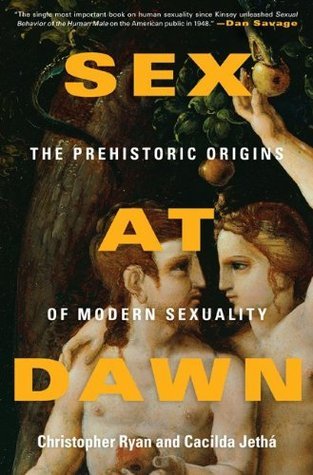
Since Darwin's day, we've been told that sexual monogamy comes naturally to our species. Mainstream science--as well as religious and cultural institutions--has maintained that men and women evolved in families in which a man's possessions and protection were exchanged for a woman's fertility and fidelity. But this narrative is collapsing. Fewer and fewer couples are getting married, and divorce rates keep climbing as adultery and flagging libido drag down even seemingly solid marriages.How can reality be reconciled with the accepted narrative? It can't be, according to renegade thinkers Christopher Ryan and Cacilda Jethá. While debunking almost everything we "know" about sex, they offer a bold alternative explanation in this provocative and brilliant book.Ryan and Jethá's central contention is that human beings evolved in egalitarian groups that shared food, child care, and, often, sexual partners. Weaving together convergent, frequently overlooked evidence from anthropology, archaeology, primatology, anatomy, and psychosexuality, the authors show how far from human nature monogamy really is. Human beings everywhere and in every era have confronted the same familiar, intimate situations in surprisingly different ways. The authors expose the ancient roots of human sexuality while pointing toward a more optimistic future illuminated by our innate capacities for love, cooperation, and generosity.With intelligence, humor, and wonder, Ryan and Jethá show how our promiscuous past haunts our struggles over monogamy, sexual orientation, and family dynamics. They explore why long-term fidelity can be so difficult for so many; why sexual passion tends to fade even as love deepens; why many middle-aged men risk everything for transient affairs with younger women; why homosexuality persists in the face of standard evolutionary logic; and what the human body reveals about the prehistoric origins of modern sexuality.In the tradition of the best historical and scientific writing, Sex at Dawn unapologetically upends unwarranted assumptions and unfounded conclusions while offering a revolutionary understanding of why we live and love as we do.

The Red Queen compels us to rethink everything from the persistence of sexism to the endurance of romantic love.Referring to Lewis Carroll's Red Queen from Through the Looking-Glass, a character who has to keep running to stay in the same place, Matt Ridley demonstrates why sex is humanity's best strategy for outwitting its constantly mutating internal predators. The Red Queen answers dozens of other riddles of human nature and culture—including why men propose marriage, the method behind our maddening notions of beauty, and the disquieting fact that a woman is more likely to conceive a child by an adulterous lover than by her husband. The Red Queen offers an extraordinary new way of interpreting the human condition and how it has evolved.

“Ridley leaps from chromosome to chromosome in a handy summation of our ever increasing understanding of the roles that genes play in disease, behavior, sexual differences, and even intelligence. . . . . He addresses not only the ethical quandaries faced by contemporary scientists but the reductionist danger in equating inheritability with inevitability.” — The New Yorker The genome's been mapped. But what does it mean? Matt Ridley’s Genome is the book that explains it what it is, how it works, and what it portends for the future Arguably the most significant scientific discovery of the new century, the mapping of the twenty-three pairs of chromosomes that make up the human genome raises almost as many questions as it answers. Questions that will profoundly impact the way we think about disease, about longevity, and about free will. Questions that will affect the rest of your life. Genome offers extraordinary insight into the ramifications of this incredible breakthrough. By picking one newly discovered gene from each pair of chromosomes and telling its story, Matt Ridley recounts the history of our species and its ancestors from the dawn of life to the brink of future medicine. From Huntington's disease to cancer, from the applications of gene therapy to the horrors of eugenics, Ridley probes the scientific, philosophical, and moral issues arising as a result of the mapping of the genome. It will help you understand what this scientific milestone means for you, for your children, and for humankind.

The Earth teems with life: in its oceans, forests, skies and cities. Yet there’s a black hole at the heart of biology. We do not know why complex life is the way it is, or, for that matter, how life first began. In The Vital Question, award-winning author and biochemist Nick Lane radically reframes evolutionary history, putting forward a solution to conundrums that have puzzled generations of scientists.For two and a half billion years, from the very origins of life, single-celled organisms such as bacteria evolved without changing their basic form. Then, on just one occasion in four billion years, they made the jump to complexity. All complex life, from mushrooms to man, shares puzzling features, such as sex, which are unknown in bacteria. How and why did this radical transformation happen?The answer, Lane argues, lies in energy: all life on Earth lives off a voltage with the strength of a lightning bolt. Building on the pillars of evolutionary theory, Lane’s hypothesis draws on cutting-edge research into the link between energy and cell biology, in order to deliver a compelling account of evolution from the very origins of life to the emergence of multicellular organisms, while offering deep insights into our own lives and deaths.Both rigorous and enchanting, The Vital Question provides a solution to life’s vital question: why are we as we are, and indeed, why are we here at all?

In his bestselling The Moral Animal, Robert Wright applied the principles of evolutionary biology to the study of the human mind. Now Wright attempts something even more explaining the direction of evolution and human history–and discerning where history will lead us next.In The Logic of Human Destiny, Wright asserts that, ever since the primordial ooze, life has followed a basic pattern. Organisms and human societies alike have grown more complex by mastering the challenges of internal cooperation. Wright's narrative ranges from fossilized bacteria to vampire bats, from stone-age villages to the World Trade Organization, uncovering such surprises as the benefits of barbarian hordes and the useful stability of feudalism. Here is history endowed with moral significance–a way of looking at our biological and cultural evolution that suggests, refreshingly, that human morality has improved over time, and that our instinct to discover meaning may itself serve a higher purpose. Insightful, witty, profound, Nonzero offers breathtaking implications for what we believe and how we adapt to technology's ongoing transformation of the world.

A preeminent scientist - and the world's most prominent atheist - asserts the irrationality of belief in God, and the grievous harm religion has inflicted on society, from the Crusades to 9/11.With rigor and wit, Dawkins examines God in all his forms, from the sex-obsessed tyrant of the Old Testament, to the more benign (but still illogical) Celestial Watchmaker favored by some Enlightenment thinkers. He eviscerates the major arguments for religion, and demonstrates the supreme improbability of a supreme being. He shows how religion fuels war, foments bigotry, and abuses children, buttressing his points with historical and contemporary evidence.The God Delusion makes a compelling case that belief in God is not just wrong, but potentially deadly. It also offers exhilarating insight into the advantages of atheism to the individual and society, not the least of which is a clearer, truer appreciation of the universe's wonders than any faith could ever muster.

One of our most influential anthropologists reevaluates her long and illustrious career by returning to her roots--and the roots of life as we know it.When Elizabeth Marshall Thomas first arrived in Africa to live among the Kalahari San, or bushmen, it was 1950, she was nineteen years old, and these last surviving hunter-gatherers were living as humans had lived for 15,000 centuries. Thomas wound up writing about their world in a seminal work, The Harmless People (1959). It has never gone out of print.Back then, this was uncharted territory and little was known about our human origins. Today, our beginnings are better understood. And after a lifetime of interest in the bushmen, Thomas has come to see that their lifestyle reveals great, hidden truths about human evolution.As she displayed in her bestseller, The Hidden Life of Dogs, Thomas has a rare gift for giving voice to the voices we don't usually listen to, and helps us see the path that we have taken in our human journey. In The Old Way, she shows how the skills and customs of the hunter-gatherer share much in common with the survival tactics of our animal predecessors. And since it is "knowledge, not objects, that endure" over time, Thomas vividly brings us to see how linked we are to our origins in the animal kingdom.The history of mankind that most of us know is only the tip of the iceberg, a brief stint compared to fifteen thousand centuries of life as roving clans that seldom settled down adapted every day to changes in environment and food supply, and lived for the most part like the animal ancestors from which they evolved. Those origins are not so easily abandoned, Thomas suggests, and our wired, documented, and market-driven society has plenty to learn from the Bushmen of the Kalahari about human evolution. As she displayed in The Hidden Life of Dogs, Thomas helps us see the path that we have taken in our human journey. In The Old Way, she shows how the skills and customs of the hunter-gatherer share much in common with the survival tactics of our animal predecessors. And since it is "knowledge, not objects, that endure" over time, Thomas brings us to see how linked we are to our origins in the animal kingdom.

How did we come to have minds? For centuries, poets, philosophers, psychologists, and physicists have wondered how the human mind developed its unrivaled abilities. Disciples of Darwin have explained how natural selection produced plants, but what about the human mind?In From Bacteria to Bach and Back, Daniel C. Dennett builds on recent discoveries from biology and computer science to show, step by step, how a comprehending mind could in fact have arisen from a mindless process of natural selection. A crucial shift occurred when humans developed the ability to share memes, or ways of doing things not based in genetic instinct. Competition among memes produced thinking tools powerful enough that our minds don’t just perceive and react, they create and comprehend.An agenda-setting book for a new generation of philosophers and scientists, From Bacteria to Bach and Back will delight and entertain all those curious about how the mind works.

Can we trust our senses to tell us the truth? Challenging leading scientific theories that claim that our senses report back objective reality, cognitive scientist Donald Hoffman argues that while we should take our perceptions seriously, we should not take them literally. How can it be possible that the world we see is not objective reality? And how can our senses be useful if they are not communicating the truth? Hoffman grapples with these questions and more over the course of this eye-opening work. Ever since Homo sapiens has walked the earth, natural selection has favored perception that hides the truth and guides us toward useful action, shaping our senses to keep us alive and reproducing. We observe a speeding car and do not walk in front of it; we see mold growing on bread and do not eat it. These impressions, though, are not objective reality. Just like a file icon on a desktop screen is a useful symbol rather than a genuine representation of what a computer file looks like, the objects we see every day are merely icons, allowing us to navigate the world safely and with ease. The real-world implications for this discovery are huge. From examining why fashion designers create clothes that give the illusion of a more “attractive” body shape to studying how companies use color to elicit specific emotions in consumers, and even dismantling the very notion that spacetime is objective reality, The Case Against Reality dares us to question everything we thought we knew about the world we see. 40 illustrations; 8 pages of color illustrations

One of our greatest scientists—and the winner of two Pulitzer Prizes for On Human Nature and The Ants—gives us a work of visionary importance that may be the crowning achievement of his career. In Consilience (a word that originally meant "jumping together"), Edward O. Wilson renews the Enlightenment's search for a unified theory of knowledge in disciplines that range from physics to biology, the social sciences and the humanities.Using the natural sciences as his model, Wilson forges dramatic links between fields. He explores the chemistry of the mind and the genetic bases of culture. He postulates the biological principles underlying works of art from cave-drawings to Lolita. Presenting the latest findings in prose of wonderful clarity and oratorical eloquence, and synthesizing it into a dazzling whole, Consilience is science in the path-clearing traditions of Newton, Einstein, and Richard Feynman.

Forse non tutti sanno che:- il 10% dei bambini sono allevati da un uomo che non è il loro padre genetico, anche se crede di esserlo;- meno dell'1% degli spermatozoi eiaculati da un uomo è in grado di fecondare l'ovulo; il rimanente 99% serve solo a ingaggiare guerre sessuali con spermatozoi di altri uomini;- un uomo e una donna, che si trovino nel deserto o in una modernissima città, avranno da due a tremila rapporti sessuali in tutta la loro vita;- raramente le scappatelle vengono scoperte e anche i tradimenti di lunga durata hanno solo il 50% di probabilità di essere smascherati.Guerre sessuali è il risultato di anni di rigorose ricerche e ci aiuta a comprendere il nostro comportamento sessuale nella sua complesità e, a volte, apparente perversità.

The Evolution of Cooperation provides valuable insights into the age-old question of whether unforced cooperation is ever possible. Widely praised and much-discussed, this classic book explores how cooperation can emerge in a world of self-seeking egoists—whether superpowers, businesses, or individuals—when there is no central authority to police their actions. The problem of cooperation is central to many different fields. Robert Axelrod recounts the famous computer tournaments in which the “cooperative” program Tit for Tat recorded its stunning victories, explains its application to a broad spectrum of subjects, and suggests how readers can both apply cooperative principles to their own lives and teach cooperative principles to others.

Are men literally born to cheat? Does monogamy actually serve women's interests? These are among the questions that have made The Moral Animal one of the most provocative science books in recent years. Wright unveils the genetic strategies behind everything from our sexual preferences to our office politics--as well as their implications for our moral codes and public policies. Illustrations.

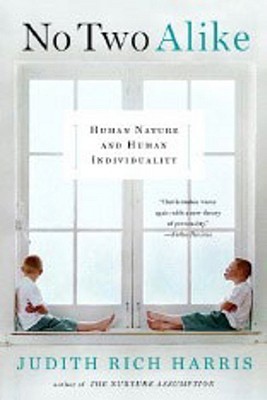
"A display of scientific courage and imagination." ―William Saletan, New York Times Book Review Why do people―even identical twins reared in the same home―differ so much in personality? Armed with an inquiring mind and insights from evolutionary psychology, Judith Rich Harris sets out to solve the mystery of human individuality. 12 illustrations

If, as Darwin suggests, evolution relentlessly encourages the survival of the fittest, why are humans compelled to live in cooperative, complex societies? In this fascinating examination of the roots of human trust and virtue, a zoologist and former American editor of the Economist reveals the results of recent studies that suggest that self-interest and mutual aid are not at all incompatible. In fact, he points out, our cooperative instincts may have evolved as part of mankind's natural selfish behavior—by exchanging favors we can benefit ourselves as well as others.Brilliantly orchestrating the newest findings of geneticists, psychologists, and anthropologists, The Origins of Virtue re-examines the everyday assumptions upon which we base our actions towards others, whether in our roles as parents, siblings, or trade partners. With the wit and brilliance of The Red Queen , his acclaimed study of human and animal sexuality, Matt Ridley shows us how breakthroughs in computer programming, microbiology, and economics have given us a new perspective on how and why we relate to each other.

Lauded by critics and devoured by countless readers as a companion to the acclaimed PBS series, this work traces the development of science as an expression of the special gifts that characterize man and make him preeminent among animals. Bronowski's exciting, splendidly illustrated investigation offers a new perspective not just on science, but on civilization itself. Photographs.

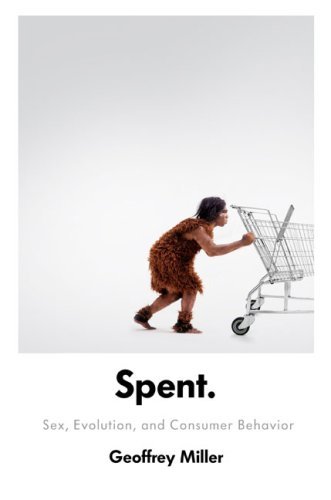
A leading evolutionary psychologist probes the hidden instincts behind our working, shopping, and spendingEvolutionary psychology-the compelling science of human nature-has clarified the prehistoric origins of human behavior and influenced many fields ranging from economics to personal relationships. In Spent Geoffrey Miller applies this revolutionary science's principles to a new the sensual wonderland of marketing and status seeking that we call American consumer culture. Starting with the basic notion that the goods and services we buy unconsciously advertise our biological potential as mates and friends, Miller examines the hidden factors that dictate our choices in everything from lipstick to cars, from the magazines we read to the music we listen to. With humor and insight, Miller analyzes an array of product choices and deciphers what our decisions say about ourselves, giving us access to a new way of understanding-and improving-our behaviors. Like Freakonomics or The Tipping Point, Spent is a bold and revelatory book that illuminates the unseen logic behind the chaos of consumerism and suggests new ways we can become happier consumers and more responsible citizens.

A renowned biochemist draws on cutting-edge scientific findings to construct the mosaic of life’s astounding history.How did life invent itself? Where did DNA come from? How did consciousness develop? Powerful new research methods are providing vivid insights into the makeup of life. Comparing gene sequences, examining atomic structures of proteins, and looking into the geochemistry of rocks have helped explain evolution in more detail than ever before. Nick Lane expertly reconstructs the history of life by describing the ten greatest inventions of evolution (including DNA, photosynthesis, sex, and sight), based on their historical impact, role in organisms today, and relevance to current controversies. Who would have guessed that eyes started off as light-sensitive spots used to calibrate photosynthesis in algae? Or that DNA’s building blocks form spontaneously in hydrothermal vents? Lane gives a gripping, lucid account of nature’s ingenuity, and the result is a work of essential reading for anyone who has ever pondered or questioned the science underlying evolution’s greatest gifts to man.

A few million years ago, our ancestors came down from the trees and began to stand upright, freeing our hands to create tools and our minds to grapple with the world around us. Leonard Mlodinow takes us on a passionate and inspiring tour through the exciting history of human progress and the key events in the development of science. In the process, he presents a fascinating new look at the unique characteristics of our species and our society that helped propel us from stone tools to written language and through the birth of chemistry, biology, and modern physics to today’s technological world. Along the way he explores the cultural conditions that influenced scientific thought through the ages and the colorful personalities of some of the great philosophers, scientists, and thinkers: Galileo, who preferred painting and poetry to medicine and dropped out of university; Isaac Newton, who stuck needlelike bodkins into his eyes to better understand changes in light and color; and Antoine Lavoisier, who drank nothing but milk for two weeks to examine its effects on his body. Charles Darwin, Albert Einstein, Werner Heisenberg, and many lesser-known but equally brilliant minds also populate these pages, each of their stories showing how much of human achievement can be attributed to the stubborn pursuit of simple questions (why? how?), bravely asked. The Upright Thinkers is a book for science lovers and for anyone interested in creative thinking and in our ongoing quest to understand our world. At once deeply informed, accessible, and infused with the author’s trademark wit, this insightful work is a stunning tribute to humanity’s intellectual curiosity. (With black-and-white illustrations throughout.)

“Mr. Ridley’s best and most important work to date…there is something profoundly democratic and egalitarian—even anti-elitist—in this bottom-up Everyone can have a role in bringing about change.” — Wall Street Journal The New York Times bestselling author of The Rational Optimist and Genome returns with a fascinating argument for evolution that definitively dispels a dangerous, widespread that we can command and control our world Human society evolves. Change in technology, language, morality, and society is incremental, inexorable, gradual, and spontaneous. It follows a narrative, going from one stage to the next, and it largely happens by trial and error—a version of natural selection. Much of the human world is the result of human action but not of human it emerges from the interactions of millions, not from the plans of a few. Drawing on fascinating evidence from science, economics, history, politics, and philosophy, Matt Ridley demolishes conventional assumptions that the great events and trends of our day are dictated by those on high. On the contrary, our most important achievements develop from the bottom up. The Industrial Revolution, cell phones, the rise of Asia, and the Internet were never planned; they happened. Languages emerged and evolved by a form of natural selection, as did common law. Torture, racism, slavery, and pedophilia—all once widely regarded as acceptable—are now seen as immoral despite the decline of religion in recent decades. In this wide-ranging, erudite book, Ridley brilliantly makes the case for evolution, rather than design, as the force that has shaped much of our culture, our technology, our minds, and that even now is shaping our future.

One of the world's top behavioural geneticists argues that we need a radical rethink about what makes us who we are The blueprint for our individuality lies in the 1% of DNA that differs between people. Our intellectual capacity, our introversion or extraversion, our vulnerability to mental illness, even whether we are a morning person - all of these aspects of our personality are profoundly shaped by our inherited DNA differences. In Blueprint, Robert Plomin, a pioneer in the field of behavioural genetics, draws on a lifetime's worth of research to make the case that DNA is the most important factor shaping who we are. Our families, schools and the environment around us are important, but they are not as influential as our genes. This is why, he argues, teachers and parents should accept children for who they are, rather than trying to mould them in certain directions. Even the environments we choose and the signal events that impact our lives, from divorce to addiction, are influenced by our genetic predispositions. Now, thanks to the DNA revolution, it is becoming possible to predict who we will become, at birth, from our DNA alone. As Plomin shows us, these developments have sweeping implications for how we think about parenting, education, and social mobility. A game-changing book by a leader in the field, Blueprint shows how the DNA present in the single cell with which we all begin our lives can impact our behaviour as adults.

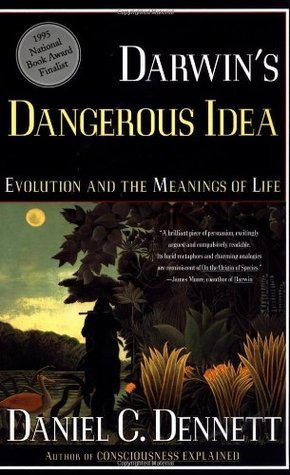
In a book that is both groundbreaking and accessible, Daniel C. Dennett, whom Chet Raymo of The Boston Globe calls "one of the most provocative thinkers on the planet," focuses his unerringly logical mind on the theory of natural selection, showing how Darwin's great idea transforms and illuminates our traditional view of humanity's place in the universe. Dennett vividly describes the theory itself and then extends Darwin's vision with impeccable arguments to their often surprising conclusions, challenging the views of some of the most famous scientists of our day.

PULITZER PRIZE WINNER • A dramatic story of groundbreaking scientific research of Darwin's discovery of evolution that "spark[s] not just the intellect, but the imagination" ( Washington Post Book World). “Admirable and much-needed.... Weiner’s triumph is to reveal how evolution and science work, and to let them speak clearly for themselves.”— The New York Times Book ReviewOn a desert island in the heart of the Galapagos archipelago, where Darwin received his first inklings of the theory of evolution, two scientists, Peter and Rosemary Grant, have spent twenty years proving that Darwin did not know the strength of his own theory. For among the finches of Daphne Major, natural selection is neither rare nor slow: it is taking place by the hour, and we can watch.In this remarkable story, Jonathan Weiner follows these scientists as they watch Darwin's finches and come up with a new understanding of life itself. The Beak of the Finch is an elegantly written and compelling masterpiece of theory and explication in the tradition of Stephen Jay Gould.

Thought-provoking essays on science as an integral part of the culture of our age from a leader in the scientific humanism movement. "A profoundly moving, brilliantly perceptive essay by a truly civilized man."-- Scientific American

In The Eternal Frontier, world-renowned scientist and historian Tim Flannery tells the unforgettable story of the geological and biological evolution of the North American continent, from the time of the asteroid strike that ended the age of dinosaurs 65 million years ago, to the present day. Flannery describes the development of North America's deciduous forests and other flora, and tracks the immigration and emigration of various animals to and from Europe, Asia, and South America, showing how plant and animal species have either adapted or become extinct. The story takes in the massive changes wrought by the ice ages and the coming of the Indians, and continues right up to the present, covering the deforestation of the Northeast, the decimation of the buffalo, and other facets of the enormous impact of frontier settlement and the development of the industrial might of the United States. Natural history on a monumental scale, The Eternal Frontier contains an enormous wealth of fascinating scientific details, and Flannery's accessible and dynamic writing makes the book a delight to read. This is science writing at its very best -- a riveting page-turner that is simultaneously an accessible and scholarly trove of incredible information that is already being hailed by critics as a classic. "Tim Flannery's account ... will fascinate Americans and non-Americans alike." -- Jared Diamond, author of Guns, Germs, and Steel "No one before Flannery ... has been brave enough to tackle the whole pageant of North America." -- David Quammen, the New York Times Book Review "Tim Flannery's book will forever change your perspective on the North American continent ... Exhilarating." -- John Terborgh, The New York Review of Books "Full of engaging and attention-catching information about North America's geology, climate, and paleontology." -- Patricia Nelson Limerick, the Washington Post Book World "Natural history par excellence." -- Kirkus Reviews (starred review) "This gutsy Aussie may have read our landscape and ecological history with greater clarity than any native son." -- David A. Burney, Natural History "A fascinating, current, and insightful look at our familiar history from a larger perspective." -- David Bezanson, Austin-American Statesman "The scope of [Flannery's] story is huge, and his research exhaustive." -- Lauren Gravitz, The Christian Science Monitor

Over 6.4 billion people participate in a $36.5 trillion global economy, designed and overseen by no one. How did this marvel of self-organized complexity evolve? How is wealth created within this system? And how can wealth be increased for the benefit of individuals, businesses, and society? In The Origin of Wealth, Eric D. Beinhocker argues that modern science provides a radical perspective on these age-old questions, with far-reaching implications. According to Beinhocker, wealth creation is the product of a simple but profoundly powerful evolutionary formula: differentiate, select, and amplify. In this view, the economy is a "complex adaptive system" in which physical technologies, social technologies, and business designs continuously interact to create novel products, new ideas, and increasing wealth. Taking readers on an entertaining journey through economic history, from the Stone Age to modern economy, Beinhocker explores how "complexity economics" provides provocative insights on issues ranging from creating adaptive organizations to the evolutionary workings of stock markets to new perspectives on government policies. A landmark book that shatters conventional economic theory, The Origin of Wealth will rewire our thinking about how we came to be here—and where we are going.

This is a book about how we see: the environment around us (its surfaces, their layout, and their colors and textures); where we are in the environment; whether or not we are moving and, if we are, where we are going; what things are good for; how to do things (to thread a needle or drive an automobile); or why things look as they do. The basic assumption is that vision depends on the eye which is connected to the brain. The author suggests that natural vision depends on the eyes in the head on a body supported by the ground, the brain being only the central organ of a complete visual system. When no constraints are put on the visual system, people look around, walk up to something interesting and move around it so as to see it from all sides, and go from one vista to another. That is natural vision -- and what this book is about.

People commonly view evolution as a process of competition between individuals—known as “survival of the fittest”—with the individual representing the “unit of selection.” Richard Dawkins offers a controversial reinterpretation of that idea in The Extended Phenotype, now being reissued to coincide with the publication of the second edition of his highly-acclaimed The Selfish Gene. He proposes that we look at evolution as a battle between genes instead of between whole organisms. We can then view changes in phenotypes—the end products of genes, like eye color or leaf shape, which are usually considered to increase the fitness of an individual—as serving the evolutionary interests of genes.Dawkins makes a convincing case that considering one’s body, personality, and environment as a field of combat in a kind of “arms race” between genes fighting to express themselves on a strand of DNA can clarify and extend the idea of survival of the fittest. This influential and controversial book illuminates the complex world of genetics in an engaging, lively manner.

The seemingly innocent observation that the activities of organisms bring about changes in environments is so obvious that it seems an unlikely focus for a new line of thinking about evolution. Yet niche construction--as this process of organism-driven environmental modification is known--has hidden complexities. By transforming biotic and abiotic sources of natural selection in external environments, niche construction generates feedback in evolution on a scale hitherto underestimated--and in a manner that transforms the evolutionary dynamic. It also plays a critical role in ecology, supporting ecosystem engineering and influencing the flow of energy and nutrients through ecosystems. Despite this, niche construction has been given short shrift in theoretical biology, in part because it cannot be fully understood within the framework of standard evolutionary theory.Wedding evolution and ecology, this book extends evolutionary theory by formally including niche construction and ecological inheritance as additional evolutionary processes. The authors support their historic move with empirical data, theoretical population genetics, and conceptual models. They also describe new research methods capable of testing the theory. They demonstrate how their theory can resolve long-standing problems in ecology, particularly by advancing the sorely needed synthesis of ecology and evolution, and how it offers an evolutionary basis for the human sciences.Already hailed as a pioneering work by some of the world's most influential biologists, this is a rare, potentially field-changing contribution to the biological sciences.

Francis Crick, who died at the age of eighty-eight in 2004, will be bracketed with Galileo, Darwin, and Einstein as one of the great scientists of all time. Between 1953 and 1966 he made and led a revolution in biology by discovering, quite literally, the secret of life: the digital cipher at the heart of heredity that distinguishes living from non-living things -- the genetic code. His own discoveries -- though he always worked with one other partner and did much of his thinking in conversation -- include not only the double helix but the whole mechanism of protein synthesis, the three-letter nature of the code, and much of the code itself. Matt Ridley's biography traces Crick's life from middle-class mediocrity in the English Midlands, through a lackluster education and six years designing magnetic mines for the Royal Navy, to his leap into biology at the age of thirty-one. While at Cambridge, he suddenly began to display the unique visual imagination and intense tenacity of thought that would allow him to see the solutions to several great scientific conundrums -- and to see them long before most biologists had even conceived of the problems. Having set out to determine what makes living creatures alive and having succeeded, he immigrated at age sixty to California and turned his attention to the second question that had fascinated him since his youth: What makes conscious creatures conscious? Time ran out before he could find the answer.

The remarkable story of a "talking" chimp, a leading scientist, and the profound insights they have uncovered about our speciesHe has been featured in cover stories in Time, Newsweek, and National Geographic, and has been the subject of a "NOVA" documentary. He is directly responsible for discoveries that have forced the scientific community to recast its thinking about the nature of the mind and the origins of language. He is Kanzi, an extraordinary bonobo chimpanzee who has overturned the idea that symbolic language is unique to our species. This is the moving story of how Kanzi learned to converse with humans and the profound lessons he has taught us about our animal cousins, and ourselves.". . . The underlying thesis is informative and well argued . . . Savage-Rumbaugh's results are impressive." — The Washington Post"This popular, absorbing, and controversial account is recommended." — Library Journal

What Is Life? is a 1944 non-fiction science book written for the lay reader by physicist Erwin Schrödinger. The book was based on a course of public lectures delivered by Schrödinger in February 1943 at Trinity College, Dublin. Schrödinger's lecture focused on one important question: "how can the events in space and time which take place within the spatial boundary of a living organism be accounted for by physics and chemistry?" In the book, Schrödinger introduced the idea of an "aperiodic crystal" that contained genetic information in its configuration of covalent chemical bonds. In the 1950s, this idea stimulated enthusiasm for discovering the genetic molecule and would give both Francis Crick and James Watson initial inspiration in their research.

s/t: Charles Darwin's Journal of ResearchesWhen the Beagle sailed out of Devonport on 27 December 1831, Charles Darwin was twenty-two and setting off on the voyage of a lifetime. It was to last five years and transform him from an amiable and somewhat aimless young man into a scientific celebrity. Even more vitally, it was to set in motion the intellectual currents that culminated in the arrival of The Origin of Species in Victorian drawing-rooms in 1859. His journal, reprinted here in a shortened version, is vivid and immediate, showing us a naturalist making patient observations, above all in geology. As well as a profusion of natural history detail, it records many other things that caught Darwin’s eye, from civil war in Argentina to the new colonial settlements of Australia. The editors have provided an excellent introduction and notes for this Penguin Classics edition, which also contains maps and appendices, including an essay on scientific geology and the Bible by Robert FitzRoy, Darwin’s friend and captain of the Beagle.

Focusing on the ground-breaking and often controversial science of Charles Darwin, the author seeks to bridge the gulf between science and religion on the subject of human evolution.

David Quammen's book, The Song of the Dodo, is a brilliant, stirring work, breathtaking in its scope, far-reaching in its message -- a crucial book in precarious times, which radically alters the way in which we understand the natural world and our place in that world. It's also a book full of entertainment and wonders.In The Song of the Dodo, we follow Quammen's keen intellect through the ideas, theories, and experiments of prominent naturalists of the last two centuries. We trail after him as he travels the world, tracking the subject of island biogeography, which encompasses nothing less than the study of the origin and extinction of all species. Why is this island idea so important? Because islands are where species most commonly go extinct -- and because, as Quammen points out, we live in an age when all of Earth's landscapes are being chopped into island-like fragments by human activity.Through his eyes, we glimpse the nature of evolution and extinction, and in so doing come to understand the monumental diversity of our planet, and the importance of preserving its wild landscapes, animals, and plants. We also meet some fascinating human characters. By the book's end we are wiser, and more deeply concerned, but Quammen leaves us with a message of excitement and hope.

In this fascinating story of evolution, religion, politics, and personalities, Matthew Chapman captures the story behind the headlines in the debate over God and science in America In Kitzmiller v. Dover Board of Education , decided in late 2005, a Republican judge rendered a surprising verdict in a case that pitted the teaching of intelligent design (sometimes known as "creationism in a lab coat") against the teaching of evolution. Taking place in a small Pennsylvania school district, the case had national repercussions, all the way up to President Bush, who said he believed intelligent design should be taught as "an alternative theory" to evolution. Matthew Chapman, the great-great-grandson of Charles Darwin, spent several months covering the trial from beginning to end. Through his in-depth encounters with the participants—creationists, preachers, teachers, scientists on both sides of the issue, lawyers, theologians, the judge, and the eleven parents who resisted the fundamentalist proponents of intelligent design—Chapman tells a sometimes terrifying, often hilarious, and above all moving story of ordinary people doing battle in America over the place of religion and science in modern life. Written with a filmaker's eye for character and detail, and including insights only a descendent of Darwin could bring forth, Chapman paints an entertaining, yet disturbing picture of America today.

A major scientific revolution has begun, a new paradigm that rivals Darwin's theory in importance. At its heart is the discovery of the order that lies deep within the most complex of systems, from the origin of life, to the workings of giant corporations, to the rise and fall of great civilizations. And more than anyone else, this revolution is the work of one man, Stuart Kauffman, a MacArthur Fellow and visionary pioneer of the new science of complexity. Now, in At Home in the Universe , Kauffman brilliantly weaves together the excitement of intellectual discovery and a fertile mix of insights to give the general reader a fascinating look at this new science--and at the forces for order that lie at the edge of chaos.We all know of instances of spontaneous order in nature--an oil droplet in water forms a sphere, snowflakes have a six-fold symmetry. What we are only now discovering, Kauffman says, is that the range of spontaneous order is enormously greater than we had supposed. Indeed, self-organization is a great undiscovered principle of nature. But how does this spontaneous order arise? Kauffman contends that complexity itself triggers self-organization, or what he calls "order for free," that if enough different molecules pass a certain threshold of complexity, they begin to self-organize into a new entity--a living cell. Kauffman uses the analogy of a thousand buttons on a rug--join two buttons randomly with thread, then another two, and so on. At first, you have isolated pairs; later, small clusters; but suddenly at around the 500th repetition, a remarkable transformation occurs--much like the phase transition when water abruptly turns to ice--and the buttons link up in one giant network.Likewise, life may have originated when the mix of different molecules in the primordial soup passed a certain level of complexity and self-organized into living entities (if so, then life is not a highly improbable chance event, but almost inevitable). Kauffman uses the basic insight of "order for free" to illuminate a staggering range of phenomena. We see how a single-celled embryo can grow to a highly complex organism with over two hundred different cell types. We learn how the science of complexity extends Darwin's theory of evolution by natural that self-organization, selection, and chance are the engines of the biosphere. And we gain insights into biotechnology, the stunning magic of the new frontier of genetic engineering--generating trillions of novel molecules to find new drugs, vaccines, enzymes, biosensors, and more. Indeed, Kauffman shows that ecosystems, economic systems, and even cultural systems may all evolve according to similar general laws, that tissuesand terra cotta evolve in similar ways. And finally, there is a profoundly spiritual element to Kauffman's thought. If, as he argues, life were bound to arise, not as an incalculably improbable accident, but as an expected fulfillment of the natural order, then we truly are at home in the universe.Kauffman's earlier volume, The Origins of Order , written for specialists, received lavish praise. Stephen Jay Gould called it "a landmark and a classic." And Nobel Laureate Philip Anderson wrote that "there are few people in this world who ever ask the right questions of science, and they are the ones who affect its future most profoundly. Stuart Kauffman is one of these." In At Home in the Universe , this visionary thinker takes you along as he explores new insights into the nature of life.

For 30 years Roger Fouts has pioneered communication with chimpanzees through sign language--beginning with a mischievous baby chimp named Washoe. This remarkable book describes Fout's odyssey from novice researcher to celebrity scientist to impassioned crusader for the rights of animals. Living and conversing with these sensitive creatures has given him a profound appreciation of what they can teach us about ourselves. It has also made Fouts an outspoken opponent of biomedical experimentation on chimpanzees. A voyage of scientific discovery and interspecies communication, this is a stirring tale of friendship, courage, and compassion that will change forever the way we view our biological--and spritual--next of kin. Fouts is a professor of Psychology.

Some investigators have argued that emotions, especially animal emotions, are illusory concepts outside the realm of scientific inquiry. However, with advances in neurobiology and neuroscience, researchers are demonstrating that this position is wrong as they move closer to a lasting understanding of the biology and psychology of emotion. In Affective Neuroscience, Jaak Panksepp provides the most up-to-date information about the brain-operating systems that organize the fundamental emotional tendencies of all mammals. Presenting complex material in a readable manner, the book offers a comprehensive summary of the fundamental neural sources of human and animal feelings, as well as a conceptual framework for studying emotional systems of the brain. Panksepp approaches emotions from the perspective of basic emotion theory but does not fail to address the complex issues raised by constructionist approaches. These issues include relations to human consciousness and the psychiatric implications of this knowledge. The book includes chapters on sleep and arousal, pleasure and fear systems, the sources of rage and anger, and the neural control of sexuality, as well as the more subtle emotions related to maternal care, social loss, and playfulness. Representing a synthetic integration of vast amounts of neurobehavioral knowledge, including relevant neuroanatomy, neurophysiology, and neurochemistry, this book will be one of the most important contributions to understanding the biology of emotions since Darwins The Expression of the Emotions in Man and Animals.

This book proceeds from a meeting at the Santa Fe Institute where economists and physical and biological scientists came together to discuss a conceptual framework incorporating a more appropriate mathematics with a greatly strengthened capacity to deal simultaneously with multiple variables, nonlinearity, incomplete information and dynamical processes.

From the New York Times bestselling author of Mama's Last Hug and Are We Smart Enough to Know How Smart Animals Are? , a provocative argument that apes have created their own distinctive culturesIn The Ape and the Sushi Master , eminent primatologist Frans de Waal corrects our arrogant assumption that humans are the only creatures to have made the leap from the natural to the cultural domain. The book's title derives from an analogy de Waal draws between the way behavior is transmitted in ape society and the way sushi-making skills are passed down from sushi master to apprentice. Like the apprentice, young apes watch their group mates at close range, absorbing the methods and lessons of each of their elders' actions. Responses long thought to be instinctive are actually learned behavior, de Waal argues, and constitute ape culture. A delightful mix of intriguing anecdote, rigorous clinical study, adventurous field work, and fascinating speculation, The Ape and the Sushi Master shows that apes are not human caricatures but members of our extended family with their own resourcefulness and dignity.

Book by Brodie, Richard

This book is a tour-de-force on how human consciousness may have evolved. From the "phantom pain" experienced by people who have lost their limbs to the uncanny faculty of "blindsight," Humphrey argues that raw sensations are central to all conscious states and that consciousness must have evolved, just like all other mental faculties, over time from our ancestors'bodily responses to pain and pleasure."Humphrey is one of that growing band of scientists who beat literary folk at their own game"-RICHARD DAWKINS"A wonderful bookbrilliant, unsettling, and beautifully written. Humphrey cuts bravely through the currents of contemporary thinking, opening up new vistas on old problems offering a feast of provocative ideas." -DANIEL DENNETT

What is a meme? First coined by Richard Dawkins in 'The Selfish Gene', a meme is any idea, behavior, or skill that can be transferred from one person to another by imitation: stories, fashions, inventions, recipes, songs, ways of plowing a field or throwing a baseball or making a sculpture. The meme is also one of the most important--and controversial--concepts to emerge since 'The Origin of the Species' appeared nearly 150 years ago.In 'The Meme Machine' Susan Blackmore boldly asserts: "Just as the design of our bodies can be understood only in terms of natural selection, so the design of our minds can be understood only in terms of memetic selection." Indeed, Blackmore shows that once our distant ancestors acquired the crucial ability to imitate, a second kind of natural selection began, a survival of the fittest amongst competing ideas and behaviors. Ideas and behaviors that proved most adaptive - making tools, for example, or using language--survived and flourished, replicating themselves in as many minds as possible. These memes then passed themselves on from generation to generation by helping to ensure that the genes of those who acquired them also survived and reproduced. Applying this theory to many aspects of human life, Blackmore offers brilliant explanations for why we live in cities, why we talk so much, why we can't stop thinking, why we behave altruistically, how we choose our mates, and much more.With controversial implications for our religious beliefs, our free will, our very sense of "self," 'The Meme Machine' offers a provocative theory everyone will soon be talking about.

Acclaimed author Matt Ridley's thrilling follow-up to his bestseller Genome. Armed with the extraordinary new discoveries about our genes, Ridley turns his attention to the nature versus nurture debate to bring the first popular account of the roots of human behaviour. What makes us who we are? In February 2001 it was announced that the genome contains not 100,000 genes as originally expected but only 30,000. This startling revision led some scientists to conclude that there are simply not enough human genes to account for all the different ways people behave: we must be made by nurture, not nature. Matt Ridley argues that the emerging truth is far more interesting than this myth. Nurture depends on genes, too, and genes need nurture. Genes not only predetermine the broad structure of the brain; they also absorb formative experiences, react to social cues and even run memory. They are consequences as well as causes of the will. Published fifty years after the discovery of the double helix of DNA, Nature via Nurture chronicles a new revolution in our understanding of genes. Ridley recounts the hundred years' war between the partisans of nature and nurture to explain how this paradoxical creature, the human being, can be simultaneously free-willed and motivated by instinct and culture. Nature via Nurture is an enthralling, up-to-the-minute account of how genes build brains to absorb experience.

This radical book by Nobel laureate Monod is an important intellectual event. Chance and Necessity is a philosophical statement whose intention is to sweep away as both false and dangerous the animist conception of man that has dominated virtually all Western worldviews from primitive cultures to those of dialectical materialists. He bases his argument on the evidence of modern biology, which indisputably shows, that man is the product of chance genetic mutation. With the unrelenting logic of the scientist, he draws upon what we now know (and can theorize) of genetic structure to suggest an new way of looking at ourselves. He argues that objective scientific knowledge, the only reliable knowledge, denies the concepts of destiny or evolutionary purpose that underlie traditional philosophies. He contends that the persistence of those concepts is responsible for the intensifying schizophrenia of a world that accepts, and lives by, the fruits of science while refusing to face its moral implications. Dismissing as "animist" not only Plato, Hegel, Bergson and Teilhard de Chardin but Spencer and Marx as well, he calls for a new ethic that will recognize the distinction between objective knowledge and the realm of values--an ethic of knowledge that can, perhaps, save us from our deepening spiritual malaise, from the new age of darkness he sees coming.PrefaceOf strange objects Vitalisms and animisms Maxwell's demons Microscopic cyberneticsMolecular ontogenesis Invariance and perturbationsEvolution The frontiers The kingdom and the darknessAppendixes

Nature versus nurture - nowhere is the debate more heated than in the areas of sex and sex differences. The Evolution of Human Sexuality adds fuel to the fire. Symons's thesis is that some of the typical differences between men and women in sexual behaviors, attitudes and feelings are innate: identical rearing of males and females will not result in identical sexualities.Anthropology, Sexual Studies, Psychology, Sociology, Gender and Cultural Studies

The essays in this volume represent an approach to human knowledge that has had a profound influence on many recent thinkers. Popper breaks with a traditional commonsense theory of knowledge that can be traced back to Aristotle. A realist and fallibilist, he argues closely and in simple language that scientific knowledge, once stated in human language, is no longer part of ourselves but a separate entity that grows through critical selection.

A fresh look at Darwin's most radical idea, and the mysteriously slow process by which he revealed it.Evolution, during the early nineteenth century, was an idea in the air. Other thinkers had suggested it, but no one had proposed a cogent explanation for how evolution occurs. Then, in September 1838, a young Englishman named Charles Darwin hit upon the idea that "natural selection" among competing individuals would lead to wondrous adaptations and species diversity. Twenty-one years passed between that epiphany and publication of On the Origin of Species . The human drama and scientific basis of Darwin's twenty-one-year delay constitute a fascinating, tangled tale that elucidates the character of a cautious naturalist who initiated an intellectual revolution.The Reluctant Mr. Darwin is a book for everyone who has ever wondered about who this man was and what he said. Drawing from Darwin's secret "transmutation" notebooks and his personal letters, David Quammen has sketched a vivid life portrait of the man whose work never ceases to be controversial.

Over the past two decades, no field of scientific inquiry has had a more striking impact across a wide array of disciplines–from biology to physics, computing to meteorology–than that known as chaos and complexity, the study of complex systems. Now astrophysicist John Gribbin draws on his expertise to explore, in prose that communicates not only the wonder but the substance of cutting-edge science, the principles behind chaos and complexity. He reveals the remarkable ways these two revolutionary theories have been applied over the last twenty years to explain all sorts of phenomena–from weather patterns to mass extinctions.Grounding these paradigm-shifting ideas in their historical context, Gribbin also traces their development from Newton to Darwin to Lorenz, Prigogine, and Lovelock, demonstrating how–far from overturning all that has gone before–chaos and complexity are the triumphant extensions of simple scientific laws. Ultimately, Gribbin illustrates how chaos and complexity permeate the universe on every scale, governing the evolution of life and galaxies alike.

With the same originality and astuteness that marked his widely praised Butterfly Economics , Paul Ormerod now examines the “Iron Law of Failure” as it applies to business and government–and explains what can be done about it.“Failure is all around us,” asserts Ormerod. For every General Electric–still going strong after more than one hundred years–there are dozens of businesses like Central Leather, which was one of the world’s largest companies in 1912 but was liquidated in 1952. Ormerod debunks conventional economic theory–that the world economy ticks along in perfect equilibrium according to the best-laid plans of business and government–and delves into the reasons for the failure of brands, entire companies, and public policies. Inspired by recent advances in evolutionary theory and biology, Ormerod illuminates the ways in which companies and policy-setting sectors of government behave much like living unless they evolve, they die. But he also makes clear how desirable social and economic outcomes may be achieved when individuals, companies and governments adapt in response to the actual behavior and requirements of their customers and constituents.Why Most Things Fail is a fascinating and provocative study of a truth all too seldom acknowledged.

For centuries, parasites have lived in nightmares, horror stories, and in the darkest shadows of science. Now award-winning writer Carl Zimmer takes us on a fantastic voyage into the secret parasite universe we actually live in but haven't recognized. He reveals not only that parasites are the most successful life-forms on Earth, but that they triggered the development of sex, shape ecosystems, and have driven the engine of evolution. In mapping the parasite universe, Zimmer makes the astonishing observation that most species are parasites, and that almost every animal, including humans, will at one time or another become the home of a parasite. Zimmer shows how highly evolved parasites are and describes the frightening and amazing ingenuity these commando invaders use to devour their hosts from the inside and control their behavior. The sinister Sacculina carcini makes its home in an unlucky crab and proceeds to eat everything but what the crab needs to put food in its mouth, which Sacculina then consumes. When Sacculina finally reproduces, it places its young precisely where the crab would nurture its own progeny, and then has the crab nurture the foster family members. Single-celled Toxoplasma gondi has an even more insidious role, for it can invade the human brain. There it makes men distrustful and less willing to submit to social mores. Women become more outgoing and warm-hearted. Why would a parasite cause these particular personality changes? It seems Toxoplasma wants its host to be less afraid, to be more prone to danger and a violent end -- so that, in the carnage, it will be able to move on to another host. From the steamy jungles of Costa Rica to the fetid parasite heaven of rebel-held southern Sudan, Zimmer tracks the genius of parasitic life and its impact on humanity. We hosts have developed remarkable defenses against the indomitable parasite: our mighty immune system, our culturally enforced habit of keeping clean, and, perhaps most intriguingly, sex. But this is not merely a book about the evil power of parasitism and how we must defend against it. On the contrary, Zimmer concludes that humankind itself is a new kind of parasite, one that preys on the entire Earth. If we are to achieve the sophistication of the parasites on display here in vivid detail, if we are to promote the flourishing of life in all its diversity as they do, we must learn the ways nature lives with itself, the laws of Parasite Rex.

Why are humans one of the few species to have sex in private? Why are human females the only mammals to go through menopause? Why is the human penis so unnecessarily large? There is no more knowledgeable authority than the award-winning author of The Third Chimpanzee to answer these intriguing questions. Here is a delightfully entertaining and enlightening look at the unique sex lives of humans.

How did the replication bomb we call ”life” begin and where in the world, or rather, in the universe, is it heading? Writing with characteristic wit and an ability to clarify complex phenomena (the New York Times described his style as ”the sort of science writing that makes the reader feel like a genius”), Richard Dawkins confronts this ancient mystery.

The first edition of Frans de Waal's Chimpanzee Politics was acclaimed not only by primatologists for its scientific achievement but also by a much broader audience of politicians, business leaders, and social psychologists for its remarkable insights into very basic human needs and behaviors. In this revised edition―featuring a new gallery of color photographs along with a new introduction and epilogue―de Waal expands and updates his story of the Arnhem colony and its continuing political upheavals. We learn the fate of many memorable chimpanzees and meet the colony's current leaders and their allies. The new edition remains a detailed and thoroughly engrossing account―of sexual rivalries and coalitions, of actions governed by intelligence rather than instinct―and it reaffirms the complex bond between humans and their closest living relatives. As we watch the chimpanzees of Arnhem behave in ways we recognize from Machiavelli (and from the nightly news), de Waal reminds us again that the roots of politics are older than humanity.

Dr. Carl Sagan takes us on a great reading adventure, offering his vivid and startling insight into the brain of man and beast, the origin of human intelligence, the function of our most haunting legends—and their amazing links to recent discoveries.

Why do we want-and do-so many things that are bad for us? In Mean Genes Terry Burnham and Jay Phelan argue that we need to stop looking to Sigmund Freud for answers and start looking to Charles Darwin. Mean Genes reveals that our struggles for self-improvement are, in fact, battles against our own genes - genes that helped our distant ancestors flourish, but are selfish and out of place in the modern world. Using this evolutionary lens, Mean Genes brilliantly examines the issues that most affect our lives-body image, money, addiction, violence, and relationships, friendship, love, and fidelity-and offers steps to help us lead more satisfying lives.

This work has become a benchmark of popular anthropology and psychology.Zoologist Desmond Morris considers humans as being simply another animal species in this classic book first published in 1967. Here is the Naked Ape at his most primal in love, at work, at war. Meet man as he really is: relative to the apes, stripped of his veneer as we see him courting, making love, sleeping, socializing, grooming, playing. The Naked Ape takes its place alongside Darwin’s Origin of the Species, presenting man not as a fallen angel, but as a risen ape, remarkable in his resilience, energy and imagination, yet an animal nonetheless, in danger of forgetting his origins. With its penetrating insights on man's beginnings, sex life, habits and our astonishing bonds to the animal kingdom, The Naked Ape is a landmark, at once provocative, compelling and timeless.

Jared Diamond meets Stephen Hawking in a book that fits human history into the history of the universe, by an American Book Award winner.An epic for our time, Big History begins when the universe is no more than a single point the size of an atom, squeezed together in unimaginable density, and ends with a twenty-first-century planet inhabited by 6.1 billion people. It's a story that takes in prehistoric geology, human evolution, the agrarian age, the Black Death, the voyages of Columbus, the industrial revolution, and global warming. Historian Cynthia Brown visits the Vikings, the Mayas and Aztecs, the Incas, the Mongol empire, and the Islamic heartlands. Along the way she considers topics as varied as cell formation, population growth, global disparities, and illiteracy, creating a stunning synthesis of historical and scientific knowledge of humanity and the earth we inhabit.Big History represents a new kind of history, one that skillfully interweaves historical knowledge and cutting-edge science. In an age of global warming, when the fate of the earth hangs in the balance, scientific advances permit us to see the universe as never before, grasping the timescales that allow us to understand the history of mankind in the context of its ecological impact on the planet. Cynthia Brown's lucid, accessible narrative is the first popularization of this innovative new field of study, as thrilling as it is ambitious.

At some point during the last 100,000 years, humans began exhibiting traits and behavior that distinguished us from other animals, eventually creating language, art, religion, bicycles, spacecraft, and nuclear weapons—all within a heartbeat of evolutionary time. Now, faced with the threat of nuclear weapons and the effects of climate change, it seems our innate tendencies for violence and invention have led us to a crucial tipping point. Where did these traits come from? Are they part of our species immutable destiny? Or is there hope for our species’ future if we change?With fascinating facts and his unparalleled readability, Diamond intended his book to improve the world that today’s young people will inherit. Triangle Square’s The Third Chimpanzee for Young People is a book for future generation and the future they’ll help build.

The triumphant true story of the man who achieved one of the greatest feats of our era—the mapping of the human genome Growing up in California, Craig Venter didn’t appear to have much of a future. An unremarkable student, he nearly flunked out of high school. After being drafted into the army, he enlisted in the navy and went to Vietnam, where the life and death struggles he encountered as a medic piqued his interest in science and medicine. After pursuing his advanced degrees, Venter quickly established himself as a brilliant and outspoken scientist. In 1984 he joined the National Institutes of Health, where he introduced novel techniques for rapid gene discovery, and left in 1991 to form his own nonprofit genomics research center, where he sequenced the first genome in history in 1995. In 1998 he announced that he would successfully sequence the human genome years earlier, and for far less money, than the government-sponsored Human Genome Project would— a prediction he kept in 2001. A Life Decoded is the triumphant story of one of the most fascinating and controversial figures in science today. In his riveting and inspiring account Venter tells of the unparalleled drama of the quest for the human genome, a tale that involves as much politics (personal and political) as science. He also reveals how he went on to be the first to read and interpret his own genome and what it will mean for all of us to do the same. He describes his recent sailing expedition to sequence microbial life in the ocean, as well as his groundbreaking attempt to create synthetic life. Here is one of the key scientific chronicles of our lifetime, as told by the man who beat the odds to make it happen.

In this extraordinary bestseller, Steven Pinker, one of the world's leading cognitive scientists, does for the rest of the mind what he did for language in his 1994 book, The Language Instinct. He explains what the mind is, how it evolved, and how it allows us to see, think, feel, laugh, interact, enjoy the arts, and ponder the mysteries of life. And he does it with the wit that prompted Mark Ridley to write in the New York Times Book Review, "No other science writer makes me laugh so much. . . . [Pinker] deserves the superlatives that are lavished on him." The arguments in the book are as bold as its title. Pinker rehabilitates some unfashionable ideas, such as that the mind is a computer and that human nature was shaped by natural selection, and challenges fashionable ones, such as that passionate emotions are irrational, that parents socialize their children, and that nature is good and modern society corrupting. Winner of the Los Angeles Times Book Prize A New York Times Notable Book of the Year and Publishers Weekly Best Book of 1997 Featured in Time magazine, the New York Times Magazine, The New Yorker, Nature, Science, Lingua Franca, and Science Times Front-page reviews in the Washington Post Book World, the Boston Globe Book Section, and the San Diego Union Book Review

"A brilliant, witty, and altogether satisfying book." — New York Times Book Review The classic work on the development of human language by the world’s leading expert on language and the mind In The Language Instinct , the world's expert on language and mind lucidly explains everything you always wanted to know about language: how it works, how children learn it, how it changes, how the brain computes it, and how it evolved. With deft use of examples of humor and wordplay, Steven Pinker weaves our vast knowledge of language into a compelling story: language is a human instinct, wired into our brains by evolution. The Language Instinct received the William James Book Prize from the American Psychological Association and the Public Interest Award from the Linguistics Society of America. This edition includes an update on advances in the science of language since The Language Instinct was first published.

One of the most dramatic stories of genetic discovery since James Watson's The Double Helix—a work whose scientific and cultural reverberations will be discussed for years to come.In 1994 Professor Bryan Sykes, a leading world authority on DNA and human evolution, was called in to examine the frozen remains of a man trapped in glacial ice in northern Italy. News of both the Ice Man's discovery and his age, which was put at over five thousand years, fascinated scientists and newspapers throughout the world. But what made Sykes's story particularly revelatory was his successful identification of a genetic descendant of the Ice Man, a woman living in Great Britain today. How was Sykes able to locate a living relative of a man who died thousands of years ago?In The Seven Daughters of Eve, he gives us a firsthand account of his research into a remarkable gene, which passes undiluted from generation to generation through the maternal line. After plotting thousands of DNA sequences from all over the world, Sykes found that they clustered around a handful of distinct groups. Among Europeans and North American Caucasians, there are, in fact, only seven. This conclusion was almost everyone of native European descent, wherever they may live throughout the world, can trace their ancestry back to one of seven women, the Seven Daughters of Eve.Naming them Ursula, Xenia, Helena, Velda, Tara, Katrine, and Jasmine, Sykes has created portraits of their disparate worlds by mapping the migratory patterns followed by millions of their ancestors. In reading the stories of these seven women, we learn exactly how our origins can be traced, how and where our ancient genetic ancestors lived, and how we are each living proof of the almost indestructible strands of DNA, which have survived over so many thousands of years. Indeed, The Seven Daughters of Eve is filled with dramatic from Sykes's identification, using DNA samples from two living relatives, of the remains of Tsar Nicholas and Tsaress Alexandra, to the Caribbean woman whose family had been sold into slavery centuries before and whose ancestry Sykes was able to trace back to the Eastern coast of central Africa. Ultimately, Sykes's investigation reveals that, as a race, what humans have in common is more deeply embedded than what separates us.

The 10,000 Year Explosion: How Civilization Accelerated Human Evolution

What do sex and murder have to do with the meaning of life? Everything.In Sex, Murder, and the Meaning of Life, social psychologist Douglas Kenrick exposes the selfish animalistic underside of human nature, and shows how it is intimately connected to our greatest and most selfless achievements. Masterfully integrating cognitive science, evolutionary psychology, and complexity theory, this intriguing book paints a comprehensive picture of the principles that govern our lives. As Kenrick divulges, beneath our civilized veneer, human beings are a lot like howling hyenas and barking baboons, with heads full of homicidal tendencies and sexual fantasies. But, in his view, many ingrained, apparently irrational behaviors—such as inclinations to one-night stands, racial prejudices, and conspicuous consumption—ultimately manifest what he calls “Deep Rationality.”Although our heads are full of simple selfish biases that evolved to help our ancestors survive, modern human beings are anything but simple and selfish cavemen. Kenrick argues that simple and selfish mental mechanisms we inherited from our ancestors ultimately give rise to the multifaceted social lives that we humans lead today, and to the most positive features of humanity, including generosity, artistic creativity, love, and familial bonds. And out of those simple mechanisms emerge all the complexities of society, including international conflicts and global economic markets. By exploring the nuance of social psychology and the surprising results of his own research, Kenrick offers a detailed picture of what makes us caring, creative, and complex — that is, fully human. Illuminated with stories from Kenrick’s own colorful experiences — from his criminally inclined shantytown Irish relatives, his own multiple high school expulsions, broken marriages, and homicidal fantasies, to his eventual success as an evolutionary psychologist and loving father of two boys separated by 26 years — this book is an exploration of our mental biases and failures, and our mind’s great successes. Idiosyncratic, controversial, and fascinating, Sex, Murder, and the Meaning of Life uncovers the pitfalls and promise of our biological inheritance.

Viruses are the smallest living things known to science, yet they hold the entire planet in their sway. We are most familiar with the viruses that give us colds or the flu, but viruses also cause a vast range of other diseases, including one disorder that makes people sprout branch-like growths as if they were trees. Viruses have been a part of our lives for so long, in fact, that we are actually part virus: the human genome contains more DNA from viruses than our own genes. Meanwhile, scientists are discovering viruses everywhere they look: in the soil, in the ocean, even in caves miles underground.This fascinating book explores the hidden world of viruses—a world that we all inhabit. Here Carl Zimmer, popular science writer and author of Discover magazine’s award-winning blog The Loom, presents the latest research on how viruses hold sway over our lives and our biosphere, how viruses helped give rise to the first life-forms, how viruses are producing new diseases, how we can harness viruses for our own ends, and how viruses will continue to control our fate for years to come. In this eye-opening tour of the frontiers of biology, where scientists are expanding our understanding of life as we know it, we learn that some treatments for the common cold do more harm than good; that the world’s oceans are home to an astonishing number of viruses; and that the evolution of HIV is now in overdrive, spawning more mutated strains than we care to imagine.The New York Times Book Review calls Carl Zimmer “as fine a science essayist as we have.” A Planet of Viruses is sure to please his many fans and further enhance his reputation as one of America’s most respected and admired science journalists.

Magic takes many forms. Supernatural magic is what our ancestors used in order to explain the world before they developed the scientific method. The ancient Egyptians explained the night by suggesting the goddess Nut swallowed the sun. The Vikings believed a rainbow was the gods’ bridge to earth. The Japanese used to explain earthquakes by conjuring a gigantic catfish that carried the world on its back—earthquakes occurred each time it flipped its tail. These are magical, extraordinary tales. But there is another kind of magic, and it lies in the exhilaration of discovering the real answers to these questions. It is the magic of reality—science.Packed with clever thought experiments, dazzling illustrations and jaw-dropping facts, The Magic of Reality explains a stunningly wide range of natural phenomena. What is stuff made of? How old is the universe? Why do the continents look like disconnected pieces of a puzzle? What causes tsunamis? Why are there so many kinds of plants and animals? Who was the first man, or woman? This is a page-turning, graphic detective story that not only mines all the sciences for its clues but primes the reader to think like a scientist as well.Richard Dawkins, the world’s most famous evolutionary biologist and one of science education’s most passionate advocates, has spent his career elucidating the wonders of science for adult readers. But now, in a dramatic departure, he has teamed up with acclaimed artist Dave McKean and used his unrivaled explanatory powers to share the magic of science with readers of all ages. This is a treasure trove for anyone who has ever wondered how the world works. Dawkins and McKean have created an illustrated guide to the secrets of our world—and the universe beyond—that will entertain and inform for years to come.

العقل والنظام الكوني : يُخرجه (مركز تبصير مترجما إلى العربية تعاونا مع مطبعة جامعة أكسفورد، وهو من تأليف الفيلسوف الأمريكي توماس ناجل، لما سيأتي بيانه، وما قدمنا على هذه الخطوة مع علمنا بتوجهات وأيدلوجية المؤلف إلا من بابة وشهد شاهد من أهلها ففي الكتاب كلام واضح من كاتب وصف نفسه بين طيات الكتاب بأنه (ملحد) صراحة ودون موازية، ومع ذلك تجد في الكتاب نقدا للمادية الداروينية وخرافة نشأة الحياة والكائنات الحية المعقدة ذات الوعي والإرادة والتفكير العلمي النقدي، والتي تدرك بدورها وجود القيمة والأخلاق، من خلال محض التطور الدارويني. وذلك دون وجود تفسيرات واضحة من المادية الداروينية الحديثة توضح كيف نشأت كل هذه الصفات للكائن الحي من محض تفاعلات كيميائية صدقية في ظل وسط علمي يعلم جيدا أنها - أي : الداروينية الحديثة لم تجب أصلا عن سؤال نشأة الحياة المحضة في الكائنات أحادية الخلية !! في هذا الكتاب ترى الخيرة بادية في جميع صفحاته، نقدًا شديد اللهجة للمادية وبيان عوارها، ومع ذلك تجد أيضا من المؤلف رفضا للمنهج الألوهي بحجة أنه يبحث فقط عن منهج علمي تجربي فتجد المؤلف يصرح قائلا: حيث إنه من غير المعقول للوهلة الأولى أن تكون الحياة كما نعرفها - نتيجة سلسلة من الحوادث المادية مصحوبة بالية الانتخاب الطبيعي. ليعلم المسلم حقيقة الأمر من أفواه معتنقيه لا من مرتزقة الداروينية ومروجها.

Ever since Darwin and The Descent of Man, the existence of humans has been attributed to our intelligence and adaptability. But in Catching Fire, renowned primatologist Richard Wrangham presents a startling alternative: our evolutionary success is the result of cooking. In a groundbreaking theory of our origins, Wrangham shows that the shift from raw to cooked foods was the key factor in human evolution. when our ancestors adapted to using fire, humanity began.Once our hominid ancestors began cooking their food, the human digestive tract shrank and the brain grew. Time once spent chewing tough raw food could be used instead to hunt and to tend camp. Cooking became the basis for pair bonding and marriage, created the household, and even led to a sexual division of labor.Tracing the contemporary implications of our ancestors' diets, Catching Fire sheds new light on how we came to be the social, intelligent, and sexual species we are today. A pathbreaking new theory of human evolution, Catching Fire will provoke controversy and fascinate anyone interested in our ancient origins--or in our modern eating habits.--from the dustjacket

A landmark book of popular science—a lucid, engaging account of how the human body evolved over millions of years and of how the increasing disparity between the jumble of adaptations in our Stone Age bodies and the modern world is fueling the paradox of greater longevity but more chronic disease. In a book that illuminates, as never before, the evolutionary story of the human body, Daniel Lieberman deftly examines the major transformations that contributed key adaptations to the body: the advent of bipedalism; the shift to a non-fruit-based diet; the rise of hunting and gathering and our superlative endurance athletic abilities; the development of a very large brain; and the incipience of modern cultural abilities. He elucidates how cultural evolution differs from biological evolution, and how it further transformed our bodies during the Agricultural and Industrial Revolutions. Lieberman illuminates how these ongoing changes have brought many benefits, but also have created novel conditions to which our bodies are not entirely adapted, resulting in a growing incidence of obesity and new but avoidable diseases, including type-2 diabetes. He proposes that many of these chronic illnesses persist and in some cases are intensifying because of "dysevolution," a pernicious dynamic whereby only the symptoms rather than the causes of these maladies are treated. And finally—provocatively—he advocates the use of evolutionary information to help nudge, push, and sometimes oblige us to create a more salubrious environment.(With charts and line drawings throughout.)From the Hardcover edition.

The familiar call of the common cuckoo, "cuck-oo," has been a harbinger of spring ever since our ancestors walked out of Africa many thousands of years ago. However, for naturalist and scientist Nick Davies, the call is an invitation to solve an enduring puzzle: how does the cuckoo get away with laying its eggs in the nests of other birds and tricking them into raising young cuckoos rather than their own offspring?Early observers who noticed a little warbler feeding a monstrously large cuckoo chick concluded the cuckoo's lack of parental care was the result of faulty design by the Creator, and that the hosts chose to help the poor cuckoo. These quaint views of bad design and benevolence were banished after Charles Darwin proposed that the cuckoo tricks the hosts in an evolutionary battle, where hosts evolve better defenses against cuckoos and cuckoos, in turn, evolve better trickery to outwit the hosts.For the last three decades, Davies has employed observation and field experiments to unravel the details of this evolutionary "arms race" between cuckoos and their hosts. Like a detective, Davies and his colleagues studied adult cuckoo behavior, cuckoo egg markings, and cuckoo chick begging calls to discover exactly how cuckoos trick their hosts. For birding and evolution aficionados, Cuckoo is a lyrical and scientifically satisfying exploration of one of nature's most astonishing and beautiful adaptations.

This book uses evolutionary psychology as a lens to explain religious violence and oppression. The author, a clinical psychologist, examines religious scriptures, rituals, and canon law, highlighting the many ways in which our evolutionary legacy has shaped the development of religion and continues to profoundly influence its expression. The book focuses on the image of God as the dominant male in Judaism, Christianity, and Islam. This traditional God concept is seen as a reflection of the "dominant ape" paradigm so evident in the hierarchical social structures of primates, with whom we have a strong genetic connection.The author describes the main features of male-dominated primate social hierarchies- specifically, the role of the alpha male as the protector of the group; his sexual dominance and use of violence and oppression to attain food, females, and territory; in-group altruism vs. out-group hostility (us vs. them); and displays of dominance and submission to establish roles within the social hierarchy. The parallels between these features of primate society and human religious rituals and concepts make it clear that religion, especially its oppressive and violent tendencies, is rooted in the deep evolutionary past.This incisive analysis goes a long way toward explaining the historic and ongoing violence committed in the name of religion.

Humans are a puzzling species. On the one hand, we struggle to survive on our own in the wild, often unable to solve basic problems, like obtaining food, building shelters, or avoiding predators. On the other hand, human groups have produced innovative technologies, sophisticated languages, and complex institutions that have permitted us to successfully expand into environments across the globe. What has enabled us to dominate such a vast range of environments, more than any other species? As this book shows, the secret of our success lies not in our innate intelligence, but in our collective brains--in the ability of human groups to socially interconnect and learn from one another.Drawing insights from lost European explorers, clever chimpanzees, hunter-gatherers, neuroscientists, ancient bones, and the human genome, Joseph Henrich demonstrates how our collective brains have propelled our species' genetic evolution and shaped our biology. Our early capacities for learning from others produced many innovations, such as fire, cooking, water containers, plant knowledge, and projectile weapons, which in turn drove the expansion of our brains and altered our physiology, anatomy, and psychology in crucial ways. Further on, some collective brains generated and recombined powerful concepts, such as the lever, wheel, screw, and writing. Henrich shows how our genetics and biology are inextricably interwoven with cultural evolution, and that this particular culture-gene interaction has propelled our species on an extraordinary evolutionary trajectory.Tracking clues from our ancient past to the present, "The Secret of Our Success" explores how our cultural and social natures produce a collective intelligence that explains both our species' immense success and our human uniqueness.

How does life work? How does nature produce the right numbers of zebras and lions on the African savanna, or fish in the ocean? How do our bodies produce the right numbers of cells in our organs and bloodstream? In "The Serengeti Rules," award-winning biologist and author Sean Carroll tells the stories of the pioneering scientists who sought the answers to such simple yet profoundly important questions, and shows how their discoveries matter for our health and the health of the planet we depend upon.One of the most important revelations about the natural world is that everything is regulated--there are rules that regulate the amount of every molecule in our bodies and rules that govern the numbers of every animal and plant in the wild. And the most surprising revelation about the rules that regulate life at such different scales is that they are remarkably similar--there is a common underlying logic of life. Carroll recounts how our deep knowledge of the rules and logic of the human body has spurred the advent of revolutionary life-saving medicines, and makes the compelling case that it is now time to use the Serengeti Rules to heal our ailing planet.A bold and inspiring synthesis by one of our most accomplished biologists and gifted storytellers, "The Serengeti Rules" is the first book to illuminate how life works at vastly different scales. Read it and you will never look at the world the same way again.

From the formation of the Universe to today, countless major events have changed the course of life on Earth. Aligned with the online Big History Project supported by Bill Gates, Big History puts a wide-angle lens on 13.8 billion years of remarkable history and shows you how and why we got where we are today. With stunning visual timelines and special CGI reconstructions, you can see history's greatest events. Look back to our origins in the stars, explore everything from the birth of the Sun to modern technology, and see what the future holds for humans.Weaving together multiple disciplines including physics and sociology, and with a foreword by TED speaker Professor David Christian, Big History is a truly unique look at the history of the world.

Tucked away in Siberia, there are furry, four-legged creatures with wagging tails and floppy ears that are as docile and friendly as any lapdog. But, despite appearances, these are not dogs—they are foxes. They are the result of the most astonishing experiment in breeding ever undertaken—imagine speeding up thousands of years of evolution into a few decades. In 1959, biologists Dmitri Belyaev and Lyudmila Trut set out to do just that, by starting with a few dozen silver foxes from fox farms in the USSR and attempting to recreate the evolution of wolves into dogs in real time in order to witness the process of domestication. This is the extraordinary, untold story of this remarkable undertaking. Most accounts of the natural evolution of wolves place it over a span of about 15,000 years, but within a decade, Belyaev and Trut's fox breeding experiments had resulted in puppy-like foxes with floppy ears, piebald spots, and curly tails. Along with these physical changes came genetic and behavioral changes, as well. The foxes were bred using selection criteria for tameness, and with each generation, they became increasingly interested in human companionship. Trut has been there the whole time, and has been the lead scientist on this work since Belyaev's death in 1985, and with Lee Dugatkin, biologist and science writer, she tells the story of the adventure, science, politics, and love behind it all. In How to Tame a Fox, Dugatkin and Trut take us inside this path-breaking experiment in the midst of the brutal winters of Siberia to reveal how scientific history is made and continues to be made today. To date, fifty-six generations of foxes have been domesticated, and we continue to learn significant lessons from them about the genetic and behavioral evolution of domesticated animals. How to Tame a Fox offers an incredible tale of scientists at work, while also celebrating the deep attachments that have brought humans and animals together throughout time.

《大历史》所考察的不仅仅是人类的过去,还包括地球的过去,乃至宇宙的过去。阅读本书,读者将会追溯一段始于138亿年前的历史,这段历史以大爆炸和宇宙出现为开端。大历史包含了宇宙学、地球与生命科学、人文历史等领域的研究成果,并将它们融合为一种单一的、具有普遍性的历史叙述,对宇宙以及我们在其中的位置做出了尽可能科学、全面的介绍。书中总结出大历史演进中的八大突破,每一次突破都意味着某种全新事物的出现。他们将这些突破称为“门槛”。从宇宙到地球,从最初的生命到人类,从农耕文明到现代革命,作者按照从“无”到“有”的顺序,以八次突破为线索,勾勒出世间万物的产生与发展。最终,本书以大历史的视角,对我们的近期未来和遥远未来做出了预测。

Carl Zimmer presents a history of our understanding of heredity in this sweeping, resonating overview of a force that shaped human society--a force set to shape our future even more radically.She Has Her Mother's Laugh presents a profoundly original perspective on what we pass along from generation to generation. Charles Darwin played a crucial part in turning heredity into a scientific question, and yet he failed spectacularly to answer it. The birth of genetics in the early 1900s seemed to do precisely that. Gradually, people translated their old notions about heredity into a language of genes. As the technology for studying genes became cheaper, millions of people ordered genetic tests to link themselves to missing parents, to distant ancestors, to ethnic identities. . . .But, Zimmer writes, "Each of us carries an amalgam of fragments of DNA, stitched together from some of our many ancestors. Each piece has its own ancestry, traveling a different path back through human history. A particular fragment may sometimes be cause for worry, but most of our DNA influences who we are--our appearance, our height, our penchants--in inconceivably subtle ways." Heredity isn't just about genes that pass from parent to child. Heredity continues within our own bodies, as a single cell gives rise to trillions of cells that make up our bodies. We say we inherit genes from our ancestors--using a word that once referred to kingdoms and estates--but we inherit other things that matter as much or more to our lives, from microbes to technologies we use to make life more comfortable. We need a new definition of what heredity is and, through Carl Zimmer's lucid exposition and storytelling, this resounding tour de force delivers it. Weaving historical and current scientific research, his own experience with his two daughters, and the kind of original reporting expected of one of the world's best science journalists, Zimmer ultimately unpacks urgent bioethical quandaries arising from new biomedical technologies, but also long-standing presumptions about who we really are and what we can pass on to future generations.

“This is an important book and likely the most thoughtful of the year in the social sciences… Highly recommended, it is likely to prove one of the most thought-provoking books of the year.”―Tyler Cowen, Marginal RevolutionHow did human minds become so different from those of other animals? What accounts for our capacity to understand the way the physical world works, to think ourselves into the minds of others, to gossip, read, tell stories about the past, and imagine the future? These questions are not they have been debated by philosophers, psychologists, anthropologists, evolutionists, and neurobiologists over the course of centuries. One explanation widely accepted today is that humans have special cognitive instincts. Unlike other living animal species, we are born with complicated mechanisms for reasoning about causation, reading the minds of others, copying behaviors, and using language.Cecilia Heyes agrees that adult humans have impressive pieces of cognitive equipment. In her framing, however, these cognitive gadgets are not instincts programmed in the genes but are constructed in the course of childhood through social interaction. Cognitive gadgets are products of cultural evolution, rather than genetic evolution. At birth, the minds of human babies are only subtly different from the minds of newborn chimpanzees. We are friendlier, our attention is drawn to different things, and we have a capacity to learn and remember that outstrips the abilities of newborn chimpanzees. Yet when these subtle differences are exposed to culture-soaked human environments, they have enormous effects. They enable us to upload distinctively human ways of thinking from the social world around us.As Cognitive Gadgets makes clear, from birth our malleable human minds can learn through culture not only what to think but how to think it.

Biologist Mark W. Moffett draws on findings in psychology, sociology and anthropology to explain the social adaptations that bind societies. He explores how the tension between identity and anonymity defines how societies develop, function, and fail.

We like to think of ourselves as exceptional beings, but is there really anything special about us that sets us apart from other animals? Humans are the slightest of twigs on a single family tree that encompasses four billion years, a lot of twists and turns, and a billion species. All of those organisms are rooted in a single origin, with a common code that underwrites our existence. This paradox - that our biology is indistinct from all life, yet we consider ourselves to be special - lies at the heart of who we are.In this original and entertaining tour of life on Earth, Adam Rutherford explores how many of the things once considered to be exclusively human are not: we are not the only species that communicates, makes tools, utilises fire, or has sex for reasons other than to make new versions of ourselves. Evolution has, however, allowed us to develop our culture to a level of complexity that outstrips any other observed in nature.THE BOOK OF HUMANS tells the story of how we became the creatures we are today, bestowed with the unique ability to investigate what makes us who we are. Illuminated by the latest scientific discoveries, it is a thrilling compendium of what unequivocally fixes us as animals, and reveals how we are extraordinary among them.

For too long, scientists have focused on the dark side of our biological heritage: our capacity for aggression, cruelty, prejudice, and self-interest. But natural selection has given us a suite of beneficial social features, including our capacity for love, friendship, cooperation, and learning. Beneath all of our inventions -- our tools, farms, machines, cities, nations -- we carry with us innate proclivities to make a good society.In Blueprint, Nicholas A. Christakis introduces the compelling idea that our genes affect not only our bodies and behaviors, but also the ways in which we make societies, ones that are surprisingly similar worldwide.With many vivid examples -- including diverse historical and contemporary cultures, communities formed in the wake of shipwrecks, commune dwellers seeking utopia, online groups thrown together by design or involving artificially intelligent bots, and even the tender and complex social arrangements of elephants and dolphins that so resemble our own -- Christakis shows that, despite a human history replete with violence, we cannot escape our social blueprint for goodness.In a world of increasing political and economic polarization, it's tempting to ignore the positive role of our evolutionary past. But by exploring the ancient roots of goodness in civilization, Blueprint shows that our genes have shaped societies for our welfare and that, in a feedback loop stretching back many thousands of years, societies are still shaping our genes today.

An engaging and deeply reported investigation of friendship: its evolution, purpose, and centrality in human and nonhuman lives alike.The bonds of friendship are universal and elemental. In Friendship, journalist Lydia Denworth visits the front lines of the science of friendship in search of its biological, psychological, and evolutionary foundations. Finding it to be as old as life on the African savannas, she also discovers that friendship is reflected in our brain waves, detectable in our genomes, and capable of strengthening our cardiovascular and immune systems. Its opposite, loneliness, can kill. As a result, social connection is finally being recognized as critical to our physical and emotional well-being.With warmth and compassion, Denworth weaves together past and present, field biology and cutting-edge neuroscience, to show how our bodies and minds are designed to make friends, the process by which social bonds develop, and how a drive for friendship underpins human (and nonhuman) society. With its refreshingly optimistic vision of the evolution of human nature, this book puts friendship at the center of our lives.

A powerful new theory of human nature suggests that our unique friendliness is the secret to our success as a species.For most of the approximately 300,000 years that Homo sapiens have existed, we have shared the planet with at least four other types of humans. All of these were smart, strong, and inventive. But around 50,000 years ago, Homo sapiens made a cognitive leap that gave us an edge over other species. What happened?Since Charles Darwin wrote about "evolutionary fitness," the idea of fitness has been confused with physical strength, tactical brilliance, and aggression. In fact, what made us evolutionarily fit was a remarkable kind of friendliness, a virtuosic ability to coordinate and communicate with others that allowed us to achieve all the cultural and technical marvels in human history. Advancing what they call the "self-domestication theory," Brian Hare, professor in the department of evolutionary anthropology and the Center for Cognitive Neuroscience at Duke University and his wife, Vanessa Woods, a research scientist and award-winning journalist, shed light on the mysterious leap in human cognition that allowed Homo sapiens to thrive.But this gift for friendliness came at a cost. Just as a mother bear is most dangerous around her cubs, we are at our most dangerous when someone we love is threatened by an "outsider." The threatening outsider is demoted to sub-human, fair game for our worst instincts. Hare's groundbreaking research, developed in close coordination with Richard Wrangham and Michael Tomasello, giants in the field of cognitive evolution, reveals that the same traits that make us the most tolerant species on the planet also make us the cruelest. Survival of the Friendliest offers us a new way to look at our cultural as well as cognitive evolution and sends a clear message: In order to survive and even to flourish, we need to expand our definition of who belongs.

A bold, provocative history of our species finds the roots of civilization’s success and failure in our evolutionary biology.We are living through the most prosperous age in all of human history, yet people are more listless, divided and miserable than ever. Wealth and comfort are unparalleled, and yet our political landscape grows ever more toxic, and rates of suicide, loneliness, and chronic illness continue to skyrocket. How do we explain the gap between these two truths? What's more, what can we do to close it?For evolutionary biologists Heather Heying and Bret Weinstein, the cause of our woes is the modern world is out of sync with our ancient brains and bodies. We evolved to live in clans, but today most people don't even know their neighbors’ names. Traditional gender roles once served a necessary evolutionary purpose, but today we dismiss them as regressive. The cognitive dissonance spawned by trying to live in a society we're not built for is killing us.In this book, Heying and Weinstein cut through the politically fraught discourse surrounding issues like sex, gender, diet, parenting, sleep, education, and more to outline a provocative, science-based worldview that will empower you to live a better, wiser life. They distill more than 20 years of research and first-hand accounts from the most biodiverse ecosystems on Earth into straight forward principles and guidance for confronting our culture of hyper-novelty.