
30 Books Written
Viruses are the smallest living things known to science, yet they hold the entire planet in their sway. We are most familiar with the viruses that give us colds or the flu, but viruses also cause a vast range of other diseases, including one disorder that makes people sprout branch-like growths as if they were trees. Viruses have been a part of our lives for so long, in fact, that we are actually part virus: the human genome contains more DNA from viruses than our own genes. Meanwhile, scientists are discovering viruses everywhere they look: in the soil, in the ocean, even in caves miles underground.This fascinating book explores the hidden world of viruses—a world that we all inhabit. Here Carl Zimmer, popular science writer and author of Discover magazine’s award-winning blog The Loom, presents the latest research on how viruses hold sway over our lives and our biosphere, how viruses helped give rise to the first life-forms, how viruses are producing new diseases, how we can harness viruses for our own ends, and how viruses will continue to control our fate for years to come. In this eye-opening tour of the frontiers of biology, where scientists are expanding our understanding of life as we know it, we learn that some treatments for the common cold do more harm than good; that the world’s oceans are home to an astonishing number of viruses; and that the evolution of HIV is now in overdrive, spawning more mutated strains than we care to imagine.The New York Times Book Review calls Carl Zimmer “as fine a science essayist as we have.” A Planet of Viruses is sure to please his many fans and further enhance his reputation as one of America’s most respected and admired science journalists.

Parasite Rex: Inside the Bizarre World of Nature's Most Dangerous Creatures
by Carl Zimmer
Rating: 4.2 ⭐
• 2 recommendations ❤️
For centuries, parasites have lived in nightmares, horror stories, and in the darkest shadows of science. Now award-winning writer Carl Zimmer takes us on a fantastic voyage into the secret parasite universe we actually live in but haven't recognized. He reveals not only that parasites are the most successful life-forms on Earth, but that they triggered the development of sex, shape ecosystems, and have driven the engine of evolution. In mapping the parasite universe, Zimmer makes the astonishing observation that most species are parasites, and that almost every animal, including humans, will at one time or another become the home of a parasite. Zimmer shows how highly evolved parasites are and describes the frightening and amazing ingenuity these commando invaders use to devour their hosts from the inside and control their behavior. The sinister Sacculina carcini makes its home in an unlucky crab and proceeds to eat everything but what the crab needs to put food in its mouth, which Sacculina then consumes. When Sacculina finally reproduces, it places its young precisely where the crab would nurture its own progeny, and then has the crab nurture the foster family members. Single-celled Toxoplasma gondi has an even more insidious role, for it can invade the human brain. There it makes men distrustful and less willing to submit to social mores. Women become more outgoing and warm-hearted. Why would a parasite cause these particular personality changes? It seems Toxoplasma wants its host to be less afraid, to be more prone to danger and a violent end -- so that, in the carnage, it will be able to move on to another host. From the steamy jungles of Costa Rica to the fetid parasite heaven of rebel-held southern Sudan, Zimmer tracks the genius of parasitic life and its impact on humanity. We hosts have developed remarkable defenses against the indomitable parasite: our mighty immune system, our culturally enforced habit of keeping clean, and, perhaps most intriguingly, sex. But this is not merely a book about the evil power of parasitism and how we must defend against it. On the contrary, Zimmer concludes that humankind itself is a new kind of parasite, one that preys on the entire Earth. If we are to achieve the sophistication of the parasites on display here in vivid detail, if we are to promote the flourishing of life in all its diversity as they do, we must learn the ways nature lives with itself, the laws of Parasite Rex.

She Has Her Mother's Laugh: The Powers, Perversions, and Potential of Heredity
by Carl Zimmer
Rating: 4.3 ⭐
• 2 recommendations ❤️
2019 PEN/E.O. Wilson Literary Science Writing Award FinalistOne of New York Times 100 Notable Books for 2018One of Publishers Weekly's Top Ten Books of 2018One of Kirkus's Best Books of 2018 One of Mental Floss's Best Books of 2018One of Science Friday's Best Science Books of 2018Celebrated New York Times columnist and science writer Carl Zimmer presents a profoundly original perspective on what we pass along from generation to generation. Charles Darwin played a crucial part in turning heredity into a scientific question, and yet he failed spectacularly to answer it. The birth of genetics in the early 1900s seemed to do precisely that. Gradually, people translated their old notions about heredity into a language of genes. As the technology for studying genes became cheaper, millions of people ordered genetic tests to link themselves to missing parents, to distant ancestors, to ethnic identities...But, Zimmer writes, "Each of us carries an amalgam of fragments of DNA, stitched together from some of our many ancestors. Each piece has its own ancestry, traveling a different path back through human history. A particular fragment may sometimes be cause for worry, but most of our DNA influences who we are--our appearance, our height, our penchants--in inconceivably subtle ways." Heredity isn't just about genes that pass from parent to child. Heredity continues within our own bodies, as a single cell gives rise to trillions of cells that make up our bodies. We say we inherit genes from our ancestors--using a word that once referred to kingdoms and estates--but we inherit other things that matter as much or more to our lives, from microbes to technologies we use to make life more comfortable. We need a new definition of what heredity is and, through Carl Zimmer's lucid exposition and storytelling, this resounding tour de force delivers it.Weaving historical and current scientific research, his own experience with his two daughters, and the kind of original reporting expected of one of the world's best science journalists, Zimmer ultimately unpacks urgent bioethical quandaries arising from new biomedical technologies, but also long-standing presumptions about who we really are and what we can pass on to future generations.

المجلد 30 - العددان 1 / 2 يناير 2014المحتوى:العلم و المجتمع / الخصوصية ... كيف ينبغى أن نفكر بها.طاقة / إمبراطورية جديدة لروسيا : قدرتها النوويةأمراض مستجدة / كيف تقتل القطة الصغيرة الدلافينبيئة / قار الاحتباس الحرارىفيزياء / جدران من المياهعلوم عصبية / اختراق الحائل الدماغى- استنبن عينا لكتطور / الأصول المدهشة لتعقد الحياةعلوم المناخ / عاصفة القرن ( كل سنتينفضاء / كائنات بشرية على متن سفينة النجومصحة عالمية / العبقرية الشيطانية لبلاء قديمhttp://www.kfas.org/pdfs-forms/oloom-...
Award-winning journalist Carl Zimmer collaborates with leading scholars to tell the compelling story of the theory of evolution—from Darwin to 21st century science Darwin’s The Origin of Specie s was breathtaking—beautifully written, staunchly defended, defiantly radical. Yet it emerged long before modern genetics, molecular biology, and contemporary findings in paleontology. This remarkable book presents a rich and up–to–date view of evolution that explores the far–reaching implications of Darwin's theory and emphasizes the power, significance, and relevance of evolution to our lives today. After all, we ourselves are the product of evolution, and we can tackle many of our gravest challenges –– from lethal resurgence of antibiotic–resistant diseases to the wave of extinctions that looms before us –– with a sound understanding of the science. Evolution is an indispensable asset to any serious reader with an interest in the life sciences, a passion for truth in education, or a concern for the future of the planet.

We all assume we know what life is, but the more scientists learn about the living world--from protocells to brains, from zygotes to pandemic viruses--the harder they find it is to locate life's edge.Carl Zimmer investigates one of the biggest questions of all: What is life? The answer seems obvious until you try to seriously answer it. Is the apple sitting on your kitchen counter alive, or is only the apple tree it came from deserving of the word? If we can't answer that question here on earth, how will we know when and if we discover alien life on other worlds? The question hangs over some of society's most charged conflicts--whether a fertilized egg is a living person, for example, and when we ought to declare a person legally dead.Charting the obsession with Dr. Frankenstein's monster and how Coleridge came to believe the whole universe was alive, Zimmer leads us all the way into the labs and minds of researchers working on engineering life from the ground up.

At the Water's Edge: Fish with Fingers, Whales with Legs, and How Life Came Ashore but Then Went Back to Sea
by Carl Zimmer
Rating: 4.1 ⭐
Everybody Out of the Pond At the Water's Edge will change the way you think about your place in the world. The awesome journey of life's transformation from the first microbes 4 billion years ago to Homo sapiens today is an epic that we are only now beginning to grasp. Magnificent and bizarre, it is the story of how we got here, what we left behind, and what we brought with us. We all know about evolution, but it still seems absurd that our ancestors were fish. Darwin's idea of natural selection was the key to solving generation-to-generation evolution -- microevolution -- but it could only point us toward a complete explanation, still to come, of the engines of macroevolution, the transformation of body shapes across millions of years. Now, drawing on the latest fossil discoveries and breakthrough scientific analysis, Carl Zimmer reveals how macroevolution works. Escorting us along the trail of discovery up to the current dramatic research in paleontology, ecology, genetics, and embryology, Zimmer shows how scientists today are unveiling the secrets of life that biologists struggled with two centuries ago. In this book, you will find a dazzling, brash literary talent and a rigorous scientific sensibility gracefully brought together. Carl Zimmer provides a comprehensive, lucid, and authoritative answer to the mystery of how nature actually made itself.
• Within days of being born, we are infected with billions of E. coli. They will inhabit each and every one of us until we die. E. coli is notorious for making people gravely ill, but engineered strains of the bacteria save millions of lives each year.• Despite its microscopic size, E.coli contains more than four thousand genes that operate a staggeringly sophisticated network of millions of molecules.• Scientists are rebuilding E. coli from the ground up, redefining our understanding of life on Earth.In the tradition of classics like Lewis Thomas's Lives of a Cell , Carl Zimmer has written a fascinating and utterly accessible investigation of what it means to be alive. Zimmer traces E. coli 's remarkable history, showing how scientists used it to discover how genes work and then to launch the entire biotechnology industry. While some strains of E. coli grab headlines by causing deadly diseases, scientists are retooling the bacteria to produce everything from human insulin to jet fuel.Microcosm is the story of the one species on Earth that science knows best of all. It's also a story of life itself--of its rules, its mysteries, and its future.

Displaying hundreds of incredible tattoos that pay tribute to various scientific disciplines, this fascinating book, penned by a renowned science writer, reveals the stories behind the individuals who chose to permanently inscribe their obsessions in their skin and reflects on the science in question.

The fascinating, untold story of the air we breathe, the hidden life it contains, and the invisible dangers that can turn the world upside downEvery day we draw in two thousand gallons of air—and thousands of living things. From the ground to the stratosphere, the air teems with invisible life. This last great biological frontier remains so mysterious that it took more than two years for scientists to agree that an airborne virus caused the COVID-19 pandemic.In Air-Borne Carl Zimmer takes us on an odyssey through the living atmosphere while sharing the history of its discovery. We travel to the tops of mountain glaciers, where Louis Pasteur caught germs from the air; and follow Amelia Earhart and Charles Lindbergh above the clouds, where they conducted groundbreaking experiments. We meet the long-forgotten pioneers of aerobiology, including William and Mildred Wells, who tried for decades to warn the world about airborne infections only to die in obscurity.Air-Borne chronicles the dark side of aerobiology, with gripping accounts of how the United States and the Soviet Union clandestinely built arsenals of airborne biological weapons designed to spread anthrax, smallpox, and an array of other pathogens. Air-Borne also leaves readers looking at the world with new eyes—as a place where the oceans and forests loft trillions of cells into the air, where microbes eat clouds, and where life soars thousands of miles on the wind. Weaving together gripping history with the latest reporting on the COVID-19 pandemic and other threats to global health, Air-Borne surprises on every page as it reveals the hidden world of the air.

In this unprecedented history of a scientific revolution, award-winning author and journalist Carl Zimmer tells the definitive story of the dawn of the age of the brain and modern consciousness. Told here for the first time, the dramatic tale of how the secrets of the brain were discovered in seventeenth-century England unfolds against a turbulent backdrop of civil war, the Great Fire of London, and plague. At the beginning of that chaotic century, no one knew how the brain worked or even what it looked like intact. But by the century's close, even the most common conceptions and dominant philosophies had been completely overturned, supplanted by a radical new vision of man, God, and the universe.Presiding over the rise of this new scientific paradigm was the founder of modern neurology, Thomas Willis, a fascinating, sympathetic, even heroic figure at the center of an extraordinary group of scientists and philosophers known as the Oxford circle. Chronicled here in vivid detail are their groundbreaking revelations and the often gory experiments that first enshrined the brain as the physical seat of intelligence -- and the seat of the human soul. Soul Made Flesh conveys a contagious appreciation for the brain, its structure, and its many marvelous functions, and the implications for human identity, mind, and morality.

Award-winning writer, columnist, and journalists Carl Zimmer selects twenty science and nature essays that represent the best examples of the form published in 2022.A collection of the best science and nature articles written in 2022, selected by guest editor Carl Zimmer and series editor Jaime Green.
From the savannas of Africa to modern-day labs for biomechanical analysis and molecular genetics, Smithsonian Intimate Guide to Human Origins reveals how anthropologists are furiously redrawing the human family tree. Their discoveries have spawned a host of new questions: Should chimpanzees be included as a human species? Was it the physical difficulty of human childbirth that encouraged the development of social groups in early human species? Did humans and Neanderthals interbreed? Why did humans supplant Neanderthals in the end? In answering such questions, Smithsonian Intimate Guide to Human Origins sheds new light on one of the most important questions of all: What makes us human?

The human brain has long been a mystery, but twenty-first century science is beginning to reveal some of its inner workings. With microscopes and brain scans, with psychological experiments and breakthroughs in genetics, neuroscientists are developing new theories about every aspect of our minds—from the nature of consciousness to the causes of disorders like autism and schizophrenia. In Brain Cuttings, award-winning science writer Carl Zimmer takes readers on fascinating explorations of the frontiers of research, shedding light on our innermost existence—the speed of thought, our perception of time, the complex flashes of electricity that give rise to fear and love, and more.

The Tangled Bank is the first textbook about evolution intended for the general reader. Zimmer, an award-winning science writer, takes readers on a fascinating journey into the latest discoveries about evolution. In the Canadian Arctic, paleontologists unearth fossils documenting the move of our ancestors from sea to land. In the outback of Australia, a zoologist tracks some of the world's deadliest snakes to decipher the 100-million-year evolution of venom molecules. In Africa, geneticists are gathering DNA to probe the origin of our species. In clear, non-technical language, Zimmer explains the central concepts essential for understanding new advances in evolution, including natural selection, genetic drift, and sexual selection. He demonstrates how vital evolution is to all branches of modern biology—from the fight against deadly antibiotic-resistant bacteria to the analysis of the human genome. Richly illustrated with 285 illustrations and photographs, The Tangled Bank is essential reading for anyone who wants to understand the history of life on Earth.

"Science writer Carl Zimmer and evolutionary biologist Douglas Emlen have teamed up to write a textbook intended for biology majors that will inspire students while delivering a solid foundation in evolutionary biology. Zimmer brings the same story-telling skills he displayed in The Tangled Bank, his 2009 non-majors textbook that the Quarterly Review of Biology called "spectacularly successful." Emlen, an award-winning evolutionary biologist at the University of Montana, has infused Making Sense of Life with the technical rigor and conceptual depth that today's biology majors require. Students will learn the fundamental concepts of evolutionary theory, such as natural selection, genetic drift, phylogeny, and coevolution. Making Sense of Life also drives home the relevance of evolution for disciplines ranging from conservation biology to medicine. With riveting stories about evolutionary biologists at work everywhere from the Arctic to tropical rain forests to hospital wards, the book is a reading adventure designed to grab the imagination of the students, showing them exactly why it is that evolution makes such brilliant sense of life"--

Viruses are the smallest living things known to science, yet they hold the entire planet in their sway. Rabbits with Horns and Other Astounding Viruses explores the bizarre places viruses dwell, and considers the often unexpected ways they influence our world. From agricultural production and crystal caves to rabbits with horns and cervical cancer, viruses are behind many of the wonders—some fascinating, some frightening—of the natural world, as well as some of our greatest medical challenges. Through his engaging considerations of the tobacco mosaic virus, viruses in ocean algae, and the human papillomavirus, award-winning science writer Carl Zimmer brings us up to speed on the nuances and depth of today’s cutting-edge scientific research on virology.

"The brain unfolds like a flower. The more I have explored neuroscience, the more it has rewarded me with new stories. In 2010, I published Brain Cuttings: Fifteen Journeys Through the Mind. Here are fifteen more journeys. In some pieces, I look at some of the surprising ways in which the brain works. In others, I consider some of the many ways the brain goes wrong. And finally, I try to look at the brain as a whole—how the 100 billion neurons add up to a person's life of the mind, and produce consciousness." —Carl Zimmer

«È cosa molto interessante il contemplare una spiaggia ridente, coperta di molte piante d’ogni sorta, cogli uccelli che cantano nei cespugli, con diversi insetti che ronzano da ogni parte e coi vermi che strisciano sull’umido terreno: ed il considerare che queste forme elaborate con tanta maestria, tanto differenti fra loro e dipendenti l’una dall’altra in una maniera così complicata, furono tutte prodotte per effetto delle leggi che agiscono continuamente intorno a noi. – Queste leggi, prese nel senso più largo, sono: lo Sviluppo colla Riproduzione; l’Eredità che è quasi implicitamente compresa nella Riproduzione; la Variabilità derivante dall’azione diretta e indiretta delle condizioni esterne della vita e dall’uso e dal non uso; la legge di Moltiplicazione in una proporzione tanto forte da rendere necessaria una Lotta per l’Esistenza, dalla quale deriva l’Elezione naturale, la quale richiede la Divergenza del Carattere e l’Estinzione delle forme meno perfezionate. – Così, dalla guerra della natura, dalla carestia e dalla morte segue direttamente l’effetto più stupendo che possiamo concepire, cioè la produzione degli animali più elevati. Vi ha certamente del grandioso, in queste considerazioni sulla vita e sulle varie facoltà di essa, che furono in origine impresse […] in poche forme od anche in una sola; e nel pensare che, mentre il nostro pianeta si aggirò nella sua orbita obbedendo alla legge immutabile della gravità, si svilupparono da un principio tanto semplice, e si sviluppano ancora infinite forme, vieppiù belle e meravigliose.»Carlo Darwin, Sull’origine delle specie per elezione naturale, per i tipi di Nicola Zanichelli e soci, Modena, 1864.Carl Zimmer insegna come scrivere di scienza e ambiente presso la Yale University e, nel 2007, ha ricevuto il premio National Academies Science Communication Award per la sua intensa attività in questo campo. La rivista Nature ha recensito Le infinite forme in questi termini: «Questo libro è forse il primo e il migliore mai scritto sull’evoluzione destinato al grande pubblico.»

She Has Her Mother's Laugh
by Carl Zimmer

Livro de ouro da evolução
by Carl Zimmer
Libro usado en buenas condiciones, por su antiguedad podria contener señales normales de uso
MEET NATURE'S NIGHTMARE: MINDSUCKERS [REAL ZOMBIES, THE STRANGE SCIENCE OF THE LIVING DEAD] [INSECTS]
by Carl Zimmer
THE EVOLUTION OF COMPLEX STRUCTURES - EYES, WINGS, ELABORATE BODIES, HOW EVOLTION FASHIONED ITS MASTERWORKS
by Carl Zimmer

カラー図解 進化の教科書 第3巻 系統樹や生態から見た進化
by Carl Zimmer
THE RIFT LAKE
by Carl Zimmer

Die Quelle des Lebens. Von Darwin, Dinos und Delphinen
by Carl Zimmer

Introduction à l'évolution
by Carl Zimmer
Cet ouvrage retrace les grandes lignes de la science de l'évolution, depuis les pré-darwiniens jusqu'aux derniers développements en génétique et en médecine évolutionniste.L'étude des phénomènes du monde vivant, tels que la sélection naturelle, l'évolution et la disparition des espèces, n'est pas un champ réservé aux seuls chercheurs. En effet, les implications de ces phénomènes sur notre existence sont nombreuses et importantes.Carl Zimmer offre une introduction à l'évolution claire, complète et abondamment illustrée. Il en rappelle les principes et en étudie l'enjeu majeur à l'échelle humaine : mieux comprendre l'homme et son évolution au sein de nos sociétés organisées.Quelle est l'origine de nos comportements en société? Quelles sont les limites de l'adaptation de l'homme au bouleversement de notre mode de vie ? Autant de questions auxquelles l'évolution apporte des éléments de réponses."L'évolution est plus qu'une théorie : c'est une façon de comprendre le monde".
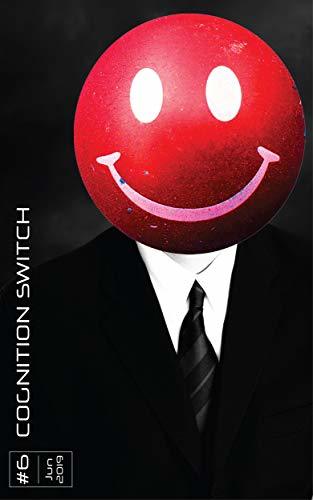
Cognition Switch #6
by Carl Zimmer
Cognition Switch: An Artefact for the Transmission of New IdeasIssue #6: June 2019Featuring Ideas by:Alex O’Brien, Hayley Birch, Catherine de Lange, Carl Zimmer, Moheb Costandi, Virginia Gewin, Emma Young, Samira Shackle, and Kendall Powell