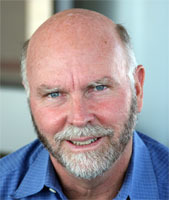
J. Craig Venter
DR. J. CRAIG VENTER is regarded as one of the leading scientists of the 21st century for his invaluable contributions in genomic research, most notably for the first sequencing and analysis of the human genome published in 2001 and the most recent and most complete sequencing of his diploid human genome in 2007. He is Co-Founder, Chairman, CEO, Co-Chief Scientific Officer of Synthetic Genomics, Inc; as well as Founder, President and Chairman of the J. Craig Venter Institute. He was also the founder of Human Genome Sciences, Diversa Corporation and Celera Genomics. He and his teams have sequenced more than 300 organisms including human, fruit fly, mouse, rat, and dog as well as numerous microorganisms and plants. Dr. Venter is also the key leader in the field of synthetic genomics. This work, trying to create the first synthetic genome, is leading to extraordinary advances in engineering microorganisms for many vital energy and environmental applications used at SGI. He is the author of more than 200 research articles and is among the most cited scientists in the world. He is the recipient of numerous honorary degrees and scientific awards including the 2008 National Medal of Science. He is also a member of many prestigious scientific organizations including the National Academy of Sciences. He is the author of A Life Decoded: My Genome: My Life.
18 Books Written

The triumphant memoir of the man behind one of the greatest feats in scientific historyOf all the scientific achievements of the past century, perhaps none can match the deciphering of the human genetic code, both for its technical brilliance and for its implications for our future. In A Life Decoded , J. Craig Venter traces his rise from an uninspired student to one of the most fascinating and controversial figures in science today. Here, Venter relates the unparalleled drama of the quest to decode the human genome?a goal he predicted he could achieve years earlier and more cheaply than the government-sponsored Human Genome Project, and one that he fulfilled in 2001. A thrilling story of detection, A Life Decoded is also a revealing, and often troubling, look at how science is practiced today.
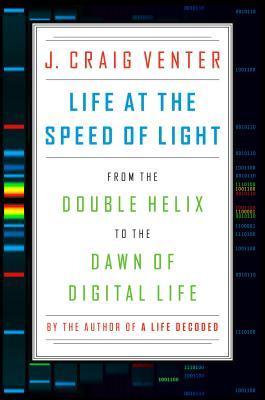
Life at the Speed of Light: From the Double Helix to the Dawn of Digital Life
by J. Craig Venter
Rating: 3.8 ⭐
The renowned scientist and author of A Life Decoded examines the creation of life in the field of synthetic genomics.

The Voyage of Sorcerer II: The Expedition That Unlocked the Secrets of the Ocean’s Microbiome
by J. Craig Venter
Rating: 3.4 ⭐
“Will undoubtedly shape our understanding of the global ecosystem for decades to come.”―Siddhartha Mukherjee, author of The Emperor of All MaladiesA celebrated genome scientist sails around the world, collecting tens of millions of marine microbes and revolutionizing our understanding of the microbiome that sustains us.Upon completing his historic work on the Human Genome Project, J. Craig Venter declared that he would sequence the genetic code of all life on earth. Thus began a fifteen-year quest to collect DNA from the world’s oldest and most abundant form of microbes. Boarding the Sorcerer II , a 100-foot sailboat turned research vessel, Venter traveled over 65,000 miles around the globe to sample ocean water and the microscopic life within.In The Voyage of Sorcerer II , Venter and science writer David Ewing Duncan tell the remarkable story of these expeditions and of the momentous discoveries that ensued―of plant-like bacteria that get their energy from the sun, proteins that metabolize vast amounts of hydrogen, and microbes whose genes shield them from ultraviolet light. The result was a massive library of millions of unknown genes, thousands of unseen protein families, and new lineages of bacteria that revealed the unimaginable complexity of life on earth. Yet despite this exquisite diversity, Venter encountered sobering reminders of how human activity is disturbing the delicate microbial ecosystem that nurtures life on earth. In the face of unprecedented climate change, Venter and Duncan show how we can harness the microbial genome to develop alternative sources of energy, food, and medicine that might ultimately avert our destruction.A captivating story of exploration and discovery, The Voyage of Sorcerer II restores microbes to their rightful place as crucial partners in our evolutionary past and guides to our future.

'An epic travelogue, brimming with the excitement of discovery. With characteristic panache, Venter unveils the teeming array of bacteria, viruses, and eukaryotes that crowd our planet's oceans' - Siddhartha Mukherjee'This page-turner gives . . . the thrill of seeing our planet's largest universe through the brilliant, intrepid eyes of the scientist who has done more than anyone to unlock the secrets of life' - Martine Rothblatt'A tour de force . . . Venter has expanded biology's horizons. This book explores microbial life on a global scale, providing cutting-edge solutions to problems of environmental change' - Aristides Patrinos'A ripping tale . . . to revolutionize our understanding of our bodies, the oceans, and the planet' - Jack Gilbert'An exhilarating account of how creative science is accomplished' - Sir Richard J. Roberts'[A] fascinating tour of Planet Microbe' - Bill McKibben'Venter and Duncan expand our scope of what it means to be alive' - Jamie Metzl'Inspiring ... change[s] our ideas of how biology is done' - TelegraphUpon completing his historic work on the Human Genome Project in 2002, J. Craig Venter declared that he would sequence the genetic code of all life on earth. Thus began a fifteen-year quest to collect DNA from the world's oldest and most abundant form of microbes. Boarding the Sorcerer II, a 100-foot sailboat turned research vessel, Venter travelled over 65,000 miles around the globe to sample ocean water and the microscopic life within.In this book, Venter and science writer David Ewing Duncan tell the remarkable story of these expeditions and of the momentous discoveries that ensued-of plant-like bacteria that get their energy from the sun, proteins that metabolize vast amounts of hydrogen, and microbes whose genes shield them from ultraviolet light. The result was a massive library of millions of unknown genes, thousands of unseen protein families, and new lineages of bacteria that revealed the unimaginable complexity of life on earth. Yet despite this exquisite diversity, Venter encountered sobering reminders of how human activity is disturbing the delicate microbial ecosystem that nurtures life on earth. In the face of unprecedented climate change, Venter and Duncan show how we can harness the microbial genome to develop alternative sources of energy, food, and medicine that might ultimately avert our destruction.A captivating story of exploration and discovery, this book restores microbes to their rightful place as crucial partners in our evolutionary past and guides to our future.

Biologist, author, and businessman Craig Venter discusses his work mapping and synthesizing genomes. Venter recalls his work mapping the human genome and expands on his current work which includes categorizing new genes and species of microbes from ocean water. Venter also explains how microbial research can be used for metabolic engineering and alternative energy sources.

Life at the Speed of Light: From the Double Helix to the Dawn of Digital Life by J. Craig Venter
by J. Craig Venter
Rating: 4.0 ⭐

Synthetic biology involves the rational design and construction of biological components and systemsfrom genetic elements and metabolic pathways to entirely new organisms. Progress in this field has been rapid, and it promises to significantly expand our capabilities in biotechnology, medicine, and agriculture. Written and edited by experts in the field, this collection from Cold Spring Harbor Perspectives in Biology examines the tools and techniques employed by synthetic biologists, how these may be used to develop new drugs, diagnostic approaches, food sources, and clean energy, and what the field of synthetic biology has taught us about natural living systems. The contributors discuss advances in DNA synthesis and assembly, genome editing (e.g., CRISPR/Cas9), and artificial genetic systems. Progress in designing complex genetic switches and circuits, expanding the genetic code, modifying cellular organization, producing proteins using cell-free systems, and developing biodesign automation tools is also covered. The authors also explore ways to produce new organisms and products that have particular attributesfor example, microbial -molecular factories, - synthetic organs and tissues, and plants with novel traits. This volume is an essential resource for molecular, cell, and systems biologists who seek to engineer living systems for human benefit.

Uma Vida Decodificada: O Homem Que Decifrou O Dna
by J. Craig Venter
Uma vida decodificada e a historia triunfante de uma das figuras mais fascinantes e controversas da ciencia atualmente. Na sua narrativa instigante e inspiradora, Venter conta o drama sem paralelos da busca pelo genoma humano, uma historia que compreende doses iguais de politica (pessoal e coletiva) e ciencia. Tambem revela como foi o primeiro a ler e a interpretar o proprio genoma e o que significara a todos fazer o mesmo. Descreve sua recente expedicao a vela para sequenciar a vida microbiana oceanica, bem como sua tentativa inedita de criar vida sintetica. Eis uma das principais cronicas cientificas da nossa epoca, contada pelo homem que venceu adversidades para que tudo isso acontecesse.

Monoclonal and anti-idiotypic antibodies: Probes for receptor structure and function
by J. Craig Venter

Molecular and Chemical Characterization of Membrane Receptors.
by J. Craig Venter

A Life Decoded: My Genome---My Life
by J. Craig Venter
The Voyage of Sorcerer II: The Expedition That Unlocked the Secrets of the Ocean's Microbiome - Library Edition
by J. Craig Venter

Leben aus dem Labor: Die neue Welt der synthetischen Biologie
by J. Craig Venter

The Voyage of Sorcerer II: The Expedition That Unlocked the Secrets of the Ocean's Microbiome
by J. Craig Venter
Upon completing his historic work on the Human Genome Project, J. Craig Venter declared that he would sequence the genetic code of all life on earth. Thus began a fifteen-year quest to collect DNA from the world's oldest and most abundant form of microbes. Boarding the Sorcerer II, a 100-foot sailboat turned research vessel, Venter traveled over 65,000 miles around the globe to sample ocean water and the microscopic life within.In The Voyage of Sorcerer II, Venter and science writer David Ewing Duncan tell the remarkable story of these expeditions and of the momentous discoveries that ensued—of plant-like bacteria that get their energy from the sun, proteins that metabolize vast amounts of hydrogen, and microbes whose genes shield them from ultraviolet light. The result was a massive library of millions of unknown genes, thousands of unseen protein families, and new lineages of bacteria that revealed the unimaginable complexity of life on earth. Yet despite this exquisite diversity, Venter encountered sobering reminders of how human activity is disturbing the delicate microbial ecosystem that nurtures life on earth. In the face of unprecedented climate change, Venter and Duncan show how we can harness the microbial genome to develop alternative sources of energy, food, and medicine that might ultimately avert our destruction.

The Voyage of Sorcerer II: The Expedition That Unlocked the Secrets of the Ocean’s Microbiome
by J. Craig Venter
Monoclonal and Anti-Idiotypic Antibodies: Probes for Receptor Structur
by J. Craig Venter