
David Quammen
David Quammen (born February 1948) is an award-winning science, nature and travel writer whose work has appeared in publications such as National Geographic, Outside, Harper's, Rolling Stone, and The New York Times Book Review; he has also written fiction. He wrote a column called "Natural Acts" for Outside magazine for fifteen years. Quammen lives in Bozeman, Montana.
28 Books Written

Spillover: Animal Infections and the Next Human Pandemic
by David Quammen
Rating: 4.4 ⭐
• 2 recommendations ❤️
Ebola, SARS, Hendra, AIDS, and countless other deadly viruses all have one thing in common: the bugs that transmit these diseases all originate in wild animals and pass to humans by a process called spillover. In this gripping account, David Quammen takes the reader along on this astonishing quest to learn how, where from, and why these diseases emerge and asks the terrifying question: What might the next big one be?

The Song of the Dodo: Island Biogeography in an Age of Extinction
by David Quammen
Rating: 4.3 ⭐
• 2 recommendations ❤️
David Quammen's book, The Song of the Dodo, is a brilliant, stirring work, breathtaking in its scope, far-reaching in its message -- a crucial book in precarious times, which radically alters the way in which we understand the natural world and our place in that world. It's also a book full of entertainment and wonders.In The Song of the Dodo, we follow Quammen's keen intellect through the ideas, theories, and experiments of prominent naturalists of the last two centuries. We trail after him as he travels the world, tracking the subject of island biogeography, which encompasses nothing less than the study of the origin and extinction of all species. Why is this island idea so important? Because islands are where species most commonly go extinct -- and because, as Quammen points out, we live in an age when all of Earth's landscapes are being chopped into island-like fragments by human activity.Through his eyes, we glimpse the nature of evolution and extinction, and in so doing come to understand the monumental diversity of our planet, and the importance of preserving its wild landscapes, animals, and plants. We also meet some fascinating human characters. By the book's end we are wiser, and more deeply concerned, but Quammen leaves us with a message of excitement and hope.

The Reluctant Mr. Darwin: An Intimate Portrait of Charles Darwin and the Making of His Theory of Evolution
by David Quammen
Rating: 4.0 ⭐
• 2 recommendations ❤️
A fresh look at Darwin's most radical idea, and the mysteriously slow process by which he revealed it.Evolution, during the early nineteenth century, was an idea in the air. Other thinkers had suggested it, but no one had proposed a cogent explanation for how evolution occurs. Then, in September 1838, a young Englishman named Charles Darwin hit upon the idea that "natural selection" among competing individuals would lead to wondrous adaptations and species diversity. Twenty-one years passed between that epiphany and publication of On the Origin of Species . The human drama and scientific basis of Darwin's twenty-one-year delay constitute a fascinating, tangled tale that elucidates the character of a cautious naturalist who initiated an intellectual revolution.The Reluctant Mr. Darwin is a book for everyone who has ever wondered about who this man was and what he said. Drawing from Darwin's secret "transmutation" notebooks and his personal letters, David Quammen has sketched a vivid life portrait of the man whose work never ceases to be controversial.
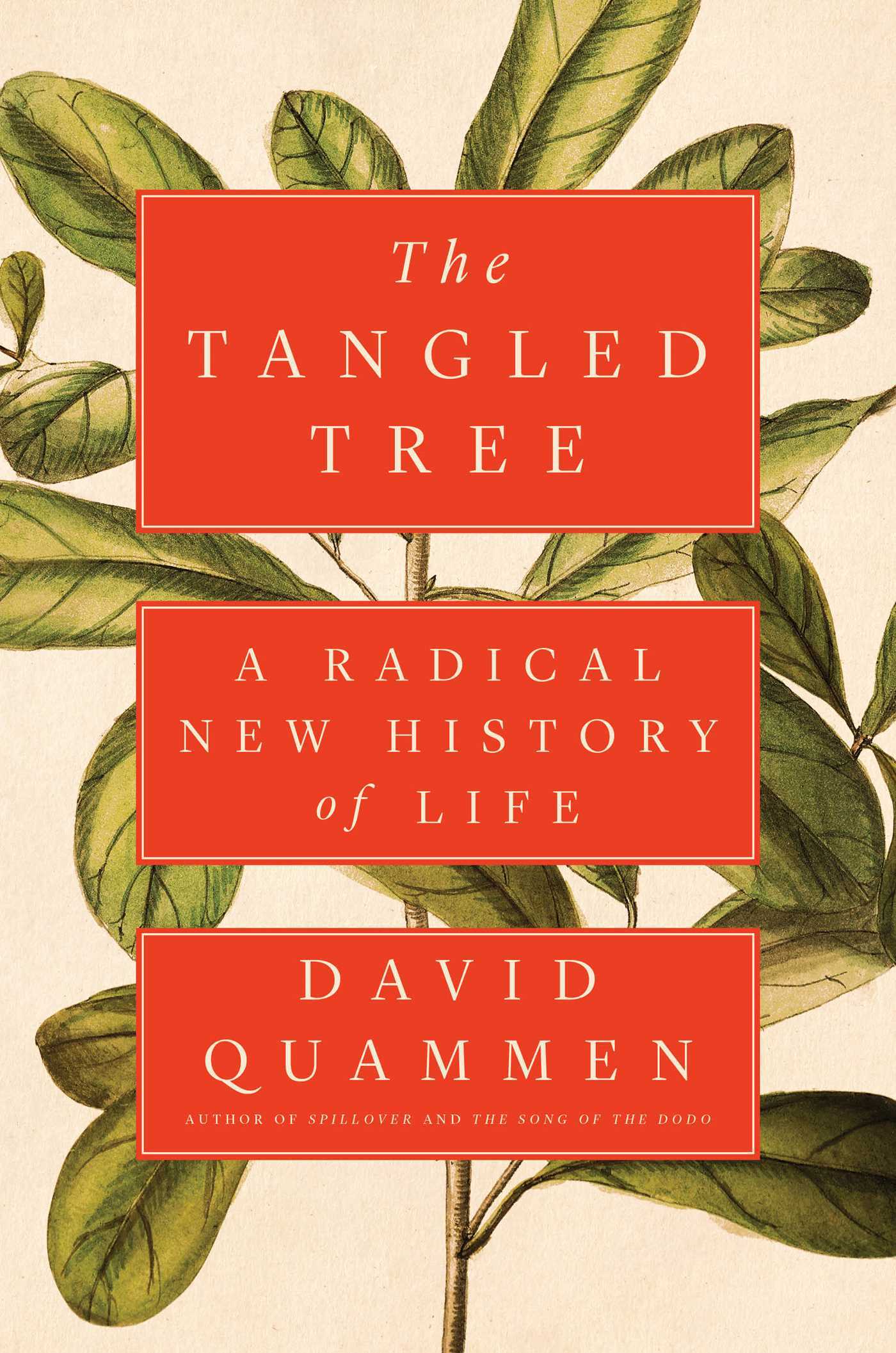
Science writer David Quammen explains how recent discoveries in molecular biology can change our understanding of evolution and life’s history, with powerful implications for human health and even our own human nature. In the mid-1970s, scientists began using DNA sequences to reexamine the history of all life. Perhaps the most startling discovery to come out of this new field—the study of life’s diversity and relatedness at the molecular level—is horizontal gene transfer (HGT), or the movement of genes across species lines. It turns out that HGT has been widespread and important. For instance, we now know that roughly eight percent of the human genome arrived not through traditional inheritance from directly ancestral forms, but sideways by viral infection—a type of HGT.David Quammen chronicles these discoveries through the lives of the researchers who made them—such as Carl Woese, the most important little-known biologist of the twentieth century; Lynn Margulis, the notorious maverick whose wild ideas about “mosaic” creatures proved to be true; and Tsutomu Wantanabe, who discovered that the scourge of antibiotic-resistant bacteria is a direct result of horizontal gene transfer, bringing the deep study of genome histories to bear on a global crisis in public health.

Monster of God: The Man-Eating Predator in the Jungles of History and the Mind
by David Quammen
Rating: 4.0 ⭐
Monster of The Man-Eating Predator in the Jungles of History and the Min...

National Book Award finalist Breathless tells the story of the worldwide scientific race to decipher the coronavirus SARS-CoV-2, trace its source, and make possible the vaccines to fight the Covid-19 pandemic— a “l uminous, passionate account of the defining crisis of our time.” ( The New York Times ).Breathless is a “gripping” ( The Atlantic ) but “clear-eyed analysis” ( Time ) of SARs-CoV-2 and its fierce journey through the human population, as seen by the scientists who study its origin, its ever-changing nature, and its capacity to kill us. David Quammen expertly shows how strange new viruses emerge from animals into humans as we disrupt wild ecosystems and how those viruses adapt to their human hosts, sometimes causing global catastrophe. He explains why this coronavirus will probably be a “forever virus,” destined to circulate among humans and bedevil us endlessly, in one variant form or another. As scientists labor to catch it, comprehend it, and control it, with their high-tech tools and methods, the virus finds ways of escape.Based on interviews with nearly one hundred scientists, including leading virologists in China and around the world, Quammen explains -Infectious disease experts saw this pandemic coming-Some scientists, for more than two decades, warned that “the next big one” would be caused by a changeable new virus—very possibly a coronavirus—but such warnings were ignored for political or economic reasons-The precise origins of this virus may not be known for years, but some clues are compelling, and some suppositions can be dismissed-And much moreWritten by “one of our finest explainers of the natural world for decades” ( Chicago Tribune ), This “compelling and terrifying” ( The New York Times ) account is an unparalleled look inside the frantic international race to understand and control SARS-CoV-2—and what it might mean for the next potential global health crisis.

In 1976 a deadly virus emerged from the Congo forest. As swiftly as it came, it disappeared, leaving no trace. Over the four decades since, Ebola has emerged sporadically, each time to devastating effect. It can kill up to 90 percent of its victims. In between these outbreaks, it is untraceable, hiding deep in the jungle. The search is on to find Ebola’s elusive host animal. And until we find it, Ebola will continue to strike. Acclaimed science writer and explorer David Quammen first came near the virus while he was traveling in the jungles of Gabon, accompanied by local men whose village had been devastated by a recent outbreak. Here he tells the story of Ebola—its past, present, and its unknowable future.Extracted from Spillover by David Quammen, updated and with additional material.

From the award-winning author of The Tangled Tree and The Song of the Dodo comes a collection of essays in which various weird and wonderful aspects of nature are examined.From tales of vegetarian piranha fish and voiceless dogs to the scientific search for the genes that threaten to destroy the cheetah, Quammen captures the natural world with precision. Throughout, he illuminates the surprising intricacies of the natural world, and our human attitudes towards those intricacies. A distinguished essayist, Quammen’s reporting is masterful and thought provoking and his curiosity and fascination with the world of living things is infectious.

A revised and expanded edition of Quammenâ s first book of nonfiction, including the best of his recent work.â Lively writing about science and nature depends less on the offering of good answers, I think, than on the offering of good questions,â said David Quammen in the original introduction to Natural Acts. For more than two decades, he has stuck to that credo. In this updated version of his first essay collection, Quammenâ s lively curiosity leads him from New Mexico to Romania, from the Congo to the Amazon, asking questions about mosquitoes (what are their redeeming merits?), dinosaurs (how did they change the life of a dyslexic Vietnam vet?), and cloning (can it save endangered species?). This expanded edition returns to print Quammenâ s best-loved â Natural Actsâ columns, which first appeared in Outside magazine in the early 1980s, and includes recent pieces such as â Planet of Weeds,â an influential Harperâ s cover story. The new Natural Acts is an eye-opening journey that will please both Quammen fans and newcomers to his work.

The real story of AIDS, how it originated with a virus in a chimpanzee, jumped to one human, and then infected more than 60 million people, is very different from what most of us think we know. Recent research has revealed dark surprises and yielded a radically new scenario of how AIDS began and spread. Excerpted and adapted from the book Spillover, with a new introduction by the author, Quammen's hair-raising investigation tracks the virus from chimp populations in the jungles of southeastern Cameroon to laboratories across the globe, as he unravels the mysteries of when, where, and under what circumstances such a consequential "spillover" can happen. An audacious search for answers amid more than a century of data, The Chimp and the River tells the haunting tale of one of the most devastating pandemics of our time.

In 1981 David Quammen began what might be every freelance writer's dream: a monthly column for Outside magazine in which he was given free rein to write about anything that interested him in the natural world. His column was called "Natural Acts," and for the next fifteen years he delighted Outside's readers with his fascinating ruminations on the world around us. The Boilerplate Rhino brings together twenty-six of Quammen's most thoughtful and engaging essays from that column, none previously printed in any of his earlier books.In lucid, penetrating, and often quirkily idiosyncratic prose, David Quammen takes his readers with him as he explores the world. His travels lead him to rattlesnake handlers in Texas; a lizard specialist in Baja; the dinosaur museum in Jordan, Montana; and halfway across Indonesia in search of the perfect Durian fruit. He ponders the history of nutmeg in the southern Moluccas, meditates on bioluminescent beetles while soaking in the waters of the Amazon, and delivers "The Dope on Eggs" from a chicken ranch near his hometown in Montana.Quammen's travels are always jumping-off points to explore the rich and sometimes horrifying tension between humankind and the natural world, in all its complexity and ambivalence. The result is another irrepressible assortment of ideas to explore, conundrums to contemplate, and wondrous creatures to behold.

A collection of thoughts, essays, stories, and profiles from nature provides a look at such different places as the central Amazon, the South Pacific, and Cincinnati, detailing such adventures as kayaking on a Class V river in Chile and tracing the spread of the Ebola virus

Sapevamo come, e anche dove, i coronavirus ci avrebbero potuto colpire, eppure - eppure siamo a oggi, all’oggi inquietante e incerto da dove partono, proprio con questo testo, le nuove ricerche di David Quammen.

When Soviet agent Viktor Tronko defected to the US in 1964, he made two intriguing he insisted that Russia had not placed a mole inside the CIA, and that Lee Harvey Oswald had not been recruited to assassinate the president. Convinced that Tronko was working as a disinformation agent, the CIA furiously did everything they could to break him. But Tronko had one more surprise for he refused to break. Almost two decades later, former CIA officer Mel Pokorny shows up at journalist Michael Kessler’s house and offers to talk about Tronko. It’s the scoop of a lifetime for Kessler. But the more he investigates, the closer he gets to the a truth so shocking that someone would do anything to keep it under wraps. This could be the biggest story of his life…if it doesn’t kill him first. Filled with fascinating characters and darkly delicious humor, The Soul of Viktor Tronko is a rich, suspenseful espionage saga inspired by a true story.

The Heartbeat of the Wild: Dispatches From Landscapes of Wonder, Peril, and Hope
by David Quammen
Rating: 4.2 ⭐
In this inspiring collection of essays, acclaimed author David Quammen journeys to places where civilization meets raw nature and explores the challenge of balancing the needs of both.For more than two decades, award-winning science and nature writer David Quammen has traveled to Earth’s most far-flung and fragile destinations, sending back field notes from places caught in the tension between humans and the wild. This illuminating book features 20 of those elegantly written narratives, originally published in National Geographic magazine and updated for today, telling colorful and impassioned stories from some of the planet’s wildest locales.Quammen shares encounters with African elephants, chimpanzees, and gorillas (and their saviors, including Jane Goodall); the salmon of northeastern Russia and the people whose livelihood depends on them; the lions of Kenya and the villagers whose homes border on parks created to preserve the species; and the champions of rewilding efforts in southernmost South America, designed to rescue iconic species including jaguars and macaws.With a new introduction, afterword, and notes framing each story, Quammen reminds us of the essential role played by wild nature at the heart of the planet.

Best-selling author David Quammen takes readers on a breathtaking journey through America's most inspiring and imperilled ecosystem - Yellowstone National Park. Filled with amazing images captured by eight National Geographic photographers over an extensive two year deployment in the park, it is unlike any Yellowstone book before it. Yellowstone's storied past, rich ecosystem and dynamic landscape are brilliantly portrayed in a captivating mosaic of photographs and eloquently written text that blend history, science and research from the field.

Evolution, during the early nineteenth century, was an idea in the air. Other thinkers had suggested it, but no one had proposed a cogent explanation for how evolution occurs. Then, in September 1838, a young Englishman named Charles Darwin hit upon the idea that 'natural selection' among competing individuals would lead to wondrous adaptations and species diversity. Twenty-one years passed between that epiphany and publication of On the Origin of Species. The human drama and scientific basis of Darwin's twenty-one-year delay constitute a fascinating, tangled tale that elucidates the character of a cautious naturalist who initiated an intellectual revolution.Also published under the title "The Reluctant Mr Darwin" in the US.

الفيض: أمراض الحيوانات المعدية و جائحة الوباء التالية بين البشر- الجزء الأول
by David Quammen
Rating: 4.0 ⭐
مؤلف هذا الكتاب ديفيد كوامن، كاتب علمي مشهور ومرموق له أسلوبه الرشيق في تناول المشاكل العلمية، بما فيها المشاكل الطبية، فهو يتناولها في صيغة رواية شائقة أو قصة لغز بوليسي مثير، ويشرح عناصرها ويشرّحها بأسلوب أنيق راقٍ، ويصل بالقارئ تدريجيا - في نهاية القصة - إلى ذروة اللغز وطريقة حله. يتناول المؤلف أسباب انبثاق العدوى بالأمراض المعدية، والبحث عن العامل الفعال المتهم في كل مرض بنقل العدوى عندما يحدث فيض من الجرثومة المُمْرِضة يصل إلى الإنسان، وكثيرا ما تكون هذه الجرثومة موجودة أصلا في حيوانات غير بشرية. حتى يصل الكتاب إلى أعماق كل مشكلة من هذا النوع يروي لنا أسفار المؤلف المستمرة لخمس سنوات في أرجاء قارات العالم، بالطائرة والسيارة وقوارب الكانو، وما تعرض له في هذه الرحلات من أحداث، في غابات أفريقيا وفيضانات بنغلاديش، وكهوف الخفاش في ماليزيا، ومزارع الماشية في هولندا، وميادين سباق الخيل في أستراليا. يروي الكتاب أيضا لقاءات مع العلماء والباحثين والمرضى الناجين من الموت للوصول إلى قاع المشكلة الطبيعية وطريقة حل ألغازها. يساعد هذا الكتاب على تفهم أسباب الأوبئة والطريقة العلمية لتوقيها أو علاجها فرديا ومجتمعيا. ويسهم الكتاب أيضا في إعطاء إنذار بالخطر المحتمل وفي طرح ما يمكن فعله لتجنب انبثاق جائحة وباء قادمة.

Book by Quammen, David

The murder of a young man sets off a frantic, desperate search for copies of Edward Teller's top-secret plans for the hydrogen bomb, a search that involves an unusual and dangerous group of people

This story in the anthology American Short Story Masterpieces, edited by Raymond Carver and Tom Jenks. “Walking Out” has received quite a bit of acclaim. It is, after all, a masterpiece, and in Raymond Carver’s eyes. Quammen rarely writes fiction anymore, instead concentrating on (excellent) non-fiction work and so his name doesn’t continue to be passed around fiction circles. Perhaps it’s because “Walking Out” is a story about hunting in Montana between Father and Son and an accident that leaves no choice but to Walk Out.

الفيض: أمراض الحيوانات المعدية و جائحة الوباء التالية بين البشر - الجزء الأول
by David Quammen
Rating: 4.3 ⭐
ملخص الكتاب: يتميز مؤلف هذا الكتاب "ديفيد كوامن" بأسلوبه الرشيق فى تناول المشاكل العلمية ، وخاصة الطبية منها ، فهو يتناولها فى صيغة رواية شائقة أو قصة لغز بوليسى مثير ، ويشرح عناصرها بأسلوب أنيق راق ، ويصل بالقارئ تدريجياً فى نهاية القصة إلى ذروة اللغز وطريقة حله.. ففى كتاب "الفيض" يتناول "ديفيد كوامن" أسباب انبثاق العدوى بالأمراض المعدية ، والبحث عن العامل الفعال المتهم فى كل مرض بنقل العدوى عندما يحدث فيض من الجرثومة المُمْرِضة يصل إلى الإنسان ، وكثيراً ما تكون هذه الجرثومة موجودة أصلاً فى حيوانات غير بشرية.. يساعد كتاب "الفيض" على تفهم أسباب الأوبئة والطريقة العلمية للوقاية منها أو علاجها فردياً ومجتمعياً ، ويسهم الكتاب أيضاً فى إعطاء إنذار بالخطر المحتمل ، وفى طرح ما يمكن فعله لتجنب انبثاق جائحة وباء قادمة.


The Long Follow: J. Michael Fay's Epic Trek Across the Last Great Forests of Central Africa
by David Quammen
Rating: 4.3 ⭐
Determined to document the vanishing riches of central Africa's last wild places, ecologist J. Michael Fay set off on a grueling 465-day trek through Congo's darkest jungles to Gabon's virgin shore. In The Long Follow, critically-acclaimed essayist David Quammen chronicles that harrowing feat (famously named the Megatransect) and makes it the heart of his engrossing, wide-ranging look both at the rich history of past great African expeditions and at the modern scientific understanding of tropical biology and conservation in 21st century Africa. But, The Long Follow is above all a character study of the man at its center, J. Michael Fay. A New Jersey native long since expatriated to Central Africa, this peculiarly forceful and cantankerous figure is a worthy successor to the bold, often wildly eccentric explorers of yore. Deeply devoted to elephants and gorillas, militaristic in his leadership style, obsessive, sometimes charming, sometimes obnoxious, always brilliant and rawhide tough--and, as Quammen learned during several months with Fay on his epic trek, he's as fascinating as he is exasperating. With all its hard edges and paradoxical convolutions, Fay's singular character, even more than his monumental achievement, shapes this remarkable book. The perfect combination of a compelling and colorful subject with a consumately gifted writer, The Long Follow will mesmerize armchair adventurers, nature lovers, and anyone interested in Africa's least known places.

Viralizando: Como os vírus mudaram a história e quais são os desafios para combatê-los (capítulo do livro Contágio) (Breve Companhia)
by David Quammen
Rating: 5.0 ⭐
Um texto elucidativo sobre os agentes infecciosos que intrigam os cientistas e são responsáveis pelas grandes pandemias da histó os vírus. Capítulo extraído do livro Contágio, publicado originalmente em 2012.Reconstituindo desde os primeiros estudos para tentar definir o que são os vírus até os desafios atuais dos cientistas para criar vacinas e combatê-los, este capítulo oferece um retrato completo desses agentes infecciosos. David Quammen diferencia os tipos de vírus, como são transmitidos e explica por que alguns são mais nocivos que outros. Este capítulo integra Contágio, livro assustadoramente antecipatório que investiga as infecções que, por meio do processo conhecido como "spillover", começam no reino animal e migram para os humanos, causando as grandes pandemias da história. "Contágio é uma obra-prima fascinante do jornalismo científico, ao estilo de uma história de detetive." — Walter Isaacson, autor de Steve Jobs "Pertinente e assustador." — New York Times

Jantar na fazenda de ratos: A origem da SARS e o perigo dos coronavírus (capítulo do livro Contágio) (Breve Companhia)
by David Quammen
Rating: 4.0 ⭐
Uma análise excepcional sobre a SARS e as ameaças que os coronavírus representam para os humanos. Imprescindível para compreender o momento atual, o texto integra Contágio, livro surpreendentemente antecipatório publicado em 2012.Com ritmo de tirar o fôlego, David Quammen narra a história da SARS e da saga dos cientistas que correram contra o tempo para controlar a epidemia — e fizeram descobertas essenciais sobre os tipos de coronavírus. Este e-book mostra que, ao contrário da SARS, cujos pacientes são rapidamente internados já que os sintomas se manifestam na fase inicial, a próxima pandemia poderia ser assintomática e com transmissão silenciosa — exatamente o que estamos vivendo agora. Este capítulo integra Contágio, livro publicado originalmente em 2012, que investiga as infecções que, por meio do processo conhecido como "spillover", começam no reino animal e migram para os humanos, causando as grandes pandemias da história. "Contágio é uma obra-prima fascinante do jornalismo científico, ao estilo de uma história de detetive." — Walter Isaacson, autor de Steve Jobs"Pertinente e assustador." — New York Times

Tudo depende: O comportamento humano e as pandemias (capítulo do livro Contágio) (Breve Companhia)
by David Quammen
Neste texto essencial para os tempos atuais, David Quammen demonstra como a ação humana é indissociável da história das pandemias — das causas ao controle. Parte do livro Contágio, publicado originalmente em 2012.Em Tudo depende, David Quammen demonstra como a disseminação de doenças está intimamente relacionada ao fato de que a população humana cresceu exponencialmente ao longo dos séculos. Ao consultar diversos especialistas, a conclusão é de que a próxima grande epidemia provavelmente seria causada por um vírus de RNA — como um coronavírus — e constituiria uma séria ameaça para os seres humanos. Nesse caso, o sucesso do controle dependeria de nosso comportamento — individual e coletivo. Este capítulo integra Contágio, livro assustadoramente antecipatório que investiga as infecções que, por meio do processo conhecido como "spillover", começam no reino animal e migram para os humanos, causando as grandes pandemias da história. "Contágio é uma obra-prima fascinante do jornalismo científico, ao estilo de uma história de detetive." — Walter Isaacson, autor de Steve Jobs"Pertinente e assustador." — New York Times