Loading genres...
Explore the best books about World War II genre.

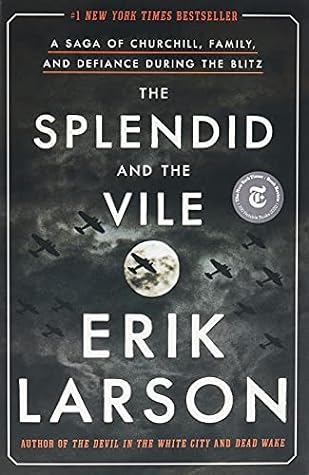
"The #1 New York Times bestselling author of The Devil in the White City and Dead Wake delivers a fresh and compelling portrait of Winston Churchill and London during the Blitz. On Winston Churchill's first day as prime minister, Hitler invaded Holland and Belgium. Poland and Czechoslovakia had already fallen, and the Dunkirk evacuation was just two weeks away. For the next twelve months, Hitler would wage a relentless bombing campaign, killing 45,000 Britons. It was up to Churchill to hold the country together and persuade President Franklin Roosevelt that Britain was a worthy ally-and willing to fight to the end. In The Splendid and the Vile, Erik Larson shows, in cinematic detail, how Churchill taught the British people "the art of being fearless." It is a story of political brinkmanship, but it's also an intimate domestic drama set against the backdrop of Churchill's prime-ministerial country home, Chequers; his wartime retreat, Ditchley, where he and his entourage go when the moon is brightest and the bombing threat is highest; and of course 10 Downing Street in London. Drawing on diaries, original archival documents, and once-secret intelligence reports-some released only recently-Larson provides a new lens on London's darkest year through the day-to-day experience of Churchill and his wife, Clementine; their youngest daughter, Mary, who chafes against her parents' wartime protectiveness; their son, Randolph, and his beautiful, unhappy wife, Pamela; Pamela's illicit lover, a dashing American emissary; and the cadre of close advisers who comprised Churchill's "Secret Circle," including his lovestruck private secretary, John Colville; newspaper baron Lord Beaverbrook; and the Rasputin-like Frederick Lindemann. The Splendid and the Vile takes readers out of today's political dysfunction and back to a time of true leadership, when-in the face of unrelenting horror-Churchill's eloquence, courage, and perseverance bound a country, and a family, together."--


In December 1937, the Japanese army invaded the ancient city of Nanking, systematically raping, torturing, and murdering more than 300,000 Chinese civilians. This book tells the story from three perspectives: of the Japanese soldiers who performed it, of the Chinese civilians who endured it, and of a group of Europeans and Americans who refused to abandon the city and were able to create a safety zone that saved many.

Here for the first time, in rich, human, political, and scientific detail, is the complete story of how the bomb was developed, from the turn-of-the-century discovery of the vast energy locked inside the atom to the dropping of the first bombs on Japan.Few great discoveries have evolved so swiftly -- or have been so misunderstood. From the theoretical discussions of nuclear energy to the bright glare of Trinity there was a span of hardly more than twenty-five years. What began as merely an interesting speculative problem in physics grew into the Manhattan Project, and then into the Bomb with frightening rapidity, while scientists known only to their peers -- Szilard, Teller, Oppenheimer, Bohr, Meitner, Fermi, Lawrence, and yon Neumann -- stepped from their ivory towers into the limelight.Richard Rhodes takes us on that journey step by step, minute by minute, and gives us the definitive story of man's most awesome discovery and invention.

MacArthur, the public figure, the private man, the soldier-hero whose mystery and appeal created a uniquely American legend, portrayed in a biography that will challenge the cherished myths of admirers and critics alike.IllustrationsPreamble: ReveilleFirst Call Ruffles & Flourishes (1880-1917)Charge (1917-1918) Call to Quarters (1919-1935)To the Colors (1935-1941)Retreat (1941-1942) The Green War (1942-1944)At High Port (1944-1945)Last Post (1945-1950) Sunset Gun (1950-1951) Recall (1951) Taps (1951-1964)AcknowledgmentsNotesBibliographyCopyright AcknowledgmentsIndex

Christopher R. Browning’s shocking account of how a unit of average middle-aged Germans became the cold-blooded murderers of tens of thousands of Jews—now with a new afterword and additional photographs. Ordinary Men is the true story of Reserve Police Battalion 101 of the German Order Police, which was responsible for mass shootings as well as round-ups of Jewish people for deportation to Nazi death camps in Poland in 1942. Browning argues that most of the men of RPB 101 were not fanatical Nazis but, rather, ordinary middle-aged, working-class men who committed these atrocities out of a mixture of motives, including the group dynamics of conformity, deference to authority, role adaptation, and the altering of moral norms to justify their actions. Very quickly three groups emerged within the battalion: a core of eager killers, a plurality who carried out their duties reliably but without initiative, and a small minority who evaded participation in the acts of killing without diminishing the murderous efficiency of the battalion whatsoever.While this book discusses a specific Reserve Unit during WWII, the general argument Browning makes is that most people succumb to the pressures of a group setting and commit actions they would never do of their own volition. Ordinary Men is a powerful, chilling, and important work, with themes and arguments that continue to resonate today.

In the tradition of Jon Krakauer’s Into Thin Air and Sebastian Junger’s The Perfect Storm comes a true tale of riveting adventure in which two weekend scuba divers risk everything to solve a great historical mystery–and make history themselves.For John Chatterton and Richie Kohler, deep wreck diving was more than a sport. Testing themselves against treacherous currents, braving depths that induced hallucinatory effects, navigating through wreckage as perilous as a minefield, they pushed themselves to their limits and beyond, brushing against death more than once in the rusting hulks of sunken ships.But in the fall of 1991, not even these courageous divers were prepared for what they found 230 feet below the surface, in the frigid Atlantic waters sixty miles off the coast of New Jersey: a World War II German U-boat, its ruined interior a macabre wasteland of twisted metal, tangled wires, and human bones–all buried under decades of accumulated sediment.No identifying marks were visible on the submarine or the few artifacts brought to the surface. No historian, expert, or government had a clue as to which U-boat the men had found. In fact, the official records all agreed that there simply could not be a sunken U-boat and crew at that location.Over the next six years, an elite team of divers embarked on a quest to solve the mystery. Some of them would not live to see its end. Chatterton and Kohler, at first bitter rivals, would be drawn into a friendship that deepened to an almost mystical sense of brotherhood with each other and with the drowned U-boat sailors–former enemies of their country. As the men’s marriages frayed under the pressure of a shared obsession, their dives grew more daring, and each realized that he was hunting more than the identities of a lost U-boat and its nameless crew.Author Robert Kurson’s account of this quest is at once thrilling and emotionally complex, and it is written with a vivid sense of what divers actually experience when they meet the dangers of the ocean’s underworld. The story of Shadow Divers often seems too amazing to be true, but it all happened, two hundred thirty feet down, in the deep blue sea.

Hitler boasted that The Third Reich would last a thousand years. It lasted only 12. But those 12 years contained some of the most catastrophic events Western civilization has ever known.No other powerful empire ever bequeathed such mountains of evidence about its birth and destruction as the Third Reich. When the bitter war was over, and before the Nazis could destroy their files, the Allied demand for unconditional surrender produced an almost hour-by-hour record of the nightmare empire built by Adolph Hitler. This record included the testimony of Nazi leaders and of concentration camp inmates, the diaries of officials, transcripts of secret conferences, army orders, private letters—all the vast paperwork behind Hitler's drive to conquer the world.The famed foreign correspondent and historian William L. Shirer, who had watched and reported on the Nazis since 1925, spent five and a half years sifting through this massive documentation. The result is a monumental study that has been widely acclaimed as the definitive record of one of the most frightening chapters in the history of mankind.This worldwide bestseller has been acclaimed as the definitive book on Nazi Germany; it is a classic work.The accounts of how the United States got involved and how Hitler used Mussolini and Japan are astonishing, and the coverage of the war-from Germany's early successes to her eventual defeat-is must reading

What if there had been no American War of Independence? What if Hitler had invaded Britain? What if Kennedy had lived? What if Russia had won the Cold War? Niall Ferguson, author of the highly acclaimed The Pity of War, leads the charge in this historically rigorous series of separate voyages into “imaginary time” and provides far-reaching answers to these intriguing questions.Ferguson’s brilliant 90-page introduction doubles as a manifesto on the methodology of counter-factual history. His equally masterful afterword traces the likely historical ripples that would have proceeded from the maintenance of Stuart rule in England. This breathtaking narrative gives us a convincing, detailed “alternative history” of the West—from the accession of “James III” in 1701, to a Nazi-occupied England, to a U.S. Prime Minister Kennedy who lives to complete his term.

During the Nazis’ brutal siege of Leningrad, Lev Beniov is arrested for looting and thrown into the same cell as a handsome deserter named Kolya. Instead of being executed, Lev and Kolya are given a shot at saving their own lives by complying with an outrageous directive: secure a dozen eggs for a powerful Soviet colonel to use in his daughter’s wedding cake. In a city cut off from all supplies and suffering unbelievable deprivation, Lev and Kolya embark on a hunt through the dire lawlessness of Leningrad and behind enemy lines to find the impossible.By turns insightful and funny, thrilling and terrifying, City of Thieves is a gripping, cinematic World War II adventure and an intimate coming-of-age story with an utterly contemporary feel for how boys become men.

Named one of the "100 Best Books of the Decade" by The Times of London "Oh my human brothers, let me tell you how it happened." A former Nazi officer, Dr. Maximilien Aue has reinvented himself, many years after the war, as a middle-class family man and factory owner in France. An intellectual steeped in philosophy, literature, and classical music, he is also a cold-blooded assassin and the consummate bureaucrat. Through the eyes of this cultivated yet monstrous man we experience in disturbingly precise detail the horrors of the Second World War and the Nazi genocide of the Jews. Eichmann, Himmler, Göring, Speer, Heydrich, Höss—even Hitler himself—play a role in Max's story. An intense and hallucinatory historical epic, The Kindly Ones is also a morally challenging read. It holds a mirror up to humanity—and the reader cannot look away.

A sweeping history of tragic genius, cutting-edge science, and the discovery that changed billions of lives—including your own.At the dawn of the twentieth century, humanity was facing global disaster. Mass starvation, long predicted for the fast-growing population, was about to become a reality. A call went out to the world’s scientists to find a solution.This is the story of the two enormously gifted, fatally flawed men who found the brilliant, self-important Fritz Haber and the reclusive, alcoholic Carl Bosch. Together they discovered a way to make bread out of air, built city-sized factories, controlled world markets, and saved millions of lives. Their invention continues to feed us today; without it, more than two billion people would starve.But their epochal triumph came at a price we are still paying. The Haber-Bosch process was also used to make the gunpowder and high explosives that killed millions during the two world wars. Both men were vilified during their lives; both, disillusioned and disgraced, died tragically. Today we face the other unintended consequences of their discovery—massive nitrogen pollution and a growing pandemic of obesity.The Alchemy of Air is the extraordinary, previously untold story of two master scientists who saved the world only to lose everything and of the unforseen results of a discovery that continues to shape our lives in the most fundamental and dramatic of ways.

When Money Dies is the classic history of what happens when a nation’s currency depreciates beyond recovery. In 1923, with its currency effectively worthless (the exchange rate in December of that year was one dollar to 4,200,000,000,000 marks), the German republic was all but reduced to a barter economy. Expensive cigars, artworks, and jewels were routinely exchanged for staples such as bread; a cinema ticket could be bought for a lump of coal; and a bottle of paraffin for a silk shirt. People watched helplessly as their life savings disappeared and their loved ones starved. Germany’s finances descended into chaos, with severe social unrest in its wake.Money may no longer be physically printed and distributed in the voluminous quantities of 1923. However, “quantitative easing,” that modern euphemism for surreptitious deficit financing in an electronic era, can no less become an assault on monetary discipline. Whatever the reason for a country’s deficit necessity or profligacy, unwillingness to tax or blindness to expenditure it is beguiling to suppose that if the day of reckoning is postponed economic recovery will come in time to prevent higher unemployment or deeper recession. What if it does not? Germany in 1923 provides a vivid, compelling, sobering moral tale.

NEW YORK TIMES BESTSELLER • SELECTED BY THE ECONOMIST AS ONE OF THE BEST BOOKS OF THE YEARRemarkable as it may seem today, there once was a time when the president of the United States could pick up the phone and ask the president of General Motors to resign his position and take the reins of a great national enterprise. And the CEO would oblige, no questions asked, because it was his patriotic duty. In Freedom’s Forge, bestselling author Arthur Herman takes us back to that time, revealing how two extraordinary American businessmen—automobile magnate William Knudsen and shipbuilder Henry J. Kaiser—helped corral, cajole, and inspire business leaders across the country to mobilize the “arsenal of democracy” that propelled the Allies to victory in World War II. “Knudsen? I want to see you in Washington. I want you to work on some production matters.” With those words, President Franklin D. Roosevelt enlisted “Big Bill” Knudsen, a Danish immigrant who had risen through the ranks of the auto industry to become president of General Motors, to drop his plans for market domination and join the U.S. Army. Commissioned a lieutenant general, Knudsen assembled a crack team of industrial innovators, persuading them one by one to leave their lucrative private sector positions and join him in Washington, D.C. Dubbed the “dollar-a-year men,” these dedicated patriots quickly took charge of America’s moribund war production effort. Henry J. Kaiser was a maverick California industrialist famed for his innovative business techniques and his can-do management style. He, too, joined the cause. His Liberty ships became World War II icons—and the Kaiser name became so admired that FDR briefly considered making him his vice president in 1944. Together, Knudsen and Kaiser created a wartime production behemoth. Drafting top talent from companies like Chrysler, Republic Steel, Boeing, Lockheed, GE, and Frigidaire, they turned auto plants into aircraft factories and civilian assembly lines into fountains of munitions, giving Americans fighting in Europe and Asia the tools they needed to defeat the Axis. In four short years they transformed America’s army from a hollow shell into a truly global force, laying the foundations for a new industrial America—and for the country’s rise as an economic as well as military superpower. Featuring behind-the-scenes portraits of FDR, George Marshall, Henry Stimson, Harry Hopkins, Jimmy Doolittle, and Curtis LeMay, as well as scores of largely forgotten heroes and heroines of the wartime industrial effort, Freedom’s Forge is the American story writ large. It vividly re-creates American industry’s finest hour, when the nation’s business elites put aside their pursuit of profits and set about saving the world.Praise for Freedom’s Forge “A rambunctious book that is itself alive with the animal spirits of the marketplace.”— The Wall Street Journal “A rarely told industrial saga, rich with particulars of the growing pains and eventual triumphs of American industry . . . Arthur Herman has set out to right an injustice: the loss, down history’s memory hole, of the epic achievements of American business in helping the United States and its allies win World War II.”— The New York Times Book Review “Magnificent . . . It’s not often that a historian comes up with a fresh approach to an absolutely critical element of the Allied victory in World War II, but Pulitzer finalist Herman . . . has done just that.”— Kirkus Reviews (starred review)

Universally acclaimed for their compelling narrative, their fresh insights, and their objective renderings of Winston Churchill's life, The Last Lion trilogy presents a revelatory and unparalleled portrait of this brilliant, flawed, and dynamic adventurer, aristocrat, soldier, and statesman. Born at the end of the 19th century when Imperial Britain still stood at the splendid pinnacle of her power, Churchill would witness the shift a few years later as the Empire hovered on the brink of a catastrophic new era. One of the greatest wartime leaders of our time, he would go on to stand alone, politically isolated in Parliament, as he took the lead in warning of the growing Nazi threat, and would lead Britain to victory against Nazi Germany and the Axis powers in World War II. Now, celebrated historian William Manchester's landmark biographies are collected together for the first time, along with the eagerly anticipated final installment Churchill's last years in power. More than thirty years in the making, The Last Lion is the definitive work on this remarkable man whose courageous vision guided the destiny of a nation during darkly troubled times-and who looms as one of the greatest figures of our century.

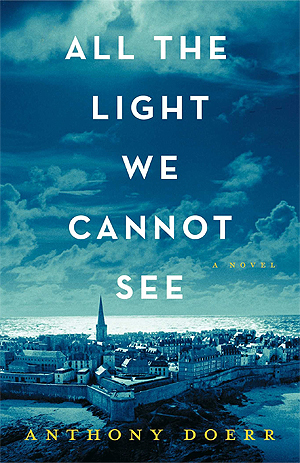
Marie-Laure lives in Paris near the Museum of Natural History, where her father works. When she is twelve, the Nazis occupy Paris and father and daughter flee to the walled citadel of Saint-Malo, where Marie-Laure's reclusive great uncle lives in a tall house by the sea. With them they carry what might be the museum's most valuable and dangerous jewel. In a mining town in Germany, Werner Pfennig, an orphan, grows up with his younger sister, enchanted by a crude radio they find that brings them news and stories from places they have never seen or imagined. Werner becomes an expert at building and fixing these crucial new instruments and is enlisted to use his talent to track down the resistance. Deftly interweaving the lives of Marie-Laure and Werner, Doerr illuminates the ways, against all odds, people try to be good to one another. From the highly acclaimed, multiple award-winning Anthony Doerr, the stunningly beautiful instant New York Times bestseller about a blind French girl and a German boy whose paths collide in occupied France as both try to survive the devastation of World War II. An alternate cover for this ISBN can be found here

'With the moral stamina and intellectual poise of a twentieth-century Titan, this slightly built, dutiful, unassuming chemist set out systematically to remember the German hell on earth, steadfastly to think it through, and then to render it comprehensible in lucid, unpretentious prose. He was profoundly in touch with the minutest workings of the most endearing human events and with the most contemptible. What has survived in Levi's writing isn't just his memory of the unbearable, but also, in The Periodic Table and The Wrench, his delight in what made the world exquisite to him. He was himself a magically endearing man, the most delicately forceful enchanter I've ever known' - Philip Roth.

In this highly original book, a bestseller in Germany, Norman Ohler investigates the murky, chaotic world of drug use in the Third Reich. There have been other books on Dr Morell's cocktail of treatments for Hitler and Goering's reliance on drugs, but Ohler's book is the first to show how the entire Nazi regime was permeated with drugs - cocaine, heroin, morphine and methamphetamines, the last of these crucial to troops' resilience and partly explaining German victory in 1940. Ohler is explicit that drugs cannot explain Third Reich ideology, but their promiscuous use impaired and confused decision-making, with drastic effects on Hitler and his entourage, who, as the war turned against Germany, took refuge in ever more poorly understood cocktails of stimulants. This chemical euphoria changes how we should think about the Nazi high command and its ability to understand the situation it found itself in by 1944-45. As such Blitzed will force a wider reinterpretation of several key events during the Second World War.

The clownish Bombolini becomes a man of significance when he devises a plan to prevent the Germans from taking Santa Vittoria's liquor supply

The Battle of Stalingrad was not only the psychological turning point of World War II: it also changed the face of modern warfare. Historians and reviewers worldwide have hailed Antony Beevor's magisterial Stalingrad as the definitive account of World War II's most harrowing battle. In August 1942, Hitler's huge Sixth Army reached the city that bore Stalin's name. In the five-month siege that followed, the Russians fought to hold Stalingrad at any cost; then, in an astonishing reversal, encircled and trapped their Nazi enemy. This battle for the ruins of a city cost more than a million lives. Stalingrad conveys the experience of soldiers on both sides, fighting in inhuman conditions, and of civilians trapped on an urban battlefield. Antony Beevor has interviewed survivors and discovered completely new material in a wide range of German and Soviet archives, including prisoner interrogations and reports of desertions and executions. As a story of cruelty, courage, and human suffering, Stalingrad is unprecedented and unforgettable.

This remarkably ambitious book tells the story of the great social and political catastrophe that enveloped Europe between 1914 and 1945. In a period of almost continuous upheaval, society was transformed by two world wars, the Russian Revolution, the Holocaust, and the rise and fall of the Third Reich. Combining a powerful narrative with profound analysis, acclaimed historian Robert Gellately argues that these tragedies are inextricably linked and that to consider them as discrete events is to misunderstand their genesis and character. Central to the catastrophe, of course, were Lenin, Stalin, and Hitler, and this book makes use of recently opened Russian and German sources to explain how these dictators’ pursuit of utopian—and dreadfully flawed—ideals led only to dystopian nightmare.In a groundbreaking work, Gellately makes clear that most comparative studies of the Soviet and Nazi dictatorships are undermined by neglecting the key importance of Lenin in the unfolding drama. Rejecting the myth of the “good” Lenin, the book provides a convincing social-historical account of all three dictatorships and carefully documents their similarities and differences. It traces the escalation of conflicts between Communism and Nazism, and particularly of the role of Hitler’s anathema against what he called “Jewish Bolshevism.” The book shows how the vicious rivalry between Stalin and Hitler led inescapably to a war of annihilation and genocide. The reverberations of this gargantuan struggle are felt everywhere to this day.

"Written with precise skill and beautifully controlled power. The translation by Ivan Morris is outstanding." -- The New York Times**Winner of the 1952 Yomiuri Prize**This haunting novel explores the complete degradation and isolation of a man by war. Fires on the Plain is set on the island of Leyte in the Philippines during World War II, where the Japanese army is disintegrating under the hammer blows of the American landings. Within this broader disintegration is another, that of a single human being, Private Tamura. The war destroys each of his ties to society, one by one, until Tamura, a sensitive and intelligent man, becomes an outcast.Nearly losing the will to survive, he hears of a port still in Japanese hands and struggles to walk through the American lines. Unfazed by danger, he welcomes the prospect of dying, but first, he loses his hope, and then his sanity. Lost among his hallucinations, Tamura comes to fancy himself an angel enjoined by God to eat no living thing--but even angels fall.Tamura is never less than human, even when driven to the ultimate sin against humanity. Shocking as the outward events are, the greatness of the novel lies in its uplifting vision during a time of crushing horror. As relevant today as when it was originally published, Fires on the Plain will strike a chord with anyone who has lived through the horrors of war.

A key member of the prosecution team at the Nuremberg war crimes trials offers an eyewitness account of the tribunal, shedding new light on the accused top-echelon Nazis, the events of the trials, and the verdicts

From his illegitimate birth in a small Austrian village to his fiery death in a bunker under the Reich chancellery in Berlin, Adolf Hitler left a murky trail, strewn with contradictory tales & overgrown with self-created myths. One truth prevails: the sheer scale of the evils that he unleashed on the world has made him a demonic figure without equal in this century. Kershaw's Hitler brings us closer than ever before to the character of the bizarre misfit in his 30-year ascent from a Viennese shelter for the indigent to uncontested rule over the German nation that had tried & rejected democracy in the crippling aftermath of WWI. With extraordinary vividness, Kershaw recreates the settings that made Hitler's rise possible: the virulent anti-Semitism of prewar Vienna, the crucible of a war with immense casualties, the toxic nationalism that gripped Bavaria in the 20s, the undermining of the Weimar Republic by extremists of the Right & the Left, the hysteria that accompanied Hitler's seizure of power in 1933 & then mounted in brutal attacks by his storm troopers on Jews & others condemned as enemies of the Aryan race. In an account drawing on many previously untapped sources, Hitler metamorphoses from an obscure fantasist, a drummer sounding an insistent beat of hatred in Munich beer halls, to the instigator of an infamous failed putsch &, ultimately, to the leadership of a ragtag alliance of right-wing parties fused into a movement that enthralled the German people. This volume, 1st of two, ends with the promulgation of the infamous Nuremberg laws that pushed German Jews to the outer fringes of society, & with the march of the German army into the Rhineland, Hitler's initial move toward the abyss of war.

One of the most popular and controversial historians of the twentieth century, who made his subject accessible to millions, A.J.P. Taylor caused a storm of outrage with this scandalous bestseller. Debunking what were accepted truths about the Second World War, he argued provocatively that Hitler did not set out to cause the war as part of an evil master plan, but blundered into it partly by accident, aided by the shortcomings of others. Fiercely attacked for vindicating Hitler, A.J.P. Taylor's stringent re-examination of the events preceding the Nazi invasion of Poland on 1st September 1939 opened up new debate, and is now recognized as a brilliant and classic piece of scholarly research. 'Highly original and penetrating...No one who has digested this enthralling work will ever be able to look at the period again in quite the same way'

An essential collection of the wartime writings and diary of World War II German Field Marshal Erwin Rommel, edited with commentary by one of the great military theorists of our timeWhen Erwin Rommel died-by forced suicide at Hitler's command-he left behind in various ingenious hiding places the papers that recorded the story of his dramatic career and the exact details of his masterly campaigns. It was his custom to dictate each evening a running narrative of the day's events and, after each battle, to summarize its course and the lessons to be learned from it. He wrote, almost daily, intimate and outspoken letters to his wife in which his private feelings and-after the tide had turned-forebodings found expression. To this is added by Rommel's son Manfred the story of the field marshall's last weeks and the final day when he was given the choice of an honorable suicide or an ignominious trial for treason. An engrossing human document and a rare look at the mind of the "Desert Fox," The Rommel Papers throws an interesting light on the Axis alliance and on the inner workings of Hitler's high command.

As a newly commisioned Captain of a veteran Army regiment, MacDonald's first combat was war at its most hellish--the Battle of the Bulge. In this plain-spoken but eloquent narrative, we live each minute at MacDonald's side, sharing in all of combat's misery, terror, and drama. How this green commander gains his men's loyalty in the snows of war-torn Europe is one of the great, true, unforgettable war stories of all time.

From commanding the Horse Marines in Peking to leading the Inchon landing, Puller became a legend in his own time. Now, Davis offers a no-holds-barred biography of this courageous hero--the only marine in history ever to win five Navy Crosses.

WHY DO COMPETENT ARMIES FAIL? Why did the American-led coalition in Iraq fail to wage a classic counter-insurgency campaign for so long after the fall of Baghdad? Why was the sophisticated Israeli intelligence service so thoroughly surprised by the onslaught of combined Arab armies during the Yom Kippur War of 1973? How did a dozen German U-boats manage to humiliate the U.S. Navy for nine months in 1942 -- sinking an average of 650,000 tons of shipping monthly? What made the 1915 British-led invasion of Gallipoli one of the bloodiest catastrophes of the First World War?Since it was first published in 1990, Military Misfortunes has become the classic analysis of the unexpected catastrophes that befall competent militaries. Now with a new Afterword discussing America's missteps in Iraq, Somalia, and the War on Terror, Eliot A. Cohen and John Gooch's gripping battlefield narratives and groundbreaking explanations of the hidden factors that undermine armies are brought thoroughly up to date. As recent events prove, Military Misfortunes will be required reading for as long as armies go to war.

Perhaps no modern day leader of the Roman Catholic Church has sparked as much controversy as Pope Pius XII, the Bishop of Rome during World War II. Was he a Nazi sympathizer? Or did he vehemently oppose Hitler's regime? Professor Ron Rychlak gives a full exploration of the back-ground facts, including discussions of history, religion, politics, diplomacy and military tactics.

Editeur : Albin Michel Date de parution : 1993 Description : In-8, 264 pages, reliure éditeur, occasion, très bon état. Envois quotidiens du mardi au samedi. Les commandes sont adressées sous enveloppes bulles. Photos supplémentaires de l'ouvrage sur simple demande. Réponses aux questions dans les 12h00. Librairie Le Piano-Livre. Merci. Please let us know if you have any questions. Thanks

The publication of Victor Klemperer's secret diaries brings to light one of the most extraordinary documents of the Nazi period. I Will Bear Witness is a work of literature as well as a revelation of the day-by-day horror of the Nazi years. A Dresden Jew, a veteran of World War I, a man of letters and historian of great sophistication, Klemperer recognized the danger of Hitler as early as 1933. His diaries, written in secrecy, provide a vivid account of everyday life in Hitler's Germany. What makes this book so remarkable, aside from its literary distinction, is Klemperer's preoccupation with the thoughts and actions of ordinary Germans: Berger the greengrocer, who was given Klemperer's house ("anti-Hitlerist, but of course pleased at the good exchange"), the fishmonger, the baker, the much-visited dentist. All offer their thoughts and theories on the progress of the war: Will England hold out? Who listens to Goebbels? How much longer will it last? This symphony of voices is ordered by the brilliant, grumbling Klemperer, struggling to complete his work on eighteenth-century France while documenting the ever- tightening Nazi grip. He loses first his professorship and then his car, his phone, his house, even his typewriter, and is forced to move into a Jews' House (the last step before the camps), put his cat to death (Jews may not own pets), and suffer countless other indignities. Despite the danger his diaries would pose if discovered, Klemperer sees it as his duty to record events. "I continue to write," he notes in 1941 after a terrifying run-in with the police. "This is my heroics. I want to bear witness, precise witness, until the very end." When a neighbor remarks that, in his isolation, Klemperer will not be able to cover the main events of the war, he writes: "It's not the big things that are important, but the everyday life of tyranny, which may be forgotten. A thousand mosquito bites are worse than a blow on the head. I observe, I note, the mosquito bites."

A memorial edition of Elie Wiesel's seminal memoir of surviving the Nazi death camps, with tributes by President Obama and Samantha PowerWhen Elie Wiesel died in July 2016, the White House issued a memorial statement in which President Barack Obama called him "the conscience of the world." The whole of the president's eloquent tribute will appear as a foreword to this memorial edition of Night. "Like millions of admirers, I first came to know Elie through his account of the horror he endured during the Holocaust simply because he was Jewish," wrote the president.In 1986, when Wiesel received the Nobel Peace Prize, the Norwegian Nobel Committee wrote, "Elie Wiesel was rescued from the ashes of Auschwitz after storm and fire had ravaged his life. In time he realized that his life could have purpose: that he was to be a witness, the one who would pass on the account of what had happened so that the dead would not have died in vain and so the living could learn." Night, which has sold millions of copies around the world, is the very embodiment of that conviction. It is written in simple, understated language, yet it is emotionally devastating, never to be forgotten.Born in the town of Sighet, Transylvania, Wiesel was a teenager when he and his family were deported to Auschwitz and then Buchenwald. Night is the shattering record of his memories of the death of his mother, father, and little sister, Tsipora; the death of his own innocence; and his despair as a deeply observant Jew confronting the absolute evil of man. "Never shall I forget that night, the first night in camp, that turned my life into one long night," writes Wiesel. "Never shall I forget . . . even were I condemned to live as long as God Himself." These words are etched into the wall of the Holocaust Memorial Museum in Washington. Far more than a chronicle of the sadistic realm of the camps, Night also addresses many of the philosophical and personal questions implicit in any serious consideration of the Holocaust.The memorial edition of Night includes the unpublished text of a speech that Wiesel delivered before the United Nations General Assembly on the sixtieth anniversary of the liberation of Auschwitz entitled "Will the World Ever Know." These remarks powerfully resonate with Night and with subsequent acts of genocide.


An autobiography of controversial German dancer, actress and eventually Hitler's top national film executive, Leni Riefenstahl.

Europe was in the throes of World War II, and when America joined the fighting, Ernie Pyle went along. Long before television beamed daily images of combat into our living rooms, Pyle’s on-the-spot reporting gave the American public a firsthand view of what war was like for the boys on the front. Pyle followed the soldiers into the trenches, battlefields, field hospitals, and beleaguered cities of Europe. What he witnessed he described with a clarity, sympathy, and grit that gave the public back home an immediate sense of the foot soldier’s experience. There were really two wars, John Steinbeck wrote in Time one of maps and logistics, campaigns, ballistics, divisions, and regiments and the other a "war of the homesick, weary, funny, violent, common men who wash their socks in their helmets, complain about the food, whistle at Arab girls, or any girls for that matter, and bring themselves through as dirty a business as the world has ever seen and do it with humor and dignity and courage—and that is Ernie Pyle’s war." This collection of Pyle’s columns detailing the fighting in Europe in 1943–44 brings that war—and the living, and dying, moments of history—home to us once again.

Winston Churchill was not only a statesman and leader of historic proportions, he also possessed substantial literary talents. These two factors combine to make The Gathering Storm a unique work. The first volume of Churchill's memoirs, this selection is broken into two parts. The first, From War to War, consists of Churchill's critical observations on the settlement of World War I and its place in the causes of the Second World War. The second volume contains letters and memoranda from the British government--of which Churchill was part--as the country plunged unprepared into war. This stands as the best of history: written as it was made, by the man who made it.

When discussing the German war crimes of the Second World War, modern histories have focused on the Holocaust. While the Final Solution was a unique and unparalleled horror, German atrocities did not end there. The Nazis terrorized their own citizens, tortured and murdered POWs, and carried out countless executions throughout occupied Europe. Lord Russell of Liverpool was part of the legal team that brought Nazi war criminals to justice, and from this first-hand position, he published the sensational, bestselling The Scourge of the Swastika in 1954. Liverpool shows that the actions of the Third Reich, including the Holocaust, were illegal, not merely immoral.

Biographie de Felix Kersten.À la veille de la Seconde Guerre mondiale, Felix Kersten est spécialisé dans les massages thérapeutiques. Parmi sa clientèle huppée figurent les grands d'Europe. Pris entre les principes qui constituent les fondements de sa profession et ses convictions, le docteur Kersten consent à examiner Himmler, le puissant chef de la Gestapo. Affligé d'intolérables douleurs d'estomac, celui-ci en fait bientôt son médecin personnel. C'est le début d'une étonnante lutte, Felix Kersten utilisant la confiance du fanatique bourreau pour arracher des milliers de victimes à l'enfer. Joseph Kessel nous raconte l'incroyable histoire du docteur Kersten et lève le voile sur un épisode méconnu du XXe siècle.

“Slaughter vividly conveys the reality of combat during World War II in his book with sweeping passages that literally place his reader on the battlefield beside him.”Belvoir EagleBefore D-Day, regular army soldiers called the National Guardsmen of Virginias 116th Infantry Regiment "Home Nannies," "Weekend Warriors," and worse. On June 6, 1944, on Omaha Beach, however, these proud Virginians who carried the legacy of the famed Stonewall Brigade showed the regular army and the world what true valor really was. In this moving World War II memoir, the author captures the day-to-day comings and goings of GI Joe from pre--World War II National Guard days through induction, training, deployment overseas, and more training.All leads up to D-Day and Normandy on June 6, 1944, when Sergeant Bob Slaughter came across Omaha Beach with Company D of the 116th Infantry. This was the beginning of his long march to final victory in Europe, a march that would take him and his fellow soldiers of Company D, at least those who survived, to Holland, the Bulge, and on into Germany itself.

Stephen E. Ambrose draws upon extensive sources, an unprecedented degree of scholarship, and numerous interviews with Eisenhower himself to offer the fullest, richest, most objective rendering yet of the soldier who became president. He gives us a masterly account of the European war theater and Eisenhower's magnificent leadership as Allied Supreme Commander. Ambrose's recounting of Eisenhower's presidency, the first of the Cold War, brings to life a man and a country struggling with issues as diverse as civil rights, atomic weapons, communism, and a new global role. Along the way, Ambrose follows the 34th President's relations with the people closest to him, most of all Mamie, his son John, and Kay Summersby, as well as Franklin D. Roosevelt, Winston Churchill, Charles de Gaulle, Harry Truman, Nixon, Dulles, Khrushchev, Joe McCarthy, and indeed, all the American and world leaders of his time. This superb interpretation of Eisenhower's life confirms Stephen Ambrose's position as one of our finest historians.

They were called Easy Company—but their mission was never easy. Immortalized as the Band of Brothers, they suffered 150% casualties while liberating Europe—an unparalleled record of bravery under fire. Dick Winters was their commander—"the best combat leader in World War II" to his men. This is his story—told in his own words for the first time.On D-Day, Dick Winters parachuted into France and assumed leadership of the Band of Brothers when their commander was killed. He led them through the Battle of the Bulge and into Germany, by which time each member had been wounded. They liberated an S.S. death camp from the horrors of the Holocaust and captured Berchtesgaden, Hitler's alpine retreat. After briefly serving during the Korean War, Winters was a highly successful businessman. Made famous by Stephen Ambrose's book Band of Brothers—and the subsequent award-winning HBO miniseries—he is the object of worldwide adulation, Beyond Band of Brothers is Winters's memoir—based on his wartime diary—but it also includes his comrades' untold stories. Virtually all this material is being released for the first time. Only Winters was present from the activation of Easy Company until the war's end. Winner of the Distinguished Service Cross, only he could pen this moving tribute to the human spirit.

In everyone's life there is a summer of '42...In that particular summer Hermie was fifteen, wildly obsessed with sex, deeply and passionately in love with an "older woman" of twenty-two. Summer of '42 is the story of Hermie and the lovely Dorothy, of Hermie's frantic efforts to become a man, and of his glorious and heartbreaking initiation into sex.

This trilogy of novels about World War II, largely based on his own experiences as an army officer, is the crowning achievement of Evelyn Waugh's career. Its central character is Guy Crouchback, head of an ancient but decayed Catholic family, who at first discovers new purpose in the challenge to defend Christian values against Nazi barbarism, but then gradually finds the complexities and cruelties of war too much for him. Yet, though often somber, the Sword of Honour trilogy is also a brilliant comedy, peopled by the fantastic figures so familiar from Waugh's early satires. The deepest pleasures these novels afford come from observing a great satiric writer employ his gifts with extraordinary subtlety, delicacy, and human feeling, for purposes that are ultimately anything but satiric.

The horrors of the Nazi regime and the Holocaust still present some of the most disturbing questions in modern history: Why did Hitler's party appeal to millions of Germans, and how entrenched was anti-Semitism among the population? How could anyone claim, after the war, that the genocide of Europe's Jews was a secret? Did ordinary non-Jewish Germans live in fear of the Nazi state? In this unprecedented firsthand analysis of daily life as experienced in the Third Reich, What We Knew offers answers to these most important questions. Combining the expertise of Eric A. Johnson, an American historian, and Karl-Heinz Reuband, a German sociologist, What We Knew is the most startling oral history yet of everyday life in theThird Reich.

In 1942, Leo Marks left his father's famous bookshop, 84 Charing Cross Road, and went off to fight the war. He was twenty-two. Soon recognized as a cryptographer of genius, he became head of communications at the Special Operations Executive (SOE), where he revolutionized the codemaking techniques of the Allies and trained some of the most famous agents dropped into occupied Europe, including "the White Rabbit" and Violette Szabo. As a top codemaker, Marks had a unique perspective on one of the most fascinating and, until now, little-known aspects of the Second World War. Writing with the narrative flair and vivid characterization of his famous screenplays, Marks gives free rein to his keen sense of the absurd and his wry wit, resulting in a thrilling and poignant memoir that celebrates individual courage and endeavor, without losing sight of the human cost and horror of war.

The Raj Quartet, Paul Scott's epic study of British India in its final years, has no equal. Tolstoyan in scope and Proustian in detail but completely individual in effect, it records the encounter between East and West through the experiences of a dozen people caught up in the upheavals of the Second World War and the growing campaign for Indian independence from Britain.The first novel, The Jewel in the Crown, describes the doomed love between an English girl and an Indian boy, Daphne Manners and Hari Kumar. This affair touches the lives of other characters in three subsequent volumes, most of them unknown to Hari and Daphne but involved in the larger social and political conflicts which destroy the lovers. In The Day of the Scorpion, Ronald Merrick, a sadistic policeman who arrested and prosecuted Hari, insinuates himself into an aristocratic British family as World War II escalates.On occasions unsparing in its study of personal dramas and racial differences, the Raj Quartet is at all times profoundly humane, not least in the author’s capacity to identify with a huge range of characters. It is also illuminated by delicate social comedy and wonderful evocations of the Indian scene, all narrated in luminous prose.The other two novels in the Raj Quartet, The Towers of Silence and A Division of the Spoils, are also available from Everyman’s Library. With a new introduction by Hilary Spurling(Book Jacket Status: Jacketed)

Book discusses the days of General Marshall and his experiences where he served in Europe and the Pacific as a combat officer in the Second World War.

Originally published in 1958 and now available for the first time in paperback, this classic of modern military history tells the exciting true story of the fall of St. L", the first major objective of the invading American armies in Normandy in June of 1944. Although St. L" was intended to be taken within days of the landing, stubborn German resistance postponed the town's fall until July 18. The author describes the bloody action that took place in the thirty days in between as he led his battalion dubbed "The Indestructible Clay Pigeons" through the daunting combat.

The German Generals who survived Hitler's Reich talk over World War II with Capt. Liddell Hart, noted British miltary strategist and writer. They speak as professional soldiers to a man they know and respect. For the first time, answers are revealed to many questions raised during the war. Was Hitler the genius of strategy he seemed to be at first? Why did his Generals never overthrow him? Why did Hitler allow the Dunkirk evacuation? Current interest, of course, focuses on the German Generals' opinion of the Red Army as a fighting force. What did the Russians look like from the German side? How did we look? And what are the advantages and disadvantages under which dictator-controlled armies fight? In vivid, non-technical language, Capt. Liddell Hart reports these interviews and evaluates the vital military lessons of World War II.

Librarian's note: An alternate cover edition can be found hereIt is 1939. Nazi Germany. The country is holding its breath. Death has never been busier, and will be busier still.By her brother's graveside, Liesel's life is changed when she picks up a single object, partially hidden in the snow. It is The Gravedigger's Handbook, left behind there by accident, and it is her first act of book thievery. So begins a love affair with books and words, as Liesel, with the help of her accordian-playing foster father, learns to read. Soon she is stealing books from Nazi book-burnings, the mayor's wife's library, wherever there are books to be found.But these are dangerous times. When Liesel's foster family hides a Jew in their basement, Liesel's world is both opened up, and closed down.In superbly crafted writing that burns with intensity, award-winning author Markus Zusak has given us one of the most enduring stories of our time.(Note: this title was not published as YA fiction)

When malcontents from a utopian twenty-first century use their time gate to transform Hitler into an invincible conqueror, a band of freedom-fighting Americans launches the Proteus project and builds a second time gate. Reprint.

Excellent Book

On August 6, 1945, Hiroshima was destroyed by the first atom bomb ever dropped on a city. This book, John Hersey's journalistic masterpiece, tells what happened on that day. Told through the memories of survivors, this timeless, powerful and compassionate document has become a classic "that stirs the conscience of humanity" (The New York Times).

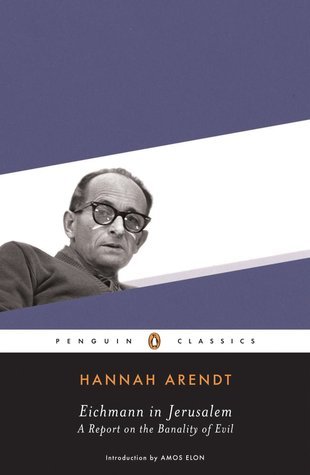
Originally appearing as a series of articles in The New Yorker, Hannah Arendt’s authoritative and stunning report on the trial of Nazi leader Adolf Eichmann sparked a flurry of debate upon its publication. This revised edition includes material that came to light after the trial, as well as Arendt’s postscript directly addressing the controversy that arose over her account. A major journalistic triumph by an intellectual of singular influence, Eichmann in Jerusalem is as shocking as it is informative—an unflinching look at one of the most unsettling and unsettled issues of the twentieth century that remains hotly debated to this day.

A powerful novel of the North Atlantic in World War II, this is the story of the British ships Compass Rose and Saltash and of their desparate cat-and-mouse game with Nazi U-boats. First published to great acclaim in 1951, The Cruel Sea remains a classic novel of endurance and daring.

What has Germany made of its Nazi past? A significant new look at the legacy of the Nazi regime, this book exposes the workings of past beliefs and political interests on how--and how differently--the two Germanys have recalled the crimes of Nazism, from the anti-Nazi emigration of the 1930s through the establishment of a day of remembrance for the victims of National Socialism in 1996. Why, Jeffrey Herf asks, would German politicians raise the specter of the Holocaust at all, in view of the considerable depth and breadth of support its authors and their agenda had found in Nazi Germany? Why did the public memory of Nazi anti-Jewish persecution and the Holocaust emerge, if selectively, in West Germany, yet was repressed and marginalized in "anti-fascist" East Germany? And how do the politics of left and right come into play in this divided memory? The answers reveal the surprising relationship between how the crimes of Nazism were publicly recalled and how East and West Germany separately evolved a Communist dictatorship and a liberal democracy. This book, for the first time, points to the impact of the Cold War confrontation in both West and East Germany on the public memory of anti-Jewish persecution and the Holocaust. Konrad Adenauer, Theodor Heuss, Kurt Schumacher, Willy Brandt, Richard von Weizsacker, and Helmut Kohl in the West and Walter Ulbricht, Wilhelm Pieck, Otto Grotewohl, Paul Merker, and Erich Honnecker in the East are among the many national figures whose private and public papers and statements Herf examines. His work makes the German memory of Nazism--suppressed on the one hand and selective on the other, from Nuremberg to Bitburg--comprehensible within the historical context of the ideologies and experiences of pre-1945 German and European history as well as within the international context of shifting alliances from World War II to the Cold War. Drawing on West German and recently opened East German archives, this book is a significant contribution to the history of belief that shaped public memory of Germany's recent past.

Now the inspiration behind the HBO series THE PACIFICHere is one of the most riveting first-person accounts to ever come out of the Second World War. Robert Leckie was 21 when he enlisted in the US Marine Corps in January 1942. In Helmet for My Pillow we follow his journey, from boot camp on Parris Island, South Carolina, all the way to the raging battles in the Pacific, where some of the war's fiercest fighting took place. Recounting his service with the 1st Marine Division and the brutal action on Guadalcanal, New Britain and Peleliu, Leckie spares no detail of the horrors and sacrifice of war, painting an unsentimental portrait of how real warriors are made, fight, and all too often die in the defence of their country.From the live-for-today rowdiness of Marines on leave to the terrors of jungle warfare against an enemy determined to fight to the last man, Leckie describes what it's really like when victory can only be measured inch by bloody inch. Unparalleled in its immediacy and accuracy, Helmet for My Pillow is a gripping account from an ordinary soldier fighting in extraordinary conditions. This is a book that brings you as close to the mud, the blood, and the experience of war as it is safe to come.Helmet for My Pillow is a grand and epic prose poem. Robert Leckie's theme is the purely human experience of war in the Pacific, written in the graceful imagery of a human being who - somehow - survived - Tom Hanks

One of A.J.P. Taylor's best-known books, The Course of German History is a notoriously idiosyncratic work. Composed in his famously witty style, yet succinct to the point of sharpness, this is one of the great historian's finest, if more controversial, accomplishments. As Taylor himself noted, 'the history of the Germans is a history of extremes. It contains everything except moderation.' He could, of course, simply be referring to his own book.

Jeannot, Tu leur diras de raconter notre histoire, dans leur monde libre. Que nous nous sommes battus pour eux. Tu leur apprendras que rien ne compte plus sur cette terre que cette putain de liberté capable de se soumettre au plus offrant. Tu leur diras aussi que cette grande salope aime l'amour des hommes, et que toujours elle échappera à ceux qui veulent l'emprisonner, qu'elle ira toujours donner la victoire à celui qui la respecte sans jamais espérer la garder dans son lit. Dis-leur Jeannot, dis-leur de raconter tout cela de ma part, avec leurs mots à eux, ceux de leur époque. Les miens ne sont faits que des accents de mon pays, du sang que j'ai dans la bouche et sur les mains.

Berliini 1940. Pelon ja väkivallan kaupunki. 55 Jablonski Strassen asukkaat yrittävät kukin tavallaan selvitä natsihallinnon alla: öykkärimäiset Persicket ovat natsilojalistejä, kun taas eläkkeellä oleva tuomari Fromm ja tavallinen saksalainen pariskunta, Otto ja Anna Quangel, elävät hiljaiseloa.Quangelit saavat kuulla, että heidän poikansa on kuollut länsirintamalla. Sokki herättää heidät passiivisuudesta, he käynnistävät vastarintakampanjan ja samalla vaarallisen kissa ja hiiri -leikin kunnianhimoisen Gestapo-etsivän kanssa. Seurauksena on sarja petoksia ja murhia, ja piinallisen hitaasti silmukka Quangelien kaulan ympärillä kiristyy.Yksin Berliinissä on uudelleenlöydetty klassikko, kuvaus tavallisen ihmisen halusta elää ihmisarvoista elämää hirvittävissä olosuhteissa ja siitä, mitä sen eteen on valmis uhraamaan.

Suhl, Yuri, Ed., They Fought The Story Of The Jewish Resistance In Nazi Europe

From the author of The Last Tsar, the first full-scale life of Stalin to have what no previous biography has fully obtained: the facts. Granted privileged access to Russia's secret archives, Edvard Radzinsky paints a picture of the Soviet strongman as more calculating, ruthless, and blood-crazed than has ever been described or imagined. Stalin was a man for whom power was all, terror a useful weapon, and deceit a constant companion.As Radzinsky narrates the high drama of Stalin's epic quest for domination-first within the Communist Party, then over the Soviet Union and the world-he uncovers the startling truth about this most enigmatic of historical figures. Only now, in the post-Soviet era, can what was suppressed be told: Stalin's long-denied involvement with terrorism as a young revolutionary; the crucial importance of his misunderstood, behind-the-scenes role during the October Revolution; his often hostile relationship with Lenin; the details of his organization of terror, culminating in the infamous show trials of the 1930s; his secret dealings with Hitler, and how they backfired; and the horrifying plans he was making before his death to send the Soviet Union's Jews to concentration camps-tantamount to a potential second Holocaust. Radzinsky also takes an intimate look at Stalin's private life, marked by his turbulent relationship with his wife Nadezhda, and recreates the circumstances that led to her suicide.As he did in The Last Tsar, Radzinsky thrillingly brings the past to life. The Kremlin intrigues, the ceaseless round of double-dealing and back-stabbing, the private worlds of the Soviet Empire's ruling class-all become, in Radzinsky's hands, as gripping and powerful as the great Russian sagas. And the riddle of that most cold-blooded of leaders, a man for whom nothing was sacred in his pursuit of absolute might--and perhaps the greatest mass murderer in Western history--is solved.

This emotional and honest novel recounts a young man's experiences during World War II and digs deep into what he and his fellow soldiers lived through during those dark times.The nightmares began for William Manchester 23 years after WW II. In his dreams he lived with the recurring image of a battle-weary youth (himself), "angrily demanding to know what had happened to the three decades since he had laid down his arms." To find out, Manchester visited those places in the Pacific where as a young Marine he fought the Japanese, and in this book examines his experiences in the line with his fellow soldiers (his "brothers"). He gives us an honest and unabashedly emotional account of his part in the war in the Pacific. "The most moving memoir of combat on WW II that I have ever read. A testimony to the fortitude of man...a gripping, haunting, book." --William L. Shirer

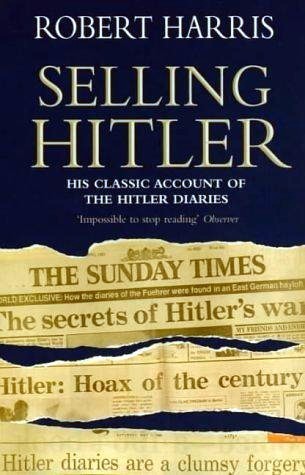
Chronicles the story of the creation, manufacture, and sale of the fraudulent "Hitler Diaries," a con game that successfully fooled leading historians and publishers because of their obsession with the Nazi mystique

hardcover with dust jacket

With an introduction read by Max Hastings. A companion volume to his best-selling Armageddon, Max Hastings' account of the battle for Japan is a masterful military history.Featuring the most remarkable cast of commanders the world has ever seen, the dramatic battle for Japan of 1944-45 was acted out across the vast stage of Asia: Imphal and Kohima, Leyte Gulf and Iwo Jima, Okinawa, and the Soviet assault on Manchuria.In this gripping narrative, Max Hastings weaves together the complex strands of an epic war, exploring the military tactics behind some of the most triumphant and most horrific scenes of the 20th century. The result is a masterpiece that balances the story of command decisions, rivalries, and follies with the experiences of soldiers, sailors, and airmen of all sides as only Max Hastings can.

Tony Judt's Postwar makes one lament the overuse of the word "groundbreaking." It is an unprecedented accomplishment: the first truly European history of contemporary Europe, from Lisbon to Leningrad, based on research in six languages, covering thirty-four countries across sixty years in a single integrated narrative, using a great deal of material from newly available sources. Tony Judt has drawn on forty years of reading and writing about modern Europe to create a fully rounded, deep account of the continent's recent past. The book integrates international relations, domestic politics, ideas, social change, economic development, and culture--high and low--into a single grand narrative. Every country has its chance to play the lead, and although the big themes are superbly handled--including the cold war, the love/hate relationship with America, cultural and economic malaise and rebirth, and the myth and reality of unification--none of them is allowed to overshadow the rich pageant that is the whole. Vividly and clearly written for the general reader; witty, opinionated, and full of fresh and surprising stories and asides; visually rich and rewarding, with useful and provocative maps, photos, and cartoons throughout, Postwar is a movable feast for lovers of history and lovers of Europe alike. A magnificent history of postwar Europe, East and West, by arguably the subject's most esteemed historian.

Once An Eagle is the story of one special man, a soldier named Sam Damon, and his adversary over a lifetime, fellow officer Courtney Massengale. Damon is a professional who puts duty, honor, and the men he commands above self interest. Massengale, however, brilliantly advances by making the right connections behind the lines and in Washington's corridors of power.Beginning in the French countryside during the Great War, the conflict between these adversaries solidifies in the isolated garrison life marking peacetime, intensifies in the deadly Pacific jungles of World War II, and reaches its treacherous conclusion in the last major battleground of the Cold War -- Vietnam.A study in character and values, courage, nobility, honesty, and selflessness, here is an unforgettable story about a man who embdies the best in our nation -- and in us all.

In the fall of 1944, Allied commanders planned to land airborne divisions in an attempt to capture a series of bridges behind German lines, including the "bridge too far" at Arnhem. Geoffrey Powell, himself a veteran of the Arnhem operation, drew on conversations with many other survivors of the battle to write one of the most dramatic of all accounts of the battleWhen the book was first published in 1976 under a pseudonym, it was at once recognized as one of the finest evocations of an infantryman's war ever written.

Translated from the original German, this final volume of Victor Klemperer’s diaries opens in 1945. After the horrors of the war, Victor and Eva’s return to their Dresden home seems like a fairytale. Victor tries to resume his distinguished academic career and joins East Germany’s Communist Party. In 1951, Eva dies; a year later, aged 70, Victor marries a student—an unlikely but successful love match. But with the growing repression of the Communist Party, and the memory of those who did not survive, Victor’s achievements ring hollow. Politics, he comes to believe, is, above all, the choice of "the lesser evil." A masterpiece both of Holocaust literature and memoir.

In this comprehensive history, John Keegan explores both the technical and the human impact of the greatest war of all time. He focuses on five crucial battles and offers new insights into the distinctive methods and motivations of modern warfare. In knowledgable, perceptive analysis of the airborne battle of Crete, the carrier battle of Midway, the tank battle of Falaise, the city battle of Berlin, and the amphibious battle of Okinawa, Keegan illuminates the strategic dilemmas faced by the leaders and the consequences of their decisions on the fighting men and the course of the war as a whole.

#1 NEW YORK TIMES BESTSELLER - NOW A MAJOR MOTION PICTURE ON NETFLIX - A remarkable tale of the island of Guernsey during the German Occupation, and of a society as extraordinary as its name. "I wonder how the book got to Guernsey? Perhaps there is some sort of secret homing instinct in books that brings them to their perfect readers." January 1946: London is emerging from the shadow of the Second World War, and writer Juliet Ashton is looking for her next book subject. Who could imagine that she would find it in a letter from a man she's never met, a native of the island of Guernsey, who has come across her name written inside a book by Charles Lamb...As Juliet and her new correspondent exchange letters, Juliet is drawn into the world of this man and his friends—and what a wonderfully eccentric world it is. The Guernsey Literary and Potato Peel Pie Society—born as a spur-of-the-moment alibi when its members were discovered breaking curfew by the Germans occupying their island—boasts a charming, funny, deeply human cast of characters, from pig farmers to phrenologists, literature lovers all.Juliet begins a remarkable correspondence with the society's members, learning about their island, their taste in books, and the impact the recent German occupation has had on their lives. Captivated by their stories, she sets sail for Guernsey, and what she finds will change her forever.Written with warmth and humor as a series of letters, this novel is a celebration of the written word in all its guises and of finding connection in the most surprising ways.

In the shadow of Auschwitz, a flamboyant German industrialist grew into a living legend to the Jews of Cracow. He was a womaniser and a heavy drinker who enjoyed the good life, yet to them he became a saviour.Thomas Keneally's Booker Prize-winning novel recreates the story of Oskar Schindler, an Aryan who risked his life to protect Jews in Nazi-occupied Poland, who conrinually defied and outwitted the SS, and who was transformed by the war into an angel of mercy. It is an unforgettable tale, all the more extraordinary for being true.

Andrew Roberts's Masters and The Military Geniuses who led the West to Victory in WWII tells the story of how four great leaders fought each other over how best to fight Hitler. During the Second World War the master strategy of the West was shaped by four titanic Winston Churchill and Franklin Roosevelt, and their respective military commanders - General Sir Alan Brooke and General George C. Marshall. Each man was tough-willed and strong minded. And each was certain he knew best how to achieve victory. Drawing on previously unpublished material, including for the first time verbatim reports of Churchill's War Cabinet meetings, Andrew Roberts's acclaimed history recreates with vivid immediacy the fiery debates and political maneuverings, the rebuffs and the charm, the explosive rows and dramatic reconciliations, as the masters and commanders of the Western Alliance fought each other over the best way to fight Adolf Hitler. 'History as it should be written; a gripping narrative' Michael Gove, Mail on Sunday Books of the Year 'Scintillating historical writing on the whole rich panorama of Britain and the US at war' Martin Gilbert, Evening Standard 'A compelling analysis of American and British military strategy during the war. He also tells a profoundly human story' Laurence Rees, Sunday Times 'A masterpiece' Christopher Silvester, Daily Express 'Britain's finest contemporary military historian' Economist Books of the Year Andrew Roberts is a biographer and historian of international renown whose previous books include Victorian Titan (1999), which won the Wolfson History Prize and the James Stern Silver Pen Award for Non-Fiction; Napoleon and Wellington (2001); Hitler and Secrets of Leadership (2003), which coincided with four-part BBC2 history series, and A History of the English-Speaking Peoples Since 1900 (2005).

Finally, the one-volume edition of Ian Kershaw's definitive and masterful biography of Hitler."The Hitler biography of the twenty-first century" (Richard J. Evans), Ian Kershaw's Hitler is a new, distilled, one-volume masterpiece that will become the standard work. From Hitler's origins as a failed artist in fin-de-siecle Vienna to the terrifying last days in his Berlin bunker, Kershaw's richly illustrated biography is a mesmerizing portrait of how Hitler attained, exercised, and retained power. Drawing on previously untapped sources, such as Goebbels's diaries, Kershaw addresses crucial questions about the unique nature of Nazi radicalism, about the Holocaust, and about the poisoned European world that allowed Hitler to operate so effectively.151 photographs; 8 maps

Americans call the Second World War “The Good War.” But before it even began, America’s wartime ally Josef Stalin had killed millions of his own citizens—and kept killing them during and after the war. Before Hitler was finally defeated, he had murdered six million Jews and nearly as many other Europeans. At war’s end, both the German and the Soviet killing sites fell behind the iron curtain, leaving the history of mass killing in darkness.Bloodlands is a new kind of European history, presenting the mass murders committed by the Nazi and Stalinist regimes as two aspects of a single history, in the time and place where they occurred: between Germany and Russia, when Hitler and Stalin both held power. Assiduously researched, deeply humane, and utterly definitive, Bloodlands will be required reading for anyone seeking to understand the central tragedy of modern history.From BooklistIf there is an explanation for the political killing perpetrated in eastern Europe in the 1930s and 1940s, historian Snyder roots it in agriculture. Stalin wanted to collectivize farmers; Hitler wanted to eliminate them so Germans could colonize the land. The dictators wielded frightening power to advance such fantasies toward reality, and the despots toted up about 14 million corpses between them, so stupefying a figure that Snyder sets himself three goals here: to break down the number into the various actions of murder that comprise it, from liquidation of the kulaks to the final solution; to restore humanity to the victims via surviving testimony to their fates; and to deny Hitler and Stalin any historical justification for their policies, which at the time had legions of supporters and have some even today. Such scope may render Snyder’s project too imposing to casual readers, but it would engage those exposed to the period’s chronology and major interpretive issues, such as the extent to which the Nazi and Soviet systems may be compared. Solid and judicious scholarship for large WWII collections.

From "Britain's finest military historian" (The Economist) comes a magisterial new history of World War II and the flawed axis strategy that led to their defeat. The Second World War lasted for 2,174 days, cost $1.5 trillion, and claimed the lives of more than 50 million people. What were the factors that affected the war's outcome? Why did the Axis lose? And could they, with a different strategy, have won? Andrew Roberts's acclaimed new history has been hailed as the finest single-volume account of this epic conflict. From the western front to North Africa, from the Baltic to the Far East, he tells the story of the war—the grand strategy and the individual experience, the cruelty and the heroism—as never before. In researching this magnificently vivid history, Roberts walked many of the key battlefields and wartime sites in Russia, France, Italy, Germany, and the Far East, and drew on a number of never-before-published documents, such as a letter from Hitler's director of military operations explaining the reasoning behind the FÜhrer's order to halt the Panzers outside Dunkirk—a delay that enabled British forces to evacuate. Roberts illuminates the principal actors on both sides and analyzes how they reached critical decisions. He also presents the tales of many little-known individuals whose experiences form a panoply of the extraordinary courage and self-sacrifice, as well as the terrible depravity and cruelty, of the Second World War. Meticulously researched and masterfully written, The Storm of War gives a dramatic account of this momentous event and shows in remarkable detail why the war took the course it did.

This is a remarkable historical and psychological examination of the enigma of Adolf Hitler--who he was, how he wielded power, and why he was destined to fail.Beginning with Hitler's early life, Sebastian Haffner probes the historical, political, and emotional forces that molded his character. In examining the inhumanity of a man for whom politics became a substitute for life, he discusses Hitler's bizarre relationships with women, his arrested psychological development, his ideological misconceptions, his growing obsession with racial extermination, and the murderous rages of his distorted mind. Finally, Haffner confronts the most disturbing question of all: Could another Hitler rise to power in modern Germany?

On a May afternoon in 1943, an Army Air Forces bomber crashed into the Pacific Ocean and disappeared, leaving only a spray of debris and a slick of oil, gasoline, and blood. Then, on the ocean surface, a face appeared. It was that of a young lieutenant, the plane's bombardier, who was struggling to a life raft and pulling himself aboard. So began one of the most extraordinary odysseys of the Second World War.The lieutenant’s name was Louis Zamperini. In boyhood, he'd been a cunning and incorrigible delinquent, breaking into houses, brawling, and fleeing his home to ride the rails. As a teenager, he had channeled his defiance into running, discovering a prodigious talent that had carried him to the Berlin Olympics and within sight of the four-minute mile. But when war had come, the athlete had become an airman, embarking on a journey that led to his doomed flight, a tiny raft, and a drift into the unknown.Ahead of Zamperini lay thousands of miles of open ocean, leaping sharks, a foundering raft, thirst and starvation, enemy aircraft, and, beyond, a trial even greater. Driven to the limits of endurance, Zamperini would answer desperation with ingenuity; suffering with hope, resolve, and humor; brutality with rebellion. His fate, whether triumph or tragedy, would be suspended on the fraying wire of his will.

Alistair Urquhart was a soldier in the Gordon Highlanders captured by the Japanese in Singapore. He not only survived working on the notorious Bridge on the River Kwai , but he was subsequently taken on one of the Japanese ‘hellships’ which was torpedoed. Nearly everyone else on board died and Urquhart spent 5 days alone on a raft in the South China Sea before being rescued by a whaling ship. He was taken to Japan and then forced to work in a mine near Nagasaki. Two months later a nuclear bomb dropped just ten miles away . . .This is the extraordinary story of a young man, conscripted at nineteen and whose father was a Somme Veteran, who survived not just one, but three very close separate encounters with death - encounters which killed nearly all his comrades.

In 1945 Britain was the world's leading designer and builder of aircraft - a world-class achievement that was not mere rhetoric. And what aircraft they were. The sleek Comet, the first jet airliner. The awesome delta-winged Vulcan, an intercontinental bomber that could be thrown about the sky like a fighter. The Hawker Hunter, the most beautiful fighter-jet ever built and the Lightning, which could zoom ten miles above the clouds in a couple of minutes and whose pilots rated flying it as better than sex.How did Britain so lose the plot that today there is not a single aircraft manufacturer of any significance in the country? What became of the great industry of de Havilland or Handley Page? And what was it like to be alive in that marvellous post-war moment when innovative new British aircraft made their debut, and pilots were the rock stars of the age?James Hamilton-Paterson captures that season of glory in a compelling book that fuses his own memories of being a schoolboy plane spotter with a ruefully realistic history of British decline - its loss of self confidence and power. It is the story of great and charismatic machines and the men who flew them: heroes such as Bill Waterton, Neville Duke, John Derry and Bill Beaumont who took inconceivable risks, so that we could fly without a second thought.

“A lost world, man-eating tribesmen, lush and impenetrable jungles, stranded American fliers (one of them a dame with great gams, for heaven's sake), a startling rescue mission. . . . This is a true story made in heaven for a writer as talented as Mitchell Zuckoff. Whew—what an utterly compelling and deeply satisfying read!" —Simon Winchester, author of Atlantic Award-winning former Boston Globe reporter Mitchell Zuckoff unleashes the exhilarating, untold story of an extraordinary World War II rescue mission, where a plane crash in the South Pacific plunged a trio of U.S. military personnel into a land that time forgot. Fans of Hampton Sides’ Ghost Soldiers, Marcus Luttrell’s Lone Survivor, and David Grann’s The Lost Cityof Z will be captivated by Zuckoff’s masterfully recounted, all-true story of danger, daring, determination, and discovery in jungle-clad New Guinea during the final days of WWII.

For fans of Jacqueline Winspear, Laurie R. King, and Anne Perry, Mr. Churchill’s Secretary captures the drama of an era of unprecedented challenge—and the greatness that rose to meet it.London, 1940. Winston Churchill has just been sworn in, war rages across the Channel, and the threat of a Blitz looms larger by the day. But none of this deters Maggie Hope. She graduated at the top of her college class and possesses all the skills of the finest minds in British intelligence, but her gender qualifies her only to be the newest typist at No. 10 Downing Street. Her indefatigable spirit and remarkable gifts for codebreaking, though, rival those of even the highest men in government, and Maggie finds that working for the prime minister affords her a level of clearance she could never have imagined—and opportunities she will not let pass. In troubled, deadly times, with air-raid sirens sending multitudes underground, access to the War Rooms also exposes Maggie to the machinations of a menacing faction determined to do whatever it takes to change the course of history.Ensnared in a web of spies, murder, and intrigue, Maggie must work quickly to balance her duty to King and Country with her chances for survival. And when she unravels a mystery that points toward her own family’s hidden secrets, she’ll discover that her quick wits are all that stand between an assassin’s murderous plan and Churchill himself.In this daring debut, Susan Elia MacNeal blends meticulous research on the era, psychological insight into Winston Churchill, and the creation of a riveting main character, Maggie Hope, into a spectacularly crafted novel.

December 1941: 31 Days that Changed America and Saved the World traces, day-by-day, the most important 31 days in the history of America's participation in WWII, which snuffed out the lives of millions and changed history forever. From December 1, 1941, until the morning of December 7, 1941, America was at peace and-with the exception of the stubborn and persistent high unemployment of the Great Depression-was a relatively happy country. By the afternoon of the December 7 attack on Pearl Harbor, America was a radically changed country, forever. Its isolationist impulses evaporated, and both major political parties became more or less internationalist. The month also introduced food and gas rationing, Victory Gardens, scrap drives, a military draft, and the conversion of Detroit into an "arsenal of democracy." From the moment of America's entry into World War II, people of all kinds, but mostly women looking for work, flooded into the city. Instant apartment buildings sprang up, as did eating and drinking salons, all to the advantage of the massive increase in spending generated by the federal government. December 1941 is a fascinating and meticulously researched look at the American home front-her people, faith, economy, government, and culture-during a month that radically changed the American way of life.

All That I Am is a masterful and exhilarating exploration of bravery and betrayal, of the risks and sacrifices some people make for their beliefs, and of heroism hidden in the most unexpected places.When eighteen-year-old Ruth Becker visits her cousin Dora in Munich in 1923, she meets the love of her life, the dashing young journalist Hans Wesemann, and eagerly joins in the heady activities of the militant political left in Germany. Ten years later, Ruth and Hans are married and living in Weimar Berlin when Hitler is elected chancellor of Germany. Together with Dora and her lover, Ernst Toller, the celebrated poet and self-doubting revolutionary, the four become hunted outlaws overnight and are forced to flee to London. Inspired by the fearless Dora to breathtaking acts of courage, the friends risk betrayal and deceit as they dedicate themselves to a dangerous mission: to inform the British government of the very real Nazi threat to which it remains willfully blind. All That I Am is the heartbreaking story of these extraordinary people, who discover that Hitler’s reach extends much further than they had thought.Gripping, compassionate, and inspiring, this remarkable debut novel reveals an uncommon depth of humanity and wisdom. Anna Funder has given us a searing and intimate portrait of courage and its price, of desire and ambition, and of the devastating consequences when they are thwarted.

NAMED ONE OF THE BEST BOOKS OF THE YEAR BY The Christian Science Monitor • St. Louis Post-Dispatch In his magisterial bestseller FDR, Jean Edward Smith gave us a fresh, modern look at one of the most indelible figures in American history. Now this peerless biographer returns with a new life of Dwight D. Eisenhower that is as full, rich, and revealing as anything ever written about America’s thirty-fourth president. As America searches for new heroes to lead it out of its present-day predicaments, Jean Edward Smith’s achievement lies in reintroducing us to a hero from the past whose virtues have become clouded in the mists of history. Here is Eisenhower the young dreamer, charting a course from Abilene, Kansas, to West Point, to Paris under Pershing, and beyond. Drawing on a wealth of untapped primary sources, Smith provides new insight into Ike’s maddening apprenticeship under Douglas MacArthur in Washington and the Philippines. Then the whole panorama of World War II unfolds, with Eisenhower’s superlative generalship forging the Allied path to victory through multiple reversals of fortune in North Africa and Italy, culminating in the triumphant invasion of Normandy. Smith also gives us an intriguing examination of Ike’s finances, details his wartime affair with Kay Summersby, and reveals the inside story of the 1952 Republican convention that catapulted him to the White House.Smith’s chronicle of Eisenhower’s presidential years is as compelling as it is comprehensive. Derided by his detractors as a somnambulant caretaker, Eisenhower emerges in Smith’s perceptive retelling as both a canny politician and a skillful, decisive leader. Smith convincingly portrays an Eisenhower who engineered an end to America’s three-year no-win war in Korea, resisted calls for preventative wars against the Soviet Union and China, and boldly deployed the Seventh Fleet to protect Formosa from invasion. This Eisenhower, Smith shows us, stared down Khrushchev over Berlin and forced the withdrawal of British, French, and Israeli forces from the Suez Canal. He managed not only to keep the peace—after Ike made peace in Korea, not one American soldier was killed in action during his tenure—but also to enhance America’s prestige in the Middle East and throughout the world.Domestically, Eisenhower reduced defense spending, balanced the budget, constructed the interstate highway system, and provided social security coverage for millions who were self-employed. Ike believed that traditional American values encompassed change and progress.Unmatched in insight, Eisenhower in War and Peace at last gives us an Eisenhower for our time—and for the ages.Praise for Eisenhower in War and Peace “[A] fine new biography . . . [Eisenhower’s] White House years need a more thorough exploration than many previous biographers have given them. Smith, whose long, distinguished career includes superb one-volume biographies of Grant and Franklin Roosevelt, provides just that.”—The Washington Post “Highly readable . . . [Smith] shows us that [Eisenhower’s] ascent to the highest levels of the military establishment had much more to do with his easy mastery of politics than with any great strategic or tactical achievements.”—The Wall Street Journal “Always engrossing . . . Smith portrays a genuinely admirable Eisenhower: smart, congenial, unpretentious, and no ideologue. Despite competing biographies from Ambrose, Perret, and D’Este, this is the best.”—Publishers Weekly (starred review)

Before Madeleine Albright turned twelve, her life was shaken by the Nazi invasion of Czechoslovakia—the country where she was born—the Battle of Britain, the near total destruction of European Jewry, the Allied victory in World War II, the rise of communism, and the onset of the Cold War.Albright's experiences, and those of her family, provide a lens through which to view the most tumultuous dozen years in modern history. Drawing on her memory, her parents' written reflections, interviews with contemporaries, and newly available documents, Albright recounts a tale that is by turns harrowing and inspiring. Prague Winter is an exploration of the past with timeless dilemmas in mind and, simultaneously, a journey with universal lessons that is intensely personal.The book takes readers from the Bohemian capital's thousand-year-old castle to the bomb shelters of London, from the desolate prison ghetto of Terezín to the highest councils of European and American government. Albright reflects on her discovery of her family's Jewish heritage many decades after the war, on her Czech homeland's tangled history, and on the stark moral choices faced by her parents and their generation. Often relying on eyewitness descriptions, she tells the story of how millions of ordinary citizens were ripped from familiar surroundings and forced into new roles as exiled leaders and freedom fighters, resistance organizers and collaborators, victims and killers. These events of enormous complexity are never-theless shaped by concepts familiar to any growing child: fear, trust, adaptation, the search for identity, the pressure to conform, the quest for independence, and the difference between right and wrong."No one who lived through the years of 1937 to 1948," Albright writes, "was a stranger to profound sadness. Millions of innocents did not survive, and their deaths must never be forgotten. Today we lack the power to reclaim lost lives, but we have a duty to learn all that we can about what happened and why." At once a deeply personal memoir and an incisive work of history, Prague Winter serves as a guide to the future through the lessons of the past—as seen through the eyes of one of the international community's most respected and fascinating figures.

Originally penned for his Marine buddies, now, WWII veteran Chuck Tatum’s coveted book, “Red Blood, Black Sand,” is available to audiences worldwide. “Red Blood, Black Sand,” is Chuck’s true story, his first-hand account of Iwo Jima, the Marine Corps’ most savage battle. Best-selling author/historian Stephen E. Ambrose praised “Red Blood, Black Sand,” saying, “In my judgment no combat veterans’ memoir is better . . . and only a handful are equal.” Tom Hanks and Steven Spielberg agreed, and bought the rights to use “Red Blood, Black Sand” as a credited source for their new, $200-million-dollar HBO mini-series, “The Pacific.” In addition, they made Chuck Tatum a central character of the series, portrayed by actor Ben Esler. “Red Blood, Black Sand,” transports the reader back to 1944, when the Marine Corps built a fresh division, the 5th, for an apocalyptic battle: Iwo Jima. This gripping narrative follows Chuck’s life-or-death training at Camp Pendleton where Chuck learned machine guns, the tools of his trade, from his new mentor: Medal of Honor recipient John Basilone. Chuck’s colorful storytelling takes the reader on his voyage overseas, from the raucous port of Pearl Harbor with its gambling, gals, and tattoos, to the island of death itself, where Chuck hit the black sand beach of Iwo Jima, an 18-year-old Marine machine gunner in the climactic battle of the war. This is the story of Chuck’s two weeks in hell, where he fought alongside Basilone and watched his hero fall, where enemy infiltrators stalked the night and snipers haunted the day, and where Chuck would see his friends whittled away in an ear-shattering, earth-shaking, meat grinder of a battle.Before the end, Chuck would find himself, like his hero Basilone, standing alone, blind with rage, firing a machine gun from the hip, while in a personal battle to keep his sanity. This is the island, the heroes, and the tragedy of Iwo Jima, through the eyes of the battle’s greatest storyteller, Chuck Tatum. Includes new bonus chapters: “Chuck’s thoughts on The Pacific series” and actor Ben Esler’s “On Set Memories of Portraying Chuck Tatum.”

For readers of Unbroken, out of the depths of the Depression comes an irresistible story about beating the odds and finding hope in the most desperate of times—the improbable, intimate account of how nine working-class boys from the American West showed the world at the 1936 Olympics in Berlin what true grit really meant.It was an unlikely quest from the start. With a team composed of the sons of loggers, shipyard workers, and farmers, the University of Washington’s eight-oar crew team was never expected to defeat the elite teams of the East Coast and Great Britain, yet they did, going on to shock the world by defeating the German team rowing for Adolf Hitler. The emotional heart of the tale lies with Joe Rantz, a teenager without family or prospects, who rows not only to regain his shattered self-regard but also to find a real place for himself in the world. Drawing on the boys’ own journals and vivid memories of a once-in-a-lifetime shared dream, Brown has created an unforgettable portrait of an era, a celebration of a remarkable achievement, and a chronicle of one extraordinary young man’s personal quest.

Londres, 1940Soucieux de pallier l'anéantissement de l'armée britannique à Dunkerque, Winston Churchill a une idée qui va changer le cours de la guerre : créer une branche noire des services secrets, le Special Operation Executive, (SOE) chargée de mener des actions de sabotage et de renseignement à l'intérieur des lignes ennemies et dont les membres seraient issus des populations locales pour être insoupçonnables. Du jamais vu jusqu'alors. .Quelques mois plus tard, le jeune Paul-Emile quitte Paris pour Londres dans l'espoir de rejoindre la Résistance. Rapidement recruté par le SOE, il est intégré à un groupe de Français qui deviendront ses compagnons de cœur et d'armes. Entraînés et formés de façon intense aux quatre coins de l'Angleterre, ceux qui passeront la sélection se verront bientôt renvoyés en France occupée pour contribuer à la formation des réseaux de résistance. Mais sur le continent, le contre-espionnage allemand est en état d'alerte.

In Pictures at a Revolution, Mark Harris turned the story of the five movies nominated for Best Picture in 1967 into a landmark work of cultural history, a book about the transformation of an art form and the larger social shift it signified. In Five Came Back, he achieves something larger and even more remarkable, giving us the untold story of how Hollywood changed World War II, and how World War II changed Hollywood, through the prism of five film directors caught up in the war: John Ford, William Wyler, John Huston, Frank Capra, and George Stevens. It was the best of times and the worst of times for Hollywood before the war. The box office was booming, and the studios’ control of talent and distribution was as airtight as could be hoped. But the industry’s relationship with Washington was decidedly uneasy—hearings and investigations into allegations of corruption and racketeering were multiplying, and hanging in the air was the insinuation that the business was too foreign, too Jewish, too un-American” in its values and causes. Could an industry this powerful in shaping America’s mind-set really be left in the hands of this crew? Following Pearl Harbor, Hollywood had the chance to prove its critics wrong and did so with vigor, turning its talents and its business over to the war effort to an unprecedented extent. No industry professionals played a bigger role in the war than America’s most legendary directors: Ford, Wyler, Huston, Capra, and Stevens. Between them they were on the scene of almost every major moment of America’s war, and in every branch of service—army, navy, and air force; Atlantic and Pacific; from Midway to North Africa; from Normandy to the fall of Paris and the liberation of the Nazi death camps; to the shaping of the message out of Washington, D.C. As it did for so many others, World War II divided the lives of these men into before and after, to an extent that has not been adequately understood. In a larger sense—even less well understood—the war divided the history of Hollywood into before and after as well. Harris reckons with that transformation on a human level—through five unforgettable lives—and on the level of the industry and the country as a whole. Like these five men, Hollywood too, and indeed all of America, came back from the war having grown up more than a little.


On the hellish battlefields of World War II Europe, Major Dick Winters led his Easy Company—the now-legendary Band of Brothers—from the confusion and chaos of the D-Day invasion to the final capture of Hitler’s Eagle’s Nest.But Winters’s story didn’t end there. It was only the beginning.He was a quiet, reluctant hero whose modesty and strength drew the admiration of not only his men, but millions worldwide. Now comes the story of Dick Winters in his last years as witnessed and experienced by his good friend, Cole C. Kingseed.Kingseed shares the formative experiences that made Winters such an effective leader. He addresses Winters’s experiences and leadership during the war, his intense, unbreakable devotion to his men, his search for peace both without and within after the war, and how fame forced him to make adjustments to an international audience of well-wishers and admirers, even as he attempted to leave a lasting legacy before joining his fallen comrades. Following Winters’s death on January 2, 2011, the outpouring of grief and adulation for one of this nation’s preeminent leaders of character, courage, and competence shows just how much of an impact Dick Winters left on the world.This is a story of leadership, fame, and friendship, and the journey of one man’s struggle to find the peace that he promised himself if he survived World War II.

From London’s inimitable mayor, Boris Johnson, the story of how Churchill’s eccentric genius shaped not only his world but our own. On the fiftieth anniversary of Churchill’s death, Boris Johnson celebrates the singular brilliance of one of the most important leaders of the twentieth century. Taking on the myths and misconceptions along with the outsized reality, he portrays—with characteristic wit and passion—a man of contagious bravery, breathtaking eloquence, matchless strategizing, and deep humanity. Fearless on the battlefield, Churchill had to be ordered by the king to stay out of action on D-Day; he pioneered aerial bombing and few could match his experience in organizing violence on a colossal scale, yet he hated war and scorned politicians who had not experienced its horrors. He was the most famous journalist of his time and perhaps the greatest orator of all time, despite a lisp and chronic depression he kept at bay by painting. His maneuvering positioned America for entry into World War II, even as it ushered in England’s post-war decline. His openmindedness made him a trailblazer in health care, education, and social welfare, though he remained incorrigibly politically incorrect. Most of all, he was a rebuttal to the idea that history is the story of vast and impersonal forces; he is proof that one person—intrepid, ingenious, determined—can make all the difference.

In love we find out who we want to be. In war we find out who we are. France, 1939In the quiet village of Carriveau, Vianne Mauriac says goodbye to her husband, Antoine, as he heads for the Front. She doesn't believe that the Nazis will invade France…but invade they do, in droves of marching soldiers, in caravans of trucks and tanks, in planes that fill the skies and drop bombs upon the innocent. When a German captain requisitions Vianne's home, she and her daughter must live with the enemy or lose everything. Without food or money or hope, as danger escalates all around them, she is forced to make one impossible choice after another to keep her family alive.Vianne's sister, Isabelle, is a rebellious eighteen-year-old, searching for purpose with all the reckless passion of youth. While thousands of Parisians march into the unknown terrors of war, she meets Gäetan, a partisan who believes the French can fight the Nazis from within France, and she falls in love as only the young can…completely. But when he betrays her, Isabelle joins the Resistance and never looks back, risking her life time and again to save others.With courage, grace, and powerful insight, bestselling author Kristin Hannah captures the epic panorama of World War II and illuminates an intimate part of history seldom seen: the women's war. The Nightingale tells the stories of two sisters, separated by years and experience, by ideals, passion and circumstance, each embarking on her own dangerous path toward survival, love, and freedom in German-occupied, war-torn France―a heartbreakingly beautiful novel that celebrates the resilience of the human spirit and the durability of women. It is a novel for everyone, a novel for a lifetime.