
Ian Kershaw
Ian Kershaw is a British historian, noted for his biographies of Adolf Hitler. Ian Kershaw studied at Liverpool (BA) and Oxford (D. Phil). He was a lecturer first in medieval, then in modern, history at the University of Manchester. In 1983-4 he was Visiting Professor of Modern History at the Ruhr University in Bochum, West Germany. From 1987 to 1989 he was Professor of Modern History at the University of Nottingham, and since 1989 has been Professor of Modern History at Sheffield. He is a fellow of the British Academy, of the Royal Historical Society, of the Wissenschaftskolleg zu Berlin, and of the Alexander von Humboldt-Stiftung in Bonn. He retired from academic life in the autumn semester of 2008.
29 Books Written

“Magisterial . . . anyone who wishes to understand the Third Reich must read Kershaw.”—Niall Ferguson“The Hitler biography of the twenty-first century” (Richard J. Evans), Ian Kershaw’s Hitler is a one-volume masterpiece that will become the standard work. From Hitler’s origins as a failed artist in fin-de-siècle Vienna to the terrifying last days in his Berlin bunker, Kershaw’s richly illustrated biography is a mesmerizing portrait of how Hitler attained, exercised, and retained power. Drawing on previously untapped sources, such as Goebbels’s diaries, Kershaw addresses the crucial questions about the unique nature of Nazi radicalism, about the Holocaust, and about the poisoned European world that allowed Hitler to operate so effectively.

From his illegitimate birth in a small Austrian village to his fiery death in a bunker under the Reich chancellery in Berlin, Adolf Hitler left a murky trail, strewn with contradictory tales & overgrown with self-created myths. One truth prevails: the sheer scale of the evils that he unleashed on the world has made him a demonic figure without equal in this century. Kershaw's Hitler brings us closer than ever before to the character of the bizarre misfit in his 30-year ascent from a Viennese shelter for the indigent to uncontested rule over the German nation that had tried & rejected democracy in the crippling aftermath of WWI. With extraordinary vividness, Kershaw recreates the settings that made Hitler's rise possible: the virulent anti-Semitism of prewar Vienna, the crucible of a war with immense casualties, the toxic nationalism that gripped Bavaria in the 20s, the undermining of the Weimar Republic by extremists of the Right & the Left, the hysteria that accompanied Hitler's seizure of power in 1933 & then mounted in brutal attacks by his storm troopers on Jews & others condemned as enemies of the Aryan race. In an account drawing on many previously untapped sources, Hitler metamorphoses from an obscure fantasist, a drummer sounding an insistent beat of hatred in Munich beer halls, to the instigator of an infamous failed putsch &, ultimately, to the leadership of a ragtag alliance of right-wing parties fused into a movement that enthralled the German people. This volume, 1st of two, ends with the promulgation of the infamous Nuremberg laws that pushed German Jews to the outer fringes of society, & with the march of the German army into the Rhineland, Hitler's initial move toward the abyss of war.

The New Yorker declared the first volume of Ian Kershaw's two-volume masterpiece "as close to definitive as anything we are likely to see," and that promise is fulfilled in this stunning second volume. As Nemesis opens, Adolf Hitler has achieved absolute power within Germany and triumphed in his first challenge to the European powers. Idolized by large segments of the population and firmly supported by the Nazi regime, Hitler is poised to subjugate Europe. Nine years later, his vaunted war machine destroyed, Allied forces sweeping across Germany, Hitler will end his life with a pistol shot to his head. "[M]ore probing, more judicious, more authoritative in its rich detail...more commanding in its mastery of the horrific narrative."—Milton J. Rosenberg, Chicago Tribune

From the preeminent Hitler biographer, a fascinating and original exploration of how the Third Reich was willing and able to fight to the bitter end of World War II.Countless books have been written about why Nazi Germany lost World War II, yet remarkably little attention has been paid to the equally vital question of how and why it was able to hold out as long as it did. The Third Reich did not surrender until Germany had been left in ruins and almost completely occupied. Even in the near-apocalyptic final months, when the war was plainly lost, the Nazis refused to sue for peace. Historically, this is extremely rare.Drawing on original testimony from ordinary Germans and arch-Nazis alike, award-winning historian Ian Kershaw explores this fascinating question in a gripping and focused narrative that begins with the failed bomb plot in July 1944 and ends with the German capitulation in May 1945. Hitler, desperate to avoid a repeat of the "disgraceful" German surrender in 1918, was of course critical to the Third Reich's fanatical determination, but his power was sustained only because those below him were unable, or unwilling, to challenge it. Even as the military situation grew increasingly hopeless, Wehrmacht generals fought on, their orders largely obeyed, and the regime continued its ruthless persecution of Jews, prisoners, and foreign workers. Beneath the hail of allied bombing, German society maintained some semblance of normalcy in the very last months of the war. The Berlin Philharmonic even performed on April 12, 1945, less than three weeks before Hitler's suicide.As Kershaw shows, the structure of Hitler's "charismatic rule" created a powerful negative bond between him and the Nazi leadership- they had no future without him, and so their fates were inextricably tied. Terror also helped the Third Reich maintain its grip on power as the regime began to wage war not only on its ideologically defined enemies but also on the German people themselves. Yet even as each month brought fresh horrors for civilians, popular support for the regime remained linked to a patriotic support of Germany and a terrible fear of the enemy closing in.Based on prodigious new research, Kershaw's The End is a harrowing yet enthralling portrait of the Third Reich in its last desperate gasps.
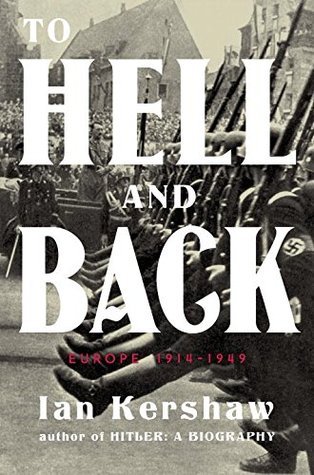
The Penguin History of Europe series reaches the twentieth century with acclaimed scholar Ian Kershaw’s long-anticipated analysis of the pivotal years of World War I and World War II The European catastrophe, the long continuous period from 1914 to 1949, was unprecedented in human history—an extraordinarily dramatic, often traumatic, and endlessly fascinating period of upheaval and transformation. This new volume in the Penguin History of Europe series offers comprehensive coverage of this tumultuous era. Beginning with the outbreak of World War I through the rise of Hitler and the aftermath of the Second World War, award-winning British historian Ian Kershaw combines his characteristic original scholarship and gripping prose as he profiles the key decision makers and the violent shocks of war as they affected the entire European continent and radically altered the course of European history. Kershaw identifies four major causes for this catastrophe: an explosion of ethnic-racist nationalism, bitter and irreconcilable demands for territorial revisionism, acute class conflict given concrete focus through the Bolshevik Revolution, and a protracted crisis of capitalism. Incisive, brilliantly written, and filled with penetrating insights, To Hell and Back offers an indispensable study of a period in European history whose effects are still being felt today.

In a mere nineteen months, from May 1940 to December 1941, the leaders of the world's six major powers made a series of related decisions that decided the course and outcome of World War II, cost the lives of millions, and profoundly shaped the course of human destiny from that point forward. How were these decisions made? What were the options facing these leaders as they saw them? What intelligence, right and wrong, did they have? What was the impact of personality, what that of larger forces? In a brilliant work with haunting contemporary relevance, Ian Kershaw tells the connected stories of these ten fateful decisions from the shifting perspectives of the protagonists, and in so doing rescues them from the sense of inevitability that now envelops them and restores to them a feeling of vivid drama and contingency-the feeling that things could have turned out very differently indeed. Each chapter follows the process of arriving at one decision, from the viewpoint of the leader who made it: Decision 1: May 1940. The British War Cabinet, driven by Churchill, agrees to fight on after the German blitzkrieg defeat of France, despite loud calls for negotiated settlement. Decision 2: Hitler decides to attack the Soviet Union. Decision 3: Japan decides to seize the "Golden Opportunity" and turn south, going after the colonial empires of the countries that have fallen to Hitler. Decision 4: Mussolini decides to join the war on Hitler's side to grab a share of the spoils. Decision 5: Roosevelt decides to lend a helping hand to England. Decision 6: Stalin decides he knows best and ignores all the clear signals that Germany is going to invade. Decision 7: Roosevelt decides to wage undeclared war. Decision 8: Japan decides to go to war against the United States. Decision 9: Hitler decides to declare war on the USA. Decision 10: Hitler decides to kill the Jews. Decision relates to subsequent decision, though never simply or necessarily as expected. The clash of personalities, the various weaknesses of the different political systems, the challenge of intelligence, the misdiagnosis of risk and possibility: all play their part. And after nineteen months, though much remained to be decided, the world's fate had been profoundly altered by these ten choices.

After the overwhelming horrors of the first half of the 20th century, described by Ian Kershaw in his previous book as being 'to Hell and back', the years from 1950 to 2017 brought peace and relative prosperity to most of Europe. Enormous economic improvements transformed the continent. The catastrophic era of the world wars receded into an ever more distant past, though its long shadow continued to shape mentalities.Europe was now a divided continent, living under the nuclear threat in a period intermittently fraught with anxiety. Europeans experienced a 'roller-coaster ride', both in the sense that they were flung through a series of events which threatened disaster, but also in the sense that they were no longer in charge of their own destinies: for much of the period the USA and USSR effectively reduced Europeans to helpless figures whose fates were dictated to them depending on the vagaries of the Cold War. There were, by most definitions, striking successes - the Soviet bloc melted away, dictatorships vanished and Germany was successfully reunited. But accelerating globalisation brought new fragilities. The impact of interlocking crises after 2008 was the clearest warning to Europeans that there was no guarantee of peace and stability.In this remarkable book, Ian Kershaw has created a grand panorama of the world we live in and where it came from. Drawing on examples from all across Europe, Roller-Coaster will make us all rethink Europe and what it means to be European.

Few, if any, twentieth-century political leaders have enjoyed greater popularity among their own people than Hitler did in the decade or so following his rise to power in 1933. The personality of Hitler himself, however, can scarcely explain this immense popularity or his political effectiveness in the 1930s and '40s. His hold over the German people lay rather in the hopes and perceptions of the millions who adored him.Based largely on the reports of government officials, party agencies, and political opponents, Ian Kershaw's groundbreaking study charts the creation, growth, and decline of the "Hitler myth." He demonstrates how the manufactured "Fuhrer-cult" served as a crucial integrating force within the Third Reich and a vital element in the attainment of Nazi political aims. Masters of the new techniques of propaganda, the Nazis used "image-building" to exploit the beliefs, phobias, and prejudices of the day. Kershaw greatly enhances our understanding of the German people's attitudes and behavior under Nazi rule and the psychology behind their adulation of Hitler.

From one of the leading historians of twentieth-century Europe and the author of the definitive biography of Hitler, Personality and Power is a masterful reckoning with how character conspired with opportunity to create the modern age’s uniquely devastating despots—and how and why other countries found better paths. The modern era saw the emergence of individuals who had command over a terrifying array of instruments of control, persuasion and death. Whole societies were reshaped and wars were fought, often with a merciless contempt for the most basic norms. At the summit of these societies were leaders whose personalities somehow enabled them to do whatever they wished, regardless of the consequences for others.Ian Kershaw’s new book is a compelling, lucid and challenging attempt to understand these rulers, whether those operating on the widest stage (Lenin, Stalin, Hitler, Mussolini) or with a more national impact (Tito, Franco). What was it about these leaders, and the times in which they lived, that allowed them such untrammelled and murderous power? And what brought that era to an end? In a contrasting group of profiles—from Churchill to de Gaulle, Adenauer to Gorbachev and Thatcher to Kohl)—Kershaw uses his exceptional skills as an iconic historian to explore how strikingly different figures wielded power.

This book is the culmination of more than three decades of meticulous historiographic research on Nazi Germany by one of the period’s most distinguished historians. The volume brings together the most important and influential aspects of Ian Kershaw’s research on the Holocaust for the first time. The writings are arranged in three sections—Hitler and the Final Solution, popular opinion and the Jews in Nazi Germany, and the Final Solution in historiography—and Kershaw provides an introduction and a closing section on the uniqueness of Nazism.Kershaw was a founding historian of the social history of the Third Reich, and he has throughout his career conducted pioneering research on the societal causes and consequences of Nazi policy. His work has brought much to light concerning the ways in which the attitudes of the German populace shaped and did not shape Nazi policy. This volume presents a comprehensive, multifaceted picture both of the destructive dynamic of the Nazi leadership and of the attitudes and behavior of ordinary Germans as the persecution of the Jews spiraled into total genocide.
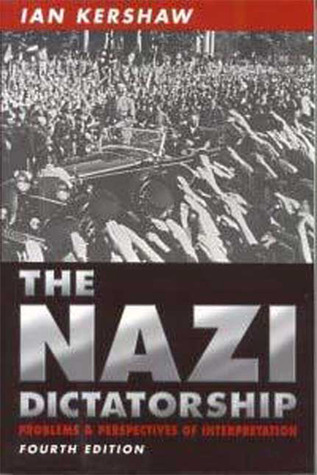
This widely-used text on the Nazi regime explores the complex issues historians face when they interpret the Third Reich. Kershaw expertly synthesizes data and evaluates complex historiography looking at the major themes and debates among scholars about Nazism. Drawing on the findings of a wide range of research, particularly the work of German scholars which has not been widely available in English editions, he uncovers interpretational problems, outlines the approaches taken by various historians, and provides clear evaluations of their positions. This edition reflects current concerns and fresh research and contains substantial revisions to the chapter on "Hitler and the Jews" and an updated survey of recent historical work including Goldhagen's controversial book, Hitler's Willing Executioners .

Adolf Hitler sündis 1889. aastal väikeses Austria piirilinnas Inni-äärses Braunaus alamkeskklassi perekonnas. Tema varasem elu ei vihjanud vähimalgi määral tegelasele, kes paneb kord maailma hinge kinni hoidma. Pigem näis see vihjavat tähtsusetule ja keskpärasele tulevikule.Hitleri võimu lahtimõtestamine tõstatab mitmeid väga keerukaid probleeme. Küsimus ,,Kuidas oli Hitler üldse võimalik?" kummitas temaaegseid natsismi vastaseid ja on andnud ajaloolastele peamurdmist siiani.
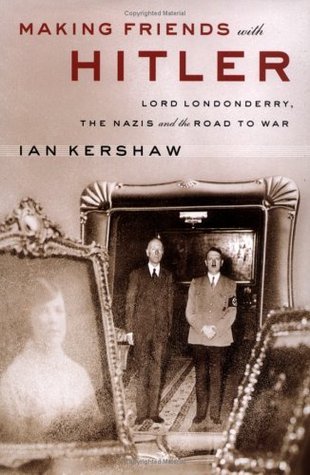
Making Friends with Hitler: Lord Londonderry, the Nazis and the Road to War
by Ian Kershaw
Rating: 3.7 ⭐
Chas Stewart Henry Vane-Tempest-Stewart, 7th Marquess of Londonderry, was born to power. Scion of an aristocratic family, Churchill's cousin, royal confidant, owner of vast coal fields & landed estates, wed to the doyenne of London society, he was an ornament to his class, the .1% who still owned 30% of England's wealth as late as '30. But history hasn't been kind to 'Charley', as the king called him, because, in his own words, he "backed the wrong horse"--a very dark horse indeed: Adolf Hitler & the Nazis. Londonderry wasn't the only aristocrat to do so, but he was the only Cabinet member to do so. It ruined him. In a final irony, his grand London house was bombed by the Luftwaffe in the blitz. Kershaw isn't out to rehabilitate Londonderry but to understand him, to expose why he was made a scapegoat for views that were much more widely held than anyone likes to think. H.L. Mencken famously said that "for every complex problem, there is a solution that is simple, neat & wrong." The conventional explanation of the coming of WWII is a simple story of the West's appeasement of Hitler in the face of bullying. Thru the story of how Londonderry came to be mixed up with the Nazis & how it all went wrong, Kershaw shows that behind the familiar cartoon is a much more complicated & interesting reality, with miscalculations on both sides, fatal miscalculations.

'It is now time that something was done. But the man who has the courage to do something must do it in the knowledge that he will go down in German history as a traitor. If he does not, however, he will be a traitor to his own conscience' - Colonel Claus von Stauffenberg, July 1944. The July 1944 plot to kill Adolf Hitler was a desperate attempt by a group of senior officers to redeem Germany's honour and end the Second World War. They were heroic because they knew their chances of success were slight and that the result of their failure would undoubtedly be a terrible death.They wanted to leave a message for later that there were Germans who understood the evils of Nazism and were willing to act against it. This extraordinary story is the basis for Bryan Singer's major new film "Valkyrie", due to be released in February 2009. Published for the first time as a separate book, "Luck of the Devil" is taken from Ian Kershaw's bestselling "Hitler 1936-1945: Nemesis" and is a brilliant account of just what happened in those fateful days at Hitler's Wolf's Lair headquarters, when his opponents came so astonishingly close to assassinating what is one of the modern era's most terrible figures.

Translated widely across the world, Ian Kershaw's award-winning two-volume Penguin biography of Hitler is widely regarded as the definitive work on the megalomaniac Nazi leader. Death in the Bunker offers a compelling account of the final hours of Germany's Third Reich: the oaths and betrayals of the Fuhrer's henchmen, and his ultimate suicide in an underground chamber alongside his new wife Eva Braun.

Now updated with a new introduction and bibliography, Kershaw's classic study of popular responses to Nazi policy and ideology explores the political mentality of "ordinary Germans" in one part of Hitler's Reich. Basing his account on many unpublished sources, the author analyzes socioeconomic discontent and the popular reaction to the anti-Church and anti-Jewish policies of the Nazis, and reveals the bitter divisions and dissent of everyday reality in the Third Reich, in stark contrast to the propaganda image of a 'National Community' united behind its leaders.

Of all Hitler’s countless utterances, his most notorious was a shortpassage in a long speech he held in a packed Reichstag in Berlin onthe evening of 30 January 1939, the sixth anniversary of his so-called“Seizure of Power.” The speech, lasting over two and a half hours, was inthe main a defiant tirade against what Hitler portrayed as Jewish-inspiredwestern war-mongerers. It was well into its second half when Hitler madehis infamous Prophecy. . .


A extraordinária história da tentativa perfeita de matar Hitler, e que falhou.A conspiração para matar Hitler de Julho de 1944 foi a tentativa desesperada por parte de altas patentes do exército alemão, liderados pelo herói de guerra Claus von Stauffenberg, de recuperar a dignidade da Alemanha e de pôr um fim à Segunda Guerra Mundial. Aquela que ficou conhecida por Operação Valquíria seria um estrondoso fracasso e acabou com a execução sumária de todos os implicados. Conheça esta extraordinária história – os intervenientes, motivações, planos, execução e razões do fracasso – escrita por Ian Kershaw, o maior especialista em Nazismo.

Ninguna ideología ha suscitado tantos debates y controversias como el nazismo. Este libro propone un punto de vista original sobre los orígenes del Tercer Reich. ¿Cómo llegó Adolf Hitler al poder? ¿El gran capital apoyó a Hitler? ¿Explica la propaganda el éxito del nazismo? ¿Era Goebbels un genio? ¿Todos los alemanes eran n azis? ¿Estaba el antisemitismo en el centro del sistema? ¿Era el Führer un dictador absoluto? ¿Cumplió el Tercer Reich sus promesas sociales? ¿1938: el cambio?El lector encontrará en estas páginas las respuestas a todas estas preguntas a través de textos elaborados por grandes especialistas como Philippe Burrin, Ian Kershaw, Saul Friedländer, etc.

Med dette fjerde bind i den britiske historiker Ian Kershaws bud på en samlet historie om Europa i det 20. århundrede er vi nået frem til oliekrisen i 1973. Herfra bevæger fremstillingen sig op til vor tid og beskriver undervejs en række skelsættende begivenheder i nyere europæisk historie. Der var slående succeser efter de fleste målestokke – sovjetblokken gik i opløsning, diktaturer forsvandt, og Tyskland blev genforenet. Men de indbyrdes forbundne kriser fra 2008 og frem var en meget klar advarsel til europæerne om, at der ikke var nogen garanti for fortsat fred og stabilitet.I Vendepunkter, som udgør afslutningen på Ian Kershaws monumentale firbindsværk om Europa i det 20. århundrede, giver han et storslået vue ud over den verden, vi lever i, og hvor den kommer fra. Ved hjælp af eksempler fra hele Europa vil han med disse fire bind have os til at tænke over, hvad Europa er, og hvad det vil sige at være europæer.


Der Mensch und die Macht. Über Erbauer und Zerstörer Europas im 20. Jahrhundert
by Ian Kershaw
Rating: 4.7 ⭐

Series: The 1992 Bithell memorial lecture (Book 15)