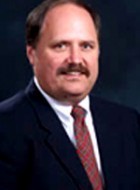
Ronald J. Rychlak
Professor Ronald J. Rychlak is the Butler, Snow, O’Mara, Stevens and Cannada Lecturer and Professor of Law. He has been on the faculty since 1987. He currently serves as the university’s Faculty Athletic Representative, and he is the former Associate Dean for Academic Affairs. He is a graduate of Wabash College (BA, cum laude) and Vanderbilt University (JD, Order of the Coif). Prior to joining the faculty, Ron practiced law with Jenner & Block in Chicago, and he served as a clerk to Hon. Harry W. Wellford of the U.S. Sixth Circuit Court of Appeals. Ron is an advisor to the Holy See’s delegation to the United Nations and a member of the Mississippi Advisory Committee to the U.S. Civil Rights Commission. He is on the committee appointed by the Mississippi Supreme Court to revise the state’s criminal code, and he serves on the editorial board of The Gaming Law Review. He is also on Advisory Boards for the Catholic League for Religious and Civil Rights, Ave Maria School of Law, and the International Solidarity and Human Rights Institute. In 2006 the Society of Catholic Social Scientists awarded him the Blessed Frederic Ozanam Award for Social Action, and in 2007 he was an honoree at the U.S. Holocaust Museum for his work with on inter-faith dialogue. Prof. Rychlak is the author or co-author of eight books, including Real and Demonstrative Evidence: Applications and Theory (3rd ed., 2012). Lawyers Weekly USA called it a “very valuable resource for lawyers looking to stay on top of their changing world.” The Weekly Standard called his book, Hitler, the War, and the Pope(2nd ed., 2010), “the best and most careful of the recent works [on the church during World War II], an elegant tome of serious, critical scholarship.” His latest book Disinformation (WND Books, 2013) is co-authored with the highest ranking Soviet Bloc intelligence officer ever to defect. Former CIA Director R. James Woolsey called it a “remarkable book [that] will change the way you look at intelligence, foreign affairs, the press, and much else.” Ron has also contributed chapters to several books and entries to several encyclopedias. He has been published in the Mississippi Law Journal, UCLA Law Review, Boston College Law Review, Notre Dame Law Review, The Stanford Environmental Law Journal, The Washington Post, The Wall Street Journal, and numerous other periodicals and journals.
10 Books Written

Hitler, the War, and the Pope, Revised and Expanded
by Ronald J. Rychlak
Rating: 4.7 ⭐
• 2 recommendations ❤️
Was Pope Pius XII a Nazi Sympathizer?For almost 50 years, a controversy has raged about Pope Pius XII. Was the Pope who had shepherded the Church through World War II a Nazi sympathizer? Was he, as some have dared call him, Hitler's pope? Did he do nothing to help the Jewish people in the grips of the Holocaust?In a thoroughly researched and meticulously documented analysis of the historical record, Ronald Rychlak has gotten past the anger and emotion and uncovered the truth about Pius XII. Not only does he refute the accusations against the Pope, but for the first time documents how the slanders against him had their roots in a Soviet Communist campaign to discredit him and by extension, the Church.Let those who doubt but read Rychlak, follow his exquisitely organized courtroom-like arguments. What Professor Rychlak brings to the forum are facts, not rhetoric, dates, not conjecture, evidence, not slander.... The world owes Ronald Rychlak a debt for bringing the truth to light. ---Rabbi Eric A. Silver"In his well-crafted pages ... the portrait that emerges is one of an extraordinary pastor facing extremely vexing circumstances, of a holy man vying against an evil man, of a human being trying to save the lives of other human beings, of a light shining in the darkness."--John Cardinal O Connor (1920-2000) Archbishop of New York (from the Foreword to the first edition)"I have read many books on Pius XII, and this is by far the most dispassionate in laying out the context, relevant facts, accusations, and evidence pro and con. The book is highly engaging because it is filled with so many little-known facts. The research has been prodigious. Yet the presentation is as down-to-earth as it would have to be in a courtroom.... This is a wonderfully realistic book." ---Michael NovakGeorge Frederick Jewett Scholar in Religion, Philosophy, and Public Policy,American Enterprise Institute"Despite his many brilliant accomplishments, perhaps no modern-day leader of the Catholic Church has triggered more controversies than Pope Pius XII. Some historians have argued that, in light of the Church s concerns about Communism, he was pro-Nazi during the 1930s. He has been accused of signing the Reichskonkordat as a signal to Adolf Hitler of Rome's favor; of dissuading Pope Pius XI from condemning Kristallnacht; and of remaining silent in face of proof that the Holocaust was taking place.In this valuable book, Professor Ronald Rychlak sets the record straight. He paints a vivid picture of the social, political, and religious background against which the papacy of Pius XII took place. In so doing, Rychlak shows him to have been a man of singular wisdom and courage.Eugenio Maria Giuseppe Giovanni Pacelli was a brilliant student as a young man, fluent in several languages, with doctorates in theology and canon and civil law. He was elected to the papacy just six months before Germany's invasion of Poland sparked the Second World War in Europe."Rychlak has buried the myth under an avalanche of facts and demonstrated that Pacelli's reputation deserves to be what it was during the war when the New York Times more than once praised him as a lonely voice crying out of the silence of a continent. Rychlak has done more than anyone else to set the record straight." --Professor Robert George McCormick Professor of Jurisprudence Princeton University

Righteous Gentiles: How Pius XII and the Catholic Church Saved Half a Million Jews From the Nazis
by Ronald J. Rychlak
Rating: 4.8 ⭐
A relentless band of propagandists has convinced much of the world that Pope Pius XII and the Catholic Church, in the face of the great moral crisis of the twentieth century, were little more than Nazi lapdogs. The myth of "Hitler’s pope," however, is grounded not in the facts of history but in the ideological agenda of Pius’s detractors. Given unprecedented access to Church archives—including a confidential Vatican report on Pius XII—Ronald J. Rychlak documents the heroic response of the Holy Father and countless other Catholics to the plight of Jews under Nazi rule. From the end of World War II until well after his death, Pius XII was universally respected for his leadership in the extraordinarily difficult years of the Third Reich. The first attack was Rolf Hochhuth’s 1963 play The Deputy, accusing the pope of indifference to Jewish suffering in the Holocaust. John Cornwell revived the charge in Hitler’s Pope (1999), and Gary Wills, James Carroll, and Daniel Goldhagen have made the revisionist attack on the wartime Church a popular genre. Rychlak exposes the inconsistent charges, false allegations, and manufactured evidence against Pius XII and his predecessor, the German clergy, and the Catholic Church under Nazi occupation. His comprehensive and thoroughly documented account establishes once and for all that the Catholic Church under Pius XII, far from being indifferent to the Jews, was dedicated to saving them from the Nazis at all costs. The fruit of this concern was the rescue of over half a million Jews from the death camps. Rychlak lays to rest the "black legend" of the Church during World War II, showing that Pius XII and those he directed deserve the title "righteous gentiles."

American tort law has become the subject of public scrutiny in the last decades. The criticism cast against it is that its current state bears economic incentives for abuse. But the tort law system engenders an even greater the perversion of the human person. Acts of injustice tolerated by a permissive tort system have facilitated the near obliteration of forgiveness and reconciliation, of kindness and goodwill, and they have thus cleaved a chasm in human fellowship. The tort system has thus forsaken its proper role as arbiter of justice in service of the common good. Instead, it is distorting responsibility into blame, and human dignity into parasitic opportunism. This monograph not only points to the gravity of this moral effect of tort law on the human person, but it attempts to lay the ground for restoring the common good in tort litigation.

The Persecution and Genocide of Christians in the Middle East: Prevention, Prohibition, & Prosecution
by Ronald J. Rychlak
Rating: 5.0 ⭐
-- An eye-opening account of the plight of Christians in the Middle East-- The most in-depth work available on the persecution of Middle Eastern ChristiansIn summer 2014, ISIS waged a bloody blitz through Iraq’s Nineveh province, crucifying, beheading, raping, torturing, forcibly converting to Islam, and driving out every member of the region’s 2000-year-old Christian community. Christian girls, as young as three, were sold at ISIS sex slave markets in Mosul. Ancient churches were burned and ISIS attacked dozens of Christian towns in Syria. The beheading in 2015 of 21 Egyptian Copts was videotaped by ISIS and became a searing, iconic symbol of this wave of persecution that threatens to eradicate Christianity in the Middle East. Many in the West, even Christians, remain unaware of the scale of this persecution, and even fewer know what can be done about it.Inspired by Pope Francis’s denunciation of these acts as “genocide,” a group of Catholic legal scholars, writers, and theologians began work on The Persecution and Genocide of Christians in the Middle East. Its case studies focus on persecuted Christians, but its analysis equally applies to the other victims. In the United States, military and diplomatic responses are contemplated and sometimes undertaken. But what about the legal system? Are there things we can or should be trying? That question animates this book as it explores various facets of religious persecution, examining ISIS’s ideology and their relationship to Islam as practiced by most Muslims, as well as exploring the nature of religious freedom.Practical, relevant, and rich in ideas, this book addresses the most crucial religious freedom issue of our day. It is a primer for Christians, students of international human rights, and all concerned about religious persecution.“ISIS’s genocide against Christians is one of the most egregious human rights problems in the world today. Christian communities in the Middle East, Africa, and elsewhere should not be abandoned to face alone mass murder, rape, and deportation, indeed the destruction of their entire presence. These are crimes against humanity crying out to us for both prayer and humanitarian, legal, and political action. This informative book gives rare insights into a crisis often hushed up in the media, and tells how we can help.” LEONARD LEO, Former Chair of the US Commission on International Religious Freedom“This is the most cogent discussion of the threat ISIS poses yet published. Written by experts in many fields, it details the persecution of Christians and others, ranging from religious oppression and sexual violence to torture. The failure of international bodies to address this menace is also addressed. The wealth of data, combined with a fair-minded approach to this incendiary subject, makes this book must reading for anyone concerned about the fate of freedom in the third millennium.”—BILL DONOHUE, President, Catholic League for Religious and Civil Rights“The hideous martyrdom of Christians in the early 21st century will be remembered for the life of the Church, that is, forever. We owe our gratitude to this remarkable new work for helping us understand the brutal reality lived daily by our brothers and sisters at the hands of ISIS and other genocidal groups.”—AUSTIN RUSE, President, Center for Family & Human Rights (C-Fam)

Real and Demonstrative Evidence: A Real World Practice Manual for Winning at Trial - 3rd Edition
by Ronald J. Rychlak
Rating: 5.0 ⭐
Spectacular imagery radiates from television and movies every day. Jurors now expect their trial to be a show. They expect drama. And you need persuasive visual aids to give it to them. If you don't, and your opponent does, you'll probably lose. It's that simple. In Real and Demonstrative Evidence, Ronald J. Rychlak combines in-depth legal analysis with practical guidance to help you develop and use persuasive physical evidence. The book is a guide for practicing attorneys. It helps them select the best type of demonstrative evidence and the best way to show it to the finder of fact. It talks about preserving real evidence and the best ways to present it. It deals with rules of evidence and with practical matters such as visibility and persuasiveness.

Environmental Law
by Ronald J. Rychlak
This almanac provides an overview of environmental law presented in an accessible fashion for those who may be encountering this complex area of law for the first time. Through this book, the reader will gain an understanding of the major environmental regulatory statutes, including thoseaddressing air and water quality, hazardous materials and wastes, pesticides and other toxic substances, wetlands preservation, and endangered species. The reader will also be introduced to the agencies responsible for implementing and enforcing these statutes. This book also covers the common lawprinciples which are of continuing importance in environmental law and from which modern environmental law directly descends. The reader will further gain an understanding of environmental restrictions on private property development, the increasingly important issue of global climate change, andthe ability of the public to obtain access to environmental information through community right to know laws and other environmental statutes. This publication is also an invaluable reference guide for anyone already familiar with environmental law who is seeking access to the most recentinformation in the field.

Real and Demonstrative Evidence: Applications and Theory
by Ronald J. Rychlak
Spectacular imagery radiates from television and movies every day. Jurors now expect their trial to be a show. They expect drama. And you need persuasive visual aids to give it to them. If you don't, and your opponent does, you'll probably lose. It's that simple. In Real and Demonstrative Evidence , Ronald J. Rychlak combines in-depth legal analysis with practical guidance to help you develop and use persuasive physical evidence.The book is a guide for practicing attorneys. It helps them select the best type of demonstrative evidence and the best way to show it to the finder of fact. It talks about preserving real evidence and the best ways to present it. It deals with rules of evidence and with practical matters such as visibility and persuasiveness.

Gaming Law Cases and Materials Supplement
by Ronald J. Rychlak
Since the research for the casebook closed on December 31, 2002, developments in the field of gaming laws have continued apace. Accordingly, this supplement reports on the period from January 1, 2003 to December 31, 2006.

Real and Demonstrative Evidence: A Real World Practice Manual for Winning at Trial - Fourth Edition
by Ronald J. Rychlak
[Hitler, the War, and the Pope] [By: Ronald J. Rychlak] [May, 2010]
by Ronald J. Rychlak