
S.L.A. Marshall
S.L.A. Marshall (full name, Samuel Lyman Atwood Marshall) served in World War I and then embarked in a career in journalism. In World War II, he was chief combat historian in the Central Pacific (1943) and chief historian for the European Theater of Operations (1945). He authored some 30 books about warfare, including Pork Chop Hill: The American Fighting Man in Action, The River and the Gauntlet and Men Against Fire: The Problem of Battle Command in Future War.
30 Books Written
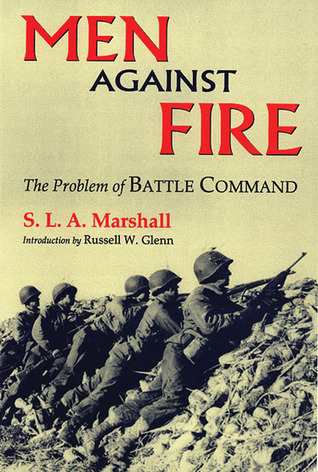
Men Against Fire: The Problem of Battle Command
by S.L.A. Marshall
Rating: 3.9 ⭐
• 2 recommendations ❤️
S.L.A. "Slam" Marshall was a veteran of World War I and a combat historian during World War II. He startled the military and civilian world in 1947 by announcing that, in an average infantry company, no more than one in four soldiers actually fired their weapons while in contact with the enemy. His contention was based on interviews he conducted immediately after combat in both the European and Pacific theaters of World War II.To remedy the gunfire imbalance he proposed changes to infantry training designed to ensure that American soldiers in future wars brought more fire upon the enemy. His studies during the Korean War showed that the ratio of fire and more than doubled since World War II.

Brigadier General S. L. A. Marshall's World War I is "far and away the best, most concise and clearest one-volume history of the war to end all wars" ( Denver Post ).A "full-dress history of the war by one of our most distinguished military writers" ( New York Times ), this riveting history takes readers from the first shots in Sarajevo to the signing of the peace treaty in Versailles and through every bunker, foxhole, and minefield in between.Brigadier General Marshall drew on his unique firsthand experience as a soldier and a lifetime of military service to pen this forthright, forward-thinking history of what people once believed would be the last great war.Introduced by the Pulitzer Prize–winning historian, David M. Kennedy, World War I is a classic example of unflinching military history that is certain to inform, enrich, and deepen our understanding of this great cataclysm.

On 31st January, 1944, the United States launched a twin assault on the Kwajalein Atoll. This was the first time the Americans had penetrated the “outer ring” of the Japanese Pacific sphere. From now until the end of the war the combined forces of the Navy, Marine Corps and Army would island hop their way to the Japanese mainland. Yet, the Battle of Kwajalein Atoll, particularly on the island of Roi-Namur where there were only 51 survivors of the original 3,500 garrison left, gave the Americans an insight into the fierce resistance that the Japanese would put up over the remaining months of the war. Drawn directly from the testimonies of several hundred infantrymen, Island Victory provides insight into what it was like to feel the heat of battle on the beaches of those Pacific islands. "Written accounts of war simply do not get any closer to the actions and feelings of those [who] were there. Island Victory is a highly recommended, 'must read' book." — The Midwest Book Review "The real value of Island Victory lies in the unadorned words of these soldiers, recorded so openly and methodically by Marshall after the battle. . . . The Kwajalein victors interviewed so painstakingly by Sam Marshall provide a priceless candor and authenticity, the emotional testimonies of young men still flushed with adrenalin, guilt, and relief." — Joseph H. Alexander, Journal of Military History S. L. A. Marshall was a chief U.S. Army combat historian during World War II and the Korean War. He had served on the border with Mexico during the Pancho Villa Expedition before serving in France during World War I. He wrote over thirty books about warfare. Island Victory was first published in 1944. Marshall passed away in 1977.

[This edition benefits from numerous maps of the battlefields that the actions were fought over]“NUTS!” - Among the many military legends that abound from the fighting of the Second World War, the one word reply to a German summons to surrender must rank highly in terms of its resonance, importance and sheer grit. General Mcaulliffe decided that despite the odds and the lack of supplies and ammunition his troops would continue to hold the important communication hub of Bastogne during the Battle of the Bulge. This dramatic, yet authoritative account brings all of the action to the fore as the Battered Bastards of Bastogne wrote their names into legend."THIS STORY OF BASTOGNE was written from interviews with nearly all the commanders and staff officers and many of the men who participated in the defense of Bastogne during the first phase of that now celebrated operation—the days during which the American forces were surrounded by forces of the enemy…Thus it is essentially the account of how a single strong defensive force was built from separate commands of armor, airborne infantry and tank destroyers—a force convinced that it could not be beaten."-Introduction.

"In the Bosnian town of Sarajevo on the morning of June 28, 1914, a chauffeur misunderstood his instructions, made the wrong turn, tried too late to correct his blunder, and in so doing, delivered his passengers to a point where a waiting assassin did not have to take aim to gun them down. Two rounds from one pistol and the world rocked. The crime was the small stone that loosened brings the avalanche." So begins Brigadier General S.L.A. Marshall's compelling narrative of the American Heritage History of World War I, a book that tells the story of the Great War from Sarajevo to Versailles. Ten million men died; another 20 million were wounded. But it was not the numbers alone that made this the Great War. The flame thrower, the tank, and poison gas were introduced. Cavalry became obsolete; air combat and submarine warfare came of age. Old dynasties disintegrated; new nations appeared. In this book, renowned military historian Marshall, a World War I veteran, describes and analyzes the origins, course, and immediate aftermath of the colossal conflict. The story begins with a look backward at a complacent world ensnared in a network of alliances. Out of this setting emerged the cunning diplomats and statesmen who maneuvered and blundered their countries into positions that made the war inevitable. Once committed, the nations of Europe aligned into two, mighty opposing forces, and went jauntily into war, each confident that the conflict would be over before it really began. Marshall follows the personalities, strategies, errors, and the unremitting slaughter of the next four years. The story ends with the ill-conceived Treaty of Versailles, which sowed the seeds that would plunge the following generation into another world war.

A firsthand account of frontline combat during the Korean War chronicles the courageous valor of a handful of U.S. riflemen, who held their posts on Pork Chop Hill against overwhelming odds. Reissue.

"This is a must read book for all Military". What an interesting book from a closed out bookstore. Despite all the touching, handling and some fine shelf wear on DJ otherwise, the book remain clean and in a sturdy binding. We deliver within 4 - 10 working days. Great Customer satisfaction with money back guaranteed.

Hours before dawn on June 6, 1944, the American 82nd and 101st Airborne Divisions dropped in Normandy behind Utah Beach. Their mission--to establish a firm foothold for the invading armies. What followed if one of the great and veritable stories of men at war. Although the Germans defenders were spread thin, the hedgerow terrain favored them; and the American successes when they eventually did come were bloody, sporadic, often accidental. As the threads of the operation twine together, combat soldiers emerge as they really are...face to face with danger and with themselves. Seldom before have Americans at war been so starkly and candidly described, in both their cowardice and their courage. Brigadier General S.L.A. Marshall collected information for this direct interviews with the men in the field within days after the action took place in June, 1944. His notes have served as the raw material for several histories, written by others, of the Normandy invasion. But now for the

This is the fascinating account, as recorded from the US perspective, of the bitter fighting during the eight days and nights of encirclement at Bastogne. First published in the pages of the Infantry Journal in 1946, this contemporary account by S.L.A. Marshall was rescued from obscurity by the US Army’s Center of Military History and is now appearing in e-book form for the first time.There are few better or more authoritative accounts of the struggle as seen through the eyes of the American soldiers who stood fast at Bastogne. Sent to rest and recuperate, the weary paratroopers and GIs found themselves in the middle of a siege while all hell let loose around them. This is the definitive overview of their conflict as recounted in the year following the battle. This masterful overview is essential reading for anyone with an interest in the Battle of the Bulge.Fully illustrated with maps, contemporary photographs and illustrations.

The river and the gauntlet: Defeat of the Eighth Army by the Chinese Communist forces, November, 1950, in the Battle of the Chongchon River, Korea
by S.L.A. Marshall
Rating: 3.8 ⭐
Battle of the Chongchon River, Korea.

This is the first study of the military tactics employed by the Plains Indians and the U.S. Army in their long war for the American frontier. The Indian Wars were sloppily fought, horribly mis-matched, absurdly wasteful; commanders hunted the Sioux to the accompaniment of brass bands--this apparently to raise troop morale--and reckless charges were more highly rewarded than getting the scouts out, checking communications, or maintaining supply lines.

Men Against Fire, first published in 1947 (and updated in 1961), is an in-depth analysis of military leadership and infantry tactics, with numerous recommendations to improve the effectiveness of ground troops in combat situations. The psychology of combat (e.g., chapters “Why Men Fight” and “Men Under Fire”) is also examined by Marshall, himself a veteran of World War I and a combat historian during World War II.S.L.A. "Slam" Marshall was a veteran of World War I and a combat historian during World War II. He startled the military and civilian world in 1947 by announcing that, in an average infantry company, no more than one in four soldiers actually fired their weapons while in contact with the enemy. His contention was based on interviews he conducted immediately after combat in both the European and Pacific theaters of World War II.
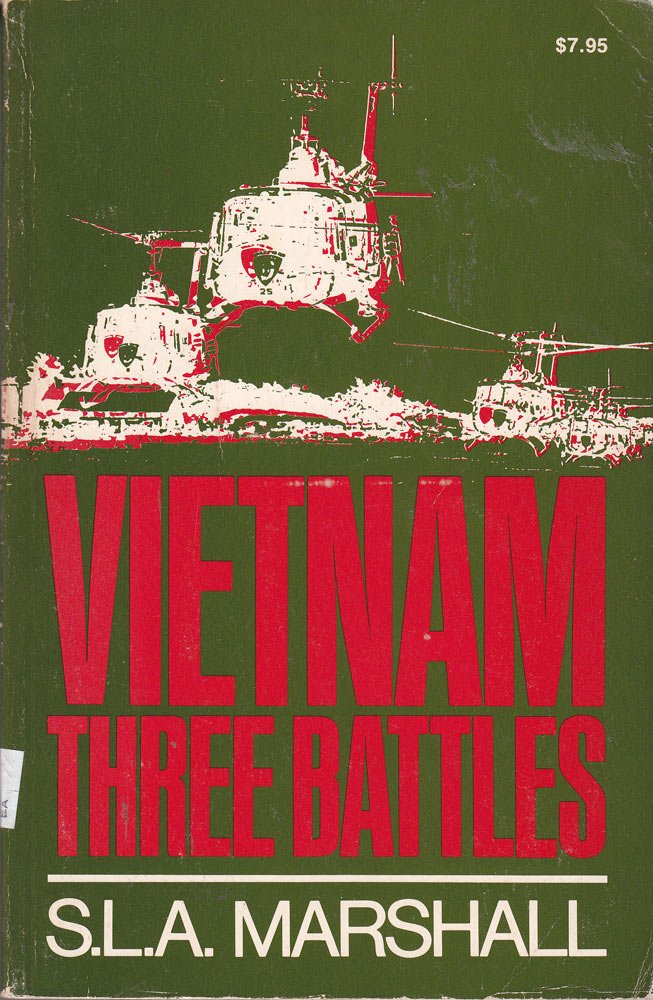
An account of the participation of the First Cavalry Division in the battles of Dong Tre, Trung Luong, and Hoa Hoi captures the action, bravery, and horror of each conflict. Reprint.


The Armed Forces Officer , Armed Forces Information Service , Department of Defense. How to be an Officer and what is expected of you


Vietnam War - history of two battles in 1966. The first on LZ Bird on Christmas, the second at a village called Phu Huu 2 on November 30th, 1966. Very detailed description of the battles with much information at the individual soldier level. Originally published in 1968.

Focuses on the Vietnam battle which ensued in 1966 after the maneuver to block a Vietcong attack uncovered a cache of enemy supplies and equipment

Tells the stories of front line soldiers at Omaha Beach, the liberation of Paris, and battles in the Korean War


Ambush and Bird

Book Summary of The Officer As A Leader The Officer as a Leader is a remarkable book on military leadership, wherein the authro discusses the psychology of a leader and what it takes to be one. In this now famous book, he points out the thirteen mistakes that every leader should avoid that are now as well knwon in Armies across the world as are the Ten Commandments. About Author : Samuel Lyman Atwood Marshall, 1900-1977, American author and military analyst was born in Catskill, N.Y. Having served in world war I, he embarked upon a career in journalism, working as an editorial writer and military critic for the Detroit News. In World War II he was chief comabt historian for the European Theater of Operations (1945) and during the Korean War was an infantry operations analyst for the U.S. army, with the rank of brigadier general. Contents : Introduction Your Commission Your Code as a Leader Responsibility and Privelege of the Leader Knowing Yuor Job as a Leader Thr Problem of Career Speaking and Writing Dealing With Peoople Keeping Your House in Order Wartime Expansion Instruction-Essential Art of the Leader The Nature of Discipline The Meaning of Morale Elements of Esprit Knowing the Men You Lead Your Relationship With Your Men Your Men's Moral and Physical Welfare Keeping Your Men Informed Counseling Your Men Using Reward and Punishment Fitting Your Men to Jobs The Mission Great Leaders-What Kind of Men? Developing Leadership Human Nature and Leadership Group Nature and Leadership The Leading of Americans in Combat Bibliography Index
![The Forcing Of The Merderet Causeway At La Fiere, France - An Action By The Third Battalion 325th Glider Infantry {Illustrated Edition]](https://m.media-amazon.com/images/S/compressed.photo.goodreads.com/books/1394311693i/21211059.jpg)
The Forcing Of The Merderet Causeway At La Fiere, France - An Action By The Third Battalion 325th Glider Infantry {Illustrated Edition]
by S.L.A. Marshall
Rating: 3.3 ⭐
Contains 6 maps and illustrations.As the tens of thousands of American troops began their approach toward the forbidding German-defended Normandy coast, their comrades in the 82nd and 101st Airborne divisions had already flown over the Channel and began dropping and gliding into enemy territory. The Airborne Divisions had a role critical to the success of the entire Normandy Landings; beyond the initial beach landing areas were miles of flooded defended ditches and waterways. If the German troops managed to defend these bottlenecks the Americans on Utah Beach, at the extreme right of the operation, would be unable to move forward and might have foundered on the beach. The American airborne troops, like their British and Canadian compatriots on the left flank, were the elite of their respective armies and expected that their unique battle skills would enable them to deal with any tough mission that was bound to come their way.One such waterway was the Meredet river and its important bridge, this objective was handed to the troops of the 325th Glider Infantry who would wing their way in flimsy and dangerous gliders. As the brave 325th rushed the bridge they knew that their trial had only just begun; cut-off from their own troops on the beaches, lightly armed and surrounded by Germans who would try and respond to their capture of the pivotal bridge.S L A Marshall, the Official Historian for the European Theatre of Operations, interviewed the men of the 325th on their return to the U.K. and from this collected material set about recording this story of their courage, dedication and fighting skill.Highly recommended.

S. L. A. Marshall's style is forthright, humorous, conversational. He puts his military career in perspective and minces no words. He left his manuscript completed but unpolished and his widow, Cate Marshall, who typed many of his previous works for him, helped smooth the book into shape. The result forms the capstone of an active, productive, exciting life and offers the reader a treasury of heretofore untold anecdotes.

![506 Parachute Infantry Regiment In Normandy Drop [Illustrated Edition]](https://m.media-amazon.com/images/S/compressed.photo.goodreads.com/books/1394244065i/21331264.jpg)
506 Parachute Infantry Regiment In Normandy Drop [Illustrated Edition]
by S.L.A. Marshall
Rating: 2.5 ⭐
Includes six maps.This is actual story of parent regiment of the famous “Band of Brothers” Easy company as portrayed in the HBO mini-series during their D-Day Drop.As the tens of thousands of American troops began their approach toward the forbidding German-defended Normandy coast, their comrades in the 82nd and 101st Airborne divisions had already flown over the Channel and began dropping and gliding into enemy territory. The Airborne Divisions had a role critical to the success of the entire Normandy Landings; beyond the initial beach landing areas were miles of flooded defended ditches and waterways. If the German troops managed to defend these bottlenecks the Americans on Utah Beach, at the extreme right of the operation, would be unable to move forward and might have foundered on the beach. The American airborne troops, like their British and Canadian compatriots on the left flank, were the elite of their respective armies and expected that their unique battle skills would enable them to deal with any tough mission that was bound to come their way.The capture and retention of the two southernmost exits were assigned to the 506th Parachute Infantry Regiment; the plan was well thought-out and would have in all likelihood have succeeded handsomely. However the drop of the 506th like many of their comrades on D-Day was wide and scattered all across the Normandy landscape. As groups of paratroops nervously grouped together in the darkness they started small actions against whatever German positions that they came across; as officers and NCOs struggled to gain some control over the chaos the most organized moved toward their objectives. They bravely pushed forward toward their targets and held them against the rising numbers of German reinforcements; before the major link-up with the beach landings they fought and won the engagement at St-Mairie-Du-Comt against their toughest enemies, the German paratroops.S L A Marshall, the Official Historian for the European Theatre of Operations, interviewed the men of the 506th on their return to the U.K. and from this collected material set about recording this story of their courage, dedication and fighting skill.
![FIGHT AT THE LOCK [Illustrated Edition]](https://m.media-amazon.com/images/S/compressed.photo.goodreads.com/books/1519955574i/38899857.jpg)
Includes 6 mapsAs the tens of thousands of American troops began their approach toward the forbidding German-defended Normandy coast, their comrades in the 82nd and 101st Airborne divisions had already flown over the Channel and began dropping and gliding into enemy territory. The Airborne Divisions had a role critical to the success of the entire Normandy Landings; beyond the initial beach landing areas were miles of flooded defended ditches and waterways. If the German troops managed to defend these bottlenecks the Americans on Utah Beach, at the extreme right of the operation, would be unable to move forward and might have foundered on the beach...“According to plan, the D Day objectives of the 501st Parachute Infantry Regiment were well concentrated. After dropping into Normandy a little to the north and east of the city of Carentan, the regiment was to press south and westward and establish the defensive position in this direction. In detail, it was to secure the line of the lower Douve River, first by seizing the strategic lock on the Canal De Vire Et Taute at Le Barquette and then by blowing the river bridges...“From the beginning, American attention was directed at the Le Barquette lock. This unique objective and its possible military application appears to have fascinated the imaginations not only of those who planned Operation Neptune but of the commanders who were to execute it. To get to the lock first and to make certain that the enemy would have no use of it became an overriding consideration with the planning and tactical forces. American apprehensions as to what might happen if the Germans gained control of the lock superinduced one of the boldest strokes of the Normandy campaign, a stroke boldly made and tactically productive. Yet whether the emphasis placed on the position by the Allied planners was justifiable was never confirmed by the attitude of the enemy.”

Armies on Wheels, by S. L. A. Marshall ... with a Foreword by Major General J. F. C. Fuller ... and Illustrated with Maps and Diagrams by Colonel Francis Arnoldy and Joseph Bernstein
by S.L.A. Marshall
Rating: 5.0 ⭐
S.L.A Marsha''s Armies on Wheels is a study of the significant campaigns since Dunkirk, with particular emphasis on what these campaigns teach us about the "Ideal Army" for an offensive anddefensive modern war.

Light Use. In Very Good Condition. Slight edge wear toD/J. This is Book Club Edition.