
Thomas Keneally
Thomas Michael Keneally, AO (born 7 October 1935) is an Australian novelist, playwright and author of non-fiction. He is best known for writing Schindler's Ark, the Booker Prize-winning novel of 1982, which was inspired by the efforts of Poldek Pfefferberg, a Holocaust survivor. The book would later be adapted to Steven Spielberg's Schindler's List (1993), which won the Academy Award for Best Picture. Often published under the name Tom Keneally in Australia. Life and Career: Born in Sydney, Keneally was educated at St Patrick's College, Strathfield, where a writing prize was named after him. He entered St Patrick's Seminary, Manly to train as a Catholic priest but left before his ordination. He worked as a Sydney schoolteacher before his success as a novelist, and he was a lecturer at the University of New England (1968–70). He has also written screenplays, memoirs and non-fiction books. Keneally was known as "Mick" until 1964 but began using the name Thomas when he started publishing, after advice from his publisher to use what was really his first name. He is most famous for his Schindler's Ark (1982) (later republished as Schindler's List), which won the Booker Prize and is the basis of the film Schindler's List (1993). Many of his novels are reworkings of historical material, although modern in their psychology and style. Keneally has also acted in a handful of films. He had a small role in The Chant of Jimmie Blacksmith (based on his novel) and played Father Marshall in the Fred Schepisi movie, The Devil's Playground (1976) (not to be confused with a similarly-titled documentary by Lucy Walker about the Amish rite of passage called rumspringa). In 1983, he was made an Officer of the Order of Australia (AO). He is an Australian Living Treasure. He is a strong advocate of the Australian republic, meaning the severing of all ties with the British monarchy, and published a book on the subject in Our Republic (1993). Several of his Republican essays appear on the web site of the Australian Republican Movement. Keneally is a keen supporter of rugby league football, in particular the Manly-Warringah Sea Eagles club of the NRL. He made an appearance in the rugby league drama film The Final Winter (2007). In March 2009, the Prime Minister of Australia, Kevin Rudd, gave an autographed copy of Keneally's Lincoln biography to President Barack Obama as a state gift. Most recently Thomas Keneally featured as a writer in the critically acclaimed Australian drama, Our Sunburnt Country. Thomas Keneally's nephew Ben is married to the former NSW Premier, Kristina Keneally.
30 Books Written

In remembrance of the 75th anniversary of the liberation of Auschwitz and the Nazi concentration camps, this award-winning, bestselling work of Holocaust fiction, inspiration for the classic film and “masterful account of the growth of the human soul” (Los Angeles Times Book Review), returns with an all-new introduction by the author. An “extraordinary” (New York Review of Books) novel based on the true story of how German war profiteer and factory director Oskar Schindler came to save more Jews from the gas chambers than any other single person during World War II. In this milestone of Holocaust literature, Thomas Keneally, author of The Book of Science and Antiquities and The Daughter of Mars, uses the actual testimony of the Schindlerjuden—Schindler’s Jews—to brilliantly portray the courage and cunning of a good man in the midst of unspeakable evil. “Astounding…in this case the truth is far more powerful than anything the imagination could invent” (Newsweek).

In 1915, two spirited Australian sisters join the war effort as nurses, escaping the confines of their father’s farm and carrying a guilty secret with them. Used to tending the sick as they are, nothing could have prepared them for what they confront, first near Gallipoli, then on the Western Front.Yet amid the carnage, Naomi and Sally Durance become the friends they never were at home and find themselves courageous in the face of extreme danger, as well as the hostility they encounter from some on their own side. There is great bravery, humor, and compassion, too, and the inspiring example of the remarkable women they serve alongside. In France, where Naomi nurses in a hospital set up by the eccentric Lady Tarlton while Sally works in a casualty clearing station, each meets an exceptional man: the kind of men for whom they might give up some of their precious independence — if only they all survive.At once vast in scope and extraordinarily intimate, The Daughters of Mars brings World War I to vivid, concrete life from an unusual perspective. A searing and profoundly moving tale, it pays tribute to men and women of extraordinary moral resilience, even in the face of the incomprehensible horrors of modern war.

The extraordinary Booker Prize shortlisted story of a black man's revenge against an unjust and intolerant society. Thomas Keneally was born in Sydney Australia in 1935. He studied to be a Catholic priest but abandoned his vocation to take up teaching and writing. He is the author of numerous works of fiction and non-fiction including Schindlers Ark which won the Booker Prize in 1982 and was made into a successful film.

It was 1786 when Arthur Phillip, an ambitious captain in the Royal Navy, was assigned the formidable task of organizing an expedition to Australia in order to establish a penal colony. The squalid and turbulent prisons of London were overflowing, and crime was on the rise. Even the hulks sifting at anchor in the Thames were packed with malcontent criminals and petty thieves. So the English government decided to undertake the unprecedented move of shipping off its convicts to a largely unexplored landmass at the other end of the world.Using the personal journals and documents that were kept during this expedition, historian/novelist Thomas Keneally re-creates the grueling overseas voyage, a hellish, suffocating journey that claimed the lives of many convicts. Miraculously, the fleet reached the shores of what was then called New South Wales in 1788, and after much trial and error, the crew managed to set up a rudimentary yet vibrant settlement. As governor of the colony, Phillip took on the challenges of dealing with unruly convicts, disgruntled officers, a bewildered, sometimes hostile native population, as well as such serious matters as food shortages and disease. Moving beyond Phillip, Keneally offers captivating portrayals of Aborigines, who both aided and opposed Phillip, and of the settlers, including convicts who were determined to overcome their pasts and begin anew.With the authority of a renowned historian and the narrative grace of a brilliant novelist, Thomas Keneally offers an insider’s perspective into the dramatic saga of the birth of a vibrant society in an unfamiliar land. A Commonwealth of Thieves immerses us in the fledgling penal colony and conjures up colorful scenes of the joy and heartbreak, the thrills and hardships that characterized those first four improbable years. The result is a lively and engrossing work of history, as well as a tale of redemption for the thousands of convicts who started new lives thousands of miles from their homes.

By the acclaimed author of the Academy Award-winning movie Schindler's List, this Civil War saga is both a riveting account of America at war and a tapestry of human drama.

The tenth child of Charles Dickens, Edward Bulwer Lytton Dickens, known as Plorn, had consistently proved unable 'to apply himself ' to school or life. So aged sixteen, he is sent, as his brother Alfred was before him, to Australia. Plorn arrives in Melbourne in late 1868 carrying a terrible secret. He has never read a word of his father's work. He is sent out to a 2000-square-mile station in remotest New South Wales to learn to become a man, and a gentleman stockman, from the most diverse and toughest of companions. In the outback he becomes enmeshed with Paakantji, colonists, colonial-born, ex-convicts, ex-soldiers, and very few women. Plorn, unexpectedly, encounters the same veneration of his father and familiarity with Dickens' work in Australia as was rampant in England. Against this backdrop, and featuring cricket tournaments, horse-racing, bushrangers, sheep droving, shifty stock and station agents, frontier wars and first encounters with Australian women, Plorn meets extraordinary people and enjoys wonderful adventures as he works to prove himself. This is Tom Keneally in his most familiar terrain. Taking historical figures and events and reimagining them with verve, compassion and humour. It is a triumph.

A young autistic woman finds her voice and a path toward justice in this uplifting short story about the power of family history by Thomas Keneally, award-winning author of Schindler’s List.When Alison Strange receives a debt claim she can’t afford to pay from the Australian government’s unemployment office, she’s caught completely off-balance. As she wrestles with a slippery bureaucracy, her history-loving grandfather bolsters her resolve with the story of their ancestor John Strange, an English cobbler who was banished to Australia for his part in a political movement. Drawing inspiration from John’s life, Alison finds her own unique way to demand a future that’s fair for all.Thomas Keneally’s Alison’s Conviction is part of A Point in Time, a transporting collection of stories about the pivotal moments, past and present, that change lives. Read or listen to each immersive story in a single sitting.

This is the captivating story behind Schindler’s List , the Booker Prize–winning book and the Academy Award–winning Spielberg film. Keneally tells the tale of the unlikely encounter that propelled him to write about Oskar Schindler and of the impact of his extraordinary account on people around the world. Thomas Keneally met Leopold “Poldek” Pfefferberg, the owner of a Beverly Hills luggage shop, in 1981. Poldek, a Polish Jew and a Holocaust survivor, had a tale he wanted the world to know. Charming, charismatic, and persistent, he convinced Keneally to relate the incredible story of “the all-drinking, all-screwing, all-black-marketeering Nazi, Oskar Schindler. But to me he was Jesus Christ.” Searching for Schindler is the engrossing chronicle of Keneally’s pursuit of one of history’s most fascinating and paradoxical heroes. Traveling throughout the United States, Germany, Israel, Poland, and Austria, Keneally and Poldek interviewed people who had known Schindler and uncovered their indelible memories of the Holocaust. Keneally’s powerful narrative rose quickly to the top of bestseller lists. Steven Spielberg’s magnificent film adaptation went on to fulfill Poldek’s dream of winning “an Oscar for Oskar.” (Keneally’s anecdotes about Spielberg, Liam Neeson, Ben Kingsley, and other cast members will delight film buffs.) Written with candor and humor, Seaching for Schindler is an intimate look at Keneally’s growth as a writer and the enormous success of his portrait of Oskar Schindler.

A timely, courageous and powerful novel about faith, the church, conscience and celibacy.Tom Keneally, ex-seminarian, pulls no punches as he interrogates the terrible damage done to innocents as the Catholic Church has prevaricated around language and points of law, covering up for its own.Ex-communicated to Canada due to his radical preaching on the Vietnam War and other human rights causes, Father Frank Docherty is now a psychologist and monk. He returns to Australia to speak on abuse in the Church, and unwittingly is soon listening to stories from two different people – a young man, via his suicide note, and an ex-nun – who both claim to have been sexually abused by an eminent Sydney cardinal. This senior churchman is himself currently empannelled in a commission investigating sex abuse within the Church.As a man of character and conscience, Father Docherty finds he must confront each party involved in the abuse and cover-up to try to bring the matter to the attention of the Church itself, and to secular authorities.This riveting, profoundly thoughtful novel is both an exploration of faith as well as an examination of marriage, of conscience and celibacy, and of what has become one of the most controversial institutions, the Catholic Church.

The Great Shame: And the Triumph of the Irish in the English-Speaking World
by Thomas Keneally
Rating: 3.9 ⭐
In The Great Shame, Thomas Keneally--the bestselling, Booker Prize-winning author of Schindler's List--combines the authority of a brilliant historian and the narrative grace of a great novelist to present a gripping account of the Irish diaspora.The nineteenth century saw Ireland lose half of its population to famine, emigration, or deportation to penal colonies in Australia--often for infractions as common as stealing food. Among the victims of this tragedy were Thomas Keneally's own forebearers, and they were his inspiration to tell the story of the Irish who struggled and ultimately triumphed in Australia and North America. Relying on rare primary sources--including personal letters, court transcripts, ship manifests, and military documents--Keneally offers new and important insights into the impact of the Irish in exile. The result is a vivid saga of heroes and villains, from Great Famine protesters to American Civil War generals to great orators and politicians.

This self-made man from a log cabin-the great orator, the Emancipator, the savior of the Union, the martyr-was arguably our greatest president; but it takes a master storyteller like Thomas Keneally, author of the award-winning novel that inspired the film Schindler's List , to bring alive the history behind the myth. Acclaimed for his recent Civil War biography, American Scoundrel , Keneally delves with relish-and a keen, fresh eye-into Lincoln's complicated persona.Abraham Lincoln depicts all the amazing man's triumphs, insecurities, and crushing defeats with uncanny his early poverty and the ambition that propelled him out of it; the shaping of the man and his political philosophy by youthful exposure to Christianity, slavery, and business; his tempestuous marriage and his fatherly love. We see him, elected to the presidency by a twist of fate, unswerving in the grim day-to-day conduct of the war as his vision and acumen led the country forward. Abraham Lincoln is an incisive study of a turning point in our history and a revealing portrait of its pivotal figure, his greatness etched even more clearly in this very touching human story.

Whilst living in exile on St Helena, Napoleon exerted an extraordinary influence on young Betsy Balcombe. How did she get from Napoleon's side to the Australian bush?When Tom Keneally discovered by chance at the National Gallery of Victoria that Betsy Balcombe, a young girl living on St Helena while the Emperor Napoleon was exiled there, had become the Emperor's ‘intimate friend and annoyer', and had then emigrated with her family to Australia, he was impelled to begin another extraordinary novel, exploring the intersection between the ordinary people of the world and those we deem exceptional.Betsy Balcombe moved as a child with her family to St Helena, ‘that high mid-Atlantic rock of exile'. Ten years later her family befriended, served and were ruined by their relationship with Napoleon. To redeem their fortunes William Balcombe, Betsy's father, betrayed the Emperor and accepted a job as the colonial treasurer of New South Wales, taking his family with him. After enduring a profound tragedy on the voyage out, and never quite recovering from the results of his association with Napoleon, William's life deteriorated; however, his family struggled and survived in Australia.Tom Keneally recreates Betsy's friendship with The Great Ogre, her enmities and alliances with his court, and her dramatic coming of age during her years with them on the island. With his ability for bringing historical stories to life in the most brilliant and surprising ways, Keneally vividly shares this remarkable tale and the beginning of an Australian dynasty.

American Scoundrel: The Life of the Notorious Civil War General Dan Sickles
by Thomas Keneally
Rating: 3.7 ⭐
Hero, adulterer, bon vivant, murderer and rogue, Dan Sickles led the kind of existence that was indeed stranger than fiction. Throughout his life he exhibited the kind of exuberant charm and lack of scruple that wins friends, seduces women, and gets people killed. In American Scoundrel Thomas Keneally, the acclaimed author of Schindler’s List , creates a biography that is as lively and engrossing as its subject.Dan Sickles was a member of Congress, led a controversial charge at Gettysburg, and had an affair with the deposed Queen of Spain—among many other women. But the most startling of his many exploits was his murder of Philip Barton Key (son of Francis Scott Key), the lover of his long-suffering and neglected wife, Teresa. The affair, the crime, and the trial contained all the ingredients of melodrama needed to ensure that it was the scandal of the age. At the trial’s end, Sickles was acquitted and hardly chastened. His life, in which outrage and accomplishment had equal force, is a compelling American tale, told with the skill of a master narrative.

Based on true events, this beautifully rendered novel from the author of Schindler's List and The Daughters of Mars brilliantly explores a World War II prison camp, where Japanese prisoners resolve to take drastic action to wipe away their shame.Alice is a young woman living on her father-in-law's farm on the edge of an Australian country town, while her husband is held prisoner in Europe. When Giancarlo, an Italian anarchist at the prisoner-of-war camp down the road, is assigned to work on the farm, she hopes that being kind to him will somehow influence her husband's treatment. What she doesn't anticipate is how dramatically Giancarlo will expand her outlook and self-knowledge.But what most challenges Alice and her fellow townspeople is the utter foreignness of the thousand-plus Japanese inmates and their culture, which the camp commanders fatally misread. Mortified by being taken alive in battle and preferring a violent death to the shame of living, they plan an outbreak, to shattering and far-reaching effects on all the citizens around them.In a career spanning half a century, Thomas Keneally has proved a master at exploring ordinary lives caught up in extraordinary events. With this profoundly gripping and thought-provoking novel, inspired by a notorious incident in New South Wales in 1944, he once again shows why he is celebrated as a writer who looks into the heart of the human condition with a piercing intelligence that few can match. - Sunday Telegraph

From the New York Times bestselling author of such classics as The Daughters of Mars , Crimes of the Father , and Schindler's List comes a work of historical fiction mastery in which an English lieutenant must stage a play starring the prisoners of the Australian penal colony he supervises.Lieutenant Ralph Clark has received the most bizarre of commissions. In honor of the king's birthday, Clark is charged with staging a production of the George Farquhar comedy The Recruiting Officer . What's more, as Clark supervises the penal colony of Sydney Cove, Australia at the very end of the late-nineteenth-century British Empire's rule, he must use his prisoners as the cast and production crew. Based on the lieutenant’s real diaries, The Playmaker is a work of true genius by one of the most notable names in historical fiction.

From Australia's master storyteller comes an endearing and engaging novella about a journey as unexpected, painful, intriguing and character-filled as life itself. A cruise was the promise. To cruise away from their troubles. To cruise towards the place where they first met, on the banks of the Thames. A cruise to dwell in their memories together and plan their next chapter. Paddy and Jenny Davern have had a long and happy marriage together in Sydney. Together they embark on a cruise to London, for the last leisurely journey in each other's company. While on board, they meet a kaleidoscope of adventurous passengers that test their resolve to their promise to each other, and motivations towards their pact.

By the Booker Prize-winning author of Schindler's Ark, a bold, millennia-spanning novel about community, mortality, and what it means to be human.In a novel of breathtaking reach and inspired imagination, one of Australia's greatest writers tells the stories of two men who have much in common. What separates them is 42,000 years.Shade lives with his second wife amid their clan on the shores of a bountiful lake. A peaceable man, he knows that when danger threatens, the Hero ancestors will call on him to kill, or sacrifice himself, to save his people.Over 40,000 years later, Shade's remains are unearthed near the now dry Lake Learned in New South Wales. The sensational discovery fascinates Shelby Apple, a documentary film maker who tracks the controversies it provokes about who the continent's first inhabitants were and where Shade's bones belong.To Shelby, who will follow his own heroes to the battlefields of Eritrea and the Rift Valley where Homo Sapiens originated, Shade is a messenger from an ancient culture that lived in harmony with the land. And when mortality looms, he becomes a symbol of enduring life.

Why would wealthy Kate Gaffney-Kozinsky flee her husband, lover, family, and society? What can she find by losing herself in the bleak Australian outback? The fascinating answers shape a novel that gives new definition to a woman's strength and endurance. Kate's odyssey takes her from a privileged girlhood, through her meaningless marriage to a lawless tycoon, and an empty erotic affair with a true-blue gentleman. But when her life of pampered pleasure gives way to one of unspeakable tragedy, all certainties are shattered, and Kate is plunged into a blind gamble on an unknown future in the middle of nowhere. The job she finds, the lovers she takes, and her final confrontation with her husband's power and her own past self interweave comedy, irony, drama, suspense, and wondrously affirmative human revelation. With its vivid setting, its cross-section of colorful characters, and, at its center, its passionate heroine caught in a nightmare of grief and deception, Women of the Inner Sea is at once startlingly intimate and universally appealing. It adds a new dimension and fresh luster to one of the major literary reputations of our time. "One of the finest storytellers in the business . . . at the top of his form . . . an extraordinary, eloquently written tale."— The Boston Globe

This national bestseller by the highly-acclaimed author of "Schindler's List" tells the deeply moving and spellbinding story of an alienated Australian journalist's soul-searching journey across a war-torn Africa.

In turn-of-the-century Australia, Tim Shea supports his young family by running a general store in a remote riverside town - where he finds the same hypocrisy and snobbery which made him emigrate from Ireland, and suffers a series of misfortunes which take him to the brink of disaster. Capturing the spirit of the times and place, this is the mesmerising tale of a flawed hero whose stubborn integrity is nearly his undoing.

The outstanding first volume of acclaimed author Thomas Keneally's major new three-volume history of Australia brings to life the vast range of characters who have formed Australia's national story Convicts and Aborigines, settlers and soldiers, patriots and reformers, bushrangers and gold seekers—it is from their lives and their stories that Tom Keneally has woven a vibrant history to do full justice to the rich and colorful nature of Australia's unique national character. The story begins by looking at European occupation through Aboriginal eyes, moving between the city slums and rural hovels of 18th-century Britain and the shores of Port Jackson. Readers spend time on the low-roofed convict decks of transports and see the bewilderment of the Eora people as they see the first ships of turaga, or "ghost people." They follow the daily round of Bennelong and his wife Barangaroo and the tribulations of warrior Windradyne. Convicts like Solomon Wiseman and John Wilson find their feet and even fortune, while Henry Parkes' arrival as a penniless immigrant gives few clues to the national statesman he was to become. Chinese diggers trek to the goldfields, and revolutionaries like Italian Raffaello Carboni and black American John Joseph bring readers the drama of the Eureka uprising. Tom Keneally has brought to life the high and the low, the convict and the free of early Australian society. This is truly a new history of Australia, by an author of outstanding literary skill and experience, whose own humanity permeates every page.

In November 1918, in a railway carriage in a forest near Paris, six men meet to negotiate an end to the terrible slaughter of the First World War. Threatened by famine and anarchy at home, the Germans struggle to mitigate the punishing terms offered by the Allies. But both sides are torn by battle exhaustion and a confusion that far exceed their national differences. In this riveting combination of history, speculation and rumour, Thomas Keneally recreates the personalities, ideals, prejudices, arguments and desperate measures that resulted in the armistice which would shape the future of Europe.
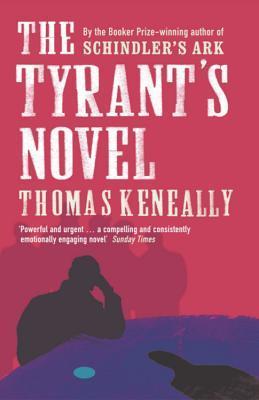
Imagine a Middle-Eastern country that was once a friend of the West becoming an enemy, its people starving and savagely repressed by a tyrant known as Great Uncle. As a celebrated writer and war hero, the man who here relates his story has a better life than most, until he is made an offer he can't refuse. He must write a great novel, telling of the suffering of his people under the enemy's cruel economic sanctions and portraying Great Uncle as their saviour. This masterpiece must be completed in time for its international debut in three months - or else. If the writer cannot -- or will not - meet the tyrant's deadline, he and anyone he cares for will pay the ultimate price. Stark, terrifying and utterly compelling, THE TYRANT'S NOVEL is both a gripping thriller and a chilling glimpse of a fictional world that seems all too real.

Marshalling the vast powers of narrative and historical re-creation that he brought to his international bestseller Schindler’s List , Thomas Keneally has created a moving and provocative novel about a headstrong young Catholic priest in World War II Australia. As Sydney braces itself for a Japanese invasion, Father Frank Darragh finds his pastoral duties becoming increasingly challenging. How should he counsel an AWOL black American soldier who may face death for his involvement with a white woman? And what should he say to another woman—the distressingly beguiling Kate Heggarty—who impresses him with her virtue even as she edges toward sin?When Kate is found murdered, Darragh falls under suspicion. And even if the police clear him, his superiors—and his own conscience—may not. Office of Innocence is a book that’s impossible to put down, dense with moral complexity and alive with period detail.

When Sydney film producer Dimp Bettany discovers the memoirs of her ancestors, pioneer settler John Bettany and convict Sarah Bernard, she is convinced she has found the vehicle for her next film masterpiece. Filtered through Dimp's correspondence with her sister, Prim, an aid worker in the Sudan, we are drawn into the lives of John Bettany, a man far ahead of his time, as he shares his vivid impressions of a new colony, and his future wife Sarah and her close relationship with an English murderess.
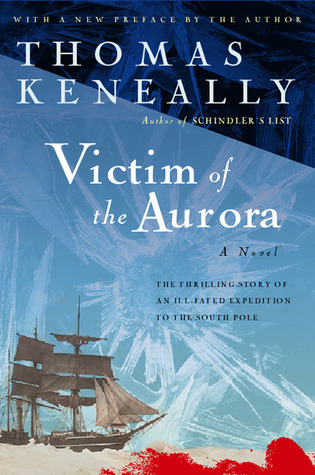
The thrilling story of an ill-fated expedition to the South Pole by the bestselling and award-winning author of Schindler's List.In the waning years of the Edwardian era, a group of English gentleman- adventurers led by Sir Eugene Stewart launched an expedition to reach the South Pole. More than sixty years later, Anthony Piers, the official artist of the New British South Polar Expedition, finally unveils the sobering conditions of their perilous journey: raging wind, bitter cold, fierce hunger, absolute darkness-and murder. The first two decades of the twentieth century were known as the "heroic era" of Antarctic exploration. In 1911, Roald Amundsen reached the South Pole. Weeks later, doomed British explorer Robert Falcon Scott arrived-and then perished in a blizzard. And in 1914, Ernest Shackleton embarked on his infamous voyage to Antarctica. Set during this epic period of adventure and discovery, Victim of the Aurora re-creates a thrilling time in an unforgiving place and is a brilliantly plotted tale of psychological suspense.

Winner of the 1968 Miles Franklin AwardFrom the moment he allows his young cousin and bride to spend the night in his room, Father Maitland causes raised eyebrows and dark mutterings amongst the brothers at St Peter's. Time and again his efforts to do the right thing for his fellow men lead him into conflict with his superiors and the immutable laws of the church - a conflict which ultimately threatens to destroy him both as a priest and as a man.Thomas Keneally's darkly satirical novel, which won him his second successive Miles Franklin Award resounds with intellect and humour.

The fatal and desperate politics of Eastern Europe collide with the comparative innocence and complacency of suburban Australian life in this powerful and disturbing love story about two families and the madness that invades their lives.Terry Delaney's comfortable life is upset when he falls in love with Danielle Kabbel, daughter of charismatic emigre Rudi Kabbel, and succumbs to Rudi's obsessive visions of approaching doom.

"This outstanding novel is set in a remote British penal colony, late in the 1790s. Thomas Keneally's evocative writing gives us searing insight into the sun-parched settlements of hungry transports and corruptive soldiers. But this is not an 'historical' novel in the usual sense. It is the story of a man, Corporal Phelim Halloran, and of the demands made on him - by his girl, his Irish comrades, his superior officers, and, most often, by his conscience.Innocent and lover, poet, soldier-by-accident, scholar by the standards of his day, Halloran attempts to make a world unto himself. through his pity and love for Ann Rush, his 'secret bride'; but many seem pledged to complicate these simple desires. There is the convict-artist, Thomas Ewers, persecuted and compelled to illustrate the officers' journals. There is Halloran's feckless colleague, Terry Byrne. The convict, Quinn, whose term of imprisonment should have been nearly over. Robert Hearne, political prisoner, government clerk and traitor. Halloran comes to disbelieve in any other existence except his own and God's, until, shockingly and irrevocably, he is reunited with Ann."

John Mitchel, Irishman, lawyer, journalist, activist and politician, is a complex character. Charged with treason in Ireland and tried by an English judge he was snuck off mainland Ireland on the day he was charged to avoid a breakout and rebellion. He was transported initially to Bermuda, then to South Africa and then to Van Diemen’s Land where as an Irishman he was supported by many and given a ticket of leave. He soon became a farmer and activist and was eventually secreted out of Australia to the USA, where it was felt he could be more active for the Irish cause. A powerful voice and force for Irish nationalism who also found himself, after landing in the US, supporting the ownership of slaves. This was partly driven by living through the Irish famine. He believed Irish workers were worse off than slaves, neither fed or paid in currency for their work. And partly seeing the absolute adherence to capitalism and the pursuit of wealth in New York. People were dying in horrific industrial and transport accidents in front of those getting wealthy and no heed was paid.To support her husband through all the charges against him, Jenny Mitchel, when she too could have been punished for airing her beliefs on Irish nationalism, publicly supported his campaigns. She also packed up her many children and followed her prisoner and convict husband to a number of different continents to continue to support her husband and their beliefs.Tom, a proud Irishman and descendant of convicts on his maternal and paternal sides, disagrees with many of Mitchel’s beliefs and behaviours and has to wrestle with these conflicts in the novel. As ever, Tom Keneally surprises readers and takes on new and challenging characters and ideas.