Loading genres...
Explore the best books about Christianity genre.


In the classic Mere Christianity, C.S. Lewis, the most important writer of the 20th century, explores the common ground upon which all of those of Christian faith stand together. Bringing together Lewis’ legendary broadcast talks during World War Two from his three previous books The Case for Christianity, Christian Behavior, and Beyond Personality, Mere Christianity provides an unequaled opportunity for believers and nonbelievers alike to hear this powerful apologetic for the Christian faith.

A beautiful collection of blessings to support you through both the ordinary and extraordinary events of life, from the author of the bestselling Anam Cara “John O’Donohue is a man of the soul.”— Times (London) To Bless the Space Between Us is a compelling blend of elegant, poetic language and spiritual insight to offer readers comfort and encouragement on their journeys through life. John O’Donohue, Irish teacher and poet, looks at life’s thresholds—getting married, having children, starting a new job—and offers invaluable guidelines for making the transition from a known, familiar world into a new, unmapped territory. Most profoundly, however, O’Donohue explains “blessings” as a way of life, a lens through which the whole world is transformed. He awakens readers to timeless truths and shows the power they have to answer contemporary dilemmas and ease us through periods of change.

A Masterpiece of Satire on Hell’s Latest Novelties and Heaven’s Unanswerable AnswerC.S. Lewis’s The Screwtape Letters has entertained and enlightened readers the world over with its sly and ironic portrayal of human life and foibles from the unique vantage point of Screwtape, a highly placed assistant to “Our Father Below.” At once wildly comic, deadly serious, and strikingly original, C.S. Lewis gives us the correspondence of the wordly-wise devil to his nephew Wormwood, a novice demon in charge of securing the damnation of an ordinary young man. The Screwtape Letters is the most engaging account of temptation—and triumph over it—ever written.

Blaise Pascal, the precociously brilliant contemporary of Descartes, was a gifted mathematician and physicist, but it is his unfinished apologia for the Christian religion upon which his reputation now rests. The Penseés is a collection of philosohical fragments, notes and essays in which Pascal explores the contradictions of human nature in pscyhological, social, metaphysical and - above all - theological terms. Mankind emerges from Pascal's analysis as a wretched and desolate creature within an impersonal universe, but who can be transformed through faith in God's grace.

Moving from the Paleolithic age to the present, Karen Armstrong details the great lengths to which humankind has gone in order to experience a sacred reality that it called by many names, such as God, Brahman, Nirvana, Allah, or Dao. Focusing especially on Christianity but including Judaism, Islam, Buddhism, Hinduism, and Chinese spiritualities, Armstrong examines the diminished impulse toward religion in our own time, when a significant number of people either want nothing to do with God or question the efficacy of faith. Why has God become unbelievable? Why is it that atheists and theists alike now think and speak about God in a way that veers so profoundly from the thinking of our ancestors?Answering these questions with the same depth of knowledge and profound insight that have marked all her acclaimed books, Armstrong makes clear how the changing face of the world has necessarily changed the importance of religion at both the societal and the individual level. And she makes a powerful, convincing argument for drawing on the insights of the past in order to build a faith that speaks to the needs of our dangerously polarized age. Yet she cautions us that religion was never supposed to provide answers that lie within the competence of human reason; that, she says, is the role of logos. The task of religion is “to help us live creatively, peacefully, and even joyously with realities for which there are no easy explanations.” She emphasizes, too, that religion will not work automatically. It is, she says, a practical its insights are derived not from abstract speculation but from “dedicated intellectual endeavor” and a “compassionate lifestyle that enables us to break out of the prism of selfhood.”

Join the millions who have learned how to take control of their lives by setting healthy boundaries with their spouses, children, friends, parents, co-workers, and even themselves—in order to live life to the fullest.Do you feel like your life has spiraled out of control? Have you focused so much on being loving and unselfish that you've forgotten your own limits? Do you find yourself taking responsibility for other people's feelings and problems? In Boundaries, Drs. Henry Cloud and John Townsend share the lessons they've learned in their years of practicing psychology and studying the patterns and practices that support clear biblical boundaries. You'll learn the ins and outs of setting the boundaries that will transform your daily life.This updated and expanded edition of Boundaries, answers the most common questions on the science behind establishing Can I set limits and still be a loving person? What are legitimate boundaries? How do I effectively manage my digital life so that it doesn't control me? What if someone is upset or hurt by my boundaries? How do I answer someone who wants my time, love, energy, or money? Why do I feel guilty or afraid when I consider setting boundaries? Discover the countless ways that Boundaries can change your life for the better today!

In "Falling Upward, " Richard Rohr seeks to help readers understand the tasks of the two halves of life and to show them that those who have gone "down" are the only ones who understand "up." Those who have somehow fallen, and fallen well, are the only ones who can grow spiritually and not misuse "up." More than anything else, he describes what "up" (in the second half of life) will look like and could look like."The Companion Journal" helps those who have (and those who have not) read "Falling Upward "to engage more deeply with the questions the book raises. Using a blend of quotes, questions for individual and group reflection, stories, and suggestions for spiritual practices, it provides a wise guide for deepning the spiritual journey--at any time of life.

From the New York Times bestselling author of Hallelujah Anyway and Help, Thanks, Wow, a spiritual antidote to anxiety and despair in increasingly fraught times.As Anne Lamott knows, the world is a dangerous place. Terrorism and war have become the new normal. Environmental devastation looms even closer. And there are personal demands on her faith as well: getting older; her mother's Alzheimer's; her son's adolescence; and the passing of friends and time.Fortunately for those of us who are anxious about the state of the world, whose parents are also aging and dying, whose children are growing harder to recognize as they become teenagers, Plan B offers hope that we’re not alone in the midst of despair. It shares with us Lamott's ability to comfort and to make us laugh despite the grim realities.Anne Lamott is one of our most beloved writers, and Plan B is a book more necessary now than ever. It is further evidence that, as The New Yorker has written, "Anne Lamott is a cause for celebration."

A New York Times best-selling marriage book with more than one million copies sold!Based on over three decades of counseling, as well as scientific and biblical research, Dr. Emerson Eggerichs and his wife, Sarah, have already taken the Love & Respect message across America and are changing the way couples talk to, think about, and treat each other. What do you want for your marriage? Want some peace? Want to feel close? Want to feel valued? Want to experience marriage the way God intended? Then why not try some Love and Respect.A wife has one driving need?to feel loved. When that need is met, she is happy. A husband has one driving need?to feel respected. When that need is met, he is happy. When either of these needs isn’t met, things get crazy. Love & Respect reveals why spouses react negatively to each other, and how they can deal with such conflict quickly, easily, and biblically.

Originally titled The Religions of Man, this completely revised and updated edition of Smith′s masterpiece, now with an engaging new foreword, explores the essential elements and teachings of the world′s predominant faiths, including:Hinduism,Buddhism,Confucianism,Taoism,Islam,Judaism,Christianity,and the native traditions of the Americas, Australia, Africa, and Oceania.Emphasising the inner -- rather than institutional -- dimensions of these religions, Smith devotes special attention to Zen and Tibetan Buddhism, Sufism, and the teachings of Jesus. He convincingly conveys the unique appeal and gifts of each of the traditions and reveals their hold on the human heart and imagination.

Hannah Arendt began her scholarly career with an exploration of Saint Augustine's concept of caritas, or neighborly love, written under the direction of Karl Jaspers and the influence of Martin Heidegger. After her German academic life came to a halt in 1933, Arendt carried her dissertation into exile in France, and years later took the same battered and stained copy to New York. During the late 1950s and early 1960s, as she was completing or reworking her most influential studies of political life, Arendt was simultaneously annotating and revising her dissertation on Augustine, amplifying its argument with terms and concepts she was using in her political works of the same period. The disseration became a bridge over which Arendt traveled back and forth between 1929 Heidelberg and 1960s New York, carrying with her Augustine's question about the possibility of social life in an age of rapid political and moral change.In Love and Saint Augustine, Joanna Vecchiarelli Scott and Judith Chelius Stark make this important early work accessible for the first time. Here is a completely corrected and revised English translation that incorporates Arendt's own substantial revisions and provides additional notes based on letters, contracts, and other documents as well as the recollections of Arendt's friends and colleagues during her later years.

A Room Called Remember brings together some of Buechner's finest writings on faith, love, and the power of words in the form of essays, addresses, and sermons. Here Buechner explores autobiography as theology, offers exhilarating reflections on biblical passages, and leads us into the "room called Remember," that "still room within us all where the past lives on as part of the present,...where with patience, with clarity, with quietness of heart, we remember consciously to remember the lives we have lived."

The strength of Puritan character and life lay in prayer and meditation. In this practice the spirit of prayer was regarded as of first importance and the best form of prayer, for living prayer is the characteristic of genuine spirituality. Yet prayer is also vocal and may therefore on occasions be written. Consequently in the Puritan tradition there are many written prayers and meditations which constitute an important corpus of inspiring devotional literature. Too often ex tempore prayer lacks variety, order and definiteness. The reason for this lies partly in a neglect of due preparation. It is here that the care and scriptural thoroughness which others found necessary in their approach to God may be of help. This book has been prepared not to 'supply' prayers but to prompt and encourage the Christian as he treads the path on which others have gone before.

This fresh book argues that the four Gospels are closely based on eyewitness testimony of those who knew Jesus. Noted New Testament scholar Richard Bauckham challenges the prevailing assumption that the accounts of Jesus circulated as “anonymous community traditions” instead asserting that they were transmitted in the name of the original eyewitness. To drive home this controversial point, Bauckham draws on internal literary evidence, study of personal names in the first century, and recent developments in the understanding of oral traditions. Jesus and the Eyewitnesses also taps into the rich resources of modern study of memory and cognitive psychology, refuting the conclusions of the form critics and calling New Testament scholarship to make a clean break with this long-dominant tradition. Finally, Bauckham challenges readers to end the classic division between the “historical Jesus” and the “Christ of faith” proposing the “Jesus of testimony” that is actually presented by Gospels. Sure to ignite heated debate on the precise character of the testimony about Jesus, Jesus and the Eyewitnesses will be valued by scholars, students and all who seek to understand the origins of the Gospels.

For almost 1,500 years, the New Testament manuscripts were copied by hand––and mistakes and intentional changes abound in the competing manuscript versions. Religious and biblical scholar Bart Ehrman makes the provocative case that many of our widely held beliefs concerning the divinity of Jesus, the Trinity, and the divine origins of the Bible itself are the results of both intentional and accidental alterations by scribes.In this compelling and fascinating book, Ehrman shows where and why changes were made in our earliest surviving manuscripts, explaining for the first time how the many variations of our cherished biblical stories came to be, and why only certain versions of the stories qualify for publication in the Bibles we read today. Ehrman frames his account with personal reflections on how his study of the Greek manuscripts made him abandon his once ultra–conservative views of the Bible.

When The Universe Next Door was first introduced nearly thirty years ago, it set the standard for a clear, readable introduction to worldviews. In concise, easily understood prose, James W. Sire explained the basics of theism, deism, naturalism, nihilism, existentialism, Eastern monism and the new consciousness. The second edition was updated and expanded to include sections on Marxism and secular humanism, as well as a completely reworked chapter on what is now widely known as New Age philosophy rather than new consciousness. And the third edition offered further updating and revisions, including a thoroughly revised chapter on New Age philosophy and, perhaps most importantly, a new chapter on postmodernism. Now the fourth edition refines the definition of worldview itself, incorporating Sire's thinking and teaching during the past decade. (His recent work is showcased in a new book, Naming the Elephant, also published by IVP.) The Universe Next Door has been translated into several languages and has been used as a text at over one hundred colleges and universities in courses ranging from apologetics and world religions to history and English literature. With the publication of the fourth edition, this book will continue to aid students, teachers and anyone who wants to understand the variety of worldviews that compete with Christianity for the allegiance of our minds and hearts.

Combining three incredibly important books for the teaching of the Church, The Goldsworthy Trilogy offers a complete and comprehensive guide to understanding the gospel throughout the whole of Scripture. Hugely popular, this collection is being released in this special format and will be an essential guide to be used again and again for those who seek to understand the Bible in the light of who Jesus is. Straightforward in his approach, Goldsworthy looks at how the Bible can only be understood through the eyes of the gospel. This being the base of his interpretation, he studies the Old Testament and its application for today, Israels wisdom literature and its role in the Christian life and the purpose and contemporary relevance of the book of Revelation. This trilogy follows the Bible chronologically to give the reader a complete overview of evangelical biblical interpretation forming an essential one-stop reference that will last a lifetime.
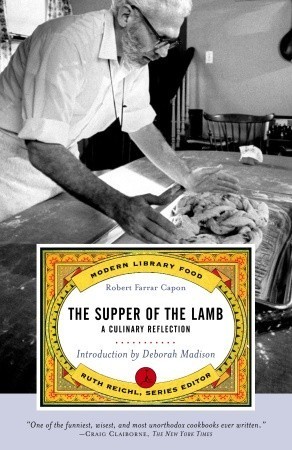
From a passionate and talented chef who also happens to be an Episcopalian priest comes this surprising and thought-provoking treatise on everything from prayer to poetry to puff pastry. In The Supper of the Lamb , Capon talks about festal and ferial cooking, emerging as an inspirational voice extolling the benefits and wonders of old-fashioned home cooking in a world of fast food and prepackaged cuisine. This edition includes the original recipes and a new Introduction by Deborah Madison, the founder of Greens Restaurant in San Francisco and author of several cookbooks.

In this landmark book of interfaith dialogue, the Dalai Lama provides an extraordinary Buddhist perspective on the teachings of Jesus, commenting on well-known passages from the four Christian Gospels including the Sermon on the Mount, the parable of the mustard seed, the Resurrection, and others. Drawing parallels between Jesus and the Buddha--and the rich traditions from which they hail--His Holiness delivers a profound affirmation of the sacred in all religions. Readers will be inspired by the Dalai Lama's discussion of the endless merits of each tradition and uplifted by the common humanity between them.

A behind-the-scenes analysis of 21 essential leadership principles from the life of Billy Graham Billy Graham looms large as one of the twentieth century's most influential and innovative leaders. Most people are unaware of his remarkable effectiveness as not only preacher and pastor, but as a CEO and a global leader as well. The Leadership Secrets of Billy Graham is full of transferable applications for leaders in the church, parachurch, academia, government, and business. Lively interviews with his closest associates illustrate 21 principles that have driven six decades of visionary impact. First-hand accounts reveal stories of courageous leadership and growth through painful lessons. Graham's relentless application of core beliefs and leadership principles have resulted in, among many honors, being listed in Gallup's ten 'most admired men' thirty times, more than anyone else. Time magazine named him one of the top ten leaders of the twentieth century. This book How did this happen? What are the essentials he embraced to achieve such extraordinary results? What can we learn from him and apply to our own leadership roles? This book is dedicated to those readers . Who sense the pressing need in today's world for inspired leadership . Who rise to leadership's high calling and are willing to carry its weight . Who are determined to deepen and expand their capacities and effectiveness

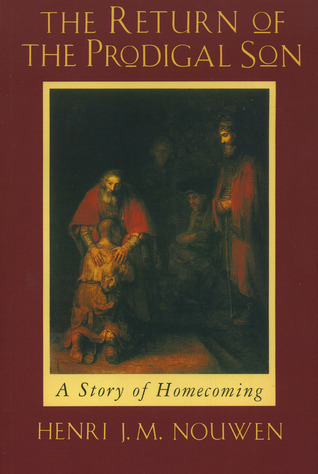
A chance encounter with a reproduction of Rembrandt's painting, The Return of the Prodigal Son, catapulted Henri Nouwen into a long spiritual adventure. In his highly-acclaimed book of the same title, he shares the deeply personal meditation that led him to discover the place within which God has chosen to dwell. This Lent course, which has been adapted from the book, helps us to reflect on the meaning of the parable for our own lives. Divided into five sessions, the course moves through the parable exploring our reaction to the story: the younger son's leaving and return, the father's restoration of sonship, the elder son's resentment and the father's compassion. All of us who have experienced loneliness, dejection, jealousy or anger will respond to the persistent themes of homecoming, affirmation and reconciliation.

This classic account of the traditional upper class in America traces its origins, lifestyles, and political and social attitudes from the time of Theodore Roosevelt to that of John F. Kennedy. Sociologist E. Digby Baltzell describes the problems of exclusion and prejudice within the community of white Anglo-Saxon Protestants (or WASPs, an acronym he coined) and predicts with amazing accuracy what will happen when this inbred group is forced to share privilege and power with talented members of minority groups. “The book may actually hold more interest today than when it was first published. New generations of readers can resonate all the more to this masterly and beautifully written work that provides sociological understanding of its engrossing subject.”―Robert K. Merton, Columbia University “The documentation and illustration in the book make it valuable as social history, quite apart from any theoretical hypothesis. As such, it sketches the rise of the WASP penchant for country clubs, patriotic societies and genealogy. It traces the history of anti-Semitism in America. It describes the intellectual conflict between Social Darwinism and the environmental social science founded half a century ago by men like John Dewey, Charles A. Beard, Thorstein Veblen, Franz Boas and Frederick Jackson Turner. In short, The Protestant Establishment is a wide-ranging, intelligent and provocative book.”―Alvin Toffler, New York Times Book Review “ The Protestant Establishment has many virtues that lift it above the level we have come to expect in works of contemporary social and cultural analysis. It is clearly and convincingly written.”―H. Stuart Hughes, New York Review of Books “What makes Baltzell’s analysis of the evolution of the American elite superior to the accounts of earlier writers . . . is that he exposes the connections between high social status and political and economic power.”―Dennis H. Wrong, Commentary

Focusing on the ground-breaking and often controversial science of Charles Darwin, the author seeks to bridge the gulf between science and religion on the subject of human evolution.

Mephistopheles is the fourth and final volume of a critically acclaimed history of the concept of the Devil. The series constitutes the most complete historical study ever made of the figure that has been called the second most famous personage in Christianity.In his first three volumes Jeffrey Burton Russell brought the history of Christian diabology to the end of the Middle Ages, showing the development of a degree of consensus, even in detail, on the concept of the Devil. Mephistopheles continues the story from the Reformation to the present, tracing the fragmentation of the tradition. Using examples from theology, philosophy, art, literature, and popular culture, he describes the great changes effected in our idea of the Devil by the intellectual and cultural developments of modem times.Emphasizing key figures and movements, Russell covers the apogee of the witch craze in the Renaissance and Reformation, the effects of the Enlightenment's rationalist philosophy, the Romantic image of Satan, and the cynical or satirical literary treatments of the Devil in the late nineteenth century. He concludes that although today the Devil may seem an outworn metaphor, the very real horrors of the twentieth century suggest the continuing need for some vital symbol of radical evil.A work of great insight and learning, Mephistopheles deepens our understanding of the ways in which people in Western societies have dealt with the problem of evil.

With over a million copies in print, John Baillie’s classic collection of scripture and prayers is a beautiful daily devotional, the perfect companion guide to any Christian seeking to enrich their life through growth in prayer.In this book of personal devotions, noted theologian Dr. John Baillie offers personal prayers for people who are seeking a better understanding of God and themselves. Intermingling adoring and meditative thoughts about God with a concern for the social and individual good, these daily invocations help and inspire us to search within our inner selves and find the deep religious beliefs that lie within.

This book is for anyone who has ever wept and wondered, "Why?" Peter Kreeft observes that our world is full of billions of normal lives that have been touched by apparently pointless and random suffering. This account of a real and honest personal quest is both engaging and convincing. Written from a deep well of wisdom derived from experience and careful observation, Making Sense Out of Suffering is a book for empty hearts, not full ones. Read it if you are hungry for insight into the mystery of suffering. A Servant Book.

This enduring collection of twenty-one sermons by D. Martyn Lloyd-Jones, each originally delivered at Westminster Chapel in London, carefully and compassionately analyzes an undeniable feature of modern society from which Christians have not escaped -- spiritual depression."Christian people," writes Lloyd-Jones, "too often seem to be perpetually in the doldrums and too often give this appearance of unhappiness and of lack of freedom and absence of joy. There is no question at all but that this is the main reason why large numbers of people have ceased to be interested in Christianity."Believing the Christian joy was one of the most potent factors in the spread of Christianity in the early centuries, Lloyd-Jones not only lays bare the causes that have robbed many Christians of spiritual vitality but also points the way to the cure that is found through the mind and spirit of Christ.

In partnership with the Dutch Reformed Translation Society, Baker Academic is proud to offer the first volume of Herman Bavinck's complete Reformed Dogmatics in English for the very first time. Bavinck's approach throughout is meticulous. As he discusses the standard topics of dogmatic theology, he stands on the shoulders of giants such as Augustine, John Calvin, Francis Turretin, and Charles Hodge. This masterwork will appeal to scholars and students of theology, research and theological libraries, and pastors and laity who read serious works of Reformed theology.

The timeliness of this book, first published in 1901, is shown by the fact that a great number of academic texts quote from it. "The Certainty of Faith" is one of the small but powerful classics written by one of the greatest theologians Holland has ever produced. Bavinck examines the difference between the certainty of science and that of religion historically, biblically, and theologically.

For over 40 years, J. I. Packer's classic has been an important tool to help Christians around the world discover the wonder, the glory and the joy of knowing God. In 2006, Christianity Today voted this title one of the top 50 books that have shaped evangelicals. This edition is updated with Americanized language and spelling and a new preface by the author. Stemming from Packer's profound theological knowledge, Knowing God brings together two important facets of the Christian faith: 1. Knowing about God and 2. Knowing God through the context of a close relationship with the person of Jesus Christ. Written in an engaging and practical tone, this thought-provoking work seeks to transform and enrich the Christian understanding of God. Explaining both who God is and how we can relate to him, Packer divides his book into three sections: The first directs our attention to how and why we know God, the second to the attributes of God and the third to the benefits enjoyed by a those who know him intimately. This guide leads readers into a greater understanding of God while providing advice to gaining a closer relationship with him as a result.

Finding Faith in a Time of SorrowBeloved author Henri Nouwen reflects on the spiritual significance of death and life in this moving meditation dedicated to "all those who suffer the pain that death can bring and who search for new life."

This popular and bestselling book of the renowned Franciscan challenges people to move beyond the comfort of a settled life toward an understanding of themselves that is rooted in their connection to God. Only when they rest in God can they find the certainty and the freedom to become all that they can be. Contemplation has its place at the heart of Christianity, a place that allows people to experience how “everything belongs.”

A brilliant and urgent appraisal of one of the most profound conflicts of our timeEven before George W. Bush gained reelection by wooing religiously devout "values voters," it was clear that church-state matters in the United States had reached a crisis. With Divided by God , Noah Feldman shows that the crisis is as old as this country--and looks to our nation's past to show how it might be resolved.Today more than ever, ours is a religiously diverse Muslim, Hindu, and Buddhist as well as Catholic, Protestant, and Jewish. And yet more than ever, committed Christians are making themselves felt in politics and culture.What are the implications of this paradox? To answer this question, Feldman makes clear that again and again in our nation's history diversity has forced us to redraw the lines in the church-state divide. In vivid, dramatic chapters, he describes how we as a people have resolved conflicts over the Bible, the Pledge of Allegiance, and the teaching of evolution through appeals to shared values of liberty, equality, and freedom of conscience. And he proposes a brilliant solution to our current crisis, one that honors our religious diversity while respecting the long-held conviction that religion and state should not mix.Divided by God speaks to the headlines, even as it tells the story of a long-running conflict that has made the American people who we are.

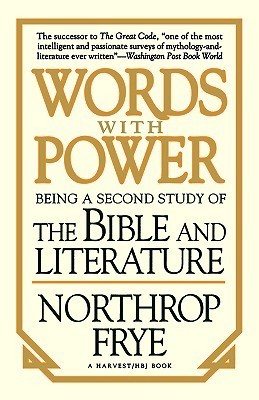
Frye continues his exploration, begun in The Great Code, of the influence of Biblical themes and forms of expression on Western literature, with discussions of authors ranging from Chaucer and Shakespeare to Yeats and Eliot. Frye identifies four key elements found in the Bible-the mountain, the garden, the cave, and the furnace-and describes how they recur in later secular writings. Indices.

In this series of notes, opinions, experiences, and reflections, Thomas Merton examines some of the most urgent questions of our age. With his characteristic forcefulness and candor, he brings the reader face-to-face with such provocative and controversial issues as the “death of God,” politics, modern life and values, and racial strife–issues that are as relevant today as they were fifty years ago.Conjectures of a Guilty Bystander is Merton at his best–detached but not unpassionate, humorous yet sensitive, at all times alive and searching, with a gift for language which has made him one of the most widely read and influential spiritual writers of our time.

Charles Rice, professor of the jurisprudence of St. Thomas Aquinas for the last twenty years at Notre Dame Law School, presents a very readable book on the natural law as seen through the teachings of Aquinas and their foundations in reason and Revelation. Reflecting on the most persistent questions asked by his students over the years, Rice shows how the natural law works and how it is rooted in the nature of the human person whose Creator provided this law as a sure and knowable guide for man to achieve his end of eternal happiness. This book presents the teachings of the Catholic Church in her role as arbiter of the applications of the natural law on issues involving the right to live, bioethics, the family and the economy. Charles Rice has produced a firmly grounded and accessible handbook which touches on the most important topics regarding natural law that will benefit readers of all backgrounds.

The reference to the Antichrist is not intended to refer to the biblical Antichrist but is rather an attack on the "slave morality" and apathy of Western Christianity. Nietzsche's basic claim is that Christianity is a poisoner of western culture and perversion of the words of and practice of Jesus. Throughout the text, Nietzsche is very critical of institutionalized religion and its priest class, from which he himself was descended. The majority of the book is a systematic attack upon the interpretations of Christ's words by St. Paul and those who followed him. Nietzsche claimed in the Foreword to have written the book for a very limited readership. In order to understand the book, he asserted that the reader "... must be honest in intellectual matters to the point of hardness to so much as endure my seriousness, my passion." The reader should be above politics and nationalism. Also, the usefulness or harmfulness of truth should not be a concern. Characteristics such as "Strength which prefers questions for which no one today is sufficiently daring; courage for the forbidden" are also needed. He disdained all other readers.

In his discussion of natural theology (arguments to prove the existence of God) and natural atheology (arguments for the falsehood of theistic belief) Plantinga focuses on two of the traditional arguments: the ontological argument as an example of natural theology, and the problem of evil as the most important representative of natural atheology. Accessible to serious general readers.

An examination of the influence of the Bible on Western art and literature and on the Western creative imagination in general. Frye persuasively presents the Bible as a unique text distinct from all other epics and sacred writings. “No one has set forth so clearly, so subtly, or with such cogent energy as Frye the literary aspect of our biblical heritage” (New York Times Book Review). Indices.


In the bestselling tradition of The Death of Common Sense and On Bullshit, Harris offers a concise and clear articulation of an ideological position that many relate to but few dare say, in an impassioned presentation that will stand as a benchmark in an ongoing cultural debate for years to come.

The end of the Cold War has brought about more than the triumph of some political ideologies and the disappearance of others. In fact, the collapse of communism has created a vacuum quickly being filled by various alternative visions, ranging from ethnic nationalism to individualistic liberalism. But political ideologies are not merely a matter of governmental efficacy. Rather, political ideologies are intrinsically and inescapably religious --each carries certain assumptions about the nature of reality, individuals and society, as well as a particular vision for the common good. These fundamental beliefs transcend the political sphere, and the astute Christian observer should thus discern the subtle ways in which ideologies are rooted in idolatrous worldviews. In this comprehensive study, political scientist David Koyzis surveys the key political ideologies of our era, including liberalism, conservatism, nationalism, democracy and socialism. Each philosophy is given careful analysis and fair critique, unpacking the worldview issues inherent to each and pointing out essential strengths and weaknesses. Koyzis concludes by proposing alternative models that flow out of Christianity's historic engagement with the public square, retrieving approaches that hold promise for the complex political realities of the twenty-first century. Writing with broad, international perspective and keen analytical insight, Koyzis offers a sound guide for Christians working in the public square, culture watchers, political pundits and all students of modern political thought.

The path from Jesus to Christianity is not as straight as we might think. Now, for the first time, L. Michael White, one of the world's foremost scholars on the origins of Christianity, provides the complete, astonishing story of how Christianity grew from the personal vision of a humble Jewish peasant living in a remote province of the Roman Empire into the largest organized religion in the world. Many take for granted that the New Testament is a single book representing God's coherent, unwavering word on Jesus and his church. A closer reading reveals not one story, but many. The New Testament is a collection of books -- the result of a variety of influences on a number of faithful but very human visionaries, preachers, and storytellers. The texts contain a wealth of biographies, histories, novels, letters, sermons, hymns, church manuals, and apocalypses, providing a spectrum of views of Jesus, his message, and his movement. Given this diversity of people, stories, and drastically different points of view, how did Christianity ever become what we know it as today? White draws on the most current scholarship to bring alive these ancient people and their debates, showing in depth how their stories were formed into what the world has come to know as the New Testament. Rather than reading the New Testament straight through in its traditional order -- Matthew, Mark, Luke, John, and so on -- White takes a historical approach, looking at the individual books in the sequence in which they were actually written. He explores what these books divulge about the disagreements, shared values, and unifying mission of the earliest Christian communities. White digs through layers of archaeological excavations, sifts through buried fragments of largely unknown texts, and examines historical sources to discover what we can know of Jesus and his early followers. It is this early, hidden history that shaped Christianity as it grew from an errant, messianic movement to a state religion and then into a world religion that has lasted for over two thousand years. White shows how the early debates spurred the evolution of Christianity as we know it. He delves into the arguments over how to understand Jesus as both human and divine, the role of women in the church, the diversity of beliefs among Christian communities, the Gnostic influences, and the political disputes that raged over which books would ultimately be included in the New Testament. Complete with illustrations, photos, charts, and maps, From Jesus to Christianity presents the fullest picture yet of the beginnings of what became the most popular religion on earth.

Most scholars studying the first five books of the Bible either attempt to dissect it into various pre-pentateuchal documents or, at the very least, analyze Genesis, Exodus, Leviticus, Numbers, and Deuteronomy as separate, self-contained documents. The Pentateuch As Narrative focuses on the narrative and literary continuity of the Pentateuch as a whole. It seeks to disclose how the original Jewish readers may have viewed this multivolume work of Moses. Its central thesis is that the Pentateuch was written from the perspective of one who had lived under the Law of the Covenant established at Mount Sinai and had seen its failure to produce genuine trust in the Lord God of Israel. In this context, the Pentateuch pointed the reader forward to the hope of the New Covenant, based on divine faithfulness. Throughout the commentary Dr. Sailhamer pays close attention to and interacts with a wide range of classical and contemporary literature on the Pentateuch, written by Jews, Catholics, and Protestants.

The Hidden Manna has become a classic on Eucharistic teaching. Now in a second edition, accompanied by a new introduction by Fr. Kenneth Baker, a new preface from the author, new material from John Paul II, and the original foreword by Cardinal John O'Connor, this in-depth study lets the breadth and richness of the Church's Tradition speak for itself.Fr. O'Connor presents and comments on substantial excerpts from the major sources of the Church's Tradition extending all the way back to apostolic times. Focusing on the doctrine of the Real Presence, he follows the earliest witnesses through the challenge in the Middle Ages of Berengarius through the Protestant Reformation and modern disputes."Father James O'Connor gives us nothing less than a comprehensive study of the Church's meditation on the Mystery of the Eucharist... The Hidden Manna is a superb work."�Cardinal John O'Connor"...We owe a debt of gratitude to Fr. James O'Connor for writing this beautiful treatise on �the Sacrament of Sacraments'. The Hidden Manna is a remarkable accomplishment of Catholic scholarship."�Fr. Kenneth Baker, S.J.

The Holy Bible, Christian Literature & Studies, Religious Studies

Aion: Researches into the Phenomenology of the Self , originally published in German in 1951, is one of the major works of Jung's later years. The central theme of the volume is the symbolic representation of the psychic totality through the concept of the Self, whose traditional historical equivalent is the figure of Christ. Jung demonstrates his thesis by an investigation of the Allegoria Christi, especially the fish symbol, but also of Gnostic and alchemical symbolism, which he treats as phenomena of cultural assimilation. The first four chapters, on the ego, the shadow, and the anima and animus, provide a valuable summation of these key concepts in Jung's system of psychology.

A contemporary treatment of the traditional theme of chastity that shows that a mature chastity can be loving, peaceful and fulfilled. †

Maximus is called the Confessor because of his sufferings and labors for the true faith. During the seventh century when the monothelite heresy (belief that Christ had only one will-----a divine one) plagued the Church, Maximus eloquently demonstrated that Christ had both human and divine natures. Writing in the introduction to this volume Jaroslav Pelikan highlights the relevance of Maximus' writings for today: "It was the genius of Maximus Confessor that, in a measure that has been granted only to a few, he was fully bilingual, affirming by means of negation and speaking both the language of spirituality and the language of theology with equal fluency. From the looks of things within both Western and Eastern Christendom-------and beyond------that gift of being bilingual is one that people of faith will need more than ever in the years to come."

Ladd's magisterial work on New Testament theology has well served thousands of seminary students since its publication in 1974. Enhanced and updated here by Donald A Hagner, this comprehensive, standard evangelical text now features augmented bibliographies and two completely new chapters on subjects that Ladd himself wanted to treat in a revised edition―the theology of each of the Synoptic Evangelists and the issue of unity and diversity in the New Testament―written, respectively, by R. T. France and David Wenham.

In this prize-winning book Nathan O. Hatch offers a provocative reassessment of religion and culture in the early days of the American republic, arguing that during this period American Christianity was democratized and common people became powerful actors on the religious scene. Hatch examines five distinct traditions or mass movements that emerged early in the nineteenth century—the Christian movement, Methodism, the Baptist movement, the black churches, and the Mormons—showing how all offered compelling visions of individual potential and collective aspiration to the unschooled and unsophisticated. "Rarely do works of scholarship deserve as much attention as this one. The so-called Second Great Awakening was the shaping epoch of American Protestantism, and this book is the most important study of it ever published."—James Turner, Journal of Interdisciplinary History "The most powerful, informed, and complex suggestion yet made about the religious, political, and psychic 'opening' of American life from Jefferson to Jackson. . . . Hatch's reconstruction of his five religious mass movements will add popular religious culture to denominationalism, church and state, and theology as primary dimensions of American religious history."—Robert M. Calhoon, William and Mary Quarterly "Hatch's revisionist work asks us to put the religion of the early republic in a radically new perspective. . . . He has written one of the finest books on American religious history to appear in many years."—James H. Moorhead, Theology Today The manuscript version of this book was awarded the 1988 Albert C. Outler Prize in Ecumenical Church History from the American Society of Church History Awarded the 1989 book prize of the Society for Historians of the Early American Republic for the best book in the history of the early republic (1789-1850) Co-winner of the 1990 John Hope Franklin Publication Prize given by the American Studies Association for the best book in American Studies Nathan O. Hatch is professor of history and vice president for Graduate Studies and Research at the University of Notre Dame.

Written with love, humility, and faith, this brief but poignant volume was first published in 1961 and concerns the death of C. S. Lewis's wife, the American-born poet Joy Davidman. In her introduction to this new edition, Madeleine L'Engle writes: "I am grateful to Lewis for having the courage to yell, to doubt, to kick at God in angry violence. This is a part of a healthy grief which is not often encouraged. It is helpful indeed that C. S. Lewis, who has been such a successful apologist for Christianity, should have the courage to admit doubt about what he has so superbly proclaimed. It gives us permission to admit our own doubts, our own angers and anguishes, and to know that they are part of the soul's growth."Written in longhand in notebooks that Lewis found in his home, A Grief Observed probes the "mad midnight moments" of Lewis's mourning and loss, moments in which he questioned what he had previously believed about life and death, marriage, and even God. Indecision and self-pity assailed Lewis. "We are under the harrow and can't escape," he writes. "I know that the thing I want is exactly the thing I can never get. The old life, the jokes, the drinks, the arguments, the lovemaking, the tiny, heartbreaking commonplace." Writing A Grief Observed as "a defense against total collapse, a safety valve," he came to recognize that "bereavement is a universal and integral part of our experience of love."Lewis writes his statement of faith with precision, humor, and grace. Yet neither is Lewis reluctant to confess his continuing doubts and his awareness of his own human frailty. This is precisely the quality which suggests that A Grief Observed may become "among the great devotional books of our age."

One of the most famous books ever written about a man’s search for faith and peace.The Seven Storey Mountain tells of the growing restlessness of a brilliant and passionate young man, who at the age of twenty-six, takes vows in one of the most demanding Catholic orders—the Trappist monks. At the Abbey of Gethsemani, "the four walls of my new freedom," Thomas Merton struggles to withdraw from the world, but only after he has fully immersed himself in it. At the abbey, he wrote this extraordinary testament, a unique spiritual autobiography that has been recognized as one of the most influential religious works of our time. Translated into more than twenty languages, it has touched millions of lives.

While its tone is playful and frivolous, this book poses tough questions over the nature of religion and belief.Religion provides comfortable responses to the questions that have always beset humankind - why are we here, what is the point of being alive, how ought we to behave? Russell snatches that comfort away, leaving us instead with other, more troublesome alternatives: responsibility, autonomy, self-awareness. He tells us that the time to live is now, the place to live is here, and the way to be happy is to ensure others are happy.

In Grace (Eventually): Thoughts on Faith, the author of the bestsellers Traveling Mercies and Plan B delivers a poignant, funny, and bittersweet primer of faith, as we come to discover what it means to be fully alive.In Grace (Eventually): Thoughts on Faith, Lamott examines the ways we're caught in life's most daunting predicaments: love, mothering, work, politics, and maybe toughest of all, evolving from who we are to who we were meant to be. This is a complicated process for most of us, and Lamott turns her wit and honesty inward to describe her own intimate, bumpy, and unconventional road to grace and faith."I wish grace and healing were more abracadabra kinds of things," she writes in one of her essays, "that delicate silver bells would ring to announce grace's arrival. But no, it's clog and slog and scootch, on the floor, in silence, in the dark."Whether she's writing about her unsuccessful efforts to get her money back from an obstinate carpet salesman, grappling with the tectonic shifts in her relationship with her son as he matures, trying to maintain her faith and humor during politically challenging times, or helping a close friend die with dignity, Lamott seeks out both the divinity and the humanity in herself and everything around her. Throughout these essays, she writes of her struggle to find the essence of her faith, which she uncovers in the unlikeliest places.

In this classic Catholic novel, Bernanos movingly recounts the life of a young French country priest who grows to understand his provincial parish while learning spiritual humility himself. Awarded the Grand Prix for Literature by the Academie Francaise, The Diary of a Country Priest was adapted into an acclaimed film by Robert Bresson. "A book of the utmost sensitiveness and compassion...it is a work of deep, subtle and singularly encompassing art." — New York Times Book Review (front page)

The internationally renowned novel about the life and death of Jesus Christ.Hailed as a masterpiece by critics worldwide, The Last Temptation of Christ is a monumental reinterpretation of the Gospels that brilliantly fleshes out Christ’s Passion. This literary rendering of the life of Jesus Christ has courted controversy since its publication by depicting a Christ far more human than the one seen in the Bible. He is a figure who is gloriously divine but earthy and human, a man like any other—subject to fear, doubt, and pain.In elegant, thoughtful prose Nikos Kazantzakis, one of the greats of modern literature, follows this Jesus as he struggles to live out God’s will for him, powerfully suggesting that it was Christ’s ultimate triumph over his flawed humanity, when he gave up the temptation to run from the cross and willingly laid down his life for mankind, that truly made him the venerable redeemer of men.“Spiritual dynamite.” — San Francisco Chronicle“A searing, soaring, shocking novel.” — Time

Hailed by many as the best modern book on Christian spirituality, Celebration of Discipline has helped more than one million seekers discover a richer spiritual life infused with joy, peace, and a deeper understanding of God. Celebration of Discipline explores the 'classic disciplines,' or central spiritual practices, of the Christian faith. Along the way, Foster shows that it is only by and through these practices that the true path to spiritual growth can be found. Dividing the disciplines into three movements of the Spirit, Foster shows how each of these areas contribute to a more balanced spiritual life. The inward disciplines of meditation, prayer, fasting, and study offer avenues of personal examination and change. The outward disciplines of simplicity, solitude, submission, and service help prepare us to make the world a better place. The corporate disciplines of confession, worship, guidance, and celebration bring us nearer to one another and to God. Foster provides a wealth of examples demonstrating how these disciplines can become part of our daily activities--and how they can help us shed our superficial habits and 'bring the abundance of God into our lives.' He offers crucial new insights on simplicity, demonstrating how the biblical view of simplicity, properly understood and applied, brings joy and balance to our inward and outward lives and 'sets us free to enjoy the provision of God as a gift that can be shared with others.' The discussion of celebration, often the most neglected of the disciplines, shows its critical importance, for it stands at the heart of the way to Christ. Celebration of discipline will help motivate Christians everywhere to embark on a journey of prayer and spiritual growth.

Deification in the Greek patristic tradition was the fulfillment of the destiny for which humanity was created - not merely salvation from sin but entry into the fullness of the divine life of the Trinity. This book, the first on the subject for over sixty years, traces the history of deification from its birth as a second-century metaphor with biblical roots to its maturity as a doctrine central to the spiritual life of the Byzantine Church. Drawing attention to the richness and diversity of the patristic approaches from Irenaeus to Maximus the Confessor, Norman Russell offers a full discussion of the background and context of the doctrine, at the same time highlighting its distinctively Christian character.

Western history would be unrecognizable had it not been for people who believed in One True God. There would have been wars, but no religious wars. There would have been moral codes, but no Commandments. Had the Jews been polytheists, they would today be only another barely remembered people, less important, but just as extinct as the Babylonians. Had Christians presented Jesus to the Greco-Roman world as ''another'' God, their faith would long since have gone the way of Mithraism. And surely Islam would never have made it out of the desert had Muhammad not removed Allah from the context of Arab paganism and proclaimed him as the only God.The three great monotheisms changed everything. With his customary clarity and vigor, Rodney Stark explains how and why monotheism has such immense power both to unite and to divide. Why and how did Jews, Christians, and Muslims missionize, and when and why did their efforts falter? Why did both Christianity and Islam suddenly become less tolerant of Jews late in the eleventh century, prompting outbursts of mass murder? Why were the Jewish massacres by Christians concentrated in the cities along the Rhine River, and why did the pogroms by Muslims take place mainly in Granada? How could the Jews persist so long as a minority faith, able to withstand intense pressures to convert? Why did they sometimes assimilate? In the final chapter, Stark also examines the American experience to show that it is possible for committed monotheists to sustain norms of civility toward one another.A sweeping social history of religion, One True God shows how the great monotheisms shaped the past and created the modern world.

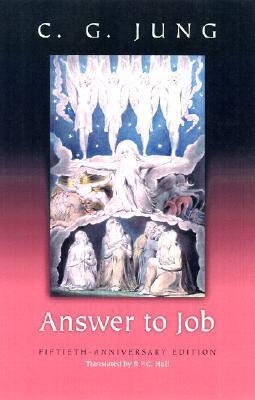
Jung has never pursued the "psychology of religion" apart from general psychology. The unique importance of his work lies rather in his discovery and treatment of religious, or potentially religious, factors in his investigation into the unconscious as a whole and in his general therapeutic practice. In Answer to Job, first published in Zurich in 1952, Jung employs the familiar language of theological discourse. Such terms as "God," "wisdom," and "evil" are the touchstones of his argument. And yet, Answer to Job, perhaps Jung's most controversial work, is not an essay in theology as much as it is an examination of the symbolic role that theological concepts play in a person's psychic life.

The classic Weight of Glory by C.S. Lewis, the most important Christian writer of the 20th century, contains nine sermons delivered by Lewis during World War Two. The nine addresses in Weight of Glory offer guidance, inspiration, and a compassionate apologetic for the Christian faith during a time of great doubt.

Originally published in 1947, The Uneasy Conscience of Modern Fundamentalism has since served as the manifesto of evangelical Christians serious about bringing the fundamentals of the Christian faith to bear in contemporary culture. In this classic book Carl F. H. Henry, the father of modern fundamentalism, pioneered a path for active Christian engagement with the world -- a path as relevant today as when it was first staked out.Now available again and featuring a new foreword by Richard J. Mouw, The Uneasy Conscience of Modern Fundamentalism offers a bracing world-and-life view that calls for boldness on the part of the evangelical community. Henry argues that a reformation is imperative within the ranks of conservative Christianity, one that will result in an ecumenical passion for souls and in the power to meaningfully address the social and intellectual needs of the world.

Saint Irenaeus was the first great Christian theologian. Born in Asia Minor in about 130 A.D., he became Bishop of Lyons and died as a martyr early in the third century. His main work, Adversus Haereses (Against the Heresies), is as relevant today as it was eighteen hundred years ago. It is a critique of Gnosticism, the 'anti-body' heresy, which, far from dying out, continues to flourish as the main threat to the Christian faith in our own day. With serenity and good humor, Irenaeus unfolds the unity of God's purpose in creation and redemption, in Old and New Testaments. The flesh and blood which Gnosticism so despised has been assumed by God in the womb of the Virgin Mary, and glorified in the Resurrection and the Eucharist. In this book, quotations from Saint Irenaeus have been arranged thematically in order to show the unity of his Christian view of the world. The texts have been selected and are introduced by the late Hans Urs von Balthasar, who is widely regarded as one of the greatest Catholic theologians of this century. They are translated by John Saward. "Everything in Irenaeus is bathed in a warm and radiant joy, a wise and majestic gentleness. His words of struggle are hard as iron and crystal clear, ... so penetrating that they cannot fail to enlighten the unbiased observer."— Hans Urs von Balthasar

This book is meant to be a companion to "Heretics," and to put the positive side in addition to the negative. Many critics complained of the book because it merely criticised current philosophies without offering any alternative philosophy. This book is an attempt to answer the challenge. It is the purpose of the writer to attempt an explanation, not of whether the Christian Faith can be believed, but of how he personally has come to believe it. The book is therefore arranged upon the positive principle of a riddle and its answer. It deals first with all the writer's own solitary and sincere speculations and then with the startling style in which they were all suddenly satisfied by the Christian Theology. The writer regards it as amounting to a convincing creed. But if it is not that it is at least a repeated and surprising coincidence.

John Owen was an English minister. Owen, born and raised a Puritan in Oxfordshire, studied at Queen's College and became ordained there. After becoming ordained Owen was a pastor at a couple different parishes. Owen would later return to Oxford and become the academic administrator. Owens also was a good friend of Oliver Cromwell and gave many sermons before Parliament. After Cromwell died Owen became more active in politics and joined the Wallingford House party. Throughout his life Owen wrote on a variety of topics including the defense of Calvinism in A Display of Arminianism.

Esta edición especial corresponde al Décimo Aniversario de su publicación original y nos proporciona una mirada fresca a un libro atesorado por la esperanza que comunica. Pensada para una nueva generación, revisada, aumentada, y mejorada con video digital en línea, incluye toda la sabiduría contenida en el texto original, además de dos capítulos nuevos. Se trata de perspectivas frescas que Rick Warren ha recopilado desde que escribió lo que se convertiría en el libro de contenido cristiano más vendido en el mundo. El lector descubrirá el asombroso plan de Dios para su presente y su eternidad conforme recorre una jornada espiritual que transformará su respuesta a la pregunta más importante de la vida: ¿Para qué estoy aquí en la tierra?

Rushdoony's study tells us an important part of American exactly what has public education been trying to accomplish? Before the 1830s and Horace Mann, no schools in the U.S. were state supported or state controlled. They were local, parent-teacher enterprises, supported without taxes, and taking care of all children. They were remarkably high in standard and were Christian. From Mann to the present, the state has used education to socialize the child. The school's basic purpose, according to its own philosophers, is not education in the traditional sense of the 3 R's. Instead, it is to promote 'democracy' and 'equality,' not in their legal or civic sense, but in terms of the engineering of a socialized citizenry. Public education became the means of creating a social order of the educator's design. Such men saw themselves and the school in messianic terms. This book was instrumental in launching the Christian school and homeschool movements.

Mackenzie Allen Philips' youngest daughter, Missy, has been abducted during a family vacation and evidence that she may have been brutally murdered is found in an abandoned shack deep in the Oregon wilderness. Four years later in the midst of his Great Sadness, Mack receives a suspicious note, apparently from God, inviting him back to that shack for a weekend. Against his better judgment he arrives at the shack on a wintry afternoon and walks back into his darkest nightmare. What he finds there will change Mack's world forever.In a world where religion seems to grow increasingly irrelevant The Shack wrestles with the timeless question, "Where is God in a world so filled with unspeakable pain?" The answers Mack gets will astound you and perhaps transform you as much as it did him. You'll want everyone you know to read this book!

Banned in Russia, Tolstoy's The Kingdom of God Is Within You was deemed a threat to church and state. The culmination of a lifetime's thought, it espouses a commitment to Jesus's message of turning the other cheek. In a bold and original manner, Tolstoy shows his readers clearly why they must reject violence of any sort—even that sanctioned by the state or the church—and urges them to look within themselves to find the answers to questions of morality.In 1894, one of the first English translations of this book found its way into the hands of a young Gandhi. Inspired by its message of nonresistance to evil, the Mahatma declared it a source of "independent thinking, profound morality, and truthfulness." Much of this work's emotional and moral appeal lies in its emphasis on fair treatment of the poor and working class. Its view of Christianity, not as a mystic religion but as a workable philosophy originating from the words of a remarkable teacher, extends its appeal to secular and religious readers alike.

No drinking.No smoking.No cursing.No dancing.No R-rated movies.Kevin Roose wasn't used to rules like these. As a sophomore at Brown University, he spent his days drinking fair-trade coffee, singing in an a cappella group, and fitting right in with Brown's free-spirited, ultra-liberal student body. But when Roose leaves his Ivy League confines to spend a semester at Liberty University, a conservative Baptist school in Lynchburg, Virginia, obedience is no longer optional.Liberty is the late Reverend Jerry Falwell's "Bible Boot Camp" for young evangelicals, his training ground for the next generation of America's Religious Right. Liberty's ten thousand undergraduates take courses like Evangelism 101, hear from guest speakers like Sean Hannity and Karl Rove, and follow a forty-six-page code of conduct that regulates every aspect of their social lives. Hoping to connect with his evangelical peers, Roose decides to enroll at Liberty as a new transfer student, leaping across the God Divide and chronicling his adventures in this daring report from the front lines of America's culture war.His journey takes him from an evangelical hip-hop concert to choir practice at Falwell's legendary Thomas Road Baptist Church. He experiments with prayer, participates in a spring break mission trip to Daytona Beach (where he learns to preach the gospel to partying coeds), and pays a visit to Every Man's Battle, an on-campus support group for chronic masturbators. He meets pastors' kids, closet doubters, Christian rebels, and conducts what would be the last print interview of Rev. Falwell's life. Hilarious and heartwarming, respectful and thought-provoking, THE UNLIKELY DISCIPLE will inspire and entertain believers and nonbelievers alike.

In the second edition of this major work, Dominican theologian Aidan Nichols provides a systematic account of the origins, development and recent history—now updated—of the relations between Rome and all separated Eastern Christians. By the end of the twentieth century, events in Eastern Europe, notably the conflict between the Orthodox and Uniate Churches in the Ukraine and Rumania, the tension between Rome and the Moscow patriarchate over the re-establishment of a Catholic hierarchy in the Russian Federation, and the civil war in the then federal People’s Republic of Yugoslavia, brought attention to the fragile relations between Catholicism and Orthodoxy, which once had been two parts of a single Communion. At the start of the twenty-first century, in the pontificate of Benedict XVI, a papal visit to Russia—at the symbolic level, a major step forward in the ‘healing of memories’— appears at last a realistic hope. In addition, the schisms separating Rome from the two lesser, but no less interesting, Christian families, the Assyrian (Nestorian) and Oriental Orthodox (Monophysite) Churches, are examined. The book also contains an account of the origins and present condition of the Eastern Catholic Churches—a deeper knowledge of which, by their Western brethren, was called for at the Second Vatican Council as well as by subsequent synods and popes. Providing both historical and theological explanations of these divisions, this illuminating and thought-provoking book chronicles the recent steps taken to mend them in the Ecumenical Movement and offers a realistic assessment of the difficulties (theological and political) which any reunion would experience.

“Advent is not about a sentimental waiting for the Baby Jesus”—Richard Rohr Advent is a time to focus our expectation and anticipation on “the adult Christ, the Cosmic Christ,” who challenges us to empty ourselves, to lose ourselves, to surrender. Preparing for Christmas offers daily meditations, prayers, Scripture readings, and questions for reflection for each day of Advent.

Hardcover classic pew Bible contains pronunciation guide, a list of words that have changed in meaning, and guides to reading the Bible.

Tolerance currently occupies a very high place in Western it is considered gauche, even boorish, to question it. In The Intolerance of Tolerance , however, questioning tolerance -- or, at least, contemporary understandings of tolerance -- is exactly what D. A . Carson does.Carson traces the subtle but enormous shift in the way we have come to understand tolerance over recent years -- from defending the rights of those who hold different beliefs to affirming all beliefs as equally valid and correct. He looks back at the history of this shift and discusses its implications for culture today, especially its bearing on democracy, discussions about good and evil, and Christian truth claims.Using real-life examples that will sometimes arouse laughter and sometimes make the blood boil, Carson argues not only that the "new tolerance" is socially dangerous and intellectually debilitating but also that it actually leads to genuine intolerance of all who struggle to hold fast to their beliefs.

The author of The Reformation returns with the definitive history of Christianity for our time. Once in a generation a historian will redefine his field, producing a book that demands to be read--a product of electrifying scholarship conveyed with commanding skill. Diarmaid MacCulloch's Christianity is such a book. Ambitious, it ranges back to the origins of the Hebrew Bible and covers the world, following the three main strands of the Christian faith. Christianity will teach modern readers things that have been lost in time about how Jesus' message spread and how the New Testament was formed. It follows the Christian story to all corners of the globe, filling in often neglected accounts of conversions and confrontations in Africa and Asia. It discovers the roots of the faith that galvanized America, charting the rise of the evangelical movement from its origins in Germany and England. This book encompasses all of intellectual history--we meet monks and crusaders, heretics and saints, slave traders and abolitionists, and discover Christianity's essential role in driving the Enlightenment and the age of exploration, and shaping the course of WWI and WWII.We live in a time of tremendous religious awareness, when both believers & non-believers are engaged by questions of religion and tradition, seeking to understand the violence sometimes perpetrated in the name of God. The son of an Anglican clergyman, MacCulloch writes with feeling about faith. His last book, The Reformation, was chosen by dozens of publications as Best Book of the Year & won the Nat'l Book Critics Circle Award. This inspiring follow-up is a landmark new history of the faith that continues to shape the world.

“Everyone curls up inside a Sabbath at some point or other. Religion need not be involved.”The Sabbath is not just the holy day of rest. It’s also a utopian idea about a less pressured, more sociable, purer world. Where did this notion come from? Is there value in withdrawing from the world one day in seven, despite its obvious inconvenience in an age of convenience? And what will be lost if the Sabbath goes away?In this erudite, elegantly written book, critic Judith Shulevitz weaves together histories of the Jewish and Christian sabbaths, speculations on the nature of time, and a rueful account of her personal struggle with the day. Shulevitz has found insights into the Sabbath in both cultural and contemporary sources—the Torah, the Gospels, the Talmud, and the writings of the Apostolic Fathers, as well as in the poetry of William Wordsworth, the life of Sigmund Freud, and the science of neuropsychology. She tells stories of martyrdom by Jews who died en masse rather than fight on the Sabbath and describes the feverish Sabbatarianism of the American Puritans. And she counterposes the tyranny of religious law with the equally oppressive tyranny of the clock. Can we really flourish under the yoke of communal discipline, as preachers and rabbis like to tell us? What about being free to live as we please? Can we preserve what the Sabbath gives us — a time outside time—without following its rules?Whatever our faith or lack thereof, this rich and resonant meditation on the day of rest will remind us of the danger of letting time drive us heedlessly forward without ever stopping to reflect.

Jonathan Edwards dissertation concerning the ultimate reason that God made the world. One of several pieces written by the brilliant theologian so that a large number readers might understand complicated theological issues. Jonathan Edwards (1703-1758) is a towering figure in American history. A controversial theologian and the author of the famous sermon Sinners in the Hands of an Angry God, he ignited the momentous Great Awakening of the eighteenth century.

In Falling Upward , Fr. Richard Rohr seeks to help readers understand the tasks of the two halves of life and to show them that those who have fallen, failed, or "gone down" are the only ones who understand "up." Most of us tend to think of the second half of life as largely about getting old, dealing with health issues, and letting go of life, but the whole thesis of this book is exactly the opposite. What looks like falling down can largely be experienced as "falling upward." In fact, it is not a loss but somehow actually a gain, as we have all seen with elders who have come to their fullness. This important book explores the counterintuitive message that we grow spiritually much more by doing wrong than by doing right--a fresh way of thinking about spirituality that grows throughout life.

This is a reproduction of a book published before 1923. This book may have occasional imperfections such as missing or blurred pages, poor pictures, errant marks, etc. that were either part of the original artifact, or were introduced by the scanning process. We believe this work is culturally important, and despite the imperfections, have elected to bring it back into print as part of our continuing commitment to the preservation of printed works worldwide. We appreciate your understanding of the imperfections in the preservation process, and hope you enjoy this valuable book.

What difference does it make that Jesus was Jewish? In Walking in the Dust of Rabbi Jesus , Lois Tverberg challenges readers to follow their Rabbi more closely by re-examining his words in the light of their Jewish context. Doing so will provide a richer, deeper understanding of his ministry, compelling us to live differently, to become more Christ-like. We'll begin to understand why his first Jewish disciples abandoned everything to follow him, to live out his commands.What wisdom can we glean from Jesus' Eastern, biblical attitude toward life? How can knowing him within this context shed light on his teachings for us today? In Walking in the Dust of Rabbi Jesus we'll journey back in time to consider how hearing Rabbi Jesus with the ears of a first-century disciple can bring new meaning to our faith.

Although major New Testament figures--Jesus and Paul, Peter and James, Jesus' mother Mary and Mary Magdalene--were Jews, living in a culture steeped in Jewish history, beliefs, and practices, there has never been an edition of the New Testament that addresses its Jewish background and the culture from which it grew--until now. In The Jewish Annotated New Testament, eminent experts under the general editorship of Amy-Jill Levine and Marc Z. Brettler put these writings back into the context of their original authors and audiences. And they explain how these writings have affected the relations of Jews and Christians over the past two thousand years. An international team of scholars introduces and annotates the Gospels, Acts, Letters, and Revelation from Jewish perspectives, in the New Revised Standard Version translation. They show how Jewish practices and writings, particularly the Greek translation of the Hebrew Bible, influenced the New Testament writers. From this perspective, readers gain new insight into the New Testament's meaning and significance. In addition, thirty essays on historical and religious topics--Divine Beings, Jesus in Jewish thought, Parables and Midrash, Mysticism, Jewish Family Life, Messianic Movements, Dead Sea Scrolls, questions of the New Testament and anti-Judaism, and others--bring the Jewish context of the New Testament to the fore, enabling all readers to see these writings both in their original contexts and in the history of interpretation. For readers unfamiliar with Christian language and customs, there are explanations of such matters as the Eucharist, the significance of baptism, and "original sin." For non-Jewish readers interested in the Jewish roots of Christianity and for Jewish readers who want a New Testament that neither proselytizes for Christianity nor denigrates Judaism, The Jewish Annotated New Testament is an essential volume that places these writings in a context that will enlighten students, professionals, and general readers.

In 2009, the Good News Club came to the public elementary school where journalist Katherine Stewart sent her children. The Club, which is sponsored by the Child Evangelism Fellowship, bills itself as an after-school program of "Bible study." But Stewart soon discovered that the Club's real mission is to convert children to fundamentalist Christianity and encourage them to proselytize to their "unchurched" peers, all the while promoting the natural but false impression among the children that its activities are endorsed by the school.Astonished to discover that the U.S. Supreme Court has deemed this -- and other forms of religious activity in public schools -- legal, Stewart set off on an investigative journey to dozens of cities and towns across the nation to document the impact. In this book she demonstrates that there is more religion in America's public schools today than there has been for the past 100 years. The movement driving this agenda is stealthy. It is aggressive. It has our children in its sights. And its ultimate aim is to destroy the system of public education as we know it.

Now a New York Times Bestseller!As a college student he spent 16 days in the Pacific Ocean with five guys and a crate of canned meat. As a father he took his kids on a world tour to eat ice cream with heads of state. He made friends in Uganda, and they liked him so much he became the Ugandan consul. He pursued his wife for three years before she agreed to date him. His grades weren't good enough to get into law school, so he sat on a bench outside the Dean's office for seven days until they finally let him enroll.Bob Goff has become something of a legend, and his friends consider him the world's best-kept secret. Those same friends have long insisted he write a book. What follows are paradigm shifts, musings, and stories from one of the world's most delightfully engaging and winsome people. What fuels his impact? Love. But it's not the kind of love that stops at thoughts and feelings. Bob's love takes action. Bob believes Love Does.When Love Does, life gets interesting. Each day turns into a hilarious, whimsical, meaningful chance that makes faith simple and real. Each chapter is a story that forms a book, a life. And this is one life you don't want to miss.Light and fun, unique and profound, the lessons drawn from Bob's life and attitude just might inspire you to be secretly incredible, too.

A New York Times bestseller from the author of Hallelujah Anyway, Bird by Bird, and Almost EverythingAuthor Anne Lamott writes about the three simple prayers essential to coming through tough times, difficult days and the hardships of daily lifeReaders of all ages have followed and cherished Anne Lamott’s funny and perceptive writing about her own faith through decades of trial and error. And in her new book, Help, Thanks, Wow, she has coalesced everything she knows about prayer to these fundamentals.It is these three prayers – asking for assistance from a higher power, appreciating what we have that is good, and feeling awe at the world around us – that can get us through the day and can show us the way forward. In Help, Thanks, Wow, Lamott recounts how she came to these insights, explains what they mean to her and how they have helped, and explores how others have embraced these same ideas.

In The Myth of Persecution , Candida Moss, a leading expert on early Christianity, reveals how the early church exaggerated, invented, and forged stories of Christian martyrs and how the dangerous legacy of a martyrdom complex is employed today to silence dissent and galvanize a new generation of culture warriors. According to cherished church tradition and popular belief, before the Emperor Constantine made Christianity legal in the fourth century, early Christians were systematically persecuted by a brutal Roman Empire intent on their destruction. As the story goes, vast numbers of believers were thrown to the lions, tortured, or burned alive because they refused to renounce Christ. These saints, Christianity's inspirational heroes, are still venerated today. Moss, however, exposes that the "Age of Martyrs" is a fiction—there was no sustained 300-year-long effort by the Romans to persecute Christians. Instead, these stories were pious exaggerations; highly stylized rewritings of Jewish, Greek, and Roman noble death traditions; and even forgeries designed to marginalize heretics, inspire the faithful, and fund churches. The traditional story of persecution is still taught in Sunday school classes, celebrated in sermons, and employed by church leaders, politicians, and media pundits who insist that Christians were—and always will be—persecuted by a hostile, secular world. While violence against Christians does occur in select parts of the world today, the rhetoric of persecution is both misleading and rooted in an inaccurate history of the early church. Moss urges modern Christians to abandon the conspiratorial assumption that the world is out to get Christians and, rather, embrace the consolation, moral instruction, and spiritual guidance that these martyrdom stories provide.

When Rome was at its height, an emperor’s male beloved, victim of an untimely death, would be worshipped around the empire as a god. In this same society, the routine sexual exploitation of poor and enslaved women was abetted by public institutions. Four centuries later, a Roman emperor commanded the mutilation of men caught in same-sex affairs, even as he affirmed the moral dignity of women without any civic claim to honor. The gradual transformation of the Roman world from polytheistic to Christian marks one of the most sweeping ideological changes of premodern history. At the center of it all was sex. Exploring sources in literature, philosophy, and art, Kyle Harper examines the rise of Christianity as a turning point in the history of sexuality and helps us see how the roots of modern sexuality are grounded in an ancient religious revolution.While Roman sexual culture was frankly and freely erotic, it was not completely unmoored from constraint. Offending against sexual morality was cause for shame, experienced through social condemnation. The rise of Christianity fundamentally changed the ethics of sexual behavior. In matters of morality, divine judgment transcended that of mere mortals, and shame—a social concept—gave way to the theological notion of sin. This transformed understanding led to Christianity’s explicit prohibitions of homosexuality, extramarital love, and prostitution. Most profound, however, was the emergence of the idea of free will in Christian dogma, which made all human action, including sexual behavior, accountable to the spiritual, not the physical, world.

This book reflects intersection between the lives, commitments, and strategies of two highly respected figures Dr. Paul Farmer and Fr. Gustavo Gutierrez joined in their option for the poor, their defense of life, and their commitment to liberation. Farmer has credited liberation theology as the inspiration for his effort to do social justice medicine, while Gutierrez has recognized Farmer's work as particularly compelling example of the option for the poor, and the impact that theology can have outside the church. Draws on their respective writings, major addresses by both at Notre Dame, and a transcript of a dialogue between them.

Thousands of readers have already fallen in love with Ann Voskamp's "One Thousand Gifts," and this Christmas, Ann will help readers celebrate the lineage and the majesty of God's greatest gift--Jesus Christ. In what is sure to become an instant holiday classic, Voskamp reaches back into the pages of the Old Testament to explore the lineage of Jesus via the advent tradition of "The Jesse Tree."Beginning with Jesse, the father of David, "The Greatest Gift" retraces the epic pageantry of mankind, from Adam to the Messiah, with each day's reading pointing to the coming promise of Christ.Sure to become a holiday staple in every Christian home, "The Greatest Gift" is the perfect gift for the holidays and a timeless reminder of the true meaning of Christmas.

For thousands of years, the faithful have honed proselytizing strategies and talked people into believing the truth of one holy book or another. Indeed, the faithful often view converting others as an obligation of their faith—and are trained from an early age to spread their unique brand of religion. The result is a world broken in large part by unquestioned faith. As an urgently needed counter to this tried-and-true tradition of religious evangelism, A Manual for Creating Atheists offers the first-ever guide not for talking people into faith—but for talking them out of it. Peter Boghossian draws on the tools he has developed and used for more than twenty years as a philosopher and educator to teach how to engage the faithful in conversations that will help them value reason and rationality, cast doubt on their religious beliefs, mistrust their faith, abandon superstition, and irrationality, and ultimately embrace reason.

From the New York Times bestselling author of An Altar in the World, Barbara Brown Taylor’s Learning to Walk in the Dark provides a way to find spirituality in those times when we don’t have all the answers.Taylor has become increasingly uncomfortable with our tendency to associate all that is good with lightness and all that is evil and dangerous with darkness. Doesn’t God work in the nighttime as well? In Learning to Walk in the Dark, Taylor asks us to put aside our fears and anxieties and to explore all that God has to teach us “in the dark.” She argues that we need to move away from our “solar spirituality” and ease our way into appreciating “lunar spirituality” (since, like the moon, our experience of the light waxes and wanes). Through darkness we find courage, we understand the world in new ways, and we feel God’s presence around us, guiding us through things seen and unseen. Often, it is while we are in the dark that we grow the most.With her characteristic charm and literary wisdom, Taylor is our guide through a spirituality of the nighttime, teaching us how to find our footing in times of uncertainty and giving us strength and hope to face all of life’s challenging moments.

In "The Soul of the World," renowned philosopher Roger Scruton defends the experience of the sacred against today s fashionable forms of atheism. He argues that our personal relationships, moral intuitions, and aesthetic judgments hint at a transcendent dimension that cannot be understood through the lens of science alone. To be fully alive and to understand what we are is to acknowledge the reality of sacred things. Rather than an argument for the existence of God, or a defense of the truth of religion, the book is an extended reflection on why a sense of the sacred is essential to human life and what the final loss of the sacred would mean. In short, the book addresses the most important question of modernity: what is left of our aspirations after science has delivered its verdict about what we are?Drawing on art, architecture, music, and literature, Scruton suggests that the highest forms of human experience and expression tell the story of our religious need, and of our quest for the being who might answer it, and that this search for the sacred endows the world with a soul. Evolution cannot explain our conception of the sacred; neuroscience is irrelevant to our interpersonal relationships, which provide a model for our posture toward God; and scientific understanding has nothing to say about the experience of beauty, which provides a God s-eye perspective on reality.Ultimately, a world without the sacred would be a completely different world one in which we humans are not truly at home. Yet despite the shrinking place for the sacred in today s world, Scruton says, the paths to transcendence remain open."

Once upon a time there lived a man and a woman. They were the happiest people on the planet.True, they were the only people on the planet, but they were still terrifically happy.Unfortunately, things didn’t stay happy and wonderful for long . . .The Bible is full of exciting stories that fill children with awe and wonder. But kids need to know how all those classic stories connect to Scripture’s overarching message about God’s glorious plan to redeem his rebellious people.In The Biggest Story, Kevin DeYoung—a best-selling author and father of six—leads kids and parents alike on an exciting journey through the Bible, connecting the dots from the garden of Eden to Christ's death on the cross to the new heaven and new earth.With powerful illustrations by award-winning artist Don Clark, this imaginative retelling of the Bible’s core message—how the Snake Crusher brings us back to the garden—will draw children into the biblical story, teaching them that God's promises are even bigger and better than we think. Ages 5-8 (read to me)Ages 8-11 (read to myself)

“There is a part of the soul that stirs at night, in the dark and soundless times of day, when our defenses are down and our daylight distractions no longer serve to protect us from ourselves,” writes beloved author, Joan Chittister. “It’s then, in the still of life, when we least expect it, that questions emerge from the damp murkiness of our inner underworld…These questions do not call for the discovery of data; they call for the contemplation of possibility.” In words as wise as they are inspiring, Between the Dark and the Daylight explores the concerns of modern life, of the overworked mind and hurting heart. These are the paradoxical—and often frustrating—moments when our lives feel at odds with everything around us. Only by embracing the contradictions, Chittister contends, may we live well amid stress, withstand emotional storms, and satisfy our yearnings for something transcendent and real. By delving into the chaos, this book guides us through the questions that seemed easier to avoid and enlightens what has been out of focus. With her signature elegance, wit, and spirit, the bestselling author of The Gift of Years and Following the Path opens our eyes and hearts in these times of confusion. With simple and poignant meditations, Between the Dark and the Daylight reveals how we can better understand ourselves, one another, and God.

Nearly all Christians would affirm the centrality of prayer for a healthy Christian life. And yet, for many, prayer is often a challenge, requiring intense personal commitment and self-discipline. However, as Megan Hill points out in Praying Together, our normal approach to prayer leaves out a crucial component: other people. While personal prayer is important, God designed the church to be a community of believers who regularly pray together. Exploring the Bible's rich teaching on what it means to gather at God's throne with one voice, Hill lays a theological foundation for corporate prayer and offers practical guidance for making it a reality--in our families, churches, and communities.