
7 Books Written
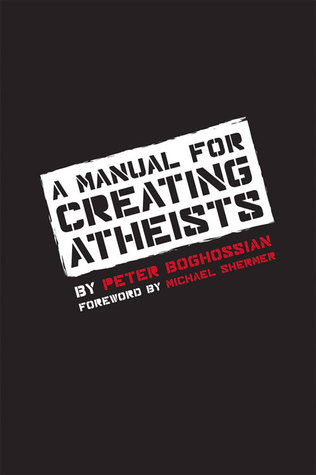
For thousands of years, the faithful have honed proselytizing strategies and talked people into believing the truth of one holy book or another. Indeed, the faithful often view converting others as an obligation of their faith—and are trained from an early age to spread their unique brand of religion. The result is a world broken in large part by unquestioned faith. As an urgently needed counter to this tried-and-true tradition of religious evangelism, A Manual for Creating Atheists offers the first-ever guide not for talking people into faith—but for talking them out of it. Peter Boghossian draws on the tools he has developed and used for more than twenty years as a philosopher and educator to teach how to engage the faithful in conversations that will help them value reason and rationality, cast doubt on their religious beliefs, mistrust their faith, abandon superstition, and irrationality, and ultimately embrace reason.
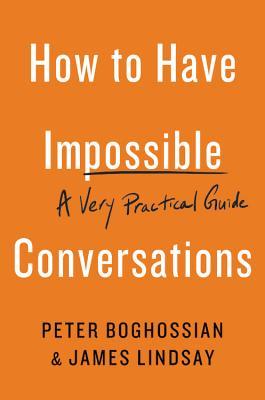
From politics and religion to workplace negotiations, ace the high-stakes conversations in your life with this indispensable guide from a persuasion expert.In our current political climate, it seems impossible to have a reasonable conversation with anyone who has a different opinion. Whether you're online, in a classroom, an office, a town hall—or just hoping to get through a family dinner with a stubborn relative—dialogue shuts down when perspectives clash. Heated debates often lead to insults and shaming, blocking any possibility of productive discourse. Everyone seems to be on a hair trigger.In How to Have Impossible Conversations , Peter Boghossian and James Lindsay guide you through the straightforward, practical, conversational techniques necessary for every successful conversation — whether the issue is climate change, religious faith, gender identity, race, poverty, immigration, or gun control. Boghossian and Lindsay teach the subtle art of instilling doubts and opening minds. They cover everything from learning the fundamentals for good conversations to achieving expert-level techniques to deal with hardliners and extremists. This book is the manual everyone needs to foster a climate of civility, connection, and empathy."This is a self-help book on how to argue effectively, conciliate, and gently persuade. The authors admit to getting it wrong in their own past conversations. One by one, I recognize the same mistakes in me. The world would be a better place if everyone read this book." —Richard Dawkins, author of Science in the Soul and Outgrowing God

A call to action to address people’s psychological and social motives for a belief in God, rather than debate the existence of God With every argument for theism long since discredited, the result is that atheism has become little more than the noises reasonable people make in the presence of unjustified religious beliefs. Thus, engaging in interminable debate with religious believers about the existence of God has become exactly the wrong way for nonbelievers to try to deal with misguided—and often dangerous—belief in a higher power. The key, author James Lindsay argues, is to stop that particular conversation. He demonstrates that whenever people say they believe in “God,” they are really telling us that they have certain psychological and social needs that they do not know how to meet. Lindsay then provides more productive avenues of discussion and action. Once nonbelievers understand this simple point, and drop the very label of atheist, will they be able to change the way we all think about, talk about, and act upon the troublesome notion called “God.”

The first book on Christian apologetics written by a leading atheist figure that teaches Christians the best and worst arguments for defending their faith against attack The Christian faith has been vigorously defended with a variety of philosophical, historical, and theological arguments, but many of the arguments used in an earlier age no longer resonate in today’s educated West. Where has apologetics gone wrong? What is the best response to the growing challenge presented by scientific discovery and naturalistic thought? Unlike every work on Christian apologetics that has come before, How to Defend the Christian Faith is the first one written by an atheist for Christians. As a former Christian defender who is now a leading atheist thinker, John Loftus answers these questions and more. He tells would-be apologists how to train properly, where to study, what to study, what issues they should concern themselves with, and how poorly the professors who currently train them practice their craft. In the process, he shows readers why Christian apologists have failed to reach the intelligent nonbeliever. For those Christian apologists who think this book will provide a secret formula to convert the nonbelieving masses, be as an exposé of the present state of Christian aplogetics, it can just as easily be used by atheists to refute apologetic arguments. Thus, this book presents both an opportunity and a challenge to they must either change how apologetics is done, or quit doing apologetics altogether.

Przewodnik dla ateistow. Jak rozmawiac z wierzacymi

Cómo hacer posibles conversaciones imposibles: Una guía práctica
by Peter Boghossian

Cómo hacer posibles conversaciones imposibles: Una guía práctica | Dominar el arte de las conversaciones difíciles mejorará tu día a día y tu relación con los demás.
by Peter Boghossian
Desde la política y la religión hasta las engorrosas negociaciones en el trabajo, dominar el arte de las conversaciones difíciles mejorará tu día a día y tu relación con los demás. Este libro es el manual práctico que todo el mundo necesita para fomentar un clima de civismo, conexión y empatía.Hoy día parece imposible tener una conversación razonable con alguien que tenga una opinión diferente a la nuestra. Con los amigos, en una cena familiar, en el trabajo o en las redes sociales el diálogo se interrumpe y brotan las chispas de la intolerancia recíproca. Los debates acalorados a menudo desembocan en el insulto y las descalificaciones, un camino sin retorno que impide cualquier posibilidad de un diálogo productivo y enriquecedor.En Cómo hacer posibles conversaciones imposibles , Peter Boghossian y James Lindsay enseñan el sutil arte de infundir dudas y abrir mentes, empezando por la propia. Del cambio climático a la fe religiosa, de la identidad de género a las causas de la pobreza, de la inmigración a la violencia, Boghossian y Lindsay muestran los fundamentos para tener buenas conversaciones, incluso con las personas más extremistas que conozcas. Entre las principales virtudes que proponen perfeccionar está saber escuchar, pero también el arte de hacer buenas preguntas, modular el lenguaje, gestionar el desacuerdo, controlar la ira y cultivar la disposición a dudar. Todo ello puede abrir paso a una comprensión más profunda del otro e incluso a una cordialidad inesperada.HAN DICHO«Una virtud del libro es su eficacia bastan un par de capítulos para que el lector, sin esforzarse apenas, empiece a conversar con más tino y menos solemnidad. La combinación de ejemplos, escalas de confianza y guías de preguntas —con advertencias sobre sesgos y trampas psicológicas— lo vuelve un manual de cabecera para periodistas, docentes, cargos públicos y, por qué no, toda esa mayoría de ciudadanos que quiere hablar con libertad sin echar a perder, por exceso de celo, la bendita paz de la sobremesa. Quien busque un recetario para aplastar al contrincante saldrá defraudado; quien quiera entender y ser entendido hallará un manual de campaña de enorme utilidad. No descubro nada si digo que discutir es fácil y conversar es difícil, pero lo difícil, qué le vamos a hacer, suele coincidir con lo necesario. En época de trincheras, tender puentes no es ingenuidad, sino inteligencia». Jorge Freire, ABC Cultural«Este es un libro de autoayuda sobre cómo discutir con eficacia, saber conciliar y persuadir con delicadeza. Los autores admiten haber cometido errores en sus propias conversaciones. Uno por uno, reconozco los mismos errores en las mías. El mundo sería un lugar mejor si todos leyeran este libro». Richard Dawkins«Pensaba que ya sabía todo lo necesario sobre conversaciones y debates. Estaba equivocado. Sólo sabía mucho sobre discusiones y peleas. En su nuevo libro, perspicaz y de lectura muy amena, Peter Boghossian y James Lindsay ofrecen todo tipo de caminos ingeniosos para entablar un diálogo constructivo». Niall Ferguson«Este libro fascinante no sólo ofrece instrucciones útiles sobre cómo hablar con alguien que piensa de manera diferente, sino que también presenta un poderoso método para cuestionar y reducir la confianza en creencias infundadas, ayudando así a las personas a