Loading genres...
Explore the best books about Art genre.

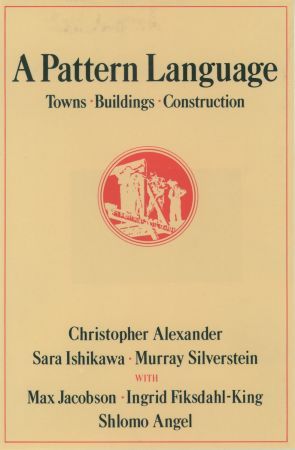
At the core of A Pattern Language is the philosophy that in designing their environments people always rely on certain ‘languages,’ which, like the languages we speak, allow them to articulate and communicate an infinite variety of designs within a formal system which gives them coherence.This book provides a language of this kind. It will enable making a design for almost any kind of building, or any part of the built environment. ‘Patterns,’ the units of this language, are answers to design problems: how high should a window sill be?; how many stories should a building have?; how much space in a neighborhood should be devoted to grass and trees?More than 250 of the patterns in this language are outlined, each consisting of a problem statement, a discussion of the problem with an illustration, and a solution. As the authors say in their introduction, many of the patterns are archetypal, so deeply rooted in the nature of things that it seems likely that they will be a part of human nature and human action as much in five hundred years as they are today.A Pattern Language is related to Alexander’s other works in the Center for Environmental Structure series: The Timeless Way of Building (introductory volume) and The Oregon Experiment.
The ultimate guide to human-centered design Even the smartest among us can feel inept as we fail to figure out which light switch or oven burner to turn on, or whether to push, pull, or slide a door. The fault, argues this ingenious -- even liberating -- book, lies not in ourselves, but in product design that ignores the needs of users and the principles of cognitive psychology. The problems range from ambiguous and hidden controls to arbitrary relationships between controls and functions, coupled with a lack of feedback or other assistance and unreasonable demands on memorization. The Design of Everyday Things shows that good, usable design is possible. The rules are make things visible, exploit natural relationships that couple function and control, and make intelligent use of constraints. The guide the user effortlessly to the right action on the right control at the right time. The Design of Everyday Things is a powerful primer on how -- and why -- some products satisfy customers while others only frustrate them.

In Just Kids, Patti Smith's first book of prose, the legendary American artist offers a never-before-seen glimpse of her remarkable relationship with photographer Robert Mapplethorpe in the epochal days of New York City and the Chelsea Hotel in the late sixties and seventies. An honest and moving story of youth and friendship, Smith brings the same unique, lyrical quality to Just Kids as she has to the rest of her formidable body of work--from her influential 1975 album Horses to her visual art and poetry.

Praised throughout the cartoon industry by such luminaries as Art Spiegelman, Matt Groening, and Will Eisner, this innovative comic book provides a detailed look at the history, meaning, and art of comics and cartooning.

Named One of The Hollywood Reporter’ s “100 Greatest Film Books of All Time”Famed independent screenwriter and director Robert Rodriguez ( Sin City, Once Upon a Time in Mexico, Spy Kids, Machete) discloses all the unique strategies and original techniques he used to make his remarkable debut film El Mariachi on a shoestring budget.This is both one man's remarkable story and an essential guide for anyone who has a celluloid story to tell and the dreams and determination to see it through. Part production diary, part how-to manual, Rodriguez unveils how he was able to make his influential first film on only a $7,000 budget. Also included is the appendix, The Ten Minute Film Course,” a tell-all on how to save thousands of dollars on film school and teach yourself the ropes of film production, directing, and screenwriting.A perfect gift for the aspiring filmmaker.

“A manifesto of sorts for anyone who makes art [and] cares for it.” —Zadie Smith“The best book I know of for talented but unacknowledged creators. . . . A masterpiece.” —Margaret Atwood“No one who is invested in any kind of art . . . can read The Gift and remain unchanged.” —David Foster WallaceBy now a modern classic, The Gift is a brilliantly orchestrated defense of the value of creativity and of its importance in a culture increasingly governed by money and overrun with commodities. This book is even more necessary today than when it first appeared.An illuminating and transformative book, and completely original in its view of the world, The Gift is cherished by artists, writers, musicians, and thinkers. It is in itself a gift to all who discover the classic wisdom found in its pages.

From Neal Gabler, the definitive portrait of one of the most important figures in twentieth-century American entertainment and cultural history.Seven years in the making and meticulously researched - Gabler is the first writer to be given complete access to the Disney archives - this is the full story of a man whose work left an ineradicable brand on our culture but whose life has largely been enshrouded in myth.Gabler shows us the young Walt Disney breaking free of a heartland childhood of discipline and deprivation and making his way to Hollywood. We see the visionary, whose desire for escape honed an innate sense of what people wanted to see on the screen and, when combined with iron determination and obsessive perfectionism, led him to the reinvention of animation. It was Disney, first with Mickey Mouse and then with his feature films - most notably Snow White, Pinocchio, Fantasia, Dumbo, and Bambi - who transformed animation from a novelty based on movement to an art form that presented an illusion of life.We see him reimagine the amusement park with Disneyland, prompting critics to coin the word Disneyfication to describe the process by which reality can be modified to fit one's personal desires. At the same time, he provided a new way to connect with American history through his live-action films and purveyed a view of the country so coherent that even today one can speak meaningfully of "Walt Disney's America." We see how the True-Life Adventure nature documentaries he produced helped create the environmental movement by sensitizing the general public to issues of conservation. And we see how he reshaped the entertainment industry by building a synergistic empire that combined film, television, theme parks, music, book publishing, and merchandise in a way that was unprecedented and was later widely imitated.Gabler also reveals a wounded, lonely, and often disappointed man, who, despite worldwide success, was plagued with financial problems much of his life, suffered a nervous breakdown, and at times retreated into pitiable seclusion in his workshop making model trains. Gabler explores accusations that Disney was a red-baiter, an anti-Semite, an embittered alcoholic. But whatever the characterizations of Disney's personal life, he appealed to the nation by demonstrating the power of wish fulfillment and the triumph of the American imagination. Walt Disney showed how one could impose one's will on the world.This is a masterly biography, a revelation of both the work and the man - of both the remarkable accomplishment and the hidden life.

Provides new insights and observations from Vogler's pioneering work in mythic structure for writers.

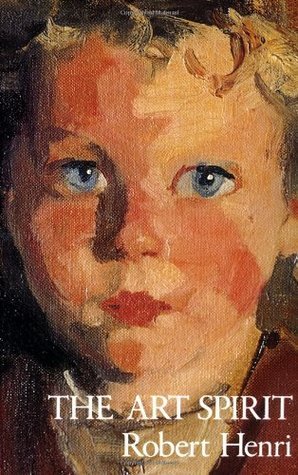
In this book are the essential beliefs and theories of a great teacher and American artist, Robert Henri. While it embodies the entire system of his teaching, with much technical advice and critical comment for the student, it also contains inspiration for those to whom the happiness to be found through all the arts is important.No other American painter attracted such a large, intensely personal group of followers as Henri, whose death in 1929 brought to an end a life that has been completely devoted to art. He was an inspired artist and teacher who believed that everyone is vitally concerned in the happiness and wisdom to be found through the arts. Many of his paintings have been acquired by museums and private collectors. Among them are the Baltimore Museum of Art, the Metropolitan Museum of Art, the National Gallery of Art, the Whitney Museum of American Art, the Wichita Art Museum, and Yale University Art Gallery.

This is the first integral collection of Pessoa's Caeiro heteronym in English, and the poems are accompanied by the introductions of Ricardo Reis and a memoir by Álvaro de Campos, two of Pessoa's other major poetic heteronyms, as well as a poem dedicated to Caeiro by Coelho Pacheco, believed by many commentators to be another one-off heteronym.Ricardo Reis "Alberto Caeiro da Silva was born in Lisbon on April 16, 1889, and died of tuberculosis in the same city on (. . .), 1915. He spent nearly all his life in a village in Ribatejo, and only returned to the city of his birth in his final months. In Ribatejo he wrote nearly all his poems . . ."Fernando Pessoa was educated in English in Durban, as the stepson of a Portuguese diplomat, and was completely bilingual. During his lifetime he was to publish only one collection of his poems in Portuguese, although many appeared in literary journals, under a number of alter egos, or heteronyms, chief amongst them Alberto Caeiro, Alvaro de Campos and Ricardo Reis. At his death in 1935, Pessoa left more than 20,000 manuscripts, both poetry and prose, in a large trunk, the contents of which are still being transcribed and deciphered to this day. He is the greatest modern poet in the Portuguese language, but also always considered himself a poet in the English tradition.

A fresh perspective on a beloved classic by acclaimed translators Anita Barrows and Joanna Macy.German poet Rainer Maria Rilke’s (1875–1926) Letters to a Young Poet has been treasured by readers for nearly a century. Rilke’s personal reflections on the vocation of writing and the experience of living urge an aspiring poet to look inward, while also offering sage wisdom on further issues including gender, solitude, and romantic love. Barrows and Macy’s translation extends this compilation of timeless advice and wisdom to a fresh generation of readers. With a new introduction and commentary, this edition places the letters in the context of today’s world and the unique challenges we face when seeking authenticity.

The amazing original that set off the worldwide search for Waldo! Perfect for the youngest Waldo searcher, this special edition contains all the fun of the original but with lots of eye-boggling extras! Anyone who has found Waldo before will want to find him all over again because he's in a new place in every scene. And now readers can also search for Woof, Wenda, Wizard Whitebeard, Odlaw, and much more—all newly added to this special edition!

The follow up to the War of Art. In the War of Art Pressfield identifies the enemy to living an authentic life – resistance. In Turning Pro, Pressfield teaches you how to defeat it.

Winner of the Pulitzer Prize for Fiction 2014Aged thirteen, Theo Decker, son of a devoted mother and a reckless, largely absent father, survives an accident that otherwise tears his life apart. Alone and rudderless in New York, he is taken in by the family of a wealthy friend. He is tormented by an unbearable longing for his mother, and down the years clings to the thing that most reminds him of her: a small, strangely captivating painting that ultimately draws him into the criminal underworld. As he grows up, Theo learns to glide between the drawing rooms of the rich and the dusty antiques store where he works. He is alienated and in love - and his talisman, the painting, places him at the centre of a narrowing, ever more dangerous circle.The Goldfinch is a haunted odyssey through present-day America and a drama of enthralling power. Combining unforgettably vivid characters and thrilling suspense, it is a beautiful, addictive triumph - a sweeping story of loss and obsession, of survival and self-invention, of the deepest mysteries of love, identity and fate.

In his New York Times bestseller Steal Like an Artist, Austin Kleon showed readers how to unlock their creativity by “stealing” from the community of other movers and shakers. Now, in an even more forward-thinking and necessary book, he shows how to take that critical next step on a creative journey—getting known. Show Your Work! is about why generosity trumps genius. It’s about getting findable, about using the network instead of wasting time “networking.” It’s not self-promotion, it’s self-discovery—let others into your process, then let them steal from you. Filled with illustrations, quotes, stories, and examples, Show Your Work! offers ten transformative rules for being open, generous, brave, productive. In chapters such as You Don’t Have to Be a Genius; Share Something Small Every Day; and Stick Around, Kleon creates a user’s manual for embracing the communal nature of creativity— what he calls the “ecology of talent.” From broader life lessons about work (you can’t find your voice if you don’t use it) to the etiquette of sharing—and the dangers of oversharing—to the practicalities of Internet life (build a good domain name; give credit when credit is due), it’s an inspiring manifesto for succeeding as any kind of artist or entrepreneur in the digital age.

Rock star, crowdfunding pioneer, and TED speaker Amanda Palmer knows all about asking. Performing as a living statue in a wedding dress, she wordlessly asked thousands of passersby for their dollars. When she became a singer, songwriter, and musician, she was not afraid to ask her audience to support her as she surfed the crowd (and slept on their couches while touring). And when she left her record label to strike out on her own, she asked her fans to support her in making an album, leading to the world's most successful music Kickstarter.Even while Amanda is both celebrated and attacked for her fearlessness in asking for help, she finds that there are important things she cannot ask for-as a musician, as a friend, and as a wife. She learns that she isn't alone in this, that so many people are afraid to ask for help, and it paralyzes their lives and relationships. In this groundbreaking book, she explores these barriers in her own life and in the lives of those around her, and discovers the emotional, philosophical, and practical aspects of THE ART OF ASKING.Part manifesto, part revelation, this is the story of an artist struggling with the new rules of exchange in the twenty-first century, both on and off the Internet. THE ART OF ASKING will inspire readers to rethink their own ideas about asking, giving, art, and love.

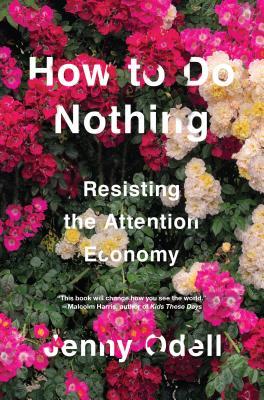
When the technologies we use every day collapse our experiences into 24/7 availability, platforms for personal branding, and products to be monetized, nothing can be quite so radical as… doing nothing. Here, Jenny Odell sends up a flare from the heart of Silicon Valley, delivering an action plan to resist capitalist narratives of productivity and techno-determinism, and to become more meaningfully connected in the process.

From Neanderthal string to 3D knitting, an “expansive” global history that highlights “how textiles truly changed the world” (Wall Street Journal)The story of humanity is the story of textiles—as old as civilization itself. Since the first thread was spun, the need for textiles has driven technology, business, politics, and culture.In The Fabric of Civilization, Virginia Postrel synthesizes groundbreaking research from archaeology, economics, and science to reveal a surprising history. From Minoans exporting wool colored with precious purple dye to Egypt, to Romans arrayed in costly Chinese silk, the cloth trade paved the crossroads of the ancient world. Textiles funded the Renaissance and the Mughal Empire; they gave us banks and bookkeeping, Michelangelo’s David and the Taj Mahal. The cloth business spread the alphabet and arithmetic, propelled chemical research, and taught people to think in binary code. Assiduously researched and deftly narrated, The Fabric of Civilization tells the story of the world’s most influential commodity.“We are taken on a journey as epic, and varying, as the Silk Road itself.… [The Fabric of Civilization is] like a swatch of a Florentine Renaissance brocade: carefully woven, the technique precise, the colors a mix of shade and shine and an accurate representation of the whole cloth."—New York Times“Textile-making hasn’t gotten enough credit for its own sophistication, and for all the ways it undergirds human technological innovation—an error Virginia Postrel’s erudite and complete book goes a long way toward correcting at last.”—Wired

The celebrated design professor here tackles the question of how best to communicate real-life experience in a two-degree format, whether on the printed page or the computer screen. The Whole Earth Review called Envisioning Information a "passionate, elegant revelation."

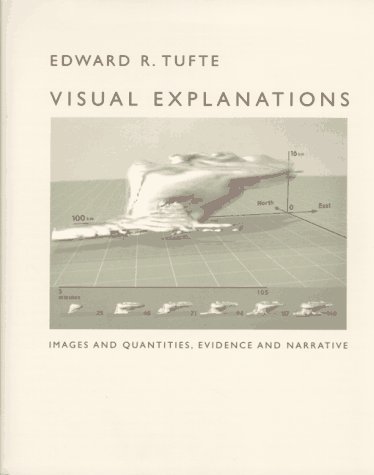
Few would disagree: Life in the information age can be overwhelming. Through computers, the Internet, the media, and even our daily newspapers, we are awash in a seemingly endless stream of charts, maps, infographics, diagrams, and data. Visual Explanations is a navigational guide through this turbulent sea of information. The book is an essential reference for anyone involved in graphic, web, or multimedia design, as well as for educators and lecturers who use graphics in presentations or classes.Jacket design: Dmitry Krasny.Other artwork by Bonnie Scranton, Dmitry Krasny, and Weilin Wu.

In Greenville, New Hampshire, a small town in the southern part of the state, Henri Vaillancourt makes birch-bark canoes in the same manner and with the same tools that the Indians used. The Survival of the Bark Canoe is the story of this ancient craft and of a 150-mile trip through the Maine woods in those graceful survivors of a prehistoric technology. It is a book squarely in the tradition of one written by the first tourist in these woods, Henry David Thoreau, whose The Maine Woods recounts similar journeys in similar vessel. As McPhee describes the expedition he made with Vaillancourt, he also traces the evolution of the bark canoe, from its beginnings through the development of the huge canoes used by the fur traders of the Canadian North Woods, where the bark canoe played the key role in opening up the wilderness. He discusses as well the differing types of bark canoes, whose construction varied from tribe to tribe, according to custom and available materials. In a style as pure and as effortless as the waters of Maine and the glide of a canoe, John McPhee has written one of his most fascinating books, one in which his talents as a journalist are on brilliant display.

Trickster Makes This World solidifies Lewis Hyde's reputation as, in Robert Bly's words, "the most subtle, thorough, and brilliant mythologist we now have." In it, Hyde now brings to life the playful and disruptive side of human imagination as it is embodied in trickster mythology. He first revisits the old stories--Hermes in Greece, Eshu in West Africa, Krishna in India, Coyote in North America, among others--and then holds them up against the life and work of more recent Picasso, Duchamp, Ginsberg, John Cage, and Frederick Douglass. Authoritative in its scholarship, loose-limbed in its style, Trickster Makes This World ranks among the great works of modern cultural criticism.

Illustrates outdoor sculptures created with a range of natural materials, including snow, ice, leaves, rock, clay, stones, feathers, and twigs

Creativity is about capturing those moments that make life worth living. The author's objective is to offer an understanding of what leads to these moments, be it the excitement of the artist at the easel or the scientist in the lab, so that knowledge can be used to enrich people's lives. Drawing on 100 interviews with exceptional people, from biologists and physicists to politicians and business leaders, poets and artists, as well as his 30 years of research on the subject, Csikszentmihalyi uses his famous theory to explore the creative process. He discusses such ideas as why creative individuals are often seen as selfish and arrogant, and why the tortured genius is largely a myth. Most important, he clearly explains why creativity needs to be cultivated and is necessary for the future of our country, if not the world.

To coincide with the 30th anniversary of the now-classic Steven Spielberg film, a new expanded edition, in hardcover for the first time, of one of the best "making of" books of all time.Steven Soderbergh, Bryan Singer, Rod Lurie, John Landis, Steve Martin, and Rob Reiner are among the many filmmakers who concur, more than 30 years after its first publication, that The Jaws Log by screenwriter Carl Gottlieb deserves an enduring place as a "modern classic" on filmmakers and filmmaking.The only book on how 26-year-old Steven Spielberg transformed Peter Benchley's #1 bestselling novel into the phenomenal movie it became, Gottlieb's chronicle of this extraordinary year-long adventure was first published in 1975, generating 17 printings and selling more than 2 million paperback copies. Long out of print, a new, expanded paperback edition was published in 2000 to mark the movie's 25th Anniversary, featuring a 22-page behind-the-scenes photo album, a new afterword by Gottlieb updating readers on the fates of the filmmakers, and an introduction by Peter Benchley.Now, on the occasion of the movie's 30th Anniversary, The Jaws Log is available for the first time in an affordably-priced hardcover edition with a new foreword by the author. 36 b/w photos.

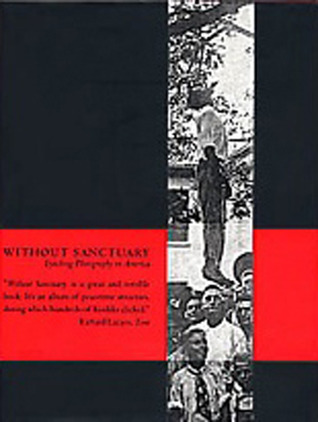
The Tuskegee Institute records the lynching of 3,436 blacks between 1882 and 1950. This is probably a small percentage of these murders, which were seldom reported, and led to the creation of the NAACP in 1909, an organization dedicated to passing federal anti-lynching laws. Through all this terror and carnage someone -- many times a professional photographer -- carried a camera and took pictures of the events. These lynching photographs were often made into postcards and sold as souvenirs to the crowds in attendance. These images are some of photography's most brutal, surviving to this day so that we may now look back on the terrorism unleashed on America's African-American community and perhaps know our history and ourselves better. The almost one hundred images reproduced here are a testament to the camera's ability to make us remember what we often choose to forget.

A generation of screenwriters has used Syd Field’s bestselling books to ignite successful careers in film. Now the celebrated producer, lecturer, teacher, and bestselling author has updated his classic guide for a new generation of filmmakers, offering a fresh insider’s perspective on the film industry today. From concept to character, from opening scene to finished script, here are easily understood guidelines to help aspiring screenwriters—from novices to practiced writers—hone their craft. Filled with updated material—including all-new personal anecdotes and insights, guidelines on marketing and collaboration, plus analyses of recent films, from American Beauty to Lord of the Rings—Screenplay presents a step-by-step, comprehensive technique for writing the screenplay that will succeed in Hollywood. Discover:•Why the first ten pages of your script are crucially important•How to visually “grab” the reader from page one, word one •Why structure and character are the essential foundation of your screenplay•How to adapt a novel, a play, or an article into a screenplay•Tips on protecting your work—three legal ways to claim ownership of your screenplay•The essentials of writing great dialogue, creating character, building a story line, overcoming writer’s block, getting an agent, and much more.With this newly updated edition of his bestselling classic, Syd Field proves yet again why he is revered as the master of the screenplay—and why his celebrated guide has become the industry’s gold standard for successful screenwriting.

Creativity is not a gift from the gods, says Twyla Tharp, bestowed by some divine and mystical spark. It is the product of preparation and effort, and it's within reach of everyone who wants to achieve it. All it takes is the willingness to make creativity a habit, an integral part of your life: In order to be creative, you have to know how to prepare to be creative. In The Creative Habit, Tharp takes the lessons she has learned in her remarkable thirty-five-year career and shares them with you, whatever creative impulses you follow -- whether you are a painter, composer, writer, director, choreographer, or, for that matter, a businessperson working on a deal, a chef developing a new dish, a mother wanting her child to see the world anew. When Tharp is at a creative dead end, she relies on a lifetime of exercises to help her get out of the rut, and The Creative Habit contains more than thirty of them to ease the fears of anyone facing a blank beginning and to open the mind to new possibilities. Tharp's exercises are practical and immediately doable -- for the novice or expert. In "Where's Your Pencil?" she reminds us to observe the world -- and get it down on paper. In "Coins and Chaos," she provides the simplest of mental games to restore order and peace. In "Do a Verb," she turns your mind and body into coworkers. In "Build a Bridge to the Next Day," she shows how to clean your cluttered mind overnight. To Tharp, sustained creativity begins with rituals, self-knowledge, harnessing your memories, and organizing your materials (so no insight is ever lost). Along the way she leads you by the hand through the painful first steps of scratching for ideas, finding the spine of your work, and getting out of ruts into productive grooves. In her creative realm, optimism rules. An empty room, a bare desk, a blank canvas can be energizing, not demoralizing. And in this inventive, encouraging book, Twyla Tharp shows us how to take a deep breath and begin!

In this landmark work Keith Johnstone provides a revelatory guide to rediscovering and unlocking the imagination. Admired for its clarity and zest, Impro lays bare the techniques and exercises used to foster spontaneity and narrative skill for actors. These techniques and exercises were evolved in the actors' studio, when he was Associate Director of the Royal Court and then in demonstrations to schools and colleges and ultimately in the founding of a company of performers called The Theatre Machine.Divided into four sections, 'Status', 'Spontaneity', 'Narrative Skills' and 'Masks and Trance', arranged more or less in the order a group might approach them, the book sets out the specific approaches which Johnstone has himself found most useful and most stimulating. The result is a fascinating exploration of the nature of spontaneous creativity.

From Pulitzer Prize-winning Annie Dillard, a collection that illuminates the dedication and daring that characterizes a writer's life.In these short essays, Annie Dillard—the author of Pilgrim at Tinker Creek and An American Childhood—illuminates the dedication, absurdity, and daring that characterize the existence of a writer. A moving account of Dillard’s own experiences while writing her works, The Writing Life offers deep insight into one of the most mysterious professions.

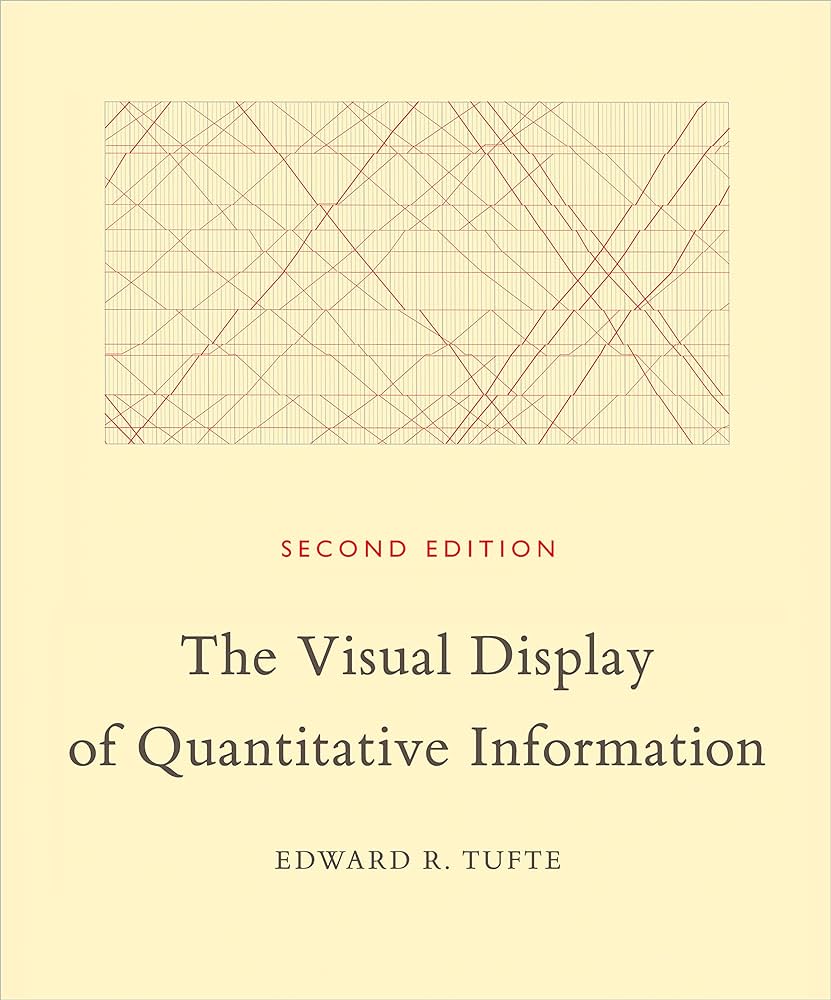
The classic book on statistical graphics, charts, tables. Theory and practice in the design of data graphics, 250 illustrations of the best (and a few of the worst) statistical graphics, with detailed analysis of how to display data for precise, effective, quick analysis. Design of the high-resolution displays, small multiples. Editing and improving graphics. The data-ink ratio. Time-series, relational graphics, data maps, multivariate designs. Detection of graphical deception: design variation vs. data variation. Sources of deception. Aesthetics and data graphical displays. This is the second edition of The Visual Display of Quantitative Information. Recently published, this new edition provides excellent color reproductions of the many graphics of William Playfair, adds color to other images, and includes all the changes and corrections accumulated during 17 printings of the first edition.

For more than twenty years Natalie Goldberg has been challenging and cheering on writers with her books and workshops. In her groundbreaking first book, she brings together Zen meditation and writing in a new way. Writing practice, as she calls it, is no different from other forms of Zen practice—"it is backed by two thousand years of studying the mind." This edition includes a new preface and an interview with the author.

Leonard Cohen is one of the great writers, performers, and most consistently daring artists of our time. Book of Longing is Cohen’s eagerly awaited new collection of poems, following his highly acclaimed 1984 title, Book of Mercy , and his hugely successful 1993 publication, Stranger Music , a Globe and Mail national bestseller. Book of Longing contains erotic, playful, and provocative line drawings and artwork on every page, by the author, which interact in exciting and unexpected ways on the page with poetry that is timeless, meditative, and at times darkly humorous. The book brings together all the elements that have brought Leonard Cohen’s artistry with language worldwide recognition.

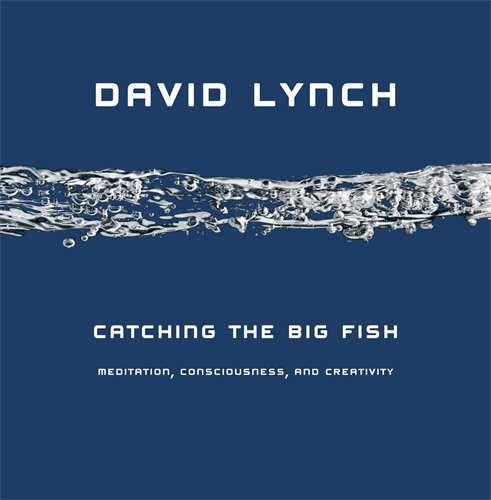
Where do ideas come from?In Catching the Big Fish, internationally acclaimed filmmaker David Lynch provides a rare window into his methods as an artist, his personal working style, and the immense creative benefits he has experienced from the practice of meditation.Lynch describes the experience of "diving within" and "catching" ideas like fish - and then preparing them for television or movie screens, and other mediums in which he works, such as painting, music, and design. Lynch writes for the first time about his more than three-decade commitment to Transcendental Meditation and the difference it has made in his creative process.In brief chapters, Lynch explains the development of his ideas - where they came from, how he grasps them, and which ones appeal to him the most. He specifically discusses how he puts his thoughts into action and how he engages with others around him. Finally, he considers the self and the surrounding world - and how the process of "diving within" that has so deeply affected his own work can directly benefit others.Catching the Big Fish comes as a revelation to the legion of fans who have longed to better understand Lynch's personal vision. And it is equally intriguing to those who wonder how they can nurture their own creativity.

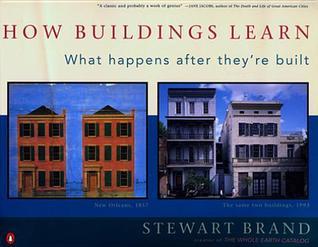
Buildings have often been studies whole in space, but never before have they been studied whole in time. How Buildings Learn is a masterful new synthesis that proposes that buildings adapt best when constantly refined and reshaped by their occupants, and that architects can mature from being artists of space to becoming artists of time.From the connected farmhouses of New England to I.M. Pei's Media Lab, from "satisficing" to "form follows funding," from the evolution of bungalows to the invention of Santa Fe Style, from Low Road military surplus buildings to a High Road English classic like Chatsworth-this is a far-ranging survey of unexplored essential territory.More than any other human artifacts, buildings improve with time-if they're allowed to. How Buildings Learn shows how to work with time rather than against it.

Explores the epic human drama behind the making of the five movies nominated for Best Picture in 1967-Guess Who's Coming to Dinner, The Graduate, In the Heat of the Night, Doctor Doolittle, and Bonnie and Clyde-and through them, the larger story of the cultural revolution that transformed Hollywood, and America, forever.

"Without The Artist's Way , there would have been no Eat, Pray, Love .” —Elizabeth GilbertA stunning gift edition of the powerful bestselling book on creativity. The Artist’s Way is one of the bestselling gift books of all time. Beautifully packaged with a slipcase and ribbon, this tenth anniversary gift edition is the ideal gift for loved ones engaged in creative lives.

"Visions of Japan: Kawase Hasui's masterpieces brings together in a single volume one hundred of the artist's most celebrated prints. Fully illustrated, this publication includes annotated descriptions for each work, as well as two essays on Hasui's life and work by Dr. Kendall H. Brown." Kawase Hasui (1883-1957) is considered the foremost Japanese landscape print artist of the 20th century, and he is most closely associated with the pioneering Shin-hanga (New prints) publisher Watanabe Shozaburo (1885-1962). Hasui's work became hugely popular, not only in his native Japan but also in the West, especially in the United States. His valuable contribution to the woodblock print medium was acknowledged in 1956, a year before his death, when he was honoured with the distinction of 'Living National Treasure'.

When Voluptuous Panic: The Erotic World of Weimar Berlin first appeared in the fall of 2000, it inspired wide acclaim and multiple printings. Anticipating the expanded edition, Feral House placed Voluptuous Panic out of print, and for the past year buyers paid as much as $460 to online sellers for a used copy.This sourcebook of hundreds of rare visual delights from pre-Nazi, Cabaret-period “Babylon on the Spree” has the distinction of being praised both by scholars and avatars of contemporary culture, inspiring hip clubgoers, filmmakers, gay historians, graphic designers, and musicians like the Dresden Dolls and Marilyn Manson.Voluptuous Panic’s expanded edition includes the new illustrated chapter, “Sex Magic and the Occult,” documenting German pagan cults and their bizarre erotic rituals, including instructions for entering into the “Sexual Fourth Dimension.” The deluxe hardcover edition also includes sensational accounts of hypno-erotic cabaret acts, Berlin Fetish prostitution (“The Boot Girl Visit”), gay life (“A Wild-Boy Initiation!”), descriptions and illustrations of Aleister Crowley’s Berlin OTO Secret Society, and sex crime (“the Curious Career and Untimely Death of Fritz Ulbrich”).

While the study of psychology has offered little in the way of explaining the creative process, Koestler examines the idea that we are at our most creative when rational thought is suspended--for example, in dreams and trancelike states. All who read The Act of Creation will find it a compelling and illuminating book.

Whether she is contemplating the history of walking as a cultural and political experience over the past two hundred years (Wanderlust), or using the life of photographer Eadweard Muybridge as a lens to discuss the transformations of space and time in late nineteenth-century America (River of Shadows), Rebecca Solnit has emerged as an inventive and original writer whose mind is daring in the connections it makes. A Field Guide to Getting Lost draws on emblematic moments and relationships in Solnit's own life to explore the issues of wandering, being lost, and the uses of the unknown. The result is a distinctive, stimulating, and poignant voyage of discovery.

One of the great but often unmentioned causes of both happiness and misery is the quality of our environment: the kinds of walls, chairs, buildings and streets that surround us.And yet a concern for architecture and design is too often described as frivolous, even self-indulgent. The Architecture of Happiness starts from the idea that where we are heavily influences who we can be, and it argues that it is architecture's task to stand as an eloquent reminder of our full potential.Whereas many architects are wary of openly discussing the word beauty, this book has at its center the large and naïve question: What is a beautiful building? It is a tour through the philosophy and psychology of architecture that aims to change the way we think about our homes, our streets and ourselves.

Do the WorkOur enemy is not lack of preparation; it's not the difficulty of the project, or the state of the marketplace or the emptiness of our bank account.The enemy is resistance.The enemy is our chattering brain, which, if we give it so much as a nanosecond, will start producing excuses, alibis, transparent self-justifications and a million reasons why he can't/shouldn't/won't do what we know we need to do.Start before you're ready.

How Music Works is David Byrne’s remarkable and buoyant celebration of a subject he has spent a lifetime thinking about. In it he explores how profoundly music is shaped by its time and place, and he explains how the advent of recording technology in the twentieth century forever changed our relationship to playing, performing, and listening to music.Acting as historian and anthropologist, raconteur and social scientist, he searches for patterns—and shows how those patterns have affected his own work over the years with Talking Heads and his many collaborators, from Brian Eno to Caetano Veloso. Byrne sees music as part of a larger, almost Darwinian pattern of adaptations and responses to its cultural and physical context. His range is panoptic, taking us from Wagnerian opera houses to African villages, from his earliest high school reel-to-reel recordings to his latest work in a home music studio (and all the big studios in between).Touching on the joy, the physics, and even the business of making music, How Music Works is a brainy, irresistible adventure and an impassioned argument about music’s liberating, life-affirming power.

This down-and-dirty romp through Hollywood in the 1970s introduces the young filmmakers--Coppola, Scorsese, Lucas, Spielberg, Altman, and Beatty--and recreates an era that transformed American culture forever.

More than 150 inspired—and inspiring—novelists, poets, playwrights, painters, philosophers, scientists, and mathematicians on how they subtly maneuver the many (self-inflicted) obstacles and (self-imposed) daily rituals to get done the work they love to do.Franz Kafka, frustrated with his living quarters and day job, wrote in a letter to Felice Bauer in 1912, “time is short, my strength is limited, the office is a horror, the apartment is noisy, and if a pleasant, straightforward life is not possible then one must try to wriggle through by subtle maneuvers.” Kafka is one of 161 minds who describe their daily rituals to get their work done, whether by waking early or staying up late; whether by self-medicating with doughnuts or bathing, drinking vast quantities of coffee, or taking long daily walks. Thomas Wolfe wrote standing up in the kitchen, the top of the refrigerator as his desk, dreamily fondling his “male configurations”.... Jean-Paul Sartre chewed on Corydrane tablets (a mix of amphetamine and aspirin), ingesting ten times the recommended dose each day ... Descartes liked to linger in bed, his mind wandering in sleep through woods, gardens, and enchanted palaces where he experienced “every pleasure imaginable.”Here are: Anthony Trollope, who demanded of himself that each morning he write three thousand words (250 words every fifteen minutes for three hours) before going off to his job at the postal service, which he kept for thirty-three years during the writing of more than two dozen books ... Karl Marx ... Woody Allen ... Agatha Christie ... George Balanchine, who did most of his work while ironing ... Leo Tolstoy ... Charles Dickens ... Pablo Picasso ... George Gershwin, who, said his brother Ira, worked for twelve hours a day from late morning to midnight, composing at the piano in pajamas, bathrobe, and slippers....Here also are the daily rituals of Charles Darwin, Andy Warhol, John Updike, Twyla Tharp, Benjamin Franklin, William Faulkner, Jane Austen, Anne Rice, and Igor Stravinsky (he was never able to compose unless he was sure no one could hear him and, when blocked, stood on his head to “clear the brain”).

Web designers are no longer just web designers. To create a successful web product that’s as large as Etsy, Facebook, Twitter, or Pinterest–or even as small as a tiny app–you need to know more than just HTML and CSS. You need to understand how to create meaningful online experiences so that users want to come back again and again.In other words, you have to stop thinking like a web designer or a visual designer or a UX designer or an interaction designer and start thinking like a product designer.In this breakthrough introduction to modern product design, Etsy Creative Director Randy Hunt explains the skills, processes, types of tools, and recommended workflows for creating world-class web products. After reading this book, you’ll have a complete understanding of what product design really is and you’ll be equipped with the best practices necessary for building your own successful online products.

Oblique Strategies is a card-based method for promoting creativity jointly created by musician/artist Brian Eno and multimedia artist Peter Schmidt. Physically, it takes the form of a deck of 7-by-9-centimetre (2.8 in × 3.5 in) printed cards in a black box. Each card offers a challenging constraint intended to help artists (particularly musicians) break creative blocks by encouraging lateral thinking.

“Writing about yourself is a funny business…But in a project like this, the writer has made one promise, to show the reader his mind. In these pages, I’ve tried to do this.” —Bruce Springsteen, from the pages of Born to RunIn 2009, Bruce Springsteen and the E Street Band performed at the Super Bowl’s halftime show. The experience was so exhilarating that Bruce decided to write about it. That’s how this extraordinary autobiography began. Over the past seven years, Bruce Springsteen has privately devoted himself to writing the story of his life, bringing to these pages the same honesty, humor, and originality found in his songs. He describes growing up Catholic in Freehold, New Jersey, amid the poetry, danger, and darkness that fueled his imagination, leading up to the moment he refers to as “The Big Bang”: seeing Elvis Presley’s debut on The Ed Sullivan Show. He vividly recounts his relentless drive to become a musician, his early days as a bar band king in Asbury Park, and the rise of the E Street Band. With disarming candor, he also tells for the first time the story of the personal struggles that inspired his best work, and shows us why the song “Born to Run” reveals more than we previously realized. Born to Run will be revelatory for anyone who has ever enjoyed Bruce Springsteen, but this book is much more than a legendary rock star’s memoir. This is a book for workers and dreamers, parents and children, lovers and loners, artists, freaks, or anyone who has ever wanted to be baptized in the holy river of rock and roll. Rarely has a performer told his own story with such force and sweep. Like many of his songs (“Thunder Road,” “Badlands,” “Darkness on the Edge of Town,” “The River,” “Born in the U.S.A.,” “The Rising,” and “The Ghost of Tom Joad,” to name just a few), Bruce Springsteen’s autobiography is written with the lyricism of a singular songwriter and the wisdom of a man who has thought deeply about his experiences.

There's a mantra that real writers know but wannabe writers don’t. And the secret phrase is this:NOBODY WANTS TO READ YOUR SH*T. Recognizing this painful truth is the first step in the writer's transformation from amateur to professional. From Chapter Four: “When you understand that nobody wants to read your shit, you develop empathy. You acquire the skill that is indispensable to all artists and entrepreneurs—the ability to switch back and forth in your imagination from your own point of view as writer/painter/seller to the point of view of your reader/gallery-goer/customer. You learn to ask yourself with every sentence and every phrase: Is this interesting? Is it fun or challenging or inventive? Am I giving the reader enough? Is she bored? Is she following where I want to lead her?"

Dylan Jones's engrossing, magisterial biography of David Bowie is unlike any Bowie story ever written. Drawn from over 180 interviews with friends, rivals, lovers, and collaborators, some of whom have never before spoken about their relationship with Bowie, this oral history weaves a hypnotic spell as it unfolds the story of a remarkable rise to stardom and an unparalleled artistic path. Tracing Bowie's life from the English suburbs to London to New York to Los Angeles, Berlin, and beyond, its collective voices describe a man profoundly shaped by his relationship with his schizophrenic half-brother Terry; an intuitive artist who could absorb influences through intense relationships and yet drop people cold when they were no longer of use; and a social creature equally comfortable partying with John Lennon and dining with Frank Sinatra. By turns insightful and deliciously gossipy, DAVID BOWIE is as intimate a portrait as may ever be drawn. It sparks with admiration and grievances, lust and envy, as the speakers bring you into studios and bedrooms they shared with Bowie, and onto stages and film sets, opening corners of his mind and experience that transform our understanding of both artist and art. Including illuminating, never-before-seen material from Bowie himself, drawn from a series of Jones's interviews with him across two decades, DAVID BOWIE is an epic, unforgettable cocktail-party conversation about a man whose enigmatic shapeshifting and irrepressible creativity produced one of the most sprawling, fascinating lives of our time.

“Melissa Maerz’s brilliant oral history is the definitive account of a cult-classic movie that took a slow ride into the Seventies and defined the Nineties.” –Rob Sheffield, Rolling StoneThe definitive oral history of the cult classic Dazed and Confused , featuring behind-the-scenes stories from the cast, crew, and Oscar-nominated director Richard Linklater.Dazed and Confused not only heralded the arrival of filmmaker Richard Linklater, it introduced a cast of unknowns who would become the next generation of movie stars. Embraced as a cultural touchstone, the 1993 film would also make Matthew McConaughey’s famous phrase—alright, alright, alright—ubiquitous. But it started with a simple idea: Linklater thought people might like to watch a movie about high school kids just hanging out and listening to music on the last day of school in 1976. To some, that might not even sound like a movie. But to a few studio executives, it sounded enough like the next American Graffiti to justify the risk. Dazed and Confused underperformed at the box office and seemed destined to disappear. Then something weird happened: Linklater turned out to be right. This wasn’t the kind of movie everybody liked, but it was the kind of movie certain people loved, with an intensity that felt personal. No matter what their high school experience was like, they thought Dazed and Confused was about them.Alright, Alright, Alright is the story of how this iconic film came together and why it worked. Combining behind-the-scenes photos and insights from nearly the entire cast, including Matthew McConaughey, Parker Posey, Ben Affleck, Joey Lauren Adams, and many others, and with full access to Linklater’s Dazed archives, it offers an inside look at how a budding filmmaker and a cast of newcomers made a period piece that would feel timeless for decades to come.

שום דבר בספר הזהאינו אמת ידועה.אלה הרהורים על דברים שהבחנתי בהם —לא עוּבדות, אלא מחשבות.כמה מהרעיונות עשויים לדבר אליכם,אחרים אולי לא.מעטים עשויים לעורר ידיעה פנימיתששכחתם שיש לכם.השתמשו במה שמועיל לכם.עזבו את השאר.כל אחד מהרגעים האלההוא הזמנהלבירור נוסף:הצעה להתבוננות עמוקה יותר,מרחוק, או מקרוב.פתיחת אפשרויותלהוויה חדשה.

1893 This is the tragic autobiography of an office dogsbody in Chicago. One day he meets the father who abandoned him as a child. The first graphic novel to win a major British literary award took the Guardian First Book Award 2001.

Creativity and innovation are widely recognized as essential to success in business, and so many aspects of our lives. For over two decades, Cirque du Soleil has been a world-renowned laboratory of creativity, enthralling audiences around the world by fusing dazzling acrobatics, staging and choreography, and music, along with beautiful costumes and technical effects to inspire and create magical, almost otherworldly theatrical experiences. In The Spark , Cirque's former president of creative content, Lyn Heward, invites readers inside the world and ideas of Cirque du Soleil through the story of an ordinary man searching for meaning in his work and life.Like so many other people in their careers, sports agent Frank Castle has lost the passion he once had for his job. But a chance encounter with an inspiring Cirque du Soleil director takes him inside Cirque du Soleil to meet the artists, directors, designers, and technicians who create, shape, and perform in their acclaimed shows. As the story unfolds, the artists reveal surprising secrets about the sparks that ignite their creativity — from the pressure of deadlines and the exhilaration that comes from risking it all, to the chance encounters and everyday occurrences that have changed the way they live and work. As Frank comes to discover, every one of us is creative — wherever we work or whatever our job title is — but it’s up to us to tap into that powerful force.As The Spark makes clear, there is no single formula for creative success–each of us must unlock the power of our imagination in our own way. An inspiring tale that draws on behind-the-scenes stories from the most creative people in entertainment as well as some out-of-this-world Cirque du Soleil magic, The Spark is an unparalleled guide on how to make creativity a part of everything you do.Lyn Heward is the former President and COO of Cirque du Soleil’s Creative Content Division and is currently acting as executive producer for a variety of special projects. John U. Bacon, a veteran journalist and public speaker, has won numerous national writing awards and is the author of three books.

How do great writers do it? From James M. Cain's hard-nosed observation that "writing a novel is like working on foreign policy. There are problems to be solved. It's not all inspirational," to Joan Didion's account of how she composes a book--"I constantly retype my own sentences. Every day I go back to page one and just retype what I have. It gets me into a rhythm"--The Paris Review has elicited some of the most revelatory and revealing thoughts from the literary masters of our age. For more than half a century, the magazine has spoken with most of our leading novelists, poets, and playwrights, and the interviews themselves have come to be recognized as classic works of literature, an essential and definitive record of the writing life. They have won the coveted George Polk Award and have been a contender for the Pulitzer Prize. Now, Paris Review editor Philip Gourevitch introduces an entirely original selection of sixteen of the most celebrated interviews. Often startling, always engaging, these encounters contain an immense scope of intelligence, personality, experience, and wit from the likes of Elizabeth Bishop, Ernest Hemingway, Truman Capote, Rebecca West, and Billy Wilder. This is an indispensable book for all writers and readers.

This is a remarkable book about a man (perhaps the most important and original philosopher of our age), a society (the corrupt Austro-Hungarian Empire on the eve of dissolution), and a city (Vienna, with its fin-de siecle gaiety and corrosive melancholy). The central figure in this study of a crumbling society that gave birth to the modern world is Wittgenstein, the brilliant and gifted young thinker. With others, including Freud, Viktor Adler, and Arnold Schoenberg, he forged his ideas in a classical revolt against the stuffy, doomed, and moralistic lives of the old regime. As a portrait of Wittgenstein, the book is superbly realized; it is even better as a portrait of the age, with dazzling and unusual parallels to our own confused society. Allan Janik and Stephen Toulmin have acted on a striking premise: an understanding of prewar Vienna, Wittgenstein s native city, will make it easier to comprehend both his work and our own problems .This is an independent work containing much that is challenging, new, and useful. New York Times Book Review."

Science and art have in common intense seeing, the wide-eyed observing that generates visual information. Beautiful Evidence is about how seeing turns into showing, how data and evidence turn into explanation. The book identifies excellent and effective methods for showing nearly every kind of information, suggests many new designs (including sparklines), and provides analytical tools for assessing the credibility of evidence presentations (which are seen from both sides: how to produce and how to consume presentations). For alert consumers of presentations, there are chapters on diagnosing evidence corruption and PowerPoint pitches. Beautiful Evidence concludes with two chapters that leave the world of pixel and paper flatland representations - and move onto seeing and thinking in space land, the real-land of three-space and time.

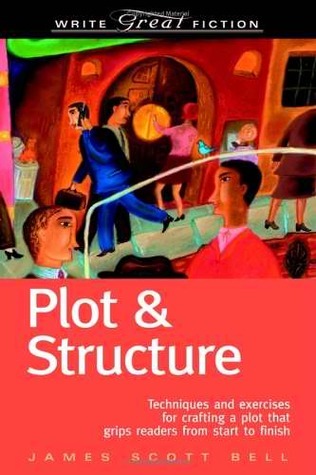
Craft an Engaging PlotHow does plot influence story structure? What's the difference between plotting for commercial and literary fiction? How do you revise a plot or structure that's gone off course?With "Write Great Fiction: Plot & Structure," you'll discover the answers to these questions and more. Award-winning author James Scott Bell offers clear, concise information that will help you create a believable and memorable plot, including: Techniques for crafting strong beginnings, middles, and endsEasy-to-understand plotting diagrams and chartsBrainstorming techniques for original plot ideasThought-provoking exercises at the end of each chapterStory structure models and methods for all genresTips and tools for correcting common plot problemsFilled with plot examples from popular novels, comprehensive checklists, and practical hands-on guidance, "Write Great Fiction: Plot & Structure" gives you the skills you need to approach plot and structure like an experienced pro.

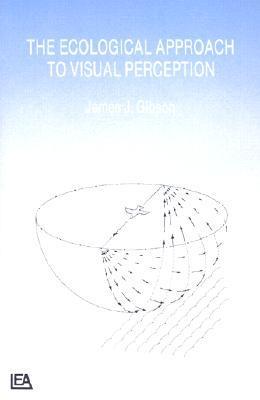
This is a book about how we see: the environment around us (its surfaces, their layout, and their colors and textures); where we are in the environment; whether or not we are moving and, if we are, where we are going; what things are good for; how to do things (to thread a needle or drive an automobile); or why things look as they do. The basic assumption is that vision depends on the eye which is connected to the brain. The author suggests that natural vision depends on the eyes in the head on a body supported by the ground, the brain being only the central organ of a complete visual system. When no constraints are put on the visual system, people look around, walk up to something interesting and move around it so as to see it from all sides, and go from one vista to another. That is natural vision -- and what this book is about.

Traces the life and career of the California artist, who currently works with pure light and the subtle modulation of empty space

This special limited edition of A Convergence of Birds follows the successful publication of the trade edition of this wonderful anthology of new fiction and poetry inspired by the art of Joseph Cornell. This book features writing from 22 of the best American writers working today; authors such as Joyce Carol Oates, Robert Pinsky, Rick Moody, Howard Norman and Barry Lopez, all invited to participate by editor and contributor Jonathan Safran Foer. The limited edition of only 225 copies is linen-bound and slipcased, and signed by each author on individual sheets of vellum that are bound into the book at the beginning of their contributions. A wonderful and highly collectable edition that will be treasured by lovers of contemporary writing and fine books.In order to insure safe delivery for this item we can only ship Federal Express 3rd Day. An additional charge of $25.00 will be added to your purchase.

An invaluable set of career-length interviews with the German genius hailed by François Truffaut as "the most important film director alive" Most of what we've heard about Werner Herzog is untrue. The sheer number of false rumors and downright lies disseminated about the man and his films is truly astonishing. Yet Herzog's body of work is one of the most important in postwar European cinema.His international breakthrough came in 1973 with Aguirre, The Wrath of God , in which Klaus Kinski played a crazed Conquistador. For The Enigma of Kaspar Hauser , Herzog cast in the lead a man who had spent most of his life institutionalized, and two years later he hypnotized his entire cast to make Heart of Glass . He rushed to an explosive volcanic Caribbean island to film La Soufrière , paid homage to F. W. Murnau in a terrifying remake of Nosferatu , and in 1982 dragged a boat over a mountain in the Amazon jungle for Fitzcarraldo . More recently, Herzog has made extraordinary "documentary" films such as Little Dieter Needs to Fly . His place in cinema history is assured, and Paul Cronin's volume of dialogues provides a forum for Herzog's fascinating views on the things, ideas, and people that have preoccupied him for so many years.

Story provides insight and inspiration for screen and television writers, novelists, playwrights, journalists - anyone with a story to tell.'In difficult periods of writing, particularly with structure, I often turn to Robert McKee's wonderful book, Story, for guidance.' -- Dominic Dunne, novelist of Another City, Not My Own, The Two Mrs Grenvilles.'...stimulating, innovative, refreshingly practical.' -- Lawrence Kasdan, screenwriter/director of The Accidental Tourist, The Big Chill, Body Heat, The Empire Strikes Back'McKee is the arch defender of story; his book is a revelation.' -- Griffin Dunne, screenwriter/director/producer of After Hours, Addicted To Love, Running On Empty, Chilly Scenes Of Winter'An amazingly important course.' -- John Cleese'Since I first attended Robert McKee's course, I have sold four screenplays and two novels. I could not have done so without the wisdom and inspiration he provided.' -- Tim Willocks, novelist/screenwriter of Bad City Blues, Green River Rising, Swept From The Sea

What is the nature of the aesthetic experience? Is it the same for everyone? It is possible to facilitate its occurrence? This book focuses on the psychology of the aesthetic experience and on the perception and understanding of art, suggesting ways to raise levels of visual literacy andenhance artistic enjoyment. The findings will be of importance not only to museum professionals and art educators, but also to psychologists and those interested in the nature of the aesthetic experience.

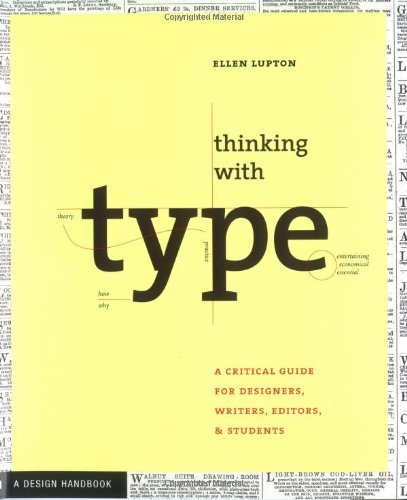
The organization of letters on a blank sheet—or screen—is the most basic challenge facing anyone who practices design. What type of font to use? How big? How should those letters, words, and paragraphs be aligned, spaced, ordered, shaped, and otherwise manipulated? In this groundbreaking new primer, leading design educator and historian Ellen Lupton provides clear and concise guidance for anyone learning or brushing up on their typographic skills. Thinking with Type is divided into three sections: letter, text, and grid. Each section begins with an easy-to-grasp essay that reviews historical, technological, and theoretical concepts, and is then followed by a set of practical exercises that bring the material covered to life. Sections conclude with examples of work by leading practitioners that demonstrate creative possibilities (along with some classic no-no's to avoid).

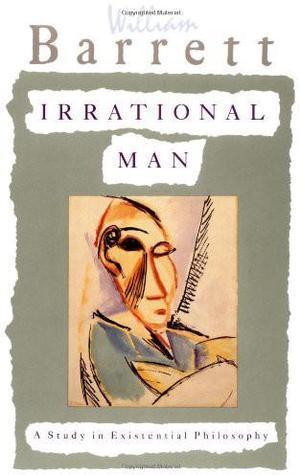
Widely recognized as the finest definition of existentialist philosophy ever written, this book introduced existentialism to America in 1958. Barrett speaks eloquently and directly to concerns of the 1990 a period when the irrational and the absurd are no better integrated than before and when humankind is in even greater danger of destroying its existence without ever understanding the meaning of its existence.Irrational Man begins by discussing the roots of existentialism in the art and thinking of Augustine, Aquinas, Pascal, Baudelaire, Blake, Dostoevski, Tolstoy, Hemingway, Picasso, Joyce, and Beckett. The heart of the book explains the views of the foremost existentialists—Kierkegaard, Nietzsche, Heidegger, and Sartre. The result is a marvelously lucid definition of existentialism and a brilliant interpretation of its impact.

The distinguished filmmaker chronicles his life from his birth in 1910 to the worldwide success in 1950 of his film Rashomon and provides a provocative account of the Japanese film industry.

In a career that began in Brooklyn and spanned Wall Street, Hollywood, and the Mafia, Ross built his father-in-law's funeral business and a parking lot company into Time Warner, the largest media and entertainment company in the world. Hard-hitting and compulsive reading, this book takes you into the heart of what made this arrogant yet irresistible man tick.

Among the many "how-to" playwriting books that have appeared over the years, there have been few that attempt to analyze the mysteries of play construction. Lajos Egri's classic, The Art of Dramatic Writing, does just that, with instruction that can be applied equally well to a short story, novel, or screenplay. Examining a play from the inside out, Egri starts with the heart of any drama: its characters. All good dramatic writing hinges on people and their relationships, which serve to move the story forward and give it life, as well as an understanding of human motives - why people act the way that they do. Using examples from everything from William Shakespeare's Romeo and Juliet to Henrik Ibsen's A Doll's House, Egri shows how it is essential for the author to have a basic premise - a thesis, demonstrated in terms of human behavior - and to develop the dramatic conflict on the basis of that behavior.Using Egri's ABCs of premise, character, and conflict, The Art of Dramatic Writing is a direct, jargon-free approach to the problem of achieving truth in writing.

Mad Love has been acknowledged an undisputed classic of the surrealist movement since its first publication in France in 1937. Its adulation of love as both mystery and revelation places it in the most abiding of literary traditions, but its stormy history and technical difficulty have prevented it from being translated into English until now. "There has never been any forbidden fruit. Only temptation is divine," writes André Breton, leader of the surrealists in Paris in the 1920s and '30s. Mad Love is dedicated to defying "the widespread opinion that love wears out, like the diamond, in its own dust." Celebrating breton's own love and lover, the book unveils the marvelous in everyday encounters and the hidden depths of ordinary things.

An exploration of musical harmony from its ancient fundamentals to its most complex modern progressions, addressing how and why it resonates emotionally and spiritually in the individual.W. A. Mathieu, an accomplished author and recording artist, presents a way of learning music that reconnects modern-day musicians with the source from which music was originally generated. As the author states, "The rules of music--including counterpoint and harmony--were not formed in our brains but in the resonance chambers of our bodies." His theory of music reconciles the ancient harmonic system of just intonation with the modern system of twelve-tone temperament. Saying that the way we think music is far from the way we do music, Mathieu explains why certain combinations of sounds are experienced by the listener as harmonious. His prose often resembles the rhythms and cadences of music itself, and his many musical examples allow readers to discover their own musical responses.

Manifestoes of Surrealism is a book by André Breton, describing the aims, meaning, and political position of the Surrealist movement.The translators of this edition were finalists of the 1970 National Book Awards in the category of translation.

« Qui n'a jamais rêvé de devenir un objet ? Mieux même, un objet d'admiration ?Tel est le pacte que scellent un artiste excentrique et un jeune homme désespéré. Le premier, avide de scandale, propose au second, avide d'exister, de le transformer en oeuvre d'art. Après tout, il n'a rien à y perdre, sinon la liberté. »Parce qu'il se sent médiocre et inexistant, un jeune homme sur le point de se suicider accepte l'accord que lui propose un artiste mégalomane : celui-ci lui achète son âme et son corps pour en faire une sculpture vivante, sublime ou monstrueuse, et une marchandise planétaire.Cette fable excentrique, inquiétante et comique nous entraîne dans un monde rongé par le narcissisme, le culte du simulacre et de l'apparence, le totalitarisme de l'image : le nôtre.

"This fascinating and detailed book about acting is Miss Hagen's credo, the accumulated wisdom of her years spent in intimate communion with her art. It is at once the voicing of her exacting standards for herself and those she teaches, and an explanation of the means to the end. For those unable to avail themselves of her personal tutelage, her book is the best substitute."— Publishers Weekly "Uta Hagen's Respect for Acting is not only pitched on a high artistic level but it is full of homely, practical information by a superb craftswoman. crafts-woman. An illuminating discussion of the standards and techniques of enlightened stage acting."— Brooks Atkinson "Hagen adds to the large corpus of titles on acting with vivid dicta drawn from experience, skill, and a sense of personal and professional worth. Her principal asset in this treatment is her truly significant imagination. Her ‘object exercises’ display a wealth of detail with which to stimulate the student preparing a scene for presentation."— Library Journal "Respect for Acting is a simple, lucid and sympathetic statement of actors' problems in the theatre and basic tenets for their training wrought from the personal experience of a fine actress and teacher of acting."— Harold Clurman "Uta Hagen's Respect for Acting…is a relatively small book. But within it Miss Hagen tells the young actor about as much as can be conveyed in print of his craft."— Los Angeles Times "Uta Hagen is our greatest living actor; she is, moreover, interested and mystified by the presence of talent and its workings; her third gift is a passion to communicate the mysteries of the craft to which she has given her life. There are almost no American actors uninfluenced by her."— Fritz Weaver "This is a textbook for aspiring actors, but working thespians can profit much by it. Anyone with just a casual interest in the theater should also enjoy its behind-the-scenes flavor. Respect for Acting is certainly a special book, perhaps for a limited readership, but of its "How-To" kind I'd give it four curtain calls, and two hollers of "Author, Author— King Features Syndicate

This book, written in collaboration with Dennis Longwell, follows an acting class of eight men and eight women for fifteen months, beginning with the most rudimentary exercises and ending with affecting and polished scenes from contemporary American plays. Throughout these pages Meisner is delight--always empathizing with his students and urging them onward, provoking emotion, laughter, and growing technical mastery from his charges. With an introduction by Sydney Pollack, director of "Out of Africa" and "Tootsie," who worked with Meisner for five years."This book should be read by anyone who wants to act or even appreciate what acting involves. Like Meisner's way of teaching, it is the straight goods."--Arthur Miller"If there is a key to good acting, this one is it, above all others. Actors, young and not so young, will find inspiration and excitement in this book."--Gregory Peck

This best-selling classic, which the New York Times called “the classiest ‘how-to’ text on landscape color photography ever published,” captures the unique artistic vision of the late Galen Rowell, one of America’s greatest outdoor photographers. Here Rowell assembled eighty of his finest images, along with the stories behind them—what he was after and how he achieved it.The photographs (and the details of their creation) are arranged in eight exhibits according to visual themes, reflecting Rowell’s fascination with the infinitely varying qualities of light found in mountain landscapes. He explains how film and the human eye see differently, how he selected and composed the content of his work, how he worked with optical phenomena and natural light, and how equipment and adventure interact in the field.The engaging text also recounts Rowell’s development as a photographer, his philosophy and techniques for creating “dynamic landscapes,” and his adventures in remote, dangerous, and beautiful places—from California’s Yosemite Valley to almost-inaccessible peaks in China.

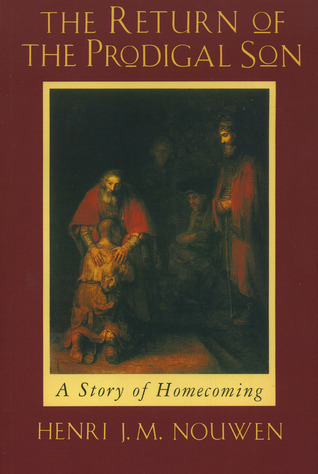
A chance encounter with a reproduction of Rembrandt's painting, The Return of the Prodigal Son, catapulted Henri Nouwen into a long spiritual adventure. In his highly-acclaimed book of the same title, he shares the deeply personal meditation that led him to discover the place within which God has chosen to dwell. This Lent course, which has been adapted from the book, helps us to reflect on the meaning of the parable for our own lives. Divided into five sessions, the course moves through the parable exploring our reaction to the story: the younger son's leaving and return, the father's restoration of sonship, the elder son's resentment and the father's compassion. All of us who have experienced loneliness, dejection, jealousy or anger will respond to the persistent themes of homecoming, affirmation and reconciliation.

When we look at a painting hanging on an art gallery wall, we see only what the artist has chosen to disclose--the finished work of art. What remains mysterious is the process of creation itself--the making of the work of art. Everyone who has looked at paintings has wondered about this, and numerous efforts have been made to discover and depict the creative method of important artists. A Giacometti Portrait is a picture of one of the century's greatest artists at work.James Lord sat for eighteen days while his friend Alberto Giamcometti did his portrait in oil. The artist painted, and the model recorded the sittings and took photographs of the work in its various stages. What emerged was an illumination of what it is to be an artist and what it was to be Giacometti--a portrait in prose of the man and his art. A work of great literary distinction, A Giacometti Portrait is, above all, a subtle and important evocation of a great artist.

Interviews with painter, Francis Bacon.

In The Artist's Way, Julia Cameron addressed a complex subject in a way that has allowed millions of aspiring and working artists to tap into their own creativity. With her companion book The Artist's Way Morning Pages Journal, Cameron focused readers on one of two primary tools in her programs. Now The Artist's Date Book directs readers toward the second tool. Encompassing a year of creativity, with illustrations by Elizabeth Cameron Evans, 365 provocative tasks, and ample inventory space, it is whimsical, inspiring, entertaining, and wise. The book leads readers to involve themselves in daily meetings with their creative self, guiding them to authentic growth, renewal, and confidence.

Charles Schulz, the most widely syndicated and beloved cartoonist of all time, is also one of the most misunderstood figures in American culture. Now, acclaimed biographer David Michaelis gives us the first full-length biography of Schulz: at once a creation story, a portrait of a hidden American genius, and a chronicle contrasting the private man with the central role he played in shaping the national imagination. The son of a barber, Schulz was born in Minnesota to modest, working class roots. In 1943, just three days after his mother′s tragic death from cancer, Schulz, a private in the army, shipped out for boot camp and the war in Europe. The sense of shock and separation never left him. And these early experiences would shape his entire life. With Peanuts, Schulz embedded adult ideas in a world of small children to remind the reader that character flaws and childhood wounds are with us always. It was the central truth of his own life, that as the adults we′ve become and as the children we always will be, we can free ourselves, if only we can see the humour in the predicaments of funny-looking kids. Schulz′s Peanuts profoundly influenced the country in the second half of the 20th century. But the strip was anchored in the collective experience and hardships of Schulz′s generation-the generation that survived the Great Depression and liberated Europe and the Pacific and came home to build the post-war world.

Stella Adler was one of the 20th Century's greatest figures. She is arguably the most important teacher of acting in American history. Over her long career, both in New York and Hollywood, she offered her vast acting knowledge to generations of actors, including Marlon Brando, Warren Beatty, and Robert De Niro. The great voice finally ended in the early Nineties, but her decades of experience and teaching have been brilliantly caught and encapsulated by Howard Kissel in the twenty-two lessons in this book.

Internationally-renowned directing coach Weston demonstrates what constitutes a good performance, what actors want from a director, what directors do wrong, script analysis and preparation, how actors work, and shares insights into the director/actor relationship.

Depicts drawings by an artist better known for her sculpture, and features interviews and comments by the artist

THE BRAND GAP is the first book to present a unified theory of brand-building. Whereas most books on branding are weighted toward either a strategic or creative approach, this book shows how both ways of thinking can unite to produce a “charismatic brand”―a brand that customers feel is essential to their lives. In an entertaining two-hour read you’ll learn:• the new definition of brand• the five essential disciplines of brand-building• how branding is changing the dynamics of competition• the three most powerful questions to ask about any brand• why collaboration is the key to brand-building• how design determines a customer’s experience• how to test brand concepts quickly and cheaply• the importance of managing brands from the inside• 220-word brand glossaryFrom the back cover:Not since McLuhan’s THE MEDIUM IS THE MESSAGE has a book compressed so many ideas into so few pages. Using the visual language of the boardroom, Neumeier presents the first unified theory of branding―a set of five disciplines to help companies bridge the gap between brand strategy and customer experience. Those with a grasp of branding will be inspired by the new perspectives they find here, and those who would like to understand it better will suddenly “get it.” This deceptively simple book offers everyone in the company access to “the most powerful business tool since the spreadsheet.”

An international bestseller, Klaus Kinski's memoir has become a cult classic, telling the story of his fascinating life, from his tortured, poverty-stricken childhood in prewar Berlin to his rise to international stardom as a film actor. "Probably the most outrageous autobiography ever--less a memoir than a hyperbolically pornographic performance piece."--Newsweek.

Picture, if you can, a world without glass. There would be no microscopes or telescopes, no sciences of microbiology or astronomy. People with poor vision would grope in the shadows, and planes, cars, and even electricity probably wouldn't exist. Artists would draw without the benefit of three-dimensional perspective, and ships would still be steered by what stars navigators could see through the naked eye.In Glass: A World History, Alan Macfarlane and Gerry Martin tell the fascinating story of how glass has revolutionized the way we see ourselves and the world around us. Starting ten thousand years ago with its invention in the Near East, Macfarlane and Martin trace the history of glass and its uses from the ancient civilizations of India, China, and Rome through western Europe during the Renaissance, Enlightenment, and Industrial Revolution, and finally up to the present day. The authors argue that glass played a key role not just in transforming humanity's relationship with the natural world, but also in the divergent courses of Eastern and Western civilizations. While all the societies that used glass first focused on its beauty in jewelry and other ornaments, and some later made it into bottles and other containers, only western Europeans further developed the use of glass for precise optics, mirrors, and windows. These technological innovations in glass, in turn, provided the foundations for European domination of the world in the several centuries following the Scientific Revolution.Clear, compelling, and quite provocative, Glass is an amazing biography of an equally amazing subject, a subject that has been central to every aspect of human history, from art and science to technology and medicine.

An autobiography of controversial German dancer, actress and eventually Hitler's top national film executive, Leni Riefenstahl.

A personal view of how Western Europe evolved after the collapse of the Roman Empire and produced the ideas, books, buildings, works of art and great individuals that make up a Civilisation.

This one thousand year history of the civilization of western Europe has already been recognized in France as a scholarly contribution of the highest order and as a popular classic. Jacques Le Goff has written a book which will not only be read by generations of students and historians, but which will delight and inform all those interested in the history of medieval Europe. Part one, Historical Evolution, is a narrative account of the entire period, from the barbarian settlement of Roman Europe in the fifth, sixth and seventh centuries to the war-torn crises of Christian Europe in the fourteenth and fifteenth centuries.Part two, Medieval Civilization, is analytical, concerned with the origins of early medieval ideas of culture and religion, the constraints of time and space in a pre-industrial world and the reconstruction of the lives and sensibilities of the people during this long period. Medieval Civilization combines the narrative and descriptive power characteristic of Anglo-Saxon scholarship with the sensitivity and insight of the French historical tradition.

art

The Horse's Mouth, the third and most celebrated volume of Joyce Cary's First Trilogy, is perhaps the finest novel ever written about an artist. Its painter hero, the charming and larcenous Gulley Jimson, has an insatiable genius for creation and a no less remarkable appetite for destruction. Is he a great artist? a has-been? or an exhausted, drunken ne'er-do-well? He is without doubt a visionary, and as he criss-crosses London in search of money and inspiration the world as seen though his eyes appears with a newly outrageous and terrible beauty.

Explains what type is, demonstrates how to select it, and examines its use in printed communication.

Q.E.D. presents some of the most famous mathematical proofs in a charming book that will appeal to nonmathematicians and math experts alike. Grasp in an instant why Pythagoras's theorem must be correct. Follow the ancient Chinese proof of the volume formula for the frustrating frustum, and Archimedes' method for finding the volume of a sphere. Discover the secrets of pi and why, contrary to popular belief, squaring the circle really is possible. Study the subtle art of mathematical domino tumbling, and find out how slicing cones helped save a city and put a man on the moon.