
David Lynch
David Keith Lynch was an American filmmaker, visual artist, musician, and actor. He received acclaim for his films, which are often distinguished by their surrealist, dreamlike qualities. In a career spanning more than fifty years, he was awarded numerous accolades, including the Golden Lion for Lifetime Achievement at the Venice Film Festival in 2006 and an Honorary Academy Award in 2019. Described as a "visionary", Lynch was considered one of the most important filmmakers of his era. Lynch studied painting before he began making short films in the late 1960s. His first feature-length film was the independent surrealist film Eraserhead (1977), which saw success as a midnight movie. He was nominated for the Academy Award for Best Director for the biographical drama The Elephant Man (1980), the neo-noir thriller Blue Velvet (1986), and the surrealist mystery Mulholland Drive (2001). His romantic crime drama Wild at Heart (1990) won the Palme d'Or at the Cannes Film Festival. He also directed the space opera adaptation Dune (1984), the surrealist neo-noir Lost Highway (1997), the biographical drama The Straight Story (1999), and the experimental film Inland Empire (2006). Lynch and Mark Frost created the ABC series Twin Peaks (1990–91), for which he was nominated for five Primetime Emmy Awards, including Outstanding Directing for a Drama Series and Outstanding Writing for a Drama Series. Lynch co-wrote and directed its film prequel, Twin Peaks: Fire Walk with Me (1992), and a third season in 2017. He also portrayed FBI agent Gordon Cole in Twin Peaks and John Ford in Steven Spielberg's The Fabelmans (2022), and guest-starred in shows such as The Cleveland Show (2010–13) and Louie (2012). Lynch also worked as a musician, recording the albums BlueBOB (2001), Crazy Clown Time (2011), and The Big Dream (2013), as well as painting and photography. He wrote the books Images (1994), Catching the Big Fish (2006), and Room to Dream (2018). He directed several music videos, for artists such as X Japan, Moby, Interpol, Nine Inch Nails, and Donovan, and commercials for Dior, YSL, Gucci, and the NYC Department of Sanitation. A practitioner of Transcendental Meditation (TM), he founded the David Lynch Foundation to fund meditation lessons for students, veterans, and other "at-risk" populations. Lynch died on January 15, 2025, after being evacuated from his home due to the wildfires that started in Southern California earlier that month.
26 Books Written
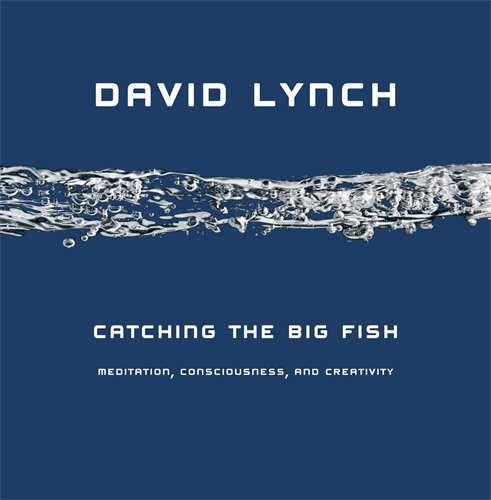
Catching the Big Fish: Meditation, Consciousness, and Creativity
by David Lynch
Rating: 3.8 ⭐
• 4 recommendations ❤️
Where do ideas come from?In Catching the Big Fish, internationally acclaimed filmmaker David Lynch provides a rare window into his methods as an artist, his personal working style, and the immense creative benefits he has experienced from the practice of meditation.Lynch describes the experience of "diving within" and "catching" ideas like fish - and then preparing them for television or movie screens, and other mediums in which he works, such as painting, music, and design. Lynch writes for the first time about his more than three-decade commitment to Transcendental Meditation and the difference it has made in his creative process.In brief chapters, Lynch explains the development of his ideas - where they came from, how he grasps them, and which ones appeal to him the most. He specifically discusses how he puts his thoughts into action and how he engages with others around him. Finally, he considers the self and the surrounding world - and how the process of "diving within" that has so deeply affected his own work can directly benefit others.Catching the Big Fish comes as a revelation to the legion of fans who have longed to better understand Lynch's personal vision. And it is equally intriguing to those who wonder how they can nurture their own creativity.

In this memoir, David Lynch - co-creator of Twin Peaks and writer and director of groundbreaking films like Eraserhead, The Elephant Man, Blue Velvet and Mulholland Drive - opens up about a lifetime of extraordinary creativity, the friendships he has made along the way and the struggles he has faced - sometimes successful, sometimes not - to bring his projects to fruition.Part-memoir, part-biography, Room to Dream interweaves Lynch's own reflections on his life with the story of those times, as told by Kristine McKenna, drawing from extensive and explosive interviews with ninety of Lynch's friends, family members, actors, agents, musicians and collaborators. Lynch responds to each recollection and reveals the inner story of the life behind the art.

David Lynch erupted onto the cinema landscape in 1977 with Eraserhead, establishing himself as one of the most original and imaginative directors at work in contemporary cinema. Over the course of his career, he has remained true to a vision of the innocent lost in darkness and confusion, balancing hallucination and surrealism with a sense of Americana that is as pure and simple as his compelling storylines. In this volume, Lynch speaks openly about his films as well as about his lifelong commitment to painting, his work in photography, his television projects, and his musical collaborations with Angelo Badalamenti.

An unforgettable, in-depth tour of the town that captured America's imagination. This one-of-a-kind guide includes everything from Norma Jenning's cherry pie recipe to the type of tree the Log Lady's log is from to the Double R. Diner's Specials for the Week. Fully illustrated with photographs, line drawings, and color maps.

Sitting on Death Row, awaiting execution for the murder of his wife, Fred Madison experiences a shattering headache. The next day, a dazed and confused Pete Dayton is found in Madison's cell. Dayton has no memory of how he came to be there. Madison has gone missing. What follows may be reality or it may be part of a highly organized hallucination that Fred Madison is undergoing. Lost Highway refuses to yield its secrets readily. It communicates, not just through words, but through images and - most of all - through the mental states these words and images conjure up.

New in paperback, this revelatory book features rarely seen multimedia works by the revered cult filmmaker David Lynch showing how he applies his powerful imagination and visual language across genres.David Lynch has always been in the spotlight as a filmmaker, directing some of the most iconic movies ever made, but as a visual artist, he is less widely known. Lynch delights in the physicality of painting and likes to stimulate all the senses in his work. This new paperback edition brings together Lynch's paintings, photography, drawings, sculpture and installation, and stills from his films. Many of these works reveal the dark underpinnings behind Lynch's often-macabre movies. Others explore his fascination with texture and collage. Throughout, Lynch's characteristic style--surreal, stylish, and even humorous--shines through. An introduction by music journalist and Lynch biographer Kristine McKenna, along with a thought- provoking essay by curator Stijn Huijts, offers fascinating new information and perspectives on Lynch's life and career. This book reveals an unexplored facet of Lynch's oeuvre and affirms that he is as brilliant a visual artist as he is a filmmaker.

A collection of the controversial film director's private paintings, photographs, and fiction, made public here for the first time, offers a new glimpse into the disturbed, perverse imagination behind such movies as Blue Velvet. 15,000 first printing.

The first major collection of artwork by the acclaimed movie director David Lynch.Spanning a period of forty years, David Lynch's widely respected films and television series include Eraserhead, The Elephant Man, Blue Velvet, Twin Peaks, Lost Highway , and Mulholland Drive . However, his prolific visual art production, which began even before his films, has rarely been seen.This catalogue of his artistic output, published on the occasion of a large-scale exhibition at the Fondation Cartier in Paris, covers a wide variety of painting, photography, drawings, sculpture, furniture, music, and "moving pictures." His art echoes his films in theme and aesthetic, yet offers viewers a fresh and more intimate glimpse into his singular universe. The book also contains several essays that analyze his artworks, as well as a conversation with Lynch, interviewed within the context of the show. 469 illustrations in color.

David Lynch hizo historia en la televisión de los noventa. Twin Peaks se convirtió en un fenómeno de masas que mantuvo a los espectadores en vilo. Ahora, veinticinco años después, tras el abrupto final de la segunda temporada, regresamos a Twin Peaks con una tercera entrega. Pero Twin Peaks ya no es un simple escenario para una serie, un pueblo más de la América profunda, sino un lugar mítico, una auténtica mitología moderna. Y el retorno a ese lugar no es una coda ni un homenaje, sino la confirmación de un clásico. También es la oportunidad, a través de este libro, de volver a aquellos bosques y a aquel café, la ocasión para pensar qué hizo de Twin Peaks un relato televisivo revolucionario y cómo se ha convertido en el estreno más esperado en muchos años. Para ello contamos con el propio David Lynch, que nos relata cómo surgió y cómo se hizo Twin Peaks, con todo detalle y con anécdotas tan inverosímiles como reales. También nos acompaña David Chase, creador de Los Soprano, que nos habla de la influencia de la serie de Lynch sobre los mafiosos de Nueva Jersey y sus sueños. A continuación, uno de nuestros cineastas más internacionales, Nacho Vigalondo, escribe sobre el desconocido final alternativo de Twin Peaks y la importancia que tuvo en su cine, y Michel Chion, máximo especialista mundial en la obra de Lynch, nos propone un inmejorable umbral para analizar los diferentes temas de esta producción. De ello se ocuparán los demás autores de este volumen, que abordan de manera ágil y lúcida la relación de la serie con la filosofía, la naturaleza, la historia, lo salvaje o el mal. Bienvenido, de nuevo, a Twin Peaks.

Tutti prima o poi desiderano entrare dentro la mente di un artista, scoprire quali esperienze lo hanno segnato, quali pensieri lo attraversano. In "Essere artisti" è possibile farlo: David Lynch ci porta con sé nell’universo di sogni e visioni che anima il suo immaginario, quello che ha ispirato film come “Mulholland Drive” e “Strade perdute”. Tra aneddoti e riflessioni paradossali, il regista di “Twin Peaks” ci racconta la sua infanzia «fin troppo felice», il suo legame profondo con la musica e la pittura, gli autori che lo hanno maggiormente influenzato. Queste pagine ci consentono di scoprire, in modo inedito, la vita di un artista outsider come Lynch, ma soprattutto ci permettono di comprendere il lavoro che si nasconde dietro la creazione di un’opera d’arte. Perché il successo, «diavolo seducente», ci raggiunge in modo misterioso, ma per diventare un vero artista quello che conta è abitare il sottile confine tra intuizione e ispirazione. E su quella linea costruire le proprie idee.

David Lynch erupted onto the cinema landscape in 1977 with Eraserhead, establishing himself as one of the most original and imaginative directors at work in contemporary cinema. Over the course of his career, he has remained true to a vision of the innocent lost in darkness and confusion, balancing hallucination and surrealism with a sense of Americana that is as pure and simple as his compelling storylines. In this volume, Lynch speaks openly about his films as well as about his lifelong commitment to painting, his work in photography, his television projects, and his musical collaborations with Angelo Badalamenti.

Lynch wrote two treatments of Blue Velvet at Warner's request, but they hated both versions. The film was dead until Lynch finished filming Dune, and was asked by producer Dino De Laurentiis if he had any projects he'd like to do next. Lynch pitched Blue Velvet, with one condition - he had to have final cut. De Laurentiis agreed in exchange for Lynch cutting his salary and the film's budget in half. Some questioned if it was wise for De Laurentiis to fund Lynch's new project given the poor box office of Dune. According to Paul Sammon, former DEG vice-president of special promotions, "Dino appreciated David's rather bizarre gifts, and besides, Dino's system was to always presell everything through his European and international contacts, so he never lost money."5With the project a go again, Lynch completed two more drafts of the screenplay to Blue Velvet. The catalyst to set the story in motion was Jeffrey's discovery of the ear. "The ear is like a canal, it's like an opening, little egress into another place...It's like a ticket to another world that he finds. If he hadn't found it, you know, he would have kept on going home and that would have been the end of it. But the fascination with this, once found, drew him into something he needed to discover and work through."6 It was on the fourth and final draft that Lynch finally came up with the ending to the film. "I was sitting on a bench and I suddenly remembered this dream that I'd had the night before. And the dream was the ending to Blue Velvet. The dream gave me (...SPOILER/ ending scenes...). I don't know how it happened, but I just had to plug and change a few things to bring it all together."7

As his Spring, 2007 Cartier Foundation retrospective, The Air Is On Fire , made plain to all who saw it, the talents of the great American filmmaker David Lynch reach far beyond his acknowledged achievements in he is also an excellent painter, draughtsman and photographer. His photography to date has fallen loosely into four distinct genres or nudes (Bacon-esque images of digitally distorted Victorian photographs), still lifes (spark-plugs, dental machinery), industrial landscapes--and snowmen. Published to accompany the Cartier show, this compact volume brings together Lynch's black-and-white photographs of snowmen, all taken in the suburbs of his hometown of Boise, Idaho. Exhibiting his characteristic preoccupation with ominous beauty as these ephemeral folk sculptures decompose in front of snow-covered tract houses, Lynch pays scant regard to the cheerier and more genial properties of snowmen, and indeed some of these images will remind viewers of the shadowy black-and-white tones of Lynch's 1977 film Eraserhead . "If you have some shadow or darkness in the frame, then your mind can travel in there and dream," he has stated. Lynch's indisputable gift for teasing out the sinister flipsides of the props and rituals of American suburbia is beautifully evidenced in this small, gift-worthy book.

Mind Mapping for Writers: How to Improve Productivity, Overcome Procrastination, Get Creative and Finish Writing That Book - Using Your Lack of Focus as an Advantage
by David Lynch
Rating: 3.6 ⭐
Mind Mapping For Writers takes a look at one of the most useful tools ever devised for increasing productivity without impacting creativity. Using mind mapping and its associated techniques, writers will find it easy to deal with both the big picture and the minute detail of their stories without getting lost in details.By the time you finish this book you will understand how to jump from one part of your book to another without getting lost, determine whether more work is needed on characterization, and how to work on a book without it being work - no more procrastination!If you have ever suffered from an attention deficit, found it difficult to remember what was happening where in your book, or found that tying all the strings of your story together was causing you concern - this book will help you to completely eliminate all doubt as to your abilities and propel you forward as a successfully published author.This book will not take a long time to read and more importantly, understand. It is a concise and to the point analysis without any fluff or filler. It also includes screenshots and recommendations for free mind mapping tools.

Ronnie Rocket OR The Absurd Mystery of The Strange Forces of Existence screenplay
by David Lynch
Rating: 4.3 ⭐
Ronnie Rocket OR The Absurd Mystery of The Strange Forces of Existence screenplayWritten by David LynchUnmarked draft

This exceptional book brings together a collection of more than 500 drawings dating from the 1960s by the renowned American film director, David Lynch. His artwork was first unveiled to the general public in March 2007 by the Fondation Cartier pour l'art contemporain in Paris. Sketches, watercolors, or simple doodles, this vast collection--carefully preserved by David Lynch since his adolescence and regularly used by him as a source of inspiration--offers a unique glimpse into the artist's creative process. Using all types of media, from Post-it notes to napkins, the diverse and complementary nature of these drawings allows us to dive into David Lynch's universe and establish links between his artwork and his films. This exceptional book, both in terms of its format and the quality of reproduction of the works, is a co-publication between the Fondation Cartier pour l'art contemporain and Steidl.

Tough Tucker Carlson an astonishing account of the life of America’s most controversial and beloved political commentator.Readers can follow his transition from an Ivy League bowtie Republican elitist to a populist seeker of truth burning bridges he had built with establishment Republicans.This jarring transformation reveals itself through stories of Tucker Carlson’s exploits not previously known to the public. His exit from Fox News has only increased the public’s appetite for Carlson’s hard-hitting video essays.You must read this book to capture the authentic Tucker Carlson and to discover his future plans to expose continuing government hypocrisy.Concerned patriotic Americans are reading Tough Tucker Carlson to keep up-to-date with one of the last few uncompromised voices in American media. This book includes analysis of Tucker's interview with the Chief of the Capitol Police on Twitter and Tucker's Trump interview that stole the audience thunder from Fox News opposite Fox's Republican Presidential debate.

Draft Dated - August 8, 1991

In 2004, Chief Superintendent Tom Bryne, receives news that Donald O’Sullivan, an insane mainland criminal he arrested, is scheduled for release and is returning to the Island. Fearing the criminal’s intentions, the formidable chief wrestles with his demons when forced back into a world he vowed to leave behind in order to expose the truth. When secrets are unearthed, Tom struggles to protect his family, putting further strain on his turbulent relationship with his daughter. With a volatile Chief Superintendent and a disturbed criminal now together on an island, a tragedy is inevitable.

All things broken may be made whole again…Sivino Spallic has always believed this to be so, but when his once idyllic world is suddenly torn apart, he will question everything he once thought to be true.The breaking begins with the arrival of the Nylacci - foul creatures of myth that descend on the villages of the Three Realms, razing and ravaging all they encounter. Their arrival is the doing of Cehron Cen Kohr, a renegade faerae of great power and increasing madness, who, with the enigmatic Shepherd, has herded the creatures to this land for unthinkable purposes.Separated from family and friends, Sivino and his companions find themselves on a perilous path that leads them ever further from those they love. With the assistance of Lomin, the mysterious village recluse, and Niamh, a faerae whose history is inextricable intertwined with the Realms and its inhabitants, they will deal with conflicts for which they are unprepared, in a land both unfamiliar and treacherous.The hardest part of piecing together that which is broken, Sivino will realize, is that he’ll have to start with himself.

Ce livre presente les films de Lynch en montrant que ce qui deja apparait dans Eraserhead trouve son prolongement et sa cle dans Inland Empire (en passant bien sur par les autres oeuvres et tout particulierement Lost Highway et Mulholland Drive). A savoir que, comme dans le premier chapitre de Matiere et memoire de Bergson, le monde est image, de sorte que la matiere se resout dans son image et que ce sont les images qui, par leur agencement, creent le monde dans sa solidite et sa fixite. Avec cette difference les films de Lynch fonctionnent sur un desenchainement des images qui, d'abord, donne une matiere a l'image, et, ensuite, a pour consequence que ces images entrent sans cesse dans de nouvelles series. Ces series produisent non seulement des mondes possibles qui annulent le privilege d'un monde reel (parce que celui-ci devient un monde possible au meme titre que les autres), mais elles entremelent aussi differentes temporalites ou la linearite passe-present-futur disparait.

Official catalog of the exhibition of the same name that was held at the Laforet Museum Harajuku, Japan from November 10 to December 2, 2012.
A beautifully oversized catalogue (11 3/4" by 11 3/4") of works by the renowned artist and director, David Lynch. Splendid reproductions of 114 Limited Edition Monoprints, Collographs and Photogravure prints. Includes an extensive interview with David Lynch discussing his artwork with Kristine McKenna. "Since Tandem Press was founded in 1987, it has been our main objective to invite artists working in other media to experiment with printmaking. We were extraordinarily honored that David Lynch agreed to come. To invite David Lynch was not so unusual because he trained as a painter, but he is best known for his internationally acclaimed film career." From the introduction by Paula McCarthy Panczenko.