
Donald A. Norman
Donald Arthur Norman is an American researcher, professor, and author. Norman is the director of The Design Lab at University of California, San Diego. He is best known for his books on design, especially The Design of Everyday Things. He is widely regarded for his expertise in the fields of design, usability engineering, and cognitive science, and has shaped the development of the field of cognitive systems engineering. He is a co-founder of the Nielsen Norman Group, along with Jakob Nielsen. He is also an IDEO fellow and a member of the Board of Trustees of IIT Institute of Design in Chicago. He also holds the title of Professor Emeritus of Cognitive Science at the University of California, San Diego. Norman is an active Distinguished Visiting Professor at the Korea Advanced Institute of Science and Technology (KAIST), where he spends two months a year teaching. Much of Norman's work involves the advocacy of user-centered design. His books all have the underlying purpose of furthering the field of design, from doors to computers. Norman has taken a controversial stance in saying that the design research community has had little impact in the innovation of products, and that while academics can help in refining existing products, it is technologists that accomplish the breakthroughs. To this end, Norman named his website with the initialism JND (just-noticeable difference) to signify his endeavors to make a difference. See also Don Norman
28 Books Written

Even the smartest among us can feel inept as we fail to figure out which light switch or oven burner to turn on, or whether to push, pull, or slide a door. The fault, argues this ingenious—even liberating—book, lies not in ourselves, but in product design that ignores the needs of users and the principles of cognitive psychology. The problems range from ambiguous and hidden controls to arbitrary relationships between controls and functions, coupled with a lack of feedback or other assistance and unreasonable demands on memorization. The Design of Everyday Things shows that good, usable design is possible. The rules are simple: make things visible, exploit natural relationships that couple function and control, and make intelligent use of constraints. The goal: guide the user effortlessly to the right action on the right control at the right time.In this entertaining and insightful analysis, cognitive scientist Don Norman hails excellence of design as the most important key to regaining the competitive edge in influencing consumer behavior. Now fully expanded and updated, with a new introduction by the author, The Design of Everyday Things is a powerful primer on how—and why—some products satisfy customers while others only frustrate them.

Did you ever wonder why cheap wine tastes better in fancy glasses? Why sales of Macintosh computers soared when Apple introduced the colorful iMac? New research on emotion and cognition has shown that attractive things really do work better, as Donald Norman amply demonstrates in this fascinating book, which has garnered acclaim everywhere from Scientific American to The New Yorker.Emotional Design articulates the profound influence of the feelings that objects evoke, from our willingness to spend thousands of dollars on Gucci bags and Rolex watches, to the impact of emotion on the everyday objects of tomorrow.Norman draws on a wealth of examples and the latest scientific insights to present a bold exploration of the objects in our everyday world. Emotional Design will appeal not only to designers and manufacturers but also to managers, psychologists, and general readers who love to think about their stuff.

Why we don't really want simplicity, and how we can learn to live with complexity.If only today's technology were simpler! It's the universal lament, but it's wrong. In this provocative and informative book, Don Norman writes that the complexity of our technology must mirror the complexity and richness of our lives. It's not complexity that's the problem, it's bad design. Bad design complicates things unnecessarily and confuses us. Good design can tame complexity.Norman gives us a crash course in the virtues of complexity. Designers have to produce things that tame complexity. But we too have to do our part: we have to take the time to learn the structure and practice the skills. This is how we mastered reading and writing, driving a car, and playing sports, and this is how we can master our complex tools.Complexity is good. Simplicity is misleading. The good life is complex, rich, and rewarding—but only if it is understandable, sensible, and meaningful.

Donald A. Norman, a popular design consultant to car manufacturers, computer companies, and other industrial and design outfits, has seen the future and is worried. In this long-awaited follow-up to The Design of Everyday Things, he points out what’s going wrong with the wave of products just coming on the market and some that are on drawing boards everywhere-from “smart” cars and homes that seek to anticipate a user’s every need, to the latest automatic navigational systems. Norman builds on this critique to offer a consumer-oriented theory of natural human-machine interaction that can be put into practice by the engineers and industrial designers of tomorrow’s thinking machines. This is a consumer-oriented look at the perils and promise of the smart objects of the future, and a cautionary tale for designers of these objects-many of which are already in use or development.

Things That Make Us Smart: Defending Human Attributes In The Age Of The Machine
by Donald A. Norman
Rating: 3.9 ⭐
In Things That Make Us Smart, Donald A. Norman explores the complex interaction between human thought and the technology it creates, arguing for the development of machines that fit our minds, rather than minds that must conform to the machine.Humans have always worked with objects to extend our cognitive powers, from counting on our fingers to designing massive supercomputers. But advanced technology does more than merely assist with thought and memory—the machines we create begin to shape how we think and, at times, even what we value. Norman, in exploring this complex relationship between humans and machines, gives us the first steps towards demanding a person-centered redesign of the machines that surround our lives.

The Invisible Computer: Why Good Products Can Fail, the Personal Computer Is So Complex, and Information Appliances Are the Solution
by Donald A. Norman
Rating: 3.9 ⭐
From "Science Finds, Industry Applies, Man Conforms" (motto of the 1933 Chicago USA World's Fair)to "People Propose, Science Studies, Technology Conforms" (Donald Norman's person-centered motto for the twenty-first century). Technologies have a life cycle, says Donald Norman, and companies and their products must change as they pass from youth to maturity. Alas, the computer industry thinks it is still in its rebellious teenage years, exulting in technical complexity. Customers want change. They are ready for products that offer convenience, ease of use, and pleasure. The technology should be invisible, hidden from sight. In this book, Norman shows why the computer is so difficult to use and why this complexity is fundamental to its nature. The only answer, says Norman, is to start over again, to develop information appliances that fit people's needs and lives. To do this companies must change the way they develop products. They need to start with an understanding of user needs first, technology lastthe opposite of how things are done now.ContentsPreface1 Drop Everything You're Doing2 Growing Up: Moving from Technology-Centered to Human-Centered Products3 The Move to Information Appliances4 What's Wrong with the PC? 5 There Is No Magical Cure6 The Power of Infrastructure 7 Being Analog8 Why Is Everything So Difficult to Use?9 Human-Centered Development10 Want Human-Centered Development? Reorganize the Company11 Disruptive Technologies12 A World of Information AppliancesAppendix: Examples of Information AppliancesNotesReferencesIndex

Design for a Better World: Meaningful, Sustainable, Humanity Centered
by Donald A. Norman
Rating: 3.6 ⭐
How human behavior brought our world to the brink, and how human behavior can save us.The world is a mess. Our dire predicament, from collapsing social structures to the climate crisis, has been millennia in the making and can be traced back to the erroneous belief that the earth's resources are infinite. The key to change, says Don Norman, is human behavior, covered in the book's three major themes: meaning, sustainability, and humanity-centeredness. Emphasize quality of life, not monetary rewards; restructure how we live to better protect the environment; and focus on all of humanity. Design for a Better World presents an eye-opening diagnosis of where we've gone wrong and a clear prescription for making things better.Norman proposes a new way of thinking, one that recognizes our place in a complex global system where even simple behaviors affect the entire world. He identifies the economic metrics that contribute to the harmful effects of commerce and manufacturing and proposes a recalibration of what we consider important in life. His experience as both a scientist and business executive gives him the perspective to show how to make these changes while maintaining a thriving economy. Let the change begin with this book before it's too late.PART I Artificial1 Almost everything artificial has been designed2 Our artificial way of life is unsustainable3 Why History matters4 Precise -but artificial- measurements5 If technology got us into today's situation, maybe technology can get us out6 This book: Meaningful, sustainable, and humanity-centeredPART II Meaningful7 The need for meaning8 Measurement in the physical sciences9 Measuring what is important to people10 The Gross Domestic Product11 How did the world get into today's quandary12 Human behavior and economicsPART III Sustainable. Reverse and repair the harm done to the ecosystems of the world.14 How did the world get into today's quandary?15 Sustainability has multiple components and implications16 Design Products, Sustainability, and the Circular Economy17 The practical difficulties of Implementing Circular Design18 Sustainable, robust, and resilient Systems19 People's understanding of systems20 Working with complex sociotechnical systems21 It's not too latePART IV Humanity Centered22 Moving from humans to humanity23 Democratizing design and development24 People designing for themselves25 DesignX: An approach to large, complex systems26 Where incrementalism (muddling through) fails27 Incremental modular design28 When large, multidisciplinary projects are necessary29 Dealing with scale30 Design: Necessary but not sufficientPART V Human Behavior31 Why change is difficult32 People will mobilize for a common goal33 What must change34 The dominance of technology35 The future of technologyPART VI Action36 What can be done?37 What can we do?38 The major points of this book AcknowledgmentsNotes
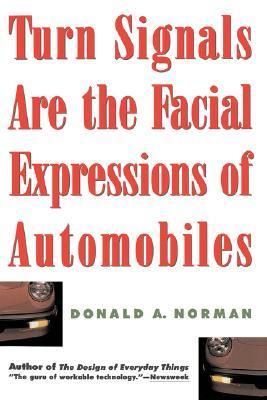
From water faucets and airplane cockpits to the concept of ”real time” and the future of memory, this wide-ranging tour through technology provides a new understanding of how the gadgets that surround us affect our lives. Donald Norman explores the plight of humans living in a world ruled by a technology that seems to exist for its own sake, oblivious to the needs of the people who create it. Turn Signals is an intelligent, whimsical, curmudgeonly look at our love/hate relationship with machines, as well as a persuasive call for the humanization of modern design.
Learning and Memory is a lively introduction to modern concepts in cognitive psychology, focusing on the processes of human memory and learning. Donald A. Norman describes this book as a "tour of selected problems in the study of learning and memory, problems that have absorbed my own efforts for a good many years."

Memory and attention: an introduction to human information processing
by Donald A. Norman
Rating: 3.6 ⭐
Book by Norman

Libro usado en buenas condiciones, por su antiguedad podria contener señales normales de uso

A design for anyone the design basic principle of the - recognition scientist?

Book by Norman, Donald A., etc.
Human Information Processing: An Introduction to Psychology
by Donald A. Norman
Energy prices and externalities
by Donald A. Norman
Slips of the Mind and an Outline for a Theory of Action
by Donald A. Norman
Errors in Human Performance.
by Donald A. Norman
Attention to action: Willed and automatic control of behavior
by Donald A. Norman
Non-hazardous solid waste landfill policy
by Donald A. Norman
Gateway: Volume 2 Number 2
by Donald A. Norman
Computation Via Direct Manipulation
by Donald A. Norman
Why Alphabetic Keyboards Are Not Easy to Use: Keyboard Layout Doesn't Much Matter
by Donald A. Norman

Cognitive organization and learning
by Donald A. Norman
Leather Binding on Spine and Corners with Golden Leaf Printing on round Spine (extra customization on request like complete leather, Golden Screen printing in Front, Color Leather, Colored book etc.) Reprinted in 2022 with the help of original edition published long back [1973]. This book is printed in black & white, sewing binding for longer life, printed on high quality Paper, re-sized as per Current standards, professionally processed without changing its contents. As these are old books, we processed each page manually and make them readable but in some cases some pages which are blur or missing or black spots. If it is multi volume set, then it is only single volume. We expect that you will understand our compulsion in these books. We found this book important for the readers who want to know more about our old treasure so we brought it back to the shelves. Hope you will like it and give your comments and suggestions. - English, Pages 52. COMPLETE LEATHER WILL COST YOU EXTRA US$ 25 APART FROM THE LEATHER BOUND BOOKS. {FOLIO EDITION IS ALSO AVAILABLE.} Cognitive organization and learning / Donald A. Norman 1973 [Leather Bound] by Norman, Donald A
Memory and Cognitive Science
by Donald A. Norman

Fukuzatsusa to tomoni kurasu : Dezain no chōsen
by Donald A. Norman

テクノロジー・ウォッチング―ハイテク社会をフィールドワークする
by Donald A. Norman
Cognitive Psychology: Overview Unit 31-32
by Donald A. Norman