
Colin B. Bailey
25 Books Written
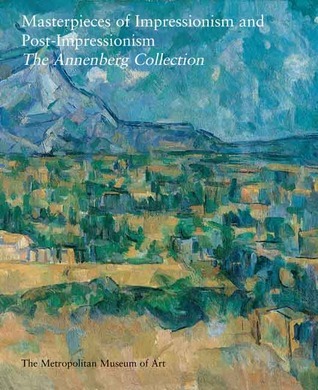
Masterpieces of Impressionism and Post-Impressionism: The Annenberg Collection
by Colin B. Bailey
Rating: 5.0 ⭐
• 2 recommendations ❤️
The Walter and Leonore Annenberg Collection of Impressionist and Post-Impressionist paintings, watercolors, and drawings constitutes one of the most remarkable groupings of avant-garde works of art from the mid-19th to the early 20th century ever given to The Metropolitan Museum of Art. A revised and expanded edition of the 1989 publication Masterpieces of Impressionism and The Annenberg Collection , this handsome volume presents more than fifty masterworks by such luminaries as Manet, Degas, Morisot, Renoir, Monet, Cézanne, Gauguin, Van Gogh, Picasso, and Matisse, accompanied by elucidating texts and a wealth of comparative illustrations.Published in association with The Metropolitan Museum of Art

Building the Frick Collection: An introduction to the House and Its Collections
by Colin B. Bailey
Rating: 3.7 ⭐
First in-depth study of the famous home of Henry Clay Frick, which houses The Frick Collection in New York City. Contains new scholarship by the Chief Curator of the Frick Collection.

Pierre-Auguste Renoir (1841–1919) was one of the most audacious and original landscape artists of his age. Throughout his career, he continually experimented with composition, light, paint handling, and pictorial structure in innovative new ways that challenged traditional––and contemporary––painting. He taught himself by working side-by-side with fellow Impressionist masters Monet and Sisley, and in the 1870s began to define his distinctive landscape style of quick, silvery brushstrokes. By the end of the decade he had moved decisively in the direction of unparalleled painterly freedom.This stunning book is the first to examine Renoir’s landscape art in depth, tracing its evolution from the beginning of his career through his Impressionist period and the early 1880s, when he began to incorporate new landscape motifs and new levels of coloristic intensity in paintings after traveling to Algeria and Italy. With over 200 illustrations, a detailed chronology, and bibliography, the book includes essays by highly distinguished scholars that discuss the range and importance of these works and present many fresh discoveries. They also place Renoir’s landscapes in the overall context of the genre in 19th-century France, revealing how his experiments were radical and––in ways that have not yet been fully acknowledged––influential on the later development of modern art.

Filled with spectacular reproductions of the great Austrian painter's best work, this celebration of the visionary Vienna artist traces his influence on modernism and post-modernism.

This sumptuously illustrated book is the first devoted exclusively to Renoir`s portraiture, and in it are gathered the finest examples of the portraits he painted during each period of his prolific career. In these delightful paintings Renoir creates uniquely endearing and enduring images of pleasure, comfort, and prosperity.

The Age of Watteau, Chardin, and Fragonard: Masterpieces of French Genre Painting
by Colin B. Bailey
Rating: 4.0 ⭐
This inviting book offers the first comprehensive survey of French genre painting of the eighteenth century, from Watteau’s fêtes galantes to Boilly’s paintings of modern Parisian life. Showcasing 113 works, the book illustrates the variety and the vitality of genre painting throughout the period. Leading English, German, French, and American scholars shed light on the development of genre painting, its interpretation, its collectors, and its enormous appeal. Here are gathered together masterpieces by such eminent artists as Watteau, Lancret, de Troy, Chardin, Boucher, Greuze, Fragonard, Robert, and Boilly. The wide range of their featured works encompasses military scenes, theatrical subjects, hunt pictures, pastorals, domestic life, moral pictures, fishwife subjects, paintings for the boudoir, and panoramas of the Enlightenment in landscapes and townscapes. Each work is thoroughly catalogued, and an appendix lists all genre paintings shown in the eighteenth-century Salons.

This richly illustrated volume reveals the intriguing story behind the commission, rejection, and rehousing of Jean- Honoré Fragonard’s Progress of Love, a series of 14 paintings considered by many to be the artist’s masterpiece. Fragonard (1732–1806) completed four large canvases for the comtesse du Barry’s chateau at Louveciennes, but they were replaced and returned to the artist. In 1790 Fragonard moved them to his cousin’s house in Grasse, and over the course of the year painted two further large-scale works and 18 additional panels.With 140 colour images of the Fragonard paintings, details, shots of the room, plans, original sketches, and other comparative images, author Colin Bailey explores the commission of the four main panels, their original arrangement at Louveciennes and the possible reasons for their rejection. Equally enthralling is the history of how the paintings were rediscovered in the late 19th century and how they eventually came to The Frick Collection.

Jean-Baptiste Greuze's diminutive picture of a rosy-cheeked girl wringing out her linen was one of fourteen works that he exhibited at the Salon of 1761 in Paris. This lively and engrossing book traces the history of the Getty Museum's painting, compares the work to other laundresses paintedby Greuze, and explores social mores and the role of artists model in the eighteenth century. It provides an enlightening account of Greuze's life and times and the influences on his work.


Magnificent full-length impressionist paintings by Renoir capture the glamorous spirit and refined milieu of Belle Époque Paris Throughout his long working life, Pierre-Auguste Renoir (1841-1919) produced large-format portraits and subject pictures. From the mid-1870s to the mid-1880s—the decade of Impressionism—his vertical, grand-scale canvases were among the artist's most daring and ambitious presentations of contemporary life and fashion. Today they rank among the masterpieces of Impressionism. This stunning book offers fresh insights into Renoir's complex ambitions as a young artist, when he submitted works to both the avant-garde impressionist exhibitions and the official Salon. While painting in the new impressionist style, Renoir remained committed to the full-length format, which was eschewed by most of his fellow impressionists as too traditional. This format afforded Renoir the opportunity to devote himself to the heroic painting of everyday life, and also to linger on the finest details of his figures' fashionable costumes and accessories. Ten iconic canvases display the rich variety of this artist's painterly technique. They reveal the sheer virtuosity of his brushwork in creating silk, lace, mink, and taffeta for shimmering ball gowns, sumptuous furs, chic Parisian day dresses, and glamorous theatrical costumes. These paintings capture the faces and fashions of Renoir's Paris.Extensively illustrated, the book draws upon contemporary criticism, literature, and archival documents to explore the motivation behind Renoir's full-length figure paintings, and technical studies of the canvases shed new light on the artist's working methods.Published to accompany the exhibition held from February 7 through May 13, 2012 at The Frick Collection.

During the final decades of the ancient regime, prominent collectors in Paris commissioned and collected French paintings of the period, works by Greuze, Fragonard, David and others that together comprised 'l'Ecole Francoise' - the French School. In this book, an art historian discusses six of these collectors and the collections they assembled, showing that private patronage in this period was revitalized by this patriotic desire to collect contemporary art.Colin B. Bailey explains why a taste for modern art emerged at this time and how it was encouraged and fostered. Examining the relationship between artist and patron, he discusses the degree of influence these enlightened patrons and collectors expected to exercise when new works were being commissioned. Bailey shows that collectors of eighteenth-century French painting seem not to have made rigid distinctions between the various genres or styles of the Academy's practitioners. Instead, history paintings and genre paintings - both rococo and neo-classical - were exhibited proudly on their walls as superb examples of the French School.

This beautifully illustrated publication celebrates the first-ever restoration of the exterior of J. Pierpont Morgan's Library ― the historic heart of the Morgan Library & Museum. Morgan's Library has stood as a significant cultural landmark ever since it was commissioned by J. Pierpont Morgan for personal use at the start of the 20th century. Its transition to a public institution in the twenties has lent to an even greater flood of admiration and patronage, by both local and international audiences. The elegant design by Charles Follen McKim stands as one of the finest examples of neoclassical architecture in the United States, significant for its distinctive Italian Renaissance style and its opulent interior period rooms. The site has been designated both a National Historic Landmark and a New York City landmark, and it is listed on the National Register of Historic Places. The book, following on the heels of the completed restoration, will punctuate this latest milestone in the building's storied history.

Published on the occasion of the exhibition Watteau to Degas: French Drawings from the Frits Lugt Collection, held at The Frick Collection, New York, from October 6, 2009 to January 10, 2010, and at the Institut Néerlandais, Paris, from February 11 to April 11, 2010.Author(s): Colin B. Bailey, Susan Grace Galassi, Mària van Berge-GerbaudThe Frick Collection, New York in association with Fondation Custodia, Paris336 pages

The greatest authors of the ancient world including Ovid and Virgil told sensuous and compelling tales of the lives and loves of the gods. Centuries later, the leading French painters of the 18th century, including Watteau, Boucher, and Fragonard used these stories as subjects for charming, poignant, and passionate paintings. Many are among the most ambitious and beautiful paintings of the period. Some 65 of these have never been seen before in America, are included in this exhibition, which was first shown in Paris.

The Frick Collection, New York
by Colin B. Bailey
Sotherby's Preview- April/May 1989
by Colin B. Bailey

The First Painters of the King: French Royal taste from Louis XIV to the Revolution
by Colin B. Bailey

Francois Boucher: His Circle and Influence
by Colin B. Bailey

Paysages de Renoir 1865-1883
by Colin B. Bailey
Les paysages de Renoir, 1865-1883 nous entraîne dans l’univers du maître français de l’impressionnisme à travers une soixantaine de tableaux comptant parmi les plus beaux de l’artiste et appartenant à des musées ou des collections privées du monde entier. Pierre-Auguste Renoir (1841-1919) a peint des paysages tout au long de sa longue carrière, mais la majeure partie de ses innovations date de sa période impressionniste. Inspiré par Corot, Courbet et les peintres de Barbizon, il définit très vite, dès le milieu des années 1860, son propre style caractérisé par des coups de pinceau libres et déliés, expérimentant les couleurs et la structure parallèlement à Monet, Sisley et Pissarro, mais suivant un parcours souvent plus indépendant. Cet ouvrage révèle Renoir comme l’un des plus original et audacieux peintres de paysages de sa génération, un artiste qui a su aller au-delà de ses contemporains, vers une liberté sans précédent en peinture. Il analyse sa peinture, des toiles avant-gardistes impressionnistes des années 1870 jusqu’à ses travaux innovants du début des années 1880, lorsque ses voyages en Algérie et en Italie lui inspirent alors des niveaux de couleur de plus en plus intenses.Richement illustré, ce livre montre que les expérimentations de Renoir sur les formes et les couleurs ont été si innovantes qu’elles ne sont pas encore toutes reconnues aujourd’hui et explore leur influence sur le développement de l’art moderne. Les conclusions sur la chronologie de son œuvre font de Les paysages de Renoir, 1865-1883 l’évaluation la plus exhaustive menée sur cet aspect important de son travail.
Masterpieces of European Painting from the Norton Simon Museum
by Colin B. Bailey

gabriel de saint-aubin 1724-1780 (francais)
by Colin B. Bailey

Gustav Klimt : Vers un renouvellement de la modernité
by Colin B. Bailey

Les amours des dieux: la peinture mythologique de Watteau à David
by Colin B. Bailey