Loading genres...
Explore the best books about Military History genre.

MacArthur, the public figure, the private man, the soldier-hero whose mystery and appeal created a uniquely American legend, portrayed in a biography that will challenge the cherished myths of admirers and critics alike.IllustrationsPreamble: ReveilleFirst Call Ruffles & Flourishes (1880-1917)Charge (1917-1918) Call to Quarters (1919-1935)To the Colors (1935-1941)Retreat (1941-1942) The Green War (1942-1944)At High Port (1944-1945)Last Post (1945-1950) Sunset Gun (1950-1951) Recall (1951) Taps (1951-1964)AcknowledgmentsNotesBibliographyCopyright AcknowledgmentsIndex

Undoubtedly the most famous work of military history of the nineteenth century, Edward S. Creasy's Fifteen Decisive Battles of the World has been read and re-read for close to 150 years. It is not only the authoritative account of each battle that makes Creasy's work such a classic--it is his command of narrative, his interest in human struggle, his profound deductions as to effects of the battles, and his striving after truth. Furthermore, his selections seem as wise and well-considered today as when Fifteen Decisive Battles first appeared in 1851: Nobody since has made better ones, nor given us better accounts.Apart from the scholarship and literary skill of Creasy's book, there is another reason it has Creasy was essentially fair-minded. He had been a judge, and when he became England's great military critic and historian, he maintained a thoroughly judicial attitude. He was not a British partisan, nor French, nor German--he was a cosmopolitan observer of great events.Out of 2300 years, Creasy only found fifteen battles which he called decisive in the highest sense. He chose them not for the number of killed and wounded, nor for their status in myth and lore, but because they fundamentally changed the course of world history. In doing so, he made his book a miniature military history of the western world, a classic that will repay continued study for generations to come, as it has for generations.

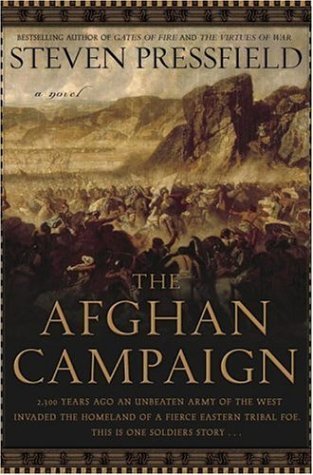
2,300 years ago an unbeaten army of the West invaded the homeland of a fierce Eastern tribal foe. This is one soldier’s story . . .The bestselling novelist of ancient warfare returns with a riveting historical novel that re-creates Alexander the Great’s invasion of the Afghan kingdoms in 330 b.c.In a story that might have been ripped from today’s combat dispatches, Steven Pressfield brings to life the confrontation between an invading Western army and fierce Eastern warriors determined at all costs to defend their homeland. Narrated by an infantryman in Alexander’s army, The Afghan Campaign explores the challenges, both military and moral, that Alexander and his soldiers face as they embark on a new type of war and are forced to adapt to the methods of a ruthless foe that employs terror and insurgent tactics. An edge-of-your-seat adventure, The Afghan Campaign once again demonstrates Pressfield’s profound understanding of the hopes and desperation of men in battle and of the historical realities that continue to influence our world.

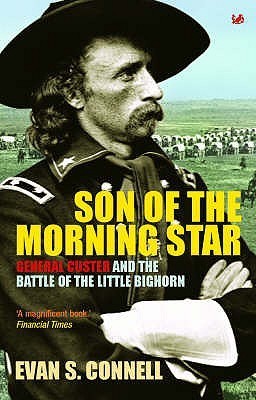
On a scorching June Sunday in 1876, thousands of Indian warriors - Lakota Sioux, Cheyenne and Arapaho - converged on a grassy ridge above the valley of Montana's Little Bighorn River. On the ridge five companies of United States cavalry - 262 soldiers, comprising officers and troopers - fought desperately but hopelessly. When the guns fell silent, no soldier - including their commanding officer, Lt Col. George Armstrong Custer - had survived. Custer's Last Stand is among the most enduring events in American history - 130 years after the fact, books continue to be written and people continue to argue about even the most basic details surrounding the Little Bighorn. Evan S. Connell, whom Joyce Carol Oates has described as 'one of our most interesting and intelligent American writers', wrote what continues to be the most reliable - and compulsively readable - account of the subject. Connell makes good use of his research and novelist's eye for story and detail to re-create the heroism, foolishness and savagery of this crucial chapter in the history of the West.

On October 3, 1993, about a hundred U.S. soldiers were dropped by helicopter into a teeming market in the heart of Mogadishu, Somalia, to abduct two top lieutenants of a Somali warlord. The action was supposed to take an hour. Instead, they spent a long and terrible night fighting thousands of armed Somalis. By morning, eighteen Americans were dead, and more than seventy badly injured. Mark Bowden's gripping narrative is one of the most exciting accounts of modern war ever written--a riveting story that captures the heroism, courage and brutality of battle.

European expansion was essentially a commercial venture, and the fact that the colonial policies of the European powers had a very pronounced mercantile tone was the natural consequence of the basic motives behind that expansion. A wide range of opportunities magnetized the Europeans overseas. Religion supplied the pretext and gold was the motive.

What if there had been no American War of Independence? What if Hitler had invaded Britain? What if Kennedy had lived? What if Russia had won the Cold War? Niall Ferguson, author of the highly acclaimed The Pity of War, leads the charge in this historically rigorous series of separate voyages into “imaginary time” and provides far-reaching answers to these intriguing questions.Ferguson’s brilliant 90-page introduction doubles as a manifesto on the methodology of counter-factual history. His equally masterful afterword traces the likely historical ripples that would have proceeded from the maintenance of Stuart rule in England. This breathtaking narrative gives us a convincing, detailed “alternative history” of the West—from the accession of “James III” in 1701, to a Nazi-occupied England, to a U.S. Prime Minister Kennedy who lives to complete his term.

In WAR Sebastian Junger gives breathtaking insight into the truths of war-- the fear, the honor, and the trust among men. His on-the-ground account follows a single platoon through a 15-month tour of duty in the most dangerous outpost in Afghanistan's Korengal Valley. Through the experiences of these young men at war, he shows what it means to fight, to serve, and to face down mortal danger on a regular basis.

General David Petraeus is the most transformative leader the American military has seen since the generation of Marshall. In the New York Times bestseller All In , military expert Paula Broadwell examines Petraeus's career, his intellectual development as a military officer, and his impact on the U.S. military. Afforded extensive access by General Petraeus, his mentors, his subordinates, and his longtime friends, Broadwell reported on the front lines of fighting and at the strategic command in Afghanistan to chronicle the experiences of this American general as they were brought to bear in the terrible crucible of war. All In draws on hundreds of hours of exclusive interviews with Petraeus and his top officers and soldiers to tell the inside story of this commander's development and leadership in war.When Petraeus assumed command in Afghanistan in July 2010, the conflict looked as bleak as at any moment in America's nine years on the ground there. Petraeus's defining idea—counterinsurgency—was immediate put to its most difficult the hard lessons learned during the surge in Iraq were to be applied in a radically different theater. All In examines the impact in Afghanistan of new counterinsurgency as well as counterterrorism strategies through the commands of several Petraeus protégés.Broadwell examines his evolution as a solider from his education at West Point in the wake of Vietnam to his earlier service in Central America, Haiti, Kuwait, Bosnia, and Iraq. All In also documents the general's role in the war in Washington, going behind the scenes of negotiations during policy reviews of the war in Afghanistan in Congress, the Pentagon, and the White House.Broadwell ultimately appraises Petraeus's impact on the entire U.S. Thanks to this man's influence, the military is better prepared to fight using a comprehensive blend of civil-military activities. As America surveys a decade of untraditional warfare, this much is The career of General David Petraeus profoundly shaped our military and left an indelible mark on its rising leaders.

NEW YORK TIMES BESTSELLER • SELECTED BY THE ECONOMIST AS ONE OF THE BEST BOOKS OF THE YEARRemarkable as it may seem today, there once was a time when the president of the United States could pick up the phone and ask the president of General Motors to resign his position and take the reins of a great national enterprise. And the CEO would oblige, no questions asked, because it was his patriotic duty. In Freedom’s Forge, bestselling author Arthur Herman takes us back to that time, revealing how two extraordinary American businessmen—automobile magnate William Knudsen and shipbuilder Henry J. Kaiser—helped corral, cajole, and inspire business leaders across the country to mobilize the “arsenal of democracy” that propelled the Allies to victory in World War II. “Knudsen? I want to see you in Washington. I want you to work on some production matters.” With those words, President Franklin D. Roosevelt enlisted “Big Bill” Knudsen, a Danish immigrant who had risen through the ranks of the auto industry to become president of General Motors, to drop his plans for market domination and join the U.S. Army. Commissioned a lieutenant general, Knudsen assembled a crack team of industrial innovators, persuading them one by one to leave their lucrative private sector positions and join him in Washington, D.C. Dubbed the “dollar-a-year men,” these dedicated patriots quickly took charge of America’s moribund war production effort. Henry J. Kaiser was a maverick California industrialist famed for his innovative business techniques and his can-do management style. He, too, joined the cause. His Liberty ships became World War II icons—and the Kaiser name became so admired that FDR briefly considered making him his vice president in 1944. Together, Knudsen and Kaiser created a wartime production behemoth. Drafting top talent from companies like Chrysler, Republic Steel, Boeing, Lockheed, GE, and Frigidaire, they turned auto plants into aircraft factories and civilian assembly lines into fountains of munitions, giving Americans fighting in Europe and Asia the tools they needed to defeat the Axis. In four short years they transformed America’s army from a hollow shell into a truly global force, laying the foundations for a new industrial America—and for the country’s rise as an economic as well as military superpower. Featuring behind-the-scenes portraits of FDR, George Marshall, Henry Stimson, Harry Hopkins, Jimmy Doolittle, and Curtis LeMay, as well as scores of largely forgotten heroes and heroines of the wartime industrial effort, Freedom’s Forge is the American story writ large. It vividly re-creates American industry’s finest hour, when the nation’s business elites put aside their pursuit of profits and set about saving the world.Praise for Freedom’s Forge “A rambunctious book that is itself alive with the animal spirits of the marketplace.”— The Wall Street Journal “A rarely told industrial saga, rich with particulars of the growing pains and eventual triumphs of American industry . . . Arthur Herman has set out to right an injustice: the loss, down history’s memory hole, of the epic achievements of American business in helping the United States and its allies win World War II.”— The New York Times Book Review “Magnificent . . . It’s not often that a historian comes up with a fresh approach to an absolutely critical element of the Allied victory in World War II, but Pulitzer finalist Herman . . . has done just that.”— Kirkus Reviews (starred review)

In this strikingly original and groundbreaking book, Dr. Shay examines the psychological devastation of war by comparing the soldiers of Homer's Iliad with Vietnam veterans suffering from post-traumatic stress disorder. Although the Iliad was written twenty-seven centuries ago it has much to teach about combat trauma, as do the more recent, compelling voices and experiences of Vietnam vets.

The Battle of Stalingrad was not only the psychological turning point of World War II: it also changed the face of modern warfare. Historians and reviewers worldwide have hailed Antony Beevor's magisterial Stalingrad as the definitive account of World War II's most harrowing battle. In August 1942, Hitler's huge Sixth Army reached the city that bore Stalin's name. In the five-month siege that followed, the Russians fought to hold Stalingrad at any cost; then, in an astonishing reversal, encircled and trapped their Nazi enemy. This battle for the ruins of a city cost more than a million lives. Stalingrad conveys the experience of soldiers on both sides, fighting in inhuman conditions, and of civilians trapped on an urban battlefield. Antony Beevor has interviewed survivors and discovered completely new material in a wide range of German and Soviet archives, including prisoner interrogations and reports of desertions and executions. As a story of cruelty, courage, and human suffering, Stalingrad is unprecedented and unforgettable.

8-page b/w photo section 6 x 9 "Last Reflections on a War stands as a fine representative sample of Fall's work as a whole; as such, it is nearly as personal as an autobiography. . . . That the collection includes an excellent outline of Vietnamese history, a discussion of the basic issues of the war, and an emotive picture of Vietnam, 1967, speaks to the depth of Fall's knowledge and the scope of his concerns."-Frances FitzGerald, from a 1968 review Bernard B. Fall was 40 years old when he was killed by a booby trap in northern South Vietnam on February 21, 1967. By the time of his death he had already authored seven books on Vietnam, most notably Street Without Joy (0-8117-1700-3), an indictment of French intrusion into Indochina and a warning to American forces just beginning their involvement. Last Reflections on a War, first published shortly after Dr. Fall's death, is a tribute to his life's It contains the only known autobiographical account of his life, several previously unpublished articles, notes for "Street Without Joy Revisited," and transcripts of Dr. Fall's tape recordings, including his last recorded words. Bernard Fall was born in France and fought with the French Resistance during World War II. Later, as professor of International Relations and accomplished author, he was one of the most influential academic critics of U.S. policy in Vietnam.

“The best damned book from the point of view of the infantrymen who fought there.”― Army Times Among the best books ever written about men in combat, The Killing Zone tells the story of the platoon of Delta One-six, capturing what it meant to face lethal danger, to follow orders, and to search for the conviction and then the hope that this war was worth the sacrifice. The book includes a new chapter on what happened to the platoon members when they came home.

The news-breaking book that has sent shockwaves through the Bush White House, Ghost Wars is the most accurate and revealing account yet of the CIA's secret involvement in al-Qaeda's evolution. It won the Pulitzer Prize in 2005.Prize-winning journalist Steve Coll has spent years reporting from the Middle East, accessed previously classified government files and interviewed senior US officials and foreign spymasters. Here he gives the full inside story of the CIA's covert funding of an Islamic jihad against Soviet forces in Afghanistan, explores how this sowed the seeds of Bin Laden's rise, traces how he built his global network and brings to life the dramatic battles within the US government over national security. Above all, he lays bare American intelligence's continual failure to grasp the rising threat of terrorism in the years leading to 9/11 - and its devastating consequences.

If the Marines are “the few, the proud,” Recon Marines are the fewest and the proudest. Nathaniel Fick’s career begins with a hellish summer at Quantico, after his junior year at Dartmouth. He leads a platoon in Afghanistan just after 9/11 and advances to the pinnacle—Recon— two years later, on the eve of war with Iraq. His vast skill set puts him in front of the front lines, leading twenty-two Marines into the deadliest conflict since Vietnam. He vows to bring all his men home safely, and to do so he’ll need more than his top-flight education. Fick unveils the process that makes Marine officers such legendary leaders and shares his hard-won insights into the differences between military ideals and military practice, which can mock those ideals.In this deeply thoughtful account of what it’s like to fight on today’s front lines, Fick reveals the crushing pressure on young leaders in combat. Split-second decisions might have national consequences or horrible immediate repercussions, but hesitation isn’t an option. One Bullet Away never shrinks from blunt truths, but ultimately it is an inspiring account of mastering the art of war.

In The Pity of War, Niall Ferguson makes a simple and provocative argument: that the human atrocity known as the Great War was entirely England's fault. Britain, according to Ferguson, entered into war based on naïve assumptions of German aims—and England's entry into the war transformed a Continental conflict into a world war, which they then badly mishandled, necessitating American involvement. The war was not inevitable, Ferguson argues, but rather the result of the mistaken decisions of individuals who would later claim to have been in the grip of huge impersonal forces. That the war was wicked, horrific, inhuman,is memorialized in part by the poetry of men like Wilfred Owen and Siegfried Sassoon, but also by cold statistics. More British soldiers were killed in the first day of the Battle of the Somme than Americans in the Vietnam War; indeed, the total British fatalities in that single battle—some 420,000—exceeds the entire American fatalities for both World Wars. And yet, as Ferguson writes, while the war itself was a disastrous folly, the great majority of men who fought it did so with enthusiasm. Ferguson vividly brings back to life this terrifying period, not through dry citation of chronological chapter and verse but through a series of brilliant chapters focusing on key ways in which we now view the First World War.For anyone wanting to understand why wars are fought, why men are willing to fight them, and why the world is as it is today, there is no sharper nor more stimulating guide than Niall Ferguson's The Pity of War.

One of the most popular and controversial historians of the twentieth century, who made his subject accessible to millions, A.J.P. Taylor caused a storm of outrage with this scandalous bestseller. Debunking what were accepted truths about the Second World War, he argued provocatively that Hitler did not set out to cause the war as part of an evil master plan, but blundered into it partly by accident, aided by the shortcomings of others. Fiercely attacked for vindicating Hitler, A.J.P. Taylor's stringent re-examination of the events preceding the Nazi invasion of Poland on 1st September 1939 opened up new debate, and is now recognized as a brilliant and classic piece of scholarly research. 'Highly original and penetrating...No one who has digested this enthralling work will ever be able to look at the period again in quite the same way'

An essential collection of the wartime writings and diary of World War II German Field Marshal Erwin Rommel, edited with commentary by one of the great military theorists of our timeWhen Erwin Rommel died-by forced suicide at Hitler's command-he left behind in various ingenious hiding places the papers that recorded the story of his dramatic career and the exact details of his masterly campaigns. It was his custom to dictate each evening a running narrative of the day's events and, after each battle, to summarize its course and the lessons to be learned from it. He wrote, almost daily, intimate and outspoken letters to his wife in which his private feelings and-after the tide had turned-forebodings found expression. To this is added by Rommel's son Manfred the story of the field marshall's last weeks and the final day when he was given the choice of an honorable suicide or an ignominious trial for treason. An engrossing human document and a rare look at the mind of the "Desert Fox," The Rommel Papers throws an interesting light on the Axis alliance and on the inner workings of Hitler's high command.

Winner of the Pulitzer Prize, Lewis B. Puller, Jr.'s memoir is a moving story of a man born into a proud military legacy who struggles to rebuild his world after the Vietnam War has shattered his body and his ideals. Raised in the shadow of his father, Marine General Lewis B. "Chesty" Puller, a hero of five wars, young Lewis went to Southeast Asia at the height of the Vietnam War and served with distinction as an officer in his father's beloved Corps. But when he tripped a booby-trapped howitzer round, triggering an explosion that would cost him his legs, his career as a soldier ended, and the battle to reclaim his life began.

As a newly commisioned Captain of a veteran Army regiment, MacDonald's first combat was war at its most hellish--the Battle of the Bulge. In this plain-spoken but eloquent narrative, we live each minute at MacDonald's side, sharing in all of combat's misery, terror, and drama. How this green commander gains his men's loyalty in the snows of war-torn Europe is one of the great, true, unforgettable war stories of all time.

A. J. P. Taylor was one of the most acclaimed and uncompromising historians of the twentieth century. In this clear, lively and now-classic account of the First World War, he tells the story of the conflict from the German advance in the West, through the Marne, Gallipoli, the Balkans and the War at Sea to the offensives of 1918 and the state of Europe after the war. Containing photographs and maps, this an essential history of the war that 'cut deep into the consciousness of modern man'.

An epic narrative documents the fight to create the United States of America, beginning with the deterioration in relations between England and her colonists and chronicling the events of the American Revolution until the last British flag was lowered during the siege of Yorktown. Reprint.

From commanding the Horse Marines in Peking to leading the Inchon landing, Puller became a legend in his own time. Now, Davis offers a no-holds-barred biography of this courageous hero--the only marine in history ever to win five Navy Crosses.

WHY DO COMPETENT ARMIES FAIL? Why did the American-led coalition in Iraq fail to wage a classic counter-insurgency campaign for so long after the fall of Baghdad? Why was the sophisticated Israeli intelligence service so thoroughly surprised by the onslaught of combined Arab armies during the Yom Kippur War of 1973? How did a dozen German U-boats manage to humiliate the U.S. Navy for nine months in 1942 -- sinking an average of 650,000 tons of shipping monthly? What made the 1915 British-led invasion of Gallipoli one of the bloodiest catastrophes of the First World War?Since it was first published in 1990, Military Misfortunes has become the classic analysis of the unexpected catastrophes that befall competent militaries. Now with a new Afterword discussing America's missteps in Iraq, Somalia, and the War on Terror, Eliot A. Cohen and John Gooch's gripping battlefield narratives and groundbreaking explanations of the hidden factors that undermine armies are brought thoroughly up to date. As recent events prove, Military Misfortunes will be required reading for as long as armies go to war.

The coup is the most frequently attempted method of changing government & the most successful. Coup d'Etat outlines the mechanism of the coup & analyzes the conditions political, military & social, that gives rise to it. In doing so, the book sheds much light on societies where power does indeed grow out of the barrel of a gun & the role of law is a concept little understood.List of FiguresList of TablesForewordPreace to the 1st EditionPreface to the 1979 EditionWhat is the coup d'état? --When is a coup d'état possible?The strategy of the coup d'étatThe planning of the coup d'étatThe execution of the coup d'étatAppendicesTablesIndex

Very simply, this publication describes the philosophy which distinguishes the U.S. Marine Corps. The thoughts contained here are not merely guidance for action in combat but a way of thinking. This publication provides the authoritative basis for how we fight and how we prepare to fight. This book contains no specific techniques or procedures for conduct. Rather, it provides broad guidance in the form of concepts and values. It requires judgment in application. Warfighting is not meant as a reference manual; it is designed to be read from cover to cover. Its four chapters have a natural progression. Chapter 1 describes our understanding of the characteristics, problems, and demands of war. Chapter 2 derives a theory about war from that understanding. This theory in turn provides the foundation for how we prepare for war and how we wage war, chapters 3 and 4, respectively.

Michael Kelly, who traveled through every country touched by the Gulf War, moved about as a free-lance journalist for the Boston Globe and the New Republic. He traveled through much of the Middle East during and after the Gulf War, watching the bombs fall on Baghdad and waiting for Scuds in Tel Aviv, inspecting the gold bathroom fixtures installed by the U.S. Army Corps of Engineers in the empire's temporary palace in Kuwait City and dining with Kurdish chieftains in remote mountain camps in northern Iran.When ground war in Iraq began, Michael Kelly rented a four-wheel-drive Nissan Safari, borrowed some camouflage pants and gas-proof rubber gloves, and set off across the desert, where he was mistaken for an advance party of the American Army and surrendered to by a batch of bewildered Iraqi soldiers. In Kuwait after the liberation, he listened to horrific tales of torture and rape, and walked among the grotesque remains of the bombed-out retreating Iraqi army on the roads home. Later, when Kelly went to Kurdistan, he hiked into forbidden Iraqi territory and then traveled with various guerrilla bands at war with Saddam Hussein. He got out of Iraq by swimming across a river into Turkey in the company of smugglers. Kelly's story is witty, moving, and dramatically compelling, at once superb reporting and the very best travel writing. By avoiding the human story of the Gulf War, he has given us an indispensable piece of our history."Restrained yet explosive dispatches from the front . . . Kelly demonstrates a keen eye for the telling detail, a well-developed sense of irony . . . courage and enterprise."--National Magazine

Rodrigo Diaz, the legendary warrior-knight of eleventh-century Castile known as El Cid, is remembered today as the Christian hero of the Spanish crusade who waged wars of re-conquest for the triumph of the Cross over the Crescent. He is still honored in Spain as a national hero for liberating the fatherland from the occupying Moors. Yet, as Richard Fletcher shows in this award-winning book, there are many contradictions between eleventh-century reality and the mythology that developed with the passing years.By placing El Cid in a fresh, historical context, Fletcher shows us an adventurous soldier of fortune who was of a type, one of a number of "cids," or "bosses," who flourished in eleventh-century Spain. But the El Cid of legend--the national hero--was unique in stature even in his lifetime. Before his death El Cid was already celebrated in a poem written in tribute of the conquest of Almería; posthumously he was immortalized in the great epic Poema de Mio Cid and became the centerpiece for countless other works of literature. When he died in Valencia in 1099, he was ruler of an independent principality he had carved for himself in Eastern Spain. Rather than the zealous Christian leader many believe him to have been, Rodrigo emerges in Fletcher's study as a mercenary equally at home in the feudal kingdoms of northern Spain and the exotic Moorish lands of the south, selling his martial skills to Christian and Muslim alike. Indeed, his very title derives from the Arabic word sayyidmeaning "lord" or "master." And as there was little if any sense of Spanish nationhood in the eleventh century, he can hardly be credited for uniting a medieval Spanish nation.In this ground-breaking inquiry into the life and times of El Cid, Fletcher disentangles fact from myth to create a striking portrait of an extraordinary man, clearly showing how and why legend transformed him into something he was not during his life. A fascinating journey through a turbulent epoch, The Quest for El Cid is filled with the excitement of discovery, and will delight readers interested not only in Spanish history and literature, but those who want to understand how myth can shape our perception of history.

This is the untold story of the small group of men who have devised the plans and shaped the policies on how to use the Bomb. The book (first published in 1983) explores the secret world of these strategists of the nuclear age and brings to light a chapter in American political and military history never before revealed.

Europe in 1618 was divided between Protestants and Catholics, and Bourbon and Hapsburg, as well as empires, kingdoms, and countless independent states. After angry Protestants tossed three representatives of the Holy Roman Empire out the window of the royal castle in Prague, world war spread from Bohemia with similar abandon and relentless persistence, destroying European powers from Spain to Sweden as they marched on the contested soil of Germany. Fanatics, speculators, and ordinary people found themselves trapped in a nightmarish world of famine, disease, and seemingly unstoppable destruction. The Thirty Years War was a turning point in the making of modern Europe and the modern world: out of it came the system of nation-states that remains fundamental to international law. C.V. Wedgwood's magisterial book is the only comprehensive account of the war in English, as well as a triumph of scholarship and literature. Includes maps and charts.

Called “everything a twentieth century war memoir could possibly be” by The New York Times, this national bestseller by Colonel David H. Hackworth presents a vivid and powerful portrait of a life of patriotism.From age fifteen to forty David Hackworth devoted himself to the US Army and fast became a living legend. In 1971, however, he appeared on television to decry the doomed war effort in Vietnam. With About Face, he has written what many Vietnam veterans have called the most important book of their generation.From Korea to Berlin, from the Cuban missile crisis to Vietnam, Hackworth’s story is that of an exemplary patriot, played out against the backdrop of the changing fortunes of America and the American military. It is also a stunning indictment of the Pentagon’s fundamental misunderstanding of the Vietnam conflict and of the bureaucracy of self-interest that fuelled the war.Heavily decorated Colonel Hackworth narrates his life and disillusionment during Vietnam. Orphaned before he was a year old, he found his home at 15 in the Army. In Korea, heroism gave him a battlefield commission at 20. During the Cold War, he commanded at the Berlin wall and the Cuban missile crises. But Vietnam led to disillusionment.


In January 1969, one of the most promising young lieutenant colonels the US Army had ever seen touched down in Vietnam for his second tour of duty, which would turn out to be his most daring and legendary.David H. Hackworth had just completed the writing of a tactical handbook for the Pentagon, and now he had been ordered to put his counterguerilla-fighting theories into action. He was given the morale-drained 4/39th—a battalion of poorly led draftees suffering the Army's highest casualty rate and considered its worst fighting battalion. Hackworth's hard-nosed, inventive and inspired leadership quickly turned the 4/39th into Vietnam's valiant and ferocious Hardcore Recondos.Drawing on interviews with soldiers from the Hardcore Battalion conducted over the past decade by his partner and coauthor, Eilhys England, Hackworth takes readers along on their sniper missions, ambush actions, helicopter strikes and inside the quagmire of command politics. With Steel My Soldiers' Hearts, Hackworth places the brotherhood of the 4/39th into the pantheon of our nation's most heroic warriors.

For nearly two and a half millennia, Alexander the Great has loomed over history as a legend–and an enigma. Wounded repeatedly but always triumphant in battle, he conquered most of the known world, only to die mysteriously at the age of thirty-two. In his day he was revered as a god; in our day he has been reviled as a mass murderer, a tyrant as brutal as Stalin or Hitler.Who was the man behind the mask of power? Why did Alexander embark on an unprecedented program of global domination? What accounted for his astonishing success on the battlefield? In this luminous new biography, the esteemed classical scholar and historian Guy MacLean Rogers sifts through thousands of years of history and myth to uncover the truth about this complex, ambiguous genius.Ascending to the throne of Macedonia after the assassination of his father, King Philip II, Alexander discovered while barely out of his teens that he had an extraordinary talent and a boundless appetite for military conquest. A virtuoso of violence, he was gifted with an uncanny ability to visualize how a battle would unfold, coupled with devastating decisiveness in the field. Granicus, Issos, Gaugamela, Hydaspes–as the victories mounted, Alexander’s passion for conquest expanded from cities to countries to continents. When Persia, the greatest empire of his day, fell before him, he marched at once on India, intending to add it to his holdings.As Rogers shows, Alexander’s military prowess only heightened his exuberant sexuality. Though his taste for multiple partners, both male and female, was tolerated, Alexander’s relatively enlightened treatment of women was nothing short of revolutionary. He outlawed rape, he placed intelligent women in positions of authority, and he chose his wives from among the peoples he conquered. Indeed, as Rogers argues, Alexander’s fascination with Persian culture, customs, and sexual practices may have led to his downfall, perhaps even to his death.Alexander emerges as a charismatic and surprisingly modern figure–neither a messiah nor a genocidal butcher but one of the most imaginative and daring military tacticians of all time. Balanced and authoritative, this brilliant portrait brings Alexander to life as a man, without diminishing the power of the legend.

Europe was in the throes of World War II, and when America joined the fighting, Ernie Pyle went along. Long before television beamed daily images of combat into our living rooms, Pyle’s on-the-spot reporting gave the American public a firsthand view of what war was like for the boys on the front. Pyle followed the soldiers into the trenches, battlefields, field hospitals, and beleaguered cities of Europe. What he witnessed he described with a clarity, sympathy, and grit that gave the public back home an immediate sense of the foot soldier’s experience. There were really two wars, John Steinbeck wrote in Time one of maps and logistics, campaigns, ballistics, divisions, and regiments and the other a "war of the homesick, weary, funny, violent, common men who wash their socks in their helmets, complain about the food, whistle at Arab girls, or any girls for that matter, and bring themselves through as dirty a business as the world has ever seen and do it with humor and dignity and courage—and that is Ernie Pyle’s war." This collection of Pyle’s columns detailing the fighting in Europe in 1943–44 brings that war—and the living, and dying, moments of history—home to us once again.

For eight years, far beyond the battlefields of Vietnam and the glare of media distortions, American Green Berets fought a deadly secret war in Laos and Cambodia under the aegis of the top secret Military Assistance Command Vietnam – Studies and Observations Group, or SOG. Go deep into the jungle with five SOG warriors surrounded by 10,000 enemy troops as they stack up the dead to build a human buttress for protection. Witness a Green Beret, shot in the back four times and left for dead, who survives to fight savagely against incredible odds to complete his missions. Shudder as an enemy soldier touches a Green Beret’s boot in the dark of night. Cringe as a Sergeant on SOG Spike Team Louisiana calls in an air strike on his team to break an enemy’s wave attack. A team member dies instantly, and a Green Beret has an out-of-body experience as he watches his leg get blown off. “As the commander of SOG, I can say that “Across the Fence” accurately reflects why the secret war was hazardous for our troops and so deadly for the enemy. – Major General John K. Singlaub (U. S. Army Ret.) Black Ops told with the terrifying clarity that only one who was there can tell it. – W.E.B. Griffin & William E. Butterworth IV

To Rule the Waves tells the extraordinary story of how the British Royal Navy allowed one nation to rise to a level of power unprecedented in history. From the navy's beginnings under Henry VIII to the age of computer warfare and special ops, historian Arthur Herman tells the spellbinding tale of great battles at sea, heroic sailors, violent conflict, and personal tragedy -- of the way one mighty institution forged a nation, an empire, and a new world.This P.S. edition features an extra 16 pages of insights into the book, including author interviews, recommended reading, and more.

Winston Churchill was not only a statesman and leader of historic proportions, he also possessed substantial literary talents. These two factors combine to make The Gathering Storm a unique work. The first volume of Churchill's memoirs, this selection is broken into two parts. The first, From War to War, consists of Churchill's critical observations on the settlement of World War I and its place in the causes of the Second World War. The second volume contains letters and memoranda from the British government--of which Churchill was part--as the country plunged unprepared into war. This stands as the best of history: written as it was made, by the man who made it.

Colin Powell is the embodiment of the American dream. He was born in Harlem to immigrant parents from Jamaica. He knew the rough life of the streets. He overcame a barely average start at school. Then he joined the Army. The rest is history—Vietnam, the Pentagon, Panama, Desert Storm—but a history that until now has been known only on the surface. Here, for the first time, Colin Powell himself tells us how it happened, in a memoir distinguished by a heartfelt love of country and family, warm good humor, and a soldier's directness.My American Journey is the powerful story of a life well lived and well told. It is also a view from the mountaintop of the political landscape of America. At a time when Americans feel disenchanted with their leaders. General Powell's passionate views on family, personal responsibility, and, in his own words, "the greatness of America and the opportunities it offers" inspire hope and present a blueprint for the future. An utterly absorbing account, it is history with a vision.

With candor and ennobling power, McCain tells a story that, in the words of Newsweek, 'makes the other presidential candidates look like pygmies'.John McCain is one of the most admired leaders in the United States government, but his deeply felt memoir of family and war is not a political one and ends before his election to Congress. With candor and ennobling power, McCain tells a story that, in the words of Newsweek, "makes the other presidential candidates look like pygmies."John McCain learned about life and honor from his grandfather and father, both four-star admirals in the U.S. Navy. This is a memoir about their lives, their heroism, and the ways that sons are shaped and enriched by their fathers. John McCain's grandfather was a gaunt, hawk-faced man known as Slew by his fellow officers and, affectionately, as Popeye by the sailors who served under him. McCain Sr. played the horses, drank bourbon and water, and rolled his own cigarettes with one hand. More significant, he was one of the navy's greatest commanders, and led the strongest aircraft carrier force of the Third Fleet in key battles during World War II. John McCain's father followed a similar path, equally distinguished by heroic service in the navy, as a submarine commander during World War II. McCain Jr. was a slightly built man, but like his father, he earned the respect and affection of his men. He, too, rose to the rank of four-star admiral, making the McCains the first family in American history to achieve that distinction. McCain Jr.'s final assignment was as commander of all U.S. forces in the Pacific during the Vietnam War. It was in the Vietnam War that John McCain III faced the most difficult challenge of his life. A naval aviator, he was shot down over Hanoi in 1967 and seriously injured. When Vietnamese military officers realized he was the son of a top commander, they offered McCain early release in an effort to embarrass the United States. Acting from a sense of honor taught him by his father and the U.S. Naval Academy, McCain refused the offer. He was tortured, held in solitary confinement, and imprisoned for five and a half years. Faith of My Fathers is about what McCain learned from his grandfather and father, and how their example enabled him to survive those hard years. It is a story of three imperfect men who faced adversity and emerged with their honor intact. Ultimately, Faith of My Fathers shows us, with great feeling and appreciation, what fathers give to their sons, and what endures.

“Slaughter vividly conveys the reality of combat during World War II in his book with sweeping passages that literally place his reader on the battlefield beside him.”Belvoir EagleBefore D-Day, regular army soldiers called the National Guardsmen of Virginias 116th Infantry Regiment "Home Nannies," "Weekend Warriors," and worse. On June 6, 1944, on Omaha Beach, however, these proud Virginians who carried the legacy of the famed Stonewall Brigade showed the regular army and the world what true valor really was. In this moving World War II memoir, the author captures the day-to-day comings and goings of GI Joe from pre--World War II National Guard days through induction, training, deployment overseas, and more training.All leads up to D-Day and Normandy on June 6, 1944, when Sergeant Bob Slaughter came across Omaha Beach with Company D of the 116th Infantry. This was the beginning of his long march to final victory in Europe, a march that would take him and his fellow soldiers of Company D, at least those who survived, to Holland, the Bulge, and on into Germany itself.

The Command of the Ocean describes with unprecedented authority and scholarship the rise of Britain to naval greatness, and the central place of the Navy and naval activity in the life of the nation and government. Based on the author's own research in a dozen languages over more than a decade, it describes not just battles, voyages, and cruises but also how the Navy was manned, supplied, fed, and, above all, how it was financed and directed.N. A. M. Rodger provides convincing reassessments of such famous figures as Pepys, Hawke, Howe, and St. Vincent. The very particular and distinct qualities of Nelson and Collingwood are illuminatingly contrasted, and the world of officers and men who make up the originals of Jack Aubrey and Horatio Hornblower is brilliantly brought to life. Rodger's comparative view of other navies—French, Dutch, Spanish, and American—allows him to make a fresh assessment of the qualities of the British.

Stephen E. Ambrose draws upon extensive sources, an unprecedented degree of scholarship, and numerous interviews with Eisenhower himself to offer the fullest, richest, most objective rendering yet of the soldier who became president. He gives us a masterly account of the European war theater and Eisenhower's magnificent leadership as Allied Supreme Commander. Ambrose's recounting of Eisenhower's presidency, the first of the Cold War, brings to life a man and a country struggling with issues as diverse as civil rights, atomic weapons, communism, and a new global role. Along the way, Ambrose follows the 34th President's relations with the people closest to him, most of all Mamie, his son John, and Kay Summersby, as well as Franklin D. Roosevelt, Winston Churchill, Charles de Gaulle, Harry Truman, Nixon, Dulles, Khrushchev, Joe McCarthy, and indeed, all the American and world leaders of his time. This superb interpretation of Eisenhower's life confirms Stephen Ambrose's position as one of our finest historians.

Uncovering the secrets behind the 1968 My Lai massacre in Vietnam, this is “a brutal, cautionary tale that serves as a painful reminder of the worst that can happen in war.”—Chicago Tribune.

They were called Easy Company—but their mission was never easy. Immortalized as the Band of Brothers, they suffered 150% casualties while liberating Europe—an unparalleled record of bravery under fire. Dick Winters was their commander—"the best combat leader in World War II" to his men. This is his story—told in his own words for the first time.On D-Day, Dick Winters parachuted into France and assumed leadership of the Band of Brothers when their commander was killed. He led them through the Battle of the Bulge and into Germany, by which time each member had been wounded. They liberated an S.S. death camp from the horrors of the Holocaust and captured Berchtesgaden, Hitler's alpine retreat. After briefly serving during the Korean War, Winters was a highly successful businessman. Made famous by Stephen Ambrose's book Band of Brothers—and the subsequent award-winning HBO miniseries—he is the object of worldwide adulation, Beyond Band of Brothers is Winters's memoir—based on his wartime diary—but it also includes his comrades' untold stories. Virtually all this material is being released for the first time. Only Winters was present from the activation of Easy Company until the war's end. Winner of the Distinguished Service Cross, only he could pen this moving tribute to the human spirit.

When Liddell Hart's Sherman was first published in 1929, it received encomiums such as these:"A masterly performance . . . one of the most thorougly dignified, one of the most distinguished biographies of the year." -- Henry Steele Commager, New York Herald Tribune"It is not often that one comes upon a biography that is so well done as this book. Nearly every page bears evidence of the fact that it is the product of painstaking and exhaustive research, mature thought, and an expert understanding of the subject in hand . . ." -- Saturday Review of Literature

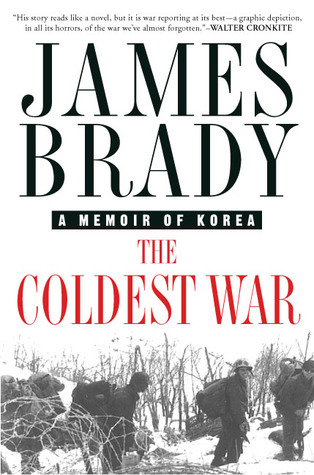
James Brady's The Coldest War is a powerful and moving memoir of the Korean War.America's "forgotten war" lasted just thirty-seven months, yet 54,246 Americans died in that time -- nearly as many as died in ten years in Vietnam. On the fiftieth anniversary of this devastating conflict, James Brady tells the story of his life as a young marine lieutenant in Korea.In 1947, seeking to avoid the draft, nineteen-year-old Jim Brady volunteered for a Marine Corps program that made him a lieutenant in the reserves on the day he graduated college. He didn't plan to find himself in command of a rifle platoon three years later facing a real enemy, but that is exactly what happened after the Chinese turned a so-called police action into a war.The Coldest War vividly describes Brady's rapid education in the realities of war and the pressures of command. Opportunities for bold offensives sink in the miasma of trench warfare; death comes in fits and starts as too-accurate artillery on both sides seeks out men in their bunkers; constant alertness is crucial for survival, while brutal cold and a seductive silence conspire to lull soldiers into an often fatal stupor.The Korean War affected the lives of all Americans, yet is little known beyond the antics of "M*A*S*H." Here is the inside story that deserves to be told, and James Brady is a powerful witness to a vital chapter of our history.

In 1942, Leo Marks left his father's famous bookshop, 84 Charing Cross Road, and went off to fight the war. He was twenty-two. Soon recognized as a cryptographer of genius, he became head of communications at the Special Operations Executive (SOE), where he revolutionized the codemaking techniques of the Allies and trained some of the most famous agents dropped into occupied Europe, including "the White Rabbit" and Violette Szabo. As a top codemaker, Marks had a unique perspective on one of the most fascinating and, until now, little-known aspects of the Second World War. Writing with the narrative flair and vivid characterization of his famous screenplays, Marks gives free rein to his keen sense of the absurd and his wry wit, resulting in a thrilling and poignant memoir that celebrates individual courage and endeavor, without losing sight of the human cost and horror of war.

Uses recently declassified documents to survey the American use of covert warfare against terrorists and adversarial states

As a veteran campaigner, the Byzantine emperor Maurice (582-602) compiled a unique and influential handbook intended for the field commander. In this first complete English translation, the Strategikon is an invaluable source not only for early Byzantine history but for the general history of the art of war. Describing in detail weaponry and armor, daily life on the march or in camp, clothing, food, medical care, military law, and titles of the Byzantine army of the seventh century, the Strategikon offers insights into the Byzantine military ethos. In language contemporary, down-to-earth, and practical, the text also provides important data for the historian, and even the ethnologist, including eyewitness accounts of the Persians, Slavs, Lombards, and Avars at the frontier of the Empire.

Book discusses the days of General Marshall and his experiences where he served in Europe and the Pacific as a combat officer in the Second World War.

"A MUST READ . . . This book [is] one of the best on that war in Korea. . . . A wonderful account of common, decent men in desperate action."--LeatherneckDuring the early, uncertain days of the Korean War, World War II veteran and company lieutenant Joe Owen saw firsthand how the hastily assembled mix of some two hundred regulars and raw reservists hardened into a superb Marine rifle company known as Baker-One-Seven.As comrades fell wounded and dead around them on the frozen slopes above Korea's infamous Chosin Reservoir, Baker-One-Seven's Marines triumphed against the relentless human-wave assaults of Chinese regulars and took part in the breakout that destroyed six to eight divisions of Chinese regulars. COLDER THAN HELL paints a vivid, frightening portrait of one of the most horrific infantry battles ever waged."Thoroughly gripping . . . The Chosin action is justly called epical; Lieutenant Owen tells the tale of the men who made it so."--Booklist

The good news is that most soldiers are loath to kill. But armies have developed sophisticated ways of overcoming this instinctive aversion. And contemporary civilian society, particularly the media, replicates the army's conditioning techniques, and, according to Lt. Col. Dave Grossman's thesis, is responsible for our rising rate of murder among the young.Upon its initial publication, On Killing was hailed as a landmark study of the techniques the military uses to overcome the powerful reluctance to kill, of how killing affects soldiers, and of the societal implications of escalating violence. Now, Grossman has updated this classic work to include information on 21st-century military conflicts, recent trends in crime, suicide bombings, school shootings, and more. The result is a work certain to be relevant and important for decades to come.

Originally published in 1958 and now available for the first time in paperback, this classic of modern military history tells the exciting true story of the fall of St. L", the first major objective of the invading American armies in Normandy in June of 1944. Although St. L" was intended to be taken within days of the landing, stubborn German resistance postponed the town's fall until July 18. The author describes the bloody action that took place in the thirty days in between as he led his battalion dubbed "The Indestructible Clay Pigeons" through the daunting combat.

The German Generals who survived Hitler's Reich talk over World War II with Capt. Liddell Hart, noted British miltary strategist and writer. They speak as professional soldiers to a man they know and respect. For the first time, answers are revealed to many questions raised during the war. Was Hitler the genius of strategy he seemed to be at first? Why did his Generals never overthrow him? Why did Hitler allow the Dunkirk evacuation? Current interest, of course, focuses on the German Generals' opinion of the Red Army as a fighting force. What did the Russians look like from the German side? How did we look? And what are the advantages and disadvantages under which dictator-controlled armies fight? In vivid, non-technical language, Capt. Liddell Hart reports these interviews and evaluates the vital military lessons of World War II.

"It is a magnificent epic," said William H. Prescott after the publication of History of the Conquest of Mexico in 1843. Since then, his sweeping account of Cortés's subjugation of the Aztec people has endured as a landmark work of scholarship and dramatic storytelling. This pioneering study presents a compelling view of the clash of civilizations that reverberates in Latin America to this day. "Regarded simply from the standpoint of literary criticism, the Conquest of Mexico is Prescott's masterpiece," judged his biographer Harry Thurston Peck. "More than that, it is one of the most brilliant examples which the English language possesses of literary art applied to historical narration. . . . Here, as nowhere else, has Prescott succeeded in delineating character. All the chief actors of his great historic drama not only live and breathe, but they are as distinctly differentiated as they must have been in life. Cortés and his lieutenants are persons whom we actually come to know in the pages of Pres-cott. . . . Over against these brilliant figures stands the melancholy form of Montezuma, around whom, even from the first, one feels gathering the darkness of his coming fate. He reminds one of some hero of Greek tragedy, doomed to destruction and intensely conscious of it, yet striving in vain against the decree of an inexorable destiny. . . . [Prescott] transmuted the acquisitions of laborious research into an enduring monument of pure literature."From the eBook edition.

One of the most influential documents of our time, Mao Tse-tung's pamphlet on guerrilla warfare has become the basic textbook for waging revolution in underdeveloped and emergent areas throughout the world.Recognizing the fundamental disparity between agrarian and urban societies, Mao advocated unorthodox strategies that converted deficits into using intelligence provided by the sympathetic peasant population; substituting deception, mobility, and surprise for superior firepower; using retreat as an offensive move; and educating the inhabitants on the ideological basis of the struggle. This radical new approach to warfare, waged in jungles and mountains by mobile guerrilla bands closely supported by local inhabitants, has been adopted by other revolutionary leaders from Ho Chi Minh to Che Guevara.Mao wrote On Guerrilla Warfare in 1937 while in retreat after ten years of battling the Nationalist army of Chiang Kai-shek. Twelve years later, the Nationalist Chinese were rousted from the mainland, and Mao consolidated his control of a new nation, having put his theories of revolutionary guerrilla warfare to the test.Established governments have slowly come to recognize the need to understand and devise means to counter this new method of warfare. Samuel B. Griffith's classic translation makes Mao's treatise widely available and includes a comprehensive introduction that profiles Mao, analyzes the nature and conduct of guerrilla warfare, and considers its implications for American policy.

The third edition of Geoffery Blainey’s highly acclaimed study on the causes of war has been expanded and updated to include a complete discussion of World War II and the road towards nuclear war.Analyzing all international wars since 1700, Causes of War solves the riddle of why some wars are long and some are short and demonstrates how the “outbreak of peace” offers insight into the outbreak of war.Proving that war and peace are alternating phases of a relationship between rival nations, this widely quoted work offers a crucial, new understanding of international armed conflict.

The Rogue’s March tells the controversial true story of the US Army deserters—the majority of them Irish immigrants—who fought valiantly as a Mexican Army unit during the Mexican War of 1846. It takes a close look at the organized prejudice against Irish Catholic and German immigrants.

A remarkable memoir of small-unit leadership and the coming of age of a young soldier in combat in Vietnam.'"Using a lean style and a sense of pacing drawn from the tautest of novels, McDonough has produced a gripping account of his first command, a U.S. platoon taking part in the 'strategic hamlet' program. . . . Rather than present a potpourri of combat yarns. . . McDonough has focused a seasoned storyteller’s eye on the details, people, and incidents that best communicate a visceral feel of command under fire. . . . For the author’s honesty and literary craftsmanship, Platoon Leader seems destined to be read for a long time by second lieutenants trying to prepare for the future, veterans trying to remember the past, and civilians trying to understand what the profession of arms is all about.”– Army Times

Now the inspiration behind the HBO series THE PACIFICHere is one of the most riveting first-person accounts to ever come out of the Second World War. Robert Leckie was 21 when he enlisted in the US Marine Corps in January 1942. In Helmet for My Pillow we follow his journey, from boot camp on Parris Island, South Carolina, all the way to the raging battles in the Pacific, where some of the war's fiercest fighting took place. Recounting his service with the 1st Marine Division and the brutal action on Guadalcanal, New Britain and Peleliu, Leckie spares no detail of the horrors and sacrifice of war, painting an unsentimental portrait of how real warriors are made, fight, and all too often die in the defence of their country.From the live-for-today rowdiness of Marines on leave to the terrors of jungle warfare against an enemy determined to fight to the last man, Leckie describes what it's really like when victory can only be measured inch by bloody inch. Unparalleled in its immediacy and accuracy, Helmet for My Pillow is a gripping account from an ordinary soldier fighting in extraordinary conditions. This is a book that brings you as close to the mud, the blood, and the experience of war as it is safe to come.Helmet for My Pillow is a grand and epic prose poem. Robert Leckie's theme is the purely human experience of war in the Pacific, written in the graceful imagery of a human being who - somehow - survived - Tom Hanks

The Military Institutions Of The Romans is a comprehensive book written by the Roman author Vegetius. It is a treatise on the organization and tactics of the Roman military during the late Empire period. The book provides a detailed account of the Roman army's structure, training, equipment, and strategy, as well as its role in Roman society. It covers a range of topics, including recruitment, discipline, siege warfare, cavalry, and the use of auxiliary troops. The book also includes advice on how to maintain an effective army, and how to avoid the pitfalls that can lead to defeat. Overall, The Military Institutions Of The Romans is a valuable resource for anyone interested in the history of the Roman military, or the art of warfare in general.This scarce antiquarian book is a facsimile reprint of the old original and may contain some imperfections such as library marks and notations. Because we believe this work is culturally important, we have made it available as part of our commitment for protecting, preserving, and promoting the world's literature in affordable, high quality, modern editions, that are true to their original work.

The Titan II ICBM (intercontinental ballistic missile) program was developed by the United States military to bolster the size, strength, and speed of the nation's strategic weapons arsenal in the 1950s and 1960s. Each missile carried a single warhead -- the largest in U.S. inventory -- used liquid fuel propellants, and was stored and launched from hardened underground silos. The missiles were deployed at basing facilities in Arkansas, Arizona, and Kansas and remained in active service for over twenty years. Since military deactivation in the early 1980s, the Titan II has served as a reliable satellite launch vehicle.This is the richly detailed story of the Titan II missile and the men and women who developed and operated the system. David K. Stumpf uses a wide range of sources, drawing upon interviews with and memoirs by engineers and airmen as well as recently declassified government documents and other public materials. Over 170 drawings and photographs, most of which have never been published, enhance the narrative. The three major accidents of the program are described in detail for the first time using authoritative sources.Titan Il will be welcomed by librarians for its prodigious reference detail, by technology history professionals and laymen, and by the many civilian and Air Force personnel who were involved in the program -- a deterrent weapons system that proved to be successful in defending America from nuclear attack.

A fresh and acclaimed account of the Spanish Civil War by the bestselling author of Stalingrad and The Battle of ArnhemTo mark the 70th anniversary of the Spanish Civil War's outbreak, Antony Beevor has written a completely updated and revised account of one of the most bitter and hard-fought wars of the twentieth century. With new material gleaned from the Russian archives and numerous other sources, this brisk and accessible book (Spain's #1 bestseller for twelve weeks), provides a balanced and penetrating perspective, explaining the tensions that led to this terrible overture to World War II and affording new insights into the war-its causes, course, and consequences.

This emotional and honest novel recounts a young man's experiences during World War II and digs deep into what he and his fellow soldiers lived through during those dark times.The nightmares began for William Manchester 23 years after WW II. In his dreams he lived with the recurring image of a battle-weary youth (himself), "angrily demanding to know what had happened to the three decades since he had laid down his arms." To find out, Manchester visited those places in the Pacific where as a young Marine he fought the Japanese, and in this book examines his experiences in the line with his fellow soldiers (his "brothers"). He gives us an honest and unabashedly emotional account of his part in the war in the Pacific. "The most moving memoir of combat on WW II that I have ever read. A testimony to the fortitude of man...a gripping, haunting, book." --William L. Shirer

hardcover with dust jacket

“A riveting, massively documented epic [that] overturns textbook clichés…. This impassioned study throws valuable light on our history.” ― Publishers Weekly Empire of Fortune focuses on the so-called “French and Indian War”―the bitter last-ditch struggle between the British and the French empires in the New World. Challenging traditional historians, Francis Jennings reveals in absorbing detail the political and military realities behind the myths.

Historian and Pulitzer Prize-winning author Barbara Tuchman here brought to life again the people and events that led up to World War I. With attention to fascinating detail, and an intense knowledge of her subject and its characters, Ms. Tuchman reveals, for the first time, just how the war started, why, and why it could have been stopped but wasn't. A classic historical survey of a time and a people we all need to know more about, The Guns of August will not be forgotten.

Originally published in 1978, Webb's classic novel of the Vietnam War follows three soldiers from different worlds who are plunged into a white-hot murderous realm of jungle warfare as it was fought by one Marine platoon in the An Hoa Basin in 1969.'They each had their reasons for being a soldier. They each had their illusions. Goodrich came from Harvard. Snake got the tattoo — Death Before Dishonor — before he got the uniform. And Hodges was haunted by the ghosts of family heroes.They had no way of knowing what awaited them. Nothing could have prepared them for the madness to come. And in the heat and horror of battle they took on new identities, took on each other, and were each reborn in fields of fire....Fields of Fire is James Webb’s classic, searing novel of the Vietnam War, a novel of poetic power, razor-sharp observation, and agonizing human truths seen through the prism of nonstop combat. Weaving together a cast of vivid characters, Fields of Fire captures the journey of unformed men through a man-made hell — until each man finds his fate.'

This classic account shows how the fall of Constantinople in May 1453, after a siege of several weeks, came as a bitter shock to Western Christendom. The city's plight had been neglected, and negligible help was sent in this crisis. To the Turks, victory not only brought a new imperial capital, but guaranteed that their empire would last. To the Greeks, the conquest meant the end of the civilisation of Byzantium, and led to the exodus of scholars stimulating the tremendous expansion of Greek studies in the European Renaissance."... an excellent tale, full of suspense and pathos... He [Sir Steven Runciman] tells the story and, as always, tells it very elegantly."- History"This is a marvel of learning lightly worn..."- The Guardian

With an introduction read by Max Hastings. A companion volume to his best-selling Armageddon, Max Hastings' account of the battle for Japan is a masterful military history.Featuring the most remarkable cast of commanders the world has ever seen, the dramatic battle for Japan of 1944-45 was acted out across the vast stage of Asia: Imphal and Kohima, Leyte Gulf and Iwo Jima, Okinawa, and the Soviet assault on Manchuria.In this gripping narrative, Max Hastings weaves together the complex strands of an epic war, exploring the military tactics behind some of the most triumphant and most horrific scenes of the 20th century. The result is a masterpiece that balances the story of command decisions, rivalries, and follies with the experiences of soldiers, sailors, and airmen of all sides as only Max Hastings can.

TRANSLATED BY S. A. HANDFORD WITH REVISIONS BY JANE GARDNERThe earliest eye-witness account of Britain and its inhabitants appears in these famous memoirs.Between 58 and 50 BC Julius Caesar not only conquered almost the whole of modern France, Belgium and Switzerland, with parts of Holland and Germany, but also invaded Britain twice. It was partly as a piece of personal propaganda that he recorded his campaigns against the various Gallic tribes in Latin; nevertheless these simple, direct and lucid texts are a unique direct source on Gaul in that period and also the only narrative actually written by a great general of antiquity about his own campaigns.Revised and updated by Jane Gardner, S. A. Handford's translation allows modern readers to grasp the full sense of Caesar's exciting account.

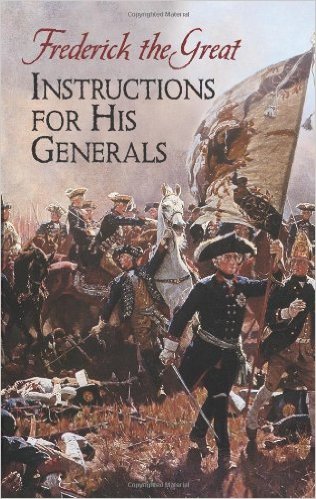
The king of Prussia from 1740 to 1786, Frederick the Great ranks among eighteenth-century Europe's most enlightened rulers. In addition to abolishing serfdom in his domains and promoting religious tolerance, he was an ardent patron of the arts and an accomplished musician. "Diplomacy without arms," he observed, "is like music without instruments." Frederick's expertise at military matters is reflected in his successful defense of his territory during the Seven Years' War, in which he fought all the great powers of Europe. His brilliant theories on strategy, tactics, and discipline are all explained in this vital text."War is not an affair of chance," Frederick asserted, adding that "a great deal of knowledge, study, and meditation is necessary to conduct it well." In this book, he presents the fundamentals of warfare, discussing such timeless considerations as leadership qualities, the value of surprise, and ways to conquer an enemy who possesses superior forces. The soundness of his advice was endorsed by Napoleon himself, who once advised, "Read and re-read the campaigns of Alexander, Hannibal, Caesar . . . and Frederick. This is the only way to become a great captain and to master the secrets of the art of war."

Once An Eagle is the story of one special man, a soldier named Sam Damon, and his adversary over a lifetime, fellow officer Courtney Massengale. Damon is a professional who puts duty, honor, and the men he commands above self interest. Massengale, however, brilliantly advances by making the right connections behind the lines and in Washington's corridors of power.Beginning in the French countryside during the Great War, the conflict between these adversaries solidifies in the isolated garrison life marking peacetime, intensifies in the deadly Pacific jungles of World War II, and reaches its treacherous conclusion in the last major battleground of the Cold War -- Vietnam.A study in character and values, courage, nobility, honesty, and selflessness, here is an unforgettable story about a man who embdies the best in our nation -- and in us all.

"In a grand gesture of reclamation & remembrance, Mr Halberstam has brought the war back home."--NY Times Halberstam's magisterial & thrilling The Best & the Brightest was a defining book about the Vietnam conflict. More than three decades later, he used his research & journalistic skills to shed light on another pivotal moment in our history: the Korean War. He considered The Coldest Winter his most accomplished work, the culmination of 45 years of writing about America's postwar foreign policy. He gives a masterful narrative of the political decisions & miscalculations on both sides. He charts the disastrous path that led to the massive entry of Chinese forces near the Yalu River & that caught Douglas MacArthur & his soldiers by surprise. He provides vivid & nuanced portraits of all the major figures-Eisenhower, Truman, Acheson, Kim, & Mao, & Generals MacArthur, Almond & Ridgway. At the same time, he provides us with his trademark highly evocative narrative journalism, chronicling the crucial battles with reportage of the highest order. As ever, he was concerned with the extraordinary courage & resolve of people asked to bear an extraordinary burden. The Coldest Winter is contemporary history in its most literary & luminescent form, providing crucial perspective on every war America has been involved in since. It's a book that Halberstam first decided to write over 30 years ago that took him nearly a decade to complete. It stands as a lasting testament to one of the greatest journalists & historians of our time, & to the fighting men whose heroism it chronicles.

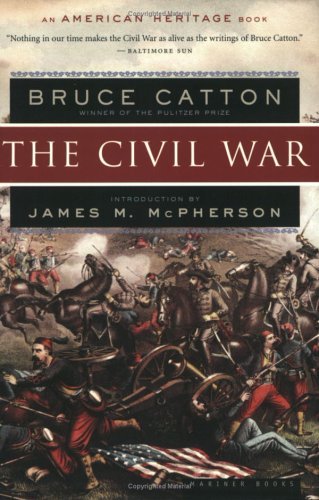
Infinitely readable and absorbing, Bruce Catton’s The Civil War is one of the most widely read general histories of the war available in a single volume. Introduced by the critically acclaimed Civil War historian James M. McPherson, The Civil War vividly traces one of the most moving chapters in American history, from the early division between the North and the South to the final surrender of Confederate troops. Catton's account of battles is a must-read for anyone interested in the war that divided America, carefully weaving details about the political activities of the Union and Confederate armies and diplomatic efforts overseas.

In the fall of 1944, Allied commanders planned to land airborne divisions in an attempt to capture a series of bridges behind German lines, including the "bridge too far" at Arnhem. Geoffrey Powell, himself a veteran of the Arnhem operation, drew on conversations with many other survivors of the battle to write one of the most dramatic of all accounts of the battleWhen the book was first published in 1976 under a pseudonym, it was at once recognized as one of the finest evocations of an infantryman's war ever written.

In this account of the Flanders campaign, Leon Wolff graphically describes the whole terrible from Haig's initial plan; his determination to carry it out despite constant opposition from the Cabinet and the muddle of doubts and disagreement among the military staff; through the early stages of the 'great offensive'; and to the scene of the battle itself - the Flanders fields which will 'forever haunt Western civilization'.

A vivid, autobiographical account of what life was like for a young soldier in Russia's Chechen wars, Arkady Babchenko provides an unsparing, unsentimental, blackly comic and brutally beautiful account of active duty.

Self-described war nerd Gary Brecher knows he’s not alone, that there’s a legion of fat, lonely Americans, stuck in stupid, paper-pushing desk jobs, who get off on reading about war because they hate their lives. But Brecher writes about war, too. War Nerd collects his most opinionated, enraging, enlightening, and entertaining pieces. Part war commentator, part angry humorist àla Bill Hicks, Brecher inveighs against pieties of all stripes — Liberian generals, Dick Cheney, U.N. peacekeepers, the neo-cons — and the massive incompetence of military powers. A provocative free thinker, he finds much to admire in the most unlikely places, and not always for the most pacifistic reasons: the Tamil Tigers, the Lebanese Hezbollah, the Danes of 1,000 years ago, and so on, across the globe and through the centuries. Crude, scatological, un-P.C., yet deeply informed, Brecher provides a radically different, completely unvarnished perspective on the nature of warfare.

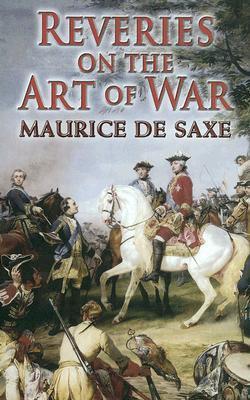
At the age of twelve, Dresden-born Maurice de Saxe (1696–1750) entered the Saxon army, beginning a long and successful military career that culminated in his promotion to Marshal of France, where he retained full command of the main army in Flanders directly under Louis XV. Again and again, de Saxe achieved enormous victories over his enemies, becoming one of the greatest military leaders of the eighteenth century. Combining his memoirs and general observations with brilliant military thinking, Reveries on the Art of War was written in a mere thirteen days. Introducing revolutionary approaches to battles and campaigning at a time of changing military tactics and leadership styles, it stands as a classic of early modern military theory.De Saxe's Reveries offered numerous procedural innovations for raising and training troops. His descriptions for establishing field camps were soon standard procedure. His ideas advanced weapon technology, including the invention of a gun specially designed for infantrymen and the acceptance of breech-loading muskets and cannons. De Saxe heightened existing battle formations by introducing a specific attack column that required less training, and he rediscovered a military practice lost since the ancient Romans — the art of marching in cadence. He even delved into the minds and emotions of soldiers on the battlefield, obtaining a deeper understanding of their daily motivations.Written by a military officer of great acumen, Reveries on the Art of War has deeply impacted modern military tactics. Enduringly relevant, this landmark work belongs in the library of anyone interested in the history, tactics, and weapons of European warfare.

In this comprehensive history, John Keegan explores both the technical and the human impact of the greatest war of all time. He focuses on five crucial battles and offers new insights into the distinctive methods and motivations of modern warfare. In knowledgable, perceptive analysis of the airborne battle of Crete, the carrier battle of Midway, the tank battle of Falaise, the city battle of Berlin, and the amphibious battle of Okinawa, Keegan illuminates the strategic dilemmas faced by the leaders and the consequences of their decisions on the fighting men and the course of the war as a whole.

A biography of Napoleon, which attempts to explain the history of this great man in personal terms.

This is a pre-1923 historical reproduction that was curated for quality. Quality assurance was conducted on each of these books in an attempt to remove books with imperfections introduced by the digitization process. Though we have made best efforts - the books may have occasional errors that do not impede the reading experience. We believe this work is culturally important and have elected to bring the book back into print as part of our continuing commitment to the preservation of printed works worldwide.

Andrew Roberts's Masters and The Military Geniuses who led the West to Victory in WWII tells the story of how four great leaders fought each other over how best to fight Hitler. During the Second World War the master strategy of the West was shaped by four titanic Winston Churchill and Franklin Roosevelt, and their respective military commanders - General Sir Alan Brooke and General George C. Marshall. Each man was tough-willed and strong minded. And each was certain he knew best how to achieve victory. Drawing on previously unpublished material, including for the first time verbatim reports of Churchill's War Cabinet meetings, Andrew Roberts's acclaimed history recreates with vivid immediacy the fiery debates and political maneuverings, the rebuffs and the charm, the explosive rows and dramatic reconciliations, as the masters and commanders of the Western Alliance fought each other over the best way to fight Adolf Hitler. 'History as it should be written; a gripping narrative' Michael Gove, Mail on Sunday Books of the Year 'Scintillating historical writing on the whole rich panorama of Britain and the US at war' Martin Gilbert, Evening Standard 'A compelling analysis of American and British military strategy during the war. He also tells a profoundly human story' Laurence Rees, Sunday Times 'A masterpiece' Christopher Silvester, Daily Express 'Britain's finest contemporary military historian' Economist Books of the Year Andrew Roberts is a biographer and historian of international renown whose previous books include Victorian Titan (1999), which won the Wolfson History Prize and the James Stern Silver Pen Award for Non-Fiction; Napoleon and Wellington (2001); Hitler and Secrets of Leadership (2003), which coincided with four-part BBC2 history series, and A History of the English-Speaking Peoples Since 1900 (2005).

A brilliant and revealing biography of the two most important Americans during the Cold War era—written by the grandson of one of them Only two Americans held positions of great influence throughout the Cold War; ironically, they were the chief advocates for the opposing strategies for winning—and surviving—that harrowing conflict. Both men came to power during World War II, reached their professional peaks during the Cold War’s most frightening moments, and fought epic political battles that spanned decades. Yet despite their very different views, Paul Nitze and George Kennan dined together, attended the weddings of each other’s children, and remained good friends all their lives. In this masterly double biography, Nicholas Thompson brings Nitze and Kennan to vivid life. Nitze—the hawk—was a consummate insider who believed that the best way to avoid a nuclear clash was to prepare to win one. More than any other American, he was responsible for the arms race. Kennan—the dove—was a diplomat turned academic whose famous “X article” persuasively argued that we should contain the Soviet Union while waiting for it to collapse from within. For forty years, he exercised more influence on foreign affairs than any other private citizen. As he weaves a fascinating narrative that follows these two rivals and friends from the beginning of the Cold War to its end, Thompson accomplishes something he tells the story of our nation during the most dangerous half century in history.

From "Britain's finest military historian" (The Economist) comes a magisterial new history of World War II and the flawed axis strategy that led to their defeat. The Second World War lasted for 2,174 days, cost $1.5 trillion, and claimed the lives of more than 50 million people. What were the factors that affected the war's outcome? Why did the Axis lose? And could they, with a different strategy, have won? Andrew Roberts's acclaimed new history has been hailed as the finest single-volume account of this epic conflict. From the western front to North Africa, from the Baltic to the Far East, he tells the story of the war—the grand strategy and the individual experience, the cruelty and the heroism—as never before. In researching this magnificently vivid history, Roberts walked many of the key battlefields and wartime sites in Russia, France, Italy, Germany, and the Far East, and drew on a number of never-before-published documents, such as a letter from Hitler's director of military operations explaining the reasoning behind the FÜhrer's order to halt the Panzers outside Dunkirk—a delay that enabled British forces to evacuate. Roberts illuminates the principal actors on both sides and analyzes how they reached critical decisions. He also presents the tales of many little-known individuals whose experiences form a panoply of the extraordinary courage and self-sacrifice, as well as the terrible depravity and cruelty, of the Second World War. Meticulously researched and masterfully written, The Storm of War gives a dramatic account of this momentous event and shows in remarkable detail why the war took the course it did.

Combining a close knowledge of Asia and an ability to tap Chinese-language sources with naval combat experience and expertise in sea-power theory, the authors assess how the rise of Chinese sea power will affect U.S. maritime strategy in Asia. They argue that China is laying the groundwork for a sustained challenge to American primacy in maritime Asia, and to defend this hypothesis they look back to Alfred Thayer Mahan s sea-power theories, now popular with the Chinese. The book considers how strategic thought about the sea shapes Beijing s deliberations and compares China s geostrategic predicament to that of the Kaiser s Germany a century ago. It examines the Chinese navy s operational concepts, tactics, and capabilities and appraises China s ballistic-missile submarine fleet. The authors conclude that unless Washington adapts, China will present a challenge to America s strategic position.

A hard-fighting soldier's story-from the trenches of America's first battle in the Cold War.From the devastating counterattack at Unsan to the thirty-four months he spent in captivity-a period of years in which giving up surely meant dying-Col. Bill Richardson's instinct for leadership and stubborn will to survive saw him through one valley of death after the next. Valleys of Death is a stirring story of survival and determination that offers a fascinating, intimate look at the soldiers who fought America's first battle of the Cold War in the unvarnished words of one of their own. Richardson endured many long months of starvation, torture, sleep deprivation, and Chinese attempts at indoctrination, yet maintained defiance under conditions designed to break the mind, body, and spirit of men.

From the earliest days of his thirty-four-year military career, Victor "Brute" Krulak displayed a remarkable facility for applying creative ways of fighting to the Marine Corps. He went on daring spy missions, was badly wounded, pioneered the use of amphibious vehicles, and masterminded the invasion of Okinawa. In Korea, he was a combat hero and invented the use of helicopters in warfare. In Vietnam, he developed a holistic strategy in stark contrast to the Army's "Search and Destroy" methods-but when he stood up to LBJ to protest, he was punished. And yet it can be argued that all of his these accomplishments pale in comparison to what he did after World War II and again after Korea: Krulak almost single-handedly stopped the U.S. government from abolishing the Marine Corps.

Alistair Urquhart was a soldier in the Gordon Highlanders captured by the Japanese in Singapore. He not only survived working on the notorious Bridge on the River Kwai , but he was subsequently taken on one of the Japanese ‘hellships’ which was torpedoed. Nearly everyone else on board died and Urquhart spent 5 days alone on a raft in the South China Sea before being rescued by a whaling ship. He was taken to Japan and then forced to work in a mine near Nagasaki. Two months later a nuclear bomb dropped just ten miles away . . .This is the extraordinary story of a young man, conscripted at nineteen and whose father was a Somme Veteran, who survived not just one, but three very close separate encounters with death - encounters which killed nearly all his comrades.

At the heart of Africa is Congo, a country the size of Western Europe, bordering nine other nations, that since 1996 has been wracked by a brutal and unstaunchable war in which millions have died. And yet, despite its epic proportions, it has received little sustained media attention. In this deeply reported book, Jason Stearns vividly tells the story of this misunderstood conflict through the experiences of those who engineered and perpetrated it. He depicts village pastors who survived massacres, the child soldier assassin of President Kabila, a female Hutu activist who relives the hunting and methodical extermination of fellow refugees, and key architects of the war that became as great a disaster as--and was a direct consequence of--the genocide in neighboring Rwanda. Through their stories, he tries to understand why such mass violence made sense, and why stability has been so elusive.Through their voices, and an astonishing wealth of knowledge and research, Stearns chronicles the political, social, and moral decay of the Congolese State.

In continuing his argument that the Korean War was civil and revolutionary in character, Bruce Cumings examines the internal political-economic development of the two Korean states and the consequences, for Korea, of Cold War rivalry between the United States and the Soviet Union. He investigates the intense border fighting and internal political instability that preceded the Northern invasion and challenges the notion of sudden Soviet-sponsored intervention. He also discusses how American foreign policy first applied the containment doctrine to Southern Korea, and went beyond it to a "rollback": doctrine aimed at eliminating communism in North Korea.This study uses diplomatic, military, and intelligence documents, and captured North Korean materials. It covers the impact of the revolution in China and of renewed Japanese industrialization on Korean politics and American foreign policy. It also offers an explanation of China's entry into the war in light of the longstanding ties between Chinese and Korean guerrillas.

December 1941: 31 Days that Changed America and Saved the World traces, day-by-day, the most important 31 days in the history of America's participation in WWII, which snuffed out the lives of millions and changed history forever. From December 1, 1941, until the morning of December 7, 1941, America was at peace and-with the exception of the stubborn and persistent high unemployment of the Great Depression-was a relatively happy country. By the afternoon of the December 7 attack on Pearl Harbor, America was a radically changed country, forever. Its isolationist impulses evaporated, and both major political parties became more or less internationalist. The month also introduced food and gas rationing, Victory Gardens, scrap drives, a military draft, and the conversion of Detroit into an "arsenal of democracy." From the moment of America's entry into World War II, people of all kinds, but mostly women looking for work, flooded into the city. Instant apartment buildings sprang up, as did eating and drinking salons, all to the advantage of the massive increase in spending generated by the federal government. December 1941 is a fascinating and meticulously researched look at the American home front-her people, faith, economy, government, and culture-during a month that radically changed the American way of life.