
Mao Zedong
Mao Zedong, also transliterated as Mao Tse-tung, and commonly referred to as Chairman Mao, was a Chinese Communist revolutionary, guerrilla warfare strategist, Marxist political philosopher, and leader of the Chinese Revolution. He was the architect and founding father of the People's Republic of China (PRC) from its establishment in 1949, and held control over the nation until his death in 1976. His theoretical contribution to Marxism–Leninism, along with his military strategies and brand of policies, are collectively known as Maoism. Mao rose to power by commanding the Long March, forming a Second United Front with Kuomintang (KMT) during the Second Sino-Japanese War to repel a Japanese invasion, and later led the Communist Party of China (CPC) to victory against Generalissimo Chiang Kai-shek's KMT in the Chinese Civil War. Mao established political and military control over most of the territory formerly contained within the Chinese Empire and launched a campaign to suppress counterrevolutionaries. He sent the Communist People's Liberation Army into Xinjiang and Tibet but was unable to oust the remnants of the Nationalist Party from Taiwan. He enacted sweeping land reform by using violence and terror to overthrow landlords before seizing their large estates and dividing the land into people's communes. The Communist Party's final victory came after decades of turmoil in China, which included the Great Depression, a brutal invasion by Japan and a protracted civil war. Mao's Communist Party ultimately achieved a measure of stability in China, though Mao's efforts to close China to trade and market commerce, and eradicate traditional Chinese culture, have been largely rejected by his successors. Mao styled himself "The Great Helmsman" and supporters continue to contend that he was responsible for some positive changes which came to China during his three decade rule. These included doubling the school population, providing universal housing, abolishing unemployment and inflation, increasing health care access, and dramatically raising life expectancy. A cult of personality grew up around Mao, and community dissent was not permitted. His Communist Party still rules in mainland China, retains control of media and education there and officially celebrates his legacy. As a result, Mao is still officially held in high regard by many Chinese as a great political strategist, military mastermind, and savior of the nation. Maoists promote his role as a theorist, statesman, poet, and visionary, and anti-revisionists continue to defend most of his policies.
30 Books Written

The book is written in the context of China's guerrilla war against Japanese occupiers; this conflict is mentioned often by Mao. In this book Mao discusses the differences between guerrilla and "orthodox" military forces, as well as how such forces can work together for a common goal. Other topics covered include propaganda and political concerns, the formation of guerrilla units, the qualities of a good guerrilla officer, discipline in a guerrilla army, and guerrilla bases. English (translation) Original Chinese

Citações do Presidente Mao Tsé-tung é uma súmula do pensamento político do principal líder chinês do século 20. Traz 427 trechos de discursos, entrevistas e artigos de Mao (1893-1976), organizados em 33 capítulos, em que ele discorre didaticamente sobre os variados aspectos da luta pela implantação do socialismo.A obra ficou conhecida como "O livro vermelho" ou "O pequeno livro vermelho", devido à cor da capa e ao formato "de bolso" (13 cm x 9 cm) das edições feitas a partir de 1964 e distribuídas maciçamente na China comunista, onde a sua leitura se tornou um ritual político obrigatório.A onda do maoismo que percorreu o mundo dos anos 60 também incentivou as traduções, tornando "O livro vermelho" uma das obras mais editadas, mais lidas e mais influentes de toda a história.
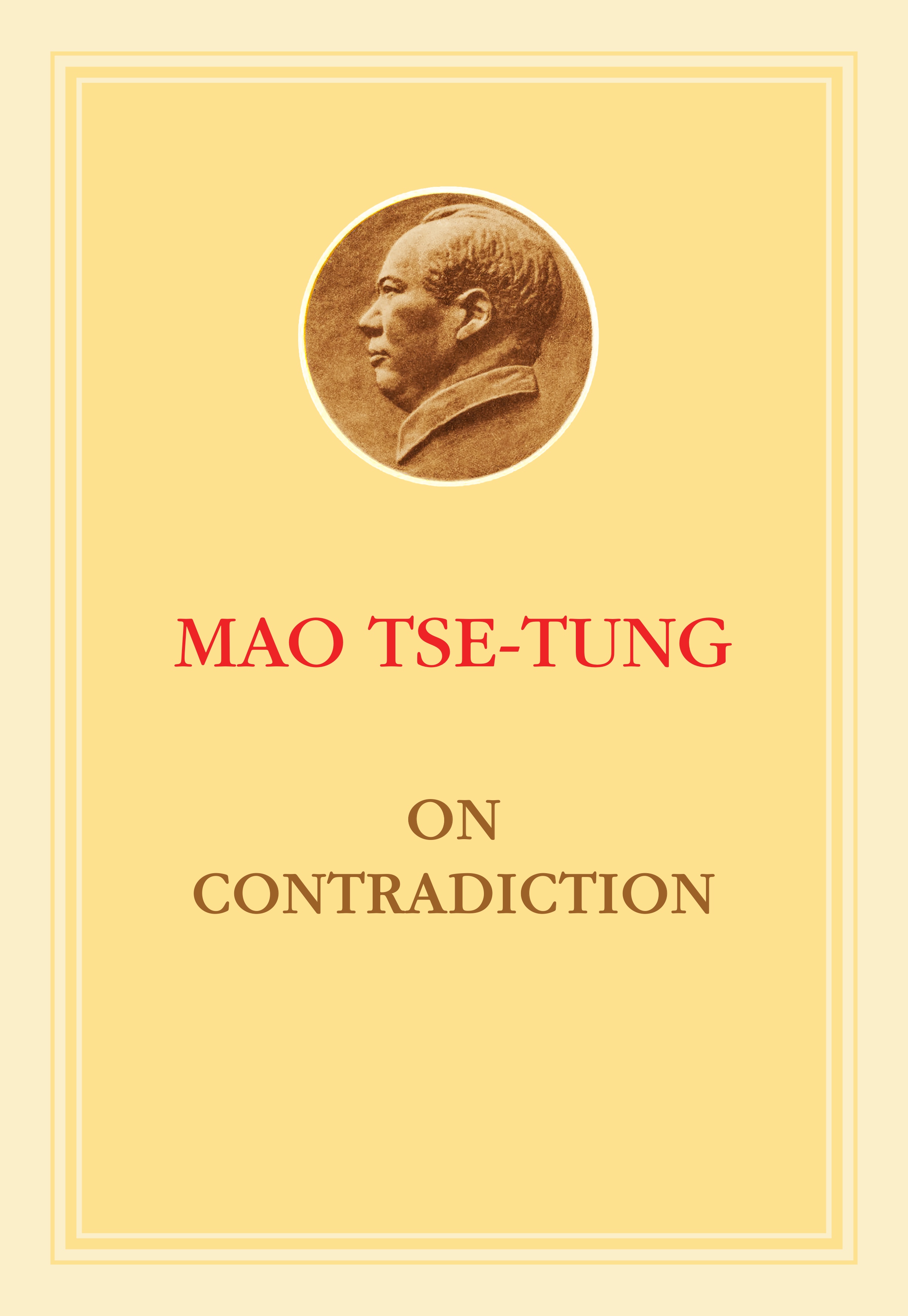
This essay on philosophy was written by Comrade Mao Tse-tung after his essay "On Practice" and with the same object of overcoming the serious error of dogmatist thinking to be found in the Party at the time. Originally delivered as lectures at the Anti-Japanese Military and Political College in Yenan, it was revised by the author on its inclusion in his Selected Works.
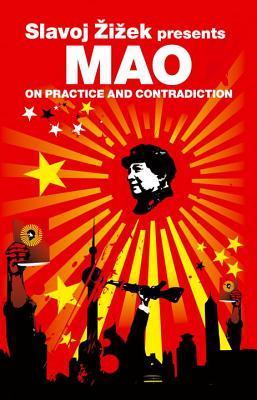
These early philosophical writings underpinned the Chinese revolutions, and their clarion calls to insurrection remain some of the most stirring of all time. Drawing on a dizzying array of references from contemporary culture and politics, Žižek’s firecracker commentary reaches unsettling conclusions about the place of Mao’s thought in the revolutionary canon.


This compilation contains the most crucial philosophical writings of Mao Zedong. It is a good collection to study after first reading the "Five Golden Rays" in order to understand the importance of practice and solving contradiction.


Eleven years before the founding of the People's Republic of China, and ten months into the Japanese invasion of China, Mao's discussion of protracted war provides fascinating historical insights through an original source document discussing the "War of Resistance".

Originally published in China in 1966, this book contains four essays on philosophy by Mao Tse-tung. They include "On Practice," "On Contradiction," "On the Correct Handling of Contradictions Among the People," and "Where Do Correct Ideas Come From?"

Book by Tse-Tung, Mao

Written by Mao in January, 1940, the chapters Whither China? We Want to Build A New China China's Historical Characteristics The Chinese Revolution is Part of the World Revolution The Politics of New Democracy The Economy of New Democracy Refutation of Bourgeois Dictatorship Refutation of "Left" Phrase-Mongering Refutation of the Die-Hards The Three People's Principles, Old and New The Culture of New Democracy The Historical Characteristics of China's Cultural Revolution The Four Periods Some Wrong Ideas About the Nature of Culture A National Scientific and Mass Culture

The selections in this book range from 1926 through 1963, and include such titles Analysis of the Classes in Chinese Society (1926) Oppose Book Worship (1930) The Important Thing is to be Good at Learning (1936) Combat Liberalism (1937) In Memory of Norman Bethune (1939) Current Problems of Tactics in the Anti-Japanese United Front (1940) Some Questions Concerning Methods of Leadership (1943) The Foolish Old Man Who Removed the Mountains (1945) Talk with the American Correspondent Anna Louise Strong (1946) Preserve the Style of Plain Living and Hard Struggle (1949) Introductory Note to "Who Says a Chicken Feather Can't Fly Up to Heaven?" (1955) Introducing a Co-operative (1958) Where Do Correct Ideas Come From? (1963) and many, many more...

This work has been selected by scholars as being culturally important and is part of the knowledge base of civilization as we know it. This work is in the public domain in the United States of America, and possibly other nations. Within the United States, you may freely copy and distribute this work, as no entity (individual or corporate) has a copyright on the body of the work. Scholars believe, and we concur, that this work is important enough to be preserved, reproduced, and made generally available to the public. To ensure a quality reading experience, this work has been proofread and republished using a format that seamlessly blends the original graphical elements with text in an easy-to-read typeface. We appreciate your support of the preservation process, and thank you for being an important part of keeping this knowledge alive and relevant.

Art Of War By Mao Tse-tung - Special EditionAs the revolutionary leader who conquered China, Mao Tse-tung was undoubtedly a great strategist. The parallels between Chairman Mao's thoughts on strategy and those of Sun Tzu belie a direct lineage of culture and genius spanning twenty-five centuries.This Special Edition of "The Art of War" by Mao Tse-tung contains, for the first time in a single volume, his four most important discourses on "Problems of Strategy in China's Revolutionary War""Problems of Strategy in Guerrilla War Against Japan""On Protracted War""Problems of War and Strategy""Problems of Strategy in China's Revolutionary War", considers the rational and classical stratagems underlying the conduct of a successful war. "Problems of Strategy in Guerrilla War Against Japan", discusses the conduct of guerrilla actions relative to, and within, conventional warfare. "On Protracted War", deals with a wide range of topics including mobile warfare, guerrilla warfare, positional warfare, war of attrition and war of annihilation. "Problems of War and Strategy" summarizes the lessons of the previous discourses and reiterates the famous "Political power grows out of the barrel of a gun."Other volumes in "The Art of War Special Edition" series Art of War by Sun Tzu - Special EditionThe Art of War By Baron De Jomini - Special EditionThe Art of War & The Prince By Machiavelli - Special Edition
A critical essay in the works of Mao Tse-Tung

Talks at the Yenan Forum on Literature and Art

正版授权 卖家 : Boolee 加微信[soweinc]每天分享好书,邀你加入国际微信群学习交流.微信好友低至5优惠 .书名:毛泽东选集(第一卷精装)简介:作者:毛泽东 著出版社:人民出版社出版时间:2003年07月装订方式:精装分类:政治/军事|政治|领袖著作

FIVE ARTICLES BY CHAIRMAN MAO TSETUNGWORKERS OF ALL COUNTRIES, UNITE!Serve the PeopleIn Memory of Norman BethuneThe Foolish Old Man Who Moved the MountainsOn Correcting Mistaken Ideas in the Party Combat Liberalism

The selections in this volume cover the period from August 15, 1945 through September 16, 1949.


Hangzhou. The city on the lake. Sister city to Suzhou in the ancient Chinese "In the sky there is Heaven. On Earth are Suzhou and Hangzhou." In China, the city of Hangzhou occupies its own special place in the country's history and culture. Among the Chinese people, Hangzhou persists to the present day as one of the nation’s most cherished cities and among its most popular tourist destinations. As the southern terminus of the Grand Canal, it was a capital city of imperial China for 150 years. Home to a million people at a time when London and Paris each barely reached 80,000, it was described by Marco Polo as “the greatest city which may be found in this world”. Home of scholars, painters, poets, and playwrights. Centuries-long source of fabulous Chinese silks and one of the nation’s finest teas. Birthplace of celebrated romance legends and operas. A city of temples and pagodas, but also of churches and mosques. By the mid-15th-Century, Hangzhou was truly an earthly paradise. The city and its West Lake are inextricably bound to one another in physical fact, historical evolution, and poetic imagination, like Paris with the Seine, London with the Thames, or Venice with its canals. When we speak of Hangzhou, we speak of many scenic beauty, cultural mythology, Buddhist temples and pagodas, classical poems and paintings, traditional literati culture, historical events, and famous persons from emperors to military and revolutionary heroes to extraordinary individuals from all walks of life. Until now, no single book in the English language introduces the city in a comprehensive way. With a keen eye for the pageant of history and a masterful gift of storytelling, Stephen L. Koss provides key cultural context in explaining why Hangzhou is so much more than a pretty body of water surrounded by rolling, verdant hills and ancient pagodas. If you have not experienced Hangzhou, you have not experienced China. Stephen L. Koss is the author of Beautiful A Social and Cultural History of Suzhou, China.
This article was written as a reply to the carping criticisms both inside and outside the Party then being leveled at the peasants' revolutionary struggle. Comrade Mao Tse-tung spent thirty-two days in Hunan Province making an investigation and wrote this report in order to answer these criticisms. The Right opportunists in the Party, headed by Chen Tu-hsiu, would not accept his views and stuck to their own wrong ideas. Their chief error was that. frightened by the reactionary trend in the Kuomintang, they dared not support the great revolutionary struggles of the peasants which had erupted or were erupting. To appease the Kuomintang, they preferred to desert the peasantry, the chief ally in the revolution, and thus left the working class and the Communist Party isolated and without help. It was mainly because it was able to exploit this weakness within the Communist Party that the Kuomintang dared to betray the revolution, launch its "party purge" and make war on the people in the summer of 1917

Selected Works of Mao Tse-Tung, Volume II focuses on the thoughts of Mao Tse-Tung on revolution, communism, war tactics, national unity, and patriotism. The volume first discusses the policies, measures, and perspectives for resisting the invasion of Japan; mobilization of China's forces for victory in the war of resistance; and tasks following the establishment of Kuomintang-communist co-operation. The publication also takes a look at the situation and tasks in the anti-Japanese war following the fall of Shanghai and Taiyuan, including the opposition to class capitulationism and the relation between class and national capitulationism. The book examines the problems of strategy in the guerilla war against Japan and the establishment of base areas. Considerations include types and conditions for establishing base areas and expansion of base areas. The text also ponders on the role of the Chinese Communist Party in the national war, as well as patriotism and internationalism, party discipline and democracy, and expansion of the communist party and prevention of infiltration by enemy agents. The volume is a dependable source of data for readers interested in the philosophy of Mao Tse-Tung on communism, war, revolution, and patriotism.

New and annotated translations of philosophical essays written by Mao Zedong in 1937, which have come to be regarded as a cornerstone in the development of Chinese Marxism. The editor analyzes their textual, philosophical and historical significance.


No se puede construir lo nuevo sin destruir lo viejo; no se puede abrir camino a lo nuevo sin cerrar el camino a lo viejo, ni hacer progresar lo nuevo sin detener lo viejo. La nueva cultura y las culturas reaccionarias están enfrentadas en una lucha a muerte. El verdadero amor de la humanidad nacerá cuando en todo el mundo hayan sido eliminadas las clases. Las clases han dividido la sociedad en muchos grupos antagónicos; después de la eliminación de las clases, existirá el amor de toda la humanidad, pero no existe en este momento. No podemos amar a nuestros enemigos ni a los males sociales; nuestro propósito es eliminar a unos y otros. Esto es de sentido común; ¿es posible que todavía no lo comprendan algunos de nuestros artistas y literatos?

Mao on Warfare compiles Mao Zedong's principal works on martial theory, including On Guerrilla Warfare and On Protracted War. In On Guerrilla Warfare, Mao explores China’s long history of guerrilla warfare, beginning with the Chu and Han dynasties. Mao relates the expansion in the theories, tactics and strategies of guerrilla warfare as practiced by the People’s Liberation Army in the Chinese Civil War.In On Protracted War, Mao analyzes the fundamental questions of warfare from the standpoint of dialectical materialism. Mao used On Protracted War to explain tactics developed in World War II and instrumental in China’s campaigns against the Japanese occupation. On Protracted War also reviews strategies Mao employed in the Chinese Civil War.Mao on Warfare is of primary interest to military experts and scholars, as well as to casual readers with an interest in warfare in general and Chinese martial history in particular.
