
Edward N. Luttwak
Edward Nicolae Luttwak is a military strategist, political scientist and historian who has published works on military strategy, history, and international relations. Born in Arad, Romania, he studied in Palermo, Sicily, in England, LSE (BSc) & at Johns Hopkins (PhD). He speaks five languages. He serves or has served as a consultant to the Office of the Secretary of Defense, the National Security Council, the U.S. Department of State, the U.S. Army, Navy, and Air Force; he is/has been an adviser to Treaty Allies of the United States. He is chairman of the board of Aircraft Purchase Fleet Limited (APFL), an aviation lessor, and he founded and directs a conservation cattle ranch in the Bolivian Amazon. He is the author of various books and more articles including: The Rise of China vs the Logic of Strategy, Coup d'Etat: a practical handbook, Strategy: The Logic of War and Peace, The Grand Strategy of the Byzantine Empire, The Grand Strategy of the Roman Empire, The Endangered American Dream, and Turbo-Capitalism: Winners and Losers in the Global Economy. His books are also published in: Arabic, Chinese (both Beijing simplified and Taipei traditional), Czech, Danish, Dutch, Estonian, Finnish, French, German, Greek, Hebrew, Indonesian (Bahasa), Italian, Japanese, Korean, Mongolian, Norwegian, Polish, Portuguese (and Brazilian Portuguese) Romanian, Russian, Spanish (Castilian, Spain, in Argentina and in Venezuela), Swedish, and Turkish. Before ever writing of strategy and war, he was combat-trained (Oxfordshire & Buckinghamshire Light Infantry) and fought as a volunteer or a contractor in several countries on two continents. He likes Hebrew songs and the Greek & Latin classics. His best article is "Homer Inc." in the London Review of Books.
28 Books Written

"Coup d Etat" astonished readers when it first appeared in 1968 because it showed, step-by-step, how governments could be overthrown. Translated into sixteen languages, it has inspired anti-coup precautions by regimes around the world. In addition to these detailed instructions, Edward Luttwak s revised handbook offers an altogether new way of looking at political power one that considers, for example, the vulnerability to coups of even the most stable democracies in the event of prolonged economic distress.The world has changed dramatically in the past half century, but not the essence of the coup d etat. It still requires the secret recruitment of military officers who command the loyalty of units well placed to seize important headquarters and key hubs in the capital city. The support of the armed forces as a whole is needed only in the aftermath, to avoid countercoups. And mass support is largely irrelevant, although passive acceptance is essential. To ensure it, violence must be kept to a minimum. The ideal coup is swift and bloodless. Very violent coups rarely succeed, and if they trigger a bloody civil war they fail utterly.Luttwak identifies conditions that make countries vulnerable to a coup, and he outlines the necessary stages of planning, from recruitment of coconspirators to postcoup promises of progress and stability. But much more broadly, his investigation of coups" "updated for the twenty-first century uncovers important truths about the nature of political power."

The Grand Strategy of the Roman Empire from the First Century AD to the Third
by Edward N. Luttwak
Rating: 4.0 ⭐
Originally published in 1976, a book which looks at the success of the Roman Empire from the 1st to the 3rd century A.D. and attributes this success to the imperial military strategy.At the height of its power, the Roman Empire encompassed the entire Mediterranean basin, extending much beyond it from Britain to Mesopotamia, from the Rhine to the Black Sea. Rome prospered for centuries while successfully resisting attack, fending off everything from overnight robbery raids to full-scale invasion attempts by entire nations on the move. How were troops able to defend the Empire’s vast territories from constant attacks? And how did they do so at such moderate cost that their treasury could pay for an immensity of highways, aqueducts, amphitheaters, city baths, and magnificent temples? In The Grand Strategy of the Roman Empire, seasoned defense analyst Edward N. Luttwak reveals how the Romans were able to combine military strength, diplomacy, and fortifications to effectively respond to changing threats. Rome’s secret was not ceaseless fighting, but comprehensive strategies that unified force, diplomacy, and an immense infrastructure of roads, forts, walls, and barriers. Initially relying on client states to buffer attacks, Rome moved to a permanent frontier defense around 117 CE. Finally, as barbarians began to penetrate the empire, Rome filed large armies in a strategy of "defense-in-depth," allowing invaders to pierce Rome’s borders. This updated edition has been extensively revised to incorporate recent scholarship and archeological findings. A new preface explores Roman imperial statecraft. This illuminating book remains essential to both ancient historians and students of modern strategy"A fascinating book, well written and forcefully argued... Luttwak's formulations are as refreshing as they are convincing... He has done for Roman historians what they have not done for themselves." - Z. Yavetz, New Republic
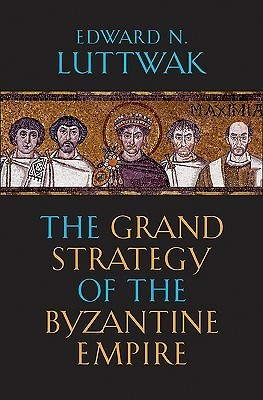
In this book, the distinguished writer Edward Luttwak presents the grand strategy of the eastern Roman empire we know as Byzantine, which lasted more than twice as long as the more familiar western Roman empire, eight hundred years by the shortest definition. This extraordinary endurance is all the more remarkable because the Byzantine empire was favored neither by geography nor by military preponderance. Yet it was the western empire that dissolved during the fifth century. The Byzantine empire so greatly outlasted its western counterpart because its rulers were able to adapt strategically to diminished circumstances, by devising new ways of coping with successive enemies. It relied less on military strength and more on persuasion―to recruit allies, dissuade threatening neighbors, and manipulate potential enemies into attacking one another instead. Even when the Byzantines fought―which they often did with great skill―they were less inclined to destroy their enemies than to contain them, for they were aware that today’s enemies could be tomorrow’s allies. Born in the fifth century when the formidable threat of Attila’s Huns were deflected with a minimum of force, Byzantine strategy continued to be refined over the centuries, incidentally leaving for us several fascinating guidebooks to statecraft and war. The Grand Strategy of the Byzantine Empire is a broad, interpretive account of Byzantine strategy, intelligence, and diplomacy over the course of eight centuries that will appeal to scholars, classicists, military history buffs, and professional soldiers.
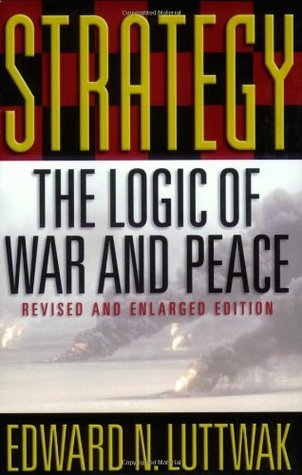
“If you want peace, prepare for war.” “A buildup of offensive weapons can be purely defensive.” “The worst road may be the best route to battle.” Strategy is made of such seemingly self-contradictory propositions, Edward Luttwak shows―they exemplify the paradoxical logic that pervades the entire realm of conflict. In this widely acclaimed work, now revised and expanded, Luttwak unveils the peculiar logic of strategy level by level, from grand strategy down to combat tactics. Having participated in its planning, Luttwak examines the role of air power in the 1991 Gulf War, then detects the emergence of “post-heroic” war in Kosovo in 1999―an American war in which not a single American soldier was killed. In the tradition of Carl von Clausewitz, Strategy goes beyond paradox to expose the dynamics of reversal at work in the crucible of conflict. As victory is turned into defeat by over-extension, as war brings peace by exhaustion, ordinary linear logic is overthrown. Citing examples from ancient Rome to our own days, from Barbarossa and Pearl Harbor down to minor combat affrays, from the strategy of peace to the latest operational methods of war, this book by one of the world’s foremost authorities reveals the ultimate logic of military failure and success, of war and peace.
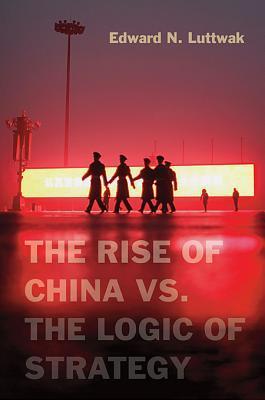
As the rest of the world worries about what a future might look like under Chinese supremacy, Edward Luttwak worries about China's own future prospects. Applying the logic of strategy for which he is well known, Luttwak argues that the most populous nation on Earth and its second largest economy may be headed for a fall.For any country whose rising strength cannot go unnoticed, the universal logic of strategy allows only military or economic growth. But China is pursuing both goals simultaneously. Its military buildup and assertive foreign policy have already stirred up resistance among its neighbors, just three of whom India, Japan, and Vietnam together exceed China in population and wealth. Unless China's leaders check their own ambitions, a host of countries, which are already forming tacit military coalitions, will start to impose economic restrictions as well.Chinese leaders will find it difficult to choose between pursuing economic prosperity and increasing China's military strength. Such a change would be hard to explain to public opinion. Moreover, Chinese leaders would have to end their reliance on ancient strategic texts such as Sun Tzu's "Art of War". While these guides might have helped in diplomatic and military conflicts within China itself, their tactics such as deliberately provoking crises to force negotiations turned China s neighbors into foes. To avoid arousing the world's enmity further, Luttwak advises, Chinese leaders would be wise to pursue a more sustainable course of economic growth combined with increasing military and diplomatic restraint.

The Art of Military Innovation: Lessons from the Israel Defense Forces
by Edward N. Luttwak
Rating: 4.3 ⭐
A world-leading military strategist and an IDF insider explain the improbable success of the Israeli armed forces.When the Israel Defense Forces was established in May 1948, it was small, poorly equipped, and already at war. Lacking sufficient weaponry or the domestic industrial base to produce it, the newborn military was forced to make do with whatever it could get its hands on. That spirit of improvisation carried the IDF to a decisive victory in the First Arab-Israeli War.Today the same spirit has made the IDF the most powerful military in the Middle East and among the most capable in the world. In The Art of Military Innovation , Edward N. Luttwak and Eitan Shamir trace the roots of this astounding success. What sets the IDF apart, they argue, is its singular organizational structure. From its inception, it has been the world’s only one-service military, encompassing air, naval, and land forces in a single institutional body. This unique structure, coupled with a young officer corps, allows for initiative from below. The result is a nimble organization inclined toward change rather than beholden to tradition.The IDF has fostered some of the most significant advances in military technology of the past seventy years, from the first wartime use of drones to the famed Iron Dome missile defense system, and now the first laser weapon, Iron Beam. Less-heralded innovations in training, logistics, and human resources have been equally important. Sharing rich insights and compelling stories, Luttwak and Shamir reveal just what makes the IDF so agile and effective.

In this incisive and controversial exposé of the hidden effects of today's free-market capitalism, Edward Luttwak describes in powerful detail how it vastly differs from the controlled capitalism that flourished from 1945 to the 1980s. Turbo-capitalism is private enterprise liberated from government regulation, unchecked by effective trade unions, unfettered by concerns for employees or communities, and unhindered by taxation or investment restrictions. The winners in this free-for-all are getting much richer, while the losers are becoming poorer and are forced by downsizing to take the traditional jobs of the underclass. Led by the United States, closely followed by Britain, turbo-capitalism is spreading fast throughout Europe, Asia, and the rest of the world without the two great forces that check its enormous power in the United States: a powerful Legal system and the stringent rules of American calvinism. Luttwak exposes the major societal upheavals and inequities turbo-capitalism causes and the broad dissatisfaction and anxiety that may result.

Strategy, politics and economics of the Soviet Union.

The Pentagon and the Art of The Qu

Indicting U.S. political and economic systems, the author proposes a master plan for becoming an economic superpower with staying power in the changing world economy. By the author of The Pentagon and the Art of War. 35,000 first printing. National ad/promo.

“If you want peace, prepare for war.” “A buildup of offensive weapons can be purely defensive.” “The worst road may be the best route to battle.” Strategy is made of such seemingly self-contradictory propositions, Edward Luttwak shows—they exemplify the paradoxical logic that pervades the entire realm of conflict.In this widely acclaimed work, now revised and expanded, Luttwak unveils the peculiar logic of strategy level by level, from grand strategy down to combat tactics. Having participated in its planning, Luttwak examines the role of air power in the 1991 Gulf War, then detects the emergence of “post-heroic” war in Kosovo in 1999—an American war in which not a single American soldier was killed.In the tradition of Carl von Clausewitz, Strategy goes beyond paradox to expose the dynamics of reversal at work in the crucible of conflict. As victory is turned into defeat by over-extension, as war brings peace by exhaustion, ordinary linear logic is overthrown. Citing examples from ancient Rome to our own days, from Barbarossa and Pearl Harbor down to minor combat affrays, from the strategy of peace to the latest operational methods of war, this book by one of the world’s foremost authorities reveals the ultimate logic of military failure and success, of war and peace.

How, in the span of a single generation, did a people that once had no soldiers become a nation of soldiers? How did a nation whose founding fathers were near-pacifists become so thoroughly militarized?Edward Luttwak and Daniel Horowitz's The Israeli Army: 1948-1973 tells the story of the army in a country that had no real military traditions of its own and did not import those of other countries. Instead, the Israeli military grew rapidly from an underground force into a disciplined modern army, evolving under the continuing pressure of a bitter conflict, and shaped also by internal political pressures. The Israeli Army has had — and continues to have — a tumultuous and controversial history.The Israeli Army: 1948-1973 traces the development of the Israeli Army since its beginnings — the successes of the Haganah in 1948 — through a period of disorganization and demoralization in the 1950s, to the modern army of the 1960s, built by Dayan. Here is the story of the 1967 War that so altered Israel's view of itself, and the world's view of that small nation. This volume concludes on the eve of another war, that of October 1973, and it is left to the forthcoming companion volume to bring the story to the present day.In a time of continued turmoil in the Middle East, The Israeli Army: 1948-1973 is a timely book about the people and ideas that have shaped Israeli military history.

A comprehensive reference covers every aspect of modern military conflict, explaining such topics as general military vocabulary, weapons systems, military organizations, and the technologies of modern warfare.

Book by Luttwak, Professor Edward N.

Examines the problems and possibilities facing the United States in the 1980s and 1990s, from the threat of nuclear war and the military's strategic thinking, to the interplay of politics, personality, and history

Book by Luttwak, Edward N.

Oggi, per la prima volta nella storia d'Italia, esistono le condizioni per realizzare una democrazia veramente rappresentativa che si traduca in un governo che possa riflettere le stesse qualità che il mondo ci riconosce: l'operosità, la parsimonia, la fedeltà alle comunità locali. Dall'analisi delle idee che hanno guidato la lenta conquista della democrazia alla riflessione sulle dottrine antidemocratiche, dal pensiero di filosofi classici come Locke e Montesquieu, o moderni come Kelsen, alla critica di fecondi paradossi come le rivendicazioni ideali di giustizia e libertà, questo libro vuol essere un contributo all'affermazione di una solida democrazia italiana e alla riforma di istituzioni e concetti ormai superati. Ma soprattutto fornisce al lettore alcune buone ragioni per diventare un cittadino attivo, pronto a lottare sia per i propri diritti che per l'interesse comune.
Book by Luttwak, Edward N.


Edward Luttwak, politologo esperto di problemi italiani, in questa intervista risponde alle domande di Gianni Perrelli analizzando il paese a 360, fra passato e futuro, in vista dell'Europa.

Il libro delle libertà. Il cittadino e lo Stato: regole, diritti e doveri in una democrazia
by Edward N. Luttwak
Rating: 3.0 ⭐
Raccogliendo voci e testimonianze di filosofi e intellettuali antichi e moderni sulle libertà fondamentali di una democrazia, questo libro propone un itinerario ideale attraverso testi, documenti, dichiarazioni, e affronta argomenti sempre attuali: dai diritti politici e civili alla giustizia, dalla governabilità alla lotta al dispotismo, dal federalismo alla "devolution", per risalire alle fonti del pensiero politico, liberale e democratico.

Prenant au sérieux la nature paradoxale de la stratégie ("Si tu veux la paix, prépare la guerre"), l'auteur en développe une analyse ambitieuse, nourrie d'exemples tirés de l'histoire et de la politique internationale. Considéré comme l'un des stratèges majeurs de notre temps, Edward N. Luttwak travaille au Centre d'études stratégiques de Washington.

Edward Luttwak's brilliantly original and provocative book argues that, despite its oil reserves, the Middle East has less global relevance than ever before - and that it would be better for everyone if the rest of the world learned to ignore it.In this landmark short book, Edward Luttwak shows that Western media and policy-makers devote far too much attention to the Middle East. During the Cold War, the region was important as a theatre of competition between East and West. Since then, however, it has become the scene of a cyclical Israeli - Palestinian struggle that has no effect on the oil supply and very little impact outside the region. Luttwak acknowledges that threats from Saddam Hussein or Iran cannot be ignored, but shows that they are dwarfed in their global importance by the activities of the Chinese, Japanese, Russians and Indians.The Middle of Nowhere argues that the time has come for Westerners to refrain from invasion and intrusive benevolence. The peoples of the Middle East should finally be allowed to have their own history - the very thing that Middle East experts of all stripes seem determined to deny them.


Para Bellum. La estrategia de la paz y de la guerra
by Edward N. Luttwak
Si quieres la paz, prepárate para la guerra. El aumento del número de armas ofensivas puede ser algo puramente defensivo. La peor carretera puede ser el mejor camino a la batalla. Edward Luttwak nos enseña que la estrategia está compuesta de proposiciones como éstas, aparentemente contradictorias, en un ejemplo de la lógica paradójica que domina todo el ámbito del conflicto. En este libro ampliamente elogiado, que se presenta en una edición revisada y aumentada, Luttwak desvela la particular lógica de la estrategia nivel a nivel, desde la táctica de combate a la gran estrategia. A través de su participación directa en la planificación de la guerra del Golfo, el autor examina el papel del poderío aéreo desde 1991, para luego señalar la aparición de la “guerra postheroica” en Kosovo, en 1999, durante una guerra estadounidense en la que no murió ni un solo soldado estadounidense. También se nos explica la dinámica de la inversión en el conflicto. Cuando la victoria se convierte en derrota por exceso de extensión, cuando la guerra trae la paz por agotamiento, se está subvirtiendo la lógica lineal habitual. Mediante los ejemplos que se citan, desde la antigua Roma hasta nuestros días, desde la Operación Barbarroja y el bombardeo de Pearl Harbor hasta las menores escaramuzas, desde la estrategia de la paz hasta los últimos métodos operativos de la guerra, este libro, escrito por una de las mayores autoridades mundiales en la materia, revela la enigmática lógica del éxito y del fracaso militar, la extraña lógica de la paz y de la guerra. Edward N. Luttwak, Senior Fellow del Centro de Estudios Estratégicos e Internacionales de Washington, ha ejercido como consejero en la Oficina del Secretario de Defensa, en el Consejo Nacional de Seguridad, en el Departamento de Estado y en la Fuerza Aérea estadounidense. Colaborador habitual del Times Literary Supplement, de la London Review of Books y de otros periódicos, es autor de varios libros entre los que destaca Coup d’État. “Victoria y derrota son términos que describen la posición de los beligerantes vis-à-vis en un momento determinado; el mejor y el peor resultado de la guerra son términos que describen la posición de un mismo país en momentos diferentes […] Si el propósito de la guerra es mejorar la propia situación de preguerra, entonces la guerra no debería orientarse hacia la victoria (obligar al enemigo a someterse a nuestra voluntad) sino a que el estado de paz después de la guerra fuese mejor que el estado de paz que teníamos antes.” Shimon Tzabar, Cómo perder una guerra (y por qué), Siglo XXI.“El propósito […] de Luttwak es hacernos pensar sobre lo que para demasiados norteamericanos se ha hecho impensable. Y lo ha conseguido brillantemente, tanto para los pacifistas como para los militaristas. Para Bellum es un libro imprescindible.” Harry G. Summers Jr., New York Times Book Review.“Aunque Luttwak no siempre convence, provoca siempre. En este magnífico libro, que se convertirá en un clásico de la estrategia, consigue ambas cosas […] Su definición de cinco niveles es muy enriquecedora, y sus ejemplos históricos son fascinantes.” Gregory F. Treverton, Foreign Affairs.
Untitled on Capitalism
by Edward N. Luttwak