
Barbara W. Tuchman
Barbara Wertheim Tuchman, historian, won a Pulitzer Prize for The Guns of August (1962) and for Stilwell and the American Experience in China (1971). As an author, Tuchman focused on popular production. Her clear, dramatic storytelling covered topics as diverse as the 14th century and World War I and sold millions of copies. https://en.wikipedia.org/wiki/Barbara...
30 Books Written

The Proud Tower, the Pulitzer Prize–winning The Guns of August, and The Zimmerman Telegram comprise Barbara W. Tuchman’s classic histories of the First World War eraIn this landmark, Pulitzer Prize–winning account, renowned historian Barbara W. Tuchman re-creates the first month of World War I: thirty days in the summer of 1914 that determined the course of the conflict, the century, and ultimately our present world. Beginning with the funeral of Edward VII, Tuchman traces each step that led to the inevitable clash. And inevitable it was, with all sides plotting their war for a generation. Dizzyingly comprehensive and spectacularly portrayed with her famous talent for evoking the characters of the war’s key players, Tuchman’s magnum opus is a classic for the ages.
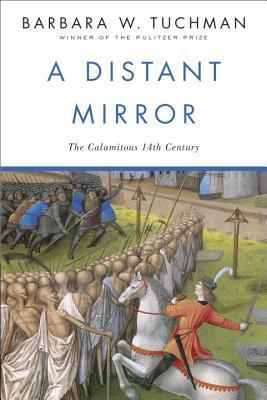
The 14th century gives us back two contradictory images: a glittering time of crusades and castles, cathedrals and chivalry, and a dark time of ferocity and spiritual agony, a world plunged into a chaos of war, fear and the Plague. Barbara Tuchman anatomizes the century, revealing both the great rhythms of history and the grain and texture of domestic life as it was lived.

The Proud Tower: A Portrait of the World Before the War, 1890-1914
by Barbara W. Tuchman
Rating: 4.1 ⭐
During the fateful quarter century leading up to World War I, the climax of a century of rapid, unprecedented change, a privileged few enjoyed luxury as the underclass was “heaving in its pain, its power, and its hate.” In "The Proud Tower", Barbara W. Tuchman brings the era to vivid life: the decline of the Edwardian aristocracy; the Anarchists of Europe and America; Germany and its self-depicted hero, Richard Strauss; Diaghilev’s Russian ballet and Stravinsky’s music; the Dreyfus Affair; the Peace Conferences in The Hague; and the enthusiasm and tragedy of Socialism, epitomized by the assassination of Jean Jaurès on the night the Great War began and an epoch came to a close.

Twice a winner of the Pulitzer Prize, author Barbara Tuchman now tackles the pervasive presence of folly in governments thru the ages. Defining folly as the pursuit by governments of policies contrary to their own interests, despite the availability of feasible alternatives, Tuchman details four decisive turning points in history that illustrate the very heights of folly in government: the Trojan War, the breakup of the Holy See provoked by Renaissance Popes, the loss of the American colonies by Britain's George III & the USA's persistent folly in Vietnam. THE MARCH OF FOLLY brings the people, places & events of history alive for today's reader.

The Proud Tower, the Pulitzer Prize–winning The Guns of August, and The Zimmermann Telegram comprise Barbara W. Tuchman’s classic histories of the First World War era In January 1917, the war in Europe was, at best, a tragic standoff. Britain knew that all was lost unless the United States joined the war, but President Wilson was unshakable in his neutrality. At just this moment, a crack team of British decoders in a quiet office known as Room 40 intercepted a document that would change history. The Zimmermann telegram was a top-secret message to the president of Mexico, inviting him to join Germany and Japan in an invasion of the United States. How Britain managed to inform the American government without revealing that the German codes had been broken makes for an incredible story of espionage and intrigue as only Barbara W. Tuchman could tell it. Praise for The Zimmermann Telegram “A true, lucid thriller . . . a tremendous tale of hushed and unhushed uproars in the linked fields of war and diplomacy . . . Tuchman makes the most of it with a creative writer’s sense of drama and a scholar’s obeisance to the evidence.”—The New York Times “The tale has most of the ingredients of an Eric Ambler spy thriller.”—Saturday Review

Barbara W. Tuchman won the Pulitzer Prize for Stilwell and the American Experience in China, 1911-45 in 1972. She uses the life of Joseph Stilwell, the military attache to China in 1935-39 and commander of United States forces and allied chief of staff to Chiang Kai-shek in 1942-44, to explore the history of China from the revolution of 1911 to the turmoil of World War II, when China's Nationalist government faced attack from Japanese invaders and Communist insurgents. Her story is an account of both American relations with China and the experiences of one of our men on the ground. In the cantankerous but level-headed "Vinegar Joe," Tuchman found a subject who allowed her to perform, in the words of The National Review, "one of the historian's most envied magic conjoining a fine biography of a man with a fascinating epic story."

Presents a fresh view of the American Revolution, chronicling key events from 1776 to 1781 and assessing the repercussions for America, England, France, and other nations.

Bible and Sword: England and Palestine from the Bronze Age to Balfour
by Barbara W. Tuchman
Rating: 3.7 ⭐
From Barbara W. Tuchman, Pulitzer Prize–winning author of The Guns of August, comes history thru a wide-angle lens: a fascinating chronicle of Britain’s long relationship with Palestine & the Middle East, from the ancient world to the 20th century. Historically, the British were drawn to the Holy Land for two major reasons: first, to translate the Bible into English &, later, to control the road to India & access to Middle Eastern oil. With the lucid vividness that characterize all her work, Tuchman follows these twin spiritual & imperial motives—the Bible & the sword—to their seemingly inevitable endpoint, when Britain conquered Palestine at the conclusion of WWI. At that moment, in a gesture of significance & solemnity, the Balfour Declaration of 1917 established a British-sponsored mandate for a national home for the Jewish people. Throughout this account, Tuchman demonstrates that the seeds of conflict were planted in the Middle East long before the official founding of the modern state of Israel. “Tuchman is a wise & witty writer, a shrewd observer with a lively command of high drama.”—The Philadelphia Inquirer “In her métier as a narrative popular historical writer, Barbara Tuchman is supreme.”—Chicago Sun-Times

From thoughtful pieces on the historian's role to striking insights into America's past and present to trenchant observations on the international scene, Barbara W. Tuchman looks at history in a unique way and draws lessons from what she sees. Here is a splendid body of work, the story of a lifetime spent "practicing history."

One of the best-known historians of her time, Barbara W. Tuchman distilled the complex interplay of personalities and events into gripping narratives that combine lucid scholarship with elegant literary art. A shrewd portraitist, she laid bare the all-too-human failures of leaders caught in the pull of historical currents and often tragically blinded by biases of culture and temperament.Nowhere are her talents more brilliantly on display than in her Pulitzer Prize–winning bestseller The Guns of August (1962), a riveting account of the outbreak of World War I and the weeks of fighting leading up to the First Battle of the Marne in September 1914. Tuchman dramatizes the diplomatic debacles that precipitated the war and the intransigence of the German and French armies as they dogmatically adhered to their battle plans, with disastrous consequences. Interwoven with her vivid re-creation of the German march through Belgium into France and the fierce fighting on the Eastern Front are astute characterizations of the conflict’s key military and political leaders, among them French General Joseph Joffre, German Kaiser Wilhelm II, and British First Lord of the Admiralty Winston Churchill. The Guns of August can also be read as a cautionary study in the perils of brinksmanship, and Tuchman’s searching observations about the irrational escalation of conflict among states made a deep impression on President John F. Kennedy, who famously drew on the book for insight during the Cuban Missile Crisis. In a deluxe reader’s edition for the first time in more than a generation, The Guns of August is presented here with ten fully restored color maps and sixteen pages of photographs.Some of Tuchman’s finest writing graces her next book, The Proud Tower: A Portrait of the World Before the War, 1890–1914 (1966). She brings to life the disparate worlds of the self-satisfied English aristocracy and the miserable poor whose conditions gave rise to international anarchism; revisits the national madness of the Dreyfus Affair in France; considers the naiveté and cynicism of the varied participants in the international peace conferences at The Hague; mounts a dazzling foray into cultural criticism with a meditation on the operas of Richard Strauss; and creates unforgettable portraits of such political titans as Thomas B. Reed, longtime Speaker of the U.S. House of Representatives, and French Socialist leader Jean Jaurès. Honoring the historian’s ideal to envision life “as it really was,” Tuchman paints a fin-de-siècle world “bursting with new tensions and accumulated energies.” The present volume reproduces the original endpaper illustrations from the first edition of The Proud Tower, plus a thirty-two page insert of illustrations. And as a special coda, it presents “How We Entered World War I,” a 1967 essay that appeared in The New York Times Magazine in which Tuchman explores the genesis of U.S. involvement in the Great War.

The 14th century gives us back two contradictory images: a glittering time of crusades and castles, cathedrals and chivalry, and a dark time of ferocity and spiritual agony, a world plunged into a chaos of war, fear and the Plague. Barbara Tuchman anatomizes the century, revealing both the great rhythms of history and the grain and texture of domestic life as it was lived.

A journalistic tour de force, this wide-ranging collection by the author of the Pulitzer Prize–winning biography Stilwell and the American Experience in China is a classic in its own right. During the summer of 1972—a few short months after Nixon’s legendary visit to China—master historian Barbara W. Tuchman made her own trip to that country, spending six weeks in eleven cities and a variety of rural settlements. The resulting reportage was one of the first evenhanded portrayals of Chinese culture that Americans had ever read. Tuchman’s observations capture the people as they lived, from workers in the city and provincial party bosses to farmers, scientists, and educators. She demonstrates the breadth and scope of her expertise in discussing the alleviation of famine, misery, and exploitation; the distortion of cultural and historical inheritances into ubiquitous slogans; news media, schools, housing, and transportation; and Chairman Mao’s techniques for reasserting the Revolution. This edition also includes Tuchman’s “fascinating” (The New York Review of Books) essay, “If Mao Had Come to Washington in 1945”—a tantalizing piece of speculation on a proposed meeting between Mao and Roosevelt that would have changed the course of postwar history. “Shrewdly observed . . . Tuchman enters another plea for coolness, intelligence and rationality in American Asian policies. One can hardly disagree.”—The New York Times Book Review

The 14th century gives us back two contradictory images: a glittering time of crusades and castles, cathedrals and chivalry, and a dark time of ferocity and spiritual agony, a world plunged into a chaos of war, fear and the Plague. Barbara Tuchman anatomizes the century, revealing both the great rhythms of history and the grain and texture of domestic life as it was lived.

'Geen tijd was van nature waanzinniger dan deze tijd,' schreef de negentiende-eeuwse Franse historicus Michelet over de veertiende eeuw, het herfsttij der Middeleeuwen. Het einde der tijden lijkt viermaal wordt het werelddeel getroffen door de Zwarte Dood. De koningen van Engeland en Frankrijk bestrijden elkaar in een wrede en langdurige strijd, de Honderdjarige Oorlog, en roversbenden terroriseren de boerenbevolking. De veertiende eeuw is ook een periode van vitaliteit en culturele bloei, waarin de adel zijn heldendaden in ridderromans laat optekenen, de hoofse liefde in velerlei toonaarden wordt bezongen en waarin schrijvers als Boccaccio, Petrarca en Chaucer de grondslag leggen voor een grote literaire traditie. Met het leven van de Franse ridder Enguerrand VII van Coucy als concentratiepunt voert Tuchman de lezer door dit kleurrijke tijdperk en houdt zij onze tijd vanuit de verte een spiegel voor.


Papers presented at the joint meeting of the American Jewish Historical Society and the American Historical Association on December 28, 1976.
The Book
by Barbara W. Tuchman
A Lecture Sponsored by the Center for the Book in the Library of Congress and the Authors' League of America, Presented at the Library of Congress.


Play the Animal Game
by Barbara W. Tuchman
Art
by Barbara W. Tuchman
Stilwell American Experience in China Part 2
by Barbara W. Tuchman
Stilwell American Experience in China Part 1 of 2
by Barbara W. Tuchman
The meaning of freedom: (an inquiry into the persistence of unwisdom in government)
by Barbara W. Tuchman
Where are the progressive Republicans?
by Barbara W. Tuchman
Sources Of Japanese Tradition, Vol. 1
by Barbara W. Tuchman
'"Wise, witty, and wonderful . . . A great book, in a great historical tradition." —CommentaryThe 14th century gives us back two contradictory a glittering time of crusades and castles, cathedrals and chivalry, and a dark time of ferocity and spiritual agony, a world plunged into a chaos of war, fear and the Plague. Barbara Tuchman anatomizes the century, revealing both the great rhythms of history and the grain and texture of domestic life as it was lived.

八月の砲声 上―第一次世界大戦
by Barbara W. Tuchman
Bible and Sword
by Barbara W. Tuchman