
Frederick the Great
Frederick II (German: Friedrich II.; 24 January 1712 – 17 August 1786) was a King in Prussia (1740–1772) and a King of Prussia (1772–1786) from the Hohenzollern dynasty. In his role as a prince-elector of the Holy Roman Empire, he was Frederick IV (Friedrich IV.) of Brandenburg. He was in personal union the sovereign prince of the Principality of Neuchâtel. He became known as Frederick the Great (Friedrich der Große) and was nicknamed Der Alte Fritz ("Old Fritz"). Interested primarily in music and philosophy and not the arts of war during his youth, Frederick unsuccessfully attempted to flee from his authoritarian father, Frederick William I, with childhood friend, Hans Hermann von Katte, whose execution he was forced to watch after they had been captured. Upon ascending to the Prussian throne, he attacked Austria and claimed Silesia during the Silesian Wars, winning military acclaim for himself and Prussia. Near the end of his life, Frederick physically connected most of his realm by conquering Polish territories in the First Partition of Poland. Frederick was a proponent of enlightened absolutism. For years he was a correspondent of Voltaire, with whom the king had an intimate, if turbulent, friendship. He modernized the Prussian bureaucracy and civil service and promoted religious tolerance throughout his realm. Frederick patronized the arts and philosophers, and wrote flute music. Frederick is buried at his favorite residence, Sanssouci in Potsdam. Because he died childless, Frederick was succeeded by his nephew, Frederick William II of Prussia, son of his brother, Prince Augustus William of Prussia.
28 Books Written
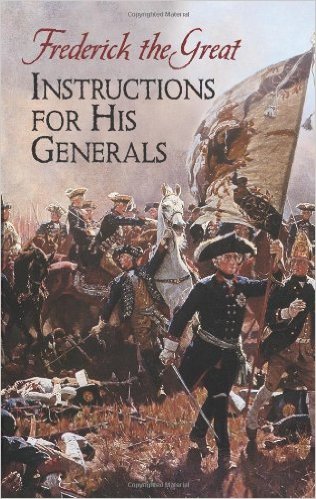
The king of Prussia from 1740 to 1786, Frederick the Great ranks among eighteenth-century Europe's most enlightened rulers. In addition to abolishing serfdom in his domains and promoting religious tolerance, he was an ardent patron of the arts and an accomplished musician. "Diplomacy without arms," he observed, "is like music without instruments." Frederick's expertise at military matters is reflected in his successful defense of his territory during the Seven Years' War, in which he fought all the great powers of Europe. His brilliant theories on strategy, tactics, and discipline are all explained in this vital text."War is not an affair of chance," Frederick asserted, adding that "a great deal of knowledge, study, and meditation is necessary to conduct it well." In this book, he presents the fundamentals of warfare, discussing such timeless considerations as leadership qualities, the value of surprise, and ways to conquer an enemy who possesses superior forces. The soundness of his advice was endorsed by Napoleon himself, who once advised, "Read and re-read the campaigns of Alexander, Hannibal, Caesar . . . and Frederick. This is the only way to become a great captain and to master the secrets of the art of war."

L'Antimachiavelli di Federico II di Prussia rappresenta il manifesto spirituale, prima ancora che politico, di un principe illuminato che cercò di rimanere fedele tutta la vita ai suoi ideali umanitari. Uscito a Londra nel 1741, venne accolto con enorme interesse, apparendo agli occhi� dell'Europa colta come l'ambizioso programma di governo del giovane reggente.

Frederick the Great (1712–1786), King of Prussia, initiated the Seven Years' War in 1756; outfought the formidable French, Russian, and Austrian armies aligned against him; and established Prussia as a major power, thereby decisively influencing the next two centuries of European history. He was also a brilliant military thinker whose observations arose from extensive battlefield experience.This volume presents a balanced selection from Frederick's writings on strategy, tactics, and mobility; the problems of logistics and a two-front war; the combined use of infantry, cavalry, and artillery; the history of the Prussian army; the critical battles of the Seven Years' War; generalship as an art; and much more. A majority of this material is translated here for the first time in English and available nowhere else. The result is an invaluable glimpse into the inner thoughts of a military genius.

Ce livre est une oeuvre du domaine public éditée au format numérique par Ebooks libres et gratuits. L’achat de l’édition Kindle inclut le téléchargement via un réseau sans fil sur votre liseuse et vos applications de lecture Kindle.


The first modern English edition of diverse Enlightenment-era writings by Prussian monarch Frederick the GreatFrederick II of Prussia (1712–1786), best known as Frederick the Great, was a prolific writer of philosophical discourses, poems, epics, satires, and more, while maintaining extensive correspondence with prominent intellectuals, Voltaire among them. This edition of selected writings, the first to make a wide range of Frederick’s most important ideas available to a modern English readership, moves beyond traditional attempts to see his work only in light of his political aims. In these pages, we can finally appreciate Frederick’s influential contributions to the European Enlightenment―and his unusual role as a monarch who was also a published author.In addition to Frederick’s major opus, the Anti-Machiavel , the works presented here include essays, prefaces, reviews, and dialogues. The subjects discussed run the gamut from ethics to religion to political theory. Accompanied by critical annotations, the texts show that we can understand Frederick’s views of kingship and the state only if we engage with a broad spectrum of his thought, including his attitudes toward morality and self-love. By contextualizing his arguments and impact on Enlightenment beliefs, this volume considers how we can reconcile Frederick’s innovative public musings with his absolutist rule. Avi Lifschitz provides a robust and detailed introduction that discusses Frederick’s life and work against the backdrop of eighteenth-century history and politics.With its unparalleled scope and cross-disciplinary appeal, Frederick the Great’s Philosophical Writings firmly establishes one monarch’s multifaceted relevance for generations of readers and scholars to come.

Bei diesem Werk handelt es sich um eine urheberrechtsfreie Ausgabe und um ein Kurzwerk.Diese Kindle-Edition beinhaltet die kostenlose, drahtlose Lieferung auf Ihren Kindle oder Ihre Kindle-Apps.

Bei diesem Werk handelt es sich um eine urheberrechtsfreie Ausgabe.Der Kauf dieser Kindle-Edition beinhaltet die kostenlose, drahtlose Lieferung auf Ihren Kindle oder Ihre Kindle-Apps.

Anti-Machiavel: Or, an Examination of Machiavel's Prince. With Notes Historical and Political. Published by Mr. de Voltaire. Translated From the French
by Frederick the Great
Rating: 3.3 ⭐
The 18th century was a wealth of knowledge, exploration and rapidly growing technology and expanding record-keeping made possible by advances in the printing press. In its determination to preserve the century of revolution, Gale initiated a revolution of its digitization of epic proportions to preserve these invaluable works in the largest archive of its kind. Now for the first time these high-quality digital copies of original 18th century manuscripts are available in print, making them highly accessible to libraries, undergraduate students, and independent scholars.Delve into what it was like to live during the eighteenth century by reading the first-hand accounts of everyday people, including city dwellers and farmers, businessmen and bankers, artisans and merchants, artists and their patrons, politicians and their constituents. Original texts make the American, French, and Industrial revolutions vividly contemporary.++++The below data was compiled from various identification fields in the bibliographic record of this title. This data is provided as an additional tool in helping to insure edition ++++British LibraryT136840In fact by Frederick II King of Prussia, and edited by Voltaire. With the text of 'The prince' and A. N. Amelot de la Houssaye's preface to his French translation. With two final advertisement leaves.London : printed for T. Woodward, 1741. xxiii,[1],332,[4],p. ; 8°

Frederick the Great a.k.a. Frederick II King of Prussia 1740 to 1786 is considered by many historians to be one of the greatest generals of all times. This is an instruction book that King Frederic wrote for his GeneralsARTICLE I.Of Prussian Troops, their Excellencies and their Defects.ARTICLE II.Of the Subsistence of Troops, and of Provisions.ARTICLE III.Of Sutlers, Beer, and Brandy.ARTICLE IV.Of Dry and Green Forage.ARTICLE V.Of the Knowledge of a Country.ARTICLE VI.Of the Coup D'Oeil.ARTICLE VII.Of the Distribution of Troops.ARTICLE VIII.Of Camps.ARTICLE IX.How to secure a Camp.ARTICLE X.In what Manner and for what Reason we are to send out Detachments.ARTICLE XI.Of the Tricks and Stratagems of War.ARTICLE XII.Of Spies, how they are to be employed on every Occasion, and in what Manner we are to learn Intelligence of the enemy.ARTICLE XIII.Of certain Marks, by which the Intentions of the Enemy are to be discovered.ARTICLE XIV.Of our own Country, and that which is either neutral or hostile; of the Variety of Religions, and of the different Conduct which such Circumstances require.ARTICLE XV.Of every Kind of March, which it can be necessary for an Army to make.ARTICLE XVI.On the Precautions necessary to be taken in a Retreat against Hussars and Pandours.ARTICLE XVII.Of the Method in which the Light Prussian Troops conduct themselves when engaged with the Hussars and Pandours.ARTICLE XVIII.By what Movements on our Side the Enemy may also be obliged to move.ARTICLE XVIII.By what Movements on our Side the Enemy may also be obliged to move.ARTICLE XIX.Of the Crossing of Rivers.ARTICLE XX.Of the Manner in which the Passage of Rivers is to be defended.ARTICLE XXI.Of the Surprise of Towns.ARTICLE XXII.Of Combats and Battles.ARTICLE XXIII.Of the Reasons which should induce us to give Battle, and in what Manner it is to be conducted.ARTICLE XXIV.Of the Hazards and unforeseen Accidents which happen in War.ARTICLE XXV.If it be absolutely necessary that the General of an Army should hold a Council of War.ARTICLE XXVI.Of the Manoeuvres of an Army.ARTICLE XXVII.Of Winter Quarters.ARTICLE XXVIII.Of Winter Campaigns in particular.

Bei diesem Werk handelt es sich um eine urheberrechtsfreie Ausgabe.Der Kauf dieser Kindle-Edition beinhaltet die kostenlose, drahtlose Lieferung auf Ihren Kindle oder Ihre Kindle-Apps.

Excerpt from Die Werke Friedrichs des Groen in Deutscher Ubersetzung, Vol. 1: Denkwurdigkeiten zur Geschichte des Hauses Brandenburg Starb Diefem uberblict uber Die auere Gntfiebung feiner biftorifaben Scbriften wenden wir una Der sllrbeitametbode Deo Roniga gu. Un allen sorreden gu feinen Sefwimtwerten betont er, Da uabrbeit Das erfie Sefe fur Den Sgifioriler fei. (er beruft fiel) Darauf, Da Die Driginale Der Sriefe und Sertrage in Den ecbioen feine Sarfiellungen beglaubigen wurden. Und in Der Sat find fie auf urtundlicber srundlage aufgebaut. About the Publisher Forgotten Books publishes hundreds of thousands of rare and classic books. Find more at www.forgottenbooks.com This book is a reproduction of an important historical work. Forgotten Books uses state-of-the-art technology to digitally reconstruct the work, preserving the original format whilst repairing imperfections present in the aged copy. In rare cases, an imperfection in the original, such as a blemish or missing page, may be replicated in our edition. We do, however, repair the vast majority of imperfections successfully; any imperfections that remain are intentionally left to preserve the state of such historical works.

Bei diesem Werk handelt es sich um eine urheberrechtsfreie Ausgabe und um ein Kurzwerk.Diese Kindle-Edition beinhaltet die kostenlose, drahtlose Lieferung auf Ihren Kindle oder Ihre Kindle-Apps.

book

Historische, Militärische Und Philosophische Schriften, Gedichte Und Briefe
by Frederick the Great
Rating: 4.0 ⭐

Durante a época das Luzes, multiplicaram-se as refutações das ideias de Maquiavel, sobretudo relativamente ao Príncipe, dentre as quais aquela que teve maior fortuna foi o Anti-Maquiavel de Frederico II, tanto pelo prestígio de que gozava seu autor, rei da Prússia, quanto pelo fato de que a obra refletia uma visão muito difundida, desde os primeiros antimaquiavelistas, segundo a qual o pensador florentino propunha uma política da dominação, do excesso e da desmedida, ao mesmo tempo que fazia a apologia da impostura, da mentira, e da ilusão.

„Eine Regierung muss sparsam sein, weil das Geld, das sie erhält, aus dem Blut und Schweiß ihres Volkes stammt. Es ist gerecht, dass jeder einzelne dazu beiträgt, die Ausgaben des Staates tragen zu helfen. Aber es ist nicht gerecht, dass er die Hälfte seines jährlichen Einkommens mit dem Staate teilen muss.“Was auf den ersten Blick wie ein aktuelles Zitat eines kritischen Wirtschaftsjournalisten wirkt, stammt in Wahrheit aus dem Munde des preußischen Königs Friedrich II. Der als „Alter Fritz“ und „Friedrich der Große“ von seinem Volk verehrte Potentat hatte aus dem kleinen Preußen nicht nur ein mächtiges europäisches Reich geformt, sondern auch viele gesellschaftliche, ökonomische und kulturelle Belange mit gesundem Menschenverstand zum Wohle der Bürger geregelt.Dieses Porträt zeichnet Leben und Werk des preußischen Monarchen nach und stellt fest, wie hilfreich seine Ansichten und Einsichten für uns heute sein können.

Die Phänomene unserer Zeit: - Ursachen, Zusammenhänge und Wirkungen -
by Frederick the Great
Rating: 5.0 ⭐
Um diese Phänomene unserer Zeit geht alternative Fakten, Aufklärung, Christentum, Demokratie, Diskriminierung, Dummheit, Evangelikale, Evolution, Fakten, Faschismus, Feministische Linguistik, Framing, Fremdenscheu, Gleichberechtigung, Greenwashing, Gutmenschen, Ideologien, Ignoranz, Intoleranz, Islam, Islamismus, Juden, Katholizismus, Klimawandel, kognitive Dissonanzen, Kolonialismus, Konsumismus, Kreationismus, LGBTQIA*, Meinungsfreiheit, Menschenrechte, Migration, Multikulti, Nationalismus, Nationalsozialismus, Pädophilie, Pinkwashing, Populismus, psychopathologische Irritationen, Rassismus, Religionen, Selbstreferenzialität, sexueller Missbrauch, Spaltung der Gesellschaft, Staatsdoktrin, Symbolpolitik, Terrorismus, Toleranz, Trumpismus, Umweltzerstörung und Verschwörungstheorien.

Bei diesem Werk handelt es sich um eine urheberrechtsfreie Ausgabe und um ein Kurzwerk.Diese Kindle-Edition beinhaltet die kostenlose, drahtlose Lieferung auf Ihren Kindle oder Ihre Kindle-Apps.

The History of the Seven Years War, Vol. 1: Translated From the French
by Frederick the Great
Rating: 4.0 ⭐
Excerpt from The History of the Seven Years WarIt is only to be carried by the faerifice Of from fifteen to twenty thoufand men, which makes a wide breach in an army. Recruits.

Frederick the Great on Warfare: Battlefield Tactics of the Seven Year’s War & Military Instruction to the Officers of His Army
by Frederick the Great
The handbook of battle by an 18th century masterFrederick the Great was one of the most outstanding figures in European history. He was, in the eighteenth century, the monarch of a German state, Prussia, which had few advantages. His was a comparatively small nation surrounded by France, Sweden and Russia all of which were hostile to Prussia’s interests. The Seven Years War was a conflict raging across the globe, the outcome of which would seal the fate of empires. Frederick not only averted national defeat, but proved himself to be a master of strategy and battlefield tactics. Against the odds the Prussian Army not only grew to become a force to be reckoned with, but its commander engendered a spirit which ultimately flourished to form the foundations of a unified Germany. Frederick knew well that his method of waging war would win victories and was anxious that his generals followed his own proven principles. This book, complete with original diagrams and for the first time, in this Leonaur edition, uniform plates of the Prussian Army of the period, is the work (in English translation) that Frederick produced to detail his own methods of waging war. It will be invaluable to all students of military history and tactics and is an essential guide for historical re-enactors, dramatic productions and war-gamers.Leonaur editions are newly typeset and are not facsimiles; each title is available in softcover and hardback with dustjacket; our hardbacks are cloth bound and feature gold foil lettering on their spines and fabric head and tail bands.

Excerpt from Die Werke Friedrichs des Grossen, Vol. 6: Militarische Schriften Bum unterricht fur Die Suartiermeifier, in Denen Die Sorlaufer Der? Heutigen Seite; ralfiab au erblicfen find, iri endlich 1777 Die Schrift "uber Siriegamarfche verfat. About the Publisher Forgotten Books publishes hundreds of thousands of rare and classic books. Find more at www.forgottenbooks.com This book is a reproduction of an important historical work. Forgotten Books uses state-of-the-art technology to digitally reconstruct the work, preserving the original format whilst repairing imperfections present in the aged copy. In rare cases, an imperfection in the original, such as a blemish or missing page, may be replicated in our edition. We do, however, repair the vast majority of imperfections successfully; any imperfections that remain are intentionally left to preserve the state of such historical works.

Bei diesem Werk handelt es sich um eine urheberrechtsfreie Ausgabe und um ein Kurzwerk.Diese Kindle-Edition beinhaltet die kostenlose, drahtlose Lieferung auf Ihren Kindle oder Ihre Kindle-Apps.

Excerpt from Friedrichs des Groen Briefe An Seinen Vater, Geschrieben In Den Jahren 1732 Bis 1739 Sdie an. Beaeicmet bie 9mm]: unb etammzfiifle bes 'dreua. J'geereo nom Sabre 1806.nie 5a nebmen unb bas Siegiinent in ben niogiicbfl boflfommenen gnfianb 5a fegen, unb ber Ronig beoeigte bei ben Siebuen barnber feine sufriebenbeit. Sder Rronprino Iebte feitbem mit bem Ronige ini oeanoen anf febroniraniicbein Sage, morion bie, nacb= foigenben fariefe ein eben f0 ireues serigniie able: gen, ais bon bem ibeniuben bes Rronprinoen, fic!) burch oeifer in benen sdingen, melage bein Ronige tbeuer nmren, bei feinexn ibarer in 631m? Au erbal: ten, mobei naturlicb bon Rami nnb'nbiiienfdgaft unb bon franoofifeber Eiteratnr nidgt bie Siebe fein bnrfre, fonbern meifi nnr bon oeegenflanben, bie bas Siegiinent betrafen, unb bon foirben, bie beniÿionige in ofonornifcber ober fonfiiger 'zoeoiebnng bon fin: terefl'e maren. About the Publisher Forgotten Books publishes hundreds of thousands of rare and classic books. Find more at www.forgottenbooks.com This book is a reproduction of an important historical work. Forgotten Books uses state-of-the-art technology to digitally reconstruct the work, preserving the original format whilst repairing imperfections present in the aged copy. In rare cases, an imperfection in the original, such as a blemish or missing page, may be replicated in our edition. We do, however, repair the vast majority of imperfections successfully; any imperfections that remain are intentionally left to preserve the state of such historical works.

The History of the Seven Years War, Vol. 2: Translated From the French
by Frederick the Great
Rating: 3.0 ⭐
Excerpt from The History of the Seven Years War, Vol. 2: Translated From the FrenchAbout the PublisherForgotten Books publishes hundreds of thousands of rare and classic books. Find more at www.forgottenbooks.comThis book is a reproduction of an important historical work. Forgotten Books uses state-of-the-art technology to digitally reconstruct the work, preserving the original format whilst repairing imperfections present in the aged copy. In rare cases, an imperfection in the original, such as a blemish or missing page, may be replicated in our edition. We do, however, repair the vast majority of imperfections successfully; any imperfections that remain are intentionally left to preserve the state of such historical works.

Letters Between Frederic II And Mess. D'Alembert, De Condorcet, Grimm And D'Arget
by Frederick the Great
Rating: 3.0 ⭐
This scarce antiquarian book is a facsimile reprint of the original. Due to its age, it may contain imperfections such as marks, notations, marginalia and flawed pages. Because we believe this work is culturally important, we have made it available as part of our commitment for protecting, preserving, and promoting the world's literature in affordable, high quality, modern editions that are true to the original work.

Instructions to His Generals: The Military Philosophy of Frederick the Great
by Frederick the Great
Rating: 3.0 ⭐
What if you could master the art of leadership, inspire unwavering loyalty, and achieve victory through strategy and discipline?Instructions to His The Military Philosophy of Frederick the Great brings you the timeless wisdom of Frederick the Great, one of history's most brilliant military leaders, thoughtfully modernized and adapted for today's readers.Frederick the Great, King of Prussia, distilled his strategies, tactics, and leadership principles into clear and concise instructions for his generals. His insights provide a practical roadmap for military success, effective leadership, and strategic thinking. These principles extend beyond the battlefield, offering profound lessons for modern leaders, strategists, and individuals seeking success through preparation, adaptability, and discipline.This is not just a military text-it's a guide to mastering leadership, inspiring confidence, and achieving success in the face of challenges. Whether you are a business leader, entrepreneur, strategist, or student of history, Frederick's teachings remain as relevant and impactful as ever.What You'll Discover in This Modern Strategic Leadership - Learn how to inspire loyalty, build disciplined teams, and lead decisively through preparation and adaptability.The Art of War and Strategy - Gain insights into planning, executing campaigns, and achieving victory through strategic thinking and calculated decisions.Discipline and Adaptability - Discover the value of preparation, flexibility, and resilience in overcoming obstacles and thriving under pressure.Clear and Accessible Language - Experience Frederick's timeless instructions in a modernized format, making his insights practical and easy to apply for today's leaders.Imagine having the tools to make decisive plans, adapt to challenges, and lead with unwavering confidence. This modern translation of Instructions to His Generals brings Frederick's military wisdom to a new generation, offering timeless lessons for achieving success and inspiring those you lead.Get your copy today and transform your approach to leadership with the insights of one of history's greatest commanders.