Loading genres...
Explore the best books about Japan genre.
This #1 New York Times best-selling guide to decluttering your home from Japanese cleaning consultant Marie Kondo takes readers step-by-step through her revolutionary KonMari Method for simplifying, organizing, and storing.Despite constant efforts to declutter your home, do papers still accumulate like snowdrifts and clothes pile up like a tangled mess of noodles?Japanese cleaning consultant Marie Kondo takes tidying to a whole new level, promising that if you properly simplify and organize your home once, you’ll never have to do it again. Most methods advocate a room-by-room or little-by-little approach, which doom you to pick away at your piles of stuff forever. The KonMari Method, with its revolutionary category-by-category system, leads to lasting results. In fact, none of Kondo’s clients have lapsed (and she still has a three-month waiting list). With detailed guidance for determining which items in your house “spark joy” (and which don’t), this international bestseller featuring Tokyo’s newest lifestyle phenomenon will help you clear your clutter and enjoy the unique magic of a tidy home—and the calm, motivated mindset it can inspire.From the Hardcover edition.
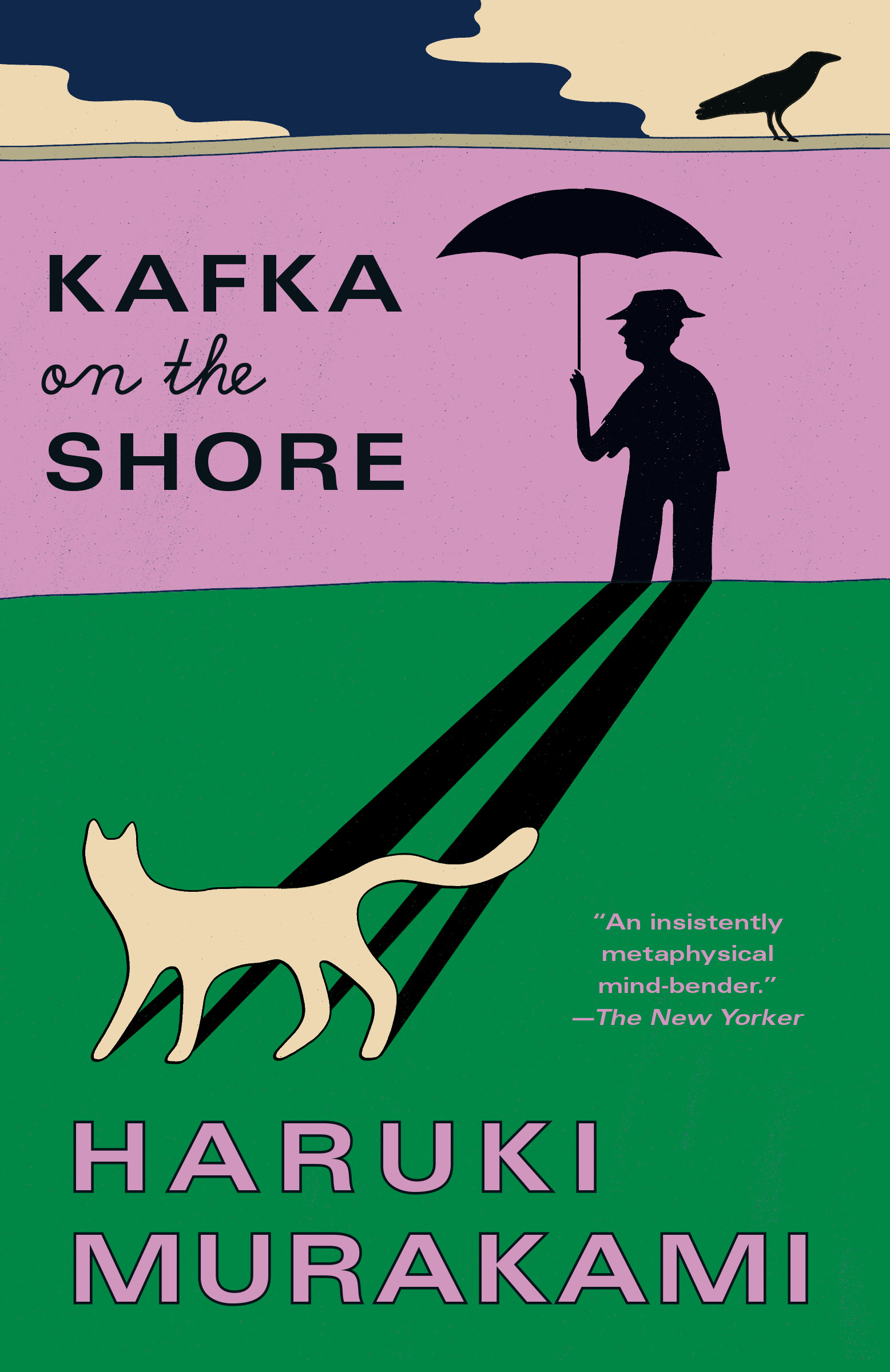
Kafka on the Shore, a tour de force of metaphysical reality, is powered by two remarkable characters: a teenage boy, Kafka Tamura, who runs away from home either to escape a gruesome oedipal prophecy or to search for his long-missing mother and sister; and an aging simpleton called Nakata, who never recovered from a wartime affliction and now is drawn toward Kafka for reasons that, like the most basic activities of daily life, he cannot fathom. Their odyssey, as mysterious to them as it is to us, is enriched throughout by vivid accomplices and mesmerizing events. Cats and people carry on conversations, a ghostlike pimp employs a Hegel-quoting prostitute, a forest harbors soldiers apparently unaged since World War II, and rainstorms of fish (and worse) fall from the sky. There is a brutal murder, with the identity of both victim and perpetrator a riddle—yet this, along with everything else, is eventually answered, just as the entwined destinies of Kafka and Nakata are gradually revealed, with one escaping his fate entirely and the other given a fresh start on his own.

How Asia Works( Success and Failure in the World's Most Dynamic Region) Hardcover JoeStudwell GrovePress

In the early 1900s, teenaged Sunja, the adored daughter of a crippled fisherman, falls for a wealthy stranger at the seashore near her home in Korea. He promises her the world, but when she discovers she is pregnant—and that her lover is married—she refuses to be bought. Instead, she accepts an offer of marriage from a gentle, sickly minister passing through on his way to Japan. But her decision to abandon her home, and to reject her son's powerful father, sets off a dramatic saga that will echo down through the generations. Richly told and profoundly moving, Pachinko is a story of love, sacrifice, ambition, and loyalty. From bustling street markets to the halls of Japan's finest universities to the pachinko parlors of the criminal underworld, Lee's complex and passionate characters—strong, stubborn women, devoted sisters and sons, fathers shaken by moral crisis—survive and thrive against the indifferent arc of history.

In December 1937, the Japanese army invaded the ancient city of Nanking, systematically raping, torturing, and murdering more than 300,000 Chinese civilians. This book tells the story from three perspectives: of the Japanese soldiers who performed it, of the Chinese civilians who endured it, and of a group of Europeans and Americans who refused to abandon the city and were able to create a safety zone that saved many.

When The Sound of the One Hand came out in Japan in 1916 it caused a scandal. Zen was a secretive practice, its wisdom relayed from master to novice in strictest privacy. That a handbook existed recording not only the riddling koans that are central to Zen teaching but also detailing the answers to them seemed to mark Zen as rote, not revelatory.For all that, The Sound of the One Hand opens the door to Zen like no other book. Including koans that go back to the master who first brought the koan teaching method from China to Japan in the eighteenth century, this book offers, in the words of the translator, editor, and Zen initiate Yoel Hoffmann, “the clearest, most detailed, and most correct picture of Zen” that can be found. What we have here is an extraordinary introduction to Zen thought as lived thought, a treasury of problems, paradoxes, and performance that will appeal to artists, writers, and philosophers as well as Buddhists and students of religion.

MacArthur, the public figure, the private man, the soldier-hero whose mystery and appeal created a uniquely American legend, portrayed in a biography that will challenge the cherished myths of admirers and critics alike.IllustrationsPreamble: ReveilleFirst Call Ruffles & Flourishes (1880-1917)Charge (1917-1918) Call to Quarters (1919-1935)To the Colors (1935-1941)Retreat (1941-1942) The Green War (1942-1944)At High Port (1944-1945)Last Post (1945-1950) Sunset Gun (1950-1951) Recall (1951) Taps (1951-1964)AcknowledgmentsNotesBibliographyCopyright AcknowledgmentsIndex

Hagakure ("In the Shadow of Leaves") is a manual for the samurai classes consisting of a series of short anecdotes and reflections that give both insight and instruction-in the philosophy and code of behavior that foster the true spirit of Bushido-the Way of the Warrior. It is not a book ofphilosophy as most would understand the it is a collection of thoughts and sayings recorded over a period of seven years, and as such covers a wide variety of subjects, often in no particular sequence.The work represents an attitude far removed from our modern pragmatism and materialism, and possesses an intuitive rather than rational appeal in its assertion that Bushido is a Way of Dying, and that only a samurai retainer prepared and willing to die at any moment can be totally true to his lord.While Hagakure was for many years a secret text known only to the warrior vassals of the Hizen fief to which the author belonged, it later came to be recognized as a classic exposition of samurai thought and came to influence many subsequent generations, including Yukio Mishima.This translation offers 300 selections that constitute the core texts of the 1,300 present in the original.Hagakure was featured prominently in the film Ghost Dog , by Jim Jarmusch.

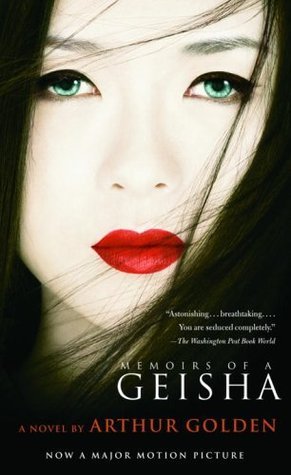
A literary sensation and runaway bestseller, this brilliant novel presents with seamless authenticity and exquisite lyricism the true confessions of one of Japan's most celebrated geisha.In "Memoirs of a Geisha," we enter a world where appearances are paramount; where a girl's virginity is auctioned to the highest bidder; where women are trained to beguile the most powerful men; and where love is scorned as illusion. It is a unique and triumphant work of fiction - at once romantic, erotic, suspenseful - and completely unforgettable.

"Visions of Japan: Kawase Hasui's masterpieces brings together in a single volume one hundred of the artist's most celebrated prints. Fully illustrated, this publication includes annotated descriptions for each work, as well as two essays on Hasui's life and work by Dr. Kendall H. Brown." Kawase Hasui (1883-1957) is considered the foremost Japanese landscape print artist of the 20th century, and he is most closely associated with the pioneering Shin-hanga (New prints) publisher Watanabe Shozaburo (1885-1962). Hasui's work became hugely popular, not only in his native Japan but also in the West, especially in the United States. His valuable contribution to the woodblock print medium was acknowledged in 1956, a year before his death, when he was honoured with the distinction of 'Living National Treasure'.

In 1982, having sold his jazz bar to devote himself to writing, Murakami began running to keep fit. A year later, he’d completed a solo course from Athens to Marathon, and now, after dozens of such races, not to mention triathlons and a dozen critically acclaimed books, he reflects upon the influence the sport has had on his life and—even more important—on his writing. Equal parts training log, travelogue, and reminiscence, this revealing memoir covers his four-month preparation for the 2005 New York City Marathon and takes us to places ranging from Tokyo’s Jingu Gaien gardens, where he once shared the course with an Olympian, to the Charles River in Boston among young women who outpace him. Through this marvelous lens of sport emerges a panorama of memories and insights: the eureka moment when he decided to become a writer, his greatest triumphs and disappointments, his passion for vintage LPs, and the experience, after fifty, of seeing his race times improve and then fall back. By turns funny and sobering, playful and philosophical, What I Talk About When I Talk About Running is rich and revelatory, both for fans of this masterful yet guardedly private writer and for the exploding population of athletes who find similar satisfaction in running.

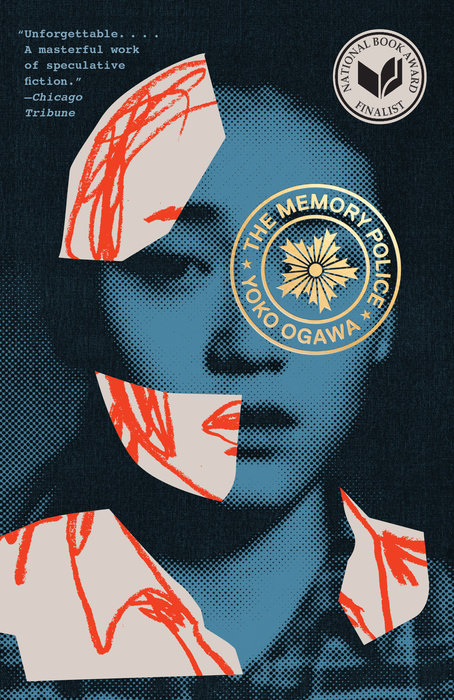
A haunting Orwellian novel about the terrors of state surveillance, from the acclaimed author of The Housekeeper and the Professor.On an unnamed island off an unnamed coast, objects are disappearing: first hats, then ribbons, birds, roses--until things become much more serious. Most of the island's inhabitants are oblivious to these changes, while those few imbued with the power to recall the lost objects live in fear of the draconian Memory Police, who are committed to ensuring that what has disappeared remains forgotten.When a young woman who is struggling to maintain her career as a novelist discovers that her editor is in danger from the Memory Police, she concocts a plan to hide him beneath her floorboards. As fear and loss close in around them, they cling to her writing as the last way of preserving the past.A surreal, provocative fable about the power of memory and the trauma of loss, The Memory Police is a stunning new work from one of the most exciting contemporary authors writing in any language.

The year is 1799, the place Dejima in Nagasaki Harbor, the “high-walled, fan-shaped artificial island” that is the Japanese Empire’s single port and sole window onto the world, designed to keep the West at bay; the farthest outpost of the war-ravaged Dutch East Indies Company; and a de facto prison for the dozen foreigners permitted to live and work there. To this place of devious merchants, deceitful interpreters, costly courtesans, earthquakes, and typhoons comes Jacob de Zoet, a devout and resourceful young clerk who has five years in the East to earn a fortune of sufficient size to win the hand of his wealthy fiancée back in Holland.But Jacob’s original intentions are eclipsed after a chance encounter with Orito Aibagawa, the disfigured daughter of a samurai doctor and midwife to the city’s powerful magistrate. The borders between propriety, profit, and pleasure blur until Jacob finds his vision clouded, one rash promise made and then fatefully broken. The consequences will extend beyond Jacob’s worst imaginings. As one cynical colleague asks, “Who ain’t a gambler in the glorious Orient, with his very life?”A magnificent mix of luminous writing, prodigious research, and heedless imagination, The Thousand Autumns of Jacob de Zoet is the most impressive achievement of its eminent author.

The year is 1984 and the city is Tokyo.A young woman named Aomame follows a taxi driver’s enigmatic suggestion and begins to notice puzzling discrepancies in the world around her. She has entered, she realizes, a parallel existence, which she calls 1Q84 —“Q is for ‘question mark.’ A world that bears a question.” Meanwhile, an aspiring writer named Tengo takes on a suspect ghostwriting project. He becomes so wrapped up with the work and its unusual author that, soon, his previously placid life begins to come unraveled. As Aomame’s and Tengo’s narratives converge over the course of this single year, we learn of the profound and tangled connections that bind them ever closer: a beautiful, dyslexic teenage girl with a unique vision; a mysterious religious cult that instigated a shoot-out with the metropolitan police; a reclusive, wealthy dowager who runs a shelter for abused women; a hideously ugly private investigator; a mild-mannered yet ruthlessly efficient bodyguard; and a peculiarly insistent television-fee collector.A love story, a mystery, a fantasy, a novel of self-discovery, a dystopia to rival George Orwell’s — 1Q84 is Haruki Murakami’s most ambitious undertaking yet: an instant best seller in his native Japan, and a tremendous feat of imagination from one of our most revered contemporary writers.

David Mitchell follows his eerily precocious, globe-striding first novel, Ghostwritten, with a work that is in its way even more ambitious. In outward form, number9dream is a Dickensian coming-of-age journey: Young dreamer Eiji Miyake, from remote rural Japan, thrust out on his own by his sister’s death and his mother’s breakdown, comes to Tokyo in pursuit of the father who abandoned him. Stumbling around this strange, awesome city, he trips over and crosses—through a hidden destiny or just monstrously bad luck—a number of its secret power centers. Suddenly, the riddle of his father’s identity becomes just one of the increasingly urgent questions Eiji must answer. Why is the line between the world of his experiences and the world of his dreams so blurry? Why do so many horrible things keep happening to him? What is it about the number 9? To answer these questions, and ultimately to come to terms with his inheritance, Eiji must somehow acquire an insight into the workings of history and fate that would be rare in anyone, much less in a boy from out of town with a price on his head and less than the cost of a Beatles disc to his name.

The Woman in the Dunes, by celebrated writer and thinker Kobo Abe, combines the essence of myth, suspense and the existential novel. After missing the last bus home following a day trip to the seashore, an amateur entomologist is offered lodging for the night at the bottom of a vast sand pit. But when he attempts to leave the next morning, he quickly discovers that the locals have other plans. Held captive with seemingly no chance of escape, he is tasked with shoveling back the ever-advancing sand dunes that threaten to destroy the village. His only companion is an odd young woman, and together their fates become intertwined as they work side by side through this Sisyphean of tasks.

"A wonderful introduction the Japanese tradition of jisei , this volume is crammed with exquisite, spontaneous verse and pithy, often hilarious, descriptions of the eccentric and committed monastics who wrote the poems." — The Buddhist ReviewAlthough the consciousness of death is, in most cultures, very much a part of life, this is perhaps nowhere more true than in Japan, where the approach of death has given rise to a centuries-old tradition of writing jisei , or the "death poem." Such a poem is often written in the very last moments of the poet's life.Hundreds of Japanese death poems, many with a commentary describing the circumstances of the poet's death, have been translated into English here, the vast majority of them for the first time. Compiler Yoel Hoffmann explores the attitudes and customs surrounding death in historical and present-day Japan and gives examples of how these have been reflected in the nation's literature in general. The development of writing jisei is then examined—from the longing poems of the early nobility and the more "masculine" verses of the samurai to the satirical death poems of later centuries.Zen Buddhist ideas about death are also described as a preface to the collection of Chinese death poems by Zen monks that are also included. Finally, the last section contains three hundred twenty haiku, some of which have never been assembled before, in translated English and romanized Japanese.

In this fascinating document, one of Japan's best known-and controversial-writers created what might be termed a new literary form. It is new because it combines elements of many existing types of writing, yet in the end fits into none of them.At one level, it may be read as an account of how a puny, bookish boy discovered the importance of his own physical being; the "sun and steel" of the title are themselves symbols respectively of the cult of the open air and the weights used in bodybuilding. At another level, it is a discussion by a major novelist of the relation between action and art, and his own highly polished art in particular. More personally, it is an account of one individual's search for identity and self-integration. Or again, the work could be seen as a demonstration of how an intensely individual preoccupation can be developed into a profound philosophy of life.All these elements are woven together by Mishima's complex yet polished and supple style. The confession and the self-analysis, the philosophy and the poetry combine in the end to create something that is in itself perfect and self-sufficient. It is a piece of literature that is as carefully fashioned as Mishima's novels, and at the same time provides an indispensable key to the understanding of them as art.The road Mishima took to salvation is a highly personal one. Yet here, ultimately, one detects the unmistakable tones of a self transcending the particular and attaining to a poetic vision of the universal. The book is therefore a moving document, and is highly significant as a pointer to the future development of one of the most interesting novelists of modern times.

"Written with precise skill and beautifully controlled power. The translation by Ivan Morris is outstanding." -- The New York Times**Winner of the 1952 Yomiuri Prize**This haunting novel explores the complete degradation and isolation of a man by war. Fires on the Plain is set on the island of Leyte in the Philippines during World War II, where the Japanese army is disintegrating under the hammer blows of the American landings. Within this broader disintegration is another, that of a single human being, Private Tamura. The war destroys each of his ties to society, one by one, until Tamura, a sensitive and intelligent man, becomes an outcast.Nearly losing the will to survive, he hears of a port still in Japanese hands and struggles to walk through the American lines. Unfazed by danger, he welcomes the prospect of dying, but first, he loses his hope, and then his sanity. Lost among his hallucinations, Tamura comes to fancy himself an angel enjoined by God to eat no living thing--but even angels fall.Tamura is never less than human, even when driven to the ultimate sin against humanity. Shocking as the outward events are, the greatness of the novel lies in its uplifting vision during a time of crushing horror. As relevant today as when it was originally published, Fires on the Plain will strike a chord with anyone who has lived through the horrors of war.

Welcome to Neo-Tokyo, built on the ashes of a Tokyo annihilated by a blast of unknown origin that triggered World War III. The lives of two streetwise teenage friends, Tetsuo and Kaneda, change forever when paranormal abilities begin to waken in Tetsuo, making him a target for a shadowy agency that will stop at nothing to prevent another catastrophe like the one that leveled Tokyo. At the core of the agency’s motivation is a raw, all-consuming fear of an unthinkable, monstrous power known only as Akira.Katsuhiro Otomo’s stunning science fiction masterpiece is considered by many to be the finest work of graphic fiction ever produced, and Otomo’s brilliant animated film version is regarded worldwide as a classic.This edition includes a new foreword from the author and a postscript from Dark Horse publisher Mike Richardson!

The distinguished filmmaker chronicles his life from his birth in 1910 to the worldwide success in 1950 of his film Rashomon and provides a provocative account of the Japanese film industry.

Set in a remote fishing village in Japan, The Sound of Waves is a timeless story of first love. It tells of Shinji, a young fisherman and Hatsue, the beautiful daughter of the wealthiest man in the village. Shinji is entranced at the sight of Hatsue in the twilight on the beach and they fall in love. When the villagers' gossip threatens to divide them, Shinji must risk his life to prove his worth.

Asserts that Japan has overtaken the United States economically, technologically, and politically

Japon haiku şairlerinin en büyüğü olarak kabul edilen Matsuo Başô’nun (1644-1694) beş yolculuğunda tuttuğu notlar ve onlarla birlikte yazılan haikulardan oluşuyor Kuzeye Giden İnce Yol. Büyük usta Başô’nun yazdıklarının yanında Nobuyuki Yuasa’nın Başô ve dönemini anlatan derinlikli “sunuş”u kitabı eksiksiz hale getiriyor. Coşkun Yerli’nin ustalıklı çevirisiyle. “Bir Nisan’da tapınakların en kutsalını ziyaret etmek için Nikko Dağı’na çıktım.Bu dağa eskiden Niko denirmiş. Başrahip Kukai tapınağı bu dağda yaptırdığında, dağın adını Nikko, yani ‘güneşin parlak ışıkları’ olarak değiştirmiş. Kukai bin yıl sonrasını görme gücüne sahipti herhalde, bu dağ şimdi tüm tapınakların en kutsalına konak olmuş, iyiliksever kudretiyle ülkeye egemen, halkı kucaklıyor, güneşin parlak ışıkları gibi. Bu tapınak üzerine daha fazla söz etmek onun kutsallığına gölge düşürmek olur. İçimi bir korku sarıyor, güneşte parlayan körpe yapraklara bakarken.”

Osamu Dazai's No Longer Human, this leading postwar Japanese writer's second novel, tells the poignant and fascinating story of a young man who is caught between the breakup of the traditions of a northern Japanese aristocratic family and the impact of Western ideas. In consequence, he feels himself "disqualified from being human" (a literal translation of the Japanese title).Donald Keene, who translated this and Dazai's first novel, The Setting Sun, has said of the author's work: "His world … suggests Chekhov or possibly postwar France, … but there is a Japanese sensibility in the choice and presentation of the material. A Dazai novel is at once immediately intelligible in Western terms and quite unlike any Western book." His writing is in some ways reminiscent of Rimbaud, while he himself has often been called a forerunner of Yukio Mishima.Cover painting by Noe Nojechowiz, from the collection of John and Barbara Duncan; design by Gertrude Huston

Shinmen Takezo is destined to become the legendary sword-saint, Miyamoto Musashi--perhaps the most renowned samurai of all time. For now, Takezo is a cold-hearted killer, who will take on anyone in mortal combat to make a name for himself. This is the journey of a wild young brute who strives to reach enlightenment by way of the sword--fighting on the edge of death.Chapter TitlesChapter 001. "Shinmen Takezo" (新免武蔵様)Chapter 002. "Akemi" (朱実)Chapter 003. "Oko" (お甲)Chapter 004. "The Brigand Tsujikaze" (野武士辻風)Chapter 005. "Blood Game" (血遊び)Chapter 006. "The Troubles of Honi'den Matahachi at Seventeen" (本位田又八17歳の懊悩)Chapter 007. "Farewell Takezo" (さらば武蔵)Chapter 008. "Miyamoto Village" (宮本村)Chapter 009. "Fiancee" (許嫁)Chapter 010. "Left Behind" (残された者たち)

This engaging series of childhood recollections tells about an ideal school in Tokyo during World War II that combined learning with fun, freedom, and love. This unusual school had old railroad cars for classrooms, and it was run by an extraordinary man--its founder and headmaster, Sosaku Kobayashi--who was a firm believer in freedom of expression and activity.

The Fantasy ContinuesThe Art of Spirited Away collects color illustrations of Spirited Away (Sen to Chihiro no Kamikakushi) for the first time in an English edition! This book includes paintings and designs from the new animated film from the director of Kiki's Delivery Service and Princess Mononoke.Large-size, hardcover coffee-table book featuring artwork from the renowned animated film, Spirited Away , directed by Hayao Miyazaki. Features commentary, color stills, sketches, storyboards, and illustrations used to envision the rich fantasy world of the film. Also includes a complete English-language script.

The hermit-monk Ryokan, long beloved in Japan both for his poetry and for his character, belongs in the tradition of the great Zen eccentrics of China and Japan. His reclusive life and celebration of nature and the natural life also bring to mind his younger American contemporary, Thoreau. Ryokan's poetry is that of the mature Zen master, its deceptive simplicity revealing an art that surpasses artifice. Although Ryokan was born in eighteenth-century Japan, his extraordinary poems, capturing in a few luminous phrases both the beauty and the pathos of human life, reach far beyond time and place to touch the springs of humanity.

A graphic novel version of this classic collection of martial arts parables, written by Issai Chozanshi, an 18-century samurai, brings these tales alive in a captivating and immediately accessible way. The stories, which feature demons, insects, birds, cats, and numerous other creatures, may seem whimsical, but they contain essential teachings that offer insight into the fundamental principles of the martial arts.Infused with Chozanshi’s deep understanding of Taoism, Buddhism, Confucianism, and Shinto, the tales elucidate the nature of conflict, the importance of following one’s own nature, yin and yang, the cultivation and transformation of ch’i (life energy), and the attainment of mushin (no-mind). Ultimately, the reader learns in a visually exciting way that the path of the sword is a path of self-knowledge and leads to an understanding of life itself.

In one compact volume, Japanese Verbs & Essentials of Grammar, Second Edition , offers an integrated beginner's guide to all major verbal and grammatical concepts of the Japanese language. This latest edition of the popular and accessible guide has been updated to

13 Secrets for Speaking Fluent Japanese presents tested shortcuts for Japanese language acquisition. Identifying two groups of people who actively and effectively study Japanese to the point of fluency-successful non-native learners and Japanese children-Giles Murray has collected from bothgroups the most rewarding and universal techniques which can be put to immediate use by both beginner and advanced students of Japanese.This book is designed for people who have tried orthodox textbooks and failed, people who know a little Japanese but don't have the necessary time or motivation to make the transition to more serious textbooks, and people seeking to increase fluency using ability already acquired. It introduces newstrategies for thinking, speaking and memorizing Japanese quickly, efficiently and independently. Used in tandem with a mainstream textbook, these strategies will enable any student to apply what they have learned in the classroom to real-life situations, and to speak without hesitation in naturaland fluent Japanese.With lively and entertaining commentaries, striking illustrations, two Japanese manga-including a six-page extract from Osamu Tezuka's famous Blackjack series-brainteasing puzzles, and genuinely useful example sentences, 13 Secrets offers a unique and exciting alternative to all students ofJapanese.Featuring- An original manga by Tezuka Osamu- All new custom-written 16-page manga- 3 mini-graphic novels- Over 100 illustrations- Dynamic quiz format- Full glossaries

The focus of this book is on the Japanese economic bureaucracy, particularly on the famous Ministry of International Trade and Industry (MITI), as the leading state actor in the economy. Although MITI was not the only important agent affecting the economy, nor was the state as a whole always predominant, I do not want to be overly modest about the importance of this subject. The particular speed, form, and consequences of Japanese economic growth are not intelligible without reference to the contributions of MITI. Collaboration between the state and big business has long been acknowledged as the defining characteristic of the Japanese economic system, but for too long the state's role in this collaboration has been either condemned as overweening or dismissed as merely supportive, without anyone's ever analyzing the matter. The history of MITI is central to the economic and political history of modern Japan. Equally important, however, the methods and achievements of the Japanese economic bureaucracy are central to the continuing debate between advocates of the communist-type command economies and advocates of the Western-type mixed market economies. The fully bureaucratized command economies misallocate resources and stifle initiative; in order to function at all, they must lock up their populations behind iron curtains or other more or less impermeable barriers. The mixed market economies struggle to find ways to intrude politically determined priorities into their market systems without catching a bad case of the "English disease" or being frustrated by the American-type legal sprawl. The Japanese, of course, do not have all the answers. But given the fact that virtually all solutions to any of the critical problems of the late twentieth century―energy supply, environmental protection, technological innovation, and so forth―involve an expansion of official bureaucracy, the particular Japanese priorities and procedures are instructive. At the very least they should forewarn a foreign observer that the Japanese achievements were not won without a price being paid.

Through explorations of the three pillars of Zen—teaching, practice, and enlightenment—Roshi Philip Kapleau presents a comprehensive overview of the history and discipline of Zen Buddhism. An established classic, this 35th anniversary edition features new illustrations and photographs, as well as a new afterword by Sensei Bodhin Kjolhede, who has succeeded Philip Kapleau as spiritual director of the Rochester Zen Center, one of the oldest and most influential Zen centers in the United States.

This is an alternate cover edition of ISBN 9780679750154The Sailor Who Fell from Grace with the Sea tells the tale of a band of savage thirteen-year-old boys who reject the adult world as illusory, hypocritical and sentimental, and train themselves in a brutal callousness they call "objectivity." When the mother of one of them begins an affair with a ship's officer, he and his friends idealize the man at first; but it is not long before they conclude that he is in fact soft and romantic. They regard their disappointment in him as an act of betrayal on his part, and react violently.

In The Temple of the Golden Pavilion, celebrated Japanese novelist Yukio Mishima creates a haunting and vivid portrait of a young man’s obsession with idealized beauty and his destructive quest to possess it fully.Mizoguchi, an ostracized stutterer, develops a childhood fascination with Kyoto’s famous Golden Temple. While an acolyte at the temple, he fixates on the structure’s aesthetic perfection and it becomes the one and only object of his desire. But as Mizoguchi begins to perceive flaws in the temple, he determines that the only true path to beauty lies in an act of horrendous violence. Based on a real incident that occurred in 1950, The Temple of the Golden Pavilion brilliantly portrays the passions and agonies of a young man in postwar Japan, bringing to the subject the erotic imagination and instinct for the dramatic moment that marked Mishima as one of the towering makers of modern fiction. With an introduction by Donald Keene; Translated from the Japanese by Ivan Morris.(Book Jacket Status: Jacketed)

In Can Japan Compete? , world-renowned competition strategist Michael Porter and his colleagues explain why American assumptions about Japan have proved so inaccurate, what Japan must do to regain its strength, and what its journey can tell us about how to succeed in the new global economy. The research behind this book began in the early 1990s, at a time when Japan's economic success was overwhelmingly credited to the Japanese government and its unique management policies. Porter and his colleagues started by asking a crucial but previously overlooked question: If Japanese government policies and practices accounted for the nation's extraordinary competitiveness, then why wasn't Japan competitive in many of the industries where those policies had been prominently implemented? The authors and a team of colleagues surveyed a vast array of Japanese industries. This surprising book is the result of their work. The continuing influence of Japanese government and management strategies worldwide makes Can Japan Compete? a must read for anyone competing in the global economy.

In 1882 Jigoro Kano (1860-1938) founded Kodokan Judo at Eishoji Temple in Tokyo. It was the culmination of a lifelong devotion to the jujutsu of the past, which he reorganized while taking great care to retain its classical traditions. Historically, martial arts were practiced only by the elite in Japan. Kano, a renowned educator as well as a sportsman, is credited with popularizing the martial arts, and in particular, judo, among people in all levels of society.When he was young, Kano studied jujutsu, a martial art practiced in Japan since feudal times, which involved throwing, hitting, kicking, stabbing, slashing, choking, bending and twisting limbs-and defenses against these attacks. After years of studying, he realized that although many different jujutsu techniques were taught, there was no one core value holding them together. Kano identified an all-pervasive principle- to make the most efficient use of mental and physical energy-and combined only those techniques in which this principle was correctly applied into modern judo. "Ju" means gentleness or giving way. "Do" means principle or the way. Judo, therefore is the Way of Gentleness, which implies that first giving way leads to ultimate victory. The Kodokan is literally, "the school for studying the Way." This book is a collection of Kano's essential teachings, selected and compiled from his wealth of writings and lectures spanning a period of fifty-one years. Today the International Judo Federation has 187 member countries and regions. As an official sport of the Olympic Games, judo has inspired young people of all nationalities, and Kodokan is universally recognized as the Mecca of Judo.

On August 6, 1945, Hiroshima was destroyed by the first atom bomb ever dropped on a city. This book, John Hersey's journalistic masterpiece, tells what happened on that day. Told through the memories of survivors, this timeless, powerful and compassionate document has become a classic "that stirs the conscience of humanity" (The New York Times).

In this novel and intriguing book, Michael Schaller traces the origins of the Cold War in Asia to the postwar occupation of Japan by U.S. troops. Determined to secure Japan as a bulwark against both Soviet expansion and Asian revolution, the U.S. instituted ambitious social and economic reforms under the direction of the flamboyant Occupation Commander, General Douglas MacArthur. MacArthur was later denounced by the Truman Administration as a "bunko artist" who had wrecked Japan's economy and opened it to Communist influence, and power was shifted to Japan's old elite. Cut off from its former trading partners, which were now all Communist-controlled, Japan, with U.S. backing, turned its attention to the rich but unstable Southeast Asian states. The stage was thus set for U.S. intervention in China, Korea, and Vietnam.

Isao is a young, engaging patriot, and a fanatical believer in the ancient samurai ethos. He turns terrorist, organising a violent plot against the new industrialists, who he believes are threatening the integrity of Japan and usurping the Emperor’s rightful power. As the conspiracy unfolds and unravels, Mishima brilliantly chronicles the conflicts of a decade that saw the fabric of Japanese life torn apart.

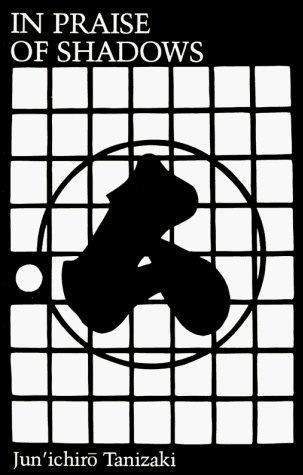
An essay on aesthetics by the Japanese novelist, this book explores architecture, jade, food, and even toilets, combining an acute sense of the use of space in buildings. The book also includes descriptions of laquerware under candlelight, and women in the darkness of the house of pleasure.

With an introduction read by Max Hastings. A companion volume to his best-selling Armageddon, Max Hastings' account of the battle for Japan is a masterful military history.Featuring the most remarkable cast of commanders the world has ever seen, the dramatic battle for Japan of 1944-45 was acted out across the vast stage of Asia: Imphal and Kohima, Leyte Gulf and Iwo Jima, Okinawa, and the Soviet assault on Manchuria.In this gripping narrative, Max Hastings weaves together the complex strands of an epic war, exploring the military tactics behind some of the most triumphant and most horrific scenes of the 20th century. The result is a masterpiece that balances the story of command decisions, rivalries, and follies with the experiences of soldiers, sailors, and airmen of all sides as only Max Hastings can.

His life was like a recurring nightmare: a train to nowhere. But an ordinary life has a way of taking an extraordinary turn. Add a girl whose ears are so exquisite that, when uncovered, they improve sex a thousand-fold, a runaway friend, a right-wing politico, an ovine-obsessed professor and a manic-depressive in a sheep outfit, implicate them in a hunt for a sheep, that may or may not be running the world, and the upshot is another singular masterpiece from Japan's finest novelist.

Bushido. The Way of the Warrior presents a remarkably faithful mirror of many of the characteristics and habits of modern Japanese civilization, as it represents a tradition that enjoyed great power and prestige for centuries. This work was written to provide practical and moral instruction for warriors, and to outline the parameters of personal, social, and professional conduct characteristic of Bushido, or Way of the Warrior, the Japanese chivalric tradition.Personal responsibilities, family relationships, public duties, education, finances and ethics are treated in this text from the perspective of the spirit of Japanese gentlemen. Even the forms of political incompetence and corruption that Japan currently struggles with are accurately described in this more than 400-year-old book; So deep did the feudal and military modes of government that generated them take their roots in Japanese society. This manual is therefore an essential resource for anyone who wishes to understand Japan and the Japanese people in a realistic way.

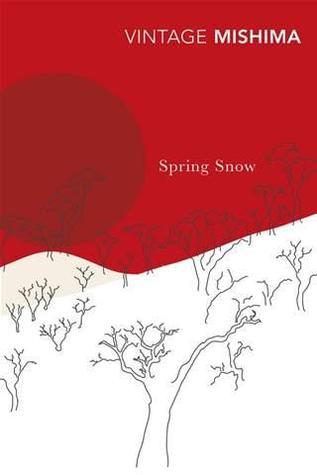
Alternate cover edition of ISBN 9780099282990Tokyo, 1912. The closed world of the ancient aristocracy is being breached for the first time by outsiders - rich provincial familes, a new and powerful political and social elite. Kiyoaki has been raised among the elegant Ayakura family - members of the waning aristocracy - but he is not one of them. Coming of age, he is caught up in the tensions between old and new, and his feelings for the exquisite, spirited Satoko, observed from the sidelines by his devoted friend Honda. When Satoko is engaged to a royal prince, Kiyoaki realises the magnitude of his passion.

Japan's most highly regarded novelist now vaults into the first ranks of international fiction writers with this heroically imaginative novel, which is at once a detective story, an account of a disintegrating marriage, and an excavation of the buried secrets of World War II. In a Tokyo suburb a young man named Toru Okada searches for his wife's missing cat. Soon he finds himself looking for his wife as well in a netherworld that lies beneath the placid surface of Tokyo. As these searches intersect, Okada encounters a bizarre group of allies and antagonists: a psychic prostitute; a malevolent yet mediagenic politician; a cheerfully morbid sixteen-year-old-girl; and an aging war veteran who has been permanently changed by the hideous things he witnessed during Japan's forgotten campaign in Manchuria. Gripping, prophetic, suffused with comedy and menace, The Wind-Up Bird Chronicle is a tour de force equal in scope to the masterpieces of Mishima and Pynchon.
A narrative particle accelerator that zooms between Wild Turkey Whiskey and Bob Dylan, unicorn skulls and voracious librarians, John Coltrane and Lord Jim.Science fiction, detective story and post-modern manifesto all rolled into one rip-roaring novel, Hard-Boiled Wonderland and the End of the World is the tour de force that expanded Haruki Murakami's international following. Tracking one man's descent into the Kafkaesque underworld of contemporary Tokyo, Murakami unites East and West, tragedy and farce, compassion and detachment, slang and philosophy.

Shogunate executioner Ogami Itto is framed as a traitor by the agents from a rival clan. With his wife murdered and with an infant son to protect, Ogami chooses the path of the rōnin, the masterless samurai. The Lone Wolf and Cub wander feudal Japan, Ogami's sword for hire, but all roads will lead them to a single destination—vengeance.A samurai epic of staggering proportions, the acclaimed Lone Wolf and Cub begins its second life at Dark Horse Manga with new, larger editions of over 700 pages, value priced. The brilliant storytelling of series creator Kazuo Koike and the groundbreaking cinematic visuals of Goseki Kojima create a graphic-fiction masterpiece of beauty, fury, and thematic power.This volume collects material previously published in Dark Horse graphic novels Lone Wolf and Cub, Vol. 1: The Assassin's Road, Lone Wolf and Cub, Vol. 2: The Gateless Barrier, Lone Wolf and Cub, Vol. 3: The Flute of the Fallen Tiger.

The Ephrussis were a grand banking family, as rich and respected as the Rothschilds, who “burned like a comet” in nineteenth-century Paris and Vienna society. Yet by the end of World War II, almost the only thing remaining of their vast empire was a collection of 264 wood and ivory carvings, none of them larger than a matchbox.The renowned ceramicist Edmund de Waal became the fifth generation to inherit this small and exquisite collection of netsuke. Entranced by their beauty and mystery, he determined to trace the story of his family through the story of the collection.The netsuke—drunken monks, almost-ripe plums, snarling tigers—were gathered by Charles Ephrussi at the height of the Parisian rage for all things Japanese. Charles had shunned the place set aside for him in the family business to make a study of art, and of beautiful living. An early supporter of the Impressionists, he appears, oddly formal in a top hat, in Renoir’s Luncheon of the Boating Party. Marcel Proust studied Charles closely enough to use him as a model for the aesthete and lover Swann in Remembrance of Things Past.Charles gave the carvings as a wedding gift to his cousin Viktor in Vienna; his children were allowed to play with one netsuke each while they watched their mother, the Baroness Emmy, dress for ball after ball. Her older daughter grew up to disdain fashionable society. Longing to write, she struck up a correspondence with Rilke, who encouraged her in her poetry.The Anschluss changed their world beyond recognition. Ephrussi and his cosmopolitan family were imprisoned or scattered, and Hitler’s theorist on the “Jewish question” appropriated their magnificent palace on the Ringstrasse. A library of priceless books and a collection of Old Master paintings were confiscated by the Nazis. But the netsuke were smuggled away by a loyal maid, Anna, and hidden in her straw mattress. Years after the war, she would find a way to return them to the family she’d served even in their exile.In The Hare with Amber Eyes, Edmund de Waal unfolds the story of a remarkable family and a tumultuous century. Sweeping yet intimate, it is a highly original meditation on art, history, and family, as elegant and precise as the netsuke themselves.

Alistair Urquhart was a soldier in the Gordon Highlanders captured by the Japanese in Singapore. He not only survived working on the notorious Bridge on the River Kwai , but he was subsequently taken on one of the Japanese ‘hellships’ which was torpedoed. Nearly everyone else on board died and Urquhart spent 5 days alone on a raft in the South China Sea before being rescued by a whaling ship. He was taken to Japan and then forced to work in a mine near Nagasaki. Two months later a nuclear bomb dropped just ten miles away . . .This is the extraordinary story of a young man, conscripted at nineteen and whose father was a Somme Veteran, who survived not just one, but three very close separate encounters with death - encounters which killed nearly all his comrades.

A dark, satirical thriller by the bestselling Japanese author, following the perilous train ride of five highly motivated assassins—soon to be a major film from SonyNanao, nicknamed Lady Bird—the self-proclaimed “unluckiest assassin in the world”—boards a bullet train from Tokyo to Morioka with one simple task: grab a suitcase and get off at the next stop. Unbeknownst to him, the deadly duo Tangerine and Lemon are also after the very same suitcase—and they are not the only dangerous passengers onboard. Satoshi, “the Prince,” with the looks of an innocent schoolboy and the mind of a viciously cunning psychopath, is also in the mix and has history with some of the others. Risk fuels him as does a good philosophical debate . . . like, is killing really wrong? Chasing the Prince is another assassin with a score to settle for the time the Prince casually pushed a young boy off of a roof, leaving him comatose.When the five assassins discover they are all on the same train, they realize their missions are not as unrelated as they first appear.A massive bestseller in Japan, Bullet Train is an original and propulsive thriller that fizzes with an incredible energy and surprising humor as its complex net of double-crosses and twists unwind. Award-winning author Kotaro Isaka takes readers on a tension packed journey as the bullet train hurtles toward its final destination. Who will make it off the train alive—and what awaits them at the last stop?

The poignant story of the life and death of world-famous author and historian Iris Chang, as told by her mother. Iris Chang's best-selling book The Rape of Nanking forever changed the way we view the Second World War in Asia. It all began with a photo of a river choked with the bodies of hundreds of Chinese civilians that shook Iris to her core. Who were these people? Why had this happened and how could their story have been lost to history? She could not shake that image from her head. She could not forget what she had seen.A few short years later, Chang revealed this "second Holocaust" to the world. The Japanese atrocities against the people of Nanking were so extreme that a Nazi party leader based in China actually petitioned Hitler to ask the Japanese government to stop the massacre. But who was this woman that single-handedly swept away years of silence, secrecy and shame?Her mother, Ying-Ying, provides an enlightened and nuanced look at her daughter, from Iris' home-made childhood newspaper, to her early years as a journalist and later, as a promising young historian, her struggles with her son's autism and her tragic suicide.The Woman Who Could Not Forget cements Iris' legacy as one of the most extraordinary minds of her generation and reveals the depth and beauty of the bond between a mother and daughter.16 pages of black & white photographs

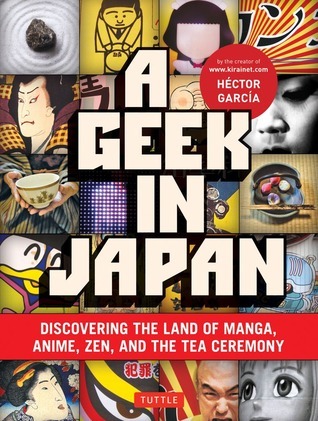
For every fan of manga, anime, J-pop, or Zen, A Geek in Japan is a hip, smart and concise guide to the land that is their source.Comprehensive and well informed, it covers a wide array of topics in short articles accompanied by sidebars and numerous photographs, providing a lively digest of the society and culture of Japan. Designed to appeal to the generations of Westerners who grew up on Pokemon, manga and video games, A Geek in Japan reinvents the culture guide for readers in the Internet age.Spotlighting the originality and creativity of the Japanese, debunking myths about them, and answering nagging questions like why they're so fond of robots, author Hector Garcia has created the perfect book for the growing ranks of Japanophiles in this inspired, insightful and highly informative guide.

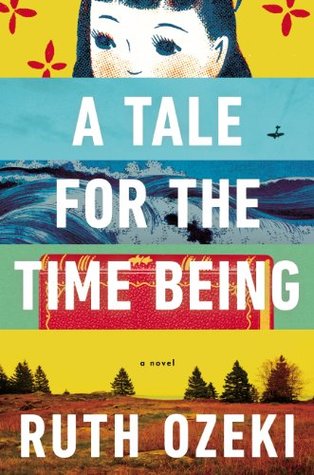
In Tokyo, sixteen-year-old Nao has decided there's only one escape from her aching loneliness and her classmates' bullying, but before she ends it all, Nao plans to document the life of her great-grandmother, a Buddhist nun who's lived more than a century. A diary is Nao's only solace—and will touch lives in a ways she can scarcely imagine. Across the Pacific, we meet Ruth, a novelist living on a remote island who discovers a collection of artifacts washed ashore in a Hello Kitty lunchbox—possibly debris from the devastating 2011 tsunami. As the mystery of its contents unfolds, Ruth is pulled into the past, into Nao's drama and her unknown fate, and forward into her own future. Full of Ozeki's signature humour and deeply engaged with the relationship between writer and reader, past and present, fact and fiction, quantum physics, history, and myth, A Tale for the Time Being is a brilliantly inventive, beguiling story of our shared humanity and the search for home.

Written by Naoki Higashida, a very smart, very self-aware, and very charming thirteen-year-old boy with autism, it is a one-of-a-kind memoir that demonstrates how an autistic mind thinks, feels, perceives, and responds in ways few of us can imagine. Parents and family members who never thought they could get inside the head of their autistic loved one, at last, have a way to break through to the curious, subtle, and complex life within.Using an alphabet grid to painstakingly construct words, sentences, and thoughts that he is unable to speak out loud, Naoki answers even the most delicate questions that people want to know. Questions such as: “Why do people with autism talk so loudly and weirdly?” “Why do you line up your toy cars and blocks?” “Why don’t you make eye contact when you’re talking?” and “What’s the reason you jump?” (Naoki’s answer: “When I’m jumping, it’s as if my feelings are going upward to the sky.”) With disarming honesty and a generous heart, Naoki shares his unique point of view on not only autism but life itself. His insights—into the mystery of words, the wonders of laughter, and the elusiveness of memory—are so startling, so strange, and so powerful that you will never look at the world the same way again.

INSTANT #1 NEW YORK TIMES BESTSELLER • One of the most revered voices in literature today gives us a story of love, friendship, and heartbreak for the ages.“Mesmerizing, immersive, hallucinogenic.”—Entertainment WeeklyColorless Tsukuru Tazaki and His Years of Pilgrimage is the remarkable story of a young man haunted by a great loss; of dreams and nightmares that have unintended consequences for the world around us; and of a journey into the past that is necessary to mend the present.ONE OF THE BEST BOOKS OF THE YEAR: The New York Times Book Review, The Washington Post, Financial Times, St. Louis Post-Dispatch, Slate, Mother Jones, The Daily Beast, BookPage

A dazzling new collection of short stories—the first major new work of fiction from the beloved, internationally acclaimed, Haruki Murakami since his #1 best-selling Colorless Tsukuru Tazaki and His Years of Pilgrimage.Across seven tales, Haruki Murakami brings his powers of observation to bear on the lives of men who, in their own ways, find themselves alone. Here are vanishing cats and smoky bars, lonely hearts and mysterious women, baseball and the Beatles, woven together to tell stories that speak to us all.Marked by the same wry humor that has defined his entire body of work, in this collection Murakami has crafted another contemporary classic.

2016 Travel Book of the Year by the Society of American Travel Writers Finalist for the 2016 IACP Literary Food Writing Named one of the Financial Times' "Best Books of 2016" An innovative new take on the travel guide, Rice, Noodle, Fish decodes Japan's extraordinary food culture through a mix of in-depth narrative and insider advice, along with 195 color photographs. In this 5000-mile journey through the noodle shops, tempura temples, and teahouses of Japan, Matt Goulding, co-creator of the enormously popular Eat This, Not That! book series, navigates the intersection between food, history, and culture, creating one of the most ambitious and complete books ever written about Japanese culinary culture from the Western perspective. Written in the same evocative voice that drives the award-winning magazine Roads & Kingdoms, Rice, Noodle, Fish explores Japan's most intriguing culinary disciplines in seven key regions, from the kaiseki tradition of Kyoto and the sushi masters of Tokyo to the street food of Osaka and the ramen culture of Fukuoka. You won't find hotel recommendations or bus schedules; you will find a brilliant narrative that interweaves immersive food journalism with intimate portraits of the cities and the people who shape Japan's food culture. This is not your typical guidebook. Rice, Noodle, Fish is a rare blend of inspiration and information, perfect for the intrepid and armchair traveler alike. Combining literary storytelling, indispensable insider information, and world-class design and photography, the end result is the first ever guidebook for the new age of culinary tourism.

Según los japoneses, todo el mundo tiene un ikigai, un motivo para existir. Algunos lo han encontrado y son conscientes de su ikigai, otros lo llevan dentro, pero todavía lo están buscando. Este es uno de los secretos para una vida larga, joven y feliz como la que llevan los habitantes de Okinawa, la isla más longeva del mundo. El proyecto de este libro surgió uniendo la experiencia en cultura japonesa de Héctor García (autor de “Un Geek en Japón”), que lleva doce años viviendo en Japón, con el arte escribiendo de Francesc Miralles (autor de decenas de libros y novelas y especialista en psicología). Para escribir la obra, los dos autores fueron recibidos por el alcalde de Ogimi (Okinawa), una localidad del norte de Japón con el mayor índice de longevidad del mundo, y tuvieron acceso a entrevistar a más de un centenar de sus habitantes.Analizamos las claves de los centenarios japoneses para una existencia optimista y vital, descubriendo cómo se alimentan, cómo se mueven, cómo trabajan, cómo se relacionan con los demás y –el secreto mejor guardado- cómo encuentran el ikigai que da sentido a su existencia y les impulsa a vivir cien años en plena forma. Tener un ikigai claro y definido, una gran pasión, es algo que da satisfacción, felicidad y significado a la vida. La misión de este libro es ayudarte a encontrarlo, además de descubrir muchas claves de la filosofía japonesa para una larga salud del cuerpo, la mente y el espíritu. • Una obra que nos acerca los secretos de los centenarios japoneses para una vida saludable y feliz. • Ofrece herramientas prácticas para que el lector descubra su particular ikigai, su razón de ser.

The English-language debut of one of Japan's most talented contemporary writers, selling over 650,000 copies there, Convenience Store Woman is the heartwarming and surprising story of thirty-six-year-old Tokyo resident Keiko Furukura. Keiko has never fit in, neither in her family, nor in school, but when at the age of eighteen she begins working at the Hiiromachi branch of “Smile Mart,” she finds peace and purpose in her life. In the store, unlike anywhere else, she understands the rules of social interaction―many are laid out line by line in the store’s manual―and she does her best to copy the dress, mannerisms, and speech of her colleagues, playing the part of a “normal” person excellently, more or less. Keiko is very happy, but the people close to her, from her family to her coworkers, increasingly pressure her to find a husband, and to start a proper career, prompting her to take desperate action…A brilliant depiction of a world hidden from view, Convenience Store Woman is an ironic and sharp-eyed look at contemporary work culture and the pressures we all feel to conform, as well as a charming and completely fresh portrait of an unforgettable heroine.

Here is the most complete single-volume collection of the writings of one of the great luminaries of Asian literature. Basho (1644–1694)—who elevated the haiku to an art form of utter simplicity and intense spiritual beauty—is best known in the West as the author of Narrow Road to the Interior, a travel diary of linked prose and haiku that recounts his journey through the far northern provinces of Japan. This volume includes a masterful translation of this celebrated work along with three other less well-known but important works by Basho: Travelogue of Weather-Beaten Bones, The Knapsack Notebook, and Sarashina Travelogue. There is also a selection of over two hundred fifty of Basho's finest haiku. In addition, the translator has provided an introduction detailing Basho's life and work and an essay on the art of haiku.

A book by a veteran Samurai to young warriors who had not tasted battle. The man known as a sword saint, Tsukahara Bokuden 1489-1571, composed this work seventy-five years before Miyamoto Musashi's Book of Five Rings. Bokuden studied Tenshin Shoden Katori Shinto School and later founded the Kashima Shinto School of sword fighting. This book, which consists of a hundred songs, was transmitted to Samurai who had not yet fought in battle. In the early 1600s a forward was written by the Zen Priest Takuan Soho. Later the eighth Tokugawa Shogun Yoshimune added an introduction. This is the first English translation of this work and it is presented beside the original Japanese brush script. The English will be on the facing page. According to the afterward, for several generations this document was only transmitted to only one other person.

Shinrin = Forest Yoku = BathingShinrin-Yoku or forest bathing is the practice of spending time in the forest for better health, happiness and a sense of calm. A pillar of Japanese culture for decades, Shinrin-Yoku is a way to reconnect with nature, from walking mindfully in the woods, to a break in your local park, to walking barefoot on your lawn.Forest Medicine expert, Dr Qing Li's research has proven that spending time around trees (even filling your home with house plants and vaporising essential tree oils) can reduce blood pressure, lower stress, boost energy, boost immune system and even help you to lose weight. Along with his years of ground-breaking research, anecdotes on the life-changing power of trees, Dr Li provides here the practical ways for you to try Shinrin-Yoku for yourself.

Declutter your desk and brighten up your business with this transformative guide from an organizational psychologist and the #1 New York Times bestselling author of The Life-Changing Magic of Tidying Up.The workplace is a magnet for clutter and mess. Who hasn’t felt drained by wasteful meetings, disorganized papers, endless emails, and unnecessary tasks? These are the modern-day hazards of working, and they can slowly drain the joy from work, limit our chances of career progress, and undermine our well-being.There is another way. In Joy at Work, bestselling author and Netflix star Marie Kondo and Rice University business professor Scott Sonenshein offer stories, studies, and strategies to help you eliminate clutter and make space for work that really matters.Using the world-renowned KonMari Method and cutting-edge research, Joy at Work will help you overcome the challenges of workplace mess and enjoy the productivity, success, and happiness that come with a tidy desk and mind.

America needs better options for resolving potential crises In recent years, the Pentagon has elevated its concerns about Russia and China as potential military threats to the United States and its allies. But what issues could provoke actual conflict between the United States and either country? And how could such a conflict be contained before it took the world to the brink of thermonuclear catastrophe, as was feared during the cold war? Defense expert Michael O'Hanlon wrestles with these questions in this insightful book, setting them within the broader context of hegemonic change and today's version of great-power competition. The book examines how a local crisis could escalate into a broader and much more dangerous threat to peace. What if, for example, Russia's “little green men” seized control of a community, like Narva or an even smaller town in Estonia, now a NATO ally? Or, what if China seized one of the uninhabited Senkaku islands now claimed and administered by Japan, or imposed a partial blockade of Taiwan? Such threats are not necessarily imminent, but they are far from inconceivable. Washington could be forced to choose, in these and similar cases, between risking major war to reverse the aggression, and appeasing China or Russia in ways that could jeopardize the broader global order. O'Hanlon argues that the United States needs a better range of options for dealing with such risks to peace. He advocates “integrated deterrence,” which combines military elements with economic warfare. The military components would feature strengthened forward defenses as well as, possibly, limited military options against Russian or Chinese assets in other theaters. Economic warfare would include offensive elements, notably sanctions, as well as measures to ensure the resilience of the United States and allies against possible enemy reprisal. The goal is to deter war through a credible set of responses that are more commensurate than existing policy with the stakes involved in such scenarios.

This is a riveting and disturbing account of the medical atrocities performed in China during WWII.Some of the cruelest deeds of Japan's war in Asia did not occur on the battlefield, but in quiet, antiseptic medical wards in obscure parts of China. Far from front lines and prying eyes, Japanese doctors and their assistants subjected human guinea pigs to gruesome medical experiments in the name of science and Japan's wartime chemical and biological warfare research.Author Hal Gold draws upon a wealth of sources to construct a portrait of the Imperial Japanese Army's most notorious medical unit, giving an overview of its history and detailing its most shocking activities. The book presents the words of former unit members themselves, taken from remarks they made at a traveling Unit 731 exhibition held in Japan in 1994-95. They recount vivid first-hand memories of what it was like to take part in horrific experiments on men, women and children, their motivations and reasons why they chose to speak about their actions all these years later.A new foreword by historian Yuma Totani examines the actions of Unit 731, the post-war response by the Allies and the lasting importance of the book. Japan's Infamous Unit 731 represents an essential addition to the growing body of literature on the still unfolding story of some of the most infamous war crimes in modem military history. By showing how the ethics of normal men and women, and even an entire profession, can be warped by the fire of war, this important book offers a window on a time of human madness and the hope that history will not be repeated.

Challenging every preconception about storytelling and prose style, mixing wry humor and riveting emotional depth, Kawakami is today one of Japan’s most important and best-selling writers. She exploded onto the cultural scene first as a musician, then as a poet and popular blogger, and is now an award-winning novelist.Breasts and Eggs paints a portrait of contemporary womanhood in Japan and recounts the intimate journeys of three women as they confront oppressive mores and their own uncertainties on the road to finding peace and futures they can truly call their own.It tells the story of three women: the thirty-year-old Natsu, her older sister, Makiko, and Makiko’s daughter, Midoriko. Makiko has traveled to Tokyo in search of an affordable breast enhancement procedure. She is accompanied by Midoriko, who has recently grown silent, finding herself unable to voice the vague yet overwhelming pressures associated with growing up. Her silence proves a catalyst for each woman to confront her fears and frustrations.On another hot summer’s day ten years later, Natsu, on a journey back to her native city, struggles with her own indeterminate identity as she confronts anxieties about growing old alone and childless.

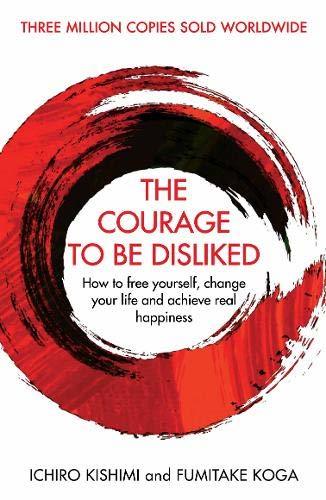
The author team behind worldwide bestseller The Courage To Be Disliked return with the must-have companion volume. In The Courage To Be Happy, Ichiro Kishimi and Fumitake Koga again distil their wisdom into simple yet profound advice to show us how we, too, can use twentieth-century psychological theory to find true happiness.

An incredible, untold story of survival and acceptance that sheds light on one of the darkest chapters in Japanese history.This book tells the story of Kazuo Odachi who—in 1943, when he was just 16 years-old—joined the Imperial Japanese Navy to become a pilot. A year later, he was unknowingly assigned to the Kamikaze Special Attack Corps—a group of airmen whose mission was to sacrifice their lives by crashing planes into enemy ships. Their callsign was "ten dead, zero alive."By picking up Memoirs of a Kamikaze, readers will experience the hardships of fighter pilot training—dipping and diving and watching as other trainees crash into nearby mountainsides. They'll witness the psychological trauma of coming to terms with death before each mission, and breathe a sigh of relief with Odachi when his last mission is cut short by Japan's eventual surrender. They'll feel the anger at a government and society that swept so much of the sacrifice under the rug in its desperation to rebuild.Odachi's innate "samurai spirit" carried him through childhood, WWII and his eventual life as a kendo instructor, police officer and detective. His attention to detail, unwavering self-discipline and impenetrably strong mind were often the difference between life and death. Odachi, who is now well into his nineties, kept his Kamikaze past a secret for most of his life. Seven decades later, he agreed to sit for nearly seventy hours of interviews with the authors of this book—who know Odachi personally. He felt it was his responsibility to finally reveal the truth about the Kamikaze pilots: that they were unsuspecting teenagers and young men asked to do the bidding of superior officers who were never held to account.This book offers a new perspective on these infamous suicide pilots. It is not a chronicle of war, nor is it a collection of research papers compiled by scholars. It is a transcript of Odachi's words.

From the acclaimed author of Japan Story, this is the history of Japan, distilled into the stories of twenty remarkable individuals.The vivid and entertaining portraits in Chris Harding's enormously enjoyable new book take the reader from the earliest written accounts of Japan right through to the life of the current empress, Masako. We encounter shamans and warlords, poets and revolutionaries, scientists, artists and adventurers - each offering insights of their own into this extraordinary place.For anyone new to Japan, this book is the ideal introduction. For anyone already deeply involved with it, this is a book filled with surprises and pleasures.

L'incroyable histoire vraie de l'arme la plus effroyable jamais créée.Le 6 août 1945, une bombe atomique ravage Hiroshima. Des dizaines de milliers de personnes sont instantanément pulvérisées. Et le monde entier découvre, horrifié, l'existence de la bombe atomique, première arme de destruction massive. Mais dans quel contexte, comment et par qui cet instrument de mort a-t-il pu être développéVéritable saga de 450 pages, ce roman graphique raconte les coulisses et les personnages-clés de cet événement historique qui, en 2020, commémore son 75e anniversaire. Des mines d'uranium du Katanga jusqu'au Japon, en passant par l'Allemagne, la Norvège, l'URSS et le Nouveau-Mexique, c'est une succession de faits incroyables mais vrais qui se sont ainsi déroulés. Tous ceux-ci sont ici racontés à hauteur d'hommes : qu'ils soient décideurs politiques (Roosevelt, Truman), scientifiques passés à la postérité (Einstein, Oppenheimer, Fermi...) ou acteurs majeurs demeurés méconnus, tels Leó Szilàrd (le personnage principal de cet album, un scientifique qui remua ciel et terre pour que les USA développent la bombe, puis fit l'impossible pour qu'ils ne l'utilisent jamais), Ebb Cade (un ouvrier afro-américain auquel on injecta à son insu du plutonium pour en étudier l'effet sur la santé) ou Leslie Groves (le général qui dirigea d'une main de fer le Projet Manhattan) - sans oublier, bien sûr, les habitants et la ville d'Hiroshima, reconstituée dans La Bombe de manière authentiqueExtrêmement documenté mais avant tout passionnant, comparable en cela à la série TV Chernobyl, cet ouvrage s'impose déjà comme le livre de référence sur l'histoire de la bombe atomique.

Alice a 48 ans, c’est une femme empêchée, prisonnière d’elle-même, de ses peurs, de ses souvenir douloureux (origines modestes, native de Cambrai, séduite et abandonnée, fille-mère, chassée de chez elle, cabossée par des hommes qui l’ont toujours forcée ou ne l’ont jamais aimée). Ancienne professeur de français, elle vit dans ses rêves et dans les livres auprès de sa fille, richement mariée et qui l’a installée près d’elle, à Paris.Tout change un beau jour lorsque, ayant fait halte dans un salon de thé, Alice est révélée à elle-même par un masseur japonais d’une délicatesse absolue qui la réconcilie avec son corps et lui fait entrevoir, soudain, la possibilité du bonheur.Cet homme devient le centre de son existence : elle apprend le japonais, lit les classiques nippons afin de se rapprocher de lui. Enfin, par l’imaginaire, Alice vit sa première véritable histoire d’amour. Pendant une année entière, elle revient se faire masser sans jamais lui signifier ses sentiments, persuadée par quelques signes, quelques gestes infimes qu’ils sont réciproques.Le jour où elle maitrise assez la langue pour lui dire enfin ce qu’elle ressent, l’homme a disparu...D’où la lettre qu’elle lui adresse, qui lui parviendra peut-être, dans laquelle elle se raconte et avoue son amour. Tendre, sensuelle, cette lettre est le roman que nous avons entre les mains : l’histoire d’un éveil. Ce qu’Alice n’a pas dit, elle l’écrit magnifiquement. Prête, enfin, à vivre sa vie.

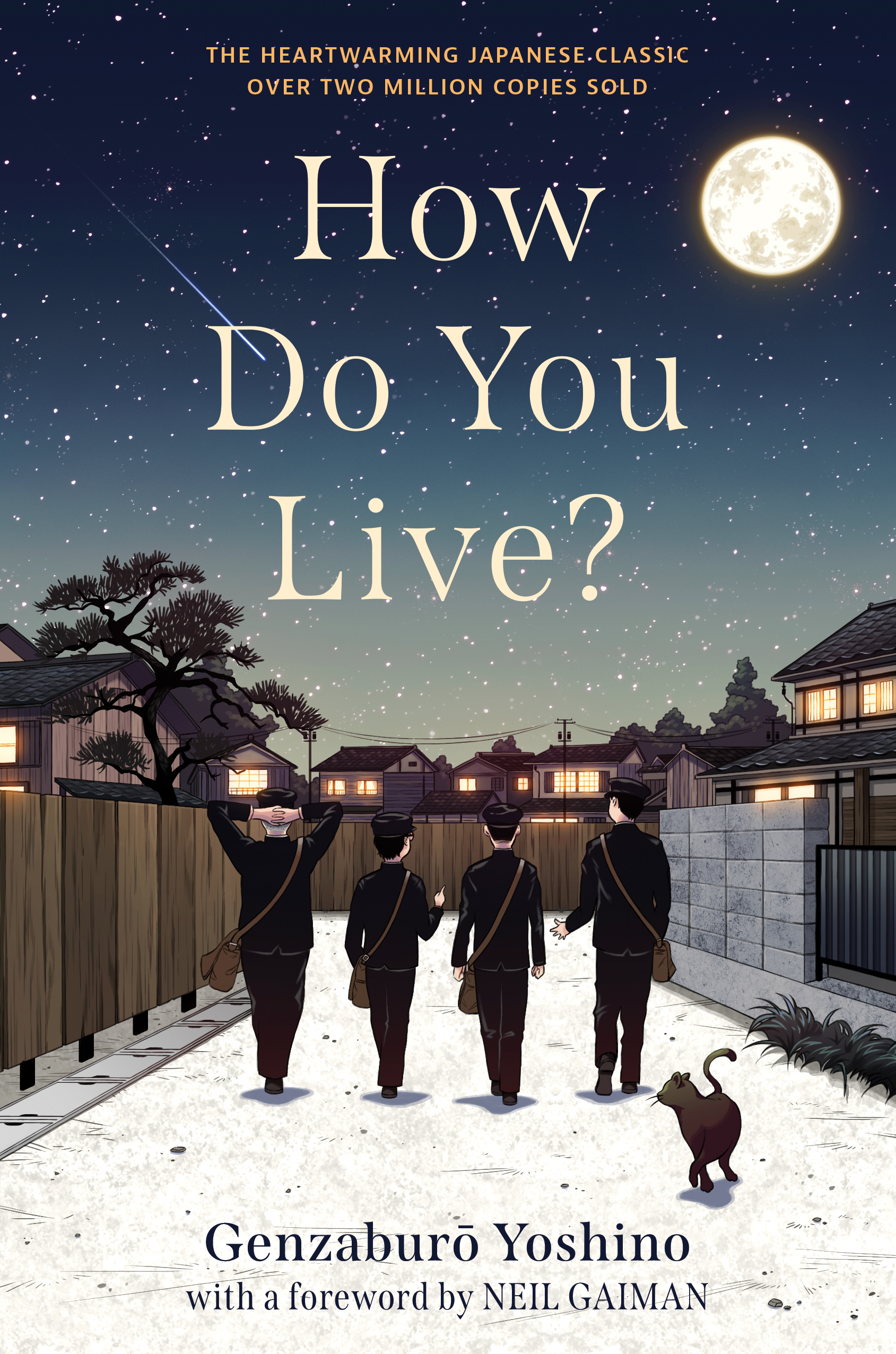
Anime master Hayao Miyazaki’s favorite childhood book, in English for the first time. First published in 1937, Genzaburō Yoshino’s How Do You Live? has long been acknowledged in Japan as a crossover classic for young readers. Academy Award–winning animator Hayao Miyazaki (Spirited Away, My Neighbor Totoro, Howl’s Moving Castle) has called it his favorite childhood book and announced plans to emerge from retirement to make it the basis of a final film. How Do You Live? is narrated in two voices. The first belongs to Copper, fifteen, who after the death of his father must confront inevitable and enormous change, including his own betrayal of his best friend. In between episodes of Copper’s emerging story, his uncle writes to him in a journal, sharing knowledge and offering advice on life’s big questions as Copper begins to encounter them. Over the course of the story, Copper, like his namesake Copernicus, looks to the stars, and uses his discoveries about the heavens, earth, and human nature to answer the question of how he will live. This first-ever English-language translation of a Japanese classic about finding one’s place in a world both infinitely large and unimaginably small is perfect for readers of philosophical fiction like The Alchemist and The Little Prince, as well as Miyazaki fans eager to understand one of his most important influences.

A transformative 300-mile walk along Japan’s ancient pilgrimage routes and through depopulating villages inspires a heart-rending remembrance of a long-lost friend, documented alongside remarkable photographs. Photographer and essayist Craig Mod is a veteran of long solo walks. But in 2021, during the pandemic shutdown of Japan’s borders, one particular walk around the Kumano Kodō routes—the ancient pilgrimage paths of Japan’s southern Kii Peninsula—took on an unexpectedly personal new significance. While passing the peninsula’s shrinking villages, Mod found himself reflecting on his own childhood in a post-industrial American town, his experiences as an adoptee, his unlikely relocation to Japan as a student at age nineteen, and his relationship with one lost friend, whose life was tragically cut short after their paths diverged. As the days passed, he considered why he has walked so rigorously and religiously during his twenty-five years as an immigrant in Japan, contemplating the power of walking itself. For Mod, solo walks are a tool to change the very structure of his mind, to better himself, and to bear witness to a quiet grace visible only when “you’re bored out of your skull and the miles left are long.” Through the frame of a 300-mile-long pilgrimage walk, Things Become Other Things folds together history, literature, poetry, Shinto and Buddhist spirituality, and contemporary rural life in Japan via dozens of conversations with aging fishermen, multi-generational inn owners, farmers, and kissaten cafe “mamas.” Along the way, Mod communes with mountain fauna, marvels over evidence of bears and boars, and hopscotches around leeches. He encounters whispering priests and foul-mouthed little kids who ask him "just what the heck are you, anyway?" Through sharp prose and his curious archive of photographs, he records evidence of floods and tsunamis, the disappearance of life on the peninsula, and the capricious fecundity of nature.Things Become Other Things blends memoir and travel writing at their best, transporting readers to an otherwise inaccessible Japan, one only made visible through Mod’s unique bicultural lens.