
Osamu Dazai
Osamu DAZAI (native name: 太宰治, real name Shūji Tsushima) was a Japanese author who is considered one of the foremost fiction writers of 20th-century Japan. A number of his most popular works, such as Shayō (The Setting Sun) and Ningen Shikkaku (No Longer Human), are considered modern-day classics in Japan. With a semi-autobiographical style and transparency into his personal life, Dazai’s stories have intrigued the minds of many readers. His books also bring about awareness to a number of important topics such as human nature, mental illness, social relationships, and postwar Japan.
30 Books Written

Osamu Dazai's No Longer Human, this leading postwar Japanese writer's second novel, tells the poignant and fascinating story of a young man who is caught between the breakup of the traditions of a northern Japanese aristocratic family and the impact of Western ideas. In consequence, he feels himself "disqualified from being human" (a literal translation of the Japanese title).Donald Keene, who translated this and Dazai's first novel, The Setting Sun, has said of the author's work: "His world … suggests Chekhov or possibly postwar France, … but there is a Japanese sensibility in the choice and presentation of the material. A Dazai novel is at once immediately intelligible in Western terms and quite unlike any Western book." His writing is in some ways reminiscent of Rimbaud, while he himself has often been called a forerunner of Yukio Mishima.Cover painting by Noe Nojechowiz, from the collection of John and Barbara Duncan; design by Gertrude Huston

The post-war period in Japan was one of immense social change as Japanese society adjusted to the shock of defeat and to the occupation of Japan by American forces and their allies. Osamu Dazai’s The Setting Sun takes this milieu as its background to tell the story of the decline of a minor aristocratic family.The story is told through the eyes of Kazuko, the unmarried daughter of a widowed aristocrat. Her search for self meaning in a society devoid of use for her forms the crux of Dazai’s novel. It is a sad story, and structurally is a novel very much within the confines of the Japanese take on the novel in a way reminiscent of authors such as Nobel Prize winner Yasunari Kawabata – the social interactions are peripheral and understated, nuances must be drawn, and for readers more used to Western novelistic forms this comes across as being rather wishy-washy.Kazuko’s mother falls ill, and due to their financial circumstances they are forced to take a cottage in the countryside. Her brother, who became addicted to opium during the war is missing. When he returns, Kazuko attempts to form a liaison with the novelist Uehara. This romantic displacement only furthers to deepen her alienation from society.
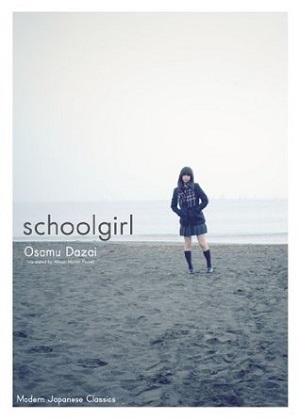
Osamu Dazai's 1939 novella depicts a day in the life of a Tokyo schoolgirl. Propelling Dazai into the literary elite of post-war Japan, Schoolgirl gained notoriety for its ironic and inventive use of language. Now it illuminates the prevalent social structures of a lost time, as well as the struggle of the individual against "them" -- a theme that occupied Dazai's life both personally and professionally. This new translation preserves the playful language of the original and offers the reader a new window into the mind of one of the greatest Japanese authors of the 20th century.
The Flowers of Buffoonery opens in a seaside sanitarium where Yozo Oba — the narrator of No Longer Human — is convalescing after a failed suicide attempt. Friends and family visit him, and nurses and police drift in and out of his room. Against this dispiriting backdrop, Yozo and his visitors try to maintain a lighthearted, even clownish atmosphere: playing cards, smoking cigarettes, vying for attention, cracking jokes, and trying to make each other laugh. Dazai is known for delving into the darkest corners of human consciousness, but in The Flowers of Buffoonery he pokes fun at these same emotions: the follies and hardships of youth, of love, and of self-hatred and depression. A glimpse into the lives of a group of outsiders in prewar Japan, The Flowers of Buffoonery is a fresh and darkly humorous addition to Osamu Dazai’s masterful and intoxicating oeuvre.

Blue Bamboo is a collection of seven short stories by one of Japan's preeminent postwar writers and prose stylists, Osamu Dazai. Not the typical romantic fantasies so often seen in Japanese writing, filled with water sprites and vengeful ghosts, these stories are a mixture of fantastic allegory, slightly skewed fables, and affecting romantic tales. Revealing the wide range of Dazai's imaginative powers, they also give a glimpse of his humane and idealistic side. From the title story, about an impoverished, henpecked scholar who is transformed by the love of a voluptuous bird, to "The Chrysanthemum Spirit," about a passionate gardener who meets a brother and sister with extraordinary powers, Dazai creates a world of fantasy and romance that is infused with his own psychological concerns. Many readers may recall the poignancy of Oscar Wilde's The Happy Prince or Han Christian Andersen. The collection is capped by two delightful stories-within-a-story, in which the assorted members of a quirky family compose alternate episodes of a slightly gothic romance with hints of Poe and Saki (in "On Love and Beauty") and a wildly elaborate retelling of Rapunzel that is engaging, horrifying, and touching by turns (in "Lanterns of Romance"). All in all, these warm, inventive, and life-affirming stories will strike a deep, satisfying chord in many readers.

A fictional writer in his thirties named Osamu Dazai has just mailed his publisher an awful manuscript, filling him with dread and shame. Wandering along a river in a nearby park in suburban Tokyo, he meets a high-school dropout and the two get into an intellectual spat. Eventually, Dazai finds himself agreeing to perform in the boy’s place that very night as the live narrator of a film screening…So begins the madcap adventure of The Beggar Student, where there is glamor in destitution and glimmerings of truth in intellectual one-upmanship. Replete with settings straight out of the popular anime Bungo Stray Dogs and echoes of the themes in No Longer Human, this biting novella captures the infamous Japanese writer at his mordant best.

The war is over. Japan is defeated. Together with his country, a young man must rebuild his life. He will begin at a sanatorium, where everyone gets a nickname, surrounded by an interesting ensemble of patients and caregivers.

A rich boy turned drop-out, a radical turned drug addict, obsessed with self destruction and suicide, Osamu Dazai retains his cult status among Japan's intellectual youth more than forty years after his death. These stories, based on his own experiences and arranged chronologically, provide insight into the sources of Dazai's enduring appeal as well as his art.

内容紹介「セリヌンティウスよ、私も死ぬぞ。君と一緒に死なせてくれ」タイムリミットは日没。メロスの身代わりに磔にされた友を救う為に、友の信頼を守る為に、メロスは疾風のごとく走った――美しい愛と友情を力強く綴った永遠の名作『走れメロス』、「富士には、月見草がよく似合う」の一節が名高い『富嶽百景』ほか、『駈込み訴え』、『東京八景』など全六篇を収録した短編集。声優・鈴木達央が紡ぐ『走れメロス』名場面抜粋の朗読CD封入。内容(「BOOK」データベースより)タイムリミットは日没。メロスの身代わりに磔にされた友を救う為に、友の信頼を守る為に、メロスは疾風のごとく走った―美しい愛と友情を力強く綴った永遠の名作『走れメロス』、「富士には、月見草がよく似合う」の一節が名高い『富嶽百景』ほか、『駈込み訴え』、『東京八景』など全六篇を収録した短篇集。声優・鈴木達央が紡ぐ『走れメロス』名場面抜粋の朗読CDを封入。著者略歴 (「BOOK著者紹介情報」より)太宰/治1909年、青森県金木村(現五所川原市)生まれ。本名、津島修治。東大仏文科中退。1939年、井伏鱒二の世話で結婚。平隠な生活を得て多くの作品を執筆するが、1948年、玉川上水にて入水自殺(本データはこの書籍が刊行された当時に掲載されていたものです)

Dazai Osamu wrote The Fairy Tale Book (Otogizōshi) in the last months of the Pacific War. The traditional tales upon which Dazai's retellings are based are well known to every Japanese schoolchild, but this is no children's book. In Dazai's hands such stock characters as the kindhearted Oji-san to Oba-san ("Grandmother and Grandfather"), the mischievous tanuki badger, the fearsome Oni ogres, the greedy old man, the "tongue-cut" sparrow, and of course Urashima Taro (the Japanese Rip van Winkle) become complex individuals facing difficult and nuanced moral dilemmas. The resulting stories are thought-provoking, slyly subversive, and often hilarious.In spite of the "gloom and doom" atmosphere always cited in reviews of The Setting Sun and the later No Longer Human, though, Dazai's cutting wit and rich humor are evident in the entire body of his work. His literature depicts the human condition in painfully blunt and realistic terms, but, like life itself, is often accompanied by a smile.

Owoce wiśni tworzy szesnaście opowiadań, wybranych spośród najpoczytniejszych w twórczości Osamu Dazaia. Pisarz nie wychwala w nich takich skarbów "japońskości", jak ceremonia parzenia herbaty czy teatr nō. Nie mówi współczesnym mu rodakom, jak żyć w strasznych czasach wojny i jak odnaleźć się w powojennej rzeczywistości przegranego państwa. Autor, z humorem i ironią, czerpiąc z osobistych przeżyć oraz doświadczeń, opisuje zwyczajne życie. Drobne zdarzenia, przyjemne i bolesne przeżycia służą pytaniu o kształt i sens ludzkiej egzystencji. Uniwersalizm prozy Osamu Dazaia, jej nadal świeży styl do dziś ujmują rzesze czytelników na całym świecie.

Early Light offers three very different aspects of Osamu Dazai's genius: the title story relates his misadventures as a drinker and a family man in the terrible fire bombings of Tokyo at the end of WWII. Having lost their own home, he and his wife flee with a new baby boy and their little girl to relatives in Kofu, only to be bombed out anew. "Everything's gone," the father explains to his daughter: "Mr. Rabbit, our shoes, the Ogigari house, the Chino house, they all burned up," "Yeah, they all burned up," she said, still smiling."One Hundred Views of Mount Fuji," another autobiographical tale, is much more comic: Dazai finds himself unable to escape the famous views, the beauty once immortalized by Hokusai and now reduced to a cliche. In the end, young girls torment him by pressing him into taking their photo before the famous peak: "Goodbye," he hisses through his teeth, "Mount Fuji. Thanks for everything. Click."And the final story is "Villon's Wife," a small masterpiece, which relates the awakening to power of a drunkard's wife. She transforms herself into a woman not to be defeated by anything, not by her husband being a thief, a megalomaniacal writer, and a wastrel. Single-handedly, she saves the day by concluding that "There's nothing wrong with being a monster, is there? As long as we can stay alive."

Ocho escenas de Tokio reúne, por primera vez en castellano, nueve relatos de uno de los escritores con más talento de la literatura nipona del siglo XX. Muy apreciado entre la juventud japonesa, Dazai goza en la actualidad de un reconocimiento equiparable al de ilustres compatriotas suyos como Soseki, Mishima y Kawabata. Aunque más conocido en Occidente por las dos novelas que publicó tras la Segunda Guerra Mundial -Indigno de ser humano y El ocaso-, Osamu Dazai mostró a lo largo de toda su vida predilección por el género breve. En sus relatos están presentes tanto el nihilismo como los demonios interiores que acecharon al escritor durante su corta vida, pero también encontramos un particular sentido del humor. Escritos entre 1933 y 1948, año en que Dazai se quitó la vida junto a su amante, los relatos aquí reunidos, a veces mordaces y sarcásticos, otras veces introspectivos y poéticos, nos ofrecen un retrato completo de un escritor avanzado a su tiempo y dotado de una sensibilidad poco común.

As World War II was coming to an end, Osamu Dazai (born Shuji Tsushima) returned to his home in the northern tip of Honshu, Japan on assignment from a publisher to travel and write about the part of Japan where he was born and raised.He writes with humor and warmth about old friends, the people (family and servants) who nurtured him, his obsession with crabs, and his worries over sake in times of rationing. He writes with pride about his home even as he learns about some of its customs and history for the first time. This travel journal is part travelogue, part history lesson, and part love story.

No one really understands how we suffer. One day, when we're adults, we may come to recall this suffering, this misery, as silly and laughable, but how are we to get through the long, hateful period until then? No one bothers to teach us that.Osamu Dazai was a master raconteur who plumbed--in an addictive, easy style--the absurd complexities of life in a society whose expectations cannot be met without sacrificing one's individual ideals on the altar of conformity. The gravitational pull of his prose is on full display in these stories. In "Lantern," a young woman, in love with a well-born but impoverished student, shoplifts a bathing suit for him--and ends up in the local newspaper indicted as a crazed, degenerate communist. In "Chiyojo," a high-school girl shows early promise as a writer, but as her uncle and mother relentlessly push her to pursue a literary career, she must ask herself: is this what I really want? Or am I supposed to fulfill their own frustrated ambitions? In "Shame," a young reader writes a fan letter to a writer she admires, only to find out, upon visiting him, that he's a bourgeoise sophisticate nothing like the desperate rebels he portrays, and decides (in true Dazai style): "Novelists are human trash. No, they're worse than that; they're demons. . . They write nothing but lies."This collection of 14 tales--a half-dozen of which have never before appeared in English--is based on a Japanese collection of, as Dazai described them, "soliloquies by female narrators." No One Knows includes the quietly brilliant long story "Schoolgirl" and shows the fiction of this 20th-century genius in a fresh light.
Features 11 outstanding works by Osamu Dazai, widely regarded as one of 20th century Japan's most gifted writers and a master teller of tales. Dazai experimented with a wide variety of short story styles and brought to each a sophisticated sense of humor, a broad empathy for the human condition, and a tremendous literary talent. This book showcases a range of his styles from the poignant childhood recollections of "Memories", to the samurai buffoonery of "A Poor Man's Got His Pride", to reworked folk classics such as the title story. By turns hilarious, ironic, introspective, mystical and sarcastic, the eleven stories present the most fully rounded portrait available of a tragic, multifaceted genius of modern Japanese letters.

《人间失格(精)/太宰治作品精选集》是日本著名小说家太宰治具影响力的小说作品。本书发表于1948年,是一部自传体的小说,纤细的自传体中透露出别致的颓废,毁灭式的绝笔之作。

Mme Otani est mariée à un écrivain alcoolique. Il passe son temps dans un bar et a accumulé une ardoise considérable. Pour éviter le scandale, sa femme se fait embaucher comme serveuse afin de rembourser la dette. Malgré leurs difficultés pour survivre, et comme tous deux fréquentent désormais le même bar, ils se rapprochent. Mais Mme Otani est trop sollicitée par des clients.

Repudiados reúne nueve cuentos, escritos entre 1939 y 1948 e inéditos hasta ahora en castellano, con el inconfundible sello del enfant terrible de las letras japonesas del siglo XX. En ellos leemos la aséptica descripción del viaje que emprende una pareja al lugar donde planean poner fin a sus miserables vida (Repudiados); los infructuosos esfuerzos de Dazai para ganarse el respeto de sus paisanos y dejar de ser fuente de preocupaciones y disgustos para su familia (En memoria de Zenzō); los devastadores efectos de la guerra en el día a día y la mentalidad de los japoneses (Diosa); o la angustia e incapacidad de Dazai ante su condición de marido y padre de familia (Cerezas).

「無頼派」「新戯作派」の破滅型作家を代表する昭和初期の小説家、太宰治の短編小説。初出は「新潮」[1940(昭和15)年]。「邪智暴虐の王」への人質として差し出した友人・セリヌンティウスの信頼に報いるために、メロスがひたすら走り続けるという作品。信頼と友情の美しさを基本に描きつつ、そこに還元されない人間の葛藤をも描いた、日本文学における傑作のひとつ。

The Tragedy of Hamlet is the consummate tale of an introspective melancholic struggling to come to terms with the world he lives in; it is no surprise, then, that artists like Goethe and Coleridge have identified with this tortured character over the centuries. As one of Japan’s most famous and troubled writers, Osamu Dazai, too, offered his own interpretation of Hamlet in his book Shin-Hamlet, or “A New Hamlet.” This book was published in 1941 during Dazai’s middle period and it marks a significant development in the career of the writer as he worked toward lengthier works that culminated in his classics Shayo (“The Setting Sun,” 1947) and Ningen Shikkaku (“No Longer Human,” 1948). It is a significant work that has never been published in English before.Dazai’s Hamlet is a passive character in a whirlwind of schemers. It is clear that, in typical autobiographical fashion, Dazai is writing about himself in this book. There are allusions to his troubled university days (when he failed to graduate) his difficult relations with women (Gertrude and Ophelia are both strong, manipulative characters in this work, while the men are weak and indecisive) and his own distressed psyche (he committed suicide in 1948). The strong theme of adult hypocrisy brings to mind a bildungsroman more than a tragedy. It is also significant to note that this book was completed in 1941, right around the time the Pacific War began. The conflict between Denmark and Norway in A New Hamlet is reminiscent of the outbreak of war between Japan and America. Dazai was never outwardly critical of militaristic Japan, but this work could be interpreted as a commentary on the government’s corruption. In addition, the character of Polonius, who ambivalently is both the supporter of young idealists and the right-hand man of an oppressive leader, reminds one of the publishers that had to comply with stringent censorship laws at the time. One wonders if Dazai is writing about the editors or critics he would have dealt with. All in all, there are many facets to this work that give it a particular enjoyment that is distinct from Shakespeare’s “Hamlet.” Dazai’s work is incredibly humorous despite the darkness of his themes, and keeps the reader reading all the way to the end.

The war is over and life is returning to normal. A man must say goodbye to his ten or so lovers. However, he can't do this alone, he needs the help of a special but difficult woman.


Snuję opowieść, nęcąc czytelnika, uspokajając go, czasem oczywiście strasząc i zadziwiając, a gdy pomyślę: "Ha, idealny moment!", nagle usuwam swoją postać, rzucając kilka słów o pozornie głębokim znaczeniu. Nie usuwam jej jednak całkowicie, tylko błyskawicznie ukrywam się za papierowym przepierzeniem. Gdy po jakimś czasie wystawiam stamtąd niewinnie uśmiechniętą twarz, mogę zrobić z czytelnikiem, co zechcę. Na tym, dla przykładu, polegają sztuczki, przedmiot wytężonej pracy każdego pisarza.fragment opowiadania Zabawki


《人间失格》是日本战后文学巅峰人物太宰治的代表作,描述了一个无法适应现实、逃避着整个世界的一生。小说的主人公大庭叶藏,是一个内心无比纯洁但性格懦弱的青年。他生长于一个富足的上层家庭,容貌俊美、讨人喜欢,是别人眼中的幸运儿。可他一点都不觉得生活美好,对周围的环境和人事都无所适从。他为了博取关注而费力讨好别人,表面开朗活泼,内心晦涩阴暗,用欺骗的方式生活着……后来,叶藏结识了放浪形骸的堀木,堀木仿佛来自伊甸园的毒蛇,为他打开了通往地狱的大门。从此,对生命失去希望的叶藏愈加沉迷于酒色,万劫不复地堕落下去……“人间失格”,意指“失去做人的资格”。小说的主人公因无法适应丑陋残酷的现实而逃避着这个世界,认为自己“失去了做人的资格”。除了《人间失格》外,书中还收录了作者最重要的代表作《斜阳》、《维庸之妻》和《奔跑吧,梅勒斯》。

Is a dog truly man's best friend? This story is one man's struggle with that question.

Tajima Shūji, przystojny redaktor bogacący się na czarnym rynku powojennego Tokio, ma jeden problem – zbyt wiele kochanek, z którymi na dodatek chce się rozstać. Tylko jak sprawić, by zgodziły się wypuścić go z rąk?Tak rozpoczyna się Goodbye – ostatni (!), niedokończony utwór Osamu Dazaia, wybitnego pisarza, którego twórczość wciąż cieszy się w Japonii wielką popularnością. Prace nad tą komedią przerwała samobójcza śmierć autora.Niniejszy zbiór prezentuje przekrój bogatej i różnorodnej twórczości Dazaia. Czytelnik znajdzie tu nie tylko boleśnie szczere wyznania, z których znany jest autor, odnoszące się do jego samotnej młodości, problemów z uzależnieniem czy nieudanych prób samobójczych. W książce znalazły się również pełne ironii i humoru rozważania o przyziemnych aspektach życia, zaskakujące przetworzenia zachodniej tradycji, a także przestroga, by nigdy nie ufać psom.

Dazai își zugrăvește în acest volum, cu o sinceritate absolut dezarmantă, pubertatea și primele experiențe sexuale, căsnicia zbuciumată, cu trei copii de crescut, problemele de sănătate cauzate de băutură și morfină, tentativele de suicid, relația cu frații și tatăl care l-a dezmoștenit, dar și nemulțumirile sale ca scriitor și preferințele vestimentare.Sunt zile tulburi, când merge la Ueno și fumează împreună cu copiii străzii sau își lasă soția gravidă acasă cu copilul, în timp ce el merge la băut cu altă femeie, zile de suferință, după moartea tatălui și a fratelui, zile de dezmăț, egoism și neputință în fața sărăciei, înecată mereu în alcool.Demoni chipeși și tutun • Amintiri • Frații Tsushima • Peisaj marin cu trei siluete aurite • Cireșe • Despre garderobă • Tata

What dark fate awaits beneath the roaring falls?Suwa and her father live alone on the slopes of Horsebare Mountain, eking out the most meager of existences. During the warmer months the beautiful waterfall brings a few sightseers, but when winter comes there is only solitude. Suwa would do anything to escape the life to which her father has resigned himself. And the lure of the river is strong...This early classic from the author of Japan’s greatest modern novel is a dark, elliptical tale of hopelessness that weaves the folklore of the mountains into an anti-coming-of-age story as vividly relevant today as it was when it was written nearly a hundred years ago.The Maiden's Bookshelf series combines classic short stories of the early 20th century with gorgeous original artwork to create collectible editions for a contemporary audience.