
Edmund de Waal
Edmund de Waal describes himself as a 'potter who writes'. His porcelain has been displayed in many museum collections around the world and he has recently made a huge installation for the dome of the Victoria and Albert Museum in London. Edmund was apprenticed as a potter, studied in Japan, and read English Literature at Cambridge University. 'The Hare with Amber Eyes', a journey through the history of a family in objects, is his most personal book. http://us.macmillan.com/author/edmund...
26 Books Written
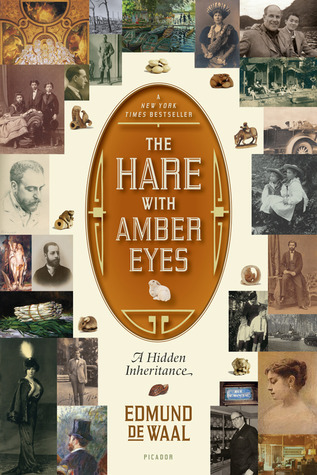
Edmund de Waal is a world-famous ceramicist. Having spent thirty years making beautiful pots--which are then sold, collected, and handed on--he has a particular sense of the secret lives of objects. When he inherited a collection of 264 tiny Japanese wood and ivory carvings, called netsuke, he wanted to know who had touched and held them, and how the collection had managed to survive. And so begins this extraordinarily moving memoir and detective story as de Waal discovers both the story of the netsuke and of his family, the Ephrussis, over five generations. A nineteenth-century banking dynasty in Paris and Vienna, the Ephrussis were as rich and respected as the Rothchilds. Yet by the end of the World War II, when the netsuke were hidden from the Nazis in Vienna, this collection of very small carvings was all that remained of their vast empire.

A tragic family history told in a collection of imaginary letters to a famed collector, Moise de CamondoLetters to Camondo is a collection of imaginary letters from Edmund de Waal to Moise de Camondo, the banker and art collector who created a spectacular house in Paris, now the Musée Nissim de Camondo, and filled it with the greatest private collection of French eighteenth-century art.The Camondos were a Jewish family from Constantinople, “the Rothschilds of the East,” who made their home in Paris in the 1870s and became philanthropists, art collectors, and fixtures of Belle Époque high society, as well as being targets of antisemitism―much like de Waal's relations, the Ephrussi family, to whom they were connected. Moise de Camondo created a spectacular house and filled it with art for his son, Nissim; after Nissim was killed in the First World War, the house was bequeathed to the French state. Eventually, the Camondos were murdered by the Nazis.After de Waal, one of the world’s greatest ceramic artists, was invited to make an exhibition in the Camondo house, he began to write letters to Moise de Camondo. These fifty letters are deeply personal reflections on assimilation, melancholy, family, art, the vicissitudes of history, and the value of memory.

Extraordinary new non-fiction, a gripping blend of history and memoir, by the author of the award-winning and bestselling international sensation, The Hare with Amber Eyes'.In The White Road, bestselling author and artist Edmund de Waal gives us an intimate narrative history of his lifelong obsession with porcelain, or "white gold." A potter who has been working with porcelain for more than forty years, de Waal describes how he set out on five journeys to places where porcelain was dreamed about, refined, collected and coveted - and that would help him understand the clay's mysterious allure. From his studio in London, he starts by travelling to three "white hills" - sites in China, Germany and England that are key to porcelain's creation. But his search eventually takes him around the globe and reveals more than a history of cups and figurines; rather, he is forced to confront some of the darkest moments of twentieth-century history.Part memoir, part history, part detective story, The White Road chronicles a global obsession with alchemy, art, wealth, craft and purity. In a sweeping yet intimate style that recalls The Hare with Amber Eyes, de Waal gives us a singular understanding of "the spectrum of porcelain" and the mapping of desire.

Potters long ago left behind the notion that pots must be purely useful or merely pleasant everyday objects. At the turn of the twentieth century, ceramics―as in other media in both the decorative and fine arts―underwent revolutionary change. The potter emerged from the anonymity of the workshop and made more individualistic statements in clay than ever before.Ceramics have kept pace with, or even led, new movements in art, from art nouveau, art deco, the Bauhaus, and futurism, through abstract expressionism, pop and performance, to land art and installation art. Stylistic and technical influences are considered here in context, from orientalism and color theory to modernism, postmodernism, and the profuse diversity of approaches that characterizes the end of the century.The scope is wide, taking in developments in Europe, Scandinavia, Russia, the United States, and Japan. The work of exceptional individuals is appraised, including Taxile Doat, Clarice Cliff, Susie Cooper, Bernard Leach, Isamu Noguchi, Hans Coper, Lucie Rie, Joan Miró, Pablo Picasso, Peter Voulkos, and Adrian Saxe. The relation of ceramics to other disciplines is given close attention: sculptors, such as Antony Gormley and Tony Cragg, and even architects, including Frank Gehry, have made ceramics central to their practice.This comprehensive survey provides invaluable background and commentary on leading practitioners, critics, theorists, and pioneers, illuminating the development of an art form that seized and inspired the imagination of artists and the public alike in the twentieth century. 180 illustrations, 80 in color

Published to mark the display of library of exile at the British Museum, this beautifully produced new book reflects on the themes raised by de Waal’s thought-provoking work of art. A preface by Booker Prize-nominated author Elif Shafak reflects on the importance of literature and its capacity to transcend language and borders. The introduction from Hartwig Fischer, Director of the British Museum, positions the artwork within the wider context of the Museum’s collection, highlighting the dialogue between objects from across time and throughout history and the contemporary. Finally, de Waal concentrates on the work itself, its journey to the British Museum via Venice and Dresden, and its future role in the foundation of the New University Library in Mosul.

The first monograph on this internationally famous potter and writer, this book brings to life the man behind The Hare with Amber Eyes . Stunning photography reveals a day in the life of de Waal and his studio and documents his major exhibitions and installations. Contributors include novelists Colm Toibín, Peter Carey and AS Byatt.

One of a series exploring the lives and work of major artists associated with St Ives, this book looks at the potter Bernard Leach. It provides a critical overview of his art and influences, and places him alongside his contemporaries, both in St Ives and further afield. In the early part of his career Leach spent 12 formative years in Japan, during a period of febrile excitement in the arts, and returned to England in 1920 to set up a studio in St Ives. His influence on the growth of the studio-pottery movement, both in Japan and in the West, has been profound, and his making of ceramics and his teaching of some of the foremost artist-potters of the period gives him a central place in the international history of decorative arts.


This gorgeous volume captures the very best in contemporary ceramic art. The work of over 70 internationally renowned ceramic artists showcases an array of styles.
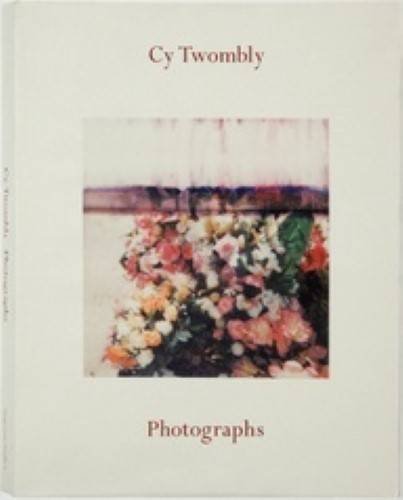
2012 Essay by Edmund de Waal 7 5/8 x 9 3/4 inches (19.4 x 24.8 cm); Fully illustrated Designed by Graphic Thought Facility, London; Printed by Pureprint Group, Uckfield, UK 1 lb. 11 oz.

Please Note That The Following Individual Books As Per Original ISBN and Cover Image In this Listing shall be Dispatched The Hare with Amber EyesThe White RoadLetters to Camondo [Hardcover]Edmund de Waal 3 Books Collection The Hare with Amber Edmund de Waal is a world-famous ceramicist. Having spent thirty years making beautiful pots―which are then sold, collected, and handed on―he has a particular sense of the secret lives of objects. When he inherited a collection of 264 tiny Japanese wood and ivory carvings, called netsuke, he wanted to know who had touched and held them, and how the collection had managed to survive.The White In The White Road, artist Edmund de Waal gives us an intimate portrait of his lifelong obsession with porcelain, or “white gold.” A potter who has been working with porcelain for more than forty years, de Waal describes how he set out on five journeys to places where porcelain was dreamed about, refined, collected, and coveted―and that would help him understand the clay’s mysterious allure.Letters to Camondo [Hardcover]:Letters to Camondo is a collection of imaginary letters from Edmund de Waal to Moise de Camondo, the banker and art collector who created a spectacular house in Paris, now the Musée Nissim de Camondo, and filled it with the greatest private collection of French eighteenth-century art. The Camondos were a Jewish family from Constantinople, “the Rothschilds of the East,” who made their home in Paris in the 1870s and became philanthropists, art collectors.

Хотите узнать историю? Идите за белым зайцем с янтарными глазами. Известный английский художник-керамист берется за перо, чтобы прочертить путь своей семьи и сопровождавшей ее в скитаниях коллекции брелоков-нэцке. Автор, перемещаясь из царской Одессы в Париж импрессионистов и Пруста, из захваченной нацистами Вены в оккупированный американцами Токио, рассказывает невыдуманные истории об утраченном и обретенном доме, о том, как хрупка жизнь и как из историй людей сплетается история человечества.

Internationally renowned artist and writer Edmund de Waal meets acclaimed Danish ceramist Axel Salto (1889-1961), considered one of the greatest masters of 20th Century ceramic art. Salto was a poet and a critic, an artist and textile designer and this books explores both of their practices. This is a conversation across time that leads us closer to their art and connects words, images and ceramics. The book contains a rich selection of excerpts from Axel Saltos writings, a new essay by Edmund de Waal, a conversation with Edmund de Waal and an essay by co-curator Sanne Flyvbjerg.The book is published in connection with the opening of the exhibition Playing with Fire: Edmund de Waal and Axel Salto. The book is in English.The book is available with three different covers, the inside of which is printed with extraordinary reproductions of Axel Salto paper designs.

"Potters know about broken pots. We know about shards. Hammers are part of our lives. I’ve written a little book called Poor Crisp, a chain of stories about my life with shards, an unfortunate eighteenth century potter called Nicholas Crisp and the fragments that Robert Walser used to make his stories. And the Bible. So pots and words as usual. It’s a lovely little publication by The Cuckoo Press, based at John Sandoe Books in London. Since 1995 they have published something every winter and given it away with book orders. Previous books have been by Edna O’Brien, Juliet Nicolson ,Muriel Spark, Cressida Connolly, Salley Vickers and Javier Marias amongst many fabulous writers. It’s a very special bookshop and I’m thrilled to be part of this parish. Thank you." - Edmund de Waal

The Frick Collection presents a temporary installation of sculptures by acclaimed author and ceramist Edmund de Waal. Site-specific works made of porcelain, steel, gold, marble, and glass will be displayed in the museum's main galleries alongside works from the permanent collection, from May 30 - November 17, 2019.


Edmund De Waal - Atemwende Catalogue
by Edmund de Waal
Published in 2013, on the occasion of the exhibition "Edmund de Atemwende" at Gagosian Gallery Madison Avenue, New York Essay by Adam Gopnik 10 3/4 x 12 inches (27.3 x 30.5 cm); 80 pages; Fully illustrated Designed by Graphic Thought Facility, London; Printed by Pureprint Group, Uckfield 2 lbs. 2 oz. 978-1-935263-85-2

バーナード・リーチ再考―スタジオ・ポタリーと陶芸の現代
by Edmund de Waal

John Golding - Working Space. The 1971 Paintings
by Edmund de Waal

LA VOIE DU CHRETIEN DANS LE MONDE. Le chemin de Saint Benoît
by Edmund de Waal

Mono.Kultur No. 40 Edmund de Waal
by Edmund de Waal

Ο λαγός με τα κεχριμπαρένια μάτια
by Edmund de Waal
Με αφορμή και αιτία την αναζήτηση των χεριών που κράτησαν κάποτε τα 264 γλυπτά νέτσκε, ο ντε Βάαλ μάς ταξιδεύει στο Παρίσι στα τέλη του 19ου αιώνα, στη Βιέννη των αρχών του επόμενου, στην Ιαπωνία του χθες και του σήμερα, σε μια Ευρώπη ταραγμένη ωστόσο άκρως γοητευτική, από καλλιτεχνικής απόψεως τουλάχιστον. Αυτά τα μικρά αντικείμενα γίνονται μάρτυρες ενός κόσμου γεμάτου χλιδή και ξεγνοιασιά μα κι ενός κόσμου που βιώνει το μίσος και τα πογκρόμ.Μέσα από τα κεχριμπαρένια μάτια του λαγού γνωρίζουμε ένα ολόκληρο πλέγμα ζωών, μια οικογένεια, μια εθνοτική ομάδα -τους Εβραίους- αλλά και μια οικουμένη που παρασύρεται από τη δίνη των πολέμων και τη λατρεία της τέχνης, ισορροπεί μεταξύ του παλιού και του νέου, κρυφοκοιτάζει μέσα στα κτήρια και στις αλληλογραφίες, συναντιέται με τον Ντεγκά, τον Ρίλκε, τον Προυστ, τους αυτοκράτορες και τους τραπεζίτες, τον απλό λαό που πονάει και ενθουσιάζεται σχεδόν ταυτόχρονα...Το βιβλίο αυτό είναι πάνω και πέρα απ' όλα μια περιπλάνηση, ένα ταξίδι στον μικρόκοσμο των πραγμάτων, που φέρουν απίστευτη δύναμη μέσα τους και είναι σε θέση να αλλάξουν τα πάντα.ΠεριεχόμεναΓΕΝΕΑΛΟΓΙΚΟ ΔΕΝΤΡΟΕΙΣΑΓΩΓΗΜέρος Πρώτο: Παρίσι 1871-1899LE WEST ENDUN LIT DE PARADE"ΕΝΑΣ ΜΑΧΟΥΤ Ν Α ΤΗΝ ΟΔΗΓΕΙ""ΤΟΣΟ ΕΛΑΦΡΥ, ΤΟΣΟ ΑΠΑΛΟ ΣΤΗΝ ΑΦΗ"ΕΝΑ ΚΟΥΤΙ ΖΑΧΑΡΩΤΑ ΓΙΑ ΠΑΙΔΙΑΑΛΕΠΟΥ ΜΕ ΕΝΘΕΤΑ ΜΑΤΙΑ, ΞΥΛΟΗ ΚΙΤΡΙΝΗ ΠΟΛΥΘΡΟΝΑΤΑ ΣΠΑΡΑΓΓΙΑ ΤΟΥ ΚΥΡΙΟΥ ΕΛΣΤΙΡΑΚΟΜΑ ΚΙ Ο ΕΦΡΟΥΣΙ ΤΗΝ ΠΑΤΗΣΕ ΜΑΖΙ ΤΟΥΤΟ ΜΙΚΡΟ ΜΟΥ ΩΦΕΛΗΜΑΕΝΑ "ΠΟΛΥ ΛΑΜΠΕΡΟ FIVE Ο' CLOCK"Μέρος Δεύτερο: Βιέννη 1899-1938DIE POTEMKINISCHE STADTΤΣΙΟΝΣΤΡΑΣΕΗ ΙΣΤΟΡΙΑ ΚΑΘΩΣ ΣΥΜΒΑΙΝΕΙ"ΕΝΑ ΜΕΓΑΛΟ ΤΕΤΡΑΓΩΝΟ ΚΟΥΤΙΣΑΝ ΑΥΤΑ ΠΟΥ ΖΩΓΡΑΦΙΖΟΥΝ ΤΑ ΠΑΙΔΙΑ""ΑΥΤΟ ΤΟ ΣΠΙΤΙ ΕΙΝΑΙ ΧΩΡΟΣ ΕΛΕΥΘΕΡΙΑΣ"Η ΓΛΥΚΙΑ ΝΕΑΡΗ ΥΠΑΡΞΗΜΙΑ ΦΟΡΑ ΚΙ ΕΝΑΝ ΚΑΙΡΟΤΥΠΟΙ ΤΗΣ ΠΑΛΙΑΣ ΠΟΛΗΣHEIL WIEN! HEIL BERLIN!ΚΥΡΙΟΛΕΚΤΙΚΑ ΜΗΔΕΝΖΩΗ Ν' ΑΛΛΑΞΕΙΣ ΠΡΕΠΕΙΕΛΝΤΟΡΑΝΤΟ 5-0050Μέρος Τρίτο: Βιέννη, Κεβέτσες, Τάνμπριτζ Ουέλς, Βιέννη 1938-1947"ΙΔΑΝΙΚΟ ΣΗΜΕΙΟ ΓΙΑ ΜΕΓΑΛΕΣ ΠΑΡΕΛΑΣΕΙΣ""ΜΙΑ ΑΝΕΠΑΝΑΛΗΠΤΗ ΕΥΚΑΙΡΙΑ""ΓΙΑ ΕΝΑ ΜΟΝΟ ΤΑΞΙΔΙ"ΤΑ ΔΑΚΡΥΑ ΤΩΝ ΠΡΑΓΜΑΤΩΝΗ ΤΣΕΠΗ ΤΗΣ ΑΝΝΑΣ"ΕΝΤΕΛΩΣ ΦΑΝΕΡΑ, ΔΗΜΟΣΙΑ ΚΑΙ ΝΟΜΙΜΑ"Μέρος Τέταρτο: Τόκυο 1947-2001ΤΑΚΕΝΟΚΟΣΕ ΦΙΛΜ ΚΟΝΤΑΚΧΡΩΜΠΟΥ ΤΑ ΒΡΗΚΕΣ;Η ΑΛΗΘΙΝΗ ΙΑΠΩΝΙΑΠΕΡΙ ΒΕΡΝΙΚΙΟΥΚόνταΤόκυο, Οδησσός, Λονδίνο 2001-2009ΤΖΙΡΟΕΝΑΣ ΑΣΤΡΟΛΑΒΟΣ, ΜΙΑ ΜΕΤΡΟΤΡΑΠΕΖΑ, ΜΙΑ ΥΔΡΟΓΕΙΟΣ ΚΙΤΡΙΝΟ/ΧΡΥΣΟ/ΚΟΚΚΙΝΟ


little girl bluer
by Edmund de Waal

Cartas para Camondo
by Edmund de Waal
Uma trágica história familiar marcada pelo nazismo, narrada a partir do incrível legado deixado pelo patriarcaO conde Moïse de Camondo morava a algumas casas dos Ephrussi, antepassados de Edmund de Waal. Os Camondo foram banqueiros originários de Constantinopla que compraram terrenos na rua de Monceau, em 1869, tal qual outras famílias abastadas, muitas delas judias, em busca de um lugar para se estabelecer na Paris secular, republicana, tolerante e pacífica de meados do século XIX.Por meio de 58 cartas imaginárias a Moïse de Camondo, De Waal conta a história da vida do faz relatos sobre a residência, as coleções, o mundo em que o conde vivia e o trágico fim da família dele. Camondo construiu uma casa espetacular e a decorou com a maior coleção particular de arte francesa do século XVIII, com o intuito de que o filho, Nissim, herdasse. Quando Nissim foi morto na Primeira Guerra Mundial, porém, a construção se tornou um memorial e acabou legada à França, tornando-se o Musée Nissim de Camondo, inalterado desde 1936.Neste livro, De Waal utiliza os objetos dessa casa-museu — valendo-se de seu olhar de artista ao enfocar detalhes práticos de como e por que as coisas são feitas, compradas, colecionadas e exibidas — para revelar novas camadas da história dos membros da família Camondo. Nas cartas assombrosas endereçadas ao conde, o autor narra uma trama cruel de generosidade e traição, impulsionada pelo antissemitismo e pelos anos da ocupação nazista na França.