
Craig Mod
Craig Mod is a writer, photographer, and walker living in Tokyo, Japan. He is the author the books "Things Become Other Things" and "Kissa by Kissa." He is also the author of the newsletters "Roden" and "Ridgeline" and has contributed to The New York Times, The Atlantic, Wired, and more. He has been a resident of Japan since 2000. He has walked between Tokyo and Kyoto (on the Tōkaidō and Nakasendō) three times. And has walked thousands of kilometers of the Kii Peninsula as well as other old roads across Japan.
12 Books Written

A transformative 300-mile walk along Japan’s ancient pilgrimage routes and through depopulating villages inspires a heart-rending remembrance of a long-lost friend, documented alongside remarkable photographs. Photographer and essayist Craig Mod is a veteran of long solo walks. But in 2021, during the pandemic shutdown of Japan’s borders, one particular walk around the Kumano Kodō routes—the ancient pilgrimage paths of Japan’s southern Kii Peninsula—took on an unexpectedly personal new significance. While passing the peninsula’s shrinking villages, Mod found himself reflecting on his own childhood in a post-industrial American town, his experiences as an adoptee, his unlikely relocation to Japan as a student at age nineteen, and his relationship with one lost friend, whose life was tragically cut short after their paths diverged. As the days passed, he considered why he has walked so rigorously and religiously during his twenty-five years as an immigrant in Japan, contemplating the power of walking itself. For Mod, solo walks are a tool to change the very structure of his mind, to better himself, and to bear witness to a quiet grace visible only when “you’re bored out of your skull and the miles left are long.” Through the frame of a 300-mile-long pilgrimage walk, Things Become Other Things folds together history, literature, poetry, Shinto and Buddhist spirituality, and contemporary rural life in Japan via dozens of conversations with aging fishermen, multi-generational inn owners, farmers, and kissaten cafe “mamas.” Along the way, Mod communes with mountain fauna, marvels over evidence of bears and boars, and hopscotches around leeches. He encounters whispering priests and foul-mouthed little kids who ask him "just what the heck are you, anyway?" Through sharp prose and his curious archive of photographs, he records evidence of floods and tsunamis, the disappearance of life on the peninsula, and the capricious fecundity of nature.Things Become Other Things blends memoir and travel writing at their best, transporting readers to an otherwise inaccessible Japan, one only made visible through Mod’s unique bicultural lens.
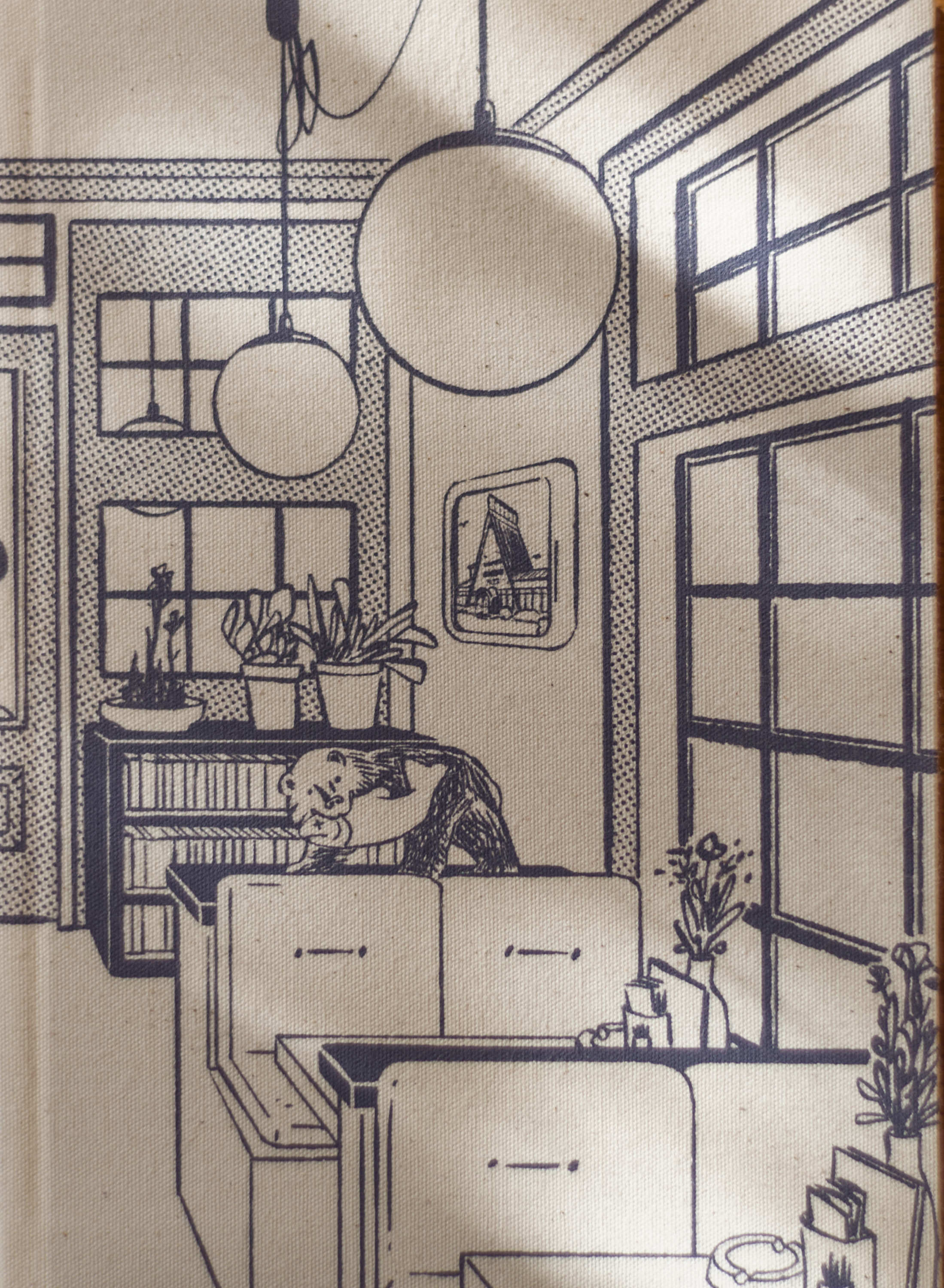
Kissa by Kissa: How to Walk Japan (Book One) is a book about walking 1,000+km of the countryside of Japan along the ancient Nakasendō highway, the culture of toast (toast!), and mid-twentieth century Japanese cafés called kissaten. The walk of this book begins in the city of Kamakura, just south of Tokyo. From there we head to Tokyo, and then from Tokyo all the way to Kyoto via the old Nakasendō highway, snaking through Saitama, over to Nagano, down through the bucolic Kiso Valley along the Kiso-ji road, into the plains of Gifu, alongside Lake Biwa, and to Kyoto. Along the way we meet farmers, gardeners, and a host of incredible and inspiring café owners. Kissa by Kissa is not a guide. It sits somewhere between travelogue, photo book, and bizarro ethnographic field study of old café — kissaten — culture.Those kissaten — or kissa — served up toast. I ate that toast. So. Much. Toast. Much of it pizza toast. If you buy this book, you'll learn more than you ever dared to know about this variety of toast available all across Japan. It's a classic post-war food staple. Kissa by kissa, and slice by thick slice of beautiful, white toast, I took a heckuva affecting and long walk. This book is my sharing with you, of that walk, the people I met along the way, and the food I ate.

Where is the cover of a digital book? What is it? How should we think about book covers in the age of iPads, Kindles and digital reading?

In March 2016, photographers Dan Rubin and Craig Mod spent 8 days walking 107 km (66 mi) Japan’s 1,000+ year old Kumano Kodo pilgrimage path. In their own words: a “long, quiet walk in the woods.” Along the way they took a few photographs. Well, 3000 photographs and, when it was all done, they locked themselves in an old Japanese house, sifted through all their memories, and selected just 57 that would become “Koya Bound.”Koya Bound is in no way a guidebook. It won’t tell you exactly how to get to the Kumano and what paths to take because for the authors, walking is about “adventures and curiosities often nearer to you than you may realize.” Instead, the book is an artifact of this pilgrimage walk – one of two UNESCO World Heritage pilgrimage walks – that captures “mountain time, and towering cedar time, and crumpled earth time, and ancient teahouse time.”

Digital's effect on how we produce, distribute and consume content. - - - We will always quality of the paper, the pixel density of the display;the cloth used on covers, the interface for highlighting;location by page, location by paragraph.This is not what matters. Surface is secondary.What are the core systems comprising the future book? What are the tools that need to be built?As designers we will need to provide the scaffolding for these systems. The interfaces for these tools. Not just as surface, but holistically—understanding the shifting of emotional space, the import of the artifact, the evocation of a souvenir, digitally.How will we surface the myriad data just below the words of digital books in organic, clean and deliberately designed ways? How will we shape the future book?

This essay takes a look at where printed books stand in respect to digital publishing, why we historically haven't read long-form text on screens and how the iPad is wedging itself in the middle of everything. In doing so I think we can find the line in the sand to define when content should be printed or digitized.This is a conversation for books-makers, web-heads, content-creators, authors and designers. For people who love beautifully made things. And for the storytellers who are willing to take risks and want to consider the most appropriate shape and media for their yarns.

The Digital-Physical: On Building Flipboard for iPhone and Finding the Edges of our Digital Narratives
by Craig Mod
Rating: 4.3 ⭐
We've entered a binary on/off era for physicality. To go digital-physical and back again is increasingly frictionless.And do we gain from these jumps?How can they reframe experiences to help us better understand them?

Notes, photos, audio recorded on walking the Ise-ji pilgrimage path in Mie and Wakayama Prefectures Japan.Online here: https://walkkumano.com/iseji/

本と本作りの「今」はこんなことになっている——。ある時はFlipboardやSmartNewsのデザインを手がけ、ある時はクロス箔押しの豪華本をプロデュースし、ある時は出版スタートアップにアドバイス。メディアの垣根を越え、国の垣根を越えて活躍する著者が、その活動から得たものとは。本と出版に向き合おうとするすべての出版者、デザイナー、開発者に贈る7つのエッセイ。【目次】第一章 「iPad時代の本」を考える――本作りの二つのゆくえ第二章 表紙をハックせよ――すべては表紙でできている第三章 テキストに愛を――こんなEリーダーが大事第四章 「超小型」出版――シンプルなツールとシステムを電子出版に第五章 キックスタートアップ――kickstarter.comでの資金調達成功事例第六章 本をプラットフォームに――電子版『Art Space Tokyo』制作記第七章 形のないもの←→形のあるもの――デジタルの世界に輪郭を与えることについて【著者】クレイグ・モド(Craig Mod):作家、デザイナー、開発者。本とメディアとストーリーテリングの未来に関心を持ち、東京とニューヨークを拠点に世界各地で活動中。2011年、iPhone版Flipboardアプリのプロダクトデザインを手がける一方で、作家としてMacDowell Colonyライティングフェローに&#

LivroLivre: Novas possibilidades para a leitura, a escrita e a publicação com o digital
by Craig Mod
Rating: 5.0 ⭐
O que o digital poder oferecer como novas possibilidades à leitura, à escrita e à publicação? Como os livros escritos, produzidos, distribuídos e lidos de forma digital — livres de restrições de estoque, ponto de venda, matérias-primas e território — afetam (contribuem ou ameaçam, de acordo com o ponto de vista) nossa relação com o texto, a produção e a difusão da cultura? E quais as implicações — econômicas, sociais e morais — do digital na cadeia produtiva do livro e na reconfiguração de seus autores, editores, livreiros, bibliotecários, professores?Em 10 ensaios, profissionais da palavra, entre autores, livreiros e editores, comentam sobre as transformações pelas quais estamos passando e apontam tendências, oportunidades (e riscos) para as novas formas como iremos escrever, disseminar e ler nossas ideias.Da redefinição do papel do bibliotecário na era da informação imediata às novas plataformas para a criação literária; da relação das livrarias com o produto digital à pirataria de textos e à dissipação da autoria individual — análise, reflexão e considerações práticas feitas por quem vive pela palavra escrita, para um futuro que já chegou.

Book A Futurists Manifesto
by Craig Mod
出版・新聞・テレビさえも、今の姿は後わずか素朴に、体験的に、世界はこれを語りはじめた失敗から起き上がる若い息吹に耳をかたむける書籍のデジタル化は「第一段階」にすぎません。デジタルへの移行はフォーマットの問題だけではなく、出版界の抜本的再編成を意味しています。デジタル化が完了した「第二段階」で出版界で何が起こるのか?書籍が全て電子化され、ネットワークに接続され、ユビキタスな存在になると何が起こるのか?H.マクガイアとB.オレアリを筆頭に、実際のツール開発に携わる総勢29人の執筆者が、「確信」以上の具体性をもって本の未来を語ります。【Contents】Part 1 セットアップ──現在のデジタルへのアプローチ1. コンテナではなく、コンテキスト2. あらゆる場所への流通3.「 本」の可能性4. メタデータについて語る時に我々の語ること5. DRMの投資対効果を考える6. デジタルワークフロー向けツール7. デジタル時代の書籍デザインPart 2 将来への展望──本が歩む次のステップ8. 本とWebサイトがひとつになる理由9. Web文学:ソーシャルWeb出版10. 言葉から本を作る11. eBookはなぜ書き込み可能になるか12.

Chokogata Shuppan
by Craig Mod
「やがて業界を脅かすと言われているものたちは、概して質が低く、注目に値しない」— ジョシュア・ベントンでは、そこに注目してみよう。今の電子出版はまだかなり複雑なものである。メディアとしても、まだ電子の世界とはかけ離れている。これからの電子出版の基本方針や最適な解決策を提案する「超小型宣言」とは?- - - - - - - - -…ZIPドライブはフロッピーを食った。CDはZIPを食った。DVDはCDを食った。SDカードはフィルムを食った。液晶はブラウン管を食った。電話は電信を食った。メールは会話を食った。そして今タブレットが紙を食おうとしている……