
Michael E. Porter
Michael E. Porter is the leading authority on competitive strategy, the competitiveness and economic development of nations, states, and regions, and the application of competitive principles to social problems such as health care, the environment, and corporate responsibility. Professor Porter is generally recognized as the "Father of Strategy", as has been identified in a variety of rankings and surveys as the world’s most influential thinker on management and competitiveness. He has ranked #1 on "Thinkers 50". He is the Bishop William Lawrence University Professor, based at Harvard Business School. A University full-professorship is the highest professional recognition that can be awarded to a Harvard faculty member. In 2001, Harvard Business School and Harvard University jointly created the Institute for Strategy and Competitiveness, dedicated to furthering Porter’s work. Professor Porter is the author of 17 books and over 125 articles. He is the founder of elite strategy consulting firm, the Monitor Group. He received a B.S.E. with high honors in aerospace and mechanical engineering from Princeton University in 1969, where he was elected to Phi Beta Kappa and Tau Beta Pi. He received an M.B.A. with high distinction in 1971 from the Harvard Business School, where he was a George F. Baker Scholar, and a Ph.D. in Business Economics from Harvard University in 1973.
28 Books Written

In Can Japan Compete? , world-renowned competition strategist Michael Porter and his colleagues explain why American assumptions about Japan have proved so inaccurate, what Japan must do to regain its strength, and what its journey can tell us about how to succeed in the new global economy. The research behind this book began in the early 1990s, at a time when Japan's economic success was overwhelmingly credited to the Japanese government and its unique management policies. Porter and his colleagues started by asking a crucial but previously overlooked question: If Japanese government policies and practices accounted for the nation's extraordinary competitiveness, then why wasn't Japan competitive in many of the industries where those policies had been prominently implemented? The authors and a team of colleagues surveyed a vast array of Japanese industries. This surprising book is the result of their work. The continuing influence of Japanese government and management strategies worldwide makes Can Japan Compete? a must read for anyone competing in the global economy.
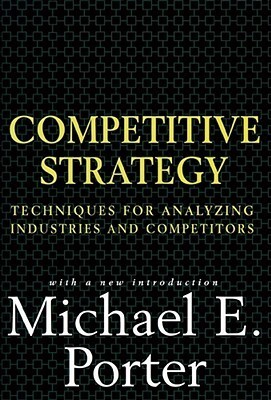
Competitive Strategy: Techniques for Analyzing Industries and Competitors
by Michael E. Porter
Rating: 4.2 ⭐
• 1 recommendation ❤️
Now nearing its 60th printing in English and translated into nineteen languages, Michael E. Porter's Competitive Strategy has transformed the theory, practice, and teaching of business strategy throughout the world. Electrifying in its simplicity -- like all great breakthroughs -- Porter's analysis of industries captures the complexity of industry competition in five underlying forces. Porter introduces one of the most powerful competitive tools yet developed: his three generic strategies -- lowest cost, differentiation, and focus -- which bring structure to the task of strategic positioning. He shows how competitive advantage can be defined in terms of relative cost and relative prices, thus linking it directly to profitability, and presents a whole new perspective on how profit is created and divided. In the almost two decades since publication, Porter's framework for predicting competitor behavior has transformed the way in which companies look at their rivals and has given rise to the new discipline of competitor assessment. More than a million managers in both large and small companies, investment analysts, consultants, students, and scholars throughout the world have internalized Porter's ideas and applied them to assess industries, understand competitors,, and choose competitive positions. The ideas in the book address the underlying fundamentals of competition in a way that is independent of the specifics of the ways companies go about competing. Competitive Strategy has filled a void in management thinking. It provides an enduring foundation and grounding point on which all subsequent work can be built. By bringing a disciplined structure to the question of how firms achieve superior profitability, Porter's rich frameworks and deep insights comprise a sophisticated view of competition unsurpassed in the last quarter-century.

Competitive Advantage: Creating and Sustaining Superior Performance
by Michael E. Porter
Rating: 4.2 ⭐
• 1 recommendation ❤️
The essential complement to the pathbreaking book Competitive Strategy, Michael E. Porter's Competitive Advantage explores the underpinnings of competitive advantage in the individual firm.Competitive Advantage introduces a whole new way of understanding what a firm does. Porter's groundbreaking concept of the value chain disaggregates a company into "activities," or the discrete functions or processes that represent the elemental building blocks of competitive advantage. Now an essential part of international business thinking, Competitive Advantage takes strategy from broad vision to an internally consistent configuration of activities. Its powerful framework provides the tools to understand the drivers of cost and a company's relative cost position. Porter's value chain enables managers to isolate the underlying sources of buyer value that will command a premium price, and the reasons why one product or service substitutes for another. He shows how competitive advantage lies not only in activities themselves but in the way activities relate to each other, to supplier activities, and to customer activities. Competitive Advantage also provides for the first time the tools to strategically segment an industry and rigorously assess the competitive logic of diversification. That the phrases "competitive advantage" and "sustainable competitive advantage" have become commonplace is testimony to the power of Porter's ideas. Competitive Advantage has guided countless companies, business school students, and scholars in understanding the roots of competition. Porter's work captures the extraordinary complexity of competition in a way that makes strategy both concrete and actionable.

The Politics Industry: How Political Innovation Can Break Partisan Gridlock and Save Our Democracy
by Michael E. Porter
Rating: 4.5 ⭐


Many argue that developing countries should now strive for greater Competitiveness. At the same time the term has been widely criticized for being a dangerous a vague code-word for pro-business, anti-worker, anti-environment, and anti-poor policies. This report is part of a seriesof Competitiveness Reports first published by the World Economic Forum in 1979. In this 2000 edition, co-authors Jeffrey Sachs and Andrew Warner of Harvard University define Competitiveness more precisely as the ability to achieve rapid economic growth over a long time period. Michael Porter ofHarvard University defines a competitiveness index that ranks countries on the ability to achieve high current productivity. The first is called the growth competitiveness index and the second is called the current competitiveness index.According to the growth index, countries are deemed Competitive if they score high on economic indicators that have been shown empirically to be related to recent cross-country growth rates. The rankings that come out of this process show that competitive countries do not tend to be high-inequalitycountries nor anti-environment countries.This book includes these two competitiveness rankings, an executive summary that describes the framework behind these two rankings, and further articles on globalization, economic creativity, the underpinnings of productivity, environment, the euro and education. The book also includescountry-profiles that summarize the strengths and weaknesses of each country, and an extensive body of data from the Forum's executive opinion survey.

This collection highlights the most important ideas and concepts from Michael E. Porter, recognized worldwide as the leading thinker on strategy. Porter heads The Institute for Strategy and Competitiveness based at Harvard Business School and is the foremost authority on competitive strategy for business, as well as on the competitiveness and economic development of nations, states, and regions.Business readers will recognize Porter’s seminal book, On Competition , as a classic in the field. This set, curated by Harvard Business Review , includes the full digital edition of the updated and expanded edition of On Competition —a must-have for anyone interested in or studying the topic of strategy and for those developing strategy for their own organizations. The collection also includes the digital edition of the popular Understanding Michael The Essential Guide to Competition and Strategy , which offers a concise, accessible summary of Porter’s revolutionary thinking and was written with Porter’s full cooperation by Joan Magretta, his former editor at Harvard Business Review . Finally, the set features the newer foundational article “Creating Shared Value,” which was published in Harvard Business Review in 2011 to great fanfare and global accolades.This must-have collection is for anyone serious about business, strategy, and competitiveness.

For the past fifteen years, Michael Porter's work has defined our fundamental understanding of competition and competitive strategy. Presented here for the first time as a collective whole are a dozen articles -- two entirely new pieces together with ten of Porter's articles from the Harvard Business Review, as well as an introduction from Porter, his first statement on how the parts of his work fit together.To read through this collection is to experience Porter at work: we see firsthand as his important theories take shape, deepen, and evolve over time. Porter addresses the important issues of competition, from company strategy to the relationship between competition and environmental regulation to the counterintuitive role of geography in the global economy.At once eloquent and convincing, these essays help us to examine and understand the essence of competition. "On Competition offers the intellectual foundations for company and country strategies for the years ahead.

Now beyond its eleventh printing and translated into twelve languages, Michael Porter’s The Competitive Advantage of Nations has changed completely our conception of how prosperity is created and sustained in the modern global economy. Porter’s groundbreaking study of international competitiveness has shaped national policy in countries around the world. It has also transformed thinking and action in states, cities, companies, and even entire regions such as Central America.Based on research in ten leading trading nations, The Competitive Advantage of Nations offers the first theory of competitiveness based on the causes of the productivity with which companies compete. Porter shows how traditional comparative advantages such as natural resources and pools of labor have been superseded as sources of prosperity, and how broad macroeconomic accounts of competitiveness are insufficient. The book introduces Porter’s “diamond,” a whole new way to understand the competitive position of a nation (or other locations) in global competition that is now an integral part of international business thinking. Porter's concept of “clusters,” or groups of interconnected firms, suppliers, related industries, and institutions that arise in particular locations, has become a new way for companies and governments to think about economies, assess the competitive advantage of locations, and set public policy.Even before publication of the book, Porter’s theory had guided national reassessments in New Zealand and elsewhere. His ideas and personal involvement have shaped strategy in countries as diverse as the Netherlands, Portugal, Taiwan, Costa Rica, and India, and regions such as Massachusetts, California, and the Basque country. Hundreds of cluster initiatives have flourished throughout the world. In an era of intensifying global competition, this pathbreaking book on the new wealth of nations has become the standard by which all future work must be measured.

Redefining Health Care: Creating Value-Based Competition on Results
by Michael E. Porter
Rating: 3.9 ⭐
The U.S. health care system is in crisis. At stake are the quality of care for millions of Americans and the financial well-being of individuals and employers squeezed by skyrocketing premiums—not to mention the stability of state and federal government budgets.In Redefining Health Care, internationally renowned strategy expert Michael Porter and innovation expert Elizabeth Teisberg reveal the underlying—and largely overlooked—causes of the problem, and provide a powerful prescription for change.The authors argue that competition currently takes place at the wrong level—among health plans, networks, and hospitals—rather than where it matters most, in the diagnosis, treatment, and prevention of specific health conditions. Participants in the system accumulate bargaining power and shift costs in a zero-sum competition, rather than creating value for patients. Based on an exhaustive study of the U.S. health care system, Redefining Health Care lays out a breakthrough framework for redefining the way competition in health care delivery takes place—and unleashing stunning improvements in quality and efficiency.With specific recommendations for hospitals, doctors, health plans, employers, and policy makers, this book shows how to move health care toward positive-sum competition that delivers lasting benefits for all.

The Harvard Business Review paperback series is designed to bring today's managers and professionals the fundamental information they need to stay competitive in a fast-moving world. Here are the landmark ideas that have established the Harvard Business Review as required reading for ambitious businesspeople in organizations around the globe. Each volume contains a specially selected set of articles from Harvard Business Review and is designed to help you master an important management topic. Articles include: Strategy and the Internet by Michael Porter; Strategic Stories: How 3M is Rewriting Business Planning by Gordon Shaw, Robert Brown, and Philip Bromiley; Having Trouble with Your Strategy? Then Map It by Robert Kaplan and David Norton; Strategy as Simple Rules by Kathy Eisenhardt and Donald Sull; How Financial Engineering Can Advance Corporate Strategy by Peter Tufano; Transforming Corner Office Strategy in Frontline Action by Orit Gadiesh and James Gilbert; Where Value Lives in a Networked World by Mohanbir Sawhney and Deval Parikh; and The Super Efficient Company by Michael Hammer.
Also published as part of "HBR's 10 Must Reads on Strategy"
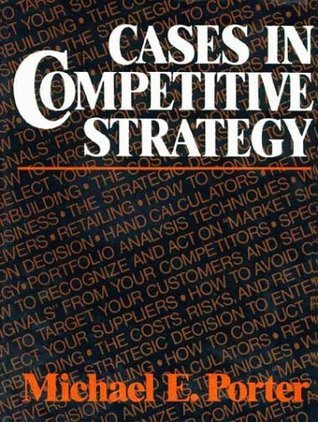
What fundamentally determines the profit potential of a business? What does a company do to protect its territory from another firm seeking to enter it? How is it able to forecast its future under shifting and uncertain conditions -- or predict how its rivals will behave under those same conditions? Most firms must face strategic questions like these when planning their future. The decisions they make must be based upon a rigorous, thorough analysis of the competition. That analysis and those decisions are the subject of this broad and comprehensive casebook, the essential companion volume to Michael Porter's widely acclaimed Competitive Strategy. The focus here is the actual competitive strategies of companies in 18 important industries and the portrayal of the competitive situations they face. The 26 indepth case studies provide the student with a laboratory in which to develop a working understanding of competition and the ability to identify the factors that shape the success or failure of a firm. Each case places the reader in a real-world business setting -- giving him the strategist's view of Kodak, for example, or General Electric -- and allows for the firsthand exploration of various problems involved in designing and implementing strategy. The reader must cope with making choices actual companies have faced. A major theme of the book is that a firm can shape the roles of competition in its favor if it understands these rules in a sophisticated way. Michael Porter first developed his ideas on competitive strategy in a famous course at the Harvard Business School. As described in Competitive Strategy, Porter finds three types of tools for strategy development. The first is the "general analytic techniques," applicable to any industry or competition, which allow an indepth analysis of such competitive issues as industry evolution, competition profiling, strategy toward suppliers and buyers, entry barriers, and market signals. The second is tools for analyzing "generic structure settings," or characteristic types of industry structures such as fragmented industries, global industries, and declining industries. The third is tools for making such strategic decisions as capacity expansion, integration, entry, divestment, and coalition. Each of the 18 industries in Cases in Competitive Strategy provides an opportunity for analysis using these tools. The intent of the book is cumulative, building through successively complex situations to an overview of how, when, and why various offensive and defensive strategic decisions can and should be made. Though the cases in Cases in Competitive Strategy are significant and informative when studied on their own, they were designed to be read and analyzed in combination with the companion volume, Competitive Strategy. Used this way, both the conceptual materials and the cases themselves are mutually reinforcing, establishing in the reader's mind the connection between the theory and the practice of competitive strategy formulation. No student of business strategy can afford to be without this broad-range series of applications of the most talked-about topic in business today.

"Gas Burners for Forges, Furnaces, & Kilns" is a do-it-yourselfers dream book, showing beginners how to make highly efficient gas burners inexpensively. These burners use simple gas accelerators as their central operating principle. All that is needed is a $2 MIG tip and some plumbing parts. This eliminates the need for a blower to supply combustion air, allowing the burners to be built in any size. Burners are featured, which are small enough to be used for a jewelry torch or large enough to heat any ceramic kiln. Because these burners are both powerful and portable, they can be combined with low cost space age insulating materials and common containers to build light compact heating equipment. Also described is a blacksmith's forge that can be carried anywhere and stored under a workbench; a portable metal melting furnace; a portable farrier's forge; a portable glass furnace/glory hole; and a mobile hot-work station that aids in combining several crafts. The burners and equipment provide an inexpensive way to get started in blacksmithing, foundry work, ceramics, or glasswork. General information and specific designs are given, enabling the craftsperson to build equipment tailored to their own desires.

The book is located in Colombia SA, Shipping by Certified Mail, with tracking number and insured. Shipping takes from 2 to 5 weeks. Book in Spanish in Very good condition. VENTAJA COMPETITIVA (PORTER) Las bases del desempeño sobre el promedio dentro de una industria. Descripción de la ventaja competitiva de Michael Porter. De acuerdo con el modelo de la ventaja competitiva de Porter, la estrategia competitiva toma acciones ofensivas o defensivas para crear una posición defendible en una industria, con la finalidad de hacer frente, con éxito, a las fuerzas competitivas y generar un Retorno sobre la inversión. Según Michael “la base del desempeño sobre el promedio dentro de una industria es la ventaja competitiva sostenible”. TIPOS BÁSICOS DE VENTAJA COMPETITIVA 1. Liderazgo por costos (bajo costo) 2. Diferenciación Ambos tipos de estrategia pueden ser acercados o estrechados más ampliamente, lo cual resulta en la tercera estrategia competitiva 3. Enfoque LIDERAZGO POR COSTOS Lograr el Liderazgo por costo significa que una firma se establece como el productor de más bajo costo en su industria. Un líder de costos debe lograr paridad, o por lo menos proximidad, en bases a diferenciación, aun cuando confía en el liderazgo de costos para consolidar su ventaja competitiva. Si más de una compañía intenta alcanzar el Liderazgo por costos al mismo tiempo, este es generalmente desastroso. Logrado a menudo a través de economías a escala. DIFERENCIACIÓN Lograr diferenciación significa que una firma intenta ser única en su industria en algunas dimensiones que son apreciadas extensamente por los compradores. Un diferenciador no puede ignorar su posición de costo. En todas las áreas que no afecten su diferenciación debe intentar disminuir costos; en el área de la diferenciación, los costos deben ser menores que la percepción de precio adicional que pagan los compradores por las características diferenciales. Las áreas de la diferenciación .

The Michael Porter Trilogy: Competitive Strategy, Competitive Advantage, the Competitive Advantage of Nations
by Michael E. Porter
Rating: 4.5 ⭐
Now nearing its 60th printing in English and translated into nineteen languages, Michael E. Porter's Competitive Strategy has transformed the theory, practice, and teaching of business strategy throughout the world. Electrifying in its simplicity -- like all great breakthroughs -- Porter's analysis of industries captures the complexity of industry competition in five underlying forces. Porter introduces one of the most powerful competitive tools yet his three generic strategies -- lowest cost, differentiation, and focus -- which bring structure to the task of strategic positioning. He shows how competitive advantage can be defined in terms of relative cost and relative prices, thus linking it directly to profitability, and presents a whole new perspective on how profit is created and divided. In the almost two decades since publication, Porter's framework for predicting competitor behavior has transformed the way in which companies look at their rivals and has given rise to the new discipline of competitor assessment. More than a million managers in both large and small companies, investment analysts, consultants, students, and scholars throughout the world have internalized Porter's ideas and applied them to assess industries, understand competitors,, and choose competitive positions. The ideas in the book address the underlying fundamentals of competition in a way that is independent of the specifics of the ways companies go about competing. Competitive Strategy has filled a void in management thinking. It provides an enduring foundation and grounding point on which all subsequent work can be built. By bringing a disciplined structure to the question of how firms achieve superior profitability, Porter's rich frameworks and deep insights comprise a sophisticated view of competition unsurpassed in the last quarter-century.


This audiobook was created based on Michael Porter's landmark book Competitive Strategy. This was Mr. Porter's synopsis of his book for the Harvard Business Review. This audiobook emphasizes that operational effectiveness is not strategy, that strategy rests on unique activities done by the organization, strategic positioning, the entrepreneurial edge, generic and specific strategies, that sustainable strategic positions require trade offs, that proper fit drives both competitive advantage and sustainability, rediscovering focused strategies, the failure of blurred and straddled strategies, the growth trap, that profitable growth is often niche oriented, the role of leadership in creating and maintaining clear strategies, and that the new entrant and new company advantage is executing clear strategies.
Porter has developed a systematic method of competitive analysis and strategy planning. This volume contains Porter's "Harvard Business Review" articles. They include "How Competitive Forces Shape Strategy" and "The Competitive Advantage of Nations".

Essays discuss technology, manufacturing, marketing, finance, capital, government policies, coalitions, competition, and leadership in the global marketplace, and look at specific cases.

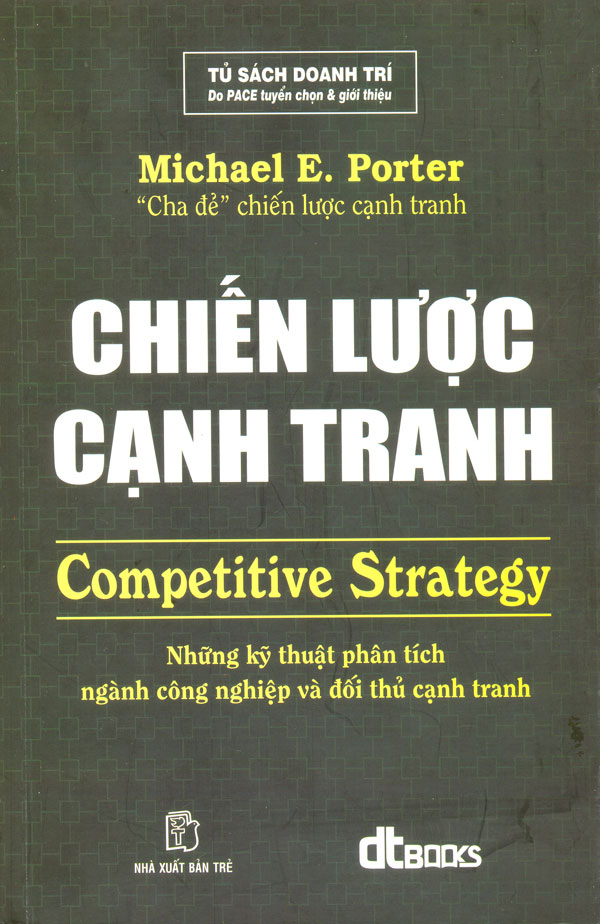
Chiến lược cạnh tranh: Những kỹ thuật phân tích ngành công nghiệp và đối thủ cạnh tranh
by Michael E. Porter
Rating: 4.0 ⭐
Chiến lược cạnh tranh và những bộ phận chính của nó gồm phân tích ngành, phân tích đối thủ cạnh tranh và định vị chiến lược hiện đang là một phần trong hoạt động quản lý.Chiến lược cạnh tranh bản thân nó cũng đã trở thành một lĩnh vực học thuật. Với nhiều ý tưởng cạnh tranh phong phú, đây hiện là một lĩnh vực nổi bật đối với các nhà nghiên cứu quản lý. Nó cũng trở thành một lĩnh vực được nhiều nhà kinh tế quan tâm. Số lượng và chất lượng các nghiên cứu có liên quan đến cuốn sách này, dù là ủng hộ hay phê phán, rất đáng khích lệ.Cuốn sách Chiến Lược Cạnh Tranh (Competitive Strategy) đã bổ sung vào khoảng trống trong tư duy quản lý. Sau nhiều thập kỷ phát triển, vai trò của các nhà quản lý tổng hợp và các chuyên gia đã trở nên rõ ràng hơn. Hoạch định chiến lược đã được chấp nhận rộng rãi như một nhiệm vụ quan trọng để vạch ra hướng đi dài hạn cho một doanh nghiệp.Cuốn sách Chiến Lược Cạnh Tranh giới thiệu một khung phân tích chi tiết để hiểu những lực lượng ẩn giấu phía sau cạnh tranh trong các ngành, thể hiện trong "năm yếu tố". Khung phân tích này cho thấy sự khác biệt quan trọng giữa các ngành, sự phát triển của ngành và giúp các công ty tìm ra vị trí hợp lý. Cuốn sách cung cấp những công cụ để nắm bắt sự phong phú và đa dạng của các ngành và các công ty trong khi đưa ra một cấu trúc chặt chẽ để xem xét chúng. Cuốn sách cũng cấu trúc hóa khái niệm lợi thế cạnh tranh bằng cách định nghĩa nó theo chi phí và tính khác biệt, đồng thời gắn nó trực tiếp với lợi nhuận. Các nhà quản lý đang tìm kiếm những phương pháp cụ thể để giải quyết những câu hỏi khó trong hoạch định chiến lược đã nhanh chóng nắm lấy những ý tưởng trong sách vì chúng có vẻ đúng đối với những nhà hoạt động thực tiễn.


O conhecido Relatório Porter, formalmente Construir as Vantagens Competitivas de Portugal“(…) O presente relatório é um resultado valioso do trabalho levado a cabo por empresários, gestores e técnicos portugueses, com o apoio da Monitor Company. Mais do que um relatório, é um instrumento de trabalho em mutação e aberto aos novos desafios. Não é, contudo, o mais importante resultado deste projecto.Ao entrarmos na terceira fase do projecto, com a constituição do Fórum para a Competitividade, estamos a criar o contexto e o momentum para o aprofundamento da mudança e da viragem qualitativa de Portugal.O projecto Construir as Vantagens Competitivas de Portugal foi uma alavanca da sociedade portuguesa na mudança iniciada na década de 80. Conjugou esforços, sistematizou trabalhos, lançou debates, dinamizou estratégias e tornou clara uma ambição: os portugueses querem um país próspero e desenvolvido. E estão a criá-lo.Tão só temos que desenvolver a ambição e a vontade de progredir. Para sermos aquilo que tivermos capacidade de acreditar.”Comissão Directiva do Projecto Construir as Vantagens Competitivas de PortugalDo Prefácio

Villages, Ghosts, Lovers....And Red Rice is a hauntingly delightful true story of events that took place in the life of an African American family living in Savannah, Georgia from 1963 to 2000. Both dramatic and, at times, twistingly humorous, the story touches on root working, controversial interracial relationships, an eccentric 'dognapper', a piano teacher's relationship with a wealthy antique dealer who holds dark secrets, and other equally interesting events and personalities. Though centered in Savannah, events also take place in Manhattan New York, New Orleans, and on Martha's Vineyard. Rich in both Southern and African American culture, Villages, Ghosts, Lovers....And Red Rice reveals the spirit of a city that lures people to its sultry climate and mesmerizing beauty....and never let's go!


Um dos grandes especialistas mundiais em estratégia, Michael Porter debruça-se sobre um tema atual e de grande importância para indivíduos, profissionais, serviços e instituições da saúde; as crescentes dificuldades dos sistemas de saúde e dos próprios pacientes em todo o mundo. Nesta obra que está alcançando grande repercussão mundial, Porter e sua colega, Elizabeth Teisberg, propõem uma mudança de rumos no modelo vigente.