Loading genres...
Explore the best books about 19th Century genre.

Madame Bovary is the debut novel of French writer Gustave Flaubert, published in 1856. The character lives beyond her means in order to escape the banalities and emptiness of provincial life. When the novel was first serialized in La Revue de Paris between 1 October 1856 and 15 December 1856, public prosecutors attacked the novel for obscenity. The resulting trial in January 1857 made the story notorious. After Flaubert's acquittal on 7 February 1857, Madame Bovary became a bestseller in April 1857 when it was published in two volumes. A seminal work of literary realism, the novel is now considered Flaubert's masterpiece, and one of the most influential literary works in history.
The Brothers Karamazov is a murder mystery, a courtroom drama, and an exploration of erotic rivalry in a series of triangular love affairs involving the “wicked and sentimental” Fyodor Pavlovich Karamazov and his three sons―the impulsive and sensual Dmitri; the coldly rational Ivan; and the healthy, red-cheeked young novice Alyosha. Through the gripping events of their story, Dostoevsky portrays the whole of Russian life, is social and spiritual striving, in what was both the golden age and a tragic turning point in Russian culture.This award-winning translation by Richard Pevear and Larissa Volokhonsky remains true to the verbal inventiveness of Dostoevsky’s prose, preserving the multiple voices, the humor, and the surprising modernity of the original. It is an achievement worthy of Dostoevsky’s last and greatest novel.

A collection of quintessentially American poems, the seminal work of one of the most influential writers of the nineteenth century.

Friedrich Nietzsche's Beyond Good and Evil is translated from the German by R.J. Hollingdale with an introduction by Michael Tanner in Penguin Classics.Beyond Good and Evil confirmed Nietzsche's position as the towering European philosopher of his age. The work dramatically rejects the tradition of Western thought with its notions of truth and God, good and evil. Nietzsche demonstrates that the Christian world is steeped in a false piety and infected with a 'slave morality'. With wit and energy, he turns from this critique to a philosophy that celebrates the present and demands that the individual imposes their own 'will to power' upon the world.This edition includes a commentary on the text by the translator and Michael Tanner's introduction, which explains some of the more abstract passages in Beyond Good and Evil.Frederich Nietzsche (1844-1900) became the chair of classical philology at Basel University at the age of 24 until his bad health forced him to retire in 1879. He divorced himself from society until his final collapse in 1899 when he became insane. A powerfully original thinker, Nietzsche's influence on subsequent writers, such as George Bernard Shaw, D.H. Lawrence, Thomas Mann and Jean-Paul Sartre, was considerable.If you enjoyed Beyond Good and Evil you might like Nietzsche's Thus Spoke Zarathustra, also available in Penguin Classics."One of the greatest books of a very great thinker." —Michael Tanner

In Russia's struggle with Napoleon, Tolstoy saw a tragedy that involved all mankind. War and Peace broadly focuses on Napoleon’s invasion of Russia in 1812 and follows three of the most well-known characters in literature: Pierre Bezukhov, the illegitimate son of a count who is fighting for his inheritance and yearning for spiritual fulfillment; Prince Andrei Bolkonsky, who leaves his family behind to fight in the war against Napoleon; and Natasha Rostov, the beautiful young daughter of a nobleman who intrigues both men.As Napoleon’s army invades, Tolstoy brilliantly follows characters from diverse backgrounds—peasants and nobility, civilians and soldiers—as they struggle with the problems unique to their era, their history, and their culture. And as the novel progresses, these characters transcend their specificity, becoming some of the most moving—and human—figures in world literature.Tolstoy gave his personal approval to this translation, published here in a new single volume edition, which includes an introduction by Henry Gifford, and Tolstoy's important essay `Some Words about War and Peace'.

EDITION INTEGRALE EXCEPTIONNELLE Avec Atlantic Editions, plongez dans la lecture d'un des plus grands chefs-d'oeuvre de la litterature Francaise dans une tres belle edition brochee.Seduisant, intelligent et ambitieux, Julien Sorel, fils de charpentier, est determine a depasser ses origines provinciales modestes. Realisant rapidement que le succes ne peut etre atteint que par l'adoption du code subtil de l'hypocrisie par lequel la societe opere, il accede au sommet de la hierarchie sociale en agissant par interet personnel et tromperies. Mais il n'est pas satisfait de son sort - il reve de devenir une sorte de nouveau Napoleon Bonaparte et meprise les gens de la haute societe. Son ambition demesuree le pousse a courtiser Mme de Renal, epouse devouee et naive du maire de Verrieres, et a conquerir Mathilde, fille altiere et passionnee du marquis de la Mole. Mais le temperament fier et ombrageux de Julien lui fera commettre l'irreparable et le menera a sa perte.Le Rouge et le Noir, d'abord paru en 1830, est un portrait satirique de la societe Francaise sous la Restauration, rongee par la corruption et la cupidite. Ce chef-d'oeuvre, noir par son realisme, et teinte du rouge de la passion et du crime, temoigne de l'immense talent litteraire de l'auteur.Henri Beyle, connu sous le pseudonyme de Stendhal (1783-1842), est l'un des plus grands ecrivains Francais. Il a marque la litterature par la profondeur de ses analyses psychologiques, son souci du realisme et de la recherche de la Verite, ses portraits de jeunes gens aux aspirations romantiques, et par la force de son style.Ce chef-d'oeuvre, incontournable et intemporel, ravira les lecteurs de tous ages.Dans la meme collection brochee de l'editeur Atlantic Editions, retrouvez un autre chef-d'oeuvre de Stendhal: La Chartreuse de Parme

"People are almost always better than their neighbours think they are"George Eliot’s most ambitious novel is a masterly evocation of diverse lives and changing fortunes in a provincial community. Peopling its landscape are Dorothea Brooke, a young idealist whose search for intellectual fulfillment leads her into a disastrous marriage to the pedantic scholar Casaubon; the charming but tactless Dr Lydgate, whose pioneering medical methods, combined with an imprudent marriage to the spendthrift beauty Rosamond, threaten to undermine his career; and the religious hypocrite Bulstrode, hiding scandalous crimes from his past. As their stories interweave, George Eliot creates a richly nuanced and moving drama, hailed by Virginia Woolf as "one of the few English novels written for grown-up people".

Alternate Cover Edition ISBN 0679734511. (ISBN13: 9780679734512)Inspired by the true story of a political murder that horrified Russians in 1869, Fyodor Dostoevsky conceived of Demons as a "novel-pamphlet" in which he would say everything about the plague of materialist ideology that he saw infecting his native land. What emerged was a prophetic and ferociously funny masterpiece of ideology and murder in pre-revolutionary Russia.

"[This book] mirrors all of Nietzsche's thought and could be related in hundreds of ways to his other books, his notes, and his letters. And yet it is complete in itself. For it is a work of art." —Walter Kaufmann in the IntroductionNietzsche called The Gay Science "the most personal of all my books." It was here that he first proclaimed the death of God—to which a large part of the book is devoted—and his doctrine of the eternal recurrence.Walter Kaufmann's commentary, with its many quotations from previously untranslated letters, brings to life Nietzsche as a human being and illuminates his philosophy. The book contains some of Nietzsche's most sustained discussions of art and morality, knowledge and truth, the intellectual conscience and the origin of logic.Most of the book was written just before Thus Spoke Zarathustra, the last part five years later, after Beyond Good and Evil. We encounter Zarathustra in these pages as well as many of Nietzsche's most interesting philosophical ideas and the largest collection of his own poetry that he himself ever published.Walter Kaufmann's English versions of Nietzsche represent one of the major translation enterprises of our time. He is the first philosopher to have translated Nietzsche's major works, and never before has a single translator given us so much of Nietzsche.

Alternate cover edition of ISBN 9780140432077Published in 1859, John Stuart Mill's On Liberty presented one of the most eloquent defenses of individual freedom in nineteenth-century social and political philosophy and is today perhaps the most widely-read liberal argument in support of the value of liberty. Mill's passionate advocacy of spontaneity, individuality, and diversity, along with his contempt for compulsory uniformity and the despotism of popular opinion, has attracted both admiration and condemnation.

The narrative drive of Stowe's classic novel is often overlooked in the heat of the controversies surrounding its anti-slavery sentiments. In fact, it is a compelling adventure story with richly drawn characters and has earned a place in both literary and American history. Stowe's religious beliefs show up in the novel's final, overarching theme—the exploration of the nature of Christianity and how Christian theology is fundamentally incompatible with slavery.

One of the greatest philosophers of the nineteenth century, Schopenhauer believed that human action is determined not by reason but by 'will' - the blind and irrational desire for physical existence. This selection of his writings on religion, ethics, politics, women and many other themes is taken from Schopenhauer's last work, Parerga and Paralipomena, which he published in 1851. He depicts humanity as locked in a struggle beyond good and evil, each individual absolutely free within a Godless world in which art, morality and self-awareness are our only salvation. This innovative and pessimistic view proved powerfully influential upon philosophy and art, affecting the work of Nietzsche and Wittgenstein among others.

'What if everything in the world were a misunderstanding, what if laughter were really tears?' Either/Or is the earliest of the major works of Søren Kierkegaard, one of the most startlingly original thinkers and writers of the nineteenth century, and the first which he wrote under a pseudonym, as he would for his greatest philosophical writings. Adopting the viewpoints of two distinct figures with radically different beliefs--the aesthetic young man of Part One, called simply 'A', and the ethical Judge Vilhelm of the second section--Kierkegaard reflects upon the search for a meaningful existence, contemplating subjects as diverse as Mozart, drama, boredom, and, in the famous Seducer's Diary, the cynical seduction and ultimate rejection of a young, beautiful woman. A masterpiece of duality, Either/Or is an exploration of the conflict between the aesthetic and the ethical--both meditating ironically and seductively upon Epicurean pleasures, and eloquently expounding the noble virtues of a morally upstanding life.This lightly abridged edition fully conveys the vigour and eloquence of the original. Alastair Hannay's introduction explains the philosophical background to the work and places it in the context of its times.

The Collected Poems of W. B. Yeats includes all of the poems authorized by Yeats for inclusion in his standard canon. Breathtaking in range, it encompasses the entire arc of his career, from luminous reworking of ancient Irish myths and legends, to passionate meditations on the demands and rewards of youth and old age, from exquisite, occasionally whimsical songs of love, nature, and art to somber and angry poems of life in a nation torn by war and uprising. In observing the development of rich and recurring images and themes over the course of his body of work, we can trace the quest of this century's greatest poet to unite intellect and artistry in a single magnificent vision.Revised and corrected, this edition includes Yeat's own notes on his poetry, complemented by explanatory notes from esteemed Yeats scholar Richard J. Finneran. The Collected Poems of W. B. Yeats is the most comprehensive edition of one of the world's most beloved poets available in paperback.

For this novel, Scott moved far away from the setting of his own turbulent time. He went back to the late 12th century, and to England rather than the Scottish settings of all his previous novels. He connected his writing Ivanhoe with his concerns about contemporary events.Scott drew together the apparently opposing themes of historical reality and chivalric romance, social realism and high adventure, past and present.

Richard Howard's exuberant and definitive rendition of Stendhal's stirring tale has brought about the rediscovery of this classic by modern readers. Stendhal narrates a young aristocrat's adventures in Napoleon's army and in the court of Parma, illuminating in the process the whole cloth of European history. As Balzac wrote, "Never before have the hearts of princes, ministers, courtiers, and women been depicted like this...one sees perfection in every detail."With beautiful illustrations by Robert Andrew Parker.

An alternative cover edition for this ISBN can be found here.Emily Brontë's only novel, a work of tremendous and far-reaching influence, the Penguin Classics edition of Wuthering Heights is the definitive edition of the text, edited with an introduction by Pauline Nestor. Lockwood, the new tenant of Thrushcross Grange, situated on the bleak Yorkshire moors, is forced to seek shelter one night at Wuthering Heights, the home of his landlord. There he discovers the history of the tempestuous events that took place years before; of the intense relationship between the gypsy foundling Heathcliff and Catherine Earnshaw; and how Catherine, forced to choose between passionate, tortured Heathcliff and gentle, well-bred Edgar Linton, surrendered to the expectations of her class. As Heathcliff's bitterness and vengeance at his betrayal is visited upon the next generation, their innocent heirs must struggle to escape the legacy of the past.

Considered by contemporary critics to be Trollope's greatest novel, The Way We Live Now is a satire of the literary world of nineteenth-century London and a bold indictment of the new power of speculative finance in English life. The story concerns Augustus Melmotte, a French swindler and scoundrel, and his daughter, to whom Felix Carbury, adored son of the authoress Lady Carbury, is induced to propose marriage for the sake of securing a fortune. Trollope's portrait of Lady Carbury, impetuous, unprincipled, and unswervingly devoted to her own self-promotion, is one of his finest satirical achievements. In his kaleidoscopic depiction of a society on the verge of moral bankruptcy, Trollope gives us life as it was lived more than a hundred years ago, while speaking eloquently to some of the governing obsessions of our own age.

Returning to Russia from a sanitarium in Switzerland, the Christ-like epileptic Prince Myshkin finds himself enmeshed in a tangle of love, torn between two women—the notorious kept woman Nastasya and the pure Aglaia—both involved, in turn, with the corrupt, money-hungry Ganya. In the end, Myshkin’s honesty, goodness, and integrity are shown to be unequal to the moral emptiness of those around him. In her revision of the Garnett translation, Anna Brailovsky has corrected inaccuracies wrought by Garnett’s drastic anglicization of the novel, restoring as much as possible the syntactical structure of the original story.

Goethe was probably the last true ‘Renaissance Man’. Although employed as a Privy Councillor at the Duke of Weimar’s court, where he helped oversee major mining, road-building and irrigation projects, he also painted, directed plays, carried out research in anatomy, botany and optics — and still found time to produce masterpieces in every literary genre. His 1,413 maxims and reflections reveal not only some of his deepest thought on art, ethics, literature and natural science, but also his immediate reactions to books, chance encounters or his administrative work. With a freshness and immediacy which vividly conjure up Goethe the man, they make an ideal introduction to one of the greatest of European writers.

For centuries people communicated across distances only as quickly as the fastest ship or horse could travel. Generations of innovators tried and failed to develop speedier messaging devices. But in the mid-1800s, a few extraordinary pioneers at last succeeded. Their invention--the electric telegraph--shrank the world more quickly than ever before.A colorful tale of scientific discovery and technological cunning, The Victorian Internet tells the story of the telegraph's creation and remarkable impact, and of the visionaries, oddballs, and eccentrics who pioneered it. By 1865 telegraph cables spanned continents and oceans, revolutionizing the ways countries dealt with one another. The telegraph gave rise to creative business practices and new forms of crime. Romances blossomed over the wires. Secret codes were devised by some users, and cracked by others. The benefits of the network were relentlessly hyped by its advocates and dismissed by its skeptics. And attitudes toward everything from news gathering to war had to be completely rethought. The telegraph unleashed the greatest revolution in communications since the development of the printing press. Its saga offers many parallels to that of the Internet in our own time--and is a fascinating episode in the history of technology.

Can You Forgive Her? (1864-5) is the first of the six famous Palliser novels which, as a group, provide us with the most extensive and contradictory expose of British life during the period of its greatest prestige. In Can You Forgive Her? Trollope inextricably binds together the issues of parliamentary election and marriage, of politics and privacy. The values and aspirations of the governing stratum of Victorian society are ruthlessly examined and none remain unscathed. Above all Trollope focuses on the predicament of women. 'What should a woman do with her life?' asks Alice Vavasor of herself, and this theme is echoed by every other woman in the novel, from the uncomfortably married Lady Glencora to the coquettish Mrs Greenow and Alice's clear-headed cousin, Kate.

Four prized selections by one of America's greatest writers: "The Open Boat," based on a harrowing incident in the author's life: the 1897 sinking of a ship on which he was a passenger; "The Blue Hotel" and "The Bride Comes to Yellow Sky," reflecting Crane's early travels in Mexico and the American Southwest; and the novella Maggie: A Girl of the Streets, a galvanizing portrait of life in the slums of New York City.

Since its publication in 1984, Chants Democratic has endured as a classic narrative on labor and the rise of American democracy. In it, Sean Wilentz explores the dramatic social and intellectual changes that accompanied early industrialization in New York. He provides a panoramic chronicle of New York City's labor strife, social movements, and political turmoil in the eras of Thomas Jefferson and Andrew Jackson. Twenty years after its initial publication, Wilentz has added a new preface that takes stock of his own thinking, then and now, about New York City and the rise of the American working class.

David Ricardo (1772-1823), the founder of the classical school of economics, applied the deductive logic of the philosopher James Mill to the analysis of monetary principles. His chief work, Principles of Political Economy and Taxation, first published in 1817, had a profound impact and remains one of the groundworks of modern economics. Ricardo's labor theory of value, as well as his elaboration of the division of incomes, and the function of wages, rent, and trade, deeply influenced the economic philosophies of Karl Marx, John Stuart Mill, Alfred Marshall, and many others.

With an Introduction and Notes by Dr Carole Jones, freelance writer and researcher.George Eliot's final novel, Daniel Deronda (1876), follows the intertwining lives of the beautiful but spoiled and selfish Gwendolene Harleth and the selfless yet alienated Daniel Deronda, as they search for personal and vocational fulfilment and sympathetic relationship.Set largely in the degenerate English aristocratic society of the 1860s, Daniel Deronda charts their search for meaningful lives against a background of imperialism, the oppression of women, and racial and religious prejudice. Gwendolen's attempts to escape a sadistic relationship and atone for past actions catalyse her friendship with Deronda, while his search for origins leads him, via Judaism, to a quest for moral growth.Eliot's radical dual narrative constantly challenges all solutions and ensures that the novel is as controversial now, as when it first appeared.

Based on Flaubert’s own youthful passion for an older woman, Sentimental Education was described by its author as “the moral history of the men of my generation.” It follows the amorous adventures of Frederic Moreau, a law student who, returning home to Normandy from Paris, notices Mme Arnoux, a slender, dark woman several years older than himself. It is the beginning of an infatuation that will last a lifetime. He befriends her husband, an influential businessman, and as their paths cross and re-cross over the years, Mme Arnoux remains the constant, unattainable love of Moreau’s life. Blending love story, historical authenticity, and satire, Sentimental Education is one of the great French novels of the nineteenth century.

Accused of political subversion as a young man, Fyodor Dostoyevsky was sentenced to four years of hard labor at a Siberian prison camp — a horrifying experience from which he developed this astounding semi-autobiographical memoir of a man condemned to ten years of servitude for murdering his wife.As with a number of the author's other works, this profoundly influential novel brilliantly explores his characters' thoughts while probing the depths of the human soul. Describing in relentless detail the physical and mental suffering of the convicts, Dostoyevsky's character never loses faith in human qualities and the goodness of man.A haunting and remarkable work filled with wonder and resignation, The House of the Dead ranks among the Russian novelist's greatest masterpieces. Of this powerful autobiographical novel, Tolstoy wrote, "I know no better book in all modern literature."

From the rear cover of this 738 page "A phenomenal achievement, clear, authoritative and compelling......Thomas Pakenham's fine book tells the story of this particular gold rush with admirable and judicious poise....Contains some of the best-known episodes of 19th-Century history as well as some of the most mythologized and colorful characters the world has ever seen.....Livingstone and Stanley, Brazza and Rhodes, Kitchener and Gordon, Lugard and Jameson.....Highly readable." and "Taking the entire continent as his canvas, Pakenham has painted a picture of heroism and horror. He writes both with compassion and with an effective combination of detachment and judgement. A splendid book."

The reference to the Antichrist is not intended to refer to the biblical Antichrist but is rather an attack on the "slave morality" and apathy of Western Christianity. Nietzsche's basic claim is that Christianity is a poisoner of western culture and perversion of the words of and practice of Jesus. Throughout the text, Nietzsche is very critical of institutionalized religion and its priest class, from which he himself was descended. The majority of the book is a systematic attack upon the interpretations of Christ's words by St. Paul and those who followed him. Nietzsche claimed in the Foreword to have written the book for a very limited readership. In order to understand the book, he asserted that the reader "... must be honest in intellectual matters to the point of hardness to so much as endure my seriousness, my passion." The reader should be above politics and nationalism. Also, the usefulness or harmfulness of truth should not be a concern. Characteristics such as "Strength which prefers questions for which no one today is sufficiently daring; courage for the forbidden" are also needed. He disdained all other readers.

H. Rider Haggard's King Solomon's Mines has entertained generations of readers since its first publication in 1885. Following a mysterious map of dubious reliability, a small group of men trek into southern Africa in search of a lost friend-and a lost treasure, the fabled mines of King Solomon. Led by the English adventurer and fortune hunter Allan Quatermain, they discover a frozen corpse, survive untold dangers in remote mountains and deserts, and encounter the merciless King Twala en route to the legendary hoard of diamonds.

Complete and unabridged paperback edition. An essay containing the most extensive statements of Wilde's aesthetic philosophy.First published in 1891.

Universally condemned in 1890 when it was written, Hedda Gabler has since become one of Ibsen's most frequently performed plays. Its title role is elusive and complex: Hedda is an intelligent and ambitious woman, who has no means of finding personal fulfilment in the stifling world of late nineteenth-century bourgeois society. Too frightened of scandal to become involved with a brilliant, wayward writer, she opts for a conventional but loveless marriage in the hope of finding surrogate satisfaction through her husband's career.

Regarded as the classic standard biography on Thomas Edison. It is the only biography written in the last 40 years to be recommended by the official voice of the caretakers of the Edison Laboratory National Monument in New Jersey which houses all of Edison's original records, sketches, notes, correspondence and memoranda. Depicts Edison as a pivotal figure in America's economic and industrial revolution success and at the same time as a human being, including his exploitative and, at times, crude qualities.

In New Grub Street George Gissing re-created a microcosm of London's literary society as he had experienced it. His novel is at once a major social document and a story that draws us irresistibly into the twilit world of Edwin Reardon, a struggling novelist, and his friends and acquaintances in Grub Street including Jasper Milvain, an ambitious journalist, and Alfred Yule, an embittered critic. Here Gissing brings to life the bitter battles (fought out in obscure garrets or in the Reading Room of the British Museum) between integrity and the dictates of the market place, the miseries of genteel poverty and the damage that failure and hardship do to human personality and relationships.

Nous sommes au bord de la voie ferrée, dans un hôtel du Nebraska, en 1898. C'est dans cet hôtel que se fabrique l'Amérique, et des Américains qui donc n'en sont pas encore, s'y rencontrent. Il y a le Suédois, l'homme de l'Est, le père irlandais, le jeune fils, et l'incontournable cow-boy. Ils improvisent une table et jouent aux cartes. Mais c'est en fait leur devenir qu'ils jouent.

Thomas Babington Macaulay (1800-1859) won instantaneous and outstanding success in prose poetry, in politics and oratory. His History, translated throughout Europe and achieving sales in America second only to the Bible, immediately became the canon of historical orthodoxy, replacing previous histories so completely that it is now difficult to see past its long and apparently effortless triumph.

Oliver Wendell Holmes, Jr. (1841–1935) is generally considered one of the two greatest justices of the United States Supreme Court, Chief Justice John Marshall being the other. In more than 2000 opinions, he delineated an impressive legal philosophy that profoundly influenced American jurisprudence, particularly in the area of civil liberties and judicial restraint. At the same time, his abilities as a prose stylist earned him a position among the literary elite.In The Common Law , derived from a series of lectures delivered at the Lowell Institute in Boston, Holmes systematized his early legal doctrines. The result was an enduring classic of legal philosophy that continues to be read and consulted over a century later. Beginning with historical forms of liability (thought to have originated in the desire for vengeance in ancient Roman and Germanic blood feuds), the book goes on to discuss criminal law, torts, bails, possession and ownership, contracts, successions, and many other aspects of civil and criminal law.Encompassing Holmes's profound, wide-ranging knowledge of the law in its historical aspects, yet written in a manner easily accessible to the layman, The Common Law provoked this observation from another famed jurist; "The book is a classic in the sense that its stock of ideas has been absorbed and become part of common juristic thought … they placed law in a perspective which legal scholarship ever since has merely confirmed." — Felix Frankfurter, Of Law and Men .Now the influential ideas and judicial theory of Oliver Wendell Holmes, Jr. can be studied and appreciated in this superb edition — the only one in print — of his magnum opus. This edition also features a new introduction by Professor Sheldon M. Novick, author of Honorable The Life of Oliver Wendell Holmes . First published in 1881, this book is still indispensable reading for lawyers, political scientists, historians, general readers — anyone interested in the origins, development, and continuing evolution of the laws that govern human society.

"The Eighteenth Brumaire of Louis Bonaparte" is one of Karl Marx' most profound and most brilliant monographs. It may be considered the best work extant on the philosophy of history. On the 18th Brumaire (Nov. 9th), the post-revolutionary development of affairs in France enabled the first Napoleon to take a step that led with inevitable certainty to the imperial throne. The circumstance that fifty and odd years later similar events aided his nephew, Louis Bonaparte, to take a similar step with a similar result, gives the name to this work-"The Eighteenth Brumaire of Louis Bonaparte."

At six years of age, Robert Cecil, the 3rd Marquess of Salisbury, was sent to a brutal boarding school he likened to “an existence among devils.” By 23, he was a member of the British Parliament. And before his death at age 73 in 1903, he would spend nearly two decades as Britain’s Prime Minister, single-mindedly driving the British Empire to extend its iron grip to five continents. This multiple award-winning biography sheds uncompromising light on Lord Salisbury’s troubled family life, his transformational experiences in Australia, India, and Africa, and his dogged pursuit of political power in the court of Queen Victoria.

The Metaphysical Club was an informal group that met in Cambridge, Massachusetts, in 1872, to talk about ideas. Its members included Oliver Wendell Holmes, Jr, founder of modern jurisprudence; William James, the father of modern American psychology; and Charles Sanders Peirce, logician, scientist and the founder of semiotics. The club was probably in existence for about nine months. No records were kept. The one thing we know that came out of it was an idea - an idea about ideas. This book is the story of that idea. Holmes, James and Peirce all believed that ideas are not things out there waiting to be discovered but are tools people invent - like knives and forks and microchips - to make their way in the world. They thought that ideas are produced not by individuals, but by groups of individuals - that ideas are social. They do not develop according to some inner logic of their own but are entirely dependent - like germs - on their human carriers and environment. They also thought that the survival of any idea depends not on its immutability but on its adaptability.

The fall of Metternich in the revolutions which swept Europe in 1848 heralded an era of unprecedented nationalism, which culminated in the collapse of the Habsburg, Romanov, and Hohenzollern dynasties at the of the First World War. In the intervening seventy years which are the subject of this book, the boundaries of Europe changed dramatically from those established at Vienna in 1815: Cavour championed the cause of Risorgimento in Italy; Bismarck brought about the unification of Germany; while the Great Powers scrambled for a place in the sun in Africa.In this, one of his most enduring works, A.J.P. Taylor shows how the changing balance of power determined the course of European history, during this, the last age when Europe was the centre of world history. Throughout, Taylor's narrative is so vivid that the book is as much a work of literature as a contribution to historical scholarship.

The Turn of the Screw is an 1898 horror novella by Henry James that first appeared in serial format in Collier's Weekly magazine (January 27 - April 16, 1898). In October 1898 it appeared in The Two Magics, a book published by Macmillan in New York City and Heinemann in London. A very young woman's first job: governess for two weirdly beautiful, strangely distant, oddly silent children, Miles and Flora, at a forlorn estate... An estate haunted by a beckoning evil. Half-seen figures who glare from dark towers and dusty windows- silent, foul phantoms who, day by day, night by night, come closer, ever closer. With growing horror, the helpless governess realizes the fiendish creatures want the children, seeking to corrupt their bodies, possess their minds, own their souls. But worse-much worse- the governess discovers that Miles and Flora have no terror of the lurking evil. For they want the walking dead as badly as the dead want them.Excerpt:I remember the whole beginning as a succession of flights and drops, a little seesaw of the right throbs and the wrong. After rising, in town, to meet his appeal, I had at all events a couple of very bad days - found myself doubtful again, felt indeed sure I had made a mistake. In this state of mind I spent the long hours of bumping, swinging coach that carried me to the stopping place at which I was to be met by a vehicle from the house.

Bazarov—a gifted, impatient, and caustic young man—has journeyed from school to the home of his friend Arkady Kirsanov. But soon Bazarov’s outspoken rejection of authority and social conventions touches off quarrels, misunderstandings, and romantic entanglements that will utterly transform the Kirsanov household and reflect the changes taking place across all of nineteenth-century Russia. Fathers and Sons enraged the old and the young, reactionaries, romantics, and radicals alike when it was first published. At the same time, Turgenev won the acclaim of Flaubert, Maupassant, and Henry James for his craftsmanship as a writer and his psychological insight. Fathers and Sons is now considered one of the greatest novels of the nineteenth century.A timeless depiction of generational conflict during social upheaval, it vividly portrays the clash between the older Russian aristocracy and the youthful radicalism that foreshadowed the revolution to come—and offers modern-day readers much to reflect upon as they look around at their own tumultuous, ever changing world. Introduction by Jane Costlow

On July 28, 1841, the body of Mary Rogers, a twenty-year-old cigar girl, was found floating in the Hudson-and New York's unregulated police force proved incapable of solving the crime. One year later, a struggling writer named Edgar Allan Poe decided to take on the case-and sent his fictional detective, C. Auguste Dupin, to solve the baffling murder of Mary Rogers in "The Mystery of Marie Rog�t."

An outstanding feature of Mr. Porter's book is its depiction of the interrelationships between statistics and certain intellectual and social movements. . . . [The book] is unfailingly interesting -Morris Kline, New York Times Book Review "The Rise of Statistical Thinking avoids technicalities and concentrates on the flow of ideas between the natural and social sciences. It emphasizes the philosophical issues raised by novel statistical methods, and how they affected the subject's development" -Ian Stewart, Nature

The Masque of Anarchy (or The Mask of Anarchy) is a British political poem written in 1819 following the Peterloo massacre of that year.

Charles Baudelaire's 1857 masterwork was scandalous in its day for its portrayals of sex, same-sex love, death, the corrupting and oppressive power of the modern city and lost innocence, Les Fleurs du Mal (The Flowers of Evil) remains powerful and relevant for our time.In Spleen et idéal," Baudelaire dramatizes the erotic cycle of ecstacy and anguish--of sexual and romantic love. Tableaux Parisiens condemns the crushing effects of urban planning on a city's soul and praises the city's anti-heroes including the deranged and derelict. Le Vin centers on the search for oblivion in drink and drugs. The many kinds of love that lie outside traditional morality is the focus of Fleurs du Mal while rebellion is at the heart of Révolte.

The book that established Thomas Carlyle’s reputation when first published in 1837, this spectacular historical masterpiece has since been accepted as the standard work on the subject. It combines a shrewd insight into character, a vivid realization of the picturesque, and a singular ability to bring the past to blazing life, making it a reading experience as thrilling as any novel. As John D. Rosenberg observes in his Introduction, The French Revolution is “one of the grand poems of [Carlyle’s] century, yet its poetry consists in being everywhere scrupulously rooted in historical fact.”This Modern Library Paperback Classics edition, complete and unabridged, is unavailable anywhere else.

First published in 1894, the story of the diva Trilby O'Ferrall and her mentor, Svengali, has entered the mythology of that period alongside Dracula and Sherlock Holmes. Immensely popular for years, the novel led to a hit play, a series of popular films, Trilby products from hats to ice cream, and streets in Florida named after characters in the book. The setting reflects Du Maurier's bohemian years as an art student in Paris before he went to London to make a career in journalism. A celebrated caricaturist for Punch magazine, Du Maurier's drawings for the novel formed a large part of its appeal.

Young and imaginative Alice follows a hasty rabbit underground and comes face-to-face with some of the strangest adventures and most fantastic characters in all literature....NOW WITH AN INTRODUCTION BY ERIN MORGENSTERN, BESTSELLING AUTHOR OF THE STARLESS SEA AND THE NIGHT CIRCUSThe mad Hatter, the diabolical Queen of Hearts, the grinning Cheshire-Cat, Tweedledum, and Tweedledee could only have come from that master of sublime nonsense Lewis Carroll. In this brilliant satire of rigid Victorian society, Carroll also illuminates the fears, anxieties, and complexities of growing up. He was one of the few adult writers to enter successfully the children’s world of make-believe, where the impossible becomes possible, the unreal, real, and where the heights of adventure are limited only by the depths of imagination.

Persuasion is Jane Austen's last completed novel. She began it soon after she had finished Emma, completing it in August 1816. She died, aged 41, in 1817; Persuasion was published in December that year (but dated 1818). Persuasion is linked to Northanger Abbey not only by the fact that the two books were originally bound up in one volume and published together, but also because both stories are set partly in Bath, a fashionable city with which Austen was well acquainted, having lived there from 1801 to 1805. Besides the theme of persuasion, the novel evokes other topics, such as the Royal Navy, in which two of Jane Austen's brothers ultimately rose to the rank of admiral. As in Northanger Abbey, the superficial social life of Bath-well known to Austen, who spent several relatively unhappy and unproductive years there-is portrayed extensively and serves as a setting for the second half of the book. In many respects Persuasion marks a break with Austen's previous works, both in the more biting, even irritable satire directed at some of the novel's characters and in the regretful, resigned outlook of its otherwise admirable heroine, Anne Elliot, in the first part of the story. Against this is set the energy and appeal of the Royal Navy, which symbolises for Anne and the reader the possibility of a more outgoing, engaged, and fulfilling life, and it is this worldview which triumphs for the most part at the end of the novel.

The story of Daniel Boone is the story of America—its ideals, its promise, its romance, and its destiny. Bestselling, critically acclaimed author Robert Morgan reveals the complex character of a frontiersman whose heroic life was far stranger and more fascinating than the myths that surround him.This rich, authoritative biography offers a wholly new perspective on a man who has been an American icon for more than two hundred years—a hero as important to American history as his more political contemporaries George Washington and Benjamin Franklin. Extensive endnotes, cultural and historical background material, and maps and illustrations underscore the scope of this distinguished and immensely entertaining work.

A handsome young sailor is unjustly accused of plotting mutiny in this timeless tale of the sea.--back cover

A biography of Napoleon, which attempts to explain the history of this great man in personal terms.

Unfairly deprived of their family inheritance by the grasping Mrs John Dashwood and her husband, Elinor and Marianne Dashwood and their mother find themselves in greatly reduced circumstances.Compelled to leave Norland in Sussex for Barton Cottage in Devonshire, the two sisters are soon accepted into their new society. Marianne, whose sweet radiance and open nature charm the roguish John Willoughby, is soon deeply in love. Elinor, whose disposition is more cautious and considered, who carefully conceals her emotions, is suffering the loss of Edward Ferrars whom she has left behind.Despite their very different personalities, both sisters experience great sorrows in their affairs of the heart: Marianne demonstrably wretched and Elinor allowing no one to see her private heartache. It is, however, the qualities common to them both - discernment, constancy and integrity in the face of the fecklessness of others - that allow them entry into a new life of peace and contentment.Jane Austen began Sense and Sensibility when she was barely 20. It was published 16 years later, in 1811, at her own expense; the only clue to the novel’s authorship was the inscription ’By a lady’. In her introduction to this edition, the best-selling Italian author Elena Ferrante – a notoriously private figure whose true identity remains unknown – suggests that Austen’s anonymity only makes her work more intriguing. Whoever Austen was, writes Ferrante, she was ’an extremely cultured, extremely perceptive lady who was well acquainted with the ways of the landed gentry, who knew the rituals of the London bourgeoisie, who was aware of how unstable the world is – of how everything changes in spite of sense and in the tumult of sensibility’.This Folio edition is bound in gold cloth with a blocked slipcase to match the Folio editions of Pride and Prejudice, Emma, Mansfield Park, Northanger Abbey and Persuasion. The illustrations are by Philip Bannister, whose work for Folio includes Ford Madox Ford’s The Good Soldier.

The complex story of a notorious law-suit in which love and inheritance are set against the classic urban background of 19th-century London, where fog on the river, seeping into the very bones of the characters, symbolizes the corruption of the legal system and the society which supports it.“Jarndyce and Jarndyce” is an infamous lawsuit that has been in process for generations. Nobody can remember exactly how the case started but many different individuals have found their fortunes caught up in it. Esther Summerson watches as her friends and neighbours are consumed by their hopes and disappointments with the proceedings. But while the intricate puzzles of the lawsuit are being debated by lawyers, other more dramatic mysteries are unfolding that involve heartbreak, lost children, blackmail and murder.The fog and cold that permeate Bleak House mirror a Victorian England mired in spiritual insolvency. Dickens brought all his passion, brilliance, and narrative verve to this huge novel of lives entangled in a multi-generational lawsuit—and through it, he achieved, at age 41, a stature almost Shakespearean.

The Warden centers on Mr. Harding, a clergyman of great personal integrity who is nevertheless in possession of an income from a charity far in excess of the sum devoted to the purposes of the foundation. On discovering this, young John Bold turns his reforming zeal to exposing what he regards as an abuse of privilege, despite the fact that he is in love with Mr. Harding's daughter Eleanor. It was a highly topical novel (a case regarding the misapplication of church funds was the scandalous subject of contemporary debate), but like other great Victorian novelists, Trollope uses the specific case to explore and illuminate the universal complexities of human motivation and social morality

A collection of three stories. The Stories take place in and around the fictional town of Milby in the English Midlands. Each of the Scenes concerns a different Anglican clergyman, but is not necessarily centred upon him. Eliot examines, among other things, the effects of religious reform and the tension between the Established and the Dissenting Churches on the clergymen and their congregations, and draws attention to various social issues, such as poverty, alcoholism, and domestic violence.This book has 387 pages and originally published in 1857.

Emma features one of Jane Austen's most unforgettable characters, an irresistible yet misguided young woman who must learn not to meddle with others' hearts--and in the process learn how to understand her own.With a new introduction by Jennifer Egan.Twenty-one-year-old Emma Woodhouse comfortably dominates the social order in the village of Highbury, convinced that she has both the understanding and the right to manage other people’s lives—for their own good, of course. Her well-meant interfering centers on the aloof Jane Fairfax, the dangerously attractive Frank Churchill, the foolish but sweet Harriet Smith, and the ambitious young vicar Mr. Elton—and ends with her complacency shattered, her mind awakened to some of life’s more intractable dilemmas, and her happiness assured.Austen’s comic imagination was so deft and beautifully fluent that she could use it to probe the deepest human ironies while setting before us a dazzling gallery of characters—some pretentious or ridiculous, some admirable and moving, all utterly true.

Daisy Miller is a fascinating portrait of a young woman from Schenectady, New York, who, traveling in Europe, runs afoul of the socially pretentious American expatriate community in Rome. First published in 1878, the novella brought American novelist Henry James (1843-1916), then living in London, his first international success. Like many of James's early works, it portrays a venturesome American girl in the treacherous waters of European society - a theme that would culminate in his 1881 masterpiece, The Portrait of a Lady. On the surface, Daisy Miller unfolds a simple story of a young American girl's willful yet innocent flirtation with a young Italian, and its unfortunate consequences. But throughout the narrative, James contrasts American customs and values with European manners and morals in a tale rich in psychological and social insight. A vivid portrayal of Americans abroad and a telling encounter between the values of the Old and New Worlds, Daisy Miller is an ideal introduction to the work of one of America's greatest writers of fiction.

(Book Jacket Status: Not Jacketed) Contents of Volume 1 A Landscape-PainterA Light ManA Passionate PilgrimThe Madonna of the FutureMadame de MauvesBenvolioDaisy Miller: A StudyAn International EpisodeThe Pension BeaurepasThe Point of ViewThe Siege of LondonLady BarberinaThe Author of "Beltraffio"Louisa PallantThe Aspern PapersThe LiarThe Lesson of the MasterThe PatagoniaThe PupilThe MarriagesThe ChaperonSir Edmund Orme

Before succumbing to the insanity that ravaged his later life, Guy de Maupassant established a reputation as France's preeminent short story writer, an artist whose cynical and macabre visions paralleled those of Hoffmann and Poe, and directly influenced those of Ambrose Bierce, Mark Twain, and H.P. Lovecraft. His stories are nightmarescapes of psychopathy, corruption, and decadence, featuring a serial-killer judge, a maddening episode of cabin fever (which influenced The Shinning), a gruesome discovery during a night on the river, the inexplicable exodus of a man's walking furniture, the famous invisible vampire, the Horla, werewolves, haunted rooms, neglected ghosts, and vivid affairs of necrophilia. This unique and unrivalled edition of de Maupassant's best weird tales, fantasies, and mysteries includes critical introductions to each story, contextual information, and chilling illustrations that breathe life into his Gothic visions and bizarre fantasias.

Alternate cover for this ISBN can be found hereThis collection reflects Maupassant's remarkable diversity, with stories that vary in theme and tone, and range from tragedy and satire to comedy and farce. Boule de Suife, his most famous tale exposes the brutality and hypocrisy of war. His stories are linked by irony and the frailty of human nature.17 stories:Boule de SuifTwo FriendsMme. Tellier's EstablishmentMlle. FifiClair de LuneMiss HarrietThe NecklaceMlle. PearlThe Piece of StringMme. Husson's "Rosier"That Pig of a MorinUseless BeautyThe Olive OrchardA SaleLoveTwo Little SoldiersHappiness

Le désordre somptueux d'une passion exotique, éclat d'un météore, selon Mallarmé ; un ange en exil aux yeux d'un bleu pâle inquiétant, pour Verlaine. Un «éveil génial», et c'est Le Bateau ivre, une «puberté perverse et superbe», puis un jeune homme brièvement «ravagé par la littérature», le maître d'une «expression intense» aux sujets inouïs - tout cela dans un mince volume, dû au poète touché, puis déserté, par le génie, «aventure unique dans l'histoire de l'art».

This dramatically illustrated collector's edition marks the centenary of Oscar Wilde's release from prison in 1898 and the publication of his anguished poetic masterpiece. One hundred years after his release from Reading Gaol, the life and work of Oscar Wilde has lost none of its fascination. In his day, his wit and writings enchanted and scandalized society in equal measure; his downfall came at the height of his powers. Devastated by his notorious trial for indecency, imprisoned for ``homosexual offenses,'' he was to spend two ruinous years in solitary confinement. As he was later to tell Andre Gide, Reading Gaol ``was not fit for dogs. I thought I would go mad.'' The Ballad was written from personal experience, and there was to be no more writing after this. As Wilde observed: ``Something is killed in me.'' Bankrupt, disgraced, and in exile, Wilde was to die not long after his release at the age of 46. His final resting place is the cemetery of Pere Lachaise in Paris. His tomb bears an inscription from The Ballad of Reading Gaol: ``And alien tears will fill for him/Pity's long broken urn/For his mourners will be outcast men/And outcasts always mourn.'' This commemorative edition of the poem is illustrated with the powerfully moving wood engravings of Garrick Palmer. 48 pp 5 x 8 8 wood engravings

Henry David Thoreau has long been an intellectual icon and folk hero. In this strikingly original profile, Michael Sims reveals how the bookish, quirky young man who kept quitting jobs evolved into the patron saint of environmentalism and nonviolent activism.Working from nineteenth-century letters and diaries by Thoreau's family, friends, and students, Sims charts Henry's course from his time at Harvard through the years he spent living in a cabin beside Walden Pond in Concord, Massachusetts.Sims uncovers a previously hidden Thoreau-the rowdy boy reminiscent of Tom Sawyer, the sarcastic college iconoclast, the devoted son who kept imitating his beloved older brother's choices in life. Thoreau was deeply influenced by his parents-his father owned a pencil factory in Concord, his mother was an abolitionist and social activist-and by Ralph Waldo Emerson, his frequent mentor. Sims relates intimate, telling moments in Thoreau's daily life-in Emerson's library; teaching his neighbor and friend, Nathaniel Hawthorne, to row a boat; exploring the natural world and Native American culture; tutoring Emerson's nephew on Staten Island and walking the streets of New York in the hope of launching a writing career.Returned from New York, Thoreau approached Emerson to ask if he could build a cabin on his mentor's land on the shores of Walden Pond, anticipating the isolation would galvanize his thoughts and actions. That it did. While at the cabin, he wrote his first book, A Week on the Concord and Merrimack Rivers , and refined the journal entries that formed the core of Walden . Resisting what he felt were unfair taxes, he spent the night in jail that led to his celebrated essay “Civil Disobedience,” which would inspire the likes of Gandhi and Martin Luther King.Chronicling Thoreau's youthful transformation, Sims reveals how this decade would resonate over the rest of his life, and thereafter throughout American literature and history.

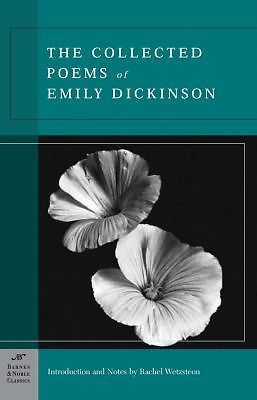
Born in Amherst, Massachusetts in 1830, Dickinson began life as an energetic, outgoing young woman who excelled as a student. However, in her mid-twenties she began to grow reclusive, and eventually she rarely descended from her room in her father’s house. She spent most of her time working on her poetry, largely without encouragement or real interest from her family and peers, and died at age fifty-five. Only a handful of her 1,775 poems had been published during her lifetime. When her poems finally appeared after her death, readers immediately recognized an artist whose immense depth and stylistic complexities would one day make her the most widely recognized female poet to write in the English language. Dickinson’s poetry is remarkable for its tightly controlled emotional and intellectual energy. The longest poem covers less than two pages. Yet in theme and tone her writing reaches for the sublime as it charts the landscape of the human soul. A true innovator, Dickinson experimented freely with conventional rhythm and meter, and often used dashes, off rhymes, and unusual metaphors—techniques that strongly influenced modern poetry. Dickinson’s idiosyncratic style, along with her deep resonance of thought and her observations about life and death, love and nature, and solitude and society, have firmly established her as one of America’s true poetic geniuses.

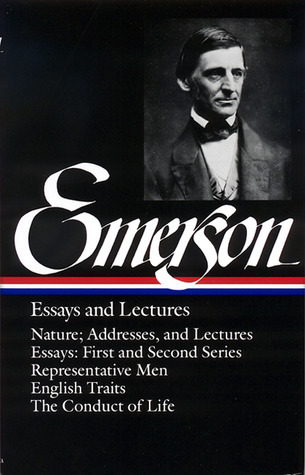
This first Library of America volume of Emerson’s writing covers the most productive period of his life, 1832–1860. Our most eloquent champion of individualism, Emerson acknowledges at the same time the countervailing pressures of society in American life. Even as he extols what he called “the great and crescive self,” he dramatizes and records its vicissitudes.Here are the indispensable and most renowned works, including “The American Scholar” (“our intellectual Declaration of Independence,” as Oliver Wendell Holmes called it), “The Divinity School Address,” considered atheistic by many of his listeners, the summons to “Self-Reliance,” along with the more embattled realizations of “Circles” and, especially, “Experience.” Here, too, are his wide-ranging portraits of Montaigne, Shakespeare, and other “representative men,” and his astute observations on the habits, lives, and prospects of the English and American people.This volume includes Emerson’s well-known Nature; Addresses, and Lectures (1849), his Essays: First Series (1841) and Essays: Second Series (1844), plus Representative Men (1850), English Traits (1856), and his later book of essays, The Conduct of Life (1860). These are the works that established Emerson’s colossal reputation in America and found him admirers abroad as diverse as Carlyle, Nietzsche, and Proust.Emerson’s enduring power is apparent everywhere in American literature: in those, like Whitman and some of the major twentieth-century poets, who seek to corroborate his vision, and among those, like Hawthorne and Melville, who questioned, qualified, and struggled with it. Emerson’s vision reverberates also in the tradition of American philosophy, notably in the writings of William James and John Dewey, in the works of his European admirers, such as Nietzsche, and in the avant-garde theorists of our own day who write on the nature and function of language. The reasons for Emerson’s durability will be obvious to any reader who follows the exhilarating, exploratory movements of his mind in this uniquely full gathering of his work.Not merely another selection of his essays, this volume includes all his major books in their rich entirety. No other volume conveys so comprehensively the exhilaration and exploratory energy of perhaps America’s greatest writer.

Toussaint Louverture’s life was one of hardship, triumph, and contradiction. He was born a slave on Saint-Domingue yet earned his freedom and established himself as a small-scale planter. He even purchased slaves of his own.Philippe Girard shows how Louverture transformed himself from lowly freedman into revolutionary hero as the mastermind of the bloody slave revolt of 1791. By 1801, Louverture was governor of the colony where he had once been a slave. But his lifelong quest to be accepted as a member of the colonial elite ended in despair: he spent the last year of his life in a French prison cell. His example nevertheless inspired anticolonial and black nationalist movements well into the twentieth century.Based on voluminous primary-source research, conducted in archives across the world and in multiple languages, Toussaint Louverture is the definitive biography of one of the most influential men in history.

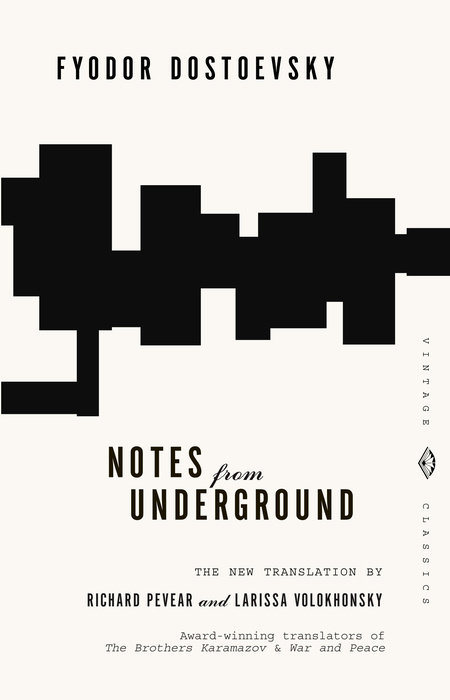
Dostoevsky’s most revolutionary novel, Notes from Underground marks the dividing line between nineteenth- and twentieth-century fiction, and between the visions of self each century embodied. One of the most remarkable characters in literature, the unnamed narrator is a former official who has defiantly withdrawn into an underground existence. In complete retreat from society, he scrawls a passionate, obsessive, self-contradictory narrative that serves as a devastating attack on social utopianism and an assertion of man’s essentially irrational nature.Richard Pevear and Larissa Volokhonsky, whose Dostoevsky translations have become the standard, give us a brilliantly faithful edition of this classic novel, conveying all the tragedy and tormented comedy of the original.

Translated, with an Introduction and Notes by John R. Williams.Goethe's Faust is a classic of European literature. Based on the fable of the man who traded his soul for superhuman powers and knowledge, it became the life's work of Germany's greatest poet. Beginning with an intriguing wager between God and Satan, it charts the life of a deeply flawed individual, his struggle against the nihilism of his diabolical companion Mephistopheles.Part One presents Faust's pact with the Devil and the harrowing tragedy of his love affair with the young Gretchen. Part Two shows Faust's experience in the world of public affairs, including his encounter with Helen of Troy, the emblem of classical beauty and culture. The whole is a symbolic and panoramic commentary on the human condition and on modern European history and civilisation.This new translation of both parts of Faust preserves the poetic character of the original, its tragic pathos and hilarious comedy. In addition, John Williams has translated the Urfaust, a fascinating glimpse into the young Goethe's imagination, and a selection from the draft scenarios for the Walpurgis Night witches' sabbath - material so ribald and blasphemous that Goethe did not dare publish it.

The American is a novel by Henry James, originally published as a serial in The Atlantic Monthly in 1876-77 and then as a book in 1877. Christopher Newman, a ‘self-made’ American millionaire in France, falls in love with the beautiful aristocratic Claire de Bellegarde. Her family, however, taken aback by his brash American manner, rejects his proposal of marriage. When Newman discovers a guilty secret in the Bellegardes’ past, he confronts a moral dilemma: Should he expose them and thus gain his revenge? James’s masterly early work is at once a social comedy, a melodramatic romance and a realistic novel of manners.

“For the more a man has in himself, the less he will want from other people,—the less, indeed, other people can be to him. This is why a high degree of intellect tends to make a man unsocial. True” Arthur Schopenhauer Do you think that usual goals in life such as money, fame, pride, social position, and material and physical pleasures bring actual pleasure in life?If your answer is no and you are interested in development of one's inner mind and a strong and healthy body, this book is right for you.This abridged version brought together both essays of Wisdom of Life and Counsels and Maxims. It explores the thoughts behind Arthur Schopenhauer’s more realistic and pessimistic worldview.In these essays, Arthur Schopenhauer begins with the assumption that individual’s life will be fundamentally painful and miserable, then he considers how to arrange our lives to gain the maximum amount of enjoyment and success. In fact, he offers thoughts about how we can enhance pleasure for ourselves during our brief time on this earth. In author’s opinion, a great life should always reach beyond itself to a higher plane. About the Arthur Schopenhauer (1788 – 1860) was a German artist philosopher. He was one of the first scholars in Western philosophy to share and state major thoughts of Indian philosophy, such as asceticism, self-denial, and the concept of the world-as-appearance. His work is also known as the philosophical pessimism, as he expresses a world-outlook that challenges the value of beings.

Taken from the poverty of her parents' home in Portsmouth, Fanny Price is brought up with her rich cousins at Mansfield Park, acutely aware of her humble rank and with her cousin Edmund as her sole ally. During her uncle's absence in Antigua, the Crawford's arrive in the neighbourhood bringing with them the glamour of London life and a reckless taste for flirtation. Mansfield Park is considered Jane Austen's first mature work and, with its quiet heroine and subtle examination of social position and moral integrity, one of her most profound.