
Ralph Waldo Emerson
Ralph Waldo Emerson was born in Boston in 1803. Educated at Harvard and the Cambridge Divinity School, he became a Unitarian minister in 1826 at the Second Church Unitarian. The congregation, with Christian overtones, issued communion, something Emerson refused to do. "Really, it is beyond my comprehension," Emerson once said, when asked by a seminary professor whether he believed in God. (Quoted in 2,000 Years of Freethought edited by Jim Haught.) By 1832, after the untimely death of his first wife, Emerson cut loose from Unitarianism. During a year-long trip to Europe, Emerson became acquainted with such intelligentsia as British writer Thomas Carlyle, and poets Wordsworth and Coleridge. He returned to the United States in 1833, to a life as poet, writer and lecturer. Emerson inspired Transcendentalism, although never adopting the label himself. He rejected traditional ideas of deity in favor of an "Over-Soul" or "Form of Good," ideas which were considered highly heretical. His books include Nature (1836), The American Scholar (1837), Divinity School Address (1838), Essays, 2 vol. (1841, 1844), Nature, Addresses and Lectures (1849), and three volumes of poetry. Margaret Fuller became one of his "disciples," as did Henry David Thoreau. The best of Emerson's rather wordy writing survives as epigrams, such as the famous: "A foolish consistency is the hobgoblin of little minds, adored by little statesmen and philosophers and divines." Other one- (and two-) liners include: "As men's prayers are a disease of the will, so are their creeds a disease of the intellect" (Self-Reliance, 1841). "The most tedious of all discourses are on the subject of the Supreme Being" (Journal, 1836). "The word miracle, as pronounced by Christian churches, gives a false impression; it is a monster. It is not one with the blowing clover and the falling rain" (Address to Harvard Divinity College, July 15, 1838). He demolished the right wing hypocrites of his era in his essay "Worship": ". . . the louder he talked of his honor, the faster we counted our spoons" (Conduct of Life, 1860). "I hate this shallow Americanism which hopes to get rich by credit, to get knowledge by raps on midnight tables, to learn the economy of the mind by phrenology, or skill without study, or mastery without apprenticeship" (Self-Reliance). "The first and last lesson of religion is, 'The things that are seen are temporal; the things that are not seen are eternal.' It puts an affront upon nature" (English Traits , 1856). "The god of the cannibals will be a cannibal, of the crusaders a crusader, and of the merchants a merchant." (Civilization, 1862). He influenced generations of Americans, from his friend Henry David Thoreau to John Dewey, and in Europe, Friedrich Nietzsche, who takes up such Emersonian themes as power, fate, the uses of poetry and history, and the critique of Christianity. D. 1882. Ralph Waldo Emerson was his son and Waldo Emerson Forbes, his grandson.
31 Books Written

The Essential Writings of Ralph Waldo Emerson
by Ralph Waldo Emerson
Rating: 4.4 ⭐
• 2 recommendations ❤️
Introduction by Mary OliverCommentary by Henry James, Robert Frost, Matthew Arnold, Oliver Wendell Holmes, and Henry David Thoreau The definitive collection of Emerson’s major speeches, essays, and poetry, The Essential Writings of Ralph Waldo Emerson chronicles the life’s work of a true “American Scholar.” As one of the architects of the transcendentalist movement, Emerson embraced a philosophy that championed the individual, emphasized independent thought, and prized “the splendid labyrinth of one’s own perceptions.” More than any writer of his time, he forged a style distinct from his European predecessors and embodied and defined what it meant to be an American. Matthew Arnold called Emerson’s essays “the most important work done in prose.” INCLUDES A MODERN LIBRARY READING GROUP GUIDE
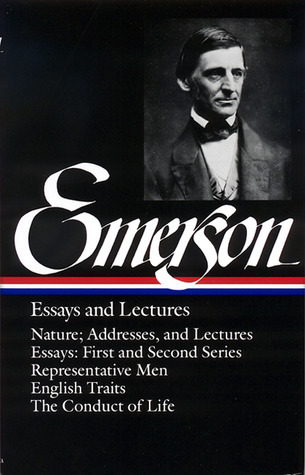
This first Library of America volume of Emerson’s writing covers the most productive period of his life, 1832–1860. Our most eloquent champion of individualism, Emerson acknowledges at the same time the countervailing pressures of society in American life. Even as he extols what he called “the great and crescive self,” he dramatizes and records its vicissitudes.Here are the indispensable and most renowned works, including “The American Scholar” (“our intellectual Declaration of Independence,” as Oliver Wendell Holmes called it), “The Divinity School Address,” considered atheistic by many of his listeners, the summons to “Self-Reliance,” along with the more embattled realizations of “Circles” and, especially, “Experience.” Here, too, are his wide-ranging portraits of Montaigne, Shakespeare, and other “representative men,” and his astute observations on the habits, lives, and prospects of the English and American people.This volume includes Emerson’s well-known Nature; Addresses, and Lectures (1849), his Essays: First Series (1841) and Essays: Second Series (1844), plus Representative Men (1850), English Traits (1856), and his later book of essays, The Conduct of Life (1860). These are the works that established Emerson’s colossal reputation in America and found him admirers abroad as diverse as Carlyle, Nietzsche, and Proust.Emerson’s enduring power is apparent everywhere in American literature: in those, like Whitman and some of the major twentieth-century poets, who seek to corroborate his vision, and among those, like Hawthorne and Melville, who questioned, qualified, and struggled with it. Emerson’s vision reverberates also in the tradition of American philosophy, notably in the writings of William James and John Dewey, in the works of his European admirers, such as Nietzsche, and in the avant-garde theorists of our own day who write on the nature and function of language. The reasons for Emerson’s durability will be obvious to any reader who follows the exhilarating, exploratory movements of his mind in this uniquely full gathering of his work.Not merely another selection of his essays, this volume includes all his major books in their rich entirety. No other volume conveys so comprehensively the exhilaration and exploratory energy of perhaps America’s greatest writer.

Essayist, poet, and philosopher, Ralph Waldo Emerson (1803–1882) propounded a transcendental idealism emphasizing self-reliance, self-culture, and individual expression. The six essays and one address included in this volume, selected from Essays, First Series (1841) and Essays, Second Series (1844), offer a representative sampling of his views outlining that moral idealism as well as a hint of the later skepticism that colored his thought. In addition to the celebrated title essay, the others included here are "History," "Friendship," "The Over-Soul," "The Poet," and "Experience," plus the well-known and frequently read Harvard Divinity School Address.

Ralph Waldo Emerson, Alfred Kazin observes in his Introduction, “was a great writer who turned the essay into a form all his own.” His celebrated essays―the twelve published in First Series (1841) and eight in Second Series (1844)―are here presented for the first time in an authoritative one-volume edition, which incorporates all the changes and corrections Emerson made after their initial publication.The text is reproduced from the second and third volumes of The Collected Works of Ralph Waldo Emerson , a critical edition which draws on the vast body of Emerson scholarship of the last half century. Alfred R. Ferguson was founding editor of the edition, followed by Joseph Slater (until 1996).

Essays and Poems, by Ralph Waldo Emerson, is part of the Barnes & Noble Classics series, which offers quality editions at affordable prices to the student and the general reader, including new scholarship, thoughtful design, and pages of carefully crafted extras. Here are some of the remarkable features of Barnes & Noble Classics:New introductions commissioned from today's top writers and scholarsBiographies of the authorsChronologies of contemporary historical, biographical, and cultural eventsFootnotes and endnotesSelective discussions of imitations, parodies, poems, books, plays, paintings, operas, statuary, and films inspired by the workComments by other famous authorsStudy questions to challenge the reader's viewpoints and expectationsBibliographies for further readingIndices & Glossaries, when appropriateAll editions are beautifully designed and are printed to superior specifications; some include illustrations of historical interest. Barnes & Noble Classics pulls together a constellation of influences—biographical, historical, and literary—to enrich each reader's understanding of these enduring works. As an adolescent America searched for its unique identity among the nations of the world, a number of thinkers and writers emerged eager to share their vision of what the American character could be. Among their leaders was Ralph Waldo Emerson, whose essays, lectures, and poems defined the American transcendentalist movement, though he himself disliked the term.Emerson advocates a rejection of fear-driven conformity, a total independence of thought and spirit, and a life lived in harmony with nature. He believes that Truth lies within each individual, for each is part of a greater whole, a universal “over-soul” through which we transcend the merely mortal.Emerson was extremely prolific throughout his life; his collected writings fill forty volumes. This edition contains his major works, including Nature, the essays “Self-Reliance,” “The American Scholar,” “The Over-Soul,” “Circles,” “The Poet,” and “Experience,”, and such important poems as “The Rhodora,” “Uriel,” “The Humble-Bee,” “Earth-Song,” “Give All to Love,” and the well-loved “Concord Hymn.”Includes a comprehensive glossary of names.Peter Norberg has been Assistant Professor of English at Saint Joseph’s University in Philadelphia since 1997. A specialist in New England transcendentalism and the history of the antebellum period, he also has published on Herman Melville’s poetry. He currently is writing a history of Emerson’s career as a public lecturer.
A Classic Essay by Emerson. Excerpted from Essays, First Series.

An indispensible look at Emerson's influential life philosophyThrough his writing and his own personal philosophy, Ralph Waldo Emerson unburdened his young country of Europe's traditional sense of history and showed Americans how to be creators of their own circumstances. His mandate, which called for harmony with, rather than domestication of, nature, and for a reliance on individual integrity, rather than on materialistic institutions, is echoed in many of the great American philosophical and literary works of his time and ours, and has given an impetus to modern political and social activism.Larzer Ziff's introduction to this collection of fifteen of Emerson's most significant writings provides the important backdrop to the society in which Emerson lived during his formative years.For more than seventy years, Penguin has been the leading publisher of classic literature in the English-speaking world. With more than 1,700 titles, Penguin Classics represents a global bookshelf of the best works throughout history and across genres and disciplines. Readers trust the series to provide authoritative texts enhanced by introductions and notes by distinguished scholars and contemporary authors, as well as up-to-date translations by award-winning translators.

Ralph Waldo Emerson believed that an appreciation of its vast natural resources would become the foundation of American culture. His assertion that human thought and actions proceed from nature, was a radical departure from the traditional European emphasis on domesticating nature to suit human needs. His philosophy is rich in common natural scenes of daily life, and expresses the inherent harmony between man and nature. This collection brings together 15 of Emerson's most significant essays, including "Nature", "The American Scholar", "Self-reliance" and "The Transcendentalist", as well as his assessments of Montaigne, Napoleon and Thoreau.

From one of the greatest figures of 19th-century America... This new edition offers a broad view of the author's finest work, featuring his critical essays, poems, and letters, plus a considerable amount of material from the Journals, including an entry discovered in 1964 in the Library of Congress.

The American Scholar was a speech given by Ralph Waldo Emerson on August 31, 1837, to the Phi Beta Kappa Society at Cambridge. He was invited to speak in recognition of his groundbreaking work Nature, published a year earlier, in which he established a new way for America's fledgling society to regard the world. Sixty years after declaring independence, American culture was still heavily influenced by Europe, and Emerson, for possibly the first time in the country's history, provided a visionary philosophical framework for escaping "from under its iron lids" and building a new, distinctly American cultural identity.

This volume, edited by Carl Bode in collaboration with Malcolm Cowley, presents the essential Emerson, selected from works that eloquently express the philosophy of a worldly idealist. The Portable Emerson comprises essays, including “History,” “Self-Reliance,” “The Over-Soul,” “Circles,” and “The Poet”; Emerson’s first book, Nature , in its entirety; twenty-two poems, including “Uriel,” “The Humble-Bee,” and “Give All to Love”; orations, including “The American Scholar,” “The Fugitive Slave Law,” and “John Brown”; English Traits , complete; and biographical essays on Plato, Napoleon, Henry David Thoreau, Thomas Carlyle, and others.

THERE is one mind common to all individual men. Every man is an inlet to the same and to all of the same. He that is once admitted to the right of reason is made a freeman of the whole estate. What Plato has thought, he may think; what a saint has felt, he may feel; what at any time has befallen any man, he can understand. Who hath access to this universal mind is a party to all that is or can be done, for this is the only and sovereign agent. Of the works of this mind history is the record. Its genius is illustrated by the entire series of days. Man is explicable by nothing less than all his history. Without hurry, without rest, the human spirit goes forth from the beginning to embody every faculty, every thought, every emotion, which belongs to it, in appropriate events. But the thought is always prior to the fact; all the facts of history preexist in the mind as laws. Each law in turn is made by circumstances predominant, and the limits of nature give power to but one at a time. A man is the whole encyclopaedia of facts. The creation of a thousand forests is in one acorn, and Egypt, Greece, Rome, Gaul, Britain, America, lie folded already in the first man. Epoch after epoch, camp, kingdom, empire, republic, democracy, are merely the application of his manifold spirit to the manifold world.

Together in one volume, Emerson's Nature and Thoreau's Walking, is writing that defines our distinctly American relationship to nature.

Ralph Waldo Emerson (1803-1882) is known best in the twenty-first century as a literary innovator and early architect of American intellectual culture, but his writings still offer spiritual sustenance to the thoughtful reader. The Spiritual Emerson, originally published on the two hundredth anniversary of the writer's birth, brings together the writings that articulate Emerson's spiritual vision and promise the greatest relevance to today's reader.

In The Poet, an essay by U.S. writer Ralph Waldo Emerson, the author expresses the need for the United States to have its own new and unique poet to write about the new country's virtues and vices. It is not about men of poetical talents, or of industry and skill in meter, but of the true poet. After reading the essay, Walt Whitman consciously set out to answer Emerson's call. When the 1855 edition of Leaves Of Grass was first published, Whitman sent a copy to Emerson, whose letter in response helped launch the book to success. In that letter Emerson called the collection the most extraordinary piece of wit and wisdom America has yet contributed.
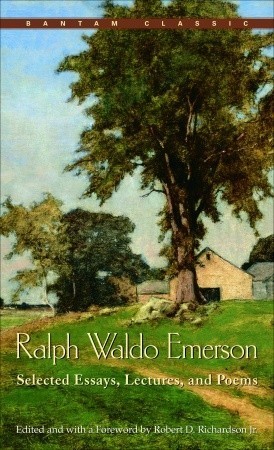
A new, wide-ranging selection of Ralph Waldo Emerson’s most influential writings, this edition captures the essence of American Transcendentalism and illustrates the breadth of one of America’s greatest philosophers and poets.The writings featured here show Emerson as a protester against social conformity, a lover of nature, an activist for the rights of women and slaves, and a poet of great sensitivity. As explored in this volume, Emersonian thought is a unique blend of belief in individual freedom and in humility before the power of nature. “I become a transparent eyeball,” Emerson wrote in Nature, “I am nothing; I see all; the currents of the Universal Being circulate through me; I am part or particle of God.” Written over a century ago, this passage is a striking example of the passion and originality of Emerson’s ideas, which continue to serve as a spiritual center and an ideological base for modern thought.

Ralph Waldo Emerson was an American essayist, lecturer, and poet who led the Transcendentalist movement of the mid-19th century. He was seen as a champion of individualism. The transcendentalists believe in the inherent goodness of both people and nature. They further believe that society and its institutions—particularly organized religion and political parties—corrupt the purity of the individual. They have faith that people are at their best when truly "self-reliant" and independent. Emerson wrote most of his important essays as lectures first, then revised them for print. His first two collections of essays – Essays: First Series and Essays: Second Series, published respectively in 1841 and 1844 – represent the core of his thinking, and include such well-known essays as Self-Reliance, The Over-Soul, Circles, The Poet and Experience. Together with Nature, these essays made the decade from the mid-1830s to the mid-1840s Emerson's most fertile period. The collection: • Nature • The American Scholar • The Conduct of Life • English Traits Essays - First Series • History • Self-Reliance • Compensation • Spiritual Laws • Love • Friendship • Prudence • Heroism • The Over-Soul • Circles • Intellect • Art Essays - Second Series • The Poet • Experience • Character • Manners • Gifts • Nature • Politics • Nonimalist and Realist • New England Reformers Representative Men • Plato; or, the Philosopher • Plato; New Readings • Swedenborg; or, the Mystic • Montaigne; or, the Skeptic • Shakspeare; or, the Poet • Napoleon; or, the Man of the World • Goethe; or, the Writer Poems • May-Day And Other Pieces • Elements And Mottoes • Quatrains And Translations

Ralph Waldo Emerson's 1860 book, The Conduct of Life is among the gems of his mature works. First published in the year of Abraham Lincoln's election as President, this work poses the questions of human freedom and fate. This new edition emphasizes Emerson's philosophy and thoughts on such issues as freedom and fate; creativity and established culture; faith, experience, and evidence; the individual, God, and the world; unity and dualism; moral law, grace, and compensation; and wealth and success. Emerson's text has been fully annotated to explain difficult words and to clarify his references. The Introduction, Notes, Bibliography, Index, and Chronology of Emerson's life help the reader understand his distinctive outlook, his contributions to philosophy, and his place in American culture and society.

A Classic Essay by Emerson. Excerpted from Essays, First Series.
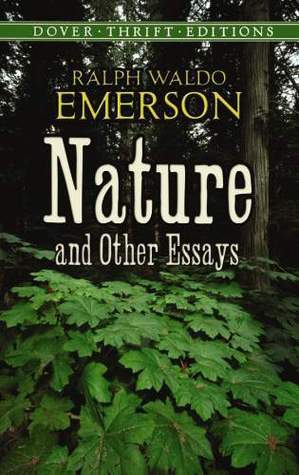
He was an ordained minister, renowned orator, and beloved author and poet whose ideas on nature, philosophy, and religion influenced authors such as Henry David Thoreau and Walt Whitman. Through his writings, Emerson ardently professed the importance of being an individual, resisting the comfort of conformity, and creating an art of living in harmony with nature. This soul-satisfying anthology of twelve favorite essays is a treasure.In the title essay, Emerson writes about the extraordinary power of nature as a way of bringing the divine into our lives. In "Gifts," he reminds us that flowers and gold may be acceptable to those we love, but "the only gift is a portion of thyself." "Spiritual Laws" points out that because a higher law than our own rules the world, there is no need for struggle. Other essays include "Character," "Prudence," "Intellect," "Love," "Beauty," "The American Scholar" address and others. Readers of all ages will want to keep this volume on hand to inspire and refresh the spirit
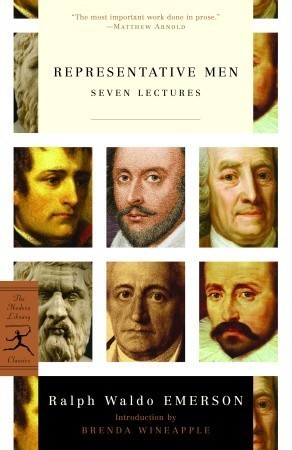
Introduction by Brenda WineappleIn 1845 Ralph Waldo Emerson began a series of lectures and writings in which he limned six figures who embodied the principles and aspirations of a still-young American republic. Emerson offers timeless meditations on the value of individual greatness, reconnecting readers with the everyday virtues of his “Representative Men”: Plato, in whose writings are contained “the culture of nations”; Emanuel Swedenborg, a “rich discoverer” who strove to unite the scientific and spiritual planes; Michel de Montaigne, “the frankest and honestest of all writers”; William Shakespeare, who “wrote the text of modern life”; Napoleon Bonaparte, who had the “virtues and vices” of common men writ large; and Johann Wolfgang von Goethe, who “in conversation, in calamity…finds new materials.”This Modern Library Paperback Classic reflects the author’s corrections for an 1876 reprinting.

"Emerson's prose is his triumph, both as eloquence and as insight. After Shakespeare, it matches anything else in the language." -Harold Bloom Here are Ralph Waldo Emerson's classic essays, including the exhortation to "Self-Reliance," the embattled realizations of "Circles" and "Experience," and the groundbreaking achievement of "Nature." Our most eloquent champion of individualism, Emerson acknowledges at the same time the countervailing pressures of society in American life. Even as he extols what he calls "the great and crescive self," he dramatizes and records its vicissitudes. Also gathered here are his wide-ranging discourses on history, art, politics, friendship, love, and much more. For almost thirty years, The Library of America has presented America's best and most significant writing in acclaimed hardcover editions. Now, a new series, Library of America Paperback Classics, offers attractive and affordable books that bring The Library of America's authoritative texts within easy reach of every reader. Each book features an introductory essay by one of a leading writer, as well as a detailed chronology of the author's life and career, an essay on the choice and history of the text, and notes. The contents of this Paperback Classic are drawn from Ralph Waldo Emerson: Essays and Lectures, volume number 15 in the Library of America series. It is joined in the series by three companion volumes, gathering Emerson's poems, translations, and selections from his journals.

The American Scholar Ralph Waldo Emerson, American essayist and transcendentalist philosopher (1803-1882) This ebook presents «The American Scholar», from Ralph Waldo Emerson. A dynamic table of contents enables to jump directly to the chapter selected. Table of Contents - About This Book - The American Scholar

The selections include Emerson’s major sermons, lectures, essays, addresses, and poems, as well as excerpts from his journals, notebooks, and correspondence.

Transcendentalism was the first major intellectual movement in U.S. history, championing the inherent divinity of each individual, as well as the value of collective social action. In the mid-nineteenth century, the movement took off, changing how Americans thought about religion, literature, the natural world, class distinctions, the role of women, and the existence of slavery.Edited by the eminent scholar Lawrence Buell, this comprehensive anthology contains the essential writings of Ralph Waldo Emerson, Henry David Thoreau, Margaret Fuller, and their fellow visionaries. There are also reflections on the movement by Charles Dickens, Henry James, Walt Whitman, Louisa May Alcott, and Nathaniel Hawthorne. This remarkable volume introduces the radical innovations of a brilliant group of thinkers whose impact on religious thought, social reform, philosophy, and literature continues to reverberate in the twenty-first century.

Self-Reliance: The Wisdom of Ralph Waldo Emerson as Inspiration for Daily Living
by Ralph Waldo Emerson
Rating: 4.2 ⭐
A finely honed abridgement of Emerson's principal essays with an introduction that clarifies the essence of Emerson's ideas and establishes their relevance to our own troubled era. This is the first truly accessible edition of Emerson's work, revealing him to be one of America's wisest teachers.

This scarce antiquarian book is a facsimile reprint of the original. Due to its age, it may contain imperfections such as marks, notations, marginalia and flawed pages. Because we believe this work is culturally important, we have made it available as part of our commitment for protecting, preserving, and promoting the world's literature in affordable, high quality, modern editions that are true to the original work.

Ralph Waldo Emerson's brillance as a prose writer has too long overshadowed his remarkable gifts as a poet. Collected Poems and Translations gathers both published and unpublished work - poems left in manuscript at his death and hitherto available only in drastically edited or specialized scholarly versions - to offer all readers for the first time the full range of Emerson's poetry.

Revolutionary Ideas Rephrased for TodayIn Everyday Emerson, bestselling author Sam Torode rephrases the works of Ralph Waldo Emerson in contemporary language. The goal is to make Emerson's wisdom applicable to our daily lives, showing that Transcendentalism isn't a relic of the past--it's a way of thinking and seeing the world that's still valid and vital.This book covers Emerson's pathbreaking early lectures, featuring full paraphrases of "The American Scholar," "The Divinity School Address," "The Transcendentalist," and more. It also includes paraphrased excerpts from Emerson's speeches advocating for social reform, the abolition of slavery, and women's rights.Sam Torode's introduction and notes provide an overview of Emerson's life and major themes, and explore the relevance of his philosophy today. Everyday Emerson can be read on its own, or as an aid to studying the original works.This is the first book in a series which also Living from the The 7 Spiritual Principles of Ralph Waldo Emerson and Secrets of the Ralph Waldo Emerson's Keys to Expansive Mental Powers.

Ralph Waldo Emerson nasceu em 25 de maio de 1803 em Boston e foi um famoso escritor, filósofo e poeta americano. Foi pastor em Boston, mas, abandonou a atividade por divergências doutrinárias. Natureza foi publicado em 1836 e é considerado um dos mais importantes trabalhos de Emerson e serviu de inspiração para importantes escritores como Walt Whitman, Emily Dickinson e Henry David Thoreau em Walden, um dos mais importantes clássicos americanos. Esse livro é visto como um dos pilares do transcendentalismo e foi responsável por transformá-lo em um movimento cultural focado entre outras coisas, no respeito a natureza. Morreu em 27 de abril de 1882 em sua casa em Concord, Massachusetts nos Estados Unidos.