
Guy de Maupassant
Henri René Albert Guy de Maupassant was a popular 19th-century French writer. He is one of the fathers of the modern short story. A protege of Flaubert, Maupassant's short stories are characterized by their economy of style and their efficient effortless dénouement. He also wrote six short novels. A number of his stories often denote the futility of war and the innocent civilians who get crushed in it - many are set during the Franco-Prussian War of the 1870s.
30 Books Written

Alternate cover for this ISBN can be found hereThis collection reflects Maupassant's remarkable diversity, with stories that vary in theme and tone, and range from tragedy and satire to comedy and farce. Boule de Suife, his most famous tale exposes the brutality and hypocrisy of war. His stories are linked by irony and the frailty of human nature.17 stories:Boule de SuifTwo FriendsMme. Tellier's EstablishmentMlle. FifiClair de LuneMiss HarrietThe NecklaceMlle. PearlThe Piece of StringMme. Husson's "Rosier"That Pig of a MorinUseless BeautyThe Olive OrchardA SaleLoveTwo Little SoldiersHappiness

Le narrateur mène une vie tranquille dans sa maison au bord de la Seine, en Normandie, lorsque d'étranges phénomènes commencent à se produire. C'est la carafe d'eau sur sa table de nuit qui est bue, des objets qui disparaissent ou se brisent, une fleur cueillie par une main invisible... Peu à peu, le narrateur acquiert la certitude qu'un être surnaturel et immatériel vit chez lui, se nourrit de ses provisions. Pire encore, cet être, qu'il baptise le Horla, a tout pouvoir sur lui, un pouvoir grandissant... S'il quitte sa maison, ce pouvoir disparaît ; mais bientôt, il ne peut plus sortir de chez lui, il est prisonnier. D'où vient cet esprit ? Du Horla ou de l'homme, l'un des deux doit périr.Le Horla comme les contes fantastiques écrits par Maupassant à la fin de sa vie, alors qu'il sombrait dans la folie, joue délicieusement avec nos nerfs en traitant de thèmes très actuels comme l'angoisse, la hantise du suicide, la peur de l'invisible. --Céline Darner --Ce texte fait référence à une édition épuisée ou non disponible de ce titre.

Guy de Maupassant's scandalous tale of an opportunistic young man corrupted by the allure of power, "Bel-Ami" is translated with an introduction by Douglas Parmee in "Penguin Classics". Young, attractive and very ambitious, George Duroy, known to his admirers as Bel-Ami, is offered a job as a journalist on La Vie francaise and soon makes a great success of his new career. But he also comes face to face with the realities of the corrupt society in which he lives - the sleazy colleagues, the manipulative mistresses, and wily financiers - and swiftly learns to become an arch-seducer, blackmailer and social climber in a world where love is only a means to an end. Written when Maupassant was at the height of his powers, "Bel-Ami" is a novel of great frankness and cynicism, but it is also infused with the sheer joy of life - depicting the scenes and characters of Paris in the belle epoque with wit, sensitivity, and humanity. Douglas Parmee's translation captures all the vigour and vitality of Maupassant's novel. His introduction explores the similarities between Bel-Ami and Maupassant himself and demonstrates the skill with which the author depicts his large cast of characters and the French society of the Third Republic.

A Parisian civil servant turned protégé of Flaubert, Guy de Maupassant is considered not only one of the greatest short story writers in all of French literature, but also a pioneer of psychological realism and modernism who helped define the form. Credited with influencing the likes of Chekhov, Maugham, Babel, and O. Henry, Maupassant had, at the time of his death at the age of forty-two, written six novels and some three hundred short stories. Yet in English, Maupassant has, curiously, remained unappreciated by modern readers due to outdated translations that render his prose in an archaic, literal style.In this bold new translation, Sandra Smith—the celebrated translator of Irene Nemirovsky's Suite Francaise—brings us twenty-eight of Maupassant's essential stories and two novellas in lyrical yet accessible language that brings Maupassant into vibrant English. In addition to her sparkling translation, Smith also imposes a structure that captures the full range of Maupassant's work. Dividing the collection into three sections that reflect his predominant themes—nineteenth-century French society, the Franco-Prussian War of 1870–71, and the supernatural—Smith creates "an arrangement suggesting a culture of relation, of structure, of completion" (Richard Howard).In "Tales of French Life," we see Maupassant explore the broad swath of French society, not just examining the lives of the affluent as was customary for writers in his day. In the title story of the collection, "The Necklace," Maupassant crafts a devastating portrait of misplaced ambition and ruin in the emerging middle class.The stories in "Tales of War" emerge from Maupassant’s own experiences in the devastating Franco-Prussian War and create a portrait of that disastrous conflict that few modern readers have ever encountered. This section features Maupassant's most famous novella, "Boule de Suif."The last section, "Tales of the Supernatural," delves into the occult and the bizarre. While certain critics may attribute some of these stories and morbid fascination as the product of the author's fevered mind and possible hallucinations induced by late-stage syphilis, they echo the gothic horror of Poe as well as anticipate the eerie fiction of H. P. Lovecraft.The result takes readers from marriage, family, and the quotidian details of life to the disasters of war and nationalism, then to the gothic and beyond, allowing us to appreciate Maupassant in an idiom that matches our own times. The Necklace and Other Stories enables us to appreciate Maupassant as the progenitor of the modern short story and as a writer vastly ahead of his time.

Jeanne, ayant fini ses malles, s'approcha de la fenêtre, mais la pluie ne cessait pas.L'averse, toute la nuit, avait sonné contre les carreaux et les toits. Le ciel bas et chargé d'eau semblait crevé, se vidant sur la terre, la délayant en bouillie, la fondant comme du sucre. Des rafales passaient pleines d'une chaleur lourde. Le ronflement des ruisseaux débordés emplissait les rues désertes où les maisons, comme des éponges, buvaient l'humidité qui pénétrait au-dedans et faisait suer les murs de la cave au grenier.

Pendant l'hiver, 1870-71, durant la guerre franco-prussienne, la ville de Rouen (Normandie) est envahie par les Prussiens. Pour fuir l'occupation, dix personnes prennent la diligence de Dieppe : un couple de commerçants, un couple de bourgeois, un couple de nobles, deux religieuses, un démocrate et enfin Boule de suif.Le voyage s'annonce difficile, la diligence n'avance pas. Les voyageurs ont faim et seule la jeune femme a pensé à emporter des provisions, qu'elle partage généreusement. Les voyageurs font étape pour la nuit dans une auberge à Tôtes (sur le modèle de l'Auberge du cygne), occupée par les Prussiens. Le lendemain, ils ne peuvent pas partir, l'officier prussien exerce un chantage, Boule de suif doit coucher avec lui s'ils veulent repartir, mais elle refuse. Au début, tous sont outrés par le comportement du prussien, mais les jours passant et l'ennui s'installant, ils font pression sur Boule de suif qui finit par accepter.Le lendemain, les voyageurs ignorent Boule de suif qui, étant occupée, n'a pas pu faire de provisions alors que les autres avaient préparé leur déjeuner. Aucun d'eux ne donnera ne serait-ce qu'un petit morceau de pain à la jeune fille. L'histoire se termine sur Boule de suif en larmes.Boule de Suif --L'ami Patience --La dot --La moustache --Le lit 29 --Le protecteur --La chevelure --Le crime au père Boniface --Rose --L'aveu --La parure --Le bonheur --Une vendetta --Coco --Auprès d'un mort --La serre --Un duel --Une soirée --Le vengeur --L'attente --Première neige --

After devoting their energies and income for ten years to replacing a borrowed diamond necklace which they have lost, a woman and her husband learn the irony of their efforts.

Pierre, médecin, ne comprend pas pourquoi un ami de sa famille a légué sa fortune à Jean, son frère cadet. Au terme d'une véritable enquête policière, il mettra au jour un terrible secret. Le quatrième roman de Maupassant (1850-1893), publié en 1888, est sans doute le meilleur. Le récit, qui tient à la fois de l'étude naturaliste et de l'analyse psychologique, s'appuie sur une intrigue, simple et forte. Dans sa célèbre préface, l'auteur développe une théorie qui préfigure la modernité romanesque : il s'agit moins de reproduire le réel que d'en donner l'illusion.
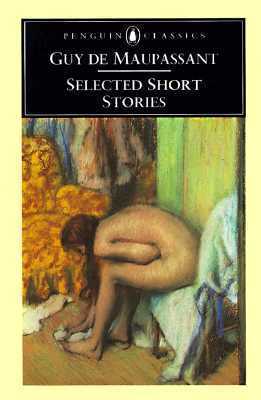
This volume contains 30 of Maupassant's classic stories: Boule de SuifIn the SpringThe Graveyard SisterhoodMadame Tellier's EstablishmentA RuseAn Old ManRustTwo FriendsThe JewelsThe ConservatoryThe Matter with AndréMy Uncle JulesA DuelThe ConvertIn the BedroomRegretThe decorationThe Piece of StringThe ModelThe HandIdyllMother SavageGuillemot RockImprudenceThe SignalIn the WoodsThe DevilThe HorlaThe MaskMouche. A fair selection of the master's short story output. Roger Colet has written the introduction for the Penguin Classic edition..

Fiero relato que de una manera irónica y burlona, expone la decadencia e hipocresía de la sociedad francesa de finales del siglo XIX. Maupassant conocía bien tanto la alta esfera de la sociedad como los círculos más bajos de ella, siendo «Bola de sebo» el relato corto donde expone la condición francesa. También es un fiero ataque a la actitud de la sociedad francesa ante la ocupación prusiana después de la derrota en la guerra de 1870, pues el único personaje del cuento que muestra ira y patriotismo ante la actitud de los conquistadores de su tierra es una prostituta, frente a la sumisión e indolencia interesada de los burgueses, la aristocracia, el clero y los presuntos revolucionarios.

A selection of Maupassant's brilliant, glittering stories set in the Parisian beau monde and Normandy countryside. Introducing Little Black Classics: 80 books for Penguin's 80th birthday. Little Black Classics celebrate the huge range and diversity of Penguin Classics, with books from around the world and across many centuries. They take us from a balloon ride over Victorian London to a garden of blossom in Japan, from Tierra del Fuego to 16th-century California and the Russian steppe. Here are stories lyrical and savage; poems epic and intimate; essays satirical and inspirational; and ideas that have shaped the lives of millions. Guy de Maupassant (1850-1893). Maupassant's works available in Penguin Classics are A Parisian Affair and Other Stories, Bel-Ami and Pierre and Jean.

Z Rouenu obsazeného pruským vojskem odjíždí dostavník se zajímavou společností. Cestují v něm měšťanský, kupecký a šlechtický pár, dvě jeptišky, mladý radikální republikán a baculatá nevěstka Kulička. Ta se dobrodušně se spolucestujícími rozdělí o své hojné zásoby jídla a cesta jim všem pak rychle utíká až do večera, kdy musí zastavit v zájezdním hostinci. A tam začnou problémy... Kulička je skvělou Maupassantovou povídkou nemilosrdně odhalující maloměšťáckou ubohost a pokrytectví, které se během půl druhého století vlastně vůbec nezměnily.

Olivier Bertin is at the height of his career as a painter. After making his name with his Cleopatra, he went on to establish himself as “the chosen painter of the Parisiennes, the most adroit and ingenious artist to reveal their grace, their figures, and their souls.” And though his hair may be white, he remains a handsome, vigorous, and engaging bachelor, a prized guest at every table and salon.Anne, the comtesse de Guilleroy, is a youthful forty, the wife of a busy politician. The painter and the comtesse have been lovers for many years. Anne’s daughter, Annette—the spitting image of her mother in her lovely youth—has finished her schooling and is returning to Paris. Her parents are putting together an excellent match. Everything is as it should be—until the painter and comtesse are each seized by an agonizing suspicion, like death . . .In its devastating depiction of the treacherous nature of love, Like Death is more than the equal of Swann’s Way. Richard Howard’s new translation brings out all the penetration and poetry of this masterpiece of nineteenth-century fiction.

15 contesLa bécasse.La folle.Pierrot. Menuet. La peur. Farce normande. Les sabots. La rempailleuse. En mer. Un Normand. Le testament. Aux champs. Un coq chanta. Saint-Antoine. L'aventure de WalterSchnaffs.

Stories reflect de Maupassant's clarity and simplicity of style and the objectivity with which he recorded the vagaries of human life.

En 1884, lorsqu'il publie les Contes, Maupassant est devenu un homme riche et un auteur comblé. Mais il n'a rien perdu de l'agressivité qui lui faisait naguère écrire à Flaubert : " Je trouve que 93 a été doux... Il faut supprimer les classes dirigeantes aujourd'hui comme alors, et noyer les beaux messieurs crétins avec les belles dames catins. " ll n'y a pas que des crétins et des catins dans les Contes. Il y a aussi un " ivrogne ", un " lâche ", un " parricide " (qui a d'ailleurs toutes les raisons de l'être), quelques cocus, quelques farces de haute graisse, une superbe histoire corse (La Vendetta). Et même des honnêtes gens et un couple heureux. Le tout décrit avec cette concision aiguë et décapante où se reconnaît le caractère unique d'un écrivain qui disait de lui-même : " Je ne pense comme personne, je ne sens comme personne, je ne raisonne comme personne. " - Le crime au père Boniface- Rose- Le Père- L'Aveu- La Parure- Le Bonheur- Le Vieux- Un Lâche- L'ivrogne- Une Vendetta- Coco- La Main- Le Gueux- Un parricide- Le Petit- La Roche aux Guillemots- Tombouctou- Histoire vraie- Adieu- Souvenir- La Confession

"Fermé pour cause de première communion" : un tel avis, sur la porte d'une maison close, n'est pas chose courante, et les habitués de la maison Tellier, de Fécamp, n'en reviennent pas. Pendant ce temps, Madame et ses cinq pensionnaires vont retrouver à la campagne, le temps d'une fête, leurs émois et leur innocence de petites filles...A côté de ce chef-d'œuvre, huit autres nouvelles déploient ici l'éventail du génie de Maupassant. Petits employés parisiens, paysans timides, noceurs désabusés, filles rouées ou naïves : toute une humanité, où des surprenantes candeurs se mêlent à la violence des appétits et des intérêts, est dépeinte avec la couleur éclatante et le réalisme vigoureux des toiles de Renoir, de Manet ou de Toulouse-Lautrec.

Alien Hearts was the last book that Guy de Maupassant finished before his death at the early age of forty-three. It is the most original and psychologically penetrating of his several novels, and the one in which he attains a truly tragic perception of the wounded human heart. André Mariolle is a rich, handsome, gifted young man who cannot settle on what to do with himself. Madame de Burne, a glacially dazzling beauty, wants Mariolle to attend her exclusive salon for artists, composers, writers, and other intellectuals. At first Mariolle keeps his distance, but then he hits on the solution to all his caring for nothing in particular, he will devote himself to being in love; Madame de Burne will be his everything. Soon lover and beloved are equally lost within a hall of mirrors of their common devising.Richard Howard’s new English translation of this complex and brooding novel—the first in more than a hundred years—reveals the final, unexpected flowering of a great French realist’s art.

Part One contains Volumes I-IV of X. French author of the naturalistic school, Maupassant is generally considered to be the greatest French short story writer of his day. The Complete Short Stories contains the 300 short stories Maupassant wrote during the 1880s, including his horror fiction, which consists of some 39 stories, only a tenth of his total. See other titles by this author available from Kessinger Publishing. Other volumes in this set are ISBN(s): 1417936150.Volume I---------------------------Ball-of-Fat (Boule de Suif)The Diamond NecklaceA Piece of StringThe Story of a Farm-GirlIn the MoonlightMme. Tellier's ExcursionLoveMme. FifiMonsieur ParentUseless BeautyAn Affair of StateBabetteA Cock CrowedLilie LalaA VagabondThe MountebanksUglyThe DebtA Normandy JokeThe FatherThe ArtistFalse AlarmThat Pig of a MorinVolume II---------------------------Miss HarrietThe HoleThe InnA FamilyBellflowerIn the WoodThe Marquis de FumerolSavedThe SignalThe DevilThe Venus of BranizaThe RabbitLa MorillonneEpiphanySimon's PapaWaiter, a Bock!The Sequel to a DivorceThe ClownThe Mad WomanMademoiselleVolume III---------------------------A Bad ErrorThe PortChaliJeroboamVirtue in the BalletThe Double PinsHow He Got the Legion of HonorA CrisisGraveyard SirensGrowing OldA French Enoch ArdenJulie RomainAn Unreasonable WomanRosalie PrudentHippolyte's ClaimBenoistFecundityA Way to WealthAm I Insane?Forbidden FruitThe Charm DispelledMadame ParisseMaking a ConvertVolume IV---------------------------A Little WalkA Wife's ConfessionA Dead Woman's SecretLove's AwakeningBed No. 29MarrocaA PhilosopherA MistakeFlorentineConsiderationWoman's WilesMoonlightDoubtful HappinessHumiliationThe Wedding NightThe Noncommissioned OfficerIn the Court RoomA Peculiar CaseA Practical JokeA Strange FancyAfter DeathOn CatsRoom No. ElevenOne Phase of LoveGood ReasonsA Fair ExchangeThe Tobacco ShopA Poor GirlThe SubstituteA Passion

Set in the nouveau riche Paris of society women, prostitutes, and playboys; in the Normandy countryside; and on the French Riviera where Maupassant had lived, the thirty-four short stories in this volume are among the most darkly humorous and brilliant in French literature. They focus on the complexity of close relationships: between lovers, as in the poignant fantasy 'A Parisian Affair' or the touchingly ironical 'The Jewels'; between siblings, as in 'At Sea'; and between former partners, as in 'Encounter.' They reveal two sides of human nature: its grace and generosity, and also, as in 'Boule de Suif,' its greed and hypocrisy. Piquant and varied, Maupassant's stories lay humanity bare with deft wit and devastating honesty.Boule de suif --A Parisian affair --A woman's confession --Cock crow --Moonlight --At sea --Amillion --Femme fatale --Monsieur Jocaste --Two friends --Awakening --The jewels --Train story --Regret --Minor tragedy --The christening --Coward --Rose --Idyll --Mother Sauvage --Madame Husson's rose king --Encounter --Happiness --A bit of the other --Love --Hautot & son --New year's gift --The Horla --Duchoux --The lull-a-bye --Mother of invention --Who knows? --Laid to rest --The necklace.

31 stories:Mademoiselle Fifi --My wife --A grandmother's advice --In the Spring --Graveyard sirens --Madame Baptiste --Rust --Marroca --The log --The relic --The bed --Mad? --The awakening --An artifice --On horseback --The burgler --A Christmas Eve festival --Word of love --An adventure in Paris --Two friends --Christmas Eve --The substitute --Monsieur Jocaste --Pierrot --Minuet --Fear --A Normandy joke --The wooden shoes --The chair mender --The child --The funeral pile.

Guy de Maupassant (1850-1893), né à Paris, est un écrivain français. Lié à Gustave Flaubert et à Émile Zola, il a marqué la littérature française par ses six romans, dont Une Vie en 1883, Bel Ami en 1885, Pierre et Jean en 1887-1888, mais surtout par ses nouvelles (plus de 300), parfois intitulées contes, comme Boule de Suif en 1880, Les Contes de la Bécasse en 1883 ou Le Horla en 1887. Ces oeuvres retiennent l'attention par leur force réaliste, la présence importante du fantastique et par le pessimisme qui s'en dégage le plus souvent mais aussi par la maîtrise stylistique. La carrière littéraire de Guy de Maupassant se limite à une décennie - de 1880 à 1890. Reconnu de son vivant, Guy de Maupassant conserve un renom de premier plan, renouvelé encore par les nombreuses adaptations filmées de ses oeuvres. Autres oeuvres La Maison Tellier (1881), Monsieur Parent (1885), Fort Comme la Mort (1889), La Vie Errante (1890) et L'Inutile Beauté (1890).

A man who keeps a severed hand attached to the wall of his drawing room is found mysteriously strangled at the same time that the hand disappears.

"The Piece of String" is a short story by Guy de Maupassant. Henri René Albert Guy de Maupassant (5 August 1850 – 6 July 1893) was a popular 19th-century French writer, considered one of the fathers of the modern short story and one of the form's finest exponents. A protégé of Flaubert, Maupassant's stories are characterized by their economy of style and efficient, effortless dénouements. Many of the stories are set during the Franco-Prussian War of the 1870s and several describe the futility of war and the innocent civilians who, caught in the conflict, emerge changed. He authored some 300 short stories, six novels, three travel books, and one volume of verse. His first published story "Boule de Suif" ("Ball of Fat", 1880) is often considered his masterpiece. He delighted in clever plotting, and served as a model for Somerset Maugham and O. Henry in this respect. His stories about expensive jewellery ("The Necklace", "La parure") are imitated with a twist by Maugham ("Mr Know-All", "A String of Beads") and Henry James ("Paste"). Taking his cue from Balzac, Maupassant wrote comfortably in both the high-Realist and fantastic modes; stories and novels such as "L'Héritage" and Bel-Ami aim to recreate Third Republic France in a realistic way, whereas many of the short stories (notably "Le Horla" and "Qui sait?") describe apparently supernatural phenomena. The supernatural in Maupassant, however, is often implicitly a symptom of the protagonists' troubled minds; Maupassant was fascinated by the burgeoning discipline of psychiatry, and attended the public lectures of Jean-Martin Charcot between 1885 and 1886. This interest is reflected in his fiction. Maupassant is notable as the subject of one of Leo Tolstoy's essays on The Works of Guy de Maupassant. Friedrich Nietzsche's autobiography mentions him in the following "I cannot at all conceive in which century of history one could haul together such inquisitive and at the same time delicate psychologists as one can in contemporary I can name as a sample – for their number is by no means small, ... or to pick out one of the stronger race, a genuine Latin to whom I am particularly attached, Guy de Maupassant."

Ay Işığı, öykü alanında dünya edebiyatına damgasını vurmuş olan Fransız yazar Guy de Maupassant’ın on dört öyküsünden oluşan bir derleme.Edebiyat yaşamına Flaubert’in çırağı olarak başlayan Maupassant, benzerine az rastlanır gözlem gücü, küçük ayrıntıları değerlendirme ustalığı ve doğrudan söylenenin gerisindeki ince alayla kaleme aldığı eserleriyle öykü türünü adeta yeniden tanımlamıştır. Olaylara, nesnelere hep dışarıdan bakan, okuru çok değişik çevrelerde, çok değişik insanlar arasında dolaştıran yazarın öykülerinin büyük çoğunluğu okuru hep derin bir gerçeklik duygusu içinde gülümsetir ya da ürpertir. Yazar, sıradan insanların yaşamındaki küçük dramlardan ve onların zihinlerini meşgul eden gündelik sorunlardan ironi dolu çarpıcı hikâyeler çıkarır.Yazar, özlü, güçlü, keskin, ekonomik anlatımla güçlendirdiği gerçekçiliği ve kurgudaki ustalığıyla öykü türüne yeni bir anlayış getirmiştir...


گی دو موپاسان استاد فرم داستان کوتاه و همین طور نماینده مکتب طبیعت گراست. او زندگی انسانها و سرنوشتشان را در حالتی ناامید و بدبینانه تصویر میکند. او ۳۰۰ داستان کوتاه، شش رمان، سه سفرنامه و یک مجموعه شعر نوشت که بیشتر شهرتش را مرهون داستانهای کوتاهش است. کورنلیه کواس، استاد ادبیات و نظریه ادبی دانشگاه بلگراد، درباره او میگوید: «موپاسان در کنار چخوف، بزرگترین استاد داستان کوتاه در ادبیات جهان است. او مانند زولا طبیعت گرا نیست؛ طبیعت گرایی موپاسان بدبینی انسان شناختی شوپنهاوری است، زیرا در به تصویر کشیدن طبیعت انسان اغلب خشن و بیرحم است.» روک کوچولو مجموعهای از داستانهای کوتاه موپاسان است؛ داستانهایی مملو از کشمکش کورسوهای امید و امواج ناامیدی، چنانکه کورنلیه کواس توصیفش کرده است. خواننده میان امید و ناامیدی همچون قایقی است که از سویی پابسته ساحل است و از سویی موجها او را به سوی خود میکشند.

Guy de Maupassant, France's gift to the world of short stories, was a prolific writer of this genre. His complete collection numbers just under 200. Volume X contains the following titles:1. The Christening2. The Farmer's Wife3. The Devil4. The Snipe5. The Will6. Walter Schnaff's Adventure7. At Sea8. Minuet9. The Son10. That Pig of a Morin11. Saint Anthony12. Lasting Love13. Pierrot14. A Normandy Joke15. Father MatthewPublic Domain (P)2021 Voices of Today

Afloat, originally published as Sur l’eau in 1888, is a work of dazzling but treacherously shifting currents, a seemingly simple logbook of a sailing cruise along the French Mediterranean coast that opens up to reveal unexpected depths, as Guy de Maupassant merges fact and fiction, dream and documentation in a wholly original style. Humorous and troubling stories, unreliable confessions, stray reminiscences, and thoughts on life, love, art, nature, and society all find a place in Maupassant’s pages, which are, in conception and in effect, so many reflections of the fluid sea on which he finds himself–happily but forever precariously–afloat. Afloat is thus a book that in both content and form courts risk while setting out to chart the meaning, and limits, of freedom, a book that makes itself up as it goes along and in doing so proves as startling and compellingly vital as the paintings of Maupassant’s contemporaries van Gogh and Gauguin.
