
Philippe Girard
25 Books Written

Toussaint Louverture’s life was one of hardship, triumph, and contradiction. He was born a slave on Saint-Domingue yet earned his freedom and established himself as a small-scale planter. He even purchased slaves of his own.Philippe Girard shows how Louverture transformed himself from lowly freedman into revolutionary hero as the mastermind of the bloody slave revolt of 1791. By 1801, Louverture was governor of the colony where he had once been a slave. But his lifelong quest to be accepted as a member of the colonial elite ended in despair: he spent the last year of his life in a French prison cell. His example nevertheless inspired anticolonial and black nationalist movements well into the twentieth century.Based on voluminous primary-source research, conducted in archives across the world and in multiple languages, Toussaint Louverture is the definitive biography of one of the most influential men in history.

A captivating, revealing biography of the legendary musician and poetLeonard Cohen opens in Los Angeles on the last night of the man’s life in 2016. Alone in his final hours, the beloved writer and musician ponders his existence in a series of flashbacks that reveal the ups and downs of a storied career.A young Cohen traded in the promise of steady employment in his family’s Montreal garment business for the unlikely path of a literary poet. His life took another sharp turn when, already in his thirties, he recorded his first album to widespread international acclaim. Along the way he encountered a who’s who of musical luminaries, including Lou Reed, Nico, Janis Joplin, and Joni Mitchell. And then there’s Phil Spector, the notorious music impresario who held a gun to Cohen’s head during a coke-fueled, all-night recording session.Later in Cohen’s life, there’s the story of "Hallelujah," one of his most famous songs, and its slow rise from relative obscurity when first recorded in the 1980s to its iconic status a decade later with covers by John Cale and Jeff Buckley. And the period when Cohen went broke after his manager embezzled his lifetime savings, which ironically sparked an unlikely career resurgence and several worldwide tours in the 2000s. Written with careful attention to detail and drawn with a palette of warm, lush colors by the Quebec-based cartoonist Philippe Girard, Leonard Cohen is an engaging portrait of a cultural icon.

Haiti: The Tumultuous History - From Pearl of the Caribbean to Broken Nation
by Philippe Girard
Rating: 3.9 ⭐
Why has Haiti been plagued by so many woes? Why have multiple U.S. efforts to create a stable democracy in Haiti failed so spectacularly? Philippe Girard answers these and other questions, examining how colonialism and slavery have left a legacy of racial tension, both within Haiti and internationally; Haitians remain deeply suspicious of white foriegners' motives, many of whom doubt Hatians' ability to govern themselves. He also examines how Haiti's current political instability is merely a continuation of political strife that began during the War of Independence (1791-1804). Finally, Haiti: The Tumultuous History, Girard explores poverty's devastating impact on contemporary Haiti and argues that Haitians--particularly home-grown dictators--bear a big share of the responsibility for their nation's troubles.

On hearing a radio report of an accused priest Philippe is thrown back to a difficult time in his youth. He is faced with his parents’ impending divorce, moves to a new city, goes to a new school, and needs to make new friends. To help him adapt to his new surroundings his mother urges him to join the “Snow Geese,” a youth group led by a nonconformist priest who challenges Philippe to rethink his values. But as Philippe becomes more acquainted with the group and its charismatic leader, masks begin to slip, and he finds himself plunged into the centre of an unexpected drama. With his life turned upside-down, he seeks comfort in reading, and manages to find his bearings again when he discovers the old-fashioned adventure series of Jack Bowmore. Killing Velazquez is an autobiographical tale that gives us a glimpse into the complexities of manipulation and reminds us that sometimes an old book can actually save a life.

Et si à l’heure de mourir, la mort nous accordait un jour de plus? Un jour, un seul, pour profiter de la vie et corriger quelques erreurs avant le grand départ. Quel usage en ferions-nous ?C’est sur cette question que démarre l’histoire de Marguerite, une octogénaire qui vit ses derniers instants. Couchée dans son lit d’hôpital, dans l’attente de rendre son dernier souffle, elle reçoit ce cadeau inespéré. En retraversant du côté des vivants, la vieille femme a reçu un don inattendu : le pouvoir de guérir les malades en les touchant. Mais cette largesse se paie avec les heures dont elle dispose, chaque guérison raccourcissant sa précieuse journée.Alors que s’égrènent les heures, on assiste à l’improbable cure de jouvence d’une vieille femme qui cherche à faire la paix avec ses démons avant de quitter cette vie.Moitié road movie, moitié enquête familiale, ce récit fantastique emprunte les routes du Bas-du-Fleuve où Marguerite et sa petite fille Karine vont à la rencontre du passé pour faire maison nette. Un jour de plus s’intéresse aux thèmes de la vieillesse et des relations familiales et prouve que même à une minute de mourir, il est possible de vivre une grande aventure.

En novembre 2019, Philippe Girard décroche une résidence d'auteur à Cracovie, en Pologne. Sensé être un séjour riche en rencontres et en contacts professionnels, ce voyage prend une tournure inattendue.

QUÉBEC, 1939.Rita Donnati une immigrante italienne voit sa vie sauvée lorsqu’un individu se jette devant une voiture qui allait la happer. L’inconnu est plongé dans un profond coma. Ébranlée par cet épisode, Rita Donnati se rend quotidiennement au chevet de l’homme pour lui faire la lecture de passages de la bible. Mais rapidement, elle trouve ces lectures ennuyeuses et elle commence à lui lire Baudelaire, Flaubert, Zola et plusieurs autres lectures perçues comme non acceptables. À travers ce récit, Philippe Girard nous dresse un portrait d’un Québec en pleine mutation. Un Québec déchiré entre les révolutions à venir et l’emprise du clergé.- See more at: http://editionsmecaniquegenerale.com/...

Isaak Quèze a seize ans. Quelques mois plus tôt, sa mère est morte. Avec son père, ils ont quitté Paris pour s'installer dans la région de Portneuf au Québec. Pour l'adolescent, cet environnement rural où tout le monde épie tout le monde est le trou du cul du monde. Heureusement, il y a la musique, dans laquelle il se réfugie pour respirer un peu, et la belle Rosalyne, qu'il croise quotidiennement sans réussir à l'aborder. Jusqu'au jour où une opportunité se présente de faire enfin sa connaissance. C'est ainsi qu'Isaak va se retrouver enrôlé malgré lui dans un étrange groupuscule qui se prépare à l'arrivée imminente de l'Apocalypse. Mêlant ici une expérience vécue avec des faits qui se sont déroulés chez nous au milieu des années 90, Philippe Girard nous livre le témoignage extrêmement rare d'une secte vue de l'intérieur. Un livre-choc qui explore les thèmes de l'adolescence, de la découverte de l'amour et de la manipulation sur fond de musique rock.

Die Biografie einer musikalischen Legende 2016. Los Angeles … die letzte Nacht im Leben des Leonard Cohen – hier beginnt unsere Reise. Allein in den finalen Stunden seines Seins sinniert der geliebte Schriftsteller und Musiker über seine Existenz. All dies in Rückblenden, die die Höhen und Tiefen seiner bewegten Karriere beleuchten …Der junge Cohen tauschte die Sicherheit einer festen Anstellung im Bekleidungsgeschäft seiner Familie in Montreal gegen den ungewissen Pfad eines Poeten ein. Sein Leben sollte eine weitere scharfe Wendung nehmen, als er – bereits in seinen Dreißigern – sein erstes international erfolgreiches Album aufnahm. Auf dem Weg zum Ruhm begegnete er dem Who-is-Who der musikalischen Koryphä Lou Reed, Nico, Janis Joplin und Joni Mitchell … sowie Phil Der berüchtigte Impresario, der Cohen während einer koksgetränkten, nächtlichen Aufnahmesession eine Waffe an den Kopf hielt. Und dann ist da noch die Geschichte des berühmten Songs "Hallelujah" der 1980er … heraus aus der Unbekanntheit in die Kehlen von unvergleichlichen Musikern wie John Cale und Jeff Buckley, aus denen unvergleichliche Cover-Songs erklangen. Mit viel Liebe zum Detail geschrieben und mit einer Palette von warmen, satten Farben gezeichnet, erweckt der Künstler Philippe Girard ein fesselndes und aufschlussreiches Porträt der kulturellen Ikone Leonard Cohen zum Leben.

Obituary Man! A nondescript man who gains indescribable energy from reciting the eulogy at the funerals of strangers. He has never felt so alive! Maurice Petit is the unremarkable type, unaware of his own loneliness until, one morning, on his way to work he feels the crowds in the street press on him. He chokes on the weight of his routine. At work he consults his horoscope, which says that some great threat is close at hand. This warning seems the harbinger of some great end, the death he assumes to be imminent. Next to the horoscopes he finds the Obituary section and the name of a classmate from his elementary school. Maurice Petit has reached that lackluster age when peers die of heart attacks, and his own heart races. As he flees the office he tells the secretary, “I have an appointment with a dead man.” At the funeral something compels Maurice Petit to stand tall and speak. For a moment he is Obituary Man and has a voice for the dead. But will his newfound power rejuvenate him or get him mixed up with the wrong crowd?

Québec, 1991. La Saint-Valentin approche et Philippe est le seul à ne pas avoir de petite amie. Il se décide alors à envoyer une carte à une fille qui lui plaît, mais celui-ci arrivera à... la mauvaise fille. Québec, 1931. La grand-mère de Philippe était une femme émancipée pour son époque, un peu trop au goût de son entourage. Parce qu'elle ne voulait pas se marier, elle était considérée comme une... mauvaise fille. Avec ces deux mauvaises filles, ce sont deux récits autobiographiques qui s'imbriquent, le premier introduisant le second qui nous fait découvrir un Québec du temps de la grande dépression, des bootleggers, des speakeasies et des messes en latin.

Sa vie est réglée comme une mécanique et jusqu’à présent il a trouvé cela plutôt réconfortant. Pourtant, ce matin, une angoisse l’étreint et il ressent le besoin de lire sur le champ son horoscope...Capricorne (20 déc. au 20 jan.) : Votre routine est menacée par la présence du Soleil dans votre signe angulaire. La protection de Vénus vous assure de solides appuis, mais les trigones qui s’établissent entre Mercure, Saturne et Jupiter ne doivent pas être négligés. Agissez immédiatement.La lecture le laisse perplexe; puis il tombe sur l’avis de décès d’un ancien camarade de classe. Il y voit un signe et décide de se rendre à la cérémonie funèbre où, porté par une inspiration subite, il prend la parole en l’honneur du défunt. C’est ainsi que s’amorce un changement dans la vie de Maurice. À sa surprise, l’assistance écoute, émue et captivée. D’où provient son éloquence soudaine ? Qu’importe, Maurice Petit se sent vivant pour la première fois. Pour réitérer cette expérience sublime, au cours des jours suivants, il parcourt la ville d’églises en salons mortuaires. Ce métier d’orateur funèbre le rend enfin heureux, jusqu’au jour où il prend la parole lors des obsèques d’Albert Breccia, un tueur à gages...
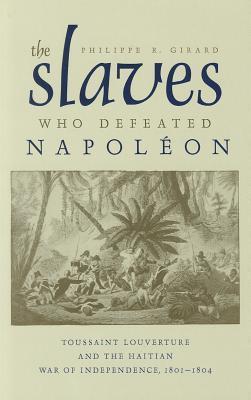
The Slaves Who Defeated Napoléon: Toussaint Louverture and the Haitian War of Independence, 1801–1804
by Philippe Girard
Rating: 3.6 ⭐
To a contemporary audience, Haiti brings to mind Voodoo spells, Tontons Macoutes, and boat people--nothing worth fighting over. Two centuries ago, however, Haiti, then known as Saint-Domingue, was the “Pearl of the Antilles,” France's most valuable overseas colony, the largest exporter of tropical products in the world, and the United States' second most important trading partner after England. Haiti was also the place where in 1801-1802 Napoléon Bonaparte sent the largest colonial venture of his reign: the Leclerc expedition. His goal was to remove the famous revolutionary Toussaint Louverture from office and, possibly, restore slavery. But within two years, the remnants of Bonaparte’s once-proud army were evacuated in defeated, and Haiti declared its independence. This forgotten yet momentous conflict, in which lives were consumed by the thousands, is this book’s main focus.In this ambitious monograph, Philippe Girard employs the latest tools of the historian’s craft, multi-archival research in particular, and applies them to the climactic yet poorly understood last years of the Haitian Revolution. Haiti lost most of its archives to neglect and theft, but a substantial number of documents survive in French, U.S., British, and Spanish collections, both public and private. In all, The Slaves Who Defeated Napoleon relies on contemporary military, commercial, and administrative sources drawn from nineteen archives and research libraries on both sides of the Atlantic. Due to its extensive archival basis, the book corrects the many factual inaccuracies that have plagued previous accounts. It also offers a more rounded view of the Haitian Revolution, going beyond mere military minutia to include the activities of U.S. merchants; the in-fighting within the French government; the diplomacy between both the French and revolutionaries with the United States, England, and Spain; and the lives of the maroons, women, and children caught up in the revolutionary struggle. This multidimensional work tells not only of barefoot black soldiers ambushing Bonaparte’s columns, but also of Rochambeau’s mixed-race mistresses, French child drummers, Jewish bankers in Kingston, weapon smugglers from Quaker Philadelphia, Polish artillerists, and African-born maroons struggling to preserve their freedom against both white and black opponents. Equally groundbreaking is the book’s willingness to move beyond tidy ideological and racial categories to depict an Atlantic society at the crossroads of African and European influences, where Haitian rebels fought France while embracing its ideals. In the process, the reader is introduced to the extraordinary lives of multifaceted characters such as Wladyslaw Jablonowski, the son of a Polish woman and a black father who died fighting for France and white supremacy.

« Il y a des gens qui luttent pour échapper à la mort, alors que moi, je lutte pour échapper à ma vie. »Vous marchez parmi la foule. Deux tueurs sont à vos trousses. Sachant que votre seule chance de leur échapper est de vous jeter dans les bras d’une inconnue en espérant qu’elle vous emmènera chez elle lorsque les balles vous auront troué la peau…Qui choisirez-vous ? La grande hippie lunatique ? La carriériste matérialiste ? La petite grosse complexée ? Ou l’exaltée provocante ?Non. Elle, la fille ordinaire, celle à qui il n’arrive jamais rien de spécial. Elle me sauvera...Quel choix sera le bon pour échapper à son destin ? Philippe Girard a l’art de distiller une ambiance oppressante de film noir. Par le jeu subtil des multiples retours en arrière, cette énigme trouvera son dénouement dans...sa genèse.

Le couperet de Philippe Girard raconte l'histoire d'un homme complexé par la perte de cheveux et le vieillissement de son corps. Alors qu'il se prépare à demander la main de Violaine, son amoureuse, l'homme doute et craint sa réaction. Peu à peu, ses complexes et ses angoisses s'expriment par la perte de quelques-uns de ses membres. Un oeil sort de son orbite et roule sur le plancher du bijoutier, il perd ses bras, ses jambes... Nous avons droit ici à un Philippe Girard surréaliste qui s'amuse avec les expressions de la langue française mettant en scène des parties du corps.

Dans son premier roman pour adultes Philippe Girard met en scène une partie de chasse à l’ours où l’Ours n’est pas la proie; où les Américains viennent dans Charlevoix pour affronter les démons de leur passé, où les jeunes garçons apprennent à devenir des hommes.

Entourée de ses parents, de son grand-père, de ses amis et de son chat, Béatrice est une fillette qui a du bagout et qui traverse la vie avec bonne humeur. Dans de courtes saynètes en 3 cases, Béatrice nous présente sa vision du monde à la fois enfantine et lucide.Un premier album de Béatrice a été publié par Mécanique générale en 2006. Depuis, la série paraît régulièrement dans l’hebdomadaire Spirou et dans le journal La Presse.

Paradise Lost: Haiti's Tumultuous Journey from Pearl of the Caribbean to Third World Hotspot
by Philippe Girard
Rating: 4.3 ⭐
Why has Haiti been plagued by so many woes? Why have multiple U.S. efforts to create a stable democracy in Haiti failed so spectacularly? Philippe Girard answers these and other questions, examining how colonialism and slavery have left a legacy of racial tension, both within Haiti and internationally; Haitians remain deeply suspicious of white foriegners' motives, many of whom doubt Hatians' ability to govern themselves. He also examines how Haiti's current political instability is merely a continuation of political strife that began during the War of Independence (1791-1804). Finally, Girard explores poverty's devastating impact on contemporary Haiti and argues that Haitians--particularly home-grown dictators--bear a big share of the responsibility for their nation's troubles.

Here is an annotated, scholarly, multilingual edition of the only lengthy text personally written by Haitian revolutionary Toussaint Louverture: the memoirs he wrote shortly before his death in the French prison of Fort de Joux. The translation is based on an original copy in Louverture's hand never before published. Historian Philippe Girard begins with an introductory essay that retraces Louverture's career as a slave, rebel, and governor. Girard provides a detailed narrative of the last year of Louverture's life, and analyzes the significance of the memoirs and letters from a historical and linguistic perspective. The book includes a full transcript, in the original French, of Louverture's handwritten memoirs. The English translation appears side by side with the original. The memoirs contain idiosyncrasies and stylistic variations of interest to linguists. Scholarly interest in the Haitian Revolution and the life of Toussaint Louverture has increased over the past decade. Louverture is arguably the most notable man of African descent in history, and the Haitian Revolution was the most radical of the three great revolutions of its time. Haiti's proud revolutionary past and its more recent upheavals indicate that interest in Haiti's history goes far beyond academia; many regard Louverture as a personal hero. Despite this interest, there is a lack of accessible primary sources on Toussaint Louverture. An edited translation of Louverture's memoirs makes his writings accessible to a larger public. Louverture's memoirs provide a vivid alternative perspective to anonymous plantation records, quantitative analyses of slave trading ventures, or slave narratives mediated by white authors. Louverture kept a stoic facade and rarely expressed his innermost thoughts and fears in writing, but his memoirs are unusually emotional. Louverture questioned whether he was targeted due to the color of his skin, bringing racism an issue that Louverture rarely addressed head on with his white interlocutors, to the fore.

En août 1943 se tient à Québec la célèbre conférence du même nom. Le 19, pour se reposer, Winston Churchill et Franklin D. Roosevelt vont pêcher dans les Laurentides, région montagneuse proche de Montréal. PhlppGrrd lève le voile pour la première fois sur cette journée mémorable, comblant du même coup un vide historique de soixante ans. - See more at: http://editionsmecaniquegenerale.com/...

The book focuses on Aristide's political career, emphasizing his strategizing, compromising and dealing with the Clinton administration. In his presentation of the conflict, Girard carefully balances Aristide's and Clinton's needs, and the demands and moral positions the leaders make against each other - the result is that each leader and his constituency comes to life, and their maneuverings and decisions become engaging and meaningful. While Girard focuses on the conflict itself and the foreign policy dynamics at play between Haiti and the US, he also paints a compelling picture of contemporary Haiti and delineates with great clarity the tensions which led to recent violence and the deposition of Aristide.

Afin de souligner le 375e anniversaire de Montréal, Philippe Girard a publié chaque jour pendant trois mois un feuilleton sur son blog. Appuyé par une vingtaine de dessinateurs d'ici et d'ailleurs, (Leif Tande, Jimmy Beaulieu, Siris, Joe Ollman, Guy Delisle, Régis Loisel, Vincent Perriot, Jean-Louis Tripp, Cromwell, Emmanuel Moynot, etc.) il s'est livré à un exercice de style unique en utilisant l'image emblématique de notre époque, le selfie, pour retourner le miroir de ses cases vers les véritables protagonistes de ce récit : les Montréalais.

Voici l'année 1977 revisitée à travers l'enfance du petit PhlppGrrd. En évoquant certaines anecdotes, l'auteur nous introduit dans un monde où le vrai et le faux se confondent. Le retour sur l'enfance est souvent, pour un auteur, l'occasion de s'exprimer avec tendresse et fantaisie. C'est dans cet esprit que PhlppGrrd a conçu cet ouvrage irrésistible, dans lequel il a épinglé quelques précieux souvenirs qui façonnent une vie. La narration sait se montrer riche, malgré une déconcertante économie de moyens, et ça aussi, ça ressemble à l'enfance. Exit l'esbroufe, la poudre aux yeux et le tape-à-l'oeil, PhlppGrrd frappe juste, là où ça fait sourire, et où ça émeut. - See more at: http://editionsmecaniquegenerale.com/...

Gustave Et L'Enigme Du Capitaine Planete
by Philippe Girard

Toussaint Louverture: The Dilemma of Emancipation
by Philippe Girard