
Arthur Rimbaud
Hallucinatory work of French poet Jean Nicolas Arthur Rimbaud strongly influenced the surrealists. With known transgressive themes, he influenced modern literature and arts, prefiguring. He started writing at a very young age and excelled as a student but abandoned his formal education in his teenage years to run away to Paris amidst the Franco-Prussian war. During his late adolescence and early adulthood, he produced the bulk of his literary output. After assembling his last major work, Illuminations , Rimbaud completely stopped writing literature at age 20 years in 1874. A hectic, violent romantic relationship, which lasted nearly two years at times, with fellow poet Paul Verlaine engaged Rimbaud, a libertine, restless soul. After his retirement as a writer, he traveled extensively on three continents as a merchant and explorer until his death from cancer. As a poet, Rimbaud is well known for his contributions to symbolism and, among other works, for A Season in Hell , a precursor to modernist literature.
31 Books Written

En 1871, lorsqu'il écrit "Le Bateau ivre", Arthur Rimbaud a tout juste dix-sept ans. Destiné au cercle des poètes parisiens et faisant office de présentation du jeune auteur, ce poème révèle déjà tout le génie de celui qui, "à seize ans, avait écrit les plus beaux vers du monde", selon Paul Verlaine."Sensation", "Roman", "Ma Bohème" , "Le Dormeur du val", "Voyelles"... Les poèmes rassemblés dans cette anthologie entraînent le lecteur au coeur de l'art poétique du jeune poète et dévoilent les thèmes qui lui sont chers : la communion avec la nature, l'art de la fugue et du vagabondage, ou encore l'attention fertile à la sensualité du monde.- Objets d'étude : Visions poétiques du monde [3e]La poésie du XIXe au XXIe siècle [1re]- Dossier pédagogique : Cinq fiches pour saisir les enjeux de l'oeuvre- Prolongement : La nature dans la poésie (corpus de textes)Classes de 3e et 1re.
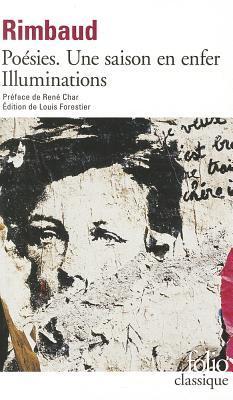
Le désordre somptueux d'une passion exotique, éclat d'un météore, selon Mallarmé ; un ange en exil aux yeux d'un bleu pâle inquiétant, pour Verlaine. Un «éveil génial», et c'est Le Bateau ivre, une «puberté perverse et superbe», puis un jeune homme brièvement «ravagé par la littérature», le maître d'une «expression intense» aux sujets inouïs - tout cela dans un mince volume, dû au poète touché, puis déserté, par le génie, «aventure unique dans l'histoire de l'art».

In nur fünf Jahren, von 1957 bis 1962, nahm Klaus Kinski allein dreißig Sprechplatten auf. Rechtzeitig zum 77. Geburtstag des Ausnahmekünstlers ist es nun der Deutschen Grammophon in enger Zusammenarbeit mit Klaus Kinski Productions gelungen, erstmals sein vollständiges Rezitationswerk auf CD zu veröffentlichen. Die Veröffentlichung umfasst 16 Einzelausgaben mit insgesamt 19 CDs, erscheint aber auch als 20-CD-Box "Kinski spricht Werke der Weltliteratur", die mit 48-seitigem Booklet ausgestattet ist und als Bonus die beiden Hörspiele "Sechs Gramm Caratillo" und "Die Nacht allein" beinhaltet. Obschon Klaus Kinski bis heute durch seine berühmte Erdbeermund-Rezitation eng mit Francois Villon verknüpft ist, hatte man bisher keine Gelegenheit, die Vielseitigkeit des Deklamators Kinski zu hören: seine Interpretationen zahlreicher Werke der Weltliteratur, die von Shakespeare, Goethe und Schiller, über Dostojewskij, Strindberg und Hauptmann, bis zu Oscar Wilde, Jack London und der Dichtung afrikanischer Völker reicht. Arthur Rimbaud wurde 1854 in Charleville (Ardennen) geboren. Sein Werk entstand in nur vier Jugendjahren. Mit fünfzehn begann er zu schreiben, bald darauf floh er aus seiner Provinzheimat nach Paris. 1874 wandte er sich von der Literatur ab und widmete sich ausschließlich dem "Kapitalerwerb", u.a. als Waffenhändler in Afrika.

The prose poems of the great French Symbolist, Arthur Rimbaud (1854-1891), have acquired enormous prestige among readers everywhere and have been a revolutionary influence on poetry in the twentieth century. They are offered here both in their original texts and in superb English translations by Louise Varèse. Mrs. Varèse first published her versions of Rimbaud’s Illuminations in 1946. Since then she has revised her work and has included two poems which in the interim have been reclassified as part of Illuminations. This edition also contains two other series of prose poems, which include two poems only recently discovered in France, together with an introduction in which Miss Varèse discusses the complicated ins and outs of Rimbaldien scholarship and the special qualities of Rimbaud’s writing. Rimbaud was indeed the most astonishing of French geniuses. Fired in childhood with an ambition to write, he gave up poetry before he was twenty-one. Yet he had already produced some of the finest examples of French verse. He is best known for A Season in Hell, but his other prose poems are no less remarkable. While he was working on them he spoke of his interest in hallucinations––"des vertiges, des silences, des nuits." These perceptions were caught by the poet in a beam of pellucid, and strangely active language which still lights up––now here, now there––unexplored aspects of experience and thought.

Although Arthur Rimbaud stopped writing at the age of 19, he possessed the most revolutionary talent of the century. His poetry & prose have increasingly influenced major writers. To his masterpiece A Season in Hell is here added Rimbaud's longest & possibly greatest single poem The Drunken Boat, with the original French en face Illuminations, Rimbaud's major works are available as bilingual New Directions Paperbooks. The reputation of A Season in Hell, which is a poetic record of a man's examination of his own depths, has steadily increased over the years. Upon the 1st publication of Varese's translation by New Directions, the Saturday Review wrote: "One may at last suggest that the translation of A Season in Hell has reached a conclusive point..." Concerning the 25-stanza The Drunken Boat, Dr Enid Starkie of Oxford University has written: "(It's) an anthology of separate lines of astonishing evocative magic which linger in the mind like isolated jewels." Rimbaud's life was so extraordinary that it has taken on the quality of a myth. A biographical chronology is included.

Arthur Rimbaud is remembered as much for his volatile personality and tumultuous life as he is for his writings, most of which he produced before the age of eighteen. This book brings together his poetry, prose, and letters, including "The Drunken Boat," "The Orphans' New Year," "After the Flood," and "A Season in Hell," considered by many to be his. 'Complete Works' is divided into eight "seasons" - Childhood, The Open Road, War, The Tormented Heart, The Visionary, The Damned Soul, A Few Belated Cowardices, and The Man with the Wind at His Heels - that reflect the facets of Rimbaud's life. Insightful commentary by translator and editor Paul Schmidt reveals the courage, vision, and imagination of Rimbaud's poetry and sheds light on one of the most enigmatic figures in letters.

Written by Rimbaud at age 18 in the wake of a tempestuous affair with fellow poet, Paul Verlaine, A Season in Hell has been a touchstone for anguished poets, artists and lovers for over a century. This volume presents the text in French and English with photographs by Robert Mapplethorpe.

“The definitive translation for our time.”–Edward HirschFrom Dante’s Inferno to Sartre’s No Exit, writers have been fascinated by visions of damnation. Within that rich literature of suffering, Arthur Rimbaud’s A Season in Hell–written when the poet was nineteen–provides an astonishing example of the grapple with self. As a companion to Rimbaud’s journey, readers could have no better guide than Wyatt Mason. One of our most talented young translators and critics, Mason’s new version of A Season in Hell renders the music and mystery of Rimbaud’s tale of Hell on Earth with exceptional finesse and power. This bilingual edition includes maps, a helpful chronology of Rimbaud’s life, and the unfinished suite of prose poems, Illuminations and A Season in Hell cement Rimbaud’s reputation as one of the foremost, and most influential, writers in French literature.

Librarian's note: Alternate cover edition of ISBN 9782253096351.Si l'on devait citer le poète qui a exercé l'influence la plus profonde sur la poésie du début du xxe siècle, il faudrait nommer Rimbaud. Avec plus de hardiesse encore que Baudelaire, il a étendu le champ d'exploration de la poésie. Avant lui, l'expérience poétique était principalement l'expérience de la création littéraire. Après lui, la poésie devient un moyen de connaissance. [...] C'est qu'il n'a pas hésité à se mettre en communication avec la part inconnaissable de lui-même. Il y a découvert un grand jeu d'images, fleurs éclatées, filles à lèvres d'orange, déluges et miracles, un jeu dont chaque figure ressemble à un message marqué d'un sceau incompréhensible et sacré. Dès lors, Rimbaud va libérer tous les phénomènes de l'inconscient, préparer les voies du surréalisme et créer, si l'on veut, un nouveau mystère dont les symboles resteront étrangers au merveilleux et au fantastique.Kléber Haedens

Si l'on devait citer le poète qui a exercé l'influence la plus profonde sur la poésie du début du XXe siècle, il faudrait nommer Rimbaud. Avec plus de hardiesse encore que Baudelaire, il a étendu le champ d'exploration de la poésie. Avant lui, l'expérience poétique était principalement l'expérience de la création littéraire. Après lui, la poésie devient un moyen de connaissance. [...] C'est qu'il n'a pas hésité à se mettre en communication avec la part inconnaissable de lui-même. Il y a découvert un grand jeu d'images, fleurs éclatées, filles à lèvres d'orange, déluges et miracles, un jeu dont chaque figure ressemble à un message marqué d'un sceau incompréhensible et sacré. Dès lors, Rimbaud va libérer tous les phénomènes de l'inconscient, préparer les voies du surréalisme et créer, si l'on veut, un nouveau mystère dont les symboles resteront étrangers au merveilleux et au fantastique.

The Everyman's Library Pocket Poets hardcover series is popular for its compact size and reasonable price which does not compromise content. Rimbaud contains selections from Rimbaud's work, including over 100 poems, selected prose, "Letter to Paul Demeny, May 15, 1871," and an index of first lines.
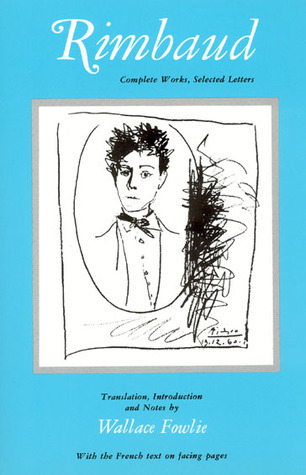
The enfant terrible of French letters, Jean-Nicholas-Arthur Rimbaud (1854-91) was a defiant and precocious youth who wrote some of the most remarkable prose and poetry of the nineteenth century, all before leaving the world of verse by the age of twenty-one. More than a century after his death, the young rebel-poet continues to appeal to modern readers as much for his turbulent life as for his poetry; his stormy affair with fellow poet Paul Verlaine and his nomadic adventures in eastern Africa are as iconic as his hallucinatory poems and symbolist prose.The first translation of the poet's complete works when it was published in 1966, Rimbaud: Complete Works, Selected Letters introduced a new generation of Americans to the alienated genius—among them the Doors's lead singer Jim Morrison, who wrote to translator Wallace Fowlie to thank him for rendering the poems accessible to those who "don't read French that easily." Forty years later, the book remains the only side-by-side bilingual edition of Rimbaud's complete poetic works.Thoroughly revising Fowlie's edition, Seth Whidden has made changes on virtually every page, correcting errors, reordering poems, adding previously omitted versions of poems and some letters, and updating the text to reflect current scholarship; left in place are Fowlie's literal and respectful translations of Rimbaud's complex and nontraditional verse. Whidden also provides a foreword that considers the heritage of Fowlie's edition and adds a bibliography that acknowledges relevant books that have appeared since the original publication. On its fortieth anniversary, Rimbaud remains the most authoritative—and now, completely up-to-date—edition of the young master's entire poetic ouvre.

Ivre de sensations, Rimbaud est comme ce bateau qui connaît l'éblouissement de " nuits sans fond " mais aussi la désillusion " d'aubes navrantes ". Voyant, il crée un monde où la Grande-Ourse est une auberge et les poteaux télégraphiques une lyre aux chants de fer... Révolté, il va, portant en lui " le sanglot des Infâmes, la clameur des Maudits " et le sourire tranquille du dormeur du val... Mais pour finir, il s'évade, tout à la fois, ange, mage et vagabond, laissant à vingt ans, une œuvre fulgurante dont les échos se prolongent aujourd'hui.

Arthur Rimbaud's meteoric career was crammed into four teenage years in which he wrote two masterpieces, The Illuminations and A Season in Hell, and some wonderful short poems. At nineteen he then rejected the literary life and left France. Oliver Bernard, poet and translator of Guillaume Apollinaire, presents both the French and Latin poems in bilingual form with lively and accurate prose versions and a useful and entertaining introduction. A selection of letters is also included. This is the best and most helpful presentation of the French genius' work for English-language readers and students of French poetry.Oliver Bernard's most recent collection of poems was Verse &c (Anvil Press, 2001). He lives in Norfolk, England.
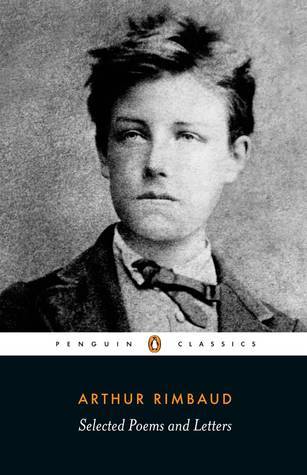
The poems and letters of one of France's most unusual modern poets, here in both French and EnglishArthur Rimbaud was one of the wildest, most uncompromising poets of his age, although his brief literary career was over by the time he was twenty-one when he embarked on a new life as a trader in Africa. This edition brings together his extraordinary poetry and more than a hundred of his letters, most of them written after he had abandoned literature. A master of French verse forms, the young Rimbaud set out to transform his art, and language itself, by a systematic “disordering of all the senses,” often with the aid of alcohol and drugs. The result is a highly innovative, modern body of work, obscene and lyrical by turns—a rigorous journey to extremes. Jeremy Harding and John Sturrock’s new translation includes Rimbaud’s greatest verse, as well as his record of youthful torment, A Season in Hell (1873), and more than 100 letters that unveil the man who turned his back on poetry. The French text of the poems appears on pages facing the English translations, and John Sturrock's introduction examines Rimbaud's two very different careers.For more than seventy years, Penguin has been the leading publisher of classic literature in the English-speaking world. With more than 1,700 titles, Penguin Classics represents a global bookshelf of the best works throughout history and across genres and disciplines. Readers trust the series to provide authoritative texts enhanced by introductions and notes by distinguished scholars and contemporary authors, as well as up-to-date translations by award-winning translators.
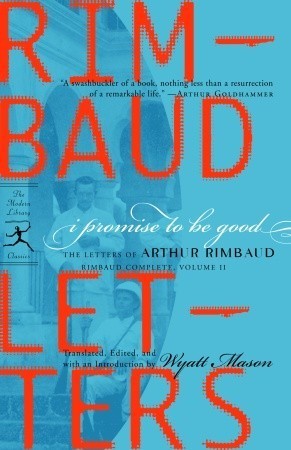
One of the most written-about literary figures in the past decade, Arthur Rimbaud left few traces when he abandoned poetry at age twenty-one and disappeared into the African desert. Although the dozen biographies devoted to Rimbaud’s life depend on one main source for information—his own correspondence—a complete edition of these remarkable letters has never been published in English. Until now.A moving document of decline, Rimbaud’s letters begin with the enthusiastic artistic pronouncements of a fifteen-year-old genius, and end with the bitter what-ifs of a man whose life has slipped disastrously away. But whether soapboxing on the essence of art, or struggling under the yoke of self-imposed exile in the desert of his later years, Rimbaud was incapable of writing an uninteresting sentence. As translator and editor Wyatt Mason makes clear in his engaging Introduction, the letters reveal a Rimbaud very different from our expectations. Rimbaud—presented by many biographers as a bohemian wild man—is unveiled as “diligent in his pursuit of his goals . . . wildly, soberly ambitious, in poetry, in everything.”I Promise to Be Good: The Letters of Arthur Rimbaud is the second and final volume in Mason’s authoritative presentation of Rimbaud’s writings. Called by Edward Hirsch “the definitive translation for our time,” Mason’s first volume, Rimbaud Complete (Modern Library, 2002), brought Rimbaud’s poetry and prose into vivid focus. In I Promise to Be Good , Mason adds the missing epistolary pieces to our picture of Rimbaud. “These letters,” he writes, “are proofs in all their variety—of impudence and precocity, of tenderness and rage—for the existence of Arthur Rimbaud.” I Promise to Be Good allows English-language readers to see with new eyes one of the most extraordinary poets in history.


Paperback. 11.00 / 20.00 cm. In Turkish. 119 p. Orijinal Lettres du Voyant Translated by Ayberk Erkay Edited by Isik Ergüden Cover designed by Gülay Tunç, Asli Sezer Düzelti - Redaksiyon : Iklime Yilmaz Irfan Sanci Rimbaud. Sair. Kâhin. Ardindan yazilan her dizeye yankisini kaziyan iki mektup. Sairin manifestosu. Kosulsuz modernlige davet. Devrim atesi. Ayberk Erkay'in derleyip çevirdigi Kâhinin Mektuplari, Arthur Rimbaud'nun 1871 tarihli iki emsalsiz mektubunu, Bati siiri ve düsüncesinin dönüm noktasi olan bu edebi çigligi, elyazmalari ve açiklamalarla birlikte sunuyor. ...Sair dogmus olmak gerek ve ben sair bildim kendimi...

Un adelanto del fin del mundo, de la colección «Poesía portátil», es una colección de embates apasionados de Arthur Rimbaud, un rebelde que supo hurgar en el infierno para revolucionar la poesía.Rimbaud rompió las costuras de la poesía moderna cuando todavía no había cumplido veinte años. A tan pronta edad deflagró también los límites de la bohemia. Rebelde ejemplar, entendía la figura del poeta como una suerte de vidente de una vida nueva, un icono romántico movido por una fiebre que estrellaba en decenas de hojas sueltas.Reunimos ahora algunos de sus principales poemas, resultado de sus años en París, de la truculenta pasión que le unió a Paul Verlaine, del malvivir, el emborracharse, del no ser feliz pero ser siempre salvaje.

A Season in Hell is one of the great works of modern literature. It is published here in a bilingual edition together with many of the verse poems which Rimbaud wrote between March 1870 and August 1872. A Season in Hell was Rimbaud's literary testament, his apology and a contribution to the mythology of his time. Norman Cameron (1905-53) was born in India and educated at Fettes College and Oriel College, Cambridge. He worked as a superintendent of Education in Nigeria, before becoming an advertising copywriter in London. During the 1930s he was a frequent contributor to Geoffrey Grigson's New Verse. He was awarded an MBE for his propaganda work during the war, and served with British forces in Austria until 1947, when he returned to London and advertising. In addition to his translations of Rimbaud, he published several collections of poetry including The Winter House (1935) and Work in Hand (1942). His Collected Poems (edited by Warren Hope and Jonathan Barker) was published by Anvil in 1990.


A new translation of the best and most provocative work by France's infamous rebel poet, in a bilingual editionPoet, prodigy, precursor, the short, precocious, uncompromisingly rebellious career of the poet Arthur Rimbaud is one of the legends of modern literature. By the time he was twenty, Rimbaud had written a series of poems that are not only masterpieces in themselves but that forever transformed the idea of what poetry is. Without him, surrealism is inconceivable, and his influence is palpable in artists as diverse as Henry Miller, John Ashbery, Bob Dylan, and Patti Smith. In this essential volume, renowned translator Mark Polizzotti offers authoritative and inspired new versions of Rimbaud’s major poems and letters, including generous selection of Illuminations and the entirety of his lacerating confession A Season in Hell—capturing as never before not only the meaning but also the daredevil attitudes and incantatory rhythms that make Rimbaud’s works among the most perpetually modern of his or any other generation.

Lettres du voyant Une saison en enfer Illuminations‘Leest als een orgie van klank en ritme’ – de VolkskrantIn deze tweetalige uitgave is het belangrijkste werk van de Franse dichter Arthur Rimbaud samengebracht in de vertaling van Hans van Pinxteren. Een seizoen in de hel en Illuminations worden gerekend tot de adembenemendste literaire teksten uit de negentiende eeuw, terwijl Zienersbrieven Rimbauds opvattingen over het dichterschap onthult: achter de banale wereld van alledag gaat een andere, nog ongekende werkelijkheid schuil. Het middel om deze werkelijkheid te ontdekken is de poëzie. De geheel herziene vertaling nu voor het eerst in een fraaie, tweetalige paperbackeditie.Hans van Pinxteren ontving voor zijn vertalingen de Martinus Nijhoff-prijs en de Dr. Elly Jaffé-prijs. Persreacties op zijn eerdere Rimbaudpublicaties: ‘Van Pinxteren is door zijn vertalingen van Illuminations en Une Saison en enfer binnen de grenzen van natuurlijke onmogelijkheid die Rimbaud de vertaler oplegt, een vertaler die Nederland zou moeten koesteren.’ – Boudewijn Büch, Vrij Nederland ‘Werkelijk voortreffelijk […] vele schitterende vondsten.’ – Rudi Wester, Trouw

Nascido em Charleville em Outubro de 1854, Arthur Rimbaud foi um poeta precoce, tendo escrito o essencial da sua obra dos 16 aos 19 anos. Mais de um século depois, a obra desse adolescente que proclamou a necessidade de «se ser absolutamente moderno», continua a impressionar pelo carácter original das visões, a intensidade de expressão, a exploração dos limites da linguagem e um decidido anseio de absoluto. Do encontro de Rimbaud com Verlaine, na Paris de 1871 abalada pela Comuna, ficou uma tempestade de sentimentos, um tiro disparado pelo autor dos «Poemas Saturnianos» e de «Sageza» contra o escritor das «Iluminações» e uma poesia cujo vigor permanece intacto. A partir de 1873, Rimbaud iniciou uma vida de viagens que o levaram a Harar, cidade da Abissínia. Durante vários anos foi aí empregado de uma firma lyonesa e intrigou ao lado dos franceses no conflito de interesses que os opunham a ingleses e italianos. Entre as suas desajeitadas iniciativas para enriquecer conta-se uma expedição fracassada para vender armas a Menelik, rei de Shewa. Rimbaud morreu a 10 de Novembro de 1891 num hospital de Marselha, onde lhe fora amputada uma perna. A sua última fotografia foi tirada por ele próprio em 1883. Mostra-nos um homem de rosto curtido pelo sol num fundo de paisagem africana. Uma parte importante da sua poesia e as «Iluminações» ressurgem agora em português em versão de Maria Gabriela Llansol.

Un corazón bajo la sotana cuenta, en forma de pseudo diario, la pasión breve pero culpable de un joven seminarista en vísperas de tomar los hábitos. Por su ironía mordaz y el humor que se despliega en todo momento, este texto merece ser colocado al lado de las sátiras poéticas y anticlericales más conocidas de Arthur Rimbaud: El castigo de Tartufo, En cuclillas o Las primeras comuniones. Escrito sin duda entre 1868 y 1870 -Rimbaud tenía 15 años-, permaneció inédito e ignorado hasta 1924, año en que André Breton y Louis Aragon lo revelan al público, primero en la revista Littérature, luego en una plaquette, en versión completa, bajo el sello del librero-editor Ronald Davis en París. André Breton lo incluiría también en su Antología del humor negro en 1940. Un jovencísimo Mario Vargas Llosa -23 años- hizo la primera traducción al castellano a fines de 1959 o comienzos de 1960, pero no se publicaría hasta treinta años después en una editorial peruana. Esa temprana traducción de Vargas Llosa, apenas corregida con ocasión de la publicación en Perú, es la que presentamos en este libro.

Incluido por Verlaine en su volumen de poetas malditos, Rimbaud llevo hasta sus ultimas consecuencias el desequilibro de los sentidos para emprender cualquier forma de amor, sufrimiento y ternura. Esta edicion ofrece las "Primeras Prosas," las "Prosas evangelicas" y "Una temporada en el Infierno," terminando con "Las iluminaciones."

Kniha o jednom z „prokletých“ a jeho veršů sestavená Lumírem Čivrným, který je také autorem úvodní studie o Rimbaudovi a překladatelem dopisů z básníkovy korespondence. Verše, Iluminaci a Sezónu v pekle přeložil Vítězslav Nezval. Kniha je doplněna dobovými fotografiemi, kresbami a dokumentárním materiálem, takže je výborným prostředkem k seznámení se z životem a dílem básníka, který patřil k zakladatelům nejen francouzské, ale i světové poezie.

In una nuova edizione finemente tradotta e curata, le formidabili "lettere del veggente" di Arthur Rimbaud. Il più rivoluzionario documento della poesia moderna in queste missive scritte da un sedicenne che seppe trovare forma all'informe e che fece della parola poetica il più potente strumento di liberazione.

