Loading themes...
Explore the best books about Psychology theme.

Influence: Science and Practice is an examination of the psychology of compliance (i.e. uncovering which factors cause a person to say “yes” to another's request). Written in a narrative style combined with scholarly research, Cialdini combines evidence from experimental work with the techniques and strategies he gathered while working as a salesperson, fundraiser, advertiser, and in other positions inside organizations that commonly use compliance tactics to get us to say “yes.” Widely used in classes, as well as sold to people operating successfully in the business world, the eagerly awaited revision of Influence reminds the reader of the power of persuasion. Cialdini organizes compliance techniques into six categories based on psychological principles that direct human behavior: reciprocation, consistency, social proof, liking, authority, and scarcity.

You can go after the job you want...and get it! You can take the job you have...and improve it! You can take any situation you're in...and make it work for you!Since its release in 1936, How to Win Friends and Influence People has sold more than 30 million copies. Dale Carnegie's first book is a timeless bestseller, packed with rock-solid advice that has carried thousands of now famous people up the ladder of success in their business and personal lives.As relevant as ever before, Dale Carnegie's principles endure, and will help you achieve your maximum potential in the complex and competitive modern age.Learn the six ways to make people like you, the twelve ways to win people to your way of thinking, and the nine ways to change people without arousing resentment.

EXPANDED THIRD EDITION includes Charlie's 2007 USC Law School Commencement address. Edited by Peter D. Kaufman. Brand New.

Learn what sets high achievers apart -- from Bill Gates to the Beatles -- in this #1 bestseller from "a singular talent" ( New York Times Book Review ).In this stunning book, Malcolm Gladwell takes us on an intellectual journey through the world of "outliers"--the best and the brightest, the most famous and the most successful. He asks the what makes high-achievers different?His answer is that we pay too much attention to what successful people are like, and too little attention to where they are that is, their culture, their family, their generation, and the idiosyncratic experiences of their upbringing. Along the way he explains the secrets of software billionaires, what it takes to be a great soccer player, why Asians are good at math, and what made the Beatles the greatest rock band.Brilliant and entertaining, Outliers is a landmark work that will simultaneously delight and illuminate
The War of Break Through the Blocks and Win Your Inner Creative Battles.

Avec ce provocant paradoxe, Nassim Nicholas Taleb, l'auteur du best-seller Le Cygne Noir, nous offre un enseignement d'une portée révolutionnaire: comment non seulement surmonter les cataclysmes de notre temps – ces Cygnes Noirs qui fondent sur un homme, une culture, une civilisation, les bouleversent et les réduisent à néant –, mais en faire une source de bienfaits.De même que le corps humain se renforce à mesure qu'il est soumis au stress et à l'effort, de même que les mouvements populaires grandissent lorsqu'ils sont réprimés, de même le vivant en général se développe d'autant mieux qu’il est confronté à des facteurs de désordre, de volatilité ou à quoi que ce soit à même de le troubler. Cette faculté à non seulement tirer profit du chaos mais à en avoir besoin pour devenir meilleur est « l’antifragile », à l’image de l’antique Hydre de Lerne dont les têtes se multipliaient à mesure qu’elles étaient coupées.Riche, limpide et spirituel, promenant son lecteur dans les rues tonitruantes de Brooklyn, les chemins de la pensée antique, les dédales de l’affaire Kerviel, de la « gauche caviar » ou les méandres des neurosciences avec autant d’aisance et de légèreté profonde, ce livre, dont la science n’est jamais sans conscience, laisse une question en suspens: êtes-vous prêt à devenir antifragile ?

Selected by The New York Times Book Review as a Notable Book of the Year. The author of The New York Times bestseller The Stuff of Thought offers a controversial history of violence. Faced with the ceaseless stream of news about war, crime, and terrorism, one could easily think we live in the most violent age ever seen. Yet as New York Times bestselling author Steven Pinker shows in this startling and engaging new work, just the opposite is true: violence has been diminishing for millennia and we may be living in the most peaceful time in our species' existence. For most of history, war, slavery, infanticide, child abuse, assassinations, pogroms, gruesome punishments, deadly quarrels, and genocide were ordinary features of life. But today, Pinker shows (with the help of more than a hundred graphs and maps) all these forms of violence have dwindled and are widely condemned. How has this happened?This groundbreaking book continues Pinker's exploration of the essence of human nature, mixing psychology and history to provide a remarkable picture of an increasingly nonviolent world. The key, he explains, is to understand our intrinsic motives- the inner demons that incline us toward violence and the better angels that steer us away-and how changing circumstances have allowed our better angels to prevail. Exploding fatalist myths about humankind's inherent violence and the curse of modernity, this ambitious and provocative book is sure to be hotly debated in living rooms and the Pentagon alike, and will challenge and change the way we think about our society.

“Originals is one of the most important and captivating books I have ever read, full of surprising and powerful ideas. It will not only change the way you see the world; it might just change the way you live your life. And it could very well inspire you to change your world.”— Sheryl Sandberg, bestselling author of Lean InThe New York Times bestselling author examines how people can drive creative, moral, and organisational progress—and how leaders can encourage originality in their organisations.How can we originate new ideas, policies and practices without risking it all? Adam Grant shows how to improve the world by championing novel ideas and values that go against the grain, battling conformity, and bucking outdated traditions.Using surprising studies and stories spanning business, politics, sports, and entertainment, Grant explores how to recognize a good idea, speak up without getting silenced, build a coalition of allies, choose the right time to act, and manage fear and doubt; how parents and teachers can nurture originality in children; and how leaders can fight groupthink to build cultures that welcome dissent.Learn from an entrepreneur who pitches his startups by highlighting the reasons not to invest, a woman at Apple who challenged Steve Jobs from three levels below, an analyst who overturned the rule of secrecy at the CIA, a billionaire financial wizard who fires employees for failing to criticize him, and a TV executive who didn’t even work in comedy but saved Seinfeld from the cutting room floor. Originals will give you groundbreaking insights about rejecting conformity and improving the status quo.

In The 7 Habits of Highly Effective People, author Stephen R. Covey presents a holistic, integrated, principle-centered approach for solving personal and professional problems. With penetrating insights and pointed anecdotes, Covey reveals a step-by-step pathway for living with fairness, integrity, service, and human dignity -- principles that give us the security to adapt to change and the wisdom and power to take advantage of the opportunities that change creates.

A newer edition of this book can be found here.After decades of research, world-renowned Stanford University psychologist Carol S. Dweck, Ph.D., discovered a simple but groundbreaking idea: the power of mindset. In this brilliant book, she shows how success in school, work, sports, the arts, and almost every area of human endeavor can be dramatically influenced by how we think about our talents and abilities. People with a fixed mindset — those who believe that abilities are fixed — are less likely to flourish than those with a growth mindset — those who believe that abilities can be developed. Mindset reveals how great parents, teachers, managers, and athletes can put this idea to use to foster outstanding accomplishment.In this edition, Dweck offers new insights into her now famous and broadly embraced concept. She introduces a phenomenon she calls false growth mindset and guides people toward adopting a deeper, truer growth mindset. She also expands the mindset concept beyond the individual, applying it to the cultures of groups and organizations. With the right mindset, you can motivate those you lead, teach, and love — to transform their lives and your own.

Give and Take highlights what effective networking, collaboration, influence, negotiation, and leadership skills have in common.For generations, we have focused on the individual drivers of success: passion, hard work, talent, and luck. But today, success is increasingly dependent on how we interact with others. It turns out that at work, most people operate as either takers, matchers, or givers. Whereas takers strive to get as much as possible from others and matchers aim to trade evenly, givers are the rare breed of people who contribute to others without expecting anything in return. Using his own pioneering research as Wharton's youngest tenured professor, Grant shows that these styles have a surprising impact on success. Although some givers get exploited and burn out, the rest achieve extraordinary results across a wide range of industries. Combining cutting-edge evidence with captivating stories, this landmark book shows how one of America's best networkers developed his connections, why the creative genius behind one of the most popular shows in television history toiled for years in anonymity, how a basketball executive responsible for multiple draft busts transformed his franchise into a winner, and how we could have anticipated Enron's demise four years before the company collapsed - without ever looking at a single number. Praised by bestselling authors such as Dan Pink, Tony Hsieh, Dan Ariely, Susan Cain, Dan Gilbert, Gretchen Rubin, Bob Sutton, David Allen, Robert Cialdini, and Seth Godin-as well as senior leaders from Google, McKinsey, Merck, Estee Lauder, Nike, and NASA - Give and Take highlights what effective networking, collaboration, influence, negotiation, and leadership skills have in common. This landmark book opens up an approach to success that has the power to transform not just individuals and groups, but entire organizations and communities.

Alternate cover edition of ISBN 9781577314806.To make the journey into the Now we will need to leave our analytical mind and its false created self, the ego, behind. From the very first page of Eckhart Tolle's extraordinary book, we move rapidly into a significantly higher altitude where we breathe a lighter air. We become connected to the indestructible essence of our Being, “The eternal, ever present One Life beyond the myriad forms of life that are subject to birth and death.” Although the journey is challenging, Eckhart Tolle uses simple language and an easy question-and-answer format to guide us.A word-of-mouth phenomenon since its first publication, The Power of Now is one of those rare books with the power to create an experience in readers, one that can radically change their lives for the better.

De Mello's spiritual classic remains at the top of the Fount bestsellers more than five years after its original publication.

In The Four Agreements, don Miguel Ruiz reveals the source of self-limiting beliefs that rob us of joy and create needless suffering. Based on ancient Toltec wisdom, the Four Agreements offer a powerful code of conduct that can rapidly transform our lives to a new experience of freedom, true happiness, and love. The Four Agreements are: Be Impeccable With Your Word, Don't Take Anything Personally, Don't Make Assumptions, Always Do Your Best.

An extraordinary book that will dramatically change the way you experience life.Finite games are the familiar contests of everyday life, the games we play in business and politics, in the bedroom and on the battlefied -- games with winners and losers, a beginning and an end. Infinite games are more mysterious -- and ultimately more rewarding. They are unscripted and unpredictable; they are the source of true freedom.In this elegant and compelling work, James Carse explores what these games mean, and what they can mean to you. He offers stunning new insights into the nature of property and power, of culture and community, of sexuality and self-discovery, opening the door to a world of infinite delight and possibility."An extraordinary little book . . . a wise and intimate companion, an elegant reminder of the real."-- Brain/Mind Bulletin

"The Selfish Gene" caused a wave of excitement among biologists and the general public when it was first published in 1976. Its vivid rendering of a gene's eye view of life, in lucid prose, gathered together the strands of thought about the nature of natural selection into a conceptual framework with far-reaching implications for our understanding of evolution. Time has confirmed its significance. Intellectually rigorous, yet written in non-technical language, "The Selfish Gene" is widely regarded as a masterpiece of science writing, and its insights remain as relevant today as on the day it was published.Chapters:1. Why are people?2. The replicators3. Immortal coils4. The gene machine5. Aggression stability and the selfish machine6. Genesmanship7. Family planning8. Battle of the generations9. Battle of the sexes10. You scratch my back, I'll ride on yours11. Memes: the new replicators12. Nice guys finish first13. The long reach of the gene

A black swan is a highly improbable event with three principal characteristics: It is unpredictable; it carries a massive impact; and, after the fact, we concoct an explanation that makes it appear less random, and more predictable, than it was. The astonishing success of Google was a black swan; so was 9/11. For Nassim Nicholas Taleb, black swans underlie almost everything about our world, from the rise of religions to events in our own personal lives.Why do we not acknowledge the phenomenon of black swans until after they occur? Part of the answer, according to Taleb, is that humans are hardwired to learn specifics when they should be focused on generalities. We concentrate on things we already know and time and time again fail to take into consideration what we don’t know. We are, therefore, unable to truly estimate opportunities, too vulnerable to the impulse to simplify, narrate, and categorize, and not open enough to rewarding those who can imagine the “impossible.”For years, Taleb has studied how we fool ourselves into thinking we know more than we actually do. We restrict our thinking to the irrelevant and inconsequential, while large events continue to surprise us and shape our world. Now, in this revelatory book, Taleb explains everything we know about what we don’t know. He offers surprisingly simple tricks for dealing with black swans and benefiting from them.Elegant, startling, and universal in its applications 'The Black Swan' will change the way you look at the world. Taleb is a vastly entertaining writer, with wit, irreverence, and unusual stories to tell. He has a polymathic command of subjects ranging from cognitive science to business to probability theory. 'The Black Swan' is a landmark book – itself a black swan.

Vous croulez sous vos listes de tâches au travail et à la maison ? La méthode GTD (Getting Things Done, d'après le titre américain du livre) ou l'art de l'efficacité sans le stress est une méthode qui permet d'accroître vos capacités d'organisation, votre efficacité et votre créativité sans multiplier vos efforts. Déjà appliquée dans les plus grandes entreprises internationales, elle peut transformer radicalement votre manière de vivre et de travailler. Son principe : votre efficacité est directement proportionnelle à votre capacité à vous détendre. Si votre esprit est clair et vos idées organisées, vous pouvez améliorer vos performances sans subir de stress. Ce livre vous apprend à réévaluer vos objectifs au fur et à mesure que les priorités changent ; vous débarrasser du sentiment d'être débordé, anxieux, stressé, impuissant ; planifier et matérialiser vos projets ; accepter de ne pas pouvoir tout faire en même temps.

Yuval Noah Harari, author of the critically-acclaimed New York Times bestseller and international phenomenon Sapiens, returns with an equally original, compelling, and provocative book, turning his focus toward humanity’s future, and our quest to upgrade humans into gods.Over the past century humankind has managed to do the impossible and rein in famine, plague, and war. This may seem hard to accept, but, as Harari explains in his trademark style—thorough, yet riveting—famine, plague and war have been transformed from incomprehensible and uncontrollable forces of nature into manageable challenges. For the first time ever, more people die from eating too much than from eating too little; more people die from old age than from infectious diseases; and more people commit suicide than are killed by soldiers, terrorists and criminals put together. The average American is a thousand times more likely to die from binging at McDonalds than from being blown up by Al Qaeda.What then will replace famine, plague, and war at the top of the human agenda? As the self-made gods of planet earth, what destinies will we set ourselves, and which quests will we undertake? Homo Deus explores the projects, dreams and nightmares that will shape the twenty-first century—from overcoming death to creating artificial life. It asks the fundamental questions: Where do we go from here? And how will we protect this fragile world from our own destructive powers? This is the next stage of evolution. This is Homo Deus.With the same insight and clarity that made Sapiens an international hit and a New York Times bestseller, Harari maps out our future.

Alternate cover edition of ISBN 9781501144318.Neuroscientist and sleep expert Matthew Walker provides a revolutionary exploration of sleep, examining how it affects every aspect of our physical and mental well-being. Charting the most cutting-edge scientific breakthroughs, and marshalling his decades of research and clinical practice, Walker explains how we can harness sleep to improve learning, mood and energy levels, regulate hormones, prevent cancer, Alzheimer's and diabetes, slow the effects of aging, and increase longevity. He also provides actionable steps towards getting a better night's sleep every night.

From the New York Times bestselling author of The Black Swan, a bold new work that challenges many of our long-held beliefs about risk and reward, politics and religion, finance and personal responsibility In his most provocative and practical book yet, one of the foremost thinkers of our time redefines what it means to understand the world, succeed in a profession, contribute to a fair and just society, detect nonsense, and influence others. Citing examples ranging from Hammurabi to Seneca, Antaeus the Giant to Donald Trump, Nassim Nicholas Taleb shows how the willingness to accept one’s own risks is an essential attribute of heroes, saints, and flourishing people in all walks of life. As always both accessible and iconoclastic, Taleb challenges long-held beliefs about the values of those who spearhead military interventions, make financial investments, and propagate religious faiths. Among his insights: • For social justice, focus on symmetry and risk sharing. You cannot make profits and transfer the risks to others, as bankers and large corporations do. You cannot get rich without owning your own risk and paying for your own losses. Forcing skin in the game corrects this asymmetry better than thousands of laws and regulations. • Ethical rules aren’t universal. You’re part of a group larger than you, but it’s still smaller than humanity in general. • Minorities, not majorities, run the world. The world is not run by consensus but by stubborn minorities imposing their tastes and ethics on others. • You can be an intellectual yet still be an idiot. “Educated philistines” have been wrong on everything from Stalinism to Iraq to low-carb diets. • Beware of complicated solutions (that someone was paid to find). A simple barbell can build muscle better than expensive new machines. • True religion is commitment, not just faith. How much you believe in something is manifested only by what you’re willing to risk for it.The phrase “skin in the game” is one we have often heard but rarely stopped to truly dissect. It is the backbone of risk management, but it’s also an astonishingly rich worldview that, as Taleb shows in this book, applies to all aspects of our lives. As Taleb says, “The symmetry of skin in the game is a simple rule that’s necessary for fairness and justice, and the ultimate BS-buster,” and “Never trust anyone who doesn’t have skin in the game. Without it, fools and crooks will benefit, and their mistakes will never come back to haunt them.”

Doing well with money isn't necessarily about what you know. It's about how you behave. And behavior is hard to teach, even to really smart people. Money--investing, personal finance, and business decisions--is typically taught as a math-based field, where data and formulas tell us exactly what to do. But in the real world people don't make financial decisions on a spreadsheet. They make them at the dinner table, or in a meeting room, where personal history, your own unique view of the world, ego, pride, marketing, and odd incentives are scrambled together. In The Psychology of Money, award-winning author Morgan Housel shares 19 short stories exploring the strange ways people think about money and teaches you how to make better sense of one of life's most important topics.

The New York Times bestselling author of Better and Complications reveals the surprising power of the ordinary checklistWe live in a world of great and increasing complexity, where even the most expert professionals struggle to master the tasks they face. Longer training, ever more advanced technologies—neither seems to prevent grievous errors. But in a hopeful turn, acclaimed surgeon and writer Atul Gawande finds a remedy in the humblest and simplest of techniques: the checklist. First introduced decades ago by the U.S. Air Force, checklists have enabled pilots to fly aircraft of mind-boggling sophistication. Now innovative checklists are being adopted in hospitals around the world, helping doctors and nurses respond to everything from flu epidemics to avalanches. Even in the immensely complex world of surgery, a simple ninety-second variant has cut the rate of fatalities by more than a third.In riveting stories, Gawande takes us from Austria, where an emergency checklist saved a drowning victim who had spent half an hour underwater, to Michigan, where a cleanliness checklist in intensive care units virtually eliminated a type of deadly hospital infection. He explains how checklists actually work to prompt striking and immediate improvements. And he follows the checklist revolution into fields well beyond medicine, from disaster response to investment banking, skyscraper construction, and businesses of all kinds.An intellectual adventure in which lives are lost and saved and one simple idea makes a tremendous difference, The Checklist Manifesto is essential reading for anyone working to get things right.

CE LIVRE A ETE ECRIT POUR QUICONQUE DESIRE INSPIRER D'AUTRES PERSONNES OU POUR CEUX QUI SOUHAITENT TROUVER UNE PERSONNE QUI LES INSPIRERA.Simon Sinek est le leader d'un mouvement qui vise à bâtir un monde dans lequel la majorité des gens sont inspirés par le travail qu'ils font. Des millions de gens ont déjà vu sa vidéo sur TED.com concernant l'importance de savoir pourquoi nous faisons ce que nous faisons. Commencer par pourquoi amène ce concept beaucoup plus loin.Toute personne ou organisation est en mesure d'expliquer ce qu'elle fait; certaines peuvent expliquer en quoi elles sont différentes des autres, mais très rares sont celles qui parviennent à articuler clairement pourquoi. Le POURQUOI n'a rien à voir avec l'argent et les profits, ce sont les résultats qui comptent. Le POURQUOI, c'est la raison qui nous inspire et inspire également les gens autour de nous.De Martin Luther King à Steve Jobs, en passant par les frères Wright, Commencer par pourquoi démontre que les leaders qui savent inspirer les gens pensent, agissent et communiquent tous de la même façon, une façon diamétralement opposée à celle de tous les autres. Riche d'un vaste éventail d'histoires vécues, ce livre procure une structure permettant de mettre sur pied des organisations, de diriger des mouvements et d'inspirer des gens, tout cela à partir de POURQUOI.
“Ridley writes with panache, wit, and humor and displays remarkable ingenuity in finding ways to present complicated materials for the lay reader.” — Los Angeles Times In a bold and provocative interpretation of economic history, Matt Ridley, the New York Times -bestselling author of Genome and The Red Queen , makes the case for an economics of hope, arguing that the benefits of commerce, technology, innovation, and change—what Ridley calls cultural evolution—will inevitably increase human prosperity. Fans of the works of Jared Diamond ( Guns, Germs, and Steel ), Niall Ferguson ( The Ascent of Money ), and Thomas Friedman ( The World Is Flat ) will find much to ponder and enjoy in The Rational Optimist.

'Science has never had an advocate quite like David Deutsch ... A computational physicist on a par with his touchstones Alan Turing and Richard Feynman, and a philosopher in the line of his greatest hero, Karl Popper. His arguments are so clear that to read him is to experience the thrill of the highest level of discourse available on this planet and to understand it' Peter Forbes, IndependentIn our search for truth, how far have we advanced? This uniquely human quest for good explanations has driven amazing improvements in everything from scientific understanding and technology to politics, moral values and human welfare. But will progress end, either in catastrophe or completion - or will it continue infinitely?In this profound and seminal book, David Deutsch explores the furthest reaches of our current understanding, taking in the Infinity Hotel, supernovae and the nature of optimism, to instill in all of us a wonder at what we have achieved - and the fact that this is only the beginning of humanity's infinite possibility.'This is Deutsch at his most ambitious, seeking to understand the implications of our scientific explanations of the world ... I enthusiastically recommend this rich, wide-ranging and elegantly written exposition of the unique insights of one of our most original intellectuals' Michael Berry, Times Higher Education Supplement'Bold ... profound ... provocative and persuasive' Economist'David Deutsch may well go down in history as one of the great scientists of our age' Scotsman

Lisa souffrait de boulimie, d’alcoolisme, de tabagisme et de surendettement. Un jour, tout a changé : en modifiant une pièce du puzzle de son existence, elle est sortie du cercle vicieux de ses habitudes toxiques. Comment Starbucks est-elle devenue un mastodonte générant plus de 10 millions de dollars de chiffre d’affaires par an ? En changeant une habitude de management. L’habitude est le pilote automatique de notre cerveau. S’appuyant sur les dernières recherches en psychologie et en neurosciences, Charles Duhigg en dévoile le fonctionnement et révèle ce principe élémentaire : si notre vie est faite d’habitudes clés qui régissent nos conduites à notre insu, il suffit d’en modifier un élément pour créer un cercle vertueux. En changeant de clés, vous ouvrirez des portes insoupçonnées !

THE LIFE-CHANGING NEW YORK TIMES BESTSELLER • MORE THAN TWO MILLION COPIES SOLD • Now in a 10th anniversary edition featuring a new introduction and bonus 21-day challenge.“Essentialism holds the keys to solving one of the great puzzles of life: How can we do less but accomplish more?”—Adam Grant, bestselling author of Think AgainEssentialism isn’t about getting more done in less time. It’s about getting only the right things done.Have you ever found yourself stretched too thin?Are you often busy but not productive?Do you feel like your time is constantly being hijacked?If you answered yes to any of these, the way out is the Way of the Essentialist. Essentialism is more than a time-management technique. It is a systematic discipline for discerning what is absolutely essential, then eliminating everything that is not, so we can make the highest possible contribution toward the things that really matter. By forcing us to apply more selective criteria for where to spend our precious time and energy, the disciplined pursuit of less empowers us to reclaim control of our own choices, instead of giving others the implicit permission to choose for us. Essentialism is not one more thing to do. It’s a whole new way of doing less, but better, in every area of our lives. Join the millions of people who have used Essentialism to change their outlook on the world.

“The impediment to action advances action. What stands in the way becomes the way.” — Marcus AureliusWe are stuck, stymied, frustrated. But it needn’t be this way. There is a formula for success that’s been followed by the icons of history—from John D. Rockefeller to Amelia Earhart to Ulysses S. Grant to Steve Jobs—a formula that let them turn obstacles into opportunities. Faced with impossible situations, they found the astounding triumphs we all seek.These men and women were not exceptionally brilliant, lucky, or gifted. Their success came from timeless philosophical principles laid down by a Roman emperor who struggled to articulate a method for excellence in any and all situations.This book reveals that formula for the first time—and shows us how we can turn our own adversity into advantage.

In this must-read book for anyone striving to succeed, pioneering psychologist Angela Duckworth shows parents, educators, students, and business people both seasoned and new that the secret to outstanding achievement is not talent but a focused persistence called grit.Why do some people succeed and others fail? Sharing new insights from her landmark research on grit, Angela Duckworth explains why talent is hardly a guarantor of success. Rather, other factors can be even more crucial such as identifying our passions and following through on our commitments.Drawing on her own powerful story as the daughter of a scientist who frequently bemoaned her lack of smarts, Duckworth describes her winding path through teaching, business consulting, and neuroscience, which led to the hypothesis that what really drives success is not genius, but a special blend of passion and long-term perseverance. As a professor at the University of Pennsylvania, Duckworth created her own character lab and set out to test her theory.Here, she takes readers into the field to visit teachers working in some of the toughest schools, cadets struggling through their first days at West Point, and young finalists in the National Spelling Bee. She also mines fascinating insights from history and shows what can be gleaned from modern experiments in peak performance. Finally, she shares what she's learned from interviewing dozens of high achievers; from JP Morgan CEO Jamie Dimon to the cartoon editor of The New Yorker to Seattle Seahawks Coach Pete Carroll.Winningly personal, insightful, and even life-changing, Grit is a book about what goes through your head when you fall down, and how that not talent or luck makes all the difference.

Something is going wrong on many college campuses in the last few years. Rates of anxiety, depression, and suicide are rising. Speakers are shouted down. Students and professors say they are walking on eggshells and afraid to speak honestly. How did this happen? First Amendment expert Greg Lukianoff and social psychologist Jonathan Haidt show how the new problems on campus have their origins in three terrible ideas that have become increasingly woven into American childhood and what doesn’t kill you makes you weaker; always trust your feelings; and life is a battle between good people and evil people. These three Great Untruths are incompatible with basic psychological principles, as well as ancient wisdom from many cultures. They interfere with healthy development. Anyone who embraces these untruths—and the resulting culture of safetyism—is less likely to become an autonomous adult able to navigate the bumpy road of life. Lukianoff and Haidt investigate the many social trends that have intersected to produce these untruths. They situate the conflicts on campus in the context of America’s rapidly rising political polarization, including a rise in hate crimes and off-campus provocation. They explore changes in childhood including the rise of fearful parenting, the decline of unsupervised play, and the new world of social media that has engulfed teenagers in the last decade. This is a book for anyone who is confused by what is happening on college campuses today, or has children, or is concerned about the growing inability of Americans to live, work, and cooperate across party lines.

Could psychedelic drugs change our worldview? One of America's most admired writers takes us on a mind-altering journey to the frontiers of human consciousnessWhen LSD was first discovered in the 1940s, it seemed to researchers, scientists and doctors as if the world might be on the cusp of psychological revolution. It promised to shed light on the deep mysteries of consciousness, as well as offer relief to addicts and the mentally ill. But in the 1960s, with the vicious backlash against the counter-culture, all further research was banned. In recent years, however, work has quietly begun again on the amazing potential of LSD, psilocybin and DMT. Could these drugs in fact improve the lives of many people? Diving deep into this extraordinary world and putting himself forward as a guinea-pig, Michael Pollan has written a remarkable history of psychedelics and a compelling portrait of the new generation of scientists fascinated by the implications of these drugs. How to Change Your Mind is a report from what could very well be the future of human consciousness.

At its heart, the story is all too simple: a man and his son take a lengthy motorcycle trip through America. But this is not a simple trip at all, for around every corner, through mountain and desert, wind and rain, and searing heat and biting cold, their pilgrimage leads them to new vistas of self-discovery and renewal.Zen and the Art of Motorcycle Mantenance is an elemental work that has helped to shape and define the past twenty-five years of American culture. This special audio edition presents this adventure in a compelling way - for the millions who have already taken this journey and want to travel these roads again, and for the many more who will discover for the first time the wonders and challenges of a journey that will change the way they think and feel about their lives.

“In the beginner’s mind there are many possibilities, but in the expert’s there are few.” So begins this most beloved of all American Zen books. Seldom has such a small handful of words provided a teaching as rich as has this famous opening line. In a single stroke, the simple sentence cuts through the pervasive tendency students have of getting so close to Zen as to completely miss what it’s all about. An instant teaching on the first page. And that’s just the beginning.In the forty years since its original publication, Zen Mind, Beginner’s Mind has become one of the great modern Zen classics, much beloved, much reread, and much recommended as the best first book to read on Zen. Suzuki Roshi presents the basics—from the details of posture and breathing in zazen to the perception of nonduality—in a way that is not only remarkably clear, but that also resonates with the joy of insight from the first to the last page. It’s a book to come back to time and time again as an inspiration to practice, and it is now available to a new generation of seekers in this fortieth anniversary edition, with a new afterword by Shunryu Suzuki’s biographer, David Chadwick.

Quel que soit le domaine – famille, travail, relations internationales –, et que nous en soyons conscients ou non, nous devons négocier. Or, trop souvent encore, les différends sont « réglés » à l’issue d’une épreuve de force. Résultat, en instaurant un vainqueur et un vaincu, on crée des risques de nouveaux conflits : l’actualité nous en apporte tous les jours des exemples criants.Rédigé par des spécialistes américains de la négociation et de la médiation, ce livre expose, concrètement, des stratégies éprouvées pour apprendre à négocier et parvenir à un accord satisfaisant pour les deux parties.Avec plus de quinze millions d’exemplaires vendus dans le monde depuis sa première parution aux États-Unis (1981, et 1982 en France), le succès de ce livre ne se dément pas. « Par la simplicité de ses concepts et le pragmatisme de son approche, ce livre s’est imposé comme la référence mondiale en matière de négociation. »Michel GhazalFondateur du Centre européen de la négociation Roger Fisher (1922-2012) a été ledirecteur fondateur du Harvard Negotiation Project ( H.N.P.), centre de recherche et d’enseignement de l’université de Harvard, qui a pour objectif de développer des méthodes éprouvées de négociation.William Ury , Cofondateur du H.N.P . et du Global Negotiation Project , qui développe des méthodes de négociations internationales pour le règlement des conflits armés et des problèmes globaux.Bruce Patton , Cofondateur du H.N.P. , et professeur à Harvard, il a coécrit le best-seller Comment mener les discussions difficiles (Seuil). Traduit de l’anglais par Léon Brahem et par Baptiste Mylondo pour les ajouts et corrections de la présente édition. Préface à l’édition française de Michel Ghazal.

The tipping point is that magic moment when an idea, trend, or social behavior crosses a threshold, tips, and spreads like wildfire. Just as a single sick person can start an epidemic of the flu, so too can a small but precisely targeted push cause a fashion trend, the popularity of a new product, or a drop in the crime rate. This widely acclaimed bestseller, in which Malcolm Gladwell explores and brilliantly illuminates the tipping point phenomenon, is already changing the way people throughout the world think about selling products and disseminating ideas.

The Japanese phenomenon that teaches us the simple yet profound lessons required to liberate our real selves and find lasting happiness.The Courage to Be Disliked shows you how to unlock the power within yourself to become your best and truest self, change your future and find lasting happiness. Using the theories of Alfred Adler, one of the three giants of 19th-century psychology alongside Freud and Jung, the authors explain how we are all free to determine our own future free of the shackles of past experiences, doubts and the expectations of others. It’s a philosophy that’s profoundly liberating, allowing us to develop the courage to change, and to ignore the limitations that we and those around us can place on ourselves.The result is a book that is both highly accessible and profound in its importance. Millions have already read and benefited from its wisdom. Now that The Courage to Be Disliked has been published for the first time in English, so can you.

"Do not act as if thou were going to live ten thousand years. Death hangs over thee. While thoug livest, while it is in thy power, be good."Meditations contains the private wisdom of Marcus Aurelius, Roman Emperor from AD 161 to 180, and a great philosopher.His Meditations were never intended for publication. They were his personal thoughts and spiritual reflections, which he wrote down and referred to in order to help him manage the challenges of governing the Roman Empire while maintaining a peaceful private life.His philosophy articulated the need for inner peace and moral certainty in a world filled with chaos and suffering. The insights found in Meditations are just as helpful today as when Marcus Aurelius first wrote them nearly two millennia ago.

The Magic of Thinking Big gives you useful methods, not empty promises. Dr. Schwartz presents a carefully designed program for getting the most out of your job, your marriage and family life, and your community. He proves that you don’t need to be an intellectual or have innate talent to attain great success and satisfaction—but you do need to learn and understand the habit of thinking and behaving in ways that will get you there. This CD set gives you those secrets! Believe you can succeed and you -Cure yourself of the fear of failure -Think and dream creatively -You are what you think you are -Make your attitudes your allies -Learn how to think positively -Turn defeat into victory -Use goals to help you grow -Think like a leader

Douglas Hofstadter's book is concerned directly with the nature of “maps” or links between formal systems. However, according to Hofstadter, the formal system that underlies all mental activity transcends the system that supports it. If life can grow out of the formal chemical substrate of the cell, if consciousness can emerge out of a formal system of firing neurons, then so too will computers attain human intelligence. Gödel, Escher, Bach is a wonderful exploration of fascinating ideas at the heart of cognitive science: meaning, reduction, recursion, and much more.

One of the great fears many of us face is that despite all our effort and striving, we will discover at the end that we have wasted our life. In A Guide to the Good Life, William B. Irvine plumbs the wisdom of Stoic philosophy, one of the most popular and successful schools of thought in ancient Rome, and shows how its insight and advice are still remarkably applicable to modern lives. In A Guide to the Good Life, Irvine offers a refreshing presentation of Stoicism, showing how this ancient philosophy can still direct us toward a better life. Using the psychological insights and the practical techniques of the Stoics, Irvine offers a roadmap for anyone seeking to avoid the feelings of chronic dissatisfaction that plague so many of us. Irvine looks at various Stoic techniques for attaining tranquility and shows how to put these techniques to work in our own life. As he does so, he describes his own experiences practicing Stoicism and offers valuable first-hand advice for anyone wishing to live better by following in the footsteps of these ancient philosophers. Readers learn how to minimize worry, how to let go of the past and focus our efforts on the things we can control, and how to deal with insults, grief, old age, and the distracting temptations of fame and fortune. We learn from Marcus Aurelius the importance of prizing only things of true value, and from Epictetus we learn how to be more content with what we have. Finally, A Guide to the Good Life shows readers how to become thoughtful observers of their own life. If we watch ourselves as we go about our daily business and later reflect on what we saw, we can better identify the sources of distress and eventually avoid that pain in our life. By doing this, the Stoics thought, we can hope to attain a truly joyful life.

The book that started the Quiet RevolutionAt least one-third of the people we know are introverts. They are the ones who prefer listening to speaking; who innovate and create but dislike self-promotion; who favor working on their own over working in teams. It is to introverts—Rosa Parks, Chopin, Dr. Seuss, Steve Wozniak—that we owe many of the great contributions to society. In Quiet, Susan Cain argues that we dramatically undervalue introverts and shows how much we lose in doing so. She charts the rise of the Extrovert Ideal throughout the twentieth century and explores how deeply it has come to permeate our culture. She also introduces us to successful introverts—from a witty, high-octane public speaker who recharges in solitude after his talks, to a record-breaking salesman who quietly taps into the power of questions. Passionately argued, superbly researched, and filled with indelible stories of real people, Quiet has the power to permanently change how we see introverts and, equally important, how they see themselves.Now with Extra Libris material, including a reader’s guide and bonus content.

INSTANT NEW YORK TIMES BESTSELLER A NEW YORK TIMES NOTABLE BOOK OF 2018ONE OF THE ECONOMIST'S BOOKS OF THE YEAR"My new favorite book of all time." --Bill Gates If you think the world is coming to an end, think again: people are living longer, healthier, freer, and happier lives, and while our problems are formidable, the solutions lie in the Enlightenment ideal of using reason and science.Is the world really falling apart? Is the ideal of progress obsolete? In this elegant assessment of the human condition in the third millennium, cognitive scientist and public intellectual Steven Pinker urges us to step back from the gory headlines and prophecies of doom, which play to our psychological biases. Instead, follow the data: In seventy-five jaw-dropping graphs, Pinker shows that life, health, prosperity, safety, peace, knowledge, and happiness are on the rise, not just in the West, but worldwide. This progress is not the result of some cosmic force. It is a gift of the Enlightenment: the conviction that reason and science can enhance human flourishing.Far from being a naive hope, the Enlightenment, we now know, has worked. But more than ever, it needs a vigorous defense. The Enlightenment project swims against currents of human nature--tribalism, authoritarianism, demonization, magical thinking--which demagogues are all too willing to exploit. Many commentators, committed to political, religious, or romantic ideologies, fight a rearguard action against it. The result is a corrosive fatalism and a willingness to wreck the precious institutions of liberal democracy and global cooperation.With intellectual depth and literary flair, Enlightenment Now makes the case for reason, science, and humanism: the ideals we need to confront our problems and continue our progress.

In Super Bowl XLIX, Seahawks coach Pete Carroll made one of the most controversial calls in football history: With 26 seconds remaining, and trailing by four at the Patriots' one-yard line, he called for a pass instead of a hand off to his star running back. The pass was intercepted and the Seahawks lost. Critics called it the dumbest play in history. But was the call really that bad? Or did Carroll actually make a great move that was ruined by bad luck?Even the best decision doesn't yield the best outcome every time. There's always an element of luck that you can't control, and there is always information that is hidden from view. So the key to long-term success (and avoiding worrying yourself to death) is to think in bets: How sure am I? What are the possible ways things could turn out? What decision has the highest odds of success? Did I land in the unlucky 10% on the strategy that works 90% of the time? Or is my success attributable to dumb luck rather than great decision making?Annie Duke, a former World Series of Poker champion turned business consultant, draws on examples from business, sports, politics, and (of course) poker to share tools anyone can use to embrace uncertainty and make better decisions. For most people, it's difficult to say "I'm not sure" in a world that values and, even, rewards the appearance of certainty. But professional poker players are comfortable with the fact that great decisions don't always lead to great outcomes and bad decisions don't always lead to bad outcomes.By shifting your thinking from a need for certainty to a goal of accurately assessing what you know and what you don't, you'll be less vulnerable to reactive emotions, knee-jerk biases, and destructive habits in your decision making. You'll become more confident, calm, compassionate and successful in the long run.

Do you ever have trouble finishing what you start? Do amazing ideas come to you all the time but after the initial excitement wanes you struggle to follow through? If you're creative and ambitious, the answer is likely yes.The problem isn't you. It's not that you're not hardworking, intelligent or deserving, but that you haven't yet installed the one key belief that will change everything: Everything is figureoutable.Whether you want to leave a dead-end job, heal a relationship, grow a business, master your money, or just find two free hours in your day, Everything is Figureoutable will train your brain to think more positively and help you break down any dream into manageable steps.Inside you'll learn:- How to deal with criticism and imposter syndrome- Why it's crucial that you strive for progress not perfection- How to bounce back from failure- How to overcome a lack of time and moneyYou'll also hear triumphant stories of everyday people using the everything is figureoutable philosophy to transform their life. Everything is figureoutable is more than just a fun phrase to say. It's a practical, actionable discipline. And it's about to make you unstoppable!

Detailed mental and physical exercises designed to help a player increase body awareness and improve concentration and rhythm demonstrate strategies for putting into practice the inner-game concept of tennis play.

A stevedore on the San Francisco docks in the 1940s, Eric Hoffer wrote philosophical treatises in his spare time while living in the railroad yards. The True Believer -- the first and most famous of his books -- was made into a bestseller when President Eisenhower cited it during one of the earliest television press conferences. Completely relevant and essential for understanding the world today, The True Believer is a visionary, highly provocative look into the mind of the fanatic and a penetrating study of how an individual becomes one.

Winner of the Pulitzer prize in 1974 and the culmination of a life's work, The Denial of Death is Ernest Becker's brilliant and impassioned answer to the "why" of human existence. In bold contrast to the predominant Freudian school of thought, Becker tackles the problem of the vital lie -- man's refusal to acknowledge his own mortality. In doing so, he sheds new light on the nature of humanity and issues a call to life and its living that still resonates more than twenty years after its writing.

Radical Acceptance, Self Compassion, The Compassionate Mind 3 Books Collection Set. Description:- Radical Acceptance: Awakening the Love that Heals Fear and Shame In the West, most of us have suffered the fear of not being 'good enough', feeling insecure about our appearance, our sexuality, our intelligence, our spiritual progress or - often most importantly - being worthy of love. When these feelings of insufficiency or self-aversion are strong, we fear abandonment and rejection. Many people have already found the Buddhist perspective on our emotional life to be extremely valuable - and this book will be a major practical contribution to the subject. Self Compassion Self Compassion offers a powerful solution for combating the current malaise of depression, anxiety and self criticism that comes with living in a pressured and competitive culture.Through tried and tested exercises and audio downloads, readers learn the 3 core components that will help replace negative and destructive measures of self worth and success with a kinder and non judgemental approach in order to bring about profound life change and deeper happiness. The Compassionate Mind Throughout history people have sought to cope with a life that is often stressful and hard. We have actually known for some time that developing compassion for oneself and others can help us face up to and win through the hardship and find a sense of inner peace. However in modern societies we rarely focus on this key process that underpins successful coping and happiness and can be quick to dismiss the impact of modern living on our minds and well-being. Instead we concentrate on 'doing, achieving' and having'.

What would it be like to free yourself from limitations and soar beyond your boundaries? What can you do each day to discover inner peace and serenity? The Untethered Soul offers simple yet profound answers to these questions.Whether this is your first exploration of inner space, or you’ve devoted your life to the inward journey, this book will transform your relationship with yourself and the world around you. You’ll discover what you can do to put an end to the habitual thoughts and emotions that limit your consciousness. By tapping into traditions of meditation and mindfulness, author and spiritual teacher Michael A. Singer shows how the development of consciousness can enable us all to dwell in the present moment and let go of painful thoughts and memories that keep us from achieving happiness and self-realization.Copublished with the Institute of Noetic Sciences (IONS) The Untethered Soul begins by walking you through your relationship with your thoughts and emotions, helping you uncover the source and fluctuations of your inner energy. It then delves into what you can do to free yourself from the habitual thoughts, emotions, and energy patterns that limit your consciousness. Finally, with perfect clarity, this book opens the door to a life lived in the freedom of your innermost being.

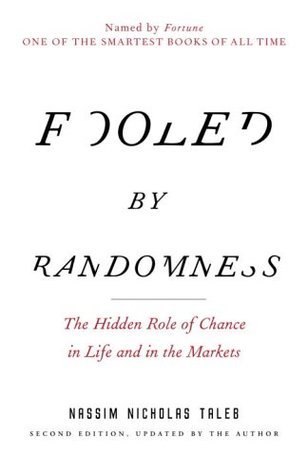
Fooled by Randomness is a standalone book in Nassim Nicholas Taleb’s landmark Incerto series, an investigation of opacity, luck, uncertainty, probability, human error, risk, and decision-making in a world we don’t understand. The other books in the series are The Black Swan, Antifragile,and The Bed of Procrustes.

As it was in Anna Karenina, Madame Bovary, and Othello, so it is in life. Most forms of private vice and public evil are kindled and sustained by lies. Acts of adultery and other personal betrayals, financial fraud, government corruption—even murder and genocide—generally require an additional moral defect: a willingness to lie.In Lying, best-selling author and neuroscientist Sam Harris argues that we can radically simplify our lives and improve society by merely telling the truth in situations where others often lie. He focuses on "white" lies—those lies we tell for the purpose of sparing people discomfort—for these are the lies that most often tempt us. And they tend to be the only lies that good people tell while imagining that they are being good in the process.

The #1 New York Times–bestselling sequel to The 48 Laws of PowerMastery synthesizes the years of research Robert Greene conducted while writing the international bestsellers The 48 Laws of Power, The 33 Strategies of War, and The Art of Seduction and demonstrates that the ultimate form of power is mastery itself. By analyzing the lives of such past masters as Charles Darwin, Benjamin Franklin, Albert Einstein, and Leonard da Vinci, as well as by interviewing nine contemporary masters, including tech guru Paul Graham and animal rights advocate Temple Grandin, Greene debunks our culture’s many myths about genius and distills the wisdom of the ages to reveal the secret to greatness. With this seminal text as a guide, readers will learn how to unlock the passion within and become masters.

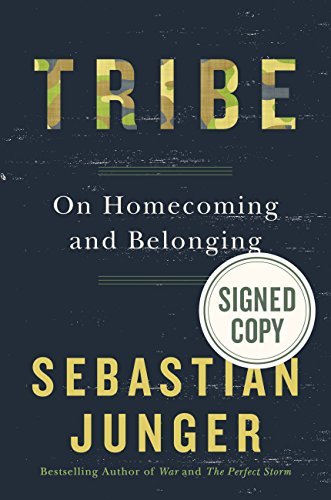
Sebastian Junger, the bestselling author of War and The Perfect Storm, takes a critical look at post-traumatic stress disorder and the many challenges today’s returning veterans face in modern society.There are ancient tribal human behaviors-loyalty, inter-reliance, cooperation-that flare up in communities during times of turmoil and suffering. These are the very same behaviors that typify good soldiering and foster a sense of belonging among troops, whether they’re fighting on the front lines or engaged in non-combat activities away from the action. Drawing from history, psychology, and anthropology, bestselling author Sebastian Junger shows us just how at odds the structure of modern society is with our tribal instincts, arguing that the difficulties many veterans face upon returning home from war do not stem entirely from the trauma they’ve suffered, but also from the individualist societies they must reintegrate into.A 2011 study by the Canadian Forces and Statistics Canada reveals that 78 percent of military suicides from 1972 to the end of 2006 involved veterans. Though these numbers present an implicit call to action, the government is only just taking steps now to address the problems veterans face when they return home. But can the government ever truly eliminate the challenges faced by returning veterans? Or is the problem deeper, woven into the very fabric of our modern existence? Perhaps our circumstances are not so bleak, and simply understanding that beneath our modern guises we all belong to one tribe or another would help us face not just the problems of our nation but of our individual lives as well.Well-researched and compellingly written, this timely look at how veterans react to coming home will reconceive our approach to veteran’s affairs and help us to repair our current social dynamic.

Our ability to pay attention is collapsing. From the New York Times bestselling author of Chasing the Scream and Lost Connections comes a groundbreaking examination of why this is happening--and how to get our attention back. In the United States, teenagers can focus on one task for only sixty-five seconds at a time, and office workers average only three minutes. Like so many of us, Johann Hari was finding that constantly switching from device to device and tab to tab was a diminishing and depressing way to live. He tried all sorts of self-help solutions--even abandoning his phone for three months--but nothing seemed to work. So Hari went on an epic journey across the world to interview the leading experts on human attention--and he discovered that everything we think we know about this crisis is wrong.We think our inability to focus is a personal failure to exert enough willpower over our devices. The truth is even more disturbing: our focus has been stolen by powerful external forces that have left us uniquely vulnerable to corporations determined to raid our attention for profit. Hari found that there are twelve deep causes of this crisis, from the decline of mind-wandering to rising pollution, all of which have robbed some of our attention. In Stolen Focus, he introduces readers to Silicon Valley dissidents who learned to hack human attention, and veterinarians who diagnose dogs with ADHD. He explores a favela in Rio de Janeiro where everyone lost their attention in a particularly surreal way, and an office in New Zealand that discovered a remarkable technique to restore workers' productivity.Crucially, Hari learned how we can reclaim our focus--as individuals, and as a society--if we are determined to fight for it. Stolen Focus will transform the debate about attention and finally show us how to get it back.

Al Ries and Jack Trout, two of the world's most successful marketing strategists, call upon over 40 years of marketing experise to identify the definitive rules that govern the world of marketing. Combining a wide-ranging historical overview with a keen eye for the future, the authors bring to light 22 superlative tools and innovative techniques for the international marketplace. The authors examines marketing campaigns that have succeeded and others that have failed, why good ideas didn't live up to expectations, and offer their own ideas on what would have worked better. The real-life examples, commonsense suggestions and killer instincts contained are nothing less than rules by which companies will flourish or fail.

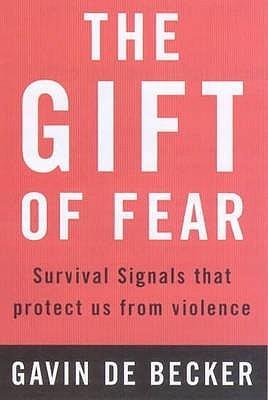
True fear is a gift.Unwarranted fear is a curse.Learn how to tell the difference.A date won't take "no" for an answer. The new nanny gives a mother an uneasy feeling. A stranger in a deserted parking lot offers unsolicited help. The threat of violence surrounds us every day. But we can protect ourselves, by learning to trust—and act on—our gut instincts.In this empowering book, Gavin de Becker, the man Oprah Winfrey calls the nation's leading expert on violent behavior, shows you how to spot even subtle signs of danger—before it's too late. Shattering the myth that most violent acts are unpredictable, de Becker, whose clients include top Hollywood stars and government agencies, offers specific ways to protect yourself and those you love, including how to act when approached by a stranger, when you should fear someone close to you, what to do if you are being stalked, how to uncover the source of anonymous threats or phone calls, the biggest mistake you can make with a threatening person, and more. Learn to spot the danger signals others miss. It might just save your life.

Amoral, cunning, ruthless, and instructive, this multi-million-copy New York Times bestseller is the definitive manual for anyone interested in gaining, observing, or defending against ultimate control – from the author of The Laws of Human Nature.In the book that People magazine proclaimed “beguiling” and “fascinating,” Robert Greene and Joost Elffers have distilled three thousand years of the history of power into 48 essential laws by drawing from the philosophies of Machiavelli, Sun Tzu, and Carl Von Clausewitz and also from the lives of figures ranging from Henry Kissinger to P.T. Barnum. Some laws teach the need for prudence (“Law 1: Never Outshine the Master”), others teach the value of confidence (“Law 28: Enter Action with Boldness”), and many recommend absolute self-preservation (“Law 15: Crush Your Enemy Totally”). Every law, though, has one thing in common: an interest in total domination. In a bold and arresting two-color package, The 48 Laws of Power is ideal whether your aim is conquest, self-defense, or simply to understand the rules of the game.

A good book may have the power to change the way we see the world, but a great book actually becomes part of our daily consciousness, pervading our thinking to the point that we take it for granted, and we forget how provocative and challenging its ideas once were—and still are. The Structure of Scientific Revolutions is that kind of book. When it was first published in 1962, it was a landmark event in the history and philosophy of science. Fifty years later, it still has many lessons to teach. With The Structure of Scientific Revolutions, Kuhn challenged long-standing linear notions of scientific progress, arguing that transformative ideas don’t arise from the day-to-day, gradual process of experimentation and data accumulation but that the revolutions in science, those breakthrough moments that disrupt accepted thinking and offer unanticipated ideas, occur outside of “normal science,” as he called it. Though Kuhn was writing when physics ruled the sciences, his ideas on how scientific revolutions bring order to the anomalies that amass over time in research experiments are still instructive in our biotech age. This new edition of Kuhn’s essential work in the history of science includes an insightful introduction by Ian Hacking, which clarifies terms popularized by Kuhn, including paradigm and incommensurability, and applies Kuhn’s ideas to the science of today. Usefully keyed to the separate sections of the book, Hacking’s introduction provides important background information as well as a contemporary context. Newly designed, with an expanded index, this edition will be eagerly welcomed by the next generation of readers seeking to understand the history of our perspectives on science.

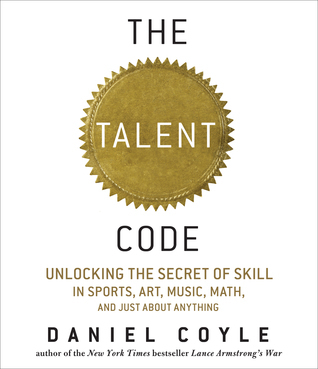
What is the secret of talent? How do we unlock it? In this groundbreaking work, journalist and New York Times bestselling author Daniel Coyle provides parents, teachers, coaches, businesspeople—and everyone else—with tools they can use to maximize potential in themselves and others. Whether you're coaching soccer or teaching a child to play the piano, writing a novel or trying to improve your golf swing, this revolutionary book shows you how to grow talent by tapping into a newly discovered brain mechanism.Drawing on cutting-edge neurology and firsthand research gathered on journeys to nine of the world's talent hotbeds—from the baseball fields of the Caribbean to a classical-music academy in upstate New York—Coyle identifies the three key elements that will allow you to develop your gifts and optimize your performance in sports, art, music, math, or just about anything. • Deep Practice--Everyone knows that practice is a key to success. What everyone doesn't know is that specific kinds of practice can increase skill up to ten times faster than conventional practice.• Ignition--We all need a little motivation to get started. But what separates truly high achievers from the rest of the pack? A higher level of commitment—call it passion—born out of our deepest unconscious desires and triggered by certain primal cues. Understanding how these signals work can help you ignite passion and catalyze skill development.• Master Coaching--What are the secrets of the world's most effective teachers, trainers, and coaches? Discover the four virtues that enable these "talent whisperers" to fuel passion, inspire deep practice, and bring out the best in their students.These three elements work together within your brain to form myelin, a microscopic neural substance that adds vast amounts of speed and accuracy to your movements and thoughts. Scientists have discovered that myelin might just be the holy grail: the foundation of all forms of greatness, from Michelangelo's to Michael Jordan's. The good news about myelin is that it isn't fixed at birth; to the contrary, it grows, and like anything that grows, it can be cultivated and nourished. Combining revelatory analysis with illuminating examples of regular people who have achieved greatness, this book will not only change the way you think about talent, but equip you to reach your own highest potential.

What does everyone in the modern world need to know? Renowned psychologist Jordan B. Peterson's answer to this most difficult of questions uniquely combines the hard-won truths of ancient tradition with the stunning revelations of cutting-edge scientific research.Humorous, surprising and informative, Dr. Peterson tells us why skateboarding boys and girls must be left alone, what terrible fate awaits those who criticize too easily, and why you should always pet a cat when you meet one on the street. What does the nervous system of the lowly lobster have to tell us about standing up straight (with our shoulders back) and about success in life? Why did ancient Egyptians worship the capacity to pay careful attention as the highest of gods? What dreadful paths do people tread when they become resentful, arrogant and vengeful? Dr. Peterson journeys broadly, discussing discipline, freedom, adventure and responsibility, distilling the world's wisdom into 12 practical and profound rules for life. 12 Rules for Life shatters the modern commonplaces of science, faith and human nature, while transforming and ennobling the mind and spirit of its readers.Length: 15 hrs and 40 mins

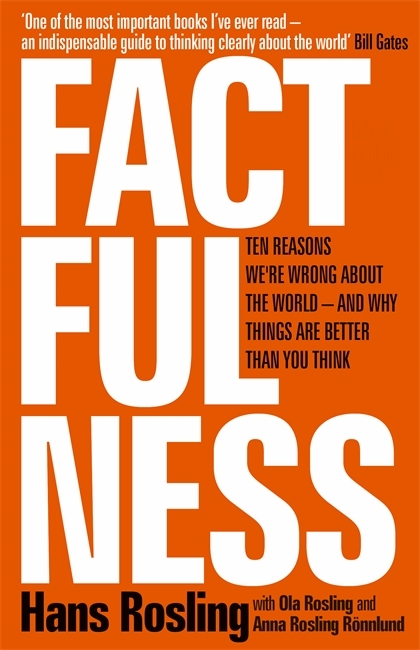
Factfulness: The stress-reducing habit of only carrying opinions for which you have strong supporting facts.When asked simple questions about global trends—what percentage of the world’s population live in poverty; why the world’s population is increasing; how many girls finish school—we systematically get the answers wrong. So wrong that a chimpanzee choosing answers at random will consistently outguess teachers, journalists, Nobel laureates, and investment bankers.In Factfulness, Professor of International Health and global TED phenomenon Hans Rosling, together with his two long-time collaborators, Anna and Ola, offers a radical new explanation of why this happens. They reveal the ten instincts that distort our perspective—from our tendency to divide the world into two camps (usually some version of us and them) to the way we consume media (where fear rules) to how we perceive progress (believing that most things are getting worse).Our problem is that we don’t know what we don’t know, and even our guesses are informed by unconscious and predictable biases.It turns out that the world, for all its imperfections, is in a much better state than we might think. That doesn’t mean there aren’t real concerns. But when we worry about everything all the time instead of embracing a worldview based on facts, we can lose our ability to focus on the things that threaten us most.Inspiring and revelatory, filled with lively anecdotes and moving stories, Factfulness is an urgent and essential book that will change the way you see the world and empower you to respond to the crises and opportunities of the future.

21 Lessons For The 21st Century [Hardcover], Headspace Guide To Meditation And Mindfulness, Meditation For Fidgety Skeptics, 10% Happier 4 Books Collection Set. Description:- 21 Lessons for the 21st Century Yuval Noah Harari takes us on a thrilling journey through today’s most urgent issues. The golden thread running through his exhilarating new book is the challenge of maintaining our collective and individual focus in the face of constant and disorienting change. Are we still capable of understanding the world we have created? The Headspace Guide to Mindfulness & Meditation: 10 minutes can make the difference Demystifying meditation for the modern world: an accessible and practical route to improved health, happiness and well being, in as little as 10 minutes. Andy Puddicombe, founder of the celebrated Headspace, is on a mission: to get people to take 10 minutes out of their day to sit in the now. Here he shares his simple to learn, but highly effective techniques of meditation. Meditation For Fidgety Skeptics: A 10% Happier How-To Book ABC News anchor Dan Harris used to think that meditation was for people who collect crystals, play the pan pipes, and use the word namaste without irony. After he had a panic attack on live television, he went on a strange journey that ultimately led him to become one of meditation's most vocal public proponents. 10% Happier: How I Tamed the Voice in My Head, Reduced Stress Without Losing My Edge, and Found Self-Help That Actually Works After having a nationally televised panic attack, Harris knew he had to make some changes. A lifelong non-believer, he found himself on a bizarre adventure and realised that the sources of his problems was the very thing he always thought was his greatest asset.

New York Times Best SellerOver 5 million copies soldFor David Goggins, childhood was a nightmare -- poverty, prejudice, and physical abuse colored his days and haunted his nights. But through self-discipline, mental toughness, and hard work, Goggins transformed himself from a depressed, overweight young man with no future into a U.S. Armed Forces icon and one of the world's top endurance athletes. The only man in history to complete elite training as a Navy SEAL, Army Ranger, and Air Force Tactical Air Controller, he went on to set records in numerous endurance events, inspiring Outside magazine to name him "The Fittest (Real) Man in America."In Can't Hurt Me, he shares his astonishing life story and reveals that most of us tap into only 40% of our capabilities. Goggins calls this The 40% Rule, and his story illuminates a path that anyone can follow to push past pain, demolish fear, and reach their full potential.

Psychologist Mihaly Csikszentmihalyi's investigations of "optimal experience" have revealed that what makes an experience genuinely satisfying is a state of consciousness called flow. During flow, people typically experience deep enjoyment, creativity, and a total involvement with life. Csikszentmihalyi demonstrates the ways this positive state can be controlled, not just left to chance. Flow: The Psychology of Optimal Experience teaches how, by ordering the information that enters our consciousness, we can discover true happiness, unlock our potential, and greatly improve the quality of our lives.

The Ultimate Spiritual Guide for MenWhat is your true purpose in life? What do women really want? What makes a good lover? If you're a man reading this, you've undoubtedly asked yourself these questions—but you may not have had much luck answering them. Until now.In The Way of the Superior Man, David Deida explores the most important issues in men's lives—from career and family to women and intimacy to love and spirituality and relationships—to offer a practical guidebook for living a masculine life of integrity, authenticity, and freedom. Join this bestselling author and internationally renowned expert on sexual spirituality for straightforward advice, empowering skills, body practices, and more to help you realize a life of fulfillment, immediately and without compromise."It is time to evolve beyond the macho jerk ideal, all spine and no heart," writes David Deida. "It is also time to evolve beyond the sensitive and caring wimp ideal, all heart and no spine." The Way of the Superior Man presents the ultimate challenge—and reward—for today's man: to discover the 'unity of heart and spine' through the full expression of consciousness and love in the infinite openness of the present moment.ContentsPart One: A Man's Way Part Two: Dealing With Women Part Three: Working With Polarity and Energy Part Four: What Women Really Want Part Five: Your Dark Side Part Six: Feminine Attractiveness Part Seven: Body Practices Part Eight: Men's and Women's Yoga of IntimacyExcerpt: This book is a guide for a specific kind of newly evolving man. This man is unabashedly masculine—he is purposeful, confident, and directed, living his chosen way of life with deep integrity and humor—and he is sensitive, spontaneous, and spiritually alive, with a heart-commitment to discovering and living his deepest truth.

• Why are lovers quicker to forgive their partners for infidelity than for leaving dirty dishes in the sink? • Why will sighted people pay more to avoid going blind than blind people will pay to regain their sight? • Why do dining companions insist on ordering different meals instead of getting what they really want? • Why do pigeons seem to have such excellent aim; why can’t we remember one song while listening to another; and why does the line at the grocery store always slow down the moment we join it? In this brilliant, witty, and accessible book, renowned Harvard psychologist Daniel Gilbert describes the foibles of imagination and illusions of foresight that cause each of us to mis-conceive our tomorrows and mis-estimate our satisfactions. Vividly bringing to life the latest scientific research in psychology, cognitive neuroscience, philosophy, and behavioral economics, Gilbert reveals what scientists have discovered about the uniquely human ability to imagine the future, and about our capacity to predict how much we will like it when we get there. With penetrating insight and sparkling prose, Gilbert explains why we seem to know so little about the hearts and minds of the people we are about to become.

The acclaimed Wall Street Journal and Business Week Bestseller.You're either a Purple Cow or you're not. You're either remarkable or invisible. Make your choice. What do Starbucks and JetBlue and KrispyKreme and Apple and DutchBoy and Kensington and Zespri and Hard Candy have that you don't? How do they continue to confound critics and achieve spectacular growth, leaving behind former tried-and true brands to gasp their last? Face it, the checklist of tired 'P's marketers have used for decades to get their product noticed - Pricing, Promotion, Publicity, to name a few - aren't working anymore. There's an exceptionally important 'P' that has to be added to the list. It's Purple Cow. Cows, after you've seen one, or two, or ten, are boring. A Purple Cow, though...now that would be something. Purple Cow describes something phenomenal, something counterintuitive and exciting and flat out unbelievable. Every day, consumers come face to face with a lot of boring stuff-a lot of brown cows - but you can bet they won't forget a Purple Cow. And it's not a marketing function that you can slap on to your product or service. Purple Cow is inherent. It's built right in, or it's not there. Period. In Purple Cow, Seth Godin urges you to put a Purple Cow into everything you build, and everything you do, to create something truly noticeable. It's a manifesto for marketers who want to help create products that are worth marketing in the first place. Description from Amazon.com

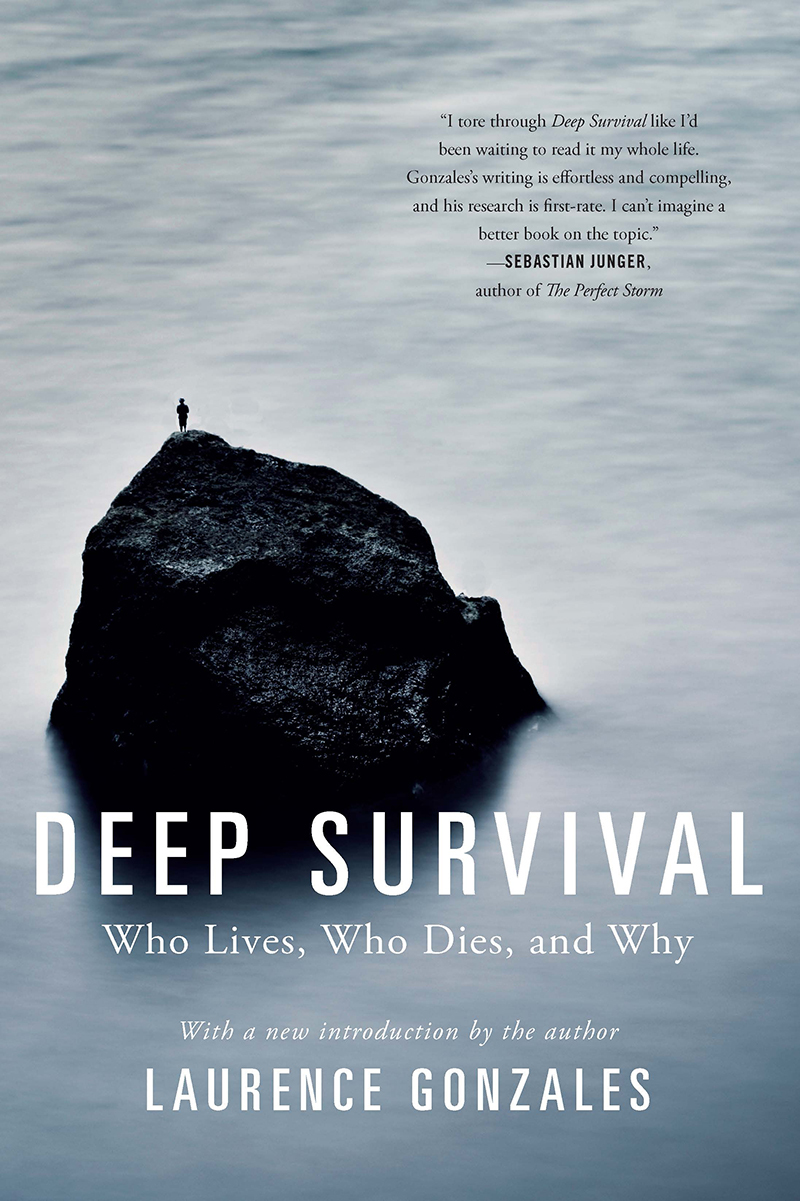
"Unique among survival books…stunning…enthralling. Deep Survival makes compelling, and chilling, reading." ― Denver Post Laurence Gonzales’s bestselling Deep Survival has helped save lives from the deepest wildernesses, just as it has improved readers’ everyday lives. Its mix of adventure narrative, survival science, and practical advice has inspired everyone from business leaders to military officers, educators, and psychiatric professionals on how to take control of stress, learn to assess risk, and make better decisions under pressure.

'Mesmerizing' TimeAn art expert instantly spots a fake. A cop decides whether to shoot. A psychologist accurately predicts a couple's future in minutes. This book is about those moments when we 'know' something without knowing why. It shows that honing your instincts could change the way you think about thinking forever. 'Trust my snap judgement, buy this book: you'll be delighted' David Brooks, The New York Times'Fiendishly clever' Evening Standard'Provocative, fascinating, radical' Fergal Byrne, Financial Times

The bestselling success book of all time—now revised and updated for the 21st century.Think and Grow Rich has been called the “Granddaddy of All Motivational Literature.” It was the first book to boldly ask, “What makes a winner?” The man who asked and listened for the answer, Napoleon Hill, is now counted in the top ranks of the world's winners himself. The most famous of all teachers of success spent “a fortune and the better part of a lifetime of effort” to produce the “Law of Success” philosophy that forms the basis of his books and that is so powerfully summarized in this one.In the original Think and Grow Rich, published in 1937, Hill draws on stories of Andrew Carnegie, Thomas Edison, Henry Ford, and other millionaires of his generation to illustrate his principles. In the updated version, Arthur R. Pell, Ph.D., a nationally known author, lecturer, and consultant in human resources management and an expert in applying Hill's thought, deftly interweaves anecdotes of how contemporary millionaires and billionaires, such as Bill Gates, Mary Kay Ash, Dave Thomas, and Sir John Templeton, achieved their wealth. Outmoded or arcane terminology and examples are faithfully refreshed to preclude any stumbling blocks to a new generation of readers.

Television has conditioned us to tolerate visually entertaining material measured out in spoonfuls of time, to the detriment of rational public discourse and reasoned public affairs. In this eloquent, persuasive book, Neil Postman alerts us to the real and present dangers of this state of affairs, and offers compelling suggestions as to how to withstand the media onslaught. Before we hand over politics, education, religion, and journalism to the show business demands of the television age, we must recognize the ways in which the media shape our lives and the ways we can, in turn, shape them to serve out highest goals.

The latest edition of the communication guide that has sold more than 1,000,000 copies An enlightening look at how peaceful communication can create compassionate connections with family, friends, and other acquaintances, this international bestseller uses stories, examples, and sample dialogues to provide solutions to communication problems both at home and in the workplace. Guidance is provided on identifying and articulating feelings and needs, expressing anger fully, and exploring the power of empathy in order to speak honestly without creating hostility, break patterns of thinking that lead to anger and depression, and communicate compassionately. Included in the new edition is a chapter on conflict resolution and mediation.

It's a fact of birds flock, fish school, people "tribe." Every company, indeed every organization, is a tribe, or if it's large enough, a network of tribes—groups of 20 to 150 people in which everyone knows everyone else, or at least knows of everyone else. Tribes are more powerful than teams, companies, or even CEOs, and yet their key leverage points have not been mapped—until now. In Tribal Leadership , Dave Logan, John King, and Halee Fischer-Wright show leaders how to assess their organization's tribal culture on a scale from one to five and then implement specific tools to elevate the stage to the next. The result is unprecedented success. In a rigorous eight-year study of approximately 24,000 people in over two dozen corporations, Logan, King, and Fischer-Wright refine and define a common the success of a company depends on its tribes, the strength of its tribes is determined by the tribal culture, and a thriving corporate culture can be established by an effective tribal leader. Tribal Leadership will show leaders how to employ their companies' tribes to maximize productivity and the authors' research, backed up with interviews ranging from Brian France (CEO of NASCAR) to "Dilbert" creator Scott Adams, shows that over three quarters of the organizations they've studied have tribal cultures that are merely adequate, no better than the third of five tribal stages. Leaders, managers, and organizations that fail to understand, motivate, and grow their tribes will find it impossible to succeed in an increasingly fragmented world of business. The often counterintuitive findings of Tribal Leadership will help leaders at today's major corporations, small businesses, and nonprofits learn how to take the people in their organization from adequate to outstanding, to discover the secrets that have led the highest-level tribes (like the team at Apple that designed the iPod) to remarkable heights, and to find new ways to succeed where others have failed.

In this fascinating book, New Yorker business columnist James Surowiecki explores a deceptively simple idea: Large groups of people are smarter than an elite few, no matter how brilliant -- better at solving problems, fostering innovation, coming to wise decisions, even predicting the future.With boundless erudition and in delightfully clear prose, Surowiecki ranges across fields as diverse as popular culture, psychology, ant biology, behavioral economics, artificial intelligence, military history, and politics to show how this simple idea offers important lessons for how we live our lives, select our leaders, run our companies, and think about our world.

Have you ever wondered how one day the media can assert that alcohol is bad for us and the next unashamedly run a story touting the benefits of daily alcohol consumption? Or how a drug that is pulled off the market for causing heart attacks ever got approved in the first place? How can average readers, who aren't medical doctors or Ph.D.s in biochemistry, tell what they should be paying attention to and what's, well, just more bullshit?Ben Goldacre has made a point of exposing quack doctors and nutritionists, bogus credentialing programs, and biased scientific studies. He has also taken the media to task for its willingness to throw facts and proof out the window. But he's not here just to tell you what's wrong. Goldacre is here to teach you how to evaluate placebo effects, double-blind studies, and sample sizes, so that you can recognize bad science when you see it. You're about to feel a whole lot better.

Una suggestiva indagine dei meccanismi profondi che regolano la nostra esistenza, le decisioni che prendiamo e i valori che condividiamo o che rifiutiamo. Da vent’anni, lo psicologo morale e filosofo Jonathan Haidt indaga i meccanismi profondi che regolano la nostra esistenza, le decisioni che prendiamo, i valori che crediamo universali, che condividiamo o che rifiutiamo. Secondo Haidt il giudizio morale è la bussola che, dalle piccole scelte quotidiane ai grandi temi della politica e della religione, orienta la tendenza naturale dell’uomo a riunirsi in tribù e a dividersi su ciò che si ritiene essere giusto o sbagliato. Arrivato ai vertici della classifica del “New York Times”, Menti tribali è un libro che propone una via alla convivenza e al dialogo, partendo dalla comprensione dei processi biologici ancestrali da cui nasce la nostra ricerca del bene.

In this eye-opening account, Cal Newport debunks the long-held belief that "follow your passion" is good advice. Not only is the cliché flawed—preexisting passions are rare and have little to do with how most people end up loving their work—but it can also be dangerous, leading to anxiety and chronic job hopping.After making his case against passion, Newport sets out on a quest to discover the reality of how people end up loving what they do. Spending time with organic farmers, venture capitalists, screenwriters, freelance computer programmers, and others who admitted to deriving great satisfaction from their work, Newport uncovers the strategies they used and the pitfalls they avoided in developing their compelling careers.Matching your job to a preexisting passion does not matter, he reveals. Passion comes after you put in the hard work to become excellent at something valuable, not before. In other words, what you do for a living is much less important than how you do it.With a title taken from the comedian Steve Martin, who once said his advice for aspiring entertainers was to "be so good they can't ignore you," Cal Newport's clearly written manifesto is mandatory reading for anyone fretting about what to do with their life, or frustrated by their current job situation and eager to find a fresh new way to take control of their livelihood. He provides an evidence-based blueprint for creating work you love.So Good They Can't Ignore You will change the way we think about our careers, happiness, and the crafting of a remarkable life.

The #1 New York Times bestseller. More than 2 million copies sold!Look for Brené Brown’s new podcast, Dare to Lead, as well as her ongoing podcast Unlocking Us !From thought leader Brené Brown, a transformative new vision for the way we lead, love, work, parent, and educate that teaches us the power of vulnerability. “It is not the critic who counts; not the man who points out how the strong man stumbles, or where the doer of deeds could have done them better. The credit belongs to the man who is actually in the arena, whose face is marred by dust and sweat and blood; who strives valiantly; . . . who at the best knows in the end the triumph of high achievement, and who at worst, if he fails, at least fails while daring greatly. ”— Theodore RooseveltEvery day we experience the uncertainty, risks, and emotional exposure that define what it means to be vulnerable or to dare greatly. Based on twelve years of pioneering research, Brené Brown PhD, MSW, dispels the cultural myth that vulnerability is weakness and argues that it is, in truth, our most accurate measure of courage.Brown explains how vulnerability is both the core of difficult emotions like fear, grief, and disappointment, and the birthplace of love, belonging, joy, empathy, innovation, and creativity. She writes: “When we shut ourselves off from vulnerability, we distance ourselves from the experiences that bring purpose and meaning to our lives.”Daring Greatly is not about winning or losing. It’s about courage. In a world where “never enough” dominates and feeling afraid has become second nature, vulnerability is subversive. Uncomfortable. It’s even a little dangerous at times. And, without question, putting ourselves out there means there’s a far greater risk of getting criticized or feeling hurt. But when we step back and examine our lives, we will find that nothing is as uncomfortable, dangerous, and hurtful as standing on the outside of our lives looking in and wondering what it would be like if we had the courage to step into the arena—whether it’s a new relationship, an important meeting, the creative process, or a difficult family conversation. Daring Greatly is a practice and a powerful new vision for letting ourselves be seen.
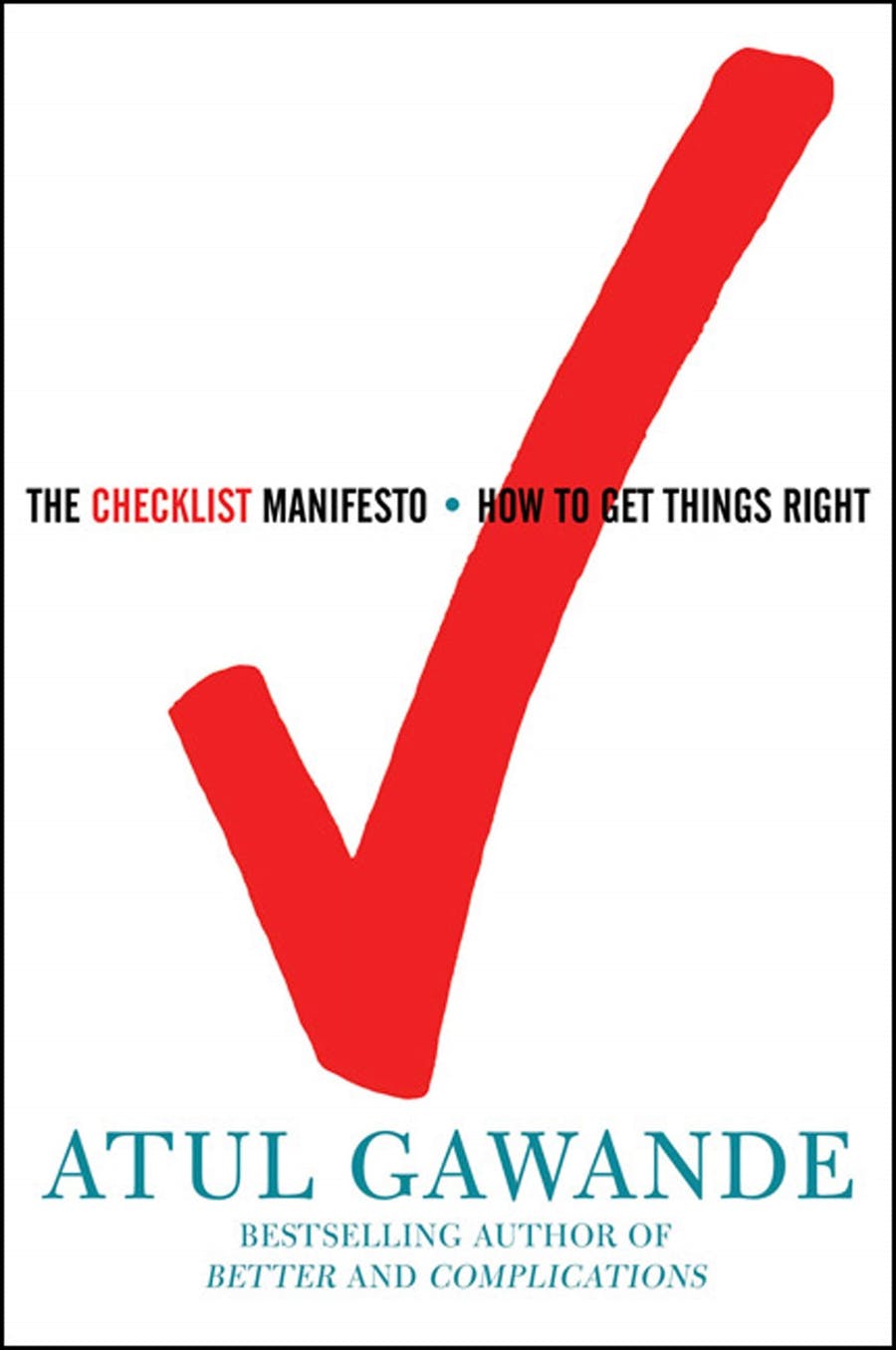
Rise of Superman

In celebration of its 10th anniversary, a revised and updated edition of the award-winning #1 New York Times bestseller that changed the way we look at meditation, expanded with new material by Dan Harris. After having a nationally televised panic attack on Good Morning America , Dan Harris knew he had to make some changes. A lifelong nonbeliever, he found himself on a bizarre adventure involving a disgraced pastor, a mysterious self-help guru, and a gaggle of brain scientists. Eventually, Harris realized that the source of his problems was the very thing he always thought was his greatest the incessant, insatiable voice in his head. We all have an inner narrator. It’s what has us losing our temper unnecessarily, checking our email compulsively, eating when we’re not hungry, and fixating on the past and the future at the expense of the present. Most of us assume we’re stuck with this voice—that there’s nothing we can do to rein it in—but Harris stumbled upon an effective way to do just that. 10% Happier is now considered a classic text on the power of meditation, an introduction to the practice that can convert even the most hardened skeptic. With over a million copies sold, 10% Happier is the go-to guide, and with meditation now a widely accepted and encouraged practice, Dan Harris is a pivotal and approachable figure in the field who has built a thriving platform based on the ideas he first presented in this book. In this 10th Anniversary Edition, Harris offers a new preface reflecting on how much has changed—for him and for the public perceptions of meditation, plus a revised and expanded appendix, filled with guided meditations and practical advice for people looking to boot up a habit.

Everyone would benefit from seeing further into the future, whether buying stocks, crafting policy, launching a new product, or simply planning the week’s meals. Unfortunately, people tend to be terrible forecasters. As Wharton professor Philip Tetlock showed in a landmark 2005 study, even experts’ predictions are only slightly better than chance. However, an important and underreported conclusion of that study was that some experts do have real foresight, and Tetlock has spent the past decade trying to figure out why. What makes some people so good? And can this talent be taught? In Superforecasting, Tetlock and coauthor Dan Gardner offer a masterwork on prediction, drawing on decades of research and the results of a massive, government-funded forecasting tournament. The Good Judgment Project involves tens of thousands of ordinary people—including a Brooklyn filmmaker, a retired pipe installer, and a former ballroom dancer—who set out to forecast global events. Some of the volunteers have turned out to be astonishingly good. They’ve beaten other benchmarks, competitors, and prediction markets. They’ve even beaten the collective judgment of intelligence analysts with access to classified information. They are "superforecasters." In this groundbreaking and accessible book, Tetlock and Gardner show us how we can learn from this elite group. Weaving together stories of forecasting successes (the raid on Osama bin Laden’s compound) and failures (the Bay of Pigs) and interviews with a range of high-level decision makers, from David Petraeus to Robert Rubin, they show that good forecasting doesn’t require powerful computers or arcane methods. It involves gathering evidence from a variety of sources, thinking probabilistically, working in teams, keeping score, and being willing to admit error and change course. Superforecasting offers the first demonstrably effective way to improve our ability to predict the future—whether in business, finance, politics, international affairs, or daily life—and is destined to become a modern classic.

* New York Times and Wall Street Journal bestseller multiple years running* Translated into 20 languages, with more than half a million copies sold worldwide* A Hudson and Indigo Best Book of the Year* Recommended by Shona Brown, Rachel Hollis, Jeff Kinney, Daniel Pink, Sheryl Sandberg, and Gretchen Rubin Radical Candor has been embraced around the world by leaders of every stripe at companies of all sizes. Now a cultural touchstone, the concept has come to be applied to a wide range of human relationships. The idea is simple: You don't have to choose between being a pushover and a jerk. Using Radical Candor—avoiding the perils of Obnoxious Aggression, Manipulative Insincerity, and Ruinous Empathy—you can be kind and clear at the same time.Kim Scott was a highly successful leader at Google before decamping to Apple, where she developed and taught a management class. Since the original publication of Radical Candor in 2017, Scott has earned international fame with her vital approach to effective leadership and co-founded the Radical Candor executive education company, which helps companies put the book's philosophy into practice.Radical Candor is about caring personally and challenging directly, about soliciting criticism to improve your leadership and also providing guidance that helps others grow. It focuses on praise but doesn't shy away from criticism—to help you love your work and the people you work with. Radically Candid relationships with team members enable bosses to fulfill their three core responsibilities:1. Create a culture of Compassionate Candor2. Build a cohesive team3. Achieve results collaborativelyRequired reading for the most successful organizations, Radical Candor has raised the bar for management practices worldwide.

In this indispensable guide to navigating the twenty-first century, two visionary thinkers reveal the unexpected ways power is changing--and how "new power" is reshaping politics, business, and life.Why do some leap ahead while others fall behind in our chaotic, connected age? In New Power, Jeremy Heimans and Henry Timms confront the biggest stories of our time--the rise of mega-platforms like Facebook and Uber; the out-of-nowhere victories of Obama and Trump; the unexpected emergence of movements like #MeToo--and reveal what's really behind them: the rise of "new power." For most of human history, the rules of power were clear: power was something to be seized and then jealously guarded. This "old power" was out of reach for the vast majority of people. But our ubiquitous connectivity makes possible a different kind of power. "New power" is made by many. It is open, participatory, and peer-driven. It works like a current, not a currency--and it is most forceful when it surges. The battle between old and new power is determining who governs us, how we work, and even how we think and feel. New Power shines fresh light on the cultural phenomena of our day, from #BlackLivesMatter to the Ice Bucket Challenge to Airbnb, uncovering the new power forces that made them huge. Drawing on examples from business, activism, and pop culture, as well as the study of organizations like Lego, NASA, Reddit, and TED, Heimans and Timms explain how to build new power and channel it successfully. They also explore the dark side of these forces: the way ISIS has co-opted new power to monstrous ends, and the rise of the alt-right's "intensity machine."In an era increasingly shaped by new power, this groundbreaking book offers us a new way to understand the world--and our role in it.

No matter your goals, Atomic Habits offers a proven framework for improving—every day. James Clear, one of the world's leading experts on habit formation, reveals practical strategies that will teach you exactly how to form good habits, break bad ones, and master the tiny behaviors that lead to remarkable results.If you're having trouble changing your habits, the problem isn't you. The problem is your system. Bad habits repeat themselves again and again not because you don't want to change, but because you have the wrong system for change. You do not rise to the level of your goals. You fall to the level of your systems. Here, you'll get a proven system that can take you to new heights.Clear is known for his ability to distill complex topics into simple behaviors that can be easily applied to daily life and work. Here, he draws on the most proven ideas from biology, psychology, and neuroscience to create an easy-to-understand guide for making good habits inevitable and bad habits impossible. Along the way, readers will be inspired and entertained with true stories from Olympic gold medalists, award-winning artists, business leaders, life-saving physicians, and star comedians who have used the science of small habits to master their craft and vault to the top of their field.Learn how to:- Make time for new habits (even when life gets crazy);- Overcome a lack of motivation and willpower;- Design your environment to make success easier;- Get back on track when you fall off course;...and much more.Atomic Habits will reshape the way you think about progress and success, and give you the tools and strategies you need to transform your habits--whether you are a team looking to win a championship, an organization hoping to redefine an industry, or simply an individual who wishes to quit smoking, lose weight, reduce stress, or achieve any other goal.

In this groundbreaking book, Former Surgeon General of the United States, Vivek Murthy argues that loneliness is the underpinning to the current crisis in mental wellness and is responsible for the upsurge in suicide, the opioid epidemic, the overuse of psych meds, the over-diagnosing and pathologizing of emotional and psychological struggle. The good news is that social connection is innate and a cure for loneliness. In Together, the former Surgeon General will address the importance of community and connection and offer viable and actionable solutions to this overlooked epidemic.

The average human lifespan is absurdly, insultingly brief. Assuming you live to be eighty, you have just about four thousand weeks.Nobody needs to be told there isn’t enough time. We’re obsessed with our lengthening to-do lists, our overfilled inboxes, work-life balance, and the ceaseless battle against distraction. We’re deluged with advice on becoming more productive and efficient, and with “life hacks” to optimize our days. But such techniques often end up making things worse. The sense of anxious hurry grows more intense, but the most meaningful parts of life seem just beyond the horizon. Still, we rarely make the connection between our daily struggles with time and the ultimate time management problem: the challenge of how best to use our four thousand weeks.Drawing on the insights of both ancient and contemporary philosophers, psychologists, and spiritual teachers, Oliver Burkeman delivers an entertaining, humorous, practical, and ultimately profound guide to time and time management. Rejecting the futile modern fixation on “getting everything done,” Four Thousand Weeks introduces readers to tools for constructing a meaningful life by embracing finitude, showing how many of the unhelpful ways we’ve come to think about time aren’t inescapable, unchanging truths but choices we’ve made as individuals and as a society―and that we could do things differently.

In his widely praised book, award-winning psychologist Jonathan Haidt examines the world’s philosophical wisdom through the lens of psychological science, showing how a deeper understanding of enduring maxims-like Do unto others as you would have others do unto you, or What doesn’t kill you makes you stronger-can enrich and even transform our lives.

Which is more dangerous, a gun or a swimming pool? What do schoolteachers and sumo wrestlers have in common? Why do drug dealers still live with their moms? How much do parents really matter? What kind of impact did Roe v. Wade have on violent crime? Freakonomics will literally redefine the way we view the modern world.These may not sound like typical questions for an economist to ask. But Steven D. Levitt is not a typical economist. He is a much heralded scholar who studies the stuff and riddles of everyday life -- from cheating and crime to sports and child rearing -- and whose conclusions regularly turn the conventional wisdom on its head. He usually begins with a mountain of data and a simple, unasked question. Some of these questions concern life-and-death issues; others have an admittedly freakish quality. Thus the new field of study contained in this book: freakonomics.Through forceful storytelling and wry insight, Levitt and co-author Stephen J. Dubner show that economics is, at root, the study of incentives -- how people get what they want, or need, especially when other people want or need the same thing. In Freakonomics, they set out to explore the hidden side of ... well, everything. The inner workings of a crack gang. The truth about real-estate agents. The myths of campaign finance. The telltale marks of a cheating schoolteacher. The secrets of the Ku Klux Klan.What unites all these stories is a belief that the modern world, despite a surfeit of obfuscation, complication, and downright deceit, is not impenetrable, is not unknowable, and -- if the right questions are asked -- is even more intriguing than we think. All it takes is a new way of looking. Steven Levitt, through devilishly clever and clear-eyed thinking, shows how to see through all the clutter.Freakonomics establishes this unconventional premise: If morality represents how we would like the world to work, then economics represents how it actually does work. It is true that readers of this book will be armed with enough riddles and stories to last a thousand cocktail parties. But Freakonomics can provide more than that. It will literally redefine the way we view the modern world.(front flap)

Karen Pryor’s clear and entertaining explanation of behavioral training methods made Don’t Shoot the Dog a bestselling classic with revolutionary insights into animal—and human—behavior.In her groundbreaking approach to improving behavior, behavioral biologist Karen Pryor says, “Whatever the task, whether keeping a four-year-old quiet in public, housebreaking a puppy, coaching a team, or memorizing a poem, it will go fast, and better, and be more fun, if you know how to use reinforcement.”Now Pryor clearly explains the underlying principles of behavioral training and reveals how this art can be applied to virtually any common situation. And best of all, she tells how to do it without yelling threats, force, punishment, guilt trips—or shooting the dog. From the eight methods for putting an end to all kinds of undesirable behavior to the ten laws of “shaping” behavior, Pryor helps you combat your own addictions and deal with such difficult problems as a moody spouse, an impossible teen, or an aged parent. Plus, there’s also incredibly helpful information on house training the dog, improving your tennis game, keeping the cat off the table, and much more!“In the course of becoming a renowned dolphin trainer, Karen Pryor learned that positive reinforcement…is even more potent that prior scientific work had suggested…Don’t Shoot the Dog looks like the very best on the subject—a full-scale mind-changer” (The Coevolution Quarterly). Learn why pet owners rave, “This book changed our lives!” and how these pioneering techniques can work for you, too.Karen Pryor is a behavioral biologist with an international reputation in marine mammal biology and behavioral psychology. She is a founder and leading proponent of “clicker training,” a training system based on operant conditioning (isolate wanted behaviors and ignore the unwanted) and the all-positive methods developed by marine mammal trainers. Pryor is the CEO of KCPT/Sunshine Books, Inc., a publishing, training product, and online company. In addition to her bestselling Don’t Shoot the Dog, Pryor wrote Nursing Your Baby (more than 2 million copies in print) along with several other books and many scientific papers and popular articles on learning and behavior. She has three grown children and lives in Boston with two clicker-trained dogs and a clicker-trained cat.

International bestseller over 30 million copies sold worldwide learn how to break the worry habit now and forever! From the fundamental facts one must know about worry to the techniques in analyzing it, This book introduces ways to prevent apprehension and cultivate a mental attitude that will bring peace and happiness. Dealing with fundamental emotions and life-changing thoughts, how to stop worrying and Start living highlights positive points of life and Discourages stress and anxiety. Dale Carnegie time-tested techniques will help eliminate 50 percent of tension immediately avoid fatigue – and keep looking young find yourself and be yourself – remember there is no one else on Earth like you! With timeless practical advice, this classic holds the power to change your future Dale Carnegie was a lecturer of public speaking at ymca new York. He had also served in the US Army during World War 1. He was a sought-after self-help author and speaker. Some of his other works include how to stop worrying and Start living and the art of public speaking.

Dans ce livre, l’auteur donne de sa propre expérience un récit qui nous éclaire sur cet exercice du tir à l’arc pour parvenir à la maîtrise zen de son mental.

We all want to get to yes, but what happens when the other person keeps saying no? How can you negotiate successfully with a stubborn boss, an irate customer, or a deceitful coworker?In Getting Past No, William Ury of Harvard Law School’s Program on Negotiation offers a proven breakthrough strategy for turning adversaries into negotiating partners. You’ll learn how to:• Stay in control under pressure• Defuse anger and hostility• Find out what the other side really wants• Counter dirty tricks• Use power to bring the other side back to the table• Reach agreements that satisfies both sides' needsGetting Past No is the state-of-the-art book on negotiation for the twenty-first century. It will help you deal with tough times, tough people, and tough negotiations. You don’t have to get mad or get even. Instead, you can get what you want!

Over 20 million copies sold! A perennial New York Times bestseller for over a decade!Falling in love is easy. Staying in love—that’s the challenge. How can you keep your relationship fresh and growing amid the demands, conflicts, and just plain boredom of everyday life?In the #1 New York Times international bestseller The 5 Love Languages®, you’ll discover the secret that has transformed millions of relationships worldwide. Whether your relationship is flourishing or failing, Dr. Gary Chapman’s proven approach to showing and receiving love will help you experience deeper and richer levels of intimacy with your partner—starting today.The 5 Love Languages® is as practical as it is insightful. Updated to reflect the complexities of relationships today, this new edition reveals intrinsic truths and applies relevant, actionable wisdom in ways that work.Includes the Love Language assessment so you can discover your love language and that of your loved one.

An eight-time national chess champion and world champion martial artist shares the lessons he has learned from two very different competitive arenas, identifying key principles about learning and performance that readers can apply to their life goals. 50,000 first printing.