Loading genres...
Explore the best books about Productivity genre.


A newer edition of this book can be found here.After decades of research, world-renowned Stanford University psychologist Carol S. Dweck, Ph.D., discovered a simple but groundbreaking idea: the power of mindset. In this brilliant book, she shows how success in school, work, sports, the arts, and almost every area of human endeavor can be dramatically influenced by how we think about our talents and abilities. People with a fixed mindset — those who believe that abilities are fixed — are less likely to flourish than those with a growth mindset — those who believe that abilities can be developed. Mindset reveals how great parents, teachers, managers, and athletes can put this idea to use to foster outstanding accomplishment.In this edition, Dweck offers new insights into her now famous and broadly embraced concept. She introduces a phenomenon she calls false growth mindset and guides people toward adopting a deeper, truer growth mindset. She also expands the mindset concept beyond the individual, applying it to the cultures of groups and organizations. With the right mindset, you can motivate those you lead, teach, and love — to transform their lives and your own.

Give and Take highlights what effective networking, collaboration, influence, negotiation, and leadership skills have in common.For generations, we have focused on the individual drivers of success: passion, hard work, talent, and luck. But today, success is increasingly dependent on how we interact with others. It turns out that at work, most people operate as either takers, matchers, or givers. Whereas takers strive to get as much as possible from others and matchers aim to trade evenly, givers are the rare breed of people who contribute to others without expecting anything in return. Using his own pioneering research as Wharton's youngest tenured professor, Grant shows that these styles have a surprising impact on success. Although some givers get exploited and burn out, the rest achieve extraordinary results across a wide range of industries. Combining cutting-edge evidence with captivating stories, this landmark book shows how one of America's best networkers developed his connections, why the creative genius behind one of the most popular shows in television history toiled for years in anonymity, how a basketball executive responsible for multiple draft busts transformed his franchise into a winner, and how we could have anticipated Enron's demise four years before the company collapsed - without ever looking at a single number. Praised by bestselling authors such as Dan Pink, Tony Hsieh, Dan Ariely, Susan Cain, Dan Gilbert, Gretchen Rubin, Bob Sutton, David Allen, Robert Cialdini, and Seth Godin-as well as senior leaders from Google, McKinsey, Merck, Estee Lauder, Nike, and NASA - Give and Take highlights what effective networking, collaboration, influence, negotiation, and leadership skills have in common. This landmark book opens up an approach to success that has the power to transform not just individuals and groups, but entire organizations and communities.

Vous croulez sous vos listes de tâches au travail et à la maison ? La méthode GTD (Getting Things Done, d'après le titre américain du livre) ou l'art de l'efficacité sans le stress est une méthode qui permet d'accroître vos capacités d'organisation, votre efficacité et votre créativité sans multiplier vos efforts. Déjà appliquée dans les plus grandes entreprises internationales, elle peut transformer radicalement votre manière de vivre et de travailler. Son principe : votre efficacité est directement proportionnelle à votre capacité à vous détendre. Si votre esprit est clair et vos idées organisées, vous pouvez améliorer vos performances sans subir de stress. Ce livre vous apprend à réévaluer vos objectifs au fur et à mesure que les priorités changent ; vous débarrasser du sentiment d'être débordé, anxieux, stressé, impuissant ; planifier et matérialiser vos projets ; accepter de ne pas pouvoir tout faire en même temps.

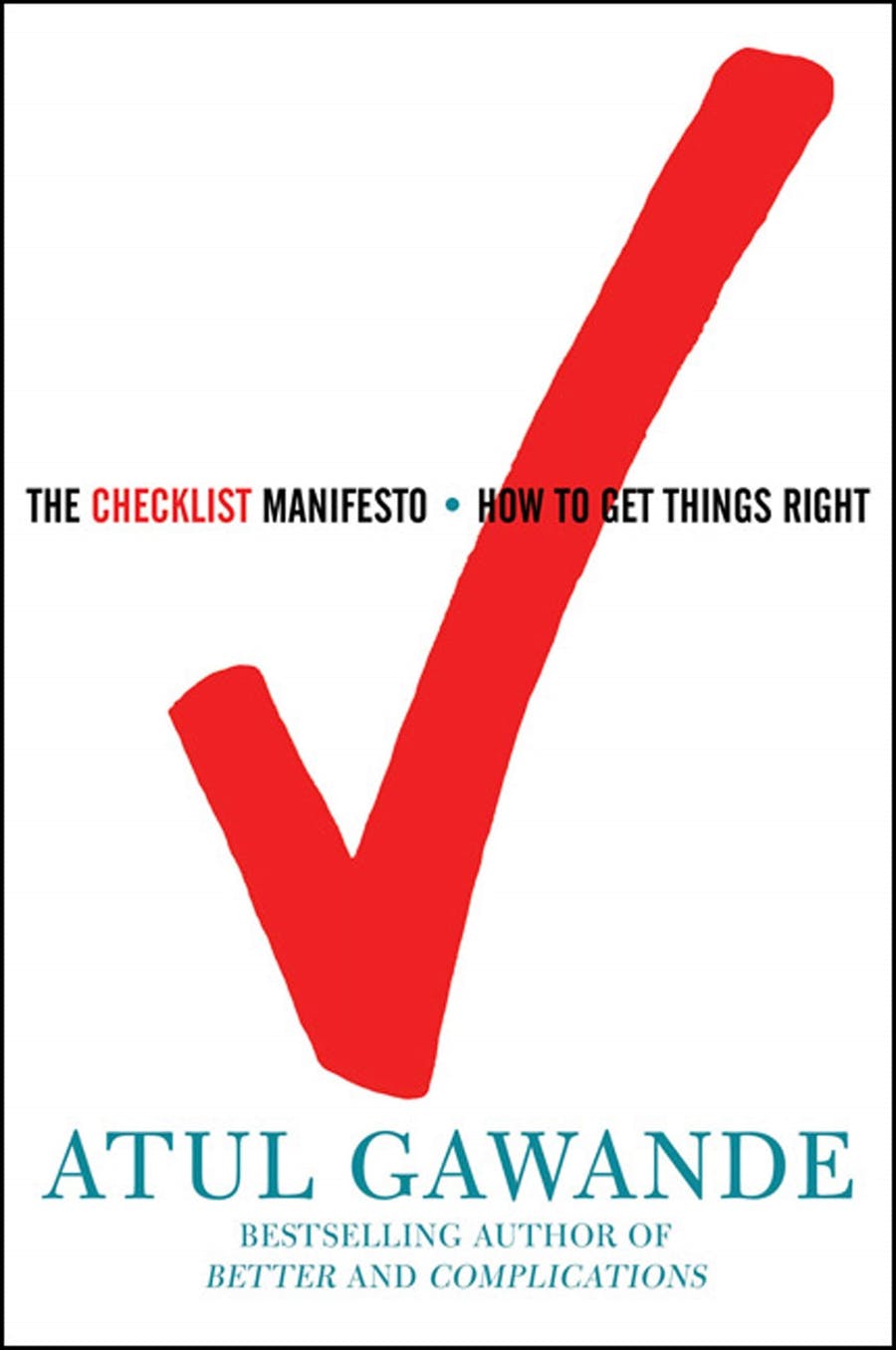
The New York Times bestselling author of Better and Complications reveals the surprising power of the ordinary checklistWe live in a world of great and increasing complexity, where even the most expert professionals struggle to master the tasks they face. Longer training, ever more advanced technologies—neither seems to prevent grievous errors. But in a hopeful turn, acclaimed surgeon and writer Atul Gawande finds a remedy in the humblest and simplest of techniques: the checklist. First introduced decades ago by the U.S. Air Force, checklists have enabled pilots to fly aircraft of mind-boggling sophistication. Now innovative checklists are being adopted in hospitals around the world, helping doctors and nurses respond to everything from flu epidemics to avalanches. Even in the immensely complex world of surgery, a simple ninety-second variant has cut the rate of fatalities by more than a third.In riveting stories, Gawande takes us from Austria, where an emergency checklist saved a drowning victim who had spent half an hour underwater, to Michigan, where a cleanliness checklist in intensive care units virtually eliminated a type of deadly hospital infection. He explains how checklists actually work to prompt striking and immediate improvements. And he follows the checklist revolution into fields well beyond medicine, from disaster response to investment banking, skyscraper construction, and businesses of all kinds.An intellectual adventure in which lives are lost and saved and one simple idea makes a tremendous difference, The Checklist Manifesto is essential reading for anyone working to get things right.

Lisa souffrait de boulimie, d’alcoolisme, de tabagisme et de surendettement. Un jour, tout a changé : en modifiant une pièce du puzzle de son existence, elle est sortie du cercle vicieux de ses habitudes toxiques. Comment Starbucks est-elle devenue un mastodonte générant plus de 10 millions de dollars de chiffre d’affaires par an ? En changeant une habitude de management. L’habitude est le pilote automatique de notre cerveau. S’appuyant sur les dernières recherches en psychologie et en neurosciences, Charles Duhigg en dévoile le fonctionnement et révèle ce principe élémentaire : si notre vie est faite d’habitudes clés qui régissent nos conduites à notre insu, il suffit d’en modifier un élément pour créer un cercle vertueux. En changeant de clés, vous ouvrirez des portes insoupçonnées !

THE LIFE-CHANGING NEW YORK TIMES BESTSELLER • MORE THAN TWO MILLION COPIES SOLD • Now in a 10th anniversary edition featuring a new introduction and bonus 21-day challenge.“Essentialism holds the keys to solving one of the great puzzles of life: How can we do less but accomplish more?”—Adam Grant, bestselling author of Think AgainEssentialism isn’t about getting more done in less time. It’s about getting only the right things done.Have you ever found yourself stretched too thin?Are you often busy but not productive?Do you feel like your time is constantly being hijacked?If you answered yes to any of these, the way out is the Way of the Essentialist. Essentialism is more than a time-management technique. It is a systematic discipline for discerning what is absolutely essential, then eliminating everything that is not, so we can make the highest possible contribution toward the things that really matter. By forcing us to apply more selective criteria for where to spend our precious time and energy, the disciplined pursuit of less empowers us to reclaim control of our own choices, instead of giving others the implicit permission to choose for us. Essentialism is not one more thing to do. It’s a whole new way of doing less, but better, in every area of our lives. Join the millions of people who have used Essentialism to change their outlook on the world.

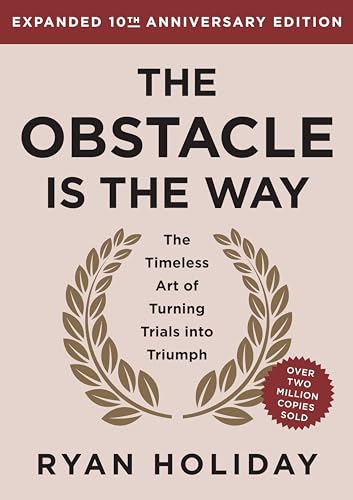
“The impediment to action advances action. What stands in the way becomes the way.” — Marcus AureliusWe are stuck, stymied, frustrated. But it needn’t be this way. There is a formula for success that’s been followed by the icons of history—from John D. Rockefeller to Amelia Earhart to Ulysses S. Grant to Steve Jobs—a formula that let them turn obstacles into opportunities. Faced with impossible situations, they found the astounding triumphs we all seek.These men and women were not exceptionally brilliant, lucky, or gifted. Their success came from timeless philosophical principles laid down by a Roman emperor who struggled to articulate a method for excellence in any and all situations.This book reveals that formula for the first time—and shows us how we can turn our own adversity into advantage.

In this must-read book for anyone striving to succeed, pioneering psychologist Angela Duckworth shows parents, educators, students, and business people both seasoned and new that the secret to outstanding achievement is not talent but a focused persistence called grit.Why do some people succeed and others fail? Sharing new insights from her landmark research on grit, Angela Duckworth explains why talent is hardly a guarantor of success. Rather, other factors can be even more crucial such as identifying our passions and following through on our commitments.Drawing on her own powerful story as the daughter of a scientist who frequently bemoaned her lack of smarts, Duckworth describes her winding path through teaching, business consulting, and neuroscience, which led to the hypothesis that what really drives success is not genius, but a special blend of passion and long-term perseverance. As a professor at the University of Pennsylvania, Duckworth created her own character lab and set out to test her theory.Here, she takes readers into the field to visit teachers working in some of the toughest schools, cadets struggling through their first days at West Point, and young finalists in the National Spelling Bee. She also mines fascinating insights from history and shows what can be gleaned from modern experiments in peak performance. Finally, she shares what she's learned from interviewing dozens of high achievers; from JP Morgan CEO Jamie Dimon to the cartoon editor of The New Yorker to Seattle Seahawks Coach Pete Carroll.Winningly personal, insightful, and even life-changing, Grit is a book about what goes through your head when you fall down, and how that not talent or luck makes all the difference.

The Magic of Thinking Big gives you useful methods, not empty promises. Dr. Schwartz presents a carefully designed program for getting the most out of your job, your marriage and family life, and your community. He proves that you don’t need to be an intellectual or have innate talent to attain great success and satisfaction—but you do need to learn and understand the habit of thinking and behaving in ways that will get you there. This CD set gives you those secrets! Believe you can succeed and you -Cure yourself of the fear of failure -Think and dream creatively -You are what you think you are -Make your attitudes your allies -Learn how to think positively -Turn defeat into victory -Use goals to help you grow -Think like a leader

One of the great fears many of us face is that despite all our effort and striving, we will discover at the end that we have wasted our life. In A Guide to the Good Life, William B. Irvine plumbs the wisdom of Stoic philosophy, one of the most popular and successful schools of thought in ancient Rome, and shows how its insight and advice are still remarkably applicable to modern lives. In A Guide to the Good Life, Irvine offers a refreshing presentation of Stoicism, showing how this ancient philosophy can still direct us toward a better life. Using the psychological insights and the practical techniques of the Stoics, Irvine offers a roadmap for anyone seeking to avoid the feelings of chronic dissatisfaction that plague so many of us. Irvine looks at various Stoic techniques for attaining tranquility and shows how to put these techniques to work in our own life. As he does so, he describes his own experiences practicing Stoicism and offers valuable first-hand advice for anyone wishing to live better by following in the footsteps of these ancient philosophers. Readers learn how to minimize worry, how to let go of the past and focus our efforts on the things we can control, and how to deal with insults, grief, old age, and the distracting temptations of fame and fortune. We learn from Marcus Aurelius the importance of prizing only things of true value, and from Epictetus we learn how to be more content with what we have. Finally, A Guide to the Good Life shows readers how to become thoughtful observers of their own life. If we watch ourselves as we go about our daily business and later reflect on what we saw, we can better identify the sources of distress and eventually avoid that pain in our life. By doing this, the Stoics thought, we can hope to attain a truly joyful life.

From the founders of the trailblazing software company 37signals, here is a different kind of business book - one that explores a new reality. Today, anyone can be in business. Tools that used to be out of reach are now easily accessible. Technology that cost thousands is now just a few pounds or even free. Stuff that was impossible just a few years ago is now simple. That means anyone can start a business. And you can do it without working miserable 80-hour weeks or depleting your life savings. You can start it on the side while your day job provides all the cash flow you need. Forget about business plans, meetings, office space - you don't need them. With its straightforward language and easy-is-better approach, "Rework" is the perfect playbook for anyone who's ever dreamed of doing it on their own. Hardcore entrepreneurs, small-business owners, people stuck in day jobs who want to get out, and artists who don't want to starve anymore will all find valuable inspiration and guidance in these pages. It's time to rework work.

Do you ever have trouble finishing what you start? Do amazing ideas come to you all the time but after the initial excitement wanes you struggle to follow through? If you're creative and ambitious, the answer is likely yes.The problem isn't you. It's not that you're not hardworking, intelligent or deserving, but that you haven't yet installed the one key belief that will change everything: Everything is figureoutable.Whether you want to leave a dead-end job, heal a relationship, grow a business, master your money, or just find two free hours in your day, Everything is Figureoutable will train your brain to think more positively and help you break down any dream into manageable steps.Inside you'll learn:- How to deal with criticism and imposter syndrome- Why it's crucial that you strive for progress not perfection- How to bounce back from failure- How to overcome a lack of time and moneyYou'll also hear triumphant stories of everyday people using the everything is figureoutable philosophy to transform their life. Everything is figureoutable is more than just a fun phrase to say. It's a practical, actionable discipline. And it's about to make you unstoppable!

Detailed mental and physical exercises designed to help a player increase body awareness and improve concentration and rhythm demonstrate strategies for putting into practice the inner-game concept of tennis play.

The #1 New York Times–bestselling sequel to The 48 Laws of PowerMastery synthesizes the years of research Robert Greene conducted while writing the international bestsellers The 48 Laws of Power, The 33 Strategies of War, and The Art of Seduction and demonstrates that the ultimate form of power is mastery itself. By analyzing the lives of such past masters as Charles Darwin, Benjamin Franklin, Albert Einstein, and Leonard da Vinci, as well as by interviewing nine contemporary masters, including tech guru Paul Graham and animal rights advocate Temple Grandin, Greene debunks our culture’s many myths about genius and distills the wisdom of the ages to reveal the secret to greatness. With this seminal text as a guide, readers will learn how to unlock the passion within and become masters.

Our ability to pay attention is collapsing. From the New York Times bestselling author of Chasing the Scream and Lost Connections comes a groundbreaking examination of why this is happening--and how to get our attention back. In the United States, teenagers can focus on one task for only sixty-five seconds at a time, and office workers average only three minutes. Like so many of us, Johann Hari was finding that constantly switching from device to device and tab to tab was a diminishing and depressing way to live. He tried all sorts of self-help solutions--even abandoning his phone for three months--but nothing seemed to work. So Hari went on an epic journey across the world to interview the leading experts on human attention--and he discovered that everything we think we know about this crisis is wrong.We think our inability to focus is a personal failure to exert enough willpower over our devices. The truth is even more disturbing: our focus has been stolen by powerful external forces that have left us uniquely vulnerable to corporations determined to raid our attention for profit. Hari found that there are twelve deep causes of this crisis, from the decline of mind-wandering to rising pollution, all of which have robbed some of our attention. In Stolen Focus, he introduces readers to Silicon Valley dissidents who learned to hack human attention, and veterinarians who diagnose dogs with ADHD. He explores a favela in Rio de Janeiro where everyone lost their attention in a particularly surreal way, and an office in New Zealand that discovered a remarkable technique to restore workers' productivity.Crucially, Hari learned how we can reclaim our focus--as individuals, and as a society--if we are determined to fight for it. Stolen Focus will transform the debate about attention and finally show us how to get it back.

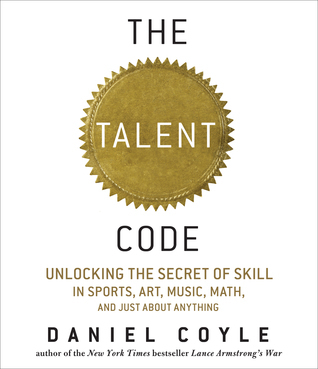
What is the secret of talent? How do we unlock it? In this groundbreaking work, journalist and New York Times bestselling author Daniel Coyle provides parents, teachers, coaches, businesspeople—and everyone else—with tools they can use to maximize potential in themselves and others. Whether you're coaching soccer or teaching a child to play the piano, writing a novel or trying to improve your golf swing, this revolutionary book shows you how to grow talent by tapping into a newly discovered brain mechanism.Drawing on cutting-edge neurology and firsthand research gathered on journeys to nine of the world's talent hotbeds—from the baseball fields of the Caribbean to a classical-music academy in upstate New York—Coyle identifies the three key elements that will allow you to develop your gifts and optimize your performance in sports, art, music, math, or just about anything. • Deep Practice--Everyone knows that practice is a key to success. What everyone doesn't know is that specific kinds of practice can increase skill up to ten times faster than conventional practice.• Ignition--We all need a little motivation to get started. But what separates truly high achievers from the rest of the pack? A higher level of commitment—call it passion—born out of our deepest unconscious desires and triggered by certain primal cues. Understanding how these signals work can help you ignite passion and catalyze skill development.• Master Coaching--What are the secrets of the world's most effective teachers, trainers, and coaches? Discover the four virtues that enable these "talent whisperers" to fuel passion, inspire deep practice, and bring out the best in their students.These three elements work together within your brain to form myelin, a microscopic neural substance that adds vast amounts of speed and accuracy to your movements and thoughts. Scientists have discovered that myelin might just be the holy grail: the foundation of all forms of greatness, from Michelangelo's to Michael Jordan's. The good news about myelin is that it isn't fixed at birth; to the contrary, it grows, and like anything that grows, it can be cultivated and nourished. Combining revelatory analysis with illuminating examples of regular people who have achieved greatness, this book will not only change the way you think about talent, but equip you to reach your own highest potential.

Matt Mochary coaches the CEOs of many of the fastest-scaling technology companies in Silicon Valley. With The Great CEO Within , he shares his highly effective leadership and business-operating tools with any CEO or manager in the world. Learn how to efficiently scale your business from startup to corporation by implementing a system of accountability, effective problem-solving, and transparent feedback. Becoming a great CEO requires training. For a founding CEO, there is precious little time to complete that training, especially at the helm of a rapidly growing company. Now you have the guidance you need in one book.

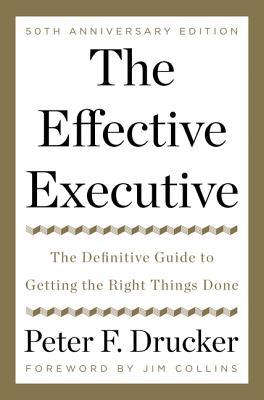
A handsome, commemorative edition of Peter F. Drucker’s timeless classic work on leadership and management, with a foreword by Jim Collins. What makes an effective executive? For decades, Peter F. Drucker was widely regarded as "the dean of this country’s business and management philosophers" ( Wall Street Journal ). In this concise and brilliant work, he looks to the most influential position in management—the executive. The measure of the executive, Drucker reminds us, is the ability to "get the right things done." This usually involves doing what other people have overlooked as well as avoiding what is unproductive. Intelligence, imagination, and knowledge may all be wasted in an executive job without the acquired habits of mind that mold them into results. Drucker identifies five practices essential to business effectiveness that can—and must—be Ranging across the annals of business and government, Drucker demonstrates the distinctive skill of the executive and offers fresh insights into old and seemingly obvious business situations.

Psychologist Mihaly Csikszentmihalyi's investigations of "optimal experience" have revealed that what makes an experience genuinely satisfying is a state of consciousness called flow. During flow, people typically experience deep enjoyment, creativity, and a total involvement with life. Csikszentmihalyi demonstrates the ways this positive state can be controlled, not just left to chance. Flow: The Psychology of Optimal Experience teaches how, by ordering the information that enters our consciousness, we can discover true happiness, unlock our potential, and greatly improve the quality of our lives.

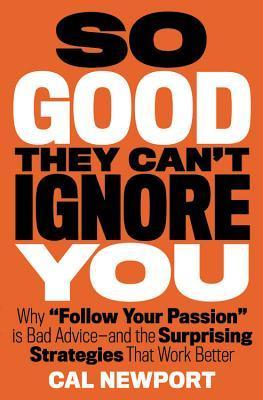
In this eye-opening account, Cal Newport debunks the long-held belief that "follow your passion" is good advice. Not only is the cliché flawed—preexisting passions are rare and have little to do with how most people end up loving their work—but it can also be dangerous, leading to anxiety and chronic job hopping.After making his case against passion, Newport sets out on a quest to discover the reality of how people end up loving what they do. Spending time with organic farmers, venture capitalists, screenwriters, freelance computer programmers, and others who admitted to deriving great satisfaction from their work, Newport uncovers the strategies they used and the pitfalls they avoided in developing their compelling careers.Matching your job to a preexisting passion does not matter, he reveals. Passion comes after you put in the hard work to become excellent at something valuable, not before. In other words, what you do for a living is much less important than how you do it.With a title taken from the comedian Steve Martin, who once said his advice for aspiring entertainers was to "be so good they can't ignore you," Cal Newport's clearly written manifesto is mandatory reading for anyone fretting about what to do with their life, or frustrated by their current job situation and eager to find a fresh new way to take control of their livelihood. He provides an evidence-based blueprint for creating work you love.So Good They Can't Ignore You will change the way we think about our careers, happiness, and the crafting of a remarkable life.

Rise of Superman

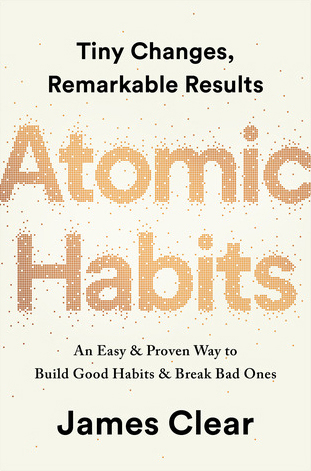
No matter your goals, Atomic Habits offers a proven framework for improving—every day. James Clear, one of the world's leading experts on habit formation, reveals practical strategies that will teach you exactly how to form good habits, break bad ones, and master the tiny behaviors that lead to remarkable results.If you're having trouble changing your habits, the problem isn't you. The problem is your system. Bad habits repeat themselves again and again not because you don't want to change, but because you have the wrong system for change. You do not rise to the level of your goals. You fall to the level of your systems. Here, you'll get a proven system that can take you to new heights.Clear is known for his ability to distill complex topics into simple behaviors that can be easily applied to daily life and work. Here, he draws on the most proven ideas from biology, psychology, and neuroscience to create an easy-to-understand guide for making good habits inevitable and bad habits impossible. Along the way, readers will be inspired and entertained with true stories from Olympic gold medalists, award-winning artists, business leaders, life-saving physicians, and star comedians who have used the science of small habits to master their craft and vault to the top of their field.Learn how to:- Make time for new habits (even when life gets crazy);- Overcome a lack of motivation and willpower;- Design your environment to make success easier;- Get back on track when you fall off course;...and much more.Atomic Habits will reshape the way you think about progress and success, and give you the tools and strategies you need to transform your habits--whether you are a team looking to win a championship, an organization hoping to redefine an industry, or simply an individual who wishes to quit smoking, lose weight, reduce stress, or achieve any other goal.

The average human lifespan is absurdly, insultingly brief. Assuming you live to be eighty, you have just about four thousand weeks.Nobody needs to be told there isn’t enough time. We’re obsessed with our lengthening to-do lists, our overfilled inboxes, work-life balance, and the ceaseless battle against distraction. We’re deluged with advice on becoming more productive and efficient, and with “life hacks” to optimize our days. But such techniques often end up making things worse. The sense of anxious hurry grows more intense, but the most meaningful parts of life seem just beyond the horizon. Still, we rarely make the connection between our daily struggles with time and the ultimate time management problem: the challenge of how best to use our four thousand weeks.Drawing on the insights of both ancient and contemporary philosophers, psychologists, and spiritual teachers, Oliver Burkeman delivers an entertaining, humorous, practical, and ultimately profound guide to time and time management. Rejecting the futile modern fixation on “getting everything done,” Four Thousand Weeks introduces readers to tools for constructing a meaningful life by embracing finitude, showing how many of the unhelpful ways we’ve come to think about time aren’t inescapable, unchanging truths but choices we’ve made as individuals and as a society―and that we could do things differently.

International bestseller over 30 million copies sold worldwide learn how to break the worry habit now and forever! From the fundamental facts one must know about worry to the techniques in analyzing it, This book introduces ways to prevent apprehension and cultivate a mental attitude that will bring peace and happiness. Dealing with fundamental emotions and life-changing thoughts, how to stop worrying and Start living highlights positive points of life and Discourages stress and anxiety. Dale Carnegie time-tested techniques will help eliminate 50 percent of tension immediately avoid fatigue – and keep looking young find yourself and be yourself – remember there is no one else on Earth like you! With timeless practical advice, this classic holds the power to change your future Dale Carnegie was a lecturer of public speaking at ymca new York. He had also served in the US Army during World War 1. He was a sought-after self-help author and speaker. Some of his other works include how to stop worrying and Start living and the art of public speaking.

Ricardo Semler inherited his family company, Semco - manufacturer of marine pumps, industrial dishwashers and mixing equipment - when he was 19. Soon, by 1980, it was on the brink of bankruptcy, but a decade later, during a period of savage recession in Brazil, it had been transformed into a rapidly-growing company with profits of 10% on sales of $37 million. This was achieved by throwing out the rule-book and getting rid of all manuals and written procedures. Workers make the decisions previously made by their bosses; assembly workers can come and go as they please, and set their own production schedules; corporate decisions are put to the vote; managerial staff set their own salaries and bonuses; everyone has access to the company books; and there is a minimum of meetings, memos and approvals. All this was achieved through a series of 30 programmes designed to change the entire working environment, and in this book Semler presents an account of his company's revolution.

Bất cứ ai nếu coi mình là nhà quản lý hãy nhanh chân lên để có được cuốn sách này và hãy đọc nó đừng chậm trễ. Nếu bạn chỉ đơn giản ở cương vị phải đọc nó, thì sự tiến bước của bạn trên con đường tới đỉnh cao có thể sẽ đột ngột lao nhanh về trước… đó là những điều ở một trong những cuốn sách quản trị xuất sắc nhất mà tôi từng biết”

An eight-time national chess champion and world champion martial artist shares the lessons he has learned from two very different competitive arenas, identifying key principles about learning and performance that readers can apply to their life goals. 50,000 first printing.

At last, for a generation that's materially ambitious yet financially clueless comes I Will Teach You To Be Rich, Ramit Sethi's 6-week personal finance program for 20-to-35-year-olds. A completely practical approach delivered with a nonjudgmental style that makes readers want to do what Sethi says, it is based around the four pillars of personal finance— banking, saving, budgeting, and investing—and the wealth-building ideas of personal entrepreneurship.Sethi covers how to save time by not wasting it managing money; the guns and cars myth of credit cards; how to negotiate like an Indian—the conversation begins with "no"; why "Budgeting Doesn't Have to Suck!"; how to get things rolling—for real—with only $20; what most people don't understand about taxes; how to get a CEO to take you out to lunch; how to avoid the Super Mario Brothers trap by making your savings work harder than you do; the difference between cheap and frugal; the hidden relationship between money and food. Not to mention his first key lesson: Getting started is more important than being the smartest person in the room. Integrated with his website, where readers can use interactive charts, follow up on the latest information, and join the community, it is a hip blueprint to building wealth and financial security.Every month, 175,000 unique visitors come to Ramit Sethi's website, Iwillteachyoutoberich.com, to discover the path to financial freedom. They praise him thoughtfully ("Your site summarizes everything I want with my life—to be rich in finances, rich in experience, rich in family blessings," --Dan Esparza) and effusively ("Dude, you rock. I love this site!" --Richard Wu). The press has caught on, too: "Ramit Sethi is a rising star in the world of personal finance writing . . . one singularly attuned to the sensibilities of his generation. his style is part frat boy and part silicon Valley geek, with a little bit of San Francisco hipster thrown in" (San Francisco Chronicle). His writing is smart, his voice is full of attitude, and his ideas are uncommonly sound and refreshingly hype-free.

"The One Thing" explains the success habit to overcome the six lies that block our success, beat the seven thieves that steal time, and leverage the laws of purpose, priority, and productivity.

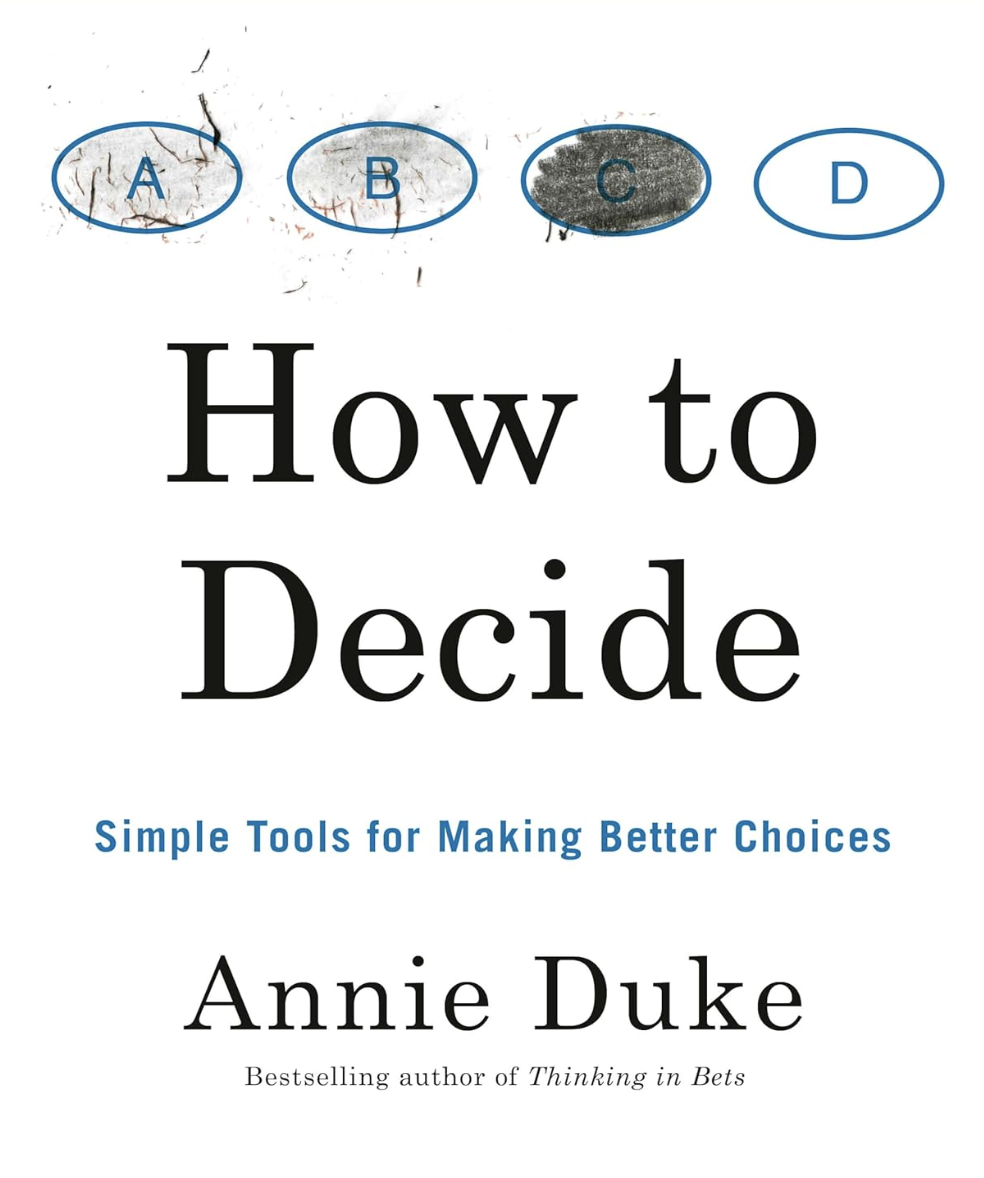
Through a blend of compelling exercises, illustrations, and stories, the bestselling author of Thinking in Bets will train you to combat your own biases, address your weaknesses, and help you become a better and more confident decision-maker. What do you do when you're faced with a big decision? If you're like most people, you probably make a pro and con list, spend a lot of time obsessing about decisions that didn't work out, get caught in analysis paralysis, endlessly seek other people's opinions to find just that little bit of extra information that might make you sure, and finally go with your gut. What if there was a better way to make quality decisions so you can think clearly, feel more confident, second-guess yourself less, and ultimately be more decisive and be more productive? Making good decisions doesn't have to be a series of endless guesswork. Rather, it's a teachable skill that anyone can sharpen. In How to Decide, bestselling author Annie Duke and former professional poker player lays out a series of tools anyone can use to make better decisions. You'll learn: • To identify and dismantle hidden biases. • To extract the highest quality feedback from those whose advice you seek. • To more accurately identify the influence of luck in the outcome of your decisions. • When to decide fast, when to decide slow, and when to decide in advance. • To make decisions that more effectively help you to realize your goals and live your values.Through interactive exercises and engaging thought experiments, this workbook helps you analyze key decisions you've made in the past and troubleshoot those you're making in the future. Whether you're picking investments, evaluating a job offer, or trying to figure out your romantic life, How to Decide is the key to happier outcomes and fewer regrets.

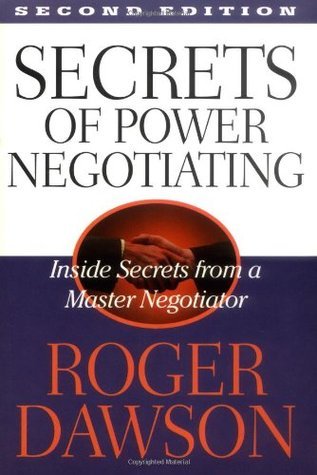
Secrets of Power Negotiating covers every aspect of the negotiating process with practical, proven from beginning steps to critical final moves, how to recognize unethical tactics, key principles to the Power Negotiating strategy, why money is not as important as everyone thinks, negotiating pressure points, understanding the other party and gaining the upper hand, and analyses of different negotiating styles. And Power Negotiating can be applied to any - Business owners will learn how to dramatically improve profits.- Managers will learn how to become dynamic leaders.- Parents will discover how to shape their child's future.- Salespeople will learn how to build-and protect-their bottom line.- All readers will find how to develop power and control over their ability to get what they want-in all areas of their lives.

"The pracitcal wisdom in George Leonard's book will have a great influence for many years to come." —Michael Murphy, author of Golf in the Kingdom and The Future of the BodyDrawing on Zen philosophy and his expertise in the martial art of aikido, bestselling author Gorge Leonard shows how the process of mastery can help us attain a higher level of excellence and a deeper sense of satisfaction and fulfillment in our daily lives. Whether you're seeking to improve your career or your intimate relationships, increase self-esteem or create harmony within yourself, this inspiring prescriptive guide will help you master anything you choose and achive success in all areas of your life.In Mastery, you'll discover:The 5 Essential Keys to MasteryTools for MasteryHow to Master Your Athletic PotentialThe 3 Personality Types That Are Obstacles to MasteryHow to Avoid Pitfalls Along the Path. . . and more

Nous sommes tous capables d'améliorer notre vie et celle des autres, d'accéder à l'excellence, et d'atteindre notre développement personnel maximal. L'énergie, clé de l'excellence humaine ; la maîtrise de l'esprit et du corps ; la magie de la sympathie ; la fin des résistances ; les points d'ancrage de la réussite ; le pouvoir de persuasion... Telles sont les grandes lignes de cet ouvrage best-seller d'Anthony Robbins qui met en évidence les effets extraordinaires des techniques enseignées par la PNL (programmation neurolinguistique). Grâce à ces techniques, nous pouvons mieux tirer parti de ces pouvoirs illimités qui sont en nous et que nous ne soupçonnons pas. Ce livre, très pratique et très accessible, décompose les éléments, les stratégies et les techniques de la PNL, et nous ouvre la possibilité de comprendre nos propres fonctionnements, ceux des autres, pour tirer le meilleur de nous-mêmes.

A New York Times , USA Today , and Wall Street Journal bestsellerIn this iconic bestseller, popular business blogger and bestselling author Seth Godin proves that winners are really just the best quitters. Godin shows that winners quit fast, quit often, and quit without guilt—until they commit to beating the right Dip.Every new project (or job, or hobby, or company) starts out fun…then gets really hard, and not much fun at all. You might be in a Dip—a temporary setback that will get better if you keep pushing. But maybe it’s really a Cul-de-Sac—a total dead end. What really sets superstars apart is the ability to tell the two apart.Winners seek out the Dip. They realize that the bigger the barrier, the bigger the reward for getting past it. If you can beat the Dip to be the best, you’ll earn profits, glory, and long-term security.Whether you’re an intern or a CEO, this fun little book will help you figure out if you’re in a Dip that’s worthy of your time, effort, and talents. The old saying is wrong—winners do quit, and quitters do win.

The multi million-copy bestseller Six Thinking Hats by Edward de Bono, author of Lateral Thinking and I Am Right You Are Wrong, teaches you how to run better meetings and make better decisions. Meetings are a crucial part of all our lives, but too often they go nowhere and waste valuable time. In Six Thinking Hats, Edward de Bono shows how meetings can be transformed to produce quick, decisive results every time. The Six Hats method is a devastatingly simple technique based on the brain's different modes of thinking. The intelligence, experience and information of everyone is harnessed to reach the right conclusions quickly. These principles fundamentally change the way you work and interact. They have been adopted by businesses and governments around the world to end conflict and confusion in favour of harmony and productivity. 'An inspiring man with brilliant ideas. De Bono never ceases to amaze with his clarity of thought' Richard Branson.Edward de Bono invented the concept of lateral thinking. A world-renowned writer and philosopher, he is the leading authority in the field of creative thinking and the direct teaching of thinking as a skill. Dr de Bono has written more than 60 books, in 40 languages, with people now teaching his methods worldwide. He has chaired a special summit of Nobel Prize laureates, and been hailed as one of the 250 people who have contributed most to mankind

In "59 Seconds," psychologist Professor Richard Wiseman presents a fresh approach to change that helps people achieve their aims and ambitions in minutes, not months. From mood to memory, persuasion to procrastination, and resilience to relationships, Wiseman outlines the research supporting this new science of rapid change, and describes how these quick and quirky techniques can be incorporated into everyday life. Think a little, change a lot."Discover why even thinking about going to the gym can help you keep in shape ""Learn how pot plants make you more creative ""Find out why putting a pencil between your teeth instantly makes you happier "" "'At last, a self-help guide that is based on proper research. Perfect for busy, curious, smart people' Simon Singh, author of Fermat's Last Theorem'A triumph of scientifically proven advice over misleading myths of self-help. Challenging, uplifting and long overdue' Derren Brown


ACTUAL READER FEEDBACK “This book saved my life. Every tip is natural, just the way I want to treat my anxiety.” “Play It Away really hits on what ‘living in the moment’ is all about. Reading this book has been one of the most valuable investments I’ve made, both professionally and personally.” “I work in the mental health field, so I have read my weight in self-help books. I would highly recommend this to anyone wrestling with anxiety. Or really, just anyone.” “When reading Play It Away, I felt as though I was talking with a friend over a beer, rather than reading a book pointing out what I was doing wrong. Charlie relates to the reader in an extraordinary way and offers tangible advice that doesn't seem out of reach. This is certainly a different kind of self-help book that I will keep on my bookshelf for years to come.” “Living on the road for the better part of 7 years representing and speaking for Tony Robbins landed me in the adrenals burnt out, depressed, poor digestion, and miserable. It was pretty hard to be a ‘motivational speaker’ when I was actually dying on the inside. Charlie's book serves as a great reminder to enjoy life more, and also provides the necessary "how to" information and practical advice to enjoy life and be more productive. Highly recommend this book to anyone who is busy and wants to enjoy their life more.” “It might be because I see so much of myself in the author's story, but this book has already changed my life. It reminded me of all of the things that I used to fill my free time with that I completely abandoned, and it gave me concrete, actionable ways to re-integrate them into my life. I've already recommended this book to over a dozen good friends. It's a very solid read.” “I've been feeling 98% back to my former self 98% of the time. Sometimes I have a hard time believing the five months that I was crippled with anxiety even happened. My confidence is back and I'm having fun again.” “After reading your book, everything clicked for me. There are so many parts in it that I can relate to; the anxious feeling from coffee, lack of sleep, too much time spent on my laptop/iPhone, and so many other things. I can’t explain how nice it was to know that someone finally understood AND has solutions to change those feelings. The answers I’ve been searching for and asking doctors about for almost the last 3 years, you were able to summarize in one book.” “Play It Away is a gift. It’s totally changed how I think about my interactions with friends, women, and people I meet for the first time. I'm more open, playful, and happier overall since reading (and applying) this book.” “This book provides simple but profound advice on how to gift yourself with a stress-free, happier existence.” "What a truly inspiring and incredible read for anyone struggling with anxiety or depression. The author's style is so full of energy and bubbly, it made me want to go out and take my own adventure.”

This #1 New York Times best-selling guide to decluttering your home from Japanese cleaning consultant Marie Kondo takes readers step-by-step through her revolutionary KonMari Method for simplifying, organizing, and storing.Despite constant efforts to declutter your home, do papers still accumulate like snowdrifts and clothes pile up like a tangled mess of noodles?Japanese cleaning consultant Marie Kondo takes tidying to a whole new level, promising that if you properly simplify and organize your home once, you’ll never have to do it again. Most methods advocate a room-by-room or little-by-little approach, which doom you to pick away at your piles of stuff forever. The KonMari Method, with its revolutionary category-by-category system, leads to lasting results. In fact, none of Kondo’s clients have lapsed (and she still has a three-month waiting list). With detailed guidance for determining which items in your house “spark joy” (and which don’t), this international bestseller featuring Tokyo’s newest lifestyle phenomenon will help you clear your clutter and enjoy the unique magic of a tidy home—and the calm, motivated mindset it can inspire.From the Hardcover edition.

One of the most valuable skills in our economy is becoming increasingly rare. If you master this skill, you'll achieve extraordinary results.Deep work is the ability to focus without distraction on a cognitively demanding task. It's a skill that allows you to quickly master complicated information and produce better results in less time. Deep work will make you better at what you do and provide the sense of true fulfillment that comes from craftsmanship. In short, deep work is like a super power in our increasingly competitive twenty-first century economy. And yet, most people have lost the ability to go deep-spending their days instead in a frantic blur of e-mail and social media, not even realizing there's a better way.In Deep Work, author and professor Cal Newport flips the narrative on impact in a connected age. Instead of arguing distraction is bad, he instead celebrates the power of its opposite. Dividing this book into two parts, he first makes the case that in almost any profession, cultivating a deep work ethic will produce massive benefits. He then presents a rigorous training regimen, presented as a series of four "rules," for transforming your mind and habits to support this skill.A mix of cultural criticism and actionable advice, Deep Work takes the reader on a journey through memorable stories-from Carl Jung building a stone tower in the woods to focus his mind, to a social media pioneer buying a round-trip business class ticket to Tokyo to write a book free from distraction in the air-and no-nonsense advice, such as the claim that most serious professionals should quit social media and that you should practice being bored. Deep Work is an indispensable guide to anyone seeking focused success in a distracted world.

Alternate cover edition of ISBN 9780735211735.A beautifully packaged daily devotional of Stoic wisdom, featuring new translations of the most celebrated Stoics with historical context and practical tips from bestselling author Ryan Holiday.Stoic philosophy has long been the secret weapon of history’s greatest and wisest leaders--from emperors to artists, activists to fighter pilots. Today, people of all stripes are seeking out Stoicism’s unique blend of practicality and wisdom as they look for answers to the great questions of daily life.Where should they start? Epictetus? Marcus Aurelius? Seneca? Which edition? Which translator? Presented in a page-per-day format, this daily resource combines all new translations done by Stephen Hanselman of the greatest passages from the great Stoics (including several lesser known philosophers like Zeno, Cleanthes and Musonius Rufus) with helpful commentary.Building on the organizational structure in Ryan Holiday’s cult classic The Obstacle is the Way, this guide also features twelve monthly themes (and helpful glossary) for clarifying perception, improving action, and unlocking the power of will. Aimed at the high-octane, action-oriented doers of our wired world, this book brings new daily rituals and new perspectives to produce balanced action, insight, effectiveness, and serenity.

In The Obstacle Is the Way and Ego Is the Enemy, bestselling author Ryan Holiday made ancient wisdom wildly popular with a new generation of leaders in sports, politics, and technology. In his new book, Stillness Is the Key, Holiday draws on timeless Stoic and Buddhist philosophy to show why slowing down is the secret weapon for those charging ahead.All great leaders, thinkers, artists, athletes, and visionaries share one indelible quality. It enables them to conquer their tempers. To avoid distraction and discover great insights. To achieve happiness and do the right thing. Ryan Holiday calls it stillness--to be steady while the world spins around you.In this book, he outlines a path for achieving this ancient, but urgently necessary way of living. Drawing on a wide range of history's greatest thinkers, from Confucius to Seneca, Marcus Aurelius to Thich Nhat Hanh, John Stuart Mill to Nietzsche, he argues that stillness is not mere inactivity, but the doorway to self-mastery, discipline, and focus.Holiday also examines figures who exemplified the power of stillness: baseball player Sadaharu Oh, whose study of Zen made him the greatest home run hitter of all time; Winston Churchill, who in balancing his busy public life with time spent laying bricks and painting at his Chartwell estate managed to save the world from annihilation in the process; Fred Rogers, who taught generations of children to see what was invisible to the eye; Anne Frank, whose journaling and love of nature guided her through unimaginable adversity.More than ever, people are overwhelmed. They face obstacles and egos and competition. Stillness Is the Key offers a simple but inspiring antidote to the stress of 24/7 news and social media. The stillness that we all seek is the path to meaning, contentment, and excellence in a world that needs more of it than ever.

Named a "must read" by Susan Cain, "endlessly fascinating" by Daniel Pink, and "bursting with practical insights" by Adam Grant. A former rocket scientist reveals the habits, ideas, and strategies that will empower you to turn the seemingly impossible into the possible. Rocket science is often celebrated as the ultimate triumph of technology. But it's not. Rather, it's the apex of a certain thought process -- a way to imagine the unimaginable and solve the unsolvable. It's the same thought process that enabled Neil Armstrong to take his giant leap for mankind, that allows spacecraft to travel millions of miles through outer space and land on a precise spot, and that brings us closer to colonizing other planets. Fortunately, you don't have to be a rocket scientist to think like one. In this accessible and practical book, Ozan Varol reveals nine simple strategies from rocket science that you can use to make your own giant leaps in work and life -- whether it's landing your dream job, accelerating your business, learning a new skill, or creating the next breakthrough product. Today, thinking like a rocket scientist is a necessity. We all encounter complex and unfamiliar problems in our lives. Those who can tackle these problems -- without clear guidelines and with the clock ticking -- enjoy an extraordinary advantage. Think Like a Rocket Scientist will inspire you to take your own moonshot and enable you to achieve liftoff.

Please Note That The Following Individual Books As Per Original ISBN and Cover Image In this Listing shall be Dispatched The Almanack of Naval Ravikant, Hyperfocus, 24 Assets, The Profits Principles 4 Books Collection The Almanack of Naval Naval Ravikant is an entrepreneur, philosopher, and investor who has captivated the world with his principles for building wealth and creating long-term happiness. The Almanack of Naval Ravikant is a collection of Naval’s wisdom and experience from the last ten years, shared as a curation of his most insightful interviews and poignant reflections. This isn’t a how-to book, or a step-by-step gimmick.24 In every industry, there are companies that take off. They effortlessly hire talented people, attract loyal customers, create cool products and make lots of money. These companies seem to stand out and scale up quickly with support from investors, partners and the media. Sadly, most companies don’t perform this way. Most entrepreneurs aren’t building anything of value. They work hard, make sacrifices, struggle, dream, plan and strive, but in the end.The Profits Too many business owners work too many hours for not enough pay. They don't have time or the energy for family, friends, hobbies and relaxing. If they don't work, they don't get paid. You may think you own a business but, if these points ring true for you, chances are you actually own a job. In The Profits Principles Steven Briginshaw draws on his vast experience as a chartered accountant and business mentor to show exactly what you need to do to.

What can you learn from a Silicon Valley legend and a pantheon of iconic leaders? The key to scaling a successful business isn't talent, network or strategy. It's an entrepreneurial mindset - and that mindset can be cultivated.Behind the scenes in Silicon Valley, Reid Hoffman (founder of LinkedIn, investor at Greylock) is a sought-after advisor to heads of companies and heads of state. On his podcast Masters of Scale, he sits down with an all-star list of visionary founders and leaders, digging into the surprising strategies that power their growth. In this book, he draws on their most riveting, revealing stories - as well his own experience as a founder and investor - to distil the counterintuitive secrets behind the most extraordinary success stories of our times.Here, Hoffman teams up with Masters of Scale's executive producers to offer a rare window into the entrepreneurial mind. They share surprising, never-before-told stories from leaders of the world's most iconic companies, including Apple, Nike, Netflix, Spotify, Starbucks, Google, Instagram and Microsoft, as well as the bold, disruptive startups - from 23andMe to TaskRabbit, from the Black List to the Bevel razor - solving the problems of the twenty-first century.Through vivid storytelling and straightforward analysis, Masters of Scale distils their collective insights into a set of counterintuitive principles that anyone can use. How do you find a winning idea and turn it into a scalable venture? What can you learn from a 'squirmy no'? When should you stop listening to your customers? Which fires should you put out right away, and which should you let burn? And can you really make money while making the world a better place? ( Yes. But you have to do the work to keep your profits and values aligned.)Based on more than 100 interviews, and incorporating new material never aired on the podcast, Masters of Scale offers a unique insider's guide, filled with insights, wisdom, and strategies that will inspire you to reimagine how you do business today.

The coauthor of The 22 Immutable Laws of Marketing shares practical advice on how companies can increase profitability and competitiveness by focusing on core products and eliminating extraneous areas. $50,000 ad/promo. Tour.

Fully revised and expanded for the first time in a decade, The Art of the Start 2.0 is Guy Kawasaki's classic bestselling guide to launching and making your new product, service or idea a success.This new edition has been expanded to reflect the seismic changes in business over the last decade, in which once-invulnerable market leaders have struggled and many of the basics of getting established have become easier, cheaper and more democratic.Today, business plans are no longer necessary. Social media has replaced PR and advertising as the key method of promotion. Crowdfunding is now a viable alternative to investors. Cloud computing makes basic infrastructure affordable for almost any new venture.The Art of the Start 2.0 will show you how to effectively deploy all these new tools. And it will help you master the fundamental challenges that have not changed: building a strong team, creating an awesome product or service, and facing down your competition.Whether you're an aspiring entrepreneur, own a business, or want to get more entrepreneurial within any organisation, this book will help you make your crazy ideas stick. It's an adventure that's more art than science - the art of the start.'The Art of the Start 2.0 is the ultimate entrepreneurship handbook. Kawasaki's generous wisdom, tips, and humour reflect his successes and failures. We can all benefit from his insights' Arianna Huffington, president and editor in chief, Huffington Post'A successful entrepreneur requires three things: a garage, an idea, and this book - Guy's irrepressible guide to the raw essentials of life in a young company' Michael Moritz, Sequoia CapitaGuy Kawasaki is the chief evangelist of Canva (an online design service) and an executive fellow of the Haas School of Business at U.C. Berkeley. Previously, he was the chief evangelist of Apple and special adviser to the CEO of the Motorola business unit of Google. His many acclaimed books include The Art of Social Media and Enchantment.

“Combines the gritty toughmindedness of the best coaches with the gentle-but-insistent inspiration of the most effective spiritual advisers” ( Fast Company ).This groundbreaking New York Times bestseller has helped hundreds of thousands of people at work and at home balance stress and recovery and sustain high performance despite crushing workloads and 24/7 demands on their time.We live in digital time. Our pace is rushed, rapid-fire, and relentless. Facing crushing workloads, we try to cram as much as possible into every day. We're wired up, but we're melting down. Time management is no longer a viable solution. As bestselling authors Jim Loehr and Tony Schwartz demonstrate in this groundbreaking book, managing energy, not time, is the key to enduring high performance as well as to health, happiness, and life balance. The Power of Full Engagement is a highly practical, scientifically based approach to managing your energy more skillfully both on and off the job by laying out the key training principles and provides a powerful, step-by-step program that will help you * Mobilize four key sources of energy* Balance energy expenditure with intermittent energy renewal* Expand capacity in the same systematic way that elite athletes do* Create highly specific, positive energy management rituals to make lasting changesAbove all, this book provides a life-changing road map to becoming more fully engaged on and off the job, meaning physically energized, emotionally connected, mentally focused, and spiritually aligned.

How anyone can be more effective with less effort by learning how to identify and leverage the 80/20 principle--the well-known, unpublicized secret that 80 percent of all our results in business and in life stem from a mere 20 percent of our efforts.The 80/20 principle is one of the great secrets of highly effective people and organizations.Did you know, for example, that 20 percent of customers account for 80 percent of revenues? That 20 percent of our time accounts for 80 percent of the work we accomplish? The 80/20 Principle shows how we can achieve much more with much less effort, time, and resources, simply by identifying and focusing our efforts on the 20 percent that really counts. Although the 80/20 principle has long influenced today's business world, author Richard Koch reveals how the principle works and shows how we can use it in a systematic and practical way to vastly increase our effectiveness, and improve our careers and our companies.The unspoken corollary to the 80/20 principle is that little of what we spend our time on actually counts. But by concentrating on those things that do, we can unlock the enormous potential of the magic 20 percent, and transform our effectiveness in our jobs, our careers, our businesses, and our lives.

The New One Minute Manager offers a way for you to succeed sooner with less stress in changing times—both at work and at home.Based on the original book The One Minute Manager that helped millions of people around the world in organizations large and small, The New One Minute Manager is a concise, easily read story that reveals three very practical secrets: One Minute Goals, One Minute Praisings, and One Minute Re-Directs, the new third secret. The story is based on studies in the behavioral sciences and medicine that support why these apparently simple methods work so well with so many people. And by the book's end, you will know how to apply what you discover to your own situation and enjoy the benefits.

"William Ury brings a marvelous blend of experience, insight, integrity and warmth to his work. In this wonderful book he teaches us how to say No--with grace and effect--so that we might create an even better Yes." --Jim Collins, author of Good to GreatNo is perhaps the most important and certainly the most powerful word in the language. Every day we find ourselves in situations where we need to say No-to people at work, at home, and in our communities-because No is the word we must use to protect ourselves and to stand up for everything and everyone that matters to us.But as we all know, the wrong No can also destroy what we most value by alienating and angering people. That's why saying No the right way is crucial. The secret to saying No without destroying relationships lies in the art of the Positive No, a proven technique that anyone can learn.This indispensable book gives you a simple three-step method for saying a Positive No. It will show you how to assert and defend your key interests; how to make your No firm and strong; how to resist the other side's aggression and manipulation; and how to do all this while still getting to Yes. In the end, the Positive No will help you get not just to any Yes but to the right Yes, the one that truly serves your interests.Based on William Ury's celebrated Harvard University course for managers and professionals, The Power of a Positive No offers concrete advice and practical examples for saying No in virtually any situation. Whether you need to say No to your customer or your coworker, your employee or your CEO, your child or your spouse, you will find in this book the secret to saying No clearly, respectfully, and effectively.In today's world of high stress and limitless choices, the pressure to give in and say Yes grows greater every day, producing overload and overwork, expanding e-mail and eroding ethics. Never has No been more needed. A Positive No has the power to profoundly transform our lives by enabling us to say Yes to what counts-our own needs, values, and priorities.Understood this way, No is the new Yes. And the Positive No may be the most valuable life skill you'll ever learn.

Do you have a hobby you wish you could indulge in all day? An obsession that keeps you up at night? Now is the perfect time to take that passion and make a living doing what you love. In Crush It! Why NOW Is the Time to Cash In on Your Passion, Gary Vaynerchuk shows you how to use the power of the Internet to turn your real interests into real businesses. Gary spent years building his family business from a local wine shop into a national industry leader. Then one day he turned on a video camera, and by using the secrets revealed here, transformed his entire life and earning potential by building his personal brand. By the end of this book, readers will have learned how to harness the power of the Internet to make their entrepreneurial dreams come true. Step by step, Crush It! is the ultimate driver’s manual for modern business.

Why is it so hard to make lasting changes in our companies, in our communities, and in our own lives?The primary obstacle is a conflict that's built into our brains, say Chip and Dan Heath, authors of the critically acclaimed bestseller Made to Stick. Psychologists have discovered that our minds are ruled by two different systems - the rational mind and the emotional mind - that compete for control. The rational mind wants a great beach body; the emotional mind wants that Oreo cookie. The rational mind wants to change something at work; the emotional mind loves the comfort of the existing routine. This tension can doom a change effort - but if it is overcome, change can come quickly.In Switch, the Heaths show how everyday people - employees and managers, parents and nurses - have united both minds and, as a result, achieved dramatic results:- The lowly medical interns who managed to defeat an entrenched, decades-old medical practice that was endangering patients (see page 242)- The home-organizing guru who developed a simple technique for overcoming the dread of housekeeping (see page 130)- The manager who transformed a lackadaisical customer-support team into service zealots by removing a standard tool of customer service (see page 199)In a compelling, story-driven narrative, the Heaths bring together decades of counterintuitive research in psychology, sociology, and other fields to shed new light on how we can effect transformative change. Switch shows that successful changes follow a pattern, a pattern you can use to make the changes that matter to you, whether your interest is in changing the world or changing your waistline.

Best known for creating CD Baby, the most popular music site for independent artists, founder Derek Sivers chronicles his “accidental” success and failures into this concise and inspiring book on how to create a multi-million dollar company by following your passion. In Anything You Want, Sivers details his journey and the lessons learned along the way of creating CD Baby and building a business close to his heart. “[Sivers is] one of the last music-business folk heroes,” says Esquire magazine. His less-scripted approach to business is refreshing and will educate readers to feel empowered to follow their own dreams. Aspiring entrepreneurs and others trying to make their own way will be particularly comforted by Sivers straight talk and transparency -a reminder that anything you want is within your reach.Anything You Want is also available in a 5 pack, 52 pack and very limited edition Collectible, signed by Derek.

The follow up to the War of Art. In the War of Art Pressfield identifies the enemy to living an authentic life – resistance. In Turning Pro, Pressfield teaches you how to defeat it.

The “work from home” phenomenon is thoroughly explored in this illuminating new book from bestselling 37signals founders Fried and Hansson, who point to the surging trend of employees working from home (and anywhere else) and explain the challenges and unexpected benefits. Most important, they show why – with a few controversial exceptions such as Yahoo -- more businesses will want to promote this new model of getting things done.The Industrial Revolution's "under one roof" model of conducting work is steadily declining owing to technology that is rapidly creating virtual workspaces and allowing workers to provide their vital contribution without physically clustering together. Today, the new paradigm is "move work to the workers, rather than workers to the workplace." According to Reuters, one in five global workers telecommutes frequently and nearly ten percent work from home every day. Moms in particular will welcome this trend. A full 60% wish they had a flexible work option. But companies see advantages too in the way remote work increases their talent pool, reduces turnover, lessens their real estate footprint, and improves the ability to conduct business across multiple time zones, to name just a few advantages. In Remote, inconoclastic authors Fried and Hansson will convince readers that letting all or part of work teams function remotely is a great idea--and they're going to show precisely how a remote work setup can be accomplished.

The World’s Most Influential Book on Personal Success The bestselling classic that made Systems Over Goals, Talent Stacking, and Passion Is Overrated universal success advice has been reborn.Once in a generation, a book revolutionizes its category and becomes the preeminent reference that all subsequent books on the topic must pay homage to, in name or in spirit.How to Fail at Almost Everything and Still Win Big by Scott Adams, creator of Dilbert, is such a book for the field of personal success.A contrarian pundit and persuasion expert in a class of his own, Adams has reached hundreds of millions directly and indirectly through the 2013 first edition’s straightforward yet counterintuitive advice—to invite failure in, embrace it, then pick its pocket.The second edition of How to Fail is a tighter, updated version, by popular demand. Yet new and returning readers alike will find the same candor, humor, and timeless wisdom on productivity, career growth, health and fitness, and entrepreneurial success as the original classic.How to Fail at Almost Everything and Still Win Big, Second Edition is the essential read (or re-read) for anyone who wants to find a unique path to personal victory—and make luck find you in whatever you do.

In his New York Times bestseller Steal Like an Artist, Austin Kleon showed readers how to unlock their creativity by “stealing” from the community of other movers and shakers. Now, in an even more forward-thinking and necessary book, he shows how to take that critical next step on a creative journey—getting known. Show Your Work! is about why generosity trumps genius. It’s about getting findable, about using the network instead of wasting time “networking.” It’s not self-promotion, it’s self-discovery—let others into your process, then let them steal from you. Filled with illustrations, quotes, stories, and examples, Show Your Work! offers ten transformative rules for being open, generous, brave, productive. In chapters such as You Don’t Have to Be a Genius; Share Something Small Every Day; and Stick Around, Kleon creates a user’s manual for embracing the communal nature of creativity— what he calls the “ecology of talent.” From broader life lessons about work (you can’t find your voice if you don’t use it) to the etiquette of sharing—and the dangers of oversharing—to the practicalities of Internet life (build a good domain name; give credit when credit is due), it’s an inspiring manifesto for succeeding as any kind of artist or entrepreneur in the digital age.

From the visionary head of Google's innovative People Operations comes a groundbreaking inquiry into the philosophy of work-and a blueprint for attracting the most spectacular talent to your business and ensuring that they succeed. "We spend more time working than doing anything else in life. It's not right that the experience of work should be so demotivating and dehumanizing." So says Laszlo Bock, head of People Operations at the company that transformed how the world interacts with knowledge. This insight is the heart of WORK RULES!, a compelling and surprisingly playful manifesto that offers lessons including:Take away managers' power over employeesLearn from your best employees-and your worstHire only people who are smarter than you are, no matter how long it takes to find themPay unfairly (it's more fair!)Don't trust your gut: Use data to predict and shape the futureDefault to open-be transparent and welcome feedbackIf you're comfortable with the amount of freedom you've given your employees, you haven't gone far enough. Drawing on the latest research in behavioral economics and a profound grasp of human psychology, WORK RULES! also provides teaching examples from a range of industries-including lauded companies that happen to be hideous places to work and little-known companies that achieve spectacular results by valuing and listening to their employees. Bock takes us inside one of history's most explosively successful businesses to reveal why Google is consistently rated one of the best places to work in the world, distilling 15 years of intensive worker R&D into principles that are easy to put into action, whether you're a team of one or a team of thousands. WORK RULES! shows how to strike a balance between creativity and structure, leading to success you can measure in quality of life as well as market share. Read it to build a better company from within rather than from above; read it to reawaken your joy in what you do.

Big data entrepreneur Allen Gannett overturns the mythology around creative genius, and reveals the science and secrets behind achieving breakout commercial success in any field. We have been spoon-fed the notion that creativity is the province of genius -- of those favored, brilliant few whose moments of insight arrive in unpredictable flashes of divine inspiration. And if we are not a genius, we might as well pack it in and give up. Either we have that gift, or we don’t. But Allen shows that simply isn’t true. Recent research has shown that there is a predictable science behind achieving commercial success in any creative endeavor, from writing a popular novel to starting up a successful company to creating an effective marketing campaign. As the world’s most creative people have discovered, we are enticed by the novel and the familiar. By understanding the mechanics of what Gannett calls “the creative curve” – the point of optimal tension between the novel and the familiar – everyone can better engineer mainstream success. In a thoroughly entertaining book that describes the stories and insights of everyone from the Broadway team behind Dear Evan Hansen , to the founder of Reddit, from the Chief Content Officer of Netflix to Michelin star chefs, Gannett reveals the four laws of creative success and identifies the common patterns behind their achievement.

Minimalism is the art of knowing how much is just enough. Digital minimalism applies this idea to our personal technology. It's the key to living a focused life in an increasingly noisy world.In this timely and enlightening book, the bestselling author of Deep Work introduces a philosophy for technology use that has already improved countless lives.Digital minimalists are all around us. They're the calm, happy people who can hold long conversations without furtive glances at their phones. They can get lost in a good book, a woodworking project, or a leisurely morning run. They can have fun with friends and family without the obsessive urge to document the experience. They stay informed about the news of the day, but don't feel overwhelmed by it. They don't experience "fear of missing out" because they already know which activities provide them meaning and satisfaction.Now, Newport gives us a name for this quiet movement, and makes a persuasive case for its urgency in our tech-saturated world. Common sense tips, like turning off notifications, or occasional rituals like observing a digital sabbath, don't go far enough in helping us take back control of our technological lives, and attempts to unplug completely are complicated by the demands of family, friends and work. What we need instead is a thoughtful method to decide what tools to use, for what purposes, and under what conditions.Drawing on a diverse array of real-life examples, from Amish farmers to harried parents to Silicon Valley programmers, Newport identifies the common practices of digital minimalists and the ideas that underpin them. He shows how digital minimalists are rethinking their relationship to social media, rediscovering the pleasures of the offline world, and reconnecting with their inner selves through regular periods of solitude. He then shares strategies for integrating these practices into your life, starting with a thirty-day "digital declutter" process that has already helped thousands feel less overwhelmed and more in control.Technology is intrinsically neither good nor bad. The key is using it to support your goals and values, rather than letting it use you. This book shows the way.

Do You Do What You Do Best Every Day?Chances are, you don't. From the cradle to the cubicle, we devote more time to fixing our shortcomings than to developing our strengths.To help people uncover their talents, Gallup introduced StrengthsFinder in the 2001 management book Now, Discover Your Strengths. The book ignited a global conversation, while StrengthsFinder helped millions discover their top five talents.In StrengthsFinder 2.0, Gallup unveils the new and improved version of its popular online assessment. With hundreds of strategies for applying your strengths, StrengthsFinder 2.0 will change the way you look at yourself and the world forever.

Some people are extraordinarily lucky, while some people seem have no luck at all. Some people seem to meet the right people at the right time, whereas others seem to have missed out on numerous opportunities. Some people have long streaks of unfortunate incidents which are beyond their control, but affect them detrimentally. The Luck Factor: Four Simple Principles That Will Change Your Luck And Your Life helps us understand why people are lucky and unlucky. The Luck Factor: Four Simple Principles That Will Change Your Luck And Your Life is the result of years of research on the phenomenon of luck. After interviewing and experimenting on over 400 volunteers, Richard Wiseman analyzes the way lucky and unlucky people behave for three years, and combines this with his specialized training in Psychology, to come up with principles one can use to drastically improve their luck. In this book, the author narrates anecdotes from the lives of famous people such as Warren Buffet and Harry Truman. He also narrates incidents from the lives of normal people who are astonishingly lucky or unlucky. The book also gives readers a way to calculate their capacity for luck. Tips are also provided for lucky people to enhance their luck, and for unlucky people to drastically change their luck.

Success Is Difficult But ... tomorrow morning, you could wake up as a full grown rhinoceros and - * charge your way to success * use audacity to reach your goals * be happier than you've ever been before * make your life an exciting adventure * have the persistence and tenacity necessary for success * never worry again * succeed at the world's most profitable hobby * achieve more and have a better balance in the six major areas of your life: FINANCIAL, WORK, PHYSICAL, FAMILY, SOCIAL AND SPIRITUAL Scott Alexander has discovered the REAL secret of success: becoming a rhinoceros. Read it and go rhino! That's all there is between you and everything you've ever wanted to do or become in your life. CHARGE!!

Creativity is not a gift from the gods, says Twyla Tharp, bestowed by some divine and mystical spark. It is the product of preparation and effort, and it's within reach of everyone who wants to achieve it. All it takes is the willingness to make creativity a habit, an integral part of your life: In order to be creative, you have to know how to prepare to be creative. In The Creative Habit, Tharp takes the lessons she has learned in her remarkable thirty-five-year career and shares them with you, whatever creative impulses you follow -- whether you are a painter, composer, writer, director, choreographer, or, for that matter, a businessperson working on a deal, a chef developing a new dish, a mother wanting her child to see the world anew. When Tharp is at a creative dead end, she relies on a lifetime of exercises to help her get out of the rut, and The Creative Habit contains more than thirty of them to ease the fears of anyone facing a blank beginning and to open the mind to new possibilities. Tharp's exercises are practical and immediately doable -- for the novice or expert. In "Where's Your Pencil?" she reminds us to observe the world -- and get it down on paper. In "Coins and Chaos," she provides the simplest of mental games to restore order and peace. In "Do a Verb," she turns your mind and body into coworkers. In "Build a Bridge to the Next Day," she shows how to clean your cluttered mind overnight. To Tharp, sustained creativity begins with rituals, self-knowledge, harnessing your memories, and organizing your materials (so no insight is ever lost). Along the way she leads you by the hand through the painful first steps of scratching for ideas, finding the spine of your work, and getting out of ruts into productive grooves. In her creative realm, optimism rules. An empty room, a bare desk, a blank canvas can be energizing, not demoralizing. And in this inventive, encouraging book, Twyla Tharp shows us how to take a deep breath and begin!

How to Read a Book, originally published in 1940, has become a rare phenomenon, a living classic. It is the best and most successful guide to reading comprehension for the general reader. And now it has been completely rewritten and updated. You are told about the various levels of reading and how to achieve them—from elementary reading, through systematic skimming and inspectional reading, to speed reading, you learn how to pigeonhole a book, X-ray it, extract the author's message, criticize. You are taught the different reading techniques for reading practical books, imaginative literature, plays, poetry, history, science and mathematics, philosophy and social science. Finally, the authors offer a recommended reading list and supply reading tests whereby you can measure your own progress in reading skills, comprehension and speed. This a previously-published edition of ISBN 9780671212094

Most of us have no idea what’s really going on inside our heads. Yet brain scientists have uncovered details every business leader, parent, and teacher should know—like the need for physical activity to get your brain working its best.How do we learn? What exactly do sleep and stress do to our brains? Why is multi-tasking a myth? Why is it so easy to forget—and so important to repeat new knowledge? Is it true that men and women have different brains?In Brain Rules , Dr. John Medina, a molecular biologist, shares his lifelong interest in how the brain sciences might influence the way we teach our children and the way we work. In each chapter, he describes a brain rule—what scientists know for sure about how our brains work—and then offers transformative ideas for our daily lives.Medina’s fascinating stories and infectious sense of humor breathe life into brain science. You’ll learn why Michael Jordan was no good at baseball. You’ll peer over a surgeon’s shoulder as he proves that most of us have a Jennifer Aniston neuron. You’ll meet a boy who has an amazing memory for music but can’t tie his own shoes.You will discover Every brain is wired differentlyExercise improves cognitionWe are designed to never stop learning and exploringMemories are volatileSleep is powerfully linked with the ability to learnVision trumps all of the other sensesStress changes the way we learnIn the end, you’ll understand how your brain really works—and how to get the most out of it.

We live in an age of unprecedented opportunity: with ambition, drive, and talent, you can rise to the top of your chosen profession regardless of where you started out. But with opportunity comes responsibility. Companies today aren't managing their knowledge workers careers. Instead, you must be your own chief executive officer. That means it's up to you to carve out your place in the world and know when to change course. And it's up to you to keep yourself engaged and productive during a career that may span some 50 years. In Managing Oneself , Peter Drucker explains how to do it. The keys: Cultivate a deep understanding of yourself by identifying your most valuable strengths and most dangerous weaknesses; Articulate how you learn and work with others and what your most deeply held values are; and Describe the type of work environment where you can make the greatest contribution. Only when you operate with a combination of your strengths and self-knowledge can you achieve true and lasting excellence. Managing Oneself identifies the probing questions you need to ask to gain the insights essential for taking charge of your career. Peter Drucker was a writer, teacher, and consultant. His 34 books have been published in more than 70 languages. He founded the Peter F. Drucker Foundation for Nonprofit Management, and counseled 13 governments, public services institutions, and major corporations.

Author royalties from this book go to the Huntsman Cancer Foundation "The way Jon conducts his business and lives his life will not only inspire you to be a better person, citizen, and entrepreneur, it also will give you hope that the good guys don't finish last." Glenn Beck, CNN "Jon Huntsman is a different breed. He believes business is a creative endeavor, similar to a theater production, wherein integrity must be the central character." Larry King, CNN "Jon Huntsman's own life and personal values lend credence to his words. He walks his ethical talk." Neil Cavuto, Fox News "This book could put me out of business. Nobody would be happier about it than me." Wayne Reaud, Trial Attorney. The nationwide bestseller--fully updated for today's tough times and worldwide financial crises "Everyone does it." Everyone cheats. Cuts corners. Tells lies. Maybe it was different once. Not today. If you want to succeed in thiseconomic climate, you simply have to make compromises. Right? Wrong. You can succeed at the highest levels, without sacrificing the principles that make life worth living. The proof? You're holding it. Jon M.Huntsman built a $12 billion company from scratch, the old-fashioned way: with integrity. There were short-term costs and difficult decisions. There were tough times. Times just like today. But ultimately, leading with integrity wasn't just personally right for Huntsman, it also proved to be the best business strategy. In Winners Never Cheat, Huntsman tells you how he did it, and how you can, too. This book is about remembering why you work, and why you were chosen to lead. It's about finding the bravery to act on what you know is right, no matter what you're up against. It's about winning. The right way. Think about the kind of person you want to do business with. Then, be that person--and use this book to get you there.

Il est communément admis que si nous travaillons dur, nous réussirons mieux, et que si nous réussissons, alors nous serons heureux. Si nous pouvons décrocher ce poste génial, obtenir cette nouvelle promotion, perdre ces cinq kilos, le bonheur suivra. Mais si c'était l'inverse ? Un excellent ouvrage de psychologie positive, plein d'humour, par le cotuteur du cours de Tal Ben-Shahar à Harvard. S'appuyant sur sept principes, testés d'Argentine au Zimbabwe, Shawn Achor nous montre comment développer son optimisme et décupler son potentiel à la maison comme au travail. Comment se fixer des objectifs, dépenser de l'argent pour des activités et non pour des objets, ruser avec soi-même pour abandonner ses mauvaises habitudes et se donner l'opportunité d'être fier de soi, contrecarrer " l'effet Tetris " qui nous enferme dans un champ de possibilités réduit, et reprogrammer notre cerveau pour être plus créatif, plus motivé, plus énergique, et plus productif. Un essai stimulant, abondant en anecdotes amusantes, et étayé par l'expérience de l'auteur comme professeur et comme consultant, qui parle aussi bien aux étudiants qu'aux traders de Manhattan ou aux écoliers d'Afrique...

Do the WorkOur enemy is not lack of preparation; it's not the difficulty of the project, or the state of the marketplace or the emptiness of our bank account.The enemy is resistance.The enemy is our chattering brain, which, if we give it so much as a nanosecond, will start producing excuses, alibis, transparent self-justifications and a million reasons why he can't/shouldn't/won't do what we know we need to do.Start before you're ready.

Napoleon Hill wrote this book in 1938, just after publication of his all-time bestseller, Think and Grow Rich . This powerful tale has never been published, considered too controversial by his family and friends.Using his legendary ability to get to the root of human potential, Napoleon Hill digs deep to identify the greatest obstacles we face in reaching personal fear, procrastination, anger, and jealousy, as tools of the Devil. These hidden methods of control can lead us to ruin, and Hill reveals the seven principles of good that will allow us to triumph over them and succeed.Annotated and edited for a contemporary audience by Rich Dad, Poor Dad and Three Feet from Gold co-author Sharon Lechter, this book is profound, powerful, resonant, and rich with insight.

The groundbreaking #1 New York Times bestseller that taught a generation how to transform their careers—now in a revised and updated edition “A profound book about self-determination and self-realization.”—Senator Cory Booker “The Startup of You is crammed with insights and strategies to help each of us create the work life we want.”—Gretchen Rubin, author of The Happiness Project In this invaluable book, LinkedIn co-founder Reid Hoffman and venture capitalist Ben Casnocha show how to accelerate your career in today’s competitive world. The key is to manage your career as if it were a startup a living, breathing, growing startup of you.Why? Startups—and the entrepreneurs who run them—are nimble. They invest in themselves. They build their professional networks. They take intelligent risks. They make uncertainty and volatility work to their advantage.These are the very same skills professionals need to get ahead today.This book isn’t about cover letters or résumés. Instead, you will learn the best practices of the most successful startups and how to apply these entrepreneurial strategies to your career. Whether you work for a giant multinational corporation, stitch together multiple gigs in a portfolio career, or are launching your own venture, you need to know how to• adapt your career plans as pandemics rage and technologies upend industries• develop a competitive advantage so that you stand out from others at work• strengthen your professional network by building powerful alliances and maintaining a diverse mix of relationships• engineer serendipity that produces life-changing career opportunities• take proactive risks to become more resilient to industry tsunamis• tap your network for information and intelligence that help you make smarter decisions The career landscape has changed dramatically in the decade since Hoffman and Casnocha first published this guide. In an urgent update to the frameworks that have helped hundreds of thousands of people transform their careers, this new edition of The Startup of You will teach you how to achieve your boldest professional ambitions.

5 unique Tools ... 3 seconds each to use ... A lifetime of fulfilmentCan you imagine what your life would be like if you could tap into a new source of power – one that has been inside you all along – to solve your own problems and become the master of your life?The Tools is an extraordinary psychological model based on the proven methods of Hollywood's greatest psychotherapists. Phil Stutz and Barry Michels have over 60 years of psychotherapeutic experience between them. Together they have helped their A-list clients work through whatever has held them back – be it insecurity, trauma, anger, lack of willpower, negativity or avoidance – to achieve their greatest work and find a deep level of fulfilment.Now, at last, the acclaimed clinicians are sharing their methods in this eye-opening and empowering book. Introducing their five simple techniques, namely The Reversal of Desire, Active Love, Inner Authority, The Grateful Flow and Jeopardy, the authors clearly explain what they are plus how and when to use them. Astonishingly effective and beautifully simple – once you've learned a tool it takes only three to five seconds to use it – this book will give you everything you need to propel yourself forward to achieve your ambitions and be who you were born to be.

More than 150 inspired—and inspiring—novelists, poets, playwrights, painters, philosophers, scientists, and mathematicians on how they subtly maneuver the many (self-inflicted) obstacles and (self-imposed) daily rituals to get done the work they love to do.Franz Kafka, frustrated with his living quarters and day job, wrote in a letter to Felice Bauer in 1912, “time is short, my strength is limited, the office is a horror, the apartment is noisy, and if a pleasant, straightforward life is not possible then one must try to wriggle through by subtle maneuvers.” Kafka is one of 161 minds who describe their daily rituals to get their work done, whether by waking early or staying up late; whether by self-medicating with doughnuts or bathing, drinking vast quantities of coffee, or taking long daily walks. Thomas Wolfe wrote standing up in the kitchen, the top of the refrigerator as his desk, dreamily fondling his “male configurations”.... Jean-Paul Sartre chewed on Corydrane tablets (a mix of amphetamine and aspirin), ingesting ten times the recommended dose each day ... Descartes liked to linger in bed, his mind wandering in sleep through woods, gardens, and enchanted palaces where he experienced “every pleasure imaginable.”Here are: Anthony Trollope, who demanded of himself that each morning he write three thousand words (250 words every fifteen minutes for three hours) before going off to his job at the postal service, which he kept for thirty-three years during the writing of more than two dozen books ... Karl Marx ... Woody Allen ... Agatha Christie ... George Balanchine, who did most of his work while ironing ... Leo Tolstoy ... Charles Dickens ... Pablo Picasso ... George Gershwin, who, said his brother Ira, worked for twelve hours a day from late morning to midnight, composing at the piano in pajamas, bathrobe, and slippers....Here also are the daily rituals of Charles Darwin, Andy Warhol, John Updike, Twyla Tharp, Benjamin Franklin, William Faulkner, Jane Austen, Anne Rice, and Igor Stravinsky (he was never able to compose unless he was sure no one could hear him and, when blocked, stood on his head to “clear the brain”).

In this follow-up to his best-selling "The 80/20 Principle," the power law that helped hundreds of thousands achieve more by doing less, Richard Koch puts science to work, applying ninety-two other natural laws to promote the "science of success" within the ever-changing world of business. What does Charles Darwin's theory of natural selection prove about developing a niche product line? How can Isaac Newton's laws of motion and gravity help in a crowded marketplace? This is a must-have book for business leaders looking for clear, evidence-based reasoning that explains why some companies seem to find success everywhere they turn, while others don't make progress.

For more than two decades, legendary trainer Tim Grover has taken the greats—Michael Jordan, Kobe Bryant, Dwyane Wade, and dozens more—and made them greater. Now, for the first time in paperback, he reveals what it takes to get those results, showing you how to be relentless and achieve whatever you desire.Fore more than two decades, legendary trainer Tim Grover has taken the greats—Michael Jordan, Kobe Bryant, Dwayne Wade, and dozens more—and made them greater. Now, for the first time ever, he reveals what it takes to get those results, showing you how to be relentless and achieve whatever you desire.Direct, blunt, and brutally honest, Grover breaks down what it takes to be unstoppable: you keep going when everyone else is giving up, you thrive under pressure, you never let your emotions make you weak. In “The Relentless 13,” he details the essential traits shared by the most intense competitors and achievers in sports, business, and all walks of life. Relentless shows you how to trust your instincts and get in the Zone; how to control and adapt to any situation; how to find your opponent’s weakness and attack. Grover gives you the same advice he gives his world-class clients—“don’t think”—and shows you that anything is possible. Packed with previously untold stories and unparalleled insight into the psyches of the most successful and accomplished athletes of our time, Relentless shows you how even the best get better . . . and how you can too.

Drawing from groundbreaking research, psychologist and award-winning teacher Kelly McGonigal, PhD, offers a surprising new view of stress—one that reveals the upside of stress, and shows us exactly how to capitalize on its benefits.You hear it all the stress causes heart disease; stress causes insomnia; stress is bad for you! But what if changing how you think about stress could make you happier, healthier, and better able to reach your goals? Combining exciting new research on resilience and mindset, Kelly McGonigal, PhD, proves that undergoing stress is not bad for you; it is undergoing stress while believing that stress is bad for you that makes it harmful. In fact, stress has many benefits, from giving us greater focus and energy, to strengthening our personal relationships. McGonigal shows readers how to cultivate a mindset that embraces stress, and activate the brain's natural ability to learn from challenging experiences. Both practical and life-changing, The Upside of Stress is not a guide to getting rid of stress, but a toolkit for getting better at it—by understanding, accepting, and leveraging it to your advantage.

Nobody wants to fail. But in highly complex organizations, success can happen only when we confront our mistakes, learn from our own version of a black box, and create a climate where it’s safe to fail. We all have to endure failure from time to time, whether it’s underperforming at a job interview, flunking an exam, or losing a pickup basketball game. But for people working in safety-critical industries, getting it wrong can have deadly consequences. Consider the shocking fact that preventable medical error is the third-biggest killer in the United States, causing more than 400,000 deaths every year. More people die from mistakes made by doctors and hospitals than from traffic accidents. And most of those mistakes are never made public, because of malpractice settlements with nondisclosure clauses.For a dramatically different approach to failure, look at aviation. Every passenger aircraft in the world is equipped with an almost indestructible black box. Whenever there’s any sort of mishap, major or minor, the box is opened, the data is analyzed, and experts figure out exactly what went wrong. Then the facts are published and procedures are changed, so that the same mistakes won’t happen again. By applying this method in recent decades, the industry has created an astonishingly good safety record.Few of us put lives at risk in our daily work as surgeons and pilots do, but we all have a strong interest in avoiding predictable and preventable errors. So why don’t we all embrace the aviation approach to failure rather than the health-care approach? As Matthew Syed shows in this eye-opening book, the answer is rooted in human psychology and organizational culture.Syed argues that the most important determinant of success in any field is an acknowledgment of failure and a willingness to engage with it. Yet most of us are stuck in a relationship with failure that impedes progress, halts innovation, and damages our careers and personal lives. We rarely acknowledge or learn from failure—even though we often claim the opposite. We think we have 20/20 hindsight, but our vision is usually fuzzy.Syed draws on a wide range of sources—from anthropology and psychology to history and complexity theory—to explore the subtle but predictable patterns of human error and our defensive responses to error. He also shares fascinating stories of individuals and organizations that have successfully embraced a black box approach to improvement, such as David Beckham, the Mercedes F1 team, and Dropbox.

"This book is a breakthrough, a lyrical, powerful, science-based narrative that actually shows us how to get better (much better) at the things we care about."--Seth Godin, author of Linchpin "Anyone who wants to get better at anything should read [ Peak ]. Rest assured that the book is not mere theory. Ericsson's research focuses on the real world, and he explains in detail, with examples, how all of us can apply the principles of great performance in our work or in any other part of our lives."-- Fortune Anders Ericsson has made a career studying chess champions, violin virtuosos, star athletes, and memory mavens. Peak distills three decades of myth-shattering research into a powerful learning strategy that is fundamentally different from the way people traditionally think about acquiring new abilities. Whether you want to stand out at work, improve your athletic or musical performance, or help your child achieve academic goals, Ericsson's revolutionary methods will show you how to improve at almost any skill that matters to you."The science of excellence can be divided into two eras: before Ericsson and after Ericsson. His groundbreaking work, captured in this brilliantly useful book, provides us with a blueprint for achieving the most important and life-changing work possible: to become a little bit better each day."--Dan Coyle, author of The Talent Code "Ericsson's research has revolutionized how we think about human achievement. If everyone would take the lessons of this book to heart, it could truly change the world."--Joshua Foer, author of Moonwalking with Einstein

À une époque qui glorifie les réseaux sociaux, la télé-réalité et d'autres formes d'autopromotion sans vergogne, la lutte contre l'ego doit être menée sur de nombreux fronts.En début de carrière, il entrave l’apprentissage et le développement des talents. Avec le succès, il peut aveugler et semer des problèmes futurs. En cas d'échec, il amplifie chaque coup et rend la récupération plus difficile. À chaque étape, l'ego nous retient. Ryan Holiday s'appuie sur de nombreux exemples, allant de la littérature à la philosophie en passant par l'histoire : George Marshall, Angela Merkel et Eleanor Roosevelt ont atteint le pouvoir et le succès en conquérant leur propre ego ; au contraire Napoléon, Lance Armstrong ou Dick Cheney ont commis des erreurs majeures à cause de leur ego et ces dernières les ont menés à leur perte. Leurs stratégies et tactiques pour aspirer à la grandeur sans se faire dévorer par leur ego deviennent les nôtres grâce à cet ouvrage. La stratégie de la "toile blanche", arrêter de parler et agir, apprendre la concentration, instaurer des niveaux de performance, accepter l'échec et savoir se remettre en question... Autant d'outils à maîtriser pour faire face à cet ennemi universel qu'est l'ego.Ryan HOLIDAY est consultant en communication et a travaillé pour de nombreux auteurs best-sellers et musiciens multi-récompensés. Il a également été directeur de la communication chez American Apparel pendant de nombreuses années. Ses campagnes publicitaires ont servi d’études de cas pour Twitter, YouTube ou Google. Il est l’auteur de nombreux best-sellers internationaux traduits en 20 langues."Dans son nouveau livre Ryan Holidy s'attaque au plus grand obstacle au succès de la vie : notre ego insatiable. D'une manière à la fois inspirante et pratique, il nous enseigne comment gérer et apprivoiser cette bête en nous afin que nous puissions nous concentrer sur ce qui compte vraiment : produire le meilleur travail possible." - Robert Greene, auteur de Power, les 48 lois du pouvoir (+ de 60 000 ex vendus)

NATIONAL BESTSELLER CNBC and Strategy + Business Best Business Book of 2017It’s the biggest revolution you’ve never heard of, and it’s hiding in plain sight. Over the past decade, Silicon Valley executives like Eric Schmidt and Elon Musk, Special Operators like the Navy SEALs and the Green Berets, and maverick scientists like Sasha Shulgin and Amy Cuddy have turned everything we thought we knew about high performance upside down. Instead of grit, better habits, or 10,000 hours, these trailblazers have found a surprising short cut. They're harnessing rare and controversial states of consciousness to solve critical challenges and outperform the competition.New York Times bestselling author Steven Kotler and high performance expert Jamie Wheal spent four years investigating the leading edges of this revolution—from the home of SEAL Team Six to the Googleplex, the Burning Man festival, Richard Branson’s Necker Island, Red Bull’s training center, Nike’s innovation team, and the United Nations’ Headquarters. And what they learned was stunning: In their own ways, with differing languages, techniques, and applications, every one of these groups has been quietly seeking the same thing: the boost in information and inspiration that altered states provide.Today, this revolution is spreading to the mainstream, fueling a trillion dollar underground economy and forcing us to rethink how we can all lead richer, more productive, more satisfying lives. Driven by four accelerating forces—psychology, neurobiology, technology and pharmacology—we are gaining access to and insights about some of the most contested and misunderstood terrain in history. Stealing Fire is a provocative examination of what’s actually possible; a guidebook for anyone who wants to radically upgrade their life.

There's a mantra that real writers know but wannabe writers don’t. And the secret phrase is this:NOBODY WANTS TO READ YOUR SH*T. Recognizing this painful truth is the first step in the writer's transformation from amateur to professional. From Chapter Four: “When you understand that nobody wants to read your shit, you develop empathy. You acquire the skill that is indispensable to all artists and entrepreneurs—the ability to switch back and forth in your imagination from your own point of view as writer/painter/seller to the point of view of your reader/gallery-goer/customer. You learn to ask yourself with every sentence and every phrase: Is this interesting? Is it fun or challenging or inventive? Am I giving the reader enough? Is she bored? Is she following where I want to lead her?"

A guide to the role of solitude in good leadership, including profiles of historical and contemporary figures who have used solitude to lead with courage, creativity, and strength.Throughout history, leaders have used solitude as a matter of course. Eisenhower wrote memoranda to himself during World War II as a way to think through complex problems. Martin Luther King found moral courage while sitting alone at his kitchen table one night during the Montgomery bus boycott. Jane Goodall used her intuition in the jungles of Central Africa while learning how to approach chimps. Solitude is a state of mind, a space where you can focus on your own thoughts without distraction, with a power to bring mind and soul together in clear-eyed conviction. Like a great wave that saturates everything in its path, however, handheld devices and other media now leave us awash with the thoughts of others. We are losing solitude without even realizing it.To find solitude today, a leader must make a conscious effort. This book explains why the effort is worthwhile and how to make it. Through gripping historical accounts and firsthand interviews with a wide range of contemporary leaders, Raymond Kethledge (a federal court of appeals judge) and Michael Erwin (a West Pointer and three-tour combat veteran) show how solitude can enhance clarity, spur creativity, sustain emotional balance, and generate the moral courage necessary to overcome adversity and criticism. Anyone who leads anyone-including oneself-can benefit from solitude. With a foreword by Jim Collins (author of the bestseller Good to Great), Lead Yourself First is a rallying cry to reclaim solitude-and all the benefits, both practical and sublime, that come with it.

A bold new book that proves our bodies and surroundings know more than our brains doFor centuries, we've believed that our thoughts happen entirely inside our brains. But in the last decade, new research has revealed that our bodies, our gestures, and our surroundings dramatically impact our intelligence and mental health. For example, did you know that closing your eyes makes you smarter, that half an hour among trees is as effective as a dose of Ritalin at controlling ADHD, that certain hand gestures aid memory, and that negotiators win an average of 80 percent more value when on their own turf? Indeed, as Annie Murphy Paul shows, we are constantly thinking outside our brains.Like Howard Gardner's Multiple Intelligences or Daniel Goleman's Emotional Intelligence, Thinking Outside the Brain offers a dramatic new view of how our minds work, full of practical advice on how to think--and feel--better.

What's the most effective path to success in any domain? It's not what you think. Plenty of experts argue that anyone who wants to develop a skill, play an instrument, or lead their field should start early, focus intensely, and rack up as many hours of deliberate practice as possible. If you dabble or delay, you'll never catch up to the people who got a head start. But a closer look at research on the world's top performers, from professional athletes to Nobel laureates, shows that early specialization is the exception, not the rule.David Epstein examined the world's most successful athletes, artists, musicians, inventors, forecasters and scientists. He discovered that in most fields--especially those that are complex and unpredictable--generalists, not specialists, are primed to excel. Generalists often find their path late, and they juggle many interests rather than focusing on one. They're also more creative, more agile, and able to make connections their more specialized peers can't see.Provocative, rigorous, and engrossing, Range makes a compelling case for actively cultivating inefficiency. Failing a test is the best way to learn. Frequent quitters end up with the most fulfilling careers. The most impactful inventors cross domains rather than deepening their knowledge in a single area. As experts silo themselves further while computers master more of the skills once reserved for highly focused humans, people who think broadly and embrace diverse experiences and perspectives will increasingly thrive.

The world’s leading expert on habit formation shows how you can have a happier, healthier life: by starting small.When it comes to change, tiny is mighty. Start with two pushups a day, not a two-hour workout; or five deep breaths each morning rather than an hour of meditation. In Tiny Habits, B.J. Fogg brings his experience coaching more than 40,000 people to help you lose weight, de-stress, sleep better, or achieve any goal of your choice. You just need Fogg’s behavior formula: make it easy, make it fit your life, and make it rewarding. Whenever you get in your car, take one yoga breath. Smile. Whenever you get in bed, turn off your phone. Give yourself a high five. Change can be easy—once it starts, it grows. Let B.J. Fogg show you exactly how.

The old saying goes, "To the man with a hammer, everything looks like a nail." But anyone who has done any kind of project knows a hammer often isn't enough. The more tools you have at your disposal, the more likely you'll use the right tool for the job — and get it done right. The same is true when it comes to your thinking. The quality of your outcomes depends on the mental models in your head. And most people are going through life with little more than a hammer. Until now. The Great Mental Models: General Thinking Concepts is the first book in The Great Mental Models series designed to upgrade your thinking with the best, most useful and powerful tools so you always have the right one on hand. This volume details nine of the most versatile, all-purpose mental models you can use right away to improve your decision making, productivity, and how clearly you see the world. You will discover what forces govern the universe and how to focus your efforts so you can harness them to your advantage, rather than fight with them or worse yet— ignore them. Upgrade your mental toolbox and get the first volume today!

Despite our constant search for new ways to 'hack' our bodies and minds for peak performance, human beings are working more instead of less, living harder not smarter, and becoming more lonely and anxious. We strive for the absolute best in every aspect of our lives, ignoring what we do well naturally. Why do we measure our time in terms of efficiency instead of meaning? Why can't we just take a break?In Do Nothing, award-winning journalist Celeste Headlee illuminates a new path ahead, seeking to institute a global shift in our thinking so we can stop sabotaging our well-being, put work aside and start living instead of doing. The key lies in embracing what makes us human: our creativity, our social connections (Instagram doesn't count), our ability for reflective thought, and our capacity for joy. Celeste's strategies will allow you to regain control over your life and break your addiction to false efficiency, including:-Increase your time perception and determine how your hours are being spent. -Stop comparing yourself to others.-Invest in quality idle time. Take a hot bath and listen to music.-Spend face-to-face time with friends and familyIt's time to recover our leisure time and reverse the trend that's making us all sadder, sicker, and less productive.

An upcoming book to be published by Penguin Random House.

NEW YORK TIMES BESTSELLER • A Times (UK) Best Book of the Year • From the author of the million-copy-selling Essentialism comes an empowering guide to achieving your goals. It all starts with a simple Not everything has to be so hard.“In a world beset by burnout, Greg McKeown’s work is essential.”—Daniel H. Pink, author of When, Drive, and To Sell Is Human “At a time when fear, uncertainty, and our ever-growing list of responsibilities have come to feel like much too much to handle, Effortless couldn’t be timelier, or more necessary.”—Eve Rodsky, author of Fair PlayDo you ever feel • You’re teetering right on the edge of burnout?• You want to make a higher contribution, but lack the energy? • You’re running faster but not moving closer to your goals?• Everything is so much harder than it used to be?As high achievers, we’ve been conditioned to believe that the path to success is paved with relentless work. That if we want to overachieve, we have to overexert, overthink, and overdo. That if we aren’t perpetually exhausted, we’re not doing enough.But lately, working hard is more exhausting than ever. And the more depleted we get, the more effort it takes to make progress. Stuck in an endless loop of “Zoom, eat, sleep, repeat,” we’re often working twice as hard to achieve half as much.Getting ahead doesn’t have to be as hard as we make it. No matter what challenges or obstacles we face, there is a better instead of pushing ourselves harder, we can find an easier path. Effortless offers actionable advice for making the most essential activities the easiest ones , so you can achieve the results you want, without burning out. Effortless teaches you how • Turn tedious tasks into enjoyable rituals• Prevent frustration by solving problems before they arise • Set a sustainable pace instead of powering through• Make one-time choices that eliminate many future decisions• Simplify your processes by removing unnecessary steps• Make relationships easier to maintain and manage• And much more The effortless way isn't the lazy way. It's the smart way. It may even be the only way. Not every hard thing in life can be made easy. But we can make it easier to do more of what matters most.

'An indispensable guide' James Clear, author of Atomic Habits'A game-changer' Morgan Housel, author of The Psychology of Money'A must-read' Mark Manson, author of The Subtle Art of Not Giving a F*ck'A masterwork' Ryan Holiday, author of The Daily StoicA roadmap for thinking clearly in any situation.We all aspire to see the world clearly. And yet all too often, when the pressure is on, we give in to our most irrational impulses - making intuitive decisions that take us ever-further from our goals.In Clear Thinking , Shane Parrish - 'the former spy who helps Wall Street mavens think smarter' ( New York Times ) - explains how to think clearly in any situation. He shows that the path to clear thinking lies not in the most high-stakes decisions, but in the most ordinary moments - from how we start our mornings to how we approach our daily conversations. And he uses stories, mental models, and psychological insights to offers a transformative method for seeing through our biases and understanding what's really happening - however day-to-day or high stakes the situation.The result is a must-have manual for optimizing decision-making, gaining competitive advantage, and living intentionally. It will clear your head and transform your life.

Email and paperwork have invaded homes. Most people know how to work on Sunday evening. But no one yet knows how to go to the cinema on Monday afternoon. A new way to work is needed. Since "Maverick!" was published, the growth and success of Semco have been it's now five times bigger than it was four years ago. It has embraced the internet world, expanded in services, and employs 2,300 people, compared to 350 when "Maverick!" was written. A new way of working has emerged at Semco of which the tell-tale signs hammocks where people rest during the day, Retire-a-Little Plans, the end of the head office, the abolition of control and boarding school mentality. The inordinate success for 20 years, practically non-existent staff turnover, and an organization that covers an enormous range of business activity, from machinery to environmental consulting, and from real estate advisory services to new business start-ups, smoothly and coherently. It's time for a new way to work to be created, and Semco is leading the way. "The Seven Day Weekend" tells the fascinating and unlikely story of how this can be achieved.

Absorbing, compelling, and utterly memorable, The Five Temptations of a CEO is like no other business book that's come before. Author Patrick Lencioni—noted screenplay writer and sought-after executive coach -- deftly tells the tale of a young CEO who, facing his first annual board review, knows he is failing, but doesn't know why. "This book provides extraordinary insight into the pitfalls that leaders face when they lose sight of the true measure of success: results. This model is required reading for my staff."—Eric Schmidt, chairman of the board and CEO, Novell Any executive can learn how to: Refreshingly original and utterly compelling, the story of this executive (written to be read in one sitting) will be enjoyed, remembered, and reread for years to come. It serves a timeless and potent reminder that success as a leader can come down to practicing a few simple behaviors—behaviors that are painfully difficult for each of us to master. "Lencioni delivers a provocative message: CEOs mainly have themselves to blame when things go wrong. If you're a CEO (or any manager for that matter), do you have the courage to face the blame? Doing so could change your future-for the better."—Dr. Jerry Porras, coauthor, Built to Last ; professor, Stanford School of Business You won't find any dry management rhetoric in this razor-sharp novelette. Apply these riveting lessons in leadership with the self-assessment at the end of the book. It will change your career!