
Scott Adams
Librarian Note: There is more than one author in the Goodreads database with this name. See this thread for more information. Adams was born in Windham, New York in 1957 and received his Bachelor's degree in Economics from Hartwick College in 1979. He also studied economics and management for his 1986 MBA from the Haas School of Business at the University of California, Berkeley. In recent years, Adams has been hurt with a series of debilitating health problems. Since late 2004, he has suffered from a reemergence of his focal dystonia which has affected his drawing. He can fool his brain by drawing using a graphics tablet. On December 12, 2005, Adams announced on his blog that he also suffers from spasmodic dysphonia, a condition that causes the vocal cords to behave in an abnormal manner. However, on October 24, 2006, he again blogged stating that he had recovered from this condition, although he is unsure if the recovery is permanent. He claims to have developed a method to work around the disorder and has been able to speak normally since. Also, on January 21, 2007, he posted a blog entry detailing his experiences with treatment by Dr. Morton Cooper. Adams is also a trained hypnotist, as well as a vegetarian. (Mentioned in, "Dilbert: A Treasury of Sunday Strips 00). He married Shelly Miles on July 22, 2006.
31 Books Written
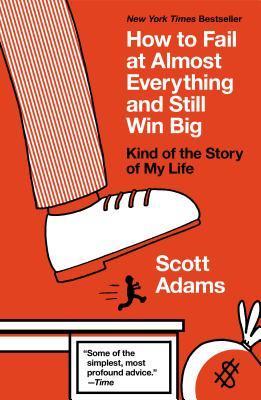
How to Fail at Almost Everything and Still Win Big: Kind of the Story of My Life
by Scott Adams
Rating: 4.2 ⭐
• 6 recommendations ❤️
Scott Adams has likely failed at more things than anyone you’ve ever met or anyone you’ve even heard of. So how did he go from hapless office worker and serial failure to the creator of Dilbert, one of the world’s most famous syndicated comic strips, in just a few years? In How to Fail at Almost Everything and Still Win Big, Adams shares the strategy he has used since he was a teen to invite failure in, to embrace it, then pick its pocket. No career guide can offer advice for success that works for everyone. As Adams explains, your best bet is to study the ways of others who made it big and try to glean some tricks and strategies that make sense for you. Adams pulls back the covers on his own unusual life and shares what he learned for turning one failure after another into something good and lasting. Adams reveals that he failed at just about everything he’s tried, including his corporate career, his inventions, his investments, and his two restaurants. But there’s a lot to learn from his personal story, and a lot of humor along the way. While it’s hard for anyone to recover from a personal or professional failure, Adams discovered some unlikely truths that helped to propel him forward. For instance:• Goals are for losers. Systems are for winners.• "Passion" is bull. What you need is personal energy.• A combination of mediocre skills can make you surprisingly valuable.• You can manage your odds in a way that makes you look lucky to others.

God's Debris is the first non-humor book by best-selling author Scott Adams. Adams describes God's Debris as a thought experiment wrapped in a story. It's designed to make your brain spin around inside your skull. Imagine that you meet a very old man who you eventually realize knows literally everything. Imagine that he explains for you the great mysteries of life: quantum physics, evolution, God, gravity, light psychic phenomenon, and probability in a way so simple, so novel, and so compelling that it all fits together and makes perfect sense. What does it feel like to suddenly understand everything? You may not find the final answer to the big question, but God's Debris might provide the most compelling vision of reality you will ever read. The thought experiment is this: Try to figure out what's wrong with the old man's explanation of reality. Share the book with your smart friends, then discuss it later while enjoying a beverage.

Win Bigly: Persuasion in a World Where Facts Don't Matter
by Scott Adams
Rating: 3.9 ⭐
• 2 recommendations ❤️
The New York Times bestseller that explains one of the most important perceptual shifts in the history of humankindScott Adams was one of the earliest public figures to predict Donald Trump’s election. The mainstream media regarded Trump as a lucky clown, but Adams – best known as “the guy who created Dilbert ” -- recognized a level of persuasion you only see once in a generation. We’re hardwired to respond to emotion, not reason, and Trump knew exactly which emotional buttons to push. The point isn’t whether Trump was right or wrong, good or bad. Adams goes beyond politics to look at persuasion tools that can work in any setting—the same ones Adams saw in Steve Jobs when he invested in Apple decades ago. Win Bigly is a field guide for persuading others in any situation—or resisting the tactics of emotional persuasion when they’re used on you. This revised edition features a bonus chapter that assesses just how well Adams foresaw the outcomes of Trump’s tactics with North Korea, the NFL protesters, Congress, and more.

Everyone who's in business, works for a business, or even just gives others the business is amazed: Scott Adams never lacks for yet another way to lampoon the corporate world. It's not that Adams is anti-business. He's more anti-bad boss than anything. But poor management practices, the effects of bad decisions, and what it all means for the average worker add up to more comedic material than even the man who created Dilbert can tame.Since Dilbert was first syndicated in 1989, Adams has built a following that would be the envy of any corporate sales and marketing team. His work not only generates howls from readers as they rush to plaster it on lunch-room refrigerators and scan it into interoffice e-mails, it has those same fans reading about "their" workplaces every Sunday in a multiple-panel, color format. And that's what this treasury, Dilbert : A Treasury Of Sunday Strips, provides. This collection offers yet another glimpse into the zany life of Dilbert, Dogbert, Ratbert, and the rest of the crazy cube crew through the masterpiece Sunday comics. Here's even more of the great Adams's irony, sarcasm, and satire that so many have come to depend upon to cope with the corporate workplace. Dilbert : A Treasury Of Sunday Strips humorously continues the tradition of poking fun at the world of business from which we all seek to temporarily escape.

From the creator of Dilbert and author of Win Bigly , a guide to spotting and avoiding loserthink: sneaky mental habits trapping victims in their own bubbles of reality. If you've been on social media lately, or turned on your TV, you may have noticed a lot of dumb ideas floating around."We know when history will repeat and when it won't.""We can tell the difference between evidence and coincidences.""The simplest explanation is usually true."Wrong, wrong, and dangerous!If we're not careful, loserthink would have us believe that every Trump supporter is a bigoted racist, addicts should be responsible for fixing the opioid epidemic, and that your relationship fell apart simply because you chewed with your mouth open.Even the smartest people can slip into loserthink's seductive grasp. This book will teach you how to spot and avoid it--and will give you scripts to respond when hollow arguments are being brandished against you, whether by well-intentioned friends, strangers on the internet, or political pundits. You'll also learn how to spot the underlying causes of loserthink, like the inability to get ego out of your decisions, thinking with words instead of reasons, failing to imagine alternative explanations, and making too much of coincidences.Your bubble of reality doesn't have to be a prison. This book will show you how to break free--and, what's more, to be among the most perceptive and respected thinkers in every conversation.

The Dilbert Principle: A Cubicle's-Eye View of Bosses, Meetings, Management Fads & Other Workplace Afflictions
by Scott Adams
Rating: 3.9 ⭐
The creator of Dilbert, the fastest-growing comic strip in the nation (syndicated in nearly 1000 newspapers), takes a look at corporate America in all its glorious lunacy. Lavishly illustrated with Dilbert strips, these hilarious essays on incompetent bosses, management fads, bewildering technological changes and so much more, will make anyone who has ever worked in an office laugh out loud in recognition. The Dilbert Principle: The most ineffective workers will be systematically moved to the place where they can do the least damage -- management.Since 1989, Scott Adams has been illustrating this principle each day, lampooning the corporate world through Dilbert, his enormously popular comic strip. In Dilbert, the potato-shaped, abuse-absorbing hero of the strip, Adams has given voice to the millions of Americans buffeted by the many adversities of the workplace.Now he takes the next step, attacking corporate culture head-on in this lighthearted series of essays. Packed with more than 100 hilarious cartoons, these 25 chapters explore the zeitgeist of ever-changing management trends, overbearing egos, management incompetence, bottomless bureaucracies, petrifying performance reviews, three-hour meetings, the confusion of the information superhighway and more. With sharp eyes, and an even sharper wit, Adams exposes -- and skewers -- the bizarre absurdities of everyday corporate life. Readers will be convinced that he must be spying on their bosses, The Dilbert Principle rings so true!

In this frenetically paced sequel to Adams' best-selling "thought experiment," God's Debris, the smartest man in the world is on a mission to stop a cataclysmic war between Christian and Muslim forces and save civilization. The brilliantly crafted, thought-provoking fable raises questions about the nature of reality and just where our delusions are taking us.With publication of The Religion War, millions of long-time fans of Scott Adams' Dilbert cartoons and business bestsellers will have to admit that the literary world is a better place with Adams on the loose spreading new ideas and philosophical conundrums.Unlike God's Debris, which was principally a dialogue between its two main characters, The Religion War is set several decades in the future when the smartest man in the world steps between international leaders to prevent a catastrophic confrontation between Christianity and Islam. The parallels between where we are today and where we could be in the near future are clear.According to Adams, The Religion War targets "bright readers with short attention spans—everyone from lazy students to busy book clubs." But while the book may be a three-hour read, it's packed with concepts that will be discussed long after, including a list of "Questions to Ponder in the Shower" that reinforce the story's purpose of highlighting the most important—yet most ignored—questions in the world.
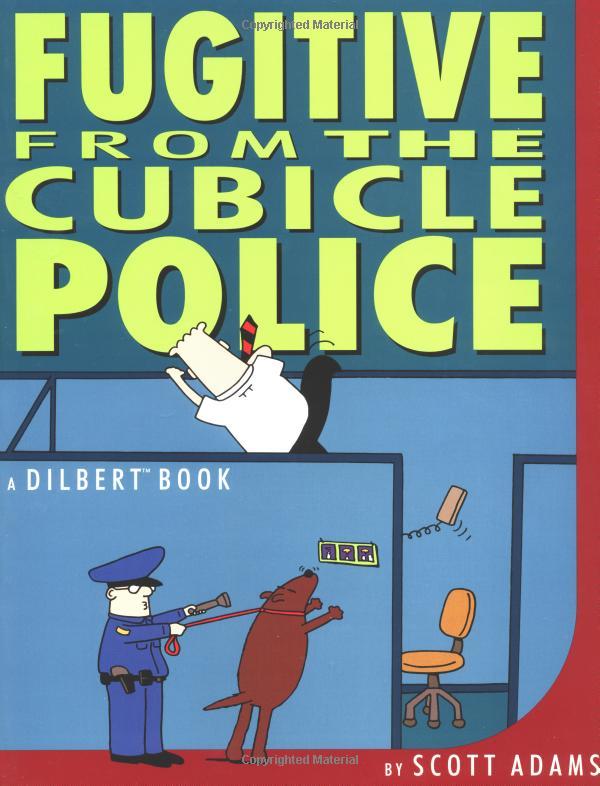
A cartoon book featuring the character Dilbert and the ups and downs of life in and out of the office, from clueless management decrees to near-revolts among the cubicle dwellers. When the cubicle police outlaw plastic plants lest they attract dumb bugs, Dilbert makes a rebellious stand.
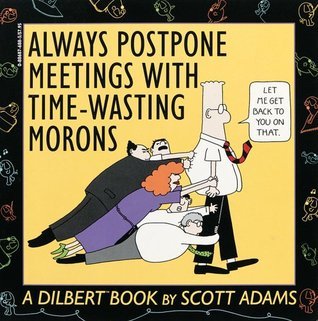
From mountain and valley, from hill and dale, people are asking, "How can I have more Dilbert in my life?" Help is at hand with a blast from the past in Scott Adams' very first compilation of Dilbert comic strips, Always Postpone Meetings with Time-Wasting Morons.It is tempting to compare Adams' work to that of Leonardo da Vinci. The differences are striking. Adams displays good jokes and strong character development, whereas da Vinci has been skating for years on his ability to do shading. Advantage: Adams.And though it may seem boorish to point this out, da Vinci wrote backwards. And he's dead. Advantage: Adams.The choice is clear. Fans looking for a book which will stand the test of time, even beyond the time you spend flipping through it in the bookstore (for which the author receives no royalties whatsoever), you should buy this book. Those who are not good comparison shoppers can buy the Mona Lisa.

Step aside, Bill Gates! Here comes today′s real technology guru and his totally original, laugh-out-loud New York Times bestseller that looks at the approaching new millennium and boldly predicts: more stupidity ahead.In The Dilbert Principle and Dogbert′s Top Secret Management Handbook, Scott Adams skewered the absurdities of the corporate world. Now he takes the next logical step, turning his keen analytical focus on how human greed, stupidity and horniness will shape the future. Featuring the same irresistible amalgam of essays and cartoons that made Adams previous works so singularly entertaining, this uproariously funny, dead-on-target tome offers half-truthful, half-farcical predictions that push all of today′s hot buttons - from business and technology to society and government.Children - they are our future, so we′re pretty much hosed. Tip: Grab what you can while they′re still too little to stop us.Human Potential - we′ll finally learn to use the 90 percent of the brain we don′t use today, and find out that there wasn′t anything in that part.Computers - Technology and homeliness will combine to form a powerful type of birth control.

Seven Years of Highly Defective People: Scott Adams' Guided Tour of the Evolution of Dilbert
by Scott Adams
Rating: 4.2 ⭐
Since its debut in 1989, Dilbert has become the comic strip sensation, attracting fans from all corridors of working life. As Dilbert's popularity has grown, so has curiosity about the man behind the drawing table. Seven Years Of Highly Defective People is filled with Scott Adams' handwritten notes - notes that answer provocative questions such as, Which characters became unexpected "regulars"?, What objects are the most challenging to draw?, and Which strips became the biggest hits? This unique treasury is a tour of the origins and evolution of Dilbert's cast, and your tour guide is Dilbert's creator.Each chapter chronicles a different character using selected cartoons (from previous books) to illustrate each one's development. Scott Adams tells where the characters came from, why they do the things they do, and just what the heck he was thinking during the creative process. (Our theory is he was just tired.) You'd have to be an "Induhvidual" to miss out on this special collection.

The Joy of Work: Dilbert's Guide to Finding Happiness at the Expense of Your Co-Workers
by Scott Adams
Rating: 3.9 ⭐
Egomaniacal bosses. Stupid coworkers. Boring routines. Corporate America has become a wasteland of tedium and soulless drudgery that just sucks the life force out of your body and reduces you into a mindless, stressed-out drone. No more.It's time to let the creative juices run over -- Dilbert style. In this latest foray into the pre-posterous world of business, America's favorite cubicle dweller gives us a blueprint for rediscovering the joy of work that's full of tips for livening up the workplace at the expense of coworkers, stockholders, and civilization in general. Usually absurd, always funny, it is a timely, right-on-target look at corporate America that never fails to deliver gut-wrenching laughs.

Imagine the scene: The bees are on the job, buzzing, busy. The hapless worker drones build the honeycomb, ceaselessly, tirelessly, for the good of the hive, every waking moment, hour after hour, day after day, week after week. Then one morning, an industrious bee brings in the latest 'Dilbert' collection. The other bees gather round. Chuckles. Then laughter. Then great, tear-squirting bee guffaws. 'That's exactly what's happening here, man!' All the bees spontaneously take a coffee break and sit around telling unflattering stories about the Queen.You could be that bee. If, that is, you're the first one at work to get your hands on Jounrey to Cubeville, the latest adventures of Dilbert, Dogbert, and the rest of that crew who offer salvation from the mind-numbing repetition of the daily grind.Or things could go much differently. Be the last one in your block of cubicles to see Journey to Cubeville and you run the risk of being lost in the watercooler conversation, left out of the e-mail loop, derided behind your back like an upper-management imbecile. Shame and embarrassment galore. It could happen.Journey to Cubeville takes on the usual suspects (all forms of office-related idiocy) with Adams's characteristic lack of sympathy. Whether it's pointed at the network administrator with the power to paralyze an entire company with the stroke of a key, the accountant who engages you in a heated battle over reimbursement for a ham sandwich hastily gulped on a business trip, or the manager (no specific demented action necessary, because in the world of Dilbert that word is synonymous with 'incompetent fool'), Adams's humor and insight is the kind that only an insider can provide — and it's so universal that the millions of people who read it seem sure that the strip is actually about their company.So come on — you know you want to be first. Take everyone else along for the ride for a change. You can photocopy the pages and tape them up all over the place. Go crazy. Then e-mail Scott Adams all about it and end up immortalized in the next Dilbert collection.
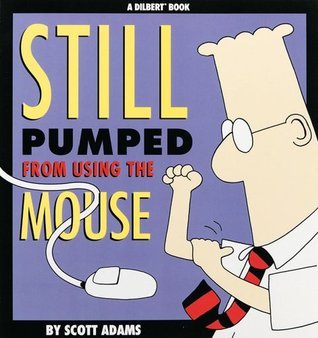
For the more than 50 million readers who regularly enjoy Dilbert in over 2,000 newspapers worldwide, Scott Adams's take on the working world is outrageously fresh, farcical, and far-reaching. In this collection, Dilbert and his egg-shaped, bespectacled canine, Dogbert, again give readers an insider's look at the funny business of the work-a-day world.

Dilbert is the Everyman in the down-sized, techno-centered workplace of the nineties. He's the corporately innocent engineer who experiences the absurdities and oddities of office life from his (sometimes shrinking) cubicle. Complemented by his sarcastic and power-hungry dog, Dogbert (aspiring Supreme Ruler of the Earth whose secret to happiness is "High expectations and your own bag of chips"), Dilbert provides humor on one of life's most insidious subjects: work. It's Obvious You Won't Survive by Your Wits Alone features nearly two years of Dilbert comic strips (including color Sunday cartoons!) that have never appeared in book form.Dilbert, created by Scott Adams, appears in more than 550 newspapers worldwide and is the Internet's number one comic strip. "The Dilbert Zone" is featured on United Media's World Wide Web site, which generates more than three million hits every week.

Since it first appeared in 1989, the popularity of Dilbert has grown so quickly that it is now generating a worldwide sensation. Dilbert's world is thrown into confusion when Catbert decrees that Fridays are to be "casual days".
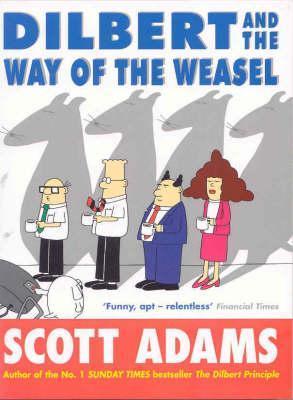
Back after a four-year hiatus, New York Times best-selling author Scott Adams presents an outrageous look at work, home, and everyday life in his new book, Dilbert and the Way of the Weasel. Building on Dilbert’s theory that “All people are idiots,” Adams now says, “All people are idiots. And they are also weasels.” Just ask anyone who worked at Enron.In this book, Adams takes a look into the Weasel Zone, the giant grey area between good moral behaviour and outright felonious activities. In the Weasel Zone, where most people reside, everything is misleading, but not exactly a lie. Building on his popular comic strip, Adams looks into work, home, and everyday life and exposes the way of the weasel for everyone to see. With appearances from all the regular comic strip characters, Adams and Dilbert are at the top of their game—master satirists who expose the truth while making us laugh our heads off.

The creator of Dilbert, the fastest-growing comic strip in America (syndicated in more than 900 newspapers and read by more than 60 million people), presents a hilariously biting compilation of cartoons that expose the absurdities of corporate management. Dilbert is sweeping the nation. The San Francisco Chronicle dubbed him "the cartoon hero of the workplace," saying that the strip "has its finger on the pulse of the '90s white-collar workplace." Now online, it is one of the hottest Web sites on the Internet, and more than a million copies of the Dilbert cartoon books have been sold.In this latest cartoon compilation, Dilbert's canine sidekick, the Machiavellian Dogbert, presents a breakthrough management manual to help bosses stick it to their employees. All too often, new managers make mistakes like rewarding good work with good pay, communicating clearly and improving departmental efficiency. Dogbert shows that this could have devastating results: Employees begin to expect fair treatment and compensation, productive workers show results (making the managers look bad by comparison) and the department's future budget allotment could be decreased because it spends only what it needs.Drawn from years of experience tormenting Dilbert and advising his boss, Dogbert's Top Secret Management Handbook uses pithy essays, whose points are illustrated with hundreds of comic strips, to drive home the lost cause of the employee in the workplace. It is the perfect gift for bosses and office workers everywhere.

In Reframe Your Brain, Scott Adams, the contrarian genius behind Dilbert and author of the most influential personal success book of all time—How to Fail at Almost Everything and Still Win Big—gives you the complete operating system for lasting happiness.Are you familiar with this old saying?“All publicity is good publicity.”That’s a classic reframe. The quote shifts your thinking from the shame of whatever you did wrong to your probable benefit. You can’t change the past, but you can change how you feel about it.Trained hypnotist and persuasion expert Scott Adams has packed more than 160 new, counterintuitive, and effective reframes into Reframe Your Brain. For Usual Frame: Manage your time.Reframe: Manage your energy.Usual Frame: Success depends on who you know.Reframe: Success depends on how many people you know.Usual Frame: Your critics are evil monsters.Reframe: Your critics are your mascots.Usual Frame: The universe is acting against you.Reframe: The universe owes you.Usual Frame: Luck is random and can’t be managed.Reframe: You can go where there is more luck (more energy).These instant perspective-shifters will help you feel better on demand and succeed at any endeavor without the usual pain or pitfalls. The reframe collection covers personal fulfillment, business and career success, mental health, social activities, and physical well-being. If only 10 percent of the reframes work for you, your life will never be the same.Prepare to embark on a journey of transformation as Scott Adams shares his most invaluable insights and practical techniques to date, empowering you to reprogram your own reality using words alone.

Yet another right-on-target collection of comic strips from Dilbert, the world-renowned fictional cubicle worker of engineer-turned-cartoonist Scott Adams. Rarely is there an office these days that doesn't have at least one Dilbert strip tacked up somewhere that employees gather to either laugh off or lament the sometimes inane practices of top-level management. Think you're surrounded by morons at work? Dilbert, and his canine companion Dogbert, are the consultants you should visit next.

In Random Acts of Management, cartoonist Scott Adams offers sardonic glimpses once again into the lunatic office life of Dilbert, Dogbert, Wally, and others, as they work in an all-too-believably ludicrous setting filled with incompetent management, incomprehensible project acronyms, and minuscule raises. Everyone, it seems, identifies with Dilbert, who struggles to navigate the constant tribulations of absurd company policies and idiot management strategies.
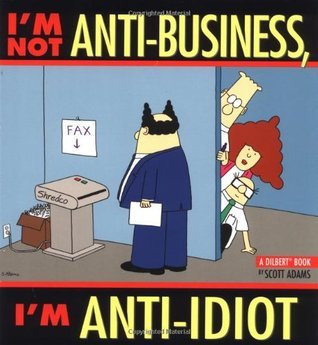
This volume of cartoons, which ran in newspapers from 11/20/95 through 8/31/96, brings you more of the bizarre fun of the eternally devious, frustrated, and clueless. In addition to the Boss, Alice, Wally, and Dogbert, you'll marvel at the escapades of Antina the non-stereotypical woman. Does not include cubicle poster.

Hot on the heels of Dogbert's Clues for the Clueless, this new Dilbert collection will be widely welcomed by fans of that attention-grabbing comic which appears in 175 newspapers nationwide. Don't miss incompetent, socially inept technohead Dilbert and his megalomaniac pet Dogbert as they try to not only survive in but rule the world.

Build a Better Life by Stealing Office Supplies: Dogbert's Big Book of Business
by Scott Adams
Rating: 3.9 ⭐
Anyone who ever toiled in the office "environment" will identify with the ironclad axioms put forth by Dogbert in this collection of office wisdom. So, move over Murphy's Law, and forget about the One-Minute Manager, Dogbert is taking the business-book business by storm.

"For the armies of American office workers, Dilbert is a reminder that they are not alone." — Chicago Tribune "Cruel and incompetent bosses, plus the pervasive stupidity of people Adams calls 'in-duh-viduals,' are favorite targets in the strip, which appears...on the Internet, in best-selling books, and on refrigerator magnets, coffee mugs, desk calendars, software, neckties, and even underwear." — Playboy magazine Does Dilbert creator Scott Adams have a hidden camera in your office—or is he just completely in tune with the inept managers, wacky office politics, and nonsensical leadership practices that seem to run wild at your company? Stop looking for the camera. Dilbert has become a hugely successful strip because Adams feels your pain. How? Because this former employee of a major telecommunications company has been there. He's seen the leadership firsthand. And he knows that to successfully navigate the ludicrous world of business, you can't expect common sense to prevail, you need to keep a sense of humor, and above all, you must always look before you leap. The strip's enormous popularity stems from the fact that its millions of readers easily identify with the crazy plots and wacky characters found within the corporate environment of collections like this one, Don't Step on the Leadership . Sure, most companies don't have a bespectacled engineer with a tie permanently curled up, a cynical talking dog, and a manager with two pointy tufts of hair. But it's the outrageous things Dilbert characters do and say that leave readers knowingly nodding their heads and, of course, laughing uproariously. The antics of Dilbert 's cast are based not only on Adams' own corporate experiences, but on the more than 300 e-mails he receives each day about the office dramas of his devoted fans.
Everyone knows Scott Adams, the creator of Dilbert, as the king of workplace humor. His insights into the crazy world of business have long been on display in his hugely popular comic strip and bestselling books like The Dilbert Principle. But there's much more to life than work, and it turns out that the man behind Dogbert and the Pointy-Haired Boss has an equally outrageous take on life outside the cubicle.Adams ventures into uncharted territory in this collection of more than 150 short pieces on everything from lunar real estate to serial killers, not to mention politics, religion, dating, underwear, alien life, and the menace of car singing. He isn't afraid to confront the most pressing questions of our day, such as the pros and cons of toothpaste smuggling, why kangaroos don't drive cars, and whether Jesus would approve of your second iPod.

The world is getting more complicated. In the good old days you could set a peasant on fire with a flaming arrow, stomp him out with your horse, and still get away with a simple "excuse me." But these days, what with five billion people - many of whom do not consider themselves peasants - you are expected to meet a higher standard. It isn't fair, but it's life.That's why I wrote this book. It's your guide for gracefully navigating the annoying and ever changing world we live in. Think of it as a gift from me to you, except that you have to pay for it...You're welcome.

In the tradition of The Complete Far Side and The Complete Calvin and Hobbes, Dilbert 2.0 celebrates the 20th anniversary of Scott Adams's Dilbert, the touchstone of office humor.This special slip-cased collection-weighing in at more than ten pounds with 600 pages and featuring almost 4,000 strips-takes readers behind the scenes and into the early days of Scott Adams's life pre-Dilbert and on to the success that followed when Dilbert became an internationally syndicated sensation.Divided into five different epochs, Dilbert 2.0 gives readers a glance at some of Adams's earliest strips, like those created for Playboy, and a peek at an abundance of special content ranging from numerous rejection letters to Adams's first cartooning check, and more.Adams personally selected the material for this collection and offers original comments and humorous asides throughout. Also included is a piracy-protected disc that contains every Dilbert comic strip to April 2008.

When Dilbert first appeared in newspapers across the country in 1989, office workers looked around suspiciously. Was its creator, Scott Adams, a pen name for someone who worked amongst them? After all, the humor was just too eerily funny and familiar. Since then, Dilbert has become more than a cartoon character. He's become an office icon. In Another Day in Cubicle Paradise, Dilbert and his cohorts, Dogbert, Catbert, Ratbert, and the pointy-haired boss, once again entertain with their cubicle humor. From bizarre personnel decisions to meetings gone bad, from schizoid secretaries to consultants from hell, Another Day in Cubicle Paradise provides a way to get all those darn comic strips off the breakroom bulletin board.

Everyone who reads Dilbert and works in an office will appreciate this newest collection, Dilbert Gives You the Business. Creator Scott Adams tells it like it is through the insane business world inhabited by Dilbert. If frustration and lunacy are an inevitable part of your workday, appropriate measures must be taken immediately.After 10 years of syndication, Dilbert is universally recognized as the definitive source of office humor. What makes this 14th Dilbert book so unique is that it is a collection of the most popular strips requested by fans for reprints and downloads from Dilbert.com gathered together for the first time. Arranged by topics for quick reference, this hilarious book is the comprehensive Dilbert source book, sure to alleviate work burnout. Fans will find all their favorite characters packed within these colorful pages, including Dilbert, as he encounters daily issues from delegating to decision-making, trade shows to telecommuting, and downsizing to annoying coworkers.It's business as usual for the Dilbert clan...Dilbert is continually updating his resume, Dogbert continues his pursuit of world domination, Wally strives to do the least amount of work possible, and Alice is eternally frustrated by the Boss. Welcome to the all-too-familiar world of Dilbert--the lowly engineer who has become an icon for oppressed and burnt-out workers everywhere! The most popular business-oriented cartoon in the worked, Dilbert Speaks to millions of fans who toil in the corporate trenches. No matter how outrageous a tale he spins, Dilbert creator Scott Adams inserts sufficient nuggets of truth in every strip to keep his believers laughing. In part, that's because Dilbert is based on his own former corporate experiences--and is kept current by culling inspiration from the 350-plus e-mails he receives each day.

Dubbed "the cartoon hero of the workplace" by the San Francisco Examiner, Dilbert is the cubicle-bound star of the most photocopied, pinned-up, downloaded, faxed, and e-mailed comic strip in the world.As fresh a look at the inanity of office life as it brought to the comics pages when it first appeared in 1989, this 40th AMP Dilbert collection comically confirms to the working public that we all really know what's going on. Our devices might be more sophisticated, our software and apps might be more plentiful, but when it gets down to interactions between the worker bees and the clueless in-controls, discontent and sarcasm rule, as only Dilbert can proclaim.