Loading genres...
Explore the best books about German Literature genre.
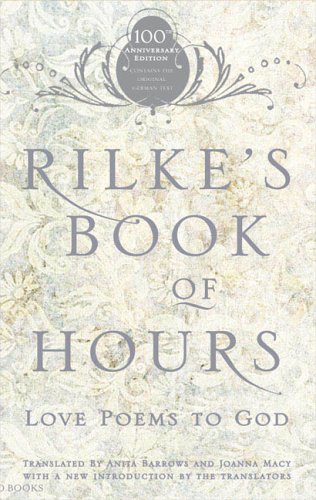
While visiting Russia in his twenties, Rainer Maria Rilke, one of the twentieth century's greatest poets, was moved by a spirituality he encountered there. Inspired, Rilke returned to Germany and put down on paper what he felt were spontaneously received prayers. Rilke's Book of Hours is the invigorating vision of spiritual practice for the secular world, and a work that seems remarkably prescient today, one hundred years after it was written. Rilke's Book of Hours shares with the reader a new kind of intimacy with God, or the divine--a reciprocal relationship between the divine and the ordinary in which God needs us as much as we need God. Rilke influenced generations of writers with his Letters to a Young Poet, and now Rilke's Book of Hours tells us that our role in the world is to love it and thereby love God into being. These fresh translations rendered by Joanna Macy, a mystic and spiritual teacher, and Anita Barrows, a skilled poet, capture Rilke's spirit as no one has done before.
A fresh perspective on a beloved classic by acclaimed translators Anita Barrows and Joanna Macy.German poet Rainer Maria Rilke’s (1875–1926) Letters to a Young Poet has been treasured by readers for nearly a century. Rilke’s personal reflections on the vocation of writing and the experience of living urge an aspiring poet to look inward, while also offering sage wisdom on further issues including gender, solitude, and romantic love. Barrows and Macy’s translation extends this compilation of timeless advice and wisdom to a fresh generation of readers. With a new introduction and commentary, this edition places the letters in the context of today’s world and the unique challenges we face when seeking authenticity.

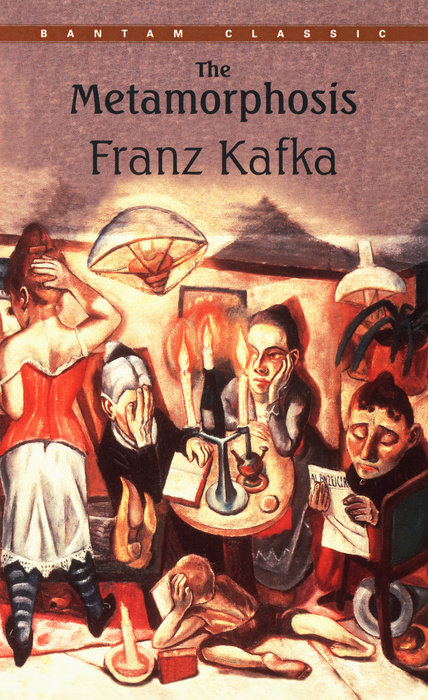
Alternate cover edition of ISBN 0553213695 / 9780553213690"As Gregor Samsa awoke one morning from uneasy dreams he found himself transformed in his bed into a gigantic insect. He was laying on his hard, as it were armor-plated, back and when he lifted his head a little he could see his domelike brown belly divided into stiff arched segments on top of which the bed quilt could hardly keep in position and was about to slide off completely. His numerous legs, which were pitifully thin compared to the rest of his bulk, waved helplessly before his eyes." With it's startling, bizarre, yet surprisingly funny first opening, Kafka begins his masterpiece, The Metamorphosis. It is the story of a young man who, transformed overnight into a giant beetle-like insect, becomes an object of disgrace to his family, an outsider in his own home, a quintessentially alienated man. A harrowing—though absurdly comic—meditation on human feelings of inadequacy, guilt, and isolation, The Metamorphosis has taken its place as one of the most widely read and influential works of twentieth-century fiction. As W.H. Auden wrote, "Kafka is important to us because his predicament is the predicament of modern man."

"[This book] mirrors all of Nietzsche's thought and could be related in hundreds of ways to his other books, his notes, and his letters. And yet it is complete in itself. For it is a work of art." —Walter Kaufmann in the IntroductionNietzsche called The Gay Science "the most personal of all my books." It was here that he first proclaimed the death of God—to which a large part of the book is devoted—and his doctrine of the eternal recurrence.Walter Kaufmann's commentary, with its many quotations from previously untranslated letters, brings to life Nietzsche as a human being and illuminates his philosophy. The book contains some of Nietzsche's most sustained discussions of art and morality, knowledge and truth, the intellectual conscience and the origin of logic.Most of the book was written just before Thus Spoke Zarathustra, the last part five years later, after Beyond Good and Evil. We encounter Zarathustra in these pages as well as many of Nietzsche's most interesting philosophical ideas and the largest collection of his own poetry that he himself ever published.Walter Kaufmann's English versions of Nietzsche represent one of the major translation enterprises of our time. He is the first philosopher to have translated Nietzsche's major works, and never before has a single translator given us so much of Nietzsche.

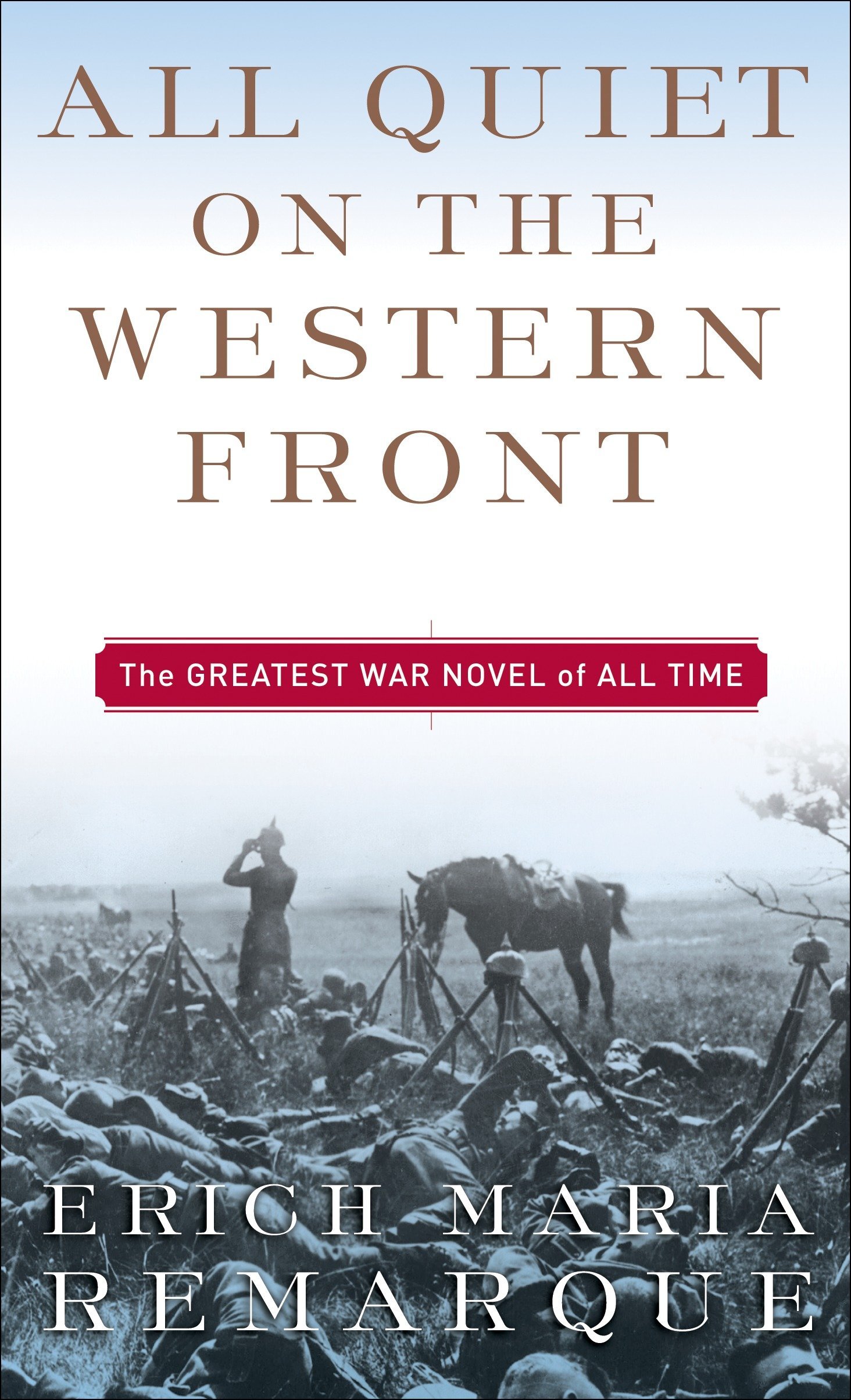
One by one the boys begin to fall…In 1914 a room full of German schoolboys, fresh-faced and idealistic, are goaded by their schoolmaster to troop off to the ‘glorious war’. With the fire and patriotism of youth they sign up. What follows is the moving story of a young ‘unknown soldier’ experiencing the horror and disillusionment of life in the trenches.

One of the greatest philosophers of the nineteenth century, Schopenhauer believed that human action is determined not by reason but by 'will' - the blind and irrational desire for physical existence. This selection of his writings on religion, ethics, politics, women and many other themes is taken from Schopenhauer's last work, Parerga and Paralipomena, which he published in 1851. He depicts humanity as locked in a struggle beyond good and evil, each individual absolutely free within a Godless world in which art, morality and self-awareness are our only salvation. This innovative and pessimistic view proved powerfully influential upon philosophy and art, affecting the work of Nietzsche and Wittgenstein among others.

Bollingen Series XX. Essays which state the fundamentals of Jung's psychological system: "On the Psychology of the Unconscious" and "The Relations Between the Ego and the Unconscious," with their original versions in an appendix.

A centennial edition of I and Thou , a landmark of 20th-century intellectual history and one of the most important books of Western theology and philosophy, featuring the original English translation.Considered to be one of the most important books of Western theology since its original publication in 1923, Martin Buber’s slender volume I and Thou influenced the way theologians, philosophers, and laymen think about the meaning of the relationship between human life and God. Heavily influenced by the writings of Friedrich Nietzsche, Buber unites the proto-existentialist currents of modern German thought with the Judeo-Christian tradition, powerfully updating faith for modern times.I and Thou is Martin Buber’s seminal work and the centerpiece of his groundbreaking philosophy. In it, Buber—one of the greatest Jewish minds of the twentieth century—lays out a view of the world in which human beings can enter into relationships using their innermost and whole being to form true partnerships (an I – Thou attitude). These deep forms of rapport contrast with those that sprang from the Industrial Revolution, namely the treatment of others as objects for our use (an I – It attitude). Buber goes on to demonstrate how these interhuman meetings are a reflection of the human meeting with God. For Buber, the essence of biblical religion consists in the fact that—regardless of the infinite abyss between them—a dialogue between man and God is possible.This original English translation by Ronald Gregor Smith was prepared in the author’s presence and is considered to be the definitive edition of the book.

C'est sur un paquebot trop confortable, en route pour l'Amérique du Sud, que Stefan Zweig eut l'idée de cette odyssée biographique. Il songea aux conditions épouvantables des voyages d'autrefois, au parfum de mort salée qui flottait sur les bougres et les héros, à leur solitude. Il songea à Magellan, qui entreprit, le 20 septembre 1519, à 39 ans, le premier voyage autour du monde. Un destin exceptionnel... Sept ans de campagne militaire en Inde n'avaient rapporté à Magellan le Portugais qu'indifférence dans sa patrie. Il convainc alors le roi d'Espagne, Charles-Quint, d'un projet fou ; " Il existe un passage conduisant de l'océan Atlantique à l'océan Indien. Donnez-moi une flotte et je vous le montrerai et je ferai le tour de la terre en allant de l'est à l'ouest " (C'était compter sans l'océan Pacifique, inconnu à l'époque..). Jalousies espagnoles, erreurs cartographiques, rivalités, mutineries, désertions de ses seconds pendant la traversée, froids polaires, faim et maladies, rien ne viendra à bout de la détermination de Magellan, qui trouvera à l'extrême sud du continent américain le détroit qui porte aujourd'hui son nom. Partie de Séville avec cinq cotres et 265 hommes, l'expédition reviendra trois ans plus tard, réduite à 18 hommes sur un raffiot. Epuisée, glorieuse. Sans Magellan qui trouva une mort absurde lors d'une rixe avec des sauvages aux Philippines, son exploit accompli. Dans ce formidable roman d'aventures, Zweig exalte la volonté héroïque de Magellan, qui prouve qu'" une idée animée par le génie et portée par la passion est plus forte que tous les éléments réunis et que toujours un homme, avec sa petite vie périssable, peut faire de ce qui a paru un rêve à des centaines de générations une réalité et une vérité impérissables ".

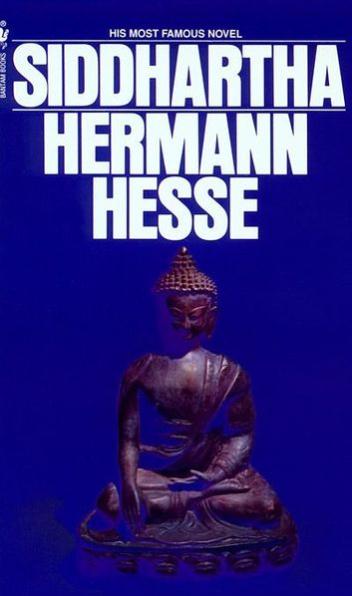
The final novel of Hermann Hesse, The Glass Bead Game is a fascinating tale of the complexity of modern life as well as a classic of modern literature.Set in the twenty-third century, The Glass Bead Game is the story of Joseph Knecht, who has been raised in Castalia, the remote place his society has provided for the intellectual elite to grow and flourish. Since childhood, Knecht has been consumed with mastering the Glass Bead Game, which requires a synthesis of aesthetics and philosophy, which he achieves in adulthood, becoming a Magister Ludi (Master of the Game).

Written in 1914 but not published until 1925, a year after Kafka’s death, The Trial is the terrifying tale of Josef K., a respectable bank officer who is suddenly and inexplicably arrested and must defend himself against a charge about which he can get no information. Whether read as an existential tale, a parable, or a prophecy of the excesses of modern bureaucracy wedded to the madness of totalitarianism, The Trial has resonated with chilling truth for generations of readers.

Goethe was probably the last true ‘Renaissance Man’. Although employed as a Privy Councillor at the Duke of Weimar’s court, where he helped oversee major mining, road-building and irrigation projects, he also painted, directed plays, carried out research in anatomy, botany and optics — and still found time to produce masterpieces in every literary genre. His 1,413 maxims and reflections reveal not only some of his deepest thought on art, ethics, literature and natural science, but also his immediate reactions to books, chance encounters or his administrative work. With a freshness and immediacy which vividly conjure up Goethe the man, they make an ideal introduction to one of the greatest of European writers.

Hailed for its coiled eroticism and the moral claims it makes upon the reader, this mesmerizing novel is a story of love and secrets, horror and compassion, unfolding against the haunted landscape of postwar Germany.When he falls ill on his way home from school, fifteen-year-old Michael Berg is rescued by Hanna, a woman twice his age. In time she becomes his lover—then she inexplicably disappears. When Michael next sees her, he is a young law student, and she is on trial for a hideous crime. As he watches her refuse to defend her innocence, Michael gradually realizes that Hanna may be guarding a secret she considers more shameful than murder.

Here is a mini-anthology of poetry and prose for both aficionados and those readers discovering Rainer Maria Rilke for the first time. John J. L. Mood has assembled a collection of Rilke's strongest work, presenting commentary along with the selections. Mood links into an essay passages from letters that show Rilke's profound understanding of men and women and his ardent spirituality, rooted in the senses.Combining passion and sensitivity, the poems on love presented here are often not only sensual but sexual as well. Others pursue perennial themes in his work—death and life, growth and transformation. The book concludes with Rilke's reflections on wisdom and openness to experience, on grasping what is most difficult and turning what is most alien into that which we can most trust.

An epic chess match on a transatlantic liner unearths a story of persecution and obsession. One of the most perfectly gripping novellas from a master of the form, Stefan Zweig.Chess world champion Mirko Czentovic is travelling on an ocean liner to Buenos Aires. Dull-witted in all but chess, he entertains himself on board by allowing others to challenge him in the game, before beating each of them and taking their money. But there is another passenger with a passion for chess: Dr B, previously driven to insanity during Nazi imprisonment by the chess games in his imagination. But in agreeing to take on Czentovic, what price will Dr B ultimately pay?A moving portrait of one man's madness, A Chess Story is a searing examination of the power of the mind and the evil it can do."The rediscovery of this extraordinary writer could well be on a par with last year's refinding of the long-lost Stoner, by John Williams, and which similarly could pluck his name out of a dusty obscurity." - Simon Winchester, Telegraph"Perhaps the best chess story ever written, perhaps the best about any game. Never mind that you may have never moved a pawn to King four; the story will grip you." - Economist"His great achievement in short form" - The TimesA staunch pacifist after his time in the Ministry of War during the First World War, Stefan Zweig was, at his peak, one of the bestselling and most widely acclaimed authors in the world. Following Hitler's rise to power, he and his second wife fled Austria; first to England, then to America, and finally, in 1940, they travelled together to Brazil, where the couple took an overdose and died. Much of his work is available from Pushkin Press.

Steppenwolf is a poetical self-portrait of a man who felt himself to be half-human and half-wolf. This Faust-like and magical story is evidence of Hesse's searching philosophy and extraordinary sense of humanity as he tells of the humanization of a middle-aged misanthrope. Yet his novel can also be seen as a plea for rigorous self-examination and an indictment of the intellectual hypocrisy of the period. As Hesse himself remarked, "Of all my books Steppenwolf is the one that was more often and more violently misunderstood than any of the others".

Esta es la versión completa y definitiva de una de las obras más revolucionarias y centrales de C. G. Jung. A partir de la reconstrucción y examen de los procesos semiconscientes e inconscientes del caso de una joven, Jung muestra que la psicología no puede prescindir de la historia del espíritu humano. La fantasía creadora dispone del espíritu primitivo, con sus imágenes específicas, que se manifiestan en las mitologías de todos los pueblos y épocas e integran lo inconsciente colectivo.

An assessment of the works of Franz Kafka aimed at a definiton of the basic components of his style

The publication of Victor Klemperer's secret diaries brings to light one of the most extraordinary documents of the Nazi period. I Will Bear Witness is a work of literature as well as a revelation of the day-by-day horror of the Nazi years. A Dresden Jew, a veteran of World War I, a man of letters and historian of great sophistication, Klemperer recognized the danger of Hitler as early as 1933. His diaries, written in secrecy, provide a vivid account of everyday life in Hitler's Germany. What makes this book so remarkable, aside from its literary distinction, is Klemperer's preoccupation with the thoughts and actions of ordinary Germans: Berger the greengrocer, who was given Klemperer's house ("anti-Hitlerist, but of course pleased at the good exchange"), the fishmonger, the baker, the much-visited dentist. All offer their thoughts and theories on the progress of the war: Will England hold out? Who listens to Goebbels? How much longer will it last? This symphony of voices is ordered by the brilliant, grumbling Klemperer, struggling to complete his work on eighteenth-century France while documenting the ever- tightening Nazi grip. He loses first his professorship and then his car, his phone, his house, even his typewriter, and is forced to move into a Jews' House (the last step before the camps), put his cat to death (Jews may not own pets), and suffer countless other indignities. Despite the danger his diaries would pose if discovered, Klemperer sees it as his duty to record events. "I continue to write," he notes in 1941 after a terrifying run-in with the police. "This is my heroics. I want to bear witness, precise witness, until the very end." When a neighbor remarks that, in his isolation, Klemperer will not be able to cover the main events of the war, he writes: "It's not the big things that are important, but the everyday life of tyranny, which may be forgotten. A thousand mosquito bites are worse than a blow on the head. I observe, I note, the mosquito bites."

Adorno's literary and philosophical masterpiece, built from aphorisms and reflections.A reflection on everyday existence in the 'sphere of consumption of late Capitalism', this work is Adorno's literary and philosophical masterpiece. Built from aphorisms and reflections, he shifts in register from personal experience to the most general theoretical problems.

The grand, leading principle, towards which every argument . . . unfolded in these pages directly converges, is the absolute and essential importance of human development in its richest diversity.This description by Wilhelm von Humboldt of his purpose in writing The Limits of State Action animates John Stuart Mill's On Liberty and serves as its famous epigraph. Seldom has a book spoken so dramatically to another writer. Many commentators even believe that Humboldt's discussion of issues of freedom and individual responsibility possesses greater clarity and directness than Mill's. The Limits of State Action, by "Germany's greatest philosopher of freedom," as F. A. Hayek called him, has an exuberance and attention to principle that make it a valuable introduction to classical liberal political thought. It is also crucial for an understanding of liberalism as it developed in Europe at the turn of the nineteenth century. Humboldt explores the role that liberty plays in individual development, discusses criteria for permitting the state to limit individual actions, and suggests ways of confining the state to its proper bounds. In so doing, he uniquely combines the ancient concern for human excellence and the modern concern for what has come to be known as negative liberty.J. W. Burrow is Professor of History at the University of Sussex.

The reference to the Antichrist is not intended to refer to the biblical Antichrist but is rather an attack on the "slave morality" and apathy of Western Christianity. Nietzsche's basic claim is that Christianity is a poisoner of western culture and perversion of the words of and practice of Jesus. Throughout the text, Nietzsche is very critical of institutionalized religion and its priest class, from which he himself was descended. The majority of the book is a systematic attack upon the interpretations of Christ's words by St. Paul and those who followed him. Nietzsche claimed in the Foreword to have written the book for a very limited readership. In order to understand the book, he asserted that the reader "... must be honest in intellectual matters to the point of hardness to so much as endure my seriousness, my passion." The reader should be above politics and nationalism. Also, the usefulness or harmfulness of truth should not be a concern. Characteristics such as "Strength which prefers questions for which no one today is sufficiently daring; courage for the forbidden" are also needed. He disdained all other readers.

The horrors of the Nazi regime and the Holocaust still present some of the most disturbing questions in modern history: Why did Hitler's party appeal to millions of Germans, and how entrenched was anti-Semitism among the population? How could anyone claim, after the war, that the genocide of Europe's Jews was a secret? Did ordinary non-Jewish Germans live in fear of the Nazi state? In this unprecedented firsthand analysis of daily life as experienced in the Third Reich, What We Knew offers answers to these most important questions. Combining the expertise of Eric A. Johnson, an American historian, and Karl-Heinz Reuband, a German sociologist, What We Knew is the most startling oral history yet of everyday life in theThird Reich.

The Complete Stories brings together all of Kafka’s stories, from the classic tales such as “The Metamorphosis,” “In the Penal Colony,” and “A Hunger Artist” to shorter pieces and fragments that Max Brod, Kafka’s literary executor, released after Kafka’s death. With the exception of his three novels, the whole of Kafka’s narrative work is included in this volume. --penguinrandomhouse.comTwo Introductory parables: Before the law --Imperial message --Longer stories: Description of a struggle --Wedding preparations in the country --Judgment --Metamorphosis --In the penal colony --Village schoolmaster (The giant mole) --Blumfeld, and elderly bachelor --Warden of the tomb --Country doctor --Hunter Gracchus --Hunter Gracchus: A fragment --Great Wall of China --News of the building of the wall: A fragment --Report to an academy --Report to an academy: Two fragments --Refusal --Hunger artist --Investigations of a dog --Little woman --The burrow --Josephine the singer, or the mouse folk --Children on a country road --The trees --Clothes --Excursion into the mountains --Rejection --The street window --The tradesman --Absent-minded window-gazing --The way home --Passers-by --On the tram --Reflections for gentlemen-jockeys --The wish to be a red Indian --Unhappiness --Bachelor's ill luck --Unmasking a confidence trickster --The sudden walk --Resolutions --A dream --Up in the gallery --A fratricide --The next village --A visit to a mine --Jackals and Arabs --The bridge --The bucket rider --The new advocate --An old manuscript --The knock at the manor gate --Eleven sons --My neighbor --A crossbreed (A sport) --The cares of a family man --A common confusion --The truth about Sancho Panza --The silence of the sirens --Prometheus --The city coat of arms --Poseidon --Fellowship --At night --The problem of our laws --The conscripton of troops --The test --The vulture --The helmsman --The top --A little fable --Home-coming --First sorrow --The departure --Advocates --The married couple --Give it up! --On parables.

The World of Yesterday, mailed to his publisher a few days before Stefan Zweig took his life in 1942, has become a classic of the memoir genre. Originally titled “Three Lives,” the memoir describes Vienna of the late Austro-Hungarian Empire, the world between the two world wars and the Hitler years.Translated from the German by Benjamin W. Huebsch and Helmut Ripperger; with an introduction by Harry Zohn, 34 illustrations, a chronology of Stefan Zweig’s life and a new bibliography, by Randolph Klawiter, of works by and about Stefan Zweig in English.“The best single memoir of Old Vienna by any of the city’s native artists.” — Clive James“A book that should be read by anyone who is even slightly interested in the creative imagination and the intellectual life, the brute force of history upon individual lives, the possibility of culture and, quite simply, what it meant to be alive between 1881 and 1942.” — The Guardian“It is not so much a memoir of a life as it is the memento of an age.” — The New Republic

"The Eighteenth Brumaire of Louis Bonaparte" is one of Karl Marx' most profound and most brilliant monographs. It may be considered the best work extant on the philosophy of history. On the 18th Brumaire (Nov. 9th), the post-revolutionary development of affairs in France enabled the first Napoleon to take a step that led with inevitable certainty to the imperial throne. The circumstance that fifty and odd years later similar events aided his nephew, Louis Bonaparte, to take a similar step with a similar result, gives the name to this work-"The Eighteenth Brumaire of Louis Bonaparte."

Jung's only extended work in the field of parapsychology aims, on the one hand, to incorporate the findings of "extrasensory perception" (ESP) research into a general scientific point of view and, on the other, to ascertain the nature of the psychic factor in such phenomena. While he had advanced the "synchronicity" hypothesis as early as the 1920s, Jung gave a full statement only in 1951, in an Eranos lecture; the following year (he was seventy-seven) he published the present monograph in a volume with a related study by the physicist (and Nobel winner) Wolfgang Pauli. Together with a wealth of historical and contemporary material on "synchronicity," Jung describes an astrological experiment conducted to test his theory."The concept of synchronicity indicates a meaningful coincidence of two or more events, where something other than the probability of chance is involved. Chance is a statistical concept which 'explains' deviations within certain patterns of probability. Synchronicity elucidates meaningful arrangements and coincidence which somehow go beyond the calculations of probability. Pre-cognition, clairvoyance, telepathy, etc. are phenomena which are inexplicable through chance, but become empirically intelligible through the employment of the principle of synchronicity, which suggests a kind of harmony at work in the interrelation of both psychic and physical events."—The Journal of Religious Thought

The German Generals who survived Hitler's Reich talk over World War II with Capt. Liddell Hart, noted British miltary strategist and writer. They speak as professional soldiers to a man they know and respect. For the first time, answers are revealed to many questions raised during the war. Was Hitler the genius of strategy he seemed to be at first? Why did his Generals never overthrow him? Why did Hitler allow the Dunkirk evacuation? Current interest, of course, focuses on the German Generals' opinion of the Red Army as a fighting force. What did the Russians look like from the German side? How did we look? And what are the advantages and disadvantages under which dictator-controlled armies fight? In vivid, non-technical language, Capt. Liddell Hart reports these interviews and evaluates the vital military lessons of World War II.

* A European classic * Set in Romania, Austria and Germany between the last century's world wars, this is the story of one man. Our hero tells of his childhood: his passion for hunting, his love of the wild landscape of Romania, his ridiculous social snobbery. He leads us through his youth, and between fantastic and colourful stories of Bucharest in the late twenties and early thirties, he dissects his own complicated, at times agonizing, development as a moral creature. We are with him as the Nazis take over Austria; as his own anti-semitism - already such a mixture of belief, caprice, and compromise - is shaken to its core. And later on we meet him as a much older man, one haunted by his own protean character, by the beautiful but tragic web of memories and events that together form his history, and by the greatest love of his life, a beautiful Jewess.

Excellent Book

'The purpose of this critique of pure speculative reason consists in the attempt to change the old procedure of metaphysics and to bring about a complete revolution' Kant's Critique of Pure Reason (1781) is the central text of modern philosophy. It presents a profound and challenging investigation into the nature of human reason, its knowledge and its illusions. Reason, Kant argues, is the seat of certain concepts that precede experience and make it possible, but we are not therefore entitled to draw conclusions about the natural world from these concepts. The Critique brings together the two opposing schools of philosophy: rationalism, which grounds all our knowledge in reason, and empiricism, which traces all our knowledge to experience. Kant's transcendental idealism indicates a third way that goes far beyond these alternatives.

A huge international best seller, this ambitious novel plumbs the depths of our shared humanity to offer up a breathtaking insight into life, love, and literature itself. A major hit in Germany that went on to become one of Europe’s biggest literary blockbusters in the last five years, Night Train to Lisbon is an astonishing novel, a compelling exploration of consciousness, the possibility of truly understanding another person, and the ability of language to define our very selves. Raimund Gregorius is a Latin teacher at a Swiss college who one day—after a chance encounter with a mysterious Portuguese woman—abandons his old life to start a new one. He takes the night train to Lisbon and carries with him a book by Amadeu de Prado, a (fictional) Portuguese doctor and essayist whose writings explore the ideas of loneliness, mortality, death, friendship, love, and loyalty. Gregorius becomes obsessed by what he reads and restlessly struggles to comprehend the life of the author. His investigations lead him all over the city of Lisbon, as he speaks to those who were entangled in Prado’s life. Gradually, the picture of an extraordinary man emerges—a doctor and poet who rebelled against Salazar’s dictatorship.

Berliini 1940. Pelon ja väkivallan kaupunki. 55 Jablonski Strassen asukkaat yrittävät kukin tavallaan selvitä natsihallinnon alla: öykkärimäiset Persicket ovat natsilojalistejä, kun taas eläkkeellä oleva tuomari Fromm ja tavallinen saksalainen pariskunta, Otto ja Anna Quangel, elävät hiljaiseloa.Quangelit saavat kuulla, että heidän poikansa on kuollut länsirintamalla. Sokki herättää heidät passiivisuudesta, he käynnistävät vastarintakampanjan ja samalla vaarallisen kissa ja hiiri -leikin kunnianhimoisen Gestapo-etsivän kanssa. Seurauksena on sarja petoksia ja murhia, ja piinallisen hitaasti silmukka Quangelien kaulan ympärillä kiristyy.Yksin Berliinissä on uudelleenlöydetty klassikko, kuvaus tavallisen ihmisen halusta elää ihmisarvoista elämää hirvittävissä olosuhteissa ja siitä, mitä sen eteen on valmis uhraamaan.

This controversial portrayal of Viennese artistic circles begins as the writer-narrator arrives at an 'artistic dinner' given by a composer and his society wife—a couple that the writer once admired but has now come to loathe. The guest of honor, an actor from the Burgtheater, is late. As the other guests wait impatiently, they are seen through the critical eye of the narrator, who begins a silent but frenzied, sometimes maniacal, and often ambivalent tirade against these former friends, most of whom were brought together by the woman whom they had buried that day. Reflections on Joana's life and suicide are mixed with these denunciations until the famous actor arrives, bringing a culmination to the evening for which the narrator had not even thought to hope."Mr. Bernhard's portrait of a society in dissolution has a Scandinavian darkness reminiscent of Ibsen and Strindberg, but it is filtered through with a minimalist prose. . . . Woodcutters offers an unusually strange, intense, engrossing literary experience."—Mark Anderson, New York Times Book Review"Musical, dramatic and set in Vienna, Woodcutters. . . .resembles a Strauss operetta with a libretto by Beckett."—Joseph Costes, Chicago Tribune"Thomas Bernhard, the great pessimist-rhapsodist of German literature . . . never compromises, never makes peace with life. . . . Only in the pure, fierce isolation of his art can he get justice."—Michael Feingold, Village Voice"In typical Bernhardian fashion the narrator is moved by hatred and affection for a society that he believes destroys the very artistic genius it purports to glorify. A superb translation."—Library Journal

Freud's discovery that the dream is the means by which the unconscious can be explored is undoubtedly the most revolutionary step forward in the entire history of psychology. Dreams, according to his theory, represent the hidden fulfillment of our unconscious wishes.

The Communist Manifesto, Marx and Engels' revolutionary 1848 summons to the working classes, is one of the most influential political theories ever formulated. After four years of collaboration, the authors produced this incisive account of their idea of Communism, in which they envisage a society without classes, private property, or a state. They argue that increasing exploitation of industrial workers will eventually lead to a revolution in which capitalism is overthrown. Their vision transformed the world irrevocably, and remains relevant as a depiction of global capitalism today.

Translated from the original German, this final volume of Victor Klemperer’s diaries opens in 1945. After the horrors of the war, Victor and Eva’s return to their Dresden home seems like a fairytale. Victor tries to resume his distinguished academic career and joins East Germany’s Communist Party. In 1951, Eva dies; a year later, aged 70, Victor marries a student—an unlikely but successful love match. But with the growing repression of the Communist Party, and the memory of those who did not survive, Victor’s achievements ring hollow. Politics, he comes to believe, is, above all, the choice of "the lesser evil." A masterpiece both of Holocaust literature and memoir.

An alternative cover edition for this ISBN can be found here.An acclaimed bestseller and international sensation, Patrick Suskind's classic novel provokes a terrifying examination of what happens when one man's indulgence in his greatest passion—his sense of smell—leads to murder.In the slums of eighteenth-century France, the infant Jean-Baptiste Grenouille is born with one sublime gift—an absolute sense of smell. As a boy, he lives to decipher the odors of Paris, and apprentices himself to a prominent perfumer who teaches him the ancient art of mixing precious oils and herbs. But Grenouille's genius is such that he is not satisfied to stop there, and he becomes obsessed with capturing the smells of objects such as brass doorknobs and fresh-cut wood. Then one day he catches a hint of a scent that will drive him on an ever-more-terrifying quest to create the "ultimate perfume"—the scent of a beautiful young virgin. Told with dazzling narrative brilliance, Perfume is a hauntingly powerful tale of murder and sensual depravity.

Thomas Mann's last great novel, first published in 1947 and now rendered into English by acclaimed translator John E. Woods, is a modern reworking of the Faust legend, in which Germany sells its soul to the Devil. Mann's protagonist, the composer Adrian Leverkühn, is the flower of German culture, a brilliant, isolated, overreaching figure, his radical new music a breakneck game played by art at the very edge of impossibility. In return for twenty-four years of unparalleled musical accomplishment, he bargains away his soul - and the ability to love his fellow man.Leverkühn's life story is a brilliant allegory of the rise of the Third Reich, of Germany's renunciation of its own humanity and its embrace of ambition and its nihilism. It is also Mann's most profound meditation on the German genius - both national and individual - and the terrible responsibilities of the truly great artist.

A classic of modern literature: Buddenbrooks is the story of four generations of a wealthy bourgeois family in northern Germany facing the advent of modernity; in an uncertain new world, the family’s bonds and traditions begin to disintegrate. With an introduction by T. J. Reed, and translated by John E. Woods.As Mann charts the Buddenbrooks’ decline from prosperity to bankruptcy, from moral and psychic soundness to sickly piety, artistic decadence, and madness, he ushers the reader into a world of stunning vitality, pieced together from births and funerals, weddings and divorces, recipes, gossip, and earthy humor.First published in Germany in 1901, when Mann was only twenty-six, Buddenbrooks surpasses all other modern family chronicles in its immensity of scope, richness of detail, and fullness of humanity. With remarkable fidelity to the original German text, this superb translation emphasizes the magnificent scale of Mann’s achievement in this riveting, tragic novel.

Emil Sinclair ist ein Junge, der in einem als "Scheinwelt" beschrieben bürgerlichen Elternhaus aufgewachsen ist. Dies ist die dramatische Geschichte seiner Abstieg - gesteuert durch sein frühreifen Schulkamerad Max Demian - in eine geheime und gefährliche Welt der Kleinkriminalität und Revolte gegen Konvention und seiner Erwachen zu Selbstheit.

Gary Irvine is pretty happy in Ardgirvan, a small town on Scotland's west coast. Only two things would improve his life - children and a lower golf handicap. Both are unlikely. The former because Gary's wife Pauline is intent on leaving him as soon as she's snared Findlay Masterson, the self-made carpet millionaire she's set her sights on. And the latter because, frankly, Gary is an appalling golfer.Far away from the world of golf handicaps, down in the murky depths of Ardgirvan's criminal underclass, Gary's hapless brother Lee is stumbling from one botched drug deal to another, his orbit drawing terrifyingly close to local crime overlord Ranta Campbell.Then Gary gets smashed on the head by a golf ball and knocked into a coma. He wakes to find that the neurological trauma he's suffered has resulted in some pretty radical side effects - among them an absolutely perfect golf swing. He wins his local club championship. He breaks the course record. He qualifies for the Open...Meanwhile Pauline and Masterson have hit upon a plan to help him avoid a ruinously expensive divorce. It's the kind of plan that ends with a funeral. Their stories converge as the two brothers stumble into uncharted territory - Lee towards murder and Gary teeing it up with his golfing hero, Calvin Linklater, the world number one, in the Open Championship...The Amateurs is a hilarious examination of family and sport, of the ties that bind and how trying to put a little white ball in a hole can literally drive some men insane.

In his philosophical reflections on the art of lingering, acclaimed cultural theorist Byung-Chul Han argues that the value we attach today to the vita activa is producing a crisis in our sense of time. Our attachment to the vita activa creates an imperative to work which degrades the human being into a labouring animal, an animal laborans. At the same time, the hyperactivity which characterizes our daily routines robs human beings of the capacity to linger and the faculty of contemplation. It therefore becomes impossible to experience time as fulfilling.Drawing on a range of thinkers including Heidegger, Nietzsche and Arendt, Han argues that we can overcome this temporal crisis only by revitalizing the vita contemplativa and relearning the art of lingering. For what distinguishes humans from other animals is the capacity for reflection and contemplation, and when life regains this capacity, this art of lingering, it gains in time and space, in duration and vastness.

This is a remarkable historical and psychological examination of the enigma of Adolf Hitler--who he was, how he wielded power, and why he was destined to fail.Beginning with Hitler's early life, Sebastian Haffner probes the historical, political, and emotional forces that molded his character. In examining the inhumanity of a man for whom politics became a substitute for life, he discusses Hitler's bizarre relationships with women, his arrested psychological development, his ideological misconceptions, his growing obsession with racial extermination, and the murderous rages of his distorted mind. Finally, Haffner confronts the most disturbing question of all: Could another Hitler rise to power in modern Germany?

Our competitive, service-oriented societies are taking a toll on the late-modern individual. Rather than improving life, multitasking, "user-friendly" technology, and the culture of convenience are producing disorders that range from depression to attention deficit disorder to borderline personality disorder. Byung-Chul Han interprets the spreading malaise as an inability to manage negative experiences in an age characterized by excessive positivity and the universal availability of people and goods. Stress and exhaustion are not just personal experiences, but social and historical phenomena as well. Denouncing a world in which every against-the-grain response can lead to further disempowerment, he draws on literature, philosophy, and the social and natural sciences to explore the stakes of sacrificing intermittent intellectual reflection for constant neural connection.

Nietzsche’s notebooks, kept by him during his most productive years, offer a fascinating glimpse into the workshop and mind of a great thinker, and compare favorably with the notebooks of Gide and Kafka, Camus and Wittgenstein. The Will to Power, compiled from the notebooks, is one of the most famous books of the past hundred years, but few have studied it. Here is the first critical edition in any language.Down through the Nazi period The Will to Power, was often mistakenly considered to be Nietzche’s crowning systematic labor; since World War II it has frequently been denigrated. In fact, it represents a stunning selection from Nietzsche’s notebooks, in a topical arrangement that enables the reader to find what Nietzsche wrote on nihilism, art, morality, religion, the theory of knowledge, and whatever else interested him. But no previous edition—even in the original German—shows which notes Nietzsche utilized subsequently in his works, and which sections are not paralleled in the finished books. Nor has any previous edition furnished a commentary or index.Walter Kaufmann, in collaboration with R. J. Holilngdale, brings to this volume his unsurpassed skills as a Nietzsche translator and scholar. Professor Kaufmann has included an approximate date of each note. His running footnote commentary offers information needed to follow Nietzsche’s train of thought, and indicates, among other things, which notes were eventually superseded by later formulations. The comprehensive index serves to guide the reader to the extraordinary riches of this book.


Wenn Beschleunigung das Problem ist, dann ist Resonanz vielleicht die Lösung. Dies ist, auf die kürzestmögliche Formel gebracht, die Kernthese des neuen Buches von Hartmut Rosa, das als Gründungsdokument einer Soziologie des guten Lebens gelesen werden kann. An seinem Anfang steht die Behauptung, dass sich die Qualität eines menschlichen Lebens nicht in der Währung von Ressourcen, Optionen und Glücksmomenten angeben lässt. Stattdessen müssen wir unseren Blick auf die Beziehung zur Welt richten, die dieses Leben prägt und die dann, wenn sie intakt ist, Ausdruck stabiler Resonanzverhältnisse ist.Um dies zu begründen, präsentiert Rosa zunächst das ganze Spektrum der Formen, in denen wir eine Beziehung zur Welt herstellen, vom Atmen bis hin zu kulturell ausdifferenzierten Weltbildern. Dann wendet er sich den konkreten Erfahrungs- und Handlungssphären zu – etwa Familie und Politik, Arbeit und Sport, Religion und Kunst –, in denen wir spätmodernen Subjekte Resonanz zwar suchen, aber immer seltener finden. Das hat maßgeblich mit der Steigerungslogik der Moderne zu tun, die sowohl Ursache als auch Folge einer gestörten Weltbeziehung ist, und zwar auf individueller wie kollektiver Ebene. Denn auch die großen Krisentendenzen der Gegenwartsgesellschaft – Ökokrise, Demokratiekrise, Psychokrise – lassen sich resonanztheoretisch analysieren, wie Rosa in seiner Soziologie der Weltbeziehung zeigt. Als eine umfassende Rekonstruktion der Moderne in Begriffen ihrer historisch realisierten Resonanzverhältnisse wagt sie den Versuch, den Rahmen für eine erneuerte Kritische Theorie abzustecken

Translated, with an Introduction and Notes by John R. Williams.Goethe's Faust is a classic of European literature. Based on the fable of the man who traded his soul for superhuman powers and knowledge, it became the life's work of Germany's greatest poet. Beginning with an intriguing wager between God and Satan, it charts the life of a deeply flawed individual, his struggle against the nihilism of his diabolical companion Mephistopheles.Part One presents Faust's pact with the Devil and the harrowing tragedy of his love affair with the young Gretchen. Part Two shows Faust's experience in the world of public affairs, including his encounter with Helen of Troy, the emblem of classical beauty and culture. The whole is a symbolic and panoramic commentary on the human condition and on modern European history and civilisation.This new translation of both parts of Faust preserves the poetic character of the original, its tragic pathos and hilarious comedy. In addition, John Williams has translated the Urfaust, a fascinating glimpse into the young Goethe's imagination, and a selection from the draft scenarios for the Walpurgis Night witches' sabbath - material so ribald and blasphemous that Goethe did not dare publish it.

Germany, 1945: a country in ruins. Cities have been reduced to rubble and more than half of the population are where they do not belong or do not want to be. How can a functioning society ever emerge from this chaos?In bombed-out Berlin, Ruth Andreas-Friedrich, journalist and member of the Nazi resistance, warms herself by a makeshift stove and records in her diary how a frenzy of expectation and industriousness grips the city. The Americans send Hans Habe, an Austro-Hungarian Jewish journalist and US army soldier, to the frontline of psychological warfare - tasked with establishing a newspaper empire capable of remoulding the minds of the Germans. The philosopher Hannah Arendt returns to the country she fled to find a population gripped by a manic loquaciousness, but faces a deafening wall of silence at the mention of the Holocaust.Aftermath is a nuanced panorama of a nation undergoing monumental change. 1945 to 1955 was a raw, wild decade poised between two eras that proved decisive for Germany's future - and one starkly different to how most of us imagine it today. Featuring black and white photographs and posters from post-war Germany - some beautiful, some revelatory, some shocking - Aftermath evokes an immersive portrait of a society corrupted, demoralised and freed - all at the same time.

Unearthed by the master Kafka biographer and scholar Reiner Stach and translated by the peerless Michael Hofmann, this collection comes as a prize and a joy. Some stories are several pages long; some run about a page; a handful are only a few lines long. Lost to English-language readers until now, all are marvels: even the most fragmentary texts are revelations. Has any writer given so many pleasures and mysteries, and both so unstintingly.

“For the more a man has in himself, the less he will want from other people,—the less, indeed, other people can be to him. This is why a high degree of intellect tends to make a man unsocial. True” Arthur Schopenhauer Do you think that usual goals in life such as money, fame, pride, social position, and material and physical pleasures bring actual pleasure in life?If your answer is no and you are interested in development of one's inner mind and a strong and healthy body, this book is right for you.This abridged version brought together both essays of Wisdom of Life and Counsels and Maxims. It explores the thoughts behind Arthur Schopenhauer’s more realistic and pessimistic worldview.In these essays, Arthur Schopenhauer begins with the assumption that individual’s life will be fundamentally painful and miserable, then he considers how to arrange our lives to gain the maximum amount of enjoyment and success. In fact, he offers thoughts about how we can enhance pleasure for ourselves during our brief time on this earth. In author’s opinion, a great life should always reach beyond itself to a higher plane. About the Arthur Schopenhauer (1788 – 1860) was a German artist philosopher. He was one of the first scholars in Western philosophy to share and state major thoughts of Indian philosophy, such as asceticism, self-denial, and the concept of the world-as-appearance. His work is also known as the philosophical pessimism, as he expresses a world-outlook that challenges the value of beings.

From the best-selling author of The Invention of Nature comes an exhilarating story about a remarkable group of young rebels--poets, novelists, philosophers--who, through their epic quarrels, passionate love stories, heartbreaking grief, and radical ideas launched Romanticism onto the world stage, inspiring some of the greatest thinkers of the time.When did we begin to be as self-centered as we are today? At what point did we expect to have the right to determine our own lives? When did we first ask the question, How can I be free? It all began in a quiet university town in Germany in the 1790s, when a group of playwrights, poets, and writers put the self at center stage in their thinking, their writing, and their lives. This brilliant circle included the famous poets Goethe, Schiller, and Novalis; the visionary philosophers Fichte, Schelling, and Hegel; the contentious Schlegel brothers; and, in a wonderful cameo, Alexander von Humboldt. And at the heart of this group was the formidable Caroline Schlegel, who sparked their dazzling conversations about the self, nature, identity, and freedom. The French revolutionaries may have changed the political landscape of Europe, but the young Romantics incited a revolution of the mind that transformed our world forever. We are still empowered by their daring leap into the self, and by their radical notions of the creative potential of the individual, the highest aspirations of art and science, the unity of nature, and the true meaning of freedom. We also still walk the same tightrope between meaningful self-fulfillment and destructive narcissism, between the rights of the individual and our responsibilities toward our community and future generations. At the heart of this inspiring book is the extremely modern tension between the dangers of selfishness and the thrilling possibilities of free will.