
Thomas Mann
Librarian Note: There is more than one author in the GoodReads database with this name. See this thread for more information. See also: Serbian: Tomas Man Thomas Mann was a German novelist, short story writer, social critic, philanthropist, essayist, and Nobel Prize laureate in 1929, known for his series of highly symbolic and ironic epic novels and novellas, noted for their insight into the psychology of the artist and the intellectual. His analysis and critique of the European and German soul used modernized German and Biblical stories, as well as the ideas of Goethe, Nietzsche, and Schopenhauer. His older brother was the radical writer Heinrich Mann, and three of his six children, Erika Mann, Klaus Mann and Golo Mann, also became important German writers. When Hitler came to power in 1933, Mann fled to Switzerland. When World War II broke out in 1939, he emigrated to the United States, from where he returned to Switzerland in 1952. Thomas Mann is one of the best-known exponents of the so-called Exilliteratur.
30 Books Written

Thomas Mann's last great novel, first published in 1947 and now rendered into English by acclaimed translator John E. Woods, is a modern reworking of the Faust legend, in which Germany sells its soul to the Devil. Mann's protagonist, the composer Adrian Leverkühn, is the flower of German culture, a brilliant, isolated, overreaching figure, his radical new music a breakneck game played by art at the very edge of impossibility. In return for twenty-four years of unparalleled musical accomplishment, he bargains away his soul - and the ability to love his fellow man.Leverkühn's life story is a brilliant allegory of the rise of the Third Reich, of Germany's renunciation of its own humanity and its embrace of ambition and its nihilism. It is also Mann's most profound meditation on the German genius - both national and individual - and the terrible responsibilities of the truly great artist.

A Major Literary Event: a brilliant new translation of Thomas Mann's first great novel, one of the two for which he was awarded the Nobel Prize in literature in 1929.Buddenbrooks, first published in Germany in 1900, when Mann was only twenty-five, has become a classic of modem literature -- the story of four generations of a wealthy bourgeois family in northern Germany. With consummate skill, Mann draws a rounded picture of middle-class life: births and christenings; marriages, divorces, and deaths; successes and failures. These commonplace occurrences, intrinsically the same, vary slightly as they recur in each succeeding generation. Yet as the Buddenbrooks family eventually succumbs to the seductions of modernity -- seductions that are at variance with its own traditions -- its downfall becomes certain.In immensity of scope, richness of detail, and fullness of humanity, Buddenbrooks surpasses all other modem family chronicles; it has, indeed, proved a model for most of them. Judged as the greatest of Mann's novels by some critics, it is ranked as among the greatest by all. Thomas Mann was awarded the Nobel Prize for literature in 1929.From the Hardcover edition.
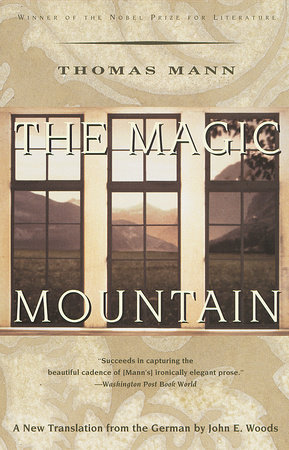
In this dizzyingly rich novel of ideas, Mann uses a sanatorium in the Swiss Alps, a community devoted exclusively to sickness, as a microcosm for Europe, which in the years before 1914 was already exhibiting the first symptoms of its own terminal irrationality. The Magic Mountain is a monumental work of erudition and irony, sexual tension and intellectual ferment, a book that pulses with life in the midst of death.

The world-famous masterpiece by Nobel laureate Thomas Mann -- here in a new translation by Michael Henry Heim.Published on the eve of World War I, a decade after Buddenbrooks had established Thomas Mann as a literary celebrity, Death in Venice tells the story of Gustav von Aschenbach, a successful but aging writer who follows his wanderlust to Venice in search of spiritual fulfillment that instead leads to his erotic doom.In the decaying city, besieged by an unnamed epidemic, he becomes obsessed with an exquisite Polish boy, Tadzio. "It is a story of the voluptuousness of doom," Mann wrote. "But the problem I had especially in mind was that of the artist's dignity."

Featuring his world-famous masterpiece, "Death in Venice," this new collection of Nobel laureate Thomas Mann's stories and novellas reveals his artistic evolution. In this new, widely acclaimed translation that restores the controversial passages that were cut out of the original English version, "Death in Venice" tells about a ruinous quest for love and beauty amid degenerating splendor. Gustav von Aschenbach, a successful but lonely author, travels to the Queen of the Adriatic in search of an elusive spiritual fulfillment that turns into his erotic doom. Spellbound by a beautiful Polish boy, he finds himself fettered to this hypnotic city of sun-drenched sensuality and eerie physical decay. Also included in this volume are eleven other stories by Mann: "Tonio Kroger," "Gladius Dei," "The Blood of the Walsungs," "The Will for Happiness," "Little Herr Friedmann," "Tobias Mindernickel," "Little Lizzy," "Tristan," "The Starvelings," "The Wunderkind," and "Harsh Hour." All of the stories collected here display Mann's inimitable use of irony, his subtle characterizations, and superb, complex plots.

A title in the Bristol Classical Press German Texts series, in German with English notes, vocabulary and introduction. Thomas Mann (1875-1955), was awarded the Nobel Prize for literature in 1929, and "Tonio Kroger" occupies a central position in his spiritual and artistic development. A study of youth, it draws together many strands of his life and the duality of his parentage; his abhorrence of discipline; and the influence of Schopenhauer and Wagner on his early phase of writing.

Mario and the Magician is one of Mann's most political stories. Mann openly criticizes fascism, a choice which later became one of the grounds for his exile to Switzerland following Hitler's rise to power. The sorcerer, Cipolla, is analogous to the fascist dictators of the era with their fiery speeches and rhetoric. The story was especially timely, considering the tensions in Europe when it was written. Stalin had just seized power in Russia, Mussolini was urging Italians to recapture the glory of the Roman Empire, and Hitler with his rhetoric was quickly gaining steam in Germany.

Thomas Mann's final novel recounts the strange and entranced career of the gifted swindler, Felix Krull, through his childhood and early manhood. Krull is a man unhampered by moral precepts that govern the conduct of ordinary mortals, and this natural lack of scruple, coupled with his formidable mental and physical endowments, enables him to develop the arts of subterfuge and deception with astonishing success and to rise swiftly from poverty to affluence. Following Krull along the shady paths his nature has destined him to take, the reader moves through a world peopled by bizarre characters from the lowest to the highest reaches of European society. Chameleon-like, Krull readily adapts himself to the situation of the moment, and so adept in the practices of chicanery does he become that his victims almost seem to count themselves privileged. And so it is too with the women who encounter the irresistible Krull, for where Krull is, the normal laws of human behavior are in suspense.Originally the character of Felix Krull appeared in a short story Mann wrote in 1911. The story wasn't published until 1936, in the book Stories of Three Decades along with 23 other stories written from 1896 to 1929, the year in which he was awarded the Nobel Prize for Literature. Much later, he expanded the original story into a novel, managing to finish and publish Part 1, "The Early Years," of the Confessions of Felix Krull to great public success. Due to Mann's death in 1955 the saga of the morally flexible and irresistible con-man remains unfinished.

Death in Venice is a story of obsession. Gustave von Aschenbach is a successful but aging writer who travels to Venice for a holiday. One day, at dinner, Aschenbach notices an exceptionally beautiful young boy who is staying with his family in the same hotel. Soon his days begin to revolve around seeing this boy and he is too distracted to pay attention to the ominous rumors that have begun to circulate about disease spreading through the city. Available exclusively from Vintage Classics.

In addition to Death in Venice, this volume includes "Mario and the Magician," "Disorder and Early Sorrow," "A Man and His Dog," "Felix Krull," "The Blood of the Walsungs," "Tristan," and "Tonio Kröger."These stories, as direct as Thomas Mann's novels are complex, are perfect illustrations of their author's belief that "a story must tell itself." Varying in theme, in style, in tone, each is in its own way characteristic of Mann's prodigious talents. From the high art of the famous title novella ("A story," Mann said, "of death...of the voluptuousness of doom"), to the irony of "Felix Krull," the early story on which he later based his comic novel The Confessions of Felix Krull, they are stunning testimony to the mastery and virtuosity of a literary giant.Translated from the German by H.T. Lowe-Porter.

This remarkable new translation of the Nobel Prize-winner’s great masterpiece is a major literary event.Thomas Mann regarded his monumental retelling of the biblical story of Joseph as his magnum opus. He conceived of the four parts–The Stories of Jacob, Young Joseph, Joseph in Egypt, and Joseph the Provider–as a unified narrative, a “mythological novel” of Joseph’s fall into slavery and his rise to be lord over Egypt. Deploying lavish, persuasive detail, Mann conjures for us the world of patriarchs and pharaohs, the ancient civilizations of Egypt, Mesopotamia, and Palestine, and the universal force of human love in all its beauty, desperation, absurdity, and pain. The result is a brilliant amalgam of humor, emotion, psychological insight, and epic grandeur.Now the award-winning translator John E. Woods gives us a definitive new English version of Joseph and His Brothers that is worthy of Mann’s achievement, revealing the novel’s exuberant polyphony of ancient and modern voices, a rich music that is by turns elegant, coarse, and sublime.--front flap

Tristan ist eine Novelle Thomas Manns, angelegt als „Burleske“, die den Zusammenstoß von „skurrilem Schönheitssinn“ mit der „praktischen Realität“ beschreibt. Entstehungszeit: Herbst 1902.

THE BOOK: An epic arch sinfulness, The Holy Sinner is one of Thomas Mann's great works. From the incestuous union of the two beautiful children of the Duke Grimald of Flanders a boy is born. Left to die at sea, the child is eventually rescued & brought up in holiness on the channel islands. Only after marrying his mother does the child come to realise the unwitting - and witting - extent of his crime against nature.

Publicada por primera vez en 1912, La muerte en Venecia es la historia de un alma agotada, capaz de sobrevivir solo en el artificio, que de pronto descubre la belleza espontánea que se manifiesta sin esfuerzos y sin titubeos en la figura de un adolescente. Mann escribió esta obra en un estilo de mosaico, preciso, minucioso y brillante a la vez, y que describe con eficacia la atmósfera crepuscular y agónica de una colorida Venecia. Completa el volumen Mario y el mago, relato de una muerte en un escenario italiano, que Mann escribió en 1929, poco después de recibir el Premio Nobel.

Un attempato professore sconvolto dalla visione di uno splendido adolescente, uno strano amore nato in un sanatorio, un'incerta vocazione letteraria che si scontra con un richiamo alla normalità borghese. Grottesco e tragedia si intrecciano paradossalmente nei tre brevi capolavori del più importante scrittore tedesco della prima metà del novecento.

Slight signs of wear!

Forty years after their youthful association, Lotte Kestner, real-life heroine of Goethe's famous novel The Sorrows of Werther, makes a pilgrimage to Weimer to see Goethe. Upon her arrival, Lotte, to her surprise, is greeted as a celebrity and taken up into Goethe's set.Thomas Mann, fascinated with the concept of genius and with the richness of German culture, found in Johann Wolfgang von Goethe the embodiment of the German culture hero. Mann's novelistic biography of Goethe was first published in English in 1940. Lotte in Weimar is a vivid dual portrait—a complex study of Goethe and of Lotte, the still-vivacious woman who in her youth was the model for Charlotte in Goethe's widely-read The Sorrows of Young Werther. Lotte's thoughts, as she anticipates meeting Goethe again after forty years, and her conversations with those in Weimar who knew the great man, allow Mann to assess Goethe's genius from many points of view.

Thomas Mann's bold and disturbing novella, written in 1952, is the feminine counterpart of his masterpiece Death in Venice . Written from the point of view of a woman in what we might now call mid-life crisis, The Black Swan evinces Mann's mastery of psychological analysis and his compelling interest in the intersection of the physical and the spiritual in human behavior. It is startlingly relevant to current discussions of the politics of the body, male inscriptions of the feminine, and discourse about and of women. The new introduction places this dramatic novella in the context of contemporary feminist and literary concerns, bringing it to the attention of a new generation of readers.

"Els caps bescanviats" és una novel·la filosòfica de Thomas Mann que explora la dicotomia entre cos i ment reinterpretant una antiga llegenda índia. Quan dos amics, l'intel·lectual Shridaman i el terrenal Nanda, es decapiten i els seus caps són retornats màgicament als cossos equivocats, la dona de Shridaman, Sita, es veu atrapada en un conflicte amorós perquè no pot decidir quina combinació representa al seu veritable marit. Amb un to irònic i profund, l'autor reflexiona sobre la passió, l'amor i les contradiccions humanes, qüestionant les divisions entre l'esperit i la vida.

Deutscher Prinz trifft amerikanische Milliardärstochter. In diesem Roman zeigt sich Thomas Mann von einer heiteren Seite und schafft trotzdem ein ernsthaftes Sinnbild für die aufbrechende Moderne.

A morte em Veneza (1912), aqui na tradução de Herbert Caro, é uma das novelas exemplares da moderna literatura ocidental. A história do escritor Gustav von Aschenbach, que viaja a Veneza para descansar e lá se vê hipnotizado pela beleza do jovem polonês Tadzio, mais tarde daria origem ao notável filme homônimo do diretor italiano Luchino Visconti, de 1971.O volume traz ainda Tonio Kröger, narrativa de 1903 que Thomas Mann declarava ser uma de suas favoritas. A novela tem diversos traços autobiográficos e está centrada na relação entre artista e sociedade, um tema muito caro à obra de ficção do escritor, sobretudo nos primeiros trabalhos. A nova tradução é de Mário Luiz Frungillo.
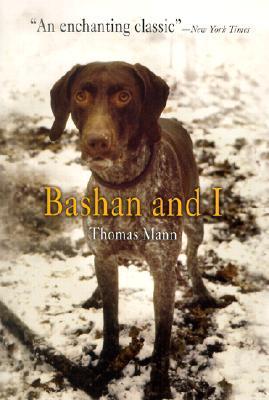
Bashan and I is the moving story of Thomas Mann's relationship with his spirited German short-haired pointer. From their first encounter at a local farm, Mann reveals how he slowly grows to love this energetic, loyal, and intelligent animal. Taking daily walks in the nearby parkland, Mann begins to understand and appreciate Bashan as a living being, witnessing his native delight in chasing rabbits, deer, and squirrels along with his careful investigations of stones, fallen branches, and clumps of wet leaves. As their bond deepens, Mann is led to contemplate Bashan's inner life, and marvels at the ease with which his dog trusts him, completely putting his life into his master's hands.Over time, the two develop a deep mutual understanding, but for Mann, there is always a sense of loss at never being able to enter the private world of his dear friend, and he slowly becomes conscious of the eternal divide between mankind and the rest of nature. Nonetheless, the unique relationship quietly moves to the forefront of Mann's life, and when master and companion are briefly separated, Mann is taken aback by the depth of his loneliness without his dog. It is this deep affection for another living creature that helps the writer to reach a newfound understanding of the nature of love, in all its complexity.First published in 1919 and translated into English in 1923, Bashan and I was heralded for its simple telling of how a dog became a priceless companion, an animal who brought meaning to the author's life.

Im Werk von Thomas Mann stehen die Erzählungen gleichberechtigt neben den großen Romanen. Ihre formale Klarheit und sprachliche Präzision zeichnen sie ebenso aus wie ihr Humor und ihr psychologischer Scharfblick.Bereits der junge Thomas Mann hat die kurze Prosa als seine Form entdeckt und früh zur Meisterschaft entwickelt. Über Jahrzehnte hinweg hat der Autor immer wieder Erzählungen geschrieben, die zu den bedeutendsten nicht nur des 20. Jahrhunderts gehören.Während in den frühen Erzählungen – an deren Seite lange Zeit nur zwei Romane standen – immer wieder das Ausloten der Künstlerexistenz im Zentrum steht, zeichnen sich die späteren Texte durch genaue Beobachtung und Darstellung des intimen Gefühls aus.Dieser Band enthält sämtliche Erzählungen und die gesamte erzählerische Kurzprosa Thomas Manns.

The first book of tetralogy Die Geschichten Jaakobs (1933; U.K. title The Tales of Jacob)Joseph and His Brothers reinterprets the biblical story as told in the Book of Genesis, employing psychological insight and wide-ranging knowledge of myth, history, and geography.

Die Novelle erzählt in fünfzehn knappen Kapiteln die Lebensgeschichte von Johannes Friedemann, der als Kleinkind vom Wickeltisch fiel und seitdem an einer körperlichen Missbildung leidet. „Er war nicht schön […] mit seiner spitzen und hohen Brust, seinem weit ausladenden Rücken und seinen viel zu langen, mageren Armen“ und „bot einen höchst seltsamen Anblick. Seine Hände und Füße aber waren zartgeformt und schmal, und er hatte große rehbraune Augen, einen weichgeschnittenen Mund und feines lichtbraunes Haar. Obgleich sein Gesicht so jämmerlich zwischen den Schultern saß, war es doch beinahe schön zu nennen.“Seine Familie gehört zwar zu den ersten Kreisen der mittelgroßen Handelsstadt, ist aber seit dem frühen und plötzlichen Tod des Vater, eines niederländischen Konsuls, nicht mehr vermögend. Seine Mutter behütet den kleinen Johannes mit "wehmütiger Freundlichkeit", und auch seine drei älteren Schwestern, die, ebenfalls „ziemlich häßlich“, unverheiratete Jungfern bleiben, kümmern sich liebevoll um ihren Bruder.Als er sich mit sechzehn Jahren in die hübsche Schwester eines Schulfreunds verliebt und beobachten muss, wie diese einen anderen küsst, würgt er seinen Schmerz hinunter und beschließt, sich „niemals wieder um all dies zu bekümmern. […] Er verzichtete, verzichtete auf immer. Er ging nach Hause und nahm ein Buch zur Hand oder spielte Violine, was er trotz seiner verwachsenen Brust erlernt hatte“.Nach dem Tod seiner Mutter, dem zweiten großen Leid in seinem Leben, wird er vollends zum „Epikureer“. Dankbar für die wenigen Freuden, die ihm zugänglich sind, weiß er auch die unerfüllten Wünsche und Sehnsüchte zu genießen, denn er sagt sich, dass mit deren „Erfüllung das Beste vorbei sein“ werde. Da er erkennt, „daß zur Genußfähigkeit Bildung gehört, ja daß Bildung immer Genußfähigkeit ist“, widmet er sich neben seinem Beruf verstärkt der Musik und Literatur und entwickelt eine große Leidenschaft für das Theater. So erreicht er sein dreißigste Jahr und erwartet den Rest seines Lebens „mit Seelenfrieden“.Doch dann wechselt die Bezirkskommandantur der Stadt und aus Berlin kommen der „ganz außerordentlich vermögende“ Oberstleutnant von Rinnlingen und seine Frau Gerda, eine rothaarige[3] junge Dame, erst 24 Jahre alt und von herber Schönheit, die raucht und reitet und von ihrer neuen Umgebung als zu liberal und burschikos, ja als eiskalt empfunden wird. Johannes Friedemann jedoch ist schon bei ihrem ersten Anblick wie betäubt und empfindet sofort eine starke Zuneigung zu ihr. Glücklich registriert er bei seinem Anstandsbesuch, dass Gerda von Rinnlingen nicht nur den Wunsch äußert, mit ihm zusammen zu musizieren, sondern auch eine geheime Wesensverwandtschaft andeutet, indem sie auf ihre eigene Kränklichkeit hinweist.[4]

Thomas Mann 1929 Nobel Prize winner. How Mann manages to pull suspense out of a story that everyone knows is just amazing. It's a page turner from start to finish.As Joseph is saved from the well and sold to Egypt, he adopts a new name, Osarseph, replacing the Yo- element with a reference to Osiris to indicate that he is now in the underworld. This change of name to account for changing circumstances encourages Amenhotep to change his own name to Akhenaten.

Little Herr Friedemann and Other Stories is a selection of work by Thomas Mann Taken from Stories of a Lifetime.'Little Herr Friedemann' is characteristic of Mann.s deep imward affinity to music and his concern for the artist's isolation and equivocal position in a harsh world of reality, and this theme is also seen in 'The Infant Prodigy'. The isolation motif is maintained in 'The Fight Between Jappe and Do Escobar' but developed to pursue individuals at extremes of their condition.Mann himself considered every piece of work a complete realization of one's own nature, the 'stones on that harsh road which we must walk to learn of ourselves'. These stories realize Mann's nature and create an autobiography in the guise of fiction.

This is book two of the Joseph and His Brothers tetralogy.“In this volume Dr. Mann tells the story of Joseph from the beginning of his quarrel with his brothers until he is sold by them into slavery in Egypt.”

La Mort à Venise est le récit de la passion folle et fatale qui saisit un écrivain d'âge mûr à l'apparition d'un gracieux adolescent d'une extraordinaire beauté.Dans Tristan, le dilemme qui s'offre à l'héroïne est de tenter de vivre en étouffant ses dons d'artiste ou " mourir de musique ". La fin de Lobgott Piepsam dans le Chemin du cimetière prouve que la vie est dure aux faibles, mais que la mort vaut mieux que la débâcle d'une constante lâcheté.C'est peut-être dans ses nouvelles que Thomas Mann, le plus célèbre écrivain allemand de ce siècle, a mis le meilleur de sa verve ironique et de sa sensibilité musicale, de son émotion discrète et dominée, qui se drape volontiers d'un sarcasme.

"Brilliant…a little masterpiece."— Chicago Sun-Times "Beautiful…one of the best short novels he has written."— New York Times Book Review "Can rank with the best of Mann's writing."— The Boston Globe "Magnificent…one of the greatest bits of writing which one of the world's greatest writers has ever given us."— Chicago Herald-American "Brilliant…one of those splendid novelettes which in this reviewer's opinion represent the very essence of Mr. Mann's literary art."— Saturday Review of Literature "Thomas Mann wrote this engaging novella in a few weeks in 1943. (The new translation by Marion Faber and Stephen Lehmann, which is brisk and direct, is a welcome replacement of the fussier and less accurate English version done by Helen Lowe-Porter for the original publication.)…What is especially noteworthy about The Tables of the Law among Mann's fictions is its playfulness." —Robert Alter, London Review of Books "His senses were hot, and so he yearned for spirituality, purity, and holiness—the invisible, which seemed to him spiritual, holy, and pure." Thus Thomas Mann introduces Moses in The Tables of the Law , the Nobel Prize winner's retelling of the prophet's life. Invited in 1943 to write this story as a defense of the Decalogue, Mann reveals how strange and forbidding Moses' task was. As "the Lawgiver"—endowed with the wrists and hands of a stonemason—engraves the tablets, so he hews the souls of his "Into the stone of the mountain I carved the ABC of human behavior,but it shall also be carved into your flesh and blood, Israel…" Mann's tale of the ethical founding and molding of a people sharply rebukes the Nazis for their intended destruction of the moral code set down in the Ten Commandments. But does his famous irony and authorial license mock or enhance the Biblical account of the shaping of the Jewish people? You know the Bible story. Now read Mann's version—it will grip you anew. Newly translated from the German by Marion Faber and Stephen Lehmann. "To present the foundation of law for half the world is no simple task. The Tables of the Law is a historical title following Moses as he is tasked by God to present the ten commandments, providing a human and much different insight on the role of Moses as the Prophet of God. Expertly translated, The Tables of the Law is a solid addition to any literary fiction collection."— Midwest Book Review Thomas Mann (1875–1955) won the Nobel Prize for Literature in 1929. His many works include Buddenbrooks , The Magic Mountain , and Confessions of Felix Krull . Marion Faber and Stephen Lehmann co-authored a biography of the pianist Rudolf Serkin and have together translated Nietzsche's Human, All Too Human . Michael Wood is the Charles Barnwell Straut Class of 1923 Professor of English and Comparative Literature at Princeton University.