
Sigmund Freud
Dr. Sigismund Freud (later changed to Sigmund) was a neurologist and the founder of psychoanalysis, who created an entirely new approach to the understanding of the human personality. He is regarded as one of the most influential—and controversial—minds of the 20th century. In 1873, Freud began to study medicine at the University of Vienna. After graduating, he worked at the Vienna General Hospital. He collaborated with Josef Breuer in treating hysteria by the recall of painful experiences under hypnosis. In 1885, Freud went to Paris as a student of the neurologist Jean Charcot. On his return to Vienna the following year, Freud set up in private practice, specialising in nervous and brain disorders. The same year he married Martha Bernays, with whom he had six children. Freud developed the theory that humans have an unconscious in which sexual and aggressive impulses are in perpetual conflict for supremacy with the defences against them. In 1897, he began an intensive analysis of himself. In 1900, his major work 'The Interpretation of Dreams' was published in which Freud analysed dreams in terms of unconscious desires and experiences. In 1902, Freud was appointed Professor of Neuropathology at the University of Vienna, a post he held until 1938. Although the medical establishment disagreed with many of his theories, a group of pupils and followers began to gather around Freud. In 1910, the International Psychoanalytic Association was founded with Carl Jung, a close associate of Freud's, as the president. Jung later broke with Freud and developed his own theories. After World War One, Freud spent less time in clinical observation and concentrated on the application of his theories to history, art, literature and anthropology. In 1923, he published 'The Ego and the Id', which suggested a new structural model of the mind, divided into the 'id, the 'ego' and the 'superego'. In 1933, the Nazis publicly burnt a number of Freud's books. In 1938, shortly after the Nazis annexed Austria, Freud left Vienna for London with his wife and daughter Anna. Freud had been diagnosed with cancer of the jaw in 1923, and underwent more than 30 operations. He died of cancer on 23 September 1939.
30 Books Written

Of the various English translations of Freud's major works to appear in his lifetime, only one was authorized by Freud The Standard Edition of the Complete Psychological Works of Sigmund Freud under the general editorship of James Strachey. Freud approved the overall editorial plan, specific renderings of key words and phrases, and the addition of valuable notes, from bibliographical and explanatory. Many of the translations were done by Strachey himself; the rest were prepared under his supervision. The result was to place the Standard Edition in a position of unquestioned supremacy over all other existing versions.Newly designed in a uniform format, each new paperback in the Standard Edition opens with a biographical essay on Freud's life and work —along with a note on the individual volume—by Peter Gay, Sterling Professor of History at Yale.

What are the most common dreams and why do we have them? What does a dream about death mean? What do dreams of swimming, failing, or flying symbolize?First published by Sigmund Freud in 1899, The Interpretation of Dreams considers why we dream and what it means in the larger picture of our psychological lives. Delving into theories of manifest and latent dream content, the special language of dreams, dreams as wish fulfillments, the significance of childhood experiences, and much more, Freud, widely considered the “father of psychoanalysis,” thoroughly and thoughtfully examines dream psychology. Encompassing dozens of case histories and detailed analyses of actual dreams, this landmark text presents Freud’s legendary work as a tool for comprehending our sleeping experiences.Renowned for translating Freud’s German writings into English, James Strachey—with the assistance of Anna Freud—first published this edition in 1953. Incorporating all textual alterations made by Freud over a period of thirty years, it remains the most complete translation of the work in print.Completely redesigned and available for the first time in trade paperback

Freud’s seminal volume of twentieth-century cultural thought grounded in psychoanalytic theory, now with a new introduction by Christopher Hitchens.Written in the decade before Freud’s death, Civilization and Its Discontents may be his most famous and most brilliant work. It has been praised, dissected, lambasted, interpreted, and reinterpreted. Originally published in 1930, it seeks to answer several questions fundamental to human society and its organization: What influences led to the creation of civilization? Why and how did it come to be? What determines civilization’s trajectory? Freud’s theories on the effect of the knowledge of death on human existence and the birth of art are central to his work. Of the various English translations of Freud’s major works to appear in his lifetime, only Norton’s Standard Edition, under the general editorship of James Strachey, was authorized by Freud himself. This new edition includes both an introduction by the renowned cultural critic and writer Christopher Hitchens as well as Peter Gay’s classic biographical note on Freud.

The Ego and the Id ranks high among the works of Freud's later years. The heart of his concern is the ego, which he sees battling with three forces: the id, the super-ego, and the outside world.Of the various English translations of Freud's major works to appear in his lifetime, only one was authorized by Freud himself: The Standard Edition of the Complete Psychological Works of Sigmund Freud under the general editorship of James Strachey.Freud approved the overall editorial plan, specific renderings of key words and phrases, and the addition of valuable notes, from bibliographical and explanatory. Many of the translations were done by Strachey himself; the rest were prepared under his supervision. The result was to place the Standard Edition in a position of unquestioned supremacy over all other existing versions.
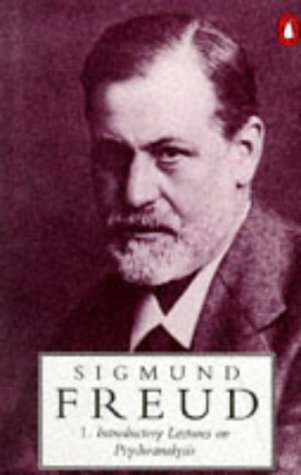
These lectures were delivered by Freud during World War I. Never before, in the course of 30 years of lecturing at the University of Vienna, had he deliberately set down, with a view to publication, the full range of his theories and observations. This series, therefore, represents a stock-taking of psychoanalysis as it stood after the secession of Adler and Jung.

Widely acknowledged to be one of Freud's greatest cultural works, when Totem and Taboo was first published in 1913, it caused outrage. Thorough and thought-provoking, Totem and Taboo remains the fullest exploration of Freud's most famous themes. Family, society, religion - they're all put on the couch here. Whatever your feelings about psychoanalysis, Freud's theories have influenced every facet of modern life, from film and literature to medicine and art. If you don't know your incest taboo from your Oedipal complex, and you want to understand more about the culture we're living in, then Totem and Taboo is the book to read.
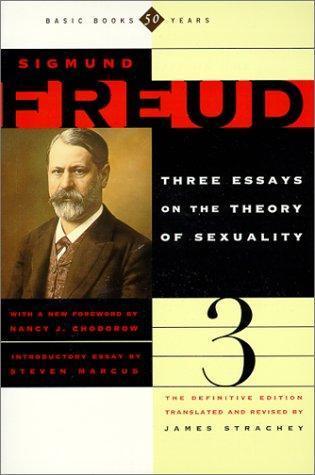
The standard edition of Freud's seminal theory of the psychology of sexualityThese three essays -- "The Sexual Aberrations," "Infantile Sexuality," and "The Transformations of Puberty" -- are among Sigmund Freud's most important works. Here, Freud outlines the core features of libido theory, his grand view of the psychology of sexuality: sexual perversion is a matter of human nature and "normal" sexual behavior only appears later in life, sexual urges begin in infancy, and these urges turn their attention outward as we mature through puberty.Freud first wrote Three Essays on the Theory of Sexuality in 1905 and spent the next two decades making major revisions to the text. This edition offers Freud's complete vision of the sexual self, in the definitive James Strachey translation.

In the manner of the eighteenth-century philosopher, Freud argued that religion and science were mortal enemies. Early in the century, he began to think about religion psychoanalytically and to discuss it in his writings. The Future of an Illusion (1927), Freud's best known and most emphatic psychoanalytic exploration of religion, is the culmination of a lifelong pattern of thinking.
Parapraxes, that is to say, everyday errors such as slips of the tongue, forgetting names and misreadings, had a special fascination for Freud, enabling him to extend to normal mental life the discoveries he had first made in connection with neuroses. This book is a comprehensive analysis of such errors and shows a penetrating insight into complex human behaviour, explained in terms readily grasped by the lay mind. This edition supersedes the Brill translation first published in 1914 and reprinted nineteen times. It was commissioned for the Standard Edition of Freud's works published by the Hogarth Press and the Institute of Psychoanalysis. The Brill translation had "modified and substituted some of the author's cases by examples comprehensible to the English-speaking reader." This new version is an exact rendering of the German text, with explanations where linguistic differences occur. It incorporates new material added by Freud to the later German editions and is almost half as long gain as the former English version.

In reasoned progression he outlined core psychoanalytic concepts, such as repression, free association and libido. Of the various English translations of Freud's major works to appear in his lifetime, only one was authorized by Freud himself: The Standard Edition of the Complete Psychological Works of Sigmund Freud under the general editorship of James Strachey.Freud approved the overall editorial plan, specific renderings of key words and phrases, and the addition of valuable notes, from bibliographical and explanatory. Many of the translations were done by Strachey himself; the rest were prepared under his supervision. The result was to place the Standard Edition in a position of unquestioned supremacy over all other existing versions.Newly designed in a uniform format, each new paperback in the Standard Edition opens with a biographical essay on Freud's life and work —along with a note on the individual volume—by Peter Gay, Sterling Professor of History at Yale.

Freud was fascinated by the mysteries of creativity and the imagination. The groundbreaking works that comprise The Uncanny present some of his most influential explorations of the mind. In these pieces Freud investigates the vivid but seemingly trivial childhood memories that often "screen" deeply uncomfortable desires; the links between literature and daydreaming; and our intensely mixed feelings about things we experience as "uncanny." Also included is Freud's celebrated study of Leonardo Da Vinci-his first exercise in psychobiography.

=Fragment analysis of a hysteria
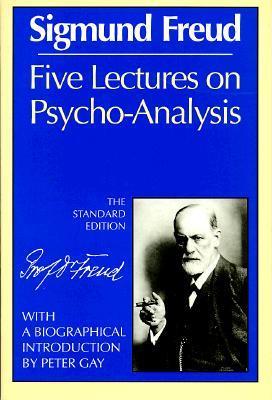
Freud approved the overall editorial plan, specific renderings of key words and phrases, and the addition of valuable notes, from bibliographical and explanatory. Many of the translations were done by Strachey himself; the rest were prepared under his supervision. The result was to place the Standard Edition in a position of unquestioned supremacy over all other existing versions.Newly designed in a uniform format, each new paperback in the Standard Edition opens with a biographical essay on Freud's life and work —along with a note on the individual volume—by Peter Gay, Sterling Professor of History at Yale.

Dreams, in Freud's view, are all forms of "wish fulfillment" — attempts by the unconscious to resolve a conflict of some sort, whether something recent or something from the recesses of the past (later in Beyond the Pleasure Principle, Freud would discuss dreams which do not appear to be wish-fulfillment). Because the information in the unconscious is in an unruly and often disturbing form, a "censor" in the preconscious will not allow it to pass unaltered into the conscious. During dreams, the preconscious is more lax in this duty than in waking hours, but is still attentive: as such, the unconscious must distort and warp the meaning of its information to make it through the censorship. As such, images in dreams are often not what they appear to be, according to Freud, and need deeper interpretation if they are to inform on the structures of the unconscious.

بدون شک ادیان نقش بسیار مهمی برای متمدن کردن انسان ماقبل تاریخ داشتهاند. فروید با بازگو کردن توتم و تابو این نکته را برای ما روشن میکند که ایجاد حریم و قانون لازمه ی تمدن است و ریشه در ساختار روانی و محیط خانوادگی که در آن پرورش یافتهایم دارد. البته در این خصوص نباید تمدن را معادل دین بدانیم زیرا در دین اشخاص مقداری از انرژی لیبیدویی را صرف اعمال آیینی و عبادی میکنند اما در تمدن حاضر، افراد به این تشویق میشوند که انرژی لیبیدوییی را درارزشهای اجتماعی و جامعه پسند سرمایه گذاری کنند. بیدین بودن و یا بی اعتقادی به خدا ممکن است در نهایت ازفراخودی ناشی شود که اثر و حضور پدر را در کودکی به درستی درک نکرده. در حالی که از دین گذشتن به این معنا میباشد که اعتقاد به خدا درونی شده است و جایگاه پدر به هیچ کسی تعلق ندارد، جز خدا و دیگر درگیر اعمال آیینی دین نیستند. فرا خود این افراد ، نظیر افرادی هستند که گلبرگ در سطح فرا عرفی معرفی میکند.

Among the first of Sigmund Freud's many contributions to psychology and psychoanalysis was The Interpretation of Dreams, published in 1900, and considered his greatest work — even by Freud himself. Aware, however, that it was a long and difficult book, he resolved to compile a more concise and accessible version of his ideas on the interpretation of dreams. That shorter work is reprinted here. Since its publication, generations of readers and students have turned to this volume for an authoritative and coherent account of Freud's theory of dreams as distorted wish fulfillment.After contrasting the scientific and popular views of dreams, Freud illustrates the ways in which dreams can be shown to have been influenced by the activities or thoughts of the preceding day. He considers the effect on dreams of such mental mechanisms as condensation, dramatization, displacement, and regard for intelligibility. In addition, the author offers perceptive insights into repression, the three classes of dreams, and censorship within the dream.Students and psychologists will welcome this inexpensive edition of an always-relevant work by the father of modern psychoanalysis. This volume will also appeal to anyone interested in dreams of the workings of the unconscious mind.
"Psicología de las masas" reúne tres trabajos escritos por Sigmund Freud (1856-1939) bajo la profunda impresión causada por la bárbara contienda que había asolado Europa entre 1914 y 1919. El ensayo que da título al volumen estudia al individuo como miembro de agregados sociales. «Más allá del principio del placer» da entrada por primera vez en la teoría psicoanalítica al instinto de muerte, pareja dialéctica del instinto de vida. Por último, «El porvenir de una ilusión» es una reflexión acerca de las posibilidades de una cultura no represiva.

First published in 1999. Routledge is an imprint of Taylor & Francis, an informa company.

Hysteria—the tormenting of the body by the troubled mind—is among the most pervasive of human disorders; yet, at the same time, it is the most elusive. Freud’s recognition that hysteria stemmed from traumas in the patient’s past transformed the way we think about sexuality. Studies in Hysteria is one of the founding texts of psychoanalysis, revolutionizing our understanding of love, desire, and the human psyche. As full of compassionate human interest as of scientific insight, these case histories are also remarkable, revelatory works of literature.For more than seventy years, Penguin has been the leading publisher of classic literature in the English-speaking world. With more than 1,700 titles, Penguin Classics represents a global bookshelf of the best works throughout history and across genres and disciplines. Readers trust the series to provide authoritative texts enhanced by introductions and notes by distinguished scholars and contemporary authors, as well as up-to-date translations by award-winning translators.

Leonardo da Vinci (1910) remains among the most fascinating, though speculative, works of Freud's entire output. A detailed reconstruction of Leonardo's emotional life from his earliest years, it represents Freud's first sustained venture into biography from a psychoanalytic perspective, and also his effort to trace one route that homosexual development can take.

The first single-volume work to capture Freud's ideas as scientist, humanist, physician, and philosopher.What to read from the vast output of Sigmund Freud has long been a puzzle. Freudian thought permeates virtually every aspect of twentieth-century life; to understand Freud is to explore not only his scientific papers—on the psycho-sexual theory of human development, his theory of the mind, and the basic techniques of psychoanalysis—but also his vivid writings on art, literature, religion, politics, and culture.The fifty-one texts in this volume range from Freud's dreams, to essays on sexuality, and on to his late writings, including Civilization and Its Discontents. Peter Gay, a leading scholar of Freud and his work, has carefully chosen these selections to provide a full portrait of Freud's thought. His clear introductions to the selections help guide the reader's journey through each work.Many of the selections are reproduced in full. All have been selected from the Standard Edition, the only English translation for which Freud gave approval both to the editorial plan and to specific renderings of key words and phrases.
One of Freud's central achievements was to demonstrate how unacceptable thoughts and feelings are repressed into the unconscious, from where they continue to exert a decisive influence over our lives.This volume contains a key statement about evidence for the unconscious, and how it works, and major essays on the fundamentals of mental functioning. Freud explores how we are torn between the pleasure principle and the reality principle, how we often find ways both to express and to deny what we most fear, and why people so often need fetishes for their sexual satisfaction. These studies brilliantly illuminate our most basic drives and how they are transformed.
Freud approved the overall editorial plan, specific renderings of key words and phrases, and the addition of valuable notes, from bibliographical and explanatory. Many of the translations were done by Strachey himself; the rest were prepared under his supervision. The result was to place the Standard Edition in a position of unquestioned supremacy over all other existing versions. Newly designed in a uniform format, each new paperback in the Standard Edition opens with a biographical essay on Freud's life and work —along with a note on the individual volume—by Peter Gay, Sterling Professor of History at Yale.

Reflections on War and Death is a set of twin essays written by Sigmund Freud in 1915, six months after the outbreak of World War I. The essays express discontent and disillusionment with human nature and human society in the aftermath of the hostilities, and generated much interest among lay readers of Freud.

Notes upon a case of obessional neurosis (1909)Pscyhoanalytic notes upon an autobiographical account of a case of paranoia (dementia paranoides) (1911)From the history of an infantile neurosis (1918)

Freud rarely treated psychotic patients or psychoanalyzed people just from their writings, but he had a powerful and imaginative understanding of their condition—revealed, most notably, in this analysis of a remarkable memoir. In 1903, Judge Daniel Schreber, a highly intelligent and cultured man, produced a vivid account of his nervous illness dominated by the desire to become a woman, terrifying delusions about his doctor, and a belief in his own special relationship with God. Eight years later, Freud's penetrating insight uncovered the impulses and feelings Schreber had about his father, which underlay his extravagant symptoms.For more than seventy years, Penguin has been the leading publisher of classic literature in the English-speaking world. With more than 1,700 titles, Penguin Classics represents a global bookshelf of the best works throughout history and across genres and disciplines. Readers trust the series to provide authoritative texts enhanced by introductions and notes by distinguished scholars and contemporary authors, as well as up-to-date translations by award-winning translators.

Freud's landmark writings on love and sexuality, including the famous case study of Dora newly translated and in one volume for the first timeThis original collection brings together the most important writings on the psychology of love by one of the great thinkers of the twentieth century. Sigmund Freud's discussions of the ways in which sexuality is always psycho sexuality that there is no sexuality without fantasy have changed social, cultural, and intellectual attitudes toward erotic life. Among the influential pieces included here are "On Female Sexuality," "The Taboo of Virginity," "A Child Is Being Beaten," and the widely cited case history of the eighteen-year-old Dora, making The Psychology of Love essential reading for anyone who wants to understand Freud's tremendous legacy.For more than seventy years, Penguin has been the leading publisher of classic literature in the English-speaking world. With more than 1,700 titles, Penguin Classics represents a global bookshelf of the best works throughout history and across genres and disciplines. Readers trust the series to provide authoritative texts enhanced by introductions and notes by distinguished scholars and contemporary authors, as well as up-to-date translations by award-winning translators.

Freud's discovery of the preeminent role of sex in creating neuroses resulted in theories that changed the thinking of the world. He was a champion of greater sexual understanding in a society that only whispered the words he used out loud. This pioneering study of the nature of sexuality and love remains a monumental achievement. The importance of sexuality and infantilism in shaping individual destiny sets the general theme for these groundbreaking studies. Elaborating his now-famous frustration theory, Freud dramatically illustrates how a person's sexuality can be stifled to the point of neurosis by a sex-scared society. With utter frankness, he explains various aspects of homosexuality, incest, frigidity, impotence, masochism, sadism, and fetishism. Here is Freud at his most brilliant, raising the curtain on a new era of sexual and social awareness -- Publisher description.

Setting forth in rich detail Freud's new theory of anxiety, Inhibitions, Symptoms and Anxiety (1926) is evidence for one of them. In rethinking his earlier work on the subject, Freud saw several types of anxiety at work in the mind and here argues that anxiety causes repression, rather than the other way around.

Ordenamiento, comentarios y notas de James Strachey con la colaboración de Anna Freud, asistidos por Alix Strachey y Alan Tyson.Traducción directa del alemán a cargo de José Luis Etcheverry, cotejada con la edición inglesa bajo la dirección de James Strachey –Standard Edition of the Complete Psychological Works of Sigmund Freud- cuyo ordenamiento, comentarios y notas se reproducen en la presente versión.«... Hemos tratado de justificar un modo de traducción; consistió en practicar una encuesta por los textos para registrar sus constantes, su composición molecular, su juego interno, y ello para que la versión pudiera servir de punto de partida a un pensamiento creador. Tuvimos siempre presente la reflexión que dirigió Don Quijote en Barcelona a uno que traducía del italiano: los originales son como esos bellísimos tapices de Flandes, de maravilloso colorido; las traducciones los muestran del revés, sólo su trama, sólo su esqueleto. Nos hemos empeñado en mostrar la trama, y no desesperamos de que algo de los brillantes colores del texto original haya pasado al nuestro.» José Luis Etcheverry, 1978