Loading themes...
Explore the best books about Food theme.


Every schoolchild learns about the mutually beneficial dance of honeybees and flowers: The bee collects nectar and pollen to make honey and, in the process, spreads the flowers’ genes far and wide. In The Botany of Desire, Michael Pollan ingeniously demonstrates how people and domesticated plants have formed a similarly reciprocal relationship. He masterfully links four fundamental human desires—sweetness, beauty, intoxication, and control—with the plants that satisfy them: the apple, the tulip, marijuana, and the potato. In telling the stories of four familiar species, Pollan illustrates how the plants have evolved to satisfy humankind’s most basic yearnings. And just as we’ve benefited from these plants, we have also done well by them. So who is really domesticating whom?

This is the completely revised and updated version of the hardcover in paperback for the first time in this books 20 year history.

Fast food has hastened the malling of our landscape, widened the chasm between rich and poor, fueled an epidemic of obesity, and propelled American cultural imperialism abroad. That's a lengthy list of charges, but here Eric Schlosser makes them stick with an artful mix of first-rate reportage, wry wit, and careful reasoning.Schlosser's myth-shattering survey stretches from California's subdivisions where the business was born to the industrial corridor along the New Jersey Turnpike where many fast food's flavors are concocted. Along the way, he unearths a trove of fascinating, unsettling truths -- from the unholy alliance between fast food and Hollywood to the seismic changes the industry has wrought in food production, popular culture, and even real estate. (back cover)

New York Times bestselling author Dr. Neal Barnard reveals the shocking truth about cheese-the dangerous addiction that is harming your health-and presents a radical program to lose weight and feel great.We've been told that dairy does a body good, but the truth is that cheese can be dangerous. Loaded with calories, fat, and cholesterol, cheese can make you gain weight and leads to a host of health problems like high blood pressure and arthritis. Worse, it contains mild opiates that make it additive, triggering the same brain receptors as heroin and morphine.In The Cheese Trap , Dr. Neal Barnard presents a comprehensive program to help readers break free of their cheese addiction so they can lose weight, boost energy, and improve their overall health. This easy-to-follow diet features a treasury of healthy recipes that will tame even the toughest cravings-from pizza, to lasagna, to ice cream and cheesecake.

In This Is Your Mind on Plants, Michael Pollan dives deep into three plant drugs--opium, caffeine, and mescaline--and throws the fundamental strangeness, and arbitrariness, of our thinking about them into sharp relief. Exploring and participating in the cultures that have grown up around these drugs while consuming (or, in the case of caffeine, trying not to consume) them, Pollan reckons with the powerful human attraction to psychoactive plants. Why do we go to such great lengths to seek these shifts in consciousness, and then why do we fence that universal desire with laws and customs and fraught feelings?

A deluxe, annotated edition of Kitchen Confidential to celebrate the life of Anthony Bourdain, featuring new photo insertsOver two decades ago, the New Yorker published a now infamous article, “Don’t Eat Before Reading This,” by then little-known chef Anthony Bourdain. Bourdain spared no one’s appetite as he revealed what happens behind the kitchen door. The article was a sensation, and the book it spawned, the now iconic Kitchen Confidential, became an even bigger sensation and megabestseller. Frankly confessional, addictively acerbic, and utterly unsparing, Bourdain pulls no punches in this memoir of his years in the restaurant business.Fans will love to return to this deliciously funny, delectably shocking banquet of wild-but-true tales of life in the culinary trade, laying out Bourdain’s more than a quarter-century of drugs, sex, and haute cuisine. Including a handwritten introduction and annotations done by Bourdain about a decade after the book was originally published, this edition also features previously unpublished photos to accompany the now-classic text.

This book will literally change the way you think about your next meal. Food psychologist Brian Wansink revolutionizes our awareness of how much, what, and why we’re eating—often without realizing it. His findings will astound you. • Can the size of your plate really influence your appetite?• Why do you eat more when you dine with friends?• What “hidden persuaders” are used by restaurants and supermarkets to get us to overeat?• How does music or the color of the room influence how much—and how fast—we eat?• How can we “mindlessly” lose—instead of gain—up to twenty pounds in the coming year? Starting today, you can make more mindful, enjoyable, and healthy choices at the dinner table, in the supermarket, at the office—wherever you satisfy your appetite.

A classic of reportage, Oranges was first conceived as a short magazine article about oranges and orange juice, but the author kept encountering so much irresistible information that he eventually found that he had in fact written a book. It contains sketches of orange growers, orange botanists, orange pickers, orange packers, early settlers on Florida's Indian River, the first orange barons, modern concentrate makers, and a fascinating profile of Ben Hill Griffin of Frostproof, Florida who may be the last of the individual orange barons. McPhee's astonishing book has an almost narrative progression, is immensely readable, and is frequently amusing. Louis XIV hung tapestries of oranges in the halls of Versailles, because oranges and orange trees were the symbols of his nature and his reign. This book, in a sense, is a tapestry of oranges, too—with elements in it that range from the great orangeries of European monarchs to a custom of people in the modern Caribbean who split oranges and clean floors with them, one half in each hand.

What should we have for dinner? For omnivore like ourselves, this simple question has always posed a dilemma. When you can eat just about anything nature (or the supermarket) has to offer, deciding what you should eat will inevitably stir anxiety, especially when some of the foods on offer might shorten your life. Today, buffered by one food fad after another, America is suffering from what can only be described as a national eating disorder. The omnivore’s dilemma has returned with a vengeance, as the cornucopia of the modern American supermarket and fast-food outlet confronts us with a bewildering and treacherous food landscape. What’s at stake in our eating choices is not only our own and our children’s health, but the health of the environment that sustains life on earth.The Omnivore's Dilemma is groundbreaking book, in which one of America’s most fascinating, original, and elegant writers turns his own omnivorous mind to the seemingly straightforward question of what we should have for dinner. The question has confronted us since man discovered fire, but according to Michael Pollan, the bestselling author of The Botany of Desire, how we answer it today, at the dawn of the twenty-first century, may well determine our very survival as a species. Should we eat a fast-food hamburger? Something organic? Or perhaps something we hunt, gather, or grow ourselves? To find out, Pollan follows each of the food chains that sustain us—industrial food, organic or alternative food, and food we forage ourselves—from the source to a final meal, and in the process develops a definitive account of the American way of eating. His absorbing narrative takes us from Iowa cornfields to food-science laboratories, from feedlots and fast-food restaurants to organic farms and hunting grounds, always emphasizing our dynamic coevolutionary relationship with the handful of plant and animal species we depend on. Each time Pollan sits down to a meal, he deploys his unique blend of personal and investigative journalism to trace the origins of everything consumed, revealing what we unwittingly ingest and explaining how our taste for particular foods and flavors reflects our evolutionary inheritance.The surprising answers Pollan offers to the simple question posed by this book have profound political, economic, psychological, and even moral implications for all of us. Ultimately, this is a book as much about visionary solutions as it is about problems, and Pollan contends that, when it comes to food, doing the right thing often turns out to be the tastiest thing an eater can do. Beautifully written and thrillingly argued, The Omnivore’s Dilemma promises to change the way we think about the politics and pleasure of eating. For anyone who reads it, dinner will never again look, or taste, quite the same.

From the best-selling author of SPONTANEOUS HEALING, a brilliantly conceived, safe and effective eight-week programme for improving and maintaining health. Dr Weil first explains, then shows how, week by week, gradual changes can lead to long-term benefits such as greater vitality, weight loss and a body which heals itself. Incorporating alternative medicines and treatments, he provides specific and detailed information on diet (with 50 recipes), exercise, stress reduction techniques, and vitamins and supplements. He also customizes programmes for a dozen categories, such as pregnant women, people at risk of cancer, overweight people, and senior citizens. Building on the breakthrough thinking of SPONTANEOUS HEALING, Dr Weil provides an invaluable means to maintain health and lessen the need for medical intervention.

Do you want to lose fat and stay young, all while avoiding cancer, diabetes, heart disease, Parkinson's, Alzheimer's, and a host of other illnesses? The Paleo Solution incorporates the latest cutting-edge research from genetics, biochemistry, and anthropology to help you look, feel, and perform your best. Author Robb Wolf was a research biochemist who traded in his lab coat and pocket protector for a whistle and a stopwatch to become one of the most sought-after strength and conditioning coaches in the world. With Robb's unique perspective as both scientist and coach, you will learn how simple nutrition, exercise, and lifestyle changes can radically change your appearance and health for the better.

[image] An eye-opening, myth-shattering examination of what makes us fat, from acclaimed science writer Gary Taubes.In his New York Times best seller, Good Calories, Bad Calories, Taubes argued that our diet’s overemphasis on certain kinds of carbohydrates—not fats and not simply excess calories—has led directly to the obesity epidemic we face today. The result of thorough research, keen insight, and unassailable common sense, Good Calories, Bad Calories immediately stirred controversy and acclaim among academics, journalists, and writers alike. Michael Pollan heralded it as “a vitally important book, destined to change the way we think about food.” Building upon this critical work in Good Calories, Bad Calories and presenting fresh evidence for his claim, Taubes now revisits the urgent question of what’s making us fat—and how we can change—in this exciting new book. Persuasive, straightforward, and practical, Why We Get Fat makes Taubes’s crucial argument newly accessible to a wider audience.Taubes reveals the bad nutritional science of the last century, none more damaging or misguided than the “calories-in, calories-out” model of why we get fat, and the good science that has been ignored, especially regarding insulin’s regulation of our fat tissue. He also answers the most persistent questions: Why are some people thin and others fat? What roles do exercise and genetics play in our weight? What foods should we eat, and what foods should we avoid? Packed with essential information and concluding with an easy-to-follow diet, Why We Get Fat is an invaluable key in our understanding of an international epidemic and a guide to what each of us can do about it.

Modernist Cuisine: The Art and Science of Cooking is a revolutionary treatment of cooking that pushes the boundaries of culinary arts. Winner of the 2012 James Beard Award for Cookbook of the Year, inducted into the Gourmand Cookbook Hall of Fame, and named one of the best cookbooks of the century by the New Yorker, its six volumes comprising 2,438 pages explore the history of cuisine and explain the science of cooking in a way that’s accessible to both professional chefs and home cooks. Created by a team of scientists, chefs, editors, and writers, these volumes explore research spanning the field of culinary science with careful attention to practicality and applicability in the kitchen. Through gorgeous illustrations and otherworldly techniques, this set will inspire you to innovate in your own kitchen.

In Cooked, Michael Pollan explores the previously uncharted territory of his own kitchen. Here, he discovers the enduring power of the four classical elements - fire, water, air, and earth - to transform the stuff of nature into delicious things to eat and drink. Apprenticing himself to a succession of culinary masters, Pollan learns how to grill with fire, cook with liquid, bake bread, and ferment everything from cheese to beer. In the course of his journey, he discovers that the cook occupies a special place in the world, standing squarely between nature and culture. Both realms are transformed by cooking, and so, in the process, is the cook.Each section of Cooked tracks Pollan's effort to master a single classic recipe using one of the four elements. A North Carolina barbecue pit master tutors him in the primal magic of fire; a Chez Panisse-trained cook schools him in the art of braising; a celebrated baker teaches him how air transforms grain and water into a fragrant loaf of bread; and finally, several mad-genius "fermentos" (a tribe that includes brewers, cheese makers, and all kinds of picklers) reveal how fungi and bacteria can perform the most amazing alchemies of all. The listener learns alongside Pollan, but the lessons move beyond the practical to become an investigation of how cooking involves us in a web of social and ecological relationships: with plants and animals, the soil, farmers, our history and culture, and, of course, the people our cooking nourishes and delights. Cooking, above all, connects us.The effects of not cooking are similarly far reaching. Relying upon corporations to process our food means we consume huge quantities of fat, sugar, and salt; disrupt an essential link to the natural world; and weaken our relationships with family and friends. In fact, Cooked argues, taking back control of cooking may be the single most important step anyone can take to help make the American food system healthier and more sustainable. Reclaiming cooking as an act of enjoyment and self-reliance, learning to perform the magic of these everyday transformations, opens the door to a more nourishing life.

From the creators of the groundbreaking documentary (and bestselling book) Forks Over Knives comes a four-week plan, showing anyone how to transition to a delicious whole-food, plant-based diet.The trailblazing film Forks Over Knives exposed an entirely new generation to the whole-food, plant-based nutrition revolution and inspired thousands to want to transform their diets, and their lives. With so many people looking for change, the outstanding question became, “How can we put these dietary ideas into practice?” That’s what authors Alona Pulde and Matthew Lederman reveal in The Forks Over Knives Plan: The 4-Week Guide to Whole-Food, Plant-Based Health—a clear, easy-to-follow plan that outlines the steps to take each week to transform your diet by cutting out animal-based and processed foods.Forks Over Knives is a leading authority in the “food as medicine” movement, showing how simple dietary changes are proven to prevent, and even reverse, chronic disease such as type-2 diabetes and heart disease and improve your overall health. This is no fad diet; the Forks Over Knives program is backed by original research and has received rave reviews from physicians like Dr. Sanjay Gupta and Dr. Mehmet Oz, to athletes like pro football star Arian Foster and pro basketball player Steve Nash, to healthy lifestyle pioneers like Alicia Silverstone, to name a few. Whether you’re already a convert and just want a dietary reboot, or you are trying a plant-based diet for the first time, The Forks Over Knives Plan makes it easier than ever to transition into this new way of eating.

From the best-selling author of Why We Get Fat, a groundbreaking, eye-opening expose that makes the convincing case that sugar is the tobacco of the new millennium: backed by powerful lobbies, entrenched in our lives, and making us very sick.Among Americans, diabetes is more prevalent today than ever; obesity is at epidemic proportions; nearly 10% of children are thought to have nonalcoholic fatty liver disease. And sugar is at the root of these, and other, critical society-wide, health-related problems. With his signature command of both science and straight talk, Gary Taubes delves into Americans' history with sugar: its uses as a preservative, as an additive in cigarettes, the contemporary overuse of high-fructose corn syrup. He explains what research has shown about our addiction to sweets. He clarifies the arguments against sugar, corrects misconceptions about the relationship between sugar and weight loss; and provides the perspective necessary to make informed decisions about sugar as individuals and as a society.

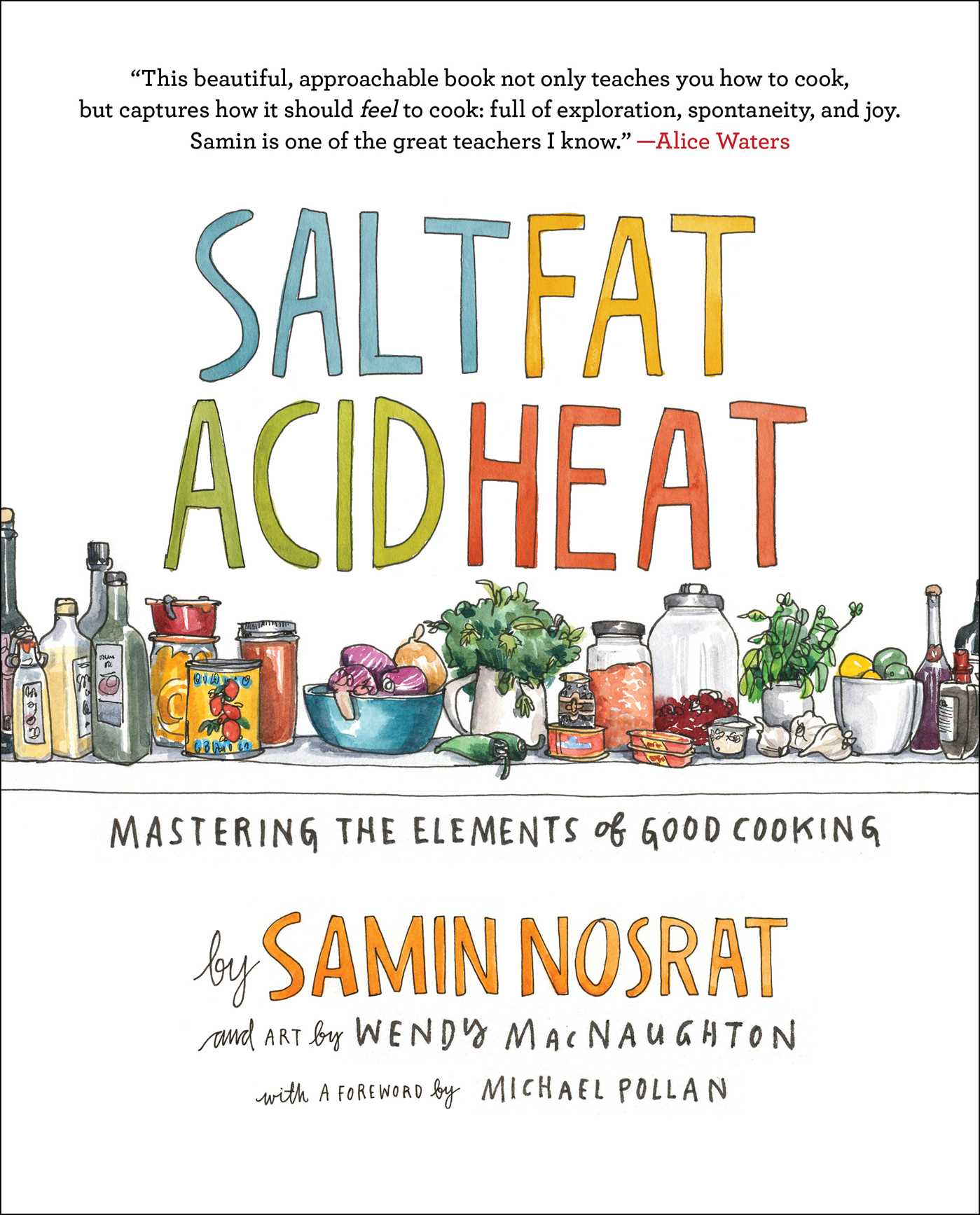
A visionary new master class in cooking that distills decades of professional experience into just four simple elements, from the woman declared “America’s next great cooking teacher” by Alice Waters.In the tradition of The Joy of Cooking and How to Cook Everything comes Salt, Fat, Acid, Heat, an ambitious new approach to cooking by a major new culinary voice. Chef and writer Samin Nosrat has taught everyone from professional chefs to middle school kids to author Michael Pollan to cook using her revolutionary, yet simple, philosophy. Master the use of just four elements—Salt, which enhances flavor; Fat, which delivers flavor and generates texture; Acid, which balances flavor; and Heat, which ultimately determines the texture of food—and anything you cook will be delicious. By explaining the hows and whys of good cooking, Salt, Fat, Acid, Heat will teach and inspire a new generation of cooks how to confidently make better decisions in the kitchen and cook delicious meals with any ingredients, anywhere, at any time. Echoing Samin’s own journey from culinary novice to award-winning chef, Salt, Fat Acid, Heat immediately bridges the gap between home and professional kitchens. With charming narrative, illustrated walkthroughs, and a lighthearted approach to kitchen science, Samin demystifies the four elements of good cooking for everyone. Refer to the canon of 100 essential recipes—and dozens of variations—to put the lessons into practice and make bright, balanced vinaigrettes, perfectly caramelized roast vegetables, tender braised meats, and light, flaky pastry doughs. Featuring 150 illustrations and infographics that reveal an atlas to the world of flavor by renowned illustrator Wendy MacNaughton, Salt, Fat, Acid, Heat will be your compass in the kitchen. Destined to be a classic, it just might be the last cookbook you’ll ever need. With a foreword by Michael Pollan.

“Dr. Gundry is a true trailblazer, always at the forefront of scientific knowledge. The Plant Paradox shows the world what pioneer thinking is about and is a must-read book for anyone interested in being as healthy as nature has designed them to be.” —Alejandro Junger MD, New York Times bestselling author of Clean, Clean Gut and Clean Eats“The Plant Paradox elegantly explains how plants defend themselves from being consumed by humans, and how eating the wrong ones at the wrong times immeasurably hurts our health. An eye-opening read.” —Mehmet Oz, MD, Professor of Surgery, New York Presbyterian/Columbia UniversityMost of us have heard of gluten—a protein found in wheat that causes widespread inflammation in the body. Americans spend billions of dollars on gluten-free diets in an effort to protect their health. But what if we’ve been missing the root of the problem? In The Plant Paradox, renowned cardiologist Dr. Steven Gundry reveals that gluten is just one variety of a common, and highly toxic, plant-based protein called lectin. Lectins are found not only in grains like wheat but also in the “gluten-free” foods most of us commonly regard as healthy, including many fruits, vegetables, nuts, beans, and conventional dairy products. These proteins, which are found in the seeds, grains, skins, rinds, and leaves of plants, are designed by nature to protect them from predators (including humans). Once ingested, they incite a kind of chemical warfare in our bodies, causing inflammatory reactions that can lead to weight gain and serious health conditions.At his waitlist-only clinics in California, Dr. Gundry has successfully treated tens of thousands of patients suffering from autoimmune disorders, diabetes, leaky gut syndrome, heart disease, and neurodegenerative diseases with a protocol that detoxes the cells, repairs the gut, and nourishes the body. Now, in The Plant Paradox, he shares this clinically proven program with readers around the world.The simple (and daunting) fact is, lectins are everywhere. Thankfully, Dr. Gundry offers simple hacks we easily can employ to avoid them, · Peel your veggies. Most of the lectins are contained in the skin and seeds of plants; simply peeling and de-seeding vegetables (like tomatoes and peppers) reduces their lectin content.· Shop for fruit in season. Fruit contain fewer lectins when ripe, so eating apples, berries, and other lectin-containing fruits at the peak of ripeness helps minimize your lectin consumption.· Swap your brown rice for white. Whole grains and seeds with hard outer coatings are designed by nature to cause digestive distress—and are full of lectins.With a full list of lectin-containing foods and simple substitutes for each, a step-by-step detox and eating plan, and delicious lectin-free recipes, The Plant Paradox illuminates the hidden dangers lurking in your salad bowl—and shows you how to eat whole foods in a whole new way.

In 2004, David Chang opened a noodle restaurant named Momofuku in Manhattan's East Village, not expecting the business to survive its first year. In 2018, he was the owner and chef of his own restaurant empire, with 15 locations from New York to Australia, the star of his own hit Netflix show and podcast, was named one of the most influential people of the 21st century and had a following of over 1.2 million. In this inspiring, honest and heartfelt memoir, Chang shares the extraordinary story of his culinary coming-of-age.Growing up in Virginia, the son of Korean immigrant parents, Chang struggled with feelings of abandonment, isolation and loneliness throughout his childhood. After failing to find a job after graduating, he convinced his father to loan him money to open a restaurant. Momofuku's unpretentious air and great-tasting simple staples - ramen bowls and pork buns - earned it rave reviews, culinary awards and before long, Chang had a cult following.Momofuku's popularity continued to grow with Chang opening new locations across the U.S. and beyond. In 2009, his Ko restaurant received two Michelin stars and Chang went on to open Milk Bar, Momofuku's bakery. By 2012, he had become a restaurant mogul with the opening of the Momofuku building in Toronto, encompassing three restaurants and a bar.Chang's love of food and cooking remained a constant in his life, despite the adversities he had to overcome. Over the course of his career, the chef struggled with suicidal thoughts, depression and anxiety. He shied away from praise and begged not to be given awards. In Eat a Peach, Chang opens up about his feelings of paranoia, self-confidence and pulls back the curtain on his struggles, failures and learned lessons. Deeply personal, honest and humble, Chang's story is one of passion and tenacity, against the odds.
Are you lacking direction in how to whip up a swanky soiree for lumberjacks? A dinner party for white-collar workers? A festive gathering for the grieving? Don't despair. Take a cue from entertaining expert Amy Sedaris and host an unforgettable fete that will have your guests raving. No matter the style or size of the gathering-from the straightforward to the bizarre-I LIKE YOU provides jackpot recipes and solid advice laced with Amy's blisteringly funny take on entertaining, plus four-color photos and enlightening sidebars on everything it takes to pull off a party with extraordinary flair. You don't even need to be a host or hostess to benefit-Amy offers tips for guests, too! (Number one: don't be fifteen minutes early.) Readers will discover unique dishes to serve alcoholics (Broiled Frozen Chicken Wings with Applesauce), the secret to a successful children's party (a half-hour time limit, games included), plus a whole appendix chock-full of arts and crafts ideas (from a mini-pantyhose plant-hanger to a do-it-yourself calf stretcher), and much, much more!

And God said, Let us make man in our image, after our likeness; and let them have dominion over the fish of the sea, and over the fowl of the air, and over the cattle, and over all the earth, and over every creeping thing that creepeth upon the earth.--Genesis 1:24-26In this crucial passage from the Old Testament, God grants mankind power over animals. But with this privilege comes the grave responsibility to respect life, to treat animals with simple dignity and compassion.Somewhere along the way, something has gone wrong.In Dominion, we witness the annual convention of Safari Club International, an organization whose wealthier members will pay up to $20,000 to hunt an elephant, a lion or another animal, either abroad or in American "safari ranches," where the animals are fenced in pens. We attend the annual International Whaling Commission conference, where the skewed politics of the whaling industry come to light, and the focus is on developing more lethal, but not more merciful, methods of harvesting "living marine resources." And we visit a gargantuan American "factory farm," where animals are treated as mere product and raised in conditions of mass confinement, bred for passivity and bulk, inseminated and fed with machines, kept in tightly confined stalls for the entirety of their lives, and slaughtered in a way that maximizes profits and minimizes decency.Throughout Dominion, Scully counters the hypocritical arguments that attempt to excuse animal abuse: from those who argue that the Bible's message permits mankind to use animals as it pleases, to the hunter's argument that through hunting animal populations are controlled, to the popular and "scientifically proven" notions that animals cannot feel pain, experience no emotions, and are not conscious of their own lives.The result is eye opening, painful and infuriating, insightful and rewarding. Dominion is a plea for human benevolence and mercy, a scathing attack on those who would dismiss animal activists as mere sentimentalists, and a demand for reform from the government down to the individual. Matthew Scully has created a groundbreaking work, a book of lasting power and importance for all of us.

A classic in the field of sustainable gardening, HOW TO GROW MORE VEGETABLES shows how to produce a beautiful organic garden with minimal watering and care, whether it's just a few tomatoes in a tiny backyard or enough food to feed a family of four on less than half an acre. Updated with the latest biointensive tips and techniques, this is an essential reference for gardeners of all skill levels seeking to grow some or all of their own food.

After years of living in awe of the mysterious fungi known as mushrooms-chefs, health enthusiasts, and home cooks alike can't get enough of these rich, delicate morsels. With updated production techniques for home and commercial cultivation, detailed growth parameters for 31 mushroom species, a trouble-shooting guide, and handy gardening tips, this revised and updated handbook will make your mycological landscapes the envy of the neighborhood.

Corporate candy giants Milton Hershey and Forrest Mars built business empires out of one of the world's most magical, sought-after substances: chocolate. In The Emperors of Chocolate , Joël Glenn Brenner--the first person to ever gain access to the highly secretive companies of Hershey and Mars--spins a unique story that takes us inside a world as mysterious as Willy Wonka's Chocolate Factory. Packed with flavorful stories and outrageous characters that give the true scoop on this real-life candyland, The Emperors of Chocolate is a delectable read for business buffs and chocoholics alike. Start reading and you'll soon be hungry for more.

From two acclaimed, award-winning restaurants came two of the most acclaimed, award-winning cookbooks ever published—now packaged together in a luxurious slipcased boxed set, the ideal gift for any food lover.First there was French Laundry in Napa Valley, setting a new standard for American fine dining. Then there was The French Laundry Cookbook , setting a new standard for American cookbooks. In 1998, Chef Keller opened Bouchon, “so that I’d have a place to eat after cooking all night at the French Laundry,” and that restaurant, too, gave birth to a groundbreaking cookbook. Now, fifteen years after Thomas Keller first set foot in what would become a landmark restaurant, these two extraordinary books are offered in a striking new slipcased edition. With this year’s opening of the Bouchon Bakery in New York City, and last year’s momentous Michelin guide that awarded Keller’s Per Se the top honors, Keller is increasingly in the limelight—and his inventive, delicious food is increasingly in the consciousness of a national audience. The Complete Keller is the perfect gift for anyone who loves fine food.

Hervé This (pronounced "Teess") is an internationally renowned chemist, a popular French television personality, a bestselling cookbook author, a longtime collaborator with the famed French chef Pierre Gagnaire, and the only person to hold a doctorate in molecular gastronomy, a cutting-edge field he pioneered. Bringing the instruments and experimental techniques of the laboratory into the kitchen, This uses recent research in the chemistry, physics, and biology of food to challenge traditional ideas about cooking and eating. What he discovers will entertain, instruct, and intrigue cooks, gourmets, and scientists alike.Molecular Gastronomy, This's first work to appear in English, is filled with practical tips, provocative suggestions, and penetrating insights. This begins by reexamining and debunking a variety of time-honored rules and dictums about cooking and presents new and improved ways of preparing a variety of dishes from quiches and quenelles to steak and hard-boiled eggs. He goes on to discuss the physiology of flavor and explores how the brain perceives tastes, how chewing affects food, and how the tongue reacts to various stimuli. Examining the molecular properties of bread, ham, foie gras, and champagne, the book analyzes what happens as they are baked, cured, cooked, and chilled.Looking to the future, Herv' This imagines new cooking methods and proposes novel dishes. A chocolate mousse without eggs? A flourless chocolate cake baked in the microwave? Molecular Gastronomy explains how to make them. This also shows us how to cook perfect French fries, why a souffl' rises and falls, how long to cool champagne, when to season a steak, the right way to cook pasta, how the shape of a wine glass affects the taste of wine, why chocolate turns white, and how salt modifies tastes.

From the star of No Reservations, Anthony Bourdain's New York Times-bestselling chronicle of travelling the world in search the globe's greatest cuilnary adventuresThe only thing "gonzo gastronome" and internationally bestselling author Anthony Bourdain loves as much as cooking is traveling. Inspired by the question, "What would be the perfect meal?," Tony sets out on a quest for his culinary holy grail, and in the process turns the notion of "perfection" inside out. From California to Cambodia, A Cooks' Tour chronicles the unpredictable adventures of America's boldest and bravest chef.Fans of Bourdain will find much to love in revisting this classic culinary and travel memoir.

Two legendary cooks invite us into their kitchen and show us the basics of good home cooking.Julia Child and Jacques Pépin are synonymous with good food, and in these pages they demonstrate techniques (on which they don’t always agree), discuss ingredients, improvise, balance flavors to round out a meal, and conjure up new dishes from leftovers. Center stage are carefully spelled-out recipes flanked by Julia’s and Jacques’s comments—the accumulated wisdom of two lifetimes of honing their cooking skills. Nothing is written in stone, they imply. And that is one of the most important lessons for every good cook.So sharpen your knives and join in the fun as you learn to make: • Appetizers: from traditional and instant gravlax to your own sausage in brioche and a country pâté• Soups: from New England chicken chowder and onion soup gratinée to Mediterranean seafood stew and that creamy essence of mussels, billi-bi• Eggs: omelets and “tortillas”; scrambled, poached, and coddled eggs; eggs as a liaison for sauces and as the puffing power for soufflés• Salads and Sandwiches: basic green and near-Niçoise salads; a crusty round seafood-stuffed bread, a lobster roll, and a pan bagnat• Potatoes: baked, mashed, hash-browned, scalloped, souffléd, and French-fried• Vegetables: the favorites from artichokes to tomatoes, blanched, steamed, sautéed, braised, glazed, and gratinéed• Fish: familiar varieties whole and filleted (with step-by-step instructions for preparing your own), steamed en papillote, grilled, seared, roasted, and poached, plus a classic sole meunière and the essentials of lobster cookery• Poultry: the perfect roast chicken (Julia’s way and Jacques’s way); holiday turkey, Julia’s deconstructed and Jacques’s galantine; their two novel approaches to duck• Meat: the right technique for each cut of meat (along with lessons in cutting up), from steaks and hamburger to boeuf bourguignon and roast leg of lamb • Desserts: crème caramel, profiteroles, chocolate roulade, free-form apple tart—as you make them you’ll learn all the important building blocks for handling dough, cooking custards, preparing fillings and frostings• And much, much more . . .Throughout this richly illustrated book you’ll see Julia’s and Jacques’s hands at work, and you’ll sense the pleasure the two are having cooking together, tasting, exchanging ideas, and raising a glass to savor the fruits of their labor. Again and again they demonstrate that cooking is endlessly fascinating and challenging and, while ultimately personal, it is a joy to be shared.

A combination memoir, cookbook, and travelogue describes one man's efforts to live on the land while attempting to re-create the recipes from Escoffier's 1903 magnum opus Le Guide Culinaire and searching for the frequently esoteric ingredients called for in the various dishes. Reprint.

From a passionate and talented chef who also happens to be an Episcopalian priest comes this surprising and thought-provoking treatise on everything from prayer to poetry to puff pastry. In The Supper of the Lamb , Capon talks about festal and ferial cooking, emerging as an inspirational voice extolling the benefits and wonders of old-fashioned home cooking in a world of fast food and prepackaged cuisine. This edition includes the original recipes and a new Introduction by Deborah Madison, the founder of Greens Restaurant in San Francisco and author of several cookbooks.

Share the unsurpassed pleasures of discovering, cooking, and eating good, simple food with this beloved book. Equal parts cookbook and memoir, Laurie Colwin's "Home Cooking" combines her insightful, good-humored writing style with her lifelong passion for wonderful cuisine in essays such as "Alone in the Kitchen with an Eggplant," "Repulsive Dinners: A Memoir," and "Stuffed Breast of Veal: A Bad Idea." "Home Cooking" is truly a feast for body and soul.

The Man Who Fed the World provides a loving and respectful portrait of one of America's greatest heroes. Nobel Peace Prize recipient for averting hunger and famine, Dr. Norman Borlaug is credited with saving hundreds of millions of lives from starvation-more than any other person in history? Loved by millions around the world, Dr. Borlaug is recognized as one of the most influential men of the twentieth century.

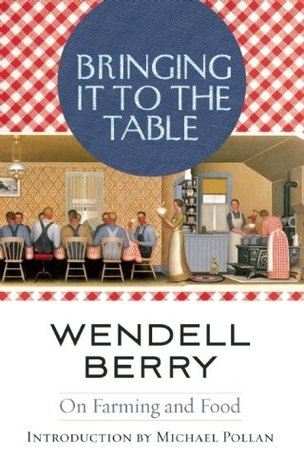
“My work has been motivated,” Wendell Berry has written, “by a desire to make myself responsibly at home in this world and in my native and chosen place.” In Home Economics , a collection of fourteen essays, Berry explores this process and continues to discuss what it means to make oneself “responsibly at home.”His title reminds us that the very root of economics is stewardship, household management. To paraphrase Confucius, a healthy planet is made up of healthy nations that are simply healthy communities sharing common ground, and communities are gatherings of households. A measure of the health of the planet is economics—the health of its households. Any process of destruction or healing must begin at home. Berry speaks of the necessary coherence of the “Great Economy,” as he argues for clarity in our lives, our conceptions, and our communications. To live is not to pass time, but to spend time.Whether as critic or as champion, Wendell Berry offers careful insights into our personal and national situation in a prose that is ringing and clear.

Mycelium Running is a manual for the mycological rescue of the planet. That’s right: growing more mushrooms may be the best thing we can do to save the environment, and in this groundbreaking text from mushroom expert Paul Stamets, you’ll find out how. The basic science goes like this: Microscopic cells called “mycelium”--the fruit of which are mushrooms--recycle carbon, nitrogen, and other essential elements as they break down plant and animal debris in the creation of rich new soil. What Stamets has discovered is that we can capitalize on mycelium’s digestive power and target it to decompose toxic wastes and pollutants (mycoremediation), catch and reduce silt from streambeds and pathogens from agricultural watersheds (mycofiltration), control insect populations (mycopesticides), and generally enhance the health of our forests and gardens (mycoforestry and myco-gardening). In this comprehensive guide, you’ll find chapters detailing each of these four exciting branches of what Stamets has coined “mycorestoration,” as well as chapters on the medicinal and nutritional properties of mushrooms, inoculation methods, log and stump culture, and species selection for various environmental purposes. Heavily referenced and beautifully illustrated, this book is destined to be a classic reference for bemushroomed generations to come.

The American translation of the monumental Guide Culinaire, Auguste Escoffier’s indispensable guide to fine cooking originally published in 1903, with nearly 3,000 recipes for sauces, soups, roasts, desserts, and moreIn The Escoffier Cookbook, Auguste Escoffier, regarded as one of the greatest chefs of all time, presents 2,973 dishes, clearly and simply outlines the methods of preparation for each, and shows how to achieve perfection in delicious flavor.In Part I: The Fundamental Elements of Cooking, he explains the importance of flawless stocks and guides the reader through making them at home. He then moves on to the sauces—Espagnole, Velouté, Bechamel, Tomato, and Hollandaise—that form the foundation of French cooking. Next, Escoffier explores the Aspics and Jellies; the Court Bouillons (or short broths); Elementary Preparations (seasoning, condiments, garnishes, stuffings, and the like); and finally Leading Culinary Operations (braising, poaching, sauteing, roasting, grilling, frying, gratinating, and glazing, among others).In Part II: Recipes and Methods of Procedure, Escoffier offers nearly 3,000 recipes that show the incredible range of classic French cuisine. All the familiar standards are here—Coquilles Saint-Jacques, Crepes Suzette, Cassoulet, Charlotte Russe, Lobster Newburg, and Potatoes Dauphinoise, plus thousands of not-so-familiar standards.Featuring a comprehensive glossary and a collection of sample menus, The Escoffier Cookbook is an invaluable resource for connoisseurs, gourmets, and those who appreciate excellence in food preparation. Bon appétit!

'Her writing makes your mouth water.' -- Financial Times'Unique among the classics of gastronomic writing . . . a book about adult loss, survival, and love.' -- New York Review of BooksA classic of food writing that redefined the genre, The Gastronomical Me is a memoir of travel, love and loss, but above all hunger.In 1929 M.F.K. Fisher left America for France, where she tasted real French cooking for the first time. It inspired a prolific career as a food and travel writer. In The Gastronomical Me Fisher traces the development of her appetite, from her childhood in America to her arrival in Europe, where she embarked on a whole new way of eating, drinking, and living. She recounts unforgettable meals shared with an assortment of eccentric characters, set against a backdrop of mounting pre-war tensions.Here are meals as seductions, educations, diplomacies, and communions, in settings as diverse as a bedsit above a patisserie, a Swiss farm, and cruise liners across oceans. In prose convivial and confiding, Fisher illustrates the art of ordering well, the pleasures of dining alone, and how to eat so you always find nourishment, in both head and heart.'Many authors whisper, as though to a diary, or chat, as though to a friend, but Fisher communicates with the heady directness of a lover.' -- Bee Wilson, author of The Way We Eat Now'She is not just a great food writer. She is a great writer, full stop.' -- Rachel Cooke, Observer'The greatest food writer who has ever lived.' -- Simon Schama'Poet of the appetites.' -- John Updike'I do not know of anyone in the United States who writes better prose.' -- W.H. Auden

It's a prime ingredient in countless substances from cereal to soup, from cola to coffee. Consumed at the rate of one hundred pounds for every American every year, it's as addictive as nicotine -- and as poisonous. It's sugar. And "Sugar Blues", inspired by the crusade of Hollywood legend Gloria Swanson, is the classic, bestselling expose that unmasks our generation's greatest medical killer and shows how a revitalizing, sugar-free diet can not only change lives, but quite possibly save them.

Perfect for fans of The Founder, this is the real-life story of the world’s premier entrepreneurial success.The growth of McDonald’s worldwide continues to astonish. In tough financial times, McDonald’s proved that ingenuity, trial and error, and gut instinct were the keys to building a service business the entire world has come to admire.McDonald’s has been a trendsetter in advertising, focusing on different demographics as well as the physically disabled. McDonald’s created McJobs, a program that employs both mentally challenged adults and senior citizens. And because its franchisees have their fingers on the pulse of the marketplace, McDonald’s has evolved successfully with the health food revolution, launching dozens of new products and moving toward environmentally safe packaging and recyclable goods.Inspiring, informative, and filled with behind-the-scenes stories, this remarkable saga offers an irresistible look inside a great American business success.

An earlier edition of ISBN 0897331346 is available here.There were, and still are, great restaurants all over Europe, but the greater part of Blue Trout and Black Truffles is devoted to the eating places and vineyards of France. It is a vicarious experience to read about the culinary wonders of the notable establishments of another era that have become the last epicurean haven in this materialistic, mechanized world of fast-food chains and frozen-food dinners. Mr. Wechsberg reaches back to the twilight days of the Habsburg monarchy, when those splendid monuments to the haute cuisine in central Europe, Meissl and Schadn of Vienna and Gundel's of Budapest, were in their prime.

In this classic Southern cookbook, the “first lady of Southern cooking” (NPR) shares the seasonal recipes from a childhood spent in a small farming community settled by freed slaves. She shows us how to recreate these timeless dishes in our own kitchens—using natural ingredients, embracing the seasons, and cultivating community. With a preface by Judith Jones and foreword by Alice Waters.With menus for the four seasons, Miss Lewis (as she was almost universally known) shares the ways her family prepared and enjoyed food, savoring the delights of each special time of year.From the fresh taste of spring—the first wild mushrooms and field greens—to the feasts of summer—garden-ripe vegetables and fresh blackberry cobbler—and from the harvest of fall—baked country ham and roasted newly dug sweet potatoes—to the hearty fare of winter—stews, soups, and baked beans—Lewis sets down these marvelous dishes in loving detail.Here are recipes for Corn Pone and Crispy Biscuits, Sweet Potato Casserole and Hot Buttered Beets, Pan-Braised Spareribs, Chicken with Dumplings, Rhubarb Pie, and Brandied Peaches. Dishes are organized into more than 30 seasonal menus, such as A Late Spring Lunch After Wild-Mushroom Picking, A Midsummer Sunday Breakfast, A Christmas Eve Supper, and an Emancipation Day Dinner.In this seminal work, Edna Lewis shows us precisely how to recover, in our own country or city or suburban kitchens, the taste of the fresh, good, and distinctly American cooking that she grew up with.

The great French chef offers nearly twelve hundred recipes, providing a wide range of dishes for every type of cook and for every occasion and a wide range of preparations for every meat, seafood, vegetable, fruit, and dairy product

This book is perhaps the jewel in Prospect Book's crown. Within a few months of its first appearance in 1986 it was hailed as a modern classic. Fiona MacCarthy wrote in The Times that, 'the book is a large and grandiose life history, a passionate narrative of extremes of experience.'; Jeremy Round called Patience Gray 'he high priestess of cooking';, whose book pushes the form of the cookery book as far as it can go. Angela Carter remarked that it was less a cookery book that a summing-up of the genre of the late-modern British cookery book. The work has attracted a cult following in the United States, where passages have been read out at great length on the radio; and it has been anthologized by Paul Levy in The Penguin Book of Food and Drink. It was given a special award by the Andre Simon Book Prize committee in 1987.

“Will empower all women to stop believing that our bodies are the problems, dieting the solution.”—Harriet Lerner, Ph.D., author of The Dance of AngerIn this revolutionary new book, bestselling authors Carol Munter and Jane Hirschmann explore the myriad reasons why women cling to diets despite overwhelming evidence that diets don’t work . In fact, diets turn us into compulsive eaters obsessed with food and weight.Munter and Hirschmann call this syndrome “Bad Body Fever” and demonstrate how “bad body thoughts” are clues to our emotional lives. They explore the difficulties women encounter replacing dieting with demand feeding. And finally, they teach us how to think about our problems rather than eat about them—so that food can resume its proper place in our lives.“Many women will find in these pages exactly what they determined, optimistic, and resourceful coaches, pausing at the right moments to acknowledge the difficulty of change, then passionately urging them to press on.”—Susan C. Wooley, Ph.D., Professor of Psychology, Codirector, Eating Disorder Center University of Cincinnati Medical Center

Chef Samin Nosrat’s Top Ten Favorite Books for VultureWinner, 2008 James Beard Foundation Book Award in Asian CookingThe Persians of antiquity were renowned for their lavish cuisine and their never-ceasing fascination with the exotic. These traits still find expression in the cooking of India's rapidly dwindling Parsi population—descendants of Zoroastrians who fled Persia after the Sassanian empire fell to the invading Arabs. The first book published in the United States on Parsi food written by a Parsi, this beautiful volume includes 165 recipes and makes one of India's most remarkable regional cuisines accessible to Westerners. In an intimate narrative rich with personal experience, the author leads readers into a world of new ideas, tastes, ingredients, and techniques, with a range of easy and seductive menus that will reassure neophytes and challenge explorers.

Hugely informative, practical, and uplifting. Healthy Aging is infused with the engaging candor and common sense that have made Dr. Andrew Weil our most trusted source on healthy living.EVERYTHING YOU NEED TO KNOW – The Anti-inflammatory following Dr. Weil's guide to eating right for a healthy lifestyle– Separating myth from fact about vitamins, herbs, hormones, anti-aging "medicines," and other would-be elixirs of life extension– Mastering exercise, breathing, and stress-management techniques to benefit your mind and body– Understanding the science behind the aging process– Sharing life lessons with your loved ones

In the high Alpine valley of La Grande Chartreuse, Roy Andries de Groot discovered by accident a charming and unpretentious little inn, L’Auberge de L’Atre Fleuri. Impressed by the devotion of its owners — les Mesdemoiselles Artraud and Girard — to perpetuating the tradition of supreme country dining, Mr. de Groot returned to the inn to record their recipes for natural country soups, heavy winter stews, roasted meats, pâtes, terrines, and fruity and spirituous desserts — the best of French cooking.Superb food, fine wine, and the perfect blending of both into a series of menus for memorable lunches and dinners, together with the unique French Alpine recipes that build each meal — these are the ingredients of this remarkable book, now considered a classic.

This is my guide to making you a better cook and it's the biggest book I've ever done! I think it looks beautiful and is full of simple and accessible recipes (160 of them!) that will blow the socks off your family and any guests you might have round for dinner. And that's not all - there’s information on the equipment that I think you should have in your kitchen, advice on how to recognize and cook loads of different cuts of meat, as well as on how to get the best value and quality when you’re out shopping. With Britain consuming more processed food than the rest of Europe put together, it’s a sad fact that most people just aren’t confident enough to cook any more. I'm hoping that with this new book, everyone will get stuck in and reclaim our fantastic cooking heritage!

Dirt, soil, call it what you want—it's everywhere we go. It is the root of our existence, supporting our feet, our farms, our cities. This fascinating yet disquieting book finds, however, that we are running out of dirt, and it's no laughing matter. An engaging natural and cultural history of soil that sweeps from ancient civilizations to modern times, The Erosion of Civilizations explores the compelling idea that we are—and have long been—using up Earth's soil. Once bare of protective vegetation and exposed to wind and rain, cultivated soils erode bit by bit, slowly enough to be ignored in a single lifetime but fast enough over centuries to limit the lifespan of civilizations. A rich mix of history, archaeology and geology, Dirt traces the role of soil use and abuse in the history of Mesopotamia, Ancient Greece, the Roman Empire, China, European colonialism, Central America, and the American push westward. We see how soil has shaped us and we have shaped soil—as society after society has risen, prospered, and plowed through a natural endowment of fertile dirt. David R. Montgomery sees in the recent rise of organic and no-till farming the hope for a new agricultural revolution that might help us avoid the fate of previous civilizations.

Get Potent and Powerful—When You Unleash the Power of Instinctual Eating The Warrior Diet presents a brilliant synthesis of modern scientific research and ancient time-tested secrets for reducing body fat, gaining energy, getting stronger and looking younger. Our problem, according to Ori Hofmekler, is that we have lost touch with the natural wisdom of our instinctual drives. We have become the slaves of our own creature comforts. The ill-advised eating and lifestyle habits that leave us vulnerable to all manner of disease—not to mention unwanted flab, premature wrinkling and a sagging, weak, unattractive body. The first step is to break the chains of our current eating habits. The Warrior Diet proves that humans are at their energetic, physical, mental and passionate best when they "undereat" during the day and "overeat" at night. Once you master this essential eating cycle, a new life of explosive vigor, good looks and vitality will be yours for the taking. Not just a diet, but a whole way of life, The Warrior Diet encourages us to seize back the pleasures of being alive—from the most refined to the wild and raw. The Warrior Diet is practical, tested, and based in commonsense. Expect results!

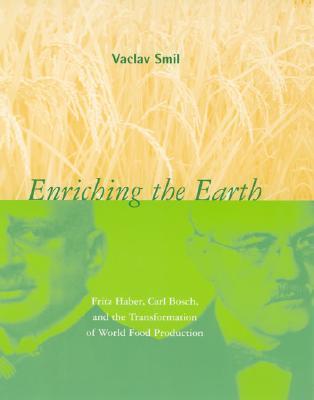
Dr. Smil is the world's authority on nitrogenous fertilizer. The industrial synthesis of ammonia from nitrogen and hydrogen has been of greater fundamental importance to the modern world than the invention of the airplane, nuclear energy, space flight, or television. The expansion of the world's population from 1.6 billion people in 1900 to today's six billion would not have been possible without the synthesis of ammonia. In Enriching the Earth , Vaclav Smil begins with a discussion of nitrogen's unique status in the biosphere, its role in crop production, and traditional means of supplying the nutrient. He then looks at various attempts to expand natural nitrogen flows through mineral and synthetic fertilizers. The core of the book is a detailed narrative of the discovery of ammonia synthesis by Fritz Haber—a discovery scientists had sought for over one hundred years—and its commercialization by Carl Bosch and the chemical company BASF. Smil also examines the emergence of the large-scale nitrogen fertilizer industry and analyzes the extent of global dependence on the Haber-Bosch process and its biospheric consequences. Finally, it looks at the role of nitrogen in civilization and, in a sad coda, describes the lives of Fritz Haber and Carl Bosch after the discovery of ammonia synthesis.

Publisher Michel Bras is a three star Michelin chef, the owner of an extraordinary inn located in one of the most beautiful spots in France, but he is much more than that. He is the author of a cuisine filled with fres emotions. Each of his dishes is a discovery and simplicity itself. It is a happy and iventive cuisine. It is a cuisien that owes more to love than to science, auniverse filled with wonder. Ginette and Michel gambled on the sky and the high land. Their son Sébastien and his wife, Véronique, live this adventure together with them. It is a great team. To live an work at Puech du Suquet, they chose a bold architecture that suits the high plain of Aubrac, in the heart of the land where Michel Bras sees himself. Local products garnish the tables, as do the silverware and the famous knifes of Laguiole. Aubrac inspires not only Michel Bras' best recipes but also some of his best photographs. More tana a simple portrait, Essential cuisine is the work of a great chef in

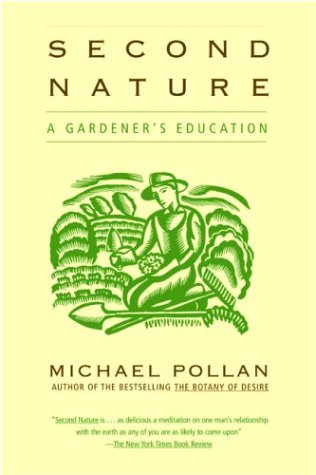
In his articles and in best-selling books such as The Botany of Desire, Michael Pollan has established himself as one of our most important and beloved writers on modern man's place in the natural world. A new literary classic, Second Nature has become a manifesto not just for gardeners but for environmentalists everywhere. "As delicious a meditation on one man's relationships with the Earth as any you are likely to come upon" (The New York Times Book Review), Second Nature captures the rhythms of our everyday engagement with the outdoors in all its glory and exasperation. With chapters ranging from a reconsideration of the Great American Lawn, a dispatch from one man's war with a woodchuck, to an essay about the sexual politics of roses, Pollan has created a passionate and eloquent argument for reconceiving our relationship with nature.

Mention the name Bill Phillips to any of the people he's helped transform and you will see their faces light up with appreciation and respect. These people include:Hundreds of thousands of men and women who read his magazine for guidance and straightforward information about exercise, nutrition, and living with strength.Elite professional athletes, among them John Elway, Karl Malone, Mike Piazza, and Terrell Davis ?ho have turned to Phillips for clear–cut information to enhance their energy and performance.People once plagued by obesity, alcoholism, and life–threatening ailments who accepted a personal challenge from Bill Phillips and, with his help, have regained control of their bodies and their lives.When you begin to apply the information in this book, you will be proving to yourself that astounding changes are within your grasp too. And, you will discover Body –for–LIFE is much more than a book about physical fitness ?t's a gateway to a new and better life, a life of rewarding and fulfilling moments, perhaps more spectacular than you've ever dared to dream before.Within 12 weeks, you too are going to know ?ot believe, but know : that the transformation you've created with your body is merely an example of the power you have to transform everything else in your world. In language that is vivid and down–to–earth, Bill Phillips guides you, step by step, through the integrated Body –for–LIFE Program, which reveals:How to lose fat and increase your strength by exercising less, not more;How to tap into an endless source of energy by living with the Power MindsetTM;How to create more time for everything meaningful in your life;How to trade hours of aerobics for minutes of weight training ?ith dramatic results;How to make continual progress by using the High–Point TechniqueTM;How to feed your muscles while starving fat with the Nutrition–for–LIFE MethodTM;How thousands of ordinary people have now become extraordinary and how you can, too;How to gain control of your body and life, once and for all.The principles of the Body –for–LIFE Program are surprisingly simple but remarkably powerful. So allow yourself to experience the force of the information in this book, allow yourself to take your mind, your body, your life to a higher point than you may have ever dreamed you could. All in as little as 12 weeks.

One of the most definitive manuals on sausage making in the English language. --Craig Claiborne "If I could only have one book on sausage making this would be the one." -- squidoo.com Great Sausage Recipes and Meat Curing is the most comprehensive book available on sausage making and meat curing and has sold more than 500,000 copies worldwide. It is easily understood, contains a wide variety of recipes, and is very effective in helping solve common problems. It is written by a man who learned the art of sausage making and meat curing at a very young age and who made a living smoking and curing meats.Curing and smoking meat using natural and synthetic casingsSelecting and storing meat and choosing other ingredients Fresh Italian Sausage, Dried Beef, Andouille Sausage, Kippered Salmon

Another edition of ISBN 086547236X can be found here.New Yorker writer A.J. Liebling recalls his Parisian apprenticeship in the fine art of eating in this charming memoir.No writer has written more enthusiastically about food than A. J. Liebling. Between Meals: An Appetite for Paris, the great New Yorker writer's last book, is a wholly appealing account of his éducation sentimentale in French cuisine during 1926 and 1927, when American expatriates like Ernest Hemingway and Gertrude Stein made café life the stuff of legends. A native New Yorker who had gone abroad to study, Liebling shunned his coursework and applied himself instead to the fine art of eating – or “feeding,” as he called it. The neighborhood restaurants of the Left Bank became his homes away from home, the fragrant wines his constant companions, the rich French dishes a test of his formidable appetite. is a classic account of the pleasures of good eating, and a matchless evocation of a now-vanished Paris.

This extraordinary cookbook, Classic Indian Cooking , amounts to a complete course in Indian cuisine. Elucidated by over 100 line drawings, it systematically introduces the properties of all the basic spices and special ingredients of Indian food, then explains the techniques employed in using them, always with the help of comparisons to familiar Western methods. It is immediately obvious that Indian food is rich and varied, yet not difficult to prepare. The cooking principles are basic and wellknown. The utensils needed are few and simple. As Julie Sahni says, "If you know how to fry, there are few tricks to Indian food." Every recipe has been especially designed for the American kitchen -- practically all the ingredients can be found in any American supermarket and there are scores of time-saving shortcuts with the food processor and handy directions for ahead-of-time preparation. Following a lively and absorbing introduction to the history of India's classic Moghul cuisine, Julie guides the cook through the individual components that make up an Indian meal. She begins with delicious appetizers like Crab Malabar and Hyderabad lime soup; continues through main courses, both nonvegetarian and vegetarian (this book is a treasure trove for the non-meat eater); goes on to all the side dishes and traditional accompaniments, from spinach raita and lentils with garlic butter to saffron pilaf and whole wheat flaky bread; and ends with the glorious desserts, like Ras Malai , sweetmeats, and beverages. Clear, illustrated, step-by-step instructions accompany the cook through every stage, even for making the many wondrous Indian breads, both by hand and with the food processor. And at the end of each recipe are balanced serving suggestions for every kind of meal, Among the many special features are ideas for appropriate wines, a useful spice chart, a complete glossary (which might also come in handy when ordering in Indian restaurants), and a mailorder shopping guide that will make Indian spices accessible anywhere. Most important, Julie Sahni imparts the secrets to mastering the art of Indian cooking. Even the beginner will quickly learn to move within the classic tradition and improvise with sureness and ease. Julie Sahni has written a masterpiece of culinary instruction, as readable as it is usable, a joy to cook from, a fascination to read.

Only once we understand the long history of human efforts to draw sustenance from the land can we grasp the nature of the crisis that faces humankind today, as hundreds of millions of people are faced with famine or flight from the land. From Neolithic times through the earliest civilizations of the ancient Near East, in savannahs, river valleys and the terraces created by the Incas in the Andean mountains, an increasing range of agricultural techniques have developed in response to very different conditions. These developments are recounted in this book, with detailed attention to the ways in which plants, animals, soil, climate, and society have interacted.Mazoyer and Roudart’s A History of World Agriculture is a path-breaking and panoramic work, beginning with the emergence of agriculture after thousands of years in which human societies had depended on hunting and gathering, showing how agricultural techniques developed in the different regions of the world, and how this extraordinary wealth of knowledge, tradition and natural variety is endangered today by global capitialism, as it forces the unequal agrarian heritages of the world to conform to the norms of profit.During the twentieth century, mechanization, motorization and specialization have brought to a halt the pattern of cultural and environmental responses that characterized the global history of agriculture until then. Today a small number of corporations have the capacity to impose the farming methods on the planet that they find most profitable. Mazoyer and Roudart propose an alternative global strategy that can safegaurd the economies of the poor countries, reinvigorate the global economy, and create a livable future for mankind.

The Book That Started A Revolution Since its original publication in 1975, this groundbreaking work has awakened millions of concerned men and women to the shocking abuse of animals everywhere -- inspiring a worldwide movement to eliminate much of the cruel and unnecessary laboratory animal experimentation of years past. In this newly revised and expanded edition, author Peter Singer exposes the chilling realities of today's "factory forms" and product-testing procedures -- offering sound, humane solutions to what has become a profound environmental and social as well as moral issue. An important and persuasive appeal to conscience, fairness, decency and justice, Animal Liberation is essential reading for the supporter and the skeptic alike.

Chef Alistair Little presents over 100 recipes specially tested for the kitchen. Every single one of the recipes presented is intended for any one from the absolute beginner to the accomplished culinary artisan. Where possible, alternatives are given for ingredients difficult or costly to obtain and every recipe includes advice on how to prepare ahead for efficient and panic-free cooking.

The essays in The Gift of Good Land are as true today as when they were first published in 1981; the problems addressed here are still with us and the solutions no nearer to hand. One of the insistent themes of this book is the interdependence, the wholeness, the oneness of people, the land, weather, animals, and family. To touch one is to tamper with them all. We live in one functioning organism whose separate parts are artificially isolated by our culture.The twenty-four essays in this collection cover a variety of subjects; the author’s journeys to the Peruvian Andes, to the desert of southern Arizona, and to Amish country to study the evolution of ancient native agricultural practices. In “Solving for Pattern,” Mr. Berry lists fourteen critical standards for solving agricultural problems that can just as easily be used as standards for solving personal and family problems. In the title essay, the author examines our Judeo-Christian heritage to discover parallels with the Buddhist doctrine of “right livelihood” or “right occupation.” He develops the compelling argument that the “gift” of good land has strings attached. We have it only on loan and only for as long as we practice good stewardship.

Melanie Dunea meets Heat in this award-winning photographer's stunning celebration of world-famous chefs and their final meals.Chefs have been playing the "My Last Supper" game among themselves for decades, if not centuries, but it had always been kept within the profession until now. Melanie Dunea came up with the ingenious idea to ask fifty of the world's famous chefs to let her in on this insider's game and tell her what their final meals would be. My Last Supper showcases their fascinating answers alongside stunning Vanity Fair -style portraits. Their responses are surprising, refreshing, and as distinct from each other as the chefs themselves. The portraits--gorgeous, intimate, and playful--are informed by their answers and reveal the passions and personalities of the most respected names in the business. Lastly, one recipe from each landmark meal is included in the back of the book. With My Last Supper , Dunea found a way into the typically harried, hidden minds of the people who have turned preparing food into an art. Who wouldn't want to know where Alain Ducasse would like his supper to be? And who would prepare Daniel Boulud's final meal? What would Anthony Bourdain's guest list look like? As the clock ticked, what album would Gordon Ramsay be listening to? And just what would Mario Batali eat for the last time? Ferrán Adrià, José Andrés, Dan Barber, Lidia Bastianich, Mario Batali, Rick Bayless, Michelle Bernstein, Daniel Boulud, Anthony Bourdain, Scott Conant, Gary Danko, Hélène Darroze, Alain Ducasse, Wylie Dufresne, Suzanne Goin, Gabrielle Hamilton, Fergus Henderson, Thomas Keller, Giorgio Locatelli, Masa Kobayashi, Nobu, Jamie Oliver, Jacques Pepin, Gordon Ramsay, Michel Richard, Eric Ripert, Marcus Samuelsson, Charlie Trotter, Jean-Georges Vongerichten and more…

By the year 2050, Earth's population will double. If we continue with current farming practices, vast amounts of wilderness will be lost, millions of birds and billions of insects will die, and the public will lose billions of dollars as a consequence of environmental degradation. Clearly,there must be a better way to meet the need for increased food production.Written as part memoir, part instruction, and part contemplation, Tomorrow's Table argues that a judicious blend of two important strands of agriculture--genetic engineering and organic farming--is key to helping feed the world's growing population in an ecologically balanced manner. PamelaRonald, a geneticist, and her husband, Raoul Adamchak, an organic farmer, take the reader inside their lives for roughly a year, allowing us to look over their shoulders so that we can see what geneticists and organic farmers actually do. The reader sees the problems that farmers face, trying toprovide larger yields without resorting to expensive or environmentally hazardous chemicals, a problem that will loom larger and larger as the century progresses. They learn how organic farmers and geneticists address these problems.This book is for consumers, farmers, and policy decision makers who want to make food choices and policy that will support ecologically responsible farming practices. It is also for anyone who wants accurate information about organic farming, genetic engineering, and their potential impacts onhuman health and the environment.

In this updated and greatly enlarged edition of her Book of Middle Eastern Food, Claudia Roden re-creates a classic. The book was originally published here in 1972 and was hailed by James Beard as "a landmark in the field of cookery"; this new version represents the accumulation of the author's thirty years of further extensive travel throughout the ever-changing landscape of the Middle East, gathering recipes and stories.Now Ms. Roden gives us more than 800 recipes, including the aromatic variations that accent a dish and define the country of origin: fried garlic and cumin and coriander from Egypt, cinnamon and allspice from Turkey, sumac and tamarind from Syria and Lebanon, pomegranate syrup from Iran, preserved lemon and harissa from North Africa. She has worked out simpler approaches to traditional dishes, using healthier ingredients and time-saving methods without ever sacrificing any of the extraordinary flavor, freshness, and texture that distinguish the cooking of this part of the world.Throughout these pages she draws on all four of the region's major cooking styles: - The refined haute cuisine of Iran, based on rice exquisitely prepared and embellished with a range of meats, vegetables, fruits, and nuts - Arab cooking from Syria, Lebanon, and Jordan--at its finest today, and a good source for vegetable and bulgur wheat dishes - The legendary Turkish cuisine, with its kebabs, wheat and rice dishes, yogurt salads, savory pies, and syrupy pastries - North African cooking, particularly the splendid fare of Morocco, with its heady mix of hot and sweet, orchestrated to perfection in its couscous dishes and taginesFrom the tantalizing mezze--those succulent bites of filled fillo crescents and cigars, chopped salads, and stuffed morsels, as well as tahina, chickpeas, and eggplant in their many guises--to the skewered meats and savory stews and hearty grain and vegetable dishes, here is a rich array of the cooking that Americans embrace today. No longer considered exotic--all the essential ingredients are now available in supermarkets, and the more rare can be obtained through mail order sources (readily available on the Internet)--the foods of the Middle East are a boon to the home cook looking for healthy, inexpensive, flavorful, and wonderfully satisfying dishes, both for everyday eating and for special occasions.

Food. There's plenty of it around, and we all love to eat it. So why should anyone need to defend it? Because in the so-called Western diet, food has been replaced by nutrients, and common sense by confusion--most of what we’re consuming today is longer the product of nature but of food science. The result is what Michael Pollan calls the American Paradox: The more we worry about nutrition, the less healthy we see to become. With In Defense of Food, Pollan proposes a new (and very old) answer to the question of what we should eat that comes down to seven simple but liberating words: "Eat food. Not too much. Mostly plants." Pollan’s bracing and eloquent manifesto shows us how we can start making thoughtful food choices that will enrich our lives, enlarge our sense of what it means to be healthy, and bring pleasure back to eating.

Jonathan Safran Foer spent much of his life oscillating between enthusiastic carnivore and occasional vegetarian. Once he started a family, the moral dimensions of food became increasingly important.Faced with the prospect of being unable to explain why we eat some animals and not others, Foer set out to explore the origins of many eating traditions and the fictions involved with creating them. Traveling to the darkest corners of our dining habits, Foer raises the unspoken question behind every fish we eat, every chicken we fry, and every burger we grill.Part memoir and part investigative report, Eating Animals is a book that, in the words of the Los Angeles Times, places Jonathan Safran Foer "at the table with our greatest philosophers."

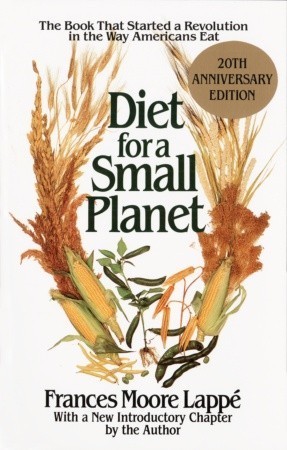
The book that started a revolution in the way Americans eatThe extraordinary book that taught America the social and personal significance of a new way of eating is still a complete guide for eating well in the twenty-first century.Sharing her personal evolution and how this groundbreaking book changed her own life, world-renowned food expert Frances Moore Lappé offers an all-new, even more fascinating philosophy on changing yourself—and the world—by changing the way you eat.The Diet for a Small Planet • simple rules for a healthy diet• streamlined, easy-to-use format• food combinations that make delicious, protein-rich meals without meat• indispensable kitchen hints—a comprehensive reference guide for planning and preparing meals and snacks• hundreds of wonderful recipes
![The Flavor Bible: The Essential Guide to Culinary Creativity, Based on the Wisdom of America's Most Imaginative Chefs [Hardcover]](https://m.media-amazon.com/images/S/compressed.photo.goodreads.com/books/1699817696i/163120162.jpg)
Winner of the 2009 James Beard Book Award for Best Book: Reference and ScholarshipGreat cooking goes beyond following a recipe--it's knowing how to season ingredients to coax the greatest possible flavor from them. Drawing on dozens of leading chefs' combined experience in top restaurants across the country, Karen Page and Andrew Dornenburg present the definitive guide to creating "deliciousness" in any dish. Thousands of ingredient entries, organized alphabetically and cross-referenced, provide a treasure trove of spectacular flavor combinations. Readers will learn to work more intuitively and effectively with ingredients; experiment with temperature and texture; excite the nose and palate with herbs, spices, and other seasonings; and balance the sensual, emotional, and spiritual elements of an extraordinary meal.Seasoned with tips, anecdotes, and signature dishes from America's most imaginative chefs, THE FLAVOR BIBLE is an essential reference for every kitchen.

“This book grills up an enjoyable read for both avid foodies and novice diners alike! Perman’s sneak peek into the fascinating history of In-N-Out is as good as the delicious burgers themselves.” —Mario Batali, celebrity chef and author of Molto Italiano A behind-the-counter look at the fast-food chain that breaks all the rules, Stacy Perman’s In-N-Out Burger is the New York Times bestselling inside story of the family behind the California-based hamburger chain with a cult following large enough to rival the Grateful Dead’s. A juicy unauthorized history of a small business-turned-big business titan, In-N-Out Burger was named one of Fast Company magazine’s Best Business Books of 2009, and Fortune Small Business insists that it “should be required reading for family business owners, alongside Rich Cohen’s Sweet and Low and Thomas Mann’s Buddenbrooks .”

James Beard Award WinnerA trailblazing chef reinvents the art of cooking over fire.Gloriously inspired recipes push the boundaries of live-fired cuisine in this primal yet sophisticated cookbook introducing the incendiary dishes of South America's biggest culinary star. Chef Francis Mallmann—born in Patagonia and trained in France's top restaurants—abandoned the fussy fine dining scene for the more elemental experience of cooking with fire. But his fans followed, including the world's top food journalists and celebrities, such as Francis Ford Coppola, Madonna, and Ralph Lauren, traveling to Argentina and Uruguay to experience the dashing chef's astonishing—and delicious—wood-fired feats.The seven fires of the title refer to a series of grilling techniques that have been singularly adapted for the home cook. So you can cook Signature Mallmann dishes—like Whole Boneless Ribeye with Chimichuri; Salt-Crusted Striped Bass; Whole Roasted Andean Pumpkin with Mint and Goat Cheese Salad; and desserts such as Dulce de Leche Pancakes—indoors or out in any season. Evocative photographs showcase both the recipes and the exquisite beauty of Mallmann's home turf in Patagonia, Buenos Aires, and rural Uruguay. Seven Fires is a must for any griller ready to explore food's next frontier.

Only a farmer could delve so deeply into the origins of food, and only a writer of Wendell Berry’s caliber could convey it with such conviction and eloquence. Long before Whole Foods organic produce was available at your local supermarket, Berry was farming with the purity of food in mind. For the last five decades, Berry has embodied mindful eating through his land practices and his writing. In recognition of that influence, Michael Pollan here offers an introduction to this wonderful collection.Drawn from over thirty years of work, this collection joins bestsellers The Omnivore’s Dilemma, by Pollan, and Animal, Vegetable, Miracle, by Barbara Kingsolver, as essential reading for anyone who cares about what they eat. The essays address such concerns as: How does organic measure up against locally grown? What are the differences between small and large farms, and how does that affect what you put on your dinner table? What can you do to support sustainable agriculture?A progenitor of the Slow Food movement, Wendell Berry reminds us all to take the time to understand the basics of what we ingest. “Eating is an agriculture act,” he writes. Indeed, we are all players in the food economy.

The key to confident cooking lies not in learning to follow intricate recipes but rather in mastering a select handful of truly appealing yet straightforward dishes that invite experimentation and improvisation to reflect the seasons and the cook’s own palate.In Salt to Taste, Chef Marco Canora presents a tempting repertoire of 100 soulful recipes that embody this philosophy perfectly: food that is comforting and familiar but with a depth of flavor and timeless appeal that mark the dishes as true essentials of the contemporary table. Each meticulously written recipe offers insightful lessons drawn both from memories of his mother’s cooking and his years as one of New York’s most respected chefs, guiding the way to a delicious dish every time. Extensive chef’s notes suggest ways to streamline the process and enhance the savory results, marrying the precision of the professional kitchen with the warmth of home cooking.Those looking to elevate their cooking from merely good to truly spectacular will find much here to inspire them, while those in need of culinary coaching will learn that creating greatness is within reach. With a little forethought, care, practice, and observation, any cook can quickly gain the confidence to "salt to taste."

A definitive compendium of food wisdomEating doesn't have to be so complicated. In this age of ever-more elaborate diets and conflicting health advice, Food Rules brings a welcome simplicity to our daily decisions about food. Written with the clarity, concision and wit that has become bestselling author Michael Pollan's trademark, this indispensable handbook lays out a set of straightforward, memorable rules for eating wisely, one per page, accompanied by a concise explanation. It's an easy-to-use guide that draws from a variety of traditions, suggesting how different cultures through the ages have arrived at the same enduring wisdom about food. Whether at the supermarket or an all-you-can-eat buffet, this is the perfect guide for anyone who ever wondered, "What should I eat?"

Gia is tired of hearing about the new baby. It hasn't even been born yet, but everyone, even her friends, seem fixated on it. Gia thinks things are fine just the way they are! And she's worried: if the baby's such a big deal now, what's going to happen to Gia's nice, cozy life with Mama once it's born? Beloved author Jacqueline Woodson and Sophie Blackall have created a heartwarming story for kids adjusting to the idea of a new family member. Young readers will be reassured by Gia's eventual understanding that the baby won't ruin the special bond she has with her mom, and might even be a sweet addition to the family.

Best Food Writing 2002 assembles, for the third year, the most exceptional writing from the past year's books, magazines, newspapers, newsletters, and websites. Contributors include Jeffrey Steingarten, Ruth Reichl, Calvin Trillin, Amanda Hesser, and dozens more. Within its six sections—Stocking the Larder, Home Cooking, Someone's in the Kitchen, Dining Around, Food Fights, and Personal Tastes—read our best writers on everything from the year's most celebrated chefs to extraordinary restaurant experiences, from the latest trends in ingredients and equipment to unforgettable memoirs inspired by cooking and eating. Neither cook nor food lover should be without this remarkable annual collection.

With his fabulous restaurants and bestselling Ottolenghi Cookbook, Yotam Ottolenghi has established himself as one of the most exciting talents in the world of cookery and food writing. This exclusive collection of vegetarian recipes is drawn from his column 'The New Vegetarian' for the Guardian's Weekend magazine, and features both brand-new recipes and dishes first devised for that column.Yotam's food inspiration comes from his strong Mediterranean background and his unapologetic love of ingredients. Not a vegetarian himself, his approach to vegetable dishes is wholly original and innovative, based on strong flavours and stunning, fresh combinations. With sections devoted to cooking greens, aubergines, brassicas, rice and cereals, pasta and couscous, pulses, roots, squashes, onions, fruit, mushrooms and tomatoes, the breadth of colours, tastes and textures is extraordinary.Featuring vibrant, evocative food photography from acclaimed photographer Jonathan Lovekin, and with Yotam's voice and personality shining through, Plenty is a must-have for meat-eaters and vegetarians alike.

UK Book. Devised by Dr Pierre Dukan, a French medical doctor who has spent his career helping people to lose weight permanently, The Dukan Diet is the culmination of thirty-five years' clinical experience. Without any of the usual marketing hype, The Dukan Diet swept across France, championed by the people who had successfully lost weight following the diet. It is now estimated that the Dukan community numbers over 5 million people in France. Easy to follow with no calorie counting, The Dukan Diet offers clear simple guidelines, menu planners and delicious recipes for long term success. Beyond its immense success in France, The Dukan Diet has been adopted by 20 countries and translated into 10 languages. Many international observers agree that this is the method most likely to put a stop to the world's weight problems.

New York Times bestselling author and king of “immersion journalism” A.J. Jacobs tackles his most challenging experiment yet: a yearlong mission to radically improve every element of his body and mind—from his brain to his fingertips to his abs.From the bestselling author of The Year of Living Biblically and The Know-It-All comes the true and truly hilarious story of one person’s quest to become the healthiest man in the world. Hospitalized with a freak case of tropical pneumonia, goaded by his wife telling him, “I don’t want to be a widow at forty-five,” and ashamed of a middle-aged body best described as “a python that swallowed a goat,” A.J. Jacobs felt compelled to change his ways and get healthy. And he didn’t want only to lose weight, or finish a triathlon, or lower his cholesterol. His ambitions were far greater: maximal health from head to toe. The task was epic. He consulted an army of experts— sleep consultants and sex clinicians, nutritionists and dermatologists. He subjected himself to dozens of different workouts—from Strollercize classes to Finger Fitness sessions, from bouldering with cavemen to a treadmill desk. And he took in a cartload of diets: raw foods, veganism, high protein, calorie restriction, extreme chewing, and dozens more. He bought gadgets and helmets, earphones and juicers. He poked and he pinched. He counted and he measured. The story of his transformation is not only brilliantly entertaining, but it just may be the healthiest book ever written. It will make you laugh until your sides split and endorphins flood your bloodstream. It will alter the contours of your brain, imprinting you with better habits of hygiene and diet. It will move you emotionally and get you moving physically in surprising ways. And it will give you occasion to reflect on the body’s many mysteries and the ultimate pursuit of health: a well-lived life.

"One of America's great chefs" (Vogue) shares how his drive to cook immaculate food won him international renown-and fueled his miraculous triumph over tongue cancer. In 2007, chef Grant Achatz seemingly had it made. He had been named one of the best new chefs in America by Food & Wine in 2002, received the James Beard Foundation Rising Star Chef of the Year Award in 2003, and in 2005 he and Nick Kokonas opened the conceptually radical restaurant Alinea, which was named Best Restaurant in America by Gourmet magazine. Then, positioned firmly in the world's culinary spotlight, Achatz was diagnosed with stage IV squamous cell carcinoma-tongue cancer. The prognosis was grim, and doctors agreed the only course of action was to remove the cancerous tissue, which included his entire tongue. Desperate to preserve his quality of life, Grant undertook an alternative treatment of aggressive chemotherapy and radiation. But the choice came at a cost. Skin peeled from the inside of Grant's mouth and throat, he rapidly lost weight, and most alarmingly, he lost his sense of taste. Tapping into the discipline, passion, and focus of being a chef, Grant rarely missed a day of work. He trained his chefs to mimic his palate and learned how to cook with his other senses. As Kokonas was able to attest: The food was never better. Five months later, Grant was declared cancer-free, and just a few months following, he received the James Beard Foundation Outstanding Chef in America Award. Life, on the Line tells the story of a culinary trailblazer's love affair with cooking, but it is also a book about survival, about nurturing creativity, and about profound friendship. Already much- anticipated by followers of progressive cuisine, Grant and Nick's gripping narrative is filled with stories from the world's most renowned kitchens-The French Laundry, Charlie Trotter's, el Bulli- and sure to expand the audience that made Alinea the number-one selling restaurant cookbook in America last year.

The Academy-Award winning actress and avid foodie shares a sumptuous collection of recipes and gorgeous photographs celebrating the joy of preparing food for loved ones, a passion she learned from her beloved father.As an actress, author, trendsetter, creator of goop.com, and host of the popular PBS series, On the Road Again , Gwyneth Paltrow is an icon of style and good taste around the world. As a young girl eating and cooking with her father, Bruce Paltrow, she developed a passion for food that has shaped how she lives today and strengthened her belief that time with family is a priority. Now in My Father's Daughter , Paltrow shares her favorite family recipes along with personal stories of growing up with her father, Bruce Paltrow. She discusses how he has influenced her in the food she loves, how she involves her kids in cooking, and how she balances healthy food with homemade treats. And, for the first time, Paltrow offers a glimpse into her life as daughter, mother and wife, sharing her thoughts on the importance of family and togetherness.Complete with 150 delicious ideas for breakfast, sandwiches and burgers, soups, salads, main dishes, sides, and desserts, this beautifully illustrated book includes full-color photos throughout, many featuring Paltrow at home with her family and friends. My Father's Daughter is a luscious collection that will inspire readers to cook great food with the people who mean the most to them.

Reviving the inspiring message of M. F. K. Fisher’s How to Cook a Wolf — written in 1942 during wartime shortages— An Everlasting Meal shows that cooking is the path to better eating.Through the insightful essays in An Everlasting Meal, Tamar Adler issues a rallying cry to home cooks.In chapters about boiling water, cooking eggs and beans, and summoning respectable meals from empty cupboards, Tamar weaves philosophy and instruction into approachable lessons on instinctive cooking. Tamar shows how to make the most of everything you buy, demonstrating what the world’s great chefs that great meals rely on the bones and peels and ends of meals before them.She explains how to smarten up simple food and gives advice for fixing dishes gone awry. She recommends turning to neglected onions, celery, and potatoes for inexpensive meals that taste full of fresh vegetables, and cooking meat and fish resourcefully.By wresting cooking from doctrine and doldrums, Tamar encourages readers to begin from wherever they are, with whatever they have. An Everlasting Meal is elegant testimony to the value of cooking and an empowering, indispensable tool for eaters today.

The #1 bestseller that presents seasonal, sustainable, and delicious recipes from Dr. Andrew Weil's popular True Food Kitchen restaurants.When Andrew Weil and Sam Fox opened True Food Kitchen, they did so with a two-fold every dish served must not only be delicious but must also promote the diner's well-being. True Food supports this mission with freshly imagined recipes that are both inviting and easy to make.Showcasing fresh, high-quality ingredients and simple preparations with robust, satisfying flavors, the book includes more than 125 original recipes from Dr. Weil and chef Michael Stebner, including Spring Salad with Aged Provolone, Curried Cauliflower Soup, Corn-Ricotta Ravioli, Spicy Shrimp and Asian Noodles, Bison Umami Burgers, Chocolate Icebox Tart, and Pomegranate Martini.Peppered throughout are essays on topics ranging from farmer's markets to proper proportions to the benefits of an anti-inflammatory diet. True Food offers home cooks of all levels the chance to transform meals into satisfying, wholesome fare.

With Jerusalem, Ottolenghi re-teams with his friend and co-owner of his restaurants, Sami Tamimi. Both men were born in Jerusalem in the same Tamimi on the Arab east side and Ottolenghi in the Jewish west. In this book they explore the vibrant cuisine of their home city together, and present an authentic collection of recipes that reflects the city's melting pot of Muslim, Jewish, Arab, Christian and Armenian communities. From their unique cross-cultural perspectives, Ottolenghi and Tamimi share 120 authentic from soups (Frikkeh, Chicken with Kneidelach), to meat and fish (Chicken with Cardamom Rice; Sharmula Bream with Rose Petals), to vegetables and salads (Chargrilled Squash with Labneh and Pickled Walnut Salsa), pulses and grains (Beetroot and SaffronRice); and cakes and desserts (Fig and Arak Trifle; Clementine and Almond Cake). Their cookbook is illustrated with 130 full-colour photographs, showcasing their sumptuous dishes in the dazzling setting of Jerusalem city. Ottolenghi and Tamimi have five bustling restaurants in London, UK. Ottolenghi is one of the most respected chefs in the world; his latest cookbook, Plenty , was a New York Times bestseller and one of the most lauded cookbooks of 2011. Jerusalem is his most personal, original and beautiful cookbook yet.

Food and poetry: in so many ways, a natural pairing, from prayers over bread to street vendor songs. Poetry is said to feed the soul, each poem a delicious morsel. When read aloud, the best poems provide a particular joy for the mouth. Poems about food make these satisfactions explicit and complete. Of course, pages can and have been filled about food's elemental pleasures. And we all know food is more than food: it's identity and culture. Our days are marked by meals; our seasons are marked by celebrations. We plant in spring; harvest in fall. We labor over hot stoves; we treat ourselves to special meals out. Food is nurture; it's comfort; it's reward. While some of the poems here are explicitly about the food itself: the blackberries, the butter, the barbecue--all are evocative of the experience of eating. Many of the poems are also about the everything else that accompanies food: the memories, the company, even the politics. Kevin Young, distinguished poet, editor of this year's Best American Poetry, uses the lens of food - and his impeccable taste - to bring us some of the best poems, classic and current, period. Poets include: Elizabeth Alexander, Elizabeth Bishop, Billy Collins, Mark Doty, Robert Frost, Allen Ginsberg, Louise Gluck, Seamus Heaney, Tony Hoagland, Langston Hughes, Galway Kinnell, Frank O'Hara, Sharon Olds, Mary Oliver, Adrienne Rich, Theodore Roethke, Matthew Rohrer, Charles Simic, Tracy K. Smith, Gertrude Stein, Wallace Stevens, Mark Strand, Kevin Young

Gran Cocina Latina unifies the vast culinary landscape of the Latin world, from Mexico to Argentina and all the Spanish-speaking countries of the Caribbean. In one volume it gives home cooks, armchair travelers, and curious chefs the first comprehensive collection of recipes from this region. An inquisitive historian and a successful restaurateur, Maricel E. Presilla has spent more than thirty years visiting each country personally. She’s gathered more than 500 recipes for the full range of dishes, from the foundational adobos and sofritos to empanadas and tamales to ceviches and moles to sancocho and desserts such as flan and tres leches cake. Detailed equipment notes, drink and serving suggestions, and color photographs of finished dishes are also included. This is a one-of-a-kind cookbook to be savored and read as much for the writing and information as for its introduction to heretofore unrevealed recipes.

Hunger is a daily reality for a billion people. More than six decades after the technological discoveries that led to the Green Revolution aimed at ending world hunger, regular food shortages, malnutrition, and poverty still plague vast swaths of the world. And with increasing food prices, climate change, resource inequality, and an ever-increasing global population, the future holds further challenges. In One Billion Hungry, Sir Gordon Conway, one of the world's foremost experts on global food needs, explains the many interrelated issues critical to our global food supply from the science of agricultural advances to the politics of food security. He expands the discussion begun in his influential The Doubly Green Revolution: Food for All in the Twenty-First Century, emphasizing the essential combination of increased food production, environmental stability, and poverty reduction necessary to end endemic hunger on our planet. Conway addresses a series of urgent questions about global hunger:• How we will feed a growing global population in the face of a wide range of adverse factors, including climate change?• What contributions can the social and natural sciences make in finding solutions?• And how can we engage both government and the private sector to apply these solutions and achieve significant impact in the lives of the poor?Conway succeeds in sharing his informed optimism about our collective ability to address these fundamental challenges if we use technology paired with sustainable practices and strategic planning. Beginning with a definition of hunger and how it is calculated, and moving through issues topically both detailed and comprehensive, each chapter focuses on specific challenges and solutions, ranging in scope from the farmer's daily life to the global movement of food, money, and ideas. Drawing on the latest scientific research and the results of projects around the world, Conway addresses the concepts and realities of our global food needs: the legacy of the Green Revolution; the impact of market forces on food availability; the promise and perils of genetically modified foods; agricultural innovation in regard to crops, livestock, pest control, soil, and water; and the need to both adapt to and slow the rate of climate change. One Billion Hungry will be welcomed by all readers seeking a multifaceted understanding of our global food supply, food security, international agricultural development, and sustainability.

Gwyneth Paltrow, Academy-Award winning actress and bestselling cookbook author, returns with recipes for the foods she eats when she wants to lose weight, look good, and feel more energetic.Last spring, after a particularly grueling schedule and lapse of overindulgence, Gwyneth Paltrow was feeling fatigued and faint. A visit to her doctor revealed that she was anemic, vitamin D deficient, and that her stress levels were sky high. He prescribed an elimination diet to clear out her system and help her body heal. But this meant no coffee, no alcohol, no dairy, no eggs, no sugar, no shellfish, no deep-water fish, no wheat, no meat, no soy, nothing processed at all! An avid foodie, Paltrow was concerned that so many restrictions would make mealtime boring, so, together with Julia Turshen, she compiled a collection of 185 delicious, easy recipes that followed her doctor's guidelines. And it worked! After changing her diet, Paltrow healed totally, felt more energetic and looked great. Now, in IT'S ALL GOOD, she shares the go-to dishes that have become the baseline for the restorative diet she turns to whenever she feels she needs it. Recipes include: Huevos Rancheros, Hummus Tartine with Scallion-Mint Pesto, Salmon Burgers with Pickled Ginger, even Power Brownies, Banana "Ice Cream," and more!

Dripping Thighs, Sticky Chicken Fingers, Vanilla Chicken, Chicken with a Lardon, Bacon-Bound Wings, Spatchcock Chicken, Learning-to-Truss-You Chicken, Holy Hell Wings, Mustard-Spanked Chicken, and more, more, more! Fifty chicken recipes, each more seductive than the last, in a book that makes every dinner a turn-on. “I want you to see this. Then you’ll know everything. It’s a cookbook,” he says and opens to some recipes, with color photos. “I want to prepare you, very much.” This isn’t just about getting me hot till my juices run clear, and then a little rest. There’s pulling, jerking, stuffing, trussing. Fifty preparations. He promises we’ll start out slow, with wine and a good oiling . . . Holy crap . “I will control everything that happens here,” he says. “You can leave anytime, but as long as you stay, you’re my ingredient.” I’ll be transformed from a raw, organic bird into something—what? Something delicious . So begins the adventures of Miss Chicken, a young free-range, from raw innocence to golden brown ecstasy, in this spoof-in-a-cookbook that simmers in the afterglow of E.L. James’s sensational Fifty Shades of Grey trilogy . Like Anastasia Steele, Miss Chicken finds herself at the mercy of a dominating man, in this case, a wealthy, sexy, and very hungry chef. And before long, from unbearably slow drizzling to trussing, Miss Chicken discovers the sheer thrill of becoming the main course. A parody in three acts—“The Novice Bird” (easy recipes for roasters), “Falling to Pieces” (parts perfect for weeknight meals), and “Advanced Techniques” (the climax of cooking)— Fifty Shades of Chicken is a cookbook of fifty irresistible, repertoire-boosting chicken dishes that will leave you hungry for more.With memorable tips and revealing photographs, Fifty Shades of Chicken will have you dominating dinner.

This book is a wide-ranging and interdisciplinary examination and critique of meat consumption by humans, throughout history and around the world. Setting the scene with a chapter on meat's role in human evolution and its growing influence during the development of agricultural practices, the book goes on to examine modern production systems, their costs, efficiencies and outputs. The major global trends of meat consumption are described: what part does meat play in changing modern diets in countries around the world? The heart of the book addresses the consequences of the "massive carnivory" of western diets, looking at the energy costs of meat and the huge impacts of meat production on land, water and the atmosphere. Health impacts are also covered, both positive and negative. In conclusion, the author looks forward at his vision of "rational meat eating," where environmental and health impacts are curbed, animals are treated more humanely, and alternative sources of protein are promoted. Eating Meat is not an ideological tract against carnivorousness but rather a careful evaluation of meat's roles in human diets and the environmental and health consequences of its production and consumption. It will be of interest to a wide readership including professionals and academics in food and agricultural production, human health and nutrition, environmental science and regulatory and policy making bodies around the world.

From #1 New York Times bestselling author Dr. Perlmutter, the devastating truth about the effects of wheat, sugar, and carbs on the brain, and a 4-week plan to achieve optimum health.In Grain Brain, renowned neurologist David Perlmutter, MD, blows the lid off a finding that's been buried in medical literature for far too long: carbs are destroying your brain. Even so-called healthy carbs like whole grains can cause dementia, ADHD, anxiety, chronic headaches, depression, decreased libido, and much more. Groundbreaking and timely, Grain Brain shows that the fate of your brain is not in your genes, it's in the food you eat. Dr. Perlmutter explains what happens when your brain encounters common ingredients in fruit bowls and bread, how statins may be erasing your memory, why a diet high in "good fats" is ideal, and how to spur the growth of new brain cells at any age. And his revolutionary 4-week plan will show you how to keep your brain healthy and sharp while dramatically reducing your risk for debilitating neurological disease -- without drugs. Featuring a blend of cutting-edge research, real-life stories of transformation, and accessible, practical advice, Grain Brain teaches you how to take control of your "smart genes," regain wellness, and enjoy lifelong health and vitality.

Are you a guy who's interested in building rock hard muscle, erasing your belly fat, boosting your testosterone, and having more mind-blowing sex than you thought possible?If so, then Man 2.0: Engineering the Alpha was written specifically for you...In his new book, celebrity trainer and Men's Health expert John 'Roman' Romaniello teams up with expert Adam Bornstein, former editor for both Men's Health and LIVESTRONG. Together, they reveal the secrets they've discovered that will give any man—no matter how old you are—a chiseled body that will turn heads everywhere you go.You know the kind of body I'm talking about. The kind of body that women seem to drool and stare at when they're at the beach with their girlfriends...As a former 'fat guy,' Roman struggled for years to find a workout and diet that would give him the body he always wanted. By using the very secrets you'll find in this book—techniques he's spent 10 years perfecting—he overcame his 'fat genes' and boasts a lean and ripped body—the kind that could be (and has been) seen on the cover of magazines.And the best part is—you don't have to kill yourself to get this body. Man 2.0: Engineering the Alpha will show you exactly how to get the body you've always wanted without starving yourself and without spending 2 hours in the gym every day.And for all of the guys out there wondering... YES! Man 2.0: Engineering the Alpha will even work for guys in their 30s, 40s, and 50s... Getting lean, ripped, and strong is not just for young guys!In Man 2.0: Engineering the Alpha, Romaniello and Adam Bornstein present proven, powerful ways for men to improve physical, emotional, sexual, and psychological health. From research in Olympic labs to real-life results with their clients, they are reinventing masculinity and showing every man how to become exactly who he wants to be...If you're ready to build strong, defined muscles, burn away your belly fat, boost your testosterone, and start experiencing more mind blowing sex than you ever thought was possible—then grab your copy of Man 2.0: Engineering the Alpha now...

Get healthy in just 15 days with this diet plan from the celebrity trainer and New York Times bestselling author frequently featured on Khloé Kardashian's Revenge BodyWe've gone way overboard trying to beat the bulge. We've tried every diet out there—low-carb, low-fat, all-grapefruit—and spent hours toiling on treadmills and machines, to no avail. It's time to hit the reset button and start over with a new perspective on weight loss.In The Body Reset Diet, celebrity trainer and New York Times bestselling author Harley Pasternak offers you the ultimate plan for a thinner, healthier, happier life. This three-phase program focuses on the easiest, most effective way to slim blending. The 5-day jump-start includes delicious, expertly crafted smoothies (White Peach Ginger, Apple Pie, and Pina Colada, to name a few), dips, snacks, and soups that keep you satisfied while boosting your metabolism. Over the following 10 days, the plan reintroduces healthy combinations of classic dishes along with the blended recipes to keep the metabolism humming, so you will continue to torch calories and shed pounds.The plan also explains how the easiest form of exercise—walking—along with light resistance training is all it takes to achieve the celebrity-worthy physique that we all desire. No equipment necessary! Whether you are looking to lose significant weight or just those last 5 pounds, The Body Reset Diet offers a proven program to reset, slim down, and get healthy in just 15 days—and stay that way for good!

Ever since Darwin and The Descent of Man, the existence of humans has been attributed to our intelligence and adaptability. But in Catching Fire, renowned primatologist Richard Wrangham presents a startling alternative: our evolutionary success is the result of cooking. In a groundbreaking theory of our origins, Wrangham shows that the shift from raw to cooked foods was the key factor in human evolution. when our ancestors adapted to using fire, humanity began.Once our hominid ancestors began cooking their food, the human digestive tract shrank and the brain grew. Time once spent chewing tough raw food could be used instead to hunt and to tend camp. Cooking became the basis for pair bonding and marriage, created the household, and even led to a sexual division of labor.Tracing the contemporary implications of our ancestors' diets, Catching Fire sheds new light on how we came to be the social, intelligent, and sexual species we are today. A pathbreaking new theory of human evolution, Catching Fire will provoke controversy and fascinate anyone interested in our ancient origins--or in our modern eating habits.--from the dustjacket

Written with Howard W. Buffett, and with a foreword by Warren Buffett, 40 Chances is an "inspiring manifesto...both an informative guidebook and a catalyst for igniting real changes" ( Booklist ) in the struggle against world hunger.If someone granted you $3 billion to accomplish something great in the world, what would you do? In 2006, legendary investor Warren Buffett posed this challenge to his son Howard G. Buffett. Howard set out to help the most vulnerable people on earth--nearly a billion individuals who lack basic food security. And Howard gave himself a forty years to put the resources to work on this challenge.40 Finding Hope in a Hungry World captures Howard's journey. Beginning with his love for farming, we join him around the world as he seeks out new approaches to ease the suffering of so many. Each of the forty stories here provides a compelling look at the lessons Howard learned, ranging from his own backyard to some of the most difficult and dangerous places on Earth. But this message goes beyond the pages of this book, it's also a a way of thinking that speaks to every person wanting to make a difference. It's about reasons to hope and actions we can take. 40 Chances "recounts Howard's personal and professional experiences in surprisingly candid and colorful fashion...successfully blending personal stories with a tough look at the struggle to fight domestic food scarcity and world hunger...A satisfying read" ( Publishers Weekly ) that provides inspiration to transform each of our limited chances into opportunities to change the world.

The back must slave to feed the belly. . . . In this urgent and unique book, chef Michael Gibney uses twenty-four hours to animate the intricate camaraderie and culinary choreography in an upscale New York restaurant kitchen. Here readers will find all the details, in rapid-fire succession, of what it takes to deliver an exceptional plate of food—the journey to excellence by way of exhaustion. Told in second-person narrative, Sous Chef is an immersive, adrenaline-fueled run that offers a fly-on-the-wall perspective on the food service industry, allowing readers to briefly inhabit the hidden world behind the kitchen doors, in real time. This exhilarating account provides regular diners and food enthusiasts alike a detailed insider’s perspective, while offering fledgling professional cooks an honest picture of what the future holds, ultimately giving voice to the hard work and dedication around which chefs have built their careers. In a kitchen where the highest standards are upheld and one misstep can result in disaster, Sous Chef conjures a greater appreciation for the thought, care, and focus that go into creating memorable and delicious fare. With grit, wit, and remarkable prose, Michael Gibney renders a beautiful and raw account of this demanding and sometimes overlooked profession, offering a nuanced perspective on the craft and art of food and service.

Packed with 150 plant-based, nutrient-dense, whole food recipes developed within the Thrive nutritional philosophy, Thrive Energy Cookbook brings concepts that started the functional, plant-based nutrition revolution to life. Recipes are all vegan and allergen-free (or with gluten-free options) to eliminate wheat, yeast, gluten, soy, refined sugar, and dairy from your diet.Easy-to-make and performance-enhancing, these chef-created recipes merge purpose driven functionality (every ingredient has a nutritional purpose) with mouth-watering appeal. From the alkaline-forming, plant protein–packed Vanilla-Almond-Mocha Motivator Smoothie to Roasted Red Pepper & Sweet Potato Soup, Thai Green Curry Rice Bowl, and desserts such as Raspberry Chocolate Pomegranate Tart, Thrive Energy Cookbook will have you quickly preparing nutrient-packed and delicious dishes.