
Gary Taubes
Gary Taubes is an American science writer. He is the author of Nobel Dreams (1987), Bad Science: The Short Life and Weird Times of Cold Fusion (1993), and Good Calories, Bad Calories (2007), titled The Diet Delusion (2008) in the UK and Australia. His book Why We Get Fat: And What to Do About It was released in December 2010. In December 2010 Taubes launched a blog at GaryTaubes.com to promote the book's release and to respond to critics. His main hypothesis is based on: Carbohydrates generate insulin, which causes the body to store fat. Taubes studied applied physics at Harvard University (BS, 1977) and aerospace engineering at Stanford University (MS, 1978). After receiving a master's degree in journalism at Columbia University in 1981, Taubes joined Discover magazine as a staff reporter in 1982. Since then he has written numerous articles for Discover, Science and other magazines. Originally focusing on physics issues, his interests have more recently turned to medicine and nutrition. Taubes's books have all dealt with scientific controversies. Nobel Dreams takes a critical look at the politics and experimental techniques behind the Nobel Prize-winning work of physicist Carlo Rubbia. Bad Science is a chronicle of the short-lived media frenzy surrounding the Pons-Fleischmann cold fusion experiments of 1989. [wikipedia]
23 Books Written

Challenging the Conventional Wisdom on Diet, Weight, and DiseaseIn this groundbreaking book, the result of seven years of research in every science connected with the impact of nutrition on health, award-winning science writer Gary Taubes shows us that almost everything we believe about the nature of a healthy diet is wrong.For decades we have been taught that fat is bad for us, carbohydrates better, and that the key to a healthy weight is eating less and exercising more. Yet with more and more people acting on this advice, we have seen unprecedented epidemics of obesity and diabetes. Taubes argues persuasively that the problem lies in refined carbohydrates (white flour, sugar, easily digested starches) and sugars–via their dramatic and longterm effects on insulin, the hormone that regulates fat accumulation–and that the key to good health is the kind of calories we take in, not the number. There are good calories, and bad ones.Good CaloriesThese are from foods without easily digestible carbohydrates and sugars. These foods can be eaten without restraint.Meat, fish, fowl, cheese, eggs, butter, and non-starchy vegetables. Bad CaloriesThese are from foods that stimulate excessive insulin secretion and so make us fat and increase our risk of chronic disease—all refined and easily digestible carbohydrates and sugars. The key is not how much vitamins and minerals they contain, but how quickly they are digested. (So apple juice or even green vegetable juices are not necessarily any healthier than soda.) Bread and other baked goods, potatoes, yams, rice, pasta, cereal grains, corn, sugar (sucrose and high fructose corn syrup), ice cream, candy, soft drinks, fruit juices, bananas and other tropical fruits, and beer. Taubes traces how the common assumption that carbohydrates are fattening was abandoned in the 1960s when fat and cholesterol were blamed for heart disease and then –wrongly–were seen as the causes of a host of other maladies, including cancer. He shows us how these unproven hypotheses were emphatically embraced by authorities in nutrition, public health, and clinical medicine, in spite of how well-conceived clinical trials have consistently refuted them. He also documents the dietary trials of carbohydrate-restriction, which consistently show that the fewer carbohydrates we consume, the leaner we will be. With precise references to the most significant existing clinical studies, he convinces us that there is no compelling scientific evidence demonstrating that saturated fat and cholesterol cause heart disease, that salt causes high blood pressure, and that fiber is a necessary part of a healthy diet. Based on the evidence that does exist, he leads us to conclude that the only healthy way to lose weight and remain lean is to eat fewer carbohydrates or to change the type of the carbohydrates we do eat, and, for some of us, perhaps to eat virtually none at all.The 11 Critical Conclusions of Good Calories, Bad Calories: 1. Dietary fat, whether saturated or not, does not cause heart disease. 2. Carbohydrates do, because of their effect on the hormone insulin. The more easily-digestible and refined the carbohydrates and the more fructose they contain, the greater the effect on our health, weight, and well-being. 3. Sugars—sucrose (table sugar) and high fructose corn syrup specifically—are particularly harmful. The glucose in these sugars raises insulin levels; the fructose they contain overloads the liver.4. Refined carbohydrates, starches, and sugars are also the most likely dietary causes of cancer, Alzheimer’s Disease, and the other common chronic diseases of modern times. 5. Obesity is a disorder of excess fat accumulation, not overeating and not sedentary behavior. 6. Consuming excess calories does not cause us to grow fatter any more than it causes a child to grow taller. 7. Exercise does not make us lose excess fat; it makes us hungry. 8. We get fat because of an imbalance—a disequilibrium—in the hormonal regulation of fat tissue and fat metabolism. More fat is stored in the fat tissue than is mobilized and used for fuel. We become leaner when the hormonal regulation of the fat tissue reverses this imbalance. 9. Insulin is the primary regulator of fat storage. When insulin levels are elevated, we stockpile calories as fat. When insulin levels fall, we release fat from our fat tissue and burn it for fuel. 10. By stimulating insulin secretion, carbohydrates make us fat and ultimately cause obesity. By driving fat accumulation, carbohydrates also increase hunger and decrease the amount of energy we expend in metabolism and physical activity.11. The fewer carbohydrates we eat, the leaner we will be. Good Calories, Bad Calories is a tour de force of scientific...

NATIONAL BESTSELLER • “Taubes stands the received wisdom about diet and exercise on its head.” — The New York TimesWhat’s making us fat? And how can we change? Building upon his critical work in Good Calories, Bad Calories and presenting fresh evidence for his claim, bestselling author Gary Taubes revisits these urgent questions. Featuring a new afterword with answers to frequently asked questions.Taubes reveals the bad nutritional science of the last century—none more damaging or misguided than the “calories-in, calories-out” model of why we get fat—and the good science that has been ignored. He also answers the most persistent Why are some people thin and others fat? What roles do exercise and genetics play in our weight? What foods should we eat, and what foods should we avoid? Persuasive, straightforward, and practical, Why We Get Fat is an essential guide to nutrition and weight management. Complete with an easy-to-follow diet. Featuring a new afterword with answers to frequently asked questions.

From the best-selling author of Why We Get Fat, a groundbreaking, eye-opening exposé that makes the convincing case that sugar is the tobacco of the new backed by powerful lobbies, entrenched in our lives, and making us very sick.Among Americans, diabetes is more prevalent today than ever; obesity is at epidemic proportions; nearly 10% of children are thought to have nonalcoholic fatty liver disease. And sugar is at the root of these, and other, critical society-wide, health-related problems. With his signature command of both science and straight talk, Gary Taubes delves into Americans' history with its uses as a preservative, as an additive in cigarettes, the contemporary overuse of high-fructose corn syrup. He explains what research has shown about our addiction to sweets. He clarifies the arguments against sugar, corrects misconceptions about the relationship between sugar and weight loss; and provides the perspective necessary to make informed decisions about sugar as individuals and as a society.

The Case for Keto: Rethinking Weight Control and the Science and Practice of Low-Carb/High-Fat Eating
by Gary Taubes
Rating: 4.2 ⭐
A revelatory expose of the bad science behind conventional weight loss advice, arguing for low-carb high-fat diets, from the bestselling author of The Case Against Sugar.While government and nutritional agencies still spout the failed mantra of calorie reduction, doctors treating diabetes and obesity are experiencing extraordinary results among patients cutting out carbs; a diet that has the essential benefit of allowing you to lose weight without ever feeling hungry.With forensic journalistic rigour and in compelling prose, world authority Gary Taubes analyses the bad science behind our nutritional dogma. He shows that weight gain is driven by genetic, hormonal factors - and not overeating or 'gluttony' as is commonly the underlying suggestion - citing compelling evidence that people with the propensity to fatten easily can be helped best by a low carbohydrate high-fat diet.This groundbreaking read offers hope to anyone wishing to prevent or reverse diabetes or obesity - as well as anyone wanting to eat more healthily - and will fundamentally change our habits around food forever.

Rethinking Diabetes: What Science Reveals About Diet, Insulin, and Successful Treatments
by Gary Taubes
Rating: 4.2 ⭐
An eye-opening investigation into the history of diabetes research and treatment by the award-winning journalist and best-selling author of Why We Get Fat • "[Gary] Taubes’s meticulous, science-based work makes him the Bryan Stevenson of nutrition, an early voice in the wilderness for an unorthodox view that is increasingly becoming accepted."—Niel Barsky, The GuardianBefore the discovery of insulin, diabetes was treated almost exclusively through diet, from subsistence on meat, to reliance on fats, to repeated fasting and near-starvation regimens. After two centuries of conflicting medical advice, most authorities today believe that those with diabetes can have the same dietary freedom enjoyed by the rest of us, leaving the job of controlling their disease to insulin therapy and other blood-sugar-lowering medications. Rather than embark on “futile” efforts to restrict sugar or carbohydrate intake, people with diabetes can lead a normal life, complete with the occasional ice-cream cake, side of fries, or soda.These guiding principles, however, have been accompanied by an explosive rise in diabetes over the last fifty years, particularly among underserved populations. And the health of those with diabetes is expected to continue to deteriorate inexorably over time, with ever-increasing financial, physical, and psychological burdens. In Rethinking Diabetes, Gary Taubes explores the history underpinning the treatment of diabetes, types 1 and 2, elucidating how decades-old research that is rife with misconceptions has continued to influence the guidance physicians offer—at the expense of their patients’ long-term well-being.The result of Taubes’s work is a reimagining of diabetes care that argues for a recentering of diet—particularly, fewer carbohydrates and more fat—over a reliance on insulin. Taubes argues critically and passionately that doctors and medical researchers should question the established wisdom that may have enabled the current epidemic of diabetes and obesity, and renew their focus on clinical trials to resolve controversies that are now a century in the making.

It should come as no surprise that low calorie and low fat diets rarely accomplish what they are expected to do—improve health and slim waistlines. Likewise, exercise, however beneficial it may be to fitness, only increases appetite and so often hinders weight loss. In this sharp and persuasive piece, acclaimed and bestselling science writer Gary Taubes exposes erroneous nutritional guidelines and finally provides evidence to curb misguided “calories-in, calories-out” model for why we get fat. A Vintage Shorts Wellness selection. An ebook short.

At 1:00 P.M., on March 23, 1989, two obscure scientists at the University of Utah announced that they had discovered salvation in a test tube - cold nuclear fusion. The technology promised sale, cheap, limitless energy, and the press played it as the scientific breakthrough of the century. It would become instead a fiasco of epidemic proportions, an unforgettable morality tale in the scientific method: what happens when reason is perverted by hope and greed. Gary Taubes's Bad Science is the vivid, dramatic, and definitive story of the astonishing quest for cold fusion, from its premature birth in a Utah turf war to its lingering and surreal death in a laboratory in College Station, Texas. It is the story of good scientists and bad, of heroes and charlatans, and of a race in which thousands of researchers spent tens of millions of dollars to prove or disprove the existence of a canard. Drawing from interviews with over 260 scientists, administrators, and journalists, Taubes dissects the cold fusion episode with wit and clarity, tracing the untold inside story of scientific research gone awry and academic politics out of control: from the devout physicist and his Department of Energy funding agent who set the wheels of the fiasco in motion, to the University of Utah president whose sole dream was to turn his institution into an intellectual powerhouse. Taubes unveils the darker side of science, where politics, ambition, and misguided obsession can corrupt its ethics and its purpose. Bad Science is essential reading for anyone who wants to understand how science functions and what can happen when the scientific method is jettisoned in the pursuit of wealth and glory. As a story of morality, philosophy, and pathology, it is destined to become a classic of science journalism.

A renowned science writer examines the work being done by high-energy physicists in their quest to understand how the universe began, what it is made of, and where it is headed


Why We Get Fat, The Case Against Sugar 2 Books Collection Set by Gary Taubes
by Gary Taubes
Rating: 4.3 ⭐
Please Note That The Following Individual Books As Per Original ISBN and Cover Image In this Listing shall be Dispatched Why We Get Fat, The Case Against Sugar 2 Books Collection Set by Gary Why We Get What's making us fat? And how can we change? Building upon his critical work in Good Calories, Bad Calories and presenting fresh evidence for his claim, bestselling author Gary Taubes revisits these urgent questions.Taubes reveals the bad nutritional science of the last century--none more damaging or misguided than the "calories-in, calories-out" model of why we get fat--and the good science that has been ignored. He also answers the most persistent Why are some people thin and others fat? What roles do exercise and genetics play in our weight? What foods should we eat, and what foods should we avoid? Persuasive, straightforward, and practical, Why We Get Fat is an essential guide to nutrition and weight management.The Case Against More than half a billion adults and 40 million children on the planet are obese. Diabetes is a worldwide epidemic. Evidence increasingly shows that these illnesses are linked to the other major Western hypertension, heart disease, even Alzheimer's and cancer, and that shockingly, sugar is likely the single root cause. Yet the nutritional advice we receive from public health bodies is muddled, out of date, and frequently contradictory, and in many quarters still promotes the unproven hypothesis that fats are the greatest evil.With expert science and compelling storytelling, Gary Taubes investigates the history of nutritional science which, shaped by a handful of charismatic and misguided individuals, has for a hundred years denied the impact of sugar on our health.

Esqueça tudo o que você já ouviu falar sobre dieta e obesidade “A crítica de Taubes é tão pertinente e estrondosa que ler seu livro mudará a forma como você olha para as calorias, para a pirâmide alimentar e sua dieta diária.” Men’s Journal “Este homem corajoso, capaz de mudar um paradigma, usa o raciocínio lógico e fontes primárias para abalar o mantra nutricional dos últimos oitenta anos.

Why We Get Fat,Case Against Sugar and Big Fat Surprise 3 Books Collection Set
by Gary Taubes
Rating: 4.7 ⭐
Please Note That The Following Individual Books As Per Original ISBN and Cover Image In this Listing shall be Dispatched Collectively :Why We Get Fat,Case Against Sugar and Big Fat Surprise 3 Books Collection Why We Get What's making us fat? And how can we change? Building upon his critical work in Good Calories, Bad Calories and presenting fresh evidence for his claim, bestselling author Gary Taubes revisits these urgent questions.Taubes reveals the bad nutritional science of the last century--none more damaging or misguided than the "calories-in, calories-out" model of why we get fat--and the good science that has been ignored.The Case Against More than half a billion adults and 40 million children on the planet are obese. Diabetes is a worldwide epidemic. Evidence increasingly shows that these illnesses are linked to the other major Western hypertension, heart disease, even Alzheimer's and cancer, and that shockingly, sugar is likely the single root cause.The Big Fat A groundbreaking study that reveals how decades of misleading science and policy unjustly demonized the high-fat diet, which might actually be our healthiest option. For the past 60 years we have been told that a low-fat diet can protect against obesity, diabetes, and heart disease.

Case against sugar, why we get fat, blood sugar solution 4 books collection set
by Gary Taubes
Rating: 4.0 ⭐
Case Against Sugar, Why We Get Fat, Blood Sugar Solution 4 Books Collection Set Against than half a billion adults and 40 million children on the planet are obese. Diabetes is a worldwide epidemic. Why We Get Building upon his critical work in Good Calories, Bad Calories and presenting fresh evidence for his claim, Gary Taubes revisits the urgent question of what’s making us fat—and how we can change,Blood Sugar Solution 10-Day Detox The key to losing weight and keeping it off is maintaining low insulin levels. Based on Dr. Hyman's groundbreaking Blood Sugar Solution program, The Blood Sugar Solution 10-Day Detox Diet presents strategies for reducing insulin levels and producing fast and sustained weight loss,Sugar Sugar is the new controlled substance. More addictive than cocaine, the deadly white stuff has become the focus of health professionals worldwide who are highlighting the dangers of over-indulgence.


Please Note That The Following Individual Books As Per Original ISBN and Cover Image In this Listing shall be Dispatched Gary Taubes 2 Books Collection Set (Rethinking Diabetes & The Case for Keto): Rethinking In this ground-breaking book, award-winning science writer Gary Taubes explores the history of the treatment of diabetes, elucidating the way that badly conceived research influences the guidance that doctors offer today, at the expense of patients' long-term well-being. Passionately argued and deeply researched, Rethinking Diabetes reimagines diabetes care with diet at its centre, and is hugely persuasive in its questioning of the established wisdom. The Case for While government and nutritional organisations spout the failed mantra of calorie reduction, doctors treating diabetes and obesity are experiencing extraordinary results among patients cutting out carbs. This diet has the essential benefit of allowing you to lose weight without ever feeling hungry.World authority Gary Taubes analyses the bad science behind our nutritional dogma. He shows that weight gain is driven by genetic, hormonal factors.
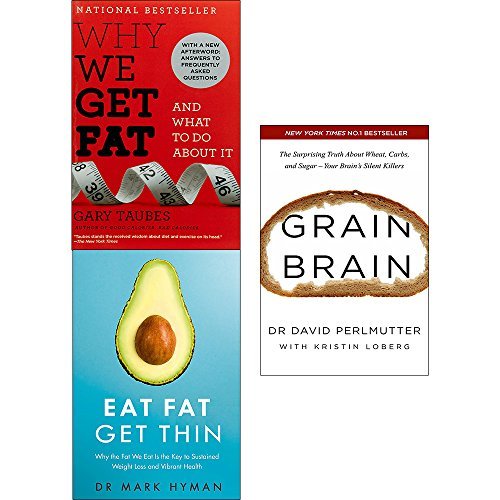
Why we get fat, eat fat get thin and grain brain 3 books collection set. Why We Get And What to Do about It Building upon his critical work in Good Calories, Bad Calories and presenting fresh evidence for his claim, Gary Taubes revisits the urgent question of what’s making us fat—and how we can change. He reveals the bad nutritional science of the last century—none more damaging or misguided than the “calories-in, calories-out” model of why we get fat—and the good science that has been ignored. He also answers the most persistent Why are some people thin and others fat? What roles do exercise and genetics play in our weight? What foods should we eat, and what foods should we avoid? Persuasive, straightforward, and practical, Why We Get Fat is an essential guide to nutrition and weight management. Eat Fat Get Why the Fat We Eat Is the Key to Sustained Weight Loss and Vibrant Health For decades we've been told that the fat we eat turns to fat in the body, contributing to weight gain, heart disease, diabetes, and generally poor health. And yet, even with all our low-fat products, we're fatter and sicker than ever before. What's going on? Could it be that the most feared food group is actually...the most helpful? Grain The Surprising Truth about Wheat, Carbs, and Sugar - Your Brain's Silent Killers Dr Perlmutter explains what happens when the brain encounters common ingredients in your daily bread and fruit bowls, why your brain thrives on fat and cholesterol, and how you can spur the growth of new brain cells at any age. He offers an in-depth look at how we can take control of our 'smart genes' through specific dietary choices and lifestyle habits, demonstrating how to remedy our most feared maladies without drugs.

Rethinking Diabetes: What Science Reveals about Diet, Insulin and Successful Treatments
by Gary Taubes
Rating: 4.0 ⭐
Over 400 million people around the world have been diagnosed with diabetes. Before the discovery of insulin, diabetes was treated through diet, from eating purely meat to the reliance on fats, and repeated fasting. After two centuries of conflicting medical advice, most authorities today believe that those with diabetes can have the same dietary freedom enjoyed by the rest of us, including the occasional ice-cream, leaving the job of controlling the disease to insulin therapy.However, this guiding principle has been accompanied by an explosive rise in diabetes over the last fifty years, and the expectation that sufferers' health will deteriorate steadily over time. In this ground-breaking book, award-winning science writer Gary Taubes explores the history of the treatment of diabetes, elucidating the way that badly conceived research influences the guidance that doctors offer today, at the expense of patients' long-term well-being.Passionately argued and deeply researched, Rethinking Diabetes reimagines diabetes care with diet at its centre, and is hugely persuasive in its questioning of the established wisdom that may have enabled the current epidemic of diabetes and obesity.

Dünyada diyabet görülme sıklığı gitgide artıyor. Obezite olağanüstü boyutlara ulaştı. Araştırmalar, bu ve benzeri pek çok sağlık probleminin kökeninde şekerin yattığını söylüyor. Şeker kimi zaman koruyucu bir madde, kimi zaman sigaraya konan bir katkı maddesi, kimi zaman da işlenmiş gıdalara katılan mısır şurubu olarak hayatımızın ayrılmaz, hatta bağımlılık yaratan bir parçasına dönüştü. Şeker lobileri, şekerli ürünlerin yaygınlaşması için pek çok cephede savaşırken, aşırı şeker tüketimi kamu sağlığını tehdit eden bir gerçek haline gelmiş durumda. Beslenme ve sağlık üzerine çalışmalarıyla tanınan araştırmacı gazeteci Gary Taubes, bu kitapta insanlığın şekerle imtihanına ışık tutuyor. Şekere Karşı, şekerin nasıl yeni binyılın bağımlılığı haline geldiğini anlatırken tartışma yaratacak iddialar ortaya koyuyor.
![Particulars of the vagus science - cold fusion scandal (1993) ISBN: 4022567074 [Japanese Import]](https://m.media-amazon.com/images/S/compressed.photo.goodreads.com/books/1699784210i/78141857.jpg)
Particulars of the vagus science - cold fusion scandal (1993) ISBN: 4022567074 [Japanese Import]
by Gary Taubes
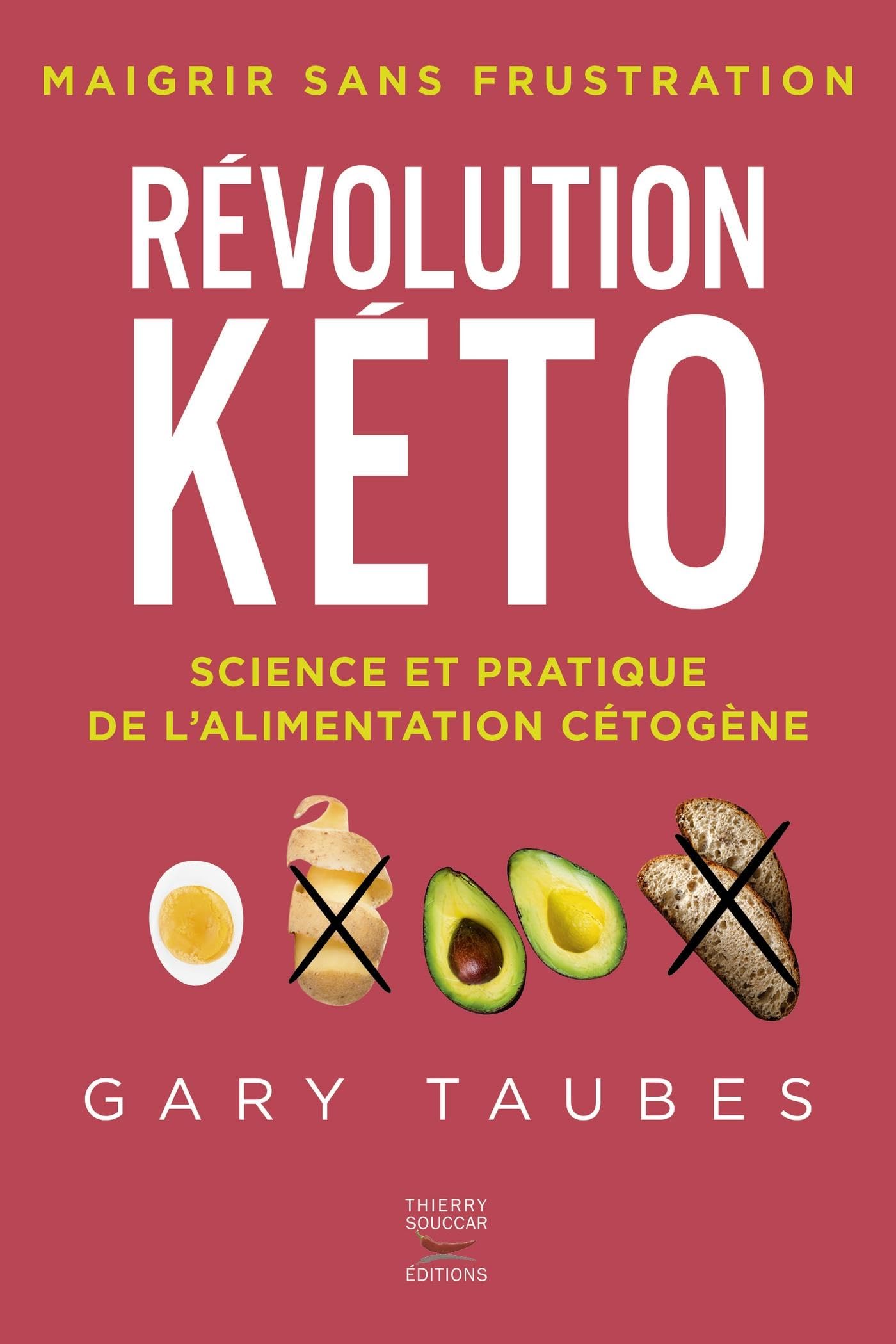
Révolution kéto - Science et pratique de l'alimentation cétogène (Guides alimentation cétogène)
by Gary Taubes
Si malgré les régimes, vous bataillez depuis des années avec vos kilos, le moment est venu de comprendre pourquoi. Et d'agir définitivement.Depuis des décennies, les autorités sanitaires ne cessent de nous marteler que pour perdre du poids, nous devons manger moins, moins de gras et faire plus de sport. Et pourtant, les chiffres de l'obésité n'ont jamais été aussi désastreux : plus de 54 % des Français et plus de 64 % des Canadiens, pour ne citer qu'eux, sont aujourd'hui en surpoids ou obèses !Et si ce qui est valable pour les personnes minces n'était tout simplement pas transposable aux personnes obèses ou en surpoids ? Et si la physiologie même des personnes en surpoids ne leur permettait pas de métaboliser correctement les glucides contenus dans une alimentation prétendue « saine » ?Avec cette enquête passionnante, le journaliste américain Gary Taubes démontre pourquoi les recommandations officielles constituent une mauvaise approche de la perte de poids pour des millions de personnes. Il explique comment le régime cétogène ou kéto, pauvre en glucides et riche en graisses, peut aider un grand nombre d'entre elles à atteindre un poids idéal et à le stabiliser toute la vie.Basé sur l'analyse minutieuse des données scientifiques, et vingt années d'entretiens avec une centaine de médecins et de chercheurs, ce livre va révolutionner votre façon de concevoir l'alimentation saine. Vous allez enfin comprendre les mécanismes biologiques qui sous-tendent la prise de poids et accéder à tous les conseils pratiques indispensables pour adopter un régime cétogène, clairement le mieux adapté au métabolisme des personnes qui bataillent avec leur poids.Gary Taubes est le plus célèbre journaliste scientifique américain. Ses articles dans le New York Times et ses livres, dont le best-seller Pourquoi on grossit, ont été récompensés par de nombreux prix, dont trois de l’Association des écrivains scientifiques. Il enseigne à l’École de santé publique de l’université de Californie (Berkeley).

Ce livre est un guide complet sur la perte de poids, conçu pour aider les lecteurs à atteindre leurs objectifs de manière saine et durable. Il explore les bases de la nutrition, de l'exercice, de la création d'un plan alimentaire équilibré et de la gestion des défis. De plus, il met l'accent sur l'importance du maintien des progrès à long terme. Dans l'ensemble, le livre offre des connaissances, des conseils pratiques et des outils pour quiconque souhaite entamer un voyage vers une meilleure santé et une vie plus équilibrée grâce à la perte de poids.

Rethinking Diabetes, Can I Eat That?, The Diabetes Weight Loss Diet, Diabetes Type 2 Healing Code 4 Books Collection Set
by Gary Taubes
Please Note That The Following Individual Books As Per Original ISBN and Cover Image In this Listing shall be Dispatched Rethinking Diabetes, Can I Eat That?, The Diabetes Weight Loss Diet, Diabetes Type 2 Healing Code 4 Books Collection Rethinking Gary Taubes explores the history of the treatment of diabetes, elucidating the way that badly conceived research influences the guidance that doctors offer today, at the expense of patients' long-term well-being. Passionately argued and deeply researched, Rethinking Diabetes reimagines diabetes care with diet at its centre. Can I Eat That?: Can I Eat That? guides people through the initial and sometimes frightening stages which follow diagnosis of Type 2 diabetes. It contains an explanation of the nutritional factors behind the disease, and the nutritional factors in foods that are tolerated; and brings these factors together in advice on the choice - and the cooking - of beneficial and tasty foods. The Diabetes Weight Loss Antony Worrall Thompson and dietitian Azmina Govindji have worked together to bring you an easy-to-follow diet plan that will not only help you shift those extra pounds but will also play a major part in keeping your blood glucose levels steady. The recipes are delicious and nutritious and won't leave you craving more. Diabetes Type 2 Healing If you or a loved one has recently been diagnosed with pre-diabetes or type 2 diabetes, then you'll know it can be a frightening, stressful, and confusing time. There is no getting around the fact that diabetes is a serious condition. However, the good news is you can help prevent, manage, and potentially reverse diabetes.