
Hervé This
Hervé This is is a French physical chemist who works at the Institut National de la Recherche Agronomique. His main area of interest is molecular gastronomy, or how our knowledge of chemistry and science in general, can be used as a tool to enhance culinary experiences, rather than the purely empirical knowledge which more often than not dictates the rules in the kitchen. With the late Nicholas Kurti, he coined the scientific term "Molecular and Physical Gastronomy" in 1988, which he shortened to "Molecular Gastronomy" after Kurti's death in 1998[1]. While it is often stated that he has a Ph.D in Molecular Gastronomy, his degree is in "Physico-chimie des matériaux" (Physical Chemistry of Materials), for which he wrote a thesis entitled "La gastronomie moléculaire et physique"[2]. He has written several books on the subject which can be understood even by those who have little or no knowledge of chemistry, but so far only two have been translated into English. He also collaborates with the magazine Pour la Science, the aim of which is to present scientific concepts to the general public. He is also a corresponding member of the Académie d'agriculture de France, and, more recently, the scientific director of the foundation "Food Science & Culture", which he created at the French Academy of Science. Every month he adds one new "invention" in the Arts and Science section of the website of the three-star chef Pierre Gagnaire. Although his main focus is on physical chemistry, he also attributes great importance to the emotional aspect of cooking, as the title of one of his books shows: Cooking is love, art, technique.
30 Books Written

Molecular Gastronomy: Exploring the Science of Flavor
by Hervé This
Rating: 3.9 ⭐
• 2 recommendations ❤️
Hervé This (pronounced "Teess") is an internationally renowned chemist, a popular French television personality, a bestselling cookbook author, a longtime collaborator with the famed French chef Pierre Gagnaire, and the only person to hold a doctorate in molecular gastronomy, a cutting-edge field he pioneered. Bringing the instruments and experimental techniques of the laboratory into the kitchen, This uses recent research in the chemistry, physics, and biology of food to challenge traditional ideas about cooking and eating. What he discovers will entertain, instruct, and intrigue cooks, gourmets, and scientists alike.Molecular Gastronomy , This's first work to appear in English, is filled with practical tips, provocative suggestions, and penetrating insights. This begins by reexamining and debunking a variety of time-honored rules and dictums about cooking and presents new and improved ways of preparing a variety of dishes from quiches and quenelles to steak and hard-boiled eggs. He goes on to discuss the physiology of flavor and explores how the brain perceives tastes, how chewing affects food, and how the tongue reacts to various stimuli. Examining the molecular properties of bread, ham, foie gras, and champagne, the book analyzes what happens as they are baked, cured, cooked, and chilled.Looking to the future, Hervé This imagines new cooking methods and proposes novel dishes. A chocolate mousse without eggs? A flourless chocolate cake baked in the microwave? Molecular Gastronomy explains how to make them. This also shows us how to cook perfect French fries, why a soufflé rises and falls, how long to cool champagne, when to season a steak, the right way to cook pasta, how the shape of a wine glass affects the taste of wine, why chocolate turns white, and how salt modifies tastes.

An international celebrity and founder of molecular gastronomy, or the scientific investigation of culinary practice, Herv' This is known for his ground-breaking research into the chemistry and physics behind everyday cooking. His work is consulted widely by amateur cooks and professional chefs and has changed the way food is approached and prepared all over the world.In Kitchen Mysteries, Herv' This offers a second helping of his world-renowned insight into the science of cooking, answering such fundamental questions as what causes vegetables to change color when cooked and how to keep a souffl' from falling. He illuminates abstract concepts with practical advice and concrete examples--for instance, how saut'ing in butter chemically alters the molecules of mushrooms--so that cooks of every stripe can thoroughly comprehend the scientific principles of food.Kitchen Mysteries begins with a brief overview of molecular gastronomy and the importance of understanding the physiology of taste. A successful meal depends as much on a cook's skilled orchestration of taste, odors, colors, consistencies, and other sensations as on the delicate balance of ingredients. Herv' then dives into the main course, discussing the science behind many meals' basic components: eggs, milk, bread, sugar, fruit, yogurt, alcohol, and cheese, among other items. He also unravels the mystery of tenderizing enzymes and gelatins and the preparation of soups and stews, salads and sauces, sorbet, cakes, and pastries. Herv' explores the effects of boiling, steaming, braising, roasting, deep-frying, saut'ing, grilling, salting, and microwaving, and devotes a chapter to kitchen utensils, recommending the best way to refurbish silverware and use copper.By sharing the empirical principles chefs have valued for generations, Herv' This adds another dimension to the suggestions of cookbook authors. He shows how to adapt recipes to available ingredients and how to modify proposed methods to the utensils at hand. His revelations make difficult recipes easier to attempt and allow for even more creativity and experimentation. Promising to answer your most compelling kitchen questions, Herv' This continues to make the complex science of food digestible to the cook.

An internationally renowned chemist, popular television personality, and bestselling author, Hervé This heads the first laboratory devoted to molecular gastronomy--the scientific exploration of cooking and eating. By testing recipes that have guided cooks for centuries, and the various dictums and maxims on which they depend, Herv' This unites the head with the hand in order to defend and transform culinary practice.With this new book, Hervé This's scientific project enters an exciting new phase. Considering the preparation of six bistro favorites--hard-boiled egg with mayonnaise, simple consommé, leg of lamb with green beans, steak with French fries, lemon meringue pie, and chocolate mousse--he isolates the exact chemical properties that tickle our senses and stimulate our appetites. More important, he connects the mind and the stomach, identifying methods of culinary construction that appeal to our memories, intelligence, and creativity. By showing that the creation of a meal is as satisfying as its consumption, Hervé This recalibrates the balance between food and our imaginations. The result is a revolutionary perspective that will tempt even the most casual cooks to greater flights of experimentation.

Mayonnaise "takes" when a series of liquids form a semisolid consistency. Eggs, a liquid, become solid as they are heated, whereas, under the same conditions, solids melt. When meat is roasted, its surface browns and it acquires taste and texture. What accounts for these extraordinary transformations?The answer: chemistry and physics. With trademark clarity and wit, Herve This launches a wry investigation into the chemical art of cooking. Unraveling the science behind common culinary technique and practice, Herv? This breaks food down to its molecular components and matches them to cooking's chemical reactions. He translates the complex processes of the oven into everyday knowledge for professional chefs and casual cooks; demystifies the meaning of taste and the making of flavor; describes the properties of liquids, salts, sugars, oils, and fats; and defines the principles of culinary practice, which endow food with sensual as well as nutritional value.For fans of Herv? This's popular volumes and for newcomers to his celebrated approach, "The Science of the Oven" fuses the physiology of taste to the molecular structure of bodies and food, expertly expanding the possibilities of the kitchen.

From its intriguing opening question—"How can we reasonably judge a meal?"—to its rewarding conclusion, this beautiful book picks up where Brillat-Savarin left off almost two centuries ago. Hervé This, a cofounder (with the late physicist Nicholas Kurti) of the new approach to studying the scientific basis of cooking known as molecular gastronomy, investigates the question of culinary beauty in a series of playful, lively, and erudite dialogues. Considering the place of cuisine in Western culture, This explores an astonishing variety of topics and elaborates a revolutionary method for judging the art of cooking. Many of the ideas he introduces in this culinary romance are illustrated by dishes created by Pierre Gagnaire, whose engaging commentaries provide rare insights into the creative inspiration of one of the world's foremost chefs. The result is an enthralling, sophisticated, freewheeling dinner party of a book that also makes a powerful case for openness and change in the way we think about food.

Note-by-Note Cooking is a landmark in the annals of gastronomy, liberating cooks from the constraints of traditional ingredients and methods through the use of pure molecular compounds. 1-Octen-3-ol, which has a scent of wild mushrooms; limonene, a colorless liquid hydrocarbon that has the smell of citrus; sotolon, whose fragrance at high concentrations resembles curry and at low concentrations, maple syrup or sugar; tyrosine, an odorless but flavorful amino acid present in cheese--these and many other substances, some occurring in nature, some synthesized in the laboratory, make it possible to create novel tastes and flavors in the same way that elementary sound waves can be combined to create new sounds.Note-by-note cooking promises to add unadulterated nutritional value to dishes of all kinds, actually improving upon the health benefits of so-called natural foods. Cooking with molecular compounds will be far more energy efficient and environmentally sustainable than traditional techniques of cooking. This new way of thinking about food heralds a phase of culinary evolution on which the long-term survival of a growing human population depends. Herv? This clearly explains the properties of naturally occurring and synthesized compounds, dispels a host of misconceptions about the place of chemistry in cooking, and shows why note-by-note cooking is an obvious--and inevitable--extension of his earlier pioneering work in molecular gastronomy. An appendix contains a representative selection of recipes, vividly illustrated in color.


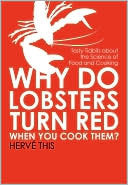
How can you tell an uncooked egg from a hardboiled egg without cracking it open? Is it really necessary to serve red and white wine in different types of glasses? Are there serious culinary uses for the microwave? Why does butter sometimes taste like the refrigerator? Can chili peppers actually burn a hole in your stomach? If you’ve ever been curious about the answers to these and similar kitchen questions, then Why Do Lobsters Turn Red When You Cook Them? is the book for you. Internationally renowned French chemist Hervé This offers tantalizing tidbits of the science behind food and cooking and their application to culinary basics, including how to toss a perfect salad, taste wine like a pro, and know when a loaf of bread has risen fully. You’ll learn how and why we do things the way we do in the kitchen, as well as dozens of simple techniques to improve your cooking. Whether you're a cook, a science buff, or just someone who loves to eat, this delightful volume is a must-have compendium of little-known facts, tips, and tricks about what we eat and drink.

Le jus d'un rôti cuit dans un four «afflue-t-il» à coeur, comme on l'admet implicitement quand on parle de «cuisson par concentration» ? Non, il sort plutôt de la viande (qui se contracte) et fait ce délicieux dépôt brun que l'on déglace en fin de cuisson.. La viande qui brunit dans un four «caramélise-t-elle» ? Non, mais elle s'enrichit - en surface seulement - de molécules aromatiques et sapides, formées par diverses réactions chimiques, dont la réaction de Maillard.. Les champignons coupés et laissés à l'air «s'oxydent-ils» ? Les mousselines sont-elles des émulsions ? Les bouillons doivent-ils être démarrés à l'eau froide ou à l'eau chaude ? Les steaks doivent-ils être salés avant ou après cuisson ? Les gnocchis sont-ils cuits quand ils viennent flotter à la surface de l'eau ?. Toutes ces questions, et bien d'autres appellent des explorations de physique et de chimie qui sont le socle sur lequel Hervé This propose de fonder une cuisine véritablement nouvelle, en même temps qu'un enseignement culinaire rénové. Mieux encore, les cuisiniers pourraient, sur des bases saines, partir à l'exploration des dictons culinaires : c'est l'objet de la «gastronomie moléculaire»..


O êxito na cozinha é alcançado quando se compreende bem o que se faz. Este é o objeto da gastronomia ela explora os mil fenômenos que ocorrem no momento da preparação dos pratos. A coagulação de uma simples clara de ovo não é extraordinária? O douramento de uma carne? Ou, então, o aumento do volume de um creme chantilly? Equipada com conhecimentos produzidos pela ciência, a tecnologia culinária pôde posteriormente ajudar a técnica culinária a progredir a fim de estimular os sentidos e, principalmente, dar amor aos convivas.

La cocina-- es amor, arte, tà cnica


Herve This presenteert in dit boek een nieuw vakgebied, de zogeheten moleculaire gastronomie. Dit vakgebied beweegt zich tussen de chemie en de kookkunst en is interessant voor iedereen die op de hoogte wil blijven van nieuwe ontwikkelingen in de keuken.
![Building a Meal : From Molecular Gastronomy to Culinary Constructivism (Hardcover)--by Herve This [2009 Edition]](/placeholder.svg?height=400&width=300)

Inventions culinaires, gastronomie moléculaire
by Hervé This
COCINA ES AMOR ARTE TECNICA, LA
by Hervé This

Le terroir à toutes les sauces - Un roman philosophique et gourmand avec 100 recettes d'Alsace
by Hervé This
Un livre de recettes en forme de roman à thèse. L'auteur Hervé This est une sorte de savant fou : physico-chimiste engagé, inventeur de la cuisine moléculaire, personnage très médiatique et plein d'humour. Ah, la cuisine de terroir ! Son " authenticité ", ses racines, ses adorateurs vigilants ! Mais qu'est-ce que le terroir, la cuisine de terroir ? Derrière le marketing, quelle réalité aujourd'hui, à l'heure de l'industrialisation et de la mondialisation des productions agro-alimentaires ?Hervé This, scientifique de renommée internationale et cordon bleu curieux de toutes les gastronomies locales, lève le rideau sur le petit théâtre des passions culinaires françaises dans ce roman plein de finesse, célébration des plaisirs partagés de la table. Des gourmets débattent avec fièvre et humour, des mille et une variantes de leurs plats préférés. " La cuisine, c'est d'abord du lien social, ensuite de l'art, et seulement après de la technique ", dit notre chimiste-romancier.Et il nous invite à des travaux pratiques gourmands avec 100 recettes de sa région d'origine, l'Alsace : ses recettes à lui, d'aujourd'hui, qui réinventent celles d'antan. Dans ses recettes, il leur rappelle les bases, présente des variantes et des trucs (avez-vous déjà fait cuire un poulet dans un lave-vaisselle... ?), dévoile des tours de main et les mystères de la technique, mais incite chacun à expérimenter, à personnaliser. Les recettes, proclame notre enchanteur, ne sont pas faites pour être suivies à la lettre, elles gagnent à être pensées et interprétées, comme on interprète des partitions en musique.Voilà donc un réjouissant traité pratique de philosophie gourmande, nourri de curiosité, d'échanges et d'amour.

Da dove proviene quel profumo meraviglioso di molti funghi, che ci fa pensare al sottobosco? Dall'1-otten-3-olo, un composto dal nome bizzarro. Perché non utilizzarlo in cucina, come una spezia? E perché non servirci anche del sotolone, con il suo profumo di curry, fieno greco e vin jaune? Hervé This ci conduce alle frontiere di una nuova rivoluzione culinaria. Nelle nostre dispense nuove spezie si aggiungeranno a quelle tradizionali; i cuochi del XXI secolo impareranno ad affiancare composti chimici puri, a legarli come fa un compositore con le note musicali, per creare ricette dai sapori inediti. La cucina nota a nota potrà contribuire a limitare gli sprechi alimentari creando piatti nuovi, economici e sicuri. Quindi frutta, verdura, carne e pesce cederanno il passo a una cucina «chimica», a pietanze in pillole? Il dibattito è aperto, ma Hervé This ci «Nell'arte non esiste la sostituzione, ma solo l'aggiunta e l'ampliamento delle scelte». Come l'uso del sintetizzatore in musica non ha reso obsoleto il violino, così la cucina nota a nota sarà una «forma artistica in più», una «grande avventura» che permetterà di costruire un «nuovo modo di cucinare e di mangiare».

Inventions culinaires, gastronomie moléculaire
by Hervé This
« Voici un livre de cuisine, pas de chimie : j’y propose des recettes, j’y parle de goût, d’ingrédients, de nouvelles manières de les associer, bref, il s’agit bien de cuisiner. La chimie ne sera “dans” la cuisine que par les connaissances qu’elle apporte, parce qu’elle permet de comprendre ce que l’on fait quand on cuisine, donc de mieux faire et d’apprécier encore davantage les beautés de l’art culinaire. Voici 46 inventions culinaires accompagnées de 120 recettes inédites pour les mettre en œuvre. De l’œuf parfait au chocolat chantilly, en passant par les salades étonnantes, les « quesnays » – cousins des petits choux –, les mousses de sole ou les caramels aux arômes inattendus, laissez-vous guider. » H. T. Une invitation à explorer les cuisines modernes du monde et à innover en parfaite gourmandise. Hervé This, physico-chimiste Inrae et professeur consultant à AgroParisTech, est l’un des deux créateurs de la gastronomie moléculaire et physique. Également pionnier de la « cuisine moléculaire », puis de la « cuisine note à note », il a inspiré les plus grands chefs et a reçu, en 2025, le prestigieux prix Sonning pour l’ensemble de ses contributions à la science et à la culture. Il a notamment publié Les Secrets de la casserole (1993) et, chez Odile Jacob, La Cuisine, c’est de l’amour, de l’art, de la technique (2006), avec Pierre Gagnaire.

De la ciencia a los fogones
by Hervé This
Abriendo boca - 1. Juguemos con nuestros sentidos - 2. Salud y alimentación - 3. ¿Cuáles son las notas? - 4. El asunto de los entremeses - 5. Comprender, perfeccionar - 6. Sin olvidar todas las cosas que hacen la vida bella - 7. De la cocina molecular al constructivismo culinario - El último bocado para el camino - Glosario - Bibliografía - Índice alfabético.

Cozinha: Uma questão de amor, arte e técnica
by Hervé This
A cozinha é, muitas vezes, uma questão de emoção: uma bela e delicada fruta pode despertar o desejo de se construir para ela um porta-joias. Ou pode-se comer um simples legume e querer partilhar um pouco de felicidade, ou de emoção, colocando-o no centro de uma composição culinária. Como determinar as associações? Podemos combinar carpa e coelho? Como construir pratos? Esse livro é fruto do encontro entre Hervé This, um químico bastante arrojado e pioneiro da chamada cozinha molecular, e Pierre Gagnaire, um renomado chef de cozinha. Trata-se de um livro mais ensaístico, histórico, que nos proporciona uma visão mais ampla dessa nova tendência da gastronomia. Editora : Senac São Paulo; 1ª edição (16 março 2010)Idioma : PortuguêsCapa comum : 336 páginasISBN-10 : 8573599154ISBN-13 : 978-8573599152Dimensões : 22.6 x 17 x 2.6 cm
D'ou je viens ?
by Hervé This

COURS DE GASTRONOMIE MOLECULAIRE N 2
by Hervé This
Racines du vivant . Cours de gastronomie moléculaire n° 2 . Les précisions culinaires . Est-il exact que les règles féminines font tourner les sauces mayonnaises ? Que les cochons de lait rôtis ont la peau plus croustillante si on leur coupe la tête quand on les débroche ? Faut-il vraiment battre les blanc d'oeufs toujours dans le même sens, pour qu'ils montent mieux ? Les phases de la lune ont-elles une influence sur les marinades ? Et les courants d'air sur les béarnaises ?. Trucs, astuces, tours de main, proverbes, adages, maximes, dictons... L'auteur a nommé toutes ces idées « précisions culinaires », par opposition aux « définitions » qui sont données dans les recettes. Manifestement, il est temps d'aller y voir plus clair dans ces objets de culture. D'abord, d'un point de vue technique : il faut apprendre à effectuer des tests expérimentaux bien pensés et bien conduits, afin d'avoir enfin une idée de la véracité éventuelle de ces précisions traditionnellement transmises. La réfutation par l'expérience de certaines d'entre elles a révélé des idées fausses, ce qui impose de comprendre comment nos ancêtres en sont venus à nous les transmettre.. Depuis 1980, Hervé This explore le monde extraordinaire des précisions culinaires : il en a recueilli plus de 25 000. Dans une approche historique et scientifique, l'auteur dissèque notre culture culinaire et n'en garde que le meilleur !.

La Sagesse du Chimiste
by Hervé This
Chauffons du vin et plaçons dans les vapeurs un couvercle froid qui condense les vapeurs. Inclinons le couvercle et récupérons le liquide qui goutte : les premières vapeurs formées font un liquide au goût brûlant... même quand il est froid, parce que l’alcool, que nous nommons aujourd’hui éthanol, s’évapore avant l’eau. Ne peut-on même imaginer que la découverte s’est faite alors que l’on chauffait du vin ? Le breuvage récupéré était étonnant, provoquait l’ivresse... Il n’en fallait pas tant pour que l’on cherche à reproduire l’opération en la perfectionnant : l’alambic était né. Il conduisait à un produit qui n’était ni eau, ni terre, ni air, ni feu, mais à un cinquième élément constituant le monde, une « quinte essence ».

Propos culinaires et savants
by Hervé This
Hervé THIS et des grands Chefs pour la rentrée !

フランス料理の「なぞ」を解く
by Hervé This

La cuisine note à note
by Hervé This
Quelle est l'origine de cette odeur merveilleuse et familière qui caractérise de nombreux champignons et dans laquelle on retrouve à la fois du champignon, du sous-bois, de la forêt profonde et humide... ? Un composé au nom étrange, le 1-octène-3-ol. Pourquoi ne pas tenter de s'en servir en cuisine, tout comme on utilise une épice ? Et le limonène, avec sa merveilleuse odeur fraîche, qui rappelle les citrons, les oranges…? Et le sotolon, à l'odeur de noix, de curry, de fenugrec, de vin jaune… ? Etc. Ces composés et bien d'autres, que l'on sait isoler ou synthétiser, enrichissent les étagères de la cuisine, à côté de l'eau de fleur d'oranger, de la noix de muscade, du gingembre... Et pourquoi ne pas se livrer à des mélanges de deux de ces nouveaux alliés culinaires ? Puis de trois, puis de quatre... C'est cela la “cuisine note à note”: la réalisation de mets à partir de composés purs, mélangés habilement. La révolution culinaire est en marche. A la clé, des mets inédits, des goûts nouveaux et une infinité de possibles pour des cuisiniers créatifs. Nos fruits, légumes, viandes et poissons céderont-ils la place à des composés purs ? La cuisine note à note prendra-t-elle le pas sur la cuisine traditionnelle ? Le débat est lancé.

COURS DE GASTRONOMIE MOLECULAIRE N 1
by Hervé This
Cours de gastronomie moléculaire n° 1 . Science, technologie, technique... culinaires : quelles relations ? . Chocolat Chantilly, kientzheim de beurre noisette, gibbs de foie gras, jambon exponentiel, cristaux de vent, salades de l'abbé Nollet, oeuf à 67° C... Les applications de la gastronomie moléculaire proposées par Hervé This se comptent aujourd'hui par centaines. N'est-ce pas la preuve que la bonne compréhension des relations de la science, de la technologie et de la technique s'impose à qui cherche l'« innovation » ?. La gastronomie moléculaire ? Une discipline scientifique dont Hervé This est l'un des deux créateurs et qui explore les mécanismes qui surviennent lors des transformations culinaires. Ce Cours de gastronomie moléculaire donné en janvier 2008 dit clairement ce que sont la science et la technologie, en vue d'une réconciliation des deux champs. L'auteur propose une méthode pratique, simple, efficace, pour faire dialoguer les personnels engagés dans les deux activités, tout en conservant leur spécificité. Un ouvrage surprenant où l'épistémologie se mêle à la technologie (Comment « inventer » ? Comment valoriser les résultats des sciences en vue de l'innovation ?)..