Loading genres...
Explore the best books about Journalism genre.

Levels of the Game is John McPhee's astonishing account of a tennis match played by Arthur Ashe against Clark Graebner at Forest Hills in 1968.It begins with the ball rising into the air for the initial serve and ends with the final point. McPhee provides a brilliant, stroke-by-stroke description while examining the backgrounds and attitudes which have molded the players' games."This may be the high point of American sports journalism"- Robert Lipsyte, The New York Times
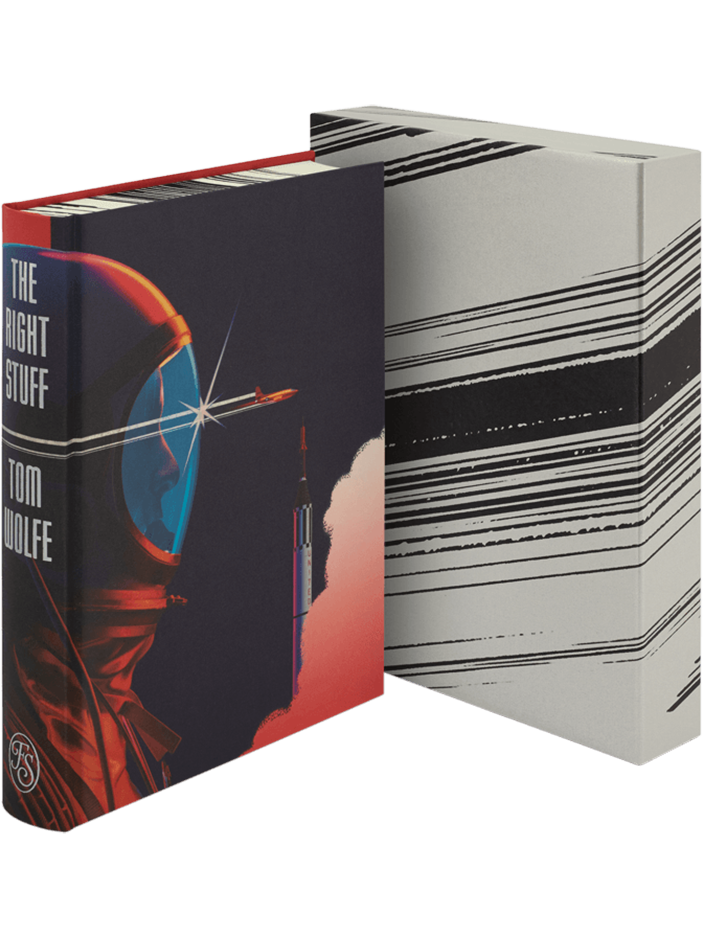
The Right Stuff is an exhilarating flight into the death-defying lives of the Mercury Seven, America’s first astronauts. This Folio edition of Tom Wolfe’s classic features superb retro-styled color illustrations by Tavis Coburn."What is it that makes a man willing to sit up on top of an enormous Roman candle, and wait for someone to light the fuse?" In The Right Stuff, hailed as one of the greatest books ever written about space flight, Tom Wolfe sets out to answer the question, and lays bare the mindset and motivations of the first American astronauts to risk life and limb to beat the Soviets into orbit. He blows apart the mythology of the Mercury Seven – Deke Slayton, Gus Grissom, Alan Shepard, Wally Schirra, John Glenn, Scott Carpenter and Gordon Cooper – and the forerunner of them all, supersonic test pilot Chuck Yeager. Dazzlingly written, this is a thrilling account of men who "pushed the edge of the envelope" at work and play, all to prove they possessed the quality that Wolfe famously christened the right stuff. Opening with a new introduction by space historian Andrew Chaikin and featuring Tavis Coburn’s striking retro-styled graphic illustrations, this is an exceptional edition of a 20th-century classic from the Folio Society.UNIQUE SPACE AGE ILLUSTRATIONThis is the ultimate edition of Tom Wolfe’s most celebrated non-fiction book. To produce it, the Folio Society tapped into the expertise of Andrew Chaikin, author of A Man on the Moon – the definitive account of the Apollo space program, published in its own lavish Folio edition in 2021. Chaikin worked closely with Folio and illustrator Tavis Coburn on the visual look and feel of the book, which takes its cue from 1940s comic art and Soviet posters of the time. The illustrations portray the astronauts as Cold War heroes, and Coburn’s beautiful retro-futurist cover design perfectly captures the aesthetic and spirit of the early Space Age. Andrew Chaikin’s new introduction explores the origins of the book, and its uncanny ability to get inside the mindset of the Mercury astronauts: "Wolfe seemed to have found his way into their high-octane psyches and spilled their secret, innermost thoughts… they became three-dimensional human beings."Bound in printed and blocked clothSet in Cartier Book with Helvetica as display448 pagesFrontispiece and 7 colour illustrations, including 5 double-page spreadsBlack & white chapter detailsPrinted endpapersPrinted page edgesPrinted slipcase8 ¾" x 5 ½"

Andrew Ross Sorkin delivers the first true behind-the-scenes, moment-by-moment account of how the greatest financial crisis since the Great Depression developed into a global tsunami. From inside the corner office at Lehman Brothers to secret meetings in South Korea, and the corridors of Washington, Too Big to Fail is the definitive story of the most powerful men and women in finance and politics grappling with success and failure, ego and greed, and, ultimately, the fate of the world’s economy. “We’ve got to get some foam down on the runway!” a sleepless Timothy Geithner, the then-president of the Federal Reserve of New York, would tell Henry M. Paulson, the Treasury secretary, about the catastrophic crash the world’s financial system would experience. Through unprecedented access to the players involved, Too Big to Fail re-creates all the drama and turmoil, revealing neverdisclosed details and elucidating how decisions made on Wall Street over the past decade sowed the seeds of the debacle. This true story is not just a look at banks that were “too big to fail,” it is a real-life thriller with a cast of bold-faced names who themselves thought they were too big to fail.

You've seen it all before. A malicious online rumor costs a company millions. A political sideshow derails the national news cycle and destroys a candidate. Some product or celebrity zooms from total obscurity to viral sensation. What you don’t know is that someone is responsible for all this. Usually, someone like me. I’m a media manipulator. In a world where blogs control and distort the news, my job is to control blogs—as much as any one person can. IN TODAY’S CULTURE…Blogs like Gawker, BuzzFeed, and The Huffington Post drive the media agenda. Bloggers are slaves to money, technology, and deadlines. Manipulators wield these levers to shape everything you read, see, and hear— online and off. Why am I giving away these secrets? Because I’m tired of a world where blogs take indirect bribes, marketers help write the news, reckless journalists spread lies, and no one is accountable for any of it. I’m going to explain exactly how the media really works. What you choose to do with this information is up to you.

An NPR Book Concierge Best Book of 2018!A stunning story about how power works in the modern age--the book the New York Times called "one helluva page-turner" and The Sunday Times of London celebrated as "riveting...an astonishing modern media conspiracy that is a fantastic read." Pick up the book everyone is talking about.In 2007, a short blogpost on Valleywag, the Silicon Valley-vertical of Gawker Media, outed PayPal founder and billionaire investor Peter Thiel as gay. Thiel's sexuality had been known to close friends and family, but he didn't consider himself a public figure, and believed the information was private. This post would be the casus belli for a meticulously plotted conspiracy that would end nearly a decade later with a $140 million dollar judgment against Gawker, its bankruptcy and with Nick Denton, Gawker's CEO and founder, out of a job. Only later would the world learn that Gawker's demise was not incidental--it had been masterminded by Thiel.For years, Thiel had searched endlessly for a solution to what he'd come to call the "Gawker Problem." When an unmarked envelope delivered an illegally recorded sex tape of Hogan with his best friend's wife, Gawker had seen the chance for millions of pageviews and to say the things that others were afraid to say. Thiel saw their publication of the tape as the opportunity he was looking for. He would come to pit Hogan against Gawker in a multi-year proxy war through the Florida legal system, while Gawker remained confidently convinced they would prevail as they had over so many other lawsuit--until it was too late. The verdict would stun the world and so would Peter's ultimate unmasking as the man who had set it all in motion. Why had he done this? How had no one discovered it? What would this mean--for the First Amendment? For privacy? For culture?In Holiday's masterful telling of this nearly unbelievable conspiracy, informed by interviews with all the key players, this case transcends the narrative of how one billionaire took down a media empire or the current state of the free press. It's a study in power, strategy, and one of the most wildly ambitious--and successful--secret plots in recent memory.Some will cheer Gawker's destruction and others will lament it, but after reading these pages--and seeing the access the author was given--no one will deny that there is something ruthless and brilliant about Peter Thiel's shocking attempt to shake up the world.

First published in 1979, Joan Didion's The White Album records indelibly the upheavals and aftermaths of the 1960s. Examining key events, figures, and trends of the era—including Charles Manson, the Black Panthers, and the shopping mall—through the lens of her own spiritual confusion, Joan Didion helped to define mass culture as we now understand it. Written with a commanding sureness of tone and linguistic precision, The White Album is a central text of American reportage and a classic of American autobiography.

An angry account of working class life in the 1930's and a call to embrace social equality. With an introduction by Amelia Gentleman. The Road to Wigan Pier is an insightful and powerful account of lives lived in poverty and deprivation in a time of low wages and meagre government support. Orwell describes dismal housing (including the lodging house where he stays), harsh working conditions and the devastating effects of unemployment. And he also vividly describes the courage and dignity of the people he meets. In the second half of the book, Orwell examines his own political and social affiliations with an impressive ability to provoke and to question. He defends middle class values whilst critiquing the failures of his own class, he advocates socialism whilst criticising the socialist movement in England.Part of the Macmillan Collector's Library, a series of stunning, pocket sized classics with ribbon markers. These beautiful books make perfect gifts or a treat for any book lover.

Fear and Loathing in Las Vegas is the best chronicle of drug-soaked, addle-brained, rollicking good times ever committed to the printed page. It is also the tale of a long weekend road trip that has gone down in the annals of American pop culture as one of the strangest journeys ever undertaken.

From Pulitzer Prize-winner Katherine Boo, a landmark work of narrative nonfiction that tells the dramatic and sometimes heartbreaking story of families striving toward a better life in one of the twenty-first century's great, unequal cities.In this brilliantly written, fast-paced book, based on three years of uncompromising reporting, a bewildering age of global change and inequality is made human. Annawadi is a makeshift settlement in the shadow of luxury hotels near the Mumbai airport, and as India starts to prosper, Annawadians are electric with hope. Abdul, a reflective and enterprising Muslim teenager, sees "a fortune beyond counting" in the recyclable garbage that richer people throw away. Asha, a woman of formidable wit and deep scars from a childhood in rural poverty, has identified an alternate route to the middle class: political corruption. With a little luck, her sensitive, beautiful daughter - Annawadi's "most-everything girl" - will soon become its first female college graduate. And even the poorest Annawadians, like Kalu, a fifteen-year-old scrap-metal thief, believe themselves inching closer to the good lives and good times they call "the full enjoy." But then Abdul the garbage sorter is falsely accused in a shocking tragedy; terror and a global recession rock the city; and suppressed tensions over religion, caste, sex, power and economic envy turn brutal. As the tenderest individual hopes intersect with the greatest global truths, the true contours of a competitive age are revealed. And so, too, are the imaginations and courage of the people of Annawadi. With intelligence, humor, and deep insight into what connects human beings to one another in an era of tumultuous change, Behind the Beautiful Forevers carries the reader headlong into one of the twenty-first century's hidden worlds, and into the lives of people impossible to forget.

Doris Kearns Goodwin, winner of the Pulitzer Prize and author of Team of Rivals, captures the Progressive Era through the story of the broken friendship between Theodore Roosevelt and William Howard Taft, culminating in their running against one another for president in 1912.

1 November 2006. Alexander Litvinenko is brazenly poisoned in central London. Twenty two days later he dies, killed from the inside. The poison? Polonium; a rare, lethal and highly radioactive substance. His crime? He had made some powerful enemies in Russia.Based on the best part of a decade's reporting, as well as extensive interviews with those closest to the events (including the murder suspects), and access to trial evidence, Luke Harding's A Very Expensive Poison is the definitive inside story of the life and death of Alexander Litvinenko. Harding traces the journey of the nuclear poison across London, from hotel room to nightclub, assassin to victim; it is a deadly trail that seemingly leads back to the Russian state itself.This is a shocking real-life revenge tragedy with corruption and subterfuge at every turn, and walk-on parts from Russian mafia, the KGB, MI6 agents, dedicated British coppers, Russian dissidents. At the heart of this all is an individual and his family torn apart by a ruthless crime.

#1 NEW YORK TIMES BESTSELLERIt was never supposed to be this close. And of course she was supposed to win. How Hillary Clinton lost the 2016 election to Donald Trump is the riveting story of a sure thing gone off the rails. For every Comey revelation or hindsight acknowledgment about the electorate, no explanation of defeat can begin with anything other than the core problem of Hillary's campaign--the candidate herself. Through deep access to insiders from the top to the bottom of the campaign, political writers Jonathan Allen and Amie Parnes have reconstructed the key decisions and unseized opportunities, the well-intentioned misfires and the hidden thorns that turned a winnable contest into a devastating loss. Drawing on the authors' deep knowledge of Hillary from their previous book, the acclaimed biography HRC, Shattered offers an object lesson in how Hillary herself made victory an uphill battle, how her difficulty articulating a vision irreparably hobbled her impact with voters, and how the campaign failed to internalize the lessons of populist fury from the hard-fought primary against Bernie Sanders. Moving blow-by-blow from the campaign's difficult birth through the bewildering terror of election night, Shattered tells an unforgettable story with urgent lessons both political and personal, filled with revelations that will change the way readers understand just what happened to America on November 8, 2016.

Think a newspaper can’t be responsible for mass murder? Think again.As flagship of the American news media, the New York Times is the world’s most powerful news outlet. With thousands of reporters covering events from all corners of the globe, the Times has the power to influence wars, foment revolution, shape economies and change the very nature of our culture. It doesn’t just cover the news: it creates it.But the institution that is the New York Times is showing cracks. No longer the fact-stringing paper of record once known as the Gray Lady, the Times has become a political lightning rod that divides more often than it unites. It is frequently beset by scandal and has even emerged as a symbol of the political, cultural and social ills plaguing our society.The Gray Lady Winked pulls back the curtain on this illustrious institution to reveal a quintessentially human organization where ideology, ego, power and politics compete with the more humble need to present the facts. In its 10 gripping chapters, The Gray Lady Winked offers readers an eye-opening, often shocking, look at the New York Times’s greatest journalistic failures, so devastating they changed the course of history.These are the stories that mattered most, including the Times’s disastrous coverage of the:Second World War – Holocaust – Rise of the Soviet Union – Cuban Revolution – Vietnam War – Second Palestinian Intifada – Atomic Bombing of Japan – Iraq War – Founding of AmericaThe result is an essential look at the tangled relationship between media, power and politics in a post-truth world told with novelistic flair to reveal a uniquely powerful institution’s tortured relationship with the truth.Most importantly of all, The Gray Lady Winked presents a cautionary tale that shows what happens when the guardians of the truth abandon that sacred value in favor of self-interest and ideology—and what this means for our future as much as for our past.

In Greenville, New Hampshire, a small town in the southern part of the state, Henri Vaillancourt makes birch-bark canoes in the same manner and with the same tools that the Indians used. The Survival of the Bark Canoe is the story of this ancient craft and of a 150-mile trip through the Maine woods in those graceful survivors of a prehistoric technology. It is a book squarely in the tradition of one written by the first tourist in these woods, Henry David Thoreau, whose The Maine Woods recounts similar journeys in similar vessel. As McPhee describes the expedition he made with Vaillancourt, he also traces the evolution of the bark canoe, from its beginnings through the development of the huge canoes used by the fur traders of the Canadian North Woods, where the bark canoe played the key role in opening up the wilderness. He discusses as well the differing types of bark canoes, whose construction varied from tribe to tribe, according to custom and available materials. In a style as pure and as effortless as the waters of Maine and the glide of a canoe, John McPhee has written one of his most fascinating books, one in which his talents as a journalist are on brilliant display.

Tom Wolfe's genre-defining magical mystery tour through the 1960s published in Vintage Classics for the first time to mark its fiftieth anniversary.WITH AN INTRODUCTION BY JARVIS COCKERIn the summer of 1964, author Ken Kesey and his Merry Band of Pranksters set out on an awesome social experiment like no other. Blazing across America in their day-glo schoolbus, doped up and deep ‘in the pudding’, the Pranksters’ arrival on the scene – anarchic, exuberant and LSD-infused – would turn on an entire counter-culture, and provide Tom Wolfe with the perfect free-wheeling subject for this, his pioneering masterpiece of New Journalism.' The Electric Kool-Aid Acid Test is not simply the best book on the hippies, it is the essential book...the pushing, ballooning heart of the matter' New York Times

In The Journalist And The Murderer, Janet Malcolm examines the psychopathology of journalism. She delves into the always uneasy, sometimes tragic relationship that exists between journalist and subject.

With an introduction by Rory Stewart Winner of the Guardian First Book award, a first-hand account one of the defining outrages of modern history. All at once, as it seemed, something we could have only imagined was upon us - and we could still only imagine it. This is what fascinates me most in existence: the peculiar necessity of imagining what is, in fact, real. In 1994, the Rwandan government orchestrated a campaign of extermination, in which everyone in the Hutu majority was called upon to murder everyone in the Tutsi minority. Close to a million people were slaughtered in a hundred days, and the rest of the world did nothing to stop it. A year later, Philip Gourevitch went to Rwanda to investigate the most unambiguous genocide since Hitler's war against the Jews. Hailed by the Guardian as one of the hundred greatest nonfiction books of all time, We Wish To Inform You That Tomorrow We Will Be Killed With Our Families is a first-hand account one of the defining outrages of modern history, an unforgettable anatomy of Rwanda's decimation. As riveting as it is moving, it is a profound reckoning with humanity's betrayal and its perseverance.

Do lobsters feel pain? Did Franz Kafka have a funny bone? What is John Updike's deal, anyway? And what happens when adult video starlets meet their fans in person? David Foster Wallace answers these questions and more in essays that are also enthralling narrative adventures. Whether covering the three-ring circus of a vicious presidential race, plunging into the wars between dictionary writers, or confronting the World's Largest Lobster Cooker at the annual Maine Lobster Festival, Wallace projects a quality of thought that is uniquely his and a voice as powerful and distinct as any in American letters.Contains: "Big Red Son," "Certainly the End of Something or Other, One Would Sort of Have to Think," "Some Remarks on Kafka's Funniness from Which Probably Not Enough Has Been Removed," "Authority and American Usage," "The View from Mrs. Thompson's," "How Tracy Austin Broke My Heart," "Up, Simba," "Consider the Lobster," "Joseph Frank's Dostoevsky" and "Host."

A classic of reportage, Oranges was first conceived as a short magazine article about oranges and orange juice, but the author kept encountering so much irresistible information that he eventually found that he had in fact written a book. It contains sketches of orange growers, orange botanists, orange pickers, orange packers, early settlers on Florida's Indian River, the first orange barons, modern concentrate makers, and a fascinating profile of Ben Hill Griffin of Frostproof, Florida who may be the last of the individual orange barons. McPhee's astonishing book has an almost narrative progression, is immensely readable, and is frequently amusing. Louis XIV hung tapestries of oranges in the halls of Versailles, because oranges and orange trees were the symbols of his nature and his reign. This book, in a sense, is a tapestry of oranges, too—with elements in it that range from the great orangeries of European monarchs to a custom of people in the modern Caribbean who split oranges and clean floors with them, one half in each hand.

In WAR Sebastian Junger gives breathtaking insight into the truths of war-- the fear, the honor, and the trust among men. His on-the-ground account follows a single platoon through a 15-month tour of duty in the most dangerous outpost in Afghanistan's Korengal Valley. Through the experiences of these young men at war, he shows what it means to fight, to serve, and to face down mortal danger on a regular basis.

In this madcap journey, a bestselling journalist investigates psychopaths and the industry of doctors, scientists, and everyone else who studies them. The Psychopath Test is a fascinating journey through the minds of madness. Jon Ronson's exploration of a potential hoax being played on the world's top neurologists takes him, unexpectedly, into the heart of the madness industry. An influential psychologist who is convinced that many important CEOs and politicians are, in fact, psychopaths teaches Ronson how to spot these high-flying individuals by looking out for little telltale verbal and nonverbal clues. And so Ronson, armed with his new psychopath-spotting abilities, enters the corridors of power. He spends time with a death-squad leader institutionalized for mortgage fraud in Coxsackie, New York; a legendary CEO whose psychopathy has been speculated about in the press; and a patient in an asylum for the criminally insane who insists he's sane and certainly not a psychopath. Ronson not only solves the mystery of the hoax but also discovers, disturbingly, that sometimes the personalities at the helm of the madness industry are, with their drives and obsessions, as mad in their own way as those they study. And that relatively ordinary people are, more and more, defined by their maddest edges.

This down-and-dirty romp through Hollywood in the 1970s introduces the young filmmakers--Coppola, Scorsese, Lucas, Spielberg, Altman, and Beatty--and recreates an era that transformed American culture forever.

An intimate and profound reckoning with the changes buffeting the $2 trillion global advertising and marketing business from the perspective of its most powerful players, by the bestselling author of GoogledAdvertising and marketing touches on every corner of our lives, and is the invisible fuel powering almost all media. Complain about it though we might, without it the world would be a darker place. And of all the industries wracked by change in the digital age, few have been turned on its head as dramatically as this one has. We are a long way from the days of Don Draper; as Mad Men is turned into Math Men (and women--though too few), as an instinctual art is transformed into a science, the old lions and their kingdoms are feeling real fear, however bravely they might roar.Frenemies is Ken Auletta's reckoning with an industry under existential assault. He enters the rooms of the ad world's most important players, some of them business partners, some adversaries, many "frenemies," a term whose ubiquitous use in this industry reveals the level of anxiety, as former allies become competitors, and accusations of kickbacks and corruption swirl. We meet the old guard, including Sir Martin Sorrell, the legendary head of WPP, the world's largest ad agency holding company; while others play nice with Facebook and Google, he rants, some say Lear-like, out on the heath. There is Irwin Gotlieb, maestro of the media agency GroupM, the most powerful media agency, but like all media agencies it is staring into the headlights as ad buying is more and more done by machine in the age of Oracle and IBM. We see the world from the vantage of its new powers, like Carolyn Everson, Facebook's head of Sales, and other brash and scrappy creatives who are driving change, as millennials and others who disdain ads as an interruption employ technology to zap them. We also peer into the future, looking at what is replacing traditional advertising. And throughout we follow the industry's peerless matchmaker, Michael Kassan, whose company, MediaLink, connects all these players together, serving as the industry's foremost power broker, a position which feasts on times of fear and change.Frenemies is essential reading, not simply because of what it says about this world, but because of the potential consequences: the survival of media as we know it depends on the money generated by advertising and marketing--revenue that is in peril in the face of technological changes and the fraying trust between the industry's key players.

In 2014, Shane Bauer was hired for $9 an hour to work as an entry-level prison guard at a private prison in Winnfield, Louisiana. An award-winning investigative journalist, he used his real name; In American Prison, Bauer weaves a much deeper reckoning with his experiences together with a thoroughly researched history of for-profit prisons in America from their origins in the decades before the Civil War. For, as he soon realized, we can't understand the cruelty of our current system and its place in the larger story of mass incarceration without understanding where it came from. Private prisons became entrenched in the South as part of a systemic effort to keep the African-American labor force in place in the aftermath of slavery, and the echoes of these shameful origins are with us still.

Nueve segundos. A eso ha quedado reducida nuestra capacidad de atención en el mundo contemporá somos una sociedad incapaz de mantener la concentración más allá de la excitación inmediata del último tweet. Pero nuestra distracción endémica, auténtica plaga de la sociedad moderna, es resultado de la imposición dirigida de un modelo de negocio, un capitalismo digital que ha encontrado en la red la posibilidad de un mercado en perpetuo crecimiento, una economía de la atención cimentada sobre la destrucción de nuestra concentración, sobre el fomento de nuestra continua ansia de novedades, de imágenes, de estímulos, de 'likes'. La buena noticia es que esto quiere decir que no se trata de una nueva condición humana. No somos desatentos, nos han hecho así. Y por eso mismo podemos dejar de serlo.

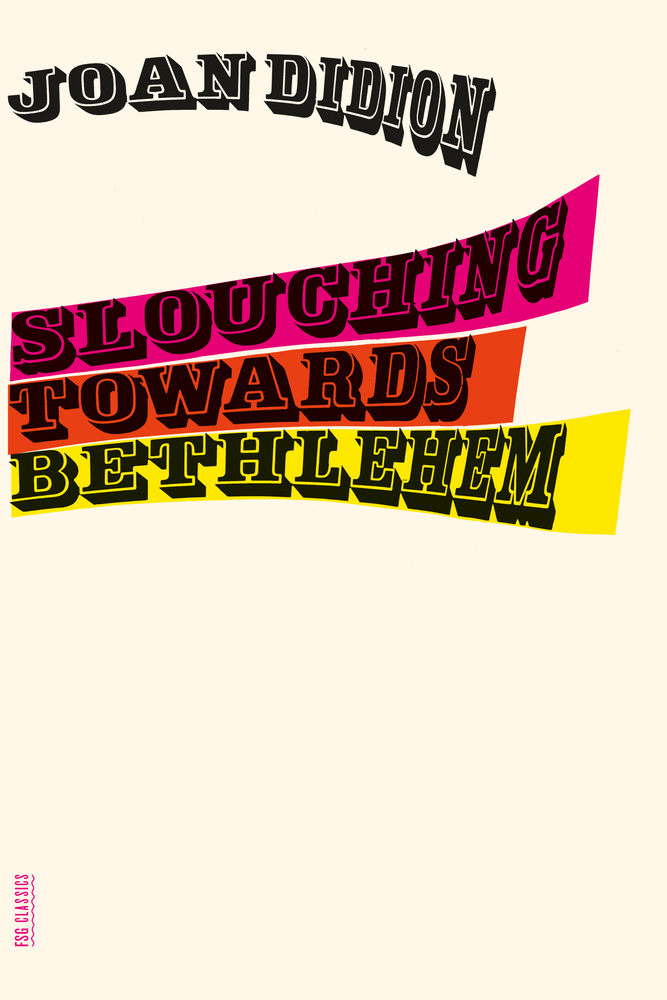
The first nonfiction work by one of the most distinctive prose stylists of our era, Joan Didion's Slouching Towards Bethlehem remains, decades after its first publication, the essential portrait of America—particularly California—in the sixties.It focuses on such subjects as John Wayne and Howard Hughes, growing up a girl in California, ruminating on the nature of good and evil in a Death Valley motel room, and, especially, the essence of San Francisco's Haight-Ashbury, the heart of the counterculture.It contains Didion's famous essay, "Goodbye to All That".

Game of Barry Bonds, BALCO, and the Steroids Scandal that Rocked Professional Sports by Fainaru-Wada, Mark, Williams, Lance [Gotham, 2007] ( Paperback ) [Paperback]

"Them" began as a book about different kinds of extremists, but after Jon had got to know some of them - Islamic fundamentalists, neo-Nazis, Ku Klux Klansmen - he found that they had one oddly similar belief: that a tiny, shadowy elite rule the world from a secret room.In "Them," Jon sets out, with the help of the extremists, to locate that room. The journey is as creepy as it is comic and, along the way, Jon is chased by men in dark glasses, unmasked as a Jew in the middle of a Jihad training camp, and witnesses international CEOs and politicians participate in a bizarre pagan ritual in the forests of northern California."Them" is a fascinating and entertaining exploration of extremism, in which Jon learns some alarming things about the looking-glass world of "them" and "us'. Are the extremists on to something? Or has Jon become one of THEM?

The crime-infested intersection of West Fayette and Monroe Streets is well-known--and cautiously avoided--by most of Baltimore. But this notorious corner's 24-hour open-air drug market provides the economic fuel for a dying neighborhood. David Simon, an award-winning author and crime reporter, and Edward Burns, a 20-year veteran of the urban drug war, tell the chilling story of this desolate crossroad.Through the eyes of one broken family--two drug-addicted adults and their smart, vulnerable 15-year-old son, DeAndre McCollough, Simon and Burns examine the sinister realities of inner cities across the country and unflinchingly assess why law enforcement policies, moral crusades, and the welfare system have accomplished so little. This extraordinary book is a crucial look at the price of the drug culture and the poignant scenes of hope, caring, and love that astonishingly rise in the midst of a place America has abandoned.

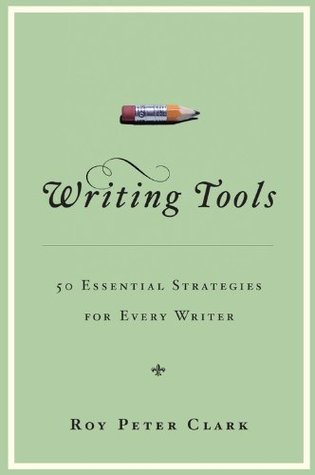
One of America's most influential writing teachers offers a toolbox from which writers of all kinds can draw practical inspiration."Writing is a craft you can learn," says Roy Peter Clark. "You need tools, not rules." His book distills decades of experience into 50 tools that will help any writer become more fluent and effective. WRITING TOOLS covers everything from the most basic ("Tool 5: Watch those adverbs") to the more complex ("Tool 34: Turn your notebook into a camera") and provides more than 200 examples from literature and journalism to illustrate the concepts. For students, aspiring novelists, and writers of memos, e-mails, PowerPoint presentations, and love letters, here are 50 indispensable, memorable, and usable tools. "Pull out a favorite novel or short story, and read it with the guidance of Clark's ideas. . . . Readers will find new worlds in familiar places. And writers will be inspired to pick up their pens." -Boston Globe"For all the aspiring writers out there-whether you're writing a novel or a technical report-a respected scholar pulls back the curtain on the art." -Atlanta Journal-Constitution"This is a useful tool for writers at all levels of experience, and it's entertainingly written, with plenty of helpful examples." -Booklist

Begun in 1959 by a twenty-two-year-old Hunter S. Thompson, The Rum Diary is a tangled love story of jealousy, treachery, and violent alcoholic lust in the Caribbean boomtown that was San Juan, Puerto Rico, in the late 1950s. The narrator, freelance journalist Paul Kemp, irresistibly drawn to a sexy, mysterious woman, is soon thrust into a world where corruption and get-rich-quick schemes rule and anything (including murder) is permissible.

Winner of the Pulitzer PrizeOne of the Best Books of the Year: The New York Times From the editor of The New Yorker : a riveting account of the collapse of the Soviet Union, which has become the standard book on the subject. Lenin’s Tomb combines the global vision of the best historical scholarship with the immediacy of eyewitness journalism. Remnick takes us through the tumultuous 75-year period of Communist rule leading up to the collapse and gives us the voices of those who lived through it, from democratic activists to Party members, from anti-Semites to Holocaust survivors, from Gorbachev to Yeltsin to Sakharov. An extraordinary history of an empire undone, Lenin’s Tomb stands as essential reading for our times.

If the Kennedys are America's royal family, then John F. Kennedy was the nation's crown prince. Magnetic, handsome, and charismatic, his perfectly coifed image overshadowed the successes and failures of his presidency, and his assassination cemented his near-mythological status in American culture and politics. Struck down in his prime, he represented the best and the brightest of America's future, and when he died, part of the nation's promise and innocence went with him. That, at least, is the public version of the story.The private version, according to Pulitzer Prize-winning journalist Seymour M. Hersh, is quite different. His meticulous investigation of Kennedy has revealed a wealth of indiscretions and malfeasance, ranging from frequent liaisons with prostitutes and mistresses to the attempted assassination of Fidel Castro to involvement in organized crime. Though scandals in the White House are nothing new, Hersh maintains that Kennedy's activities went beyond minor abuses of power and personal indulgences: they threatened the security of the nation--particularly in the realm of foreign policy--and the integrity of the office. Hersh believes it was only a matter of time before Kennedy's dealings were exposed, and only his popularity and charm, compounded by his premature death, spared such an investigation for so long. Exposure was further stalled by Bobby Kennedy's involvement in nefarious dealings, enabling him to bury any investigation of his brother and--by extension--himself.Based on interviews with former Kennedy administration officials, former Secret Service agents, and hundreds of Kennedy's personal friends and associates, The Dark Side of Camelot rewrites the history of John F. Kennedy and his presidency.

Interviews with painter, Francis Bacon.

Michael Kelly, who traveled through every country touched by the Gulf War, moved about as a free-lance journalist for the Boston Globe and the New Republic. He traveled through much of the Middle East during and after the Gulf War, watching the bombs fall on Baghdad and waiting for Scuds in Tel Aviv, inspecting the gold bathroom fixtures installed by the U.S. Army Corps of Engineers in the empire's temporary palace in Kuwait City and dining with Kurdish chieftains in remote mountain camps in northern Iran.When ground war in Iraq began, Michael Kelly rented a four-wheel-drive Nissan Safari, borrowed some camouflage pants and gas-proof rubber gloves, and set off across the desert, where he was mistaken for an advance party of the American Army and surrendered to by a batch of bewildered Iraqi soldiers. In Kuwait after the liberation, he listened to horrific tales of torture and rape, and walked among the grotesque remains of the bombed-out retreating Iraqi army on the roads home. Later, when Kelly went to Kurdistan, he hiked into forbidden Iraqi territory and then traveled with various guerrilla bands at war with Saddam Hussein. He got out of Iraq by swimming across a river into Turkey in the company of smugglers. Kelly's story is witty, moving, and dramatically compelling, at once superb reporting and the very best travel writing. By avoiding the human story of the Gulf War, he has given us an indispensable piece of our history."Restrained yet explosive dispatches from the front . . . Kelly demonstrates a keen eye for the telling detail, a well-developed sense of irony . . . courage and enterprise."--National Magazine

The 50th anniversary edition of “the best account yet published of what it feels like to be out there in the middle of the American political process” ( The New York Times Book Review ) featuring a new foreword from Johnny Knoxville.A half-century after its original publication, Hunter S. Thompson’s Fear and Loathing on the Campaign Trail ’72 remains a cornerstone of American political journalism and one of the bestselling campaign books of all time. Thompson’s searing account of the battle for the 1972 presidency—from the Democratic primaries to the eventual showdown between George McGovern and Richard Nixon—is infused with the characteristic wit, intensity, and emotional engagement that made Thompson “the flamboyant apostle and avatar of gonzo journalism” ( The New York Times ). Hilarious, terrifying, insightful, and compulsively readable, Fear and Loathing on the Campaign Trail ’72 is an epic political adventure that captures the feel of the American democratic process better than any other book ever written—and that is just as relevant to the many ills and issues roiling the nation today. As Johnny Knoxville writes in his foreword to this 50th anniversary “Hunter predicted it all.”

Europe was in the throes of World War II, and when America joined the fighting, Ernie Pyle went along. Long before television beamed daily images of combat into our living rooms, Pyle’s on-the-spot reporting gave the American public a firsthand view of what war was like for the boys on the front. Pyle followed the soldiers into the trenches, battlefields, field hospitals, and beleaguered cities of Europe. What he witnessed he described with a clarity, sympathy, and grit that gave the public back home an immediate sense of the foot soldier’s experience. There were really two wars, John Steinbeck wrote in Time one of maps and logistics, campaigns, ballistics, divisions, and regiments and the other a "war of the homesick, weary, funny, violent, common men who wash their socks in their helmets, complain about the food, whistle at Arab girls, or any girls for that matter, and bring themselves through as dirty a business as the world has ever seen and do it with humor and dignity and courage—and that is Ernie Pyle’s war." This collection of Pyle’s columns detailing the fighting in Europe in 1943–44 brings that war—and the living, and dying, moments of history—home to us once again.

"Sylvia Frumkin," a highly intelligent young girl, became a schizophrenic in her late teens and spent most of the next seventeen years in and out of mental institutions. Susan Sheehan, a talented reporter, followed "Sylvia" for almost a year talking with and observing her, listening to her monologues, sitting in on consultations with doctors - even for a period sleeping in the bed next to her in a psychiatric hospital.

"A definitive portrait of the madness of big-time moviemaking" ( Newsweek ), now the basis for the new season of TCM's hit podcast, "The Plot Thickens"When Brian De Palma agreed to allow Julie Salamon unlimited access to the film production of Tom Wolfe's best-selling book The Bonfire of the Vanities , both director and journalist must have felt like they were on to something big. How could it lose? But instead Salamon got a front-row seat at the Hollywood disaster of the decade. She shadowed the film from its early stages through the last of the eviscerating reviews, and met everyone from the actors to the technicians to the studio executives. They'd all signed on for a blockbuster, but there was a sense of impending doom from the start--heart-of-gold characters replaced Wolfe's satiric creations; affable Tom Hanks was cast as the patrician heel; Melanie Griffith appeared mid-shoot with new, bigger breasts. With a keen eye and ear, Salamon shows us how the best of intentions turned into a legendary Hollywood debacle.The Devil's Candy joins John Gregory Dunne's The Studio, Steven Bach's Final Cut, and William Goldman's Adventures in the Screen Trade as a classic for anyone interested in the workings of Hollywood. With a new afterword profiling De Palma ten years after the movie's devastating flop (and this book's best-selling publication), Julie Salamon has created a riveting insider's portrait of an industry where art, talent, ego, and money combine and clash on a monumental scale.

Featuring the column Orwell wrote for the Socialist weekly Tribune (where he was the literary editor), As I Please also includes Orwell's spirited defense of English cooking, notes on the perfect cup of tea, and accounts of the difficulties with - and ultimate success of - Animal Farm.--From the 2000 edition.

The first Westerner to meet Mao Tse-tung and the Chinese Communist leaders in 1936, Edgar Snow came away with the first authorized account of Mao’s life, as well as a history of the famous Long March and the men and women who were responsible for the Chinese revolution. Out of that experience came Red Star Over China, a classic work that remains one of the most important books ever written about the birth of the Communist movement in China. This edition includes extensive notes on military and political developments in China, further interviews with Mao Tse-tung, a chronology covering 125 years of Chinese revolution, and nearly a hundred detailed biographies of the men and women who were instrumental in making China what it is today.

Drawing on his tours in South Africa as a correspondent for the "New York Times," the author details the absurdities, rationalizations, inequities, and cruelties of apartheid, showing what it means to suffer and survive under the restrictions of racial separation

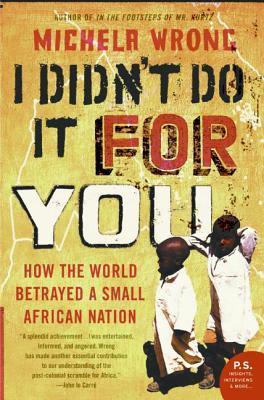
Scarred by decades of conflict and occupation, the craggy African nation of Eritrea has weathered the world's longest-running guerrilla war. The dogged determination that secured victory against Ethiopia, its giant neighbor, is woven into the national psyche, the product of cynical foreign interventions. Fascist Italy wanted Eritrea as the springboard for a new, racially pure Roman empire; Britain sold off its industry for scrap; the United States needed a base for its state-of-the-art spy station; and the Soviet Union used it as a pawn in a proxy war. In I Didn't Do It for You , Michela Wrong reveals the breathtaking abuses this tiny nation has suffered and, with a sharp eye for detail and a taste for the incongruous, tells the story of colonialism itself and how international power politics can play havoc with a country's destiny.

Madrid. 22 cm. 557 p. Encuadernación en tapa blanda de editorial ilustrada. Graham, Katharine 1917-2001. Traducción de María Luisa Rodríguez Tapia y José Manuel Calvo Roy. Título Personal history .. Este libro es de segunda mano y tiene o puede tener marcas y señales de su anterior propietario. 9788416001569

Now available from Grove Press, P. J. O'Rourke's classic, best-selling guided tour of the world's most desolate, dangerous, and desperate places. "Tired of making bad jokes" and believing that "the world outside seemed a much worse joke than anything I could conjure," P. J. O'Rourke traversed the globe on a fun-finding mission, investigating the way of life in the most desperate places on the planet, including Warsaw, Managua, and Belfast. The result is Holidays in Hell--a full-tilt, no-holds-barred romp through politics, culture, and ideology. P.J.'s adventures include storming student protesters' barricades with riot police in South Korea, interviewing Communist insurrectionists in the Philippines, and going undercover dressed in Arab garb in the Gaza Strip. He also takes a look at America's homegrown horrors as he braves the media frenzy surrounding the Reagan-Gorbachev summit in Washington D.C., uncovers the mortifying banality behind the white-bread kitsch of Jerry Falwell's Heritage USA, and survives the stultifying boredom of Harvard's 350th anniversary celebration. Packed with P.J.'s classic riffs on everything from Polish nightlife under communism to Third World driving tips, Holidays in Hell is one of the best-loved books by one of today's most celebrated humorists.

Jason Burke has produced the definitive account of Islamic militancy - revolutionising our understanding of Al-Qaeda, retelling its history from scratch and critically exploding the myths that form the very foundations of the 'War on Terror'. Fully updated with new material on Iraq and Afghanistan.

Studs Terkel records the voices of America. Men and women from every walk of life talk to him, telling him of their likes and dislikes, fears, problems, and happinesses on the job. Once again, Terkel has created a rich and unique document that is as simple as conversation, but as subtle and heartfelt as the meaning of our lives.... In the first trade paperback edition of his national bestseller, Pulitzer Prize-winning author Studs Terkel presents "the real American experience" (Chicago Daily News) -- "a magnificent book . . .. A work of art. To read it is to hear America talking." (Boston Globe)

In this classic work, now updated, the author of Culture and Imperialism reveals the hidden agendas and distortions of fact that underlie even the most "objective" coverage of the Islamic world.From the Iranian hostage crisis through the Gulf War and the bombing of the World Trade Center, the American news media have portrayed "Islam" as a monolithic entity, synonymous with terrorism and religious hysteria. At the same time, Islamic countries use "Islam" to justify unrepresentative and often repressive regimes. Combining political commentary with literary criticism, Covering Islam continues Edward Said's lifelong investigation of the ways in which language not only describes but also defines political reality.

Return once again to the enduring account of life in the Mojo lane, to the Permian Panthers of Odessa -- the winningest high school football team in Texas history. Odessa is not known to be a town big on dreams, but the Panthers help keep the hopes and dreams of this small, dusty town going. Socially and racially divided, its fragile economy follows the treacherous boom-bust path of the oil business.In bad times, the unemployment rate barrels out of control; in good times, its murder rate skyrockets. But every Friday night from September to December, when the Permian High School Panthers play football, this West Texas town becomes a place where dreams can come true. With frankness and compassion, Bissinger chronicles one of the Panthers' dramatic seasons and shows how single-minded devotion to the team shapes the community and inspires-and sometimes shatters-the teenagers who wear the Panthers' uniforms. Includes Reader's Group Guide inside. Now a major motion picture starring Billy Bob Thorton.

A Powerful Assessment of How the U.S. Mass Media Fail to Provide the Kind of Information That We Need to Understand the WorldIn this pathbreaking work, Edward S. Herman and Noam Chomsky show that, contrary to the usual image of the news media as cantankerous, obstinate, and ubiquitous in their search for truth and defense of justice, in their actual practice they defend the economic, social, and political agendas of the privileged groups that dominate domestic society, the state, and the global order.Based on a series of case studies—including the media’s dichotomous treatment of “worthy” versus “unworthy” victims, “legitimizing” and “meaningless” Third World elections, and devastating critiques of media coverage of the U.S. wars against Indochina—Herman and Chomsky draw on decades of criticism and research to propose a Propaganda Model to explain the media’s behavior and performance. Their new introduction updates the Propaganda Model and the earlier case studies, and it discusses several other applications. These include the manner in which the media covered the passage of the North American Free Trade Agreement and subsequent Mexican financial meltdown of 1994-1995, the media’s handling of the protests against the World Trade Organization, World Bank, and International Monetary Fund in 1999 and 2000, and the media’s treatment of the chemical industry and its regulation. What emerges from this work is a powerful assessment of how propagandistic the U.S. mass media are, how they systematically fail to live up to their self-image as providers of the kind of information that people need to make sense of the world, and how we can understand their function in a radically new way.

"I did not, I wish to state, become a journalist because there was no other 'profession' that would have me. I became a journalist because I did not want to rely on newspapers for information." Love, Poverty and War: Journeys and Essays showcases America's leading polemicist's rejection of consensus and cliché whether he's reporting from abroad in Indonesia, Kurdistan, Iraq, North Korea, or Cuba, or when his pen is targeted mercilessly at the likes of William Clinton, Mother Theresa ("a fanatic, a fundamentalist and a fraud"), the Dalai Lama, Noam Chomsky, Mel Gibson and Michael Bloomberg. Hitchens began the nineties as a "darling of the left" but has become more of an "unaffiliated radical" whose targets include those on the "left," who he accuses of "fudging" the issue of military intervention in the Balkans, Afghanistan and Iraq. Yet, as Hitchens shows in his reportage, cultural and literary criticism, and opinion essays from the last decade, he has not jumped ship and joined the right but is faithful to the internationalist, contrarian and democratic ideals that have always informed his work.

In 1957, Herbert L.Matthews of the New York Times , then considered one of the premiere foreign correspondents of his time, tracked down Fidel Castro in Cuba's Sierra Maestra mountains and returned with what was considered the scoop of the century. His heroic portrayal of Castro, who was then believed dead, had a powerful effect on American perceptions of Cuba, both in and out of the government, and profoundly influenced the fall of the Batista regime. When Castro emerged as a Soviet-backed dictator, Matthews became a scapegoat; his paper turned on him, his career foundered, and he was accused of betraying his country. In this fascinating book, New York Times reporter DePalma investigates the Matthews case to reveal how it contains the story not just of one newspaperman but of an age, not just how Castro came to power but how America determines who its enemies are. He re-creates the atmosphere of revolutionary Cuba and Cold War America, and clarifies the facts of Castro's ascension and political evolution from the many myths that have sprung up around them. Through a dramatic, ironic, in ways tragic story, The Man Who Invented Fidel offers provocative insights into Cuban politics, the Cuban-American relationship, and the many difficult balancing acts of responsible journalism.

With the detention of Augusto Pinochet, and intense international pressure for the arrest of Slobodan Milosovic, the possibility of international law acting against tyrants around the world is emerging as a reality. In this incendiary book, Hitchens takes the floor as prosecuting counsel and mounts a devastating indictment of a man whose ambitions and ruthlessness have directly resulted in both individual murders and widespread, indiscriminate slaughter. He investigates and reveals Kissingers' involvement in: the deliberate mass killings of civilian populations in Indochina; the deliberate collusion in mass murder and assassination in Bangladesh; the personal suborning and planning of a murder, of a senior constitutional officer in a democratic nation that the USA was not war with - Chile; the incitement and enabling of a mass genocide in East Timor; and the personal involvement in the kidnap and murder of a journalist living in Washinton DC.

On August 6, 1945, Hiroshima was destroyed by the first atom bomb ever dropped on a city. This book, John Hersey's journalistic masterpiece, tells what happened on that day. Told through the memories of survivors, this timeless, powerful and compassionate document has become a classic "that stirs the conscience of humanity" (The New York Times).

Written by the winner of the Nobel Prize in LiteratureOn April 26, 1986, the worst nuclear reactor accident in history occurred in Chernobyl and contaminated as much as three quarters of Europe. Voices from Chernobyl is the first book to present personal accounts of the tragedy. Journalist Svetlana Alexievich interviewed hundreds of people affected by the meltdown—from innocent citizens to firefighters to those called in to clean up the disaster—and their stories reveal the fear, anger, and uncertainty with which they still live. Composed of interviews in monologue form, Voices from Chernobyl is a crucially important work of immense force, unforgettable in its emotional power and honesty.

A collection of his essays (several of them previously unpublished) on corporate propaganda were published "Taking the Risk Out of Democracy: Propaganda in the U.S. and Australia" (University of New South Wales Press). This book was reissued in 1997 by University of Illinois Press under the title "Taking the Risk Out of Democracy: Corporate Propaganda versus Freedom and Liberty".

When the New York Times finally apologized for its coverage of Iraq’s weapons of mass destruction in 2004, it was too late. The newspaper had already supported the invasion. The Bush administration was not only violating international law, it was lying to the public, using major media like the Times to spread its message.In this meticulously researched study—the first part of a two-volume work—Howard Friel and Richard Falk demonstrate how the newspaper of record in the United States has consistently, over the last 50 years, misreported the facts related to the wars waged by the United States. From Vietnam in the 1960s to Nicaragua in the 1980s and Iraq today, the authors accuse the New York Times of serial distortions. They claim that such coverage now threatens not only world legal order but constitutional democracy in the United States.Falk and Friel show, for example, that, despite numerous US threats to invade Iraq, and despite the fact that an invasion of one country by another implicates fundamental aspects of the UN Charter and international law, the New York Times editorial page never mentioned the words “UN Charter” or “international law” in any of its 70 editorials on Iraq from September 11, 2001, to March 20, 2003. The authors also show that the editorial page supported the Bush administration’s WMD claims against Iraq, and that its magazine, op-ed and news pages performed just as poorly.In conclusion the authors suggest an alternative editorial policy of “strict scrutiny” that incorporates the UN Charter and the US Constitution in the Times coverage of the use and threat of force by the United States and the protection of civil and human rights at home and abroad.

The global turmoil of the last few years has severely tested every analyst and commentator. Few have written with such insight as Christopher Hitchens about the large events — or with such discernment and wit about the small tell-tale signs of a disordered culture.For the Sake of Argument ranges from the political squalor of Washington, as a beleaguered Bush administration seeks desperately to stave off disaster and Clinton prepares for power; to the twilight of Stalinism in Prague; from the Jewish quarter of Damascus in the aftermath of the Gulf War to the embattled barrios of Central America and the imperishable resistance of Sarajevo, as a difficult peace is negotiated with ruthless foes. Hitchens’s unsparing account of Western realpolitik in the end shows it to rest on delusion as well as deception.The reader will find in these pages outstanding essays on political assassination in America as well as a scathing review of the evisceration of politics by pollsters and spin-doctors. Hitchens’s knowledge of the tortuous history of revolutions in the twentieth century helps him explain both the New York intelligentsia's flirtation with Trotskyism and the frailty of Communist power structures in Eastern Europe.Hitchens's pointed reassessments of Graham Greene, P. G. Wodehouse and C. L. R. James, or his riotous celebration of drinking and smoking, display an engaging enthusiasm and an acerbic wit. Equally entertaining is his unsparing rogues’ gallery, which gives us unforgettable portraits of the lugubrious “Dr.” Kissinger, the comprehensively reactionary “Mother” Teresa, the preposterous Paul Johnson and the predictable P. J. O’Rourke.

A riveting collection of literary journalism by the bestselling author of The Perfect Storm, capped off brilliantly by a new Afterword and a timely essay about war-torn Afghanistan -- a superb eyewitness report about the Taliban's defeat in Kabul -- new to book form. Sebastian Junger has made a specialty of bringing to life the drama of nature and human nature. Few writers have been to so many disparate and desperate corners of the globe. Fewer still have met the standard of great journalism more consistently. None has provided more starkly memorable evocations of extreme events. From the murderous mechanics of the diamond trade in Sierra Leone, to an inferno forest fire burning out of control in the steep canyons of Idaho, to the forensics of genocide in Kosovo, this collection of Junger's reporting will take readers to places they need to know about but wouldn't dream of going on their own. In his company we travel to these places, pass through frightening checkpoints, actual and psychological, and come face-to-face with the truth.

George Plimpton’s classic Paper Lion set the bar for participatory sports journalism, as the author shares his experiences in training camp, trying out as a quarterback for the NFL’s Detroit Lions, and eventually, playing in a preseason exhibition game. Displaying his characteristic wit and insight, Paper Lion was met with both critical and commercial success, and inspired a movie starring Alan Alda. The late

An inside analysis of modern cultural and political upheavals in China by a fluent Beijing correspondent describes the power struggles currently taking place between the party elite and supporters of democracy, the outcome of which the author predicts will significantly affect China's rise to a world super-power. 125,000 first printing.

An American Iliad in the guise of contemporary political reportage, What It Takes penetrates the mystery at the heart of all presidential campaigns: How do presumably ordinary people acquire that mixture of ambition, stamina, and pure shamelessness that makes a true candidate? As he recounts the frenzied course of the 1988 presidential race -- and scours the psyches of contenders from George Bush and Robert Dole to Michael Dukakis and Gary Hart -- Pulitzer Prize-winning journalist Richard Ben Cramer comes up with the answers, in a book that is vast, exhaustively researched, exhilarating, and sometimes appalling in its revelations.

With the collapse of the Soviet Union, the fall of the Berlin Wall, and the deregulation of international financial markets in 1989, governments and entrepreneurs alike became intoxicated by forecasts of limitless expansion into newly open markets. No one would foresee that the greatest success story to arise from these events would be the globalization of organized crime. "McMafia" is a fearless, encompassing, wholly authoritative investigation of the now proven ability of organized crime worldwide to find and service markets driven by a seemingly insatiable demand for illegal wares. Whether discussing the Russian mafia, Colombian drug cartels, or Chinese labor smugglers, Misha Glenny makes clear how organized crime feeds off the poverty of the developing world, how it exploits new technology in the forms of cybercrime and identity theft, and how both global crime and terror are fueled by an identical source: the triumphant material affluence of the West. To trace the disparate strands of this hydra-like story, Glenny talked to police, victims, politicians, and members of the global underworld in eastern Europe, North and South America, Africa, the Middle East, China, Japan, and India. The story of organized crime's phenomenal, often shocking growth is truly the central political story of our time. "McMafia "will change the way we look at the world.

Widely regarded as the standard book on the British Media, this authoritative introduction to the history, sociology, theory and politics of media and communications studies has been substantially revised and updated to bring it up to date with developments in the media industry. Its three new chapters describe the battle for the soul of the internet, the impact of the internet on society and the rise of new media in Britain. In addition it examines the recuperation of the BBC, how international and European regulation is changing the British media and why Britain has the least trusted press in Europe.

Since the end of the Cold War so-called experts have been predicting the eclipse of America's "special relationship" with Britain. But as events have shown, especially in the wake of 9/11, the political and cultural ties between America and Britain have grown stronger. Blood, Class and Empire examines the dynamics of this relationship, its many cultural manifestations -- the James Bond series, PBS "brit Kitsch," Rudyard Kipling -- and explains why it still persists. Contrarian, essayist and polemicist Christopher Hitchens notes that while the relationship is usually presented as a matter of tradition, manners, and common culture, sanctified by wartime alliance, the special ingredient is empire; transmitted from an ancien regime that has tried to preserve and renew itself thereby. England has attempted to play Greece to the American Rome, but ironically having encouraged the United States to become an equal partner in the business of empire, Britain found itself supplanted.

1961 Common Reader Classic Bestseller. A narrative history of American politics in action. 2004 Barnes and Noble edition.

In The Breakthrough, veteran journalist Gwen Ifill surveys the American political landscape, shedding new light on the impact of Barack Obama’s stunning presidential victory and introducing the emerging young African American politicians forging a bold new path to political power. Ifill argues that the Black political structure formed during the Civil Rights movement is giving way to a generation of men and women who are the direct beneficiaries of the struggles of the 1960s. She offers incisive, detailed profiles of such prominent leaders as Newark Mayor Cory Booker, Massachusetts Governor Deval Patrick, and U.S. Congressman Artur Davis of Alabama (all interviewed for this book), and also covers numerous up-and-coming figures from across the nation. Drawing on exclusive interviews with power brokers such as President Obama, former Secretary of State Colin Powell, Vernon Jordan, the Reverend Jesse Jackson, his son Congressman Jesse Jackson Jr., and many others, as well as her own razor-sharp observations and analysis of such issues as generational conflict, the race/ gender clash, and the "black enough" conundrum, Ifill shows why this is a pivotal moment in American history. The Breakthrough is a remarkable look at contemporary politics and an essential foundation for understanding the future of American democracy in the age of Obama.

“Americans need not be hostile toward China's rise, but they should be wary about its eventual effects. The United States is the only nation with the scale and power to try to set the terms of its interaction with China rather than just succumb. So starting now, Americans need to consider the economic, environmental, political, and social goals they care about defending as Chinese influence grows.” —from “China Makes, the World Takes”Since December 2006, The Atlantic Magazine's James Fallows has been writing some of the most discerning accounts of the economic and political transformation occurring in China. The ten essays collected here cover a wide-range of topics: from visionary tycoons and TV-battling entrepreneurs, to environmental pollution and how China subsidizes our economy. Fallows expertly and lucidly explains the economic, political, social, and cultural forces at work turning China into a world superpower at breakneck speed. This eye-opening and cautionary account is essential reading for all concerned not only with China's but America's future role in the world.

Nothing to Envy follows the lives of six North Koreans over fifteen years—a chaotic period that saw the death of Kim Il-sung, the unchallenged rise to power of his son Kim Jong-il, and the devastation of a far-ranging famine that killed one-fifth of the population.Taking us into a landscape most of us have never before seen, award-winning journalist Barbara Demick brings to life what it means to be living under the most repressive totalitarian regime today—an Orwellian world that is by choice not connected to the Internet, in which radio and television dials are welded to the one government station, and where displays of affection are punished; a police state where informants are rewarded and where an offhand remark can send a person to the gulag for life.Demick takes us deep inside the country, beyond the reach of government censors. Through meticulous and sensitive reporting, we see her six subjects—average North Korean citizens—fall in love, raise families, nurture ambitions, and struggle for survival. One by one, we experience the moments when they realize that their government has betrayed them. Nothing to Envy is a groundbreaking addition to the literature of totalitarianism and an eye-opening look at a closed world that is of increasing global importance.

“Whatever it takes”That was Federal Reserve Chairman Ben Bernanke’s vow as the worst financial panic in more than fifty years gripped the world and he struggled to avoid the once unthinkable: a repeat of the Great Depression. Brilliant but temperamentally cautious, Bernanke researched and wrote about the causes of the Depression during his career as an academic. Then when thrust into a role as one of the most important people in the world, he was compelled to boldness by circumstances he never anticipated.The president of the United States can respond instantly to a missile attack with America’s military might, but he cannot respond to a financial crisis with real money unless Congress acts. The Fed chairman can. Bernanke did. Under his leadership the Fed spearheaded the biggest government intervention in more than half a century and effectively became the fourth branch of government, with no direct accountability to the nation’s voters.Believing that the economic catastrophe of the 1930s was largely the fault of a sluggish and wrongheaded Federal Reserve, Bernanke was determined not to repeat that epic mistake. In this penetrating look inside the most powerful economic institution in the world, David Wessel illuminates its opaque and undemocratic inner workings, while revealing how the Bernanke Fed led the desperate effort to prevent the world’s financial engine from grinding to a halt.In piecing together the fullest, most authoritative, and alarming picture yet of this decisive moment in our nation’s history, In Fed We Trust answers the most critical questions. Among them:• What did Bernanke and his team at the Fed know–and what took them by surprise? Which of their actions stretched–or even ripped through–the Fed’s legal authority? Which chilling numbers and indicators made them feel they had no choice?• What were they thinking at pivotal moments during the race to sell Bear Stearns, the unsuccessful quest to save Lehman Brothers, and the virtual nationalization of AIG, Fannie Mae, and Freddie Mac? What were they saying to one another when, as Bernanke put it to Wessel: “We came very close to Depression 2.0”?• How well did Bernanke, former treasury secretary Hank Paulson, and then New York Fed president Tim Geithner perform under intense pressure? • How did the crisis prompt a reappraisal of the once-impregnable reputation of Alan Greenspan? In Fed We Trust is a breathtaking and singularly perceptive look at a historic episode in American and global economic history.

An esteemed journalist travels to Turkey to investigate the legacy of the Armenian genocide and the quest for Kurdish statehood.In 2001, Christopher de Bellaigue, then the Economist's correspondent in Istanbul, wrote a piece about the history of Turkey for The New York Review of Books . In it, he briefly discussed the killing and deportation of half a million Armenians in 1915. These massacres, he suggested, were best understood as part of the struggles that attended the end of the Ottoman empire.After the story was published, the magazine was besieged with letters. This wasn't war, the correspondents said; it was genocide. And the death toll was not half a million but three times that many. De Bellaigue was mortified. How had he gotten it so wrong? He went back to Turkey, but found that the national archives had sealed all documents pertaining to those times. Undeterred and armed with a stack of contraband histories, he set out to the conflicted southeastern Turkish city of Varto to discover what had really happened.There, de Bellaigue found a place in which the centuries-old conflict among Turks, Armenians, and Kurds was still very much alive. His government escort began their association by marching with him arm in arm through the town's shopping district to show his presence; the local police chief, sent by the central office in Ankara to keep an eye on the Kurds, was sure he was a spy. He found houses built from the ruins of old Armenian churches, young boys playing soccer with old skulls, and a cast of villagers who all seemed unwilling to talk.What emerges is both an intellectual detective story and a reckoning with memory and identity that brings to life the basic conflicts of the Middle East: between statehood and religion, imperial borders and ethnic identity. Combining a deeply informed view of the area's history with the testimonials of the townspeople who slowly come to trust him, de Bellaigue unravels the enigma of the Turkish twentieth century, a time that contains the death of an empire, the founding of a nation, and the near extinction of a people. Rebel Land exposes the historical and emotional fault lines that lie behind many of today's headlines: about Turkey and its faltering bid for membership into the EU, about the Kurds and their bid for nationhood, and the Armenians' campaign for genocide recognition.

It's not an exaggeration to say that middle-class Americans are an endangered species and that the American Dream of a secure, comfortable standard of living has become as outdated as an Edsel with an eight-track player—that the United States of America is in danger of becoming a third world nation. The evidence is all around us: Our industrial base is vanishing, taking with it the kind of jobs that have formed the backbone of our economy for more than a century; our education system is in shambles, making it harder for tomorrow's workforce to acquire the information and training it needs to land good twenty-first-century jobs; our infrastructure—our roads, our bridges, our sewage and water, our transportation and electrical systems—is crumbling; our economic system has been reduced to recurring episodes of Corporations Gone Wild; our political system is broken, in thrall to a small financial elite using the power of the checkbook to control both parties. And America's middle class, the driver of so much of our economic success and political stability, is rapidly disappearing, forcing us to confront the fear that we are slipping as a nation—that our children and grandchildren will enjoy fewer opportunities and face a lower standard of living than we did. It's the dark flipside of the American Dream—an American Nightmare of our own making. Arianna Huffington, who, with the must-read Huffington Post, has her finger on the pulse of America, unflinchingly tracks the gradual demise of America as an industrial, political, and economic leader. In the vein of her fiery bestseller Pigs at the Trough, Third World America points fingers, names names, and details who is killing the American Dream. Finally, calling on the can-do attitude that is part of America's DNA, Huffington shows precisely what we need to do to stop our freefall and keep America from turning into a third world nation.Third World America is a must-listen for anyone disturbed by our country's steady descent from twentieth-century superpower to backwater banana republic.

"Astringent and absorbing. . . . Iphigenia in Forest Hills casts, from its first pages, a genuine spell — the kind of spell to which Ms. Malcolm’s admirers (and I am one) have become addicted." —Dwight Garner, New York Times "She couldn't have done it and she must have done it." This is the enigma at the heart of Janet Malcolm's riveting new book about a murder trial in the insular Bukharan-Jewish community of Forest Hills, Queens, that captured national attention. The defendant, Mazoltuv Borukhova, a beautiful young physician, is accused of hiring an assassin to kill her estranged husband, Daniel Malakov, a respected orthodontist, in the presence of their four-year old child. The prosecutor calls it an act of just weeks before Malakov was killed in cold blood, he was given custody of Michelle for inexplicable reasons. It is the "Dickensian ordeal" of Borukhova's innocent child that drives Malcolm's inquiry. With the intellectual and emotional precision for which she is known, Malcolm looks at the trial—"a contest between competing narratives"—from every conceivable angle. It is the chasm between our ideals of justice and the human factors that influence every trial—from divergent lawyering abilities to the nature of jury selection, the malleability of evidence, and the disposition of the judge—that is perhaps most striking. Surely one of the most keenly observed trial books ever written, Iphigenia in Forest Hills is ultimately about character and "reasonable doubt." As Jeffrey Rosen writes, it is "as suspenseful and exciting as a detective story, with all the moral and intellectual interest of a great novel." " Iphigenia in Forest Hills is another dazzling triumph from Janet Malcolm. Here, as always, Malcolm’s work inspires the best kind of disquiet in a reader—the obligation to think." —Jeffrey Toobin, author of The Inside the Secret World of the Supreme Court "A remarkable achievement that ranks with Malcolm's greatest books. Her scrupulous reporting and interviews with protagonists on both sides of the trial make her own narrative as suspenseful and exciting as a detective story, with all the moral and intellectual interest of a great novel." —Jeffrey Rosen, author of The Supreme The Personalities and Rivalries that Defined America

The first new book of essays by Christopher Hitchens since 2004, Arguably offers an indispensable key to understanding the passionate and skeptical spirit of one of our most dazzling writers, widely admired for the clarity of his style, a result of his disciplined and candid thinking. Topics range from ruminations on why Charles Dickens was among the best of writers and the worst of men to the haunting science fiction of J.G. Ballard; from the enduring legacies of Thomas Jefferson and George Orwell to the persistent agonies of anti-Semitism and jihad. Hitchens even looks at the recent financial crisis and argues for the enduring relevance of Karl Marx. The book forms a bridge between the two parallel enterprises of culture and politics. It reveals how politics justifies itself by culture, and how the latter prompts the former. In this fashion, Arguably burnishes Christopher Hitchens' credentials as (to quote Christopher Buckley) our "greatest living essayist in the English language."

The world has watched stunned at the bloodshed in Mexico. Thirty thousand murdered since 2006; police chiefs shot within hours of taking office; mass graves comparable to those of civil wars; car bombs shattering storefronts; headless corpses heaped in town squares. And it is all because a few Americans are getting high. Or is it? The United States throws Black Hawk helicopters and drug agents at the problem. But in secret, Washington is confused and divided about what to do. Who are these mysterious figures tearing Mexico apart? they wonder. What is El Narco? El Narco draws the first definitive portrait of Mexico's drug cartels and how they have radically transformed in the last decade. El Narco is not a gang; it is a movement and an industry drawing in hundreds of thousands from bullet-ridden barrios to marijuana-growing mountains. And it has created paramilitary death squads with tens of thousands of men-at-arms from Guatemala to the Texas border. Journalist Ioan Grillo has spent a decade in Mexico reporting on the drug wars from the front lines. This piercing book joins testimonies from inside the cartels with firsthand dispatches and unsparing analysis. The devastation may be south of the Rio Grande, El Narco shows, but America is knee-deep in this conflict.

When Maziar Bahari left London in June 2009 to cover Iran’s presidential election, he assured his pregnant fiancée, Paola, that he’d be back in just a few days, a week at most. Little did he know, as he kissed her good-bye, that he would spend the next three months in Iran’s most notorious prison, enduring brutal interrogation sessions at the hands of a man he knew only by his smell: Rosewater.For the Bahari family, wars, coups, and revolutions are not distant concepts but intimate realities they have suffered for generations: Maziar’s father was imprisoned by the shah in the 1950s, and his sister by Ayatollah Khomeini in the 1980s. Alone in his cell at Evin Prison, fearing the worst, Maziar draws strength from his memories of the courage of his father and sister in the face of torture, and hears their voices speaking to him across the years. He dreams of being with Paola in London, and imagines all that she and his rambunctious, resilient eighty-four-year-old mother must be doing to campaign for his release. During the worst of his encounters with Rosewater, he silently repeats the names of his loved ones, calling on their strength and love to protect him and praying he will be released in time for the birth of his first child. A riveting, heart-wrenching memoir, Rosewater offers insight into the past seventy years of regime change in Iran, as well as the future of a country where the democratic impulses of the youth continually clash with a government that becomes more totalitarian with each passing day. An intimate and fascinating account of contemporary Iran, it is also the moving and wonderfully written story of one family’s extraordinary courage in the face of repression.Now a major motion picture directed by Jon Stewart - Previously published as Then They Came for Me.

With All the Trouble in the World, P. J. O'Rourke once again landed on best-seller lists around the country, confirming his reputation as the pre-eminent political humorist of our time. Attacking fashionable worries - all those terrible problems that are constantly on our minds and in the news, but about which most of us have no real clue - P. J. crisscrosses the globe in search of solutions to today's most vexing issues, including overpopulation, famine, plague, and multiculturalism, and in the process produces a hilarious and informative book which ensures that the concept of political correctness will never be the same again. "One of the funniest, most insightful, dead-on-the-money books of the year." - Los Angeles Times; "All the Trouble in the World is O'Rourke's best work since Parliament of Whores." - The Houston Post; "The dispatches are unfailingly funny....Mr. O'Rourke gets to the heart of the matter with a steady stream of wisecracks....Economists, political scientists and sociologists are inclined to approach the ills of society with regression analysis. P. J. O'Rourke just points and laughs. Not surprisingly, it is Mr. O'Rourke who gets it right." - The Washington Times; "Bottom Buy the book." - The Wall Street Journal.

The Man Without a Face is the chilling account of how a low- level, small-minded KGB operative ascended to the Russian presidency and, in an astonishingly short time, destroyed years of progress and made his country once more a threat to her own people and to the world.Handpicked as a successor by the "family" surrounding an ailing and increasingly unpopular Boris Yeltsin, Vladimir Putin seemed like a perfect choice for the oligarchy to shape according to its own designs. Suddenly the boy who had stood in the shadows, dreaming of ruling the world, was a public figure, and his popularity soared. Russia and an infatuated West were determined to see the progressive leader of their dreams, even as he seized control of media, sent political rivals and critics into exile or to the grave, and smashed the country's fragile electoral system, concentrating power in the hands of his cronies.As a journalist living in Moscow, Masha Gessen experienced this history firsthand, and for The Man Without a Face she has drawn on information and sources no other writer has tapped. Her account of how a "faceless" man maneuvered his way into absolute-and absolutely corrupt-power has the makings of a classic of narrative nonfiction.

Good Prose is an inspiring book about writing—about the creation of good prose—and the record of a warm and productive literary friendship. The story begins in 1973, in the offices of The Atlantic Monthly, in Boston, where a young freelance writer named Tracy Kidder came looking for an assignment. Richard Todd was the editor who encouraged him. From that article grew a lifelong association. Before long, Kidder’s The Soul of a New Machine, the first book the two worked on together, had won the Pulitzer Prize. It was a heady moment, but for Kidder and Todd it was only the beginning of an education in the art of nonfiction.Good Prose explores three major nonfiction forms: narratives, essays, and memoirs. Kidder and Todd draw candidly, sometimes comically, on their own experience—their mistakes as well as accomplishments—to demonstrate the pragmatic ways in which creative problems get solved. They also turn to the works of a wide range of writers, novelists as well as nonfiction writers, for models and instruction. They talk about narrative strategies (and about how to find a story, sometimes in surprising places), about the ethical challenges of nonfiction, and about the realities of making a living as a writer. They offer some tart and emphatic opinions on the current state of language. And they take a clear stand against playing loose with the facts. Their advice is always grounded in the practical world of writing and publishing.Good Prose—like Strunk and White’s The Elements of Style—is a succinct, authoritative, and entertaining arbiter of standards in contemporary writing, offering guidance for the professional writer and the beginner alike. This wise and useful book is the perfect companion for anyone who loves to read good books and longs to write one.

A National Book Critics Circle Finalist for CriticismA deeply Malcolmian volume on painters, photographers, writers, and critics.Janet Malcolm's In the Freud Archives and The Journalist and the Murderer, as well as her books about Sylvia Plath and Gertrude Stein, are canonical in the realm of nonfiction—as is the title essay of this collection, with its forty-one "false starts," or serial attempts to capture the essence of the painter David Salle, which becomes a dazzling portrait of an artist. Malcolm is "among the most intellectually provocative of authors," writes David Lehman in The Boston Globe, "able to turn epiphanies of perception into explosions of insight."Here, in Forty-one False Starts, Malcolm brings together essays published over the course of several decades (largely in The New Yorker and The New York Review of Books) that reflect her preoccupation with artists and their work. Her subjects are painters, photographers, writers, and critics. She explores Bloomsbury's obsessive desire to create things visual and literary; the "passionate collaborations" behind Edward Weston's nudes; and the character of the German art photographer Thomas Struth, who is "haunted by the Nazi past," yet whose photographs have "a lightness of spirit." In "The Woman Who Hated Women," Malcolm delves beneath the "onyx surface" of Edith Wharton's fiction, while in "Advanced Placement" she relishes the black comedy of the Gossip Girl novels of Cecily von Zeigesar. In "Salinger's Cigarettes," Malcolm writes that "the pettiness, vulgarity, banality, and vanity that few of us are free of, and thus can tolerate in others, are like ragweed for Salinger's helplessly uncontaminated heroes and heroines." "Over and over," as Ian Frazier writes in his introduction, "she has demonstrated that nonfiction—a book of reporting, an article in a magazine, something we see every day—can rise to the highest level of literature."One of Publishers Weekly's Best Nonfiction Books of 2013

A clear-sighted revelation, a deep penetration into the world of Scientology by the Pulitzer Prize-winning author of the now-classic study of al-Qaeda's 9/11 attack, the Looming Tower. Based on more than two hundred personal interviews with both current and former Scientologists--both famous and less well known--and years of archival research, Lawrence Wright uses his extraordinary investigative skills to uncover for us the inner workings of the Church of Scientology: its origins in the imagination of science-fiction writer L. Ron Hubbard; its struggles to find acceptance as a legitimate (and legally acknowledged) religion; its vast, secret campaign to infiltrate the U.S. government; and its dramatic efforts to grow and prevail after the death of Hubbard.At the book's center, two men whom Wright brings vividly to life, showing how they have made Scientology what it is today: The darkly brilliant L. Ron Hubbard--whose restless, expansive mind invented a new religion tailor-made to prosper in the spiritually troubled post-World War II era. And his successor, David Miscavige--tough and driven, with the unenviable task of preserving the church in the face of ongoing scandals and continual legal assaults.We learn about Scientology's esoteric cosmology; about the auditing process that determines an inductee's state of being; about the Bridge to Total Freedom, through which members gain eternal life. We see the ways in which the church pursues celebrities, such as Tom Cruise and John Travolta, and how young idealists who joined the Sea Org, the church's clergy, whose members often enter as children, signing up with a billion-year contract and working with little pay in poor conditions. We meet men and women "disconnected" from friends and family by the church's policy of shunning critical voices. And we discover, through many firsthand stories, the violence that has long permeated the inner sanctum of the church.In Going Clear, Wright examines what fundamentally makes a religion a religion, and whether Scientology is, in fact, deserving of the constitutional protections achieved in its victory over the IRS. Employing all his exceptional journalistic skills of observations, understanding, and synthesis, and his ability to shape a story into a compelling narrative, Lawrence Wright has given us an evenhanded yet keenly incisive book that goes far beyond an immediate exposé and uncovers the very essence of what makes Scientology the institution it is.

El desmoronamiento narra los últimos treinta años de la historia de Estados Unidos, la época del declive americano, a través de las vidas de varias personas: Dean Price, hijo de granjeros, que se convierte en un abanderado de la nueva economía en el Sur rural; Tammy Thomas, una obrera del cinturón industrial del país que intenta sobrevivir al colapso de su ciudad; Jeff Connaughton, miembro del círculo político de Washington, que oscila entre el idealismo y el atractivo del dinero, y Peter Thiel, un multimillonario de Silicon Valley que cuestiona la importancia de internet y construye una visión radical del futuro. Packer entrelaza estas historias personales con perfiles biográficos de las grandes figuras públicas de la época, desde Newt Gingrich hasta el rapero Jay-Z, y con collages de titulares de periódico, lemas publicitarios y letras de canciones, que captan la evolución de los acontecimientos y sus corrientes subterráneas.El desmoronamiento es el retrato de una superpotencia a punto de derrumbarse, con élites que ya no son élite, instituciones que ya no funcionan y la gente corriente abandonada a su suerte. La historia narrativa y caleidoscópica de la nueva América es la obra más ambiciosa publicada en mucho tiempo.

The news is everywhere. We can’t stop constantly checking it on our computer screens, but what is this doing to our minds? We are never really taught how to make sense of the torrent of news we face every day, writes Alain de Botton (author of the best-selling The Architecture of Happiness), but this has a huge impact on our sense of what matters and of how we should lead our lives. In his dazzling new book, de Botton takes twenty-five archetypal news stories—including an airplane crash, a murder, a celebrity interview and a political scandal—and submits them to unusually intense analysis with a view to helping us navigate our news-soaked age. He raises such questions as Why are disaster stories often so uplifting? What makes the love lives of celebrities so interesting? Why do we enjoy watching politicians being brought down? Why are upheavals in far-off lands often so boring? In The News: A User’s Manual, de Botton has written the ultimate guide for our frenzied era, certain

A book about the world of drugs in Las Vegas. "The best book on the dope decade." -- "NY Times Book Review"

In this darkly funny work of literary nonfiction, a bookish young woman insinuates herself into the lives of two cage fighters—one a young prodigy, the other an aging journeyman. Acclaimed essayist Kerry Howley follows these men for three years through the bloody world of mixed martial arts as they starve themselves, break bones, fail their families and form new ones in the quest to rise from remote Midwestern fairgrounds to packed Vegas arenas. With penetrating intelligence and wry humor, Howley exposes the profundities and absurdities of this American subculture.Kerry Howley 's work has appeared in The Paris Review , New York Times Magazine , the Atlantic , Wall Street Journal , Slate , and frequently in Bookforum . She holds an MFA from the University of Iowa's Nonfiction Writing Program.

"An utterly satisfying examination of the business of popular music." ―Nathaniel Rich, The Atlantic There’s a reason today’s ubiquitous pop hits are so hard to ignore―they’re designed that way. The Song Machine goes behind the scenes to offer an insider’s look at the global hit factories manufacturing the songs that have everyone hooked. Full of vivid, unexpected characters―alongside industry heavy-hitters like Katy Perry, Rihanna, Max Martin, and Ester Dean―this fascinating journey into the strange world of pop music reveals how a new approach to crafting smash hits is transforming marketing, technology, and even listeners’ brains. You’ll never think about music the same way again. A Wall Street Journal Best Business Book

How far do you really go to “do unto others”? New Yorker journalist Larissa MacFarquhar reveals the individuals who devote themselves fully to bettering the lives of strangers, even when it comes at great personal cost There are those of us who help and those who live to help. Larissa MacFarquhar digs deep into the psychological roots and existential dilemmas motivating those rare individuals practicing lives of extreme ethical commitment. The donor who offers up her kidney to a complete stranger; the activist who abandons possessions to devote himself to the cause; the foster parent who adopts dozens of children: such do-gooders inspire us but also force us to question deep-seated notions about what it means to be human. How could these do-gooders value strangers as much as their own loved ones? What does it really take to live a life of extreme virtue? Might it mean making choices as heartbreaking as the one in the old philosophy problem: abandoning a single family member to drown so that two strangers might live? Strangers Drowning combines real-life stories of unimaginable selflessness along with deep meditations on the shocking implications of these ethical acts.

From bestselling author Jon Krakauer, a stark, powerful, meticulously reported narrative about a series of sexual assaults at the University of Montana — stories that illuminate the human drama behind the national plague of campus rape. Missoula, Montana, is a typical college town, with a highly regarded state university, bucolic surroundings, a lively social scene, and an excellent football team — the Grizzlies — with a rabid fan base. The Department of Justice investigated 350 sexual assaults reported to the Missoula police between January 2008 and May 2012. Few of these assaults were properly handled by either the university or local authorities. In this, Missoula is also typical. A DOJ report released in December of 2014 estimates 110,000 women between the ages of eighteen and twenty-four are raped each year. Krakauer’s devastating narrative of what happened in Missoula makes clear why rape is so prevalent on American campuses, and why rape victims are so reluctant to report assault. Acquaintance rape is a crime like no other. Unlike burglary or embezzlement or any other felony, the victim often comes under more suspicion than the alleged perpetrator. This is especially true if the victim is sexually active; if she had been drinking prior to the assault — and if the man she accuses plays on a popular sports team. The vanishingly small but highly publicized incidents of false accusations are often used to dismiss her claims in the press. If the case goes to trial, the woman’s entire personal life becomes fair game for defense attorneys. This brutal reality goes a long way towards explaining why acquaintance rape is the most underreported crime in America. In addition to physical trauma, its victims often suffer devastating psychological damage that leads to feelings of shame, emotional paralysis and stigmatization. PTSD rates for rape victims are estimated to be 50%, higher than soldiers returning from war. In Missoula, Krakauer chronicles the searing experiences of several women in Missoula — the nights when they were raped; their fear and self-doubt in the aftermath; the way they were treated by the police, prosecutors, defense attorneys; the public vilification and private anguish; their bravery in pushing forward and what it cost them. Some of them went to the police. Some declined to go to the police, or to press charges, but sought redress from the university, which has its own, non-criminal judicial process when a student is accused of rape. In two cases the police agreed to press charges and the district attorney agreed to prosecute. One case led to a conviction; one to an acquittal. Those women courageous enough to press charges or to speak publicly about their experiences were attacked in the media, on Grizzly football fan sites, and/or to their faces. The university expelled three of the accused rapists, but one was reinstated by state officials in a secret proceeding. One district attorney testified for an alleged rapist at his university hearing. She later left the prosecutor’s office and successfully defended the Grizzlies’ star quarterback in his rape trial. The horror of being raped, in each woman’s case, was magnified by the mechanics of the justice system and the reaction of the community. Krakauer’s dispassionate, carefully documented account of what these women endured cuts through the abstract ideological debate about campus rape. College-age women are not raped because they are promiscuous, or drunk, or send mixed signals, or feel guilty about casual sex, or seek attention. They are the victims of a terrible crime and deserving of compassion from society and fairness from a justice system that is clearly broken.

To the charity workers, Dadaab refugee camp is a humanitarian crisis; to the Kenyan government, it is a 'nursery for terrorists'; to the western media, it is a dangerous no-go area; but to its half a million residents, it is their last resort.In City of Thorns, Rawlence interweaves the stories of nine individuals to show what life is like in the camp and to sketch the wider political forces that keep the refugees trapped there. Rawlence combines intimate storytelling with broad socio-political investigative journalism.

Once you accept that the impossible is really possible, what happens in Russia makes perfect sense “A few pages into David Satter’s truly terrifying book, one realizes that his title is smack-on modern Russia is a frightening member of the world community to an extent of which most persons are blissfully unaware.”—Joseph C. Goulden, Washington Times “Satter . . . persuasively supplies evidence for his claim that a series of residential bombings in 1999 were part of an elaborate conspiracy orchestrated by Vladimir Putin, who used them as a smoke screen to invade Chechnya and catapult himself to the presidency.”— Publisher’s Weekly In December 2013, David Satter became the first American journalist to be expelled from Russia since the Cold War. The Moscow Times said it was not surprising he was expelled, “it was surprising it took so long.” Satter is known in Russia for having written that the apartment bombings in 1999, which were blamed on Chechens and brought Putin to power, were actually carried out by the Russian FSB security police. In this book, Satter tells the story of the apartment bombings and how Boris Yeltsin presided over the criminalization of Russia, why Vladimir Putin was chosen as his successor, and how Putin has suppressed all opposition while retaining the appearance of a pluralist state. As the threat represented by Russia becomes increasingly clear, Satter’s description of where Russia is and how it got there will be of vital interest to anyone concerned about the dangers facing the world today.

A spirited and revealing memoir by the most celebrated editor of his timeAfter editing The Columbia Review, staging plays at Cambridge, and a stint in the greeting-card department of Macy's, Robert Gottlieb stumbled into a job at Simon and Schuster. By the time he left to run Alfred A. Knopf a dozen years later, he was the editor in chief, having discovered and edited Catch-22 and The American Way of Death, among other bestsellers. At Knopf, Gottlieb edited an astonishing list of authors, including Toni Morrison, John Cheever, Doris Lessing, John le Carré, Michael Crichton, Lauren Bacall, Katharine Graham, Robert Caro, Nora Ephron, and Bill Clinton--not to mention Bruno Bettelheim and Miss Piggy. In Avid Reader, Gottlieb writes with wit and candor about succeeding William Shawn as the editor of The New Yorker, and the challenges and satisfactions of running America's preeminent magazine. Sixty years after joining Simon and Schuster, Gottlieb is still at it--editing, anthologizing, and, to his surprise, writing.But this account of a life founded upon reading is about more than the arc of a singular career--one that also includes a lifelong involvement with the world of dance. It's about transcendent friendships and collaborations, "elective affinities" and family, psychoanalysis and Bakelite purses, the alchemical relationship between writer and editor, the glory days of publishing, and--always--the sheer exhilaration of work.

The only book to tell the full story of how and why Britain voted to leave the EU.Based on unrivalled access to all the key politicians and their advisors – including Boris Johnson, Michael Gove, George Osborne, Nigel Farage and Dominic Cummings, the mastermind of Vote Leave – Tim Shipman has written a political history that reads like a thriller, and offers a gripping, day-by-day account of what really happened behind-the-scenes in Downing Street, both Leave campaigns, the Labour Party, Ukip and Britain Stronger in Europe.Shipman gives his readers a ringside seat on how decisions were made, mistakes justified and betrayals perpetrated. Filled with stories, anecdotes and juicy leaks the book does not seek to address the rights and wrongs of Brexit but to explore how and why David Cameron chose to take the biggest political gamble of his life and explain why he lost.This is a story of calculation, attempted coups, individuals torn between principles and loyalty. All the events are here – from David Cameron’s pledge to hold a referendum, through to the campaign itself, his resignation as prime minister, the betrayals and rivalries that occurred during the race to find his successor to the arrival of Theresa May in Downing Street as Britain’s second female prime minister.All Out War is a book about leaders and their closest aides, the decisions they make and how and why they make them, as well as how they feel when they turn out to be wrong. It is about men who make decisions that are intellectually consistent and – by their own measure – morally sound that are simultaneously disastrous for themselves and those closest to them. It is about how doing what you know has worked before doesn’t always work again. Most of all it is about asking the question: how far are you prepared to go to win?

Reddit hails itself as “the front page of the Internet.” It’s the fourth most-visited website in the United States–yet, millions of Americans have no idea what it is. We Are the Nerds is a riveting look deep inside this captivating, maddening enterprise–whose army of highly engaged (obsessed?) users have been credited with everything from solving cold case crimes to seeding alt-right fury and helping to land Donald Trump in the White House. We Are the Nerds is a gripping start-up business narrative: the story of how Reddit’s founders, Steve Huffman and Alexis Ohanian, rose up from their suburban childhoods to become millionaires and create an icon of the digital age–before seeing the site engulfed in controversies and nearly losing control of it for good. Based on Christine Lagorio’s exclusive access to founders Alexis Ohanian and Steve Huffman, We Are the Nerds is also a compelling exploration of the way we all communicate today–and how we got here. Reddit and its users have become a mirror of the Internet: it has dingy corners, shiny memes, malicious trolls, and a sometimes heart-melting ability to connect people across cultures, oceans, and ideological divides.

7 hours, 46 minutes Called "disgraceful," "third-rate," and "not nice" by Donald Trump, NBC News correspondent Katy Tur reported on—and took flak from—the most captivating and volatile presidential candidate in American history.Tur lived out of a suitcase for a year and a half, following Trump around the country, powered by packets of peanut butter and kept clean with dry shampoo. She visited forty states with the candidate, made more than 3,800 live television reports, listened to endless loops of Elton John’s "Tiny Dancer"—a Trump rally playlist staple.From day 1 to day 500, Tur documented Trump’s inconsistencies, fact-checked his falsities, and called him out on his lies. In return, Trump repeatedly singled out Tur. He tried to charm her, intimidate her, and shame her. At one point, he got a crowd so riled up against her, Secret Service agents had to walk her to her car.None of it worked. Facts are stubborn. So was Tur. She was part of the first women-led politics team in the history of network news. The Boys on the Bus became the Girls on the Plane--but the circus remained. Through all the long nights, wild scoops, naked chauvinism, dodgy staffers, and fevered debates, no one had a better view than Tur.Unbelievable is her darkly comic, fascinatingly bizarre, and often scary story of how America sent a former reality show host to the White House. It’s also the story of what it was like for Tur to be there as it happened, inside a no-rules world where reporters were spat on, demeaned, and discredited. Tur was a foreign correspondent who came home to her most foreign story of all.FROM THE RECIPIENT OF THE 2017 Walter Cronkite Award for Excellence in Journalism

The revealing inside story of the partnership between Steve Bannon and Donald Trump—the key to understanding the rise of the alt-right, the fall of Hillary Clinton, and the hidden forces that drove the greatest upset in American political history. Based on dozens of interviews conducted over six years, Green spins the master narrative of the 2016 campaign from its origins in the far fringes of right-wing politics and reality television to its culmination inside Trump’s penthouse on election night. The shocking elevation of Bannon to head Trump’s flagging presidential campaign on August 17, 2016, hit political Washington like a thunderclap and seemed to signal the meltdown of the Republican Party. Bannon was a bomb-throwing pugilist who’d never run a campaign and was despised by Democrats and Republicans alike. Yet Bannon’s hard-edged ethno-nationalism and his elaborate, years-long plot to destroy Hillary Clinton paved the way for Trump’s unlikely victory. Trump became the avatar of a dark but powerful worldview that dominated the airwaves and spoke to voters whom others couldn’t see. Trump’s campaign was the final phase of a populist insurgency that had been building up in America for years, and Bannon, its inscrutable mastermind, believed it was the culmination of a hard-right global uprising that would change the world. Any study of Trump’s rise to the presidency is unavoidably a study of Bannon. Devil’s Bargain is a tour-de-force telling of the remarkable confluence of circumstances that decided the election, many of them orchestrated by Bannon and his allies, who really did plot a vast, right-wing conspiracy to stop Clinton. To understand Trump's extraordinary rise and Clinton’s fall, you have to weave Trump’s story together with Bannon’s, or else it doesn't make sense.