
David Remnick
David Remnick (born October 29, 1958) is an American journalist, writer, and magazine editor. He won a Pulitzer Prize in 1994 for his book Lenin s Tomb The Last Days of the Soviet Empire. Remnick has been editor of The New Yorker magazine since 1998. He was named Editor of the Year by Advertising Age in 2000. Before joining The New Yorker, Remnick was a reporter and the Moscow correspondent for The Washington Post. He has also served on the New York Public Library’s board of trustees. In 2010 he published his sixth book, The Bridge The Life and Rise of Barack Obama. Remnick was born in Hackensack, New Jersey, the son of a dentist, Edward C. Remnick, and an art teacher, Barbara (Seigel). He was raised in Hillsdale, New Jersey, in a secular Jewish home with, he has said, “a lot of books around.” He is also childhood friends with comedian Bill Maher. He graduated from Princeton University in 1981 with an A.B. in comparative literature; there, he met writer John McPhee and helped found The Nassau Weekly. Remnick has implied that after college he wanted to write novels, but due to his parents’ illnesses, he needed a paying job—there was no trust fund to rely on. Remnick wanted to be a writer, so he chose a career in journalism, taking a job at The Washington Post. He is married to reporter Esther Fein of The New York Times and has three children, Alex, Noah, and Natasha. He enjoys jazz music and classic cinema and is fluent in Russian. He began his reporting career at The Washington Post in 1982 shortly after his graduation from Princeton. His first assignment was to cover the United States Football League. After six years, in 1988, he became the newspaper’s Moscow correspondent, which provided him with the material for Lenin's Tomb. He also received the George Polk Award for excellence in journalism. Remnick became a staff writer at The New Yorker in September, 1992, after ten years at The Washington Post. Remnick’s 1997 New Yorker article “Kid Dynamite Blows Up,” about boxer Mike Tyson, was nominated for a National Magazine Award. In 1998 he became editor, succeeding Tina Brown. Remnick promoted Hendrik Hertzberg, a former Jimmy Carter speechwriter and former editor of The New Republic, to write the lead pieces in “Talk of the Town,” the magazine’s opening section. In 2005 Remnick earned $1 million for his work as the magazine’s editor. In 2003 he wrote an editorial supporting the Iraq war in the days when it started. In 2004, for the first time in its 80-year history, The New Yorker endorsed a presidential candidate, John Kerry. In May 2009, Remnick was featured in a long-form Twitter account of Dan Baum’s career as a New Yorker staff writer. The tweets, written over the course of a week, described the difficult relationship between Baum and Remnick, his editor. Remnick’s biography of President Barack Obama, The Bridge, was released on April 6, 2010. It features hundreds of interviews with friends, colleagues, and other witnesses to Obama’s rise to the presidency of the United States. The book has been widely reviewed in journals. In 2010 Remnick lent his support to the campaign urging the release of Sakineh Mohammadi Ashtiani, the Iranian woman sentenced to death by stoning after being convicted of ordering the murder of her husband by her lover and adultery. In 2013 Remnick ’81 was the guest speaker at Princeton University Class Day. Remnick provided guest commentary and contributed to NBC coverage of the 2014 Winter Olympics in Sochi Russia including the opening ceremony and commentary for NBC News.
21 Books Written

King of the World: Muhammad Ali and the Rise of an American Hero
by David Remnick
Rating: 4.2 ⭐
• 2 recommendations ❤️
On the night in 1964 that Muhammad Ali (then known as Cassius Clay) stepped into the ring with Sonny Liston, he was widely regarded as an irritating freak who danced and talked way too much. Six rounds later Ali was not only the new world heavyweight boxing champion: He was "a new kind of black man" who would shortly transform America's racial politics, its popular culture, and its notions of heroism. No one has captured Ali--and the era that he exhilarated and sometimes infuriated--with greater vibrancy, drama, and astuteness than David Remnick, the Pulitzer Prize-winning author of Lenin's Tomb (and editor of The New Yorker). In charting Ali's rise from the gyms of Louisville, Kentucky, to his epochal fights against Liston and Floyd Patterson, Remnick creates a canvas of unparalleled richness. He gives us empathetic portraits of wisecracking sportswriters and bone-breaking mobsters; of the baleful Liston and the haunted Patterson; of an audacious Norman Mailer and an enigmatic Malcolm X. Most of all, King of the World does justice to the speed, grace, courage, humor, and ebullience of one of the greatest athletes and irresistibly dynamic personalities of our time.

Winner of the Pulitzer PrizeOne of the Best Books of the Year: The New York Times From the editor of The New Yorker : a riveting account of the collapse of the Soviet Union, which has become the standard book on the subject. Lenin’s Tomb combines the global vision of the best historical scholarship with the immediacy of eyewitness journalism. Remnick takes us through the tumultuous 75-year period of Communist rule leading up to the collapse and gives us the voices of those who lived through it, from democratic activists to Party members, from anti-Semites to Holocaust survivors, from Gorbachev to Yeltsin to Sakharov. An extraordinary history of an empire undone, Lenin’s Tomb stands as essential reading for our times.

When Harold Ross founded The New Yorker in 1925, he described it as a “comic weekly.” And although it has become much more than that, it has remained true in its irreverent heart to the founder’s description, publishing the most illustrious literary humorists of the modern era—among them Robert Benchley, Dorothy Parker, Groucho Marx, George S. Kaufman, James Thurber, S. J. Perelman, Peter De Vries, Mike Nichols, Marshall Brickman, Woody Allen, Donald Barthelme, Calvin Trillin, George W. S. Trow, Veronica Geng, Garrison Keillor, Ian Frazier, Roy Blount, Jr., Bruce McCall, Steve Martin, Christopher Buckley, and Paul Rudnick.This anthology gathers together, for the first time, the funniest work of more than seventy New Yorker contributors. Parodists take on not only writers like Hemingway and Kerouac, but TV documentaries, Italian cinema, and etiquette books. (Enough have been published, Robert Benchley maintains, “that there should be no danger of toppling over forward into the wrong soup, or getting into arguments as to which elbow belongs on which arm.”) Other pieces offer perspectives on the heights of fame, the depths of social embarrassment, and the ups and downs of love and sex. Such well-loved sketches as Thurber’s “The Secret Life of Walter Mitty” take their place alongside light-hearted essays on food, tennis, and taxis, and flights of fancy that follow an apparently simple premise to the point of no return, and sometimes well beyond. Here you will find large insights (Woody Allen: “Why does man kill? He kills for food. And not only food: frequently there must be a beverage”) and hard-earned wisdom (Ian Frazier on dating your mom: “Here is a grown, experienced, loving woman—one you do not have to go to a party or a singles bar to meet, one you do not have to go to great lengths to know”). And, not least, a great deal of helpful advice, including Steve Martin’s on memory and middle age: “Bored? Here’s a way the over-fifty set can easily kill a good half hour: 1. Place your car keys in your right hand. 2. With your left hand, call a friend and confirm a lunch or dinner date. 3. Hang up the phone. 4. Now look for your car keys.”A rich selection of humorous verse includes caustic gems by Dorothy Parker, the effortless whimsy of Phyllis McGinley, and Ogden Nash’s unforgettable slapstick prosody, as well as forays by luminaries who ought to have known better, like Robert Graves, Elizabeth Bishop, and W. H. Auden.A wonderful gift for others, or a delightful treat for oneself, Fierce Pajamas is a treasury of laughter from a publication described by Auden as “the best comic magazine in existence.”From the Hardcover edition.

No story has been more central to America’s history this century than the rise of Barack Obama, and until now, no journalist or historian has written a book that fully investigates the circumstances and experiences of Obama’s life or explores the ambition behind his rise. Those familiar with Obama’s own best-selling memoir or his campaign speeches know the touchstones and details that he chooses to emphasize, but now—from a writer whose gift for illuminating the historical significance of unfolding events is without peer—we have a portrait, at once masterly and fresh, nuanced and unexpected, of a young man in search of himself, and of a rising politician determined to become the first African-American president.The Bridge offers the most complete account yet of Obama’s tragic father, a brilliant economist who abandoned his family and ended his life as a beaten man; of his mother, Stanley Ann Dunham, who had a child as a teenager and then built her career as an anthropologist living and studying in Indonesia; and of the succession of elite institutions that first exposed Obama to the social tensions and intellectual currents that would force him to imagine and fashion an identity for himself. Through extensive on-the-record interviews with friends and teachers, mentors and disparagers, family members and Obama himself, David Remnick allows us to see how a rootless, unaccomplished, and confused young man created himself first as a community organizer in Chicago, an experience that would not only shape his urge to work in politics but give him a home and a community, and that would propel him to Harvard Law School, where his sense of a greater mission emerged.Deftly setting Obama’s political career against the galvanizing intersection of race and politics in Chicago’s history, Remnick shows us how that city’s complex racial legacy would make Obama’s forays into politics a source of controversy and bare-knuckle his clashes with older black politicians in the Illinois State Senate, his disastrous decision to challenge the former Black Panther Bobby Rush for Congress in 2000, the sex scandals that would decimate his more experienced opponents in the 2004 Senate race, and the story—from both sides—of his confrontation with his former pastor, Jeremiah Wright. By looking at Obama’s political rise through the prism of our racial history, Remnick gives us the conflicting agendas of black the dilemmas of men like Jesse Jackson, John Lewis, and Joseph Lowery, heroes of the civil rights movement, who are forced to reassess old loyalties and understand the priorities of a new generation of African-American leaders.The Bridge revisits the American drama of race, from slavery to civil rights, and makes clear how Obama’s quest is not just his own but is emblematic of a nation where destiny is defined by individuals keen to imagine a future that is different from the reality of their current lives.

NEW YORK TIMES BEST SELLER • The Pulitzer Prize–winning journalist and editor of The New Yorker gathers his writing on some of the essential musicians of our time—intimate portraits of Leonard Cohen, Buddy Guy, Mavis Staples, Paul McCartney, Bruce Springsteen, Patti Smith, and more.The greatest popular songs, whether it’s Aretha Franklin singing “Respect” or Bob Dylan performing “Blind Willie McTell,” have a way of embedding themselves in our memories. You remember a time and a place and a feeling when you hear that song again. In Holding the Note , David Remnick writes about the lives and work of some of the greatest musicians, songwriters, and performers of the past fifty years.He portrays a series of musical lives and their unique encounters with the passing of that essential element of time. From Cohen’s performing debut, when his stage fright was so debilitating he couldn’t get through “Suzanne,” to Franklin’s iconic mink-drop at the Kennedy Center, Holding the Note delivers a view of some of the greatest creative minds of our time written with a lifetime’s passionate attachment to music that has shaped us all.

A New York Time s New & Noteworthy Book One of the Daily Beast’s 5 Essential Books to Read Before the Election A collection of the New Yorker ’s groundbreaking reporting from the front lines of climate change—including writing from Bill McKibben, Elizabeth Kolbert, Ian Frazier, Kathryn Schulz, and more Just one year after climatologist James Hansen first came before a Senate committee and testified that the Earth was now warmer than it had ever been in recorded history, thanks to humankind’s heedless consumption of fossil fuels, New Yorker writer Bill McKibben published a deeply reported and considered piece on climate change and what it could mean for the planet. At the time, the piece was to some speculative to the point of alarmist; read now, McKibben’s work is heroically prescient. Since then, the New Yorker has devoted enormous attention to climate change, describing the causes of the crisis, the political and ecological conditions we now find ourselves in, and the scenarios and solutions we face. The Fragile Earth tells the story of climate change—its past, present, and future—taking readers from Greenland to the Great Plains, and into both laboratories and rain forests. It features some of the best writing on global warming from the last three decades, including Bill McKibben’s seminal essay “The End of Nature,” the first piece to popularize both the science and politics of climate change for a general audience, and the Pulitzer Prize–winning work of Elizabeth Kolbert, as well as Kathryn Schulz, Dexter Filkins, Jonathan Franzen, Ian Frazier, Eric Klinenberg, and others. The result, in its range, depth, and passion, promises to bring light, and sometimes heat, to the great emergency of our age.

David Remnick is a writer with a rare gift for making readers understand the hearts and minds of our public figures. Whether it’s the decline and fall of Mike Tyson, Al Gore’s struggle to move forward after his loss in the 2000 election, or Vladimir Putin dealing with Gorbachev’s legacy, Remnick brings his subjects to life with extraordinary clarity and depth. In Reporting , he gives us his best writing from the past fifteen years, ranging from American politics and culture to post-Soviet Russia to the Middle East conflict; from Tony Blair grappling with Iraq, to Philip Roth making sense of America’s past, to the rise of Hamas in Palestine. Both intimate and deeply informed by history, Reporting is an exciting and panoramic portrait of our times.

Pulitzer Prize-winning author David Remnick chronicles the new Russia that emerged from the ash heap of the Soviet Union. From the siege of Parliament to the farcically tilted elections of 1996, from the rubble of Grozny to the grandiose wealth and naked corruption of today's Moscow, Remnick chronicles a society so racked by change that its citizens must daily ask themselves who they are, where they belong, and what they believe in. Remnick composes this panorama out of dozens of finely realized individual portraits. Here is Mikhail Gorbachev, his head still swimming from his plunge from reverence to ridicule. Here is Vladimir Zhirinovsky, the half-Jewish anti-Semite who conducts politics as loony performance art. And here is Boris Yeltsin, the tottering populist who is not above stealing elections. In Resurrection , they become the players in a drama so vast and moving that it deserves comparison with the best reportage of George Orwell and Michael Herr."This is what happens when a good writer unleashes eye and ear on a story that moves with the speed of light. Resurrection has the feel of describing vast, historical change even as it is happening."--Chicago Tribune
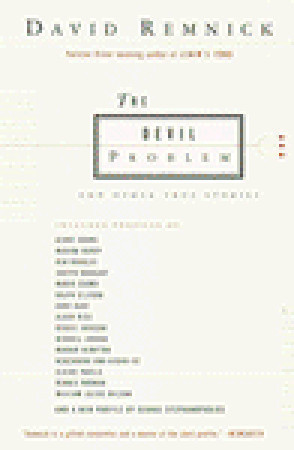
Readers know from his now classic Lenin's Tomb that Remnick is a superb portraitist who can bring his subjects to life and reveal them in such surprising ways as to justify comparison to Dickens, Balzac, or Proust. In this collection, Remnick's gift for character is sharper than ever, whether he writes about Gary Hart stumbling through life after Donna Rice or Mario Cuomo, who now presides over a Saturday morning radio talk show, fielding questions from crackpots, or about Michael Jordan's awesome return to the Chicago Bulls -- or Reggie Jackson's last times at bat.Remnick's portraits of such disparate characters as Alger Hiss and Ralph Ellison, Richard Nixon and Elaine Pagels, Gerry Adams and Marion Barry are unified by this extraordinary ability to create a living character, so that the pieces in this book, taken together, constitute a splendid pageant of the representative characters of our time.

This collection features 9/11-related pieces culled from The New Yorker's rich archive. “After 9/11” has a preface by David Remnick and contains the entirety of the magazine’s Talk of the Town section from the September 24, 2001, issue—writing from Hendrik Hertzberg, John Updike, Jonathan Franzen, Denis Johnson, Roger Angell, Aharon Appelfeld, Rebecca Mead, Susan Sontag, Amitav Ghosh, and Donald Antrim. The e-book also has another seven Talk of the Town pieces, including Calvin Trillin on the plan to restore an image of the World Trade Center to the skyline using projected light, Nicholas Lemann on the reasons for the Bush Administration’s war in Iraq, and George Packer on one of President Bush’s speeches on terrorism and the then-upcoming midterm elections; eleven features, including Adam Gopnik on returning to downtown Manhattan after the attacks, Lawrence Wright on the Al Qaeda terrorist Ayman al-Zawahiri, Seymour Hersh on the U.S. government’s ongoing hunt for members of Al Qaeda and the new policy of assassination promulgated by the Bush Administration, Jane Mayer on the hunt for Osama bin Laden, Steve Coll on the education of the young Osama bin Laden, Raffi Khatchadourian on the American homegrown Al Qaeda terrorist Adam Gadahn, Jennifer Kahn on the complicated death of the 9/11 hero James Zadroga, Jon Lee Anderson on U.S. Army counterinsurgency activities in and around Khost, Afghanistan, and Nicholas Schmidle on the raid on Osama bin Laden’s Abbottabad compound by a team of Navy SEALs; a Critics piece by Malcolm Gladwell, on the paradoxes of intelligence reform; fiction by Don DeLillo; and poems by Adam Zagajewski, Galway Kinnell, and Deborah Garrison.

From America's cultural gatekeeper comes a profile of the man who defines the nation's soul. David Remnick, Pulitzer Prize–winning writer and editor of 'The New Yorker', applies his unique journalistic voice to paint a portrait of rock legend and working-class poet Bruce Springsteen. The result is what 'Rolling Stone' called 'one of the most thorough profiles of Springsteen ever published'.Remnick shadows Springsteen from his recent Wrecking Ball world tour, the whole way back to the beginning, back to Asbury Park, to childhood rock'n'roll fantasies. Details of Springsteen's strained relationship with his father, his battle with mental illness, his marriage, and the joys and anguish of friendships forged and lost with ephemeral E Street Band members, are all delicately woven through a career that spans over four decades as America's working-class hero.We Are Alive not only tells the story of a living legend, but also produces an insight into the heart of America, the drive of self-transformation and renewal. Remnick has created an important text on the history of music.'One of the most thorough profiles of Springsteen ever published.' Rolling Stone

The New Yorker Magazine (April 6, 2020) The Shape of a Pandemic

All items in LetsShopALittle Store are UV sterilized or sanitized before shipping. We care about our customers comfort and peace of mind, we are a growing business that is trying to survive through these hard times. Please help support our business journey, thank you and have a better than great day/evening.

The New Yorker Magazine (September 20, 2010)


We sell Rare, out-of-print, uncommon, & used BOOKS, PRINTS, MAPS, DOCUMENTS, AND EPHEMERA. We do not sell ebooks, print on demand, or other reproduced materials. Each item you see here is individually described and imaged. We welcome further inquiries.


Near Fine, but New; see scans and description. New Condé Nast, 2016. The September 12, 2016 issue of The New Yorker magazine. Ivan Brunetti cover, "At the Movies". Quarto, illustrated staple-bound wraps, 84 pp. Near Fine; nonetheless, new. Light crease at rear cover, and no other salient flaws. See scans. Some feature Pete Wells; Ghost Stories - German War Trauma; Isabelle Huppert; Robert Coover Fiction, "Invasion of the Martians"; National Park Service; New Harpoon (Melting Ice); Trash Treasures. More, of course. See scan of contents page. All the usual cartoons, reviews, postings, poems, departments, etc of course. Ships in a new, sturdy, protective box - not a bag. LPR26

We sell Rare, out-of-print, uncommon, & used BOOKS, PRINTS, MAPS, DOCUMENTS, AND EPHEMERA. We do not sell ebooks, print on demand, or other reproduced materials. Each item you see here is individually described and imaged. We welcome further inquiries.

We sell Rare, out-of-print, uncommon, & used BOOKS, PRINTS, MAPS, DOCUMENTS, AND EPHEMERA. We do not sell ebooks, print on demand, or other reproduced materials. Each item you see here is individually described and imaged. We welcome further inquiries.

We sell Rare, out-of-print, uncommon, & used BOOKS, PRINTS, MAPS, DOCUMENTS, AND EPHEMERA. We do not sell ebooks, print on demand, or other reproduced materials. Each item you see here is individually described and imaged. We welcome further inquiries.