
George Plimpton
George Ames Plimpton was an American journalist, writer, editor, actor, and gamesman. He is widely known for his sports writing and for helping to found The Paris Review. He was the grandson of George A. Plimpton.
19 Books Written

Paper Lion: Confessions of a Last-String Quarterback
by George Plimpton
Rating: 3.8 ⭐
• 2 recommendations ❤️
The book that made a legend -- and captures America's sport in detail that's never been matched, featuring a foreword by Nicholas Dawidoff and never-before-seen content from the Plimpton Archives.George Plimpton was perhaps best known for Paper Lion , the book that set the bar for participatory sports journalism. With his characteristic wit, Plimpton recounts his experiences in talking his way into training camp with the Detroit Lions, practicing with the team, and taking snaps behind center. His breezy style captures the pressures and tensions rookies confront, the hijinks that pervade when sixty high-strung guys live together in close quarters, and a host of football rites and rituals.One of the funniest and most insightful books ever written on football, Paper Lion is a classic look at the gridiron game and a book The Wall Street Journal calls "a continuous feast...The best book ever about football -- or anything!"

Truman Capote: In Which Various Friends, Enemies, Acquaintances, and Detractors Recall His Turbulent Career
by George Plimpton
Rating: 4.1 ⭐
He was the most social of writers, and at the height of his career, he was the very nexus of the glamorous worlds of the arts, politics and society, a position best exemplified by his still legendary Black and White Ball. Truman truly knew everyone, and now the people who knew him best tell his remarkable story to bestselling author and literary lion, George Plimpton.Using the oral-biography style that made his Edie (edited with Jean Stein) a bestseller, George Plimpton has blended the voices of Capote's friends, lovers, and colleagues into a captivating and narrative. Here we see the entire span of Capote's life, from his Southern childhood, to his early days in New York; his first literary success with the publication of Other Voices, Other Rooms; his highly active love life; the groundbreaking excitement of In Cold Blood, the first "nonfiction novel"; his years as a jet-setter; and his final days of flagging inspiration, alcoholism, and isolation. All his famous friends and enemies are C.Z. Guest, Katharine Graham, Lauren Bacall, Gore Vidal, Norman Mailer, Joan Didion, John Huston, William F. Buckley, Jr., and dozens of others.Full of wonderful stories, startlingly intimate and altogether fascinating, this is the most entertaining account of Truman Capote's life yet, as only the incomparable George Plimpton could have done it.

In April 1985, Sports Illustrated published an article that stunned the sports community. George Plimpton's 13-page profile of Sidd Finch, a mysterious pitcher who had been signed by the New York Mets and reportedly threw 168 mph, came complete with photos from spring training, scouting reports, and interviews with Mets players and management. A week later, SI apologized to readers around the world for their role in what is generally regarded as the greatest hoax in the history of sports journalism. The magazine had teamed up with the legendary author and Paris Review bon vivant for an April Fool's Day prank of unprecedented proportions. After the success of the article, Plimpton decided to turn the story into a novel — a rousing baseball fairy tale that is considered one of the most memorable sports novels of the last half-century.

OPEN NET is another inimitable account of an amateur's foibles meeting the world of professional sport.George Plimpton takes to the ice a goalie for the Boston Bruins, after first signing a document holding the team harmless if he should meet with injury or death as their amateur goaltender. He survives a game against the Philadelphia Flyers relaticely unscathed - and brings back this memorable portrait of the rough-and-tumble world of professional hockey.

"Plimpton will interest even the man who can't tell a pitching wedge from a putter.... This is really a book about a kind of madness with rules, and anyone can appreciate the appeal of that." -NewsweekTHE BOGEY MAN remains arguably the funniest book on golf ever written.George Plimpton here joins the pro golf circuit for a month of self-imposed torture in the name of bringing professional sport to the sphere of the average man. Arnold Palmer, Dow Finsterwald, Wlater Hagan, and others populate this intriguing, classic, candid view from the first tee.

A classic of sport, and the first of George Plimpton's remarkable forays into "participatory" journalism, OUT OF MY LEAGUE chronicles with wit, charm, and grace what happens when a self-professed amateur wonders how he would fare on a baseball mound in a major league game.On an ordinary afternoon in the third-base-line seats of Yankee Stadium, Plimpton hits on what seems an inspired idea--to get on the mound and pitch a few innings to the All Stars of the American and National Leagues. What begins as a fun-filled stunt, for the "average man" to pitch in the Big Leagues, comes to a nearly humiliating end. This honest and hilarious tale features Mickey Mantle, Billy Martin, Willie Mays, Ernie Banks, Whitey Ford, Ralph Houk, Richie Ashburn, and other baseball greats. What happens when America's favorite sports dilettante tries his arm against the likes of hall-of-fame baseball players recalls every young boy's forgotten dream of heroics on a baseball diamond; and for that fact alone, OUT OF MY LEAGUE remains one of George Plimpton's most beloved works.
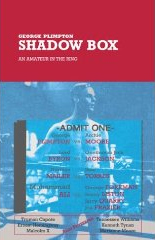
SHADOW BOX is one of George Plimpton's most engaging looks at professional sport through the eyes of an amateur. Stepping into the ring against the light-heavyweight champion Archie Moore, Plimpton pauses to wonder why he ever became a participatory journalist. Bloodied but unbowed, he holds his own in the bout - and brings back this timeless look at boxing and its devotees, among them Muhammed Ali, Joe Frazier, Ernest Hemingway, and Norman Mailer.

Featuring such classic pieces as "The Curious Case of Sidd Finch" and "The Plimpton Small-Ball Theory of Sports Writing"--the smaller the ball the better the writing--this is a rich mix of profiles, essays, and articles from a most talented and unique American literary personality. Photographs.

The Writer's Chapbook A Compendium of Fact, Opinion, Wit, and Advice from the Twentieth Century's Preeminent Writers
by George Plimpton
Rating: 4.2 ⭐
The first issue of The Paris Review in 1953 included an interview on the craft of writing with E. M. Forster, perhaps the greatest living author of the time. Subsequent issues carried interviews with, among others, François Mauriac, Graham Greene, Irwin Shaw, William Styron, Ralph Ellison, and William Faulkner; in the intervening years, many of the world's most significant writers (Ezra Pound, Robert Frost, Ernest Hemingway, John Updike, and John Dos Passos) sat down with The Paris Review. Many of the interviews have been collected in a series of volumes entitled Writers at Work. From these interviews, The Paris Review's editor, George Plimpton, has selected the best and most illuminating insights that the writers have provided and arranged them by subject rather than by author. The book is divided into four "The A Profile" (including the sections "On Reading," "On Work Habits," On the Audi-ence," etc.); Part II is "Technical Matters" ("On Style," "On Plot," etc.); Part III is "Different Forms" ("On Biography," "On Journalism"); and Part IV is "The Writer's Life," covering topics like conferences, courses, and teaching, along with a section in which writers provided portraits of other writers. The Writer's Chapbook is a fund of observations by writers on writing. These range from marvel-ous one-liners (Eugene O'Neill on "I love every bone in their heads"; T. S. Eliot on "I suppose some editors are failed writers--but so are most writers") to expositions on plot, character, and the technical process of putting pen to paper and doing it for a living. "I don't even have a plot," says Norman Mailer; Paul Bowles describes writing in bed; Toni Morrison talks about inventing characters; and Edward Albee and Tom Wolfe explain where they discovered the titles for Who's Afraid of Virginia Woolf and The Bonfire of the Vanities. This book is a treasure. But What is true for the Writers at Work series holds for The Writer's Chapbook even more--a reader who picks it up, intending just to dip into it, might not emerge for days.

The Man in the Flying Lawn Chair: And Other Excursions and Observations
by George Plimpton
Rating: 3.8 ⭐
George Plimpton needed no encouragement. If there was a sport to play, a party to throw, a celebrity to amaze, a fireworks display to ignite, Plimpton was front and center hurling the pitch, popping the corks, lighting the fuse. And then, of course, writing about it with incomparable zest and style. His books made him a legend. The Paris Review , the magazine he founded and edited, won him a throne in literary heaven. Somehow, in the midst of his self-generated cyclones, Plimpton managed to toss off dazzling essays, profiles, and New Yorker “Talk of the Town” pieces. This delightful volume collects the very best of Plimpton’s inspired brief “excursions.”Whether he was escorting Hunter Thompson to the Fear and Loathing movie premiere in New York or tracking down the California man who launched himself into the upper atmosphere with nothing but a lawn chair and a bunch of weather balloons, Plimpton had a rare knack for finding stories where no one else thought to look. Who but Plimpton would turn up in Las Vegas, notebook in hand, for the annual porn movie awards gala?Among the many gems collected here are accounts of helping Jackie Kennedy plan an unforgettable children’s birthday party, the time he improvised his way through amateur night at Harlem’s famed Apollo Theater, and how he managed to get himself kicked out of Exeter just weeks before graduation.The grand master of what he called “participatory journalism,” George Plimpton followed his bent and his genius down the most unbelievable rabbit holes–but he always came up smiling. This exemplary, utterly captivating volume is a fitting tribute to one of the great literary lives of our time.From the Hardcover edition.

Plimpton joins former teammates Alex Karras and John Gordy to reminisce on their careers.

Hank Aaron: One for the Record The Inside Story of Baseball's Greatest Home Run
by George Plimpton
Rating: 3.8 ⭐
The inside story of Hank Aaron's chase for the home run record, repackaged and with a foreword by Bob Costas and new material from the Plimpton Archives. In One For the Record, George Plimpton recounts Hank Aaron's thrilling race to become the new home run champion. Amidst media frenzy and death threats, Aaron sought to beat Babe Ruth's record. In 1974, he finally succeeded. A fascinating examination of the psychology of baseball players, One For the Record gives an absorbing account of the men on the mound who had to face Aaron. But the book's true genius lies in the portrait of Aaron himself, and his discussions on his philosophy on hitting and the game of baseball.

This book was written from a tape recording that Plimpton did with former Packers and Colts center Bill Curry during a car ride up from Georgia to Green Bay, Wisconsin, where Curry was trying to make a comeback with the Packers. Curry played in the NFL from 1965 to 1974. It's a nice look back at that era of the NFL as Curry talks about coaches he played under and superstar players that he went up against. A good read for those interested in that period of NFL history. A rambling, dreamy book that captures the best parts of Paper Lion without Geo. Plimpton's more intrusive aesthete-in-the-woods asides. "Curious places, these football halls of fame. So little to put in them that gives a sense of the game. Dead men's voices...deflated footballs with the dates in white paint on them...old photographs...empty uniforms...ghostly places. The men just sucked out of those uniforms like vacuum cleaners had got to them."

"There are people who would perhaps call me a dilettante, because it looks as though I'm having too much fun. I have never been convinced there's anything inherently wrong in having fun." -- George PlimptonGeorge Plimpton on Sports collects the best writing--the most observant, the most acerbic, the most humane, and the most fun--from George Plimpton's long career as the consummate and prototypical participatory sports journalist. Included are excerpts from his book-length work, as well as articles that have appeared in Sports Illustrated and other magazines and sporting journals, that range from golf and bowling to his experiences trying out for quarterback with the Detroit Lions and pitching to the Major League All-Stars, to sparring a couple of rounds with one of the toughest boxers in the sport.Always an acute observer and sardonic humorist, Plimpton pokes gentle fun at himself and those foibles of society showcased so dramatically in sport, while at the same time demonstrating what is most noble and admirable in the pursuit of dreams, even when those dreams remain clearly and ineluctably out of reach. In each of the chapters of this volume, Plimpton, with quiet charm, shows us that it's truly not whether you win or lose, but how you play the game.Included are excerpts from several of his book-length works, as well as articles that have appeared in Sports Illustrated, Harper's, The New York Times, Esquire, Tennis Week, and other newspapers, magazines, and sporting journals. This volume is a clear testimony to Plimpton's incredible range of interests, his lifelong passion for sport, and his pursuit of the quiet moments within the tumult of modern sports--and life.

A whimsical quest for the ever-elusive quality that is annoyingly possessed by successful people follows the author's horseshoe match with George Bush, which leads to interviews with such figures as Magic Johnson and the head of American Express.

Fireworks mean celebration in any language. They herald coronations, inaugurations, jubilees, and glorious beginnings. Be they cherry bombs, skyrockets, girandoles, Roman candles, maroons, or sparklers, fireworks have long transfixed Americans with their explosions of color and sound against a night sky. Rarely, however, are enthusiasts granted a glimpse behind the extravaganza. With an eloquence and urbane wit surpassed only be his enthusiasm, author George Plimpton gives a lively account of pyrotechnic display, its legendary enthusiasts, and the people and families who dominate the field today. Meet "basement bombers" and a "Blaster Pastor," learn the difference between pinwheels and Catherine wheels, and discover the when and were of fireworks displays around the world. Plimpton's exuberance is infectious; his lavish, entertaining, fact-filled paean to fireworks and the human spirit should keep anyone in a holiday mood all year round."A something-for-everyone quality... A family treat." -Self Magazine"A beautifully illustrated book... A very informative work on the history and celebration of fireworks." -Book Alert"Written in the usual genial and chatty Plimpton style... well illustrated... [with a] wealth of information... He has a gift for sharing his obsessions." -Christian Science Monitor
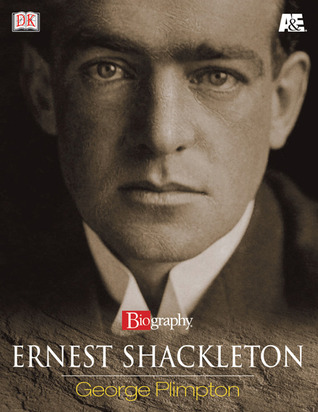
Complemented by hundreds of illustrations and photographs, this fascinating portrait of explorer Ernest Shackleton describes his early life, his remarkable accomplishments as a man who ignited interest in the study of Antarctica and its wonders, and the author's own adventure following in the footsteps of Shackleton's expedition. 50,000 first printing.

"The Rabbit's Umbrella," as large and gay as a circus tent, and with a strange assortment of characters, houses a plot as full of twists and surprises as a troupe of juggling clowns. And as for the rabbit himself, the umbrella-holder, whether at the close of the book you think him a figment of the imagination, or actually feel him standing behind you watching you read the book, you'll never forget him after having seen him carouse through Mr. Plimpton's light-hearted fantasy. "The Rabbit's Umbrella" is peppered with amusing, imaginative illustrations by William Pène du Bois, which are a complete delight in themselves.

A series of letters written to Dr. Rawff, a pet-problem advice columnist and veterinarian, holds the clues to his mysterious disappearance, and it is up to readers to use the letters to figure out his location.