Loading genres...
Explore the best books about Entrepreneurship genre.


This carefully researched and well-written book disproves most of the current management hype-from the cult of the superhuman CEO to the cult of IT to the acquisitions and merger mania. It will not enable mediocrity to become competence. But it should enable competence to become excellence.
Harvard professor Clayton M. Christensen says outstanding companies can do everything right and still lose their market leadership -- or worse, disappear completely. And he not only proves what he says, he tells others how to avoid a similar fate.Focusing on "disruptive technology" -- the Honda Super Cub, Intel's 8088 processor, or the hydraulic excavator, for example -- Christensen shows why most companies miss "the next great wave." Whether in electronics or retailing, a successful company with established products will get pushed aside unless managers know when to abandon traditional business practices. Using the lessons of successes and failures from leading companies, "The Innovator's Dilemma" presents a set of rules for capitalizing on the phenomenon of disruptive innovation.

This is a user-friendly guide to the art and science of management from Andrew S. Grove, the president of America's leading manufacturer of computer chips. Groves recommendations are equally appropriate for sales managers, accountants, consultants, and teachers--anyone whose job entails getting a group of people to produce something of value. Adapting the innovations that have made Intel one of America's most successful corporations, High Output Management teaches what techniques and indicators you can use to make even corporate recruiting as precise and measurable as manufacturinghow to turn your subordinates and coworkers into members of highly productive teamhow to motivate that team to attain peak performance every timeCombining conceptual elegance with a practical understanding of the real-life scenarios that managers encounter every day, High Output Management is one of those rare books that have the power to revolutionize the way we work

Most startups fail. But many of those failures are preventable. The Lean Startup is a new approach being adopted across the globe, changing the way companies are built and new products are launched. Eric Ries defines a startup as an organization dedicated to creating something new under conditions of extreme uncertainty. This is just as true for one person in a garage or a group of seasoned professionals in a Fortune 500 boardroom. What they have in common is a mission to penetrate that fog of uncertainty to discover a successful path to a sustainable business.The Lean Startup approach fosters companies that are both more capital efficient and that leverage human creativity more effectively. Inspired by lessons from lean manufacturing, it relies on "validated learning," rapid scientific experimentation, as well as a number of counter-intuitive practices that shorten product development cycles, measure actual progress without resorting to vanity metrics, and learn what customers really want. It enables a company to shift directions with agility, altering plans inch by inch, minute by minute.Rather than wasting time creating elaborate business plans, The Lean Startup offers entrepreneurs - in companies of all sizes - a way to test their vision continuously, to adapt and adjust before it's too late. Ries provides a scientific approach to creating and managing successful startups in a age when companies need to innovate more than ever.

“Originals is one of the most important and captivating books I have ever read, full of surprising and powerful ideas. It will not only change the way you see the world; it might just change the way you live your life. And it could very well inspire you to change your world.”— Sheryl Sandberg, bestselling author of Lean InThe New York Times bestselling author examines how people can drive creative, moral, and organisational progress—and how leaders can encourage originality in their organisations.How can we originate new ideas, policies and practices without risking it all? Adam Grant shows how to improve the world by championing novel ideas and values that go against the grain, battling conformity, and bucking outdated traditions.Using surprising studies and stories spanning business, politics, sports, and entertainment, Grant explores how to recognize a good idea, speak up without getting silenced, build a coalition of allies, choose the right time to act, and manage fear and doubt; how parents and teachers can nurture originality in children; and how leaders can fight groupthink to build cultures that welcome dissent.Learn from an entrepreneur who pitches his startups by highlighting the reasons not to invest, a woman at Apple who challenged Steve Jobs from three levels below, an analyst who overturned the rule of secrecy at the CIA, a billionaire financial wizard who fires employees for failing to criticize him, and a TV executive who didn’t even work in comedy but saved Seinfeld from the cutting room floor. Originals will give you groundbreaking insights about rejecting conformity and improving the status quo.

Examines marketing strategies for high-tech products and why they differ from those in other industries.

In his first comic book, Zappos CEO Tony Hsieh shares the different lessons he has learned in business and life, from starting a worm farm to running a pizza business; through LinkExchange (acquired by Microsoft for $265 million), Zappos (acquired by Amazon for over $1 billion in stock), and more.

CE LIVRE A ETE ECRIT POUR QUICONQUE DESIRE INSPIRER D'AUTRES PERSONNES OU POUR CEUX QUI SOUHAITENT TROUVER UNE PERSONNE QUI LES INSPIRERA.Simon Sinek est le leader d'un mouvement qui vise à bâtir un monde dans lequel la majorité des gens sont inspirés par le travail qu'ils font. Des millions de gens ont déjà vu sa vidéo sur TED.com concernant l'importance de savoir pourquoi nous faisons ce que nous faisons. Commencer par pourquoi amène ce concept beaucoup plus loin.Toute personne ou organisation est en mesure d'expliquer ce qu'elle fait; certaines peuvent expliquer en quoi elles sont différentes des autres, mais très rares sont celles qui parviennent à articuler clairement pourquoi. Le POURQUOI n'a rien à voir avec l'argent et les profits, ce sont les résultats qui comptent. Le POURQUOI, c'est la raison qui nous inspire et inspire également les gens autour de nous.De Martin Luther King à Steve Jobs, en passant par les frères Wright, Commencer par pourquoi démontre que les leaders qui savent inspirer les gens pensent, agissent et communiquent tous de la même façon, une façon diamétralement opposée à celle de tous les autres. Riche d'un vaste éventail d'histoires vécues, ce livre procure une structure permettant de mettre sur pied des organisations, de diriger des mouvements et d'inspirer des gens, tout cela à partir de POURQUOI.

LinkedIn co-founder, legendary investor and author of the NYT Bestseller The Start-up of You reveals the secret to starting and scaling massively valuable companies.For most of the world, the terms "Silicon Valley" and "startup" are synonymous. Indeed, Silicon Valley is home to a disproportionate number of companies that have grown from garage startups into global giants. But what is the secret to these startups' extraordinary success? Contrary to the popular narrative, it's not their superhuman founders or savvy venture capitalists. Rather, it's that they have learned how to Blitzscale. Blitzscaling is a specific set of practices for igniting and managing dizzying growth; an accelerated path to the stage in a startup's life-cycle where the most value is created. It prioritizes speed over efficiency in an environment of uncertainty, and allows a company to go from "startup" to "scaleup" at a furious pace that captures the market. Drawing on their experiences scaling startups into billion-dollar businesses, Hoffman and Yeh offer a framework for blitzscaling that can be replicated in any region or industry. Readers will learn how to design business models that support lightning-fast growth, navigate necessary shifts in strategy at each level of scale, and weather the management challenges that arise as their company grows.

1986 Copyright: by Michael E. Gerber- One person writes- my whole life has changed since enrolling in this program 3 months ago.

Under Andy Grove’s leadership, Intel became the world’s largest chip maker and one of the most admired companies in the world. In Only the Paranoid Survive, Grove reveals his strategy for measuring the nightmare moment every leader dreads–when massive change occurs and a company must, virtually overnight, adapt or fall by the wayside–in a new way.Grove calls such a moment a Strategic Inflection Point, which can be set off by almost anything: mega-competition, a change in regulations, or a seemingly modest change in technology. When a Strategic Inflection Point hits, the ordinary rules of business go out the window. Yet, managed right, a Strategic Inflection Point can be an opportunity to win in the marketplace and emerge stronger than ever.Grove underscores his message by examining his own record of success and failure, including how he navigated the events of the Pentium flaw, which threatened Intel’s reputation in 1994, and how he has dealt with the explosions in growth of the Internet. The work of a lifetime, Only the Paranoid Survive is a classic of managerial and leadership skills.

The Magic of Thinking Big gives you useful methods, not empty promises. Dr. Schwartz presents a carefully designed program for getting the most out of your job, your marriage and family life, and your community. He proves that you don’t need to be an intellectual or have innate talent to attain great success and satisfaction—but you do need to learn and understand the habit of thinking and behaving in ways that will get you there. This CD set gives you those secrets! Believe you can succeed and you -Cure yourself of the fear of failure -Think and dream creatively -You are what you think you are -Make your attitudes your allies -Learn how to think positively -Turn defeat into victory -Use goals to help you grow -Think like a leader

From the founders of the trailblazing software company 37signals, here is a different kind of business book - one that explores a new reality. Today, anyone can be in business. Tools that used to be out of reach are now easily accessible. Technology that cost thousands is now just a few pounds or even free. Stuff that was impossible just a few years ago is now simple. That means anyone can start a business. And you can do it without working miserable 80-hour weeks or depleting your life savings. You can start it on the side while your day job provides all the cash flow you need. Forget about business plans, meetings, office space - you don't need them. With its straightforward language and easy-is-better approach, "Rework" is the perfect playbook for anyone who's ever dreamed of doing it on their own. Hardcore entrepreneurs, small-business owners, people stuck in day jobs who want to get out, and artists who don't want to starve anymore will all find valuable inspiration and guidance in these pages. It's time to rework work.

As a young man, Ed Catmull had a dream: to make the world’s first computer-animated movie. He nurtured that dream first as a Ph.D. student at the University of Utah, where many computer science pioneers got their start, and then forged an early partnership with George Lucas that led, indirectly, to his founding Pixar with Steve Jobs and John Lasseter in 1986. Nine years later and against all odds, Toy Story was released, changing animation forever.Since then, Pixar has dominated the world of animation, producing such beloved films as Monsters, Inc., Finding Nemo, The Incredibles, Up, and WALL-E, which have gone on to set box-office records and garner twenty-seven Academy Awards. The joyousness of the storytelling, the inventive plots, the emotional authenticity: In some ways, Pixar movies are an object lesson in what creativity really is. Now, in this book, Catmull reveals the ideals and techniques, honed over years, that have made Pixar so widely admired—and so profitable.Creativity, Inc. is a book for managers who want to lead their employees to new heights, a manual for anyone who strives for originality, and the first-ever, all-access trip into the nerve center of Pixar Animation Studios—into the story meetings, the postmortems, and the ‘Braintrust’ sessions where art is born. It is, at heart, a book about how to build and sustain a creative culture—but it is also, as Pixar co-founder and president Ed Catmull writes, ‘an expression of the ideas that I believe make the best in us possible.’

#1 New York Times Bestseller There have been many books—on a large and small scale—about Steve Jobs, one of the most famous CEOs in history. But this book is different from all the others.Becoming Steve Jobs takes on and breaks down the existing myth and stereotypes about Steve Jobs. The conventional, one-dimensional view of Jobs is that he was half-genius, half-jerk from youth, an irascible and selfish leader who slighted friends and family alike. Becoming Steve Jobs answers the central question about the life and career of the Apple cofounder and CEO: How did a young man so reckless and arrogant that he was exiled from the company he founded become the most effective visionary business leader of our time, ultimately transforming the daily life of billions of people?Drawing on incredible and sometimes exclusive access, Schlender and Tetzeli tell a different story of a real human being who wrestled with his failings and learned to maximize his strengths over time. Their rich, compelling narrative is filled with stories never told before from the people who knew Jobs best, and who decided to open up to the authors, including his family, former inner circle executives, and top people at Apple, Pixar and Disney, most notably Tim Cook, Jony Ive, Eddy Cue, Ed Catmull, John Lasseter, Robert Iger and many others. In addition, Brent knew Jobs personally for 25 years and draws upon his many interviews with him, on and off the record, in writing the book. He and Rick humanize the man and explain, rather than simply describe, his behavior. Along the way, the book provides rich context about the technology revolution we all have lived through, and the ways in which Jobs changed our world.Schlender and Tetzeli make clear that Jobs's astounding success at Apple was far more complicated than simply picking the right products: he became more patient, he learned to trust his inner circle, and discovered the importance of growing the company incrementally rather than only shooting for dazzling game-changing products.A rich and revealing account that will change the way we view Jobs, Becoming Steve Jobs shows us how one of the most colorful and compelling figures of our times was able to combine his unchanging, relentless passion with a more mature management style to create one of the most valuable and beloved companies on the planet.

Elon Musk, the entrepreneur and innovator behind SpaceX, Tesla, and SolarCity, sold one of his internet companies, PayPal, for $1.5 billion. Ashlee Vance captures the full spectacle and arc of the genius's life and work, from his tumultuous upbringing in South Africa and flight to the United States to his dramatic technical innovations and entrepreneurial pursuits. Vance uses Musk's story to explore one of the pressing questions of our age: can the nation of inventors and creators who led the modern world for a century still compete in an age of fierce global competition? He argues that Musk is an amalgam of legendary inventors and industrialists including Thomas Edison, Henry Ford, Howard Hughes, and Steve Jobs. More than any other entrepreneur today, Musk has dedicated his energies and his own vast fortune to inventing a future that is as rich and far-reaching as the visionaries of the golden age of science-fiction fantasy

Do you ever have trouble finishing what you start? Do amazing ideas come to you all the time but after the initial excitement wanes you struggle to follow through? If you're creative and ambitious, the answer is likely yes.The problem isn't you. It's not that you're not hardworking, intelligent or deserving, but that you haven't yet installed the one key belief that will change everything: Everything is figureoutable.Whether you want to leave a dead-end job, heal a relationship, grow a business, master your money, or just find two free hours in your day, Everything is Figureoutable will train your brain to think more positively and help you break down any dream into manageable steps.Inside you'll learn:- How to deal with criticism and imposter syndrome- Why it's crucial that you strive for progress not perfection- How to bounce back from failure- How to overcome a lack of time and moneyYou'll also hear triumphant stories of everyday people using the everything is figureoutable philosophy to transform their life. Everything is figureoutable is more than just a fun phrase to say. It's a practical, actionable discipline. And it's about to make you unstoppable!

Shortlisted for the Financial Times Business Book of the Year Named a Best Book of 2022 by The Economist“A gripping fly-on-the-wall story of the rise of this unique and important industry based on extensive interviews with some of the most successful venture capitalists.” - Daniel Rasmussen, Wall Street Journal“A must-read for anyone seeking to understand modern-day Silicon Valley and even our economy writ large.” -Bethany McLean, The Washington Post"A rare and unsettling look inside a subculture of unparalleled influence.” —Jane Mayer"A classic...A book of exceptional reporting, analysis and storytelling.” —Charles DuhiggFrom the New York Times bestselling author of More Money Than God comes the astonishingly frank and intimate story of Silicon Valley’s dominant venture-capital firms—and how their strategies and fates have shaped the path of innovation and the global economyInnovations rarely come from “experts.” Elon Musk was not an “electric car person” before he started Tesla. When it comes to improbable innovations, a legendary tech VC told Sebastian Mallaby, the future cannot be predicted , it can only be discovered . It is the nature of the venture-capital game that most attempts at discovery fail, but a very few succeed at such a scale that they more than make up for everything else. That extreme ratio of success and failure is the power law that drives the VC business, all of Silicon Valley, the wider tech sector, and, by extension, the world. In The Power Law , Sebastian Mallaby has parlayed unprecedented access to the most celebrated venture capitalists of all time—the key figures at Sequoia, Kleiner Perkins, Accel, Benchmark, and Andreessen Horowitz, as well as Chinese partnerships such as Qiming and Capital Today—into a riveting blend of storytelling and analysis that unfurls the history of tech incubation, in the Valley and ultimately worldwide. We learn the unvarnished truth, often for the first time, about some of the most iconic triumphs and infamous disasters in Valley history, from the comedy of errors at the birth of Apple to the avalanche of venture money that fostered hubris at WeWork and Uber. VCs’ relentless search for grand slams brews an obsession with the ideal of the lone entrepreneur-genius, and companies seen as potential “unicorns” are given intoxicating amounts of power, with sometimes disastrous results. On a more systemic level, the need to make outsized bets on unproven talent reinforces bias, with women and minorities still represented at woefully low levels. This does not just have social justice as Mallaby relates, China’s homegrown VC sector, having learned at the Valley’s feet, is exploding and now has more women VC luminaries than America has ever had. Still, Silicon Valley VC remains the top incubator of business innovation anywhere—it is not where ideas come from so much as where they go to become the products and companies that create the future. By taking us so deeply into the VCs’ game, The Power Law helps us think about our own future through their eyes.

This an alternate cover for 9780060742751The bestselling business book from award-winning restauranteur Danny Meyer, of Union Square Cafe, Gramercy Tavern, and Shake ShackSeventy-five percent of all new restaurant ventures fail, and of those that do stick around, only a few become icons. Danny Meyer started Union Square Cafe when he was 27, with a good idea and hopeful investors. He is now the co-owner of a restaurant empire. How did he do it? How did he beat the odds in one of the toughest trades around? In this landmark book, Danny shares the lessons he learned developing the dynamic philosophy he calls Enlightened Hospitality. The tenets of that philosophy, which emphasize strong in-house relationships as well as customer satisfaction, are applicable to anyone who works in any business. Whether you are a manager, an executive, or a waiter, Danny’s story and philosophy will help you become more effective and productive, while deepening your understanding and appreciation of a job well done. Setting the Table is landmark a motivational work from one of our era’s most gifted and insightful business leaders.

**Winner of the 2013 Financial Times and Goldman Sachs Business Book of the Year Award**Though Amazon.com started off delivering books through the mail, its visionary founder, Jeff Bezos, was never content with being just a bookseller. He wanted Amazon to become ‘the everything store’, offering limitless selection and seductive convenience at disruptively low prices. To achieve that end, he developed a corporate culture of relentless ambition and secrecy that's never been cracked. Until now...Jeff Bezos stands out for his relentless pursuit of new markets, leading Amazon into risky new ventures like the Kindle and cloud computing, and transforming retail in the same way that Henry Ford revolutionized manufacturing. Amazon placed one of the first and largest bets on the Internet. Nothing would ever be the same again.

Al Ries and Jack Trout, two of the world's most successful marketing strategists, call upon over 40 years of marketing experise to identify the definitive rules that govern the world of marketing. Combining a wide-ranging historical overview with a keen eye for the future, the authors bring to light 22 superlative tools and innovative techniques for the international marketplace. The authors examines marketing campaigns that have succeeded and others that have failed, why good ideas didn't live up to expectations, and offer their own ideas on what would have worked better. The real-life examples, commonsense suggestions and killer instincts contained are nothing less than rules by which companies will flourish or fail.

“The computer world is like an intellectual Wild West, in which you can shoot anyone you wish with your ideas, if you’re willing to risk the consequences.” —from Hackers & Painters: Big Ideas from the Computer Age, by Paul GrahamWe are living in the computer age, in a world increasingly designed and engineered by computer programmers and software designers, by people who call themselves hackers. Who are these people, what motivates them, and why should you care?Consider these facts: Everything around us is turning into computers. Your typewriter is gone, replaced by a computer. Your phone has turned into a computer. So has your camera. Soon your TV will. Your car was not only designed on computers, but has more processing power in it than a room-sized mainframe did in 1970. Letters, encyclopedias, newspapers, and even your local store are being replaced by the Internet.Hackers & Painters: Big Ideas from the Computer Age, by Paul Graham, explains this world and the motivations of the people who occupy it. In clear, thoughtful prose that draws on illuminating historical examples, Graham takes readers on an unflinching exploration into what he calls “an intellectual Wild West.”The ideas discussed in this book will have a powerful and lasting impact on how we think, how we work, how we develop technology, and how we live. Topics include the importance of beauty in software design, how to make wealth, heresy and free speech, the programming language renaissance, the open-source movement, digital design, internet startups, and more.

Avant d'inventer Mickey, Walt Disney rêvait de répandre le bonheur à travers le monde. Les Frères Michelin ont commencé par miser sur l'invention et l'innovation est resté leur moteur. Le laboratoire Merck a fondé son empire avec la volonté de préserver et d'améliorer la vie humaine. Disney, Michelin, Merck, trois exemples parmi d'autres, trois entreprises que les auteurs de ce livre qualifient de visionnaires. Pourquoi ont-elles émergé ? Pourquoi perdurent elles ? Et pourquoi, par exemple, Ford, IBM ou Boeing ont-ils survécus à leurs fondateurs en emboîtant le pas au changement ?En comparant, en listant les valeurs clés de la réussite des entreprises visionnaires, James Collins et Jerry Portas ont établi des constantes, des lignes de conduites. L'entreprise visionnaire ne naît pas forcément d'une idée géniale, son fondateur est rarement charismatique mais elle sait durer. Elle anticipe, elle imagine, elle sait traduire ses principes de base dans son organisation et ses choix d'avenir. Elle s'adapte. Votre entreprise est-elle visionnaire ? Peut-elle le devenir ? L'épilogue en forme de questions réponses vous permet de tester votre entreprise, votre journal, le groupe où vous travaillez.

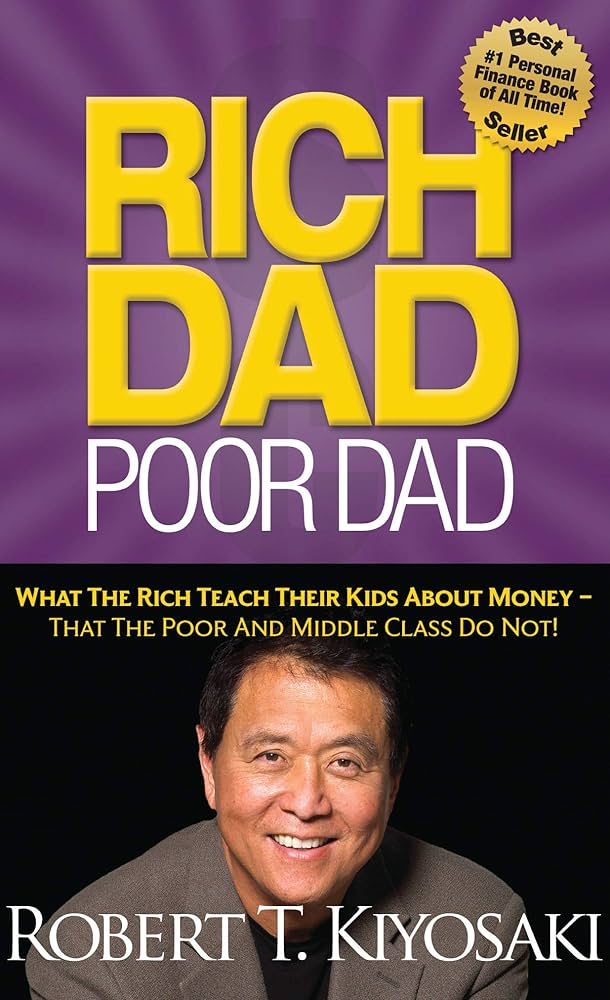
Rich Dad Poor Dad is Robert's story of growing up with two dads — his real father and the father of his best friend, his "rich dad" — and the ways in which both men shaped his thoughts about money and investing. The book explodes the myth that you need to earn a high income to be rich and explains the difference between working for money and having your money work for you.

How did salesforce.com grow from a start up in a rented apartment into the world's fastest growing software company in less than a decade? For the first time, Marc Benioff, the visionary founder, chairman and CEO of salesforce.com, tells how he and his team created and used new business, technology, and philanthropic models tailored to this time of extraordinary change. Showing how salesforce.com not only survived the dotcom implosion of 2001, but went on to define itself as the leader of the cloud computing revolution and spark a $46-billion dollar industry, Benioff's story will help business leaders and entrepreneurs stand out, innovate better, and grow faster in any economic climate. In Behind the Cloud , Benioff shares the strategies that have inspired employees, turned customers into evangelists, leveraged an ecosystem of partners, and allowed innovation to flourish.

”It is impossible to produce superior performance unless you do something different.” — John TempletonWhat makes a successful CEO? Most people call to mind a familiar definition: a seasoned manager with deep industry expertise. Others might point to the qualities of today’s so-called celebrity CEOs—charisma, virtuoso communication skills, and a confident management style. But what really matters when you run an organization? What is the hallmark of exceptional CEO performance? Quite simply, it is the returns for the shareholders of that company over the long term.In this refreshing, counterintuitive book, author Will Thorndike brings to bear the analytical wisdom of a successful career in investing, closely evaluating the performance of companies and their leaders. You will meet eight individualistic CEOs whose firms’ average returns outperformed the S&P 500 by a factor of twenty—in other words, an investment of $10,000 with each of these CEOs, on average, would have been worth over $1.5 million twenty-five years later. You may not know all their names, but you will recognize their companies: General Cinema, Ralston Purina, The Washington Post Company, Berkshire Hathaway, General Dynamics, Capital Cities Broadcasting, TCI, and Teledyne. In The Outsiders, you’ll learn the traits and methods—striking for their consistency and relentless rationality—that helped these unique leaders achieve such exceptional performance.Humble, unassuming, and often frugal, these "outsiders” shunned Wall Street and the press, and shied away from the hottest new management trends. Instead, they shared specific traits that put them and the companies they led on winning trajectories: a laser-sharp focus on per share value as opposed to earnings or sales growth; an exceptional talent for allocating capital and human resources; and the belief that cash flow, not reported earnings, determines a company’s long-term value.Drawing on years of research and experience, Thorndike tells eye-opening stories, extracting lessons and revealing a compelling alternative model for anyone interested in leading a company or investing in one—and reaping extraordinary returns.

Matt Mochary coaches the CEOs of many of the fastest-scaling technology companies in Silicon Valley. With The Great CEO Within , he shares his highly effective leadership and business-operating tools with any CEO or manager in the world. Learn how to efficiently scale your business from startup to corporation by implementing a system of accountability, effective problem-solving, and transparent feedback. Becoming a great CEO requires training. For a founding CEO, there is precious little time to complete that training, especially at the helm of a rapidly growing company. Now you have the guidance you need in one book.

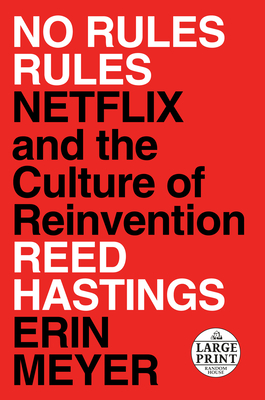
Shortlisted for the 2020 Financial Times & McKinsey Business Book of the Year Netflix cofounder Reed Hastings reveals for the first time the unorthodox culture behind one of the world's most innovative, imaginative, and successful companies There has never before been a company like Netflix. It has led nothing short of a revolution in the entertainment industries, generating billions of dollars in annual revenue while capturing the imaginations of hundreds of millions of people in over 190 countries. But to reach these great heights, Netflix, which launched in 1998 as an online DVD rental service, has had to reinvent itself over and over again. This type of unprecedented flexibility would have been impossible without the counterintuitive and radical management principles that cofounder Reed Hastings established from the very beginning. Hastings rejected the conventional wisdom under which other companies operate and defied tradition to instead build a culture focused on freedom and responsibility, one that has allowed Netflix to adapt and innovate as the needs of its members and the world have simultaneously transformed.Hastings set new standards, valuing people over process, emphasizing innovation over efficiency, and giving employees context, not controls. At Netflix, there are no vacation or expense policies. At Netflix, adequate performance gets a generous severance, and hard work is irrel-evant. At Netflix, you don't try to please your boss, you give candid feedback instead. At Netflix, employees don't need approval, and the company pays top of market. When Hastings and his team first devised these unorthodox principles, the implications were unknown and untested. But in just a short period, their methods led to unparalleled speed and boldness, as Netflix quickly became one of the most loved brands in the world.Here for the first time, Hastings and Erin Meyer, bestselling author of The Culture Map and one of the world's most influential business thinkers, dive deep into the controversial ideologies at the heart of the Netflix psyche, which have generated results that are the envy of the business world. Drawing on hundreds of interviews with current and past Netflix employees from around the globe and never-before-told stories of trial and error from Hastings's own career, No Rules Rules is the fascinating and untold account of the philosophy behind one of the world's most innovative, imaginative, and successful companies.

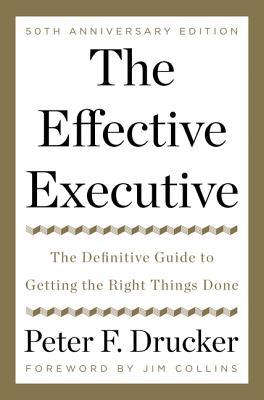
A handsome, commemorative edition of Peter F. Drucker’s timeless classic work on leadership and management, with a foreword by Jim Collins. What makes an effective executive? For decades, Peter F. Drucker was widely regarded as "the dean of this country’s business and management philosophers" ( Wall Street Journal ). In this concise and brilliant work, he looks to the most influential position in management—the executive. The measure of the executive, Drucker reminds us, is the ability to "get the right things done." This usually involves doing what other people have overlooked as well as avoiding what is unproductive. Intelligence, imagination, and knowledge may all be wasted in an executive job without the acquired habits of mind that mold them into results. Drucker identifies five practices essential to business effectiveness that can—and must—be Ranging across the annals of business and government, Drucker demonstrates the distinctive skill of the executive and offers fresh insights into old and seemingly obvious business situations.

The acclaimed Wall Street Journal and Business Week Bestseller.You're either a Purple Cow or you're not. You're either remarkable or invisible. Make your choice. What do Starbucks and JetBlue and KrispyKreme and Apple and DutchBoy and Kensington and Zespri and Hard Candy have that you don't? How do they continue to confound critics and achieve spectacular growth, leaving behind former tried-and true brands to gasp their last? Face it, the checklist of tired 'P's marketers have used for decades to get their product noticed - Pricing, Promotion, Publicity, to name a few - aren't working anymore. There's an exceptionally important 'P' that has to be added to the list. It's Purple Cow. Cows, after you've seen one, or two, or ten, are boring. A Purple Cow, though...now that would be something. Purple Cow describes something phenomenal, something counterintuitive and exciting and flat out unbelievable. Every day, consumers come face to face with a lot of boring stuff-a lot of brown cows - but you can bet they won't forget a Purple Cow. And it's not a marketing function that you can slap on to your product or service. Purple Cow is inherent. It's built right in, or it's not there. Period. In Purple Cow, Seth Godin urges you to put a Purple Cow into everything you build, and everything you do, to create something truly noticeable. It's a manifesto for marketers who want to help create products that are worth marketing in the first place. Description from Amazon.com

A global phenomenon now published in a record 43 languages. Over 3.5 million copies sold. A bestseller across five continents. Since the dawn of the industrial age, companies have engaged in head-to-head competition in search of sustained, profitable growth. They have fought for competitive advantage, battled over market share, and struggled for differentiation. Yet, as widely practiced as this approach has been, W. Chan Kim and Renée Mauborgne’s research shows that is not the way to create profitable growth in the future.In their book Blue Ocean Strategy—now expanded and with a new Preface by the authors—Kim and Mauborgne (INSEAD) argue that cutthroat competition increasingly results in nothing but a bloody red ocean of rivals fighting over a shrinking profit pool. Based on a study of 150 strategic moves (spanning more than 100 years across 30 industries), the authors argue that lasting success comes not from battling competitors, but from creating "blue oceans"—untapped new market spaces ripe for growth. Such strategic moves, which the authors call “value innovation,” create powerful leaps in value that often render rivals obsolete for more than a decade. Blue Ocean Strategy presents a systematic approach to making the competition irrelevant and outlines principles and tools any company, organization or government can use to create and capture their own blue oceans. A landmark work that upends traditional thinking about strategy, this bestselling business book charts a bold new path to winning the future. Learn more at blueoceanstrategy.com. Published by Harvard Business Review Press.

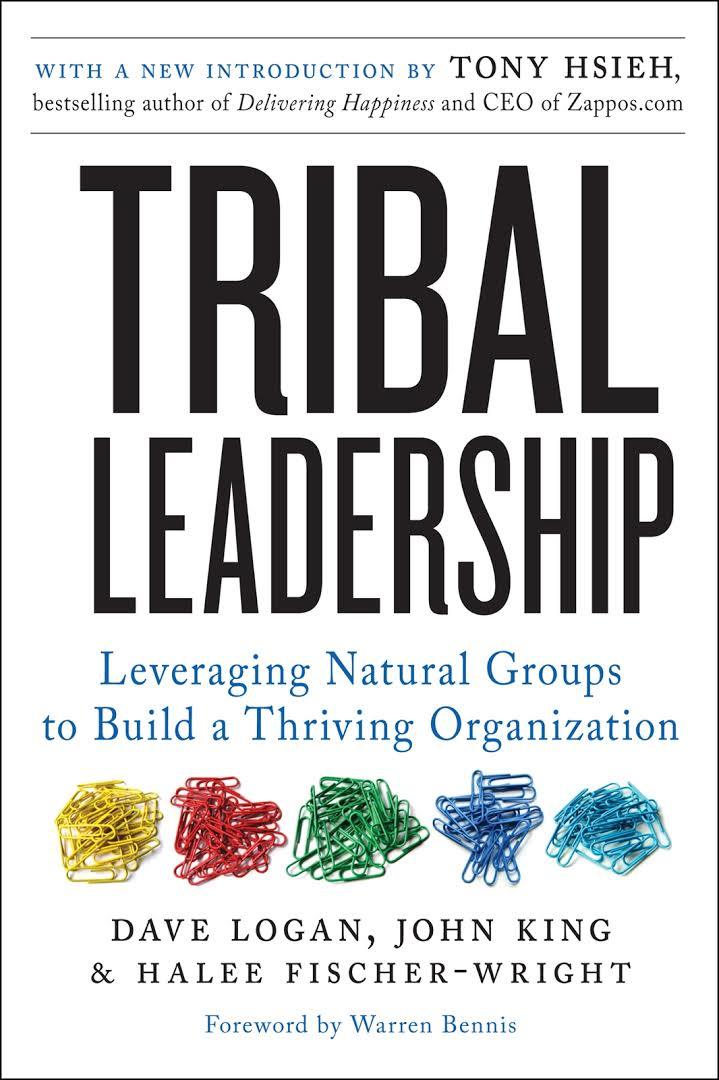
It's a fact of birds flock, fish school, people "tribe." Every company, indeed every organization, is a tribe, or if it's large enough, a network of tribes—groups of 20 to 150 people in which everyone knows everyone else, or at least knows of everyone else. Tribes are more powerful than teams, companies, or even CEOs, and yet their key leverage points have not been mapped—until now. In Tribal Leadership , Dave Logan, John King, and Halee Fischer-Wright show leaders how to assess their organization's tribal culture on a scale from one to five and then implement specific tools to elevate the stage to the next. The result is unprecedented success. In a rigorous eight-year study of approximately 24,000 people in over two dozen corporations, Logan, King, and Fischer-Wright refine and define a common the success of a company depends on its tribes, the strength of its tribes is determined by the tribal culture, and a thriving corporate culture can be established by an effective tribal leader. Tribal Leadership will show leaders how to employ their companies' tribes to maximize productivity and the authors' research, backed up with interviews ranging from Brian France (CEO of NASCAR) to "Dilbert" creator Scott Adams, shows that over three quarters of the organizations they've studied have tribal cultures that are merely adequate, no better than the third of five tribal stages. Leaders, managers, and organizations that fail to understand, motivate, and grow their tribes will find it impossible to succeed in an increasingly fragmented world of business. The often counterintuitive findings of Tribal Leadership will help leaders at today's major corporations, small businesses, and nonprofits learn how to take the people in their organization from adequate to outstanding, to discover the secrets that have led the highest-level tribes (like the team at Apple that designed the iPod) to remarkable heights, and to find new ways to succeed where others have failed.

Develop the Scaramucci mindset that drives entrepreneurial success Hopping over the Rabbit Hole chronicles the rise, fall, and resurgence of SkyBridge Capital founder Anthony Scaramucci, giving you a primer on how to thrive in an unpredictable business environment. The sheer number of American success stories has created a false impression that becoming an entrepreneur is a can't-miss endeavor—but nothing could be further from the truth. In the real world, an entrepreneur batting .150 goes directly to the Hall of Fame. Things happen. You make a bad hire, a bad strategic decision, or suffer the consequences of an unforeseen market crash. You can't control what happens to your business, but you can absolutely control how you react, and how you turn bumps in the road into ramps to the sky. Anthony Scaramucci has been there and done that, again and again, and has ultimately come out on top; in this book, he shares what he wishes he knew then. Your chances of becoming an overnight billionaire are approximately the same as your chances of being signed to the NBA. Success is hard work, and anxiety, and tiny hiccups that can turn into disaster with a single misstep. This book shows you how to use adversity to your ultimate advantage, and build the skills you need to respond effectively to the unexpected. Learn how to deal with unforeseen events Map a strategic backup plan, and then a backup-backup plan Train yourself to react in the most productive way Internalize the lessons learned by a leader in entrepreneurship For every 23-year-old billionaire who just created a new way to send a picture on a phone, there are countless others who have failed, and failed miserably. Hopping over the Rabbit Hole gives you the skills, insight, and mindset you need to be one of the winners.

What are the secrets to making a company enduringly valuable?7 Powers breaks fresh ground by constructing a comprehensive strategy toolset that is easy for you to learn, communicate and quickly apply.Drawing on his decades of experience as a business strategy advisor, active equity investor and Stanford University teacher, Hamilton Helmer develops from first principles a practical theory of Strategy rooted in the notion of Power, those conditions which create the potential for persistent differential returns.Using rich real-world examples, Helmer rigorously characterizes exactly what your business must achieve to create Power. And create Power it must, for without it your business is at risk. He explains why invention always comes first and then develops the Power Progression to enable you to target when your Power must be in the Origination, Take-Off or Stability phases of your business. Every business faces a do-or-die strategy a crux directional choice made amidst swirling uncertainty. To get this right you need at your fingertips a real-time strategy compass to discern your true north. 7 Powers is that compass.

Ben Horowitz, a leading venture capitalist, modern management expert, and New York Times bestselling author combines lessons both from history and modern organisational practice with practical and often surprising advice to help us build cultures that can weather both good and bad times.The times and circumstances in which people were raised often shape them – yet a few leaders have managed to shape their times. In this follow-up to the bestselling business classic The Hard Thing About Hard Things, Ben Horowitz turns his attention to a question crucial to every How do you create and sustain the culture you want?This book is a journey through cultures ancient to modern, spotlighting models of leadership and culture-building from the samurai to prison gangs. Along the way, it answers fundamental Who are we? How do people talk about us when we’re not around? How do we treat our customers? Can we be trusted? Because who you are is not the values you list on the wall. It’s not what you say in a company-wide meeting. It’s not your marketing campaign. It’s not even what you believe. Who you are is what you do. This book will help you do the things needed to become the kind of leader you want to be – and others want to follow.

New York Times and Wall Street Journal BestsellerA New York Times technology correspondent presents the dramatic story of Uber, the Silicon Valley startup at the center of one of the great venture capital power struggles of our time. In June 2017, Travis Kalanick, the hard-charging CEO of Uber, was ousted in a boardroom coup that capped a brutal year for the transportation giant. Uber had catapulted to the top of the tech world, yet for many came to symbolize everything wrong with Silicon Valley. Award-winning New York Times technology correspondent Mike Isaac’s Super Pumped presents the dramatic rise and fall of Uber, set against an era of rapid upheaval in Silicon Valley. Backed by billions in venture capital dollars and led by a brash and ambitious founder, Uber promised to revolutionize the way we move people and goods through the world. A near instant “unicorn,” Uber seemed poised to take its place next to Amazon, Apple, and Google as a technology giant. What followed would become a corporate cautionary tale about the perils of startup culture and a vivid example of how blind worship of startup founders can go wildly wrong. Isaac recounts Uber’s pitched battles with taxi unions and drivers, the company’s toxic internal culture, and the bare-knuckle tactics it devised to overcome obstacles in its quest for dominance. With billions of dollars at stake, Isaac shows how venture capitalists asserted their power and seized control of the startup as it fought its way toward its fateful IPO. Based on hundreds of interviews with current and former Uber employees, along with previously unpublished documents, Super Pumped is a page-turning story of ambition and deception, obscene wealth, and bad behavior that explores how blistering technological and financial innovation culminated in one of the most catastrophic twelve-month periods in American corporate history.

Founders at Work recounts the early struggles for independence and acceptance of many of modern technology’s giants, through personal interviews that are at times hilarious, at times painful, and always inspiring. As human-interest stories they will interest the same audience that enjoys reading about the Google founders in PEOPLE magazine. These stories are exceptionally interesting, because they're about the early stages, when the founders were younger and inexperienced. Most readers know startup founders only as confident millionaires. As novices trying to find their way by trial and error, they're more human, and easier for the reader to identify with.

Ricardo Semler inherited his family company, Semco - manufacturer of marine pumps, industrial dishwashers and mixing equipment - when he was 19. Soon, by 1980, it was on the brink of bankruptcy, but a decade later, during a period of savage recession in Brazil, it had been transformed into a rapidly-growing company with profits of 10% on sales of $37 million. This was achieved by throwing out the rule-book and getting rid of all manuals and written procedures. Workers make the decisions previously made by their bosses; assembly workers can come and go as they please, and set their own production schedules; corporate decisions are put to the vote; managerial staff set their own salaries and bonuses; everyone has access to the company books; and there is a minimum of meetings, memos and approvals. All this was achieved through a series of 30 programmes designed to change the entire working environment, and in this book Semler presents an account of his company's revolution.

We all want to get to yes, but what happens when the other person keeps saying no? How can you negotiate successfully with a stubborn boss, an irate customer, or a deceitful coworker?In Getting Past No, William Ury of Harvard Law School’s Program on Negotiation offers a proven breakthrough strategy for turning adversaries into negotiating partners. You’ll learn how to:• Stay in control under pressure• Defuse anger and hostility• Find out what the other side really wants• Counter dirty tricks• Use power to bring the other side back to the table• Reach agreements that satisfies both sides' needsGetting Past No is the state-of-the-art book on negotiation for the twenty-first century. It will help you deal with tough times, tough people, and tough negotiations. You don’t have to get mad or get even. Instead, you can get what you want!

Bất cứ ai nếu coi mình là nhà quản lý hãy nhanh chân lên để có được cuốn sách này và hãy đọc nó đừng chậm trễ. Nếu bạn chỉ đơn giản ở cương vị phải đọc nó, thì sự tiến bước của bạn trên con đường tới đỉnh cao có thể sẽ đột ngột lao nhanh về trước… đó là những điều ở một trong những cuốn sách quản trị xuất sắc nhất mà tôi từng biết”

NEW YORK TIMES BESTSELLER - The instant classic about why some ideas thrive, why others die, and how to improve your idea's chances--essential reading in the "fake news" era.Mark Twain once observed, "A lie can get halfway around the world before the truth can even get its boots on." His observation rings true: Urban legends, conspiracy theories, and bogus news stories circulate effortlessly. Meanwhile, people with important ideas--entrepreneurs, teachers, politicians, and journalists--struggle to make them "stick."In Made to Stick, Chip and Dan Heath reveal the anatomy of ideas that stick and explain ways to make ideas stickier, such as applying the human scale principle, using the Velcro Theory of Memory, and creating curiosity gaps. Along the way, we discover that sticky messages of all kinds--from the infamous "kidney theft ring" hoax to a coach's lessons on sportsmanship to a vision for a new product at Sony--draw their power from the same six traits.Made to Stick will transform the way you communicate. It's a fast-paced tour of success stories (and failures): the Nobel Prize-winning scientist who drank a glass of bacteria to prove a point about stomach ulcers; the charities who make use of the Mother Teresa Effect; the elementary-school teacher whose simulation actually prevented racial prejudice.Provocative, eye-opening, and often surprisingly funny, Made to Stick shows us the vital principles of winning ideas--and tells us how we can apply these rules to making our own messages stick.

Illustrated in B/W. A sweeping, atmospheric history of Bell Labs that highlights its unparalleled role as an incubator of innovation and birthplace of the century's most influential technologies.

A legendary tale, both true and astonishing, from the author of Israel is Real and Sweet and Low When Samuel Zemurray arrived in America in 1891, he was tall, gangly, and penniless. When he died in the grandest house in New Orleans sixty-nine years later, he was among the richest, most powerful men in the world. In between, he worked as a fruit peddler, a banana hauler, a dockside hustler, and a plantation owner. He battled and conquered the United Fruit Company, becoming a symbol of the best and worst of the United States: proof that America is the land of opportunity, but also a classic example of the corporate pirate who treats foreign nations as the backdrop for his adventures. In Latin America, when people shouted “Yankee, go home!” it was men like Zemurray they had in mind. Rich Cohen’s brilliant historical profile The Fish That Ate the Whale unveils Zemurray as a hidden kingmaker and capitalist revolutionary, driven by an indomitable will to succeed. Known as El Amigo, the Gringo, or simply Z, the Banana Man lived one of the great untold stories of the last hundred years. Starting with nothing but a cart of freckled bananas, he built a sprawling empire of banana cowboys, mercenary soldiers, Honduran peasants, CIA agents, and American statesmen. From hustling on the docks of New Orleans to overthrowing Central American governments, from feuding with Huey Long to working with the Dulles brothers, Zemurray emerges as an unforgettable figure, connected to the birth of modern American diplomacy, public relations, business, and war—a monumental life that reads like a parable of the American dream.

"The One Thing" explains the success habit to overcome the six lies that block our success, beat the seven thieves that steal time, and leverage the laws of purpose, priority, and productivity.

The fascinating story of brothers Tyler and Cameron Winklevoss's big bet on crypto-currency and its dazzling pay-off.Planning to start careers as venture capitalists, the brothers quickly discover that no one will take their money after their fight with Zuckerberg. While nursing their wounds in Ibiza, they accidentally run into an eccentric character who tells them about a brand-new idea: cryptocurrency. Immersing themselves in what is then an obscure and sometimes sinister world, they begin to realize “crypto” is, in their own words, "either the next big thing or total bulls--t." There’s nothing left to do but make a bet.From the Silk Road to the halls of the Securities and Exchange Commission, Bitcoin Billionaires will take us on a wild and surprising ride while illuminating a tantalizing economic future. On November 26, 2017, the Winklevoss brothers became the first bitcoin billionaires. Here’s the story of how they got there—as only Ben Mezrich could tell it.

In The Five Dysfunctions of a Team Patrick Lencioni once again offers a leadership fable that is as enthralling and instructive as his first two best-selling books, The Five Temptations of a CEO and The Four Obsessions of an Extraordinary Executive. This time, he turns his keen intellect and storytelling power to the fascinating, complex world of teams. Kathryn Petersen, Decision Tech's CEO, faces the ultimate leadership crisis: Uniting a team in such disarray that it threatens to bring down the entire company. Will she succeed? Will she be fired? Will the company fail? Lencioni's utterly gripping tale serves as a timeless reminder that leadership requires as much courage as it does insight. Throughout the story, Lencioni reveals the five dysfunctions which go to the very heart of why teams even the best ones-often struggle. He outlines a powerful model and actionable steps that can be used to overcome these common hurdles and build a cohesive, effective team. Just as with his other books, Lencioni has written a compelling fable with a powerful yet deceptively simple message for all those who strive to be exceptional team leaders.

Unusual book

Secrets of Power Negotiating covers every aspect of the negotiating process with practical, proven from beginning steps to critical final moves, how to recognize unethical tactics, key principles to the Power Negotiating strategy, why money is not as important as everyone thinks, negotiating pressure points, understanding the other party and gaining the upper hand, and analyses of different negotiating styles. And Power Negotiating can be applied to any - Business owners will learn how to dramatically improve profits.- Managers will learn how to become dynamic leaders.- Parents will discover how to shape their child's future.- Salespeople will learn how to build-and protect-their bottom line.- All readers will find how to develop power and control over their ability to get what they want-in all areas of their lives.

"Oh, screw it, let's do it."That's the philosophy that has allowed Richard Branson, in slightly more than twenty-five years, to spawn so many successful ventures. From the airline business (Virgin Atlantic Airways), to music (Virgin Records and V2), to cola (Virgin Cola), to retail (Virgin Megastores), and nearly a hundred others, ranging from financial services to bridal wear, Branson has a track record second to none.Losing My Virginity is the unusual, frequently outrageous autobiography of one of the great business geniuses of our time. When Richard Branson started his first business, he and his friends decided that "since we're complete virgins at business, let's call it just that: Virgin." Since then, Branson has written his own "rules" for success, creating a group of companies with a global presence, but no central headquarters, no management hierarchy, and minimal bureaucracy.Many of Richard Branson's companies--airlines, retailing, and cola are good examples--were started in the face of entrenched competition. The experts said, "Don't do it." But Branson found golden opportunities in markets in which customers have been ripped off or underserved, where confusion reigns, and the competition is complacent. And in this stressed-out, overworked age, Richard Branson gives us a new model: a dynamic, hardworking, successful entrepreneur who lives life to the fullest. Family, friends, fun, and adventure are equally important as business in Branson's life. Losing My Virginity is a portrait of a productive, sane, balanced life, filled with rich and colorful stories: Crash-landing his hot-air balloon in the Algerian desert, yet remaining determined to have another go at being the first to circle the globeSigning the Sex Pistols, Janet Jackson, the Rolling Stones, Boy George, and Phil CollinsFighting back when British Airways took on Virgin Atlantic and successfully suing this pillar of the British business establishmentSwimming two miles to safety during a violent storm off the coast of MexicoSelling Virgin Records to save Virgin AtlanticStaging a rescue flight into Baghdad before the start of the Gulf War . . .And much more. Losing My Virginity is the ultimate tale of personal and business survival from a man who combines the business prowess of Bill Gates and the promotional instincts of P. T. Barnum.Also available in the UK from Virgin Publishing, and in Canada from General Publishing,From the Hardcover edition.

A New York Times , USA Today , and Wall Street Journal bestsellerIn this iconic bestseller, popular business blogger and bestselling author Seth Godin proves that winners are really just the best quitters. Godin shows that winners quit fast, quit often, and quit without guilt—until they commit to beating the right Dip.Every new project (or job, or hobby, or company) starts out fun…then gets really hard, and not much fun at all. You might be in a Dip—a temporary setback that will get better if you keep pushing. But maybe it’s really a Cul-de-Sac—a total dead end. What really sets superstars apart is the ability to tell the two apart.Winners seek out the Dip. They realize that the bigger the barrier, the bigger the reward for getting past it. If you can beat the Dip to be the best, you’ll earn profits, glory, and long-term security.Whether you’re an intern or a CEO, this fun little book will help you figure out if you’re in a Dip that’s worthy of your time, effort, and talents. The old saying is wrong—winners do quit, and quitters do win.

More and more business leaders are catching on to an often-overlooked fact: consciousness is our basic faculty for survival and success. Without it, we forget what's important to us and lose sight of the steps we might take to reach those goals. Conscious business, explains Fred Kofman, means shining this awareness on every area of your work: in recognizing the needs of others and expressing your own; in seeing the hidden emotional obstacles that may be holding your team back; in making good decisions under pressure; and even in delving into such spiritual questions as "Who am I?" and "What is my real purpose here?" In Conscious Business, this visionary teacher and consultant to Google, Microsoft, Yahoo! and other leading companies presents the complete training manual in the breakthrough techniques he has shared with over 20,000 executives on four continents.

In this fascinating exposé, two investigative reporters trace the hugely successful career of Microsoft founder Bill Gates. Part entrepreneur, part enfant terrible, Gates has become the most powerful -- and feared -- player in the computer industry, and arguably the richest man in America. In Hard Drive, investigative reporters Wallace and Erickson follow Gates from his days as an unkempt thirteen-year-old computer hacker to his present-day status as a ruthless billionaire CEO. More than simply a "revenge of the nerds" story though, this is a balanced analysis of a business triumph, and a stunningly driven personality. The authors have spoken to everyone who knows anything about Bill Gates and Microsoft -- from childhood friends to employees and business rivals who reveal the heights, and limits, of his wizardry. From Gates's singular accomplishments to his equally extraordinary brattiness, arrogance, and hostility (the atmosphere is so intense at Microsoft that stressed-out programmers have been known to ease the tension of their eighty-hour workweeks by exploding homemade bombs), this is a uniquely revealing glimpse of the person who has emerged as the undisputed king of a notoriously brutal industry.

In the weird glow of the dying millennium, Michael Lewis set out on a safari through Silicon Valley to find the world’s most important technology entrepreneur. He found this in Jim Clark, a man whose achievements include the founding of three separate billion-dollar companies. Lewis also found much more, and the result—the best-selling book The New New Thing—is an ingeniously conceived history of the Internet revolution.

In this instant New York Times Bestseller, Geoff Smart and Randy Street provide a simple, practical, and effective solution to what The Economist calls “the single biggest problem in business today”: unsuccessful hiring. The average hiring mistake costs a company $1.5 million or more a year and countless wasted hours. This statistic becomes even more startling when you consider that the typical hiring success rate of managers is only 50 percent. The silver lining is that “who” problems are easily preventable. Based on more than 1,300 hours of interviews with more than 20 billionaires and 300 CEOs, Who presents Smart and Street’s A Method for Hiring. Refined through the largest research study of its kind ever undertaken, the A Method stresses fundamental elements that anyone can implement–and it has a 90 percent success rate.Whether you’re a member of a board of directors looking for a new CEO, the owner of a small business searching for the right people to make your company grow, or a parent in need of a new babysitter, it’s all about Who. Inside you’ll learn how to avoid common “voodoo hiring” methods define the outcomes you seek generate a flow of A Players to your team–by implementing the #1 tactic used by successful businesspeople ask the right interview questions to dramatically improve your ability to quickly distinguish an A Player from a B or C candidate attract the person you want to hire, by emphasizing the points the candidate cares about mostIn business, you are who you hire. In Who, Geoff Smart and Randy Street offer simple, easy-to-follow steps that will put the right people in place for optimal success.From the Hardcover edition.

A fascinating deep dive on innovation from the New York Times bestselling author of How We Got To Now and FarsightedThe printing press, the pencil, the flush toilet, the battery--these are all great ideas. But where do they come from? What kind of environment breeds them? What sparks the flash of brilliance? How do we generate the breakthrough technologies that push forward our lives, our society, our culture? Steven Johnson's answers are revelatory as he identifies the seven key patterns behind genuine innovation, and traces them across time and disciplines. From Darwin and Freud to the halls of Google and Apple, Johnson investigates the innovation hubs throughout modern time and pulls out the approaches and commonalities that seem to appear at moments of originality.

As Alexis Ohanian learned when he helped to co-found the immensely popular reddit.com, the internet is the most powerful and democratic tool for disseminating information in human history. And when that power is harnessed to create new communities, technologies, businesses or charities, the results can be absolutely stunning.In this book, Alexis will share his ideas, tips and even his own doodles about harnessing the power of the web for good, and along the way, he will share his philosophy with young entrepreneurs all over the globe.At 29, Ohanian has come to personify the dorm-room tech entrepreneur, changing the world without asking permission. Within a couple of years of graduating from the University of Virginia, Ohanian did just that, selling reddit for millions of dollars. He's gone on to start many other companies, like hipmunk and breadpig, all while representing Y Combinator and investing in over sixty other tech startups. Without Their Permission is his personal guidebook as to how other aspiring entrepreneurs can follow in his footsteps.

‘A breakthrough book. Wonderfully applicable to everything in life, and funny as hell.’ Nassim Nicholas TalebTo be brilliant, you have to be irrationalWhy is Red Bull so popular – even though everyone hates the taste? Why do countdown boards on platforms take away the pain of train delays? And why do we prefer stripy toothpaste?We think we are rational creatures. Economics and business rely on the assumption that we make logical decisions based on evidence.But we aren’t, and we don’t.In many crucial areas of our lives, reason plays a vanishingly small part. Instead we are driven by unconscious desires, which is why placebos are so powerful. We are drawn to the beautiful, the extravagant and the absurd – from lavish wedding invitations to tiny bottles of the latest fragrance. So if you want to influence people’s choices you have to bypass reason. The best ideas don’t make rational sense: they make you feel more than they make you think.Rory Sutherland is the Ogilvy advertising legend whose TED Talks have been viewed nearly 7 million times. In his first book he blends cutting-edge behavioural science, jaw-dropping stories and a touch of branding magic, on his mission to turn us all into idea alchemists. The big problems we face every day, whether as an individual or in society, could very well be solved by letting go of logic and embracing the irrational.

"Why do so many of the most promising businesses fail to achieve consistent, sustainable growth? Tiffani Bova, the Growth and Innovation Evangelist at Salesforce, draws on her expertise as a consultant and practitioner to devise a new framework for business leaders looking to pursue growth. We're witnessing an age of endless customization, and growth strategy is no exception. There's no one size fits all strategy; a winning strategy for one business may spell doom for another. Bova determines that there are ten simple--but easily misunderstood--growth paths, and explains how companies can get a handle on their particular business context, and use it to determine the right combination and sequence of growth paths to take them into the future. Bova breaks down the strategies deployed by a wide range of companies to show you GE and John Deere have lasted over a century and continue to thrive by combining their strategy of innovative product development with a renewed focus on R&D and customer experience Marvel transformed from a struggling comic book publisher to a global entertainment behemoth by realigning their market penetration strategy to focus on comic book characters, instead of just comic books Gateway's attempt at market expansion into brick-and-mortar retail led to its failure, while the same move by Apple has accelerated its growth Whether your company is on a growth spurt, in a worrying stall, or showing signs of decline, GROWTH IQ is your map to charting the course of your company's future"--

Working Backwards is an insider's breakdown of Amazon's approach to culture, leadership, and best practices from two long-time, top-level Amazon executives.Colin started at Amazon in 1998; Bill joined in 1999. In Working Backwards, these two long-serving Amazon executives reveal and codify the principles and practices that drive the success of one of the most extraordinary companies the world has ever known. With twenty-seven years of Amazon experience between them, much of it in the early aughts—a period of unmatched innovation that brought products and services including Kindle, Amazon Prime, Amazon Studios, and Amazon Web Services to life—Bryar and Carr offer unprecedented access to the Amazon way as it was refined, articulated, and proven to be repeatable, scalable, and adaptable.With keen analysis and practical steps for applying it at your own company—no matter the size—the authors illuminate how Amazon’s fourteen leadership principles inform decision-making at all levels and reveal how the company’s culture has been defined by four characteristics: customer obsession, long-term thinking, eagerness to invent, and operational excellence. Bryar and Carr explain the set of ground-level practices that ensure these are translated into action and flow through all aspects of the business.Working Backwards is a practical guidebook and a corporate narrative, filled with the authors’ in-the-room recollections of what “Being Amazonian” is like and how it has affected their personal and professional lives. They demonstrate that success on Amazon’s scale is not achieved by the genius of any single leader, but rather through commitment to and execution of a set of well-defined, rigorously-executed principles and practices—shared here for the very first time. A Macmillan Audio production from St. Martin's Press

NAMED A BEST BOOK OF 2022 BY THE NEW YORKERNational Bestseller * New York Times Editors’ Choice * Financial Times “Books to Read in 2022”A SABEW BEST IN BUSINESS BOOK AWARDS FINALIST“A gripping account of PayPal’s origins and a vivid portrait of the geeks and contrarians who made its meteoric rise possible” ( The Wall Street Journal )—including Elon Musk, Amy Rowe Klement, Peter Thiel, Julie Anderson, Max Levchin, Reid Hoffman, and many others whose stories have never been shared.Today, PayPal’s founders and earliest employees are considered the technology industry’s most powerful network. Since leaving PayPal, they have formed, funded, and advised the leading companies of our era, including Tesla, Facebook, YouTube, SpaceX, Yelp, Palantir, and LinkedIn, among many others. As a group, they have driven twenty-first-century innovation and entrepreneurship. Their names stir passions; they’re as controversial as they are admired.Yet for all their influence, the story of where they first started has gone largely untold. Before igniting the commercial space race or jumpstarting social media’s rise, they were the unknown creators of a scrappy online payments start-up called PayPal. In building what became one of the world’s foremost companies, they faced bruising competition, internal strife, the emergence of widespread online fraud, and the devastating dot-com bust of the 2000s. Their success was anything but certain.In The The Story of PayPal and the Entrepreneurs Who Shaped Silicon Valley , award-winning author and biographer Jimmy Soni explores PayPal’s turbulent early days. With hundreds of interviews and unprecedented access to thousands of pages of internal material, he shows how the seeds of so much of what shapes our world today—fast-scaling digital start-ups, cashless currency concepts, mobile money transfer—were planted two decades ago. He also reveals the stories of countless individuals who were left out of the front-page features and banner headlines but who were central to PayPal’s success.Described as “an intensely magnetic chronicle” ( The New York Times ) and “engrossing” ( Business Insider ), The Founders is a story of iteration and inventiveness—the products of which have cast a long and powerful shadow over modern life. This narrative illustrates how this rare assemblage of talent came to work together and how their collaboration changed our world forever.

What can you learn from a Silicon Valley legend and a pantheon of iconic leaders? The key to scaling a successful business isn't talent, network or strategy. It's an entrepreneurial mindset - and that mindset can be cultivated.Behind the scenes in Silicon Valley, Reid Hoffman (founder of LinkedIn, investor at Greylock) is a sought-after advisor to heads of companies and heads of state. On his podcast Masters of Scale, he sits down with an all-star list of visionary founders and leaders, digging into the surprising strategies that power their growth. In this book, he draws on their most riveting, revealing stories - as well his own experience as a founder and investor - to distil the counterintuitive secrets behind the most extraordinary success stories of our times.Here, Hoffman teams up with Masters of Scale's executive producers to offer a rare window into the entrepreneurial mind. They share surprising, never-before-told stories from leaders of the world's most iconic companies, including Apple, Nike, Netflix, Spotify, Starbucks, Google, Instagram and Microsoft, as well as the bold, disruptive startups - from 23andMe to TaskRabbit, from the Black List to the Bevel razor - solving the problems of the twenty-first century.Through vivid storytelling and straightforward analysis, Masters of Scale distils their collective insights into a set of counterintuitive principles that anyone can use. How do you find a winning idea and turn it into a scalable venture? What can you learn from a 'squirmy no'? When should you stop listening to your customers? Which fires should you put out right away, and which should you let burn? And can you really make money while making the world a better place? ( Yes. But you have to do the work to keep your profits and values aligned.)Based on more than 100 interviews, and incorporating new material never aired on the podcast, Masters of Scale offers a unique insider's guide, filled with insights, wisdom, and strategies that will inspire you to reimagine how you do business today.

Written for anyone who wants to grow at work—from young grads navigating their first jobs to CEOs deciding whether to sell their company—Build is full of personal stories, practical advice and fascinating insights into some of the most impactful products and people of the 20th century.Each quick 5-20 page entry builds on the previous one, charting Tony’s personal journey from a product designer to a leader, from a startup founder to an executive to a mentor. Tony uses examples that are instantly captivating, like the process of building the very first iPod and iPhone. Every chapter is designed to help readers with a problem they’re facing right now—how to get funding for their startup, whether to quit their job or not, or just how to deal with the jerk in the next cubicle.Tony forged his path to success alongside mentors like Steve Jobs and Bill Campbell, icons of Silicon Valley who succeeded time and time again. But Tony doesn’t follow the Silicon Valley credo that you have to reinvent everything from scratch to make something great. His advice is unorthodox because it’s old school. Because Tony’s learned that human nature doesn’t change. You don’t have to reinvent how you lead and manage—just what you make.

The "Greatest Business Book of All Time" (Bloomsbury UK), In Search of Excellence has long been a must-have for the boardroom, business school, and bedside table.Based on a study of forty-three of America's best-run companies from a diverse array of business sectors, In Search of Excellence describes eight basic principles of management -- action-stimulating, people-oriented, profit-maximizing practices -- that made these organizations successful.This phenomenal bestseller features a new Authors' Note, and reintroduces these vital principles in an accessible and practical way for today's management reader.

The coauthor of The 22 Immutable Laws of Marketing shares practical advice on how companies can increase profitability and competitiveness by focusing on core products and eliminating extraneous areas. $50,000 ad/promo. Tour.

Fully revised and expanded for the first time in a decade, The Art of the Start 2.0 is Guy Kawasaki's classic bestselling guide to launching and making your new product, service or idea a success.This new edition has been expanded to reflect the seismic changes in business over the last decade, in which once-invulnerable market leaders have struggled and many of the basics of getting established have become easier, cheaper and more democratic.Today, business plans are no longer necessary. Social media has replaced PR and advertising as the key method of promotion. Crowdfunding is now a viable alternative to investors. Cloud computing makes basic infrastructure affordable for almost any new venture.The Art of the Start 2.0 will show you how to effectively deploy all these new tools. And it will help you master the fundamental challenges that have not changed: building a strong team, creating an awesome product or service, and facing down your competition.Whether you're an aspiring entrepreneur, own a business, or want to get more entrepreneurial within any organisation, this book will help you make your crazy ideas stick. It's an adventure that's more art than science - the art of the start.'The Art of the Start 2.0 is the ultimate entrepreneurship handbook. Kawasaki's generous wisdom, tips, and humour reflect his successes and failures. We can all benefit from his insights' Arianna Huffington, president and editor in chief, Huffington Post'A successful entrepreneur requires three things: a garage, an idea, and this book - Guy's irrepressible guide to the raw essentials of life in a young company' Michael Moritz, Sequoia CapitaGuy Kawasaki is the chief evangelist of Canva (an online design service) and an executive fellow of the Haas School of Business at U.C. Berkeley. Previously, he was the chief evangelist of Apple and special adviser to the CEO of the Motorola business unit of Google. His many acclaimed books include The Art of Social Media and Enchantment.

From Neal Gabler, the definitive portrait of one of the most important figures in twentieth-century American entertainment and cultural history.Seven years in the making and meticulously researched - Gabler is the first writer to be given complete access to the Disney archives - this is the full story of a man whose work left an ineradicable brand on our culture but whose life has largely been enshrouded in myth.Gabler shows us the young Walt Disney breaking free of a heartland childhood of discipline and deprivation and making his way to Hollywood. We see the visionary, whose desire for escape honed an innate sense of what people wanted to see on the screen and, when combined with iron determination and obsessive perfectionism, led him to the reinvention of animation. It was Disney, first with Mickey Mouse and then with his feature films - most notably Snow White, Pinocchio, Fantasia, Dumbo, and Bambi - who transformed animation from a novelty based on movement to an art form that presented an illusion of life.We see him reimagine the amusement park with Disneyland, prompting critics to coin the word Disneyfication to describe the process by which reality can be modified to fit one's personal desires. At the same time, he provided a new way to connect with American history through his live-action films and purveyed a view of the country so coherent that even today one can speak meaningfully of "Walt Disney's America." We see how the True-Life Adventure nature documentaries he produced helped create the environmental movement by sensitizing the general public to issues of conservation. And we see how he reshaped the entertainment industry by building a synergistic empire that combined film, television, theme parks, music, book publishing, and merchandise in a way that was unprecedented and was later widely imitated.Gabler also reveals a wounded, lonely, and often disappointed man, who, despite worldwide success, was plagued with financial problems much of his life, suffered a nervous breakdown, and at times retreated into pitiable seclusion in his workshop making model trains. Gabler explores accusations that Disney was a red-baiter, an anti-Semite, an embittered alcoholic. But whatever the characterizations of Disney's personal life, he appealed to the nation by demonstrating the power of wish fulfillment and the triumph of the American imagination. Walt Disney showed how one could impose one's will on the world.This is a masterly biography, a revelation of both the work and the man - of both the remarkable accomplishment and the hidden life.

"An excellent primer for anyone struggling to keep profits ahead of costs. . . . Double Your Profits ' 'take no prisoners' approach is refreshing." - William Byham, bestselling coauthor of Zapp! One of the nation's foremost management consultants shares seventy-eight proven ways to cut costs dramatically, send sales through the roof, and double profits in just six months. This timeless profit-boosting guide, considered a top management resource by business powerhouse Jack Welch, presents insights that are notable for their aggressive approach and contrarian perspective. Bob Fifer, former chairman and CEO of Kaiser Associates, shows us how to turn the tables on hardball-playing suppliers and competitors. He also challenges outmoded assumptions and explains Whether you're a mid-level manager, senior executive, or Fortune 500 CEO, you'll find this book is required reading for growing your company and improving your bottom line.

"Simply the most important new stock book of the 1990s, to date. Buy it and read it." -Kenneth L. Fisher ForbesThe runaway bestseller-updated with new material included for the first time!"The Warren Buffett Way outlines his career and presents examples of how his investment techniques and methods evolved and the important individuals in that process. It also details the key investment decisions that produced his unmatched record of performance." -from the Foreword by Peter S. Lynch Bestselling author, One Up on Wall Street and Beating the Street". . . an extraordinarily useful account of the methods of an investor held by many to be the world's greatest." -The Wall Street Journal"Robert Hagstrom presents an in-depth examination of Warren Buffett's strategies, and the 'how and why' behind his selection of each of the major securities that have contributed to his remarkable record of success. His 'homespun' wisdom and philosophy are also part of this comprehensive, interesting, and readable book." -John C. Bogle Chairman, The Vanguard Group"It's first rate. Buffett gets a lot of attention for what he preaches, but nobody has described what he practices better than Hagstrom. Here is the lowdown on every major stock he ever bought and why he bought it. Fascinating. You could even try this at home." -John Rothchild Financial columnist Time magazine

The New One Minute Manager offers a way for you to succeed sooner with less stress in changing times—both at work and at home.Based on the original book The One Minute Manager that helped millions of people around the world in organizations large and small, The New One Minute Manager is a concise, easily read story that reveals three very practical secrets: One Minute Goals, One Minute Praisings, and One Minute Re-Directs, the new third secret. The story is based on studies in the behavioral sciences and medicine that support why these apparently simple methods work so well with so many people. And by the book's end, you will know how to apply what you discover to your own situation and enjoy the benefits.

The man Business Week calls "the ultimate entrepreneur for the Information Age" explains "Permission Marketing"—the groundbreaking concept that enables marketers to shape their message so that consumers will willingly accept it.Whether it is the TV commercial that breaks into our favorite program, or the telemarketing phone call that disrupts a family dinner, traditional advertising is based on the hope of snatching our attention away from whatever we are doing. Seth Godin calls this Interruption Marketing, and, as companies are discovering, it no longer works.Instead of annoying potential customers by interrupting their most coveted commodity—time— Permission Marketing offers consumers incentives to accept advertising voluntarily. Now this Internet pioneer introduces a fundamentally different way of thinking about advertising products and services. By reaching out only to those individuals who have signaled an interest in learning more about a product, Permission Marketing enables companies to develop long-term relationships with customers, create trust, build brand awareness -- and greatly improve the chances of making a sale.

The first book to present innovation and entrepreneurship as purposeful and systematic discipline which explains and analyzes the challenges and opportunities of America's new entrepreneurial economy. A superbly practical book that explains what established businesses, public survey institutions, and new yentures have to know, have to learn, and have to do in today's economy and marketplace.

Do you have a hobby you wish you could indulge in all day? An obsession that keeps you up at night? Now is the perfect time to take that passion and make a living doing what you love. In Crush It! Why NOW Is the Time to Cash In on Your Passion, Gary Vaynerchuk shows you how to use the power of the Internet to turn your real interests into real businesses. Gary spent years building his family business from a local wine shop into a national industry leader. Then one day he turned on a video camera, and by using the secrets revealed here, transformed his entire life and earning potential by building his personal brand. By the end of this book, readers will have learned how to harness the power of the Internet to make their entrepreneurial dreams come true. Step by step, Crush It! is the ultimate driver’s manual for modern business.

Here's something you may not know about today's Internet. Simply by designing your product the right way, you can build a flourishing business from scratch. No advertising or marketing budget, no need for a sales force, and venture capitalists will flock to throw money at you. Many of the most successful Web 2.0 companies, including MySpace, YouTube, eBay, and rising stars like Twitter and Flickr, are prime examples of what journalist Adam L. Penenberg calls a "viral loop"--to use it, you have to spread it. After all, what's the sense of being on Facebook if none of your friends are? The result: Never before has there been the potential to create wealth this fast, on this scale, and starting with so little. In this game-changing must-read, Penenberg tells the fascinating story of the entrepreneurs who first harnessed the unprecedented potential of viral loops to create the successful online businesses--some worth billions of dollars--that we have all grown to rely on. The trick is that they created something people really want, so much so that their customers happily spread the word about their product for them. All kinds of businesses--from the smallest start-ups to nonprofit organizations to the biggest multinational corporations--can use the paradigm-busting power of viral loops to enable their business through technology. Viral Loop is a must-read for any entrepreneur or business interested in uncorking viral loops to benefit their bottom line.

In 2008, Howard Schultz, the president and chairman of Starbucks, made the unprecedented decision to return as the CEO eight years after he stepped down from daily oversight of the company and became chairman. Concerned that Starbucks had lost its way, Schultz was determined to help it return to its core values and restore not only its financial health, but also its soul. In Onward, he shares the remarkable story of his return and the company's ongoing transformation under his leadership, revealing how, during one of the most tumultuous economic times in history, Starbucks again achieved profitability and sustainability without sacrificing humanity. Offering readers a snapshot of a moment in history that left no company unscathed, the book zooms in to show, in riveting detail, how one company struggled and recreated itself in the midst of it all. The fastpaced narrative is driven by day-to-day tension as conflicts arise and lets readers into Schultz's psyche as he comes to terms with his limitations and evolving leadership style. Onward is a compelling, candid narrative documenting the maturing of a brand as well as a businessman.Onward represents Schultz's central leadership philosophy: It's not just about winning, but the right way to win. Ultimately, he gives readers what he strives to deliver every day - sense of hope that, no matter how tough times get, the future can be just as or more successful than the past, whatever one defines success to be.

Best known for creating CD Baby, the most popular music site for independent artists, founder Derek Sivers chronicles his “accidental” success and failures into this concise and inspiring book on how to create a multi-million dollar company by following your passion. In Anything You Want, Sivers details his journey and the lessons learned along the way of creating CD Baby and building a business close to his heart. “[Sivers is] one of the last music-business folk heroes,” says Esquire magazine. His less-scripted approach to business is refreshing and will educate readers to feel empowered to follow their own dreams. Aspiring entrepreneurs and others trying to make their own way will be particularly comforted by Sivers straight talk and transparency -a reminder that anything you want is within your reach.Anything You Want is also available in a 5 pack, 52 pack and very limited edition Collectible, signed by Derek.

There is a competitive advantage out there, arguably more powerful than any other. Is it superior strategy? Faster innovation? Smarter employees? No, New York Times best-selling author, Patrick Lencioni, argues that the seminal difference between successful companies and mediocre ones has little to do with what they know and how smart they are and more to do with how healthy they are. In this book, Lencioni brings together his vast experience and many of the themes cultivated in his other best-selling books and delivers a first: a cohesive and comprehensive exploration of the unique advantage organizational health provides. Simply put, an organization is healthy when it is whole, consistent and complete, when its management, operations and culture are unified. Healthy organizations outperform their counterparts, are free of politics and confusion and provide an environment where star performers never want to leave. Lencioni’s first non-fiction book provides leaders with a groundbreaking, approachable model for achieving organizational health―complete with stories, tips and anecdotes from his experiences consulting to some of the nation’s leading organizations. In this age of informational ubiquity and nano-second change, it is no longer enough to build a competitive advantage based on intelligence alone. The Advantage provides a foundational construct for conducting business in a new way―one that maximizes human potential and aligns the organization around a common set of principles.

The follow up to the War of Art. In the War of Art Pressfield identifies the enemy to living an authentic life – resistance. In Turning Pro, Pressfield teaches you how to defeat it.

The “work from home” phenomenon is thoroughly explored in this illuminating new book from bestselling 37signals founders Fried and Hansson, who point to the surging trend of employees working from home (and anywhere else) and explain the challenges and unexpected benefits. Most important, they show why – with a few controversial exceptions such as Yahoo -- more businesses will want to promote this new model of getting things done.The Industrial Revolution's "under one roof" model of conducting work is steadily declining owing to technology that is rapidly creating virtual workspaces and allowing workers to provide their vital contribution without physically clustering together. Today, the new paradigm is "move work to the workers, rather than workers to the workplace." According to Reuters, one in five global workers telecommutes frequently and nearly ten percent work from home every day. Moms in particular will welcome this trend. A full 60% wish they had a flexible work option. But companies see advantages too in the way remote work increases their talent pool, reduces turnover, lessens their real estate footprint, and improves the ability to conduct business across multiple time zones, to name just a few advantages. In Remote, inconoclastic authors Fried and Hansson will convince readers that letting all or part of work teams function remotely is a great idea--and they're going to show precisely how a remote work setup can be accomplished.

In his New York Times bestseller Steal Like an Artist, Austin Kleon showed readers how to unlock their creativity by “stealing” from the community of other movers and shakers. Now, in an even more forward-thinking and necessary book, he shows how to take that critical next step on a creative journey—getting known. Show Your Work! is about why generosity trumps genius. It’s about getting findable, about using the network instead of wasting time “networking.” It’s not self-promotion, it’s self-discovery—let others into your process, then let them steal from you. Filled with illustrations, quotes, stories, and examples, Show Your Work! offers ten transformative rules for being open, generous, brave, productive. In chapters such as You Don’t Have to Be a Genius; Share Something Small Every Day; and Stick Around, Kleon creates a user’s manual for embracing the communal nature of creativity— what he calls the “ecology of talent.” From broader life lessons about work (you can’t find your voice if you don’t use it) to the etiquette of sharing—and the dangers of oversharing—to the practicalities of Internet life (build a good domain name; give credit when credit is due), it’s an inspiring manifesto for succeeding as any kind of artist or entrepreneur in the digital age.

Comment un groupe de hackers, de génies et de geeks a créé la révolution numériqueL’auteur de la biographie magistrale de Steve Jobs parue quelques mois après la mort du patron d’Apple et aujourd’hui adaptée au cinéma nous livre un nouveau travail monumental et unique.Depuis le milieu du XIXe siècle et jusqu’à nos jours, Walter Isaacson dresse l’histoire des premières machines, de la naissance de l’ordinateur jusqu’à l’explosion de l’ère numérique. Une formidable saga qui met en scène des hommes et des femmes de génie, des intuitions spectaculaires, des aventures industrielles totalement hors du commun.De la vision d’Ada Lovelace – fille de Byron – qui fut la première à imaginer que les calculatrices deviendraient des ordinateurs multitâches, aux nouvelles réflexions vertigineuses des créateurs de Google, Walter Isaacson nous offre la plus stimulante galerie de portraits. L’aventure numérique n’est pas uniquement associée à l’inventivité de quelques génies – c’est une aventure collective faite de centaines d’étapes, chacune associée à la créativité d’une équipe. Comment fonctionnaient leurs esprits, quel terrain économique et social les a rendus si inventifs, qui furent les pionniers de la programmation, des circuits intégrés, d’internet, du web… quelles idées ont inspiré des personnalités aussi fascinantes, que John Von Neumann, Alan Turing, Robert Noyce, Steve Jobs, Larry Page…À partir d’un travail de recherche colossal, d’interviews avec les grands acteurs encore vivants, d’une réflexion puissante et originale sur cette révolution en marche, Walter Isaacson fait vivre avec force l’histoire de ces bâtisseurs d’un nouveau monde.

Most startups end in failure.Almost every failed startup has a product. What failed startups don't have are enough customers.Founders and employees fail to spend time thinking about (and working on) traction in the same way they work on building a product. This shortsighted approach has startups trying random tactics - some ads, a blog post or two - in an unstructured way that's guaranteed to fail. This book changes that. Traction Book provides startup founders and employees with the framework successful companies have used to get traction. It allows you to think about which marketing channels make sense for you, given your industry and company stage. This framework has been used by founders like Jimmy Wales (Wikipedia), Alexis Ohanian (Reddit), Paul English (Kayak.com), and Alex Pachikov (Evernote) to build some of the biggest companies and organizations in the world. We interviewed each of the above founders - along with 35+ others - and pulled out the repeatable tactics and strategies they used to get traction. We then cover every possible marketing channel you can use to get traction, and show you which channels will be your key to growth. This book shows you how to grow at a time when getting traction is more important than ever. Below are the channels we cover in the book:Viral Marketing Public Relations (PR) Unconventional PR Search Engine Marketing (SEM) Social and Display Ads Offline Ads Search Engine Optimization (SEO) Content Marketing Email Marketing Engineering as Marketing Target Market Blogs Business Development (BD) Sales Affiliate Programs Existing Platforms Trade Shows Offline Events Speaking Engagements Community BuildingThis book draws on interviews with the following individuals: Jimmy Wales, Co-founder of Wikipedia Alexis Ohanian, Co-founder of reddit Eric Ries, Author of The Lean Startup Rand Fishkin, Founder of SEOmoz Noah Kagan, Founder of AppSumo Patrick McKenzie, CEO of Bingo Card Creator Sam Yagan, Co-founder of OkCupid Andrew Chen, Investor at 500 Startups Justin Kan, Founder of Justin.tv Mark Cramer, CEO of SurfCanyon Colin Nederkoorn, CEO of Customer.io Jason Cohen, Founder of WP Engine Chris Fralic, Partner at First Round Paul English, CEO of Kayak.com Rob Walling, Founder of MicroConf Brian Riley, Co-founder of SlidePad Steve Welch, Co-founder of DreamIt Jason Kincaid, Blogger at TechCrunch Nikhil Sethi, Founder of Adaptly Rick Perreault, CEO of Unbounce Alex Pachikov, Co-founder of Evernote David Skok, Partner at Matrix Ashish Kundra, CEO of myZamana David Hauser, Founder of Grasshopper Matt Monahan, CEO of Inflection Jeff Atwood, Co-founder of Discourse Dan Martell, CEO of Clarity.fm Chris McCann, Founder of StartupDigest Ryan Holiday, Exec at American Apparel Todd Vollmer, Enterprise Sales Veteran Sandi MacPherson, Founder of Quibb Andrew Warner, Founder of Mixergy Sean Murphy, Founder of SKMurphy Satish Dharmaraj, Partner at Redpoint Garry Tan, Partner at Y Combinator Steve Barsh, CEO of Packlate Michael Bodekaer, Co-founder of Smart Launch Zack Linford, Founder of Optimozo

Both Eric Schmidt and Jonathan Rosenberg came to Google as seasoned Silicon Valley business executives, but over the course of a decade they came to see the wisdom in Coach John Wooden's observation that 'it's what you learn after you know it all that counts'. As they helped grow Google from a young start-up to a global icon, they relearned everything they knew about management. How Google Works is the sum of those experiences distilled into a fun, easy-to-read primer on corporate culture, strategy, talent, decision-making, communication, innovation, and dealing with disruption.The authors explain how the confluence of three seismic changes - the internet, mobile, and cloud computing - has shifted the balance of power from companies to consumers. The companies that will thrive in this ever-changing landscape will be the ones that create superior products and attract a new breed of multifaceted employees whom the authors dub 'smart creatives'. The management maxims ('Consensus requires dissension', 'Exile knaves but fight for divas', 'Think 10X, not 10%') are illustrated with previously unreported anecdotes from Google's corporate history.'Back in 2010, Eric and I created an internal class for Google managers,' says Rosenberg. 'The class slides all read 'Google confidential' until an employee suggested we uphold the spirit of openness and share them with the world. This book codifies the recipe for our secret sauce: how Google innovates and how it empowers employees to succeed.'
With a foreword from Steve Blank, Talking to Humans is a practical guide to the qualitative side of customer development, an indispensable skill for vetting and improving any new startup or innovation. This book will teach you how to structure and run effective customer interviews, find candidates, and turn learnings into action.

THE BASIS FOR IFC FILMS' BLACKBERRYNamed a Best Business Book by The Wall Street Journal, Forbes, Financial Times, and more The riveting, true story of the BlackBerry empire—and how it would eventually come crumbling down in the wake of the smartphone revolution"One helluva story.” ―Toronto StarLosing the Signal is a riveting story of a company that toppled global giants before succumbing to the ruthlessly competitive forces of Silicon Valley. This is not a conventional tale of modern business failure by fraud and greed. The rise and fall of BlackBerry reveals the dangerous speed at which innovators race along the information superhighway. With unprecedented access to key players, senior executives, directors and competitors, Losing the Signal unveils the remarkable rise of a company that started above a bagel store in Ontario. At the heart of the story is an unlikely partnership between a visionary engineer, Mike Lazaridis, and an abrasive Harvard Business school grad, Jim Balsillie. Together, they engineered a pioneering pocket email device that became the tool of choice for presidents and CEOs. The partnership enjoyed only a brief moment on top of the world, however. At the very moment BlackBerry was ranked the world's fastest growing company internal feuds and chaotic growth crippled the company as it faced its gravest Apple and Google's entry in to mobile phones. Expertly told by acclaimed journalists, Jacquie McNish and Sean Silcoff, this is an entertaining, whirlwind narrative that goes behind the scenes to reveal one of the most compelling business stories of the new century.

Use data, technology, and inbound selling to build a remarkable team and accelerate sales The Sales Acceleration Formula provides a scalable, predictable approach to growing revenue and building a winning sales team. Everyone wants to build the next $100 million business and author Mark Roberge has actually done it using a unique methodology that he shares with his readers. As an MIT alum with an engineering background, Roberge challenged the conventional methods of scaling sales utilizing the metrics-driven, process-oriented lens through which he was trained to see the world. In this book, he reveals his formulas for success. Readers will learn how to apply data, technology, and inbound selling to every aspect of accelerating sales, including hiring, training, managing, and generating demand.As SVP of Worldwide Sales and Services for software company HubSpot, Mark led hundreds of his employees to the acquisition and retention of the company's first 10,000 customers across more than 60 countries. This book outlines his approach and provides an action plan for others to replicate his success, including the following key Hire the same successful salesperson every time — The Sales Hiring Formula Train every salesperson in the same manner — The Sales Training Formula Hold salespeople accountable to the same sales process — The Sales Management Formula Provide salespeople with the same quality and quantity of leads every month — The Demand Generation Formula Leverage technology to enable better buying for customers and faster selling for salespeople Business owners, sales executives, and investors are all looking to turn their brilliant ideas into the next $100 million revenue business. Often, the biggest challenge they face is the task of scaling sales. They crave a blueprint for success, but fail to find it because sales has traditionally been referred to as an art form, rather than a science. You can't major in sales in college. Many people question whether sales can even be taught. Executives and entrepreneurs are often left feeling helpless and hopeless.The Sales Acceleration Formula completely alters this paradigm. In today's digital world, in which every action is logged and masses of data sit at our fingertips, building a sales team no longer needs to be an art form. There is a process. Sales can be predictable.A formula does exist.

The instant New York Times bestseller from Shark Tank star and Fubu Founder Daymond John on why starting a business on a limited budget can be an entrepreneur's greatest competitive advantage.Daymond John has been practicing the power of broke ever since he started selling his home-sewn t-shirts on the streets of Queens. With a $40 budget, Daymond had to strategize out-of-the-box ways to promote his products. Luckily, desperation breeds innovation, and so he hatched an idea for a creative campaign that eventually launched the FUBU brand into a $6 billion dollar global phenomenon. But it might not have happened if he hadn’t started out broke - with nothing but hope and a ferocious drive to succeed by any means possible.Here, the FUBU founder and star of ABC’s Shark Tank shows that, far from being a liability, broke can actually be your greatest competitive advantage as an entrepreneur. Why? Because starting a business from broke forces you to think more creatively. It forces you to use your resources more efficiently. It forces you to connect with your customers more authentically, and market your ideas more imaginatively. It forces you to be true to yourself, stay laser focused on your goals, and come up with those innovative solutions required to make a meaningful mark. Drawing his own experiences as an entrepreneur and branding consultant, peeks behind-the scenes from the set of Shark Tank, and stories of dozens of other entrepreneurs who have hustled their way to wealth, John shows how we can all leverage the power of broke to phenomenal success. You’ll · Steve Aoki, the electronic dance music (EDM) deejay who managed to parlay a series of $100 gigs into becoming a global superstar who has redefined the music industry· Gigi Butler, a cleaning lady from Nashville who built cupcake empire on the back of a family recipe, her maxed out credit cards, and a heaping dose of faith· 11-year old Shark Tank guest Mo Bridges who stitched together a winning clothing line with just his grandma’s sewing machine, a stash of loose fabric, and his unique sartorial flairWhen your back is up against the wall, your bank account is empty, and creativity and passion are the only resources you can afford, success is your only option. Here you’ll learn how to tap into that Power of Broke to scrape, hustle, and dream your way to the top.

Negotiating the ImpossibleHow to Break Deadlocks and Resolve Ugly Conflicts (without Money or Muscle) Some negotiations are easy. Others are more difficult. And then there are situations that seem hopeless. Conflict is escalating, people are getting aggressive, and no one is willing to back down. And to top it off, you have little power, money, or other resources to work with. Harvard professor (and negotiation consultant advisor to organizations around the world) Deepak Malhotra shows how to defuse even the most potentially explosive situations and to find success when things seem impossible. Malhotra illustrates key lessons using behind-the-scenes stories of fascinating real-life negotiations, including drafting the US Constitution, resolving the Cuban Missile Crisis, bringing peace to Northern Ireland, ending bitter disputes in the NFL and NHL, and beating the odds in complex business situations. But he also shows how these same principles and tactics can be applied in everyday life as well, from making corporate deals, negotiating job offers, and resolving business disputes to tackling obstacles in personal relationships and even negotiating with children.

The foremost authority on innovation and growth presents a path-breaking book every company needs to transform innovation from a game of chance to one in which they develop products and services customers not only want to buy, but are willing to pay premium prices for.How do companies know how to grow? How can they create products that they are sure customers want to buy? Can innovation be more than a game of hit and miss? Harvard Business School professor Clayton Christensen has the answer. A generation ago, Christensen revolutionized business with his groundbreaking theory of disruptive innovation. Now, he goes further, offering powerful new insights.After years of research, Christensen has come to one critical conclusion: our long held maxim—that understanding the customer is the crux of innovation—is wrong. Customers don’t buy products or services; they "hire" them to do a job. Understanding customers does not drive innovation success, he argues. Understanding customer jobs does. The "Jobs to Be Done" approach can be seen in some of the world’s most respected companies and fast-growing startups, including Amazon, Intuit, Uber, Airbnb, and Chobani yogurt, to name just a few. But this book is not about celebrating these successes—it’s about predicting new ones.Christensen contends that by understanding what causes customers to "hire" a product or service, any business can improve its innovation track record, creating products that customers not only want to hire, but that they’ll pay premium prices to bring into their lives. Jobs theory offers new hope for growth to companies frustrated by their hit and miss efforts.This book carefully lays down Christensen’s provocative framework, providing a comprehensive explanation of the theory and why it is predictive, how to use it in the real world—and, most importantly, how not to squander the insights it provides.

This is the remarkable behind-the-scenes story of the creation and growth of Airbnb, the online lodging platform that has become, in under a decade, the largest provider of accommodations in the world. At first just the wacky idea of cofounders Brian Chesky, Joe Gebbia, and Nathan Blecharczyk, Airbnb has disrupted the $500 billion hotel industry, and its $30 billion valuation is now larger than that of Hilton and close to that of Marriott. Airbnb is beloved by the millions of members in its “host” community and the travelers they shelter every night. And yet, even as the company has blazed such an unexpected path, this is the first book solely dedicated to the phenomenon of Airbnb.Fortune editor Leigh Gallagher explores the success of Airbnb along with the more controversial side of its story. Regulators want to curb its rapid expansion; hotel industry leaders wrestle with the disruption it has caused them; and residents and customers alike struggle with the unintended consequences of opening up private homes for public consumption. This is also the first in‑depth study of Airbnb's leader, Brian Chesky, the quirky and curious young CEO, as he steers the company into new markets and increasingly uncharted waters.

-The traits that make Sam Zell one of the world's most successful entrepreneurs also make him one of the most surprising, enigmatic, and entertaining mavericks in American business. Self-made billionaire Sam Zell consistently sees what others don't. From finding a market for overpriced Playboy magazines among his junior high classmates, to buying real estate on the cheap after a market crash, to investing in often unglamorous industries with long-term value, Zell acts boldly on supply and demand trends to grab the first-mover advantage. And he can find opportunity virtually anywhere--from an arcane piece of legislation to a desert meeting in Abu Dhabi. -If everyone is going left, look right,- Zell often says. To him, conventional wisdom is nothing but a reference point. Year after year, deal after deal, he shuts out the noise of the crowd, gathers as much information as possible, then trusts his own instincts. He credits much of his independent thinking to his parents, who were Jewish refugees from World War II. Talk to any two people and you might get wild swings in their descriptions of Zell. A media firestorm ensued when the Tribune Company went into bankruptcy a year after he agreed to steward the enterprise. At the same time, his razor-sharp instincts are legendary on Wall Street, and he has sponsored over a dozen IPOs. He's known as the Grave Dancer for his strategy of targeting troubled assets, yet he's created thousands of jobs. Within his own organization, he has an inordinate number of employees at every level who are fiercely loyal and have worked for him for decades. Zell's got a big personality; he is often contrarian, blunt, and irreverent, and always curious and hardworking. This is the guy who started wearing jeans to work in the 1960s, when offices were a sea of gray suits. He's the guy who told The Wall Street Journal in 1985, -If it ain't fun, we don't do it.- He rides motorcycles with his friends, the Zell's Angels, around the world and he keeps ducks on the deck outside his office. As he -I simply don't buy into many of the made-up rules of social convention. The bottom line If you're really good at what you do, you have the freedom to be who you really are.- Am I Being Too Subtle?--a reference to Zell's favorite way to underscore a point--takes readers on a ride across his business terrain, sharing with honesty and humor stories of the times he got it right, when he didn't, and most important, what he learned in the process. This is an indispensable guide for the next generation of disrupters, entrepreneurs, and investors---

When it comes to recruiting, motivating, and creating great teams, Patty McCord says most companies have it all wrong. McCord helped create the unique and high-performing culture at Netflix, where she was chief talent officer. In her new book, Powerful: Building a Culture of Freedom and Responsibility, she shares what she learned there and elsewhere in Silicon Valley.McCord advocates practicing radical honesty in the workplace, saying good-bye to employees who don’t fit the company’s emerging needs, and motivating with challenging work, not promises, perks, and bonus plans. McCord argues that the old standbys of corporate HR―annual performance reviews, retention plans, employee empowerment and engagement programs―often end up being a colossal waste of time and resources. Her road-tested advice, offered with humor and irreverence, provides readers a different path for creating a culture of high performance and profitability.Powerful will change how you think about work and the way a business should be run.

New York Times BestsellerIconoclastic entrepreneur and New York legend Ken Langone tells the compelling story of how a poor boy from Long Island became one of America's most successful businessmen.Ken Langone has seen it all on his way to a net worth beyond his wildest dreams. A pillar of corporate America for decades, he's a co-founder of Home Depot, a former director of the New York Stock Exchange, and a world-class philanthropist (including $200 million for NYU's Langone Health). In this memoir he finally tells the story of his unlikely rise and controversial career. It's also a passionate defense of the American Dream -- of preserving a country in which any hungry kid can reach the maximum potential of his or her talents and work ethic.In a series of fascinating stories, Langone shows how he struggled to get an education, break into Wall Street, and scramble for an MBA at night while competing with privileged competitors by day. He shares how he learned how to evaluate what a business is worth and apply his street smarts to 8-figure and 9-figure deals . And he's not shy about discussing, for the first time, his epic legal and PR battle with former NY Governor Eliot Spitzer.His ultimate theme is that free enterprise is the key to giving everyone a leg up. As he This book is my love song to capitalism. Capitalism works! And I'm living proof -- it works for everybody. Absolutely anybody is entitled to dream big, and absolutely everybody should dream big. I did. Show me where the silver spoon was in my mouth. I've got to argue profoundly and I'm the American Dream.

Big data entrepreneur Allen Gannett overturns the mythology around creative genius, and reveals the science and secrets behind achieving breakout commercial success in any field. We have been spoon-fed the notion that creativity is the province of genius -- of those favored, brilliant few whose moments of insight arrive in unpredictable flashes of divine inspiration. And if we are not a genius, we might as well pack it in and give up. Either we have that gift, or we don’t. But Allen shows that simply isn’t true. Recent research has shown that there is a predictable science behind achieving commercial success in any creative endeavor, from writing a popular novel to starting up a successful company to creating an effective marketing campaign. As the world’s most creative people have discovered, we are enticed by the novel and the familiar. By understanding the mechanics of what Gannett calls “the creative curve” – the point of optimal tension between the novel and the familiar – everyone can better engineer mainstream success. In a thoroughly entertaining book that describes the stories and insights of everyone from the Broadway team behind Dear Evan Hansen , to the founder of Reddit, from the Chief Content Officer of Netflix to Michelin star chefs, Gannett reveals the four laws of creative success and identifies the common patterns behind their achievement.

Maynard Webb - Silicon Valley angel investor, board member at Sales force and Visa, former chairman of the board at Yahoo!, and former CEO of LiveOps and COO of eBay - has long been considered one of Silicon Valley's most trusted sources of advice for entrepreneurs. Known for sharing his insight through personal letters to new company founders and entrepreneurs, Webb now reveals to all business readers what he has previously counseled to a private audience. Dear Founder, a collection of more than eighty thoughtful, wise, and wide-ranging letters, is rich with sound advice on an array of business how to hire your first employees, how to build and manage culture, how to raise money, how to set and reach goals, how to scale, and how to think about legacy. These and dozens of other business-critical subjects are addressed with a blend of empathy, humor, candor, tough-love, and hard-won wisdom from more than forty years in a range of businesses from start-ups to established companies. Dear Founder is an invaluable book for anyone who wants to lead and succeed in any business.

One of the start-up world’s most in-demand executive coaches - hailed as the “CEO Whisperer” (Gimlet Media) - reveals why radical self-inquiry is critical to professional success and healthy relationships in all realms of life.Jerry Colonna helps start-up CEOs make peace with their demons, the psychological habits and behavioral patterns that have helped them to succeed - molding them into highly accomplished individuals - yet have been detrimental to their relationships and ultimate well-being. Now, this venture capitalist turned executive coach shares his unusual yet highly effective blend of Buddhism, Jungian therapy, and entrepreneurial straight talk to help leaders overcome their own psychological traumas. Reboot is a journey of radical self-inquiry, helping you to reset your life by sorting through the emotional baggage that is holding you back professionally and, even more important, in your relationships.Jerry has taught CEOs and their top teams to realize their potential by using the raw material of their lives to find meaning, to build healthy interpersonal bonds, and to become more compassionate and bold leaders. In Reboot, he inspires everyone to hold themselves responsible for their choices and for the possibility of truly achieving their dreams.Work does not have to destroy us. Work can be the way in which we achieve our fullest self, Jerry firmly believes. What we need, sometimes, is a chance to reset our goals and to reconnect with our deepest selves and with each other. Reboot moves and empowers us to begin this journey.